(OPENPRESS) In Cambodia’s untouched Koh Rong Archipelago, an Australian company is setting a new standard for environmentally sensitive luxury resorts in what’s been described as one of the world’s last true tropical paradises.
The resort, when complete in 2010, will be located on Koh Ouen and Koh Bong - two pristine islands off the coast of Sihanoukville. The islands lie side by side and are known affectionately as Song Saa, which is Khmer for ‘The Sweethearts’.
Song Saa Island Resort was launched today and has five luxury two-bedroom villas on offer to likeminded investors seeking their own rare piece of paradise.
“Song Saa will really be at the top end of the market for luxury resorts in Cambodia and will offer the unique experience of an exclusive private island hideaway,” said Martin Foster Investment Risk Analyst for DSR Asset Management Ltd
DSR Asset Management , the company behind the resort, is showing how private operators can play a critical role in the protection of important marine environments.
DSR has established Cambodia’s first fully policed and privately funded marine protected area around the islands’ reefs . The area, protected since 2007, covers 1,000,000 square metres and takes in important coral species and habitat for a number of critically endangered sea horses, turtles, stingrays, anemones, giant clams, countless reef fish and many other marine species.
The resort has also employed a full-time marine biologist to monitor the health of the reefs and to help teach local communities more sustainable fishing methods.
“This has been great for both the environment and the community but also provides the added attraction of having an expert on hand to take guests and villa owners out diving or snorkelling on the resort’s own reef,” Mr Foster said.
“The knowledge that the waters around the island are protected from fishing adds to the magic of this unique location. Guests and villa owners have their own thriving reef to explore literally right on their doorstep,” he said.
Unlike the islands of Thailand, which have seen rapid development over the past decade, Cambodia’s islands remain largely undeveloped. Many are deserted, offering stunning scenery, abundant marine life and secluded white sandy beaches.
With the recent opening of the international airport at Sihanoukville, well-managed tourism in this tropical paradise offers tremendous potential for investors. “Imagine Thailand 40 years ago and you get an idea of the potential of Cambodia’s islands,” Mr Foster said.
“But we can learn from the Thai experience, and ensure this region never loses its incredible appeal through irresponsible development.
“Song Saa is a tremendous opportunity to secure a piece of this unspoiled paradise on a 99-year lease while contributing meaningfully to its protection.”
The villas are being built with a strong focus on sustainable construction materials, low emissions and waste management systems, including a water recycling system to ensure nothing harmful ever reaches the ocean.
Read more!

Tuesday, June 23, 2009
Private Island Cambodia Set to Soar for Investors

Former Cambodian king beats cancer for third time
 PHNOM PENH (AFP) — Cambodia's former king Norodom Sihanouk has been successfully treated for a third bout of cancer, according to a handwritten royal letter posted on his website.
The 86-year-old, who left for Beijing in July last year to receive medical treatment for other illnesses, thanked his "most eminent" and "devoted" Chinese doctors who have been treating him there.
"Indeed, the terrific result of their (incomparable) care is here: my third cancer (B-cell lymphoma) has completely disappeared," Sihanouk said in the letter dated Monday.
The former monarch announced the discovery of the new cancer in late December.
Sihanouk was first diagnosed with B-cell lymphoma, a cancer affecting blood cells crucial to the immune system, in 1993. The cancer began in his prostate and recurred in 2005 in his stomach.
Sihanouk has suffered from a number of other ailments including diabetes and hypertension.
One of Asia's longest-serving monarchs, Sihanouk abruptly quit the throne in October 2004 in favor of his elder son, Norodom Sihamoni, citing old age and health problems.
Despite abdicating, Sihanouk remains a prominent figure in Cambodia and often uses messages on his website to comment on matters of state.
Read more!
Monday, June 22, 2009
Khmer Krom in asylum talks

On June 12, Thai authorities arrested 62 Khmer Krom who claim they were seeking political asylum after fleeing persecution in southern Vietnam.
"At the moment, UNHCR is interviewing Khmer Krom people who are detained at the Thai immigration centre," said Soeun Savang, 50, one of the detainees captured in the June 12 sweeps.
Originally from Vietnam's Ca Mau province, Soeun Savang took refuge in Takeo before fleeing to Thailand in March 2007, after being accused of fabricating legal documents in an attempt to form a Khmer Krom group in the province.
"I have already received refugee status from UNHCR, and I am looking for a third country that will grant me political asylum. But the Thai authorities don't recognise the UNHCR letter - they still arrested and detained us."
Ang Chanrith, executive director of the Khmer Krom Human Rights Association, said he would travel to Thailand in July to speak with Thai authorities and UNHCR officials about the detainees.
"We will request that the Thai authorities do not deport these people to Cambodia or Vietnam," he said Sunday.
"If they do, these people will not feel safe. They fled from Kampuchea Krom because of political pressure and human rights violations ... by the Vietnamese authorities."
Buddhist monk Tim Sakhorn, who fled to Thailand in April after being briefly released from his Vietnamese house arrest, said he was still awaiting the result of his own refugee application amid the crackdown by Thai immigration officials.
"After a mass arrest of Khmer Kampuchea Krom by Thai police, I am concerned about my security even though I have a grant from UNHCR to stay in Thailand. I am living under Thai law," he told the Post.
Kitty McKinsey, public information officer for UNHCR Asia, could not comment in detail, except to say that the Bangkok office was "closely following up this issue with the Thai government".
PM halts market development
A directive signed last week temporarily bans market projects amid protests by vendors fearing eviction, but not all are happy.
FOLLOWING a string of high-profile evictions of inner-city market vendors, the Council of Ministers has issued a directive temporarily halting all market-development projects in the capital, earning a mixed response from vendors, some of whom say they are happy with the move, while others remain fearful of future evictions.
The directive, signed on June 15 by Prime Minister Hun Sen, says both he and City Hall call for a halt to market developments, allowing vendors to continue their operations.
"I was very happy when I got this news. Now I am dancing," said Lay Silo, a vendor at Serei Pheap Market in Prampi Makara district.
"By doing this, it means he [Hun Sen] cares about us, and that he wants us to have good feelings when we do our business."
Lo yuy, the governor of Chamkarmon district where the Russian Market is located, said he was also relieved to hear about the government's decision.
"It will be very comforting for vendors when they are doing their business," he said.
On June 12, vendors from the Russian Market went on strike after rumours circulated that the popular tourist site would be turned into a 12-storey shopping mall. The district governor had to promise the protesters that City Hall had no plans to rebuild and modernise the site.
After initial scepticism, Russian Market vendor Chhun Leng said, vendors are now more optimistic that the market is not slated for development.
"Now I feel confident to do business because I am not afraid I will be moved. When my district chief promised us, I didn't believe it 100 percent, but now, I believe it 100 percent," he said.
However, according to an Olympic Market vendor, doubts remain with some stall owners.
Muth Phong told the Post that Hun Sen's decree was designed to stop people from protesting market-development projects, which he says are inevitable.
"Developing countries can't keep their old markets ... so they will continue," he said.
"The reason they stopped the market-development project was because vendors always protest when authorities want to develop.
"I do not believe the news [that development of markets has been stopped]. They just do this to make us feel confident for a while and later, they'll start [developing] again," he said.
In 2009, vendors have protested at Serei Pheap Market and Russian Market and at Boeung Chhouk Market and Mong Russey Market in Battambang after hearing about development plans.
Read more!
Tensions mount on border
Written by CHEANG SOKHA AND THET SAMBATH
Thai PM refuses to back down over Preah Vihear comments.
THAI Prime Minister Abhisit Vejjajiva on Sunday defended his request that UNESCO reconsider its listing of Preah Vihear temple as a World Heritage site after being harshly criticised by Cambodian officials and accused of bolstering Thai military forces along the border.
"We are concerned that the moves by UNESCO may speed up conflicts, tensions or a border clash," Abhisit said during his weekend television programme.
But Cambodian Foreign Minister Hor Namhong said that if UNESCO's World Heritage Committee decides to de-list the Preah Vihear temple complex, it would heighten border tensions, where gunbattles between Thai and Cambodian soldiers have left at least seven people dead over the last year.
"We don't understand these comments, whether they want to threaten Cambodia or want to send a message to the UNESCO committee, which will meet on June 23 in Spain," Hor Namhong told reporters at a press conference on Saturday. "I do not understand whether these speeches were made with a lack of thought or out of ignorance or because they want to cause trouble."
Cambodia and Thailand have never fully demarcated their 805-kilometre-long shared border, in part because the area is littered with land mines.
Thai Foreign Minister Kasit Piromya told Thai media Saturday that Thailand's objection to the unilateral World Heritage listing of the 11th-century temple is an issue between Thailand and UNESCO, and does not involve Cambodia.
Abhisit also said on Friday he would send his deputy prime minister, Suthep Thaugsuban, to meet Cambodian Prime Minister Hun Sen to explain their objections.
Hor Namhong said that the Thai comments have been backed up by a Thai military buildup, and that if the border dispute requires a military solution, Cambodia is ready.
"I heard that the Thai commander of Region 2 added more troops along the border, and they are on alert. I would like to stress that Cambodia is also prepared. If they want to seek a political resolution peacefully, if they want to use international laws, or if they want to seek a military resolution, we are already prepared in all ways." he said.
"Border fights have occurred twice, and if they want to send their troops to Cambodia for a third time, we welcome it," he said.
Deputy Prime Minister Sok An departed for Seville, Spain, on Saturday to attend the UNESCO meeting.
Colonel Om Phirom, chief of Heritage Police for Preah Vihear temple, said Sunday that tensions were growing along the border as Thai soldiers prepared heavy weapons and tanks.
"We can't conclude what will be happen at the front line because both sides are full of heavy weapons and ammunition. We are concerned that the explosions will be bigger this time, if a clash does occur," Om Phirom said.
"We are worried about the temple's safety because it was damaged by Thai soldiers' bullets in many places in the clashes between Thailand and Cambodia over the last year," he added.
Sao Socheat, deputy commander of military Region 4, said the activity started about two weeks before Abhisit's request to delist the temple.
"The Thai military right now at the front line and behind their front line is busy in their territory. Their activities for the last two weeks have been strange in this area, but we know what they want to do here," Sao Socheat said.
The World Court in 1962 ruled that Preah Vihear temple belonged to Cambodia, but 4.6 square kilometres of land surrounding the ruins remains in dispute.
Read more!
Sunday, June 21, 2009
Cambodia FM: Thailand threatens Cambodia and UNESCO over Preah Vihear temple
Top Thai leaders are using the words to threaten Cambodia and UNESCO over listing Cambodia's Preah Vihear temple as World Heritage Site, a senior Cambodian official said on Saturday.
Hor Namhong, deputy prime minister and minister of foreign affairs and international cooperation told reporters at a press conference at the ministry that Thai prime minister, deputy prime minister and foreign minister are using words of lack of thoughts on the matter of the belongs of Cambodia's Preah Vihear temple and sending a threaten message to UNESCO before the meeting of World Heritage Committee to be held in Spain on June 23.
UNESCO agreed to register Perah Vihear temple as World Heritage Site of Cambodia in July 7, 2008. But since then from July 15, troops from both Cambodian and Thailand have confronted at the border near Preah Vihear temple.
Hor added that Thai leaders wanted to review about registering Preah Vihear temple (of Cambodia) with the Committee of World Heritage of UNESCO and also wanted to register jointly for Preah Vihear temple. "Preah Vihear temple and land surrounding areas belongs to Cambodia not Thailand according to the verdict of World Court's rule in 1962," Hor stressed.
"It is big mistake and serious one that were created by Thai leaders," he said, adding that they have spoken without thoughts.
"If they want to have armed conflicts for third time, we welcome," he said, adding "today we have known that Thai command for second region put their troops on alert, our troops also is ready for fighting, but so far the situation there is calm."
Moreover, Hor Namhong said "the border tension was caused by Thai side. We (Cambodia) want to resolve the border issue peacefully and friendly. But our effort made no result."
"Military tension has not occurred yet today, but tomorrow I do not know," Hor said, adding that Preah Vihear temple already registered as cultural and humanitarian matters for all people.
"We are ready to deal border issue with Thailand by using peaceful resolution, international law, military, or diplomatic ways," he noted.
According to Thai newspaper The Bangkok Post on Wednesday, that Thai Prime Minister Abhisit would request that UNESCO's World Heritage Committee review last year's decision to register Preah Vihear temple as a World Heritage Site when the body convenes its annual meeting later this month in Spain. He would also request that the temple be registered jointly as a World Heritage Site by Thailand and Cambodia.
Read more!
Exploring Temples Outside Angkor

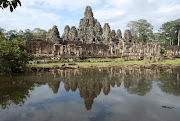
The crumbling ruins of Beng Mealea are a 90-minute drive from Angkor but a world away from the better-known area's tourist crush. (By John Burgess For The Washington Post)
Getting to Banteay Chhmar from Angkor takes about four hours, maybe longer. And in Cambodia you need to be game for some adventure, or at least for some delays. But other ancient sites beyond Angkor can be reached more quickly.
The 12th-century temple complex of Beng Mealea lies about 1 1/2 hours by road -- a good road -- east of Angkor. Being so close, it has some tourist bustle, but nothing like Angkor's.
The temple was built at roughly the same time as Angkor Wat and shares many of its style characteristics. Perhaps Beng Mealea was a trial lab for the better-known temple's style. Visit and you may wonder: If the ancient Khmers had Beng Mealea, why would they need Angkor Wat?
It's a mysterious maze of dark corridors and hidden chapels, of crumbling libraries and courtyards. For a true grasp of size, walk the temple's eastern causeway: You'll have to go close to half a mile, crossing a moat and passing holy ponds, before you come to steps and the remains of a platform that mark the temple's farthest limits.
Another site, Koh Ker, lies an hour and a half beyond Beng Mealea by a generally rough road. If you go, make sure to stop at the first bridge you come to, just a few hundred yards beyond Beng Mealea. In the streambed below is an ancient quarry; you can see the outlines of blocks of sandstone that were cut away, probably to be floated downstream to Beng Mealea.
Koh Ker is an area, not a single temple, that for centuries was a center of provincial culture. In A.D. 928, when its prince became King Jayavarman IV, the capital came to him, rather than vice versa, for reasons perhaps related to his feuding with the previous king.
Today Koh Ker has dozens of stone creations, some large and imposing, some small and intimate. The most spectacular is a complex that is three temples in one, including the Prang, the largest pyramid that Khmer architects built. Faced in sandstone, it has seven levels and stands about 115 feet tall. This was Jayavarman IV's state temple.
From that complex, we drove a circuit through wooded land, coming to smaller but still remarkable temples every few hundred yards. Prasat Krachap has many images of the god Shiva. Banteay Pichean has two brick towers standing in front of a collapsed central sanctuary. At those places and others, I encountered only a guard who was posted there to prevent art theft.
Without question, the most spectacular of the Khmer monuments outside Angkor is Preah Vihear, built atop a 1,700-foot cliff. The visitor ascends a long stone-paved avenue, arriving at ever-larger holy buildings. At the top is the main sanctuary and, a few steps beyond, a jaw-dropping view of Cambodian countryside.
But for now, Preah Vihear is best left off your schedule. Situated in Cambodia right at the border with Thailand, it has since last year been the scene of a military standoff between the two countries' soldiers. This is the latest flare-up in a long feud over the temple, which the World Court ruled in 1962 belonged to Cambodia.
But if on a future trip the soldiers have left, give thought to a visit. Going from Siem Reap is daunting: perhaps five hours each way over very rough roads, then a hike or motorcycle taxi in the heat up the cliff. Accommodations are minimal. The more comfortable and common way to reach the temple, assuming the border is open, is from Thailand. Thai tour companies can make the arrangements. Read more!
Preah Vihear appeal 'targets UN, not Cambodia'
By THE NATION ON SUNDAY,
THAI NEWS AGENCY, AFP
Thailand's objection to the listing of Preah Vihear as a World Heritage site is directed at the World Heritage Committee and Unesco and not at Cambodia, Foreign Affairs Minister Kasit Piromya said yesterday.
He said Natural Resources and Environment Minister Suwit Khunkitti, who will attend next week's World Heritage Committee meeting as an observer, would brief the panel's chairman beforehand regarding Thailand's objection to unilateral listing of the temple, which sits on the border between the two countries.
Cambodian Foreign Minister Hor Namhong told reporters yesterday that soldiers would be ready to defend their territory again if necessary.
"Cambodia welcomes Thailand militarily, diplomatically, internationally or through peaceful negotiations," Hor Namhong said. "[Border fighting] has happened twice ... If they want to send their troops to Cambodia a third time, they are welcome to," he said
"I hear the Thai second in command on the border has put his troops on alert, and I'd like to tell him that Cambodian soldiers are on alert too," Hor Namhong added.
The World Heritage Committee is part of the United Nations' Educa-tional, Scientific and Cultural Organisation (Unesco).
"This issue is between Thailand and the World Heritage Committee and Unesco, and not between Thailand and Cambodia," said Kasit, noting that Prime Minister Abhisit Vejjajiva had said that Cambodia was not involved.
Kasit declined to say whether the Thai action would affect the decision last year to register Cambodia's unilateral listing of the Hindu temple because it was up to the committee and Thailand was attending not as a member but as observer.
He said the meeting also had other matters on its agenda and might also act on Thailand's proposal of other historical sites for World Heritage status.
Abhisit said yesterday that Deputy Prime Minister Suthep Thaugsuban would meet Cambo-dian Prime Minister Hun Sen next week in order to clarify Thailand's objection to the listing of the Preah Vihear Temple ruins as a World Heritage Site.
Abhisit said that he did not expect conflict between the two countries to worsen. The Cambodian leader last week expressed "deep regret" after Thailand announced its intention to ask the World Heritage Committee in Seville, Spain, next week to review last year's decision.
Hun Sen said the issue had not been raised when Abhisit met him in Phnom Penh last week.
The Thai premier, however, expressed hope yesterday that after meeting Suthep in Cambodia Hun Sen would better understand Thailand's stance.
"I haven't talked to [Hun Sen] or the Cambodian ambassador, but I do not think this will worsen the situation and believe the discussion will clarify the matter," Abhisit said.
Suthep is also expected to discuss with Hun Sen the Thai-Cambodian demarcation of overlapping sea areas during his visit to Phnom Penh, according to Abhisit.
Unesco approved Cambodia's application for Preah Vihear to be designated a World Heritage site last July. The International Court of Justice ruled in 1962 that the temple belonged to Cambodia, but armed clashes have since then occurred periodically near the temple, especially in a 4.6-square-kilometre disputed area.
Read more!
Saturday, June 20, 2009
Govt stands by renewed temple bid
Tea Banh on the attack, Hun Sen 'regrets move'
By: POST REPORTERS
Newspaper section: NewsThe government has defended its renewed campaign against Cambodia's listing of the Preah Vihear temple, saying it could talk Phnom Penh into understanding Thailand's stance.
Thailand's decision to maintain its objection to the unilateral listing of the Khmer ruins as a World Heritage site has upset Cambodian Prime Minister Hun Sen, who said he deeply regretted Thailand's position.
Cambodian Defence Minister Tea Banh yesterday took the Thai government to task for raising the matter which he said was likely to mar bilateral attempts to resolve border disputes.
Prime Minister Abhisit Vejjajiva yesterday said the government has "ways" to communicate with Cambodia to avert border tension and he believed that Hun Sen would understand.
"The cabinet has widely discussed the matter because we do not want any conflict. Still, we have to defend what we believe to be our legitimate rights," Mr Abhisit said.
"If he knows our intention, there is nothing for him to regret," he said of Hun Sen's comment.
Mr Abhisit said Thailand felt the need to renew the objection because the proceedings undertaken by the United Nations Educational, Scientific and Cultural Organisation (Unesco) to manage the site were deemed to threaten Thailand's approach to mitigate border disputes.
"We understand that the World Heritage Committee mission is to preserve heritage sites so people have a chance to appreciate them, and that involves peace. Its objectives will not be met if its proceedings will lead to conflicts," the prime minister said.
Deputy Prime Minister Suthep Thaugsuban said the matter was now between Thailand and Unesco, not between Thailand and Cambodia. "Unesco isn't doing it right. It is not about Cambodia," he said.
Mr Suthep said he would try to hold talks with Hun Sen. There would be no fresh disputes, he added.
Earlier, the Foreign Ministry sent a letter to Unesco to inform the organisation that it should seek permission from the Thai government if it wished to conduct any activities in the area surrounding the ancient Hindu temple.
After that, reports emerged that Unesco officials had inspected parts of the 4.6 sq km disputed area near the World Heritage site.
Meanwhile, the Cambodian defence minister said Thailand's renewed bid to oppose Phnom Penh's unilateral listing of Preah Vihear temple has left him at a loss.
"I cannot get myself to understand why the Thai government has to do this," he told the Bangkok Post.
Gen Tea Banh said Phnom Penh had not got wind of the Thai government's move, and that Mr Abhisit did not raise the issue during his visit to Cambodia last Friday.
He said the Thai government's move would only compound the border disputes both sides have long tried to resolve.
He declined to comment if the issue was related to Hun Sen's alleged close ties with former prime minister Thaksin Shinawatra.
Gen Tea Banh also refuted the Thai government's claim that Cambodia had brought artillery and soldiers to the World Heritage site.
Army chief Gen Anupong Paojinda said the Thai-Cambodian border situation remained calm and both sides had agreed to adjust troop deployments to avoid violent confrontation.
He refused to comment on Hun Sen's dissatisfaction with the Thai government's stance, saying it was not his business to judge the Cambodian leader's remarks.
Second Army commander Lt Gen Wibulsak Neepal told troops in positions along the Thai-Cambodian border to stay alert.
Natural Resources and Environment Minister Suwit Khunkitti said he would lead the Thai delegation to a World Heritage Committee meeting in Seville, Spain, next week, to reiterate Thailand's objection to Cambodia's unilateral listing of the temple.
Read more!
Cambodia, China, Laos, Myanmar, Thailand, Vietnam forge economic pact
Ministers from the six Greater Mekong Sub-region (GMS) nations have endorsed a comprehensive plan of action to expand and strengthen cooperation in key areas, including energy and human resource development.
In a joint statement delivered at the 15th GMS Ministerial Conference in Petchburi province, Thailand, the ministers, from Cambodia, China, Laos, Myanmar, Thailand and Vietnam, noted that despite current economic turmoil the six countries are making significant progress on a wide range of initiatives to advance economic development in the sub-region.
In the energy sector, the ministers endorsed a road map for the expansion of the existing cross-border energy trade, and for broader integration in the power sector, beyond electricity. The plan seeks to extend modern energy access to all GMS communities, not just through rural electrification schemes and off-grid power systems, but by enhancing cross-border energy integration, allowing countries to tap the sub-region’s diverse energy resource base that includes hydro, oil, gas and coal.
A more integrated energy system will help lower investment costs, reduce external dependence, improve energy security, diversify supply, and lower carbon emissions. The road map calls for supply side actions such as promoting energy efficiency and accelerating the development of renewable, environmentally friendly energy sources.
The ministers also endorsed a new human resources development plan that includes measures to promote safer labor migration; to strengthen communicable disease control; to bolster education and skills development across the subregion, and to combat human trafficking.
"The agreement to accelerate action on cross-border power trade and the development of renewable energy resources will boost energy security, through improved efficiency of energy use, while contributing to reduced greenhouse emissions in a subregion which is especially vulnerable to the effects of climate change," said ADB Vice President C. Lawrence Greenwood.
Mr. Greenwood congratulated the ministers for the progress made to date in controlling the spread of communicable diseases, and for strengthening the capabilities of the subregion to respond to the threat of disease outbreaks. He noted that improvements have been made against a backdrop of increased physical connectivity in the world, and the emergence of new global health threats.
Mr. Greenwood also noted that ADB would continue its support for improving the capacity of mid and senior-level civil service officials, and for strengthening subregional research institutions, both of which are critical to the GMS development agenda.
Over the next three years, GMS ministers said they will aim to implement the GMS cross-border transport agreement and other transport and trade initiatives, turn transport corridors into full-fledged economic zones, and target environmental improvements.
Read more!
Friday, June 19, 2009
Cambodia: Families living with HIV/Aids evicted
Brittis Edman, Amnesty International's Cambodia researcher, said:
'Tuol Sambo is grossly inadequate and the authorities are well aware of this. It is often referred to as 'the AIDS village' and the inhabitants live with no access to clean water, electricity or proper sanitation.
'The site's long distance from the city hampers access to health services and jobs, adding to the risks. The families have urgent humanitarian needs, including clean water, larger living space, access to medical services and food supplies. There is a real risk that the health of the evicted families will deteriorate there.'
Tuol Sambo is in a semi-rural area where the housing is built from green metal sheets. When Amnesty International visited the site in April 2009, it was perceived by villagers in the vicinity as a centre for people living with HIV/AIDS.
The affected families have expressed fears that they will face further discrimination and stigmatisation because of their HIV status if forced to live in this separate, distinct enclave. Prejudice against these families may be exacerbated by their poverty and lack of job opportunities.
When evicted, the families were compensated with inadequate re-housing in Tuol Sambo and 50 kilograms of rice, soy sauce, fish sauce, water jars and 250 USD from the Municipality of Phnom Penh and the Ministry of Tourism. Last Friday they were coerced into the move and told that anyone who disagreed would not receive compensation.
Brittis Edman said:
'It's unacceptable that the authorities didn't explore other alternatives before deciding to evict these 20 vulnerable families. Tuol Sambo shouldn't have been an option.'
Borei Keila is a large poor urban community which the government designated as a social land concession for residential development in 2003. The Borei Keila concession was intended to be a land-sharing arrangement between a private developer, the Ministry of Education, Youth and Sport and residents. The agreement gave the developer 2.6 hectares of land for commercial development, in exchange for constructing new housing for the original residents on two hectares of the land. The remainder, consisting of 10 hectares, was to be returned to the Ministry of Education, Youth and Sport.
In March 2007 the Municipality of Phnom Penh resettled the families who lived in Borei
Keila against their will and reportedly with force, in temporary shelters built mostly out of corrugated metal sheets. The authorities told them that they would stay there for a few months only, to pave way for the construction of a number of residential multi-storey houses.
PM and Abhisit in temple smackdown
Written by Vong Sokheng
PRIME Minister Hun Sen claims Thailand has "infringed" on Cambodia's sovereignty by announcing it will challenge the UNESCO World Heritage listing of Preah Vihear temple when the body meets later this month.
On Wednesday, Thai Prime Minister Abhisit Vejjajiva said Thailand aims to request a review of the July 2008 inscription of Preah Vihear temple, saying the listing has fostered conflict.
"I think that as a prime minister of one country, his words infringed on the sovereignty of [Cambodia]," Hun Sen said, adding that during his visit last week to Phnom Penh, Abhisit failed to raise the issue in talks with the government.
"I hope that his aim will not be successful, and I hope that UNESCO will not be stupid enough to go along with his gambit."
Thai state media reported Abhisit as saying that he has ordered Thai World Heritage Committee representative Suwit Khunkkitti to lodge
objections to the listing of the disputed temple when the committee meets for its 33rd Session in Seville, Spain, next week.
Hun Sen added that the Thai ploy was unlikely to succeed because of the International Court of Justice's 1962 ruling that handed Preah Vihear temple and some of the surrounding area to Cambodia, and the fact that UNESCO had already listed the temple as a World Heritage site.
Minister of Information and government spokesman Khieu Kanharith said that the Thai leader clearly has no knowledge of history.
The latest crisis over the temple and its surrounding land began last July, when the government says Thai troops entered Cambodian territory,
sparking a massive military standoff.
Read more!
PM denies undemining temple

Abhisit on Wednesday told reporters he would ask Unesco, which administers the temple under Cambodian supervision, to launch a review into the administration of the ancient site, because he wanted peace to prevail in the area first.
The disputed area has seen a military stand-off and gunfights between the two sides over the past year.
"My intention is not to upset the people of Cambodia, but rather to see peace in the area," Abhisit said.
He said he had no objection to working with the Cambodians to develop the historic site under Unesco guidance but suggested military tensions must first be alleviated and that a comfort level between the two sides must first be achieved before Thailand could contribute to the effort.
Cambodian Prime Minister Hun Sen on Thursday expressed "deep regret" over Abhisit's suggestions.
"I deeply regret that he has raised this issue now, because this was not part of our discussions last week," he told reporters at the Cambodian Foreign Ministry. "I doubt his plan will be successful."
$196 billion; little proof UN health programs work
MARIA CHENG
AP Medical Writer= LONDON (AP) — In the last two decades, the world has spent more than $196 billion trying to save people from death and disease in poor countries.
But just what the world's gotten for its money isn't clear, according to two studies published Friday in the medical journal Lancet.
Millions of people are now protected against diseases like yellow fever, sleeping under anti-malaria bed nets and taking AIDS drugs. Much beyond that, it's tough to gauge the effectiveness of pricey programs led by the United Nations and its partners, and in some cases, big spending may even be counterproductive, the studies say.
Trying to show health campaigns actually saved lives is "a very difficult scientific dilemma," said Tim Evans, a senior World Health Organization official who worked on one of the papers.
In one paper, WHO researchers examined the impact of various global health initiatives during the last 20 years.
They found some benefits, like increased diagnosis of tuberculosis cases and higher vaccination rates. But they also concluded some U.N. programs hurt health care in Africa by disrupting basic services and leading some countries to slash their health spending.
In another paper, Chris Murray of the University of Washington and colleagues tracked how much has been spent in public health in the last two decades — the figure jumped from $5.6 billion in 1990 to $21.8 billion in 2007 — and where it's gone. Much of that money is from taxpayers in the West. The U.S. was the biggest donor, contributing more than $10 billion in 2007.
They found some countries don't get more donations even if they're in worse shape. Ethiopia and Uganda both receive more money than Nigeria, Pakistan or Bangladesh, all of whom have bigger health crises.
Some experts were surprised how long it took simply to consider if the world's health investment paid off.
Richard Horton, the Lancet's editor, labeled it "scandalous" and "reckless" health officials haven't carefully measured how they used the world's money.
Experts said that in some cases, the U.N. was propping up dysfunctional health systems. "If you've got rotten governments, no amount of development aid is going to fix that," said Elizabeth Pisani, an AIDS expert who once worked for the U.N., citing Zimbabwe as a prime example.
Murray and colleagues also found AIDS gets at least 23 cents of every health dollar going to poor countries. Globally, AIDS causes fewer than 4 percent of deaths.
"Funds in global health tend to go to whichever lobby group shouts the loudest, with AIDS being a case in point," said Philip Stevens of International Policy Network, a London think tank.
In WHO's study, researchers admitted whether health campaigns address countries' most pressing needs "is not known."
When Cambodia asked for help from 2003-2005, it said less than 10 percent of aid was needed for AIDS. But of the donations Cambodia got, more than 40 percent went to diseases including AIDS.
WHO acknowledged change was necessary, but insisted it needed even more money, warning fewer donations would jeopardize children's' lives.
U.N. agencies, universities and others working on public health routinely take from 2 to 50 percent of a donation for "administrative purposes" before it goes to needy countries.
Others said there is little incentive for health officials to commission an independent evaluation to find out what their programs have achieved.
"The public health community has convinced the public the only way to improve poor health in developing countries is by throwing a ton of money at it," Stevens said. "It is perhaps not coincidental that thousands of highly paid jobs and careers are also dependent on it."
Read more!
Peacefulness Is Still Intact In Cambodia's Remote Ruins
 By John Burgess
We walk in. It turns out that we do end up sharing it, with a local man who brings his cows onto the grounds to graze. And with an affable mason who leads us across acres of fallen stone to see a message from the past, an inscription chiseled into the doorjamb of a holy tower. This kind of company we welcome.
Cambodia's great temples of Angkor, 65 miles away, have long since been rediscovered after a quarter-century of closure by war. They now draw more than a million foreign visitors a year, not a few of whom regret that so many other people had the same idea. At peak hours, human traffic jams can form at temple steps once reserved for kings and priests.

But go beyond Angkor and you can find places that serve up the old solitude and sense of discovery. You can explore at your own pace, to the sounds of birds and the breeze that stirs the leaves overhead. In postcards and e-mails home, you will search for words worthy of your sentiments of wonder.
Banteay Chhmar is among the most spectacular of these places. Getting to it entails hours on very bumpy and dusty dirt roads. Staying the night means making do with primitive accommodations: candlelit rooms in local homes, bath water drawn from that same moat.

I stayed the night, and it turned out to really make the visit. The next morning I rose early, as everyone here does, and took a walk in clean country air. I passed mother hens foraging with their chicks, boys tending to a mud oven in which charcoal was being made. I was seeing not only a temple but a way of life.
Today several thousand people -- rice farmers, cattle herders, market vendors -- make their homes on all four sides of the temple. They grow vegetables on the banks of a series of moats; they pile straw within the walls of lesser ancient buildings that dot their settlement. The ancient and present day coexist.
Spending time here also means doing a good turn, spreading a bit of wealth in a part of a war-recovering country that has largely missed out on the tourist dollars that Angkor is bringing in. People do have cellphones (charged by generator), and some have small tractors, but there are few other signs of affluence here.
Banteay Chhmar was created in the Khmer Empire's last great burst of construction, under the 12th-century Buddhist king Jayavarman VII. His engineers were thinking big even by Khmer standards: To contain a great settlement, they built earthworks and moats that formed a square measuring roughly one mile on each side. At its center, within another square moat system half a mile on each side, they built the temple.
More than a century ago, French archaeologist Etienne Aymonier found the temple to be in a state of "indescribable ruin." It still is, despite the efforts of that friendly mason, who is part of a small reconstruction team. But that's part of what makes the site so enticing. Exploring it means climbing over huge piles of large fallen stones, something to be tackled by only the sure-footed. We passed ruined towers, courtyards and ceremonial walkways. Sometimes the stones were so high that we were walking at roof level.
The temple is no longer a formal religious site, but Cambodians believe that it, like all those that their forebears left behind, remains a holy site. In one surviving chamber we found a small contemporary shrine, with a Buddha image wearing a cloth robe, where people made incense offerings. When rain is needed, local people are reported to walk in a procession around the temple, imploring heaven to help.
One of the best parts of this temple is the many hundreds of feet of bas-reliefs on its outer walls. We had to scramble up more stones to get a good view. Before us was a full sample of life 900 years ago: processions of elephants, prominent ladies tended by maids, children roughhousing, villagers in a sampan, servants tending a stove.
There were also many scenes of war with Champa, the long-vanished rival state to the east: The temple is in large part a memorial to four generals who lost their lives in that long conflict. On land, the men of arms go at one another fiercely with spears (you can identify the Chams by the curious blossom-shaped headdress they wear). On water, rows of men pull at oars from galleys as others strike at the enemy with spears. There are also images of the divine, notably the god Vishnu, with 32 arms arrayed like rays of light emanating from the sun.
The carving style is similar to that of the Bayon temple reliefs in Angkor. The difference is there's no need to fight for a view. We did cross paths for a few minutes our first day with a party of about 20 French-speaking tourists. We saw no other visitors that day or the next.
Late in the afternoon, we went for a look at what the ancient Khmers could do with water. Just east of the temple, they created a reservoir that measures roughly a mile by a half-mile. Academics disagree over whether this body, and others like it, did only symbolic duty as earthly stand-ins for the mythic Sea of Creation, or were part of a vast irrigation system, or both. Whatever the truth, I was awed by the scale. The tree line way, way off in the distance was the northern bank.
The reservoir was now largely dry, but because its floor is low and collects water before the surrounding land does, it has been divided into rice paddies. We went for a stroll, walking along paddy dikes to keep our feet dry. We said hello to members of a farming family who were tinkering with a small tractor. A woman had caught a bucketful of paddy crabs and insects, which she would sell as food. In the final daylight, we passed a group of young men bringing cattle home.
I passed the night at the house of a Cambodian family, friends of a friend. They couldn't have been more gracious. They gave me a room of my own, bottled water, mosquito coils and a big luxury: a car battery hooked to a fluorescent light. I could have light all night if I wanted it.
Other members of our party slept at a formal homestay, the term given to guesthouses as well as family homes that accept paying guests, a few steps from the temple's gate. It had two rooms with large beds covered by mosquito nets. Downstairs there was a basic bathroom with a squat toilet and scoop bath.
Staying the night brought another cultural experience. A festival was going on nearby, and its amplified music carried into my room as I sat reading. Then around 10 p.m., silence. Private generators don't run all night, even for a celebration.
I got up at dawn, scoop-bathed in slightly murky water and walked to the moat from which it had been drawn. I took in the early morning sights: the mist, dogs prowling around in first light. I played amateur archaeologist for a bit, noting that an ancient feeder or outflow channel, now dry, was connected to the moat at this corner.
Later we went exploring on foot. Mixed in among wooden homes were the stone walls of lesser 12th-century relics that had been monasteries or small temples. The ruins of one temple's gate lay foliage-shrouded just a few steps from a house. Little boys ran about, and a teenage girl ironed clothing.
We had breakfast at a stall in the town's market; there are no proper restaurants. It was noodle soup with chicken, and very good.
I first visited Angkor in 1969. Back then, you could be alone in the big temples even there. I once walked through the largest of them, Angkor Wat, encountering hardly a soul. It's good to know that such an experience can still be had. You just have to work a bit harder for it.
John Burgess is a former foreign correspondent for The Post. He last wrote for Travel about a country walk in Kent, England.
Thursday, June 18, 2009
Group 34 residents say City Hall is trying to renege on land deal
Written by SAM RITH AND CHRISTOPHER SHAY
Municipality says it is still considering the community’s proposal, but will request that residents and NGOs help pay the cost of the relocation site
RESIDENTS of Group 34 say City Hall is backtracking on its promise to move the community to a plot of land close to Phnom Penh city in Dangkor district.
"People will not agree to move if the Phnom Penh Municipality does not agree to our request [to remain near the city]," said Group 34 representative, Touch Sophoan, who was among the more than 225 families who watched their homes destroyed by a suspected arson attack in May.
But Phnom Penh Deputy Governor Mann Chhoeun said City Hall had not yet ruled out the plot that the community had requested.
"We are still having discussions with each other," he told the Post.
In late May, both municipal officials and the community said that an agreement had been reached to send the community about 10 kilometres away to a spot in Dangkor district owned by Thoang Chantha, who said he was happy to sell the land.
But now, the main obstacle is money, according to Mann Chhoeun.
He said he wants the community, the company developing the land and NGOs to help the government purchase the land.
"The people themselves also have to participate in [paying money to buy the land]," he said. "We know that if the Phnom Penh Municipality just offers them the land and house with no participation from people, they will sell their land and houses, and move back," he said.
"NGOs who are used to criticising should distribute money, and the company that would like to develop the road should help buy the land too," he added.
But community members say that after the fire, they simply do not have money to give to the government.
"If the municipality requires people to help buy the land, the people here will not be able to offer any, because they have no money left," Touch Sophan said.
Read more!
PM lashes out at SRP lawmaker
Written by Meas Sokchea
Hun Sen warns Mu Sochua’s political career may be over
PRIME Minister Hun Sen warned that if the National Assembly votes to strip opposition lawmaker Mu Sochua of her parliamentary immunity, the loss could be permanent, telling a graduation ceremony Wednesday that her political career might be over.
"Lifting immunity is easy. Restoring it, in some cases, is not so easy," the prime minister told new graduates at the Royal School of Administration in Phnom Penh.
"So [Mu Sochua] will not be a parliamentarian forever; her party must replace her with a new person," he said.
Hun Sen made reference to the upcoming vote by the National Assembly on whether to lift the Sam Rainsy Party lawmaker's immunity, which will allow his defamation case against her to proceed. A decision is expected Friday.
"Immunity is lifted by two-thirds [of the Assembly]. It is restored by two-thirds. Lifting is possible, and restoring is - in some cases - impossible," Hun Sen said, adding that some lawmakers from his party had already said they would not vote to restore her immunity.
The ruling Cambodian People's Party holds more than enough Assembly seats to strip Mu Sochua of her legislative protection.
In response to threats issued Tuesday by union leaders, who said they would organise mass protests if Mu Sochua's immunity was lifted, Hun Sen mockingly encouraged the protests, saying pro-government groups would organise mass rallies in response.
He also warned outspoken NGOs to watch their step, saying that if they spoke too much "nonsense" he would file a complaint with the courts.
Mu Sochua, who sued Hun Sen for defamation, only to be countersued by the prime minister, could not be reached for comment Wednesday.
But SRP lawmaker and spokesman, Yim Sovann told the Post that if the Assembly did lift her immunity, it would be an abuse of the Constitution. He vowed the party would not abandon the former minister of women's affairs.
"The Sam Rainsy Party will not find a new person," Yim Sovann said.
"If a Prime Minister has absolute power and does everything according to his emotions, there will be no democracy."
Read more!
Govt trafficking rating slips
THE US State Department downgraded Cambodia's anti-human trafficking rating on Tuesday from Tier 2 to Tier 2 Watch - the list's second-lowest rating - citing "a decline in efforts to combat trafficking in persons".
In 2008, the US raised Cambodia's status to Tier 2 for the first time in four years after the National Assembly passed anti-human trafficking legislation.
The US said at the time that the new law "provides law enforcement authorities the power to investigate all forms of trafficking and is a powerful tool in efforts to prosecute and convict traffickers".
But the State Department later determined that "not all government officials have appeared to distinguish the law's articles on trafficking offenses and non-trafficking crimes such as prostitution, pornography and child sex abuse".
Sara Bradford, a technical adviser to the Asian Pacific Network of Sex Workers, said that since Washington backed the controversial trafficking law, the US is partly to blame for Cambodia's failure to create an effective anti-trafficking campaign.
"The [Cambodian] government is combating trafficking with very few resources and little training," she said.
"I am one of many who feel that the US pushed this law upon Cambodia without proper guidance on how to implement it," Bradford added.
A press release from the sex workers network on Wednesday commended the State Department for acknowledging "a number of issues arising from the conflation of sex work and trafficking in Cambodia, as well as the misguided enforcement of the law".
US Embassy spokesman John Johnson said that, though the United States supported parts of the Cambodian trafficking law, it did not endorse it in its entirety.
"The US supports elements of the legislation that specifically address trafficking issues," he said.
He added that, as the law was being debated, "the embassy raised questions with the Royal Government regarding some elements of the draft that were unclear".
The chief at the Ministry of Interior's Anti-Human Trafficking office said that the State Department's claims of police corruption and a lack of effort were simply not true.
"Our police work hard to prevent human trafficking, and we have never cared whether we work during the night or day. Even on holidays, we work," Keo Sothea said, adding, "We have never let corruption hinder the protection of a victim."
The decline in prosecutions and convictions of trafficking crimes in 2008 was one of the major reasons for the drop. The report said the Phnom Penh Municipal Court convicted 11 trafficking offenders and prosecuted 22, down from 52 convictions in 2007.
But Lim Tith, the national project coordinator at the UN Inter-Agency Project on Human Trafficking in the Greater Mekong Sub-Region, said that using the number of convictions as an indicator is a problem because "it can push law enforcement to make more arrests without proper evidence".
Lim Tith, who said Cambodia should have maintained its Tier 2 ranking, said that the sharp decline in convictions could be the result of a successful prevention campaign or poor data collection.
He did say, however, that Cambodia needed to do more to prevent cross-border trafficking, specifically with Thailand and Malaysia, which just fell to Tier 3 status.
The Tier 2 Watch listing means that Cambodia has not reached the minimum standards for the elimination of trafficking, but that "it is making significant efforts to do so", the report said.
The US Embassy's Johnson pointed to Cambodia's national task force on trafficking and the government's cooperation with NGOs as examples of Cambodia's efforts to deal with the problem of human trafficking.
If Cambodia drops one more rating, it risks facing economic sanctions from the US.
Read more!
a0619 BC-AS-Cambodia-Laos-Dyi 1stLd-Writethru 06-18 0764
Study: Pollution killing rare Irrawaddy dolphins
Eds: UPDATES with Cambodian government response, additional details on dolphins, conservation efforts in Cambodia. CORRECTS that study was released Thursday, not Friday.
By MICHAEL CASEY
BANGKOK (AP) -- Pollution in the Mekong River is putting the rare Irrawaddy dolphin in danger of disappearing from Cambodia and Laos, according to a study by an environmental group released Thursday.
A Cambodian government official, however, rejected the finding and demanded that the group apologize.
The World Wide Fund For Nature Cambodia said it has documented 88 deaths in the past six years of the Irrawaddy dolphin or Orcaella brevirostris along a 118-mile (190-kilometer) stretch of the Mekong River.
The Irrawaddy dolphin, which is related to orcas or killer whales, frequents large rivers, estuaries, and freshwater lagoons in South and Southeast Asia. The population in the Mekong is now believed to include as few as 64 members, the WWF said, down from 80 to 100 just three years ago.
Researchers from WWF Cambodia said they found levels of the pesticide DDT in the bodies of dead dolphin calves from the Mekong that were 10 times higher than in a similar population in India, plus environmental contaminants such as PCBs. They also found mercury, a toxin used in gold mining that can compromise the immune system of marine animals, they said.
The group said it was investigating the source of the pollutants, noting that many young calves died of bacterial diseases that only occur when immune systems are damaged. Many had black and blue lesions on their necks.
"These pollutants are widely distributed in the environment, and so the source of this pollution may involve several countries through which the Mekong River flows," said Verne Dove, the report's author and a veterinarian with WWF Cambodia.
Touch Sieng Tana, chairman of the Cambodian-run Commission for Mekong Dolphin Conservation, dismissed the findings and said there is no mercury, DDT or PCBs in the Mekong. He called on the WWF to apologize for suggesting that the Mekong was polluted.
"If the Mekong River is full of pollution, then all the Cambodians who use that water and drink it would have died," he said. "The WWF statement aims to destroy Cambodia and cause fear to foreigners who want to visit Cambodia."
Scientists do not know exactly how many Irrawaddy dolphins remain in the world -- researchers recently found a population of nearly 6,000 near Bangladesh's mangrove forests -- but the species is listed as "vulnerable" on the IUCN Red List of Threatened Species. The Mekong River subpopulation has been listed as "critically endangered" since 2004.
Brian Smith, an Irrawaddy dolphin expert with the Wildlife Conservation Society, said the findings were surprising given that until now, the biggest threats facing the dolphins have been thought to be fishing, collisions with boats and habitat loss. He cautioned that more research needs to be done to establish a link between the deaths and pollution.
However, he said the extremely low survivorship of calves on the Mekong -- and the fact that many carcasses were found with lesions -- suggests that disease combined with pollutants documented in the WWF study "may indeed be an important factor threatening the population."
Seng Teak, WWF Cambodia's country director, urged Mekong River countries to develop a coordinated program to protect the dolphins that reduces pollutants at their source.
Two years ago, Cambodia launched a $700,000 plan with the World Tourism Organization to reduce threats from fishing by boosting tourism in areas known to have dolphin populations. Authorities have said the program was successful in increasing awareness among villagers and persuading some to abandon fishing for tourism jobs.
Read more!
Wednesday, June 17, 2009
We still oppose heritage listing : Thai PM
 Suwit to fly to Spain next week to ask world body to review decision
Thailand will seek review of World Heritage status giving to Hindu Temple of Preah Vihear, even though this status was decided last year, Thai Prime Minister Abhisit Vejjajiva said yesterday.
It would maintain its objection to the Unesco's World Heritage listing of the temple, he said.
His cabinet endorsed the stance and assigned Suwit Khunkitti, Minister for Natural Resources and the Environment, to ask the World Heritage Committee to review its decision when it met in its its 33rd meeting in Spain's Seville next week, he said.
The listing of Preah Vihear, announced last July, was contrary to Unesco's regulations and spirit since it had created a dispute between Thailand and Cambodia, he said.
Thailand withdrew its support for the listing last year when the Democrat Party, then in opposition, feared a loss of Thai sovereignty over areas near the temple.
The party and protesters from the People's Alliance for Democracy forced the Samak Sundaravej government to withdraw support for Cambodia's proposal for World Heritage listing of the historic cliff-top temple.
Noppadon Pattama was forced to step down as foreign minister after the World Heritage committee backed Cambodia's bid to list Preah Vihear. The International Court of Justice ruled in 1962 that the Hindu temple belonged to Cambodia, but Thailand claims some areas adjacent to the temple.
The two countries have yet to complete border demarcation near the site.
Cambodia delayed its plan to protect and develop the temple as required by the World Heritage Committee due to military clashes with Thailand at the site, which flared at the time of the Cambodian election and erupted again during domestic crises in Thailand last October and in April.
The World Heritage body suggested last year that Phnom Penh should invite Thailand to join a seven member International Coordinating Committee (ICC) to manage the site, but Thailand is reluctant to join as it does not want to recognise Cambodia's rights to the temple.
Thailand's objection would not jeopardise relations with Cambodia as the government could explain its stance, Abhisit said. He did not discuss the matter with his Cambodian counterpart Hun Sen when visiting Phnom Penh last week but hoped Cambodia would understand Thailand.
"We didn't mention Cambodia but we did disagree with the World Heritage Committee/Unesco and their decision," Abhisit said.
Adul Wichiancharoen, adviser to Thailand's National World Heritage Committee, said the government's objection could not lead to a change in the listing of Preah Vihear.
However he agreed with the government maintaining its objection and keeping a close eye on Cambodian moves to prevent it annexing of areas claimed by Thailand.
Adul said Thailand's plan to offer Pha Mo I Daeng and twin stupas downhill from the Preah Vihear to be jointly listed as World Heritage sites, would be strongly opposed by Cambodia.
Read more!
Prison chief says Khmer Rouge leader Pol Pot ordered 4 Western prisoners killed
PHNOM PENH, Cambodia (AP) — Khmer Rouge leader Pol Pot personally ordered the killing and burning of four Western prisoners who were captured while sailing in Cambodian waters, a former prison chief on trial for crimes against humanity testified Wednesday.
Kaing Guek Eav, also known as Duch, who commanded the communist group's S-21 prison in Phnom Penh, said the prisoners were an American, an Australian, a New Zealander and a Briton.
He also testified that several days before the Khmer Rouge were ousted by invading Vietnamese troops in early 1979 he was ordered to kill all inmates at the prison.
"The purpose was to have no prisoners left at S-21" when Vietnam's troops arrived, he said.
As many as 16,000 men, women and children were tortured at S-21 before being sent to their deaths during the Khmer Rouge's 1975-79 rule.
Duch is being tried by a U.N.-assisted tribunal for crimes against humanity, war crimes, murder and torture. About 1.7 million Cambodians died from forced labor, starvation, medical neglect and executions under the radical regime.
Duch (pronounced Doik) testified that Pol Pot, who died in 1998, personally ordered that the four Westerners be executed and then burned, and that the order was conveyed by Nuon Chea, the regime's No. 2 leader and chief ideologue, who has also been charged by the tribunal.
"I received an order from my superiors that the four Westerners had to be smashed and burned to ashes. It was an absolute order from my superiors," Duch said. "Pol Pot, not Uncle Nuon, personally ordered to burn the bodies."
In response to questioning from Judge Dame Silvia Cartwright of New Zealand, Duch denied reports that the four Westerners were burned alive. He said their bodies were burned near the prison after they were executed.
He testified that only four Westerners were detained while he commanded S-21, but prison records suggest there may have been as many as 11.
Several Americans and Australians are listed, but only one New Zealander, Kerry Hamill, and one Briton, John Dewhirst.
Read more!
Tuesday, June 16, 2009
EDITORIAL Shock move by White House
The latest decision on Southeast Asia by US President Barack Obama is the second disturbing action by Washington affecting this region. Late last Friday, after the main news cycles for the week had elapsed, Mr Obama announced a major new policy initiative. The low-level statement that he was declaring Laos and Cambodia eligible for major US loans and trade concessions took the rest of the region by surprise.
The first visit to Southeast Asia by Secretary of State Hillary Clinton largely ignored the longest and strongest US allies. Now, the decision to give special treatment to Laos and Cambodia came as a bit of shock, including in Thailand.
Mr Obama's "determination" about each country was a brief official statement, posted at the White House media room and website. Such presidential determinations are legal obligations in many cases in the United States; these were the 20th and 21st of an early presidency. But as these statements showed, they are often "game changers" by the president. In these almost identical statements, Mr Obama declared that Laos and Cambodia are eligible to be beneficiaries of US Export-Import Bank loans for American businesses in those countries.
The reason, Mr Obama said, is that each "has ceased to be a Marxist-Leninist country".
Mr Obama was apparently not concerned with the nuances of Marxist evolution. It was mandatory to declare Laos and Cambodia were not communist countries in order to achieve his true goal - to provide millions, and perhaps billions, of investment capital for American businesses to set up, operate in and trade with the two neighbouring countries.
Mr Obama did not explain why he set this goal. Indeed, the manner of the announcement was to keep all questions and justification to a minimum.
This apparently was to stifle the negative reaction of political groups in the US who are appalled at the treatment of Hmong tribespeople by Laos.
A more important result, however, is that Mr Obama has created negative fallout in Thailand and the region.
The US Exim Bank rarely is involved with Thailand, and generally supports one-time sales rather than investment.
In 2003, it provided support for sales of Boeing 747 aircraft to Thai Airways International, and there are occasional cases where the bank has backed smaller deals. As the Thai economy has developed, the US Exim Bank has been an ever-smaller presence.
That is why Mr Obama's unexpected support for Laos and Cambodia disappointed many in Thailand. For years, Thai businesses have expanded into these countries. The overseas business expansion - ironically with the frequent support of the Exim Bank of Thailand - has been a major engine of Thai growth. This in turn has led to decreasing dependence upon foreign help and special programmes by Washington.
The sudden entry of the US Exim Bank into these Thai markets will affect Thai trade and the economy. By failing to warn and prepare Thai authorities and businesses, the Obama administration has created a shock that will have negative implications, at least at the start.
This problem could easily have been avoided had the White House warned of the coming decision and allowed time for diplomatic talks and business preparations. Failing to do so again begs the question of whether the United States is seriously engaged with its long-time allies in this region.
Read more!
TNI begins UN peace keepers joint training
The Indonesian military (TNI) will begin on Tuesday a joint training of United Nations peace keeping forces dubbed Garuda Shield 2009 with 24 countries in Bandung, West Java.
THI chief Gen. Djoko Santoso and chiefs of staff are scheduled to open the training at 10 a.m.
The training, aimed at promoting between the countries' armed forces, especially in the UN peacekeeping mission, will last until June 29.
The training will be participated by armed forces of 24 countries, including United States, Bangladesh, Australia, Cambodia, France, German, Italy, Japan, Singapore, Thailand and Vietnam.
TNI will host the training at the Infantry Training Center in Cipatat, Padalarang.
Indonesia has been involved in 15 UN peacekeeping missions, including in Egypt, Vietnam, Lebanon and Congo, since 1957 . (dre)
Read more!
Monday, June 15, 2009
Civil society groups call for transparency on resource revenues
Written by Sebastian Strangio
A COALITION of civil society groups launched a new resource revenue watchdog Friday, citing the need for more transparency in Cambodia's natural resources sector.
Cambodians for Resource Revenue Transparency (CRRT) - founded by the Centre for Social Development, Development and Partnership in Action, the NGO Forum on Cambodia, the Economic Institute of Cambodia and the Youth Resource Development Program - aims to ensure that revenues from mining and potential offshore oil deposits are handled accountably.
"[T]he revenues from extractive industries have enormous potential to lift Cambodians out of poverty," Lim Solinn, the regional programme coordinator for Oxfam America's East Asia office, said at the launch.
"Conversely, if not properly managed, these same dollars could have dramatically adverse affects - environmental, social and economic."
Resource bounty
The discovery of oil and gas reserves by US oil giant Chevron off the country's south coast in 2004 has prompted speculation about the potential benefit of any future oil revenues, with some civil society groups expressing concerns that Cambodians will derive little benefit from the money.
In February, international corruption watchdog Global Witness released a report claiming high-level corruption and nepotism in the country's extractive resources sectors, springing from the granting of "highly dubious" economic concessions by the government.
Lim said that Cambodia was well-placed to avoid the "resource curse" - the economic distortions caused by a heavy reliance on extractive resources - provided it makes an effort to establish the proper procedures and regulatory infrastructure, including input from the non-government sector.
"This can only be done with a strong and meaningful engagement between government, companies and civil society," she said.
Financial reforms
Hang Chuon Naron, vice chairman of the Supreme National Economic Council, said at Friday's launch that the government was dedicated to ensuring extractive resources would be a blessing rather than a curse, claiming increased revenues could be used to sustain "robust economic growth" and "rapid poverty reduction".
He said the government's Public Financial Management Reform Programme, initiated in 2004, would ensure a fully transparent system is in place by 2015, adding that the government would share information about oil revenues with NGOs and development partners.
But Sam Rainsy Party lawmaker Son Chhay regarded the government's promises with suspicion, saying its track record on natural resource revenue management was not good.
"We don't trust the government.... There's no record in the past that the government has been accountable," he said. "A lot of resources have been disappearing, starting with forests, gems and gold mines."
But he reiterated the CRRT's calls for more information on oil revenues, saying the SRP has requested that details of oil exploration agreements be made public.
Read more!
Evictees cry foul over homes
 Written by CHRISTOPHER SHAY AND KHOUTH SOPHAK CHAKRYA
District officials deceived the HIV community of Borei Keila into thumbprinting an agreement to vacate homes, residents claim
"The authorities are cheating. When we agreed to thumbprint, the authorities told us they would remove the dividers to make two houses into one house," said resident Sok Sinethe.
But Horm Oun, another Borei Keila resident, said, "Lim Seda [the deputy chief of Prampi Makara district] told us after we gave our thumbprints we cannot make two houses into one".
"I felt hopeless when I heard this," she said.
The chief officer of the district's development programme, Sok Ath, said the Borei Keila residents were mistaken.
"We did not make promises or threaten them for their thumbprints. We only agreed to take their request for larger homes to City Hall for a decision," he said, adding that they would also ask City Hall that instead of buying two tuk-tuks to ferry people into the city for work, that it give each family US$250.
Sao Vanna, the chief of the HIV community, who does not live with the families facing eviction, said 20 families will be moved to Tuol Sambo perhaps as early as today.
Sao Vanna, who will set up an office at Tuol Sambo, blamed NGOs for the conditions at the relocation site.
"Before, City Hall had plans to construct 4-metre-by-12-metre homes and called upon the NGOs to fund the construction and infrastructure, but without NGO funding ... City Hall did not have enough money," he said.
But on Sunday during a visit to Tuol Sambo - about an hour's tuk-tuk ride away from Borei Keila - residents said that it was clear the municipality could do more to support them.
Ten paces from the green metal shelters that will house the families, workers are building brick homes for families from Russey Keo who lost their houses after a riverbank collapse. According to a construction worker, the Russey Keo homes will be 4 metres by 8 metres, almost double the floor space of the HIV community's homes, which are 3.5 metres by 4.8 metres.
"Why does the municipality make small houses for us and big homes for others?" Sok Sineth asked.
Residents also fear that their community, which is already known as "the AIDS village", will face discrimination.
Resident Touch Chhay Ran said when she visited Tuol Sambo last month she overheard local villagers insulting the Borei Keila community, giving her fears that she will need to endure discrimination on a daily basis.
"They said they were afraid that their community would catch AIDS from us, turning all of Tuol Sambo into ‘the AIDS village'," she said.
Assembly to rule on MP's legal shield
Written by Meas Sokchea
THE Permanent Committee of the National Assembly is to meet today to consider suspending the parliamentary immunity of Sam Rainsy Party lawmaker Mu Sochua, in relation to the defamation lawsuit filed against her last month by Prime Minister Hun Sen.
National Assembly Permanent Committee President Cheam Yeap said a request for the temporary suspension of Mu Sochua's immunity came Friday from Phnom Penh Municipal Court.
"When we have the meeting we will discuss this. This is one of a large number of issues that the committee must resolve," he said, adding that Mu Sochua's immunity would be restored if the court found she was not at fault.
"This is just a temporary suspension [of her immunity] so that the court has the right to question her directly about the lawsuit."
The move has been criticised by observers who say that, while technically legal, the removal of the lawmaker's protection would raise questions about the independence of the courts.
"The court's request is legal, but I would like to emphasise that the courts in Cambodia nowadays are not independent. This issue is very much bound up with politics," said Heang Rithy, president of the Cambodian National Research Organisation.
Hang Chhaya, executive director of the Khmer Institute of Democracy, agreed, saying the abuse of power by the ruling party ran counter to the spirit of the Kingdom's Constitution.
"We are concerned about the suspension of [her] immunity. It doesn't seem to be necessary," he said.
"We should think whether it is necessary and in the interests of the people. When one side has all the power and abuses it, it is contrary to the Constitution."
Hun Sen sued Mu Sochua after she filed her own lawsuit against him for comments made during a speech in Kampot on April 4, when, she said, he insulted her by calling her a cheung klang.
Mu Sochua claimed the Khmer term, meaning "strong legs" in English, has derogatory overtones when used in relation to a woman.
But her lawsuit was dismissed by the Municipal Court on Wednesday, with Deputy Prosecutor Hing Bun Chea explaining in a three-page statement that since the prime minister's comments did not refer to Mu Sochua by name, and Hun Sen did not intend to insult any individual with his comments, the suit was not valid.
Mu Sochua told the Post on Sunday that she was unsurprised by the news that she might lose her immunity, claiming her only concern was the reversal of basic democratic rights because of the ruling party's domination of the judicial process.
"I am not worried at all. I just want people to realise that they voted for the CPP to win 90 seats in the National Assembly. But how much justice has the CPP guaranteed for the people? This is not only my story: It is everyone's story," she said.
Read more!
Cambodia Tribunal Reduces Sentence for Khmer Rouge Torture Chief
By Daniel Schearf, Bangkok
Cambodia's U.N.-backed war crimes tribunal has ruled a former Khmer Rouge torture chief now on trial was detained "unlawfully" by the military and would be compensated for time served. The ruling means the only Khmer Rouge official to face justice can no longer be sentenced to life in prison.
Cambodia's war crimes tribunal says the military violated the rights of Kang Guek Eav in detaining him after his 1999 arrest.
Better known as Comrade Duch, the former head of the notorious Khmer Rouge S-21 detention center was held for eight years before being turned over to the tribunal.
Duch was arrested and is on trial for his role as head of the detention center, charged with war crimes, crimes against humanity, murder and torture.
He was facing up to life in prison if convicted, but will now have all his time in detention subtracted from any sentence he may receive.
The tribunal's legal communications officer, Lars Olsen, says that means at least 10 years taken off, depending on how long the trial lasts.
"And he would also be entitled to additional remedies which the trial chamber in its decision today said they would address when the time for the sentencing would arise," Olsen said. "That could be typically that he would get extra time off of a sentence because of his unlawful detention."
Olsen says the arrest of Duch was legal, but his detention from 1999 to 2007 was illegal under Cambodian law, which only allows a maximum of three-years provisional detention.
Duch's defense team had asked that he be released from his current detention, but the court rejected that request.
Duch is the only senior former Khmer Rouge official to face justice for crimes committed under its brutal late 1970's rule. He is also the only one to admit responsibility, although he claims he never personally killed anyone.
Under Duch's supervision, more than 12,000 prisoners there were accused of being enemies of the communist Khmer Rouge and then systematically tortured and executed.
Four more senior former leaders are set to face trial in the next year or two.
Up to two-million Cambodians were worked, starved, and executed by the Khmer Rouge in their attempt to create a Communist utopia.
Read more!
Alleged Khmer Rouge torturer cries in court
By SOPHENG CHEANG
Associated Press Writer
PHNOM PENH, Cambodia (AP) -- A man accused of running an infamous Khmer Rouge torture center broke down in tears at his trial Monday as he spoke of the imprisonment and execution of former comrades in the facility he commanded.
Kaing Guek Eav, alias Duch (pronounced Doik), testified to Cambodia's U.N.-assisted genocide tribunal that the prison's own guards and interrogators were also among those executed during the regime's brutal rule, in some cases for simple irregularities and mishaps in carrying out their duties.
He commanded Phnom Penh's S-21 prison, where as many as 16,000 men, women and children were tortured before being sent to their deaths when the communist group held power in 1975-79. About 1.7 million Cambodians died from forced labor, starvation, medical neglect and executions under the regime.
The tribunal also ruled Monday that Duch - who is being tried for crimes against humanity, war crimes, murder and torture - was held in government custody longer than is legally allowed, and if found guilty can apply to have his sentence reduced.
The 66-year-old displayed rare emotion during his testimony as he spoke of seeing fellow revolutionaries locked up in the cells of his prison.
"I did not want them to see my face when they were in such conditions," he said as tears rolled down his face. He said even today he tries not to recall them.
"Betraying friends, yes, I did. That was beyond cowardly," he said.
Duch had previously testified that being sent to S-21 was tantamount to a death sentence. Most prisoners were tortured into giving fanciful confessions that suited the Khmer Rouge's political outlook, though they generally had been loyal members of the group.
He also said more than 100 personnel from S-21 and the Prey Sar prison - a reeducation center on the outskirts of Phnom Penh - were arrested, tortured and executed for minor offenses. He said he was the one who reported such incidents to his superiors.
Those killed included torturers, security guards and interrogators. Their wives and children were also arrested and executed because they were considered the regime's enemies, he said.
Duch is the first senior Khmer Rouge figure to face trial, and the only one to acknowledge responsibility for his actions. He could face a maximum penalty of life in prison; Cambodia has no death penalty.
The tribunal's judges agreed Monday that Cambodian laws only allowed him to be held for three years without trial. Duch had been held by Cambodia's military court from 1999 until 2007, after which he was transferred to the tribunal's custody.
His lawyers have applied several times - most recently in April - for his release from provisional detention, as well as credit for time served and a reduced sentence to compensate Duch for the violation of his rights.
The judges said his detention until 2007 "constitutes a violation of the Cambodian domestic law applicable at the time" and of "his internationally recognized right to a trial within a reasonable time," the judges said in a 15-page ruling.
They said the tribunal was not responsible or liable for the prior abuse of Duch's rights, but agreed that if found guilty, "he is entitled not only to credit for time already spent in detention, but also to a reduction in sentence as a result of previous violations to his rights."
Duch's age, however, means that a reduction in his sentence would have little impact should he be sentenced to life imprisonment.
Four other senior Khmer Rouge leaders will face trial in the next year or two. They include Khieu Samphan, Nuon Chea, Ieng Sary and his wife Ieng Thirith.
Read more!
Maybank opens fourth branch in Cambodia
MAYBANK (1155) yesterday opened its fourth branch in Cambodia, located in the city centre on Tep Von Street, Siem Reap City.
The branch will offer full banking facilities and services including deposits, mortgage financing, trade financing, deposit, remittance services as well as foreign exchange services. It also offers ATM facilities which are linked to the Maybank ATM network in Phnom Penh.
In a statement, Maybank head of international, Abdul Farid Alias, said the branch in a provincial location of Cambodia is part of the bank's strategy to tap on the growth potential of the region as well as to support the development of the business and tourism sectors there.
"Siem Reap is one the fastest growing towns in Cambodia and has the advantage of being the gateway to the famous Angkor Wat as well as many other ancient temples. The tourism industry has tremendous potential given the presence of many tourist facilities, namely hotels and businesses. Our branch will be able to serve the needs of the local businesses as well as Malaysian and Singaporean companies which have business activities in the region as well as the country," he said.
Siem Reap Province has a population of one million and Siem Reap is the second largest city in Cambodia. An estimated 70 per cent of its population consisting both local and foreigners live in Siem Reap City itself.
"We plan to open four more branches in Cambodia by the end of the next financial year subject to approval from the authorities," added Abdul Farid.
Its international network currently has over 400 offices in 13 countries, in addition to 384 branches in Malaysia as well as associates in Pakistan (MCB Bank) and Vietnam (An Binh Bank).
Maybank first established its presence in Cambodia in 1993 and has three other offices in the capital city Phnom Penh.
"Maybank Cambodia registered a 22.37 per cent growth in revenue for the 11 months of our current financial year compared to the previous corresponding period. Total loans to various sectors of the economy as at May 2009 grew 64.25 per cent over the previous period," Abdul Farid said, adding that the top three sectors it provides financial support to are telecommunications, manufacturing and general commerce.
Read more!
Sunday, June 14, 2009
Cambodia: Controversial Angkor Wat lighting project
 To promote “night lighting” tours and to reverse the 20 per cent drop in visitors, the Cambodian government has installed artificial lighting in the 11th century-old Angkor Wat Temple. This project is opposed by some heritage conservationists and concerned Cambodian citizens. Angkor Wat is the most popular tourist site in Cambodia and is recognized as a World Heritage site.
Heritage conservation specialists describe the installed light bulbs as “unsightly.” Since 2006, more than $12 million were spent for the lighting of the temple. It is part of a grand project to transform the Angkor Wat as a complex of entertainment venues.
The government defended the lighting decoration by arguing that it has the support of the UNESCO. Authorities also added that only solar powered lighting technology was used in the project.
The public was stunned when it learned that holes were drilled in the temple to install electric bulbs. This was denied by the government and the project contractor:
“The working team explained that they have a technique to set up electric bulbs which causes no harm to the temple. They install bulbs by using cork stoppers put into already existing holes, and they set up lights only where it is possibly, and also at the lower layers of the stone. The working team claims that the heat of the bulbs is weak and does not affect the temple.”
The controversy became more intense when the person who exposed the Angkor Wat lighting was sued by a government lawyer for spreading false information. The accused has fled to France to avoid prosecution.
Below are some reactions from the Cambodian blogosphere. From The Son of the Empire:
Can this equipped light attract more tourists to Angkor Wat and Cambodia as a whole while a leader of a country is incompetent to lead a country with transparency, security, stability, human right respect, and yet committing corruption and dependent on alm and submitting to neigboring countries?
Personally, the light decoration is untolerable and I think those who allow this project to be carried out is considered as a traitor and are untolerable.
Those people must think about the long term and should have done their best to preserve this most wonderful work of our greatest ancestors who have built this marvelous heritage for the world, for us and has become the soul, the spirit, and the pride of our people and nation.
Real Cambodia appreciates the effort to improve the image of Angkor Wat
I kind of like the idea of seeing Angkor Wat at night. I imagine some of the statues, carvings, and shadows would be pretty amazing, particularly after happy hour. And hopefully they’d use really environmentally-friendly lighting, like LED lights, in a smart and innovative way, creating lots of trippy, dramatic angles. But I’d also hope they left most of the park undisturbed, all the better to retain its unique position at the nexus of natural and supernatural.
The Southeast Asian Archaeology Newsblog warns that increasing the number of tourists in Angkor Wat is bad for business
The move may serve to boost falling tourism numbers, but does nothing to address what heritage specialists have been saying for years – that the effects of increased traffic to Angkor is ultimately bad for business.
An anonymous commenter rejects the lighting project:
Even from a plain, regular guy like me, I could see that the lighting was absolutely inappropriate for a sacred monument any where in the whole world, let alone a magnificent heritage like Angkor Wat. Who ever came up with that idea should be fired from his job!!!! No sense of fine aesthetic, whatsoever!!!
The Deputy PM will be summoned by the Parliament to answer questions about the controversial project.
Read more!