BANGKOK — Thai and Cambodian soldiers exchanged rocket and rifle fire for about an hour on Wednesday in a confrontation at their border over a disputed 900-year-old mountaintop temple, according to reports from the area. At least two Cambodian soldiers were killed, the Cambodian foreign minister said.
Several hundred soldiers from both sides have faced each other at the border since July, when Unesco, the United Nations agency, approved Cambodia’s request to have the temple named a World Heritage Site.
Foreign Minister Hor Namhong of Cambodia said two Cambodian soldiers had also been wounded. A spokesman for the Thai Foreign Ministry said seven Thai paramilitary soldiers were wounded. Ten Thai soldiers surrendered to the Cambodians, according to news reports in the capital, Phnom Penh.
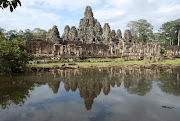
The two nations have made claims for decades over the temple, Preah Vihear, which stands at the lip of an escarpment on the border looking out over the mountains of northern Cambodia.
In 1962, the International Court of Justice awarded the temple to Cambodia, based on a map prepared at the start of the century by colonial French rulers. Unesco placed the temple in Cambodia partly based on that map when it awarded Preah Vihear world heritage status.
As a result of the rising tensions, Thai officials said they had prepared aircraft to evacuate some 1,500 citizens living in Cambodia. Thai authorities ordered a similar evacuation in 2003 when Cambodians rioted in the capital in protest against Thailand, setting fire to Thai businesses and to the Thai Embassy.
That earlier violence also involved claims to a temple, in that case the crown jewel, Angkor Wat, which is well within the borders of Cambodia.
“Thai businessmen who have no need to be in Cambodia now, please rush back to Thailand,” Foreign Minister Sompong Amornwiwat said Wednesday.
Thai nationals were reported to have huddled in a hotel in Phnom Penh for safety, uncertain if they should evacuate. Riot police were deployed outside the Thai Embassy.
Prime Minister Hun Sen of Cambodia on Tuesday issued an ultimatum to about 80 Thai soldiers to withdraw from a portion of the temple area. His noon deadline passed, with the Cambodian side saying the Thais had retreated and the Thais saying there had been no troop movements.
“At any cost we will not allow Thai troops to invade this area,” Mr. Hun Sen said Tuesday. “I would like to be clear about this. It is a life-and-death battle zone.”
In an effort to ease tensions, the Thai and Cambodian regional military commanders were scheduled to hold talks Thursday. The fighting on Wednesday was not the first since the two sides have deployed soldiers at the temple. Early this month, one Cambodian and two Thais were reported wounded in an exchange of gunfire.
Three days later, two Thai soldiers lost legs when they stepped on some of the many thousands of land mines strewn through the area.
Thailand’s 300,000-strong military is far better equipped and trained than the Cambodian army, with F-16 fighter jets and Blackhawk helicopters. But Cambodian soldiers have been fighting in the area for decades and are hardened by guerrilla warfare.
The disputed temple was in the hands of Khmer Rouge guerrillas until a decade ago, when the movement collapsed, 19 years after the fall of the Khmer Rouge regime in Phnom Penh. Many soldiers and commanders in the Royal Cambodian Armed Forces are former members of the Khmer Rouge.
Read more!

Wednesday, October 15, 2008
2 Killed on Thai-Cambodian Border

Thai FM explains border tensions with Cambodia
The Thai Foreign Ministry met ambassadors of eight Asean members to explain the border dispute between Thailand and Cambodia, Permanent Secretary for Foreign Affairs Veerasak Futrakul announced on Tuesday.
Philippine envoy failed to attend the meeting.
Veerasak said he told the envoys of the border clash between Thailand and Cambodia on October 3 and of the Thai troops stepping on mines while patrolling,
He pointed out the dispute area should have been free of landmines because they had been cleared earlier.
According to Thai News Agency, the Thai officials had entered the area to examination and found new mines of a variety never previously used in Thailand had been laid.
Thailand believes Cambodia laid the landmines following the October 3 border clash.
Such action violates the Ottawa Convention to which both Cambodia and Thailand are signatories.
Veerasak also expressed bewilderment at Cambodian Prime Minister Somdej Hun Sen's ultimatum for the withdrawal of Thai troops from the disputed areas because the Cambodia leader had previously supported bilateral efforts to solve the dispute.
However, he affirmed Thailand would attempt to protect and maintain its sovereignty to the utmost of its ability.
Read more!
Ex-Khmer Rouge men jailed for Briton's death
• Cambodian army general among four found guilty
• Verdict raises hopes for UN-backed genocide court
Four former Khmer Rouge guerrillas were jailed by a Cambodian court yesterday over the kidnapping and murder of a British mine clearing expert and his interpreter 12 years ago. Three of the accused were sentenced to 20 years imprisonment and a fourth got 10 years for their parts in the killings of the former British army engineer Christopher Howes and Huon Hourth.
The rare convictions of ex-Khmer Rouge fighters appear to reflect a new determination by the government of the prime minister, Hun Sen, that augurs well for the delayed UN-backed genocide tribunal.
Howes, 37, from Backwell, near Bristol, was murdered in the Cambodian jungle days after he was seized along with a 30-strong team from the British-based Mines Advisory Group (Mag) in March 1996. But his fate remained a mystery for two years until Scotland Yard detectives investigating the disappearances found fragments of bone in a fire used to try to destroy the evidence.
The Phnom Penh court heard that three of the accused, including a former senior Khmer Rouge commander who became a Cambodian army brigadier-general, combed the fire's ashes for fragments to show to the communist guerrilla group's army chief, Ta Mok.
The Khmer Rouge's military commander had passed down the order from the leader, Pol Pot, that Howes should be killed on the grounds that foreigners in the country were helping the Cambodian government.
It was only after the final defeat of the Khmer Rouge in 1998 and the defection of most of the guerrillas that it was confirmed Howes had been killed near the 12th century Angkor Wat temple complex. It was another 11 years before the five accused - Khem Ngoun, 59, Loch Mao, 54, Puth Lim, 58, Sin Dorn, 52, and Cheath Chet, 34 - were arrested in the Khmer Rouge stronghold of Anlong Veng and charged.
Yesterday, Howes' sister, Patricia Phillips, said: "Although we have never sought revenge, we are pleased that the murderers have been brought to account."
Ngoun, Ta Mok's chief of staff who became a brigadier-general in the Cambodian army, Mao and Lim, admitted they had been present when Howes was shot dead and burned. But all accused another guerrilla, Nget Rim, who has since died, of firing the fatal shot. They each received 20 years for being part of the murder conspiracy, while Dorn, who played a smaller role early in the kidnapping, was given 10 years. Chet was freed.
The court heard that Howes was given the chance to leave to fetch ransom money for the Mag team, but he chose to remain, a decision that earned him a posthumous Queen's Gallantry Medal.
Most of the Mag team escaped or were freed within a day of the kidnapping, though Howes and Hourth were held and taken towards Anlong Veng. Hourth was killed when he was deemed "no longer necessary" as Ngoun could speak English to Howes.
Five of the most senior surviving Khmer Rouge leaders have been indicted by the separate UN-backed tribunal in an effort to bring to book those responsible for the deaths of up to 1.7 million people in Cambodia's "killing fields" during the regime's four-year reign up until 1979.
Read more!
PM: Cambodians not to fear economically strong China
Cambodia should view China's economic prosperity as an opportunity but not a threat, national media Wednesday quoted Prime Minister Hun Sen as telling the two-day Fourth Asia Economic Forum Phnom Penh Tuesday.
"Don't wish that China should be poor. We should wish that China should be rich. It isn't a threat. It will help us ... (China's ) neighbor Cambodia and ASEAN will receive benefits," English-Khmer language newspaper the Cambodia Daily quoted him the president as saying.
In addition, the premier said that China could help deal with the current global financial crisis because China still has a large amount of foreign-exchange reserves and potential of economic growth".
According to the Chinese Embassy, the bilateral trade volume between China and Cambodia increased from 12.95 million U.S. dollars in 1992 to 933 million U.S. dollars in 2007.
China is currently the second largest investing country and the fourth largest donor country for Cambodia.
Source:Xinhua
Read more!
Official: Cambodia likely to weather world economic upheaval
PHNOM PENH, Oct. 15 (Xinhua) -- A senior official of the Cambodian Ministry of Economy and Finance said that the Kingdom is likely to weather the recent global financial crisis, national media reported Wednesday.
The global financial crisis will affect Cambodia's economy, but for the time being there is no substantial impact, Aun Porn Moniroth, Secretary of State for the Ministry of Economy and Finance, told the Phnom Penh Post in an interview.
"Cambodia's financial sector has little direct exposure to outside markets. We have no stock market, and banks in Cambodia have not borrowed much money from foreign banks," Aun Porn Moniroth said.
"We do not expect a significant impact, but we may experience a secondary impact through countries such as (South) Korea," he said.
"(South) Korea has been affected by this crisis, and it has invested in and opened bank branches in Cambodia. So there will bean impact, but we do not know the full extent yet," he added.
In addition, Aun Porn Moniroth said that the Cambodian garment sector would be affected by the crisis in particular.
"We predict that the crisis will affect exports such as garments, but this is an indirect impact," he said.
"The crisis will primarily affect economic growth in the countries that serve as our principal markets. Demand in those markets could drop, so our exports will do the same," he added.
Read more!
War rhetoric heats up in Thailand-Cambodia spat
Former Khmer Rouge soldiers wanted to see how long can Thailand' fighter jets will be flying. And how many fighter jet can Thailand afford to fall off the sky?
PHNOM PENH, Cambodia: Thailand put jet fighters on standby and Cambodia said its troops were on alert Wednesday as war rhetoric heated up between the neighbors in a tense border dispute.
Both sides said they had sent additional troops to the border and were ready to respond militarily if attacked, a day after Cambodia issued an ultimatum to Thailand to pull back its soldiers from disputed territory near the 11th century Preah Vihear temple.
"Our forces are on alert and ready to support the army's possible operations on the border," said Thai air force official Group Capt. Montol Satchukorn. "These are just precautionary measures. It's not that we are going to war."
The precautions included putting jet fighters on alert at air force bases nationwide and C-130 transport planes on standby at a base in the capital, Bangkok, to evacuate Thais living in the border area "if the tension escalates to a military confrontation," Montol told The Associated Press in Bangkok, Thailand.
Cambodia's deputy defense minister, Gen. Neang Phat, said, "We remain on alert and have readied our forces adequately to protect our territory." He declined to say how many Cambodian troops had been deployed in the area.
The conflict is the latest flare-up in a decades-long dispute over a contested stretch of jungle near the Preah Vihear temple. The World Court awarded the temple to Cambodia in 1962, but sovereignty over some surrounding land has never been clearly resolved.
Tensions flared July 15 after UNESCO, the U.N. agency, approved Cambodia's bid to have the Preah Vihear temple named a World Heritage Site, leading some in Thailand to fear that its claims over the nearby land would be undermined.
Cambodia deployed about 800 troops to the border after the UNESCO decision, and Thailand sent some 400 soldiers. Both sides pulled back most of their troops in late August, but passions flared again recently.
A brief gunfight broke out between the sides earlier this month, with one Cambodian and two Thai soldiers wounded. Both sides claimed the other fired first and blamed each other for being on the wrong side of the border. Three days later, two Thai soldiers lost legs when they stepped on land mines in the area.
As of late Tuesday, the opposing troops were only about 100 yards (meters) apart, said Gen. Viboonsak Neepan, the Thai Army commander for the region.
"We have sent more troops to be stationed near the area but only enough to resist (an attack). We will not attack first," Viboonsak said.
Cambodian Prime Minister Hun Sen sparked concerns Tuesday that an armed conflict was imminent, accusing Thai troops of having advanced into Cambodia's territory and declaring it a "life-and-death battle zone."
"They must withdraw," Hun Sen said in the capital, Phnom Penh. "I have set the timeline for them to withdraw by 12 o'clock."
There was no fighting despite the heated rhetoric, although the two countries disagreed on who backed down.
Cambodian army commander Brig. Gen. Yim Pim later said all Thai troops had retreated about 90 minutes ahead of the deadline and were back inside their camp about half a mile (0.80 kilometers) from the contested territory.
However, Thai army spokesman Sansern Kaewkumnerd denied that any troops had been pulled back and the Foreign Ministry issued a toughly worded statement that said, "If Cambodia resorts to the use of force, Thailand will have no choice but to exercise its right to self-defense."
Thailand's prime minister and military officials said their country's troops had been on their own territory all along.
"If there is a problem, we will use peaceful means with an emphasis on negotiations," said Thai Prime Minister Somchai Wongsawat. "We will not be an invader." Somchai is also under intense political pressure at home from anti-government protesters seeking his resignation.
Read more!
Tuesday, October 14, 2008
Thai troops deployed to cope with Cambodia
 PHNOM PENH, Cambodia (AP) — Thailand vowed it was ready to respond militarily if attacked by Cambodia after its smaller neighbor issued an ultimatum for Thai troops to pull back from disputed border territory by midday Tuesday.
Thailand moved more troops to an area nearby late Tuesday, but strictly as a defensive measure, said a senior Thai army officer.
The troops on both sides remained only about 100 yards apart, said Gen. Viboonsak Neepan, the Thai Army commander for the region.
"We have sent more troops to be stationed near the area but only enough to resist (an attack). We will not attack first," Viboonsak said. He did not specify how many troops were sent.
Despite increasingly heated rhetoric — including a description by Cambodia's prime minister of the contested land as "a life-and-death battle zone" — fighting did not break out, although the two countries disagreed on who backed down.
Thailand's prime minister said his country's troops had been on their own territory all along.
"If there is a problem, we will use peaceful means with an emphasis on negotiations," said Thai Prime Minister Somchai Wongsawat. "We will not be an invader." Somchai is also under intense political pressure at home from anti-government militants seeking his resignation.
The dispute is over the land around Preah Vihear, an 11th century temple long claimed by both countries but awarded to Cambodia by the World Court in 1962. Sovereignty over some of the land around the temple has not been clearly resolved.
Cambodian Prime Minister Hun Sen said Tuesday morning that Thai troops had tried a day earlier to advance into Cambodia's territory but Cambodian soldiers "waved them back and said, 'If you want to die, keep coming.'"
"They must withdraw," Hun Sen said in a speech in the capital, Phnom Penh. "I have set the timeline for them to withdraw by 12 o'clock."
Cambodian army commander Brig. Gen. Yim Pim later said all Thai troops had retreated about 90 minutes ahead of the deadline and were back inside their camp about half a mile from the contested territory.
"The tense situation has now eased," Yim Pim told The Associated Press.
Read more!
Thais defy warning
 BANGKOK - THAI soldiers will not leave a disputed stretch of the border with Cambodia despite an ultimatum from Phnom Penh for them to withdraw by midday on Tuesday, Foreign Minister Sompong Amornvivat said.
'We are in our homeland. How can they expect us to leave our home?' he said in reply to a question from a reporter.
Cambodian Prime Minister Hun Sen said on Monday the Thai troops should leave within 24 hours or his forces would turn the area into a 'death zone'.
Mr Hun Sen's comments came on Monday after he met Thailand's foreign minister in the latest effort to ease tensions over a territorial dispute that earlier this month sparked a brief exchange of gunfire at the border.
'We told them that if they do not stop (trespassing), armed clashes will break out,' Mr Hun Sen told reporters.
Thai Foreign Minister Sompong Amornwiwat did not immediately comment after the meeting.
Last week, two Thai soldiers were injured by land mines along the border. Thailand says the soldiers were on the Thai side of the border, but Cambodia has accused them of overstepping the boundary at a point several kilometres west of the ancient Preah Vihear temple.
The area - known as Eagle Field - could become 'a life-and-death battleground', Mr Hun Sen said, adding that Thai soldiers are now camped there about 33 metres from Cambodian troops.
Three days before that incident, at a point a few hundred yards (meters) away, a gunfight broke out between soldiers from the two sides. One Cambodian and two Thai soldiers were wounded.
Both sides claimed the other fired first and blamed each other for being on the wrong side of the border.
In a statement issued after Monday's meeting, Cambodia's Foreign Ministry called for more talks to 'avoid further unwarranted hostilities.'
Both countries have long claimed Preah Vihear, but the World Court awarded it to Cambodia in 1962. Sovereignty over some of the land around the temple, however, has not been clearly resolved.
Tensions flared July 15 after Unesco, the UN agency, approved Cambodia's bid to have the Preah Vihear temple named a World Heritage Site.
Both sides deployed troops to the border.
There has been a limited troop withdrawal from the area since, and talks have been held several times to resolve the conflicting claims, but without much progress. -- REUTERS, AP
Read more!
Cambodia issues ultimatum to Thailand
 PHNOM PENH, Cambodia: Cambodia's prime minister issued an ultimatum to Thailand to withdraw troops from a disputed border area by noon Tuesday or face a "life-and-death battle zone."
Prime Minister Hun Sen's warning came amid rising tensions over a stretch of border near the 11th century Preah Vihear temple, which has been a source of dispute between the two countries for decades.
Hun Sen accused Thai troops of advancing on a border area called Eagle Field near the temple in an attempt to occupy Cambodian land.
"They must withdraw," Hun Sen said. "I have set the timeline for them to withdraw by 12 o'clock." Noon in Cambodia is 0500 GMT.
Both countries have long claimed Preah Vihear, but the World Court awarded it to Cambodia in 1962. However, sovereignty over some of the land around the temple has not been clearly resolved.
Tensions flared July 15 after UNESCO, the U.N. agency, approved Cambodia's bid to have the Preah Vihear temple named a World Heritage Site. Both sides deployed troops to the border.
A brief gunfight broke out between the two sides early this month, with one Cambodian and two Thai soldiers wounded. Both sides claimed the other fired first and blamed each other for being on the wrong side of the border. Three days later, two Thai soldiers lost legs when they stepped on land mines in the area.
Hun Sen met Monday with Thai Foreign Minister Sompong Amornwiwat, but the meeting appeared to end without a resolution.
He said Monday, "We told them that if they do not stop (trespassing), armed clashes will break out."
Read more!
Leading garment brands confirm sourcing advantage of Cambodia
PHNOM PENH, Oct. 13 (Xinhua) -- Leading garment brands have once again confirmed the sourcing advantage of Cambodia, said a press release from the International Buyers' Forum here Monday.
"Twenty-eight representatives from leading garment brands came to Cambodia last week for the two-day meeting of the International Buyers' Forum organized by the International Labor Organization (ILO) and the International Finance Corporation (IFC)" and stated "they are recommending that their companies continue sourcing from Cambodia," said the release.
Forum participants remain very optimistic about Cambodia's garment industry, Tuomo Poutiainen, Chief Technical Advisor of ILO's Better Factories Cambodia program, was quoted as saying.
"Participants told me that subject to customer demand, on-going monitoring from Better Factories Cambodia and continuing good results, their companies are very positive about producing garments in Cambodia," he said.
"It confirmed both the relevance and importance of Better Factories Cambodia and stakeholders' belief and support for its new directions. There was consensus too that industry actors need to work more closely together, and the program needs to move beyond monitoring, and expand training and remediation. This view was widely shared by all the stakeholders," he added.
Membership in the forum comprises 32 brands which buy 60 percent of Cambodia's garment exports.
The forum, which takes place twice a year in Cambodia and Hong Kong, was convened by ILO and IFC to discuss the current work and future of ILO's Better Factories Cambodia.
Cambodia's garment sector is worth 2.6 billion U.S. dollars and is critically important to the estimated 350,000 workers and their extended family members who depend on the industry, a total of at least 1.7 million people.
Read more!
Four jailed for Cambodia murders
Four former members of Cambodia's Khmer Rouge have been jailed for their part in the murder of a British mine-clearer and his interpreter.
Three of those convicted received prison term of 20 years, a fourth 10 years, while a fifth defendant was acquitted by the court in Phnom Penh.
Christopher Howes and Houn Hourth were working in north-west Cambodia when they were abducted and killed in 1996.
The trial is seen as a sign that Khmer Rouge figures no longer enjoy immunity.
The Khmer Rouge ruled Cambodia for a four-year period in the late 1970s.
Senior figure
Forced from power by a Vietnamese invasion, the Maoist guerrillas continued to battle government troops from strongholds in the north-west for two decades.
Mr Howes, from Backwell in Somerset, was leading a Mines Advisory Group operation near the city of Siem Reap when his team was abducted.
The kidnappers asked Mr Howes to return to his office to collect ransom money, but he refused to leave his team. Although more than 30 members of the team were released or escaped, Mr Howes and his interpreter were killed.
A team of British detectives said in May 1998 they had firm evidence the two were taken to the Khmer Rouge stronghold of Anlong Veng and killed soon after the abduction.
Khmer Rouge members had been given amnesty under the deal which saw the organisation disband ten years ago.
One of those convicted is former senior Khmer Rouge commander Khem Nguon, who became a high-ranking officer in the Cambodian army after his defection.
Now he is a symbol that leading former Khmer Rouge figures are no longer immune from prosecution, the BBC's Guy De Launey reports from Phnom Penh.
Read more!
Monday, October 13, 2008
Cambodia, Thailand resume talks on border spat


Cambodian Foreign Minister Hor Namhong and his Thai counterpart Sompong Amornviwat met in the Cambodian capital Phnom Penh with the aim of resolving the border dispute.
"The biggest topic for the meeting is the border issue," Cambodian foreign ministry spokesman Koy Kuong told AFP.
Sompong is also scheduled to meet with Prime Minister Hun Sen later in the day, the official said.
The two countries have swapped accusations of violating each other's territory in the dispute over land near at least three ancient temples along their border.
At least one Cambodian soldier and two Thai troops were wounded when units exchanged gunfire during a brief clash on October 3 near Preah Vihear temple.
Two other Thai soldiers were also seriously injured last week after stepping on a landmine near the ruins.
Talks to discuss withdrawing troops from around Preah Vihear were postponed late August amid political turmoil in Thailand.
Tensions flared in July after ancient Khmer temple Preah Vihear was awarded world heritage status by the United Nations cultural body UNESCO, angering nationalists in Thailand who still claim ownership of the site.
Those tensions turned into a military confrontation in which up to 1,000 Cambodian and Thai troops faced off for six weeks.
Both sides agreed to pull back in mid-August, leaving just a few dozen soldiers stationed near the temple. However, much of the Cambodian-Thai border remains in dispute, and the slow pace of mine clearance has delayed demarcation.
Saturday, October 11, 2008
Cambodian property market fears crisis
PHNOM PENH, Oct. 10 (Xinhua) -- Cambodia's real estate boom maybe coming to an end, with the global financial meltdown threatening foreign investment, national media reported Friday.
"Our property markets are closely connected with the stock markets in South Korea and other Asian countries. If these markets fall, we are affected," Kang Chandararot, the head of the economists at the Cambodia Institute of Development Study, was quoted by the Phnom Penh Post as saying.
"We will see a recession in the short term, perhaps in six to 12 months," he said.
The South Korean government issued a statement this week urging banks to sell foreign assets to increase liquidity, the Post said.
South Korea is Cambodia's biggest investor and a fall in South Korea would be especially harmful to local growth, it said.
"South Korean and other Asian markets are very closely connected to the U.S., and these countries are our biggest investors," said Kang Chandararot.
Cambodia's real estate sector has enjoyed unprecedented growth since 2007, but began to slide in mid-2008, industry sources say.
No figures on the depth of the declines were available, but industry experts said the crisis' impact could be felt soon.
Meanwhile, Cheam Yeap, a lawmaker with the Cambodian People's Party and chairman of the National Banking and Finance Committee, said the U.S. crisis might affect the Kingdom's real estate market, but not the economy as a whole.
He said Cambodia's economy is sufficiently diversified in tourism, agriculture and garment manufacturing to withstand the global crisis.
Read more!
US Navy destroyer takes port call - in Cambodia
Sihanoukville, Cambodia (dpa) - A US destroyer arrived in the southern Cambodia deepwater port of Sihanoukville on Saturday for a five-day visit aimed at strengthening bilateral ties.
The 155-metre USS Mustin (DDG-89), an Arleigh Burke-class guided missile destroyer, arrived with its crew of nearly 300 to embark on a goodwill mission, which will include free dental clinics, repairs of local schools and hospitals and other humanitarian work.
The crew will also conduct training programs with the Cambodian naval personnel. There will also be demonstration operations, including one on disaster rescue.
Sihanoukville is about 240 kilometres from the capital, Phnom Penh.
"This is an example of the commitment of the US and Cambodian navies to good relations in the region, and is a commitment by the US towards strengthening regional security," Captain Charles William said at a welcoming ceremony.
This is the third visit of a US naval vessel to Cambodia in recent years after visits were suspended from the 1970s when the Khmer Rouge took power.
Officials said the free dental clinic will operate out of a local Buddhist pagoda from Sunday. The visit is scheduled to end Wednesday.
Read more!
Vietnam, Cambodia reinforce communication links
The Vietnamese Ministry of Information and Communications has reached a number of wide-ranging cooperation agreements with the Cambodian ministries of Information, and Post and Telecommunication.
The agreements were made in talks between Minister of Information and Communications Le Doan Hop, Cambodian Minister of Information Khieu Kanharith and Minister of Post and Telecommunication So Khun during Hop’s visit to Cambodia from October 8 -11.
The ministers agreed to increase the exchange of visits by managers, pressmen, and post and telecommunication officials to share management skills, formulating management regulations for the press and post and telecommunications sectors, improving professional skills, and developing infrastructural facilities for radio, television, and telecom stations.
They pledged to create favourable conditions and an attractive environment for post and telecommunication businesses to invest in and conduct business in each other’s countries.
The Cambodian officials also requested the assistance of the Vietnamese side in human resources training and enhancing the management of press, internet and telecom services.
During the visit, Minister Hop and his entourage were received by Deputy Prime Minister Sok An, who referred to the visit as a major contribution to consolidating the traditional friendship between the two countries and further bolstering cooperation and assistance between the ministries.
Ministers Hop and So Khun co-chaired the Vietnamese-Cambodian Post and Telecom Businesses’ Forum in Phnom Penh Friday. Hop also conducted a tour of a branch of the Vietnamese military-run Viettel company and visited several post and telecom units in the host country.
Source: VNA
Read more!
Friday, October 10, 2008
OSK Indochina Bank Starts Operations In Cambodia
KUALA LUMPUR, Oct 10 (Bernama) -- OSK Indochina Bank Ltd (OSKIBL) started commercial banking operations in Phnom Penh, Cambodia, today.
With an initial staff strength of 29, it offers a full range of retail and commercial banking products and services as well as foreign exchange and capital market expertise, it said in a statement on Friday.
OSKIBL is wholly-owned by OSK Investment Bank Bhd, a wholly-owned subsidiary of OSK Holdings Bhd (OSK).
The official opening is slated for Oct 20, with the banking licence to be handed to OSKIBL by the Governor of the National Bank of Cambodia.
OSK obtained approval in April from Bank Negara and the National Bank of Cambodia to establish a commercial bank to undertake commercial banking activities.
OSKIBL has an issued and paid-up share capital of US$13 million (RM42.5 million), comprising 13 million shares of US$1 each.
OSK is a regional financial services group listed on the Main Board of Bursa Malaysia Securities since 1991.
The group commenced business in 1963 in Malaysia and has since expanded geographically to several countries in Asia.
It employs 2,500 professionals in more than 50 locations across its network.
OSK's subsidiaries are licensed to conduct investment banking, securities trading and asset management activities in Malaysia, Singapore, Hong Kong and Indonesia.
In Cambodia, OSK operates as a commercial bank. It also has a representative office in Shanghai.
Read more!
Thai PM's visit to Cambodia canceled
PHNOM PENH, Oct. 10 (Xinhua) -- The official visit of Thai Prime Minister Somchai Wongsawat to Cambodia has been canceled, an official of the Cambodian foreign ministry said Friday.
The visit was scheduled on Oct. 13. The Cambodian Ministry of Foreign Affairs and International Cooperation did not elaborate the reason of the cancellation.
Meanwhile, the official said that Thai Foreign Minster will come to meet with his Cambodian counterpart Hor Namhong in Phnom Penh on Oct. 13, adding that the two will talk about the border issue.
The canceled visit of Thai Prime Minister is routine visit as part of an ASEAN (the Association of South East Asian Nations) rule that requires all new heads of its member states to greet their neighboring countries after taking office.
Negotiations between Cambodia and Thailand to discuss border demarcation and troop withdrawals have been postponed since late August when political unrest in Bangkok all but froze the operations of the Thai government.
Read more!
Wednesday, October 08, 2008
Cambodia gets $35 million in emergency food aid
PHNOM PENH, Cambodia (AP) — The Asian Development Bank announced Wednesday $35 million in emergency food aid to ease the burden of soaring food prices among some of Cambodia's poorest people.
The assistance will provide free rice, seed and fertilizer to 500,000 Cambodians, the poorest of the poor among the country's 14 million people, the bank said.
The recipients include slum residents in the capital, Phnom Penh, and farmers in seven provinces around the country's Tonle Sap lake.
"When the food price inflation spike came, these communities were already in a fragile state. It drove them more sharply over the edge into food poverty," said Arjun Goswami, the bank's country director.
The program will run through September 2011.
Over the past year rice prices in Cambodia have doubled, the ADB said in a statement. It added that the price of meat and fish has risen 30 to 50 percent, and farmers have been hit hard by an almost tripling in fertilizer prices.
About one-in-three Cambodians live below the national poverty line of just 45 cents a day.
Mahfuz Ahmed, the bank official in charge of the food project, said that of Cambodia's 14 million people, about 2.6 million sometimes go hungry and suffer from malnutrition.
The bank said half the aid will be in grant form and the other half is a loan carrying an interest rate of 1 percent per year.
The project will also provide free breakfasts and take-home rations for poor children in primary schools.
Cambodian economic growth could also drop to around 6.5 percent this year due to the impact of high food prices, Goswami said.
The government has projected a growth rate of 7.2 percent.
"It is clearly slowing for Cambodia," Goswami said. "We will need to see how far the economy can diversify and be resilient to these pressures that are coming on it."
Read more!
Cambodia's Muslims as geopolitical pawns
By Geoffrey Cain
PHNOM PENH - Competition for influence in Cambodia, recently seen as a two-country race between the United States and China, has now seen another deep-pocketed suitor emerge: petrodollar-rich Gulf states.
While Washington has required counter-terrorism cooperation for its assistance, and Beijing has sought greater access to markets, Middle Eastern countries seem keen to build religious ties with Cambodia's Muslim Cham minority.
Kuwait and Qatar promised as much as US$700 million in August, packaged as soft loans and investment deals to help develop Cambodia's relatively primitive infrastructure. The massive aid packages include agriculture and energy-development
initiatives, and a new open skies agreement granting Kuwait Airlines direct flights to Cambodia.
Beyond the economics, was a geopolitical twist to the aid package. Prime Minister Hun Sen agreed in principle to a Kuwaiti request not to support military or economic interventions against Iran, a target of US criticism for allegedly developing a secret nuclear weapons program. Hun Sen also plans a tour in January to strengthen political and economic links with Middle Eastern countries.
The financial aid package made big business headlines, but what went relatively unnoticed were the millions of dollars earmarked for building Muslim institutions. The impoverished and marginalized Cham, estimated to number about 400,000, have long sought and received funds from Middle Eastern patrons in Saudi Arabia, Kuwait and regional neighbor Malaysia to build mosques and religious schools, travel on the haj and study overseas.
With that assistance, an increasing number of Middle Eastern imams have taken up residence in Cambodia's traditionally moderate Cham communities and often promoted Wahabbi and Da'Wah Tabligh fundamentalist interpretations of Islam.
Concerns that foreign influence was stoking local terror risks first arose when four Muslim teachers from southern Thailand, Egypt and Cambodia were arrested at Phnom Penh's Cham-run Om-al-Qora school in 2003 for allegedly being members of the Jemaah Islamiyah regional terror group and using the school as a terrorist training center.
The arrests came days before the Association of Southeast Asian Nations' regional form opened in Phnom Penh, where then-US secretary of state Colin Powell was scheduled to attend. One Cham religious leader said the arrests were a political tactic to "woo the Americans", while Cham opposition parliamentarian Ahmad Yahya lashed out at Hun Sen, referring to him as a "second Pol Pot" because "he used to close schools as well".
Terrorism concerns intensified when authorities discovered that alleged top al-Qaeda operative Riduan Isamuddin, alias Hambali, took refuge in the same school in the months leading up to his August 2003 capture in Thailand. The US has since reiterated its concerns that radical Islamic organizations operating in Cambodia were winning more influence over the Cham.
In an August farewell speech this year, US ambassador to Cambodia Joseph Mussomeli told reporters that "there are some organizations here that are very radical and that are very intolerant, and they are trying very hard to change the attitude and the atmosphere of the Muslim population here in Cambodia".
Last year, the US helped to establish a National Counter-terrorism Committee and this year opened a Federal Bureau of Investigation (FBI) office in a massive new US Embassy. Robert Mueller, director of the FBI, said at the office's opening ceremony that Cambodia was important "because of the potential for persons transiting Cambodia or utilizing Cambodia as a spot for terrorism", according to news reports. Mueller was the first FBI director to ever visit Cambodia.
The minority Cham, the antecessors of the region's once-dominant Champa kingdom, have long been open to foreign influences. They are also no stranger to official oppression and prosecution, both in Cambodia and Vietnam. Ben Kiernan, who heads the Cambodian genocide project at Yale University, estimates that 90,000 of a total 250,000 Cham population were killed during the genocidal Khmer Rouge regime which ruled between 1975 and 1979.
Only 21 of a total 113 imams, or Islamic teachers, survived the radical Maoist regime, along with only 15% of Cham-built mosques, says Kiernan. That tragic history, academics and analysts say, have made the Cham more susceptible to outside religious influences. Islamic charities from Gulf states first entered Cambodia in 1991, when a ceasefire was declared among warring militias, according to academic Agnes De Feo, author of the upcoming book, Muslims of Cambodia and Vietnam.
Foreign identity
Faith-based charitable organizations, which Cham often refer to generically as "Kuwait", came mainly from the United Arab Emirates (UAE), Saudi Arabia and Kuwait, and gained significant clout over the ethnic minority's traditional Malay Muslim culture. Indian and Pakistani Islamic organizations, mostly promoters of the Tablighi Jamaat, or dawah, an apolitical movement aimed at revitalizing Muslim communities considered to be in danger of losing their Muslim identities, arrived later in the 1990s.
The result was a schism in the Cham community between the Tabligh Jamaat and Wahhabists, which have generally sought to fit Cham Islam into a more universal framework of Wahhabism, according to De Feo. However, scholars credit foreign Islamic groups for revitalizing the Cham's once-vibrant culture and sense of Muslim identity after its decline in the 1970s. Cambodia had 280 imams in 2007, a marked increase from the 21 that survived the atheist Khmer Rouge era.
With charities from the UAE funding much of their construction, it is customary for Cham to name newly built mosques "Dubai", followed by the Cambodian city or village in which they reside. De Feo and other scholars note the new mosques do not resemble Khmer Buddhist pagodas as they did pre-1975, but rather have taken the form of standard mosques in Gulf states.
Other mosques have taken on Indian and Pakistani forms, implying, some say, a shift from the Cham's traditional Malay Muslim-influenced practices. Cham formal dress has also recently changed to resemble more dawah and Middle Eastern styles, says De Feo.
Cham leaders have used foreign funds to start at least 19 cultural organizations that promote Cham heritage, most notably the Cambodian Muslim Development Foundation, run by Osman Hassan, secretary of state at the Ministry of Labor, and the Cambodian Islamic Development Association, led by opposition parliamentarian Ahmad Yahya, which develops and promotes local Muslim institutions. Few such groups existed before 1975, and their establishment post-1991 signifies a cultural resurgence among the Cham.
Sith Ibrahim, an ethnic Cham who is a secretary of state in the Ministry of Cults and Religions, recently told the Phnom Penh Post that "Cham Muslims have received direct benefit from the government's political and economic links with countries such as Malaysia, Indonesia, Saudi Arabia, Egypt and Kuwait."
At the same time, scholars cite mainstream Khmer concerns that the foreign-backed Cham cultural reawakening has caused them to resist Cambodia's new drive to speed up economic development and integrate with the global economy.
Influenced by fundamentalist Gulf charities and increasingly assertive local Cham organizations, the group's religious leaders often now say they don't want to cede their unique ethnic identity for a sense of Buddhist Khmer universalism. Critics say the Cham are instead conforming to foreign interpretations of Islam, which emphasize loyalty to faith before loyalty to the state.
Some argue a similar mindset has entrenched in Southern Thailand, where foreign-influenced ethnic Malay Muslim insurgents are have been fighting a bloody battle against the predominantly Buddhist Thai state for decades. The Thai daily The Nation reported in 2004 that hundreds of Cham attempted to cross into the southern Thai province of Pattani after the deaths of nearly 100 Thai Muslims at the hands of the military.
Despite those incidents, De Feo argues that despite deep-rooted historical connections Cambodia's Cham and southern Thailand's Malay Muslims operate in completely different geopolitical contexts. Unlike Thailand's Muslim secessionist insurgents, the Cham have no claim to independence and therefore little reason to embrace militant ideologies. Many Cham still view themselves as immigrants to Cambodia and they are an ethnic minority elsewhere in the region, including Vietnam and Malaysia, De Feo claims.
Other analysts say the Cham pose little threat, even with the growing presence of cash-rich Wahhabist charities in their areas. Some point to a January 2008 report by the US Congressional Research Service which advocated developing "a foreign aid approach that addresses the attractiveness of China's policy of non-interference with domestic affairs" and engaging "regional Muslim states and populations in a way that both supports moderate Islam in its struggle against radical Islam and brings the United States closer to regional Muslim states".
Instead, the US's current focus on developing counter-terrorism initiatives in Cambodia is pointed directly at Cambodia's ethnic Cham. Whether the US believes that threat is real, or is rather using it to strategically position itself vis-a-vis China's growing economic clout, is still an open question. But with the big, new Middle Eastern investments earmarked for Cambodia, and with the Hun Sen government's and the local Cham's warm response, the US may now find it has two major cash-rich competitors for influence rather than one.
Geoffrey Cain is based in Phnom Penh and a contributor to the Far Eastern Economic Review and Integrated Regional Information Networks (IRIN), a United Nations-run news wire service. He may be reached at geoffrey.cain@gmail.com.
Read more!
Landmines wound Thai soldiers on Cambodian border
BANGKOK, Oct 6 (Reuters) - Two Thai soldiers stepped on landmines along the Cambodian border on Monday, the army said, three days after a brief exchange of fire near the disputed 900-year-old Preah Vihear temple.
The army rangers, each of whom lost a leg, were patrolling on Thai territory and stepped on the mines only 400 metres (430 yards) from where soldiers from both sides clashed on Friday, Colonel Sirichan Ngathong told Reuters.
"We don't know whose mines they were, but we have dispatched a mine expert to check out the area," she said.
Phnom Penh said the mines, believed to have been laid years ago by the Khmer Rouge, were on Cambodian soil.
Bangkok and Phnom Penh have accused each other of unprovoked aggression in Friday's contact between two border patrol units in which two Thais and one Cambodian were wounded.
It was the first clash since the two sides agreed in August to withdraw most of the 1,000 troops that had been facing off for a month near the historic Hindu ruins that sit on the jungle-clad escarpment dividing the countries.
Their foreign ministers agreed in July to find a peaceful end to the spat, which centres on 1.8 square miles (4.6 sq km) of scrub near the temple.
The argument started when protest groups seeking to overthrow the Thai government criticised Bangkok's backing of Cambodia's bid to list Preah Vihear as a U.N. World Heritage site.
Tensions have eased considerably since Cambodian Prime Minister Hun Sen's victory in late July in a general election in which the temple, and nationalism, featured heavily.
Both sides have claimed Preah Vihear for decades. The International Court of Justice awarded it to Cambodia in 1962, and the ruling has rankled in Thailand ever since. (Reporting by Nopporn Wong-Anan; Editing by Ed Cropley and Sanjeev Miglani)
Read more!
Tuesday, October 07, 2008
High U.S. tariffs hurt Cambodian garment sector
PHNOM PENH, Oct. 7 (Xinhua) -- High U.S. tariffs are hurting Cambodia's garment sector, with the industry complaining that high import costs and a slowing U.S. economy could sink the Kingdom's key industry, state media reported Tuesday.
In 2007, Cambodia paid 419 million U.S. dollars in tariffs on 2.46 billion U.S. dollars worth of exported goods, meaning the industry is paying an average 17 percent tariff, the Phnom Penh Post said, citing a new report by the Progressive Policy Institute, a centrist U.S. think tank.
The average U.S. tax on imports is 1.3 percent, while Saudi Arabia pays only 0.1 percent on the goods it exports to the U.S., the Post said.
Cambodia has already seen a 500 million U.S. dollars drop in exports to the U.S. in the first eight months of this year compared to the same period last year, said Kaing Monika, externalaffairs manager at the Garment Manufacturers Association of Cambodia (GMAC).
He added that the sector has suffered a loss of about 20,000 workers.
Garments have been hard hit by the U.S. slowdown, with clothing sales down in 2008.
Cambodia sells about 70 percent of its clothing to the U.S. market, making it highly vulnerable to fluctuations in the U.S. economy and Washington's trade policies.
Read more!
Free breakfast on menu for Cambodia school kids
 By KER MUNTHIT
PHNOM PENH, Cambodia (AP) — The U.N. food agency is resuming free breakfasts for hundreds of thousands of poor Cambodian schoolchildren after securing new funds for a program suspended due to high food prices, the agency said Tuesday.
Under the revived scheme, 450,000 schoolchildren in the countryside will be fed meals in classes before starting their daily lessons.
The new school year started Oct. 1, and food distribution is now under way for students in 1,344 rural schools in 12 Cambodian provinces, said Bradley Busetto, acting director of the U.N. World Food Program in Cambodia.
The program costs about $9 million per year, or about $20 per child, he said, adding that its resumption was made possible by donors responding to a recent WFP appeal.
The WFP was forced to suspend the school meals program in Cambodia in May due to high food prices. Its local suppliers defaulted on contracts to provide rice because they could get higher prices elsewhere.
Busetto said he was still concerned about the impact of high food prices on Cambodia's poor.
But "at the moment, we've managed to resume and we're hopeful that we can maintain this program through the entire school year," he said. "We're very happy about that."
The breakfast includes rice, sardines, yellow split peas, vegetable oil and salt — food items to help alleviate nutritional deficiencies among the rural population.
Rural Cambodian school teachers said the program, which started in 2000, has made children visibly healthier and improved their ability to learn.
At Sangkum Seksa School, about 40 miles west of Phnom Penh, principal Tan Sak said he was waiting for the food deliveries.
"I have already told my students to bring their plates and spoons next time they come to classes," Tan Sak said by telephone. "They are delighted."
Read more!
Senior opposition party leader defects to Cambodia's major ruling party
PHNOM PENH, Oct. 7 (Xinhua) -- Keo Ramy, vice president of Cambodia's second largest opposition party, here Tuesday defected to major ruling Cambodian People's Party (CPP).
"I decide to join CPP after I have opposed it for over 20 years," said the 45-year-old former leader of the Human Right Party (HRP). "We have opposed CPP for our whole lives, but we will not win CPP."
"We can see that through the general election on July 27. CPP won 90 of the 123 seats at the National Assembly. More (and more) people support CPP and I follow the decision of people," he added.
During the election, HRP won three seats, but Ramy failed to secure a seat as candidate for the Phnom Penh electoral constituency.
Ramy once served the co-ruling Funcinpec Party and the major opposition Sam Rainsy Party and later joined his friends to establish HRP.
Read more!
Cambodia Tourism-Peak Season: Bayon Heritage Travel and Tours ready to serve
2008-10-07 06:56:05 - Ministry of tourism has proposed a news tourism slogan-Visiting Cambodia, Kingdom of Wonder- which reflects the tremendousness of Cambodia's tourism...
Cambodia tourism is growing notably. Cambodian Ministry of tourism is reporting number of tourist arrival were up 13 percent in the first half of 2008. The World Heritage-listed ruins have been a vital engine driving Cambodia's tourism. Cambodia has the potential attraction and provides the real experiences to tourists as Ministry of tourism has proposed a news tourism slogan-Visiting Cambodia, Kingdom of Wonder- which reflects the tremendousness of Cambodia's tourism. During holiday vacation and peak season for tourism in Cambodia, the reservation rate in tourism industry is expected to be high.
As yet Bayon Heritage Travel and Tours, one of the leading tour operators in the Indochina Region, is ready for the TRAVEL peak season. We are fully licensed as international tour operators and recognized as a leading luxury holiday and vacation organizer arranging private and group tours to Vietnam, Cambodia, Laos, Thailand and Myanmar. Why Travel with us?
Bayon Heritage offers exciting and enjoyable trips ranging from free and easy tours to challenging activities and in-depth exploration of culture, history, tradition, and lifestyle, including a wonderful variety of cuisines, vistas, and personal encounters in the enchanting, unspoiled landscapes of Vietnam, Cambodia, Laos, Thailand and Myanmar.
With in-depth local knowledge, our friendly tour operators provide holiday experiences that you will remember and treasure long after your holiday has ended. We tailor our tours to suit each traveler's needs and to exceed their expectations -- including the most discerning of travelers. Customer satisfaction is highly taken in to consideration and is our great success.
Selecting Bayon Heritage Travel and Tours as your travel consultant is smarter decision making and choice to fully taste travel experience with suitable price that won't disappoint you. So DO NOT Wait! The time is now to travel to enjoy your holiday in Indochina region with Bayon Heritage Travel and Tours who is a smart travel consultant standing next to you while on trip. To book your trip, please link to www.tourismindochina.com/
For more information about Hotel in Cambodia
www.tourismindochina.com/cambodia/hotels/siemreap.html
For more information about Cambodia Visa
www.tourismindochina.com/visa.htm
For more information about Cambodia Tour Package
www.tourismindochina.com/cambodia/tours/
Kontaktinformation:
Bayon Heritage Travel and Tours
#14 Eo, Street 51( Pasteur), Beong Keng kang I, Khan Chamkarmorn, Phnom Penh, Cambodia.
Tel: (+855)-23 997 178 / 353 598
Fax: (+855) - 23 223 299
www.tourismindochina.com
Kontakt-Person:
CHHEM Samnang
Author
Phone: +855 92 53 43 66
E-mail: e-mail
Web: http://www.tourismindochina.com
Presse-Information:
Bayon Heritage Travel and Tours
#14 Eo, Street 51( Pasteur), Beong Keng kang I, Khan Chamkarmorn, Phnom Penh, Cambodia.
Tel: (+855)-23 997 178 / 353 598
Fax: (+855) - 23 223 299
www.tourismindochina.com
Kontakt-Person:
CHHEM Samnang
Author
Phone: +855 92 53 43 66
E-mail: e-mail
Web: http://www.tourismindochina.com
Read more!
Monday, October 06, 2008
Cambodia's silk industry could face collapse: prince
Prince Pheanuroth warns that a drop in domestic silk farming and threat of declining imports could kill a vital industry trade
CAMBODIA'S silk weaving industry could face colapse, with supplies from Vietnam and China expected to dry up, Prince Sisowath Pheanuroth told the Post last week.
"We want the government and concerned NGOs to help expand the cultivation of mulberry trees and silkworms [in Cambodia] without delay," said Prince Pheanuroth, who coordinates the Phnom Penh-based NGO Cambodian Sector-Wide Silk Project.
Cambodia imports about 700 tonnes of raw silk a year from Vietnam and China, at a cost of US$28,500 per tonne, or $20 million every year - a 10 percent increase over last year, Prince Pheanuroth said.
But with large silk factories in China and Vietnam coming online, local silk producers may be starved out of feedstocks.
About 400 tonnes go to local manufacturers, while the balance gets exported to Thailand, he added.
"The import of large amounts of raw silk is not good because imported silk is poorer in quality than Cambodian silk," Prince Pheanuroth said.
The local industry has become dependent on the low-quality imports, he said.
"Vietnam and China ... have been focusing their silk industry on textile factories," he said.
"When demand increases in those countries, they will no longer be able to satisfy the Cambodian market."
The prince called for greater government involvement to prevent the decline of the silk industry.
"We know that Cambodia cannot compete in the silk sector because [Vietnam and China] have a much greater capacity for silk production. The government must encourage more silk production at home if it hopes to avoid shortages in the future," he said.
The prince said that prior to 1998, Cambodia had about 2,000 silk-producing families.
That number has fallen to 700 today as farmers turn to more easily produced crops or decide to sell their mulberry plantations - the principal source of food for silkworms - to capitalise on rising land prices.
Domestic farmers produced about 50 tonnes of raw silk per year during the 1960s, he said, but the turbulence of the 1970s and the civil war that followed effectively ended the manufacture and trade of silk.
A vital sector
Men Sineoun, executive director of the Cambodian Handicraft Association, said imported silk is vital to the sustainability of the silk sector.
He said the association, which comprises 43 NGOs and some 2,000 members, accounted for about $2.5 million of exports in 2008 to 16 countries in Europe, North America and Asia.
"Ninety-five percent of our finished goods use imported raw silk," he said.
"If there were no imports, we would face difficulties. Cambodia's silk market should be a priority because foreign markets still desire handmade products," he added.
Mao Thora, secretary of state for the Ministry of Commerce, said Cambodia needs about 400 tonnes of raw silk per year to sustain the industry and called for greater investment from the private sector.
"Cambodian farmers can only produce about three to five tonnes per year," he said.
Chan Sophal, president of the Cambodian Economic Association, agreed that private investment was important but stressed a greater governmental role in bolstering the sector.
"The government should encourage private companies to invest in this sector ... and encourage farmers through start-up capital, new mulberry plantations and an increase in silk worm farming," he told the Post.
Read more!
Landmine hurts Thai soldiers near Preah Vihear
(BangkokPost.com) - Two Thai field soldiers lost their legs on Monday after stepping on a landmine in the lower northeastern province of Si Sa Ket near the Thai-Cambodian border area.
It was the same spot about three kilometres from the 11th century temple of Preah Vihear where soldiers from both sides clashed briefly last Friday.
Landmines in the site were previously dismantled and removed, and it is believed that new landmines could be activated in the area, according to a bomb rescue unit stationed in Si Sa Ket. One of the rangers lost a leg while the other lost both of them, he said.
After the explosion, more Cambodian troops were deployed to the border area.
The Deputy Prime Minister, Gen Chavalit Yongchaiyudh, said he had talks with the Cambodian counterpart and everything is going well. However, he avoided talking about the details of their discussions.
Gen Chavalit said he and Prime Minister and Defence Minister Somchai Wongsawat will travel to Cambodia on October 13 to work out the Preah Vihear case.
“Thailand and Cambodia are neighbouring countries with close relations. There could be some minor issues, but they can be solved,” Gen Chavalit believed.
Read more!
CAMBODIA: Coastal development threatens livelihoods
SIHANOUKVILLE, 6 October 2008 (IRIN) - The beach looks idyllic with its white sand and seagulls but soon it will be populated with high-end resorts. Sophal, who requested his family name not be revealed, does not know what will happen to his home once the evictions begin.
“This entire area will be cleared out,” he said. “I don't know when, or why. They [the government] don't tell us anything. Just that a big buyer came and bought it.”
“Some powerful people in the government are taking all the land ... and soon we'll have nothing left,” he said.
Those 192 hectares of land were allegedly ceded to high ranking military officer Sar Soeung, who uses the space as private property, a report by the Hong Kong-based Asian Human Rights Commission revealed.
According to Cambodian officials, Sihanoukville, one of Southeast Asia's popular backpacker resorts, is poised to become the region's next big tourist destination.
To expedite the process, the government regularly hands land concessions to government-tied elites at the expense of poor residents, claims Cambodian human rights watchdog Adhoc.
“These concessions and evictions are mostly a problem of corruption,” Cherp Sotheary, Sihanoukville coordinator for Adhoc, told IRIN. “Most of the private investors who got concessions are affiliated with the ruling party, coming in the form of joint ventures with foreign companies.”
The Sihanoukville governor's office was not available for comment.
Rabbit run
The Council for the Development of Cambodia (CDC) announced on 13 September it had granted permission to the Cambodian Pol Cham Group to develop a five-star resort and golf course on Koh Tunsay, or Rabbit Island, reported the Cambodian English daily, the Phnom Penh Post.
But that project will require the eviction of 14 families, who claim they were compensated only US$900 when they demanded $20,000.
“In Sihanoukville, the fishermen and their communities depend on the environment to earn their living, usually by farming vegetables,” Sotheary told IRIN. “When the investments come, they clear the land and locals lose their income.”
Other islands have been ceded to British, French, Chinese and Russian investors, but residents claim the government did not inform or consult them about the purchases.
Sihanoukville governor Say Hak, however, guaranteed residents the right to stay with legal documentation under Cambodia's 2001 land law. The central Cambodian government also declared the coast and islands public property that could not be developed.
According to a 2008 report by Yash Ghai, the UN Special Representative for Human Rights in Cambodia, land laws are “regularly” violated “with impunity by influential individuals, companies and government entities”.
Read more!
Sunday, October 05, 2008
Boat Journey to Battambang
Yet another early morning, the 5th in a row. Tonight I must sleep in!
by the way, I've really loved reading your comments. I'm not responding on this site, as it takes long enough as is, but have responded to those that asked questions by email. Keep 'em coming! If there is anything you are missing in my commentaries, please let me know (am trying to talk more about food now)
Maybe I left Angkor too early, but it is done. I took a traditional, wooden longboat on Lake Ton Sap and the Sangker River to Battambang. It was a traditional longboat, but had a motor and no toilet for the 7 hour journey! Luckily we stopped at a lunch shack on the way.
There were two levels to this boat, full sun on the top deck or shade at the water level for wimps like me. So my pictures aren't great, but this journey was similar to a boat trip I did on Inle Lake in Myanmar with houses on stilts, people in boats, and green floaty plants, so I was laid back today with the camera, which is good since it takes ages to load pictures here!
Best part is when the locals needed to board. Relatives or friends would paddle or motor them up to our boat and transfer boxes, bags, and babies as well as the other passagers to and fro. One of the other westerners commented on the children and how well behaved they were for a 7 hour boat journey.
If I ever get my pics up, there are some of a village. An old lady behind me told me to take pictures of it. Not sure which one it was. We had communicated earlier when I stopped her from sitting in some liquid.
So now I am in Battambang for the next days. Have a recommendation here for a motor driver from Albrecht's girlfriend (ex boss). He wasn't here when I arrived, but hope to talk to him tomorrow. Also want to do a cooking course at the restaurant I'm going to eat dinner in right now called the smoking pot (not sure if it has something to do with Pol Pot or not). I want to learn how to make that Amok Curry!
Read more!
Cambodia's higher education dreams confront reality
PHNOM PENH (AFP) — She has two years to go until graduation, but already Cambodian student Chhum Savorn is filled with a sense of dread.
The 21-year-old decided to major in finance, hoping she would acquire skills to help develop her country, which is one of the poorest in the world.
Instead, she thinks her education is nearly worthless -- classes are mostly packed with indifferent, cheating students and led by under-qualified professors.
"The low quality of my studies means that I can't help the country, and I'll even have a hard time getting a job that pays enough to help my family," she says.
A growing number of eager young Cambodians are finding themselves duped into a higher education system that suffers from weak management and teaching because it is geared more toward profit than learning.
As a result only one in ten recent graduates are finding work, a worrying figure in a country trying to rebuild after decades of civil war.
Cambodia's schools were obliterated under Khmer Rouge rule in the 1970s when the regime killed nearly two million people -- including most of the country's intellectuals -- as it emptied cities in its bid to forge a Communist utopia.
But as the country rebuilds and the economy grows, it is inundated with institutions peddling low-quality education.
In 2000, there were ten post-secondary institutions in Cambodia. Now there are 70 private and state-run universities.
Most programs offered by those institutions are dismal, says Mak Ngoy, deputy director general of higher education at the Ministry of Education, Youth and Sports.
"We are not yet satisfied with the current quality of our education," Mak Ngoy says.
"I think increasing the number of higher education institutions is a positive sign, but we are struggling with the hard task of strengthening quality," he adds.
Qualified university professors complain that many students rarely do their work and cheating is rampant.
A number of students are content to pay for a degree and do not realise the benefit of a good education, says Lav Chhiv Eav, rector of Royal University of Phnom Penh, the oldest and largest state-owned college.
"Some students are scared of studying hard and think what they need is any degree, not quality. The final result will be joblessness," he says.
Most of Cambodia's universities are small-scale institutions with limited of capital, poor facilities and little discipline.
So far, the education ministry has ordered the closing of four institutions that called themselves universities, but gave little education to students.
Five years ago there was an attempt to fix Cambodia's higher education institutions, with the formation of a national university accreditation committee.
The committee was formed to force institutions to adhere to strict education requirements, but the World Bank pulled its funding for the scheme when it became clear the body would not be independent from government control.
With little official oversight, the quality of many Cambodian universities has worsened, while the number of Cambodians seeking a diploma has shot up.
More than 135,000 Cambodians are currently enrolled in some form of higher education, says the education ministry, compared to just 25,000 eight years ago.
But only one in 10 recent university graduates have found work, according to the Economic Institute of Cambodia, as the country remains mired in poverty despite the double-digit economic growth.
Ma Sopheap, officer at the Asian Development Bank, says Cambodia will have trouble luring foreign investment if it does not start producing more qualified graduates.
"If the low quality of higher education continues, it will affect Cambodia's economic development," he says. "Then there is no way to reduce poverty."
Read more!
Saturday, October 04, 2008
Cambodian and Thai commanders meet at site of border skirmish
 PREAH VIHEAR, Cambodia (AFP) — Cambodian and Thai commanders met at their tense disputed border area Saturday amid accusations that each side had caused a border skirmish that left three soldiers injured.
One Cambodian soldier and two Thai troops were wounded when units exchanged gun and rocket fire during a brief clash Friday near an ancient temple in the area.
In an attempt to cool tensions Srey Dek, commander of Cambodian forces in the area, met with his Thai counterpart, Colonel Chayan Huaysoongnern, on Saturday afternoon at a Buddhist pagoda in the disputed territory, said the Cambodian cabinet spokesman.
"The two sides called for the situation to return to normalcy," Cambodian cabinet spokesman Phay Siphan told AFP.
The foreign ministries of both countries issued formal letters on Saturday accusing the other's troops of trespassing and firing first in Friday's skirmish.
Cambodia's letter to the Thai embassy in Phnom Penh warned that "armed provocation by Thai soldiers could lead to very grave consequences, including full-scale armed hostility".
Later Saturday the Thai foreign ministry responded with its own letter, given to a Cambodian diplomat.
"Thailand protested on two points -- that Cambodian soldiers trespassed into Thai territory and that Cambodian soldiers opened fire first," a foreign ministry official said.
The clash came amid attempts to make progress in talks to resolve the decades-long border dispute.
The dispute flared in July after the Khmer temple of Preah Vihear was awarded world heritage status by the UN cultural body UNESCO, angering nationalists in Thailand who still claim ownership of the site.
That spilled into a military standoff, in which up to 1,000 Cambodian and Thai troops faced off for six weeks.
Both sides agreed to pull back in mid-August, leaving just a few dozen soldiers stationed near the temple, but the neighbours have continued to trade accusations of violating each other's sovereignty.
Phay Siphan said Thai prime minister Somchai Wongsawat was still expected to visit the Cambodian capital later this month to speak with Cambodian premier Hun Sen about the simmering border dispute.
"The talks between the Cambodian and Thai prime ministers on October 13 in Phnom Penh will take place as planned," he said.
During an inspection of the skirmish site Saturday, Cambodian deputy commander General Chea Dara said Thai troops had intruded more than a kilometre (0.6 miles) into Cambodia.
"Our troops are patient but they must protect themselves too," Dara told reporters.
Thai troops appeared to be keeping their distance from their Cambodian counterparts on Saturday but a Cambodian officer said the Thais had dug a fresh trench on disputed land.
"Digging a trench breaches an earlier agreement between Cambodia and Thailand," said Major Meas Yoeurn.
Read more!
Protecting Cambodia's Treasures
The United States government and the government of Cambodia have agreed to extend their Memorandum of Understanding "Concerning the Imposition of Import Restrictions on Archaeological Material from Cambodia from the Bronze Age through the Khmer Era."
This extension, consistent with a recommendation made by the Cultural Property Advisory Committee, represents a continuation of cooperation that began in 1999. Emergency U.S. import restrictions were then implemented to help reduce the pillage of Cambodia's archaeological heritage and the illicit trafficking in such material.
This U.S. action is in response to a request made by the government of Cambodia under Article 9 of the 1970 United Nations Educational, Scientific, and Cultural Organization (UNESCO) Convention on the Means of Prohibiting and Preventing the Illicit Import, Export and Transfer of Ownership of Cultural Property. Cambodia is the first country in East Asia to receive the cooperation of the United States in protecting its cultural property in this manner.
The extended Memorandum of Understanding expands the scope of the original to include archaeological objects from the Bronze and Iron Ages. It specifically restricts the import into the United States of ancient Cambodian stone, metal, and ceramic archaeological material unless an export permit is issued by Cambodia or there is verifiable documentation that the objects left Cambodia prior to the effective date of the restriction.
The U.S. Department of Homeland Security has published a list of restricted categories of objects, amending it to include material representing the Bronze and Iron Ages. The restricted objects may enter the United States only if accompanied by an export permit issued by Cambodia or documentation verifying its provenance prior to 1999 and if no other applicable U.S. laws are violated.
The United States is also helping Cambodia protect its cultural treasures through financial grants provided by the U.S. Ambassadors Fund for Cultural Preservation. The U.S. State Department's Bureau of Educational and Cultural Affairs Cultural Heritage Center has recommended an award in excess of $957,000 to the World Monuments Fund for the conservation of the 10th century Phnom Bakheng Temple in Cambodia.
The United States is committed to working with Cambodia to preserve its rich and ancient cultural heritage.
Read more!
Charmed by the steps of the ancients in Cambodia
 Pol Pot and the Khmer Rouge did their best to wipe it out. But Cambodia's historic dance is making a recovery of sorts
By Rob Crossan
Boramey Chhaychan is 23. She has been dancing since she was nine, and learning apsara – the ancient and almost extinct dance of Cambodia – for the past six years . "It takes a huge amount of concentration to be the best," she tells me as she smoothes down the tiny creases in her makot – the silk gown into which she is sown before each performance, in order to achieve the requisite figure-embracing fit.
"The body has to be soft and flexible at the same time, your fingers have to be soft, too. There's also so much bending involved if you are the lead dancer that you absolutely can't be fat either," says Boramey. The list of requirements goes on. The apsara dancer should have, according to instruction manuals, "a round body like the body of a red ant" and "the eyes must be oval and sharp with folds in the eyelids".
Assuming that their eyelids are blessed with the requisite folds, the apsara dancer can then take to the stage, accompanied by instruments including the kong thom, a horseshoe-shaped semi-circle of metal chimes resting on wood that the player sits in the middle of, taut drum skins called rumana and a fish-skeleton-shaped xylophone called roneat thung.
Tonight, after days of sporadic power cuts, electricity miraculously returns to light up the stage as Boramey begins to perform the ancient dance of the perfect celestial female beings of the Khmer kingdom. Her hips roll in slow motion, fingers rise coquettishly to the hips and lips, long thin fingers are outstretched, beckoning and then recoiling. But only the tiniest glimmer of coy sexuality is ever hinted at. The falsetto choir of voices of the dozen singers to the side of the stage wails as the drum, slow and steady as a heartbeat, begins to flutter and float. Boramey kneels on the floor, seemingly as brittle as a falling leaf, before rising like an uncoiling snake. Her bare soles and heels are just as expressive as the hands and arms; every limb creates a flowing narrative of shapes.
Boramey ends by joining both thumbs together in the centre of the chest – an expression that is circumspect, meditative and motionless.
This extraordinary dance dates back to the 12th century. Yet in the late 20th century Pol Pot and the Khmer Rouge almost succeeded in wiping it out for ever.
Even now, it only just survives: "The locals don't really seem to care about apsara," laments Vang Metry, of the Apsara Arts Association. "We only really get visitors from overseas who come to see our students perform. I give away free tickets sometimes but still almost nobody from round here shows up. They'd rather go and see rock'n'roll, I guess."
The Apsara Arts Association, set up 10 years ago, is a remarkable creation. It is located in the district of Thmey in the west of chaotic Phnom Penh. The theatre is built on concrete stilts beneath a thatched roof. The sides of the theatre are exposed to the huge lotus plants that rest on the waters of the Pong Peay. This is a stagnant expanse that carries the weight of much of the neighbourhood's sewage; to Westerners, the first word of the area's name is spot on.
The 130 students at the apsara school range in age from four to 23. A significant number are orphans. Accommodation is provided for them within the school; they practise dance in the morning and study in the afternoon. It's not just the allure of rock'n'roll that is preventing any chance of apsara regaining ground in the popular consciousness. Fire destroyed the National Theatre in 1994. And the University of Fine Arts, where apsara and other traditional dances are taught, was sold off to a property developer last year. The faculty was moved far out of Phnom Penh on a dirt road that is regularly washed away in wet season, a move which has had dire consequences for student numbers.
An additional problem is that to be a lead apsara dancer you must be unmarried and a virgin. When one of the country's best new prospects performed in front of the tourism minister for Cambodia in 2000, he decided to marry her.
"He stole her from us!" claims Metry. Now divorced, Ouk Phalla still dances. But, due to the law of the apsara, can no longer play the lead in ancient stories such as The Churning of the Ocean Milk, which tells how apsara girls were created through a symbolic Brahmanist scripture.
According to myth, the apsara dancers performed in the sky. Their curvaceous figures grace the bas-reliefs of the Angkor Wat temples. The iconic towers of this ancient complex comprise Cambodia's most popular tourist attraction. Angkor Wat was once home to thousands of apsara dancers, who performed for Cambodia's kings during the 12th century, a time when the kingdom covered vast areas of what today is Thailand and Vietnam.
The dancers on the walls of the temples are naked, though dancers today are adorned in silk chorabab skirts and five-pointed crowns with red frangipani flowers sown on to the side with cotton thread to create the effect of a falling stem.
Performances continued in the dancing pavilion of the Royal Palace for moonlight shows until the Khmer Rouge seized power in the mid-Seventies. Pol Pot's murderous thugs began to exterminate anyone who they believed stood in the way of achieving a peasant agrarian utopia. That included the practitioners of apsara.
Anybody with any hint of intellectual merit was slaughtered by order of "Brother Number One", as Pol Pot was known. Judgments were made on terms as spurious as whether a person wore glasses. Veng was a dance instructor who was forced to leave Phnom Penh and work in the fields.
"I had to hide my CV," Veng tells me. "The Khmer Rouge asked me what my job was and I lied and told them I was a farmer. It was only by going into the fields and observing what people did that I didn't get killed. I watched the farming methods that everyone else was using and simply copied whatever they did. Somehow they never noticed that I wasn't a farmer and I avoided death."
After the regime was finally defeated by an invading Vietnamese army, apsara was considered a low priority when it came to rebuilding this most disturbed and abused of societies. It was only in 1995 that the first revived performance was staged, guided by Princess Boppha Devl, a dancer with the royal troupe in the Sixties. She studied the bas-reliefs at Angkor Wat to re-learn the 1,500 positions that masters of the dance must know.
As the light darkens and a post-show dance class ends with the students giggling as they try to maintain their difficult stances, Vang laments the problems of keeping apsara alive.
"It's not getting any easier. We have power cuts almost every day in this part of the city. The government doesn't support us in any way," she says. "We rely entirely on funding from foreign donors.
Culture is not a high priority for the government, which is a shame as this is such an important part of Cambodian history. A lot of the students here are now dancing in the tourist restaurants near Angkor Wat. I would love there to be a day when visitors would mention apsara before they mention Pol Pot. If this is lost, then a part of Cambodia is lost forever."
Traveller's Guide
Getting there
There are no direct flights between the UK and Cambodia. From Heathrow, Thai Airways (0870 606 0911; www.thaiairways.co.uk) flies to Phnom Penh via Bangkok, Malaysia Airlines (0870 607 9090; www.malaysiaairlines.com) flies via Kuala Lumpur and Singapore Airlines (084 4800 2380; www.singaporeair.co.uk) via Singapore.
The writer travelled with Audley Travel (01993 838000; www.audleytravel.com), which offers tailor-made trips to Cambodia reflecting themes including apsara. A 10-day itinerary visiting Siem Reap, Phnom Penh and Sihanoukville costs from £2,045 per person, including return flights from Heathrow, transfers, tours and B&B.
You can buy an offset through Abta's Reduce my Footprint initiative (020-7637 2444; www.reducemyfootprint.travel).
Staying there
Raffles Hotel Le Royal, Phnom Penh (00 855 23 981 888; www.phnompenh.raffles.com). Doubles start at US$255 (£146), room only.
Visiting there
Apsara Arts Association, 71 Street 598, Phnom Penh (00 855 12 979 335; www.apsara-art.org). Perfomances take place most Saturdays at 6.30pm.
More information
British passport-holders require a visa. These can be obtained on arrival at Phnom Penh and Siem Riep airports or online at www.mfaic.gov.kh; $20 (£11.40).
www.tourismcambodia.com;00 855 23 216 666
Read more!
Friday, October 03, 2008
Five former KRouge claim innocence in trial for killing Briton
PHNOM PENH (AFP) — Five former Khmer Rouge fighters told a Cambodian court Friday they were innocent of the 1996 kidnapping and killing of a British mine clearer and his translator.
The former guerrillas appeared in blue prison uniforms at Phnom Penh Municipal Court to answer charges of premeditated murder and illegal confinement, and could face life in prison if convicted.
They stand accused of shooting Christopher Howes and translator Huon Huot a few days after seizing the pair and other members of their mine clearance team near the famed Angkor Wat temples in northwest Cambodia.
All five suspects -- Khem Ngun, Puth Lim, Sin Dorn, Loch Mao, and Cheap Chet -- were arrested over the past year, nearly a decade after a joint investigation into the incident by British and Cambodian police.
Khem Ngun, who served under notorious Khmer Rouge commander Ta Mok, was allegedly the one who ordered the fighters under his control to shoot Howes and Huon Huot.
But Khem Ngun claimed the order to kill the prisoners came from deceased Khmer Rouge commander Khem Tem and was carried out by a soldier named Rin.
"Another Khmer Rouge soldier close to Ta Mok ordered the shooting of Howes in the head, and then I turned my face away and felt shock," Khem Ngun told the court.
Khem Ngun was serving as a major general in the Cambodian military when he was arrested in November last year. The other suspects had become civil servants.
At the time of the killings, the communist Khmer Rouge were battling government troops in the final years of Cambodia's drawn-out civil war.
Howes, 37, refused a chance to leave his kidnapped team of 20 mine clearers from the Britain-based Mines Advisory Group to retrieve a ransom.
While the rest of the team was eventually released, Howes and Huon Huot were taken deeper into rebel-held territory and killed.
Their remains were found in 1998, the same year Cambodia's civil war ended when the Khmer Rouge movement disintegrated.
The verdict would be announced October 14, said presiding judge Iu Kim Sri.
Cambodia is littered with millions of land mines and other unexploded ordnance from nearly three decades of conflict.
Read more!
Cambodian, Thai troops said hurt in border clash
Thai black clad soldiers is in a full force invading Cambodia at Preah Vihea Temple. The Notorious criminals are always trying to kill Cambodian citizens.
By SOPHENG CHEANG
PHNOM PENH, Cambodia (AP) — Soldiers from both Cambodia and Thailand were wounded Friday in a brief clash along their volatile border, officials from the two countries said.
Cambodian Information Minister Khieu Kanharith said a Cambodian soldier was slightly wounded when Thai troops fired a grenade from their territory. He said Cambodian troops returned fire, with the "military incident" lasting less than a minute.
Thai officials initially denied knowledge of the incident, but a Thai Foreign Ministry spokesman later said Cambodian troops had encroached on Thai territory and had been the first to fire, wounding two Thai troops.
Tensions along the normally peaceful border between Cambodia and Thailand flared on July 15 after UNESCO, the U.N. cultural agency, approved Cambodia's application to have a disputed 11th century temple named a World Heritage Site. Friday's clash took place about two miles west of the temple, Preah Vihear.
A spokesman for Cambodia's Cabinet, Phay Siphan, said the incident began after Cambodian troops intercepted a trespassing Thai patrol. He said the Thai troops retreated in response to a warning from the Cambodians, but then fired the grenade.
Cambodian troops returned fire with AK-47 assault rifles, with the exchange of fire lasting three to five minutes, he said.
Thai Foreign Ministry spokesman Tharit Charungvat said Friday evening that the Thai troops had been patrolling in their own territory when they encountered the Cambodian soldiers.
"The Cambodian troops shot at the Thai troops first, wounding two soldiers. One Cambodian soldier was also wounded after the Thais responded," he said.
Lt. Gen. Wiboonsak Ngeepan, the regional army commander for northeastern Thailand, said it was unclear if the Cambodians intruded intentionally or had strayed into Thailand because "the area is dense forest."
Both countries have long claimed Preah Vihear, but the World Court awarded it to Cambodia in 1962.
After UNESCO approved the temple's listing as a World Heritage Site, Thailand sent troops to occupy the nearby Keo Sikha Kiri Svara pagoda, also claimed by Cambodia.
Cambodia responded with its own troop deployment. The two sides came close to a shootout on July 17 when Cambodian monks sought to celebrate Buddhist lent in the pagoda.
Troops on both sides raised their weapons, but no shots were fired, and the Cambodians eventually backed down.
Since then there has been a limited troop withdrawal from the area, and talks have been held several times on resolving the conflicting claims, but without much progress.
Before Friday's clash was reported, Thai Deputy Prime Minister Chavalit Yongchaiyudh told reporters that he and Prime Minister Somchai Wongsawat would travel to Cambodia on Oct. 13 to discuss the border issue with Cambodian Prime Minister Hun Sen.
Read more!
Pol Pot ordered murder of British mine-clearer, court told
Trial hears Khmer Rouge leader had blanket policy to murder foreigners on grounds they supported the government
British mine-clearing expert who was murdered in Cambodia and his remains burned to hide the evidence was killed on the orders of the Khmer Rouge leader, Pol Pot, a court heard today.
The trial of five former Khmer Rouge cadres accused of the kidnap and murder of Christopher Howes, 37, more than 12 years ago, heard that the communist leader had a blanket policy to murder foreigners on the grounds that they supported the Cambodian government.
Howes was shot within days of his capture while leading a mine-clearance team north of Siem Reap - home to the Angkor Wat temple complex - after his abductors lulled him into a false sense of security by laying out a sleeping mattress for the night and giving him fruit.
His interpreter, Huon Houth, who was among the 30-strong team from British-based Mines Advisory Group (MAG), was murdered a day earlier when his captors deemed him "no longer necessary" because one of the alleged killers spoke English.
The disappearance of the former British army engineer from Backwell, near Bristol, and Hourth remained a mystery for more than two years as Cambodia's civil war ground on in its death throes.
Investigations by a Scotland Yard team working with the Cambodian police eventually unravelled Howes' fate, declaring he was murdered after forensic tests on bone fragments found in a fire.
The evidence collected from witness statements in the two years after Howes' disappearance was presented at the Phnom Penh court today by former Metropolitan police anti-terrorism officer, Mike Dickson, now an advisor to the UN-backed Khmer Rouge genocide tribunal.
The men in the dock had lived freely in the Khmer Rouge stronghold of Anlong Veng until their arrest a year ago despite suspicions of their involvement in the killings. A deal to end the civil war in 1998 pardoned many Khmer Rouge cadres.
One of the accused, Khem Ngoun, 59, the former chief-of-staff of the one-legged Khmer Rouge army commander, Ta Mok, was a brigadier-general in the Cambodian army until his arrest.
Along with the others, Loch Mao, 54, a Khmer Rouge officer who became a civil servant, Cheath Chet, 34, Puth Lim, 58, and Sin Dorn, 52, the frail Ngoun faces life imprisonment for murder and illegal detention when the investigating judge, Iv Kimsry, delivers his verdict in 10 days' time.
In a marathon session the court heard today of the chilling last days of Howes and Hourth after their abduction on March 26 1996. Some of the de-mining team escaped almost immediately while all the others were released after Howes declined to abandon his staff to fetch ransom money.
Howes and Hourth were taken towards Anlong Veng. But in an interview with the British detectives, Khieu Sampan, the Khmer Rouge's nominal head of state, said that Hourth was killed in Kul village after Ngoun said the interpreter was unnecessary.
Howes was held in a school where Ngoun interrogated him, before he was taken out into the countryside to a road near the house of Mok, who passed the order to "solve the problem" and kill him.
Howes was taken in a white Toyota pickup truck driven by Lim, accompanied by four guards including Ngoun, Mao, and two others, Khem Tem and Soeun Rim, who subsequently died. In a statement to police before his death, Rim said Mao killed Howes with two bullets from an AK-59 rifle provided by Ngoun.
Both Ngoun and Mao changed earlier statements they made and maintained only Rim, who died in 2004, fired the fatal shots. Mao is adamant his weapon jammed and he could not fire.
All the accused argued they acted on orders of the Khmer Rouge's brutal "brother number one" and that failure to do so would have meant certain death.
But Lou McGrath, MAG chief executive who was present at the hearing, dismissed the defence.
"It's good to see this trial," he said. "But I think the defence that if you don't kill others you will be killed yourself is what leads to genocide. It's no excuse and I hope the judge decides that they will feel the full weight of the law."
Read more!