PHNOM PENH — Cambodia's premier warned football fans to resist illegal gambling on the upcoming World Cup, with police across the country ready to arrest anybody found having a flutter.
"On Friday, the World Cup will start. I would like to appeal to (the people) not to bet on football," Prime Minister Hun Sen said during a student-graduation ceremony on Wednesday.
"Both secret and open football betting must finish. Just watch it and clap your hands," he said.
Hun Sen said he did not want to see "other countries win the football, but Cambodian people lose money."
Cambodia's sole football bookmaker was abruptly closed in early 2009 as Hun Sen ordered a crackdown on betting, saying that gambling caused family disputes, domestic violence and robbery.
Read more!

Wednesday, June 09, 2010
Cambodia PM warns against betting on World Cup

Cambodia's Military-Business Partnerships Raise Alarm
By BRENDAN BRADY / PHNOM PENH
A land dispute in March between a sugar-plantation developer and a small community in the province of Kampong Speu motivated military police stationed nearby to spring into action, ostensibly in order to prevent an eruption of violence. It didn't take long, though, for the villagers to view the supposed peacekeepers as intimidators.
It wasn't the first time military personnel were seen as supporting the business interests of Ly Yong Phat, a prominent developer and Senator with the country's ruling party. Last October in the province of Oddar Meanchey, 100 families were driven off their land by members of an infantry brigade stationed in the area. They were moved to make way for another Ly plantation, according to the local rights group Licadho. Now that Ly's businesses will be officially sponsoring both of these military units following a new government initiative, says Licadho's Mathieu Pellerin, "it looks like a job-well-done payback." (See TIME's photo-essay "The Rise and Fall of the Khmer Rouge.")
At the end of February, Cambodian Prime Minister Hun Sen kicked off a program creating partnerships in which businesses would provide donations for particular units of the Royal Cambodian Armed Forces. The government has framed the initiative, which involves some 60 pairings, as facilitating the magnanimous inclination of corporations operating in Cambodia to support the welfare of the country's troops. Observers, however, caution that the program will ultimately serve to further enmesh the country's powerbrokers - political, military and business - into a network to serve their mutual interests and ensure everyone's allegiance to the ruling party.
The Cambodian military regularly guards large-scale private land concessions across the country, according to rights groups, and has been used to evict the rural poor for business developments. Hun Sen's new policy, says U.S.-based watchdog group Global Witness, is a step toward formalizing that process. "Global Witness has documented links between Cambodia's military and powerful business tycoons for many years now, so the relationships are not new," says Eleanor Nichol, a campaigner with the group, which was expelled from Cambodia in 2007 after publishing a report, fervently refuted by the government, that linked prominent officials in the government, military and business community with the illegal logging trade. "This latest move ... to officially sanction these partnerships is particularly shocking because it legitimizes a guns-for-hire scenario."
The government and companies participating in the new patronage program reject claims that the partnerships could lead to improprieties. Ly Yong Phat says his involvement in the program is to compensate for the military's lack of funding for troops' basic needs. Corporate support, according to a government memo, will "solve the dire situation of the armed forces, police, military police and their families through a culture of sharing." The government has responded to criticisms by specifying that donations would likely come in the form of food and shelter. (See the top 10 news stories of 2009.)
The program has confounded regional security experts. "It's not unusual in militarized states like Iran, Yemen, Turkey and Vietnam for the army to own and run corporations, but the direct corporate sponsorship of active-duty units is something new and very worrying," says John Harrison, a security expert based in Singapore. The only country in the region that comes close to having a similar system is Indonesia, says Carlyle Thayer, a professor of Asian security affairs at Australia's University of New South Wales. Like Cambodia, Indonesia has a long history of blurred lines between military and political power. For years, Indonesia has used "foundations" to collect donations from the private sector to compensate for shortages in public military funding. While some of the money has been used for its intended purpose of supporting military families, the system has promoted alliances between the Indonesian army and companies wherein donations are exchanged for "mafia-like" criminal services, according to Human Rights Watch.
Cambodia's army-sponsorship initiative goes against the grain of business divestment in the militaries of China and Vietnam, says Thayer. Citing a need to bolster security preparedness in the army, the Chinese government in 1998 forced its entrepreneurial army to sell off the majority of its investments and compensated the subsequent revenue shortfall by increasing defense spending. Two years ago, Vietnam called for a similar plan in the name of army discipline. "Cambodia should heed [those] lessons," says Thayer.
But unlike China and Vietnam, where booming economic growth helped bolster state funding for the military, Cambodia's army is badly strapped for cash. The problem is exacerbated by the deployment of large numbers of troops along the border with Thailand, as the two countries continue to engage in a protracted border-demarcation dispute. Even though the corporate donations are ostensibly voluntary, organizing official partnerships raises questions about the pressures companies will face to participate - and what benefits will be extended, or denied, to them based on their contributions. The end result, warn a litany of local and international rights groups, could be a cash-driven race to the top among companies vying for government favor, matched by a race to the bottom in state support of laypeople involved in rows with influential corporations.
Observers have also raised concerns that the initiative could further skew Cambodia's political landscape, which has seen a dramatic consolidation of power by the ruling Cambodian People's Party over the past decade. "In times of need, the public in many countries will spontaneously support their military ... Cambodia's new program is something very different," says Rohan Gunaratna, head of the International Center for Political Violence and Terrorism Research in Singapore. By soliciting funds for the army, the government can position itself to arouse nationalist fervor that will, in turn, translate into support for its political backer: the ruling party itself.
Read more!
India, Cambodia sign MoU in Water Sector
Phnom Penh (Cambodia), June 9 : India and Cambodia on Wednesday signed a Memorandum of Understanding (MOU) in Water Sector.
The MoU will pave way for preparation of technically sound and economically sustainable projects with expert manpower availability and experience of Water and Power Consultancy Services (WAPCOS) in diverse climatic and geographic conditions.
The MoU was signed during the three-day Cambodia visit of Union Minister for Water Resources and Parliamentary Affairs Pawan Kumar Bansal.
"This visit is a follow-up of Agreement signed between Royal Government of Cambodia and Government of India in December 2007 for cooperation in water sector. This visit will also strengthen bilateral cooperation between India and Cambodia," said Bansal.
He visited project sites of WAPCOS Ltd, a Government of India Undertaking under Ministry of Water Resources, which is undertaking projects related to Water Resources and Power Development in Cambodia.
Bansal met Lim Kean, Minister for Water Resources and Meteorology, Royal Government of Cambodia at Phnom Penh.
During the meeting, the Minister observed that bilateral cooperation between India and Cambodia dates back to early seventies when the Tonlesap Multipurpose project was taken up.
He pointed out the historical and cultural similarities between the two nations and also referred about the achievements made by India in water sector since Independence.
The Minister for Water Resources and Meteorology, Royal Government of Cambodia thanked the Government of India for providing the Lines of Credit to Cambodia in water sector.
Lim Kean talked about the greater role India can play in the global economy in the times to come and appreciated the technological and economic advancement made by India.
Read more!
Tuesday, June 08, 2010
Lawmakers Select Two Anti-Corruption Representatives
The National Assembly and Senate established their representatives on a new anti-corruption council on Tuesday, voting respectively for Top Sam and Prak Sok, two members of the Constitutional Council since its 1998 inception.
Now the two men, who must be finally approved by the king, will be a part of the 11-member National Anti-Corruption Council, which prepares strategies and policies to fight graft under a new law passed this year. The council also makes recommendations to its counterpart, the Anti-Corruption Unit, which is in charge of enforcing the policies.
Top Sam, who is 63, was a secretary of state for the Ministry of Commerce until 1998. Prak Sok, who is 67, was a judge and deputy chief of the Supreme Court until he joined the Constitutional Council.
Both men welcomed the news on Tuesday.
“I am very happy to get the new job, and I am committed to doing my best to fulfill my new job strongly and effectively,” Prak Sok told VOA Khmer Tuesday.
But critics say they doubt the men or the new council will effectively combat Cambodia’s corruption, often blamed on government officials within the ruling party.
“We don’t believe in the independence or effectiveness of the representatives of the National Assembly and the Senate in fighting corruption in Cambodia, because the two men come from the ruling Cambodian People’s Party, and the two will get pressure from the ruling party before deciding any case,” Mam Sitha, director of the Anti-Corruption Committee, a non-governmental organization, said Tuesday. “The council can decide on small corruption and not powerful corruption, and they cannot decide on the main power behind the corruption.”
Son Chhay, a lawmaker for the opposition Sam Rainsy Party, said Tuesday the two legislative candidates do not have experience investigating corruption. “But we will follow up on their work,” he said. “I’m not interested in the history of Prak Sok and Top Sam, but I am more interested in the willingness of the government to fight corruption.”
Pen Thol, a member of the Constitutional Council who worked with the candidates for the past six years, said both had good relationships with the seven other members of the Constitutional Council in working groups. They were both effective decision-makers and worked hard on decisions by the council, which examines election complaints as well as constitutional matters, Pen Thol said.
Read more!
No Injuries Reported in Brief Border Clash
 A Cambodian soldier carries a B-40 Rocket Launcher as he headed to the tent near the Famed Preah Vihea at the Cambodian-Thai border in Preah Vihea Province, a bout 245 Kilometers North of Phnom Penh
Cambodian and Thai troops engaged in a brief exchange of gunfire on Tuesday, but neither side reported injuries.
The clash, which began just before 10 am in the Dangrek Mountains of Oddar Meanchey province, lasted only five minutes, said Chhum Socheat, a spokesman for the Ministry of Defense, who blamed the exchange on a “misunderstanding.”
“The soldiers of Trapaing Prasath district were patrolling, and they met accidentally with Thai soldiers who were on patrol as well,” he said. “Both sides opened fire.”
Chhum Socheat said the Thai soldiers likely thought they were firing on illegal loggers, not soldiers. Commanders on both sides were already discussing the issue, he said.
Cambodia and Thailand have both amassed troops along the northern border, following the inception of Preah Vihear temple as a World Heritage site under Cambodian control. Both sides lay claim to land near the temple, fueling a standoff that has gone on since July 2008. Sporadic clashes have left a handful of killed soldiers on each side. The latest clash took place in O’smach district in April, though no one was hurt.
A Thai Foreign Ministry spokesman said Tuesday the Thais had not yet verified reports of the engagement.
Monday, June 07, 2010
Stockholm Water Institution Awards City Authority
 A Cambodian villager pours use water into a jar at his home in Chriev village, Kandal province about 24 kilometers (15 miles) northwest of Phnom Penh, Cambodia.
“The [Phnom Penh Water Authority] has successfully fought corruption and shown this can be achieved in a developing country on a large-scale basis using simple but effective management techniques that are based on well-accepted business principles and strategies,” the institute said in a statement.
The award will be conferred to the Phnom Penh Water Authority during World Water Week in Stockholm, which begins Sept. 5.
“My team is encouraged by this prestigious award to carry on our mission to increase collection efficiency, improve water regulation, and deliver affordable water to the poor," said Ek Sun Chan, director general of the water agency.
The authority worked to refurbish the city’s entire supply system and introduced cost-effective billing and payment collection methods, as well as management to provide water to almost all of the city’s residents, starting from 1998, the institute said in its statement.
“The PPWA has a strong commitment to social and environmental responsibility,” it said. “It has shown the developing world as a whole that large cities can expect continuous access to clean water.”
Cambodia's missing 'jungle woman' found in toilet
PHNOM PENH — A Cambodian woman whose story gripped the nation after she apparently spent 18 years living in the jungle has been found in a dugout toilet 11 days after she disappeared again, her father said Monday.
Rochom P'ngieng, 29, was reported missing late last month by her family, who at the time said they believed she had fled back into the forest.
She was found in an outdoor toilet about 100 metres (300 feet) from her home after a neighbour heard her crying, Sal Lou, the man who says he is her father, told AFP by telephone.
"She was discovered in a 10-metre deep toilet. It's an unbelievable story. She spent 11 days there," he said, adding that her body was soaked with excrement up to her chest.
"We are still wondering how she could get into the toilet" which has a small entrance hole covered in wood, he said, adding that she had been admitted to hospital following the incident.
Rochom P'ngieng went missing as a little girl in 1989 while herding water buffalo in Ratanakkiri province, around 600 kilometres (400 miles) northeast of Phnom Penh and home to some of the most isolated and wild jungle in Cambodia.
In early 2007 she was brought from the jungle, naked and dirty, after being caught trying to steal food from a farmer. She was hunched over like a monkey, scavenging on the ground for pieces of dried rice.
Cambodians described her as "jungle woman" and "half-animal girl" and since rejoining society she has battled bouts of illness after refusing food.
Read more!
Sunday, June 06, 2010
Mekong Sub-Region Nations Vow to Develop Infrastructure
Five countries along Asia's Mekong River pledged Sunday to put more investments on transport infrastructure development to enhance connectivity and maintain sustainable economic growth.
The commitments were made by the five prime ministers of the sub-region countries -- Cambodia, Laos, Myanmar, Thailand and Vietnam -- at a session themed: Region Growth and Leadership at the ongoing World Economic Forum on East Asia.
Vietnam Prime Minister Nguyen Tan Dung said the regional countries should mobilize investment capital from East Asian partners and other countries for infrastructure development process.
The regional countries should create favorable conditions to apply a public-private partnership mechanism for the development of transport and urban infrastructure networks, Dung said.
Thai Prime Minister Abhisit Vejjajiva said a common logistics network should be set up. Thai ministries and agencies have joined hands with East Asian partners of China and Japan for more soft loans for infrastructure development in the regional, he said.
A special fund should be set up to support the regional countries, he said.
Laos will continue actively building railway and road transport infrastructure networks linking China's southern province of Yunnan, its capital city of Vientiane, and parts of central Vietnam, Prime Minister Bouasone Bouphavanh said.
Cambodia Prime Minister Hun Sen also agreed to boost transport, energy infrastructure development.
Myanmar Prime Minister U Thein Sein held that enhanced connectivity would help regional countries improve cooperation to maintain sustainable agricultural production.
The Mekong sub-region consists of Cambodia, Laos, Myanmar, Thailand, Vietnam and China's Yunnan and Guangxi.
Read more!
Remembering Vietnam, Cambodia and Laos
by Sichan Siv
Spring 2010 marks the 35th anniversary of the fall of Cambodia and South Vietnam to communism. In a recent speech at the Gerald R. Ford Presidential Library in Ann Arbor, Mich., to commemorate the sad anniversary, I mentioned a pivotal date: April 10, 1975.
While in Cambodia, I listened to President Ford’s address to the joint session of Congress through the Voice of America. My heart sank when I heard him say: “The situation in South Vietnam and Cambodia has reached a critical phase requiring immediate and positive decisions by this government. The options before us are few and the time is very short.” I quoted this in my memoir Golden Bones (HarperCollins, 2008).
In his recently published book An American Amnesia (Beaufort Press, 2010), Bruce Herschensohn speaks to this date more extensively, including President Ford’s request for “Congress to appropriate without delay $722 million for emergency military assistance and an initial sum of $250 million for economic and humanitarian aid for South Vietnam.” Herschensohn concludes his quotes with the following paragraphs from Ford’s speech:
“In Cambodia, the situation is tragic. And yet, for the past three months, the beleaguered people of Phnom Penh have fought on, hoping against hope that the United States would not desert them, but instead provide the arms and ammunition they so badly needed. In January, I requested food and ammunition for the brave Cambodians, and I regret to say that as of this evening, it may soon be too late… Let no potential adversary believe that our difficulties or our debates mean a slackening of our national will. We will stand by our friends, we will honor our commitments, and will uphold our country’s principle.” But we didn’t, adds Herschensohn.
Ford’s address was one of the most difficult he had ever delivered. On the copy of the speech that he read, he added his own hand-written words to begin the speech: “I stand before you tonight after many agonizing hours and solemn prayers for guidance by the Almighty.”
An American Amnesia starts on January 23, 1973 in the corridors of the White House, where Bruce Herschensohn was working for President Nixon. He describes the cheerful mood in the executive compound after the peace agreement had been signed in Paris by the United States, its ally South Vietnam, Communist North Vietnam, and the Vietcong, known as the Provisional Revolutionary Government.
It was more than a cease-fire, Herschensohn points out. It called for the United States and North Vietnam, a.k.a. the Democratic Republic of Vietnam, to respect the right of the South Vietnamese people to self-determination. Following articles urged all parties to settle issues through negotiations and avoid armed conflicts and acts of reprisal, to insure democratic liberties, including freedom of speech, etc.
Cambodia and Laos were barely mentioned in the Accords; not until chapter 20, article 20. (I was a high school teacher in Phnom Penh and working at a conference of Southeast Asian nations on January 23, 1973. In all naïveté, I was happy that Cambodia was mentioned at all).
Without referring to North Vietnam and the Vietcong, who had occupied Cambodia’s eastern parts since the mid sixties, the accords stated: “Foreign countries shall put an end to all military activities in Cambodia and Laos, totally withdraw from and refrain from reintroducing into these two countries troops, military advisers and military personnel, armaments, munitions and war material. The internal affairs of Cambodia and Laos shall be settled by the people of each of these countries without foreign interference.”
These all sounded idealistic and wishful. There was hardly any provision to penalize the offenders of these articles. If anything, it was like trying to give speeding tickets at the Indy 500.
Obviously, the North Vietnamese and Vietcong had no intention of respecting the accords. Two years later they ran their tanks through Saigon and took over South Vietnam. The Khmer Rouge went even farther by immediately turning Cambodia into a land of blood and tears, where some two million people died. It was said there were only two kinds of people: those who had died and those who would die.
After 12 Congresses and five Presidents (Eisenhower, Kennedy, Johnson, Nixon and Ford), Cambodia, Laos, and Vietnam fell to the Communists. Who lost them?
An American Amnesia details the role of the 94th Congress which came to Washington after the November 5, 1974 post-Watergate landslide. It brought 291 Democrats and 144 Republicans to the House, 61 Democrats and 39 Republicans to the Senate. When it convened on January 3, 1975, President Ford became no more than a caretaker. The Democratically controlled Congress, along with the biased media, the anti-U.S. and pro-North Vietnam protesters (Jane Fonda, Ramsey Clark, and the like) made President Ford’s job at best challenging and at worst impossible.
Nixon probably said it best in 1969: “Let us be united for peace. Let us also be united against defeat. Because let us understand: North Vietnam cannot defeat or humiliate the United States. Only Americans can do that.”
Herschensohn’s chapter on “Hotel Journalism” is very telling about “cocktail reporting,” a tendency of anti-war journalists who filed stories from hotel bars based on propaganda fed by communist sympathizers. Incidentally, I was at one of those hotels, Le Royal in Phnom Penh, with my brother on April 17, 1975 when the Khmer Rouge came in and opened the darkest chapter of Cambodia’s history.
Bruce Herschensohn does an excellent job in painting the reality of this period, exposing the biased press and the overtly pro-Communist anti-war movement, and saluting the real heroes (Bud Day, John McCain, Jim Stockdale). He debunks many myths about the Vietnam War which he refers to as the Southeast Asian War.
President Reagan once quoted a Russian proverb: “Trust, but verify.” I would add, “For Communists and dictators, never trust, and always verify.”
Bruce Herschensohn’s American Amnesia is a must read for those interested in this critical period of history.
Read more!
Friday, June 04, 2010
U.N. agency in Cambodia appeals for better care of women, girls
The United Nations Population Fund (UNFPA) appealed to the world leaders to pay more care and support to the women and girls in Cambodia.
In a statement on Friday, UNFPA said the challenges of pregnancy and childbirth threaten women's lives every single day.
It said, "Though in Cambodia we have seen a two-fold increase in births attended by skilled health personnel in a decade -- progress we can all be proud of -- five women still die giving life every day, and many still lack access to essential reproductive and maternal health services."
The appeal titled "Delivering a better future for women and girls" was made just a few days ahead of the leaders from around the world to get together at the Women Deliver Conference in Washington, D.C. on June 7-9, to renew their commitments toward improving reproductive and maternal health, improving gender equality and accelerating progress toward MDG 5.
The Cambodian delegation will include Ing Kantha Phavi, Minister for Women's Affairs, Khuon Sudary and Ouk Damry, both are members of the National Assembly, Khloth Tongphka, member of the Senate, and officials from the Ministry of Health, UNFPA Representative to Cambodia Ms. Alice Levisay, and NGO representatives.
The statement said that women are a driving force in Cambodian society and in the Cambodian economy.
"When women aren't healthy, their families, their communities and the country suffer," it said.
Women Deliver representatives will call on governments, multilateral organizations, donors and non-governmental organizations to redouble their commitments and translate talk about reproductive and maternal health into action.
"Women deliver not only babies. They deliver enormous social and economic benefits to their families, communities and nations. All research shows that it pays off to invest in women. But they need to be healthy and alive to thrive and contribute," says President of the Women Deliver Initiative, Jill Sheffield.
The Women Deliver Initiative was launched at a conference held in London from October 2007 to mark the 20th anniversary of global efforts to reduce high rates of maternal and newborn death and disability in the developing world.
Source: Xinhua
Read more!
ASME to open 1st business centre in Cambodia to increase links with local firms
SINGAPORE: The Association of Small and Medium Enterprises or (ASME) will open a business centre in the Cambodian capital Phnom Penh to increase tie-ups between companies.
The centre, supported by SPRING Singapore and IE Singapore, is scheduled to be opened early next year.
This is the first-ever overseas centre by a Singapore business association.
Collaborating to develop Cambodia's infrastructure or providing education services in Phnom Penh are some of the sectors that Singapore SMEs can venture into.
Bryan The, CEO, Association of Small & Medium Enterprises, said: "Singapore businesses tend to lag behind some of the other competing countries in the region like Taiwan, Korea, Hong Kong for example.
“And that often when business opportunities crop up, the other countries tend to snap them up faster than Singapore. So we hope that by being physically there, it could help hasten the process and also raise awareness of such opportunities to Singapore businesses.
“We think that in the next five years, Cambodia would be the next big thing, possibly even as big as Vietnam and being relatively untapped. This is the right time to be in Cambodia right now.”
ASME's business centre comes on the back of the government's recent call for Singapore companies to internationalise.
The centre will also look for opportunities in countries like Laos and Myanmar.
ASME has decided to set up a business centre in Cambodia because currently, there is no Singapore representative or assistance there.
The association believes that Cambodia has potential market opportunities worth over US$200 million. One of the key responsibilities of the centre will be to match-make Cambodia and Singapore companies for business cooperation.
And understanding consumer needs in emerging regional markets is key when expanding overseas.
Arnaud Frade, regional director, Retail and Shopper, TNS, said: "Getting to know your consumers and not making assumptions. What is working here in Singapore may not be working in China.
“If they go into this market without the real knowledge, they'd very likely waste a lot of resources, distract their management and ultimately, again risk losing share at home because all their resources have been diverted."
To better familiarise Singapore SMEs with the demands overseas, ASME will double its trade missions to over 20 this year to countries like China, Vietnam and even Uzbekistan. - CNA/vm
Read more!
Defence ministers hold summit on Asian security - Summary
AvailableSingapore - South Korean President Lee Myung Bak on Friday urged the world community to take North Korea to task over the March sinking of the South Korean corvette Cheonan, which claimed the lives of 46 sailors.
"Today, the Republic of Korea government referred the matter of North Korea's attack against the Cheonan to the United Nations Security Council," Lee told defence ministers and policymakers from 28 nations gathered for the largest dialogue on Asian security in Singapore.
Pyongyang had to "admit its wrongdoing and must pledge to never again engage in such reprehensible action," Lee said.
He called on Pyongyang to abandon its nuclear weapons programme, noting that it was "never too late to embark on the path of mutual benefit."
The three-day 2010 Shangri-La Dialogue opened amid rising tensions and sabre rattling on the Korean Peninsula after the South, backed by the findings of a multinational investigation team, blamed the North of sinking the Cheonan with a torpedo.
Lee said South Korea was not seeking confrontation and war with the North, but together with the United States and other allies had to respond firmly.
The North Koreans "must understand very clearly that they have to suffer the consequences," said Lee.
The Stalinist regime in Pyongyang denied any involvement in the Cheonan incident and threatened to start an all-out war against the neighbouring South.
The present situation on the Korean Peninsula was so grave "that a war may break out at any moment," North Korean diplomat Ri Jang Gon told a United Nations forum on Thursday.
The North Korean threat was expected to rank high among the issues to be discussed in the Singapore summit's plenary sessions and at meetings on its sidelines.
Other topics to be addressed are security partnerships in the region and humanitarian and disaster relief in the Asia-Pacific.
US Secretary of Defence Robert Gates is scheduled to address the summit on Saturday.
The annual dialogue organized by the London-based non-governmental International Institute for Strategic Studies (IISS) represents the highest concentration of defence and security leaders in Asia.
Since its inaugural meeting in 2002, the summit has also expanded as a venue for diplomats from the United States and Europe.
Attendees are to include ministers and delegates from Australia, Bangladesh, Brunei, Cambodia, Canada, China, France, Germany, India, Indonesia, Japan, Laos, Malaysia, Mongolia, Myanmar, New Zealand, Pakistan, the Philippines, South Korea, Russia, Singapore, Sri Lanka, Thailand, Britain, the United States and Vietnam.
The summit is scheduled to conclude on Sunday.
Read more!
Thursday, June 03, 2010
CAMBODIA: Donors pledge $1 billion but criticise corruption
PHNOM PENH, (IRIN) - Donors pledged the largest aid package in Cambodian history this week while at the same time scolding the country for failing to implement various reforms.
Donors pledged US$1.1 billion in aid for this year - up from last year’s $950 million - during a two-day conference ending on 3 June. Cambodian Prime Minister Hun Sen insisted his government would use the funds effectively, calling reform a “life-or-death issue for Cambodia”.
But rights groups say donors should take a tougher stance to weed out corruption; the country was last year ranked the world’s 22nd most corrupt by Transparency International.
Activists say much of last year’s money has been diverted from the projects they were intended for, such as schools, roads and hospitals.
“The onus for protecting donor aid falls squarely at the door of the donors themselves,” said Ou Virak, head of the Phnom Penh-based Cambodian Centre for Human Rights.
Donors needed to do more to make sure their aid was put to good use, he added.
The World Bank is also unconvinced there has been adequate progress. "It is important for the government to take the lead in aligning resources to development priorities," Annette Dixon, country director for the World Bank, said at the conference.
The Bank said the Cambodian government had to be more transparent with its public finances and handling of natural resources after allegations that foreign oil companies paid bribes for oil exploration deals in the Gulf of Thailand, off Cambodia’s southwest coast.
Last summer, Carol Rodley, US ambassador to Cambodia, said Cambodia lost about $500 million to corruption each year, a remark the government condemned as "politically motivated”.
"It's normal that these donor countries raise this issue of corruption,” Phay Siphan, a government spokesman, told IRIN. "The new anti-corruption law will reduce those improper activities."
Some lawmakers have praised the anti-corruption law, passed in March, which requires government and military officers to disclose their wealth to an anti-corruption body.
But critics say the law was passed hastily and that it contains disturbing amendments, including prison time for whistleblowers.
Various drafts of the law lingered in the National Assembly, the lower house, for 15 years before the bill suddenly went to the floor in March.
Friction
Despite the prime minister’s assurances, Cambodian officials have in recent months issued increasingly bold warnings to donor governments and the UN, complaining of interference in internal matters when they urge officials to clean up corruption, halt arbitrary land evictions and curtail defamation lawsuits against opposition lawmakers.
In March, Cambodian foreign minister Hor Namhong threatened to have UN country head Douglas Broderick expelled after Broderick had requested the government spend more time drafting the anti-corruption law. The foreign minister called this an “unacceptable interference in the internal affairs of Cambodia” in a letter to Broderick. The UN has stayed silent on the issue.
Cambodian officials claim the country has been transformed from a war-torn pariah state to a politically stable destination for tourists and investors.
But activists say that is not enough. “The aid situation has done pretty well in infrastructure,” Donald Jameson, a former US embassy official in Phnom Penh, told IRIN by telephone from Washington DC. “But there is very little being done about the quality of education, healthcare or corruption in the judiciary.”
About one-third of Cambodians still live on $1 a day or less, according to government statistics.
Playing the China card
Some analysts contend that China, Cambodia’s largest donor, is shaking things up by increasing the size of its aid packages each year, with few conditions. Cambodia now makes more decisions in the interests of China, observers say.
In December, Cambodia deported 20 Uighur refugees from Xingjian, a province in northwest China. The UN and US condemned the decision, claiming it was against international refugee law.
After the expulsion, China awarded $1.2 billion in aid and soft loans to Cambodia.
Read more!
6th SEA Junior Table Tennis Championship opens in Cambodia
The 16th South East Asian Junior Table Tennis Championship opened Thursday at Olympic Stadium with 86 table tennis players taking part in the competition.
This will be the first time Cambodia has hosted the annual event which was held last year in neighboring Thailand, the Phnom Penh Post reported.
Eight countries took part in the five-day competition starting from June 3 to 7. The countries include Laos, Vietnam, Malaysia, Singapore, Indonesia, Thailand, the Philippines and hosts Cambodia.
Bun Sok, secretary of state of Cambodia's Education, Youth and Sports Ministry attended the opening ceremony. He spoke highly of the development of table tennis in Southeast Asia, and expressed his excitement for Cambodia having the chance to host the regional table tennis championship. He believed that it will further strengthen the cooperation between countries in the region through the organization of competitions, and also help Cambodia to accumulate more experience for hosting more international events in future.
Im Sethy, minister of Cambodian Education, Youth and Sports Minister said in his message that table tennis is one of the major international sports events. Many people enjoy the sport because it helps to cultivate people's endurance and rapid reaction capacity, and people of all ages young and old can participate.
Chan Foong Keong, Secretary-General of Southeast Asian Table Tennis Association, said after the first Southeast Asian Junior Championship was successfully held in Kuala Lumpur, the competition has been developed continually. The competition aims to train the national table tennis player for future international competitions.
The tournament will feature men's and women's singles, doubles, and mixed teams for U18s, and U15s. The Cambodian team will field 13 males and 2 females.
Source: Xinhua
Read more!
Wednesday, June 02, 2010
Watchdog Renews Call for Oil Transparency
The US oil giant Chevron and the Cambodian government need to improve transparency in the management of oil revenue, a Cambodian watchdog said Monday.
“What we want to know is how this revenue from natural resources is being managed, because it is a new sector,” Mam Sambath, chairman of Cambodians for Resource Revenue Transparency, told “Hello VOA.” “We want to see this revenue being managed transparently and accountably so that Cambodian people and their future generations benefit equally.”
Mam Sambath, who attended Chevron’s annual meeting last week in Houston, Texas, to advocate for a payment disclosure policy, said greater transparency will work in the company’s interest.
“The disclosure will instead promote a good image of Chevron in a country it operates,” he said. “And it will also attract other highly responsible companies to follow suit and invest in that particular country.”
Cambodia insists it has been transparent in managing state revenue.
“We don’t have a problem [if a company makes their payment public],” Hang Chuon Naron, secretary-general of the Ministry of Economy and Finance, told VOA Khmer. “The prime minister has authorized us to do that, and we have been doing that all along.”
However, a caller from Banteay Meanchey province expressed skepticism in the government’s transparency efforts. Villagers are seldom fully informed of gold mining operations in the province, the caller, who gave his name as Ny, said.
Transparency advocates say Cambodia would do well to become a member of the Extractive Industries Transparency Initiative, or EITI.
“On natural resources, the international community must push the government to be a member of EITI to ensure effectiveness in management of revenues and expenditure from mineral resources,” said Yim Sovann, spokesman for the opposition Sam Rainsy Party. “Sooner or later we will extract oil and gold, and revenue from this sector is gigantic. If we manage it properly we will be rich.”
Yim Sovann called for openness for input from the public, lawmakers and the international community for the drafting of a management law for natural resources currently underway.
Mam Sambath agrees.
“I strongly urge the government to consider becoming a member of EITI, so that we can better manage revenue from natural resources and help better manage our economy,” Mam Sambath said.
Read more!
In Donor Meeting, Hun Sen Vows Deeper Reforms
 Prime Minister Hun Sen on Wednesday moved to assure international representatives and aid agencies he was committed to deepening government reforms and fighting corruption, as an annual donor meeting got underway.
Speaking at the opening of the Cambodian Development Cooperation Forum, where donors are expected to pledge more than $1 billion in aid to Cambodia, Hun Sen said the government had made the “utmost efforts to firmly and deeply implement various reform programs and consider them as life or death issues.”
The government will present a $6.2 billion development plan to donors this week, part of an updated five-year strategy for continued reform and poverty alleviation. More than 100 participants from donor countries and international aid groups such as the World Bank and International Monetary Fund joined senior government ministers for two days of talks.
“The Royal Government considers the fight against corruption as a top priority during its fourth mandate,” Hun Sen said in a speech that lasted more than an hour. “We have a strong will for implementing these reforms.”
Speaking on behalf of the donors, Annette Dixon, the World Bank’s country director, said meetings would center around “key reforms, which the government is undertaking, particularly in decentralization, public financial management and reforms of the civil service.”
“Further strengthening transparency and accountability in the management of Cambodia’s public finances and natural resources will be fundamental for ensuring more sustainable and inclusive growth,” Dixon said, adding that the government had made important achievements in passing an anti-corruption law and updated penal code.
Critics of the anti-corruption law have said it lacks the teeth to root out the country’s endemic corruption.
Read more!
Researchers offer solutions to poisonous well-water crisis in southern Asia
Over 100 million people in rural southern Asia are exposed every day to unsafe levels of arsenic from the well-water they drink. It is more than doubles their risks for cancer, causes cardiovascular disease, and inhibits the mental development of children, among other serious effects.
The World Health Organisation (WHO) has referred to the situation in Bangladesh, where an estimated 60 million people are affected, as 'the largest mass poisoning of a population in history.'
In the May 28 issue of the journal Science, researchers from Stanford University, the University of Delaware, and Columbia University review what scientists understand about this groundwater contamination crisis and offer solutions for the region, which spans Bangladesh, Cambodia, China, India, Myanmar, Nepal, Pakistan, and Vietnam.
Holly Michael, assistant professor of geological sciences in the College of Earth, Ocean, and Environment at the University of Delaware, is a co-author of the article, with Scott Fendorf from Stanford and Alexander van Geen from Columbia University. Fendorf received his doctorate from UD in 1992 and is now chair of environmental and Earth system science at Stanford.
Michael earned her doctorate from the Massachusetts Institute of Technology and joined the UD faculty in 2008. She travelled to Bangladesh to study the groundwater contamination problem firsthand during her postdoctoral training with the U.S. Geological Survey.
Arsenic occurs naturally in the Earth's crust. Tasteless, odourless, and colourless in solution, the element is a known carcinogen and can be detected in water only through testing.
The source of South Asia's arsenic contamination is the Himalaya Mountains. Minerals from rocks, eroding coal seams, and sediments contain arsenic and are carried into the major rivers that flow out of the mountains, including the Indus, Ganges, Brahmaputra, Irawaddy, Meghna, Mekong, and Red rivers. The flat, low-lying floodplains of these major rivers are the areas affected by groundwater contamination.
A logical solution is to dig deeper wells to reach uncontaminated aquifers for supplying safe drinking water. However, farmers also want access to this water to irrigate their rice paddies. And that's a problem, according to Michael's research.
In 2008, Michael showed through numerical modelling of groundwater flow in the Bengal Basin that an uncontaminated domestic well more than 500 feet (150 metres) could remain arsenic-free for at least a thousand years. However, she projected an entirely different scenario for deep irrigation wells, which use mechanised pumps instead of hand pumps to bring groundwater to the surface. The high volumes of water drawn by these irrigation systems induced a much faster downward migration of arsenic-contaminated surface water into the deep aquifer.
'To protect drinking water from arsenic contamination, we recommend that deeper wells only be used by individual households for drinking water and not for crop irrigation,' Michael says.
In addition to preserving deep wells specifically for drinking water, she and her co-authors also recommend these measures:
- Reinvigorating well-testing campaigns by governments and international organisations.
- Better use of existing geological data and the compilation of test results to target zones that are low in arsenic for the installation of community wells.
- The re-testing of tens of thousands of deep wells, particularly those that have been used for both domestic and farming purposes.
- The choice of mitigation option can be situation-dependent: filters or other alternatives may be the best choice in some areas.
'Obviously, arsenic-contaminated drinking water is a huge problem from a human health perspective,' Michael says. 'We've shown that there are some viable options in South Asia, but there is much more that we need to understand.'
Currently, Michael is working to model arsenic transport, how it may move in the future in the aquifer system in Bangladesh. She also is working with the World Bank on a study of groundwater sustainability in Bangladesh related to water supply and vulnerability of coastal groundwater to sea-level rise.
Read more!
Cambodia upholds opposition MP defamation case
 Mu Sochour's Parliamentary immunity was lifted so she could face charges
Cambodia's highest court has upheld a ruling that a leading opposition figure defamed the prime minister.
Prime Minister Hun Sen had sued Mu Sochua for defamation after she accused him of making derogatory remarks about her.
The former women's minister has refused to pay the $4,000 (£2,725) fine and says she is willing to go to jail.
Mu Sochua, the current MP for Kampot, called the ruling "a travesty of justice".
She had no defence counsel in court as her lawyer quit the case and joined the governing party after Cambodia's bar council accused him of malpractice.
The courts dismissed her complaint and the national assembly voted to lift her parliamentary immunity from prosecution so the prime minister's case could go ahead.
The ruling came as Cambodia's international donors met government officials to discuss their aid pledges for the coming year.
Local human rights groups have described freedom of expression in Cambodia as in a "perilous state".
A coalition of pressure groups has asked donors to link their payments to Cambodia's progress on human rights issues.
Foreign donors concerned about accountability in Cambodia
Phnom Penh - Cambodia's donor conference opened Wednesday with warnings that access to land, improved transparency, and accountability for use of natural resources will be essential for the country's development goals.
World Bank country head Annette Dixon noted that 4 million Cambodians - about 30 per cent of the population - live in poverty while many more 'live precariously near poverty.'
'Life continues to be extremely challenging for the majority of Cambodian rural families, who remain vulnerable to shocks,' she said.
Dixon applauded reforms in managing public finances, and said the government had strengthened social protections for the poor.
She said donors remained 'strongly committed' to development efforts help the poor, despite global financial woes, 'which in turn heightens the need to improve aid effectiveness and accountability for results.'
Cambodian officials, non-governmental groups and foreign donors are meeting for two days to discuss the country's most pressing issues. On Thursday, donors will announce how much money they will give to help the government for it development goals.
In 2009, donors provided 951 million dollars, around half the government's budget. The finance ministry said it expected pledges of more than 1 billion dollars this year.
Prime Minister Hun Sen told the conference that good governance was 'the most important prerequisite for a sustainable and equitable economic development and social justice.'
'In the context of this vision, the Royal Government considers the fight against corruption as a top priority,' he said, citing a new anti-corruption law, and an ongoing crackdown on illegal logging and fisheries, as evidence of the government's commitment.
Hun Sen said agriculture was the top development priority for the predominantly rural population, saying it could bolster economic growth and ensure food security.
He also pledged to pay more attention to granting land concessions to the poor. Land concessions are a highly contentious subject, with large investors in possession of more than a million hectares.
Non-governmental organizations said improvements in some health indicators showed similar gains could be made in governance, land use and natural resources. They called for reform of the judiciary, which is seen as corrupt and inefficient.
On Tuesday, the Britain-based organization Global Witness, called on donors to pressure the government to deliver meaningful reforms in the face of 'gross mismanagement' of its natural resources.
Global Witness is not participating in the conference.
Read more!
SKorea to fund Angkor road
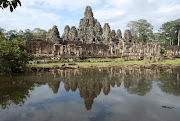
PHNOM PENH (Cambodia) - South Korea has provided US$9.2 million (S$12.9 million) to Cambodia to build a new road that will circle the famed Angkor temple complex and reduce traffic in the area, officials said Monday.
The 21-kilometer road will be closed to trucks to reduce pollution, noise and vibrations that could damage the ancient ruins, said Soeung Kong, vice secretary-general of the Apsara Authority, the government agency that oversees the temples.
Construction will start this year and take three years to complete, he said. It will be the second road in the Angkor area funded by South Korea, connecting with existing roads to the north and northwest of the temples, said South Korean Embassy official Son Sungil. The first road extended south from the temple complex.
Tourism is a major foreign currency earner for cash-strapped Cambodia, which hosts nearly 1.5 million foreign tourists each year, mostly from South Korea, Japan and the United States. More than half of the tourists visit Angkor, a UNESCO World Heritage site in northwestern Siem Reap province.
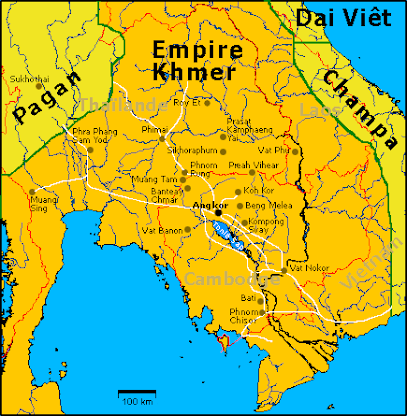
The temples were built when Angkorian kings ruled over much of Southeast Asia between the 9th and 14th centuries.
Conservationists have long expressed concerns about tourism's impact. They say uncontrolled pumping of underground water to meet the rising demand of hotels and residents in the nearby town of Siem Reap may be destabilizing the earth beneath the temples. -- AP
Cambodia tours=> http://www.tourismindochina.com/cambodia/tours/
Vietnam tours=> http://www.tourismindochina.com/vietnam/tours/
Laos tours=> http://www.tourismindochina.com/laos/tours/
# # #
Online leading and responsible tour operator in the Indochina licensed as Int'l tour operators,Providing most uptodate Travel Information in Vietnam, Cambodia, Laos, Myanmar and Thai.
Read more!