By Netty Ismail
July 10 (Bloomberg) -- Royal Group, which owns Cambodia's biggest mobile-phone operator, plans to raise as much as $2 billion with Hong Kong-based Millennium Group to build resorts, casinos and an airport on an island off the coast of Cambodia.
Royal Group and the Millennium real-estate investment firm are seeking investors and partners for resorts, apartments, casinos, golf courses, polo fields and an airport on Koh Rong island, according to a financing investment document obtained by Bloomberg News. The island is the largest of 22 off the coast of the southern port city and beach resort town of Sihanoukville.
``This is a place that people haven't discovered yet,'' said Royal Group Chairman Kith Meng in an interview in Phnom Penh. ``It's like the Maldives,'' an island country in the Indian Ocean southwest of Sri Lanka, he said.
Cambodia, the second-poorest of 10 Southeast Asian nations, is relying on tourism to fuel economic growth as garment exports slow. The country attracted about $400 million of tourism-related investments in the first half of 2008, mostly for resorts, Commerce Minister Cham Prasidh said. Visitors to Cambodia exceeded 2 million for the first time last year, up from 118,183 in 1993 when Cambodia emerged from a two-decade civil war.
Our dream is to transform our costal line into the next Riviera of Asia,'' Cham Prasidh said in a July 4 interview. ``There'll be plenty of resorts appearing on the islands and all along the coast of Cambodia. There will be billions of dollars of investment in that sector this year and next year.''
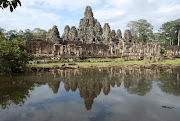
Angkor Wat
The companies will raise funds from investors in London and the Middle East, and it will take 10 years to 15 years to develop the island, said Kith Meng on July 4.
Cambodia wants to develop tourism beyond the key destination of Angkor Wat, known for its ancient temples. The island project may face competition with beach resorts also being developed in Vietnam and Thailand.
``The tourism industry is overwhelmingly concentrated on Angkor Wat because of the unique attraction you can't find elsewhere in the world,'' said Agost Benard, associate director at Standard & Poor's in Singapore. ``As far as developing a beach resort, you'll be competing with a lot of countries because it's a generic product.''
Royal Group and Millennium are raising funds as record oil prices prompt airlines to cut flights. Cathay Pacific Airways Ltd., Hong Kong's largest airline, said July 2 that earnings would be ``disappointing'' because of record fuel costs.
``I don't know if the current oil prices will affect air travel and if it's going to be a booming sector in the near term,'' Benard said.
Turquoise Waters
The companies are trying to get resort and hotel operators, including Singapore-based Banyan Tree Holdings Ltd., to participate in the project, Kith Meng said.
Royal Group and Millennium plan to develop the 76 square- kilometer (29 square-mile) Koh Rong island, now inhabited by fishermen, into a ``luxury resort destination,'' according to the document. The island has 28 white sand beaches, including the 6.1 kilometer Snowdrift Beach, surrounded by shallow turquoise waters.
Kith Meng, who was educated in Australia, declined to say how much Royal Group is paying the government for a 99-year lease to the island.
Royal Group also is planning to build a resort in Siem Reap, near the temples of Angkor Wat, with India's Oberoi Group. Royal Group already has a telecommunications venture, MobiTel, with Luxembourg-based Millicom International Cellular SA, and another partnership in Cambodia with Australia & New Zealand Banking Group Ltd., Australia's third-largest bank, called ANZ Royal Bank.
Read more!

Wednesday, July 09, 2008
Royal Group Seeks $2 Billion to Build Cambodian Island Resort

Aust drug smuggler jailed for 6 years in Cambodia
By South East Asia correspondent Karen Percy
A Cambodian court has sentenced an Australian man to six years prison for trying to smuggle 40 grams of the drug known as "ice" out of the country, a judge says.
Simon Peter Conway, 50, was convicted of drug trafficking in a trial on Tuesday and sentenced to six years and a $2,631 fine, Judge Chan Madina said.
He was arrested in October at Phnom Penh International Airport after authorities found 40 grams of the methamphetamine with him.
Conway's lawyer Dun Vibol says he has already filed an appeal seeking to have the prison sentence reduced.
"Conway confessed everything during the trial," he said.
"But we want his sentence to be reduced to the minimum."
He also added that Conway intended to bring the drug to Australia to use as a pain killer for a leg injury.
Ice can be produced in rudimentary laboratories from a range of chemicals and resembles clear, chunky crystals that can be smoked, snorted or injected.
Although drug arrests have risen, Cambodia is becoming an increasingly popular trafficking point for methamphetamines and heroin, particularly since neighbouring Thailand toughened its stance on illegal drugs in 2002.
Read more!
Congratulate Cambodia, don't curse it
ACHARA ASHAYAGACHAT
Thailand should congratulate, not curse, Cambodia for its success in having the ancient Hindu temple of Preah Vihear inscribed as a new World Heritage landmark.
Thailand should now concentrate on restoring its standing and educate the world that the temple's settings, some of which are in Thai territory, also deserve the same preservation.
To achieve that difficult goal, the country needs to first make sure that there is no more fanning of nationalism by either the Democrat party or the People's Alliance for Democracy for the sake of personal political gain.
But the civic protest group and the opposition, and senators, should spare the Samak administration from punishment, especially Foreign Minister Noppadon Pattama, for confusing the international community about Thailand's true position on Preah Vihear.
The national drama unfolded with the government supporting Cambodia's call that its new temple map, minus the disputed 4.6km border area, be used for the heritage listing. The government was forced to change its position after the Administrative Court issued an injunction against cabinet approval for the signing of the joint communique.
Thailand also felt Preah Vihear was inextricably linked to the surrounding cultural and natural landscape on Thai territory, and therefore a joint nomination should be made for the listing of the site.
That was the position the present Thai government should have taken and argued for from the very start.
The court's ruling made Mr Noppadon swallow his words and he backtracked on the issue by saying that the joint communique signed on June 18 should not be taken as a guarantee of Thailand's endorsement for Cambodia's latest bid for registration of the temple.
Thailand failed miserably in its efforts to convince Phnom Penh and the technical experts advising the World Heritage Committee in Quebec that the temple should not be listed until the two neighbours settle their border disputes.
If anyone is to be blamed for what has happened it is the Samak administration, for rushing to clinch the deal and support Cambodia's proposal.
Another lesson from the Preah Vihear case is that the government cannot afford not to take the advice of experts into account before agreeing to any future proposals, or we may find ourselves in another hopeless situation.
But this should not prevent the two neighbours from cooperating in exploring ways to enhance their mutual respect, friendship, and in the peaceful management of the ancient heritage site that has served local communities of both countries for centuries.
Read more!
Former Cambodian Khmer Rouge minister denied bail
 The United Nations-backed Khmer Rouge tribunal in Cambodia has dismissed a bail request by former Khmer Rouge cabinet minister, Ieng Thirith.
The presiding judge told the court it was necessary for Ieng Thirith to stay in jail as "there are well-founded reasons to believe" that she committed the crimes for which she has been charged.
The court was also told it is suspected Ieng Thirith is a flight risk and that her detention is necessary to protect her against possible revenge attacks from Khmer Rouge victims.
Ieng Thirith, 76, was minister of education and of social affairs during the Khmer Rouge reign from 1975 to 1979.
She is the wife of former Khmer Rouge deputy prime minister and foreign minister Ieng Sary.
Both husband and wife have been charged with crimes against humanity, while Ieng Sary has also been charged with war crimes.
Ieng Thirith was the third of the five Khmer Rouge leaders awaiting trial whose appeals for release have been denied.
Ieng Thirith's lawyers previously insisted the 76-year-old is mentally ill and in poor chronic health.
However, court officials have said doctors deemed her fit to stand trial.
It has taken three decades to start bringing senior officials of the Khmer Rouge, who left up to two million people dead from overwork, starvation, torture or execution, to trial at the joint Cambodia-UN tribunal.
The court was not established until 2006, and the trials of the regime's five surviving senior leaders are not due to begin until later this year.
Read more!
Tuesday, July 08, 2008
Temple spat rages in Thailand after UNESCO listing
 By Nopporn Wong-Anan
BANGKOK (Reuters) - Thailand's top court questioned on Tuesday the legality of Bangkok's support for a Cambodian bid to list a disputed Hindu temple as a World Heritage site, giving the opposition another weapon to attack the government.
The Constitutional Court ruled 8-1 that a communique approved by the cabinet in June backing Cambodia's bid to list the 900-year-old Preah Vihear temple had required the approval of parliament.
UNESCO, the U.N. agency for culture and education, voted on Monday to approve Cambodia's request to register the temple, which has been at the centre of a bitter 50-year dispute on the Thai-Cambodian border.
Thailand's opposition Democrat Party jumped on the verdict, saying it would launch a Senate petition to oust Foreign Minister Noppadon Pattama, who sought cabinet approval for the communique.
Under Thailand's constitution, lawmakers can ask the speaker of the Senate to investigate unconstitutional actions by a minister who could be ousted in a vote by the upper chamber.
"We are aiming to terminate Noppadon first," chief opposition whip Satit Wongnongtaey told Reuters. He said they could eventually submit a petition to remove the entire cabinet.
The Democrats and other opponents of ousted Prime Minister Thaksin Shinawatra have whipped up a nationalist frenzy over the temple, which many Thais believe belongs to Thailand, to try to kick out the five-month-old, pro-Thaksin government.
The People's Alliance for Democracy (PAD) -- the motley group of business men, academics and royalists whose street campaign against Thaksin led to his removal in a 2006 coup -- said it was mulling its legal options.
"We won't mobilise people to protest against the UNESCO decision, but we will look for ways to oust this government," PAD spokesman Panthep Puapongpan said.
The PAD had accused the government of backing the temple's listing in return for business concessions in Cambodia for Thaksin. The government, Thaksin and Phnom Penh denied the PAD's allegations.
TEMPLE TANTRUMS
The listing of the temple -- which the International Court of Justice ruled in 1962 belonged to Cambodia, was cheered by Prime Minister Hun Sen and Cambodians on the streets of the capital Phnom Penh.
"This is another proud achievement for our people, the people in the region as well as the whole world that the temple is being recognised as the Khmer's greatest architecture," Hun Sen said in a statement.
UNESCO's Bangkok office said Preah Vihear's listing was based on a new plan which differed from the joint Thai-Cambodian communique issued on June 18 and criticized by the Thai court.
UNESCO said it "has no implications for any ongoing negotiations concerning the boundary between the two countries and does not prejudice the rights of both governments to reach an amicable settlement of the disputed boundary".
Nevertheless, some Thais were angered by the decision.
"The government should have tried much harder in convincing the UNESCO people not to believe what Cambodia has told them. The government must be held responsible," student Natcha Lorsuwannarat said.
Charnvit Kasetsiri, a distinguished Thai historian, said the issue had been politicized by Thaksin's opponents.
"It is not a problem between Thailand and Cambodia, but it is a problem among Thais," he told Reuters Television. "It is a black hole Thais have fallen into and found it hard to get out."
(Additional reporting by Pracha Hariraksapitak and Songphon Koisiriphong in BANGKOK, and Ek Madra in PHNOM PENH)
Read more!
Cambodian official hails inscription of Preah Vihear Temple as World Heritage Site
By Xia Lin, Long Heng
PHNOM PENH, July 8 (Xinhua) -- Senior government officials issued statements and citizens took to the streets here Tuesday to celebrate the decision by the UNESCO World Heritage Committee to list the Preah Vihear Temple as World Heritage Site.
Prime Minister Hun Sen said that "it is a new pride for the Cambodian people as well as peoples in the world that the Preah Vihear Temple is recognized as top Khmer architecture and it has a universal values for the humanities."
"I would like to express my profound and honest thanks to all the people at all levels that always supported the government's work and expressed their understanding and patience to protect the national interests and make peace with the Thais as good friend and neighboring country," he said.
The Preah Vihear Temple is the third Khmer heritage listed as world heritage, after the Angkor Wat Temple in 1992 and the royal ballet style in 2003, he added.
Sok An, Deputy Prime Minister and Minister of Council of Ministers, said that the Cambodian-Thai ties won't be affected by the listing.
"Though Cambodia and Thailand may have had some differences of views regarding the listing of the temple, this issue has not in any way affected the long-standing ties of friendship and co-operation between our two kingdoms and peoples," he said.
The Cambodian government has a long-standing position that "the inscription of the temple will not affect nor prejudice the rights of Cambodia and Thailand on the demarcation work of the Joint Commission for Land Boundary of the two countries," he added.
Hor Namhong, Deputy Prime Minister and Minister of Foreign Affairs and International Cooperation, said that "the listing of the Preah Vihear Temple is the success of civilization and culture for the Khmer people."
The success didn't break the relationship and cooperation between Cambodia and Thailand, even as Thailand canceled the joint communique on the Preah Vihear Temple issues, he said.
Thailand didn't lose a centimeter of land to Cambodia and Cambodia didn't lose either for listing the Preah Vihear Temple, he said, adding that both sides have plan to plant demarcation posts in accordance with the border and geographic lines specified in bilateral treaty.
Meoung Son, president of the Khmer Civilization Fund, said that he will build a museum at 20,000 U.S. dollars for the Preah VihearTemple.
He appealed Thailand to hand over artifacts of the Preah Vihear Temple to the museum.
"The temple will become a potential tourist destination," he added.
Meanwhile on Tuesday afternoon, thousands of people went to the streets of Phnom Penh, danced, sang and waved Cambodian flags, chanting "Long live Preah Vihear Temple!"
Earlier Tuesday morning in Quebec, Canada, all the 21 members of the World Heritage Committee during its 32nd session unanimously approved the Cambodian application to list the temple as World Heritage Site.
The site of the building, which lies along the disputed Thai-Cambodian border, has long been a point of contention between the two Asian neighbors, Cambodia and Thailand.
Cambodia started seeking the status of World Heritage Site for the temple in 2001, hoping for influx of tourists and international funding that normally accompanies the designation.
But Thailand has vetoed its neighbor's submissions amid fears the status would include disputed land along the border.
In May, Thai Prime Minister Samak Sundaravej's government bypassed the Parliament and endorsed Cambodia's application. Thai critics have accused him of violating the country's sovereignty, and the government withdrew its support late last month.
Fortunately for Cambodia, last minute efforts by the Thai delegation to delay the vote and to have joint management of the temple failed at Tuesday's session of the World Heritage Committee.
Last week, Cambodia shut up the gate at the temple after Thais conducted demonstration around. It also deployed police at the Thai Embassy in Phnom Penh fearing that possible anti-Thai parade there.
Back to 1962, the International Court of Justice awarded the temple and the land it occupies to Cambodia, a decision that therefore rankles Thais.
Read more!
Singapore Petroleum, partners starts exploration well in Cambodia
SINGAPORE, Jul 08, 2008 (Thomson Financial via COMTEX)Oil refiner Singapore Petroleum Co. (SPC) said it and its partners in the Block B project in offshore Cambodia have started drilling to test for hydrocarbon potential.
Drilling of the well in water depth of about 75 metres, located about 160 kilometres southwest of Cambodia's Sihanoukville port, is expected to be completed in 15 days.
"The drilling will not have any material impact on the earnings per share and the net tangible asset per share of the SPC group of companies for the current financial year," SPC said in a statement.
Read more!
Sunday, July 06, 2008
Samak says govt opponents jeopardised Thai-Cambodian relations by playing up Preah Vihear issue
Prime Minister Samak Sundaravej said Sunday that opponents of former prime minister Thaksin Shinawatra played up the Preah Vihear issue with ulterior motive to annihilate him.
Samak said the opponents did not care that their campaigns would jeopardise bilateral relations between Cambodia and Thailand and incite hatred between people of the two countries.
Speaking during his Talk Samak Style, Samak reaffirmed his government's stand that the listing of Preah Vihear temple by Cambodia as a world heritage site would not cause Thailand to lose its territory.
He said Thaksin's opponents played up the issue out of proportion and wanted to use the current government as a tool annihilate Thaksin as well.
Reading from his personal statement, Samak said his government obeyed the Administrative Court 's injunction on the Preah Vihear issue as much as what the opposition accepted it.
But, he said, the issue would be decided by a third party and his government would also have to take into account of interest of the two countries and their citizens.
Read more!
Thai official: Controversial temple likely to be approved as World Heritage site
BANGKOK, July 6 (Xinhua) -- Attempts by Cambodia to list the controversial Preah Vihear temple, which stands across the area of both Cambodia and Thailand, as a World Heritage site during the current United Nations Educational, Scientific and Cultural Organization (UNESCO) annual session held in Canada's Quebec City, are expected to bear fruit, according to Thailand's World Heritage Committee.
Pongpol Adireksarn, chairman of the committee and currently attending the UNESCO session, said that more than half of the 21 World Heritage Committee members had told him informally that they favored the Cambodian government's registration of the ancient temple as a World Heritage site as it had "untiringly pursued the issue on a constant basis", the official Thai News Agency reported on Sunday.
He quoted committee members as telling him that the concerned Phnom Penh government had also invited them to visit the temple, unlike Thailand whose "policy was uncertain" and whose government changed frequently, the report said.
The temple issue is expected to be conferred by the World Heritage Committee on Sunday night, Thailand time.
The International Council on Monuments and Sites (ICOMOS), a non-governmental organization, had distributed reports to the committee, saying that the listing of the temple alone as a World Heritage site would pose no problem for the consideration, said Pongpol.
But the ICOMOS recommended that both Cambodia and Thailand should jointly propose that the surrounding area to the temple should also be included as the World Heritage site.
Thai Foreign Minister Noppadon Pattama, attending the session as an observer, is expected to oppose and delay the listing of the temple following the Thai Administrative Court's temporary injunction against the June 17 cabinet approval of the joint communique he signed with Cambodian Deputy Prime Minister Sok An.
Noppadon said in Quebec that he would prepare a letter and lobby the Committee to delay the listing of the temple.
Read more!
Saturday, July 05, 2008
The Slowest Train in The World
 By Tynan
Calling it a passenger train is a bit of a misnomer, though. Most of the few seats still attached to the floor are piled high with exotic fruits: durians, pineapples, and several others that I've eaten before but can't name. I think one's a jackfruit, and another might be a soursop.
Half of the back car is full of lumber which I helped load a few stops ago. I almost crushed my foot.
The train is slow, probably the slowest train in the world. The fastest I clocked it with my GPS was 17kph. That's fast enough that if you want to take a jog you can just hop out the back and run along.
The journey from Battambang, a city reasonably close to the Thai border, to Phnom Penh takes four hours by air conditioned bus. I've been on the train for 17 hours now and there's been no word on when we'll finally arrive. The official timetable claimed it would be 5 hours ago.
As I write I'm sitting in one of the wood benches, which puts me in the minority. Most people string up cloth hammocks in front of the open windows or ride on the roof.
I rode on the roof for a good part of the day. The local kids showed me how to jump from car to car as if I was part of an Indiana Jones movie.
When I arrived at the train station this morning there were a dozen other foreigners. Most of them stayed as long as Purset, the big stop 5 hours in which allows the rest of the journey to be completed by bus.

Four of us are left. My friend Todd, a lonely planet writer named Andrew, and Laila who has been traveling for 4 months and is expecting to travel for another 12. Her seat is a huge bag of charcoal that she claims is more comfortable than my bench. She's probably right.
The train probably won't run for much longer. Giant holes in the roof douse everyone and their cargo when it rains. No attempt is made at repairing the gaping holes in the rotting floor that expose the wheels and the track below us.
We once stopped unexpectedly because one of the four car's bumpers had jumped onto another one's.
You might be wondering why anyone would ever ride this train, and you might be surprised that I couldn't possible recommend it any more. Why?
Because THIS is how to see Cambodia. Not all of it, of course, but it's a whopping serving of authentic Cambodian life.
From the rusted roof of the train you get an unrestricted view of the beautiful rice paddies that cover the countryside. You watch as families work together to harvest the rice and direct their Oxen.
Children run up to the train and wave and yell out the few English phrases they know.
The train makes a few short stops, mainly to load or unload lumber and fruits, and vendors run up with trays of food, illuminated by kerosene lanterns.
I've been to a lot of countries, and I'm not sure I've met friendlier people.
When the monks saw that Laina had only bought one bag of steamed rice, they bought her another bag and some eggs. The woman sitting near us insisted on holding my flashlight while we ate.
When a pineapple vendor started cutting up one of her pineapples on the train, I hurried over to buy it. She gave it to me and then absolutely refused to take money.
Everyone smiles and tries to talk to us. They show us how to tie our hammocks and warn us when the train is about to leave after a stop.
Traveling can be more about the journey than the destination. I haven't been to Phnom Penh yet, but I don't know how it will be more memorable and enjoyable than the ride over.
If you're in the area and you want a train ride of a lifetime, check out this page on seat61.com, which is an amazing resource for traveling by train, bus, or boat.
UPDATE: It took 24 hours total. A parting word of advice - buy a hammock in Battambang before you go. The locals will show you how to hang it.
Last chance to see Davik
By Greg Mellen, Staff Writer
LONG BEACH - Friends and supporters of Davik Teng will have a last chance to say goodbye before she and her mom return to their home in Cambodia next week.
Hearts Without Borders, the Long Beach nonprofit that found the 9-year-old with the heart defect and brought her to the Southland for open-heart surgery, will play host to a final benefit for Davik and her mom, Sin Chhon, Sunday at 5:30 p.m. at Golden Villa Restaurant, 1360 E. Anaheim St.
The cost of the dinner, which will be a Khmer buffet prepared by Sophy's Restaurant, is $25. The event will include Khmer music. Money from the event will help Hearts Without Boundaries bring another ailing Cambodian child to the U.S.
Davik was discovered in a remote village outside of Battambang City in Cambodia. She suffered from a heart condition called a septal defect - a hole in her heart that was the size of quarter.
Because blood did not effectively flow through her heart she suffered from shortness of breath and fatigue. As the conditioned worsened, she faced the likelihood of a life of decreasing quality and likely ending in an early death.
Only open-heart surgery would improve her condition. After attempts to have the procedure performed in Cambodia failed, Hearts Without Boundaries negotiated with Childrens Hospital Los Angeles, which donated its facilities and staff to perform the surgery.
Davik underwent the procedure March 24. She has since been cleared to travel and will fly back to Cambodia July 10.
After Davik returns home, Hearts Without Boundaries hopes to find another child to save. The organization is currently negotiating with local hospitals for its next ailing child.
For information about the "Last Dance With Davik," call Peter Chhun at 818-640-6191 or Lakhena Chhuon at 562-397-5513.
greg.mellen@presstelegram.com, 562-499-1291
Read more!
Former FM: Thailand never supported Cambodia on temple claim
 BANGKOK, July 5 (TNA) - Former Thai foreign minister Nitya Pibulsonggram said Saturday that Thailand never supported Cambodia's unilateral application to register Preah Vihear temple as a UNESCO World Heritage site.
His denial was made after current Foreign Minister Noppadon Pattama on Friday told the Constitution Court it
was the previous government of Gen. Surayud Chulanont, installed by the September 2006 coup-makers, which had pushed and supported attempts by the Cambodian government to register the temple as a World Heritage site, and not himself.
Mr. Noppadon said the previous government made the commitment during the 31st meeting of the World
Heritage Committee meeting, held in Christchurch, New Zealand, in June last year.
But Mr. Nitya said the Thai government, while represented at last year's meeting, did not agree that Cambodia should apply for the listing of the temple alone without cooperation from Thailand, forcing the World Heritage Committee to postpone the decision as Cambodia did not receive sufficient votes to support it.
Thailand at last year's meeting reiterated that close cooperation between the two countries was needed and
that both should also discuss plans to jointly manage the area, Mr. Nitya said, adding that Thailand's support
depended upon conditions being met.
Mr. Nitya said Thai representatives attending a meeting in the Cambodian town of Siem Reap in January this
year again opposed the Cambodian government's idea to apply to register the temple after it proposed an
earlier map which included disputed area claimed by both countries.
The UNESCO World Heritage Committee will again consider the matter at the current annual meeting in
Canada. The issue is expected to be taken up Sunday. (TNA)-E111
Read more!
Thai Museum at Angkor Raises Ire in Cambodia
 SIEM REAP, Cambodia — There is no question that Angkor and its famed temples are among the world’s archaeological treasures, providing a window into the Cambodian dynasty that flourished there from the ninth century to the 15th century. But tourists who flock to the site in northwestern Cambodia say something is missing; few artifacts remain to help them imagine the customs and rituals of the ancient empire.
Antiquities were looted over the centuries or appropriated by museums in France, the country’s former colonial ruler. Of those that remained, many were relocated to Cambodia’s National Museum, more than 185 miles from Angkor.
Now, a Thai company says it is trying to address the problem, opening a museum that borrows artifacts, including nearly 1,000 Buddhas, from the National Museum and elsewhere. It is just a few miles from Angkor Park, the sprawling area near here that is considered one of Southeast Asia’s most important archaeological sites and includes Angkor Wat, its celebrated temple.
But the new museum, Angkor National Museum, which opened in October, has already drawn criticism from powerful detractors. The critics include international restoration specialists who are fiercely concerned about anything that affects Angkor, which was restored by the United Nations Educational, Scientific and Cultural Organization, or Unesco, and others after the wars of the 1970s.
Some quibble with the museum’s aesthetics — the complex includes a sprawling retail area — and with its sense of history. There are hundreds of Buddhas, for instance, that date back no further than the 20th century.
Other critics object to the Thai involvement; Angkor was once under Thai control, and some Cambodians remain suspicious that Thailand retains designs on their patrimony.
Those suspicions were stoked in 1999 when large sections of walls with bas-relief images of the revered multiarmed figure, Lokeshvara, were looted from the 12th-century Banteay Chhmar temple near the Thai border. The stolen art was intercepted by the Thai police and returned to Cambodia.
Then in 2003, anti-Thai riots broke out in Phnom Penh, Cambodia’s capital, after a Thai actress was reported to have said that Angkor Wat still belonged to her country.
One of the critics, Darryl Collins, a historian based in Siem Reap, said the displeasure of some Cambodians was understandable. An enterprise that is foreign led and “primarily interested in turning a profit,” he said, can hardly be called national, especially when Cambodia already has a National Museum.
Angkor National Museum was created by Vilailuck International Holdings, which is based in Bangkok. For 16 years Vilailuck’s parent company, the Samart Corporation, has been a major investor in Cambodia’s telecommunications sector.
Under the terms of its contract with the Cambodian government, the company agreed to transfer control of the museum to the government after 30 years in exchange for the right to display treasures from the National Museum and from the Conservation d’Angkor, a national trove of some 6,000 artifacts. That collection includes important statues of Buddha from several historical periods.
The Thais involved in the museum have been stung by the criticism of the project, which Vilailuck spent $15 million to build.
“We want to educate Cambodian people about their own history,” said the museum’s managing director, Sunaree Wongpiyabovorn. There are those “who know little about its monuments, and even less of the progress of Buddhism and what led up to it,” she added.
Ms. Wongpiyabovorn is especially sensitive to allegations that the company is motivated by economics. She said that Vilailuck had tripled its original investment of $5 million because of cost overruns and did not expect to see a profit for at least 10 years.
Moreover, complications seem to have left the Thais frustrated, especially with regard to the terms and conditions of the loans. Under the original plan, the former director of the National Museum, Khun Samen, agreed to hand over as many as 1,000 artifacts during the 30-year contract, as well as 31 major pieces for a six-month loan.
His successor, Hab Touch, reduced the number of major pieces to be shared to 23. “I am not going to surrender important pieces that should be permanently displayed here for the integrity of the collection,” he said.
Unesco, which has declared Angkor a World Heritage site, is generally supportive of the museum and is trying to help by providing advice on display and other aspects of museum practice.
Still, Azedine Beschaouch, an adviser to the organization, agrees with some of the criticism.
Mr. Beschaouch, an expert on Angkor and a special adviser to Unesco’s assistant director general for culture, is no fan of the retail area, which Vilailuck calls a “cultural mall.”
“This seems to have been foremost in the mind of the designers, while the collection came second,” Mr. Beschaouch said.
He is also impatient about what he called “presentation that cannot claim to reflect international standards in museology.”
It has not helped matters that although the museum opened months behind schedule, some of the artifacts still had not been labeled.
In the museum’s defense, Ms. Wongpiyabovorn said that the Conservation d’Angkor’s documentation of many of its works was lost during Pol Pot’s reign, leaving many artifacts with few historical records.
The museum insists that it needs more time to develop its identity. Its curator, Chann Charouen, who is Cambodian, plans to rotate artifacts and bring in new pieces from Cambodian provincial museums.
It remains to be seen whether the museum will embrace the growing scholarship and broad debates that currently characterize Angkorian studies, or be content to lure tourists to the knickknacks of the cultural mall.
Read more!
Friday, July 04, 2008
Power lines
 Australian Foreign Minister Stephen Smith says thousands of rural households in Cambodia will be connected to electricity under funding Australia will provide through the World Bank over the next four years.
"In Cambodia, where only six percent of rural households can access electricity, Australia will provide $12.3 million to help extend electricity supply to an additional 13,000 households and small enterprises in rural areas," Smith said.
As well as improving electrical supply in rural areas, the funds would also be used to reduce transmission losses and promote renewable energy in the three countries, Smith said.
A statement issued by the Australian embassy in Phnom Penh said the funding builds on the Canberra government's development program in Cambodia.
"The Australian government will provide an estimated $61.2 million (US$58.6 million) in development assistance to Cambodia in 2008-2009 (July 2008 to June 2009)," said the statement.
Paving the way
Cambodia will spend at least $2.5 billion to implement a 12-year national road reconstruction program, said Minister of Public Works and Transport Sun Chanthol.
Known as the Road Asset Management Project (RAMP), the work is expected to generate substantial benefit to the nation, according to a report from the ministry’s General Department of Public Works.
Implemented in three phases, RAMP will connect Cambodia to the region via ASEAN Highway 1, which connects Ho Chi Minh City to Bangkok via Phnom Penh, and ASEAN Highway 11, which stretches from Sihanoukville north into Laos.
The connections will make Cambodia part of 23 routes involving over 38,000 kilometers of ASEAN highways.
“These projects will make it possible for local people to get access to all kinds of social services, markets for agricultural produce and nonagricultural employment opportunities,” said Ouk Nida, the senior project implementation officer for infrastructure at the Asian Development Bank (ADB).
Ouk Nida said the improved network would benefit people’s living conditions by reducing transportation costs and times as well as enabling safer and more economical transportation between commercial and residential areas.
Improving the nation’s roads should remain a top priority of the government, agreed Cambodian Economic Association president Chan Sophal.
“Road construction and rehabilitation is vital for the transport of both passengers and goods,” said Chan Sophal.
Cambodia’s development partners, including the ABD, the World Bank (WB) and development agencies from China, Japan and South Korea, have already made grants and loans for work on National Roads 1, 3, 6A, 7, 8, 33, and 78, noted a World Bank report.
“Cambodia’s road network measures approximately 38,257 kilometers, including 4,757 kilometers of national roads and 5,700 kilometers of provincial roads under the responsibility of the Ministry of Public Works and Transport, and 27,800 kilometers of tertiary roads under the responsibility of the Ministry of Rural Development,” said the report.
The road network was still in a developmental stage, and most roads were in poor condition, with the tarmac hammered by old and dilapidated trucks. Motorbikes and even animal-drawn carts were being used to carry goods in some parts of the country.
“About 90% of other roads are still in bad condition, even though the primary national road network has been improved,” said Ouk Nida, who noted that ADB has already funded repair of National Roads 5, 6, 33, 56, and 68.
ADB has spent more than $250 million in Cambodia since 1993. Its work includes seven major road repair projects as well as several drainage and flood-control schemes across Cambodia, he said.
Between 1992 and 2007 Japan provided more than $1.3 billion in financial assistance in the form of bilateral grants and extended a $182 million loan for the rehabilitation and development of the Cambodian road system, according to a Japanese report issued in May.
“The government of Japan has provided approximately US$250 million in grant aid for road rehabilitation and construction, whereas about US$150 million has gone to bridge construction and rehabilitation,” according to a statement from the Japanese embassy.
South Korean Ambassador to Cambodia Shin Hyun Suk noted in May, meanwhile, that “South Korea has provided another $37 million, adding to the $17 million in Economic Development Cooperation Fund loans to the Cambodian government to finish the National Road 3 rehabilitation project.”
While the World Bank said the objective of RAMP was to ensure continued effective use of the rehabilitated national and provincial road network in support of Cambodian economic development, Cambodian Economic Association president Chan Sophal worried that “Cambodia will lose if the roads are low in quality or lack maintenance because the government has borrowed from other countries, and most of the projects have been handled by foreign companies, giving few local companies experience in big projects.”
RAMP includes a plan for maintenance and repair of roads built or improved under the project, according to the General Department of Public Works report.
The Ministry of Public Works and Transport estimated that there were about 670,000 motorbikes and 197,000 automobiles plying the nation’s roads at the end of 2007, including, according to World Bank estimates, 326,310 motorbikes, 102, 810 lighter vehicles and 17,880 heavy trucks that were not registered.
Read more!
Brush with death
Veteran Cambodian painter Vann Nath opened his art gallery at the Kith Eng Restaurant in Phnom Penh to the public on July 1, unveiling paintings documenting his time at Tuol Sleng, the notorious Khmer Rouge prison.
Nath owns the restaurant that serves as the exhibition space, giving the gallery an intimate feel. Looking at the paintings creates a sense that the artist is personally narrating his life story to you.
Nath was captured by the Khmer Rouge and taken to Tuol Sleng, also known as S-21, in December 1977. He was saved from almost certain execution in February 1978 after being commissioned to paint portraits of Khmer Rouge leader Pol Pot.
Nath was one of only seven survivors of Tuol Sleng, where an estimated 14,000 people were detained and brutalized before being executed. Nath went on to produce paintings as a visual memoir of his experiences following the collapse of the Pol Pot regime.
Ten of Nath’s paintings tell the story of his capture, incarceration, and escape from execution. They are arranged around the gallery in chronological order. On the wall opposite the entrance is a photograph taken of Nath upon his entry into Tuol Sleng, emphasising the reality of his experiences.
Nath said that he wanted his gallery to teach the younger generations of Cambodians about the atrocities of the Pol Pot regime.
“Some believe and some do not believe,” Nath said. “But they can come and look at my paintings as evidence, and make up their own minds. They can look at my pictures as testament to the atrocities carried out at Tuol Sleng.”
“If they want to learn about the Pol Pot era, the younger generations of Cambodians can read the books and documents and look at photos from that time. They should also ask their parents to tell them about their experiences. It is up to them to piece together the evidence,” he said.
Sara Colm of the New York-based rights group Human Rights Watch, speaking at the exhibition opening, said “Vann Nath is not only a victim of Khmer Rouge human rights abuses at Tuol Sleng, but he has dedicated his life to keeping the memories alive. He has an intense devotion to accuracy and a photographic memory.”
Colm called Nath the “the voice of conscience for Cambodia. He won’t forget the actions of the Khmer Rouge, even in the face of health problems and other issues.”
“It’s important to keep all the paintings together as a series,” said Colm. “The permanent display of these pictures reflects Vann Nath’s devotion to history and memory.”
The gallery will be a permanent installation at the Kith Eng Restaurant at 33B Street 169. It is open from 6 to 9pm and can be viewed only upon request.
“Anyone who has an interest in knowing about my experiences in the Pol Pot era can come and see,” said Nath.
Read more!
Wednesday, July 02, 2008
A new museum puts a Thai imprint on Angkor
 SIEM REAP, Cambodia: A common disappointment for visitors to Angkor today is the paucity of sculptural artifacts offered by the site. Without the "furniture" that once graced its magnificent temples, it can be hard to imagine the customs and rituals that animated Cambodia's formidable empire in its heyday.
Of the religious icons that survived looting or appropriation to French museums, many were relocated over decades to Cambodia's National Museum, created in the 1920s by the architect and curator George Groslier. The snag for Angkor-bound tourists in Siem Reap is that the museum is in the capital, more than 300 kilometers, or 185 miles, away.
Now Vilailuck International Holdings, based in Bangkok, has opened what it has opted to call the "Angkor National Museum" only a few kilometers from the Angkor park. Constructed over three years from a Thai design, it is currently displaying objects borrowed from the National Museum in Phnom Penh.
The other source of artifacts is the Conservation d'Angkor, a storage facility of some 6,000 pieces created by the Ecole Française d'Extrème Orient (French School of Asian Studies) in 1908 and currently in the hands of the Cambodian Ministry of Culture. Previously inaccessible, the collection has functioned as a hospital for broken pieces but also contains important Buddhas from several periods, as well as stone steles with invaluable inscriptions.
Thai interest dates to 2001. For 16 years Vilailuck's parent company, the Samart Corporation, has been a major investor in Cambodia in the telecommunications and air traffic control sectors. Charoenrath Vilailuck, the company's CEO, has an acquisitive interest in Cambodia's patrimony as evidenced by his own large collection.
But the new museum has picked up powerful detractors, especially among the tight-knit international restoration community that casts a hypercritical eye over what happens at Angkor.
The name has drawn the most controversy. The vast majority of offerings come either from pre-Angkorian times or from centuries after. Then, as the Siem Reap-based historian Darryl Collins pointed out, an enterprise that is foreign-owned and "primarily interested in turning a profit" can hardly be called national, especially when Cambodia already has a National Museum.
Collins is among those concerned that the new venture will deter tourists from visiting the National Museum in Phnom Penh, with its profusion of Khmer treasures spanning several centuries. For the Cambodian cognoscenti, too, the Angkor National Museum's appearance on the scene seems ominous, especially given centuries-old sensitivities concerning Thai designs on Cambodian patrimony.
Until 1908 Thailand had control not only of Angkor but of large swathes of northern Cambodia. In spite of a 1962 International Court of Justice ruling in Cambodia's favor, its neighbor still disputes the "ownership" of land surrounding the 10th century Preah Vihear temple at Cambodia's northern border and once threatened to veto Unesco's plans to honor the mountain temple with World Heritage Site status, which is still pending. Anti-Thai riots, which claimed the Thai Embassy and several Thai businesses, broke out in Phnom Penh in 2003 after a Thai actress allegedly said Angkor Wat still belonged to Thailand.
The most serious incident occurred in 1999. Large sections of walls with superb bas-relief images of the multi-armed Lokeshvara were looted from the 12th-century Banteay Chhma temple near the Thai border on what was generally assumed to be the orders of a Thai collector. The stolen art was intercepted by Thai police and returned to Cambodia, but suspicions linger.
The museum's design has also provoked some derision. The hint of Angkor Wat's honeycomb towers and its surrounding moats tends to be overshadowed by pink sandstone walls, which clash with its glazed orange corbel-vaulted roofing. It doesn't help that the lion's share of the 20,000-square-meter, or 215,000-square-foot, interior takes the form of retail space or a "Cultural Mall."
"This seems to have been foremost in the mind of the designers, while the collection came second," said Azedine Beschaouch, a special adviser to Unesco's assistant director general for culture and an expert on Angkor.
Anxious to promote the museum as a "learning cultural institute," the Thais are easily stung by such criticism. "We want to educate Cambodian people about their own history," said the museum's managing director, Sunaree Wongpiyabovorn. There are those "who know little about its monuments, and even less of the progress of Buddhism and what led up to it," she added.
Wongpiyabovorn insists there is no fortune to be made from the Angkor National Museum. Given that Vilailuck had to triple its original investment of $5 million due to the cost overruns, the company said it didn't expect to see a profit until at least a third of the 30-year lease has expired; under its "build, cooperate and transfer" contract, the management and financial control of the collection will then revert to the Cambodian authorities and the Ministry of Culture.
Moreover, several complications seem to have left the Thais frustrated, especially with regard to the terms and conditions of the loans. Under the original plan, the Phnom Penh museum's former director, Khun Samen, agreed to hand over as many as 1,000 artifacts - more than 950 hundred of them small 20th-century Buddhas - for the 30-year term, as well as 31 major pieces for a six-month loan.
His successor Hab Touch immediately reduced the 31 pieces to 23. "I am not going to surrender important pieces that should be permanently displayed here for the integrity of the collection," he said.
Another deal signed with the government in 2003 that gave Vilailuck extensive rights to a Conservation d'Angkor collection was threatened when, to the dismay of the Thais, the Cambodian government granted control to a South Korean company calling itself Angkor Treasure. Vilailuck requested that Deputy Prime Minister Sok An "release" the Koreans from the contract. He did, but only on the condition that the Thais agree to compensate the Koreans for an undisclosed sum.
According to Wongpiyabovorn, Unesco "maintains a strong sense of ownership of Cambodia's patrimony." Beschaouch supports the Thai initiative but is impatient about what he called "presentation that cannot claim to reflect international standards in museology." The majority of the wood, stone and silver Buddhas in the gallery of "1,000 Buddha Images," he said, "allude in design to later Ayutthaya-era temples in Thailand and have no aesthetic link with Angkor."
Unesco is engaged with the Angkor museum in improving the situation. But it didn't help that by the time of the grand opening last fall, months behind schedule, not only had most of the Angkor National Museum's artifacts still not been captioned but some copyrighted images had been lifted without permission for display. In the museum's defense, Wongpiyabovorn said that the Conservation d'Angkor's outdated card system of documentation was lost during Pol Pot's reign, leaving many artifacts with few historical records.
Will the museum have been worth the trouble? As it stands today, it will have negligible interest for the connoisseur or serious student of Angkorian art. At $12 compared to $3 for the National Museum in the capital, the price of admission for foreigners is high - the result of high fuel costs for air-conditioning, said the management.
But the museum has its uses. It should be commended for facilitating the display of objects long out of view. And, for a first time, the equinox sunrise simulations over Angkor Wat, the documentary-style videos in seven languages and the like go some way in explaining to visitors the temples' significance.
As for content, the "apsaras" and architectural features like decorated lintels replicate a lot of what is already copiously displayed on site. Yet sculptures from the pre-Angkorian capitals of Sambor Pre Kuk and Phnom Kulen merit attention. The 7th-century Phnom Da Standing Vishnu and the blue-tinted 9th-century Standing Shiva from Prasat Trapeang Phong reveal Cambodia's Hindu and Brahmanist legacy, and there are further galleries devoted entirely to Buddhist Angkor Wat and Angkor Thom and to the devaraja, or god-kings, who built these temples.
The museum insists it needs more time to develop its identity. Although its strength may not yet lie in a permanent collection, it aims to create exhibitions that inform and illuminate. The museum's curator, Chann Charouen, who is Cambodian and a former employee of the World Monument Fund, plans to rotate artifacts in a series of exhibitions from the aforementioned collections and from other Cambodian provincial museums such as those at Battambong and Kompong Cham.
It remains to be seen if the museum will embrace the growing scholarship and broad debates that currently characterize Angkorian studies, or be content to target tourists making an obligatory stop and bound inevitably for the inflated knick-knacks of the Cultural Mall.
Read more!
Noppadon leads team to Canada
By Supalak Ganjanakhundee
Foreign Minister Noppadon Pattama will lead a Thai team to a meeting in Quebec next week which will consider Cambodia's proposal to place the Hindu temple of Preah Vihear on the World Heritage list after the withdrawal of Thai support.
The minister, however, declined to say if Thailand would continue its objection to Cambodia's unilateral application.
"As the Cabinet withdrew its support, we need to consult with other concerned agencies on what new position we can take," Noppadon told reporters.
Representatives from the National Security Council, the military's Royal Thai Survey Department, the military's Border Affairs Department and the head of Thailand's World Heritage committee will accompany the minister to the Quebec meeting.
Thailand initially opposed the application after Phnom Penh annexed 4.6 square kilometres of overlapping area claimed by both sides in the proposal. The dispute was settled as Cambodia agreed to draw a new boundary for the temple taking only some parts as ruled by the International Court of Justice in 1962.
However, the government was forced to withdraw support for Phnom Penh as protesters from the People's Alliance for Democracy asked the Administrative Court to terminate the Cabinet resolution due to fear of loss of sovereignty. The court's temporary injunction made invalid the joint communiqu้ signed by Noppadon and Cambodia's Deputy Prime Minister Sok An supporting the application.
The Council of State suggested options for the Cabinet to appeal the injunction, otherwise the government and the Foreign Ministry needed to follow the court's decision.
After the injunction, the ministry sent letters to inform Phnom Penh, Unesco, Thai ambassadors to Unesco and to Canada on the withdrawal of support. Cambodian Ambass-ador Ung Sean accepted the letter yesterday from the minister. Phnom Penh said earlier it would go ahead unilaterally, without Thai support.
Cambodia's application will be on the agenda for consideration in Quebec on July 6-7.
Noppadon yesterday said he had been under no pressure to step down. "I will take responsibility for what I have done. I'm ready to lose in the fight to maintain justice and do the right thing," he said.
Read more!
Making a Difference - Cambodia's Theary Seng Works to Heal Her Country
 Theary Seng's story is one of hope over adversity. As a child, she lived through the brutal Khmer Rouge years, before fleeing to the United States, where she studied to become a lawyer. Now, she is back in Cambodia, promoting human rights. As head of the Center for Social Development, Theary Seng is an outspoken critic of corruption and abuse wherever it exists. Rory Byrne has this report for VOA's Making a Difference series.
Human rights activist Theary Seng has been shaped by her country's tragic history. As a child, she collected cow dung among the graves of the victims of the Khmer Rouge to fertilize the crops. Her parents died at the hands of the ultra-Maoist group, which ruled Cambodia from 1975 to 1979.
During their four years in power under the extreme-Communist leader Pol Pot, the Khmer Rouge were responsible for the death of at least 1.5 million Cambodians killed by political executions, starvation or forced labor. In late 1978, Pol Pot and the Khmer Rouge fled to the countryside following invasion by neighbor and former ally Vietnam. The 10-year Vietnamese occupation (1979 - 1989) touched off almost 13 years of civil war in Cambodia.
After the fall of the Khmer Rouge, Theary escaped to Thailand and then the United States, where she became a lawyer.
Now she is back in Cambodia, working to help her impoverished country. "So, for me, it's to take my history and the loss of my parents and to shape it, to not let the Khmer Rouge leaders have the better of me - by making it into something more hopeful," she explains.
Theary heads the Center for Social Development, which works to overcome the dark chapter of the Khmer Rouge. "The Khmer Rouge years have scarred our psychology," she says. "There is a lot of beauty [in Cambodia], but it's unfortunately overwhelmed by all these social problems and ills of our current society."
Theary also speaks out against abuses around the world. At a recent demonstration in Phnom Penh, she tried to lay a wreath to honor those killed in the civil war in Sudan's Darfur region. Government officials prevented her from doing so.
Theary takes a special interest in the Khmer Rouge Tribunal, or KRT, which is starting to prosecute the group's leaders for their crimes. She serves as an official tribunal representative for the victims. "I see the opportunity for other voices to join mine, and to enlarge the space where other voices could be heard in addition to mine," says Theary.
"The thing about Theary Seng is that she is unique in Cambodia, because she is able to bridge the chasm between America's view of things and Cambodia's understanding of the world," says US Ambassador to Cambodia Joseph Mussomeli. "Whether it's the KRT process or justice in general, or corruption issues, or land issues, Theary adds a certain dimension that is very unique and very special."
The activist, author and attorney uses every opportunity to promote human rights in Cambodia. She even hosts a TV show looking to find the country's next generation of youth leaders.
"Really, my work here is not to do anything big, but to be a common citizen back in my homeland, where I've suffered a lot," says Theary. "And now, I'm taking that suffering, and shaping it into hope, and trying to work with individuals who had not the time and space to heal that I've had."
It has been a long journey for Theary Seng, from a child slave under the Khmer Rouge to a gifted voice of fellow citizens striving to overcome their country's terrible past.
Read more!
1st Thai-Cambodian border calm, army reports
First Army Region Commander Lt-Gen. Prayuth Chan-ocha on Wednesday indicated that the controversial issue of the attempted registration of Preah Vihear temple as a World Heritage Site had not caused any tension on the shared border of Thailand and Cambodia.
He said the First Army Region oversees the common border and overlapping areas.
Officers from Gen Prayuth's region are in continued close contact with both Cambodian and Thai military units along the border. He said that the temple issue had not caused any border tension.
Residents on both sides of the border continued trading with each other as usual,m he said, and were not paying much attention to the matter.
Gen Prayuth said the temple registration practically involved tourism, but the matter has become politicised and has caused some confusion. The Thai commander advised everyone to consider carefully what is right or wrong.
"We want our citizens to pay attention to the situation. Military personnel and civil servants assigned in the area will do their best to deal with the issue," he said. "We have shared affection for our country."
Gen. Prayuth said he had always instructed his subordinates to perform their duties to the utmost of their ability, particularly in protecting the borders and keeping the peace.
"In particular, a key mission of the military is to protect and maintain our land. We think there will be a good resolution of the situation," he said. (TNA)
Read more!