As Vietnam’s overheated economy teeters on the brink of crisis, its neighbor Cambodia is being labeled the next frontier market for private equity.
That should be good news for a country that often is in the headlines only for its bloody past, but it also raises an important question: Can foreign investment flourish in a state notorious for corruption, weak laws and business secrecy?
While finding suitable targets in Cambodia may be difficult enough, private-equity buyers are also certain to face challenges when they try to exit years from now. “This really is a frontier market,” said Chris Leahy, a managing director in Singapore at risk consultant Kroll Inc.
In a sure sign Cambodia has arrived on the global investment map, finance luminaries Marc Faber and Jim Rogers have poured praise on the country’s investment prospects. “Cambodia offers an enormous potential for future capital gains,” Mr. Faber wrote in a recent newsletter for acolyte investors. Faber and Rogers are advising some of the private-equity firms that will pour upward of $500 million into Cambodia from already completed and continuing fund-raising.
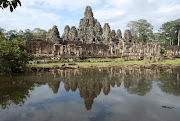
Last month, 22 mainly U.S. fund managers met in Siem Reap, Cambodia’s base for temple tourism, to assess the opportunities.
They aren’t the first. Malaysian interests have been active in the country for years and South Koreans are investing in banking and property, including a $2 billion satellite city on the outskirts of the capital, Phnom Penh.
The expatriate business community in Cambodia has long railed against negative perceptions of the country. One refrain: ‘Cambodia is more than a pile of skulls’ - a reference to Phnom Penh’s gut-wrenching “killing fields” museum. Roughly 1.7 million people, a fifth of the population, were killed during the communist Khmer Rouge’s reign of terror from 1975 to 1979. Special attention was paid to exterminating the educated. Three decades later, the consequences continue to ripple through the country; a lack of skilled people hampers efforts to lift millions out of grinding poverty.
Another legacy of that era, corruption, is well documented. Transparency International, of Berlin, ranked Cambodia the 14th most corrupt out of 179 nations in its 2007 study.
It is also difficult to enforce legal rights and business contracts. “There are issues in Indonesia or Philippines enforcing rights but it’s much harder in Cambodia,” said Kroll’s Leahy. “A creditor needs more than 400 days to get a claim enforced, and that’s assuming the court decides to side with a foreign creditor’s claim,” he said, citing a World Bank report.
Given the perception that large-scale business activities require an unsavory accommodation with powerful figures in the government, staying small may be the key to success for private equity investors.
“We want the small- and medium-sized investments below the political radar screen,” said Douglas Clayton, a managing partner of Leopard Asia, which is raising $100 million for its Cambodia fund. Leopard’s fund opened for subscription in April and has so far raised $11 million. It’s targeting investments between $5 million and $15 million, with a preference for minority stakes and a willingness to start businesses from scratch.
Douglas said the group sees opportunities in food processing, the garments industry, agribusiness and property. Its first deal is a minority stake in a 250-unit condominium in Siem Reap. The projected return for the fund’s $2.5 million investment in the condo is 60%, well above its target for returns of 25%.
But finding enough suitable opportunities to absorb several hundred million dollars of private equity capital is another issue facing investors. The challenge is finding companies with accounting and management standards that approach international norms, said Peter Brimble, managing director of the Cambodia Emerald Fund, which is aiming to raise $100 million after splitting from Leopard late last year.
The money can be absorbed if the economy continues to grow strongly and the government continues to improve transparency and legal standards, Mr. Brimble said. “As we dig deeper into this country and connect with the entrepreneurial class we are finding a lot of opportunities,” he said.
“Five hundred million dollars is really just a few golf courses and hotels. A lot more could be absorbed,” said Douglas Broderick, the U.N. Development Program’s resident representative in Cambodia.
–Stephen Wright
Read more!

Monday, June 09, 2008
Private Equity Funds Turn Toward Cambodia

UN extends breakfast program for Cambodian schools
By KER MUNTHIT
PHNOM PENH, Cambodia (AP) — Last minute funding to buy rice has allowed the U.N. World Food Program to resume free breakfast for hundreds of thousands of Cambodian children, the agency said Monday.
The program ended this month because of rising rice prices. But a $5.4 million infusion from WFP headquarters in Rome meant an extension through the end of the school year on July 5, said Paul Risley, a spokesman for the WFP in Bangkok.
Thomas Keusters, the WFP's program director for Cambodia, said he was "delighted" after receiving the news.
"We're going to deliver food to all 1,344 schools so that the school-feeding program can continue until the 5th of July," he said Monday.
Classes will resume in October and Keusters said the fate of the meal program "will very much depend on the donations we will receive in the coming weeks and months."
Facing a budget shortfall because of the rising cost of food, the U.N.'s food agency said three months ago that breakfast stocks at Cambodian schools would run out before mid-June. Five local suppliers defaulted on contracts to provide rice because they could get higher prices elsewhere, program officials said.
It was just one of many WFP programs facing cuts amid a $755 million shortfall in the U.N. agency's budget. But in recent days, the WFP received a $500 million donation from Saudi Arabia along with a total of $300 million from the United States, Australia and Europe.
Cambodian school officials, some of whom ended their program and others who were about to, expressed joy about the latest news.
"I am very happy if that is true," said Nheng Vorn, principal of Choumpou Proek school, about 40 miles west of the capital, Phnom Penh.
His school's rice supply ran out May 27, and the staff cooked the last 64 pounds of peas on Friday for the students.
About six miles from Nheng Vorn's school, the Sangkum Seksa school was set to end its meal program this week.
"But maybe there will be no need to close it if we will really get more rice," the school's principal Tan Sak said.
Read more!
Sunday, June 08, 2008
U.S. pays to rebuild temple in Cambodia
restoration - A sacred temple in the historic Cambodian city of Angkor has received a $978,700 US grant to undergo the second phase of a restoration project.
The World Monuments Fund received the grant from the U.S. State Department and will use the money to rebuild and stabilize the severely damaged east elevation at Phnom Bakheng, the oldest temple in the city, fund spokeswoman Holly Evarts said in a telephone interview.
The temple, built by Khmer King Yasyovarman I in 907 AD, represents Mount Mehru, the mythical home of Hindu gods. Perched on the highest point of the Angkor alluvial plain, its stunning sunsets attract hundreds of tourists daily.
Read more!
Cambodia sends off third batch of UN peacekeeping deminers to Sudan
PHNOM PENH, June 8 (Xinhua) -- Cambodia sent off its third batch of deminers here Sunday at the Bochentong Air Base to take part in the UN peacekeeping missions in Sudan.
"Today's send-off is evidence of the willingness of the Royal Government of Cambodia and the Cambodian people to provide essential security and support to those in conflict," said Douglas Broderick, UN resident coordinator in the kingdom.
The third batch consists of 139 staff members, 15 of whom had left on June 2 for camping work, said a military press release.
Ke Kim Yan, Commander in Chief of the Royal Cambodian Armed Forces (RCAF), told the send-off ceremony that Cambodia has participated in "the UN peacekeeping operation on humanitarian mine clearance in Sudan for the third consecutive year."
So far, Cambodian deminers have cleared 57,542,488 square meters of areas in Sudan, he added.
RCAF Lt. Gen. Sem Sovanny said that the third batch of deminers will replace the second one, who will return from Sudan to Cambodia Tuesday.
Along with consistent economic growth, Cambodia has also been seeking to enlarge its international military presence. It has joined two multinational military exercises respectively in Mongolia and Bangladesh, since peace was established in the kingdom in 1997.
Read more!
Saturday, June 07, 2008
Noppadon hails preah vihear proposal
Cambodia's new annexe map for a proposal to list the Hindu temple of Preah Vihear as a World Heritage Site does not claim 4.6 square kilometres of overlapping territory, Foreign Minister Noppadon Pattama said yesterday.
Following an agreement between the two countries in Paris last month to list only the temple itself as a heritage site, Phnom Penh on Thursday sent the new map to Bangkok for consideration.
"I have seen the map, which makes clear that Cambodia no longer claims the overlapping downhill area as part of the temple for the World Heritage Site," Noppadon said in a press briefing.
However, the Supreme Command's Royal Thai Survey Department will use satellite imaging to verify the map and location on the ground, he added.
If there is no objection, the National Security Council and the Cabinet will endorse the map and respond to Phnom Penh within a week, enabling Cambodia to send its proposal to the United Nations Educational Scientific and Cultural Organisation by the middle of this month. Unesco's World Heritage Committee will make a final decision on the proposal at a meeting in Canada in July.
Even though Cambodia won its claim to Preah Vihear in the International Court of Justice in 1962, its proposal to list the temple as a Unesco heritage site was opposed by Thailand because the map appended by Phnom Penh showed an area claimed by both countries as part of the temple site.
The agreement reached by Noppadon and Cambodian Deputy Prime Minister Sok An in Paris will end not only conflict with Cambodia, but also allegations made by street protesters that the foreign minister might cause Thailand to lose its territory.
Read more!
Cambodian kids enjoy last free breakfast after suspension of UN food aid
PHNOM PENH, Cambodia: Students at a rural elementary school in Cambodia enjoyed their last free breakfasts in class after the United Nations World Food Program stopped supplying rice and other food because of soaring global prices.
Besides directly providing nutrition for children, the WFP breakfasts have provided an incentive for parents to send their children to school rather than sending them to work in the fields or stay home to look after younger siblings.
WFP said Wednesday that the program will be resumed later, probably around October, as the agency provides US$1.2 billion (€763 million) in new assistance to help tens of millions of people in 62 nations hardest hit by the food crisis.
Meanwhile, though, Cambodia educators must convince parents to keep their children in the classroom.
The principal of Choumpou Proek school, about 43 miles (70 kilometers) west of the capital Phnom Penh, said he has been meeting with village leaders and families to encourage children to keep going to school, even without the benefit of extra nourishment.
The free breakfast program in Cambodia began in 2000 and has recently been benefiting about 450,000 rural students. The World Food Program feeds almost 89 million people worldwide, including 58.8 million children.
Choumpou Proek principal Nheng Vorn — who did not know the program is supposed to be restarted — said his 612 students enjoyed a final free breakfast of steamed yellow split peas with salt — but no rice.
The school's rice supply ran out May 27, so staff cooked the last 64 pounds (29 kilograms) of peas for the students, Nheng Vorn said by telephone from the school in a village in Kampong Speu province. The WFP also provided soybeans and cooking oil.
Even though the school is in a rice-growing area, the farms cannot produce enough of the staple to feed the entire community. WFP selected schools in poorest communities for the breakfast program.
The U.N.'s food agency said three months ago that breakfast stocks at the 1,344 rural schools under its program would run out before mid-June, and stopped sending rice supplies in March.
The cutoff began after five local suppliers defaulted on contracts to provide rice because they could get a higher price elsewhere, program officials said.
The price of rice tripled in the first four months of the year as the world food crisis deepened.
Soaring fuel prices have driven up the costs of fertilizers, farm vehicle use and transporting food to markets. Speculation and increased consumption of meat and dairy goods in China, India and other booming developing nations are also considered major factors in the food price hikes.
About six miles (10 kilometers) from Nheng Vorn's school, Sangkum Seksa school principal Tan Sak said his students have been eating breakfasts of steamed peas with salt since their WFP rice ran out two weeks ago.
The school's kitchen will shut down next week when the peas run out, he said.
Similar situations were occurring around the country and all over the developing world.
In Burundi, Kenya and Zambia, hundreds of thousands of people face cuts in food rations after June. In Iraq, 500,000 recipients will likely lose food aid. In Yemen, it's 320,000 households, including children and the sick.
Most, if not all, will now benefit from WFP's newly announced commitment to renew aid.
Coco Ushiyama, WFP's acting director for Cambodia, said in an interview last month that it was "really a tough decision" to end school food aid in favor of continuing programs benefiting orphans of HIV/AIDS and tuberculosis, who are in "more desperate need" of food aid.
She expressed concern that the end of free breakfasts could reverse gains already made in trying to improve education for rural children.
Read more!
Controversial Russian company starts developing resort on Cambodian island
PHNOM PENH, Cambodia (AP) - A Russian company broke ground Saturday on a US$300 million island resort project along Cambodia's southwest coast, despite one of its partners being jailed in the country for alleged sex crimes.
Prime Minister Hun Sen presided over a ceremony marking the start of work on a 2,970-foot (900-meter) bridge that will link Koh Puos _ Snake Island _ with a coastal beach in the port city of Sihanoukville.
Cambodia's government signed a deal with Koh Puos Investment Group Ltd. in 2006 that allows it to develop and manage resorts on the island for 99 years.
The company is run by a group of Russian businessmen, according to its Web site.
One of the group's partners, Alexander Trofimov, was sentenced in March by a Cambodian court to 13 years in prison on charges of sexually abusing a 14-year-old girl.
Trofimov was arrested last October over allegations that he had abused as many as 19 girls since 2005, but was charged only in the case of the 14-year-old. He has denied the accusation.
Cambodian Transport Minister Sun Chanthol said the bridge will cost about US$31.3 million and be completed at the end of 2010.
He said it will help develop Koh Puos «into a world-class resort.
The new resort is part of impoverished Cambodia's efforts to promote the country's beaches as a new tourist destination and a key source of cash, following the success it has had in drawing visitors to its famed Angkor temples.
Sihanoukville is about 115 miles (185 kilometers) southwest of the capital, Phnom Penh.
Read more!
Environmental concerns raised about Angkor of Cambodia
PHNOM PENH, June 7 (Xinhua) -- The International Coordinating Committee of Angkor held its 17th technical meeting this week in Siem Reap town, focusing on how the tourist destination can avoid becoming a victim of its success, the Cambodia Daily newspaper said Saturday.
Experts at the meeting have pointed out that the number of tourists and resulting traffic is taking its toll on the area, the newspaper said.
One major problem is sewage, said Shinji Tsukawaki of the Kanazawa University in Japan who is part of the environmental study project Environment Research Development Angkor Cambodia.
With 2 million annual visitors staying an average of five days in Siem Reap town, 1 million tons of human wastewater is deposited into the soil each year, Shinji Tsukawaki said.
The effect of sewage on soil and underground water requires urgent monitoring and measures, he said.
In addition, TS Maxwell of Germany's University of Bonn, who is involved in the Angkor Inscriptions Survey Project, told the meeting that the thousands of visitors who tour Angkor's temples each day could damage stone inscriptions by simply touching them.
Read more!
Cambodia: Zongzi becomes a tool of affection relay
By Xia Lin
PHNOM PENH, June 7 (Xinhua) -- Top herbal wine producer of Cambodia Ear Cheam Heng has ordered dozens of Zongzi on eve of the Dragon Boat Festival on June 8 as seasonal gifts for his friends, business partners as well as relatives.
"The Zongzi was well-made, because I ordered it from the Old Place Seafood Restaurant, the most genuine Cantonese cooking place in town," he said.
Each time the festival comes, Ear Cheam Heng would like to treat his personal and commercial friends with this typical Chinese food, to foster closer ties and lubricate his business environment.
In China, people have the tradition to have Zongzi a pyramid-shaped dumpling made of glutinous rice wrapped in bamboo or reed leaves, during the Dragon Boat Festival which was designed to commemorate an ancient major-pillar poet.
In Cambodia, where around 7 percent of its 14 million population are thought as Chinese Cambodians and some 200,000 Chinese people from the mainland, Hong Kong, Macao and Taiwan get employed in various industries, the tradition enjoys rebirth and even wide-ranging popularity.
Chinese restaurants usually bear the top notch in the Zongzi craze, as owners can be the happiest harvesters in the particular season.
Robin Chang from Taiwan has been running catering trade in Phnom Penh for years. He is fortunate to marry Madame Chang, who insists on making all the meat-mushroom zongzi selling at their restaurant by herself.
And, their advertisement on local newspapers looks totally different from those of others.
"It is hand-made, not by staff members, but by my wife herself," his recipe can always be retold, but never replicated elsewhere in town.
Other bosses can't find so trustworthy and professional hands, so they turn to rely on multifarious, sometimes luxurious fillings that gourmand can find as surprise while eating Zongzi
One restaurant run by local Chinese Cambodians is marketing Zongzi stuffed with super yolk, another by immigrants from Beijing adopts red bean and bacon, and a third, or the boldest, directly puts in abalone and sea cucumber.
As a common understanding, Zongzi can be sold not only as alternative or classic food, but as spiritual pacifier.
"If you miss hometown and family, why not have a Zongzi of ours? It cures your homesickness," Zongzi advertisements usually read like this.
They are truly affective while appealing to the mass Chinese people working in garment factories and for hydro-electric projects.
A local Chinese-Cambodian enterprise even invented the idea of selling Zongzi to raise charity money for the earthquake victims in Sichuan province, China.
"No matter you buy one or a lot more, your care can be always felt in there, because it is not ordinary Zongzi but charity Zongzi reads a letter from the enterprise for local people.
Really, Zongzi can do more than stuffing stomach. It comforts and enriches your mind.
Commercial News, the longest running Chinese-language daily newspaper in Cambodia, on June 6 published a whole page of stories about Zongzi elaborating on its origin, style, cookery and health hints.
"When the stories are read, the tradition and the culture are preserved and inherited," said editor in chief Liu Xiaoguang.
Out of coincidence or mutual influence, local ethnic Khmers also enshrine the habit of making and eating Zongzi which is called in Cambodian language as Num Chang if in pyramid shape and Num Sawm if in rectangular shape.
The pronunciations derive from the Chaozhou dialect of China. Most Chinese Cambodians are rooted in Chaozhou, a region in Guangdong province in southern China.
However, either Num Chang or Num Sawm only contains minced glutinous rice inside bamboo leaves, without any filling. The rice is soaked in alkali water and tastes a little bitter. So, refined white sugar is a necessity when you enjoy a Cambodian Zongzi
When a countryside person returns to Phnom Penh for work, he will always bring some home-made Num Chang for his boss and colleagues.
"Rice and bamboo leaves from outside the city always taste fresh, natural and true," said Socheat, a maid serving foreign family in town.
Zongzi is food in its original sense and can become a tool of affection relay when we study its social sense, said Eang Heng, a 68-year-old Chinese Cambodian who was born here and traveled in most provinces of China when he was young.
"Whether in China or Cambodia, it may look different, but just plays the same role," he added.
Read more!
Friday, June 06, 2008
Recycling boom endangers Cambodia’s dirt-poor children

His 10-year-old patient, wearing only ragged shorts and a T-shirt, was just one among thousands of youngsters scraping out an existence scavenging waste on the streets of the Cambodian capital.
Cambodia’s growing demand for recyclables — from bottles and cans to cardboard — has seen a sharp rise in the number of child scavengers trawling through the capital’s waste heaps, many of them press-ganged into what advocates say is one of the world’s most hazardous forms of labor.
In 2006, around 4,000 children were working on Phnom Penh’s streets, according to Chan Haranvadey, an official with the Social Affairs Ministry.
That number is estimated to have spiraled to between 10,000 and 20,000, though the number dips during the planting season in May and this month, when many children return to family farms, non-governmental organizations say.
“These child scavengers are the most vulnerable,” said Tuy Puthea, who works with the NGO Mith Samlanh, which helps homeless children.
“They use neither gloves nor shoes, they inhale toxic fumes, eat out of garbage bins,” he said, listing ailments he sees every day, from headaches and infected wounds to diarrhea and hacking coughs.
Across Cambodia an estimated 1.5 million children under 14 are forced to work, child advocacy groups say. They say that while most labor on family farms, up to 250,000 work in hazardous conditions while begging, scavenging waste, working in factories or mining.
In Phnom Penh, where an economic boom has also fueled the trash trade, some 70 percent of scavengers are children, according to Mith Samlanh of child advocacy group, For the Smile of a Child (PSE).
They can be seen day and night, sometimes alone or with their families, picking through piles of trash or begging for bottles and cans from customers at street-side restaurants.
Scavengers’ lives defined by violence, degradation
By foraging for plastic, glass, metal or cardboard, a child can make a dollar or two a day — no small sum in a country where 35 percent of the population is mired in poverty.
But scavenging also places them in a rigid system of patronage, extortion and intimidation at the hands of local thugs acting as middlemen for large recycling outfits operating in Thailand or Vietnam.
These handlers, sometimes children only a few years older than the scavengers themselves, often pay lower than market value in exchange for protection or small tips.
It’s a necessary arrangement in a world defined by violence and degradation.
“They are exposed to others problems — violence, drug use, sexual harassment or trafficking,” says Tuy Puthea, whose clinic treats about 30 children a day.
That number could drastically increase as plans to close Cambodia’s largest dump get underway. Phnom Penh needs to find somewhere else for its garbage because the current dump is almost full, say city officials.
Only a few kilometers from Phnom Penh’s burgeoning downtown, at the end of a dirt lane crowded with garbage trucks, is the Stung Meanchey tip, a vast horizon of trash.
Here hundreds of scavengers, many of them children, wander through the smoldering squalor, their clothing stiff with grime and faces tightly wrapped with scarves against the stinging, ever-present smoke.
But without the dump, they will be forced onto the streets, swelling the ranks of those already prowling Phnom Penh’s litter piles but also taking them further from the reach of the groups most actively trying to help them.
“Closing the dump is a good thing — this should not be so close to the city,” said Pin Sarapitch, director of the programs at PSE, which for 12 years has operated on the fringes of Stung Meanchey, providing education or vocational training for more than 5,000 children.
“The closure should be followed by more social intervention from the state. The government cannot close the dump and leave these families without a place to live or work,” Pin Sarapitch said.
“Where will they go? And how will we be able to our work with them if they cannot be found?” he added.
This story has been viewed 141 times.
Gov't mulls ending ban on foreign marriages
A ban on marriages between Cambodians and foreigners could soon end, Deputy Prime Minister Sar Kheng has said, as a meeting of top government officials got underway to discuss legislation that would allow these unions to resume.
The ban was enacted in April amid concerns that thousands of often poor and uneducated Cambodian women were being married off by brokers to foreign men, making them more vulnerable to trafficking.
"Trafficking has many faces ... therefore, we closed all of those marriage brokers," Sar Kheng said on June 4.
He was speaking at the release of the US State Department's annual Trafficking in Persons study, which this year upgraded Cambodia to Tier 2, the middle of three tiers which indicates that the country's is making efforts to address its trafficking problem.
Concern was sparked earlier this year by reports that the number of Cambodian brides going to South Korea has risen from just 72 in 2004 to more than 1,700 last year.
Large numbers of Cambodian women were also marrying Taiwanese men through brokers in Cambodia, many of which are unregulated.
"We cannot suspend [marriages] for a long time, or forever because it contradicts the Cambodian constitution and is discriminatory," Sar Kheng said.
"I will lead a meeting to draft a sub-decree [Friday] at the Ministry of Interior to end the suspension," he added. (Nguon Sovan)
Read more!
Gov't threatens legal action against police who abuse sex workers
Deputy Prime Minister Sar Kheng has threatened legal action against officials accused of sexually abusing or robbing sex workers taken into custody during an ongoing crackdown on prostitution.
The threat comes a day after sex workers gathered in Phnom Penh to protest the implementation of a new anti-trafficking law that critics say gives authorities a license to rape.
The law, promulgated in February, is aimed at curbing people smuggling, either for labor or sexual exploitation. It has resulted in mass brothel closures throughout the country.
Critics say implementation of the new law has led to rising abuses by police against sex workers. At a June 4 protest against the new law several sex workers alleged being raped, beaten and robbed while in police custody following brothel raids and sweeps through public places where prostitutes ply their trade.
.
“We have heard this information ... the government, especially the Ministry of Interior, will take legal action against the officials who are accused of rapes of sex workers," Sar Kheng said June 5
Sar Kheng added, however, that sex workers have yet to present any evidence of abuse.
He was speaking at the release of the US State Department's annual Trafficking in Persons study, which this year upgraded Cambodia to Tier 2, the middle of three tiers which indicates that the country is making efforts to address its trafficking problem.
Hundreds of sex workers attended the June 4 rally against the new legislation. In addition to alleged police abuses, they said the new law has hindered HIV/AIDS care and prevention programs among prostitutes.
Read more!
Cambodia's Sihanouk says his son may abdicate
Phnom Penh (dpa) - Cambodia's former king Norodom Sihanouk hinted Friday that his son, King Norodom Sihamoni, may be considering abdicating to live a "simple life" in France.
In a letter posted on his website received Friday and dated Thursday, the octogenarian former monarch outlined a conversation he said he had had with Sihamoni on the day of writing.
"My beloved son told me, 'Papa, please do not worry - your darling son could return to Paris and live a normal life'," Sihanouk wrote in French on his blog.
"I will hire a small room and stay with my wife, have a simple bathroom and eat simple food I can buy from a simple shop," Sihanouk quoted his son as saying.
Sihamoni is currently a bachelor.
He also said Sihamoni would refuse contact with journalists.
In the letter, entitled 'The Real Story', Sihanouk warned of a possible upcoming upheaval in the monarchy.
Sihanouk shocked many when he abdicated in 2004, citing advancing age and ill-health, and Sihamoni, previously an ambassador to the United Nations Education Scentific and Cultural Organization and a classical dancer before his ascension to the throne, took the reigns.
Fluent in French and Czech, Sihamoni, 55, was initially little known to ordinary Cambodians due to his long overseas career but has earned adoration in a country which recognizes kings as demi-gods.
He has eschewed politics, unlike his mercurial father during certain periods of his reign, who strutted the world stage.
Sihamoni's half-brother and Sihanouk's son, Prince Norodom Ranariddh, is currently in exile after being convicted for breach of trust in absentia and sentenced to 18 months in jail for his role in selling the headquarters of his former political party, Funcinpec.
Read more!
Cambodia launches chemicals management initiative
PHNOM PENH, June 6 (Xinhua) -- The Cambodian government launched its project here Friday aiming at integrating chemicals management into the country's development planning process, said a press release from the United Nations Development Program (UNDP).
The Sound Chemicals Management Project, supported by the government of Sweden and the Swedish Chemicals Inspectorate for a two-year period, will assess the management of chemicals regimes and put in place a plan to address gaps in the national regime, said the release.
It also aims to improve the incorporation of chemicals management priorities and procedures into the national development discourse and planning agenda, it added.
"Cambodia is not a producer of chemical substances. We are merely a consumer. Therefore, we have to carefully review the management of the substances in order to protect our people's health and environment," Khieu Muth, secretary of state at the Cambodian Ministry of Environment, was quoted as telling a workshop to launch the project.
Sophia Baranes, UNDP deputy country director for Cambodia, told the workshop that "chemicals play a part in almost all human activities and are a major contributor to national economies. But when they are not properly managed, they can put human health, ecosystems and national economy at risk."
The UNDP and the United Nations Environment Program (UNEP) are working to support the Cambodian Ministry of Environment in implementing the project through a common partnership initiative that is also being carried out in six other countries selected to pilot a new approach to implementing chemicals management into the development of related countries.
Read more!
In Cambodia, a case for localizing climate-change research

Nam Lai, a carpenter in this remote corner of Cambodia, remembers when it was easy to park his movable houseboat on the Tonle Sap Lake where he lives. But now, it’s getting harder to find a suitable spot for his small barge. “I have to move the house farther and farther from the shore,” he says.
For years, the 1 million inhabitants of the lake – Southeast Asia’s largest freshwater body – have lived a mobile existence to keep step with the seasonal ebbs and flows brought on by monsoons and melting Himalayan snows that expand the lake to five times its normal size. But many villagers say the deeper waters needed to park their houseboats are harder to find as the summers get hotter and the lake’s water level drops.
Lai’s observations, together with evidence of climate change’s impact on other fisheries around the world, has scientists deeply concerned that Tonle Sap Lake – one of the world’s most fragile ecosystems and one of its most productive fisheries – is also under threat. The lake is essential to Cambodia’s food supply, its fish providing 60 percent of the country’s protein, while supporting the livelihoods of about 12 percent of its people.
The problem is, nobody knows the impact of climate change for sure – even the teams that have come to find out from as far away as Finland – since scientific inquiry has only just begun. Observers say that the uncertainty underscores that better understanding of local scenarios, not just global modeling that looks at steady increases in world-wide temperatures, is needed to pinpoint climate change’s impact on people and livelihoods.
“There’s a whole area of science that needs to relate climate and physical change to people and social changes – to identify relationships between physical changes and social consequences,” says Eric Baran, research scientist at the Phnom Penh office of the World Fish Center, a research organization headquartered in Malaysia.
The Cambodian government has begun looking at the problem, creating a climate-change office in 2003 and undertaking a climate-change vulnerability assessment in 2001. But neither of those measures has focused specifically on the Tonle Sap Lake. Some pioneering studies, including one at Africa’s Lake Tanganyika, have linked some of the same problems the Tonle Sap is exhibiting – such as reduced fish yield – to climate change. But it’s not yet clear whether climate change or other factors are responsible here.
Whatever the cause, floating gas-station owner Sinan San has seen the effects firsthand. Her main customers – fishermen – are no longer able to make good catches, and her earnings have dried up since 2004.
“The number of fishermen has decreased because there are less fish, and they move to upland for their livelihood. They say fish are getting smaller and smaller,” she says. Scientists agree, saying overfishing, poor management, and unfair laws have led to a sharp decrease in the number and size of the lake’s fish.
“Small fish are more susceptible to climate fluctuations,” says Mr. Baran. “If the year is good, you have many [small fish]. If the year is bad, you have nothing. This will make the system more and more shaky.”
The declining fish are just one variable in a host of factors that threaten to affect the lake’s hydrology, further exposing it to the risks of climate change.
“Many factors will have impacts on the hydrological regime of the Mekong Basin and on the Tonle Sap Lake’s ecosystem,” Timo Menniken, an adviser to the Mekong River Commission Secretariat in Vientiane, Laos, writes in an e-mail. “These include general rapid economic development, the ongoing development of hydropower schemes along the upper reaches of the Lancang-Mekong, the proposed development of hydropower schemes on tributaries and the mainstream in the lower basin, the indications of groundwater depletion and water pollution caused … by the tourism industry, and plans for oil exploration in the Tonle Sap Basin.”
Another factor is accelerated glacier runoff. “The hydrology can be affected by the melting away of mountain snows in Tibet. You may see water levels rise, which would cause salinity levels to rise,” says Neou Bonheur, the project director of the Ministry of Environment’s Tonle Sap Environment Management Project. “We just don’t know. There are a wide range of areas that we need to set up and observe.”
Thursday, June 05, 2008
Vietnam sets nuclear pace in Southeast Asia
By Andrew Symon
HANOI - General Electric of the United States and Asian rivals in the nuclear power sector such as Daewoo and Toshiba are among companies looking to win big contracts in Southeast Asia as the region's countries turn to the once-shunned energy source to fuel future economic growth.
GE and companies from France, Russia, Canada, Japan, South Korea and China turned out in numbers at a nuclear industry exhibition in Hanoi last month, bidding to help Vietnam develop its first nuclear power facilities.
High global fuel prices in the 1970s resulted in a raft of plants being built in Europe and North America. After a retreat in the 1980s over safety issues, interest in the nuclear option is reviving as Asia's surging power demands help spur global fossil fuel prices and pressure mounts to reduce growth in greenhouse gas emissions.
Vietnam is on track to become Southeast Asia's first country to take the nuclear plunge, with the government and its main energy-related agencies, the Vietnamese Atomic Energy Agency and Electricity Vietnam (EVN), advancing plans for huge expansion in power generation.
Vietnam plans to have four nuclear generation plants with a total of 8,000 megawatts (MW) capacity in operation by 2025. Two of those plants, each with two 1,000 MW units, are to be up and running by 2020 in Ninh Thuan province on the country's central coast. Construction is set to begin in 2015 and the government has earmarked US$6 billion for each plant.
So far, there is little if any public opposition to the development in the authoritarian country, increasing Vietnam's commercial attractiveness to the global nuclear industry.
In Indonesia, the government aims to have its first nuclear plant in operation some time after 2015 on the Central Java north coast. The outlook here is less certain, as public opposition is strengthening nationally and locally, to the extent that at least one Islamic religious leader has issued an edict against the plan. With national, regional and presidential elections scheduled for next year, Indonesia's nuclear plans could be derailed, some industry executives fear.
Thailand is also carrying out a feasibility study for a nuclear plant to be built in the country by 2020, although again public opposition might hinder progress. Community and non-governmental organizations in recent years managed to derail construction of two large coal-fired power plants in southern Prachuap Kirikhan province.
Elsewhere in the region, nuclear feasibility studies are underway by relevant government agencies in the Philippines and Malaysia.
The nuclear momentum appears to be strongest in Vietnam, where the government last August doubled its previous generation target of 4,000 MW to 8,000 MW goal by 2025. A law providing the framework for development of nuclear power plants and foreign investment in the industry, wider civilian applications for nuclear science, and safety and non-proliferation standards and controls is expected to be passed this month by the National Assembly. This will enable the government to get on with project planning and establish a tendering process for power plant construction, fueling and operation.
Before those laws were in place, the recent Hanoi exhibition attracted a who's who of global energy firms. Executives from France's Areva and Electricite de France (EDF) rubbed shoulders with their counterparts from Japan's Toshiba and Federation of Electric Power Companies, South Korea's Daewoo and the Korea Hydro and Nuclear Power Company. Representatives of General Electric, Russia's Rosatom and Atomostroi and China's Guangdong Nuclear Power Company were also present, as were officials of the United Nations' Vienna-based International Atomic Energy Agency.
The four-day exhibition from May 13-17 was the third in the country since 2004. Foreign companies are expected to play critical roles in supplying technology, education and training for Vietnamese scientists, engineers and technicians. The government also clearly hopes to finance the plants' construction through export-import credit schemes of the respective companies' governments.
The exhibition served a dual purpose of providing information to the Vietnamese public about the government's plans. In late May, more than 400 local representatives of the coastal Ninh Thuan province were invited by the government to voice opinions about proposed plants at a seminar co-organized by local power company EVN and Electricite de France. The state-controlled press reported that the response to the plant by the two districts' representatives at the meeting was largely positive.
Powerful diplomacy
The Vietnam exhibition also underlined the close links between business and government in the international nuclear industry.
The French consortium was strongly supported by the French Embassy in media statements and interviews at the Vietnam event. At a press conference, French nuclear power industry representatives pointed to a new government agency, the French International Nuclear Energy Agency, which had been established to provide experts to collaborate with foreign governments on feasibility studies, safety concerns and other issues.
The China Guangdong Nuclear Power Company's presentation signaled China's new goal of entering the global nuclear business as an investor and supplier rather than as a recipient of foreign expertise, equipment and investment. China's nuclear power expansion plans are the most ambitious in the world in terms of scale and speed of development. Established nuclear power players, including from Japan and South Korea, said they see Chinese rivals as a fast-rising, low-cost competitive threat.
Japan's Toshiba, Hitachi and Mitsubishi are also in the nuclear hunt and seem well placed to benefit from Tokyo's strong commercial diplomacy in the region. Coinciding with the Vietnam exhibition, the governments of Japan and Vietnam signed a bilateral assistance agreement. As part of that pact, Japan is scheduled to help Vietnam prepare and plan for the introduction of nuclear energy, educate experts in nuclear power and help the country formulate nuclear safety regulations.
Vietnam has also signed nuclear cooperation agreements with the governments of Russia, France, South Korea and the US. One potential commercial ace up the sleeve of Japanese companies is their government's push for new incentives to invest in nuclear power development in Southeast Asia and elsewhere.
Tokyo is lobbying for new nuclear facilities to be eligible, after the Kyoto climate change accord expires in 2012, for clean development mechanism (CDM) credits for carbon dioxide reduction achieved by not building new coal- and gas-fueled power plants.
Given the scale of nuclear power plants and the fact that plants emit nearly no greenhouse gases, CDM credits that could be sold on global carbon markets and used by companies and governments to meet mandatory carbon emissions targets elsewhere could have huge value. The Japanese government put its case forward at a UN climate change meeting in early April.
The proposal was left on the table, due mainly to developed countries' still strong concerns over safety and weapons proliferation. The Tokyo proposal is expected to resurface at another UN meeting on climate issues in Copenhagen in late 2009. The CDM scheme for nuclear power is expected to get a wider hearing as governments grapple with putting in place a successor agreement to Kyoto.
If adopted, the CDM proposal could have enormous implications for Southeast Asia's nuclear power development. The high capital costs associated with building nuclear power plants are at this point still expected to constrain the region's nuclear future, but those start-up costs would be mitigated significantly if new plants were entitled to CDM credits.
Read more!
US upgrades Cambodia's anti-human trafficking rating
The US government has upgraded Cambodia's anti-human trafficking rating for the first time since 2006, saying that the Kingdom has made a significant effort to combat people smuggling.
The country has been placed this year in Tier 2, the middle category in the US State Department's annual Trafficking in Persons report, putting it alongside countries like Chile, Angola and El Salvador, which are among the 170 countries assessed.
Since 2006 Cambodia has languished on the Tier 2 Watch List after being relegated to the lowest category, Tier 3, in 2005.
"The Royal Government of Cambodia does not fully comply with the minimum standards for the elimination of trafficking; however, it is making significant efforts to do so," said the State Department in its report released on June 5.
"Cambodia is placed on Tier 2 for the first time since 2004 due to the government’s increased engagement in combating trafficking in persons over the previous year," it added.
The assessment follows Cambodia's passage of new anti-trafficking legislation which criminalized all forms of human trafficking, as well as the formation in April 2007 of a national anti-trafficking taskforce.
"This legislation provides law enforcement authorities the power to investigate all forms of trafficking and is a powerful tool in efforts to prosecute and convict traffickers and have them face stringent punishments," the State Department said.
"High-level government officials have spoken publicly about a 'zero-tolerance' policy for officials profiting from or colluding in trafficking in persons," it added.
But the new legislation has been sharply criticized by advocates for commercial sex workers who say the law has also led to an increase in abuses by authorities cracking down on prostitution.
Many sex workers, advocates claim, have been beaten, raped or robbed while in police detention, and the mass closure of brothels has hindered efforts curb the spread of HIV/Aids and other sexually transmitted diseases.
"This law ... increases violence, discrimination and human rights abuses against sex workers. It allows for corruption to spread among law enforcers," said Pich Sokchea of the Women's Network for Unity, who was speaking June 4 at a rally by sex workers against the legislation.
"Many times, when the brothels are raided police rape the women before arresting them," added Sokchea, who is also a sex worker.
Despite its progress, Cambodia remains a source and destination country for persons trafficked both for sex or labor, the State Department points out.
"Women and girls are trafficked for commercial sexual exploitation to Thailand and Malaysia.... Some Cambodian male migrant workers returning from India, South Korea, and Malaysia reported being subjected to conditions of forced labor and debt bondage," it said.
"Children are trafficked to Thailand and Vietnam to beg or work on the streets selling candy or flowers or shining shoes," it added, recommending that the government increase anti-trafficking training for authorities and step up court prosecutions of people smugglers.
Read more!
Phnom Penh market has good potential for the foreigner crooks
Foreigner businesses are part of corruption in Cambodia. The land concessions and businesses development cause many cons businessmen siding with corrupted government officials to rob the land from many poor Cambodians in the Capital city of Phnom penh. Many businesses are bringing nothing to for development in Cambodia and they are just parasite sucking blood from the poor to feed themselves.
Strong economy and interest from foreign investors seen fuelling demand
With foreign investors eyeing a piece of Phnom Penh's property pie, the Cambodian capital's real-estate market has potential for growth this year, a survey by Agency for Real Estate Affairs (AREA) shows.
AREA president Sopon Pornchokchai said land prices in Phnom Penh range between Bt200,000 and Bt300,000 per square metre.
By the end of January, 90 new condominium and residential projects comprising 25,596 units were launched.
The total worth of the projects was US$2.09 billion (Bt68.7 billion).
Of these, 66 per cent or 16,823 units were sold at an average price of Bt2.6 million.
With Cambodia's economy growing and investors showing interest in putting their money into the property market, the demand for residential projects in Phnom Penh has seen strong growth since 2005, Sopon said. Condominiums and commercial buildings have continued to attract the most investment.
Out of the 25,596 units constructed by the end of January, 22,985 were commercial buildings, 1,186 were condominiums, 547 were detached houses, 534 were double houses and 231 units were townhouses.
Most property developers homed in on the main city centre, where prices for residential properties start at Bt4.53 million.
The survey was conducted last month.
Read more!
Managing Cambodia's mangroves
Beyond the bustling town of Koh Kong, off the coast of southern Cambodia, lie 45,000 hectares of mangrove forest. They're among the most pristine in Southeast Asia and, like others around the world, they're under threat.
Mangroves form a transition zone between land and sea. Like all transitional ecosystems, they are diverse. Mangrove foliage provides rich bird habitat. Fish, crabs and molluscs hide and breed in their dense, aerial root system, which is adapted to salty water.
As if these ecosystem services weren't enough, mangroves stabilise soil, moderate the force of wind and waves, recycle nutrients and sequester carbon.
Khmer Rouge
Ironically, Cambodian mangroves prospered under the Khmer Rouge, which preferred to herd its citizens into the middle of the country. With their downfall, and the emergence of a market economy in the 1990s, powerful entrepreneurs - with military or government links - began clearing the mangroves for shrimp farms and charcoal. Local middlemen joined in, along with inland Cambodians and foreign fishermen attracted to the region's rich mangroves.
Alarmed by resource decline - and encouraged by international NGOs - the Cambodian government began cracking down. Conservation and poverty reduction could both be promoted, the government reasoned, by empowering local communities. Commune elections were held for the first time in 2002, followed by a community fisheries law. For the first time, mangrove communities began managing their own resources.
Management committees
With help from the UN Development Program and Canada's International Development Research Center, Cambodia' Environment Ministry launched its Participatory Management of Coastal Resources Project in 1997. Community workshops were held on mangrove ecology and management.
In 2001, the first village management committees were formed within the boundaries of Peam Krasaop Wildlife Sanctuary, deep in Koh Kong's mangroves. Villages outside the sanctuary, around Chrouy Pros Bay, have been invited to participate, in order to reduce fishing conflicts.
Success
Community management has been a success. Villagers have protected local sea grass beds, which are linked to the mangrove ecosystem and add fish spawning habitat. In the mangroves themselves, community patrols do their best to control illegal cutting and fishing practices. Mangroves have been successfully regenerated.
On the down side, government support for enforcement is limited and inconsistent and, outside the confines of community areas, illegal practices continue, such as the use of "light" boats armed with powerful lamps that attract fish. Some fear that commercial dredging of the Koh Kong River - led by powerful Cambodian interests - will damage the mangroves.
As elsewhere in the world, mangrove villagers and their international supporters realize that tourism may be the greatest force for mangrove protection. At least one villager in the area is planning an ecotourism initiative.
Read more!
Cambodia to establish law for marriage with foreigners
PHNOM PENH, June 5 (Xinhua) -- Cambodia will establish a law to allow Cambodian citizens to marry foreigners, Cambodian Interior Minister Sar Kheng said here Thursday on the sideline of the Cambodia-U.S. cooperation meeting on combating human trafficking.
"Tomorrow, I will preside over a meeting for organizing the draft sub-decree to allow Cambodian people to marry foreigners," he told a press conference held after the meeting.
Recently, Cambodia halted to approve marriage between Cambodians and foreigners because it involved human trafficking, he said.
"We knew it contradicted our constitution and also discriminated individual rights, so we decided to establish law to facilitate marriage with foreigners, " he said.
The draft sub-decree would exclusively focus on marriage between Khmers and foreigners, he added.
Earlier this year, the International Organization for Migration issued a report stressing the vulnerability of Cambodian brides flocking to South Korea in increasing numbers.
The government in response condemned marriage brokerage agencies for exploitation and human trafficking, ordered the closure of three South Korean ones, and banned all marriages with foreigners on March 29, pending new legislation to regulate the process.
Read more!