The land of heroes
Our heroes
Our land
Cambodia Kingdom


Monday, June 08, 2009

Attacks on Jarvis multiply

Written by Robbie Corey-Boulet

ECCC's head of Victims' Unit under fire from defence teams.


THE DEFENCE team for Khmer Rouge foreign minister Ieng Sary on Thursday registered concerns about the recent appointment of former tribunal spokeswoman Helen Jarvis as head of the court's Victims' Unit, arguing in a letter dated June 4 that her new duties conflicted with her outreach responsibilities.

The letter, addressed to the court's Deputy Director of Administration Knut Rosandhaug, also calls for an administrative inquiry into allegations that Jarvis's expressed political views could compromise her work at the court. In addition, it points to a book Jarvis co-authored in 2004 that the defence team said "strongly implies that Dr Jarvis has preconceptions about the alleged crimes", namely that they constituted genocide.

The bulk of the letter, though, concerns the conflict that will allegedly arise when Jarvis, who became head of the Victims' Unit last Monday, combines the responsibilities of that role with her outreach work.

"We are firmly of the view that amalgamating outreach activities of the entire court together with the interests of the Victims' Unit creates an inescapable conflict of interest for Dr Jarvis through no fault of her own," the letter states.

In an interview Sunday, co-lawyer Ang Udom said the switch from court spokespwoman to Victims' Unit chief amounted to a switch from an objective administrator to active party, making it impossible for her to impartially perform outreach duties.

"Jarvis used to work just with the administration," Ang Udom said. "But when she becomes chief of the Victims' Unit ... she becomes very active in the court process. She is a party in the court."

Andrew Ianuzzi, a legal consultant for Nuon Chea's defence team, said he "absolutely" agreed with the position articulated by Ang Udom and Michael Karnavas, Ieng Sary's international co-lawyer.

"The trouble is, I think that the court has done a pretty bad job of explaining what her outreach roles will encompass," Ianuzzi said.

Court spokesman Reach Sambath said Sunday that court officials had, before making the appointment, concluded that they could avoid a conflict by limiting Jarvis's involvement in outreach to what he termed "micro-outreach".

"We divided this very clearly, because public affairs will continue to focus on macro-outreach," he said. "And the Victims' Unit will minimise their outreach to micro-outreach. That means all the important work related to outreach activities will still be in the Public Affairs Section, and the Victims' Unit will focus on outreach for the victims."

But the May 18 press release announcing the appointment states: "Dr Helen Jarvis will continue to have oversight of [outreach] work."

Ianuzzi said the distinction between "macro-outreach" and "micro-outreach" was not made at the time of the announcement, adding that he had never heard of it before.

He said he had no problem with Jarvis performing outreach duties that were restricted to her role as head of the Victims' Unit.
Jarvis declined to comment Sunday, saying she had not seen the June 4 letter.

The defence teams for former Khmer Rouge head of state Khieu Samphan and former social minister Ieng Thirith have yet to weigh in on the
appointment. Sa Sovan, Khieu Samphan's co-lawyer, and Phat Pov Seang, Ieng Thirith's co-lawyer, both declined to comment Sunday.

Past writings
Concerns about Jarvis's political views were raised last week by Nuon Chea's defence team, which singled out a 2006 open letter signed by members of the Democratic Socialist Perspective's Leninist Party Faction, including Jarvis.

The letter states: "Against the bourgeoisie and their state agencies we don't respect their laws and their fake moral principles."

Karnavas said via email: "If she has made those comments and if she is an unrepentant Marxist-Leninist with views that are antithetical to the founding laws and principles of the Cambodian Judicial System, then, at a minimum, the inevitable perception that will arise whenever she is called upon to make an important or difficult decision is that she is promoting her revolutionary agenda."

Ianuzzi said the idea of an administrative inquiry was "probably not a bad idea".

Reach Sambath declined to say whether an administrative inquiry was underway.

The June 4 letter also singles out a book Jarvis co-authored in 2004 with the British journalist Tom Fawthrop titled Getting Away with Genocide: Cambodia's Long Struggle Against the Khmer Rouge.

The Ieng Sary defence team argues in the letter that the use of the word "genocide" calls into question Jarvis's "absolute impartiality", a requirement for spokespersons, which the letter argues has been established at other tribunals.

Karnavas said the book indicates that Jarvis "holds some strong opinions which ... call into question her objectivity".

Ianuzzi, who said he had not read the book, seconded that charge, saying, "Certainly it sounds like she has made up her mind about the fact of a genocide."
Read more!

Youth No Defense Against Death: Duch

Not even a child at his mother’s side was safe from the Khmer Rouge killing machine, the regime’s chief torturer told tribunal judges Monday.

Kaing Kek Iev, better known as Duch, said his communist superiors, pushing class struggle, “recommended…I must be strong.” “And then I accepted, yielded to the principles of the party, that I must destroy children,” Duch told the UN-backed court.

The former chief of Tuol Sleng prison, the regime’s main torture center, Duch, 66, is facing charges of war crimes, crimes against humanity, torture and murder.

“There is noting to gain by keeping them,” Duch said of children, “and they might take revenge on you.”

When babies and children arrived in Tuol Sleng prison, he killed them because a principle of the party was this fear of retaliation, he said, adding that he believed his subordinates killed child victims by swing them against tree trunks.

“I am criminally responsible for the murders of babies, young children and teenagers,” he said.

Duch stressed on Monday that if one of the four groups of leadership inside Democratic Kampuchea accused someone as the enemy, security guards would have to arrest the accused. When the accused were sent to S-21, they had to be interrogated and then smashed, he explained.

“If you dared to sneak the release [of the accused], you would have had guilt,” he said.

Read more!

Contrary Cambodia

Cambodia is a country of contradictions, and tourists can find themselves marvelling at the ancient beauty of the temples of Angkor one day before being horrified by a memorial containing thousands of human skulls at the Khmer Rouge killing fields, on another.

The calm of the countryside is in stark contrast to the intense activity of the capital city Phnom Penh where the lively nightlife hides the country’s flourishing prostitution trade.

Bewildering? Yes. Boring? No. As first-time visitors to this increasingly popular South-East Asian tourist location, we started our journey in Siem Reap, a city which bases its livelihood on its proximity to the glorious temples of Angkor. Our limited time meant we had only two days to explore the 12th century temples, which stretch over a deceptively large area of which the famous Angkor Wat is only one part.

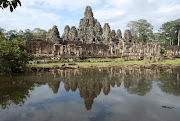
Starting our journey at the walled kingdom of Angkor Thom, our first stop was the Bayon, the King’s state temple. Our childish sense of adventure was delighted by its hidden passages, steep stairways and endless ornate doorways. Next was Ta Prohm, a temple so overgrown by giant tree roots it captures the prehistoric imagination of all who visit, including the Hollywood producers who filmed Lara Croft: Tomb Raider here.

The constant presence of beggars following us was a reminder of the crushing poverty of this country in which four-year-olds ask you to take their photo then demand money; and victims of landmines, less forceful but no less visible, play music outside temples in the hope westerners will donate. It was in that context we arrived at Angkor Wat, the national symbol of Cambodia and the creation of King Suryavarman II. While impressed by its splendour and size, I could not help feeling the glories of the past could not compensate for the problems of the present.

Our second day was filled with temples further afield and shopping at the Psar Chaa markets in the city centre. The markets are a haven of jewellery, silks and wooden ornaments that would never be allowed through Australian customs.

The next day was a six-hour boat ride south down the Tonle Sap river to Phnom Penh. We were unprepared for the circus that greeted us as our boat docked in the capital city. Tuk tuk drivers grabbed our bags without warning and tried to herd us towards their vehicles, promising cheap rooms if we followed. Refusing all offers of assistance did not make us any friends but it enabled us time to breathe and find our own accommodation in the riverfront area of Phnom Penh. Dumping our bags on the top floor of a guesthouse with no lifts, we set out to explore the city.

The Tuol Sleng torture museum was known as the S-21 prison during the reign of the genocidal Pol Pot. A former high school, the museum now houses graphic photos of torture victims, found when it was liberated in 1979, and a series of mug shots of the sad faces of each prisoner who passed through its barbed-wire gates. A 15-minute tuk tuk ride out of the city then took us to the Killing Fields of Choeung Ek, where most of the 17,000 detainees held at S-21 were executed. A glass tower containing 8000 human skulls and their clothes is overwhelming in itself. But walking through the killing fields, treading on human bones and clothing poking through the ground after years of erosion, was more disturbing.

The story of the Cambodian genocide is unavoidable in Phnom Penh. The city was emptied by Khmer Rouge soldiers in 1975, remaining uninhabited until the Vietnamese invaded in 1979. The Khmer Rouge killed an estimated 1.7 million of their fellow countrymen through execution, starvation and disease. The impact was devastating but no one has ever been held to account for the tragedy. The former Khmer Rouge prison chief Duch is currently on trial for war crimes, while the Cambodian Prime Minister Hun Sen is a former Khmer Rouge commander.

The recovery of the country has been slow, with poverty endemic in most areas. We came face to face with an extreme example of this deprivation with a visit to the Stung Meanchey rubbish dump on the outskirts of the city. Here, hundreds of people live in nauseating squalor, making a measly living from collecting recyclable rubbish.

Our guide was David Fletcher, an English expatriate who runs a not-for-profit organisation that does food runs to the dump two or three times a week with the help of donations from young travellers. He also owns a local bar, mostly patronised by older Western men and young Cambodian women. After seeing our donations go directly into buying fresh food from the markets, we then helped out at the dump by attempting to keep order in the queues while bread rolls and fresh fruit were distributed. The scene was chaotic but our momentary contribution worthwhile.

A visit to neighbouring Laos was also on our itinerary and it couldn’t have been a more different experience. With a short history as a nation-state and a far less violent past, Laos, once a French colony, is known as a place to relax on the often chaotic South-East Asian backpacking route. The capital city Vientiane, has a population of just 300,000. We also visited Pha That Luang, a beautiful temple symbolising the country’s Buddhist influences and its fight for sovereignty.

Our next stop was a town called Vang Vieng, a 3 1 /2-hour bus ride north of Vientiane. Described by Lonely Planet as “soulless”, the whole town seemed to be on permanent school leavers’ week, with restaurants frequented by hung-over tourists playing Friends and Family Guy on a loop.

The main attraction of the town was the infamous tube ride down the Nam Song River. People have apparently died on the trip so it was with trepidation we hired our tyre tubes and jumped on a tuk tuk that drove us to the river bank. There we were greeted by pumping music, bars along the river serving $US3 ($3.60) buckets of cocktails, flying foxes and water slides. The recommended two-hour trip down the river took us six hours and, needless to say, was memorable.

A more cultural experience was awaiting us at our next stopover. Luang Prabang, a hairy eighthour bus trip north of Vang Vieng, is the former royal capital of Laos. A nature lover’s paradise, it is Unesco World Heritage-listed and attracts many eco-tourists.

Our adventures in this beautiful town and its surrounds included a visit to the stunning Tat Kuang Si waterfall and a kayaking trip to the Pak Ou Caves which contain thousands of Buddha images.

The future of this mainly undeveloped country rests heavily on its rapidly increasing share of the tourist trade. But its emphasis on eco-tourism will hopefully prevent the destruction of its largely untouched wilderness and unique national spirit.

PHILIPPA PERRY
Read more!

Global corruption survey: Ukraine has highest level of corruption among Newly Independent States

International civil rights organization Transparency International has launched a new Global Barometer, where Ukraine placed the last among the New Independent States with an index of 4.3 index.

In the report, which was made public in Brussels, the following corruption indexes are provided: Armenia – 3.1, Azerbaijan – 3.3, Belarus - 3.4, Georgia – 3.1, Moldova – 3.5, Mongolia – 3.7, Russia – 3.9 and Ukraine – 4.3.

Among the European Union and other countries the corruption index was calculated for Austria (2.8), Bulgaria (4), Czechia (3.4), Denmark (2.4), Finland (2.5), Greece (3.7), Hungary (3.8), Iceland (3.5), Israel (3.5), Italy (3.7), Luxemburg (3.3), The Netherlands (2.6), Norway (3.1), Poland (3.5), Portugal (3.4), Romania (4), Spain (3.2), Switzerland (2.8), The United Kingdom (3.3), the United States (3.7) and Canada (3.2).

The survey, which was held from October 2008 to February 2009 in 69 countries, polled 73,132 respondents.

Most of the respondents were greatly concerned by the growth of corruption in the private sector, which increased by 8% if compared to results of 2003. Many respondents think that bribery is used to influence politics and the regulatory sector for the benefit of companies. This opinion is widespread in the newly independent states, the Americas, the West Balkans and Turkey.

Most of those polled said that they consider political parties as the most corrupt domestic institution.

More than one out of every 10 respondents had to pay bribes last in the last 12 months. Four out of ten bribe-givers said the bribe was 10% of their annual income.

Armenia, Azerbaijan, Cambodia, Cameroon, Iraq, Liberia, Sierra-Leone and Uganda top list of countries affected by low-level bribery. The results show that people with low income pay bribes more frequently than the rich ones when they deal with the police, law, land sector and education.

On the whole, the results show that the state anti-corruption measures are ineffective.

When asked what sector they consider the most corrupt, most people said it was politics (29%). The rest named state officials (26%), parliament (16%), business and private sector (14%), legal institutions (9%) and the mass media (6%).
Read more!

Saturday, June 06, 2009

Drug makers eye Cambodia

How many more truck loads of fake drugs will Cambodia going to get from Vietcong? it has been years of Yuon policy to ship fake drugs to Cambodia.

VietNamNet Bridge – Vietnamese pharmaceutical products are yet to gain a reputation in Cambodia and domestic companies have to employ specific strategies to tap the significant potential that the neighbouring nation’s market presents, several exporters say.

A firm presence in the Cambodian market would open the door for Vietnamese drugs to other markets in the region, they said at a trade investment and promotion conference held in the Mekong Delta province of An Giang last month.

Several domestic drug companies have exported their products to Cambodia, including the Hau Giang Pharmaceutical Joint-Stock Company, the Domesco Medical Import Export Joint - Stock Corp, the Pharbaco Central Pharmaceutical Joint- Stock Company and the FD Pharma Import and Export Company.

According to Nguyen Van Dinh, director of Cambodia-based FD Pharma Import and Export Company, Cambodia is a huge and potential pharmaceutical market for Vietnamese exporters because it largely depends on imports from France, United States, South Korea, India, Thailand and Viet Nam.

However, Cambodian consumers do not pay much attention to Vietnamese pharmaceutical products because they do not match local habits and tastes.

Besides, the pharmaceutical industry in Viet Nam is not very well developed. Domestic producers have to import over 90 per cent of raw materials and this affects production costs and reduces the competitiveness of Vietnamese products in the market.

Quality is the most important concern on the minds of consumers and Cambodian importers feel Vietnamese medicine making factories need to invest in technology and modern equipment to improve product quality.

Many medicine makers were yet to obtain the ASEAN standard certificates for Good Manufacturing Practices (GMP), the conference heard.

Many drug exporters said that the Government needed to lower export duties on pharmaceutical products to raise their competitiveness.

Marketing experts said pharmaceutical exports would need high quality packaging with eye-catching designs in order to attract consumers.

Vietnamese pharmaceutical products exported to the Cambodian market are mainly antibiotics, tonics and other specific remedies.

The FD Pharma Company said its distribution system operated throughout Cambodia and had an import turnover of Viet Nam-sourced medicine that exceeds US$1 million per year.

This could go up to $1.5 million this year and $2-3 million in the next few years, it said.

Cambodia is a country attracting increasing numbers of foreign visitors from all over the world for holiday or business, and can become a bridge for popularising the image of Vietnamese pharmaceutical products in other foreign markets, especially in ASEAN nations, according to experts attending the conference.

Read more!

Globalization's ugly side: sex slavery

By John Boudreau
Mercury News


RACH GIA CITY, Vietnam — The offer came to families on the edge of desperation, living and working around the clock on garbage dumps whose sickening stench seeps into their clothes.

A motherly woman accompanied by a kindly gentleman arrived one day in early December, shortly before the New Year's Tet celebration when the poorest of the poor hope for a little extra cash for modest festivities. The two said they were looking for attractive young women to work in a Ho Chi Minh City cafe, and they were ready to give each family a $60 advance — a small fortune for people barely scraping by on a couple of dollars a day — or less.

Though at least two fathers objected, they were overruled by their wives and daughters, who were willing to take any risk to help their struggling clans. After examining each girl like livestock, the man chose five of the prettiest teenagers, and picked two more from a neighboring area. The teens quickly packed a few belongings and left.

Seventeen-year-old Truong Thi Nhi Linh was one of those chosen. It was, she says, the best chance to help her family — a chance to make considerably more money than she earns working 4 p.m. to 4 a.m. in the dump, sloshing around on rainy nights in knee-high sludge among swarms of other workers looking for bits of junk.

She reassured her parents, who opposed her leaving. "I said, 'It's OK. I'm just going to work.' " She added, "I want to help my family."

Hours later, one of the few parents with a cell phone received a panicked call from their daughter — they were not headed north to Ho Chi Minh City but to Cambodia, where the girls would be forced into the sex trade.

Young and vulnerable

It is a misfortune that falls on many young women in Southeast Asia with the twin vulnerabilities of being pretty and poor. Like their parents, they often are illiterate and profoundly uninformed about the dangers of international sex trafficking and how strangers drug or lure unsuspecting teens into a life of satisfying the cravings of foreign men. Their innocence is prized: Some Asian men are willing to pay as much as $600 to have sex with a virgin because they believe it will restore their youth, give them good fortune or even cure them of AIDS.

Vietnam, with an abundance of beautiful young women living in desperate straits, is a magnet for human brokers — some of whom pay families to marry off their daughters to men in Korea, Taiwan and China; others are linked directly to human trafficking. Parents often ignore the dangers to their daughters in pursuit of a better life.

"The families are so poor," said Quach Thi Phan, chairwoman of the Women's Union of Rach Gia City in Kien Giang Province, which organizes anti-trafficking educational campaigns. "They just think about how to get money, how to find a job."

In the case of the Rach Gia teens, the police conducted a last-minute raid near the Cambodian border to rescue them after receiving calls from a community member and, eventually, at least one worried parent. The almost routine incident received no local news coverage, underscoring the virtual daily threat to the world's underclass.

"It's globalization in its ugliest form," said Diep Vuong, president of Pacific Links Foundation, a Milpitas-based nonprofit started by Vietnamese-Americans. The organization works to prevent human trafficking by providing educational opportunities to at-risk Vietnamese girls and those who escape the sex trade.

"If you don't know how to read the public announcements or have enough money for newspapers and you barely have enough to eat, how can you understand there are risks?" she said. "It's so easy to look the other way. I meet many young women who say, 'I know it's risky, but I must try because we are so poor.' I tell them, 'Do you think you'll be able to sleep with 15 guys a day?' They are mostly terrified and surprised; 'What are you talking about?' they ask."

Fighting back

A half-million young women are trafficked each year around the world, according to the U.S. State Department. In Vietnam, the government recently reported that last year there were 6,684 victims of trafficking, with 2,579 returned to their homes. It also said there were 21,038 people reported missing who could have been sold into prostitution. Experts, though, question the accuracy of the report and fear the numbers are higher.

Vietnamese authorities in recent years have moved aggressively to stop sex trafficking. Police in the home province of the seven teens, for instance, have officers dedicated to cracking down on traffickers. Overall, though, neither the national nor local governments have enough resources to adequately fight the problem, experts say.

In 2004, NBC's "Dateline" news show broadcast a report about Cambodia's sex trade. To the horror of the Vietnamese-American community, the young prostitutes spoke Vietnamese. As a result of the broadcast, a number of Vietnamese in the Bay Area and elsewhere began creating programs to prevent such sexual exploitation, said Benjamin Lee, chairman of San Jose-based Aid to Children Without Parents.

They set up organizations to provide opportunities and hope for those at the bottom of the economic ladder and assistance to those who escape forced prostitution.

But they face a culture that makes their task difficult; in some cases, parents willingly sell their daughters to traffickers for thousands of dollars. "In the Eastern way of thinking, the children have to obey their parents: 'I have my body. I will do this for my family,' " said Nguyen Kim Thien, director of Ho Chi Minh City's Little Rose Warm Shelter for sexually abused girls.

This modern-day slavery takes root in regions isolated by abject poverty and close to Cambodia's thriving sex trade, such as parts of the Mekong Delta. One such place is on the outskirts of the bustling port city of Rach Gia in a majority ethnic Khmer community.

Day-to-day misery

Though Vietnam boasts a literacy rate of more than 90 percent, many of the residents in this community have little or no education. They spend their days and nights picking through heaps of garbage for recyclable materials, such as plastic and metal. Children, barefoot and barely clothed, play amid the foul-smelling waste.

"This is a community in which we had to teach them how to use soap, how to use a bathroom — the basics of the basics," said Caroline Nguyen Ticarro-Parker, co-founder and executive director of the U.S.-based Catalyst Foundation, which has set up a school in the area and is working with Habitat for Humanity to construct homes for people in the community.

"Their day-to-day life is, 'How do I get food on the table today? Who is going to take care of my child today?' " she said. "Life has been so hard for them. They can't think of the future."

They live in huts with thatch roofs on or near a garbage dump swarming with flies and mosquitoes. On a recent morning, 23-year-old Kim Thi Mau sorted dirty plastic bags. Last year, her 4-year-old son Lam drowned when he fell in a ditch filled with water while she and her husband worked nearby. She has two other sons, 20 months and 4 months.

"I hope there is a school that can take care of my children — some place not like this, dirty," said Kim who, like her 28-year-old husband, is illiterate.

So it can be difficult to resist strangers who arrive in a village promising good-paying jobs. Many of these families survive on $1 or $2 a day. In the case of the seven teens, the traffickers said they could pay each one about $120 a month working in a city cafe.

Taken from home

On that December morning, a unwitting family in Rach Gia's Vinh Quang ward sent out word about the employment offer. More than a dozen girls and their families gathered at a house.

"The man looked at our faces and said, 'This girl is OK. This one is OK,' " said Danh Thi Anh, a shy and soft-spoken 20-year-old, who was one of those picked and 19 at the time.

The selection process began at 11 a.m. By 1 p.m., the teens were on the road. Soon after they left, a Catalyst employee who tried to dissuade the teens from going told one member of the community to call the police.

Most of the young women had never been far from home by themselves. Within a few hours, one figured out they were not heading to Ho Chi Minh City, Truong and two other teens recalled.

The girls, using a cell phone one of them had, began calling home, and eventually one of their mothers called the police.

Some of the teens began to cry. They had arrived in An Bien City, south of Rach Gia, and were to travel to the coast and board a fishing boat to Cambodia.

"We were very afraid," Truong said. "We did not know where we were."

But police, who had tracked other human traffickers taking the same route, found them at 10 p.m. They arrested the woman who was escorting them. The man got away.

About 4 a.m. the next day, the teens were back in Rach Gia.

It is unclear what the community learned from the narrow escape. Catalyst Foundation representatives held community meetings afterward. "We said, 'This is what will happen: Your child will be raped, and not by one person, but by many people,' " said the organization's co-founder Nguyen. But she can't be sure it won't happen again.

For those living in brutal conditions, Nguyen said, "It is a lot of money."

Seventeen-year-old Truong, who lives in a cramped thatched home elevated over water with nine family members, said she has not given much consideration to what would have happened to her had she ended up in Cambodia.

"I don't think about that," she said passively. "If it had happened, it would have been because it was my destiny. That's the life."

HOW TO HELP


Bay Area-supported groups working to prevent human trafficking among Vietnam"s poor:
Aid to Children Without Parents
Has provided assistance to refugee and other poor children since 1988. In recent years, the organization has been focusing on preventing young people from being drawn into the sex trade. It has funded the renovation of schools and completed a community center; created a culinary school in the central Vietnam city of Hue to give at-risk young women skills; and built schools in Cambodia for poor Vietnamese communities in that country.
U.S. address: 134 Martinvale Lane, San Jose, CA 95119. Phone: 408-225-0405; 408-225-8302. Vietnam address: 14 Nguyen Cong Tru, Hue. Web site: www.acwp.org

The Asia Foundation
Sponsors discussions between Vietnam and its neighbors, Cambodia and China, on preventing human trafficking. Also works with partners to create a number of programs to provide economic opportunities for poor women, access to credit and vocational training. Works with National Legal Aid Agency to offer victims of trafficking legal services.
U.S. address: 465 California St., 9th Floor, San Francisco, CA 94104. Phone: 415-982-4640. Vietnam address: 10-03 Prime Centre, 53 Quang Trung St., Hanoi. Phone: 84 43 9433263. Web site: asiafoundation.org


Catalyst Foundation
Provides an array of educational programs, from vocational training to a primary school, to poor residents of the South Vietnam city of Rach Gia. It also works to raise awareness about the dangers of sex traffickers. The nonprofit assists the poor in Dong Thap Province along the Cambodian border with scholarships and life-skills training. U.S. address: 710 St. Olaf Ave., Suite 100, Northfield, MN 55057. Phone: 507-664-9558. Vietnam address: 231/10 Bui Thi Xuan St, Ward 1, Tan Binh District, Ho Chi Minh City, Vietnam. Phone: 84 83 8476293. Web site: www.catalystfoundation.org
Pacific Links Foundation (An giang/Dong thap Alliance for the Prevention of Trafficking ADAPT)
It works in partnership with two other Bay Area-based nonprofits, Oakland-based East Meets West Foundation and International Children Assistance Network in San Jose. The alliance provides an array of programs "” from scholarships to vocational training to job placement to grass-roots advocacy "” along the Vietnamese-Cambodian border to prevent young women from becoming entangled in human trafficking. It operates a re-integration shelter for women who have been victims of human trafficking.
U.S. address: 534 Valley Way, Milpitas, CA 95035. Phone: 510-435-3035. Vietnam address: 163/A9 Huynh Thuc Khang, TP Long Xuyen, An Giang. Phone: 84 76 3853888. Web site: pacificlinks.org
Read more!

Brad Pitt & Angelina Jolie

By George Clooney

It is one thing to talk about the problems of the world and quite another to actually try to change things.

As a team, actors Brad Pitt, 44, and Angelina Jolie, 32, have served as our goodwill ambassadors worldwide. They brought help to Pakistan in 2005, after a catastrophic earthquake killed tens of thousands of people and left millions homeless. They have tended to the poor and sick in Africa. And they've raised global awareness—and contributed $1 million of their own money—for the victims of atrocities in Darfur. Brad co-founded Not on Our Watch, an organization set up to focus global attention on Darfur and other hot spots.

In the U.S., Brad and Angelina didn't just talk about, or even just throw money at, the tragic fallout from Hurricane Katrina. They actually moved to New Orleans and have set about trying to make right what so many have made wrong. Brad established a project to finance and build 150 new homes in the Ninth Ward.

Angelina has worked tirelessly through the United Nations on behalf of refugees around the world, touring border camps in Africa, Asia and Latin America and lobbying on Capitol Hill. The couple cares for three adopted children, from Cambodia, Ethiopia and Vietnam, in addition to their biological daughter.

There are hundreds of people who could be honored for their good works, but I've seen Brad and Angelina firsthand, and their commitment together is truly impressive.

Clooney is actively engaged in trying to resolve the Darfur crisis
Read more!

Friday, June 05, 2009

Cambodia and Vietnam to open three new crossings

Written by Chun Sophal


Ministry of Tourism says additional border crossings opening in July will help to boost arrivals, as data shows 34 percent rise in visitors from Vietnam up to April

MINISTER of Tourism Thong Khon said on Thursday that three new border crossings would be opened with Vietnam next month in a measure designed to attract more tourists.

Speaking at the close of a tourism workshop in Phnom Penh, the minister said the three crossings would be at Dak Dam in Ratanakkiri province, Trapaing Srae in Kratie province and Phnom Den in Takeo province.

"We hope that the opening of the three new border checkpoints will help increase the number of tourists coming to Cambodia," said Thong Khon.


--------------------------------------------------------------------------------
We want the Tourism Ministry ... to re-examine the agreement.

--------------------------------------------------------------------------------

This year has already seen a 34-percent year-on-year increase in tourists from Vietnam in the first four months of 2009, ministry figures showed, with 100,041 visitors crossing up to April.

In 1998, the two ASEAN neighbours signed an agreement to open seven crossings in total, but thus far just four have been officially inaugurated - Bavet in Svay Rieng province, Prey Chak in Kampot province, Trapaing Thlong in Kampong Cham province, and O Yadav in Ratanakkiri province. The current bilateral agreement permits 150 vehicles to cross these frontiers each day, but Thong Khon said the new crossings would permit 500 vehicles per day.

Cambodian Association of Travel Agents President Ang kim Eang welcomed the news but said that rules on vehicle access between both countries was uneven and required renegotiation.

"We want the Tourism Ministry ... to re-examine the agreement, as now tourist cars from Vietnam can travel wherever they wish in Cambodia, whereas Cambodian vehicles are required to park up at bus stations on the Vietnamese side," he said, expressing concern that the unequal arrangement meant that Cambodian businesses were losing out.
Read more!

Lawyer to face bar panel a third time

Written by Meas Sokchea

THE lawyer for Sam Rainsy Party lawmaker Mu Sochua is to appear for a third time before a Bar Association inspection team today to answer allegations of misconduct in connection with his client's defamation case against Prime Minister Hun Sen.

"I will appear before the bar tomorrow," Kong Sam Onn told the Post Thursday. "I received the letter yesterday, but I don't know what questions I will be asked because the letter was not clear."

Kong Sam Onn has already appeared before an investigation panel twice, but both meetings were scuttled - the first because not enough members of the panel showed and the second because Kong Sam Onn objected to the presence on the panel of a lawyer who works for the same firm as Ky Tech, the attorney for Hun Sen who filed the bar complaint.

That panelist, Hem Voun, was removed from the panel and will not be replaced, Kong Sam Onn told the Post Thursday.
Suon Visal, the bar's secretary-general, said he was not aware that Hem Voun worked at the same firm as Ky Tech until Kong Sam Onn brought it to the bar's attention.

Ky Tech said he did not oppose the removal of Hem Voun from the inspection panel.

When he filed his complaint, Ky Tech said Kong Sam Onn was at fault because of statements he made when outlining Mu Sochua's case at an April 23 press conference.

That case stems from an April 4 speech given by the prime minister in which Mu Sochua said he made derogatory comments about her.

Hun Sen has countersued, denying the claims. .
Read more!

Wednesday, June 03, 2009

Journey to diploma starts in Cambodia

Roth Prom, A Cambodian-born immigrant, sits in front of a computer in the yearbook room at Lexington High Senior High School. Prom has earned a full scholarship to Wake Forest University in the fall.


BY RYAN JONES
The Dispatch


By the time she was 2 years old, Roth Prom had experienced more than most people do in an entire lifetime. But her exceptional story has only fueled her determination to succeed.

To escape political unrest, Prom's family fled their native Cambodia when she was still in diapers.

Remembering most of her story through photos and accounts given by her father, Prom, now a senior at Lexington Senior High School, described in detail how her mother carried her through the Cambodian jungle to the border of Thailand.

"The journey to Thailand is dangerous because the government can turn you back, and you can possibly get killed," she explained.

Even though her family was robbed at gunpoint and lost the Cambodian equivalent of $100,000, she still says, "We were lucky."

In Thailand, Prom lived in multiple refugee camps where her family experienced the hardships of forced emigration.

"There were a lot of families there in the same position as we were," she said. "We had to ration, and we had to fight for food."

Prom and her family finally made it to the U.S. in 1992. They first lived in Seattle, Wash., and moved around a lot before settling in North Carolina. At one point, Prom said, she lived in a two-room apartment constantly filled with family members.

Now, the self-described rambunctious child is preparing to attend Wake Forest University on $46,000 worth of renewable financial aid. She plans to major in pre-med.

"I used this story to help me," Prom said, describing the application and interview process. "When they asked, 'What could you talk about all day?' I said, 'My parents.'"

She credits them with instilling in her a drive to excel in all areas of her life. One of the most important lessons she ever learned, Prom said, came from her mother: "If you know what you want, go after it, you can't just sit back and wait for it to come to you."

That's just what Prom, who will graduate June 13, has done in her four years at Lexington Senior High. In addition to completing five Advanced Placement courses, she has been a member of the Environmental Club, Quiz Bowl and the basketball, volleyball and track teams. Prom was also the business manager of the yearbook this year, helping raise more than $10,000 in advertisements.

"We're (Prom and her siblings) so thankful to our parents to have brought us here, and I'm just trying to give back to what they gave me."

Prom describes herself as very family-oriented. Each week, she helps care for her four nephews, taking them to karate practice and to school functions.

"It's a great family. You can't help but be family-oriented going through that kind of stuff," she said, referring to their decision to leave Cambodia for a better life.

Though she has lived in the U.S. for the majority of her 18 years, Prom is proud of her Cambodian roots. She hopes to visit family there someday soon.

"It's been quite a journey," she said. "I think it's only done us good to come here."

Ryan Jones can be reached at 249-3981, ext. 227, or at ryan.jones@the-dispatch.com.
Read more!

Tuesday, June 02, 2009

Coaxing a Khmer Temple From the Jungle’s Embrace

By ROBERT TURNBULL


To reach the temple of Banteay Chhmar from the Cambodian town of Sisophon in the dry season involves a two-hour drive through parched forests coated with brown dust. The temple is breathtaking. Bas-reliefs depict naval battles between ancient Khmers and their Cham rivals in remarkable detail. Giant sandstone faces loom over thick vegetation strewn with collapsed lintels and broken naga heads.

Visitors to Angkor Wat will have seen something like this. But the glory of Banteay Chhmar is its raw, unadulterated state. Sitting 100 kilometers, or about 60 miles, northwest of Siem Reap, this is Cambodia’s “forgotten” temple. You will probably find yourself alone, able to rekindle the experience of colonial French explorers as they first stumbled upon Khmer antiquity.

But the same isolation was not lost on those who vandalized Banteay Chhmar in the late 1990s. The Cambodian military not only mined the complex but made off with large sections of bas-relief destined for private homes in Bangkok and beyond. Local guides like Seng Samnang remembers the oxcarts loaded with artifacts being wheeled out of the temple. “There was nothing we could do,” he said. “If we had challenged these men we would have been killed.”

About 115 pieces, a truckload, have been recovered and they are sitting in the National Museum in Phnom Penh. Of the rest — there is allegedly much more — reports of Buddha heads appearing in Thai generals’ gardens have done little to ease longstanding tensions over Thai claims to Cambodia’s patrimony, an issue that resurfaced last year, and remains unresolved, at the northern temple of Preah Vihear.

Banteay Chhmar is returning to the spotlight, but now the news is good. In 2008 the Culture Ministry handed control of the temple to Global Heritage Fund, an organization in California that tries to safeguard the world’s most endangered sites. Established in 2002, the fund has a budget of $6 million and 44 employees to rehabilitate the temple, the eventual aim being its inclusion on Unesco’s World Heritage List.

John Sanday is leading the project. He is a British architect who first set foot in Cambodia in 1992 to work on the 12th-century Preah Khan, a temple famous for its outer wall of garudas, the mythic birds of Hindu legend. To help attract financing, the savvy Mr. Sanday, a former employee of the World Monument Fund, managed to persuade a number of private individuals to “adopt” a garuda for $30,000.

Like Preah Khan, Banteay Chhmar was built as a monastic complex by Jayavarman VII, the king who converted Cambodia to Buddhism. But the paucity of surviving inscriptions make it unclear exactly when and why. Writing in 1949, the historian Lawrence Palmer Briggs claimed the temple “rivaled Angkor Wat in size and magnificence.” It has four enclosures surrounded by a moat, a vast artificial lake, or baray, and could sustain a population of at least 100,000.

Romantic it may be, but much of Banteay Chhmar today consists of piles of lichen-stained rubble. Of 400 meters (1,300 feet) of bas-relief wall, only 25 percent still stands. Faced with collapsed or collapsing structure, Mr. Sanday and his team must decide what should be rebuilt or merely stabilized. Whether to replace the missing stones with newly quarried or recycled stone is another question.

A simple paradox lies at the heart of the restoration process: The less you notice, the better the job. Mr. Sanday sees overzealous rebuilding as compromising of a monument’s natural history, and much of its beauty. On the other hand, donors to projects such as these usually want to see tangible results, if not the revelation of some architectural marvel.

Mr. Sanday’s solution is to opt for a “presentation” of key areas of the temple, which in the future can serve as a model. Visitors will enter — as did the ancients — past the eastern gopura, along a causeway largely destroyed by 600 hundreds years of monsoons. Once that is rebuilt, they will advance toward the southeastern gallery of bas-reliefs and access the temple’s central areas along suspended wooden boards.

Under Predrag Gavrilovich, a Macedonian architect and colleague of Mr. Sanday’s, the fund is working on the southeastern gallery. Mr. Gavrilovich was responsible for rebuilding Preah Khan’s beautiful Dharamsala and Hall of Dancers almost entirely from scratch. His achievement was to completely disguise that fact by presenting something that seems utterly natural in its decay.

Can he do the same with Banteay Chhmar? His team has already reassembled the gallery’s square pillars and corbel vaulting. But the foundations need reinforcing before those parts can be lifted to their original position. “The building was not well constructed,” Mr. Gavrilovich said. “Maybe it was built in a hurry.”

For the “face towers,” Mr. Gavrilovich will have the benefit of new software developed by Hans Georg Bock at Heidelberg University in Germany. By scanning all the rubble and carefully analyzing each stone, it is possible to create a 3-D database for a virtual reconstruction of the entire monument.

The temple is only one part of Mr. Sanday’s project. His greater challenge is to turn a heavily mined former war zone with “finite” water supplies and massive scars on the landscape into a fertile and “zoned” area for responsible development as well as tourism.

So water has to come from somewhere. The reservoir the ancient Khmers built just north of the temple is heavily silted. Damming by villagers of the temple’s ornamental moat has resulted in flooding and wastage at monsoon time. With no evidence of an underground water table or any deep interventions, Mr. Sanday has invited James Goodman, a hydrologist in Geneva to research and map the course of the old waterways. Mr. Goodman has been looking both at images taken by the colonial École Française d’Extrême-Orient in 1945 and aerial photos used by the United States during the Indochinese war. The idea would be to rationalize water supplies and to create a well-drilling program.

For the project to work requires the support of the 12,000 or so villagers who might wonder what’s in it for them. Community Based Tourism, a French-inspired organization, aims at rewarding local people with 100 percent of tourist revenue. In 2007 and 2008, 512 visitors showed up. For $7 a night they were offered a tour, a room in a house with hot water and several hours of electricity.

Mr. Sanday is determined to prevent the kind of commercial pressures on temple sites that has dogged Angkor over many years. He said he thinks the authorities are behind him. “The ministry has set out clear zoning rules which dictate the position and size of new building and plans to create a new road that bypasses the temple,” he said.

The Culture Ministry’s heritage police will soon take charge of security. Only then might the return of the original bas-reliefs be possible under an agreement between the culture minister, the Global Heritage Fund and Unesco. That agency’s Teruo Jinnai, for one, welcomed the idea, provided “the security situation meets international requirements.”

It should happen. The return of these priceless bas-reliefs would demonstrate a new spirit of cooperation among those concerned with safeguarding Cambodian heritage. It could also send a clear message to those of ill intent to keep their hands off Banteay Chhmar.
Read more!

Update from the Cambodia Mission Team

By Smhuat


Day 11 - Sunday was mixed with encouragement, fun and more travel! The restaurant at Freedom Hotel in Siem Reap caters to Westerners and we took advantage of this mini blessing with lots of American dishes for breakfast!

Afterward, we met our guide, Meas Sopha who’d shown us the temples at Angkor Wat the day before. Troy had asked him what he knew about Jesus on our ride home. Meas Sopha’s sister and brother are believers and he wanted to learn more about the “European Jesus” as he put it. He accepted Troy’s invitation to join us for church at one of the churches in Siem Reap and we joyfully added him to our van for the ride out to the church.

Praising the Lord is good for our souls. Praising the Lord with children who also praise the Lord is indescribable! These children raised their hands and sang their praises to the Lord – eyes closed and smiles everywhere! What a joy to see! We enjoyed the hospitality of these lovely people – as well as the additional surprise of the introduction of a man from the Philippines who was doing missionary work in the area! What a blessing for Glen to see someone working in Cambodia from the Philippines – his mission field for 17 years!

The pastor of the church gave us a Khmer Bible for our friend Meas Sopha. We all signed it and when we got back to the hotel, presented it to him with the hope that he would use it to learn about Jesus! He seemed genuinely pleased.

Another 6-hour travel adventure by bus (this time quite air-conditioned!) back to Phnom Phen gave us an opportunity to reflect on all we’d experienced. This was the end of our “vacation” weekend – Troy’s plan to help us rest before the heartbreaking work ahead of us.

And heartbreaking it is. This is our 12th day (Monday) and our visit to the Tuol Sleng – or “S-21” gave us a real understanding of the annihilation that happened under Pol Pot from 1975 – 1979. Seeing the original buildings used for torture as well as pictures of the atrocities done there to the people of Cambodia, BY their own people, is heart-wrenching beyond belief. It is a vivid reminder of the depravity of man without God.

The Killing Fields monument also brought this concept home to us. We saw the sites of mass graves, as well as hundreds of skulls found after the massacre.

Another emotional rollercoaster experience was the rehabilitation house here directed by Don Brewster. It is such an example of the healing power of Christ. We are in awe of the sacrificial love each of the staff gives to the girls rescued from the sex trade industry. There are 54 girls currently at the facility. To see them one would never guess the horrors they’ve been through, but their pictures and stories tell it. Some however are healed to the point that they can help in the outreach to a very depressed and evil part of the city. Shopping was the delightful end of our visit to the center and we enjoyed buying the items made by the girls.

Don Brewster gets the gold star for restaurant suggestions so far on this trip! “Le Duo” is an Italian place – beautifully decorated in Italian motif. And the FOOD was authentically Italian – probably because the owner is Italian! We think he is married to a Cambodian woman. And this answers the question, “what is an Italian restaurant doing in Cambodia? Looking forward to another visit there this week!
Read more!

Cambodia hits back at U.S. over graft comments

PHNOM PENH (Reuters) - Cambodia accused the United States of meddling in its internal affairs on Tuesday after Washington's ambassador said the impoverished nation was losing up to $500 million a year through corruption.

Cambodia's foreign ministry urged diplomats to "refrain from interfering" after the U.S. ambassador to Cambodia, Carol Rodley, said rampant graft was preventing the country from developing its public services, education and healthcare.

"(The government) wishes to remind all members of the diplomatic corps to maintain their neutrality and refrain from interfering in the internal affairs of Cambodia," the ministry said in a statement.

Cambodia's anti-graft chief, Om Yentieng, said Rodley's remarks, made on Saturday at an anti-corruption concert in Phnom Penh, were an attempt to undermine a government which had the support of the people.

"If the ruling party had acted in such a way, we would not have gained votes and continued to stay in power," Yentieng told reporters.

A report last year by anti-graft watchdog Transparency International ranked Cambodia as one of the most corrupt countries in the world, placing it 14th among 180 nations studied.

(Reporting by Ek Madra; Editing by Martin Petty and Sugita Katyal)

Read more!

Monday, June 01, 2009

Thai military officer denies invading border area with Cambodia

BANGKOK, June 1 (Xinhua) -- Thai senior military officer confirmed on Sunday that the situation at the Thai-Cambodian border was normal, denying the report that a hill near Preah Vihear temple, a border area under dispute, was seized by Thai troops, Thai media reported Monday.

According to Monday's Bangkok Post, Second Army chief Wibulsak Neepal denied some Cambodian media's report that Thai troops invaded the area near Hill 600, adding that soldiers had only been patrolling the area as usual in order to guard the Thai territory.

He also insisted that Thailand was strictly following regulations and was well within the parameters of the agreement regarding border conflicts.

Cambodia's media alleged that Thai soldiers have taken over the area at Hill 600, approximately 7 km east of the ancient temple, which caused the deployment of Cambodian troops one km away from the hill.

Wibulsak stated that there might be a misunderstanding by Cambodia's journalists, which could lead to potential clashes. Both Thai and Cambodian commanders remained in contact, he added.

The deployment of Cambodian troops nearby has prompted speculation of a new bout of border clashes, said Bangkok Post.

The latest border conflicts between the two countries broke out on April 3 when soldiers of the two sides clashed twice near the Preah Vihear temple, leaving two Thai and two Cambodian soldiers dead and nine Thai soldiers injured.

Thailand and Cambodia had earlier conducted a few rounds of negotiations which involved the military and foreign ministries from the two sides to solve the border dispute regarding areas around the temple, a UNESCO world heritage site.

The international court ruled the temple belonged to Cambodia more than 40 years ago. But border dispute over areas around the temple has remained a fuse in the two countries' relationship.

The Thai-Cambodian border has never been fully demarcated, in part because the border is littered with landmines left during the wars.
Read more!

China, Cambodia vow to further party-to-party relations

BEIJING, June 1 (Xinhua) -- China said Monday it is ready to further exchanges with Cambodia's Funcinpec Party based on the principles of being independent and equal, mutual respect, and non-interference in each other's internal affairs.

"Party-to-party exchanges are an important channel to enhance our comprehensive and cooperative partnership," Chinese Vice President Xi Jinping told Funcinpec Party chairman Keo Puth Rasmey in Beijing.

Xi also expressed appreciation for the support of the Funcinpec Party on issues concerning China's core interests.

Xi said the two countries had maintained frequent high-level exchanges and cooperation in all areas was fruitful.

"China would like to be a Cambodia's everlasting good neighbor, friend, brother and partner," he said.

Liu Qi, a member of the Political Bureau of the Central Committee of the Communist Party of China (CPC), met with Rasmey earlier Monday.

Liu, also secretary of the CPC Beijing Municipal Committee, told the delegation that to promote Sino-Cambodian friendly relations was in the fundamental interests of both nations.

China would work with Cambodia to push forward the comprehensive and cooperative partnership, Liu said.

Rasmey said the Funcinpec Party firmly adhered to the one-China policy, and would increase exchanges and cooperation with the CPC in a bid to advance Cambodia-China ties.

The delegation is in China at the invitation of the International Department of the CPC Central Committee. Wang Jiarui, head of the department, met with them separately.
Read more!

Cambodia considers night hours for Angkor Wat

PHNOM PENH, Cambodia—Cambodia is considering opening the famed Angkor Wat temples at night to draw more tourists to the impoverished country, an official at the archaeological site said.
Similar night tourism efforts have been introduced at other sites in Southeast Asia.

Cambodia already has installed some lights at the network of centuries-old temples, said Bun Narith, who leads the agency responsible for managing the Angkor park.

Tourism is a major foreign currency earner for cash-strapped Cambodia. More than a million foreign tourists are expected to visit this year, with most from South Korea, Japan and the United States. More than half of tourists visit the Angkor temples, by far the country's biggest draw.

Visitors are now ushered out of Angkor at sunset, but authorities are considering extending visiting hours to as late as 8:30 p.m. local time.

"We want tourists to see all views of the temple, even in the dark places where they may have not have seen some of the sculptures and statues," Bun Narith said.

But conservationists have long expressed concerns about tourism's impact on Angkor. They say the uncontrolled pumping of underground water to meet the rising demand of hotels and residents in the nearby town of Siem Reap may be destabilizing the earth beneath the temples.

Read more!

Sunday, May 31, 2009

Cambodia Approves 2.8 Bln Public Investment Plan

Cambodia's Council of Ministers approved a three-year plan drafted by the Ministry of Planning to spend 2.8 billion U.S. dollars on public investment from 2010 to the end of 2012, national media reported on Monday.

Cambodia's Council of Ministers approved a three-year plan drafted by the Ministry of Planning to spend 2.8 billion U.S. dollars on public investment from 2010 to the end of 2012, national media reported on Monday.

The plan related to 536 projects, 389 of which are direct investment with the remainder technical assistance projects, the Cambodia Daily quoted the council as saying.

Minister of Planning Chhay Than said earlier that the majority of the budget would be spent on infrastructure and irrigation systems to boost agricultural production.

The list of planned projects also includes the construction of major roadways, hospitals and schools, Than said.

The new three-year plan is part of the broader national development planning strategy 2006 to 2010, which was approved by the National Assembly in May 2006.

The entire state budget approved for 2009 totals approximately 1.9 billion U.S. dollars, meaning that each year the proposed infrastructure projects would consume the equivalent of about half of the current national budget.
Read more!

Cambodia debates merits of land sales

PHNOM PENH, At first glance, one could hardly ask for better circumstances for bilateral trade agreements: Cambodia is economically poor, but rich in farmland; Gulf states lack land to grow food, but have money to pay for it. So Cambodia has been signing deals with Kuwait and Qatar to help develop its agricultural sector.

Cambodian officials, however, refuse to disclose details of the agreements, which are worth hundreds of millions of dollars. Such secrecy has triggered warnings that foreign investors could find themselves embroiled in violent land disputes, which have plagued Cambodia in recent years.

Those concerns were raised recently by the UN’s committee on economic, social and cultural rights. Committee experts asked Cambodia’s representative, Sun Suon, “whether everything, including companies, land rights, could be bought; whether a rice concession made to Kuwait could have negative effects”, according to a May 12 release.

Mr Suon said Cambodia “wished to develop its rice exports and therefore welcomed not just Kuwait, but all countries who wished to invest in agriculture”.

Although he said Cambodia’s justice system “had room to improve”, he said the country operated within a legal framework to protect its citizens.

The UN was not overly reassured. Its conclusions, released on May 22, noted: “The committee was gravely concerned that since the year 2000, over 100,000 people were evicted in Phnom Penh alone.”

Opposition politicians and non-governmental organisations are concerned that agricultural agreements could follow the same pattern of evictions as deals involving such sectors as property development, forestry and mining.

“Nobody has much information on this deal or many other similar deals that the Cambodian government makes with foreign investors,” said David Pred, Cambodia director of Bridges Across Borders, which is involved in land rights issues. “Very often, affected communities are not made aware that their land has been granted as a concession until the bulldozers turn up.”

Son Chhay, an opposition MP, predicted that the implementation of the agricultural agreements would lead to violence.

“When the time comes, no doubt we will see that the armed forces will be sent to break down houses and shoot people, as they have in the past, to force them off the land,” said Mr Chhay, of the Sam Rainsy Party.

Until September, Mr Chhay chaired the parliamentary commission on foreign affairs and international co-operation, which he said was involved in negotiating deals with Kuwait and Qatar. But even so, he could not obtain copies of documents outlining the agreements. He claimed his deputy chairman, a member of the ruling Cambodian People’s Party (CPP), went over his head, attending meetings from which he was excluded.

Un Ning, the former deputy chairman, denied he had any information about agreements made between Cambodia and Gulf states. “I haven’t dealt with this affair. I was not involved in talking about this.”

Cheang Vun, who replaced Mr Chhay as head of the commission, said: “I cannot help you with that.”

Long Visalo, a secretary of state for the ministry of foreign affairs and international co-operation, also refused to discuss the agreements. “I have no duty to talk to you,” he said when contacted by phone.

Mr Chhang said a culture of silence has infected Cambodian politics since a 1997 coup led by Hun Sen, the prime minister, which consolidated CPP power and marginalised opposition parties.

This lack of transparency allows ruling elites to enrich themselves by selling off the country’s natural resources, he said.

The government has made some information regarding the dollar value of deals with Gulf states public: Qatar intends to invest US$200 million (Dh734m) “in rice farmland” as well as provide a loan for irrigation systems, according to a speech given last year by Mr Sen.

After returning from an official visit to Kuwait on Jan 16, Cambodia’s minister of foreign affairs, Hor Namhong, told reporters the countries signed a memorandum of understanding, with Kuwait agreeing to finance a $350,000 irrigation project that would cover 130,000 hectares of rice fields.

But the government has not divulged what Kuwait or Qatar will receive in return. Critics say the devil is in the details.

Mr Chhay and others suspect Qatari and Kuwaiti companies will receive land concessions of 99 years (it is illegal foreigners to own land), as other companies have.

Many agree that Cambodia’s agricultural sector needs an overhaul; its rice farmers produce lower yields than their counterparts in neighbouring Vietnam and Thailand. But Mr Chhay said it was up to the government to invest in infrastructure and aggressively seek export markets.

“You don’t need Middle-Eastern countries who have no expertise in rice farming to come here and take land from farmers. It’s ridiculous,” he said.

“There’s potential for this to be a win-win situation,” he added. “Farmers should sell rice to the government and the government should sell rice to Kuwait.”

An April report by the Washington-based International Food Policy Research Institute advised developing countries to find investors willing to work with small farmers. In return for such investments as credit and technical assistance, farmers would be contracted to sell their crops to the investor. According to the institute, land agreements similar to those in Cambodia have proliferated globally since the food crises of 2007-2008.

“Details about the status of the deals, the size of land purchased or leased, and the amount invested are still murky,” said the report entitled Land Grabbing by Foreign Investors in Developing Countries.

The institute urged developing countries to encourage foreign investment in agriculture, but to ensure that deals are made transparently and include measures to protect local residents.

The Kuwait Embassy in Bangkok, which covers Cambodia, did not respond to requests for comment.

jferrie@thenational.ae
Read more!

Saturday, May 30, 2009

Vietnam, Cambodia upgrade two border gates

Two border gates in the southern Vietnamese province of Kien Giang and the Cambodian province of Kampot will be upgraded to become national border gates.

The People’s Committee of Kien Giang province and the Administrative Committee of Kampot province held a ceremony on May 29 to launch the work for Giang Thanh border gate of Kien Giang and Ton Hon border gate of Kampot. They also inaugurated border landmark No 302.

These efforts aim to satisfy the daily needs of people from both countries and give a new impetus to bilateral trade and import-export activities.

Apart from the Giang Thanh border gate, Kien Giang province also has another border gate at Ha Tien, which has become one of the busiest international border gates in the Mekong Delta region over the past three years. Exports through this border gate reached nearly US$30 million in the first five months of this year, an annual rise of 30 percent. Read more!

Cambodia to have first airplane taxiway next month

PHNOM PENH -- Cambodia will have its first taxiway next month in Phnom Penh International Airport, a path that connects the runway to where airplanes park to increase the flight capacity of the airport, local media reported on Friday.

The US$9 million taxiway, which is 1,250 meters long by 44 meters wide, roughly the same size as the existing runway, will allow for more takeoffs and landings each day, Khek Norinda, communications and marketing manager for Societe Concessionaire des Aeroports (SCA), was quoted by English newspaper the Cambodia Daily as saying.

SCA, which is financing construction, is a French-owned company and manages Phnon Penh International Airport, as well as the airport in Siem Reap and Sihanoukville, under a contract with the government that runs until 2040.

The construction began in May of last year and will be finished in June of this year.

Currently, only 10 passenger planes can land or take off in an hour from the airfield at Phnom Penh's airport, said Sok Puth Thoeun, director of the airport's engineering department. That will jump to at least 16 planes with the planned taxiway.

"It is the first parallel taxiway for Phnom Penh International Airport," he added. The State Secretariat of Civil Aviation also has a master plan to build a parallel taxiway at Siem Reap International Airport, said Sok Puth Thoeun.
Read more!

Friday, May 29, 2009

Out of a temple in remote Cambodia, a world-class ballet dancer is discovered

By Ninette Cheng
Northwest Asian Weekly

Pacific Northwest Ballet dancer Sokvannara Sar leaps during his dance routine as shown in Anne Bass’ documentary, “Dancing Across Borders.” Photo provided by Pacific Northwest Ballet.


While visiting Cambodia in 2000, American arts patron Anne H. Bass witnessed a rising star. Then 15 years old, Sokvannara “Sy” Sar performed a dance at Cambodia’s famous Preah Kahn temple and caught Bass’ eye.

Nine years later, Sar is a member of the Pacific Northwest Ballet Company, and Bass has documented his journey every step of the way. On May 25, Sar’s story, in a film titled “Dancing Across Borders,” produced and directed by Bass, was showcased at the Seattle International Film Festival.

Sar’s journey began on the streets of Cambodia.

“I pretty much just followed my friends,” he said. “I didn’t know what it was really. I just wanted to try [dancing] out.”

At the age of 9, Sar began his dance education at the Wat Bo School and eventually found himself performing as a lead at the Preah Kahn temple. Bass happened to catch one of his performances.

After Bass returned home to the United States, she continued to think about Sar’s performance of the fisherman’s dance.

“I just kept thinking about … the fact that Cambodian dancers, especially male dancers, don’t have much of a future,” Bass said. “He was just so unbelievably and naturally gifted. He was a totally charismatic performer. The next thing I know, I was writing a letter to him and inviting him to dance ballet.”

Bass served as Sar’s sponsor on his trip to the United States.

Sar arrived a few weeks before turning the age of 17, an unusually late starting age for a ballet dancer.

He did not speak any English and was initially rejected from the School of American Ballet (SAB). Peter Boal, then a principal dancer and faculty at SAB, felt that he was not ready and said there was a language barrier.

“Already the cards were stacked against him,” Boal said in the film.

Sar also had to deal with the culture shock of moving to a different country. He enrolled in a high school and received his diploma in three years.

“It was tough,” Sar said. “I had never left home. There was nobody around who I could talk to. I was a little bit of an outsider.”

“He didn’t like anything from the standpoint of food,” Bass said. “We tried everything. He just really missed his mother’s cooking.”

One summer of intense training later, Sar was accepted into SAB and began classes with children ages 6 to 9.

To make up for lost time, he spent hours studying privately with ballet teacher Olga Kostritzky.

“It wasn’t easy,” Kostrizky said in the film. “Every day he would go through an enormous amount of material.”

“It’s a one in 1,000 chance that this could work, and I think we found that one,” Boal said.

In January 2006, the U.S. State Department in Cambodia organized an evening of cultural performances to celebrate the new embassy building. Sar was among the list of those invited to perform.

“[The Cambodians] are so proud of him,” said Roland Eng, a former Cambodian ambassador to the United States.

When Boal left SAB in 2006 to become the artistic director of the Pacific Northwest Ballet in Seattle, he invited Sar to attend the company’s school. Sar enrolled one year later.

That was the same year Bass developed the idea for the documentary.

“When he first came here, I got a video camera so I could film his classes to send a record of his progress to his mother,” Bass said.

“That clip just kept running until we had a movie,” Sar said.

“I hope that some people who come to this film with no feeling for ballet might develop an interest in dance,” Bass said.

“Maybe [this film will] inspire some kids in this country or in my country,” Sar said.

Bass hopes that the film will also prompt viewers to offer their support when they recognize unusual talent, like in her case with Sar.

“[The film] is good because it’s not just about me.” Sar said. “It’s just a story. … There are not many Cambodians who do ballet. It’s more about that than me.”

Bass plans to continue attending film festivals to distribute the documentary. In January, she previewed the film in Cambodia to great success. Bass and Sar plan to return to show the film to children in various schools.

As for Sar, now 24, his future plans involve dance, academics, and some self-discovery.

“I think I’m going to stick around in PNB for a while,” he said. “I’m going to go back to school, college, just part-time, but I’m not quitting dance. … I’m just trying to figure out what exactly I want to do as an individual,” he said. “I’m not sure specifically who I want to be yet.” ♦
Read more!

Cambodia to have first airplane taxiway next month

PHNOM PENH -- Cambodia will have its first taxiway next month in Phnom Penh International Airport, a path that connects the runway to where airplanes park to increase the flight capacity of the airport, local media reported on Friday.

The US$9 million taxiway, which is 1,250 meters long by 44 meters wide, roughly the same size as the existing runway, will allow for more takeoffs and landings each day, Khek Norinda, communications and marketing manager for Societe Concessionaire des Aeroports (SCA), was quoted by English newspaper the Cambodia Daily as saying.

SCA, which is financing construction, is a French-owned company and manages Phnon Penh International Airport, as well as the airport in Siem Reap and Sihanoukville, under a contract with the government that runs until 2040.

The construction began in May of last year and will be finished in June of this year.

Currently, only 10 passenger planes can land or take off in an hour from the airfield at Phnom Penh's airport, said Sok Puth Thoeun, director of the airport's engineering department. That will jump to at least 16 planes with the planned taxiway.

"It is the first parallel taxiway for Phnom Penh International Airport," he added. The State Secretariat of Civil Aviation also has a master plan to build a parallel taxiway at Siem Reap International Airport, said Sok Puth Thoeun.
Read more!

Resistance to malaria drug growing, experts warn

Growing resistance to the world's most effective drug treatment for malaria in Cambodia is a development that could threaten the lives of millions of people, scientists warned today.

Malaria experts said that the problem in Cambodia must be contained as there were no other effective drug treatments available. The drugs are now taking up to four or five days to clear all malaria parasites from the blood rather than two or three days, according to the UK study by the Mahidol-Oxford Tropical Medicine Research Unit.

Dr Glenn McConkey, a malaria expert at Leeds university, said: "This could be a major threat in terms of drug resistance."

He said there was a danger that the prevalence of resistance to artemesinin could become as widespread as that to chloroquine, which used to be the mainstay of drug treatment.

"It's a matter of time before resistance to artemesinin in widespread. The concern is that it will spread before we can develop a new drug to replace it," said McConkey.

Professor Brian Greenwood, professor of tropical medicine at the London School of Hygiene and Tropical Medicine, said resistance to the drug was at present only partial and patients should still be cured if they took artemisinins in combination with another antimalarial, as recommended by the World Health Organisation.

He said that Cambodian pharmacies were supplying patients with artemisnin alone, or flawed courses of the drug were sold that did not contain enough active ingredients to kill the malaria parasite.


Printable version Send to a friend Share Clip Contact us larger smaller EmailClose Recipient's email address Your first name Your surname Add a note (optional)
Read more!

Thursday, May 28, 2009

Cambodian PM calls for more ASEAN-EU partnership, cooperation

PHNOM PENH, May 28 (Xinhua) -- Cambodian Prime Minister Hun Senon Thursday called on the Association of Southeast Asian Nations (ASEAN) and the European Union (EU) to continue strengthening partnership and cooperation in response to the global challenges.

"I strongly believe that ASEAN and the EU can play a more active and more forceful role in the world," the premier said in his keynote address at the opening ceremony of the 17th ASEAN-EU Ministerial Meeting (AEMM) at Chaktomuk Conference Hall.

"There is no room for a passive role for us, and we - ASEAN and the EU collectively - need to take on the global challenges with head on," he added.

The 17th AEMM which opened here Thursday will focus on ASEAN-EU's enhanced partnership and cooperation, as well as the world economic and financial crisis and other regional and international issues.

The meeting under the theme of "ASEAN-EU Partnership for Peace, Economic Growth and Development" is also scheduled to address issues of ASEAN integration, food and energy security, and the environment.

Hun Sen, in his speech, reviewed and spoke highly of the ASEAN-EU cooperation, saying "our close relations at present are becoming ever stronger and covering a wide range of areas."

The premier also underlined six areas for further enhancing the cooperation and partnership between the ASEAN and EU, such as continuing implementing the ASEAN-EU Action Plan, moving quickly to realize the EU/EC's accession to the TAC (the Treaty of Amity and Cooperation in Southeast Asia), supporting each other in the areas of integration and the community building process, and strengthening ASEAN-EU cooperation in the regional and international forum.

On the issue of the global economic and financial crisis, Hun Sen said "the current crisis presents both the danger and the opportunity for some countries, particularly those in the developing world."

But he warned that "the danger is that some countries may resort to protectionism." He asked to "reform the international financial institutions" to serve the interests of all.

This biennial ASEAN-EU ministerial meeting were attended by representatives from all the 10 ASEAN countries and the 27 EU member states, as well as the delegates from ASEAN Secretariat and EU Commission.

Cambodian Minister of Foreign Affairs and International Cooperation Hor Namhong and Jan Kohout, Czech deputy prime minister and minister of foreign affairs whose country is current EU president, are co-presidents of the meeting.

The 16th Ministerial Meeting between ASEAN and EU was held in Germany in 2007.

The ASEAN groups Brunei, Cambodia, Indonesia, Laos, Malaysia, Myanmar, the Philippines, Singapore, Thailand and Vietnam.
Read more!

Activists in Cambodia urge release of Suu Kyi

PHNOM PENH (AFP) - Rights activists demanded freedom for Myanmar democracy icon Aung San Suu Kyi on Wednesday, ahead of a series of meetings between European Union and Southeast Asian ministers in Cambodia.

Dozens of Western, Myanmar and Cambodian rights campaigners demonstrated at the Myanmar embassy in Phnom Penh, urging ministers to pressure the ruling junta to release the opposition leader and other political prisoners.

"We are asking ASEAN (the Association of Southeast Asian Nations) that is meeting with the EU (European Union) to raise this issue to be discussed during the meeting," said Kek Galabru, president of a local rights group.

"ASEAN must push for the release of Aung San Suu Kyi," she added. Asian and European foreign ministers on Tuesday called for the release of Aung San Suu Kyi and other Myanmar political prisoners after two days of Asia-Europe meetings in the Vietnamese capital Hanoi.

She is on trial in military-ruled Myanmar where she faces up to five years in jail on charges of violating her house arrest after an incident in which an American man swam to her house.

Representatives from the EU and the 10-member ASEAN were scheduled to attend a welcome dinner Wednesday evening, ahead of Thursday meetings intended to focus mainly on cooperation between the two regions amid the global financial crisis.

"According to the official agenda of the meeting, they will not discuss about issues of any specific country," Cambodia's foreign ministry spokesman Koy Kuong told AFP.

"We don't know whether the ministers will raise the issue of Myanmar to be discussed or not. If they do, it will be an unofficial agenda," he added.

Several local diplomats, however, told AFP they expected Myanmar to be at the forefront of discussions.

Myanmar's treatment of prisoners, along with North Korea's recent nuclear test, dominated much of the agenda during Hanoi's ministerial meetings this week.

Aung San Suu Kyi has been in detention for 13 of the past 19 years since her National League for Democracy party won a landslide victory in 1990 polls but was not allowed to take power.

The Nobel laureate took the stand for the first time on Tuesday in her trial at Yangon's notorious Insein jail and argued she had not violated the terms of her house arrest.
Read more!

Cambodia breaks ground on its first overpass

PHNOM PENH, Cambodia (AFP) — Cambodia broke ground at its capital's busiest intersection Wednesday for what will be the country's first road overpass.

Prime Minister Hun Sen announced the start of the project, intended to reduce Phnom Penh's increasing traffic problems, at a ceremony opening another new bridge at the intersection.

"It is will be the first overpass bridge of Cambodia," Hun Sen said at the ceremony.

Officials said construction of the 308-metre (1,010-foot) overpass would cost more than six million dollars and would be finished within one year.

The premier said Phnom Penh had changed from "ghost city, a city that has no people, and a shocked city, into a vivid city."

All residents of Phnom Penh were forced into the countryside during the 1975 to 1979 Khmer Rouge regime, as the hardline communists enslaved the nation on collective farms.

During Wednesday's ceremony, Hun Sen also called on the people to respect traffic laws, saying that doing so meant they "respect their own lives."

Traffic fatalities have more than doubled in Cambodia over the past five years, becoming the second-biggest killer behind HIV/AIDS.

Better roads and more vehicles have contributed heavily to this toll, but bad driving is the main cause behind most accidents, police say.

Cambodia has finally begun to emerge from decades of civil conflict, but has been hit with gridlock as well as a building boom that has begun to change radically the face of its once-sleepy capital.

Read more!

In the Cambodian Judges' Court

The judiciary has the power to investigate alleged fraud at the war-crimes tribunal

By JOHN A. HALL From today's Wall Street Journal Asia.


The Khmer Rouge Tribunal in Cambodia is facing a serious crisis stemming from unresolved allegations of a kickback scheme. Yet the United Nations, the Cambodian government and donor nations aren't dealing effectively with the allegations. That task has been handed to the tribunal judges, who have a golden opportunity to make a difference.

Cambodian government officials are alleged to have received kickbacks from Cambodian employees in exchange for securing them lucrative positions at the court. These are serious allegations. Refusing to address them could deal a fatal blow to the court's credibility. That would be a tragedy for the people of Cambodia, who seek justice for the Khmer Rouge's crimes. It would also be a blow for the international donors who funded this important court.

With the trials now underway, the need to finally address the allegations is urgent. And it's becoming clear that the tribunal's international and Cambodian judges are the court's best option to investigate and clear up the corruption claims. The Cambodian judges have vigorously denied that they have in any way been involved in improper practices. All the more reason, then, for them to investigate alleged corruption at their court with similar vigor.

They have already missed one opportunity. In March, defense lawyers for Nuon Chea, the former chief ideologist of the Khmer Rouge, filed a request asking the two co-investigating judges who are responsible for judicial investigation in the civil law tribunal to obtain the results of a U.N. investigation into possible corruption at the tribunal and to launch a review of the corruption allegations. The lawyers argued that this was needed to "assess what, if any, corrosive effects such alleged corruption has had on the administration of justice thus far at the [tribunal]" and to determine whether their client's right to a fair trial has been compromised. Co-Investigating Judges You Bun Leng and Marcelle Lemonde rejected that request.

The judges said that they lacked the jurisdiction to proceed as the requested information was "totally foreign to the facts covered by the current judicial investigations." They added that they couldn't intervene in response to "speculations as to hypothetical negative effects" of corruption, and that an administrative inquiry "would be superfluous" as the U.N. and Cambodian government were "seised of the situation." The defense teams filed an appeal May 4 with the tribunal's pre-trial chamber asking the three Cambodian and two international judges to reconsider the ruling of the co-investigating judges, arguing that "because exposure of the alleged scheme would likely discredit senior officials and embarrass the U.N., neither institution possesses the requisite impartiality to deal with the matter." Lawyers representing civil parties have since joined the appeal.

If the judges continue to reject requests to investigate the allegations, they risk seeing their tribunal's successes overshadowed by persistent defense claims that corruption renders the trials unfair. Lawyers for civil parties have correctly warned that "arguments in this vein would not only undermine the principle of finality of proceedings, but would render elusive the justice and closure for which the victims of these proceedings have been waiting."

Judges have a responsibility to ensure the proper administration of justice within their court. The claim of the co-investigating judges that they lacked jurisdiction to investigate allegations of corruption involving court personnel was arguably in conflict with this core judicial responsibility. Moreover, a court must satisfy itself that the overall proceedings are fair. Yet the allegations implicate individuals responsible for making legal decisions and administrators and staff responsible for collecting, transcribing, translating and producing the evidence.

The judges' decision is crucial because there are few remaining options if the corruption allegations are ever going to be properly investigated. High-level negotiations between the U.N. and the Cambodian government to produce a credible investigative mechanism failed in April, and donor nations appear unwilling to press the point.

Donor nations have also failed to pressure the court into dealing with the allegations. Last year the U.N. Development Program froze donor funds to the Cambodian side of the tribunal pending a resolution of the allegations, but donors have recently signaled a willingness to support the tribunal regardless. Canberra has asked the UNDP to release Australian funds, stating that it is generally satisfied with the progress being made at the tribunal. When the UNDP refused, Japan provided more than $4 million directly to the Cambodian government -- enough to fund the tribunal through the end of the year.

In an apparent tit-for-tat response to continuing calls for an investigation of Cambodian court officials, Phay Siphan, secretary of state and spokesman at the council of ministers, stated on May 11 that the Cambodian government is currently investigating allegations of undisclosed wrongdoing involving U.N. court personnel. He said: "We have a file of who's the enemy of the [tribunal]. We don't want to expose any wrongdoing of the U.N. side in order to discredit the [tribunal]. We know who's the enemy of the tribunal and we know who's trying to manipulate what's going on. One day, if we feel the need to release it, we will release it." Andrew Ianuzzi, a legal consulatant for the defense team of Nuon Chea, characterized this as "the childish, thuggish behavior we have come to expect from the government."

With the U.N. stymied, donor nations lacking political will and leadership, and the Cambodian government stonewalling and raising counterallegations, all eyes are now on the tribunal's judges. Trial Chamber Judge Silvia Cartwright has stated that "one of the major issues that has been troubling for all the judges is that of corruption within the [tribunal]. We welcome all efforts to ensure that the allegations are dealt with fully and fairly and that independent measures are put in place to make sure [that claims] are resolved in a transparent manner." The judges now have an opportunity to put these fine sentiments into concrete action and throw their weight behind a competent, credible and transparent investigation of the allegations. It is time for them to deal with an issue which if left unresolved will expose all future judgments to crippling legal challenges.

Mr. Hall is an associate professor of law and research fellow in the Center for Global Trade and Development at Chapman University School of Law in Orange, California.

Read more!

Wednesday, May 27, 2009

KRouge leader Pol Pot 'not a Cambodian patriot'

PHNOM PENH (AFP) — The former Khmer Rouge prison chief told Cambodia's UN-backed war crimes trial on Tuesday that the regime leader Pol Pot "had blood on his hands" as he pitted his country against neighbouring Vietnam.

"I did not think of Pol Pot as a patriot. He had blood on his hands. Pol Pot used the slogan that if we wanted to defeat the Vietnamese we had to be clean in our ranks and clean in ourselves," Duch told the court.

Duch is accused of overseeing the torture and extermination of some 15,000 people who passed through the notorious Tuol Sleng prison, also known as S-21, during the late 1970s regime.

"In that conflict Pol Pot was a murderer, and more than one million people were killed under the hand of Pol Pot. At S-21, my hand is stained with the blood of people killed there," said Duch, whose real name is Kaing Guek Eav.

Duch was responding to testimony by Nayan Chanda, former editor of the Hong Kong-based Far Eastern Economic Review, who spoke of how the Khmer Rouge's 1975 communist revolution descended into a bloody territorial conflict with Vietnam.

Duch said that Chanda had mis-named his book about infighting between Asia's communists, "Brother Enemy," because Cambodia regarded Vietnam as a rival.

"The title of your book is 'Brother Enemy'. If you talked about Korea, then I would support it. They have a joint history, they have a joint territory and they have a joint language," Duch said.

"As for us and Vietnam, we never had any joint territory."

Duch, who faces life in jail for alleged crimes against humanity, apologised at the start of his trial in late March for his role in the regime, but maintains he never personally executed anyone.

Khmer Rouge leader Pol Pot died in 1998, and many believe the tribunal is the last chance to find justice for victims of the regime, which killed up to two million people.

The tribunal was formed in 2006 after nearly a decade of wrangling between the United Nations and the Cambodian government, and is scheduled to try four other senior Khmer Rouge leaders.
Read more!

Cambodia receives 400,000 kWh of electricity from Vietnam per day

Cambodia has now received around 400,000 kWh of electricity from Vietnam a day since a 220kV power line linking Chau Doc district in An Giang province to Phnom Penh via Cambodia’s Takeo province was put into operation on May 8.

The Deputy Minister of Industry and Trade, Do Huu Hao, announced this in Hanoi on May 26 at the signing ceremony of a contract for the Electricity of Vietnam (EVN) to sell power to the Electricity of Cambodia (EDC).

At the event, Mr Hao confirmed that the 220kV Chau Doc-Takeo-Phnom Penh power line shows the Vietnamese government’s efforts to fulfil its commitments to help Cambodia ease its current power shortages, even though Vietnam itself faces energy difficulties, especially during the 2009 dry season.

He expressed his hope that Vietnam would increase its power supplies to Cambodia to 200 MW in 2010, with an annual sales output of 1 billion kWh. Read more!

Tuesday, May 26, 2009

Cambodia to create national committee for maritime security soon: PM Hun Sen

PHNOM PENH, Cambodian Prime Minister Hun Sen Tuesday announced that the country will have the national committee for maritime security in next three months.

The committee will be led by Tea Banh, deputy prime minister and minister of national defense and It will contribute to fight against terrorism, kidnappers, pirates, human trafficking, crimes crossing border, and drug trafficking, the Prime Minister said at the second workshop of maritime security.

"It is time for us to create this committee to strengthen maritime security," he said, adding that "we need to provide the safety security for oil and gas exploration ships and containers cargo ships."

"We have been heavily cracking down the crimes regularly on land, we also have to consider criminals matters at sea. The criminals will be able to enter into Cambodia as fishermen and tourists," the premier said.

Cambodian sea water will not be shelter for terrorists or other criminals and the country is not the shelter for pirates, Hun Sen said. Even Cambodia has a small area of sea water, we have to strengthen capacity of maritime security, he stressed.

At the same time, he called on the countries in the world to cooperate each other to combat with terrorists and pirates, but he pointed out that it is not a time for us to compete armed forces for maritime to conquer the islands in the sea.
.
Read more!

Cambodia's floating villages

Tonle Sap largest freshwater lake in Asia

By Michael McCarthy, Vancouver Courier


One of the great wonders of the world is the vast temple complex of Angkor Wat, spread through the jungles of northern Cambodia. Aside from the gigantic size of the complex --it was the largest city in the world in the Middle Ages before the jungle consumed it after its unexplained abandonment--one wonders why the Khmer empire was located here in the middle of nowhere, with no rivers or trading routes to support the city and its huge population. However, another great wonder of the world can be found a few miles away.

Tonle Sap is Cambodia's Great Lake and the most prominent feature on the map of Cambodia, a huge body of water stretching across the northwest section of the country. In the wet season, the Tonle Sap Lake becomes the largest freshwater lake in Asia, swelling to an expansive 12,000 square miles, and the largest freshwater floodplain in the world. More than three million people live on the floodplain around the Tonle Sap but what's interesting are the 170 floating villages found on the lake itself.

In the rainy season, a unique hydrologic phenomenon causes the Mekong River to reverse direction, filling the lake up instead of draining it. The inflow expands the surface area of lake more than five-fold, inundating the surrounding forested floodplain and supporting an extraordinarily rich and diverse eco-system. More than 100 varieties of waterbirds and over 200 species of fish, as well as crocodiles, turtles, macaques, otter and other wildlife inhabit the inundated mangrove forests. The Tonle Sap provides more than half of the fish consumed in Cambodia.

Sitting on the edge of the lake are these distinctive floating villages, many sitting on towering stilts, with their economy and way of life deeply intertwined with the lake, the fish, the wildlife and the cycles of rising and falling waters. Visiting them is not easy unless you happen to travel with your own motorboat, but not far from Angkor Wat you'll find the tiny port of Chong Khneas, where a fast ferry departs daily for the capital of Phnom Penh, a five-hour journey across the great waters. Here the Khmer and Vietnamese boat people live in their floating homes and a guided two-hour boat trip through the floating village costs $6 U.S. and is an experience worth the time and effort.

Drifting through these drowned villages on a boat is the weirdest thing. In the dry season the houses stand eerily atop stilts in a sea of mud. At the height of the rainy season, the tops of trees poke through the surface of the water in a drowned landscape. Depending on the time of the year and the depth of the lake--it can be as little as a foot deep at times--trucks and cars look like they are being driven on top of the water and villagers appear as if they are walking on the surface. Huge fish traps are placed everywhere. Some of the houses float, others are on stilts, and yet others are boats on which entire families live.

Being so close to a major tourist site like Angkor Wat, this floating village gets plenty of visitors, and the villagers have devised interesting tourist attractions like the crocodile farm, where you can get face to face with some nasty creatures who are, thankfully, kept in a pit. Just don't fall in. Then there are the snake girls, who live on barges and run up to visiting boats thrusting giant water snakes into people's faces. Certainly you can take a photo, but be prepared to pay a fee. There are even floating bars and restaurants, markets, a clinic and a school. Watching kids play basketball in the middle of a vast lake is something different. If you don't want to descend from your boat to explore, villagers will paddle out to meet you, offering excellent ice-cold Cambodian beer and snacks.

Other more remote floating villages can be visited at more time and expense, and bird watchers will go crazy floating through the giant mangrove swamps spotting the 100 different species of waterbirds. But make sure you don't fall out of the boat, because a floating clinic 200 miles away from the nearest hospital likely won't be able to patch up any crocodile attacks.

Read more!

Cambodia's entertainment industry falls sharply

Cambodia's entertainment industry has fallen sharply due to piracy and the economic crisis, local media reported on Tuesday.

The number of Cambodian companies producing films and karaoke albums has fallen more than 75 percent since mid-2008, a trend that officials and company owners attributed to increasingly widespread piracy and the economic crisis, the Phnom Penh Post quoted the new data collected by the Ministry of Culture and Fine Arts as saying.

There were 67 film and karaoke production companies registered in Cambodia last year, according to the figures cited by Sin Chanchhaya, director of the Cinema and Cultural Diffusion Department.

The most recent survey revealed that only 15 companies remained -- 11 karaoke production companies and four film companies, Sin Chanchhaya said.

"Our film industry is on its last breath," Sin said. "Most producers have been forced to shut down, and cinemas almost no longer exist."

He said that in addition to rampant piracy and the economic downturn, low-quality products and steep prices for Cambodian films had contributed to "the collapse of the industry".

Sin Chanchhaya said law enforcement officials had improved anti- piracy efforts toward the end of 2008 but that progress had not lasted.

In some cases, even those companies who have been able to continue production said they have been forced to adjust to harsh new conditions.

Read more!