The land of heroes
Our heroes
Our land
Cambodia Kingdom


Friday, August 05, 2011

Escape the tourist traps


Look beyond the main attractions of Thailand, Cambodia, Vietnam and Laos, writes Rob Woodburn.

Thailand
With its many attractions, Bangkok is regularly voted one of the world's top city destinations. Visitors keenly tick off seeing the gorgeous Royal Palace and temple of the Emerald Buddha, then Wat Po with its golden reclining Buddha before crossing the Chao Phraya river to Wat Arun, the temple of dawn, or to visit a floating market. After that they usually go shopping or hit a spa. Here are a few alternatives.

Cycling and cooking

Expend some renewable energy on two wheels while exploring an area of the city less frequented by tourists. Cycle across the river on Rama 8 bridge and pedal the historic Thonburi network of lanes and forked alleys. Thonburi was the Thai capital until 1782, when the seat of power was shifted across the Chao Phraya for strategic defence reasons.

During the 13-kilometre guided half-day ride you'll stop to see the Buddha statues in a tiny local temple, hear local lore, discover ancient stupa tucked among the backstreets and admire the ornate decorations of a royal temple. You'll negotiate sharp bends in narrow alleys, steer around sleeping dogs, whiz past locals chatting on their doorsteps and follow canal paths to visit the last family-run bronze factory in Bangkok. The ride reveals everyday city life along byways far off the tourist trail, providing an insightful adventure you'll neither regret nor forget. A half-day ride costs $US35 ($32). See grasshopperadventures.com/tour-ghtb07.php.

Learning secrets of the Thai kitchen is one of the great pleasures of Bangkok. A lesson at Amita Thai Cooking Class first involves getting to school via a magical boat trip on the Chao Phraya before passing through the flowing arteries of "khlongland", the Thonburi area where houses sit alongside an extensive network of canals (khlongs) filled with turbid brown water. It's a journey through what is both literally and figuratively the other side of Bangkok.

Amita's owner-chef, Tam, is a gentle taskmaster. She welcomes students with intriguing sample dishes that use blue butterfly peas, red ixora flowers, cowslip and palm sauce, designed to awaken the taste buds and sense of smell. A tour of her compact garden stocked with herbs, spices and edible plants comes before lessons in the open-air kitchen.

A typical class covers three to four dishes. We wrap pandanus leaves around chicken to make the snack gai hor bai toey, create the fiery prawn soup tom yum goong, try our hand at ka nom krok (coconut pancakes) and cook phat kra pow moo sab, a dish of wok-fired ground pork with basil. An evident lack of kitchen skills is part of the fun. Best of all, having made our own lunch we then eat it. Is there a better motivation to excel? A three-hour class costs 3000 baht ($90). See amitathaicooking.com.

Big day out
The world's largest living land animal is the star of the biggest-ever event of its kind, the 10th anniversary of the King's Cup elephant polo tournament.

Hosted by the Anantara hotel group, this annual charity bash is on September 5-11 in Hua Hin, a seaside town 190 kilometres south of Bangkok, and raises funds for Thai elephant care. The Tourist Association of Thailand rates it one of the country's leading events. Players from 15 countries in 16 teams, including an All Blacks contingent, will contest this year's cup riding a total of 32 elephants steered by their mahouts. Each elephant plays two 14-minute spells a day and they are rotated among teams for the sake of fairness. Some elephants are expert at polo. Others may choose not to perform at all.

Hua Hin was the location for the original King's Cup held in 2001. It's also where, in 1923, King Rama VI chose to build a summer retreat, the Maruekhathaiyawan Palace, an amazing building that is open to the public and worth visiting. The town's other palace, Klai Kangwon, is still used by the royal family and therefore private. Anantara has special accommodation and polo packages from 9000 baht. See huahin.anantara.com.

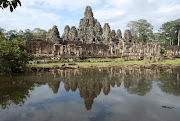
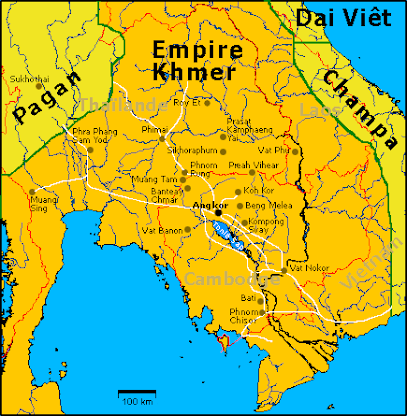
CambodiaAfter being abandoned in the 15th century the extraordinary temple complex at Angkor, former centre of the ancient Khmer empire, was slowly enveloped by encroaching jungle. Angkor was "rediscovered" by Western travellers in the 19th century and has since become Cambodia's most hallowed attraction.

Surrounded by a moat, Angkor Wat is the largest and best preserved of the temples, but there are many other equally enthralling structures spread around the vast archaeological park. Guide books list as many as 29 individual sites, including the fortified city of Angkor Thom with the Bayon temple at its centre and the incredible Ta Prohm, where giant fig and banyan tree roots are entwined within the stone walls. It's the sort of place you'd expect to bump into Indiana Jones.

Conservation and restoration work is constant yet, questionably, visitors are still allowed to crawl all over these vulnerable limestone structures. Annual visitor numbers hit two million in 2007 before the GFC put a brake on tourism. But they are on the rise again so go sooner rather than later. The private company that leases Angkor from the government charges visitors $US20 ($18) entry per day. Alternatively, consider visiting the more recently discovered Banteay Chhmar temple ruins close to the Thailand border. Intrepid has a 15-day Best of Cambodia tour, from $1350. See intrepidtravel.com/trips/tksm#overview.

Cambodia &VietnamThe mighty Mekong River is South-east Asia's great artery. It flows through six countries on a journey of more than 4000 kilometres from its source on the Tibetan Plateau to the coast of Vietnam, where it forms a massive delta spilling into the South China Sea. The ebb and flow of river life is best sampled aboard a slow boat. Various cruises ply the Mekong, the most popular being seven- to nine-day voyages, in either direction, between Siem Reap in Cambodia, which is the access town to Angkor, and Ho Chi Minh City in south Vietnam.

Cruise itineraries include passage across south-east Asia's largest lake, Tonle Sap, before mooring beside the Cambodian capital, Phnom Penh, various land excursions to tribal villages and temples, small factories and farms, and visits to fishing villages and markets on the backwaters of the Mekong Delta.

The best time for a Mekong cruise is October to January. During the later period of the dry season, from late March to August, Tonle Sap in Cambodia can be unnavigable due to extremely low water. In this event a five-hour coach transfer is introduced between Siem Reap and Kampong Chhnang.

Peregrine Adventures has a nine-day cruise from Siem Reap to Ho Chi Minh City, from $2295. See peregrineadventures.com.

Vietnam
City sights
Compared with Ho Chi Minh City, the Vietnamese capital Hanoi has considerable charm. At its heart lies Hoan Kiem, a tiny lake that's the focus of social activity from first light until late. Nearby is the famous Old Quarter, a bewildering, colourful tangle of 36 narrow streets and crowded lanes, each named for a traditional craft.

You'll find a tin street, one for blacksmiths and one for silversmiths, a street for bamboo screens, baskets, bottles, coffins, herbal medicine, mats, hats, pots, incense, pipes, oils and leather. The Old Quarter provides a welcome antidote of authenticity among the proliferation of cheap Chinese-made market goods that flood every Asian city.

Two kilometres west of Hoan Kiem is the venerable Temple of Literature, offering moments of calm repose. Within its walls are placid pools, shady trees and well-tended gardens. This was Vietnam's first national university, dating from 1076, and stone tablets record the names of laureates from the 15th to 18th centuries.

For lunch, try Koto, on adjacent Van Mieu Street, a restaurant created by Australian Jimmy Pham to teach hospitality skills to street kids. For a quintessential Hanoi evening dine at Cha Cha La Vong then soak up the sounds at Minh's Jazz Club, both in the Old Quarter.

TrekkingSapa in Vietnam's far north and the Mai Chau Valley, only 130 kilometres from Hanoi, are both well known for hill tribe treks. Getting to Sapa involves an overnight train ride from Hanoi. The scenery is spectacular but the experience overall has become overtly commercial. A guided three-day Mai Chau trek is an alternative. The countryside is enchanting, the H'mong and White Thai villages remain traditional and you'll see fewer tourists. World Expeditions runs a three-day Mai Chau trek for $640. See worldexpeditions.com/au.

LaosUntil fairly recently, Laos was far less travelled than its neighbours. Now tourism is the country's fastest-growing industry. The capital, Vientiane, has plenty of wonderful temples and Buddhist monuments but the upriver Mekong port of Luang Prabang is more captivating for getting in touch with a spirit of place.

In between is the adrenalin-pumping town of Vang Vieng, a backpacker haunt for river tubing, caving, rock climbing and generally letting loose. In sharp contrast and not far away is the mystical Plain of Jars, an ancient burial site.

Luang Namtha in the far north is a hub for hill tribe treks.

Slow boats ply the Mekong between Nong Khiaw and Luang Prabang and between there and Huay Xai on the Thai border. Water levels are lowest between November and May. Highlights of southern Laos are Champasak's Angkor-like Khmer temples and Si Phan Don, the "4000 islands" region of the Mekong, close to the Cambodia border. TravelindoChina has a 17-day Inside Laos trip, including Vientiane, Vang Vieng, Luang Prabang and trips along the Mekong River, from $3010, including daily breakfast, and one domestic flight. See travelindochina.com.au
Read more!

Support sought for UPLB grad in Cambodia bus accident

UPDATED 10:00 p.m. - The Philippine government is now coordinating with the Cambodian government to seek support for the Filipina tourist who lost her leg in a bus-truck collision in Cambodia on Monday.

On "Unang Balita" on GMA News TV on Friday, Pia Arcangel reported that the Philippine Department of Foreign Affairs (DFA) is coordinating with the Cambodian government to seek support for Nina Kristine Abad, 30, a graduate of the University of the Philippines Los BaƱos.

Abad, a senior operations manager of a call center in Makati, was on vacation in Cambodia when the bus she was riding in collided with a truck on Monday.

Marisol Abduraman on "Unang Balita" reported that the victim has not yet received any support from the Cambodian government and the bus firm.

"Wala siyang natatanggap na tulong mula sa mga kumpanya ng bus na sangkot sa banggaan. Maging ang gobyerno ng Cambodia, wala raw nagging aksyon lalo na at isa siyang turista siya sa kanilang bansa," Abduraman reported.

Those who are interested to extend financial support for Abad are asked to contact +63 908 897 4364.

Mixed emotions

Gjette Chua, one of the victim’s colleagues, said she has mixed emotions over Abad’s terrifying experience in Cambodia.

“Hindi naman siya tutulungan ng bus company, o hindi man lang siya bibigyan ng assistance ng Cambodia, kaya galit, inis, lungkot na [ang nararamdaman ko]," Chua said, also on “Unang Balita" on Friday.

“Pumunta ang tao doon para mag-enjoy. Pumunta siya doon ng dalawa ang paa, tapos uuwi nalang ng isa," Chua added.

Bus-truck collision

In an interview with GMA News, Abad recalled how the accident happened in Phnom Penh’s Peamro district at about 4:10 a.m. on Monday.

“‘Yung crash kasi happened on the right side ng bus. Unfortunately I was on the second row of the bus’ right side. When I looked down I saw both of my legs pinned down below the knees. Nakaipit siya between the seats," Abad said.

“When I saw my right leg was partially severed, I already knew then and there that I would already lose [my] leg," she added.

Abad was with other foreign tourists on board the Kampuchea Angkor Express bus when it collided with a truck filled with corn.

Five passengers sustained serious injuries while 27 others had minor injuries.

District police chief Seng Ponlok said they suspected that the accident was caused by a drowsy bus driver as the incident happened in Prey Veng province at dawn.

He said both vehicles in the accident have been taken to Peamro district police station for investigation.

“We will investigate this accident by cooperating with the bus company and we will also cooperate with them to look for the driver, who escaped after the accident," he said in a report on Phnom Penh Post..
Read more!

City Denies Permission for Union March Sunday

Phnom Penh authorities say they will not allow a union demonstration against rising prices of food, fuel and other living expenses.

The newly established Cambodian National Confederation for Laborers Protection, had requested permission from the city to hold its march Sunday, but were told instead that only a maximum 200 people would be allowed to gather at the city’s Freedom Park.

Chey Sovan, a vice president of the union, said they would bring 1,500 people to the park, although they would not march as planned. Workers are upset at the rising cost of living, and are demanding the government intervene to lower the prices of food, fuel and other goods.

The union said it has already filed a request to Prime Minister Hun Sen to help alleviate the pressure of the rising costs but had so far had no response. It plans to gather workers, teachers, motorcycle taxi drivers and other workers in protest.

Keurth Che, deputy administration director for Phnom Penh, said in a statement the city would not allow a march. The organizers will be fully responsible for the security of an assembly and must ensure it does not affect the business of government or dignitaries and is not done at the behest of any political party, he said.

Chey Sovan called the city’s refusal was counter to the freedom of expression.

“I think they have a fair right [to hold a march],” said Chan Saveth, lead monitor for the rights group Adhoc. “They are implementing their role in rights and freedoms to show their opinion to the royal government. But if the royal government prevents them from holding a march that reflects the democratic process, it can make this situation a threat to them not to implement their rights and freedoms.”
Read more!

Rights Group Calls for Action on ‘Flawed’ NGO Law

Numerous NGOs have said the draft law ignored their key recommendations, leaving it as a tool to repress groups that dissent from the views of the government and administration of Prime Minister Hun Sen’s Cambodian People’s Party.


The Cambodian Center for Human Rights on Thursday called on donors, lawmakers and other power brokers to step up pressure on the government, which hopes to pass a law to regulate non-governmental agencies but is widely seen as a blow to their ability to operate.

The 58-article law was sent to the Council of Ministers for approval last week, after which it will pass to the National Assembly for debate and passage.

Numerous NGOs have said the draft law ignored their key recommendations, leaving it as a tool to repress groups that dissent from the views of the government and administration of Prime Minister Hun Sen’s Cambodian People’s Party.

“The point of no return is fast approaching with this law,” CCHR President Ou Virak said in a statement. “It’s very difficult to change or influence legislation once it has reached the Council of Ministers. This means that now is the time for key stakeholders to take action at as high a level as possible in order to ensure that it doesn’t pass as it is currently
drafted.”

On Tuesday, the rights group Licadho issued its own warning over the law, saying it could be used to violate the freedoms of expression and association.

Nuth Sa An, secretary of state for the Ministry of Interior, said Tuesday the law was now at the Council of Ministers and any suggestions must be made to them.

Phay Siphan, a spokesman for the Council of Ministers, said the council could only ensure the law was drafted appropriately. Suggestions on the law can be made when it goes to the National Assembly for Debate, and further to the Constitutional Council.
Read more!

Thursday, August 04, 2011

Pinay in Cambodia loses leg in bus mishap

MANILA, Philippines – A Filipina tourist in Cambodia lost her leg in a road accident that left 2 dead and several others injured.

Nina Abad, who was in Siem Reap, Cambodia for a vacation, was asleep early Sunday when the tourist bus carrying her hit a parked truck along Prey Veng.

Abad said the crash sounded like a loud explosion. She suspects that the driver of the bus fell asleep behind the wheel.

"Naka-tangle kami sa isa’t isa when they pulled me out of the wreckage. I looked down at my right leg, pumasok sa utak ko na I’m going to lose my leg," said Abad.

The bus driver surrendered to authorities after he went missing for a couple of days.

Abad, a call center manager, is her family’s breadwinner.

“Matulungin siya. Hindi na naming kailangan humingi ng tulong sa kanya, siya mismo ang nag-kukusa,” said Weng Bustillos, Abad’s aunt.

Despite her ordeal, Abad has shown courage and positivity.

“I have yet to see the Great Wall of China. I have yet to see the Eiffel Tower. I have yet to see Stonehenge and even with 1 foot or even with no feet, I will go there,” she said.

Meanwhile, the Department of Foreign Affairs (DFA) is coordinating with Cambodian authorities to address financial expenses for Abad’s hospitalization.

In a statement, the DFA said it "is now facilitating the issuance of a passport for her brother, Edward Jeffrie Abad, who is expected to arrive [Friday]. Our embassy is coordinating with Cambodian authorities on compensation and payment of medical fees and hospital bills to get the tour company (Kampuchea Angkor Express) to address these issues." -- Report from Atom Araullo, ABS-CBN News.
Read more!

Cambodia The North Korea Connection: Cambodia’s Secret Refugee Pipeline

I have mostly included this painting because it is awesome.


WikiLeaks has come to Cambodia, and local media sources spent the latter part of July combing through hundreds of pages of not-so-secret information. Cables ranged from detailed accounts of the Siem Reap sex trade to cutting comments on certain dignitaries tone-of-voice to very serious concerns about the ongoing Thai-Cambodian border controversy.

While looking through the cables (Thanks, Mr Assange!), I noticed an interesting new dimension in the long-standing and poorly understood relationship between North Korea and Cambodia.

The WikiLeaks cables revealed that in November 2006, a North Korean man, arrested and held in Cambodia’s rather remote Mondolkiri province, was not immediately deported to Vietnam—as was reported at the time.

The refugee was instead assisted in his search for asylum by the Cambodian and South Korean governments, with the full knowledge and assent of the US government. This formal government assistance has until now, been kept a secret.

The Americans immediately contacted US Embassy via human rights NGO Licadho, and gave the-then US Politics and Economics Chief all the information they had on Mr Hai Long, a meeting held at Licadho’s offices.

The North Korean’s detention aligned somewhat inconveniently with the 2006 visit of former South Korean President Roh Moo-hyun, who during that visit asked Cambodia for a bit of assistance in negotiating with the always-difficult North.

According to the cables, Mondolkiri provincial officials were instructed to keep the man in custody until Mr Moo-hyun’s visit was over, then send him along to Phnom Penh.

Contradictions in the North Korean’s case continued, as now-deceased (and notorious) Police Commissioner Hok Lundy insisted on the 27th that the man had been deported, while a program coordinator for human rights NGO Adhoc continued to say the difficult-to-track man had been sent to Phnom Penh.

The US cables end with a brief analysis, noting that the man’s “liberal” treatment in Cambodia, in tandem with the Korean President’s visit, was nothing if not heartening from the American perspective: “The ROK Ambassador’s assurances that they are quietly engaged with the RGC on this case are consistent with the good working relationship that the South Korean government has established with the Cambodian government concerning North Korean refugees,” the cable finishes.

Both North and South Korean embassies declined to comment publicly on the matter when I called them a couple of weeks ago, as did the US Embassy. I couldn’t find out what ultimately happened to the so-called Mr Ly Hai Long, but I have a hunch he’s been resettled – hopefully happily – somewhere in South Korea. If only all North Korean escapees could be so lucky, instead of, say, being shot while fording a freezing river to live a life of vaguely-less poverty in China or being sent off to work camps upon being captured en route out of the country.

But the trail doesn’t end there when it comes to North Korean refugees in Cambodia, as a series of 2009 cables indicate.

A July 10 cable noted two Embassy of the Republic of Korea counselors were “preoccupied with conveying their desire that the ROK (government of Korea) pipeline for North Korea refugees not be publicly revealed, and remain separate from any US refugee processing pipeline,” a sentiment the US government, according to the cable, shared.

Embassy cables from 2010 that six North Koreans had, in recent years, approached the Phnom Penh US Embassy in search of resettlement, discussing in detail the imminent departure of two North Koreans for the US on April 16.

The cables note with evident pleasure Hok Lundy’s “cooperation in…processing exist permits for the two individuals,” as well as Cambodian officials “discreet” handling of the North Korean’s exit from the country.
The cable also refers to a previous, covert departure of North Korean refugees where “no one at the airport noticed the North Korean’s comings and goings.” Considering the none-too impressive dimensions of Phnom Penh’s airport, that’s no mean feat.

What’s most interesting about Cambodia’s efforts to aid North Korean refugees? Cambodia and North Korea have historically had a pretty good relationship – a relationship that, as the cables indicate, may be cooling off.

Former Cambodian King Norodom Sihanouk enjoyed a long-standing and comfortable relationship with Pyongyang, and the now-deceased Dear Leader Kim il Sung. The former king was given a palce on a North Korean lake, where he spent much of the Lon Nol era of Cambodia’s war-years in exile (and where he returned after the 1979 Vietnamese invasion). Sihanouk was also known to use burly North Korean guards for his personal security outfit.

As of 2011, a few North Korean state-run restaurants operate in Phnom Penh and in the tourist hub of Siem Reap. North Korea just sent a trade delegation to Cambodia—delegations from the DPRK to Cambodia are usually sent a few times a year.

But Cambodia seems to be shifting its formerly (sorta) friendly approach to the DPRK. In a 2006 embassy cable, Sun Suon, director of the Cambodian Ministry of Foreign Affairs International Organizations Department, said that Pyongyang’s dabbling in nuclear weapons was a “grave miscalculation” that could have “dire” consequences.

When asked about his nation’s relationship with the DPRK, he “suggested it was no longer as unique as it once was,” what with the death of Kim Il Sung and the 2004 retirement of the massively influential Sihanouk.
Another 2006 cable notes that Cambodian Prime Minister Hun Sen is “sensitive” to the North Korean refugees plight, due to his own experience of “having to seek shelter outside his own country during the Khmer Rouge period.”

In the same cable, Hun Sen’s advisor, Om Yentiang, in a rather worrisome statement, registered “some concern over the PM’s safety due to the proximity of the North Korean Embassy (which is next door) to the PM’s residence — should USG-RGC cooperation on North Korean refugees become public knowledge.” Paranoia, or warranted caution when it comes to interactions with the widely proven to be completely nutso North Koreans?

So is Cambodia delicately edging away from its formerly friendly relationship with North Korea? The newly released cables seem to indicate that Cambodia is, probably wisely, backing away—quietly—from close ties with the (unsurprisingly) profoundly unpopular North Koreans.

But, at least on the outside, Cambodia and North Korea appear to be conducting business as usual. A North Korean trade delegation, sent at the end of July, enjoyed a reasonably productive visit to Cambodia. The two nations revamped seven points originally agreed to in 1993, and agreed to mutual assistance on (among other things) forestry projects and aquaculture, while North Korea expressed interest in importing Cambodian rice. Well, they do need it.

Although the Embassy cables regarding North Korean refugees cut out as of 2009, it’s likely that refugees who manage to make it through will continue to be quietly processed in Cambodia and sent on to South Korea or the USA. Does North Korea now know about Cambodia’s refugee “pipeline” and does it particularly care? The next few months should yield the answer, and I’ll be watching. Read more!

Wednesday, August 03, 2011

Cambodian Capital Modernizing Fast

Ten years ago, the infrastructure in Cambodia's capital, Phnom Penh, was in poor condition. Power outages were frequent. Heavy rains and poor telecommunications slowed commerce and limited outside contacts.

But in the past decade, new roads and high-rise buildings have changed the landscape. And in July, the nation's first stock exchange and a multiplex cinema opened.

Phnom Penh has several active cinemas dating from the 1950s, but they mainly screen the small number of domestically produced films or translated Thai imports. Pirated DVDs have cut into their business, keeping people at home.

Until July, the only way to see the latest Hollywood blockbuster in a theater was to catch a plane to Thailand or Vietnam.

But now, for $6, one can go to the new air-conditioned, three-screen Legend cinema in central Phnom Penh, grab a box of popcorn and settle down to watch Kung-Fu Panda 2 in 3D (three dimensions).

Michael Chai, a director at WesTec Media, which built the cinema, is aiming at a young, internet savvy Cambodian market.

“If I look at Facebook for example, I've been looking at the numbers. In May 2010 there were only about 50,000 of them on Facebook. May 2011 we had almost 400,000. So that figure alone, that kind of growth, speaks a lot already. And most of them on Facebook are communicating to each other in English.”

While it would take most Cambodians several days to earn the price of the $6 ticket, the owners are betting that a growing middle-class will become regular customers.

Prum Seila, a 24-year-old office worker, is in Chai's target demographic. Just a few weeks after the theater opened, Seila has visited twice.

“I went there to see the Transformers 3. And I've never seen 3D in my life. I just saw the Transformers 3, and I know that in Transformers 3 there is a scene in Cambodia and [so] we should have seen it. And it is just kind of supporting stuff like that in Cambodia," Seila says.

The growth in Phnom Penh has been fueled in part by garment factories, an economic pillar in Cambodia, that are located around the capital, drawing young workers to the city.

The jobs and new technology are changing things quickly. A recent survey indicates more than 90 percent of young Cambodians have access to a mobile phone. Internet usage, though low, has doubled in a year to 6 percent.

Prum Seila, the eager movie-goer, grew up in the capital. He says he and his friends now spend their free time hanging out in food halls, scores of gleaming new coffee shops and entertainment venues named Diamond Island and Dreamland, where you can sing karaoke.

He says shopping is popular.

“The people like me they have jobs, they have money," he says. "They save money to buy expensive brands like Apple, iPhone. Some of the girls they try to buy the clothes from internet, from Facebook.”

In July, officials opened the country's first stock exchange. Although no companies have yet listed, the government says three state-owned firms will do so later this year. Others are expected to follow.

Stephen Higgins heads ANZ-Royal Bank, a joint venture between the Australian banking giant and a Cambodian firm.
Read more!

North Korea propaganda unit builds monuments abroad

Building North Korea-style monuments for cash-strapped countries has become a cash lifeline for Kim Jong Il's regime.

SIEM REAP, Cambodia — Of all the North Korean work units toiling under Kim Jong Il’s regime, Mansudae should be among the least likely to ply its trade overseas.

The estimated 4,000-person unit produces artwork, much of it deifying the Kim dynasty through paintings, statues and monuments. While such propaganda keeps North Koreans under the so-called Dear Leader’s spell, there is virtually no global market for images glorifying dictators with bouffants.

But in recent years, a propaganda unit subsidiary — Mansudae Overseas Projects — has become one of Kim’s emerging foreign earners. Building North Korea-style monuments for other cash-strapped countries has become a cash lifeline worth an estimated $160 million in the last decade.

Their latest project has led the North Koreans to Cambodia, where developers and state tourism funds are rapidly commercializing the Angkor Wat temple ruins.

Said to be the world’s largest pre-industrial city, the 12th-century Angkor Wat complex is the pride of Cambodia, Southeast Asia’s answer to Egypt’s pyramids or Peru’s Machu Picchu. The ruins prove that long before the modern onset of civil war and poverty, their civilization was once capable of greatness. Tourists know the temples as a backdrop to Angelina Jolie’s “Tomb Raider” film.


More from GlobalPost blog: North Korean propaganda cartoons reach kids

But paying North Korea’s harsh regime to commercialize Angkor Wat is “absolutely not appropriate,” said Naranhkiri Tith, a former International Monetary Fund advisor and critic of Cambodia’s current ruling party.

“I think anything that happens in Cambodia is not normal,” he said. “That is why Cambodia is called the country of the absurd ... North Korea, in my opinion, is another country of the absurd where the government is engaging in smuggling and many other illegal activities to survive.”

On a muddy work site just meters from the North Koreans’ construction grounds, Cambodian workers described their neighbors as distant. “The North Koreans? I heard they’re building a digital museum,” said Cheavy, an engineer. “But we don’t really know. They do everything behind that metal wall. They never come out.”

A wall of royal blue sheet metal obscures the North Koreans’ operation from public view. When I approached the entrance, a man in a fedora and a tank top rushed over to slam the gate shut. A furtive look inside revealed fewer than a dozen scrawny workers and a scrub grass field still void of much construction.

Though local reports vary, North Korea will be paid between $10 and $17 million for some sort of monument or museum near the temples. The head of Cambodia’s culture ministry, Khem Sarith, confirmed construction of an “e-museum” but could not confirm the cost.

Nor could he explain why a country that offers its citizens scant electricity should win an “electronic museum” contract, especially after its monuments abroad have drawn both condemnation and ridicule.

Consider the “African Renaissance” monument in Senegal. Taller than the Statue of Liberty, it is deemed a “monument to black people all over the world” by former Nigerian strongman ruler Olusegun Obasanjo.

GlobalPost in Dakar: Senegal's colossal statue stirs big controversy

But the centerpiece statue — of a man, woman and baby ascending a mountain — is rendered in the signature Stalinist North Korean style. The couple is reminiscent of Soviet-depicted Bolshevik revolutionaries, only with African heads.

In fact, in the original mock ups, North Korean designers hadn’t bothered to change the statue’s features from Asian to African, Senegalese President Abdoulaye Wade told the Wall Street Journal. They were altered only after his complaints. The president was later criticized for paying the U.N.-sanctioned foreign regime $27.7 million for the statue while unemployment in his own country neared 50 percent.

In total, Mansudae Overseas has earned at least $160 million in African construction projects since 2000, according to the Daily NK, an outlet specializing in information from North Korea. All Mansudae projects on the continent are acquired through a secret bidding process.

Other statues include Namibia’s “Heroes’ Acre,” a marble obelisk and statue of afreedom fighter in crisp uniform clutching an AK-47. In Zimbabwe, locals complained that a North Korean-made bronze statue of a beloved revolutionary hardly resembled him. (They argued further that it was the North Koreans who trained and armed a Zimbabwean death squad that killed as many as 10,000 — including the revolutionary’s own men.)

Mansudae sculptors have little opportunity to perfect non-Asian faces back home. All of their statues are molded in a North Korean “socialist realism” style that is little changed through decades of Kim dynasty idol worship. Deifying the Dear Leader through statues, books, murals, films and more is estimated to make up an astounding 40 percent of the national budget, according to a study by the Korea Institute for International Economic Policy in Seoul.

This “stauomania” began in 1953, after the Korean War left Pyongyang blasted to rubble, according to Jane Portal, author of “Art Under Control in North Korea.” The city’s destruction meant then-leader Kim Il Sung could rebuild a city that enshrined his greatness with huge monuments.

The dictator’s appetite for worship was endless. According to Bradley Martin, author of “Under the Loving Care of the Fatherly Leader,” the ruler insisted that all babies’ first words should be “Kim Il Sung.” He also slept on top of adoring teenage North Korean girls, their interlocked legs forming a “human mattress” for the plump dictator.

“Like Stalin and Mao,” Portal wrote, “the Great Leader is also ever-present in painted and sculpted form, both in town and countryside, indoors and out.”

Then and now, the Mansudae work unit is responsible for supplying the paintings and sculpture that sustain this personality cult. But many of the artists are actually quite talented, said Simon Cockerell of the Beijing-based Koryo Group, which escorts foreign tourists to Pyongyang sites such as Mansudae studios.

GlobalPost in Seoul: North Korean artist turns talents on the repressive regime

“Everything in North Korea is done in a group. If you’re a worker, you’re part of a work unit,” Cockerell said. “Just like farmers and construction workers, they have quotas to achieve. But being an artist is a fairly prestigious job in North Korea.”

Much of the unit’s output is propaganda, he said. But they also produce inoffensive nature scenes or ceramics largely bought by Chinese or Japanese customers. “There is no post-modernism, no concept of the viewer deciding the meaning,” Cockerell said. “It’s a more naive style.”

Back in Cambodia, North Korea’s “digital museum” project has largely blended in with the other construction near Angkor Wat. The largest will be a deluxe hotel, theater and golf course complex designed for Chinese and other Asian tourists. Its South Korean developer, Hyo-Soon Park, works in an air-conditioned office just a stone’s throw from his estranged kin from the other Korea.

“I don’t talk to them and they don’t make problems,” Park said. “Why do we need need to fight? It’s all just business.”

More from GlobalPost: US holds rare direct talks with North Korea on nuclear program Read more!

Rally to roar into Cambodia

Cambodia is set to partner neighbours Thailand in co-hosting the 2011 Asian Cross Country Car Rally, which is set to start this Saturday in the coastal Thai resort town of Pattaya and take the chequered flag in front of the Angkor Wat temple in Siem Reap four days and 1,875 kilometres later.

As many as 14 rally drivers from India, Japan, Thailand and Malaysia will tear through some of the most challenging cross country terrain in cars of different makes, according to Vath Chamroeun, Secretary General of the National Olympic Committee of Cambodia.

“There will be another 29 cars travelling with the rallyists, involving organisers, medical staff and security personnel,” he said.

“We have no [Cambodian] participants in this rally, [but] we feel privileged and honoured to be co-hosts to promote sports and tourism.”

Rally cars will be driven through the Poipet international border gate in Banteay Meanchey province next Wednesday to complete a final leg of 185 kilometres to Siem Reap.

Cambodia to host China-ASEAN race

Cambodia will host the end-up segment of the speed-based open class China-ASEAN Car race-rally on October 7 and 8.

The event, which marks the 20th anniversary of the bilateral relations between China and ASEAN, is part of a month-long commemoration beginning on September 9 and including an international touring assembly and a journalists rally.

“For the first time we will have two Cambodian cars taking part in this event. We will host the final leg of this rally race between Siem Reap and Phnom Penh,” said NOCC Secretary General Vath Chamroeun.
Read more!

FPT talks operating telcoms in Cambodia

Vietnamese company FPT Telecom aims to extend operations to the Kingdom, after its attempted acquisition of Vietnam’s EVN Telecom fell through.

FPT Telecom “has plans to expand business in Cambodia, but all is in discussion”, a spokesperson said late on Monday, declining to comment further.

The firm had been in talks to buy a stake in internet service provider MekongNet, though its CEO Sok Channda said this week the talks stalled last year when FPT turned its attention to its planned deal with Vietnamese fixed and mobile operator EVN Telecom. The deal between FPT and EVN fell through earlier in 2011.

FPT has made no attempt to restart talks with MekongNet since the EVN deal failed, she said.

“Until now they have not come to talk with us yet,” Sok Channda said. “I don’t have a plan to sell to anybody yet.”

When asked about FPT’s intentions, a number of other Cambodian ISP and telecom CEOs also claimed they knew of no attempts by FPT to purchase companies in the Kingdom.

In addition to providing ISP networking services to Cambodia and Laos, FTP has been granted a licence to test LTE, so-called fourth-generation wireless in Vietnam, according to VietNamNet. The company told the news agency that because the costs of LTE are far greater than 3G, widespread adoption of 4G is still some ways off. As a result, FPT will focus on foreign acquisitions for the time being.

FPT Information System, a separate branch of FPT, already operates in the Kingdom.
Read more!

Tuesday, August 02, 2011

Cambodia to host ASEAN parliamentary summit next month

PHNOM PENH (Xinhua) - Cambodia will spend $1.5 million on hosting the 32nd General Assembly of ASEAN Inter- Parliamentary Assembly (AIPA), which will run from Sept. 18-24, said a Cambodian parliamentarian on Tuesday.

Cheam Yeap, chairman of the Commission on Economy, Finance, Banking and Audit of Cambodian National Assembly, said that the country has deployed more than 3,000 security forces to ensure order during the summit.

According to the draft agenda, the upcoming AIPA will adopt a variety of documents on political, economic, social and women affairs, rights of migrant workers, and drug fighting in order to build stronger cooperation and relations among the ASEAN member countries.

The Association of Southeast Asian Nations (ASEAN) includes Brunei, Cambodia, Indonesia, Laos, Malaysia, Myanmar, the Philippines, Singapore, Thailand and Vietnam.

Read more!

Monday, August 01, 2011

Cambodia to co-host Asian Cross Country Rally 2011 this weekend

Cambodia will co-host Asian Cross Country Rally 2011 from August 6-11 in order to promote sports and tourism, Vath Chamroeun, secretary- general of the National Olympic Committee of Cambodia, said Monday.

Five countries will participate in the rally; they are India, Japan, Thailand, South Korea and Malaysia, he said in a press briefing, adding that there will be 43 cars in the rally, but only 14 cars are racers, the rest are organizers, security guards, and doctors.

He said that Cambodia had no racing car to join the event, but Cambodia was pleased and honored to host the rally in a bid to promote sports and boost its tourism industry.

The event is organized by the Asian Automobile Federation and co-hosted by Thailand and Cambodia.

The rally will start from Pattaya, Thailand on August 6 and enter Cambodia through Poipet international border gate in Banteay Meanchey province on August 10 to end in front of Angkor Wat temple in Siem Reap province.

The total length is 1,875 kilometers including 185 kilometers in Cambodian side.

Cambodia co-hosted such event once in 2002.
Read more!

Vietnamese defence delegation visits Cambodia

A Vietnamese defence ministry delegation led by Deputy Minister Nguyen Chi Vinh paid a working visit to the Ku Len War Invalids Centre 317 in Siem Reap province of Cambodia from July 30-31.

The delegation attended the inauguration of 50 houses for wounded soldiers at the centre on July 31.

Speaking on the occasion, Cambodian Prime Minister Hun Sen highlighted the Cambodian wounded soldiers’ contributions to the cause of national liberation and defence. He also highly valued the support of the People’s Army of Vietnam to his country.

Hun Sen encouraged the wounded soldiers to further contribute to the country’s development.
On the afternoon of July 30, the Vietnamese delegation had a working session with the Cambodian side.

The two sides discussed issues of mutual concern. They spoke highly of the effective cooperation between the two ministries in recent years, pledging to further strengthen the traditional friendship between the two peoples in the future.
Read more!

Sunday, July 31, 2011

For these doctors, giving their hearts to those in need

Group brings Cambodian children to Korea for free life-saving operations

Hundreds of Cambodians wait in line to receive medical care from Korean doctors, who went on an annual volunteer trip last year to Kampong Speu, Cambodia. Members of the KCSC are scheduled to leave on Aug. 8 for this year’s weeklong trip. Providedthe KCS by C


Seven-year-old Loeng Sonisa received the gift of life last Monday after receiving an all-expenses-paid heart surgery at Soon Chun Hyang University Hospital in Bucheon, Gyeonggi.

Loeng Sonisa, who hails from a small Cambodian village, was one of three children invited to the hospital to receive free life-saving operations.

The three children - Loeng Sonisa, 7; Run Sokry, 9; and Taing Guuochly, 9 - all suffer from ventricular septal defect, or holes in the wall that separates the right and left ventricles of the heart.

Since 2002, the nonprofit Korean Community for Service in Cambodia (KCSC) has sponsored three children with heart diseases each year to come to Korea and receive treatment at SCHU Hospital.

Comprised of SCHU Hospital staff and members of Bucheon Jeil Church, which is adjacent to the hospital, the KCSC aims to provide free medical care to Cambodians in poverty, including annual summer trips to Cambodia’s neediest regions.

The organization was started in the summer of 2002 after a group of doctors from SCHU Hospital visited Cambodia for volunteer work, not knowing then that the trip would become an annual event. Realizing the lack of modern medical care in the country, the KCSC was formed to help more than just a few people each year.

Among the doctors on the 2002 trip was Shin Won-han, director of SCHU Hospital in Bucheon, who credits the support of Seo Kyo-il, executive director of Soon Chun Hyang University, for the KCSC’s long-running success. Seo’s father was the founder of the university.

Shin recalled Seo telling doctors after the KCSC’s establishment, “In 1954, when the Korean War just ended, Korea’s medical standards were terrible. But a medical staff from the University of Minnesota visited Seoul National University at that time. Thanks to them, Korea was able to learn advanced medical techniques.”

Shin said, “That’s why Korean doctors should be the ones who help those people in developing countries like Cambodia and train doctors in advanced medical technology in these countries.”

Every August, around 20 medical staff from SCHU Hospital and members of the KCSC give up their weeklong summer vacation to treat the neediest Cambodians. Last year, a total of 26 KCSC members went to Kampong Speu Referral Hospital, a provincial hospital in Kampong Speu, Cambodia, and treated a total of 3,523 Cambodian patients and performed surgery on 60 more patients over six days.

Lee Gi-cheol, 45, chief of a dental hospital in SCHU Hospital, has never missed a trip for the past decade, saying that the annual trip to Cambodia is “part of his life.”

“Although sometimes we, the doctors, think of this trip as an extension of what we do every day, for the Cambodians who we meet, they wait for a year to see us,” said Lee. “I also believe this trip is a good opportunity for doctors in Korea to realize how lucky we are in Korea and feel compassion toward the people in Cambodia, who die every day due to lack of medical care.”

The KCSC also invites six Cambodian doctors every year to the SCHU Hospital for yearlong training. So far, a total of 43 Cambodian doctors in various departments - including general surgery, obstetrics, urology and anesthesiology - have come.

“I am learning a lot at SCHU Hospital right now,” said Chhor Kompeak, 27, a Cambodian anesthesiologist training at the hospital who arrived in early July. “I want to take the experience that I have here to Cambodia and treat the people in my country.”

Chhor Kompeak said that medical technology in Cambodia is not as advanced as in Korea so only a limited number of doctors can perform delicate operations.

“Cambodian doctors have a lot of knowledge but they rarely have the chance to watch and learn the techniques like I am doing right now in Korea,” said Chhor Kompeak.

“After a year of training, I think I will have watched diverse operations, and I want to train other doctors in Cambodia who don’t have the chance to go abroad to have such experiences.”

Shin, the KCSC director, explained that Cambodia not only lacks doctors but also facilities for doctors to receive proper training.

According to Shin, there are only 2,000 doctors in Cambodia, which has a population of 12 million, meaning that there are 6,000 people per doctor. In contrast, in Korea, there is one doctor per 600 people.

“Cambodia’s economy will gradually develop and medical facilities will also improve,” said Shin. “But improvement in medical practices cannot be achieved in a day or two. That’s why training Cambodian doctors is crucial.”

KCSC members are preparing to go on their 11th trip to Cambodia in two weeks.

And Lee, the dentist, has the date circled on his calendar.

“I feel great to be able to participate in such a meaningful journey for over a decade, but my wife and kids complain sometimes because I haven’t spent my summer vacation with my family for ten years,” said Lee, chuckling.

“I may have to skip next year to calm my wife down.”


By Yim Seung-hye [sharon@joongang.co.kr]
Read more!

New border gates to Cambodia opened

BINH PHUOC - Viet Nam and Cambodia yesterday opened another pair of border posts, Hoa Lu in Viet Nam's Binh Phuoc Province and Trapeang Sre in Cambodia's Kratie Province.

This is the fifth of seven pairs of border posts the two countries agreed to open under a road transport agreement signed in 1998 and a protocol signed in 2005.

Deputy Minister of Transport Nguyen Ngoc Dong said the gates would not only facilitate trade and economic development between the two border provinces, but also improve co-operation between the two countries.

The four border points currently open for road transport between the two countries are Moc Bai - Bavet (Tay Ninh and Svay Rieng provinces), Tinh Bien-Phnom Den (An Giang and Takeo provinces), Xa Xia - Prek Chak (Kien Giang, Lork, Kam Pot provinces), and Xa Mat -Trapeing (Tay Ninh and Kampong Cham provinces).

Two other pairs of border crossings are expected to open later this year, including Le Thanh - Oyadav (Gia Lai and Andong Pich - Ratanakiri provinces) and Bu Prang - O Raaing (Dak Nong and Mundulkiri provinces).

Last year, two-way trade between Viet Nam and Cambodia was US$1.83 billion. At present, Viet Nam is the fourth biggest importer of Cambodian goods and Cambodia is the 16th largest importer of goods from Viet Nam.
Read more!

Saturday, July 30, 2011

Cambodia to host China-ASEAN car race in October

By PNA / Xinhua and U.S. News Agency / Asian

Cambodia will host China-ASEAN car race in October this year, the first car race ever involved by Cambodia, a senior official of National Olympic Committee said Saturday.

Vath Chamroeun, secretary general of the National Olympic Committee of Cambodia (COCC), said the car race is initiated by China in order to mark the 20th anniversary of China-ASEAN bilateral cooperation.

He said, as planned, the “2011 China-ASEAN International Touring Assembly and China-ASEAN Journalists Rally” will begin on September 9 through October 9 this year.

The rally will begin in China and go across five countries in the Association of Southeast Asian Nations: Vietnam, Laos, Thailand, Malaysia and to end up in Cambodia.

According to the schedule, Cambodia will host the end-up rally racing on October 7-8, beginning from Siem Reap province, hometown of Angkor Wat Temple to Phnom Penh, the capital city of Cambodia.

Chamroeun said Cambodia is prepared to send two drivers for the race, the first ever that Cambodians directly involved in the race and as well as the host for the event.

He added the procedure for the rally-racing is free with any kinds of cars, but speed is the subject for scoring.
Read more!

Cambodia’s ‘orphan tourism’ sparks concern

Childcare experts say that volunteer teachers in impoverished country may be doing more harm than good

A foreign volunteer teacher instructs Cambodian students at an orphanage in Siem Reap province, some 300km northwest of Phnom Penh

By Tang Chhin Sothy / AFP, SIEM REAP, CAMBODIA

Pictures of hundreds of former volunteers line the walls of a muddy courtyard in Cambodia’s tourist hub of Siem Reap, their faces once familiar to the orphans playing there but now long gone.

The colorful gallery at the Acodo orphanage illustrates a growing trend of holidaymakers donating their time and skills to children in the impoverished country — but experts fear they could be doing more harm than good.

Marissa Soroudi, a student in her 20s from New York, is one of the many volunteers teaching English at Acodo, near the famed temples of Angkor and home to more than 60 orphans between the ages of three and 18.

The young American, who pays US$50 a week to work at the orphanage, plans to stay for a few days before traveling on but she knows it is tough on the children to watch volunteers like her come and go.

“There are so many people volunteering that it’s kind of like, one leaves and another swoops in,” she said.

“They say better not to talk about it with them. Don’t say ‘I’m leaving in a week,’ don’t do any of that because then they get upset. Better to just not come.”

Short-term volunteers may have good intentions, but childcare experts say they are putting some of the most vulnerable children at risk.

“Constant change of caregivers gives emotional loss to children, constant emotional loss to already traumatized children,” Jolanda van Westering, a child protection specialist at the United Nations Children’s Fund (UNICEF) said. “And the constant exposure to strangers poses risks of harm, of violence and abuse, because we know that oftentimes volunteers come to an orphanage without having their backgrounds checked.”

As the gateway to the ancient temples of Angkor — which attract more than a million visitors a year — a steady stream of tourists passes through the sleepy riverside town.

And many want to do more than just sightsee in one of the region’s poorest nations.

On notice boards in hotels, cafes and souvenir shops, wide-eyed children stare from posters for schools and orphanages, encouraging travelers to donate time and money for their particular cause.

“Visitors see some poverty and they feel bad about it,” said Ashlee Chapman, a project manager with Globalteer, an organization that matches volunteers with local organizations.

“They want to do something,” she adds, saying they might visit a children’s project for a few hours, donate money and toys, “take a holiday snap and feel that they’ve contributed.”

As the so-called volunteer tourism sector flourishes, so too does the number of institutions housing children.

In the past six years, the number of orphanages in Cambodia has almost doubled to 269, housing some 12,000 children, according to UNICEF.

Friends International, a local organization that works with marginalized urban children and youths, says tourism has contributed to the increase.

Visiting orphanages has become a tourist “attraction” in big cities like Phnom Penh and Siem Reap, said Marie Courcel, alternative care project manager at Friends International.

That in turn encourages the institutionalization of youngsters, many of whom are very poor but actually have at least one living parent, she said.

Only one in 10 of the orphanages are funded by the state, the rest rely on charitable contributions to survive.

At Siem Reap’s Acodo, huddled with the children in the shade of the only tree, Soroudi organizes the afternoon activity.
Read more!

Cambodia Cleans Out The Pretenders

July 30, 2011: The Cambodian Army has been conducting a vigorous recruiting drive recently. The goal is 3,000 fit and intelligent young men. The new recruits are to replace several thousand older soldiers who were recently retired. Like many nations, Cambodia has long used the army as a jobs program. The emphasis was on keeping the 124,000 military personnel employed, not ready for war.

Cambodia found that there were serious shortcomings with this approach when, three years ago, a border dispute with Thailand turned into a military conflict. Nothing major. The action has been mostly assault rifles, machine-guns, artillery and mortars. There have been hundreds of casualties. What shocked Cambodian commanders and political leaders was how unprepared their army was for even a minor conflict like this. This led to a revitalization plan for the army, which the current recruiting drive is part of.

The border war was unexpected, even though Cambodia and Thailand have long argued over who owns how much of an ancient temple site. In 1962, an international court declared the temple Cambodian, but Thailand continued to claim adjacent areas that the Cambodians insist are part of the temple complex.

Currently, each side has about 3,000 troops near the temple site, and there have been a few shooting incidents since 2008, but nothing serious. The two countries have been negotiating the withdrawal of troops. Fighting earlier this year damaged portions of the temple (which Cambodians occupy) and caused over 20,000 local civilians to flee.

This dispute is but one of many similar ones. The basic problem is that the current 730 kilometer long border was defined in 1907 by the placement of only 73 border markers. This has left the exact location of the border open to interpretation. Occasionally these interpretations clash, as is happening now. Neither side wants a full scale war, even though Thailand has a larger and better equipped military. In the last few years, Cambodia doubled its annual military budget to $500 million. Thailand spends more than six times that, and has done so for decades. Thailand has 300,000 troops, Cambodia only 124,000.

Cambodia is very poor, and has been helped by China. which recently donated 50,000 field uniforms (including hats and boots). Last year, China donated 257 military trucks, and also supplied weapons. The infantry weapons tend to be older models. That's because China is introducing a new and improved model of their QBZ-95 assault rifle (also called the Type 95) to their own troops. The QBZ-95 is a distinctive bullpup design (the magazine is behind the trigger) that China has been issuing to its troops for over a decade now. That means China has plenty of surplus Type 81 (improved AK-47) rifles (which the QBZ-95 replaced) to either put into storage, or distribute to allies. Cambodia has bought some Type 95s, for elite units. But most everyone else has the second hand Type 81. AK-47s have been widely used in Burma nearly half a century.

Cambodia has never really recovered from its disastrous experiment in communist government (the Khmer Rouge) in the 1970s. That killed off 15 percent of the population (including nearly all the ethnic Chinese community) and trashed the economy. China supported the Khmer Rouge (as fellow communists), but Khmer Rouge aggression against Vietnam resulted in Vietnam invading in 1979 and deposing the Khmer Rouge. But as the decades went by, former Khmer Rouge officials got back in power, and China made nice.
Read more!

Wednesday, July 27, 2011

Cambodia's Exports of Rubber Latex See Sharp Rise in First Half

Cambodia has seen 84 percent rise in the exports of rubber latex in the first half of this year, compared with the same period a year ago, according to the statistics from the Commerce Ministry's Camcontrol Department, which is the government's Import-Export Inspection Agent, on Wednesday.

The data recorded that from January to June this year, the country had exported a total 21,511 tons of rubber latex, 84 percent rise from 11,665 tons at the same period last year.

The country earned the total revenues of 102 million U.S. dollars during the first half of this year, 234 percent rise from 30.5 million U.S. dollars it earned within the same period last year, it added.

A ton of good quality rubber latex is about 4,475 U.S. dollars now, up from about 3,450 U.S. dollars at this time last year, Mok Kim Hong, the president of the Chub Rubber Plantation in Kampong Cham province, said Wednesday.

Cambodia's rubber latex has been exported to Malaysia, Vietnam, and Singapore.

Currently, the country has grown approximately 181,450 hectares of rubber plantations, most of them are young crops, which have not yet yielded.

Rubber plantations are found grown mostly in the provinces of Kampong Cham, Kampong Thom, Mondulkiri, Ratanakiri, Kratie and Preah Vihear.

Vietnam is the leading country investing in rubber plantations in Cambodia with up to 100,000 hectares of concessional land from Cambodian government for this crop.
Read more!

N. Korea wants to buy Cambodian rice, invest in mining

PHNOM PENH, July 27 (Reuters) - North Korea wants to import Cambodian rice to try to ease food shortages and has offered in return to provide machinery and expertise to develop Cambodia's fledgling mining and energy sectors, a Cambodian official said on Wednesday.

A North Korean delegation led by Deputy Trade Minister Ri Myong-san visited Cambodia this week and the country is keen to import rice as soon as possible, said Ouch Borith, Cambodia's secretary of state for foreign affairs.

It would help Cambodia develop its mining sector and invest in hydropower dams.

It would help Cambodia develop its mining sector and invest in hydropower dams.

The amount of rice North Korea wanted to import was not disclosed, he said. Further specific details, such as how North Korea would fund its purchases and investments, were not available.

Cambodia is the world's 15th biggest producer of rice and has set a target of exporting 1 million tonnes of the grain within the next four years.

According to the Economic Institute of Cambodia (EIC), an independent think tank, the country is expected to ship about 100,000 tonnes of milled rice this year, up from 50,000 tonnes in 2010. More goes to Vietnam to be milled and shipped from there.

North Korea is one of the world's poorest countries and it rarely produces enough food to feed its 24 million people, often as a result of bad weather affecting harvests.

International sanctions over its nuclear weapons programme combined with neighbouring South Korea's refusal to provide help have led to a substantial decline in food aid from its traditional donors.

Although Cambodia and North Korea have no trade ties, they have a diplomatic relationship. Cambodia's former King Norodom Sihanouk has a house in North Korea and was once a special guest of the country's late ruler, Kim Il-sung.

Ouch Borith said North Korea had offered to sell agricultural machinery to Cambodia, such as tractors, at cheaper prices than Western countries and wanted to provide expertise in developing mines.

"We have only small and medium-sized enterprises, not big industries, but Cambodia's natural resources are huge, such as minerals, gold, iron and aluminum," he told reporters.

"Our friends the Koreans said they would do studies and use their experience to help Cambodia make an industry from these natural resources."

Agriculture forms the biggest part of Cambodia's $10 billion economy, followed by tourism and garment manufacturing, but it is also trying to develop its energy and mining sectors.
Read more!