By Devirupa Mitra. Delhi, India
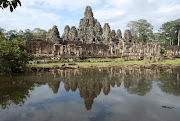
An 11th century temple in Cambodia, located near its border with Thailand and the subject of lingering tension between the two Southeast Asian countries, will now be renovated by India.
The Preah Vihear temple has been in the limelight this year over Cambodia's bid to get a Unesco world heritage status for it, but was objected to by Thailand.
A senior official in the external affairs ministry said Cambodia had approached India to take up the conservation of the Preah Vihear temple about six months ago. 'The request had been routed through our ambassador,' the official, who could not be identified as per service rules, told IANS.
The government has already asked the Archaeological Survey of India (ASI) to start work on a conservation plan for the temple.
It is expected that an announcement would be made to coincide with the visit of Cambodian Prime Minister Hun Sen to India next month.
India has been conducting temple diplomacy across Southeast Asia, harnessing the ASI to renovate important medieval temples in the region built by dynasties that had links with India.
An ASI team has been conserving the Ta Phrom temple in Cambodia's world-famous Angkor Wat complex since 2004, with the Indian Institute of Technology in Chennai conducting the structural study.
Similarly, ASI had also been asked to draw up a conservation plan for the ruins of Wat Phou temple in Southern Laos. In Indonesia, Indian archaeologists are helping to renovate the Hindu temples at Prambanan, Yogyakarta, that were damaged by the 2006 Java earthquake.
Indian diplomats said the strategy is to stress the common cultural links between India and Southeast Asia as medieval trade links with south Indian kingdoms led to the spread of Indian religion, language and culture in the region.
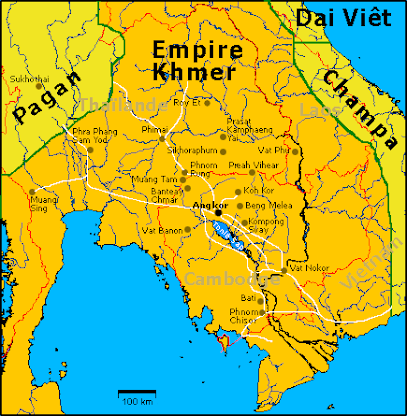
The Preah Vihear temple built during the Khmer empire is perched on a cliff in Dangrek Mountains, just across the Thai border. In fact, the easiest access to the temple is from the Thai side, while the Cambodian way is a ride through a mountain dirt road.
With its grand causeway climbing up the hill, the temple is supposed to be a stylised representation of Mount Meru, the habitat of gods according to Hindu mythology. Among the sculptures carved on the walls is a depiction of the Hindu mythological story of 'churning of the ocean'.
In 1962, the International Court of Justice had ruled that the temple was firmly in Cambodia. But with the country plunging into civil war soon after, the temple witnessed pitched battles between the Khmer rouge and the Cambodian army, with the former using it as a military camp.
Since 1998, the temple has remained open, with the only access being from Thailand. Six years later, the temple's importance in bilateral relations again came to the fore when a section of Cambodian media quoted a Thai professor as saying that Preah Vihear temple should be handed over to Thailand as compensation for the 2003 anti-Thai riots.
The latest difference of opinion over Preah Vihear between Thailand and Cambodia took place in June 2007, when the former objected to Cambodia's application before Unesco to grant the temple a world heritage site status. Unesco rejected the application this year but asked Cambodia to reapply in 2008 with a joint management plan with Thailand. In fact, the Thai embassy even warned its citizens in Cambodia to remain on alert against riots, which fortunately did not take place.
Even now, while a majority of the visitors come from Thailand to the temple, they are greeted by a large Cambodian flag atop the temple and a signboard, 'I have pride to be born as a Khmer'.
Read more!

Tuesday, November 20, 2007
11th century Cambodian temple to be renovated by India

Monday, November 19, 2007
Cambodia's tribunal opens doors
 PHNOM PENH, Cambodia (AP) -- Cambodia's U.N.-backed genocide tribunal arrested the former Khmer Rouge head of state and charged him Monday with crimes against humanity and war crimes, a spokesman said.
Khieu Samphan was the last of five senior officials of the brutal regime to be taken in custody ahead of a long-delayed genocide trial.
Police arrested Khieu Samphan, 76, at a Phnom Penh hospital where he had been undergoing treatment since November 14 after a stroke. Officers held his arms to support him as they led him to a police car, which sped away in a heavily guarded convoy to the tribunal's offices.
Khieu Samphan later was "formally charged with crimes against humanity and war crimes" during his appearance before the co-investigating judges, said tribunal spokesman Reach Sambath. He added that Khieu Samphan's lawyers plan to appeal his detention.
In a milestone, the tribunal opened its doors Tuesday for its first public courtroom proceeding. Kaing Guek Eav, who headed the regime's notorious S-21 prison and torture center, entered the tribunal for a pretrial hearing to appeal his detention ahead of trials scheduled to begin in 2008.
Kaing Guek Eav and one other suspect, former Khmer Rouge ideologist Nuon Chea, were detained earlier this year on charges of war crimes and crimes against humanity.
The U.N.-assisted tribunal was created last year after seven years of contentious negotiations between the United Nations and Cambodia.
Khieu Samphan's defense team will include French lawyer Jacques Verges and a veteran Cambodian legal expert, the tribunal's defense support section said.
Verges' previous clients include Ilich Sanchez Ramirez, the jailed Venezuelan terrorist known as Carlos the Jackal; Nazi war criminal Klaus Barbie; and former Yugoslav President Slobodan Milosevic.
In an interview with The Associated Press in 2004, Khieu Samphan said he has known Verges since he was a student in France in the 1950s, when the two were active in student movements against French colonialism and the French war in Vietnam.
"He and I used to attend meetings of student committees against colonialism. That's what bound us together in friendship," he said in the interview.
Khieu Samphan's Cambodian lawyer is Say Bory, the former president of the Cambodian Bar Association and a member of the constitutional council, the country's highest legal body. Say Bory currently is legal adviser to former King Norodom Sihanouk, the statement said.
The arrests came almost three decades after the group fell from power, and many fear the aging suspects could die before being brought to justice. After years of delays, the trial is expected to begin in 2008.
Most historians and researchers believe the radical policies of the Khmer Rouge, which sought a utopian communist state, led to the deaths of at least 1.7 million Cambodians through starvation, disease, overwork and execution.
Khieu Samphan has repeatedly denied responsibility for any atrocities. An insight into his defense hit bookstores last week, when he published his version of the Khmer Rouge's story.
In "Reflection on Cambodian History Up to the Era of Democratic Kampuchea," Khieu Samphan said the Khmer Rouge only wanted what was best for Cambodia.
"There was no policy of starving people. Nor was there any direction set out for carrying out mass killings," he wrote. "There was always close consideration of the people's well-being."
He wrote that the Khmer Rouge was resilient "in the struggle to defend national sovereignty, (and) in demanding social justice."
Khieu Samphan described Pol Pot, the regime's late leader, as a patriot concerned with social justice and fighting foreign enemies. He "sacrificed his entire life ... to defend national sovereignty," the book said.
However, Khieu Samphan assigned Pol Pot with responsibility for the group's policies, and said he was involved in the purges of any Khmer Rouge suspected to be disloyal or spies, claiming they probably numbered in the hundreds.
A week ago, authorities arrested Ieng Sary, the former Khmer Rouge foreign minister, and his wife Ieng Thirith, its social affairs minister. Both were charged with crimes against humanity; Ieng Sary was also charged with war crimes. The genocide tribunal formally placed them in provisional detention for up to a year.
Read more!
Sunday, November 18, 2007
The Surviving Lieutenants Of Cambodia's Pol Pot
The Surviving Lieutenants Of Cambodia's Pol Pot
After Many Delays, a Tribunal Appears Close to Trying Three Khmer Rouge Leaders for Crimes Against Humanity
By Anthony Faiola
Washington Post Staff Writer
Sunday, November 18, 2007; Page A18
PHNOM PENH, Cambodia -- Pol Pot, the despotic leader of the Khmer Rouge whose brutal rule from 1975 to 1979 left as many as 1.7 million dead in the killing fields, labor camps and prisons of Cambodia, died a free man in 1998. His lieutenants, however, might not be as lucky.
In recent weeks, the three key surviving leaders of the Khmer Rouge hierarchy, who have lived largely unhindered but fitful lives in the aftermath of the communist government's collapse, have been detained to face charges of crimes against humanity.
The wave of arrests has reached as high as Nuon Chea, 82, Cambodia's infamous "Brother No. 2," who operated aside Pol Pot as the Khmer Rouge's second-in-command. Nuon Chea had been living out his twilight years in a modest home near Cambodia's border with Thailand. But since his arrest last month, he has been confined to a special judicial compound in a cell about as long and wide as a coffin.
Also seized: Ieng Sary, 82, the Khmer Rouge's foreign minister, and his wife, Ieng Thirith, 75, Pol Pot's sister-in-law. The couple, both French-educated communist revolutionaries, were plucked by police from the tranquility of a prosperous retirement in their three-story villa in Phnom Penh on Nov. 12.
All three are facing what is set to be Cambodia's first series of public trials for the torture, starvation and execution carried out by the Khmer Rouge during its fanatical crusade to create a peasant society free of foreign influences.
The detentions come as a U.N.-backed tribunal made up of international and domestic judges has defied critics inside and outside this nation of 14 million by finally resolving several internal squabbles over legal procedures that had stalled the trials. The court is now able to pursue its mission to deliver long-overdue justice for the countless victims of the Khmer Rouge.
"This process is serious now," said Elizabeth Becker, a German Marshall Fund fellow and author of "When the War Was Over," a history of modern Cambodia and the Khmer Rouge. "There is finally a confidence that this thing is going to get to trial."
Such confidence was virtually nonexistent earlier this year. The United Nations was on the verge of pulling out of the tribunal process -- the latest of several efforts since the 1990s to hold trials -- outraged over Cambodia's initial unwillingness to agree to international legal standards. But a compromise agreement reached this summer ultimately led to the recent arrests, officials said.
Without doubt, hurdles remain. The tribunal's $56 million in international funding is expected to run out by the middle of next year, and donor nations will have to deliver a fresh infusion of cash if the trial phase is to move forward. Discord persists between U.N. and Cambodian officials over whether to limit the arrests to about five major Khmer Rouge figures or expand them to a broader pool of suspects. In addition, the tribunal is still reeling from allegations that several of its Cambodian members have accepted bribes or are grossly underqualified for their positions.
But some observers say the recent arrests have demonstrated the political will of Cambodian officials to move forward with the trials, even with many lower-ranking former Khmer Rouge members blended into the current government.
"What was a bumpy road now seems to be moving very quickly," said Joseph A. Mussomeli, the U.S. ambassador to Cambodia.
"There's been a lot of positive development in the judicial process; it's now clear that the tribunal feels they will have international standards or will walk out," he said. "That's on Tuesday, the tribunal is scheduled to hold its first public legal proceeding involving a major Khmer Rouge figure, a bail hearing for Kaing Guek Eav, the former warden of the S-21 prison. The session will be broadcast live nationwide.
By the time Vietnamese forces liberated the prison in 1979, only seven of 20,000 prisoners were still alive. Kaing, one of the few Khmer Rouge figures who has been previously jailed, was handed over to the tribunal by Cambodian authorities in July. He became the first resident of the newly built prison for Khmer Rouge detainees in the court's special compound on the outskirts of Phnom Penh.
The trials for Kaing and the three newly detained Khmer Rouge leaders are projected to begin within the next six to eight months, said Robert Petit, the tribunal's co-prosecutor.
Few of the trials, however, are likely to be as high profile as Nuon Chea's.
Known as Pol Pot's chief ideologue and henchman, Nuon Chea was driven out of Phnom Penh along with Pol Pot by the Vietnamese in 1979. They took up a guerrilla war in the jungle that ultimately ended in the surrender of the final remnants of the Khmer Rouge in early 1999.
Rejecting international calls for justice, Hun Sen, Cambodia's then and current authoritarian leader and himself a former member of the Khmer Rouge, agreed to forgo prosecution of Nuon Chea and other surrendering Khmer Rouge forces. He famously argued that they should be greeted with flowers in the name of national reconciliation.
After their welcome back into society, Nuon Chea and many other former Khmer Rouge members went into retirement in the western Cambodian jungle town of Pailin. Last year, Nuon Chea gave an interview to the Cambodia Daily newspaper in which he speculated about a possible life sentence -- the toughest penalty he would face if convicted. Nuon Chea, now a slouched old man with a penchant for tinted glasses, had said, "When I die, it will all be finished."
Now behind bars, however, Nuon Chea, Ieng Sary and Ieng Thirith have proclaimed their innocence. "We did not have any direct contact with the bases, and we were not aware of what was happening there," Nuon Chea told the tribunal last month, according to court documents.
In a country where the vast majority of the adult population remains scarred by the Khmer Rouge era, the arrests have brought hope.
"We can't allow Cambodia to be a society where the killers of millions go unpunished while chicken thieves are locked behind bars for 10 years," said Theary C. Seng, who spent years in a labor camp as a child after her parents were killed by the Khmer Rouge in the 1970s. "I hope this is the start of a process that is going to force us to confront our past. Cambodians need this -- we deserve justice."
Read more!
Saturday, November 17, 2007
Rich Brown: Program aids victims of human trafficking
 Stephanie Freed had just begun home-schooling her two daughters when it hit her.
“I saw a tremendous evil that I just had to do something about,” she said. “There was a time about four years ago when I stood in my girls’ bedroom and looked at them asleep and I remember thinking, ‘How could I not do something?’”
That’s when the Joplin woman decided to take on the enormous task as USA director of Rapha House, a program her father, Joe Garman, had founded in 2002 as an outreach of American Rehabilitation Ministries.
Garman founded ARM in Joplin nearly 30 years before as a ministry to U.S. prisoners that today extends to 1.7 million people incarcerated in federal and state prisons as well as the nation’s jails.
Rapha House, located in Battambang, Cambodia, is committed to helping girls from 4 to 19 years old who have become victims of slavery and prostitution and providing them with a safe home to heal and get an education.
Garman was introduced to the plight of such human trafficking during a trip to Cambodia to conduct Christian leadership training.
A commotion broke out behind the church where he was holding one of the meetings. It eventually led to sex traders breaking into the session in search of a girl they had purchased and wanted to take into captivity.
Garman said that upon learning the intent of the intruders and what they had paid for the girl, he and other training leaders came up with the money to redeem her.
That was to be the spark for Rapha House, which today houses 60 girls but with the expected completion of another wing next month will add 40 more, said Freed.
“The problem is so vast that we literally have thousands of girls waiting,” said Freed, who left this week for a missionary convention in Cincinnati and a fund-raising stop at a church on the way back. “We could build 10 more houses right now and not even touch the step of the project.”
Freed said she visits the home in Cambodia three or four times a year, with little time to relax when back in Joplin.
“I have been gone every weekend since early September to share this story with churches and others,” she said.
She added that her two daughters — Blair, 11, and Brooke, 9, as well as her adopted son, Barrett, 3 — often travel with her.
“I think the way they help the most is being a support for me and understanding why mom has to travel so much,” she said. “Blair has been to Rapha House twice and she calls herself a child advocate against human trafficking.”
Freed said in addition to providing the Rapha House residents with a safe haven, volunteers help arrange education grants for the older girls and even small business grants. The girls are often trained for work in beauty salons as well as restaurants.
“We have had some of the girls graduate from a school in cosmetology, which is kind of an up and coming career for Cambodian women,” said Freed, whose husband, Brandon, has a trucking company in Webb City.
Besides U.S. volunteers, there are 26 paid staff members at the Rapha House, ranging from guards to house mothers and social workers, she said.
“Our program is facilitated through church and individual sponsorship,” she said. “We do have some non-government organizations like World Vision that help as well.”
Freed said that a new development in the Rapha House ministry has come from a church in Riverside, Calif.
“Pathway Christian Church in Riverside began a foundation for our girls (Rapha House Freedom Foundation), which focuses on reintegration of the girls after they have been to Rapha House and have to re-enter Cambodian society,” she said. The Web site for the foundation is www.freedomforgirls.org.
Garman said that not only does Rapha House provide a safe haven for the girls but, also, gives them spiritual help.
“We feel like there is no hope for these girls without knowing Christ,” she said. “These kids have been traumatized and hurt so badly in the worst ways.”
In addition to the foundation Web site, more information may be obtained by calling American Rehabilitation Ministries at 781-9100, visiting the ARM Web site at www.arm.org, or calling Freed at 782-5341.
Address correspondence to Rich Brown, c/o The Joplin Globe, P.O. Box 7, Joplin, Mo. 64802.
Read more!
Cambodia: Khmer Rouge Couple Decry Charges Against Them As False, Unacceptable
PHNOM PENH, CAMBODIA: A couple who belonged to the Khmer Rouge inner circle strongly denied charges lodged against them by Cambodia's U.N.-backed genocide tribunal, a legal document released Thursday (15 Nov) said.
Former Foreign Minister Ieng Sary and his wife, Ieng Thirith, who served as social affairs minister in the 1975-79 Khmer Rouge regime, were arrested Monday (12 Nov) and charged with crimes against humanity. Ieng Sary was also charged with war crimes.
The 1975-79 Khmer Rouge regime was blamed for the deaths of some 1.7 million people from starvation, disease, overwork and execution. None of the group's leaders has yet faced trial.
The couple offered their response to the charges at a Wednesday (14 Nov) hearing where the tribunal judges ordered them to be formally placed in pretrial detention for up to one year.
In the hearing, where they were allowed to present their case against the detention orders, Ieng Sary called the charges against him "unacceptable" and demanded evidence to support them, according to the copy of his detention order released Thursday.
It quoted him saying that he was "very happy that this court has been established because it will be an opportunity for me to discover the truth."
"I would like to know the truth about a dark period in our history. I do not know where the truth lies," he said, although he and his wife were close associates of the late Khmer Rouge leader Pol Pot.
The orders said the couple are being prosecuted for supporting Khmer Rouge policy and practice "characterized by murder, extermination, imprisonment, persecution on political grounds and other inhuman acts such as forcible transfers of the population, enslavement and forced labor."
Ieng Thirith described the charge against her as "100 percent false," according to her detention order.
The couple asked not to be detained by the tribunal, citing ill health, but the judges rejected their requests. Ieng Thirith, 75, told the judges that she is chronically ill, physically and mentally.
The order against Ieng Sary, 82, quoted him telling the judges that he is afraid of dying in tribunal detention, and that if he does, "the first victims will be my family."
His plea showed disrespect for the suffering and loss of lives caused by the regime he served, said Youk Chhang, director of the Documentation Center of Cambodia, an independent group collecting evidence of Khmer Rouge atrocities.
"Has he ever tried to understand the pain of millions of lives? He destroyed us while preserving his own, and he continues to do so today," Youk Chhang said angrily.
The U.N.-assisted tribunal was created last year after seven years of contentious negotiations between the United Nations and Cambodia.
The arrests of the Khmer Rouge suspects _ four so far _ come almost three decades after the group fell from power, with many fearing the aging suspects might die before they ever see a courtroom. Trials are expected to begin next year. (By KER MUNTHIT/ AP)
Read more!
Friday, November 16, 2007
Cambodia 'not a perfect place' for journalists, says union
Siem Reap, Cambodia - Murders of Cambodian journalists may have decreased in recent years, but the threat is increasingly becoming one of legal intimidation, the country's most powerful journalist union said Friday. The Club of Cambodian Journalists (CCJ) made the statement at a two-day meeting of local and international journalists, government officials and representatives of the Konrad Adenhauer Foundation in this northern city, some 400 kilometres from the capital.
"Cambodia is not a perfect place for journalists. There were six journalists killed between 1993 and 1997. In recent years, while there have been no killings, arrests, threats and legal intimidation have become of increasing concern," the CCJ said.
"The trend against press freedom has turned from violence to legal means as politicians and others become more sophisticated."
A spokesman for the CCJ said while the 2003 shooting of royalist radio journalist Chour Chet Tharith was perhaps the last murder of a journalist, in 2006 alone there were seven lawsuits and arrests and 12 serious threats recorded against CCJ member journalists.
Ministry of Information secretary of state Srey Channy countered by saying that Cambodia respected press freedom, but no journalist had the right to abuse their position for personal or financial gain.
"Press freedom without responsibility can also put democracy in danger. Therefore I appeal to Cambodian journalists to stick to the principals of journalism and perform their duties ethically and professionally," Channy told the meeting.
Cambodia recently decriminalized defamation but it still carries hefty financial penalties.
Read more!
Girls name Russian in Cambodia sex case
PHNOM PENH, Cambodia - Nineteen girls have claimed they were sexually abused by a Russian businessman arrested in Cambodia last month — the largest number of children to allege abuse by one person, police said.
Alexander Trofimov, 41, the chairman of Koh Puos Investment Group Ltd., was detained in the southern resort town of Sihanoukville and accused of raping at least six girls. He was charged Oct. 17 with debauchery — a Cambodian legal offense covering sexual abuse of children.
Investigations since his arrest indicate he may have abused as many as 19 girls, said police Maj. Gen. Bit Kimhong.
"Never has there been anything like this," Bit Kimhong said.
The victims are now between the ages of 11 and 18 but were younger at the time of the alleged abuse, said Samleang Seila, director of a Cambodian child advocacy group, Action Pour Les Enfants. At least two of the alleged victims were sold to the Russian by their parents, he said.
If convicted, Trofimov could be sentenced to up to 20 years in prison for each offense, though the total number of victims he will be charged with abusing will be known only when his case comes to trial.
Three Cambodians were also arrested and charged in the case, said Bit Khimong.
Poverty and weak law enforcement make Cambodia a preferred destination for foreigners seeking to prey on children.
In September last year, the Cambodian government gave Trofimov's company permission to develop an island near Sihanoukville into a tourist resort. Koh Puos, or Snake Island, is located just off Sihanoukville, about 115 miles southwest of the capital, Phnom Penh.
Read more!
Police Clash Over Land Leaves 2 Villagers Dead
By Chiep Mony
An armed standoff between hired gunmen and reported victims of a land grab has left at least two villagers dead and five injured in the northern province of Preah Vihear, officials said.
Sor kim Ol, Preah Vihear deputy governor, said villagers had incited the violence, and the security forces had only defended themselves.
"The authorities did not open fire on the villagers; that is only their right of self defense," he said. "At first the authorities just shot into the air, and the villagers came toward them."
The villagers were driven from their land following its sale to businessmen, said Chan Saveth, an investigator for the rights group Adhoc.
"When the villagers were aware that the land was sold to bad businessmen and not for any preservation purposes, they started to protest against that," he said.
Read more!
Thursday, November 15, 2007
Women warriors may have battled in ancient Cambodia
 This handout picture, taken early this year, shows a female skelton buried with metal bracelets on her arms, found in a relic in Phum Snay, northwestern Cambodia. Archaeologists have found female skeletons buried with metal swords in Cambodian ruins, indicating there may have been a civilisation with female warriors.
Archaeologists have found female skeletons buried with metal swords in Cambodian ruins, indicating there may have been a civilisation with female warriors, the mission head said Thursday.
The team dug up 35 human skeletons at five locations in Phum Snay in northwestern Cambodia in research earlier this year, said Japanese researcher Yoshinori Yasuda, who led the team.
"Five of them were perfect skeletons and we have confirmed all of them were those of females," Yasuda told AFP. The skeletons were believed to date back to the first to fifth century AD.
The five were found buried together with steel or bronze swords, and helmet-shaped objects, said Yasuda, who is from the government-backed International Research Center for Japanese Studies.
"It is very rare that swords are found with women. This suggests it was a realm where female warriors were playing an active role," he said.
"Women traditionally played the Archaeologists have found female skeletons buried with metal swords in Cambodian ruins, indicating there may have been a civilisation with female warriors, the mission head said Thursday.
The team dug up 35 human skeletons at five locations in Phum Snay in northwestern Cambodia in research earlier this year, said Japanese researcher Yoshinori Yasuda, who led the team.
"Five of them were perfect skeletons and we have confirmed all of them were those of females," Yasuda told AFP. The skeletons were believed to date back to the first to fifth century AD.
The five were found buried together with steel or bronze swords, and helmet-shaped objects, said Yasuda, who is from the government-backed International Research Center for Japanese Studies.
"It is very rare that swords are found with women. This suggests it was a realm where female warriors were playing an active role," he said.
"Women traditionally played the central role in the rice-farming and fishing societies," he said. "It's originally a European concept that women are weak and therefore should be protected."
"The five skeletons were well preserved because they had been buried in important spots at the tombs," he said.
It was the first time that large-scale research was conducted on the Phum Snay relics, which were found in 1999.
It is believed there was a civilisation inhabited with several thousand rice-farming people between the first to fifth century. — AFP Archaeologists have found female skeletons buried with metal swords in Cambodian ruins, indicating there may have been a civilisation with female warriors, the mission head said Thursday.
The team dug up 35 human skeletons at five locations in Phum Snay in northwestern Cambodia in research earlier this year, said Japanese researcher Yoshinori Yasuda, who led the team.
"Five of them were perfect skeletons and we have confirmed all of them were those of females," Yasuda told AFP. The skeletons were believed to date back to the first to fifth century AD.
The five were found buried together with steel or bronze swords, and helmet-shaped objects, said Yasuda, who is from the government-backed International Research Center for Japanese Studies.
"It is very rare that swords are found with women. This suggests it was a realm where female warriors were playing an active role," he said.
"Women traditionally played the central role in the rice-farming and fishing societies," he said. "It's originally a European concept that women are weak and therefore should be protected."
"The five skeletons were well preserved because they had been buried in important spots at the tombs," he said.
It was the first time that large-scale research was conducted on the Phum Snay relics, which were found in 1999.
It is believed there was a civilisation inhabited with several thousand rice-farming people between the first to fifth century. — AFP .
Cambodia, Lao face off on proposed Mekong dams
Thailand and Vietnam had been the one that caused so much problem to Cambodia in the past. But now, the small country Lao have started to Show its muscle to Cambodia too. Lao country had relied a lot on Cambodia to keep their territory from Vietnam, and now this small country had caused so much trouble in all kinds of negotiation.
Siem Reap, Cambodia - After facing the wrath of environmental groups earlier this week, the Mekong River Commission (MRC) member countries engaged in their own battles Thursday during a meeting of the four-member body with donors and observers. Although the meetings were closed to media, Cambodian delegates made their frustration with what they called neighbouring Lao's lack of transparency clear outside as tensions over six proposed hydro- electric dams in a number of countries on the lower Mekong mounted.
Scientists said in May they feared Laos' proposed dams in particular could destroy fish migration and spawning, decimating the catch people in MRC member countries Cambodia, Laos, Thailand and Vietnam rely on and causing irreversible environmental damage.
"We sent an official letter to Laos months ago to voice our concern and ask for an explanation, but so far we have received no answer," vice chairman of the Cambodian National Mekong Committee, Sin Niny, told Deutche Presse-Agentur dpa.
Cambodian MRC representative Lim Kean Hor said the MRC was a complicated organization which relied on cooperation from members and donors - which include energy-hungry China - to reach consensus. However, that cooperation may be fraying in some areas, he added.
"At the moment this is just an initiative by Laos. When they begin to build them we will stop them," he said, saying the MRC needed independent expert studies of environmental impact assessments.
The six dams across the Lower Mekong River are currently in the planning stages, more than a decade after they were dismissed as too costly and environmentally damaging, non-government organizations said in a press conference in Bangkok earlier this week.
At least one is believed to be the project of a powerful Lao politician's son, raising questions about whether the environment is taking a backseat to money, one environmentalist said on condition of anonymity, adding now was the time for the MRC to stand up.
"Since early 2006, Thai, Malaysian and Chinese companies have been granted permission to conduct feasibility studies for six large hydropower dams on the lower Mekong mainstream," they said in a press statement.
China delegate Biao Ling Sheng, however, urged a balance of development and conservation Thursday as that country announced continued strong funding for the MRC. "We need sustainable conservational development," he said.
In the end, however, the onus remained on the MRC to prove its role as a strong, independent forum for member countries and other interested parties to raise concerns which was transparent and had teeth, World Conservation Union representative Kate Lazarus said.
"The role of local communities should be given a higher priority by the MRC. There is some important information which is not being made public by the MRC," the Lao-based representative said.
Read more!
TM Subsidiary Invests To Expand Business In Cambodia
PHNOM PENH, Nov 15 (Bernama) -- Telekom Malaysia International (Cambodia) Co Ltd (TMIC) is investing to expand its cellular mobile services business in the growing Cambodian market.
Describing the amount of investment as "significant", TMIC chief executive officer, Yusoff Zamri, said the company was committing US$150 million (US$1=RM3.36) to upgrade network capacity and add 500 base transmitter stations from this year to 2009.
The Telekom Malaysia Bhd (TM) subsidiary had already spent US$25 million to install 100 new base transmitter stations, he said, adding that new stations were needed not only to improve coverage in the Cambodian capital here but also in rural and provincial sites.
Yusoff said a "substantial sum" was also being spent on the TMIC rebranding campaign launched here today with the aim of projecting a new image following TM's takeover of the company in March 2006.
According to him, TMIC is already the fastest growing mobile player in Cambodia and is targeting to grow its current subscriber base of 283,000 to 500,000 by next year with the new campaign under its "Hello" brand.
"This is just the beginning. We plan to stay in the game until we reach the top," he said.
TMIC currently has 18 percent market share and is ranked third behind Mobitel and Camshin in the competitive Cambodian market with seven mobile players.
The mobile penetration rate is, however, still low at 13.5 percent in a population of 14.3 million and TMIC sees plenty of opportunities for growth.
The company operates under a 35-year cellular concession beginning 1996 from Cambodia's Posts and Telecommunications Ministry.
Yusoff said TMIC was expected to achieve a revenue growth of 25 percent in its current financial year ending December 31, 2007.
With the rebranding as well as other efforts, he said, the company expected to record a growth of more than 25 percent next year.
He added that TMIC achieved an average revenue per user of US$9 which was one of the highest in emerging markets where the industry average was US$7.
As part of the rebranding effort, TMIC will also be setting up new Hello Point service centres, with the latest centre launched here Thursday.
Yusoff said the company planned to open eight Hello Point centres by first half of next year, with three in the capital area and five outside.
"We are committed to being customer-focused. In emerging telecommunications markets like Cambodia, it's not technology that drives demand. It's about the basic need to communicate that drives both demand and technology," he said.
Yusoff said TMIC would leverage on strategic partnerships for mobile phone distribution and preferential rates.
"We are more than doubling our global roaming network to 450 partners," he said, adding that TMIC was the first to provide GPRS (General Packet Radio Service) with EDGE technology here and the tourist area of Siem Reap.
A significant sum would also be spent on training programmes, covering the TMIC staff which numbered 665 as well as vendors, dealers and distributors, Yusoff said.
"This is to ensure operational, systems and day-to-day performance efficiency and effectiveness," he said.
Cambodia's Posts and Telecommunications Minister, So Khun, who officiated at the rebranding ceremony, said the government was actively promoting policies and strategies to develop the telecommunications sector.
The Cambodian government, he added, would also provide a favourable and attractive environment for the private sector to invest in the sector.
-- BERNAMA
Read more!
Wednesday, November 14, 2007
Three held over Cambodia killing
 Three people have been arrested in connection with the death of a British man in Cambodia, the Foreign and Commonwealth Office (FCO) has said.
Mines clearance expert Chris Howes, 37, from Backwell near Bristol, was killed after being kidnapped in 1996.
Mr Howes, and his interpreter Houn Hourith, were abducted while clearing mines for a British-based aid agency.
The FCO said it welcomed the arrests, but could not comment further during the investigation.
We have never, ever recovered from this. The pain is permanently with us
Roy Howes
News agency AFP reported that a Cambodian military general was amongst those arrested.
Khem Ngun was charged on Tuesday with pre-meditated murder, it reported the Khmer-language Rasmei Kampuchea as saying.
At the time the communist Khmer Rouge were battling government troops in the final years of Cambodia's civil war.
Mr Howes was given the chance to leave his kidnapped team of 20 deminers from the Mines Advisory Group to retrieve a ransom, but refused.
Embassy pleased
Associated Press also said Khem Hgun had been arrested, and named another detainee as Loch Mao.
Mr Howes' 80-year-old father, Roy, told AP that he was pleased with the arrests, not only for himself and the interpreter's family, but also "for the people of Cambodia".
"These people have wrecked my family. We have never, ever recovered from this. The pain is permanently with us."
The British Embassy in Phnom Penh welcomed the arrests, a spokesman said.
Ailing Khmer Rouge leader hospitalised in Cambodia
 PHNOM PENH (AFP) - Ailing Khmer Rouge leader Khieu Samphan, whose imminent arrest by Cambodia's UN-backed genocide court is widely expected, was hospitalised Wednesday in Phnom Penh, authorities said.
Surrounded by officials and soldiers armed with automatic weapons, the Khmer Rouge's former head of state appeared frail as he walked on his own from a vehicle into a building that houses the hospital's CAT Scan machine.
Prime Minister Hun Sen said he ordered the French-educated radical to be flown from his home in the former rebel stronghold of Pailin, in northwest Cambodia, to the capital for treatment for high blood pressure.
I have ordered a helicopter to transfer him to hospital," Hun Sen said at a graduation ceremony, adding he did not want the government to be accused of neglecting the health of ailing regime leaders.
"Khieu Samphan is having a health problem. Because (Khieu Samphan) is connected to the tribunal, if he dies it (will) cause problems for us," he said.
His hospitalisation highlights fears for the health of ageing former leaders who are at risk of dying before being brought to trial. At least three other possible defendants are also ill and receiving medical care.
Earlier Wednesday, a family friend who did not want to be named said Khieu Samphan, 76, wanted to be treated in Thailand, but authorities had refused his request.
Khieu Samphan's wife, Sor Socheat, said her husband had an apparent panic attack on Tuesday night.
"He was suffering from high blood pressure but he's back to normal now," Sor Socheat told AFP, adding that her husband had hurt himself as he struggled out of a hammock.
In Phnom Penh, Khieu Samphan's daughter Khieu Maly said her father "felt normal this morning".
"He is okay. My father had no stroke," she said, adding that security forces had provided an escort only and their presence did not indicate that her father had been taken into official custody.
Sor Socheat, who travelled to the capital with her husband, said Khieu Samphan, whose Marxist theories loosely influenced the communist Khmer Rouge's policies, was ready to face court.
"He is not worried about being arrested. He has been ready to face the tribunal for a long time now," she said earlier from Pailin, where Khieu Samphan has lived since surrendering to the government in 1998.
The family friend said Khieu Samphan had been "happily" discussing the tribunal, which was created last year to try former Khmer Rouge leaders for crimes committed during their 1975-79 rule in one of the 20th century's most brutal regimes.
Up to two million people were executed, or died of starvation and overwork when the regime tried to forge an agrarian utopia, abolishing religion, money and schools, and driving much of the population onto vast collective farms.
Former regime foreign minister Ieng Sary and his wife Ieng Thirith, who was social affairs minister, were officially taken into the tribunal's custody late Wednesday following their first judicial hearing since their arrest Monday, tribunal spokesman Reach Sambath told AFP.
The couple was charged with war crimes and crimes against humanity, bringing to four the number of former Khmer Rouge facing the tribunal.
Khmer Rouge ideologue Nuon Chea and prison chief Duch have also been detained.
Tribunal officials have said health issues are adding a growing sense of urgency to the trials, which have already been delayed for years.
Khmer Rouge leader Pol Pot died in 1998, one year after Cambodia first sought the United Nation's help in setting up a tribunal to try regime leaders. Another likely defendant, military commander Ta Mok, died in 2006.
Illness has forced court officials to cut short interviews with 81-year-old Nuon Chea who has been plagued by high blood pressure since he was arrested in September.
But Cambodia researchers are sceptical, saying clever defence lawyers are using an age-old tactic to delay prosecution.
Read more!
Tuesday, November 13, 2007
U.S. to fund two cultural preservation projects in Cambodia
The United States government will donate 74,000 U.S. dollars for two cultural preservation projects in Cambodia, said a statement from the U.S. Embassy on Tuesday.
Some 44,000 U.S. dollars will go for heritage restoration work and the rest assist the Ministry of Culture and Fine Arts to secure collections of archaeological artifacts, it said.
Both sides will sign the agreement on Thursday at the Takeo Provincial Museum.
The grant is from the Ambassador's Fund for Cultural Preservation, which was created by the U.S. Congress in 2001 in order to assist less developed countries in preserving museum collections, ancient and historic sites, and traditional forms of expression.
In 2007 the Ambassador's Fund will support 57 cultural preservation projects in 54 countries.
Source: Xinhua
Read more!
Monday, November 12, 2007
Cambodia: Ieng Thirith: A Pioneer Among Female Leaders Of The Khmer Rouge

Social affairs minister under the Khmer Rouge, Ieng Thirith was arrested Monday (12 Nov) with her husband, Ieng Sary, the deputy prime minister and foreign minister of the communist regime blamed for the death of some 1.7 million people in the late 1970s.
Deeply entwined in the group's leadership, she was the sister-in-law of Pol Pot, the top Khmer Rouge leader who died in 1998. Her sister, Khieu Ponnary, Pol Pot's first wife, died in 2003.
Her birth date is uncertain, though according to a document filed by tribunal prosecutors, she was born in Battambang province in northwestern Cambodia around 1932.
Given the name Khieu Thirith, she was the daughter of a provincial judge, allowing her and her sister lives of relative privilege. She adopted Ieng Sary's surname when they married, as students, in Paris in the 1950s.
Ieng Thirith was among the first Cambodian women to achieve academic prominence, graduating in English literature in Paris, then working as a professor after returning to Cambodia in 1957. Three years later she founded a private English school in the capital Phnom Penh.
But at the same time she was a member of an underground circle of Cambodian leftists, and she followed her husband into the jungle to flee government repression in 1965. The communist movement then became a guerrilla force that triumphed over the pro-American government in 1975, putting Pol Pot and the Khmer Rouge into power.
As minister of social affairs, Ieng Thirith toured Cambodia's northwestern region in 1976 to investigate health conditions, which she reported _ accurately _ were disastrous.
Reportedly "shocked" by what she saw during her trip, she told Pol Pot that "foreign agents were infiltrating our ranks" to undermine the revolution, according to research done by the Documentation Center of Cambodia, an independent organization that gathers evidence of Khmer Rouge atrocities. The center is not connected with the tribunal.
Based on Ieng Thirith's report, Pol Pot ordered a purge of Khmer Rouge cadres in the northwest whom he considered enemies of the revolution _ one of several bloody episodes reflecting the regime's extreme paranoia and inability to recognize the problems its own policies were causing, according to the documentation center.
Those purged were arrested and taken to the Khmer Rouge's notorious S-21 prison in Phnom Penh, according to the prosecutors' filing to the tribunal, a copy of which was obtained by The Associated Press.
Up to 16,000 alleged enemies of the regime were tortured then executed at the prison. Only about a dozen detainees are thought to have survived the prison ordeal.
Ieng Thirith's participation included the "planning, direction, coordination and ordering of widespread purges ... and the unlawful killing or murder of staff members from within the Ministry of Social Affairs," the prosecutors claimed.
After the ouster of the regime in 1979, the Khmer Rouge continued to fight from the countryside.
Ieng Sary defected to the government in 1996, effectively prompting the movement's complete downfall two years later. Since his surrender, Ieng Sary and his wife have lived quietly in Phnom Penh.
Cambodian newspapers recently questioned the state of Ieng Thirith's mental health, reporting that she showed signs of dementia _ a condition that could ensure she is considered unfit to stand trial. (By KER MUNTHIT/ AP)
Sunday, November 11, 2007
Cambodia: Naga Corp Go Top
Back to back wins within the space of just three days have given Naga Corp FC the points and their place at the top of the Cambodian Premier League.
Naga Corp FC, who last sat at the top of the CPL in August, beat Royal Cambodian Armed Forces 2-1 before scoring one of their best win this season with a close 4-3 victory over league leaders Phnom Penh Empire.
Despite taking a 2-0 lead at the break off a double from Hok Sotithya (4th and 11th minute), Empire seem to have taken their foot off the pedal in the second half as they allowed Naga to claw back.
A hat-trick (55th, 63rd and 92nd) from Ndjana Pierre as well as another from
Sun Sovannarith in the 83rd minute gave Naga Corp the win even though Hok Sochivorn did a pull goal back deep in injury time for Empire.
But the goal was just a tad too lad for Empire to salvage the one point as they lost all three to a fighting Naga Corp side.
The defeat was a little unexpected for Empire especially when they had ran riot just a few days earlier when they thumped Baksey Chamkrong FC 7-0.
In the meantime, Khemara Keila FC maintained their position on third at the table when they followed up convincing 5-2 win over Red Eagle FC with a slim 2-1 victory over Lion Squad FC.
CAMBODIAN PREMIER LEAGUE STANDINGS
1. NAGA CORP FC 26pts (+45)
2. PHNOM PENH EMPIRE 26pts (+42)
3. KHEMARA KEILA 21pts (+29)
4. BUILD BRIGHT UNIVERSITY 13pts (0)
5. RED EAGLE 13pts (-9)
6. ROYAL CAMBODIAN ARMED FORCES 11pts (+13)
7. LION SQUAD 8pts (-18)
8. BAKSEY CHAMKRONG3pts (-102)
Read more!
Khmer Rouge bigwig faces arrest

It is thought he will be arrested and taken to face trial at Cambodia's UN-backed genocide tribunal.
Ieng Sary is Pol Pot's brother-in-law. He became the first senior Khmer Rouge leader to defect in 1996 - and as a result was granted a royal pardon.
However, he is believed to be under investigation for crimes committed under the 1970s regime.
He has repeatedly denied responsibility for any crime.
The United Nations says a royal pardon cannot protect someone from prosecution.
Roads around Ieng Sary's luxury villa in the capital Phnom Penh have been sealed off by military police.
Tribunal officials were seen entering the house, which Ieng Sary shares with his wife, Ieng Thirith, who served as the Khmer Rouge social affairs minister.
She is also likely to be arrested.
The BBC's Guy DeLauney in Phnom Penh says police and officials are currently searching the house, which they have to do in the presence of those being charged.
Torture and executions
Prosecutors for the tribunal have said there is evidence of Ieng Sary's participation in crimes, including planning, directing and coordinating forced labour and unlawful killings.
During the Khmer Rouge's 1975-79 rule, Ieng Sary convinced many educated Cambodians who had fled the country to return.
Many were then tortured and executed as part of the purge of intellectuals, some of them diplomats from his own office.
Ieng Sary is said to be ill with a heart condition, and travels to Bangkok regularly for treatment.
Pol Pot, the founder and leader of the Khmer Rouge, died in a camp along the border with Thailand in 1998.
His deputy Nuon Chea and Kang Kek Ieu, or Duch, head of the notorious Tuol Sleng prison, have already been arrested by the tribunal to face charges of war crimes and crimes against humanity.
The court got under way last year after a decade of negotiations between the UN and the Cambodian government. Trials are expected to start in 2008.
As many as two million people are thought to have died during the four years of Khmer Rouge rule, but no-one has ever been prosecuted.
Saturday, November 10, 2007
Cambodia to open national museum in Siem Reap
PHNOM PENH, Nov. 10 (Xinhua) -- A national museum designed to display the Khmer culture will be opened next Monday in the capital town of Cambodia's Siem Reap Province, said a government statement released on Saturday.
The Angkor National Museum, covering 20,000 square meters and built with the Khmer architecture style, will highlight the cultural heritage of the Khmer nationality through a rich collection of artifacts and multimedia exhibition, said the statement.
Siem Reap province, where the world-renowned Angkor Wat temples are situated, is the kingdom's top tourism destination. The museum is expected to become another cultural landmark for the province, the release said.
Cambodian Prime Minister Hun Sen is scheduled to preside over the museum's inauguration ceremony.
It will function as a complete tourism facility and education site for future generations to know about the kingdom's history, the statement added.
Read more!
13 lawmakers from 11 countries to visit Cambodia
PHNOM PENH, Nov. 10 (Xinhua) -- Parliamentary members from 11 countries will visit Cambodia on Nov. 11-16 to see the World Bank projects carried out in the country, a World Bank source said here on Saturday.
The lawmakers are from Afghanistan, Democratic Republic of Congo, France, Iceland, Mexico, Nigeria, Norway, Portugal, Rwanda, Switzerland and Britain, said Bou Saroeun, spokesman for the World Bank's office in Cambodia.
"They will see the World Bank projects and monitor the agricultural fields. They also want to know about Cambodia's achievements in developing its economy and the barriers and challenges it faces in the next few years," he said.
The World Bank has prepared the schedule for these visitors, who will also meet with Cambodian lawmakers, top government officials, development partners, youth deputies and NGO leaders, he added.
According to a press release from the World Bank, the bank has a Parliament Network of some 1,000 members from 110 countries which aims to help strengthen transparency and accountability of the bank in its poverty reduction strategies.
The World Bank is among the top donor institutions for Cambodia.
Read more!
Friday, November 09, 2007
EA donates SimCity to OLPC project

The games developer said that SimCity would provide children with a fun and educational program on the new machines.
"By gifting SimCity onto each OLPC laptop, EA is providing users with an entertaining way to engage with computers as well as help develop decision-making skills while honing creativity," an EA statement said.
Players of SimCity take on the role of mayor in a new city, with responsibility for building and maintaining essentials such as housing, transport, schools, factories and shops.
The idea to connect SimCity with the OLPC foundation came from internet pioneer, activist and OLPC advisor John Gilmore, who knew the game's history and recognised its potential relevance.
Steve Seabolt, vice president of global brand development for The Sims Label, added: "SimCity is entertainment that's unintentionally educational.
"There are choices and consequences, but in the end, it's a creativity tool limited only by the player's imagination."
OLPC is a not-for-profit humanitarian effort to design, manufacture and distribute inexpensive laptops with the goal of giving every child in the world access to modern education.
The first machines went into production this week and will be distributed in countries such as Uruguay, Peru, Mexico, Ethiopia, Rwanda, Haiti, Cambodia and India by the end of 2007.
All Computer Games.