By David Whitehouse
Feb. 8 (Bloomberg) -- Investors in Cambodia, tied with Yemen as the world’s 164th-cleanest country for doing business, face risks in a planned stock market because of ineffective financial and legal systems, the country’s exiled opposition leader said.
“Among the little dragons of Southeast Asia, Cambodia is the least encouraging,” Sam Rainsy, 62, a former fund manager with Banque Paribas and ex-Cambodian finance minister, said in an interview in Paris. “The country needs a much longer period of preparation in terms of company accounts and corporate governance. Investors risk paying for nothing.”
Cambodia’s stock exchange may open as early as April, listing a state-run port, telecommunications operator, and manager of the capital’s water system, according to partner Korea Exchange Inc. Developing a capital market may lessen reliance on aid, equivalent to a tenth of the nation’s $11 billion economy, and the government says it has delayed starting the bourse until conditions are right.
“Frontier markets need not be perfect democracies to be lucrative investments,” said Douglas Clayton, chief executive officer of Leopard Capital, whose $34 million Leopard Cambodia Fund invests in closely held companies. “China and Vietnam are one-party states but at certain times those countries have been very good places to invest.”
Lack of support from the financial-services industry for agriculture is a constraint on Cambodia’s economic expansion, according to the Asian Development Bank. The country’s economy may grow 6.5 percent this year, according to the ADB. That’s less than an average of 8 percent from 2001 to 2010, and compares with an ADB prediction of 8.8 percent expansion for China and 6.3 percent for Vietnam.
Facing Arrest
Sam Rainsy, whose party controls 26 out of 123 national assembly seats, faces arrest if he returns to contest elections in 2013 following a 10-year conviction in absentia for removing border posts along the frontier with Vietnam, charges he says were politically motivated. Cambodia needs to tackle corruption and bolster democratic institutions to propel growth, he said.
Cambodia is ranked by Transparency International as 164th in the world by perception of corruption, behind only North Korea, Myanmar and Afghanistan in the Asia-Pacific zone, with more than 5 percent of its health budget swallowed up by graft before it leaves government coffers.
“The country is a banana republic where corruption is an ingrained part of government,” Sam Rainsy said, flanked by Buddhist miniature statues in his family’s apartment near Montparnasse in Paris. “Investors taking part in the new Cambodian stock market will be taking large, unconsidered risks because the conditions do not yet exist to create a securities market worthy of the name.”
Not Involved
The government is not involved with the charges against Sam Rainsy, and other members of his party are operating as normal, spokesman Phay Siphan said by phone from Phnom Penh, the capital. Sam Rainsy must respect the rule of law and fight his case in court, he said.
“It’s the first time Cambodia is involved with a stock market, which is why we delay and delay and delay,” Phay Siphan said. “We are not perfect, but the government and private sector are trying our best to facilitate and make everything clean, transparent and fair for everyone.”
Elections in 2008 fell short of international standards, according to European Union observers. Though fairer than earlier polls, they were marred by the use of state resources and the distribution of money by the Cambodian People’s Party, according to the EU. Prime Minister Hun Sen, 59, a former Khmer Rouge member, has held power since 1985.
Raise Taxes
Sam Rainsy, who leads a political party named after him, said he’d raise taxes and increase salaries for public servants in a bid to reduce corruption if he came to power.
His political career echoes that of his father, Sam Sary, who was a member of the Cambodian delegation that negotiated independence from France in 1954. The family was exiled to France in 1965 after Sam Sary founded a political party in defiance of the French-appointed head of state, Norodom Sihanouk.
Sam Rainsy returned as finance minister in 1993 following the nation’s first democratic elections. He lost the position in 1994 and set up his own party the following year.
“I would have done it in any case,” he said, when asked if the Sam Rainsy Party represented a continuation of his father’s political efforts.
First Listings
State-run Phnom Penh Water Supply Authority, Telecom Cambodia and Sihanoukville Autonomous Port will be the first three companies to list on the stock exchange, Shin Gil Soo, senior vice president of Korea Exchange’s emerging markets business team, said in an interview in Seoul. Several private sector companies are considering selling shares, he said, declining to name the companies.
In 2011, Korea Exchange also started a stock market in neighboring Laos. The two-stock Composite Index soared 86 percent in the first three weeks of operation a year ago. It now trades 51 percent below its Feb 2, 2011, peak.
“It’s a question of whether the stock-exchange operators can isolate themselves from an environment that is perceived to be pretty corrupt,” said Lao Mong Hay, a political analyst and retired researcher at the Asian Human Rights Commission. “Once started, I think it will run smoothly. The government cannot afford to have such a bad perception of a newly created stock exchange.”
--With assistance from Daniel Ten Kate in Bangkok, Caroline Connan in London and Saeromi Shin in Seoul. Editors: Stephen Foxwell, Jerrold Colten
To contact the reporters on this story: David Whitehouse in Paris at dwhitehouse1@bloomberg.net; Daniel Ten Kate in Bangkok at dtenkate@bloomberg.net
To contact the editors responsible for this story: Stephen Foxwell at sfoxwell@bloomberg.net; Jerrold Colten at jcolten@bloomberg.net
Read more!

Wednesday, February 08, 2012
Asia’s Newest Stock Market Is Risk to Investors, Sam Rainsy Says

Cambodia: Huge increase in cassava exports in 2011
The Ministry of Commerce in Cambodia have released figures which show an incredible growth rate of 111% in 2011 for cassava exports.
Cambodia exported 277,291 tonnes of fresh and dry cassava worth US$12.44 million in 2011, up from 131,312 tonnes worth about $4 million the year before.
Next year's exports could face challenges however, as buyers are expected to delay purchases. Some farmers have also reported a ban on Cambodian cassava in Thailand.
Cassavas exports grew because farmers increased production on increased international demand and rising prices, Ministry of Commerce secretary of state Chan Nora said.
“Farmers saw the increase in cassava price and that made them grow more.”
But the price has since fallen after farmers in Cambodia’s western provinces flooded the market with the crop, Chan Nora said.
Delayed orders in Thailand have caused difficulty for many Cambodian farmers who abandoned other crops, such as corn, to harvest cassava, he said.
Sam Yin, president of Malai Trading Company in Banteay Meanchey province, said Thai border authorities banned cassava exports from Cambodia on January 24. Farmers have been left with excessive unharvested cassava, he said.
“Now farmers are very worried because the cassava market is not stable and 50 per cent of the cassava in Banteay Meanchey has yet to be collected,” Sam Yin said, noting the surge in cassava farming in 2011.
Prices have dropped substantially since farmers turned to cassava as a cash crop, he said. But exports to Thailand could resume as soon as next month when the Thai supply of cassava runs out.
Read more!
Tuesday, February 07, 2012
PTTEP eyeing Burma, Cambodia
PTT Exploration and Production (PTTEP) sees opportunities for growth in Burma and Cambodia, said Anon Sirisaengtaksin, the firm's president and chief executive officer.
He said this yesterday at the International Petroleum Technology Conference (IPTC), hosted this year by Thailand. The seminar, which began yesterday, is a forum for businesses to exchange knowledge on the development of petroleum exploration and production technology. Given the decline in petroleum sources worldwide, new technology is needed to explore potential new sources.
Burma has high potential for petroleum production, Anon said. PTTEP has long invested in petroleum exploration and production in the country, and will soon be granted concessions to explore two more fields there.
PTTEP is investing US$2 billion (Bt62 billion) from 2011 to 2013 to build an oil rig and to produce petroleum in Burma's M9 field, and to install a 300-kilometre-long natural-gas pipeline to link the site with its existing pipelines in Kanchana-buri. Starting next year, this will enable it to deliver 240 million cubic feet per day of natural gas to Thailand and another 60 million cubic feet per day to Burma.
The company is also waiting for the government to complete negotiations with Cambodia on the countries' overlapping maritime claims. Anon said PTTEP would spend Bt600 billion to expand petroleum exploration and production business in Asean, Australia, Africa and North America.
Pailin Chuchottaworn, president and chief executive officer of PTT, said of PTT Group's overseas investments between 2012 and 2016, 50 per cent would be conducted by PTTEP, with priority given to upstream businesses.
PTT Group has investments in all Asean countries and East Timor.
Cambodian Deputy Prime Minister Sok An is attending the IPTC seminar and will visit PTT's gas-separation plant in Map Ta Phut, Rayong.
Pailin added that if the two countries could solve their overlapping maritime claims, it would bring tremendous benefits to both countries, and give Thailand access to a new petroleum source.
Read more!
People & Places: Buckhunger fundraiser to benefit needy in Cambodia
By DANNA SUE WALKER World Staff Writer
From Tulsa to Cambodia with love might be the motto for a fundraiser that Garden Deva will host from 3 to 8 p.m. Saturday at its shop at 317 S. Trenton.

People & Places: Buckhunger fundraiser to benefit needy in Cambodia
Former Tulsa restaurateur John Phillips, who has lived in Cambodia for more than three years, opened the door to Buckhunger in December 2011 and provides free, hot and nutritious meals each day to more than 200 street children in Phnom Penh, Cambodia.
Garden Deva's outdoor artwork will be draped with Cambodian flags to promote the work of Buckhunger.
"It saddened me beyond belief to see these kids sifting through garbage for something to eat," Phillips said from Buckhunger's storefront location. "We began by providing complete food service training - including a small monthly salary - to 22 unemployed and unskilled youths who now do all the food preparation, cooking, serving and cleaning."
Phillips has financed all of Buckhunger's activities to date, but with little success in generating a steady flow of contributions, the soup kitchen's future is in peril.
"We cannot allow that to happen," said Garden Deva's Lisa Regan. "When I learned about what Johnny created, I was moved to do whatever I can to help him continue his work."
The afternoon's activities will feature food and wine provided by the Garden Deva and local chefs - Aaron Snoddy of the Chalkboard, Sam Bracken of the Canebrake Resort and Tim Inman of Stonehorse in Utica Square - and music provided by local musicians Susan Herndon, Dianna Burrup, Marilyn McCulloch and Jay Lesikar.
Herndon, Burrup and McCullouch sing and write their own material, and Lesikar is an up-and-coming pianist on the Tulsa music scene.
The event will also feature auction items, including gorgeous hand-woven silk scarves flown to Tulsa from one of Phnom Penh's local markets expressly for this event.
Event organizers will be showing photographs of Buckhunger, as well as street scenes and historical images of Cambodia, a tiny country of 14 million people bordering Vietnam, Thailand and Laos.
"Cambodia is still struggling to overcome the devastating effects of the Pol Pot genocide of 40 years ago," Phillips said. "It's a country where 80 percent of the population are farmers living on less than $2 a day."
Poverty is widespread throughout Cambodia, and thousands of children are left to fend for themselves. At Buckhunger, diners are first led to a hand-washing station to promote good hygiene and then are seated at one of the facility's stainless-steel tables, where the staff of 22 provides each with a hot meal and a glass of chilled jasmine tea. For many, it is their only meal of the day.
All proceeds from the sale of items during the fundraiser will go directly to Buckhunger, and all donations are 100 percent tax deductible. In addition, Garden Deva has generously offered to donate 10 percent of sales from the afternoon to Buckhunger.
"It costs about $25 to feed two children for one month," Phillips said, "but we desperately need a steady stream of donations to continue our work."
Buckhunger's objective is twofold: to feed Cambodia's hungry children and elderly while providing training in food service for unemployed Cambodian youth.
Buckhunger's certified food-service training program for unemployed, unskilled Cambodians teaches them food handling, preparation, sanitation and commercial food practices. All students receive daily English lessons from a certified English teacher, a uniform and study materials. Many also receive full room and board.
The private, nonprofit organization exists entirely on donations. For more information, visit tulsaworld.com/buckhunger Read more!
Cambodia's inquisitive children are an inspiration
The Khmer Rouge killed the teachers first. Now the country wants to be educated again, says Robert Leveson

'Dignified and optimistic': children at The House of Peace in Santepheap, Cambodia Photo: Robert Leveson
"I don’t fear ghosts. I fear bad people.” No, this was not the film set of The Sixth Sense and I am not Bruce Willis, although we do share similar follicular features. This was Siem Reap, Cambodia, in the days before Christmas, when expectation had yet to give way to indulgence. And this was no place for indulgence, either. It was and still is a home to children – The House of Peace, Santepheap.
I first became aware of it while working in Singapore, a nation that has conquered many of Asia’s demons with discipline, order and a series of well-placed mops. A colleague who was passionately involved in “a project” made it known to me, yet in truth, I had barely registered much before bidding farewell to the Merlion, Singapore’s mascot, with one of those handy packs of tissues and heading back to Britain. But slowly, almost imperceptibly, it echoed through my mind until I found myself wedged into a low-budget aeroplane seat on my way to volunteer.
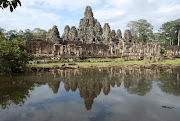
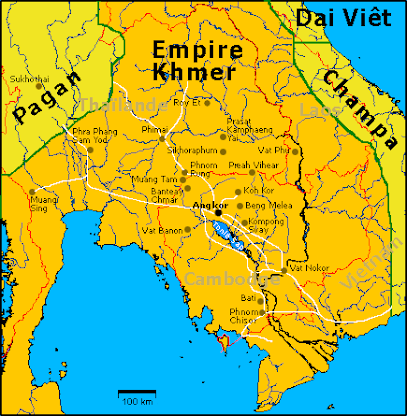
For most, this part of Cambodia is synonymous with Angkor – the ancient temple complex created in the glory days of the Khmer empire. It bestrode a beefy part of South East Asia briefly, ascending for a couple of centuries before peaking in the 12th. When the French unearthed Angkor’s ruined monuments in the early 1800s, its future as a tourist hot-spot of genuine magnificence was assured.
In more recent times, construction on a more modest and unremarkable scale has gathered pace along the road to its weathered Southern Gate. And just before the crowded ticket booth, there is a sharp right turn on to a dusty red road, which bounces you all the way to a place that, I must confess, I found equally moving.
I am a teacher by profession, and it was a service I was asked to provide for a group of about 30 secondary-school children over two weeks in December. They live in large huts, one each for the boys and girls. Below the girls’ accommodation, there is a long table where meals are shared and thanks are given for their basic, healthy food. On either side of the sleeping quarters, there is space to play and wash. In the front section, near the entrance gate, there stands a fruit tree.
Beyond the boys’ hut, a volleyball net hangs over a desolate space where many improvised ball games are played. It is on the veranda that the lessons take place, with the children (and teacher) dragging out their tables to sit and be educated. And that’s it. This is life.
Since there aren’t enough schools for children to attend in Cambodia, they are taught in half-day shifts. That sad fact was caused by the genocidal rule of the Khmer Rouge in the 1970s. The haunting spectre of the past clings to the basic organs of society here, squeezing them mercilessly as it dances across the land.
Not only are the children of Santepheap orphaned, abandoned or impoverished – “childhood” for many is a time to hunt for bottles, wander barely clothed and wide-eyed, or sell postcards and trinkets to tourists who remind them they should really be at school – but also the ghosts of the past linger greedily in their shadows, stealing what should be a precious time of growth.
Though the nation was mercilessly victimised, the people I met – especially the kids – were remarkably dignified and optimistic. They put my tendency to find fault and impediment in endeavours to shame. Take my irrepressible tuk-tuk driver. He, like many others, would often sit for hours waiting for me to stumble through a museum or temple with my trademark Clouseau-esque articulation and agility. Did he complain or succumb to the frustrations of boredom? Perhaps, but while in my company, he chose instead to smile and tell me about his work with deaf and blind children. He once showed me an encased pile of skulls beside an elaborate graveyard and proceeded to explain how he was “the only one of me left”, referring to the demise of his family 30 years ago. They killed the teachers first, he said. And as if to reverse the trend, everyone I met seemed to want to educate or be educated.
A co-worker of mine, with whose words I opened this feature, once told me passionately that her “dream” was to be a teacher. How far I felt from the UK at that moment. Always questioning and investigating, she endeavoured to teach me some local lingo and praised my pitiful pronunciation. The owner of my guest house would often lead me to the library and select useful books on history and exploring the treasures of Angkor. People in the park would stop and practise their English on me, informing me in the process about orphanages and poverty in a non-invasive fashion. Taken to extremes, I was once shown how to pour water and even the celebrated skill of peeling a banana. Gladly, I gathered that I had been doing both correctly for years. Much of this I have experienced in south-east Asia before, but never with such resonance.
But it was the children who impressed me the most. Nothing was too much trouble – even when they were clearly tired or perplexed by one of my rather naff comedy routines. Their expertly choreographed dance show (which they perform every Sunday) was genuinely entertaining. Their approach to learning was inquisitive and industrious.
In their spare time, one fixed his bike, another adjusted his belt with my hole-punch. Not in 14 years of teaching have I ever received a more genuine “thank you” than when I gave one of my students my Changi Airport souvenir pen, since hers was constantly running out – she spent the whole day trying to give it back.
I was also reminded of the insidious culture of “health and safety” back home when my inquiries as to the wisdom of allowing a boy to climb a tree and whack fruit with a stick above our heads were met with a succinct reply: “You want to go up, too?”
A donation to Santepheap is always welcomed but if you have some spare time, a visit as a volunteer is of guaranteed benefit to all concerned.
See www.santepheap.org Read more!
Monday, February 06, 2012
The other 'Killing Fields' trial continues
PHNOM PENH, Cambodia, Feb. 6 (UPI) -- Defense lawyers continued to attack the Document Center of Cambodia, claiming its archival material presented to the U.N.-sanctioned genocide tribunal is biased.
Four former senior Khmer Rouge leaders remain on trial for their part in the brief but brutal Khmer Rouge government of 1970s.
The Document Center was started in 1995 as a field office for Yale University's Cambodian Genocide Program with U.S. State Department funding. In 1997 it became an independent non-government organization with funding from several countries, including the United States, Australia, Japan and Canada.
The trial of the four Khmer Rouge leaders continues after the tribunal, the Supreme Court Chamber of the Extraordinary Chambers in the Courts of Cambodia, turned down the appeal of another Khmer Rouge member, Duch.
Also known as Kaing Guek Eav, Duch is a former math teacher and Christian convert who ran the feared Tuol Sleng prison, also known as S-21, in Phnom Penh under the Khmer Rouge government.
Duch became the first high-ranking official to be sentenced by the Chamber in Cambodia's highly political genocide trials. In 2010 he was sentence to 35 years in prison, less five years for time already spent in custody, and appealed the sentence last March.
On top of turning down Duch's appeal, the Chamber increased the 69-year-old's sentence to life in prison.
The Chamber said on its Web Site that is had considered the high number of deaths for which Duch is responsible -- a minimum 12,272 lives -- along with the extended period over which the crimes were committed -- more than three years.
These facts "undoubtedly place this case among the gravest before international criminal tribunals," the Chamber said.
The fact that Duch wasn't "on the top of the command chain in the regime" doesn't mean he should get a lighter sentence.
"There is no rule that dictates reserving the highest penalty for perpetrators at the top of the chain of command," the Chamber said.
Duch's increased sentence last week was met with cheers as well as relief by victims and their families -- fearful it might have been reduced.
However, many more Cambodians await the outcome of the ongoing trial four former Khmer Rouge cadres who were "top of the chain of command."
Ieng Sary, 86, was the regime's minister of foreign affairs and Nuon Chea, 85, was the Khmer Rouge's main ideologist.
Chea was "Brother Number Two" to "Brother Number One," Pol Pot, who died in 1998. Pot fled the country after an invading Vietnamese army toppled the regime in 1979.
Khieu Samphan, 80, was the president.
Ieng Thirith, 79, wife of Ieng Sary and Khmer Rouge social affairs minister, has been absent from proceedings because of suspected advanced Alzheimer's disease.
Their lawyers have focused on the work of the Document Center.
Jasper Pauw, a lawyer representing Chea, questioned the veracity of material collated under the Document Center's Accountability Project and handed to the prosecution, The Phnom Penh Post newspaper said.
He also asked why it was necessary for the center to, in its own words, "illuminate chains of command" during the time of Democratic Kampuchea, as the Khmer Rouge called Cambodia.
"Because we want to know who actually killed two million Cambodians," center Director Youk Chhang said. "We want to know what happened in our history."
Pauw asked if, through the Accountability Project, the center was trying to implicate senior Khmer Rouge leaders in "alleged atrocities."
Chhang said the Accountability Project's purpose was to "gather historical information for the court in order to find the culprits who committed crimes during that period," the Post reported.
Arthur Vercken, defense lawyer for Samphan, asked Chhang about the potential fabrication of documents, including one deemed by the center to have be a fake, the Post report said.
Chhang said it would be "virtually impossible" to fabricate 1 million documents.
Topics: Khieu Samphan
Read more!
China, Cambodia vow to further promote strategic partnership

Jia Qinglin (R), chairman of the National Committee of the Chinese People's Political Consultative Conference, meets with Hor Nam hong, Cambodian deputy prime minister and minister of foreign affairs and international cooperation, in Beijing, capital of China, Feb. 6, 2012. (Xinhua/Li Tao)
BEIJING, Feb. 6 (Xinhua) -- China and Cambodia on Monday vowed to further promote their ties in a meeting between top political advisor Jia Qinglin and Cambodian Deputy Prime Minister and Foreign Minister Hor Nam hong.
"China attaches high importance to its comprehensive strategic partnership of cooperation with Cambodia, and will continue to deepen bilateral substantial cooperation so as to benefit both sides," said Jia, chairman of the National Committee of the Chinese People's Political Consultative Conference (CPPCC).
He spoke highly of the development of bilateral relations, citing frequent high-level visits, strengthened mutual political trust and fruitful substantial cooperation as some of the achievements made in the area.
Jia said China appreciates Cambodia's firm adherence to the one-China policy and steady support for China on issues involving Tibet, Xinjiang and other major issues.
"Cambodia is a good friend indeed, a friend that China trusts and relies on," Jia said.
Hor Nam hong also praised the development of Cambodia-China relations in recent years. He thanked China for its assistance in Cambodia's social and economic development.
Hor Nam hong vowed to work with China to strengthen friendly exchanges and deepen bilateral cooperation so as to bring their comprehensive strategic partnership to a new high.
Jia also spoke positively of the strategic partnership between China and the Association of Southeast Asian Nations (ASEAN), as well as the important role ASEAN has played in promoting east Asian cooperation.
Jia said China is ready to join hands with all ASEAN countries, including Cambodia, to continue to contribute to the region's peace, stability and prosperity.
Hor Nam hong said Cambodia will help promote ASEAN-China ties and east Asian cooperation.
Earlier Monday, Foreign Minister Yang Jiechi held talks with Hor Nam hong, during which the two sides agreed to enhance coordination to promote China-ASEAN ties and cooperation in East Asia.
Later Monday afternoon, Hor Nam hong also met with senior legislator Lu Yongxiang, vice-chairman of the Standing Committee of the National People's Congress (NPC), China's top legislative body.
Hor Nam hong was invited by Yang to visit China from Feb. 5 to 7. Read more!
Friday, February 03, 2012
Cambodia: Stop the use of excessive force against peaceful land activists
(NewDesignWorld Press Center) - Cambodian authorities must stop the use of excessive force against peaceful land and housing activists, Amnesty International said today, after police violently dispersed a group of around 150 women protesting forced evictions in the capital Phnom Penh.
Police yesterday beat and arrested several of the women, who were peacefully protesting against last month’s forced eviction of the Borei Keila community and the situation at the capital’s Boeung Kak Lake.
“Communities all over Cambodia are peacefully resisting forced evictions and taking action to claim their rights,” said Donna Guest, Deputy Director of Amnesty International’s Asia-Pacific Programme.
“The Cambodian authorities must stop the use of excessive force against these communities, and bring to justice those responsible for such violence.”
Yesterday’s episode follows more serious incidents elsewhere in the country, where land activists were reportedly shot and injured in Kratie province in eastern Cambodian by military personnel working for a private company, and in Battambang province in the west by military police.
Several of the women protesting in Phnom Penh yesterday were half naked, as they removed their clothing in an apparent show of desperation. Police reportedly grabbed and beat the protesters, including elderly women, to the ground, before six women were thrown into a police van and detained overnight at Phnom Penh police station.
The six women included Borei Keila residents Seng Kunthea, Seng Rany, Tom Sakmony, Nen Sarith and Ath Samnang, as well as Srang Srey Tuch, a former resident of Boeung Kak Lake.
At least two of them were injured during the arrest but reportedly received no medical care, while none of them were given full access to lawyers.
Four of the detained Borei Keila women had previously been held at Prey Speu Social Affairs Center, after a peaceful protest last month against the Borei Keila forced eviction.
All six were released today without charge after being detained overnight. Phnom Penh authorities agreed to discuss the disputes with representatives from the two communities.
Women from Borei Keila are seeking compensation for damaged property and calling on the authorities to address their housing needs after more than 300 families were evicted from a development site on 3 January. The developer, Phan Imex, has failed to build the on-site housing it previously promised them.
Seven people arrested during the Borei Keila eviction remain in detention.
Residents from Boeung Kak Lake are calling for the authorities to follow through on the Prime Minister’s promise, made in August 2011, to grant land titles to remaining residents and allow construction of on-site housing around the lake.
They are also demanding that the authorities take measures to alleviate flooding caused by the company filling in the lake. Former residents are calling for additional compensation for being forced to leave their homes and relocating elsewhere.
Earlier this week, Cambodian Prime Minister Hun Sen warned against the use of violence in land disputes.
“The Cambodian government is saying one thing and authorities at the local level are doing another. Yesterday’s use of excessive force by police in Phnom Penh contradicts the Prime Minister’s call for peaceful resolutions to land disputes,” said Donna Guest.
“Instead of trying to silence these communities through intimidation and violence, the Phnom Penh authorities should listen to them. These communities have a right to a prompt solution that meets Cambodia’s international legal obligations to provide adequate housing,” said Donna Guest.
Region Asia And The Pacific
Country Cambodia
Read more!
Cambodia: Khmer Rouge judgment welcome, but raises human rights concerns
The UN-backed Khmer Rouge tribunal’s final judgment against a former prison chief in Cambodia today is an important step towards accountability but raises human rights concerns, Amnesty International said.
The tribunal’s Supreme Court Chamber upheld an earlier conviction of Khmer Rouge jailer Kaing Guek Eav, alias Duch, for crimes against humanity and war crimes described as “amongst the worst in human history”, and increased his sentence from 35 years to life in prison.
Duch was held responsible for killing at least 12,272 men, women, and children from 1975 to 1979 while he was in charge of “S21”, a secret prison run by the Khmer Rouge in a former school in Phnom Penh.
The judgment included additional convictions against Duch, but also raised human rights concerns by overturning a legal remedy he was granted after a Cambodian military court illegally detained him, without investigation or trial, from May 1999 until July 2007.
“The closure of this first case represents an important step towards achieving accountability for the mass crimes of the Khmer Rouge, and helping the Cambodian people draw a line under this tragic chapter of their country’s history,” said Rupert Abbott, Amnesty International’s researcher on Cambodia, who attended today’s judgment.
“But the decision to overturn the legal remedy for Duch’s unlawful detention and to provide no alternative may be perceived as a case of public opinion trumping human rights.”
Amnesty International considers that the July 2010 decision of the tribunal’s Trial Chamber to grant this legal remedy – a five-year reduction in Duch’s sentence as a result of the illegal detention – sent a positive message to the Cambodian justice system that human rights should be universally enjoyed and that violations must be remedied.
Another concern with the judgment is the apparent decision to leave the issue of Duch’s eligibility for parole to the Cambodian justice system, which has been criticized for its lack of independence.
Additionally, confusing findings relating to the Tribunal’s personal jurisdiction over former Khmer Rouge may have implications for other cases.
The Supreme Court Chamber’s judgment highlighted the suffering of Duch’s victims, their families and the Cambodian people, admitting several additional Civil Parties – victims who join as parties in the proceedings – whose applications had been rejected in the original verdict.
Amnesty International called on the Cambodian government to provide support for ‘moral and collective’ reparations for victims of the Khmer Rouge regime.
“Today’s judgment emphasized the important role of victims in proceedings before the Khmer Rouge Tribunal. We had hoped, however, for a more creative decision on ‘moral and collective’ reparations and urge the Cambodian government to work with victims’ groups to meet their needs in this regard,” said Rupert Abbott.
The Supreme Court Chamber issued only a summary appeal judgment today, with a full decision to be issued in due course. The judgment is final and cannot be appealed.
Read more!
Land mine left over from Cambodian conflict kills 8 farmers on tractor
By Associated Press
PHNOM PENH, Cambodia — Eight farmers have died after their tractor ran over an anti-tank mine left over from Cambodia’s 1980s civil war.
The head of the Cambodian Mines Action Center, Heng Ratana, says two others were seriously injured Friday when the mine exploded as the farmers traveled to a cassava field in Banteay Meanchey province, 190 miles (300 kilometers) northwest of Phnom Penh.
He says the area was the site of intense battles between the communist Khmer Rouge and government forces in the 1980s and early 1990s. Deminers face the task of removing an estimated 4 to 6 million land mines and other ordnance still left from more than three decades of conflict.
Heng Ratana says about 200 Cambodians were killed or wounded by mines last year.
Copyright 2012 The Associated Press. All rights reserved. This material may not be published, broadcast, rewritten or redistributed.
Read more!
Wednesday, February 01, 2012
I volunteered to build houses in Cambodia
A postmenopausal, empty-nest, middle-class woman, looking for something useful to do in the third act of her life, decides to volunteer in Cambodia on a house-building project. Call it a cliché if you wish. Or cue the laugh track of friends and family who know how useless I am with a hammer.
Volunteering internationally, I learned even before leaving, is the ultimate good deed for anyone sharing my own fortune of time, resources and health. Everyone I told about my plans thought it was noble of me to be giving back in this way.
It was hardly a selfless act, though. It was the exact opposite. At this crossroads in my life, it was an opportunity for a unique cultural experience in a country I had never visited before.
Part of my giving back, in fact, was to the project’s team leader. She happens to be an inspiring woman from Niagara-on-the-Lake, Ont., who spent years living overseas. She has organized seven of these journeys to Cambodia for families and individuals like me. She also, in the past, put those same organizational and volunteer skills to good use supporting my own work. So this was an opportunity for me to say thanks.
The project was for a homegrown organization: Tabitha Foundation Canada, an NGO based in Ottawa, with its Canadian founder at the helm of headquarters in Cambodia’s capital city, Phnom Penh. Tabitha has helped two million Cambodians in more than 15 years of operation, working in the poorest parts of the country where the average family wage is less than $1 a day.
Unlike projects in other poverty-stricken regions of the developing world, there is an extra layer of despair when volunteering in Cambodia. It is a country that has seen years of civil war and a horrifying genocide of more than 1.5 million souls.
Tabitha’s formidable and indefatigable founder, Janne Ritskes, makes it mandatory for all volunteer house builders to visit the Genocide Museum in Phnom Penh (the converted high-school campus used by Pol Pot for torture), then to see the actual Killing Fields (where those who survived the torture were brutally murdered.)
As well as providing us with the cultural context for our work, Janne made another point perfectly clear: It’s about the Cambodians, not us. In no uncertain terms, we were told to never complain about anything and to keep our emotions in check at all times. Our first real test of the latter rule happened during our visits to the memorials of the genocide.
Thankfully, Janne had also scared us during our briefing on workplace safety before we left Phnom Penh for Kampot province in the south, where we would be working. The temperatures would be hitting close to 40 degrees, among other health considerations (malaria, dengue fever and heat stroke, to name a few). So when we heard the word “water” shouted out on the half-hour by our team leader, it was not a call to drink: It meant to come and have a bucket of it thrown over your head so you don’t faint.
Over the course of the project we built 18 houses, basic shelters on stilts with one door and a window. I spent my days hammering in the floors.
There was a wide range of ages and life experiences on our 18-member team, from a 15-year-old girl travelling with her mother (the young woman never muttered a word of complaint, except perhaps to her mother for taking so many pictures of her), to a seventysomething retired educator who had bicycled through Vietnam with his wife before our work began. As we shuttled between our work site and the jungle eco-lodge where we were staying, the dynamics of the team made the conversations always stimulating.
And hilarious. As unexpected as that might sound, we laughed a lot. Although I wasn’t too amused by the captured, caged rat that fell out of my hut’s ceiling a foot from my toilet on our last morning, I had the presence of mind to take a picture of it with my BlackBerry, knowing that no one would ever believe me.
I certainly laughed at myself at the experience of leading a half-dozen women, desperate for a bathroom, to a Cambodian village storefront in search of relief. Confused by my request using the universal sign language of washing my hands, I shamelessly squatted down in front of the female shopkeeper, mimicking the Asian way. Mission accomplished.
On the final day of the project, when the houses are completed, it’s tradition to have a handover ceremony. Each family receives a quilt for their new home made by Tabitha’s own handicraft industry, another part of the foundation’s work in Cambodia. I found it harder to control my emotions during that ceremony than I did holding back my tears at the Killing Fields.
The sad history of Cambodia was too huge for me to get my head around. But watching the families happily take possession of their new homes, which by Canadian standards give new meaning to the word basic, was incredibly moving. What we had accomplished was so immediate and right before our eyes.
Who cared if a few nails didn’t get hammered in perfectly? We all could feel the difference we had made in the families’ lives. And in our own lives, too – even if that was against the rules.
Robin Pascoe lives in North Vancouver, B.C.
Read more!
Woman helps rescue boys from sex trade
 |
| Jen Jewett says she's nervous about how she'll react to seeing children as young as toddlers being sold for sex. (Courtesy of Uptown Saint John) |
Jen Jewett, of Saint John, will travel to Cambodia next month
A Saint John woman will travel to Cambodia next month to help with efforts to get children out of the sex trade.Jen Jewett will spend five weeks with an organization that's setting up a safe house and training program for boys who have been rescued from brothels.
About 60 per cent of children living in brothels there are boys, but it's seldom discussed, she said.
"In their culture, men are basically like untouchable. There's a saying that men are like gold and they can't be tarnished and women are like cloth or something and once they're stained, it's done," said Jewett.
"And I was reading about how government sometimes, if they take boys out of brothels, they will just throw them back onto the street because they don't want to acknowledge that boys have been in there too.
"It's just sort of ignored and pushed aside because they don't want to deal with that."
As a result, there are currently no safe houses designated for boys in Cambodia. That's why the missionary group, Iris Cambodia, decided to set one up, said Jewett.
"It's just a place that we will provide a safe area for them basically to try to rehabilitate themselves and teach them other skills they can use so they don't have to sell their bodies," she said. "So they can sew, or cook, or something instead."
Daunting task
Jewett won't be part of the raids on brothels, but she will help rehabilitate the victims back at the safe house.
Still, she's a bit nervous about how she will react to seeing children as young as toddlers being sold for sex.
"I love kids so much and…I can't imagine that this is happening to kids, you know, which is why it's something that I want to be involved in, but it's also really scary, the thought of what will happen when I see that. I don’t know how I'll react."
Cambodia, which borders Thailand, has one of the highest rates of child sex trafficking, said Jewett.
"It's just so common that it's not hidden, it's everywhere," she said.
"It's just part of the mindset. If parents need to provide for the rest of the family, they sell one of their kids, or kids are kidnapped into it sometimes, or sometimes they think they're going to a real job and so their parents send them off but then they end up taking them to a brothel instead of a farm or something."
Still, as difficult as the experience may be, Jewett felt compelled to get involved with the organization, whose founders she met five years ago while volunteering at an orphanage in Africa.
"I feel like it's just, you have to do something about it. It's something that's so wrong, you can't just pretend that life goes on as normal, you know?" Read more!
Head of Research Center Addresses Tribunal Over Documentation
Chhang Youk is scheduled to appear before the Trial Chamber on Thursday.
 |
Youk Chhang, a leading Cambodian genocide researcher, shows a copy of the Cambodian version of a Khmer Rouge history textbook to teachers in Takeo province. |
The head of the Documentation Center of Cambodia, which has provided hundreds of thousands of documents to the Khmer Rouge tribunal, addressed the court on Wednesday to vouch for the accuracy of the research.
Defense attorneys for three jailed regime leaders have challenged the authenticity of documents from the well-established organization, which has collected documentation on Khmer Rouge atrocities for nearly 15 years.
Chhang Youk told the court that documents were thoroughly vetted and that the age of the paper, dates, signatures and other proof are used to verify their authenticity. Chhang Youk is scheduled to appear before the Trial Chamber on Thursday.
He told the court Wednesday he had established the center for the purpose of national reconciliation in the wake of Khmer Rouge atrocities and that he hoped the UN-backed court would provide accountability for the leaders of the regime.
Read more!
Tuesday, January 31, 2012
Officials: 8 crew missing after freighter sinks off Turkey's Black Sea coast
By: Suzan Fraser, The Associated Press
ANKARA, Turkey - Turkish Coast Guard boats, tug boats and a helicopter were searching for eight crew members after a Cambodia-flagged freighter ship sank in stormy waters off Turkey's Black Sea coast on Tuesday, officials said. Three other crew members were rescued.
The ship, Vera, was sailing to Turkey's Aliaga port from Russia when it sank off the coast during a storm, regional Gov. Erol Ayyildiz said. He said police were also searching the shore for the missing crew.
Ayyildiz said the ship's second and third captains and its cook, a woman, were rescued and hospitalized.
"There is hope that the eight (missing) will be rescued," the state-run Anadolu Agency quoted Ayyildiz as saying. "They are used to the sea, they are experienced. Therefore, until we reach them, we are assuming that they are alive."
The Maritime Affairs Directorate said there were 10 Ukrainians and one Georgian crew member aboard the ship, which was carrying scrap metal.
It said at least three tug boats had joined the Coast Guard search-and-rescue effort, while Ayyildiz said a helicopter had also been dispatched.
"By the time the Coast Guard arrived in response to the distress call, the ship had already sunk," Irfan Erdem, head of the Chamber of Commerce for the region, told Turkey's NTV television.
He said a storm likely caused the ship's cargo to shift, tilting the vessel to the side and causing it to take on water.
Much of Turkey has been affected by a cold snap that has hit parts of Europe, with stormy weather disrupting maritime traffic.
The accident occurred some 10 days after another cargo ship brushed against two anchored vessels during severe weather off the coast of Istanbul, taking on water for hours before authorities pulled it ashore using a tug boat.
Read more!
Hun Sen Calls on Rubber Corp To Hand Over Shooting Suspects
“I condemn such violence and cannot tolerate it.”
Cambodia's Prime Minister Hun Sen, right, sits during a meeting at Peace Palace in Phnom Penh, Cambodia, Thursday, July 28, 2011. Hun Sen on Thursday opened the third meeting with environment ministers from the Greater Mekong Subregion countries which consists of Cambodia, China, Laos, Myanmar, Thailand and Vietnam.
Prime Minister Hun Sen on Tuesday demanded a rubber plantation turn over two security guards accused at opening fire on a gathering of villagers earlier this month.
Police say they are searching for two men who shot at a crowd of villagers who had gathered in protest to a land concession in Kratie province on Jan. 18. Four people were injured in the shooting, but no arrests have so far been made.
Hun Sen called the violence intolerable and called on TTY Corporation, which is owned by powerful business tycoon Na Marady, to turn over the security guards.
The Kratie court has issued a summons for the two guards.
At the inauguration of a new road in Mondolkiri province, Hun Sen said the company should be punished if it is found to be protecting them.
“I condemn such violence and cannot tolerate it,” Hun Sen said. “And ask the TTY Corporation to help hand over the offenders to the authorities of justice.”
Hun Sen said he had ordered Interior Minister Sar Kheng to arrest the men.
Land disputes are a growing concern in areas of more and more land concessions. Rights workers have pointed to tens of thousands affected and a potential source of widespread unrest.
Hun Sen said Tuesday he would take back land concessions if the violence continues.
Am Sam Ath, lead investigator for the rights group Licadho, welcomed premier’s words, but he said, “we will watch the effectiveness in implementation of Hun Sen’s speech.”
Read more!

Monday, January 30, 2012
Cambodia to import oil from Iran
The government of Cambodia has announced that it is planning to import and refine oil from Iran in clear defiance of recent US sanctions on Iranian oil imports.
“Cambodia will not take into account the foreign policies of other countries toward Iran when considering investment in the Kingdom,” spokesman of Cambodia's Council of Ministers Ek Tha said yesterday.
“We do not discriminate where our FDI [foreign direct investment] comes from,” he said, adding that the deepening of cooperation with Iran was strictly civilian, not military, the Phnom Penh Post reported.
According to Ek Tha, Cambodia is planning to refine crude oil that it imports from Iran at a local refinery whose construction will begin within a few months, and then sell refined products to China and South Korea starting in 2014.
Construction of Cambodia's first oil refinery, located on 365 hectares in Sihanoukville and Kampot provinces, will begin in April and finish in 2014.
Tehran and Phnom Penh signed a memorandum of understanding to cooperate on oil and gas projects last year.
Reacting to the announcement, spokesman for the US Embassy in Phnom Penh, Sean McIntosh, said members of the United Nations shouldn't ignore US policy toward Iran.
"We expect all UN members to strictly enforce UN [Security Council] relations and to consider carefully the impact of new US regulations when considering engaging in economic activity with Iran," he added.
The US President Barack Obama signed into law new sanctions against Iran which seek to penalize other countries for importing Iran's oil or doing transactions with the country's central bank. The European Union also approved new sanctions against Iran's oil and financial sectors on January 23, which will cut off crude oil imports from Iran on July 1.
The United States, Israel and their European allies accuse Tehran of pursuing military objectives in its nuclear program and have used this pretext to impose four rounds of international and a series of unilateral sanctions against the Islamic Republic.
Iran has refuted the allegations, arguing that as a signatory to the Nuclear Non-Proliferation Treaty and a member of the International Atomic Energy Agency, Tehran has a right to use nuclear technology for peaceful use.
SS/AZ/HGH
Read more!
Cambodia's ruling party wins Senate majority
PHNOM PENH, Jan 30 (Bernama) –- The ruling Cambodian People's Party (CPP) gained a majority of the votes in the country's Senate elections, receiving up to 77.81 percent, according to preliminary results provided by the National Election Committee (NEC) of Cambodia on Sunday.
The Sam Rainsy Party (SRP), which is the country's main opposition party, gained 21.93 percent of votes, reported Vietnam news agency on Monday.
According to NEC, the official election result will be announced on Feb 4, but may be postponed to March 5 if there is any complaint from political parties.
The Senate elections are taking place under observation of 131 representatives of political parties and 1,432 domestic and foreign observers.
Only two main political parties participated in this year's elections. They are the ruling CPP and SRP.
The elections will select only 57 seats out of 61 seats as two senators will be appointed by the King and two by the National Assembly.
The Senate election is held every six years. In the last election in 2006, CPP won 45 seats, followed by the royalist FUNCINPEC party with 10 seats, and the remainder went to SRP.
Read more!
Cambodia's ruling party wins more Senate seats
Jan 30, 2012 (Rasmei Kampuchea Daily - McClatchy-Tribune Information Services via COMTEX) -- ' Phnom Penh (Rasmei Kampuchea Daily/ANN) -- The ruling Cambodian People's Party (CPP) won 78.1 per cent of the vote in Cambodia's Senate elections on Sunday with the opposition Sam Rainsy Party (SRP) getting about 21.99 per cent, according to preliminary results announced by the National Election Committee (NEC).
The CPP announced separately that it had won 46 of the 57 seats up for grabs in the indirect election which was limited to less than 12,000 local councillors and national lawmakers. The SRP said it expected to win 11 seats. Two of the other four seats are appointed by the king and the other two are elected by the National Assembly.
Both parties said they were satisfied with the election environment.
Ok Kim An, an official at CPP headquarters, said: "The number of votes for the CPP rose in every province even though the increase varied from one province to another." Yim Sovan, the SRP spokesman, noted that his party had only two seats in the outgoing Senate.
The CPP and SRP were the only two parties to field candidates in the election for the Senate, the third since the upper house was established to resolve a political crisis that followed elections for the National Assembly in 1998.
The ruing party held a majority of almost two thirds in the outgoing senate with 45 seats. Funcinpec, the royalist party which has since split but still governs in a nominal coalition with the CPP, had 21 seats including two voted by the National Assembly. Since it didn't field candidates in Sunday's election, both the CPP and SRP expected to gain.
The preliminary results Sunday showed the CPP winning 8,880 votes of the 11,412 valid votes counted with the SRP getting 2,503 votes, the NEC said. A spokesman said some of the completed ballots were invalid.
Voter turnout among the those eligible to cast ballots was 99.6 per cent. The NEC said 46 of the the eligible 11,470 members of Commune Councils and the National Assembly did not vote.
After voting closed at 3 pm, the NEC said the elections had been held in a safe and secure environment.
Cambodia is scheduled to hold commune elections in June ahead of national parliamentary elections in 2013.
Read more!
Friday, January 27, 2012
Eastern promise in Vietnam and Cambodia
 |
| Hoi An |
The Bhaya, an elegant junk with 20 cabins, is sailing in Halong Bay, 100 miles east of Hanoi. It begs for Agatha Christie to set Monsieur Poirot a mystery on board. It is light, airy and comfortable but full of potential for a whodunit: a very respectable couple from Shropshire sit next to a young gay couple from Germany, while a boisterous Australian family order drinks. Some try squid-fishing from the lower deck after a fresh crab dinner served on crisp white tablecloths.
Canoes are available in the afternoon for the more adventurous, and a spa is discreetly set up by white-uniformed staff for those who want to do nothing. This is a quirky sea venture: Bing Crosby songs alternate with Russian-Scottish music at the bar; cocktails are only a couple of dollars or so a shot. Vietnam at every stage is delightful and inexpensive.
How wise were the French to choose Indo-China when the world was like a huge Monopoly board being divided by the West's Great Powers. What is not to like about what is now Vietnam, Cambodia and Laos: staggeringly beautiful countries with ancient cultures going back more than 1,000 years, and landscapes, people and cuisine that are all beyond seductive.
It is almost 40 years since this region was ravaged by tanks, bombs and civil war. It is
37 years since the Vietnam War ended and Vietnam is now one of the world's fastest-growing economies. Hanoi buzzes with modern expansion yet remains traditional: women in coolie hats carry baskets of jackfruit past hi-tech gadget shops and a shiny Louis Vuitton store; and after just a short drive, you are in paddy fields with farmers trudging beneath palm trees in scenes that have remained unchanged for centuries.
Everything is a mix of ancient and modern. Hoi An, about 500 miles south of Hanoi, is an ancient town declared a World Heritage Site for its extraordinarily well-preserved 17th-century buildings, bridges over the river and old pagodas. Alongside are shops where Indian tourists whisper, 'Even we find it cheap here,' as they snap up silk scarves and have their children's portraits drawn by talented street artists for £4.
This former harbour town at the estuary of the Thu Bon river was an important trading centre in the 16th and 17th centuries, where Chinese from various provinces settled alongside Japanese, Dutch and Indians. During this period, the town was called Hoai Pho (Seaside Town in Vietnamese). Originally, it was a divided town with the Japanese settlement across the 16th-century Japanese Bridge, the only known covered bridge with a pagoda on the side.
In Ho Chi Minh City, the cult of the eponymous former leader is much celebrated with statues and a tomb that receives as much attention as Lenin's in Red Square. For those brought up on Apocalypse Now and other Vietnam films, it is fascinating to see this tranche of modern history - always referred to by locals as the 'American War' - through the eyes of the Vietcong.
The War Remnants Museum shows devastating photographs of the effect of American bombing using the chemical weapon Agent Orange. The message of the museum is a complete condemnation of America for its military intervention. Curiously enough, however, the museum is partly funded by American Democrat donations, and the Vietnamese staff are extraordinarily friendly to every sheep-faced American tourist.
Yet more riveting is a visit to Cu Chi, just an hour by taxi (£40 return), where 75 miles of underground tunnels were bored out during the war. It is where the Vietcong lived amid horrendous conditions. The torturous underground traps, complete with sharp spikes, which they laid to ambush American soldiers send shivers down the spine. But the ingenuity and bravery of the Vietcong as they lived in these subterranean passages, just 18 inches high and accessed by wormhole entrances leading to pitch darkness, only popping up to fight the US troops, is remarkable.
For something less cultural, but no less enjoyable, incorporate into your trip a few days at the Fusion Maia resort in Da Nang, where every spa treatment is free and the beach is sprawling and dramatic.
And anyone going to Vietnam must also hop on a flight to Cambodia to see Angkor Wat. It is 1,000 years old, the same age as Westminster Abbey, and the temples are exactly like something from Rudyard Kipling's The Jungle Book. Vast tree roots drape over ancient stone arches and steps, and the carvings of Buddha have survived ten centuries. This is a place where the number of tourists seems to be easily diluted - there are, after all, more than 5,000 temples in the area.
Stay at Raffles Grand Hotel d'Angkor: simple, traditional, luxurious and detail-oriented. It also smells completely delicious, nothing is too much trouble and the comfort is as extraordinary as the value. Noodles and spring rolls seem to almost pop up in one's dreams, along with locust curry and frog's leg soup. This is a journey for all the senses, and a delight for anyone interested in history, ancient and modern. ES
Geordie Greig travelled courtesy of Vietnam Airlines (020 3263 2062; vietnamairlines.com) and leading Indo-China destination management company HG Travel (hgtravel.com); Bhaya Cruises (bhayacruises.com);
the InterContinental Hanoi Westlake (intercontinental.com); Fusion Maia (fusion-resorts.com); the Raffles Grand Hotel d'Angkor (raffles.com); and the Caravelle Hotel (caravellehotel.com). Vietnam Airlines offers non-stop services four times per week from Gatwick to Hanoi and Ho Chi Minh City. etours (0844 472 3421; etours.co.uk) offers a six-night Vietnam package from £1,789 per person, with a three-night extension to Siem Reap from an additional £569 per person
. Read more!
Cambodia's political parties conclude 21-day campaign for Senate vote
PHNOM PENH, Jan. 27 (Xinhua) -- Cambodia's political parties had ended electoral campaigns for the third legislature of the Senate on Friday, two days prior to the vote.
Mao Sophearith, member of the National Election Committee (NEC), said Friday that during the 21-day campaign, the parties had promoted their political stances through marching and broadcasting on the National Television of Cambodia.
"In general, the campaign had been done smoothly with good environment and security," he said in a press briefing to conclude the campaign. "There was no any violence happened during the period."
Only two main political parties will participate in this Sunday ' s election. They are the ruling Cambodian People's Party (CPP) and Sam Rainsy Party, a main opposition party in the country.
According to the NEC, the Senate has 61 seats, but the election is held for only 57 seats as two senators will be appointed by the King and the other two by the National Assembly.
Each of the two parties has named 57 full candidates and 57 reserve ones to the NEC to compete in the election.
The Senate election on Sunday will be voted by 119 Members of Parliament and 11,351 commune councilors at 33 polling stations across the country.
The results will be announced on Sunday afternoon.
The Senate election is held every six years. The last one was in January 2006, at that time, three parties -- Cambodian People' s Party, Funcinpec and Sam Rainsy Party -- joined the contest. As a result, the CPP won 45 seats, the Funcinpec 10 seats and the Sam Rainsy party two seats.
Read more!