The land of heroes
Our heroes
Our land
Cambodia Kingdom


Friday, June 17, 2011

Land of ancient shrines, floating villages fascinates Edmonton couple

Peter and Cheryl Mahaffy pause in front of Angkor Wat in Cambodia’s Siem Reap province during an afternoon spent exploring a few of the historic temples by bike.


A touchdown in gritty Cambodia to visit a daughter interning with a local water project has lodged disparate snapshots in my brain.

I see ancient temples at once held up and torn down by massive trees. Hindu shrines turned Buddhist (or vice versa) with an axe, a chisel or a draped cloth.

Villages that not only float, but move with the seasons. A museum alive with notebook-toting youngsters learning about the genocide that killed so many of their kin.

Disparate though they may be, the scenes all reflect a certain resilience — an ability to flex, to incorporate whatever comes as a way of surviving.

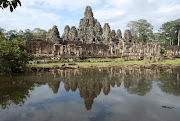
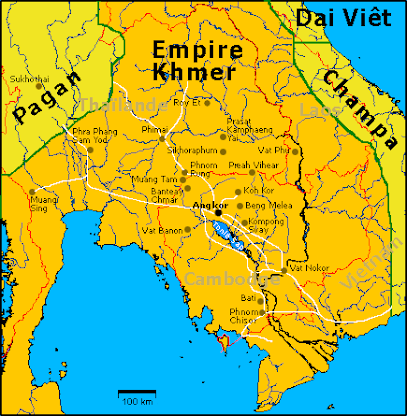
In the Angkor region of northwest Cambodia, we encounter a striking example in 800-year-old Ta Prohm. A Buddhist monastery and university that once housed as many as 12,000 people and employed thousands more, Ta Prohm faded into the jungle for centuries following the fall of the surrounding Khmer empire in 1431.

Brought to light along with dozens of neighbouring temples in the early 1900s, Ta Prohm was left partly embedded in the massive trees that had draped themselves up, over and inside it.

The result is an amazing symbiosis of wood and stone. Each needs the other to remain standing even as it hastens the other’s demise. The effect is atmospheric, photogenic, awe-inspiring.

Perhaps it’s no wonder Ta Prohm appears in the film Tomb Raider, on the cover of Lonely Planet and (as we discover while wandering area shops) in much local art.

Ta Prohm is but one of the thousand or more temples that make up the sprawling Angkor UNESCO World Heritage Site. As we stand in awe at the sheer size of each stone, let alone the intricate carving still evident despite erosion, bombing, looting and (in the last dozen years) escalating tourism, others come to worship.

For here, as belief evolves, icons of faith are not only smashed and beheaded but also used in new ways. It’s not unusual to find a small chamber where people are burning incense and offering lotus flowers before a Hindu god turned Buddhist with an orange drape to cover the nakedness.

While we might cringe and call it desecration, flexing has kept the temples relevant — and not only as Cambodia’s top tourist attraction.

A visit to floating villages not far from the temples, at the edge of the aptly named Tonle Sap or Great Lake, reinforces the sense of Cambodian flex. Not only houses, but pig pens, chicken coops, shops, restaurants and an entire school bob on the water, held up by bunches of bamboo.

Chugging down “Main Street” in a modified fishing boat whose propeller periodically gums up with reeds, we pass villagers poling hither and yon in dugouts carrying everything from teapots to firewood. On the wooden front porches, women mend nets, elders lounge in hammocks and kids stop their play to gaze at the intruders.

Every monsoon season, these villages pull up anchor and move kilometres further into the lake. The reason is simple — and amazing. In dry season, the Tonle Sap drains into the Mekong River at Phnom Penh, 150 km away. As the rains come and as faraway glaciers melt, the flow reverses and the lake balloons in size, bringing a rich supply of fish for the catching.

When dry season returns, the lake shrinks, creating pockets of water amid rich marsh and mangrove, perfect breeding ground for fish. By taking advantage of this annual pulse, the villages have made the Tonle Sap one of the most productive inland fisheries in the world, providing 60 per cent of Cambodia’s protein intake.

Like the water of the Tonle Sap, we enter and exit Cambodia through its capital, Phnom Penh. Compelled to face the country’s bloodbath under Pol Pot, we spend an afternoon at the Tuol Sleng Genocide Museum.

“Tuol Sleng” can be translated “Hill of Poisonous Trees” or “Strychnine Hill,” and the name fits. From 1975 to 1979, this former high school became a place of torture and often death for supposed enemies of the Khmer Rouge.

Many of the instruments of torture remain starkly present: shackles, waterboards, electrocution units and an exercise bar turned gallows. Row upon row of photos of doomed prisoners in agony are coupled with paintings by a former inmate, who was kept alive to paint for the Pol Pot regime and now unleashes his memories on canvas. All testify to the horror of a place where even babies were bayonetted and dashed to the ground.

Much of a generation was snuffed out here and in killing fields outside the city, and almost the entire population was driven to out to subsist on a diet of enforced farming, hunger and fear. Phnom Penh left empty, with dark, achingly silent streets, is a place we cannot imagine.

More than three decades later, the aftermath continues. The kingpin of Tuol Sleng, often known as Duch, was sentenced for crimes against humanity just this year, and other trials carry on.

Our daughter’s colleagues, children of the dead, learn to parent without role models, their stories echoing those of residential school survivors in Canada.

Yet the fact that schoolchildren are tromping through the echoing corridors of Tuol Sleng, notebooks in hand, is itself a beacon of hope. As are the again-teeming streets, a feast for the eyes, nostrils and ears with their sidewalk barbers, massage clinics, fix-it shops, roasting pigs, tuk tuks and people on the move.

This country may be bent, I think, but it’s too flexible to break.
Read more!

Tribunal Judges Issue Warning to Media Over Leaks

Investigating judges at the UN-backed Khmer Rouge tribunal issued a sharp warning to media outlets on Friday, in an attempt to forbid them from printing information from confidential, leaked documents of the
court.

The Christian Science Monitor and the Associated Press have provided detailed coverage of a controversial case at the court, naming two suspects judges have said should remain anonymous based on a leaked prosecution submission.

The judges, Siegfried Blunk and You Bunleng, threatened legal action against media outlets that publish or broadcast the names of the suspects. It remains unclear under what authority the court would pursue such action.

The judges said they had “credible information” the prosecution’s introductory submission had been leaked by “a disloyal staff member” of the court, and said, “warning is hereby given that anyone publishing information from this confidential document is liable to be subjected to proceedings for interference with the administration of justice” under court rules.

The investigating judges have come under increased criticism for their handling of Case 003, after they hastily concluded their investigation in April without conducting field investigations or interviewing the two chief suspects.

The court has kept the names of the suspects confidential. However, the Christian Science Monitor, citing court documents in reports on June 10 and June 15, identified them as Khmer Rouge naval commander Meas Muth and air force commander Sou Met.

The US-based paper said they were accused of “shared responsibility” for crimes including torture, murder and forced labor.

“In particular, Sou Met and Meas Mut[h] participated in a criminal plan to purge the Revolutionary Army of Kampuchea of all undesirable elements, which resulted in at least thousands and quite probably tens of thousands of deaths,” the Monitor reported, citing court documents.

Tribunal spokesman Huy Vannak said that the judges had not considered any actions yet, but that “any documents that are not issued by the court are unofficial.”

Ou Virak, head of the Cambodian Center for Human Rights, said Friday the case was already publicly known, but the naming of suspects did “touch on the rights of the accused.”
Read more!

CAMBODIA: Mass faintings reported at another garment plant

Garment workers in Cambodia have fallen ill in a further report of mass fainting in the country.

Around 250 female workers at King Fashion factory in the Cambodian capital of Phnom Penh fainted this week, because of bad working conditions, according to Chea Mony, president of Free Trade Union.

Mony said about 150 workers fainted on Wednesday, and that the number could rise as some workers were transported to hospital by family and friends.

This was followed by another mass fainting of 100 people on Thursday morning, Born Sam Ath, a local police official, told the local media.

The workers suspected that chemical odours from cotton and bad quality water they drank in the factory were to blame.

King Fashion Garment Co, a Taiwanese-owned dress manufacturer, was unavailable to comment when contacted by just-style.

It is a different manufacturer to Heuy Chuen (Cambodia) Corp, which reported a mass fainting of 101 workers making footwear for sportswear firm Puma in April. A subsequent investigation by Puma diagnosed hypoglycaemia, a medical term for lower than normal levels of blood glucose.
Read more!

Thai Yellow Shirts Protest Against Leaders, UNESCO Temple Listing

 
Cambodia's famed Preah Vihear temple, which is enlisted as UNESCO's World Heritage site, in Preah Vihear province (file photo).


Thailand's royalist Yellow Shirts have protested outside the United Nations Cultural agency in Bangkok, urging it to withdraw world heritage status for a Cambodian temple near disputed territory. They also paraded through the Thai capital encouraging people not to vote in July 3 elections. The nationalist movement has stopped supporting the current government, saying it is too weak on the border dispute.

At least 2,000 yellow-dressed protesters demonstrated Friday outside of the Bangkok office of the United Nations Educational, Scientific, and Cultural Organization (UNESCO).

They nationalists want UNESCO's World Heritage Committee, which meets Sunday in Paris, to de-list a temple in Cambodia near disputed territory.

The 900-year-old Khmer Hindu temple called Preah Vihear in Cambodia and Phra Viharn in Thailand was declared a world heritage site in 2008.

The listing sparked nationalist fervor on both sides and sporadic and deadly clashes between Thai and Cambodian soldiers.

Protester Vipida Thaisawat says Cambodia is using the world heritage status to encroach on Thai land. Like some other nationalists, she claims the temple is in Thai territory.

"Actually, [getting the] temple back [to Thailand] or not is not the point," Vipida noted. "But, the point right now is they [Cambodia] want the land around Phra Viharn to register as a world heritage [under Cambodia]. And, we can't let that happen."

Cambodia has proposed a joint management plan for the temple complex, which the World Heritage Committee is reviewing and may decide on next week.

Thailand has urged the plan be delayed until a decision is reached on the land surrounding the temple, which both sides claim.

Cambodia last month asked the International Court of Justice in The Hague to rule on the disputed 4.6-square-kilometer area around the temple.

The ICJ ruled in 1962 that the temple itself is in Cambodia, but made no decision on the surrounding land. The court's ruling is expected sometime early next year.

The Yellow Shirts paraded Friday from the UNESCO office through Bangkok, directing most of their anger at Thai politicians.

They urged Thai people not to vote in a July 3 election, saying none of the parties have Thailand's true interests at heart, including the ruling Democrats they once supported.

The Yellow Shirts say the government has been weak in the border dispute with Cambodia and are demanding it stop cooperating with UNESCO and Phnom Penh.

The Thai government has waffled on whether it wants the withdrawal of the temple's World Heritage status, but has also dismissed the Yellow Shirt demands.

Meanwhile, the border remains tense with both militaries on alert. Clashes between the two sides killed at least 10 people in February. Another 18 died in fighting in April near another ancient temple complex about 150 kilometers farther west.

Each side blamed the other for starting the fight.
Read more!

Thursday, June 16, 2011

Premier says suspected spy leader has fled country

Prime Minister Abhisit Vejjajiva has admitted that the suspected leader of three men arrested for alleged spying on the Thai-Cambodian border has managed to flee the country.


The three alleged spies after their arrest in Si Sa Ket province on June 7
 Mr Abhisit yesterday said he had received information from authorities concerned that the suspected leader of the group, who is a Cambodian colonel, had escaped from Thailand.

Police are now questioning the three men who were detained in connection with the alleged spying to find out further information, Mr Abhisit said.

He insisted that Thailand had not fabricated the spying allegations against Cambodia.

A Thai, a Cambodian and a Vietnamese, were arrested in Kantharalak district of Si Sa Ket on the evening of June 7 carrying maps with military bases marked on them, according to police.

The three were identified as Suchart Muhammad, a 32-year-old Thai Muslim, Cambodian citizen Ung Kimtai, 43, and Nguyen Teng Dang, 37, a Vietnamese national. All three suspects denied they were spying in the area.

Cambodia accused Thailand of "deceitful fabrication" following the arrests. Phnom Penh said the spy claims were fabricated to justify Thai aggression against Cambodia along the border.

Police said Mr Suchart had admitted that he was paid 5,000 baht to drive a pickup truck for a group of six men to gather information on Thai military bases and bomb shelters at villages along the border in Si Sa Ket.

Mr Suchart told police that the group was led by a Cambodian man called Wichai.

Mr Wichai and three other men managed to escape police arrest while the three others were arrested.

Mr Suchart alleged that Mr Wichai had managed to get away with maps with information on the Thai military bases in the area.

On Wednesday, the provincial court in Kantharalak district issued a warrant for the arrest of Mr Wichai on a charge of espionage.

The name on his passport is reported to be Ya Pov or Chea Pov.

The 48-year-old Cambodian man is believed to have the military rank of colonel and runs a business in Cambodia, according to police.

An Immigration Police source said it was believed Mr Wichai left Thailand and crossed into Cambodia on June 9 via the immigration checkpoint at Sa Kaeo's Aranyaprathet district.

Deputy Prime Minister Suthep Thaugsuban yesterday defended soldiers and police who failed to capture the suspected leader of the alleged spying gang.

Mr Suthep said the army had done its best to prevent Cambodians from spying on Thai territory.

He said he did not think the escape was the army's fault.

Mr Suthep, who is in charge of national security, said the information on Thailand's military bases which Mr Wichai had obtained was not strategically important.

The bitter border dispute between Thailand and Cambodia has seen 28 people killed this year, and the row has since moved to the United Nations' International Court of Justice.
Read more!

Assembly Approves Triple-Country Convention


The law passed with 83 votes from the Cambodian People’s Party, zero from the Sam Rainsy Party and a boycott from the Human Rights Party.

Cambodia’s ruling party on Thursday approved a regional convention that would set up a joint development area between Cambodia, Laos and Vietnam, but which opposition critics argue would cede land to Vietnam.

The law passed with 83 votes from the Cambodian People’s Party, zero from the Sam Rainsy Party and a boycott from the Human Rights Party.

The law would set up a special economic zone and would require the placement of a border marker stone at the intersection of all three countries.

Supporters of the law said it will help create a development area for four provinces in Cambodia’s northeast, as well as neighboring provinces of Laos and Vietnam.

Var Kimhong, chairman of Cambodia’s Border Committee, told the National Assembly the plan would include setting a granite marker at the intersection of the three countries’ borders, which would be protected from any effort of removal or damage.

However, SRP lawmaker Ke Sovannroth told the Assembly that the border in that area remains unclear and that Cambodia could be losing land by agreeing to the convention.

“We should not pass it,” she said. “If we pass it, it means that we recognize it. So we are also responsible for the history.”

Laos ratified the convention in July 2009, but it has yet to be approved by Vietnam.
Read more!

Wednesday, June 15, 2011

Cambodia moves to bar Thai chicken

Cambodia yesterday barred imports of chicken products from Thailand after authorities raided chicken slaughterhouses in Nakhon Ratchasima for selling decomposed chicken, Xinhua news agency reported.

"The Ministry of Commerce instructs all levels of authorities along the border between Cambodia and Thailand to prevent all imports of chicken products from Thailand even though the products have phyto-sanitary certificates in order to protect our people's health," Cham Prasidh, Cambodia's minister of commerce, wrote in a directive.

The move came after Thai officials raided chicken slaughterhouses in Nakhon Ratchasima province on Monday and seized about eight tonnes of decomposed chicken.

The slaughterhouses had soaked dead chickens in a strong-smelling formalin solution before processing them as food products for human consumption.

Wachirawit Kritrittisak, deputy chief of Nakhon Ratchasima police, said police had already pressed at least 10 charges against the operators of four of the 11 slaughterhouses.

The suspects allegedly said that they typically supplied chicken carcasses to fish and crocodile farms. They told police they had bought them from middlemen.

The investigating team is gathering evidence against the operators of the other slaughterhouses, according to Pol Col Wachirawit.

Meanwhile, Nakhon Ratchasima Governor Raphee Phongbupphakit yesterday said a committee has been set up to look into claims of negligence after learning the slaughterhouses had allegedly sold to local food processors meat from chickens that had arrived at their facilities already dead.

The probe is expected to be completed in three days, Mr Raphee said.

The panel yesterday invited Pak Chong livestock chief Wibul Rattanapornwong, police chief Col Pakawat Thamde and two senior officers from Pak Chong and Klang Dong police stations to testify.

Earlier, the governor ordered a transfer of the provincial livestock chief, Suksawat Thongnoi, to an inactive post pending the probe into his conduct in relation to slaughterhouse operations in the district.
Read more!

Suwit set for talks with Phnom Penh

Natural Resources and Environment Minister Suwit Khunkitti will hold an informal meeting with Cambodia tomorrow and on Saturday to try and reach an agreement on the Preah Vihear management plan.

Government spokesman Panitan Wattanayagorn said the parties would try to settle the dispute ahead of a 10-day World Heritage Committee (WHC) meeting from Sunday in Paris that will consider the management plan for the ancient temple proposed by Cambodia.

Prime Minister Abhisit Vejjajiva yesterday held a meeting of the national world heritage committee to discuss guidelines on the Preah Vihear issue, Mr Panitan said. Mr Abhisit instructed the panel to think of the national interest and keep the country from losing its sovereignty and territory.

Mr Suwit yesterday said Thailand had a clear stance on the Preah Vihear issue. It wants the WHC to postpone consideration of the management plan for areas surrounding the World Heritage-listed site until border demarcation work is completed.

He said he was unsure if the WHC would postpone considering Cambodia's insistence on its right to table the plan for the 4.6-square-kilometre disputed area around the temple.

Mr Suwit said Thailand would offer to host the next WHC meeting in Phuket.

He said claims by Cambodia that Prime Minister Abhisit had asked it to withdraw Preah Vihear from the world heritage listing were untrue.

He said the Foreign Ministry would send a letter explaining the matter to Cambodian authorities.

The national world heritage committee will meet today to discuss prerequisites for the WHC meeting, Mr Suwit said.

He said other Unesco member countries would have a better understanding about Thailand's position on the plan after Thai representatives had the opportunity to explain the matter.

Mr Abhisit also said that each side should respect the laws of the other and avoid doing anything that could affect relations. He was referring to reports Cambodian Prime Minister Hun Sen threatened to arrest Thai officials that encroach on its soil and charge them with spying, as Thailand has done.
Read more!

No ‘Spy’ Prisoner Exchange: Hun Sen

Prime Minister Hun Sen on Wednesday ruled out a prisoner exchange of three people recently arrested in Thailand on spying charges with two Thai activists already serving time in Cambodia on similar counts.

In a speech rebuking media statements by Thai Foreign Minister Kasit Piromya on Saturday, Hun Sen said Thailand should go ahead with trials for the three Cambodians allegedly caught over the disputed Thai border.

Thai national Suchart Muhammad, 32, Cambodian Ung Kimtai, 43, and Nguyen Tengyang, 37, a Vietnamese, were arrested last Tuesday at in Thailand’s Si Sa Ket province and accused of spying on Thai paramilitary bases and bunkers there.

Hun Sen said Wednesday it was “strange” for a country to employ spies from three different countries and he warned Cambodian officials to be careful traveling to Thailand.

“Thai authorities will arrest him or her to exchange with the two Thai ‘Yellow-Shirt’ activists now detained in Cambodia on espionage charges,” he said.
Read more!

UN Secretary General Moves To Ease Tribunal Tension

N. Secretary-General Ban Ki-moon, center, tours the Tuol Sleng Genocide Museum, formerly the Khmer Rouge regime's notorious S-21 prison in Phnom Penh (file photo).


The office UN Secretary-General Ban Ki-moon sought to ease increasing tensions within the Khmer Rouge tribunal on Wednesday, rejecting media reports that a controversial third case will be dropped.

The UN-backed court’s investigating judges have come under fire in recent weeks after they made a preliminary conclusion to Case 003, for two unnamed Khmer Rouge suspects.

Ban said through a spokesman on Wednesday that the conclusion had only been a procedural step and was not a signal the case—which Prime Minister Hun Sen strongly opposes—would be ignored.

However, the investigating judges have already seen a staff exodus, and their office was called “toxic” by a leading consultant for investigation, especially after they failed to interview the two chief suspects in the case.

“The co-investigating judges must ultimately issue a closing order in case 003 which, in relation to each suspect, either sends him or her to trial, or dismissed the case against him or her,” according to Ban’s statement.

Claire Duffy, a court monitor for the independent Open Society Justice Initiative, said while the statement was “technically” true, it was also a defense of the UN’s court operations.

“If you have just kept up to date with all the developments that have been happening, it’s clear that the judges intend to dismiss the case,” she said.

The judges “haven’t even interviewed” the suspects or assigned them counsel, she said, making indictments very unlikely.

Ban’s statement said the jurists for the tribunal “must be allowed to function free from external interference by the royal government, by the UN, donors states and by civil society.”
Read more!

Stunning Angelina Jolie ad benefits charity


Actress donates rumored $10M payout for new Louis Vuitton campaign.  And the giving just keeps on coming.

Just days after she and partner Brad Pitt donated $500,000 to assist tornado victims in Joplin, Mo., Angelina Jolie is making headlines again with a gorgeous and charitable new ad campaign for Louis Vuitton.
The 36-year-old was reportedly paid a whopping $10 million to pose for the ad, shot in Cambodia by famed photographer Annie Leibovitz. The country is close to the star’s heart as the birthplace of her eldest son, Maddox. According to sources, her entire fee is being donated to charity, with speculation that it will benefit the Maddox Jolie-Pitt Foundation, which helps community development and conservation in Cambodia.

"We are honoured that Angelina Jolie agreed to participate in our Core Values campaign, whose central theme of travel as both a physical and emotional journey is one with which she can personally identify," said Pietro Beccari, Louis Vuitton executive vice president of marketing and communications. "Angelina Jolie is a global star in every sense — not only in her career as an actress, but also in her long-term commitment to international humanitarian issues."
 
In a teaser posted on the Louis Vuitton Journeys site, a short film hints at a more involved campaign in July to highlight Jolie's history and commitment to the region. According to WWD.com, she will "discuss how her visit to Cambodia was a life-changing experience, awakening her to the plight of Third World countries."
 
The "Core Values" campaign will run for 18 months and include other celebrities like Bono and Sean Connery. 
Read more!

NGOs in Final Bid to Change Controversial Draft Law

International and local organizations met over a conference call on Tuesday in a final effort to push for changes to a controversial draft law to regulate the NGO sector before it moves to the next stage of approval.

The groups say they want changes to a third draft of the law, which they fear will hamper their development efforts and leave them open to government interference.

The law is expected to move from the draft stage at the Ministry of Interior for approval by the Council of Ministers in the near future.

In a conference call organized by Washington-based Oxfam America on Tuesday, representatives from a number of organization expressed continued reservations over the law, which many said would weaken civic and social development.

“A country trying to develop without a strong civil society is like trying to ride a bicycle with just one wheel,” Nora O’Connell, a director of policy at Save the Children, said. “You may be able to push it along the road, but it will take a lot longer. You need both government and civil society working together to make real progress.”

Bill Penington, Cambodia’s assistant country director for Care International, said the law would slow down development by impeding the work of organizations.

Such concerns have been echoed by the US State Department officials, who say the new law could be unnecessary and restrict the work of NGOs.

Interior Ministry officials have defended the law as necessary to regulate a growing sector and have dismissed concerns it could be abused.

But critics say the law contains complicated requirements for registration and reporting to the Ministry of Interior, while at the same time it potentially prevents smaller grassroots organizations from forming. The law, they say, could be abused to shut down organizations or associations that are at odds with the government.

Sue Gunawardena-Vaughn, a program manager for Freedom House, called the draft law “draconian” and “ambiguous.”

A rights group or other watchdog is “generally going to be critical of the government whether it’s Cambodia or whether it’s the US,” she said.

The law as currently drafted could lead to an organization being shut down, she said. “So this is a significant barrier, not just to the freedom of association as a fundamental principle, but also for the freedom of expression.”

While the organizations say they want the government to redraft the law, there are some who say it should not be necessary at all, given other laws already on the books.

“Things like the civil code, the constitution and also the current laws, actually cover every aspect,” said Brian Lund, East Asia director for Oxfam America.

The government estimates 3,000 non-governmental organizations, either international or local, operate in Cambodia.

Government spokesman Phay Siphan said the law will “protect the interests of civil society.”
Read more!

Tuesday, June 14, 2011

Cambodia needs to change, adapt

I know some Cambodian democrats are provoked that I continually emphasize that Cambodian democrats are on their own to face Premier Hun Sen's autocracy; that there's no international guardian of rights, freedom and the rule of law coming to their rescue and the sooner democrats accept that a nation-state's national interests generally trump its concern with human rights violations, the better.

But I keep on writing -- I am grateful to the Pacific Daily News for providing its pages as an outlet. Together, I believe we are making a difference. The great Chinese teacher, Confucius, said, "It is better to light one small candle than to curse the darkness."

A sine qua non condition for the Cambodian democratic opposition to move forward in its fight for rights, freedom and the rule of law is for the diverse opposition groups to stop tearing each other apart. This internal dissension is precisely what Hun Sen and his ruling Cambodian People's Party would like to see continue.

It weakens and diminishes the opposition in the eyes of Cambodian citizens in general, and it presents those in the international community with an excuse to continue dealing with the autocrats in power.

I know that frustrated Cambodians who want to see things happen have less appetite for careful thought before action. A Khmer saying advises, "Koet heuy soem kou," ("First think, then draw"); American essayist Ralph Waldo Emerson wrote: "The ancestor of every action is a thought."

Gene Sharp of the Albert Einstein Institution -- whose "lifelong commitment to the defense of freedom and democracy" and whose book "From Dictatorship to Democracy: A Conceptual Framework for Liberation" has been used in many countries to fight dictatorship -- said: "Unfortunately, often most people in democratic opposition groups do not understand the need for strategic planning or are not accustomed or trained to think strategically. This is a difficult task."

Sharp advises "action based on careful calculation of the 'next steps' required to topple the dictatorship," and that, "Creativity and bright ideas are very important, (and) need to be utilized in order to advance the strategic situation of the democratic forces."

While Cambodians in general know the "first think, then draw" concept, in practice many Cambodians draw first and think later. It was courageous and heroic for opposition leader Sam Rainsy to pull the border markers at the Cambodia-Vietnam border, but it certainly didn't look good to hop on a plane for Paris for safety and then appeal to foreign lawmakers to help bring him back to Phnom Penh.

It is understandable that Cambodians want to see things happen. Some are awaiting the mystical Preah Bat Thoarmmoek to emerge to save Cambodia. Others wish for a Cambodian Aung San Suu Kyi or a Cambodian Nelson Mandela and describe near-perfect human qualities needed among imperfect humans.

Sharp, who mentioned "examples of nonviolent action being used effectively without strong centralized leadership in the resistance" (in Serbia, against Milosevic), cautioned, "Exclusive dependence on a charismatic leader can even be detrimental to success, while wide diffusion of the skills to wage noncooperation and defiance can produce more reliable power."

Precisely.
I wrote to several former activists of the Khmer People's National Liberation Front who fought against Vietnamese military occupation of Cambodia that though I regret I don't see any Cambodian Suu Kyi or Mandela, I learned from specialists that leaders are not born, that leaders are made and they are made of regular people.

And, as I wrote last week, "If each Khmer does something, things will happen." Do what? Let Mother Theresa answer the question: "Just do what's in front of you." She advised: "There should be less talk. What do you do then? Take a broom and clean someone's house. That says enough."

In an earlier column, I mentioned receiving an email from a friend in Phnom Penh who urged continued "fighting" on two main fronts: Education and economy. Last week, a reader wrote: "Feed the people (economically) and teach them to be smarter (educationally)," and everything else (the social, the political, and the environmental) will follow suit. I agree.

Those who scavenge the city dumps for food or are forced to leave their lands so the property can be "developed" would have plenty to say; children who learn to bribe their teachers through childhood and adulthood will carry the culture of bribery through life.

I have suggested that, as an impetus to change, Cambodians must experience changes in their attitudes and values as catalysts to further, more pervasive societal change. I am not advocating that Khmers stop being Khmer. I cherish the English philosopher Edmund Burke's "tradition" as a link between the dead, the living and those yet to be born. Yet Burke recognized the inevitability of change as he propounded the philosophy that change be slow, natural and gradual.

In today's world of fierce competitiveness, Cambodians must adapt to the contemporary demand for creativity and innovation. This means a major change in traditional behavior which supports stratified classes, status, rank and role relationships that breed a master-servant, leader-followers, superior-inferior system.

Such a cultural adaptation may provide the resilience and flexibility that would allow Khmer traditions to withstand the integration of Vietnamese citizens that seems inevitable in the current political climate.

As her neighbors embrace the dynamism of this new century, Cambodia must adapt or she may be left far behind.


A. Gaffar Peang-Meth, Ph.D., is retired from the University of Guam. Write him at peangmeth@yahoo.com
Read more!

UN denies halting Khmer Rouge investigation

UNITED NATIONS — The United Nations on Tuesday strongly denied that it had ordered Cambodia war crimes judges to reject a new case involving the Khmer Rouge.

With the country gearing up for a major Khmer Rouge era trial this month, Cambodian media reports said five UN staff have resigned in protest at a decision to close the new case without properly investigating the charges.

The UN-backed war crimes court has threatened legal action in a bid to prevent publication of leaked details of the case.

"The United Nations categorically rejects media speculation that we have instructed the co-investigating judges to dismiss Case Three," said UN spokesman Martin Nesirky of the new Khmer Rouge inquiry.

The names of the suspects in the case have not been made public, but they are thought to be two ex-commanders from the brutal 1975-79 Khmer Rouge regime blamed for up to two million deaths.

"Support for the independence of the judiciary is a fundamental principle that the United Nations upholds in Cambodia as elsewhere," said Nesirky.

Judges and prosecutors at the Cambodia courts "must be allowed to function free from external interference by the royal government of Cambodia, the United Nations, donor states, and civil society," he added.

The Cambodia war crimes court's second trial starts on June 27. Among the four defendants are Khieu Samphan, the former Khmer Rouge head of state, and Nuon Chea, the deputy to notorious regime leader Pol Pot.

Prime Minister Hun Sen has repeatedly voiced his objection to further trials, however, saying they could plunge the country into civil war.

The international court's investigating judges have been under fire ever since they announced in April they had concluded their investigations into case three, without questioning the suspects.

International co-prosecutor Andrew Cayley -- without the backing of his Cambodian colleague -- demanded the suspects be interviewed and more crime scenes examined but the judges rejected his request last week on technicalities.

Nesirky said the UN will "not comment on issues which remain the subject of judicial consideration, nor speculate on actions that should or should not be taken by the judges or prosecutors in any case."

He added however that the investigating judges "are not under an obligation to provide reasons for their actions at this stage of the investigation in Case Three."

Nesirky said the trial starting this month "will be of true international significance and deserves the ongoing, strong support of the international community."
Read more!

Cambodia means serious business

A recent post by The Economist turned the spotlight on Cambodia. The focus was not on the sublime beauty of its historical sites nor was it on its notorious child-sex industry. The attention was on how fast Cambodia is industrializing and building up its infrastructure. According to the post, Phnom Penh is in the process of building a new container terminal, and plans to build two new ports. Mekong is described to be a potential “commercial highway.”
Two major players, or rather rivals, are said to be fighting for a larger slice of the pie in Cambodia: China and Vietnam. Half of Cambodia’s foreign investment comes from China.

However, Cambodia is not just a silent recipient of foreign investment from other Asian and Southeast Asian nations, in my opinion. Cambodia has liberalized trade with its neighbors. More importantly, it appears that its government officials and agencies are making commendable efforts in advancing foreign business interests in its country.

A travel brochure from a Malaysian travel agency features a 4-day business trip to Cambodia. The itinerary is filled with business meetings with Cambodian officials, representatives from the Cambodian Chamber of Commerce, as well as a tour of the Olympic and Orussey markets. This is an example of what Cambodia is doing in Malaysia: business tourism. Cambodia might very well be promoting business tourism in many other parts of the world. As Asian and Western nations try to tap into the nascent Cambodian market, the Khmer reaches out and courts other nations as well.

It is fascinating to see Cambodia modernize and to take advantage of business opportunities that are presented to them, and that they have created for themselves. Perhaps they might modernize the same way as China, perhaps not. It would be interesting to see how this turns out.
Read more!

Cambodia bans imports of chicken products from Thailand

PHNOM PENH, June 14 (Xinhua) -- Cambodia's ministry of commerce on Tuesday prohibited imports of chicken products from Thailand.

"The ministry of commerce instructs all levels of authorities along the border between Cambodia and Thailand to prevent all imports of chicken products from Thailand even though the products have had phyto-sanitary certificate in order to protect our people health," said a directive signed by the minister of commerce Cham Prasidh. "The ban will take effect from the signing date until there is new directive."

The prohibition came after Thai officials raided chicken slaughterhouses in Nakhon Ratchasima province on June 13 and seized about eight tons of decomposed chicken.

The chicken slaughterhouses had soaked dead chickens in strong- smelling formalin solution before processing them as food products.

"The people who consumed formalin-contaminated food may suffer skin irritation, an inflamed stomach, vomiting and diarrhea; moreover, the prolonged consumption can cause damage to nervous system, sterility and cancer," said the directive.
Read more!

Monday, June 13, 2011

Angelina Jolie Goes Without Makeup, Wears Own Clothes in New Ad

No-frills Angelina!

In a brand-new print ad for Louis Vuitton's "Core Values" campaign, a barefoot, bare-faced Angelina Jolie, wearing her own casual clothes, savors a solo moment of Zen aboard a wooden boat floating in a green marsh in Cambodia's Siem Reap province.

PHOTOS: Goth to earth goddess! Angelina's style transformation over the years

Unveiled Monday morning in Women's Wear Daily, Jolie's stark, beautiful new shot (with a weathered, monogrammed LV Alto bag at her side) was photographed by legendary photographer Annie Leibovitz who, according to WWD, had to shoo Jolie's elder four kids out of the picture frame to get her photo.

PHOTOS: Angelina, Brad Pitt and their globe-trotting kids

"People are not used to seeing Angelina in this situation," Vuitton executive vice president Pietro Beccari tells WWD of the chill, makeup-free image. The 36-year-old star first discovered Cambodia in 2000 while filming Lara Croft: Tomb Raider, and is the birthplace of her eldest son Maddox, 10. "I like the fact that it's a real moment," Beccari added. "This travel message we give through personal journeys is a fundamental one for the brand."

PHOTOS: Angelina vs. Jen Aniston -- who's the biggest style icon?

Jolie -- was reportedly paid millions for the ad, which she'll donate to charity -- joins other celebs who've already starred in their own "Core Values" LV campaign like Bono, Sean Connery, Keith Richards and Catherine Deneuve.

PHOTOS: How Angelina and another screen legend led parallel lives

"This campaign is about a very special person and a very special journey," Beccari noted of Oscar-winner Jolie, who remains active in community development and conservation in Cambodia.
Tell Us: What do you think of Jolie's ad?
Read more!

Japan investment in Cambodia up

PHNOM PENH — Despite a troubled economic slowdown at home, Japanese investment in Cambodia is growing, with nine companies alone starting businesses in the first five months of the year, a report released Monday said.

According to investment statistics provided by the Japan International Cooperation Agency, by the end of May nine Japanese companies, mostly manufacturers, had Cambodian approval to invest $142 million.

Another 14 Japanese firms have applied to begin business there.

In 2010, only six Japanese companies applied for and received approval for investments.

Yuji Imamura, a JICA expert who also advises the Cambodian Investment Board/Council for the Development of Cambodia, said Japanese investors find Cambodia as well as Bangladesh, Laos and Myanmar attractive.

He said political stability, low labor costs, labor-intensive export processing and domestic market import substitution are factors attractive to Japanese investors.

Read more!

Thai PM rejects Cambodian accusation over spy arrest

JAKARTA, June 13 - Thai Prime Minister Abhisit Vejjajiva on Monday said last week’s arrest of three men--a Thai, a Cambodian and a Vietnamese--on espionage charges was not a set-up as alleged by Phnom Penh, saying Cambodian consular officials have been in contact with the Thai authorities on the matter since the day of the arrest.

The Thai premier, attending the World Economic Forum in the Indonesian capital, made the denial following the Cambodian government accusation that Thailand had fabricated the story of the spies.

Mr Abhisit stated the Thai Foreign Ministry has issued a statement dismissing Phnom Penh’s accusation and that any further information obtained from the investigation would be used in international forums.

“It's impossible that we conspired with any foreigners to make up the case.” Mr Abhisit said. “I have been informed that Cambodian consular officials tried to contact the Thai officials since the day of the arrest of its national.

"Such a response would not have been possible had the story been made up,” the Thai premier stated.

Thai national Suchart Muhammad, 32, Cambodian Ung Kimtai, 43, and Nguyen Tengyang, 37, a Vietnamese, were arrested last Tuesday at a Thai border village in the northeastern province of Si Sa Ket on charges of spying on Thai paramilitary bases and bunkers built to shelter Thai villagers in the event of cross-border attacks or shelling.

Regarding the possibility of an exchange of prisoners, Mr Abhisit said the detainees must face legal action under Thai judicial procedures first and that Cambodia should respect the Thai judicial system.

A Cambodian court ruled on February 1 that Veera Somkwamkid, Thai Patriots Network coordinator, and his secretary Ratree Pipattanapaiboon were guilty of espionage, illegal entry, and trespassing in a military zone. Mr Veera was sentenced to an eight-year jail term and a 1.8 million riel (US$450) fine, while Ms Ratree was handed a six-year jail term and a 1.2 million riel (US$300) fine.

Meanwhile, Chavanond Intarakomalyasut, secretary to the Thai Foreign Minister, asserted Monday that the arrest of the three men was neither politically motivated nor had been set up, and that there were sufficient grounds for the arrest.

Mr Chavanond however did not say whether Thailand would raise the issue in the International Court of Justice or the meeting of the World Heritage Committee which is scheduled to be held next week in Paris.

The foreign ministry's statement released on Monday said the police are investigating the case and will not take legal action if there is no strong evidence. (MCOT online news)
Read more!

Tribunal Chamber Suspends Retraction Order for Prosecutor


Andrew Cayley, British co-prosecutor to the U.N.-backed Khmer Rouge genocide tribunal, greets the crowd during a meeting with local officials and residents in Pailin, (file photo).

The Pre-Trial Chamber of the UN-backed Khmer Rouge tribunal on Monday delayed an order from investigating judges that the court’s international prosecutor retract public statements about a controversial case at the court.
Chamber judges said the prosecutor’s remarks, which outlined several investigation sites and other details in Case 003, were already public and that a retraction ahead of an appeals decision would not erase them from the public record.

The decision comes amid increased scrutiny of the investigating judges’ office, which has seen a staff exodus since April, when it brought a hasty conclusion to Case 003—a case Prime Minister Hun Sen opposes.

International prosecutor Andrew Cayley said in a public statement last month he would file for further investigation in the case, including further investigation of key crime sites and questioning of the two suspects.

The investigating judges countered with an order for him to retract portions of the statement they said had revealed confidential information, an order Cayley appealed against.

Judge Prak Kimsan, head of the Pre-Trial Chamber, said in the decision Monday that Cayley’s public statements could not be retracted and were already part of the public domain.

The chamber ordered a suspension of the investigating judges’ order ahead of a full decision on Cayley’s appeal. Tribunal spokesman Dim Sovannarom confirmed the decision.

Chhang Youk, director of the Documentation Center of Cambodia, said the decision bolstered support for the prosecution’s work and exposed the “weakness” of the office of the investigating judges.

Meanwhile, local media reported Monday that a group of UN legal advisers for the office have left it dismayed, following the judges’ April 29 conclusion of Case 003.

Critics of the conclusion order say it signaled an unwillingness of the office to fully pursue the politically sensitive case.

Read more!