The land of heroes
Our heroes
Our land
Cambodia Kingdom


Friday, July 23, 2010

Ask Lonely Planet: Getting a taste of real life in Cambodia


My fiancee and I are heading to Siem Reap next month for our honeymoon. While the temples are an obvious attraction, we'd like some advice about getting out and about in everyday Cambodian villages to see real life. More specifically, we'd like to spend some time investigating the impact of land mines on people in the area. We don't want to turn people's suffering into some selfish tourist attraction but, if there is some place we could go and see the continuing efforts to clear away this plague and return some semblance of safety to the countryside, we'd be very interested.
- Matt Hollinshead

Tashi Wheeler, a former commissioning editor with Lonely Planet, writes:

Siem Reap is a gorgeous town to spend time in, but sight-wise it really is all about Angkor Wat. Heading out in a boat to some of the further-flung temples such as Banteay Srei and the river of a thousand lingas at Kbal Spean will take you out of Siem Reap. Although there isn't much in the way of village life around there.

You can't exactly watch land mine clearing in action but, if you are interested in the impact of land mines, you should definitely check out the Cambodian Land Mine Museum. It was established by a former Khmer Rouge child soldier turned DIY de-miner, Aki Ra.
.
It has informative displays on the curse of land mines in Cambodia and includes an extensive collection of mines, mortars, guns and weaponry used during the civil war in Cambodia.

Not only a weapon of war, land mines are a weapon against peace and proceeds from the museum are ploughed into mine awareness campaigns and support an onsite orphanage, rehabilitation centre and training facility.

Visiting the floating village of Chong Kneas, which is a bit of a tourist trap but still very scenic, can be a nice escape from Siem Reap and a good break from the temples.

Further afield, about two hours from Siem Reap, and more memorable than Chong Kneas, is the village of Kompng Phhluk. It's an other-worldly place built on soaring stilts. The village is a friendly place, where most of the houses are built on stilts of about 6m or 7m high, almost like bamboo skyscrapers. Check out the Lonely Planet Cambodia guidebook for more information on the villages and how to get to them.

The winning question this week is from Matt Hollinshead, who receives a copy of Lonely Planet China ($69.99).

Travelling by rail

I'm planning a backpacking tour with a friend of mine around Europe for six weeks, visiting Paris, Barcelona, Madrid, Marseilles or Nice, Munich, Rome, Naples (for Pompeii), Pisa, Venice, Vienna, Budapest, Krakow, Berlin, Hamburg, Amsterdam, possibly Rotterdam, London and back to Paris. We are wanting to travel by rail, but are a little stumped by the multitude of rail passes available and what would be best for this. We are both 22 and are planning on travelling using 2nd class youth tickets. What would be the best rail pass(es) to buy to suit this trip?
- Mathieu Wilson

Former Lonely Planet commissioning editor Tashi Wheeler writes:

Think carefully about purchasing a rail pass. In particular, prices for the multitude of Eurail passes have been going up much faster than inflation. They are pricey. Spend a little time online on the national railways sites and determine what it would cost to do your trip by buying the tickets separately. More often than not, you'll find that you spend less than if you buy a Eurail pass.

You have a lot of destinations, about 17, you want to get to and not that much time with only six weeks to spend doing it. This gives you about 2.5 days per destination and this isn't taking into account travel time on the trains or anything else that happens along the way.

Most of the Eurail passes only allow 10 to 15 days of travel within a one- to three-month period and Eurail doesn't cover the UK.

Out of all the Eurail passes, I would recommend the Eurail Youth Flexi pass. It's for those under 26 and for 2nd-class travel only: 10/15 days travel in two months for about $720-$940. Two to five people travelling together can get a saver version of Eurail passes, cutting about 15 per cent off.

Win a Lonely Planet guide book

Get the information you need to make your big trip a success. Email your travel questions to travel.info@lonelyplanet.com and they'll be answered by Lonely Planet's experts. In addition the best question each week will earn a Lonely Planet guide book. To give yourself a chance to win, add your postal address and the guide book you'd like to receive. You can find out about Lonely Planet books at LonelyPlanet.com. Not all questions are necessarily answered and Lonely Planet cannot correspond directly with readers, or give advice outside the column.

Read more!

Japanese Textile Artist Drawn to Silk Mystery


While the Freer and Sackler galleries showcase rare Khmer bronzes in an ongoing exhibition, traditional Khmer silks are also on display.

The silks are a bit of a mystery, at least to Kikuo Morimoto, the founder of the Institute for Khmer Traditional Textiles, who was invited by the Smithsonian to explain Khmer silk dyeing and weaving.

Morimoto brought with him examples of hand-woven textiles that include an important twill pattern, called “hol.”

“I am interested in the mysterious story of yellow raw silk of Cambodia as material relating to Cambodian textiles,” he said, in addition to finding the source of the unique weaving technique.

An artist from Kyoto, Japan, Morimoto said he started his project to restore silkworm cultivation in Cambodian villages and to preserve a culture of weaving that is similar to that in Japan. He especially worked with weavers in Takeo province.

“I met an old woman, she is still keeping the old-day [hol],” he said. “This is the same in Japan also.”

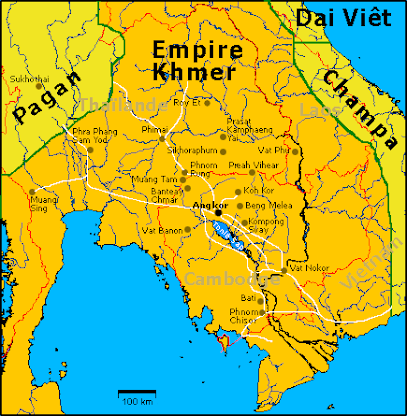
He moved his institute to Siem Reap in 2000, after establishing it in Phnom Penh in 1996, and he hopes to find a way to teach the old methods to younger generations. He now has five hectares of land north of the temples of Angkor, a region that was the heart of the Khmer empire from the 9th to 14th centuries.

His work earned him a Rolex Award for Enterprise in 2004 and an audience with King Norodom Sihamoni in 2007. The king praised the institute for providing employment opportunities to impoverished Cambodian women and maintaining the old tradition.

Louise Allison Cort, a ceramic curator at the Freer and Sackler galleries, said she admired Morimoto for working to preserve the environment as well as the methods.

“When I wear this piece, I know that it was made completely by hand,” she said. “Somebody grew the mulberry trees to raise the silkworm; someone sponged the silk from the silk cocoons; someone used the natural dye to make the colors; someone weaved on the loom; and all of these people enjoyed their work and felt that it contributed to the whole finished result. And when I wear this I feel like I am participating in that project as well.”

The products of the silk weavers' labours are already being sold at a shop above the Siem Reap workshops. They are also available at the Freer and Arthur galleries withing the Smithsonian Institution in Washington DC.
Read more!

Thursday, July 22, 2010

Journey to the East: U.S. derm leads volunteers in Cambodia

By: Lisette Hilton
Source: Dermatology Times


International report — Robert E. Kalb, M.D., made giving back a family adventure four years ago, when he, his wife and two college-aged children took their first medical mission trip with Health Volunteers Overseas to Phnom Penh, Cambodia.

The experience made such a positive impact on the Buffalo, N.Y., dermatologist and his clan that he has since become the organization’s dermatology director for Cambodia.

After searching volunteer options with the American Academy of Dermatology, Dr. Kalb says, the December 2006 two-week trip to Southeast Asia seemed the right fit.

“I wanted to go, and my kids wanted to go, so it worked out to go over the holiday break, in December and early January. That gave us time to visit Cambodia, because it’s not oppressively hot then, and it’s not monsoon season,” Dr. Kalb says.

“I contacted the Goldstone School of Hope (in Cambodia, www.gshw.org) … and my son corresponded with the principal for my family to volunteer as teachers there,” he says.

Dr. Kalb has since made the journey three times, and plans to return in January 2011. He is director of the Cambodia site for Health Volunteers Overseas Dermatology, which means he is in charge of soliciting dermatologist volunteers for trips.

Other dermatologists direct Health Volunteers Overseas programs in San Jose, Costa Rica; Bangalore, India; and Lima, Peru.

About the mission
The goal of the Cambodian medical mission is to help the local dermatologist (who is the only Cambodian native who has completed a full dermatology residency) to establish a dermatology department and residency program at the local medical school. Volunteers also work at the Preah Kossamak Hospital and/or the Sihanouk Hospital Center of Hope — the only hospital that provides free care in the country.

“You see patients with the local dermatologist and teach the physicians in training, and medical students,” Dr. Kalb says. “You assist in terms of seeing patients with diagnoses and treatment options, but, primarily, it’s an issue of education.”

The hope, according to Dr. Kalb, is that physicians in training and medical students there will take a year or a year and a half of dermatology training so they can return to their provinces and provide adequate dermatologic care.

Unlike many mission trips that require volunteering dermatologists to practice in makeshift hospitals, Heath Volunteers Overseas’ Cambodia opportunity is within the bustling city of Phnom Penh.

“It is a large city with amenities. You’re not in tents in the hinterland. You can stay in a four-star hotel, if you want,” Dr. Kalb says.

The work, however, is grueling. In addition to educating, Dr. Kalb might see 50 patients or more a day.

“You have people who drive 200 or 300 kilometers on the backs of motorcycles to go there. And the hospital can only take probably 10 percent to 15 percent of the people there on any given day, so the patients have to wait,” he says.

While most of the cases he consults on are severe manifestations of what dermatologists see in the United States — such as psoriasis or dermatitis with infections — Dr. Kalb also treats cases that rarely, if ever, present in his New York office, such as pellagra and Hansen’s disease.

Be prepared
Dr. Kalb recommends that dermatologists considering such a trip first talk with the dermatologist on site, as well as Dr. Kalb or other dermatologists who have been to that location in Cambodia. It’s also helpful to ask the local dermatologist what medications he might need at the time, and bring samples, he says.

Traveling with an organization such as Health Volunteers Overseas eases what can be challenging logistical issues. The established medical mission organization contacts the U.S. embassies and handles other paperwork, and offers insight from people at the destination and of those who have already made the trip.

Dermatologists pay their way, buying their flight tickets, hotel accommodations, etc. The trips, however, are considered charitable business deductions.

One of the most challenging aspects of volunteering, according to Dr. Kalb, is leaving one’s practice for what is often two weeks at a time. Dr. Kalb says it’s easier for him than it may be for others, because he has a physician’s assistant to see patients while he is away.

But doctors who are unable to schedule so much time away are still welcomed.

“We normally recommend that dermatologists go to Cambodia for two weeks, but if people can only come for a week, we’re not going to turn them down,” he says.

While U.S. dermatologists can do a lot to improve healthcare in developing countries such as Cambodia, Dr. Kalb says the doctors and their families who embark on these journeys tend to gain even more.

“We experience true poverty and see medical care in an entirely different light,” he says. “In the case with our family volunteering in the school, it was just such an unbelievably worthwhile experience for all of us, and that’s what keeps us coming back.”

Read more!

Cambodian Anxiety Peaks Ahead of Khmer Rouge Verdict


In Cambodia, the trial of a leading Khmer Rouge figure, blamed for the deaths of about 16,000 people, is heading for a conclusion.

The trial of Kang Guek Eav, also known as Duch, has gripped this nation for almost a year and a half. Millions of people are expected to watch on television as the verdict is announced, Monday, by a United Nations-backed court.

Duch ran the S21 torture and extermination center, where thousands of men, women and children were processed before being sent to dig their own graves in the killing fields on the outskirts of the capital.

Initially, Duch pleaded no contest. Throughout the tribunal he has provided an abundance of chilling evidence into the inner workings of Pol Pot and his ultra-Maoists.

They ruled Cambodia between 1975 and 1979 and are being held responsible for the deaths of perhaps two million people, who died of murder, starvation and illness.

But, in a final legal twist, Duch changed his plea to not guilty and asked the judges to release him. He has sacked the head of his international defense team, French Lawyer Francois Roux, and asked for a Chinese lawyer to replace him.

Theary Seng survived the killing fields as a child. She was rescued from the refugee camps and raised in the United States, where she became an author and lawyer. She is the founder of the Center for Justice and Reconciliation.

"There's a lot of confusion at the moment because recently we were told Duch fired his U.N. lawyer at the 11th hour, on the advent of the verdict, which is very perplexing," Seng says. "And, it has raised suspicions again of political interference. It has raised cynicism. It has confirmed the fears of many Cambodians in thinking that Duch is not believable, in the first place - that his confession, his asking for forgiveness - aren't genuine and hopeful the fears won't turn into paranoia."

The Cambodian government has directed all domestic television networks to broadcast the verdict.

At the court, about 300 journalists and hundreds more officials, diplomats, legal observers and Khmer Rouge victims have overwhelmed authorities in seeking seats for the announcement.

Regardless of Duch's last-minute legal maneuvers, Theary Seng, along with many others, believe his admissions to overseeing crimes of torture that included water boarding and medical operations on patients without an anesthetic and the eventual murders of thousands of people will lead to a conviction and life in prison.

His evidence would also prove compelling in cases to follow. Another four surviving Khmer Rouge leaders - Khieu Samphan, Nuon Chea, Ieng Sary and his wife, Ieng Thirith - are to on trial next year.

"It's a catalyst that has broken the silence of the last 30 years of this regime, which has truly taken the lives of one-fourth to one-third of the Cambodian population. Every Cambodian alive right now is directly affected by the crimes of the past," Seng said.

After the Khmer Rouge were ousted by invading Vietnamese troops in early 1979, civil war continued for another two decades. Only then was Cambodian Prime Minister Hun Sen in a position to ask the United Nations to help broker an international tribunal to focus on the atrocities allegedly carried out by Pol Pot and his henchmen.

Further delays followed, amid bickering with the United Nations about the final make-up of the tribunal and funding issues. However, the long awaited trial eventually got underway and is expected to remain a fixture on this country's legal and political landscape for a few years to come.
Read more!

New Zealander in Cambodia for Khmer Rouge verdict

By JERRY HARMER (AP)

PHNOM PENH, Cambodia — The brother of one of a handful of Westerners killed by the Khmer Rouge returned to Cambodia for a landmark verdict in a war crimes tribunal, saying there can never be adequate justice for his family.

It was not clear how Rob Hamill's brother, Kerry, fell into the hands of the brutal communist regime. The 28-year-old's yacht was captured in Cambodian waters in 1978 and he and shipmate Briton John Dewhirst were taken to S-21 prison, tortured and executed.

A third member of the crew, Canadian Stuart Glass, was apparently shot dead when the boat was seized.

When the news reached Hamill's hometown of Hamilton, New Zealand more than one year later, it tore apart what had been a close-knit family. One brother committed suicide months later; Rob Hamill became a teenage drunk. His parents never recovered.

"There'll never be justice for our family," said Hamill, 46, noting his mother died seven years ago and did not get to witness the trial or hear its verdict. "I can't quite reconcile how justice can ever be served with the nature and the way these people's lives were taken."

A U.N.-backed war crimes tribunal will issue its first verdict Monday against a senior member of the Khmer Rouge, the ultra-communist regime blamed for the deaths of 1.7 million Cambodians during their 1975-79 rule.

About a dozen Westerners were among the estimated 16,000 people held at S-21 before being killed.

As commander of S-21, Kaing Guek Eav, better known as Duch, faces a maximum sentence of life in prison if found guilty of war crimes and crimes against humanity.

Those who passed through the gates of his secret prison were deemed the worst enemies of the paranoid Pol Pot regime: spies, saboteurs, traitors — and foreigners. Many were tortured. Interrogators pulled out toenails, drained blood and electrocuted prisoners to extract confessions.

In 1979 after Vietnamese invaders overthrew the Khmer Rouge, Kerry Hamill's so-called confession of espionage was among the meticulous records discovered at S-21.

Last year Rob Hamill spoke at Duch's trial, the only Westerner to do so as a victim, and tried to convey his family's suffering.

He says confronting Duch in court has helped him deal with the grief that has haunted his life, but forgiveness for his brother's killer still eludes him.

"I wanted to forgive Duch so that it would allow me to move on — until I went to S-21 and I got to see what this guy created," he said. "Any compassion I had for him at that time went out the window.

"Since then, time has a funny way of warping things," he said. "I've got an internal battle going on and maybe this sentencing will somehow further that process."

On his first visit, Hamill says he was an emotional wreck. This time he said he feels more in control, more at peace and believes his brother Kerry would approve of the way the family is finally moving on.

"I think he'd be very proud of what we're trying to do as a family to represent him after 30 years of our own family suppressing it and not talking about what happened and the effect it had on us all as a family," he said.

"I think this is a very special time and I'd like to think he's looking down and saying 'Well, it's about bloody time.'"

Rob Hamill, a rower who represented New Zealand at the 1996 Atlanta Olympics, has requested a face-to-face meeting with Duch after the verdict to try to find out more about Kerry's fate. So far he's had no answer.

Read more!

Prison Deaths Across Cambodia Increasing: Rights Group

The number of people dying in Cambodia's prisons are increasing, according to a leading human rights group. Adhoc investigators say at least 26 prisoners have died across the country in the first six months of the year.

That number is an increase of 18 above the same period in 2009. The figures are according to a study conducted by Adhoc, which in part looked at prison documents.

The provincial prison in Kampong Cham accounted for the most deaths, which recorded at least six in the month of July, Adhoc reported.

According to a Kampong Cham prison report obtained by VOA Khmer, the prisoners died of Hepatitis B, hypertension and stroke, among other ailments. But Adhoc says the deaths can be blamed on overcrowding in cells.

“I do not believe prisoners died from disease,” Chan Soveth, an investigator for the group, said.

In Kampong Cham prison, up to 23 prisoners are kept in one room, creating conditions so crowded they are forced to sleep on their sides instead of their backs, he said.

Seak Leng Seap, deputy director of Kampong Cham prison, called the report untrue, but he declined to comment further. Officials at the Ministry of Interior's prison department could not be reached for comment.

Adhoc estimates the total number of prisoners in Cambodia at nearly 14,000, an increase of about 400 since last year.
Read more!

Wednesday, July 21, 2010

Christians Help Stem Cholera Outbreak in Cambodia

Two churches and a non-governmental organization working with the authorities have effectively stemmed a cholera outbreak in a district of Cambodia. The outbreak was part of a wider epidemic in the North-eastern Ratanakiri province that has resulted in at least 36 deaths since April.

Taveng district’s health center was overwhelmed with patients by early July. The health center expressed its need for help from volunteers to provide basic health education to prevent the spread of the disease. This was the evening of the first Sunday of the month.

As soon as churches in Ban Lung district and Ta Aung heard the plea, they mobilized their young people and trained them Monday morning. By the afternoon, volunteers were conducting a community education course with 300 people in attendance.

After the meeting, the team trained 14 health volunteers from Phaw and a neighboring village. Each volunteer received a set of materials to facilitate cholera education in outlying fields and hamlets.

In one instance, a woman living in a distant hamlet was about to die. However, local taboos prevented villagers from lending a motorized canoe to take her to the health center. The village head appealed to his Christian villagers and one of them lent his boat and the woman was saved.

Within three days, the team covered seven villages, all of them hotspots, in Taveng district. As a result of the cooperation between the Ban Lung Church, Christian development NGO ICC and district health authorities, the Taveng outbreak was brought under control.

According to official statistics, there were 96 cases and four deaths reported in Taveng during the one-week period of outbreak.

Cholera, a highly contagious disease, causes violent vomiting, diarrhea and possibly death from dehydration within four hours. More than 1,700 cases of cholera have been recorded in Ratanakiri province from April to early July.

The Cambodian province saw its last serious cholera outbreak in 1999 when 275 people died. At that time, Christians were involved in developing cholera education materials, such as pictures and catchy songs, suitable for use with illiterate tribal villagers. Multiple copies of the materials were made for health center staff and village health volunteers.

Pleased with the cooperation, the provincial health department invited the Ban Lung Church to address an official government cholera meeting held July 7.

During the meeting, the church distributed cholera education materials to staff of 29 health centers and health posts throughout the province.

The church even used creative arts in its efforts to promote health education within village communities. Young volunteers were trained to conduct educational skits and community theater. On invitation, they performed at the provincial hospital for relatives of cholera patients.

At the hospital, volunteers noticed that there were too many patients living in unsanitary conditions. Many people who came to care for their sick relatives ended up contracting the disease due to a lack of knowledge concerning hygiene. Meeting the need, the team set out to disinfect the wards with clorox.

After a successful debut in the hospital, the community drama troupe was invited to provide cholera education in the villages around Ta Aung commune, where outbreaks were still happening. The church also cooperated with officials from Kon Mum district to educate its villagers.

Villagers loved the slapstick performances in their own language. One lady, rolling over with laughter, exclaimed, “This is too real!” The performances showed how cholera is transmitted at funerals and through lack of personal hygiene.

The cooperation between Christians and the local authorities encouraged other Christian groups elsewhere. One group, inactive due to persecution, was emboldened after seeing the troupe working with authorities. Its members immediately resumed worship meetings.

Christians in the village of Sek were encouraged to see that they are part of a wider, caring community of faith. The close cooperation between Christians and authorities left a good impression on community leaders and parents of young Christians in that village.

As a result of the community service, non-Christians in the predominantly Buddhist country were drawn to learn more about Christianity. A staff from one of the health centers, who worked with the Christians, turned up for a worship service at Ban Lung Church. At that meeting, the church prayed for him and other public servants and organizations engaged in fighting cholera.

The team continues to cooperate with officials in Ta Aung and Toeum communes. It is currently visiting other hotspots in Taveng district.
Read more!

Cambodia delays stock market debut to next July

By SOPHENG CHEANG
Associated Press Writer

(AP:PHNOM PENH, Cambodia) Cambodia has delayed the opening of its proposed stock market for a second time, pushing the date back to July next year.

A statement Wednesday from the Finance Ministry said the delay was due to technical issues and the global economic crisis.

"The postponement of the stock market is to adapt to the evolving situation of the global economic and financial situation, which shows some positive signs of recovery but is still fragile," the statement said.

Last December, officials said Cambodia's stock market would open by the end of this year after initially targeting it to begin operating in 2009. After receiving the approval from Prime Minister Hun Sen, the Cambodia stock exchange is expected to kick off in July 2011, the statement said.

The Cambodian economy is small and reliant on textiles, which account for nearly 80 percent of exports, and hundreds of millions of dollars in international aid. Foreign investment has been deterred by the country's reputation for endemic corruption.

Neighboring Vietnam started its stock market in July 2000. Nearby Laos is also planning a stock exchange.

Hong Sok Hour, director general of the Cambodia Securities Exchange, said the delay was necessary because Cambodia needs everything to be in place before the opening.

"We want our bourse to be a good one when we open. That is why we need the infrastructure and human resources to be ready at the same time," Hong Sok Hour said.

In December, Cambodia awarded a contract to a South Korean firm, World City Co. Ltd., to build the $6 million, four-story, 71,900-sq. foot (6,682-sq. meter) stock market building in Phnom Penh's planned financial district on the outskirts of the capital.

Hun Sen announced plans in 2007 to launch a stock market, saying Cambodia needs to find new ways to attract international capital beyond international aid and bank loans.

Soon after, lawmakers approved a securities law on issuance and trading of nongovernment securities to pave the way for the market.

Read more!

Tuesday, July 20, 2010

Multinational peacekeeping operation kicks off in Cambodia


KAMPONG SPEU, Cambodia -- Servicemembers from 10 countries stood shoulder-to-shoulder on the parade field at the Training School for Multinational Peacekeeping Forces here July 17, marking the start of the Angkor Sentinel 2010 field training exercise, co-sponsored with the U.S. Pacific Command, U.S. Army Pacific and the Royal Cambodian Armed Forces in support of the U.N. Global Peacekeeping Operation Initiative.

During the ceremony, Deputy Commander, U.S. Pacific Command, Maj. Gen. Peter Pawling said, "the Global Peacekeeping Operation Initiative training approach reflects the process as it continues to involve both conceptually and operationally to meet new and ever changing environments."

Countries participating in Angkor Sentinel include the U.S., Cambodia, Thailand, Vietnam, Nepal, Philippines, Mongolia, Tonga, Indonesia and Bangladesh.

Chief of Operations for Angkor Sentinel, Col. Ker Savoeun, Royal Cambodian Armed Forces, said the opening ceremony will help bring the Cambodian soldiers together with their leadership and allow them both to see what the Global Peacekeeping Operation Initiative is all about.

Over the course of the 14-day Angkor Sentinel exercise, participants will complete lane training in checkpoint operations, patrolling, securing a distribution site, convoy operations, conducting a cordon and search, and securing a disarmament area.

Angkor Sentinel 2010 is the latest in a continuing series of global operation initiative exercises designed to promote peacekeeping capabilities in the Asia-Pacific region.
Read more!

Abuse, Rape Await Sex Workers in Detention: Human Rights Watch

The 76-page report, “Off the Streets: Arbitrary Detention and Other Abuses Against Sex Workers in Cambodia,” is based on interviews with women and transgendered prostitutes in Phnom Penh and the provinces of Battambang, Banteay Meanchey and Siem Reap.


Sex workers are facing unlawful arrests and abuse by police and other authorities in government detention, Human Rights Watch reported Tuesday.

Citing interviews with 90 different sex workers, the international organization said the women face rape, physical abuse and robbery at the hands of authorities—charges a government spokesman denied.

“The Cambodian government should order a prompt and thorough investigation into these systematic violations of sex workers' human rights and shut down the centers where these people have been abused,” Elaine Pearson, acting Asia director of Human Rights Watch, said.

The 76-page report, “Off the Streets: Arbitrary Detention and Other Abuses Against Sex Workers in Cambodia,” is based on interviews with women and transgendered prostitutes in Phnom Penh and the provinces of Battambang, Banteay Meanchey and Siem Reap.

Sex workers are regularly arrested in sweeps of streets and parks and other sites under a 2008 anti-trafficking law that ill-defines crimes and allows the abuses to occur, the group said. Human Rights Watch found that even members of the anti-trafficking unit were culpable in some abuses.

“Sex workers told Human Rights Watch that police officers beat them with their fists, sticks, wooden handles and electric shock batons,” the group said in a statement. “In several instances, police officers raped sex workers while they were in police detention. Every sex worker that Human Rights Watch spoke to had to pay bribes or had money stolen from them by police officers.”

The group also pointed to “abysmal” conditions in the government center called Prey Speu, where it says at least three people were beaten to death between 2006 and 2008 and where a few sex workers have been detained this year. The center is a collecting point for marginalized groups such as street children, homeless and sex workers.

“The Cambodian government should immediately and permanently close down detention centers such as Prey Speu, where people are being unlawfully detained, beaten up and abused,” Pearson said in a statement. “Prosecuting those who commit these crimes will send a strong message that abuses against sex workers are not tolerated.”

Khieu Sopheak, a spokesman for the Ministry of Interior, denied the reports' findings.

“The sex trade is an illegal business in Cambodia, but our authorities do not use violence to suppress the sex trade,” he said.

Detained sex workers are kept in “social affairs centers” run by the government, where they are trained for “proper professions,” he said.

“If Human Rights Watch directly raises the names of police who committed crimes against sex workers, we will be happy to receive it,” he said. “But we regard the Human Rights Watch report as an accusation against the police that is not factual nor constructive criticism.”

He called the report an act of “defamation” against the government.
Read more!

Tribunal Investigators Issue Closing Order for Second Trial

All five of the detained leaders—Nuon Chea, Khieu Samphan, Ieng Sary, Ieng Thirith and Duch—were under investigation for crimes including genocide.


Investigating judges for the Khmer Rouge tribunal have submitted their final order in the case of five detained regime leaders, signaling a close to the investigation.

Prosecutors now have 45 days to issue their own recommendations as the second trial for the UN-backed court moves forward.

“It basically means that now the investigating judges have finished all the investigation in Case No. 002,” tribunal spokesman Lars Olsen said Tuesday. “The prosecutors will make their recommendations to the judges as to whether or not to indict any or some of the charged persons.”

All five of the detained leaders—Nuon Chea, Khieu Samphan, Ieng Sary, Ieng Thirith and Duch—were under investigation for crimes including genocide. A trial is expected in March 2011.

Latt Ky, a tribunal monitor for the rights group Adhoc, called the closing a “positive step” toward the trial.
Read more!

Monday, July 19, 2010

Cambodia Needs Business Infrastructure: IMF Chief

The head of the International Monetary Fund has advised Cambodia to strengthen infrastructure that could buffer it from future economic turbulence.

“Cambodia is in a very critical situation,” Dominique Strauss-Kahn told reporters last week, following a two-day Asian economic summit in Daejoen, South Korea.

Strauss-Kahn had warned that many Asian countries need to strengthen their economic policies to protect them from future economic shocks, as economic officials met for the Asia 21 meeting. But Cambodia remains in a difficult situation, he said.

“To make progress, clearly the problem of infrastructure is the highest importance,” he said, “and it has to be stressed because trade and communication are strongly linked with infrastructure.”

Strauss-Kahn also advised increasing trade within Asian countries, so as not to rely on the West for consumers.

Cambodia is one of the smallest countries in Asia and is reliant on exports for economic growth. That made it vulnerable to the 2008 economic crisis, when orders from Western countries, especially the US, fell.

Analysts say Cambodia’s weak infrastructure limits its competitiveness. And the World Economic Forum 2010 report listed Cambodia as one of the worst countries in ease of trade.

“The government has been working on it, since infrastructure is the development priority of Cambodia,” said Sun Sanisith, secretary general of the National Bank of Cambodia, who attended the conference in Daejoen.

Meanwhile, Asian financial experts also warned of financial systems that will require more cooperation among Asian nations. Experts from South Korea, China and Japan all said the banking sectors of Asian countries can be better bolstered through increased capital reserves and better cooperation among local banks.
Read more!

After Illness, Hun Sen Issues Warning to Rivals

Prime Minister Hun Sen walks through honorary guards as his arrives for presiding over a U.S.-backed peacekeeping exercise dubbed "Angkor Sentinel 2010" at the Cambodian tank command headquarters in Kampong Speu province, on Saturday.


Prime Minister Hun Sen on Monday gave only his third public address since reportedly falling ill with swine flu last month.

Speaking in front of Svay Rieng University and appearing healthy, Hun Sen warned would-be detractors that he would tightly hold onto power, and he promised to be the leader of the country in both 2013 and 2018 general elections.

Hun Sen and five cabinet members were reported to have fallen ill with the the H1N1 virus last month, causing the cancelation of several high-level meetings, including with a delegation of German diplomats.

“The opposition party has been talking about my health since my absence,” Hun Sen said. “They say that I was kept in the house or that I fled Cambodia.”

Hun Sen said this could have inferred a coup d'etat and he warned that if such an event took place, Cambodia would erupt into open violence.

“Whoever dares to commit a coup d'etat, they should have a head of iron,” he said.

Yim Sovann, a spokesman for the opposition Sam Rainsy Party, declined to comment on Hun Sen's statements. “I want Cambodian people to judge his speech,” he said.
Read more!

Cambodia To Seek Protection From Chemical Imports

Activists say that Cambodia has become a major dumping ground of pesticides by major companies and smaller operators.


Cambodia is planning to apply to an international convention that could help reduce the number of illegal hazardous chemicals coming into the country, a senior official said last week.

The government is considering application to the UN’s Rotterdam Convention, which outlines responsibilities of states towards each other regarding chemicals.

“The ministry is considering convention membership because we want to prevent other countries from using Cambodia as a trash bin for their hazardous chemicals and pesticides,” Agriculture Minister Chan Sarun told a meeting of government and development officials on July 14.

The meeting was to discuss a draft law to bolster protections against pesticides and other dangerous chemicals.

The Rotterdam Convention requires proper labeling and and instructions from countries of origin for chemicals, as well as disclosures on restrictions or bans of the chemicals. Both Thailand and Vietnam are among the 134 parties to the convention.

Meanwhile, Cambodia struggles with dangerous chemicals, with only about a third of all chemicals in local markets registered with the Ministry of Agriculture. Of them, only 14 percent have instructions and other labels in Khmer.

“Joining the Rotterdam Convention is a necessity, because when there is the import of hazardous chemicals into our country, we will be informed in advance,” said Keam Makara Dy, a health program manager for the Cambodian Center for Study and Development in Agriculture
Read more!

First Epidemiological Study To Enroll Up To 1,000 Infants And Children In Cambodia Announced By Aeras And CHC

The Aeras Global TB Vaccine Foundation and the Cambodian Health Committee have announced the initiation of a study of tuberculosis prevalence in Svay Rieng Province, Cambodia, beginning this month. This is the first study conducted in partnership by the two non-profit research organizations and the first Aeras-sponsored study to be conducted in Cambodia.

"Enhancing the ability to diagnose TB in children is essential. The scientific knowledge to be gained from this trial will assist in global efforts while easing the suffering of children right now in Cambodia from this curable disease," says Anne Goldfeld, co-founder of CHC and professor of medicine at Harvard Medical School and Harvard School of Public Health.

One out of every three people worldwide is infected with TB. In 2007 more than nine million people became sick with active TB disease and nearly 2 million people died of the disease. Co-infection with HIV and the growth of difficult-to-treat drug-resistant forms of TB have worsened the epidemic and increased calls for new TB vaccines. Cambodia is ranked by the World Health Organization as among the 22 nations with the highest burden of tuberculosis. Nearly one million Cambodians are infected with TB and 12,000 die of TB annually.

Worldwide, infants and young children are at heightened risk for TB mortality because of inadequate prevention options, difficulties in timely diagnosis, and tendency to progress more quickly to severe and disseminated forms of TB disease. Due to resource constraints and technical difficulties in diagnosing childhood TB, the incidence of TB among infants is unknown in Cambodia.

This six month cross-sectional epidemiology study will enroll up to 1,000 infants and children under five years old. The primary objective of the study is to estimate the prevalence of tuberculosis among BCG-vaccinated children over the set period of the study in two operational districts of Svay Rieng Province.

With precise estimates of TB incidence in infants and children, strategic policies and programs for preventing, diagnosing and treating childhood TB can be developed in Cambodia and other resource poor environments. Towards this goal, this study will for the first time compare the efficacy of a state-of-the art liquid culture system donated by BD (Becton, Dickinson and Company) with traditional TB culture techniques.

"Accurate diagnosis of TB is critical to getting care to children now and to efforts to develop an effective TB vaccine. The currently available TB vaccine -- Bacille Calmette-Guérin -- provides some protection against severe forms of pediatric TB, but it does not prevent pulmonary TB, the most common form of the disease," said R. Gordon Douglas, Jr., MD, the Executive Chairman of Aeras Global TB Vaccine Foundation. "The world deserves new, more effective TB diagnostics and TB vaccines and Aeras is pleased to be collaborating with the Cambodian Health Committee in this effort."

Source:
Annmarie Leadman
Aeras Global TB Vaccine Foundation
Read more!

Sunday, July 18, 2010

U.S. returns 7 pieces of Khmer artifacts

PHNOM PENH, July 18 (Xinhua) -- The U.S. government on Sunday handed over seven pieces of the Khmer antiquities to the Cambodia national museum to further strengthen the relations between the two countries amid commemorating the 60th anniversary of diplomatic relation.

The U.S. Undersecretary William Burns said at the handover ceremony that "our efforts to return these artifacts exemplify the respect we have for Cambodian historical patrimony and culture."

The returned Khmer antiquities--which made of sandstone and metal bronze dated back in 10th and 12th century of the Angkor period--are temple decorative element, head of male divinity, horse, and torso of a male divinity.

Meanwhile, Cambodian Minister of Culture and Fine Arts, Him Chhem, said at the ceremony "returning these items is like returning the souls of Khmer ancestors to their bodies after dozens of years of separation and so, reviving the bodies."

The minister also said that up to now Cambodia has received 27 pieces of artifacts in total from the American people and the U.S. government.
Read more!

Angelina Jolie: 'I've eaten spiders'


By Marcell Minaya, Entertainment Reporter


Angelina Jolie has admitted that she has eaten spiders on her frequent trips to Cambodia.

The Salt star also confessed to being an "adrenaline junkie", and said that she is not afraid when it comes to action scenes in her films.

The 35-year-old told The Sun: "I do like spiders and bugs and all that, so I'm not squeamish. I've eaten some from my days in Cambodia, so I don't have a problem."

As for performing her own stunts in movies, she added: "I'm a little fearless to the point of stupidity sometimes. I've got the scars to prove it. But I've been so fortunate in my career that I've been able to do these type of [action] films that I will admit that I'm an adrenaline junkie.

"I do love to jump out of things and on to things, and so I don't really have a great deal of fear when it comes to those things."

Salt hits US cinemas on July 23 and in the UK on August 20.
Read more!

Saturday, July 17, 2010

Cambodia hosts large scale peacekeeping drill

KAMPONG SPEU, Cambodia -Cambodia opened its first ever large-scale international peacekeeping training exercise with a ceremony Saturday at a military base south of the capital

Over 700 military personnel from 23 countries will participate in two weeks of field training during the "Angkor Sentinel" exercise, focusing on developing nations' contributions to UN peacekeeping operations.

"From a country that used to receive blue hat soldiers to help keep peace, Cambodia has become a country that sends blue hat soldiers to help keep peace in other nations," Cambodian Prime Minister Hun Sen said, referring to UN troop uniforms.

Cambodia was the focus of a UN peacekeeping mission in the early 1990s to help end decades of civil war, but has recently deployed troops to work as UN peacekeepers in Chad, Sudan and the Central African Republic.

But the exercise, co-sponsored by the US Army, has been criticised by New York-based Human Rights Watch for using the grounds of the Cambodian military's ACO Tank Unit, which has been accused of being involved in illegal landgrabs.

"For the Pentagon and State Department to permit abusive Cambodian military units to host a high-profile regional peacekeeping exercise is outrageous," said Phil Robertson, Human Rights Watch deputy Asia director, in a statement.

"The US undermines its protests against the Cambodian government for rampant rights abuses like forced evictions when it showers international attention and funds on military units involved in grabbing land and other human rights violations," he added.

The "Angkor Sentinel" is part of the 2010 Global Peace Operations Initiative, a US effort to help train peacekeepers around the world.


--AFP
Read more!

Mobile banking service launches in Cambodia

ACLEDA Bank operates the largest bank branch network in Cambodia. The bank has just announced that it has launched mobile banking services for retail consumer. The service is called "Unity". It provides mobile subscribers with the ability to view account balances, obtain a mini-statement, transfer between their accounts, make payments to other people, make bill payments and top-up their mobile phones.

ACLEDA Bank Plcannounced today the release to the general public of its new ’Unity’mobile phone banking service. A virtual ‘bank in your pocket’ – itprovides a convenient and secure way to manage all daily banking transactionsany day, anytime, anywhere. It communicates in both the English and Khmerlanguages and handles transactions in Khmer Riels, US Dollars and Thai Baht,with other currencies to follow.

“Our aim is to offer access to financial services to thewhole community”, said Mr. In Channy, ACLEDA’s President and CEO. “Unity workswith all mobile phone networks and a very wide range of mobile handsets. It ‘unites’a whole selection of financial services under one umbrella that simplifies day-to-daybanking through mobile phones anywhere in the country. For those customers whohave global roaming it will even work throughout the world”, he stated.

Operatingon a 24/7 basis, with high-level multilayer security features, the bank claimsthat Unity gives customers the choice of using text message (SMS), Mobile Browser/WAP or a dedicated downloadableapplication interface, according to which best suits their needs. They can view their account balances,obtain a mini-statement, transfer between their accounts, make payments toother people, make bill payments (pay their utility bills and other accounts)and top-up their mobile phones. Other services will be added in the future ascustomers demand.

"As a fast-growing bank in a rapidly developing economy, we arelooking for a complete integrated mobile banking and payment solution. We wantto make sure that our mobile services are universally available to ourcustomers, are safe for them to use and deliver the dependability andreliability that ACLEDA is known for" said Mr. In Channy, President &CEO of ACLEDA Bank Plc. "We will be leapfrogging overtraditional delivery channels to provide our customers with the latest bankingtechnology.".

About ACLEDA Bank Plc.

ACLEDA Bank currently is the Cambodian leadingbank with the largest branches and offices network. It's over 17 years presencein domestic financial services. As at the end of June 2010, the value of theloan portfolio has reached US$615 million with 258,064 borrowing customers. Thetotal savings and deposits was US$793 million with 670,383 accounts. Its totalassets have exceeded US$1 billion and employed 7,105staffs.

TheBank offers a wide range of banking products and financial services tocorporate and retail customers through a variety of delivery channels. ACLEDAis a leading player in the retail banking market and services its largecustomer base through a network of 233 offices. With 100 ATMs serve 24/7 and 24 hours call center to ensure that customershave access to its services at all times.

Read more!

Friday, July 16, 2010

CP Cambodia aims for growth

Charoen Pokphand Cambodia plans to expand both feed and animal production. They anticipate greater economic growth in the country, due mainly to increased tourism and a burgeoning real estate boom.

By Apisit Buranakanonda, Bangkok, Thailand

Sakol Cheewakoset, senior vice president in charge of overseeing the agribusiness giant's Cambodia and Laos operations, said that despite the numerous obstacles facing investments in feed and animal production in Cambodia, now is the time to have a strong presence there.

Success in the Cambodian feed business requires technical support and follow-up, he added, because the cost of product failure is too high for the country's struggling producers to bear. Furthermore, re-establishing trust and credibility in such a case would be virtually impossible. In its decade of operations in the country, CP Cambodia has helped to modernise the local livestock industry. It has also established a positive image and reputation, differentiating CP Cambodia's feed from imports. The company's production accounts for 60% of the feed sold in Cambodia. Feed is distributed through more than 40 distributors in major animal production areas, namely Kandal, Kampong Spue, Kampong Cham, Siem Reap and Battambang.

Infrastructure improved
Although labour is cheaper, overall, Cambodia has up to 15% higher production costs due to more costly transportation and import taxes. Electricity alone is 20-30% more expensive than in Thailand. In recent years, infrastructure has been improving. Cultivation areas for corn and cassava are growing as well, which will one day lead to enough production for domestic use and limited exports. Local producers face fierce competition in the form of imports from Thailand and Vietnam.

Vietnamese products have been enjoying cost advantages over their Thai competitors because the Thai baht has risen faster against the US dollar than the Vietnamese dong. Also, Vietnamese feed is packed in 25 kg bags, making it seem cheaper at first glance than the standard 30 kg bags coming from Thailand. On the production front, the feed industry sees competition from the cassava processing industry in Cambodia and traders from Korea, Thailand and China, all of whom are vying for corn and cassava. This has driven prices up by more than 50% compared to early 2007, resulting in a big windfall for Cambodian farmers. It is estimated that some 60% of raw materials produced are destined for Thailand. Tight supplies of raw materials have driven feed prices up by more than 20% compared with 2007.

Additionally, bird flu in 2004 swept away many small hatcheries supplying broiler and day-old layer chicks. Furthermore, more stringent animal trade controls along the Cambodia border have deterred animal trade, enabling better control of this serious disease.

Today, the poultry breeding operation of CP Cambodia is doing well and will be expanded further to accommodate heavy demand. The company plans to raise its annual output of broiler chicks to 3 million birds per year, up from 2.2 million in 2007. In Cambodia, the company supplies only pullets.

Quality control in feed production

Raw materials such as corn, soybean, cassava, and fish meal are available locally. December is the busiest time for procuring raw materials and checking the quality of feedstuffs. Coarse grains are tested for adulterants, contaminants, appearance, physical quality, moisture content and more. Some 30% of raw materials are subject to primary testing before acceptance. Once accepted, the quality control team takes 100% samples of all intake materials. For protein sources, it is using dried freshwater fish from Tonle Sap lake, fishmeal from Kampong Som, and oil from the fish processing industry. It uses a urea phenol red solution to screen if soybean meal has been overcooked. Raw materials and cooked products are physically separated.

Producers can choose concentrate, mash or pellet feed. Pellets are slightly more expensive than mash, but the market is shifting more towards pelleted feed due to better growth performance. CP Cambodia's sales strategy is based on the premise that providing top breeds, proven technology and management, as well as good feed performance, will improve the competitive position of the producers who buy its products. With modern technology, genetics and top quality feed, a producer can reduce finishing time for their pigs by two weeks or more, Cheewakoset said.

Quality assurance and feed quality is on par with CP's feed in Thailand. Formulas are prepared on site under the direction of the parent company in Thailand. Its phase feeding programme consists of pre-starter, starter, grower and finisher feed. Retained samples are kept for one month to aid trace back. CP Feed is marketed under the Hi-Gro, CP, and Hog brands.
Read more!