Tonle Sap largest freshwater lake in Asia
By Michael McCarthy, Vancouver Courier
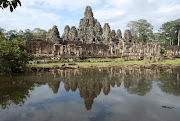
One of the great wonders of the world is the vast temple complex of Angkor Wat, spread through the jungles of northern Cambodia. Aside from the gigantic size of the complex --it was the largest city in the world in the Middle Ages before the jungle consumed it after its unexplained abandonment--one wonders why the Khmer empire was located here in the middle of nowhere, with no rivers or trading routes to support the city and its huge population. However, another great wonder of the world can be found a few miles away.
Tonle Sap is Cambodia's Great Lake and the most prominent feature on the map of Cambodia, a huge body of water stretching across the northwest section of the country. In the wet season, the Tonle Sap Lake becomes the largest freshwater lake in Asia, swelling to an expansive 12,000 square miles, and the largest freshwater floodplain in the world. More than three million people live on the floodplain around the Tonle Sap but what's interesting are the 170 floating villages found on the lake itself.
In the rainy season, a unique hydrologic phenomenon causes the Mekong River to reverse direction, filling the lake up instead of draining it. The inflow expands the surface area of lake more than five-fold, inundating the surrounding forested floodplain and supporting an extraordinarily rich and diverse eco-system. More than 100 varieties of waterbirds and over 200 species of fish, as well as crocodiles, turtles, macaques, otter and other wildlife inhabit the inundated mangrove forests. The Tonle Sap provides more than half of the fish consumed in Cambodia.
Sitting on the edge of the lake are these distinctive floating villages, many sitting on towering stilts, with their economy and way of life deeply intertwined with the lake, the fish, the wildlife and the cycles of rising and falling waters. Visiting them is not easy unless you happen to travel with your own motorboat, but not far from Angkor Wat you'll find the tiny port of Chong Khneas, where a fast ferry departs daily for the capital of Phnom Penh, a five-hour journey across the great waters. Here the Khmer and Vietnamese boat people live in their floating homes and a guided two-hour boat trip through the floating village costs $6 U.S. and is an experience worth the time and effort.
Drifting through these drowned villages on a boat is the weirdest thing. In the dry season the houses stand eerily atop stilts in a sea of mud. At the height of the rainy season, the tops of trees poke through the surface of the water in a drowned landscape. Depending on the time of the year and the depth of the lake--it can be as little as a foot deep at times--trucks and cars look like they are being driven on top of the water and villagers appear as if they are walking on the surface. Huge fish traps are placed everywhere. Some of the houses float, others are on stilts, and yet others are boats on which entire families live.
Being so close to a major tourist site like Angkor Wat, this floating village gets plenty of visitors, and the villagers have devised interesting tourist attractions like the crocodile farm, where you can get face to face with some nasty creatures who are, thankfully, kept in a pit. Just don't fall in. Then there are the snake girls, who live on barges and run up to visiting boats thrusting giant water snakes into people's faces. Certainly you can take a photo, but be prepared to pay a fee. There are even floating bars and restaurants, markets, a clinic and a school. Watching kids play basketball in the middle of a vast lake is something different. If you don't want to descend from your boat to explore, villagers will paddle out to meet you, offering excellent ice-cold Cambodian beer and snacks.
Other more remote floating villages can be visited at more time and expense, and bird watchers will go crazy floating through the giant mangrove swamps spotting the 100 different species of waterbirds. But make sure you don't fall out of the boat, because a floating clinic 200 miles away from the nearest hospital likely won't be able to patch up any crocodile attacks.
Read more!

Tuesday, October 13, 2009
Cambodia's floating villages

PM: Cambodia not allow any one to use Cambodia as shelter against other countries
Cambodian Prime Minister Hun Sen on Tuesday said that his country does not allow foreigners and international organizations to use Cambodia as a stronghold to create illegal political and international organizations to oppose neighboring countries.
Hun Sen made the remarks at the celebration of the 15th anniversary of the founding of the Brigade 70 on the outskirts of Phnom Penh.
"The government has followed a policy that does not allow any illegal political and military organizations which has the purposes of making turmoil in the country to use Cambodia as a stronghold to do activities to oppose the neighboring countries," Hun Sen said.
"We strongly opposed illegal political and military organizations to conduct subversion in the country and in neighboring countries," he added. "Our armed forces are playing a key role to fight against these activities," he noted. "Moreover, our armed forces also contribute to humanitarian mission and to fight against terrorism cooperated with international communities."
In 2003, Cambodia arrested Thai nationals including Muhammad Yalaluding and Abdul Azi Haji Chiming, both from Yala province and sentenced them to life in prison on charges of helping the regional terrorist group Jemaah Islamiyah (JI) plot a terrorist attack against western embassies in Cambodia.
Source:Xinhua
Read more!
Korean University honours former President Kufuor
Accra, Oct 13, GNA - South Korea's Inje University has conferred an Honorary Doctorate Degree (PhD) in Political Science on former President John Agyekum Kufuor and it goes with full scholarships for two Ghanaians to study any of the sciences in the university.
A statement signed by the former President's Press Secretary, Mr Frank Agyekum, quoted a release from the office of the Dean of Graduate School, Dr Sung Goo Kang, as saying Inje University was established in 1932, is ranked second by the Ministry of Education, Science and Technology of Korea and excels in the sciences.
Dr. Kyeonp Ho Lee, President of the University, in conferring the award, lauded former President Kufuor for devoting his productive life to the service of Ghana which culminated in his serving two four-year terms as President.
"His role in ensuring peace and stability in the West African region and the Africa continent as a whole, as Chairman of the Economic Community of West Africa States and the Africa Union deserves to be celebrated by all," the statement said.
In accepting the award, former President Kufuor said he was overwhelmed with his selection and dedicated it to leaders throughout the world who stood for the respect of human rights and the rule of law. The ceremony was attended by a large Asian academic community, business and interest groups as well as the Acting Ghana Ambassador in Korea and ambassadors from Sudan, Congo, Egypt, South Africa, Lebanon, Cambodia and Singapore. 13 Oct 09.
Read more!
Cambodia ready for its close-up
By Patrick Frater
BUSAN, South Korea -- Location managers now have an additional choice in Southeast Asia, following the recent establishment of a film commission in Cambodia.
The new Cambodia Film Commission made its market debut Monday at BIFCOM.
Established this year with finance from France's Agency for Overseas Development, the organization is headed by Cedric Eloy as CEO and Sovichea Cheap as director.
"This is real-low-cost Asia, but these days Cambodia has so much more to offer, too," Eloy said. "Regulation is done with a light touch. Our office acts as a filter for the ministry and can get shooting permits issued within a couple of weeks. Many of our locations could pass for other places in Asia."
He said that the country is also improving other technical facilities such as lighting and grip equipment, trained operators and disused factories that have been used as studios by the BBC for four months.
"Natural landscapes are already one of our great strengths, but the government is looking to expand on that with the creation of a 'natural reserve for cinema' complete with jungle, seaside locations and facilities," Eloy said.
International films that have previously shot in Cambodia include "Tomb Raider," Korea's "R-Point" and the recent "Same, Same but Different," by German director Detlev Buck, which premiered at the Locarno Film Festival and played at last month's Toronto festival.
Read more!
Monday, October 12, 2009
CAMBODIA TRIBUNAL MUST NOT USE TORTURE "CONFESSIONS" AS A LEGITIMATE SOURCE OF INFORMATION
What prisoners say or "confess" to under torture should never be admissible in any court proceedings, said Amnesty International, The International Commission of Jurists and the Redress Trust, after submitting a brief to the Pre-Trial Chamber of the Extraordinary Chambers in the Courts of Cambodia (ECCC).
The brief was submitted on 25 September 2009, as part of an application to intervene as "friends of the court" (amicus curiae) in the case of Ieng Thirith, where a dispute has arisen in respect of the potential admissibility of certain statements. In it, the organizations explain that the prohibition on the use of the content of statements obtained by torture by courts is absolute. It both reflects and supports the absolute prohibition on torture and is essential for preserving the integrity of the judicial process and the right to a fair trial. It is also impelled by the moral repugnance at the prospect of using the torturer's creation -- the "confession" -- to seek justice.
Admitting the content of a torture "confession" as evidence, bearing in mind that it was extracted out of a helpless detainee through the intentional infliction of pain and suffering, would irreparably taint any court proceedings.
Article 15 of the UN Convention against Torture, which binds the ECCC, excludes all statements obtained by torture from any court proceedings, with one exception only: torture statements may be used against the suspected torturers themselves, but then only "as evidence that the statement was made." In other words, such statements may be used as part of the proof that the act of torture took place, and not in any way for the truth of its contents or any other purpose. This limitation is clear from the language of the article, which uses the word "only" to prevent any misinterpretations. It is also clear from the history of its drafting in the UN, which the brief describes. During the drafting, proposals to allow the wider use of statements obtained by torture were considered but rejected.
The brief also explains that under international law, the use of statements obtained by torture to prove that they were made, is not limited to proceedings against the actual torturer, but also against commanders and political superiors accused of bearing responsibility for the torture.
The prohibition on the use of "confessions" does not extend automatically to all related material. For instance, other documents in the same file, including registration forms, need not be excluded automatically. However, the admissibility of any such material can nevertheless be challenged, on grounds that it did form part of the statement obtained by torture, that it was obtained by torture independently of the statement, or on other grounds set out in international and Cambodian law.
The organizations urge the ECCC to ensure that its proceedings adhere to international law and standards, which would contribute to the Court's credibility and ability to leave behind a positive and long-lasting legacy. A failure to do so would run counter to the international community's fundamental rejection of torture and refusal to provide it any legitimacy, and potentially undermine the integrity of the ECCC itself.
Regrettably, procedures in the Pre-Trial Chamber involving this brief have been rendered confidential.
The text of the brief is available here: http://www.amnesty.org/en/library/info/ASA23/020/2009/en
Read more!
Chinese Red Cross Society donates $30,000 to Cambodia for flood relief
Chinese Red Cross Society on Monday donated 30,000 U.S. dollars emergency humanitarian aid to its Cambodian counterpart in order to help the Cambodian side for the flood control and victims relief.
The donation was delivered by Zhang Jinfeng, Chinese ambassador to Cambodia, on behalf of the Red Cross Society of China, to the Cambodian Red Cross.
Typhoon Ketsana has caused severe flood in several provinces in Cambodia, the Red Cross Society of China decided to offer 30,000 U.S. dollars emergency humanitarian aid, Zhang Jinfeng said.
Pum Chantinie, secretary general of Cambodian Red Cross, expressed her thanks to China at the donation ceremony and spoke highly of China's consistent assistance to Cambodia. "Cambodia and China are two friendly neighborhood and our people always support and help each other, when we have difficulty, Chinese government and people always give us a hand," she said.
Ambassador Zhang Jinfeng said she hopes that the donation will play an active role in helping the reconstruction in those areas hit by Kesana.
Typhoon Ketsana hit Cambodia and killed at least 20 people in Kompong Thom, Preah Vihear, Siem Reap, Ratanakiri, and Mondulkiri provinces, and also destroyed hundreds of houses, roads, dam for agricultural irrigation, and thousands of hectares of rice fields.
Source: Xinhua
Read more!
Crooks more high-tech than cops
SINGAPORE: Transnational crime syndicates are becoming stronger by exploiting technology, said officials at an Interpol conference here.
The syndicates are forging links with one another and taking advantage of insufficient co-ordination among the world’s police forces.
Delegates warned that law enforcement agencies must urgently boost the sharing of intelligence to fight criminals, who are increasingly in cahoots with terrorist networks including al-Qaida.
“It is fair to say that criminals are ahead of governments in exploiting the most advanced tools of globalisation,” such as international travel, banking and trade, US Deputy Attorney General David Ogden said.
“Criminals are at the most advanced stage of globalisation,” Ogden told The Associated Press on the sidelines of the conference organised by the United Nations and Interpol. “There is no question that we are behind and the power of these international criminals has grown.”
By one estimate, organised crime today comprises up to 15% of the global gross domestic product, Ogden said.
The Lyon, France-based Interpol was created in 1923 and is the world’s largest international police organisation with 187 member countries.
But it appears Interpol is behind in the fight against crime, thanks to insufficient co-operation among countries.
Part of the problem is corruption of police departments in many countries. Because of their shaky reputations, other countries are reluctant to share information with them.
“In order to share information you have to have confidence that it won’t be misused,” Ogden said.
Also, various law enforcement agencies — even within the same country — suffer from rivalries, resulting in information not being disseminated.
Examples of transnational crimes abound. Ogden cited an emblematic case disclosed last year — a racketeering enterprise in Romania that had joined forces with criminals around the world, including street gangs in Los Angeles, to use the Internet to defraud thousands of people and hundreds of financial institutions.
Those charged in the case operated from locations in the Canada, Pakistan, Portugal, Romania and the United States, and were citizens or permanent residents of Cambodia, Mexico, Pakistan, Romania, the United States and Vietnam. — AP
Read more!
Cambodia proposes Thai border talks at regional summit
PHNOM PENH, CAMBODIA - Cambodia on Monday proposed neighbouring Thailand puts their border dispute on the agenda when it hosts this month's summit of Southeast Asian leaders, according to a diplomatic letter.
The summit of the 10-member Association of Southeast Asian Nations (ASEAN) and six dialogue partners - China, Japan, South Korea, India, Australia and New Zealand - takes place in the coastal resort of Hua Hin on October 23-25.
In a letter to his Thai counterpart Kasit Piromya, a copy of which was sent to AFP, Cambodian Foreign Minister Hor Namhong said the border dispute between the two countries should be included on the summit's agenda.
The move came after Kasit reportedly said last week he would seek approval at the meeting to establish a neutral organisation that would help settle the Thai-Cambodia dispute, which has sparked deadly skirmishes between troops.
"In this regard, I would like to propose that the dispute between Cambodia and Thailand in the area of the temple of Preah Vihear be included in the agenda of the ASEAN summit in Hua Hin," Hor Namhong said.
The focus of the border dispute has been an area of land around the 11th century Preah Vihear temple, where clashes have killed seven soldiers since nationalist tensions between the neighbours flared last year.
Cambodia and Thailand have been at loggerheads over the land around Preah Vihear for decades, but tensions spilled over into violence in July last year when the temple was granted UNESCO World Heritage status.
The World Court ruled in 1962 that it belonged to Cambodia.
Soldiers from Cambodia and Thailand continue to patrol the area, with the last gunbattle near the temple area in April leaving three people dead.
Cambodian premier Hun Sen last month said that he had ordered his troops to shoot anyone from neighbouring Thailand who crossed illegally on to land around Preah Vihear.
The border between the two countries has never been fully demarcated, in part because it is littered with landmines left over from decades of war in Cambodia. --AFP
Read more!
Sunday, October 11, 2009
Chirac demands action on fake medicines
By Andrew Jack in London
Jacques Chirac, France’s former president, is to spearhead a political campaign for an international treaty to criminalise fake medicines as concern grows over their threat to public health around the world.
Mr Chirac is set on Monday to unveil in Cotonou in Benin a declaration signed by African and Asian heads of state calling for a United Nations convention to fight fake medicines by imposing tough penalties, strengthening manufacturing and distribution controls and improving awareness.
The move marks a fresh step by regulators, governments and medical groups in taking more aggressive action as criminal groups exploit poor controls, high profits and limited enforcement to diversify from narcotics into the business of fake medicines.
It also marks one of the most high-profile initiatives so far by Mr Chirac’s foundation, established after the end of his term as French president, and dovetails with long-standing French concerns over counterfeits.
“Informal co-operation is not enough,” said Mr Chirac in a written interview with the Financial Times. “Fake medicines have become a real market that is poised to overtake that for narcotics. It is essential to mobilise all parts of society. An international convention ratified by the UN will provide a framework to attack criminal networks.”
While counterfeit drugs are a relatively small problem in the US and Europe – found mainly as “lifestyle medicines” purchased over the internet – some studies have suggested that most malaria drugs and other essential treatments for serious illnesses in parts of Africa and Asia are fake and killing patients.
A study released last week showed 60 per cent of drugs sold at private pharmacies near the border of Cambodia and Thailand were substandard or counterfeit.
Mr Chirac’s efforts are focused on sub-standard medicines that do not contain the claimed and approved ingredients, side-stepping the issue of generic drugs that meet approved quality standards but which may violate the patents of the companies that originally developed them.
Officials hope the Cotonou declaration, to be endorsed by senior African Union leaders and ministers from other countries, will trigger discussion at the World Health assembly next May, ahead of a conference at the end of next year in Geneva.
Some countries including Nigeria have long advocated an international convention, while others have preferred instead to focus on less formal co-operation.
There may also be political tensions in approving and enforcing a convention from countries including China and India, where many fake medicines are produced for domestic and international use.
Mr Chirac’s foundation has a planned budget of €1.5m ($2.2m, £1.4m) for next year. Donors include pharmaceuticals group Sanofi-Aventis and Alain Mérieux, the owner of biotech group.
Copyright The Financial Times Limited 2009. You may share using our article tools. Please don't cut articles from FT.com and redistribute by email or post to the web.
Read more!
'The Amazing Race' reveals which team loses travel documents
Sunday's new episode of "The Amazing Race" features a situation that almost always means doom for one of the competing teams: somebody loses their passport while in Cambodia. We've really only seen passports be a major issue once in the past, when Dallas & Toni ended up finishing fourth on the race after being unable to find their passport in Russia. Thankfully they eventually ended up getting out of the country, but the mistake ultimately cost them the race.
Who will it happen to this week? If you don't want to know any potential spoilers for this next episode, then now is the time to turn away.
According to the web preview on the show's official site, best friends Zev & Justin end up being the team guilty of breaking this cardinal rule. Is it a surprise? Not really, since we've already seen Justin lose a clue in the water during this season. However, it would be too soon to say that this mistake could end up with them going the way of Dallas & Toni. The show isn't shying away from revealing the identity of the team that's making this blunder; at the same time, though, usually the "Race" doesn't tease the eliminated team so blatantly in a preview.
Read more!
17 die as river ferry sinks in Cambodia
PHNOM PENH, Cambodia – An overloaded river ferry capsized on its way to a Buddhist ceremony in Cambodia, killing 17 passengers in a tributary of the Mekong River, an official said Sunday.
Kham Phoeun, governor of Kratie province, said the boat was crammed with 30 passengers when it capsized in midstream in northeastern Kratie province, said Police Maj. Leng Sarum.
He said 13 passengers were rescued after the accident, which happened while the boat was headed to a ceremony at a Buddhist temple Saturday night.
"There was no storm or heavy rain when the boat sank. The accident happened because it was overloaded with passengers," the officer said, speaking by telephone near the site of the incident.
He said the bodies of 17 dead, which included 14 women and two children under the age 5, were being given to relatives.
Late last month, Typhoon Ketsana swept into central Cambodia and toppled dozens of rickety homes, killing at least 18 people and injuring some 100 others.
Saturday's accident happened about 100 miles (160 kilometers) northeast of the capital Phnom Penh.
Read more!
U.S. Senator Lugar to Push for Free-Trade Agreement With Asean
By Simeon Bennett
Oct. 11 (Bloomberg) -- U.S. Senator Richard Lugar said he plans to introduce legislation aimed at negotiating a free-trade agreement with the Association of South East Asian Nations.
Trade restrictions with Myanmar, an Asean member, should not hinder the U.S. from pursuing a trade deal with the rest of the regional group, the Indiana Republican said in an Oct. 9 statement on his Web site.
The U.S. signed a trade and investment framework with Asean in August 2006, aimed at boosting economic ties with the region and possibly leading to a free-trade deal.
“China, India, Australia, New Zealand and South Korea have already finalized FTAs with Asean and are sharpening a competitive edge over the U.S. in Southeast Asia,” Lugar said. “The United States should proceed to develop a comprehensive strategy toward engaging ASEAN in serious FTA discussions.”
President Barack Obama may meet Asean leaders at an Asia Pacific Economic Cooperation forum in Singapore in November, Lugar said.
Asean includes Brunei, Cambodia, Indonesia, Laos, Malaysia, Myanmar, Philippines, Singapore, Thailand and Vietnam.
To contact the reporter on this story: Simeon Bennett in Singapore at sbennett9@bloomberg.net
Read more!
Monday, September 28, 2009
Capreol woman collecting money to help Cambodia's poor
A Greater Sudbury woman will hold a pair of events in early October to help raise funds for a school for children, including many orphans, in a small Cambodian village.
Tammy Durand will first hold a licenced dance entitled Crank it Up in Cape-Town in the Capreol Arena upstairs hall on Saturday, Oct. 3. Tickets are $10 in advance and $12 at the door.
"I have 150 (tickets) sold so far," said the Capreol native. "It's going to be good. It can hold a maximum 275 people."
Advance tickets can be purchased at the Northern Credit Union Capreol branch, Joan's Variety and Ace Hardware.
On Monday, Oct. 5, Durand plans to bicycle to Toronto via North Bay, taking Highway 11 and many back roads, to both collect money for and raise awareness about her campaign.
"I'm going to take four nights to do it," she said. "My rationale is the promotion of this. It's a 509-kilometre trip. Children would walk that in 40 days if there was a food bank at the other end. Awareness is a big thing, too. I've had 31 years of living in a bubble."
The proceeds from the fundraisers will go to Durand's "ABCs and Rice Campaign" in aid of the Supporting the Orphans and Indigent People of Cambodia for Development (SOID).
Durand met the man behind SOID, a former monk named Sok Vana, while visiting Cambodia as part of a tourist group in June. She was taking a much-needed vacation after 10 years of working in the transportation field.
SOID runs an orphanage, as well as a free school for the impoverished children of Veal, a small village near Siem Reap, a city located northwest of the capital of Phnom Penh.
"If you have seen Foster Parents Plan or World Vision commercials, that's exactly what it is -- except it means so much more when you are there," she said.
Families of students at the school are given a ration of rice each month, while students get a nourishing meal each morning, five days a week.
Read more!
Vietnam and Cambodia open three more border gates
Cambodia and Vietnam have agreed to open three more border gates in late this month and early next month to meet the increasing demand on transport of passengers and goods between the two sides.
The pairs of border gates are in Xa Mat of Vietnam’s Tay Ninh province and Trapeang Phlong of Cambodia’s Kompong Cham province, Tinh Bien of Vietnam’s An Giang province and Phnom Den of Cambodia’s Takeo province, and Ha Tien of Vietnam’s An Giang province and Lork Kam Pot of Cambodia’s Campot province.
With the three new border gates, the two countries will have five border gates for automobiles to enter and exit through under bilateral agreement on transport signed in 2005. (VNA)
Read more!
Area Crop Walk Schedule
Celebrating its 30th anniversary, the Allentown CROP Walk, sponsored by the Lehigh County Conference of Churches, will be held Oct. 11.Registration begins at 1 p.m. at St. Timothy's Evangelical Lutheran Church, 140 S. Ott St., Allentown, and the walk begins at 1:30 p.m. For information, call Tom Smith at 610-433-6421.Bethlehem will hold its 25th CROP Walk on Oct. 11. Registration for the 5K walk begins at 1 p.m. under the Hill-to-Hill Bridge, Main and Spring streets.About 25 percent of the money raised in Bethlehem benefits local food pantries, soup kitchens, and agencies that serve the poor. A shorter alternate route is available for those walking with babies or children or for those who have mobility issues. For those who cannot walk but want to support the effort, go to http://www.cropwalkonline.org/.
For information, call Matt Piszel,
610-216-3567.
The walks raise money to end hunger and poverty in our community and around the world. Allentown and Bethlehem join Easton and about 2,000 communities across the country to address the causes of hunger, aid refugees, and help the victims of natural disasters.
CROP Walks are an interfaith effort of Church World Service working in 80 countries worldwide. The agency is helping Somali refugees, working to alleviate hunger in Cambodia, and addressing shelter, water, and sanitation needs for earthquake victims in Indonesia.
Church World Service relies on volunteerism to keep its administrative costs very low. For more information, visit http://www.churchworldservice.org/ .Boyertown will hold its walk Sunday starting at the Boyertown Area Multi Service, 301 W. Spring St. Registration 12:30 p.m., walk 1 p.m. For information, call the Rev. David M. Lewis, 610-323-2353.
Other walks Oct. 11 include:
Birdsboro: Registration 12:30 p.m., walk 2 p.m., Daniel Boone Homestead, 500 Daniel Boone Road Contact: Angie Kutz, 610-689-0425.
Blairstown, N.J.: Walk: 1 p.m., Blair Academy. Contact: Kaye Evans, evansk@blair.edu
Doylestown: Doylestown UMC, 320 E. Swamp Road. Contact: Mr. and Mrs. James Brennan, 215-230-9808.
Easton: Registration, 1 p.m., walk, 1:30 p.m., St. John's Lutheran Church, 330 Ferry St. Contact: Julie DeMotte, 610-923-8473.
Fleetwood: Starting at Fleetwood High School, 803 N. Richmond St. Registration 12:30 p.m., walk 1 p.m. Contact, Cheryl Weiser, 610-683-8010.
Lehighton: Walk begins at 2 p.m. at Lehigh Canal Park, Bridge Street,
Weissport. Contact: Shirley Radler, 610-377-4278.
North Penn/Lansdale: Trinity Lutheran Church, 1000 W. Main St., Lansdale. Registration 1 p.m., walk 1:30 p.m. Contact: Tom Allebach, 215-855-5454.
Palmerton: Starting location: St. John's Lutheran Church, 2915 Fireline Road, Lower Towamensing Township. Registration 1 p.m., walk 1:30 p.m. Contact: Debbie George, 610-826-5667.
Pennridge: Starting locations: St. Andrew's Lutheran Church, Chestnut Street and Dill Avenue, Perkasie and The Golden Mile, Scout Cabin, Lenape Park, Sellersville. Registration for both are 12:30 p.m. and walks begin at 1 p.m. Contact: Rev. Dennis Hartman, 215-795-2923.
Quakertown: Starting location: Memorial Park at 600 Mill St. Registration noon, walk 1 p.m. Contact: Linda Cooper, 215-536-0395.
Royersford: Starting location: Royersford Baptist Church, 452 S. Lewis Road. Contact: Rev. Jim Roth, 610-489-0990.
CROP walks on Oct. 18 include:
Collegeville/Trappe: Registration, 12:30 p.m. and walk or run 1 p.m. at Trinity UCC, 532 E. Main Street, Collegeville. This walk offers two options: a two-mile walk or a 5K run, going in opposite directions. Contact: two-mile walk: Susan Bishop, 610-489-9626; 5K Run, Sunny Hallanan, 610-489-7564. Register with Sunny with a $15 minimum to receive a free t-shirt.
Indian Valley, Souderton: Registration 1:30 p.m., walk 2 p.m., Zion
Mennonite Church, 149 E. Cherry Lane, Souderton. Contact: Wayne Ledger, 610-316-4362.
Upper Perkiomen: Starting location: 400 Main St., Red Hill. Registration 12:30 p.m., walk 1 p.m. Contact: Linda Connell, 215-679-4112.
Other CROP walks:
Stroudsburg: Nov. 14, St. Matthew's Parish Center, 200 Brodhead Ave., East Stroudsburg. Contact, James Johnston, 570-242-8168.
Info: CROP Walk 888-297-2767 or http://www.cropwalk.org .
Read more!
Friday, September 18, 2009
Cambodia, Thailand sign MOU of exchange of traffic rights for border trade
Cambodia and Thailand on Thursday signed a Memorandum of Understanding (MOU) for exchange of traffic rights to boost the crossing border trade and transport facilitation between the two countries.
The MOU was signed at the end of the Second GMS Economic Corridors Forum in Phnom Penh under the support of the Asian Development Bank (ADB).
"It is a bilateral agreement and also it has implemented the GMS cooperation in speeding up the trade and transport facilitation," Cham Prasidh, senior minister and minister of commerce told reporters at a press conference after the Forum.
"Both agreed to allow access of 40 trucks per day to and from both countries. The access is not only to the border area but to the whole country," he said, adding that it will promote the bilateral trade of the two neighboring countries.
Currently, Cambodia exports goods worth about 30 million U.S. dollars each year through Poi Pet border gate into Thailand and Thailand exports goods worth about 400 million U.S. dollars through that border gate into Cambodia, according to Cham Prasidh.
"We already signed such MOU with Vietnam aiming at boosting bilateral trade," he noted.
At the same time, Virachai Virameteekul, minister attached to the Thai Prime Minister's office said at the Second GMS Economic Corridors Forum that this agreement will inspire for more agreements of this kind among other GMS (Great Mekong Subregion Cooperation) member countries. "Transport facilitation is important and so is trade facilitation," he said.
In this connection, trade and custom facilitation, including harmonization of rules and regulations must be accelerated, and the involving governmental officials from both sides will work together for this trade and transport facilitation, he noted.
Source: Xinhua
Read more!
Top Turkish Newspaper Openly Writes of Armenian Genocide
In a very rare news article published by one of the top newspapers in Turkey Today's Zaman the author openly speaks about the Armenian Genocide and how they were orchestrated.
In the beginning it was total silence and denial. Then in the recent two years we started seeing phrases like "so called Armenian Genocide," "Armenian claims of genocide," and so on. In any case the word genocide was always written in quotation marks. Yet today, one of Turkey's premier newspapers Today's Zaman published a rare story about how the Armenian Genocide was organized and orchestrated by the ruling elite of the Turkish government in 1915.
Orhan Kemal Cengiz, a human rights advocate writes that the "Massacres of Armenians were orchestrated and organized by the Committee of Union and Progress (CUP) -- which came to power through a military coup -- while the Ottoman Empire was falling apart. After these massacres and as a result of the lack of confrontation with our past, the CUP and its gangs changed their format and turned into the “deep state” in Turkey. These deep state elements continued their massacres and manipulations and drenched Turkey with blood during the Republican era. We have these deep state elements, but we also have many people fighting against them with or without knowing the history."
True the word genocide is not used in that paragraph. Instead Cengiz is using the phrase Massacres of Armenians. However, in the 5th paragraph he openly talks about the Armenan genocide in the following way. "I was in Toronto last year attending an extremely interesting course on genocide. For two weeks we went into all the details of different genocides that took place in various parts of the world. All lecturers gave exemplary presentations, and I felt I had really learned something. However, I also realized that there was a fundamental difference in the way in which the Armenian genocide is being handled. When we spoke about the Holocaust, we spoke of the Nazi regime; when we discussed the genocide in Cambodia, we talked about the Khmer regime; when it came to the Armenian genocide, though, we only heard the word "Turks."
While his sincerity is most appreciated he does have a point that when the world refers of the Jewish or Cambodia national tragedies we do refer to regimes. However, we speak of the Armenian Genocide Turks are indeed pointed. But why is this?
It is the 90 years of the denial of the truth and the fear to face its own history that has made things come to this place, where a Turk is pointed when speaking of the Armenian Genocide. Why is it taking Germany only 20 years to face the Jewish Holocaust, say thank you and compensate, but when it comes to the Armenian Genocide even the past 90 years are not enough?
It is believe that if Turkey had earlier recognized the genocide and condemned it the following generations would have blamed it to the ruling regime of the time not the nation. In fact, I have heard many stories that many Turkish families have risked their lives hiding the Armenian families, their neighbors from massacres and killings in and around 1915.
A historic moment is upon us. Today the president of Armenian, meeting with the leaders of various Armenian parties and discussing the pre-signing of the Turkey Armenia normalization protocols, despite much criticism, said that "we want to show that even the nation that has fallen a victim to a genocide can be the first to offer a hand of normalization of relationship." Arming themselves with sincerity, honesty and the sense of fairness and justice the Armenian, Turkish and Azerbaijani nations should look to a new South Caucasus, building a better future for their children and themselves.
Written by Armen Hareyan
Founder of HULIQ.com
Read more!
Thailand 'lying' over boy's death, says Cambodia
Cambodia yesterday accused Thailand of lying when it denied involvement in the death of a Cambodian teenager near the border of Thailand's northeastern Surin province.
The young Cambodian was reportedly shot and burned alive as he and other Cambodian loggers tried to escape from the Thai military into Cambodia's Oddar Meanchey province.
The Second Army Region Commander Lt. General Wiboonsak Neeparn said he had checked records of all agencies under his command and found no evidence of any shooting.
"There was no such incident in the area. I wonder why Cambodia made such a report?" the commander said.
The Thai Foreign Ministry has maintained the same stance, saying the brutal incident never happened.
Ministry spokesperson Wimon Kidchob said earlier Thai soldiers fired bullets into the air after finding eight Cambodians sneaking into Thailand to cut down trees.
The denial has angered authorities in Cambodia, both in Oddar Meanchey and in Phnom Penh.
Oddar Meanchey Governor Pich Sokhin called the Thai assertion a lie. "How could our people have been injured and killed if their soldiers shot into the air?" the governor was quoted by the Phnom Penh Post.
"Their interpretation is a lie to avoid responsibility and to hide their cruelty from the public. Our people are injured and dead. How can they say they are not responsible?"
The Cambodian Foreign Ministry has sent a diplomatic note to Bangkok asking for an explanation and is still awaiting an official reply.
Phnom Penh has urged Thailand to conduct an investigation into the case and find and punish those responsible.
Read more!
Thursday, September 17, 2009
Chinese VP meets Cambodian king
 Chinese Vice President Xi Jinping (front, R) meets with Cambodian King Norodom Sihamoni (front, L) in Beijing, capital of China, Sept. 16, 2009. (Xinhua/Yao Dawei)
Xi said China and Cambodia are good neighbors with long-term traditional friendship, and such a friendly neighborhood has been strengthened in recent years in an all-round way.
The two countries have expanded their friendly exchanges and mutually beneficial cooperation in political, economic, cultural and educational areas, Xi said.
"China-Cambodia relations are a good example of cooperation based on the Five Principles of Peaceful Co-existence," Xi said.
He praised the contribution of the Cambodian royal family to boosting the ties with China, expressing gratitude for the support on issues concerning China's sovereignty and core interests related to Taiwan and Tibet.
"China attaches importance to the relations with Cambodia, and will make joint efforts to push forward comprehensive and cooperative partnership in a long-term and healthy way," Xi said.
Sihamoni said Cambodia values the relationship with China and will continue to promote their cooperation. He reaffirmed Cambodia will adhere to the one-China policy.
Sihamoni was crowned King in 2004 from his father Norodom Sihanouk who had maintained close relations with China.
Cambodian opposition leader Mu Sochua speaks of government repression at home
 Social-welfare grad faces potential arrest following testimony to U.S. lawmakers, she says
By Cathy Cockrell, NewsCenter
Her campus appearance came just four days after she testified before the Tom Lantos Human Rights Commission, telling members of Congress that "democracy in Cambodia is experiencing an alarming free fall."
According to the human-rights advocate, that act of defiance has been ill received by the ruling regime back home, and daily radio attacks against her by a government spokesman have taken a serious turn. "This morning … he used the word 'traitor,'" she said, noting that treason carries a prison sentence of 20 years to life in Cambodian law. "I am going home facing jail," Ms. Mu said with emotion.
"I have no fear of jail," she later added, "but I fear something else which I can't tell you — not the bullets, but the acid attack. That is very common."
A Cal alum who earned her master's degree at the School of Social Welfare in 1981 and Berkeley's prestigious Haas International Award in 2006, Mu has spent a quarter century battling sex trafficking, domestic violence against women, government corruption, and illegal appropriation of land in her country. In 2005, in recognition of her efforts, she was one of 1,000 women from 153 countries nominated jointly for a Nobel Peace Prize.
Mu has served in the Cambodian government as adviser on women's affairs to the prime minister and as the nation's minister of women's and veterans' affairs. More recently, as a member of the Sam Rainsy opposition party, her relationship with government authorities has deteriorated. Mu has been stripped of the immunity normally accorded members of Parliament, and on Aug. 4 was found guilty by the courts in Phnom Penh of defaming Prime Minister Hun Sen, who has held power since the overthrow of the Khmer Rouge in 1979.
In her talk before a standing-room-only audience of several hundred, Mu said her life's work had been informed by values she learned at the School of Social Welfare. But "what I learned on the ground," she added, "is that social work alone" — as a means to ameliorate her people's social and economic problems — "will continue to make the people feel as if they are victims.
"We cannot afford to let our people believe they are victims," Mu said. "We have to go one step beyond that…. If we really want a change, it has to be a political issue." Language and culture present barriers to political change, she said: the term "accountability," for example, has no equivalent in Cambodian, while the word for "opposition" implies someone who is confrontational and destructive. Working against such obstacles, Mu, as leader of her party's women's movement, spearheaded a campaign to identify and encourage grassroots women to run for office in their villages.
According to the Asian Human Rights Commission, the Cambodian government is increasingly using the judicial system to silence opposition leaders, journalists, and human-rights organizations. Mu noted that Cambodia receives $1 billion a year in foreign aid, $53 million of it from the United States, despite its flaunting of legal and human rights. She called on members of the campus community to demand that U.S. aid to Cambodia be tied to compliance with human-rights standards and to demand that those Cambodians who speak out publicly against the government not be persecuted for doing so.
"Send a signal to Hillary Clinton," Mu said. "I don't want to go to jail. With your silence, I will go to jail."
More information: "Fighting Cambodia’s Goliath: Mu Sochua (MSW ’81)," from the School of Social Welfare ENews..