History was made today in Cambodia when the first pilot course for Com-Unity Women's Football Seminar opened in Phnom Penh, bringing the women's game to the football community of Cambodia.
The Opening Ceremony attended by Cambodia Football Federation President, Lt. Gen. Sao Sohka and the Secretary of State from the Ministry of Education, Youth and Sport, Dr. Phoeng Sakona, provided a strong start to the three-day course.
A positive tone was set right from the opening speech, with Lt. Gen Sao Sohka underlining the Cambodia Football Federation's dedication to promoting and developing women's football. He continued: "I look forward to the declaration at the end of the course to pledge our will to FIFA and our football community to develop women's football. We do not only want to help by giving moral support, but also the practical implementation of projects and activities."
FIFA representatives gave the audience a lively introduction to the world of women's football, before inviting Dr. Pheong Sakona to officially open the Cambodia Women's Football Com-Unity.
Dr. Pheong commented: "More women and girls are playing football in Cambodia and I support the idea that it is becoming more popular in this country." She continued: "Sport is very important to help reduce the social problems in Cambodia."
Also in attendance was the General Secretary of the National Olympic Council of Cambodia, Mr. Meas Sarin, in addition to a healthy turnout from NGOs based in Phnom Penh including UNICEF, Spirit of Soccer and the Indochina Starfish Foundation.
The FIFA delegation includes Michelle Cox (New Zealand), Mayrilian Cruz Blanco and David Borja (both FIFA), Windsor John (Malaysia, Development Officer Kuala Lumpur), Clare Kenny Tipton (Rep. of Ireland), Dato Yap Nyim Keong (Malaysia) and Belinda Wilson (Australia).
The next two days will be devoted to the Communications and Marketing of Women's Football. A friendly football match between the FIFA representatives and the Football Federation of Cambodia will take place at 1800hrs at the Olympic Stadium, Phnom Penh on Tuesday 24 March 2009.
Directly following the Cambodia Women's Com-Unity, a practical FIFA Coaching Course will take place from 26 to 30 March 2009 to train Cambodian women's football coaches.
Read more!

Wednesday, March 25, 2009
Cambodia welcomes the world of women's football

Thai troops accused of crossing Cambodia border
 PHNOM PENH, Cambodia (CNN) -- Nearly 100 Thai soldiers crossed into Cambodian territory Wednesday near a disputed border temple that was the site of clashes last year, Cambodian officials said.
The Thai army denied the claim.
Thai soldiers crossed into the area of the 11th century Preah Vihear temple about 1:40 p.m., said Phay Siphan, secretary of the Cambodian Council of Ministers.
The two sides did not fight and Cambodia has asked Thailand to pull back.
Thai Army Col. Sansern Kaewkumnerd said the troop movement was part of a normal rotation and that Thai soldiers had not gone anywhere they were not permitted to be.
For months last year, the two countries saber-rattled over the ancient temple. The nations differ on whether some territory around the temple forms part of Thailand or Cambodia.
Both countries posted troops in the area after the United Nations in July approved Cambodia's application to have the temple listed as a World Heritage Site -- a place the United Nations says has outstanding universal value.
The temple sits atop a cliff on Cambodian soil but has its most accessible entrance on the Thai side.
The International Court of Justice awarded the temple to Cambodia in 1962. Thailand claims, however, that the 4.6 sq. km (1.8 square mile) area around it was never fully demarcated.
Thailand says the dispute arose from the fact that the Cambodian government used a map drawn during the French occupation of Cambodia -- a map that places the temple and surrounding area in Cambodian territory.
The United Nations' decision re-ignited tensions, with some in Thailand fearing it will make it difficult for their country to lay claim to disputed land around the temple.
Last year's flare-up began July 15, when Cambodian guards briefly detained three Thais who crossed into the area. Once they were let go, the three refused to leave the territory.
Cambodia claimed Thailand sent troops to retrieve the trio and gradually built up their numbers. Thailand denied that, saying its troops are deployed in Thai territory.
Read more!
Scientists find new solutions for the arsenic-poisoning crisis in Asia
(PhysOrg.com) -- Every day, more than 140 million people in southern Asia drink groundwater contaminated with arsenic. Thousands of people in Bangladesh, Cambodia, India, Myanmar and Vietnam die of cancer each year from chronic exposure to arsenic, according to the World Health Organization. Some health experts call it the biggest mass poisoning in history.
Arsenic Removal System - www.equinox-products.comTop Whole House Arsenic Well Water Filter. Free Ship. On Sale 30% Off.
Activated Alumina DD6F200 - www.DeltaAdsorbents.comDesiccants, Silica Gel, Sorbead Mole Sieve 3A Ethanol, ORDER NOW!
More than 15 years ago, scientists pinpointed the source of the contamination in the Himalaya Mountains, where sediments containing naturally occurring arsenic were carried downstream to heavily populated river basins below.
But one mystery remained: Instead of remaining chemically trapped in the river sediments, arsenic was somehow working its way into the groundwater more than 100 feet below the surface. Solving that mystery could have significant implications for policymakers trying to reverse the mass poisoning, said Stanford University soil scientist Scott Fendorf.
"How does the arsenic go from being in the sediment loads, in solids, into the drinking water?" said Fendorf, a professor of environmental Earth system science and a senior fellow at Stanford's Woods Institute for the Environment.
To find out, he launched a field study in Asia in 2004 with two Stanford colleagues: Chris Francis, an assistant professor of geological and environmental sciences, and Karen Seto, now at Yale University. The initial study was funded with a two-year Woods Institute Environmental Venture Projects grant. Five years later, the research team appears to have solved the arsenic mystery and is working with policymakers and government officials to prevent the health crisis from escalating.
"The real thing is, how do we help the people who are there?" Fendorf said. "But first, we have to understand the coupling of hydrology—the way the water is flowing—with the chemistry and biology."
Finding a study site
Arsenic-laden rocks in the Himalayas feed into four major river systems: the Mekong, Ganges-Brahmaputra, Irrawaddy and Red. Epidemiologists first identified arsenic poisoning in the 1980s in the Ganges-Brahmaputra Delta in Bangladesh. The sudden occurrence of the disease was linked to the increased use of wells for drinking water.
Read more!
Tuesday, March 24, 2009
Cambodians seek justice
 Cambodians Kim San, left, Sun Dary and Sokyoom Kem listen to Dr. Leakhena Nou explain how they can provide testimony for the war crime tribunals. Nou, a Cal State Long Beach professor, founded the Applied Social Research Institute of Cambodia. (Diandra Jay/Staff Photographer)
A professor at Cal State Long Beach is trying to change that by giving Cambodians the opportunity to give testimony that could be used in the U.N.-backed Khmer Rouge tribunals being conducted in Cambodia.
Dr. Leakhena Nou, a medical sociologist at CSULB, is making it her mission to get the word out. And she's doing it one person and one community group at a time. One day it's at the United Cambodian Community. Another it's at McBride Park. A session in Orange County is planned. The more groups, the more testimonies, the better.
"It's a matter of human rights," Nou says of victims speaking out. "They have a right to be part of truth and reconciliation for their suffering and for their own healing."
And while justice may only seem symbolic and too-long delayed, Nou feels it is vital for healing and empowerment for the survivors and the generations that follow.
Nou typically starts by asking groups how many of them were victims of the Khmer Rouge, how many have bad dreams, how many would like justice.
The hands go up, the stories often gush forth.
An elderly Cambodian tells how she lost her entire family to atrocities. Another tells of her husband being pulled from a rice paddy and led to his execution. Another tells of losing 10 children. The stories emerge, each as heart-rending as the next.
For years these victims have mourned the dead but felt powerless to do anything about it. They still suffer from nightmares, depression and post-traumatic stress disorder.
Aaron Va works with the Asian and Pacific Islander Older Adults Task Force. Like Va, the people in his group are survivors. He says all have stories they want to tell but don't know where to go. And they still fear consequences of speaking out.
On Friday at 10 a.m. at McBride Park, genocide survivors will have a chance to fill out information forms and provide testimonials that will be forwarded to the victims' unit of the Extraordinary Chambers of the Courts of Cambodia, which is overseeing the trials.
If there is enough interest, more opportunities will be offered.
Last Wednesday, Nou and a pair of associates attended a Women's Health Forum at the UCC, and on Monday they met with the Asian and Pacific Islander group.
Each time, planned short presentations unfurled into long discussions followed by question-
and-answer sessions about the roles of victims in the tribunals.
All victims and relatives of victims of acts of genocide during the Khmer Rouge reign between April 17, 1975, and Jan. 6, 1979, have the right to file complaints that will be brought to the ECCC.
Through a program called the Cambodian Diaspora Victims' Participation Project, Nou's nonprofit group - Applied Social Research Institute of Cambodia - and the Asian Pacific American Institute are gathering victim statements that could become part of the official court proceedings.
Law students and translators will help victims fill out official information forms.
However, time is short as the courts recently announced they will only take complaints for a limited time.
Sean Butler, an attorney helping Nou and her group, said a program has been set up to make it easier for victims to fill out the forms.
"This may be the only opportunity you have (to participate in the trial)," Butler told the crowd.
The first tribunal in Cambodia is currently under way against Kaing Geuk Eav, also known as Duch, who allegedly oversaw the mass torture and execution in prison camps, including Cambodia's notorious Tuol Sleng, or S-21, camp.
A second trial is slated for alleged Khmer Rouge leaders Noun Chea, Khieu Samphan, Ieng Sary and Ieng Thirith. The court will stop taking complaints 10 days before the second trial, which has not been scheduled.
It is unknown if there will be any more trials or defendants in the perennially cash-
strapped courts.
Victims have two avenues to provide testimony. One is as a civil party, but that requires legal representation in Cambodia and could require travel to participate in the trials. The second avenue, which is free and the one Nou and Butler are assisting in, is for complainants who want to get their stories on the record without being required to testify.
Butler stressed that testimony is voluntary. However, he added that defense attorneys have the right to contact complainants.
And that's what worries some of the elders, who still fear retribution for having their names on the record.
One man worried he'd be targeted when he returned to Cambodia if he testified. Others were mistrustful of the proceedings.
Butler said the best defense for the victims was to testify in large numbers. Similar efforts are being organized in Lowell, Mass., Portland, Ore., Virginia, Chicago and elsewhere. However, Butler could not guarantee absolute safety from threats.
Joshua Bender, who is helping Nou, told the group that his family was victimized by the Nazi Holocaust.
"What helped me understand what happened to my family is the stories and the testimony of my grandparents," Bender said. "Because they had the courage to tell their stories, my community can keep its traditions. I hope through your courage your grandchildren can understand."
"We hope courage comes in large numbers and can help to heal the scars," Butler said.
People interested in testifying and groups with survivors who would like to become involved can contact ASRIC on-line at www.apa.nyu.edu under research and special projects or by calling Nou at 562-985-7439.
greg.mellen@presstelegram.com, 562-499-1291
Thailand, Cambodia to hold new talks on overlapping maritime areas in early April
BANGKOK, The Thailand and Cambodia Joint Border Commission (JBC) plans to hold a fresh round of negotiations on overlapping maritime areas between the two countries in early April, Thai Foreign Minister Kasit Piromya said on Tuesday.
The two neighboring countries in 2000 signed a memorandum of understanding in a bid to solve contested claims covering 20,600 square kilometers, which are potentially rich in natural gas and oil.
Following a number of talks in the past, however, no tangible outcome has been seen, the Thai News Agency reported.
Cambodian Prime Minister Hun Sen has urged the Thai government to accelerate the process to settle down the overlapping maritime areas' dispute between the two countries, Kasit said.
The joint meeting will take place on April 2-3 in Cambodia's Siem Reap, Panithan Watanayakorn, deputy secretary-general to the Thai Prime Minister said.
The meeting will also consider the land border demarcation since the Thai-Cambodian border has never been fully demarcated due partly to the border is littered with landmines left from decades of war in Cambodia.
The Thai government under former premier Samak Sundaravej approved a 1.4 billion baht (40 million U.S. dollars) worth of fund for a mine clearing operation along the border, but there has been no progress.
Read more!
Cambodia to send troops to 2 African nations
PHNOM PENH, Cambodia: Cambodia will contribute troops to U.N. peacekeeping forces in Chad and the Central African Republic, marking the poor Southeast Asian country's second military mission abroad in three years, the prime minister said Tuesday.
Prime Minister Hun Sen did not specify the number of Cambodian troops or when they would depart.
He said he decided "two weeks ago to send our forces to Chad and the Central African Republic" based on a request from U.N. Secretary General Ban Ki-moon. He made the comments while presiding over a university graduation ceremony in the capital, Phnom Penh.
The United Nations recently took over peacekeeping duties in the two African countries from the European Union.
Eastern Chad and northeastern Central African Republic have been seriously affected by fighting across the border in Sudan's Darfur region, where up to 300,000 people have been killed and 2.7 million have been driven from their homes since 2003.
Government spokesman Khieu Kanharith said the Cambodian contingent would consist of noncombat forces and would perform only humanitarian duties. He said it was too soon to say how many troops would go and when.
In April 2006, Cambodia sent 135 soldiers to help U.N. peacekeepers clear mines in war-torn Sudan.
That same year, Hun Sen rejected U.S. requests for the deployment of Cambodian troops in Iraq. He said he questioned the overall legitimacy of the war in Iraq and that it remained too dangerous for Cambodians to operate there.
Read more!
Monday, March 23, 2009
Cambodian PM rejects UK report of political unrest
PHNOM PENH, Cambodian Prime Minister Hun Sen here on Monday rejected a UK report that the kingdom is among the top 5 countries at high risk of political instability amid the global economic climate.
"We have political stability and live in peace now, but they still labeled us negatively," he told the opening ceremony of the annual work-review meeting of the Health Ministry, while mentioning the report issued by the Economist Intelligence Unit (EIU), a British think tank.
"We know that their assessment had other purposes inside," he said, adding that EIU was just afraid of assessing other neighboring countries in turmoil now.
Due to the current global financial crisis, the EIU report classified the risk of social upheaval and political unrest as high or very high in 95 countries, and ranked Cambodia the fourth in terms of such threat.
Read more!
Human Trafficking on the Rise in Cambodia
By Rory Byrne
Pnom Phen
Every year in Cambodia, hundreds of girls are trafficked and sold into brothels where they are forced to work as sex slaves. Although precise figures are unavailable, analysts say that the rate of trafficking is soaring. Many of the victims endure years of torture and abuse in brothels, resulting in lasting physical and psychological damage.
Despite recent efforts by the Cambodian authorities to curb the country's huge illicit sex industry, analysts say it is continuing to thrive. Although many brothels have closed their front doors, their back doors remains wide open. Other brothels are using hairdressers or beauty shops to front their illicit trade.
Although some sex workers do the job to escape poverty, many of those working in brothels are victims of human trafficking who are held against their will and forced to work as sex slaves.
Founded by a former sex slave, The Somaly Mam Foundation was set up in 1996 to rescue and rehabilitate victims of human trafficking.
Since then, the group has rescued more than 5,000 girls from brothels throughout Cambodia and is now caring for more than 250 former sex workers, more than half of whom were under 18 years of age.
Somaly Mam says that the trafficking problem is getting worse every year. She blames organized crime and corrupt officials for running the industry.
She says that criminal networks have set up a structured people-trafficking system. She says agents go from village to village, looking for girls whom they lure away with promises of marriage or a good job. She says that, because many of the victims are poorly educated, they fall for the trick and when they come to the city they get locked in a brothel.
Trafficking victims are enslaved, tortured
Trafficking victims in Cambodia typically endure years of torture and abuse.
Vann Sina was lured from her village with an invitation to a Christmas party when she was just 13 years old. When she arrived in Phnom Penh she was locked in an underground cellar.
She says she was beaten a lot and had to serve many clients. She says that if she refused she was tortured with electric shocks or forced to eat hot chilies. She says that if she did not receive 15 or more clients every day she was starved and beaten.
Life in a brothel is a living hell, says Somaly Mam, as she recalls her years of abuse:
She says that, if you have never lived in a brothel, you cannot understand how bad it is. She says she had to receive more than ten clients a day and that most of them were drunk, smelled bad and were very violent. She says that the terror she endured was so bad it is indescribable.
Years spent locked in a brothel takes a huge mental and physical toll on the victims.
As well as the scourge of AIDS and other sexually transmitted diseases, many are psychologically damaged by their experiences
Most of the girls who arrive at the Somaly Mam Foundation require years of therapy, says chief doctor Ma Ly.
She says that most of the girls who come to the center have severe mental problems. She says they get angry easily, they shout a lot and many of them just want to die. She says she tries to encourage them to love themselves again, but that can take years of therapy.
The Somaly Mam Center creates a loving environment where former victims can make new friends and attempt to recapture their lost childhoods.
Somaly Mam says the center tries to teach them to love themselves again, but that they must never forget what happened to them.
She says, just because you have lived in a terrible situation, it does not mean that you are a bad person. She says that she has survived by reshaping her past and turning it into something positive.
Mental treatment may take years
As well as treating victim's mental and physical injuries, the Somaly Mam Foundation provides further education and job training to help the girls find employment after they leave the center.
But the main aim is to teach the girls that their lives have meaning and that they can have a bright future.
A woman says that, when she was in the brothel, she never thought she could escape from that hell. She says she thought her pain was for a lifetime but that today she feels much better.
Analysts say there are more victims of human trafficking today than at the height of the trans-Atlantic slave trade.
Without a greater effort to stamp it out, thousands other girls in Cambodia and around the world will fall victim to this modern-yet-ancient form of slavery.
Read more!
Global downturn threatens Cambodian garment success
By Ek Madra
PHNOM PENH (Reuters) - Mon Moeun, one of thousands of Cambodians pulled out of poverty by a job in the garment trade since foreign investors arrived in the 1990s, may be back rearing pigs soon after a collapse in demand from Western countries.
Many garment factories in Cambodia are closing as shoppers in the United States, Europe and elsewhere cut back on clothing purchases due to the global financial crisis.
Garments are Cambodia's biggest export earner and its economy may shrink this year due to the drop in demand.
Moeun and his wife have suffered a double blow. They used to earn $80 a month each as garment workers, sending half of it back to support their 8-year-old son living with Moeun's parents in the southern province of Takeo.
Then, three months ago, their factories shut without notice.
"We see hard times ahead when we get back to the countryside, raising pigs and planting vegetables to make a living," said Moeun, 39, chatting with friends under a tree near a shuttered factory on the outskirts of the capital, Phnom Penh.
More than 1,000 workers were owed pay when South Korean-owned Da Joo (Cambodia) Ltd. closed. It has become an all too familiar story.
At its peak, Cambodia's garment sector boasted almost 300 factories employing 340,000 workers, many of them women from the countryside.
Foreign companies started to move into the impoverished Southeast Asian country after U.N.-sponsored elections in 1993, fuelling an economic revival after 30 years of civil war and the horrors of the Khmer Rouge "killing fields" in the 1970s.
The monitoring of work conditions by the International Labor Organization helped lure brands such as Adidas, Nike and Gap, keen to avoid bad publicity from sweatshops. Cambodia's membership of the World Trade Organization from 2004 provided another boost.
Factories sprang up where once there were green rice fields around the capital and garments became Cambodia's biggest export earner. They brought in $2.78 billion in 2008, but that may drop about 30 percent this year, said Kaing Monika, spokesman of the Garment Manufacturers Association in Cambodia
(GMAC).
Exports of garments to the U.S. market dropped nearly 40 percent in January compared with a year earlier. Some 70 percent of the clothes go to the United States, 25 percent to Europe and the rest mainly to South Korea and Japan.
So far about 20 out of 291 factories, owned mostly by Taiwanese, Chinese, South Koreans and Malaysians, have closed their doors, Monika said. Other factories, at best, were running at 70 percent of capacity now. Some had no orders at all.
Some 70,000 workers have been laid off since last year and another 100,000 jobs are under threat over the next two years, according to the country's leading Labor union, Chea Mony.
Another laid-off worker, 28-year-old Sar Bunthoeun, said his mother would suffer now he can no longer send back $40 a month. "I'll return to my old job as a barber. It's my fate," he said.
ECONOMIC SLUMP
The sector represents about 16 percent of Cambodia's GDP, so the factory closures will hurt, with a ripple effect in the countryside as the money sent home by garment workers dries up.
The International Monetary Fund says the economy could shrink 0.5 percent in 2009 and the garment trade slump is a big factor.
But Kang Chandararot, director of the Cambodian Institute of Development Study (CIDS), said even if the double-digit growth of recent years was out of reach, 4 or 5 percent may be possible thanks to a bountiful rice crop in 2008/09 and the record $950 million in aid pledged by international donors for 2009.
"Cambodia could use the aid of nearly $1 billon to invest in infrastructures to stimulate its economy," Chandararot said.
People surviving on less than $1 a day are deemed to be living in poverty. Garment workers earn on average $2.7 a day so the loss of these jobs will hurt.
"More people will be pushed into poverty," said Huot Chea of the World Bank in Cambodia.
Historical data is lacking in Cambodia, but the World Bank says 45 to 50 percent of the people lived in poverty in 1994. Prime Minister Hun Sen says that was cut to 30 percent by 2008 thanks to the garment sector, tourism and agriculture.
Analysts doubt the job losses will undermine the grip on power of Hun Sen, who has run the country for 23 years, but some are worried about social problems.
"The massive layoffs of workers could lead to social unrest, with more armed robberies or drug smuggling," Chandararot of the CIDS said.
And he foresaw land disputes as people returned to the countryside. "What is most likely is that they will fight over the land needed to make a living in the future," he said.
Hun Sen called on aid donors at a meeting on March 12 to join with the government to provide a social safety net to help workers who had been laid off. He also said the government would try to find new export markets in the Middle East and elsewhere.
Opposition leader Sam Rainsy has urged the government to make foreign-owned factories deposit funds with the Treasury so that workers can get what they are owed in the event of bankruptcy.
There have been reports of looting of machinery but, in some instances at least, it's more a question of workers and management trying to find ways to pay wages.
Chhen Mey, 30, was a supervisor at a factory of Malaysian-owned L.A (Cambodia) Garment Pte. Ltd, which closed in late 2008 with the loss of 2,180 jobs.
Reuters reporter saw L.A workers carrying sewing machines onto trucks, heading for auction. "If we don't sell the machines, we'll have no money to pay the unpaid workers," Mey said.
Albert Teoh is the director of a Malaysian-based company with three factories that used to export goods worth over $160 million a year under the 'Target' brand and employed 12,000 workers.
He is worried that in the next few months most of the subcontractors for the factories will have folded.
"There's no way to make profits. How to survive the crisis is our main priority, really," Teoh said.
Read more!
Sunday, March 22, 2009
US OUT OF IRAQ, THE PHILIPPINES AND EVERYWHERE!
This summary is not available. Please click here to view the post. Read more!
Fugitive likely to be disguised
 A man accused of kidnapping who escaped court custody by pretending to be another prisoner remains on the run and detectives believe he may have changed his appearance.
Ollies Siaea, 31, pretended he was someone else and signed the other man's bail bond, walking free from the Manukau District Court soon after being remanded in custody on Friday.
An hour earlier, Siaea had appeared in court charged with kidnapping a 24-year-old Cambodian national last Wednesday.
Police have since charged the prisoner Siaea impersonated for aiding him in his escape.
While investigating Siaea's whereabouts, police also charged another associate on an "unrelated matter".
Detective Senior Sergeant Pete Jones said police followed up on some unconfirmed sightings of Siaea during the weekend but their inquiries had not found him by last night.
He asked the public to bear in mind that Siaea might appear different from the photos police have released of him.
"It's highly probable that he will have changed his appearance.
We'd obviously ask that people try to picture him maybe having cut off his hair or [with] a shaved head, or shaved face."
Asked if Siaea posed a danger to the public, Mr Jones said there was no specific threat.
"At this stage our concerns primarily are for the safety of our initial victim - the victim of the kidnapping. But of course [with] somebody who's going to lengths to evade police, we always have to be concerned that there will be a potential danger to the wider community as well."
The kidnap victim is in police protection.
Mr Jones reiterated earlier warnings that anyone found helping Siaea could face charges.
"We're asking people to help us to locate him and obviously if they're going to go the other way and assist him to evade us, they have to be aware of the consequences."
Mr Jones asked anyone with information to call police, adding that any information would be treated with discretion.
"The sooner we get people who are prepared to go out and kidnap other people back in front of the courts, the better."
* Anyone with information on Siaea's whereabouts is asked to contact police on (09) 259 0600.
Read more!
Another marker for Cambodian border
AN GIANG — Construction of a border marker at the Vinh Xuong international border gate between Tan Chau District of Viet Nam’s southern An Giang Province and Cambodia’s Kandal Province began yesterday.
The 241st border marker will be one of two grand border structures among the total 46 running along the 100km frontier between Viet Nam’s An Giang Province and Cambodia’s Takeo and Kandal provinces.
The demarcation and construction of the border markers that the two countries have agreed upon will contribute significantly to the complete physical establishment of a borderline that marks the peaceful, friendly relations the two countries have shared.
The work, jointly carried out by border marker building team 4 of Cambodia and team 9 of Viet Nam, is expected to support the social and economic development of both countries, particularly in the three border provinces. — VNS
Read more!
Saturday, March 21, 2009
British thinktank warns of 'global pandemic of unrest'
London: A leading British thinktank Friday warned of the "grave threat" of social unrest in response to the global recession over the next two years.
The Economist Intelligence Unit (EIU), in a paper published Friday, rated the risk of upheaval that could "disrupt economies and topple governments" as "high or very high" in 95 countries.
Killing of Telugus in US linked to recession?
"Popular anger around the world is growing as a result of rising unemployment, pay cuts and freezes, bail-outs for banks, and falls in house prices and the value of savings and pension funds," said the EIU paper, entitled ‘Manning the Barricades.’
"As people lose confidence in the ability of governments to restore stability, protests look increasingly likely."
A spate of incidents in recent months had shown that the global economic downturn was having political repercussions.
"This is being seen as a harbinger of worse to come. There is growing concern about a possible global pandemic of unrest," said the paper.
Top of the list of high-risk countries were Zimbabwe, Chad, the Democratic Republic of Congo, Cambodia and Sudan.
However, three of the European Union's neighbours - Ukraine, Moldova and Bosnia-Herzegovina - were rated as being at "very high risk" of social upheaval.
The paper pointed out that two European governments - in Iceland and in Latvia - had already fallen as a result of crisis.
World Bank warns of worst recession since Great Depression
In Europe, Britain was "not immune" from the danger of serious social unrest and "more likely" to suffer from it than Germany and the Netherlands, but "less likely" than France and the US.
A lot depended on how US President Barack Obama responded to pressure to "defend American jobs and companies against foreign imports," said the paper.
"As the downturn worsens, far more intense and long-lasting events can be expected, such as armed rebellions, military coups, civil conflicts and perhaps even wars between states," it said.
Read more!
Friday, March 20, 2009
Cambodian PM meets with governor of Guangxi of China
PHNOM PENH, Cambodia Prime Minister Hun Sen here on Thursday met with Ma Biao, Governor of Guangxi Zhuang Autonomous Region of China, on beefing up the cooperation between the two sides.
Hun Sen welcomed the Cambodia-Guangxi cooperation and requested Guangxi to focus especially on agriculture, Ieng Sophalet, assistant to the premier, told reporters after the meeting.
In addition, Hun Sen asked Guangxi to consider building a motor-pump factory in Cambodia, said Ieng Sophalet.
The prime minister also expressed his support for opening direct flights from Guilin, Guangxi to Phnom Penh and Siem Reap, he added.
During the meeting, Ma highly praised Cambodia for its development, and reiterated his region's commitment to continuing its cooperation with Cambodia, said Ieng Sophalet.
Ma told the premier that his visit aimed to invite Hun Sen to attend the upcoming China-ASEAN Expo in Nanning, the provincial capital of Guangxi, and to strengthen the cooperation in the fields of trade, agriculture, culture, infrastructure, construction, imports and exports, as well as information technology.
The visit also aimed at opening direct flights from Guilin to Phnom Penh and Siem Reap, and bringing more investment from Guangxi to Cambodia, particularly in the field of industry, Ma said.
The governor also told Hun Sen that his province is willing to contribute to human resource development in Cambodia by providing scholarships for Cambodian students
Ma and his delegation arrived here on Wednesday for a three-day visit.
The governor also met with Cambodian Deputy Prime Minister and Minister of Foreign Affairs and International Cooperation Hor Namhong on Thursday, Cambodian Commerce Minister Cham Prasidh on Wednesday, and Cambodian Minister of Agriculture, Forests and Fisheries Chan Sarun on Thursday.
Cham Prasidh told Ma that he will lead a delegation to join the China-ASEAN Expo to be held in Nanning in October.
On Friday, Ma and Cham Prasidh will sign a memorandum of understanding on economic and commercial cooperation between Cambodia and Guangxi.
According to official figures, the bilateral trade volume between Cambodia and Guangxi reached 12.39 million U.S. dollars in 2008.
Read more!
Japan gives "urgent" funds to Cambodia Khmer trial
PHNOM PENH, CAMBODIA - Japan announced an "urgent" US$200,000 ($302,386) donation to the UN-backed Khmer Rouge tribunal Friday, allowing it to pay Cambodian staff after donations dried up following corruption claims.
A leading judge at the war crimes tribunal said earlier this month that the court did not have enough money to pay local staff after accusations of graft made donors wary.
"In response to the request from the royal government of Cambodia, the government of Japan has made an urgent decision to contribute US$200,000...to finance the Cambodian share of the trial budget," said a press statement by the Japanese embassy.
Under the complicated tribunal agreement, Cambodian and international staff have separate budgets funded by countries including Japan, France, Australia, Germany and the United States.
The court's first trial is under way, but the Cambodian side has been hit by claims of political interference and a scandal in which local staff were allegedly forced to pay kickbacks for their jobs.
Japan said it "places emphasis on progress of the Khmer Rouge tribunal, as it believes this process will promote peace, democracy, the rule of law and good governance in Cambodia."
The long-awaited first Khmer Rouge trial began last month when the regime's notorious prison chief, Kaing Guek Eav, better known by the alias Duch, went before the court.
He is one of five former Khmer Rouge leaders scheduled to be tried by the court.
Up to two million people died of starvation and overwork, or were executed by the Khmer Rouge, which dismantled modern Cambodian society in its effort to forge a radical agrarian utopia. --AFP
Read more!
Reproductive Health Group In Cambodia Reports Increase In HIV Testing Among Women
A report released on Monday by the Reproductive Health Association of Cambodia found that 40,587 women in the country underwent HIV tests in 2008 -- up from 38,660 who were tested in 2007 -- the Phnom Penh Post reports. Blood tests are offered at no-cost at state and referral hospitals across Cambodia, the Post reports. RHAC said the increase in testing was in part because of an increase in reproductive health awareness campaigns.
Mean Chivoan -- director of the National Centre for HIV and AIDS, Dermatology and STD -- said that the government has distributed information about HIV/AIDS tests since 2001, giving information to community groups and garment factories. He said that the government will continue to promote tests among women -- particularly pregnant women -- because it believes such efforts are "important." Cheat Khemara, senior labor official at the Garment Manufacturers Association of Cambodia, said the increase in testing among women is a reflection of a partnership between community groups and garment factories -- where about 300,000 Cambodian women are employed. He called on "all factories to help provide health facilities and services" at no-cost to employees and to "provide care to employees who have HIV/AIDS so that they have the mental strength to continue their work." Chea Mony, president of the Free Trade Union of Cambodia, reported that most garment factory workers are required to have a health check at the Labor Health Centre. He added, "Usually, women who work for factories do not understand the importance of having blood tests. They only go if they are helped or guided by NGO workers."
Chak Chenda, clinic manager at RHAC, said that the group is planning to publish a "guide book and leaflets on reproductive health to be distributed in communities and also organize a peer group education program" to bring trained volunteers to discuss reproductive health in communities (Leakhana, Phnom Penh Post, 3/18).
Reprinted with kind permission from http://www.kaisernetwork.org. You can view the entire Kaiser Daily Health Policy Report, search the archives, or sign up for email delivery at http://www.kaisernetwork.org/dailyreports/healthpolicy. The Kaiser Daily Health Policy Report is published for kaisernetwork.org, a free service of The Henry J. Kaiser Family Foundation.
Read more!
Rare Cambodian vultures recuperate from poisoning
PHNOM PENH, Cambodia: Veterinarians in Cambodia have saved the lives of two vultures from a nearly extinct species, but failed to rescue seven others who feasted on a poisoned water buffalo.
Pech Bunnat of the Wildlife Conservation Society said Friday that the white-rumped vultures were found in December in the northeastern province of Stung Treng.
They had apparently been stricken after eating the carcass of a water buffalo, which itself died after drinking from a poisoned pond. The pond was poisoned in order to catch the fish in it.
The white-rumped vulture — along with three other vulture species — has been listed since 2000 as "critically endangered" by the International Union for Conservation of Nature.
With a range stretching from Pakistan to Vietnam, the vulture was once considered one of the most abundant large birds of prey in the world. But the bird experienced precipitous population declines beginning in the 1990s largely due to the use of the anti-inflammatory cattle drug diclofenac, according to the New York-based Wildlife Conservation Society.
The drug proved effective in cattle but caused renal failure and mortality in any vulture that fed on the cow corpses that still retained the drug. Populations of white-rumped vultures dropped a staggering 95 percent and have yet to recover.
There are about 282 vultures in Cambodia, most of them in Stung Treng province and officially treated as protected, said Pech Bunnat, who is project manager of the Cambodia Vulture Conservation Project.
He said the Wildlife Conservation Society has built seven feeding stations in the jungle for vultures, which are supplied once or twice a month with slaughtered cows, so that the vulture population can be more closely monitored.
Read more!
Thursday, March 19, 2009
After fire, victim renews passion for Cambodia
 Kent Davis and his wife, Sophophan, lost everything when their home in Holmes Beach burned down last year. But they have built a new home and Davis has rediscovered his passion for Cambodia.
Correspondent
Published: Thursday, March 19, 2009 at 1:00 a.m.
Last Modified: Thursday, March 19, 2009 at 1:41 a.m.
HOLMES BEACH - Book publisher Kent Davis and his wife, Sophophan, escaped from their burning Holmes Beach house with only the clothes on their backs and a cell phone.
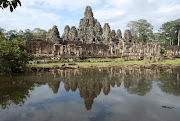
Lost in the blaze were many prized personal possessions, among them 20,000 photos of Angkor Wat, a giant Cambodian religious temple built in the 12th century and rediscovered by French archaeologists in the 19th century.
But Davis and his family are rebounding from the April 2008 fire, and now his passion for Cambodia, its culture and the Angkor Wat temple have found a new beginning as well.
Davis has had a love affair of sorts with Cambodia and its culture since marrying Sophophan, who is Thai, in the 1990s and touring Cambodia during a visit to see his wife's family.
As he and his wife have struggled to regain their footing, and build a new home, Davis experienced an unexpected rebirth of his relationship with Cambodia in the form of official state gifts given on behalf of the United States to the king of Cambodia.
It came about because Davis' publishing company, DATAsia, produces books about Southeast Asia.
So, when U.S. ambassador to Cambodia Carol Rodley was looking for a gift to present to King Norodom Sihamoni at her formal presentation of diplomatic credentials and gifts in January, she contacted Davis.
"I was looking for a gift that would symbolize the connections between the United States and Cambodia, and ideally for something related to Cambodian culture," Rodley said in an e-mail.
Davis offered Rodley three gifts: An English-language book published in 1924, and republished by him, that opened up Cambodian tourism to the world and a book and a documentary about Cambodian dance made in the early 1960s.
Davis worked in Thailand from 1990 to 1995. He wanted to learn the language and joked that he met Sophophan while looking for people to talk to. He had heard about Angkor Wat in Cambodia, but only as a cool place to visit.
Davis and his wife moved back to Florida, opened and then sold a Thai-themed resort, and in 2005 went to visit Sophophan's family in Thailand. They were looking to go somewhere they had never been before and decided to visit Angkor Wat.
It was a momentous decision.
"From the minute I walked into Angkor Wat, I saw something that just made me ask a question: 'Why is Angkor Wat, the largest religious structure in the world, filled with the images of women?'" Kent Davis said.
Not men, not children, not warriors. Women.
"I found that to be a question I need to answer in this life."
There are 1,780 women carved in the temple, and no two are alike, he said.
"Some of them are very elaborate and have royal crowns; some of them are simpler and have simpler hairstyles; they wear strange jewelries; they're all in specific poses; they're all in very specific locations."
"My theory is that these women represent a hierarchy and that they also embody this culture."
Sophophan Davis grew up in a village near Kalasin, a city in northeastern Thailand that is about 120 miles north of Angkor Wat.
In November, Davis and Sophophan returned to Cambodia, and he took about 7,000 pictures at Angkor Wat, beginning anew his photo collection of the sacred temple.
"I fell in love with the monument, too," Sophophan said.
Cambodia's Lake Placid
 Buddhist monks from Kampong Khleang village look out on the lake.
Special to the Star
Kampong Khleang, Cambodia–Fishermen repair their nets as their wives pound out Cambodian fish paste or prahoc with mortar and pestle beneath houses built on towering 10-metre stilts.
Kids scramble between the stilts in yet another round of hide-and-seek as chickens forage for food. Out on the lake, floating grocers greet their shoppers arriving in tiny boats, as hawkers in other boats prepare steaming bowls of noodles for hungry fishermen.
Farther out on the lake, the market is gearing up for business as masses of fresh fish are displayed in giant buckets. A few hundred metres away floats the barbershop, a health clinic, the school and a church.
Tiny houseboats bob around the floating neighbourhood, sheltered by a thatched roof over makeshift walls – just enough space for a family.
The floating villages are friendly places that receive few visitors, and those who do visit usually make just a brief passing by boat. There is no shortage of parking here, nor is there any road rage – or indeed, any road – only miles of lake, a virtual inland sea.
The Tonle Sap may, on the surface, appear to be just a nice big lake but this body of water sets the rhythm of Cambodia, if not its very heartbeat.
One of the most abundant sources of fish in Asia, the lake feeds a hungry nation. With its unique connections between lake and river, plant and animal, man and nature – life on the lake and on its shores has not changed much in centuries. Apart from scattered floating trading centres, families live in isolation as they have always done, moving their stilt houses further inland with changing water levels on the lake's shifting shores or, if they are completely water-borne, merely pulling up anchor and moving elsewhere.
Be it a lone fisherman checking his bamboo fish traps or an old woman boiling soup on her tiny canoe, lifestyles here have remained unchanged by the passage of time. Despite the playful kids, friendly waves and smiles of the people here, life has always been hard work.
Kampong Khleang, one of the largest villages on the lake is made up of mostly stilt houses – some as high as 10 metres, about eight metres of which are submerged during the rainy season. One of the few structures that remains dry all-year-round is the local Buddhist temple, with its rather terrifying mosaic of heaven and hell on its outer wall – belied by the friendly resident monks and novices who are happy to show visitors around. On the other side of the lake lies the Tonle Sap Biosphere Reserve and adjacent Prek Toal Bird Sanctuary, home to hundreds of species of birds. The best time of year for birdwatching here is during the dry season, December and January. The government maintains a research station at Prek Toal.
Connected to both the Tonle Sap and Mekong rivers, the lake has a unique flood cycle. During the monsoon season, starting in May, the Mekong floods and reverses its flow, increasing the size of the lake fourfold. At its highest point in November, the nation celebrates with the Water Festival — fiercely competitive boat races are held, feasts are given and after three days of revelry the king of Cambodia cuts a ribbon to symbolically invite the water to flow back to sea. When the water recedes, the locals trade in their boats for trucks and motorbikes and farm the land during the dry season. Once the water level drops, the nutrients left behind create fruitful shores of fertile soil teeming with wildlife – terrapins, ibis, cormorants, and kingfishers.
It has been said that the Age of Angkor would never have happened without the Tonle Sap. Traces of civilization along the lakeshore and riverbank date from more than 1,000 years ago, notably from India which brought irrigation, farming techniques, Hinduism and its architecture – out of which rose Angkor. The lack of stone quarries in what is now Siem Reap suggests the massive stones that make up the vast complex of Angkor were transported from far away. Henri Mouhat, who rediscovered Angkor Wat hidden in the jungle in 1859, may have described the Tonle Sap best: "Here is a world of water. It is a territory of immensity, of loneliness, of the silence from the beginning of time."
John Lander is a Tokyo-based freelance writer.
Cambodia Showing Signs of 'Oil Curse'
By Geoffrey Cain
Up to $1.7 billion a year in oil money is set to flow into impoverished Cambodia, where 35 percent of the population lives under $1 a day and where this year's national budget is only $1.8 billion. Yet in a country ranking a dismal 166 out of 180 on Transparency International's annual corruption rankings, allegations of nepotism and cronyism are already surfacing around the country's nascent oil sector, set to start production in 2012. Critics, like London-based watchdog Global Witness, claim the makings of a "resource curse" are in place, wherein a political elite will siphon profits that should be used to address poverty.
The International Monetary Fund initially estimated the newly found oil reserves, discovered in 2005, at 2 billion barrels, while energy giant Chevron forecast a more modest 400 million barrels. Amendments to a 1991 oil law subsequently placed the fields under the jurisdiction of the Cambodian National Petroleum Authority (CNPA), controlled directly by Prime Minister Hun Sen and his deputy, Sok An, with little parliamentary oversight. Global Witness claims the CNPA is rife with secrecy, its administrators regularly withholding documents and denying telephone usage to employees. That's in addition to millions of dollars, paid by companies to secure oil blocks, that aren't showing up in the government's revenue reports.
The developments follow a pattern that has emerged in other countries that have fallen prey to oil curses, such as Nigeria, Venezuela, and Iraq. Ou Virak, head of the Cambodian Center for Human Rights, argues that Cambodia has much in common with those three countries, in particular the fact that all government bodies and revenues are under the control of a few people. One Asian Development Bank consultant even labeled the CNPA a part of Sok An's "empire" (which also includes the corruption-rankled genocide tribunal).
The diversification into pillaging the oil and mining sectors comes after the country's ruling elites exhausted Cambodia's logging resources to fund their civil war in the 1990s. International donors largely remained silent at the time, said Eleanor Nichols of Global Witness. Now she says they must demand reform to keep Cambodian leaders from plundering oil and mining resources with impunity as well. The government allegedly said in October it would not endorse the Extractive Industries Transparency Initiative (EITI), a global coalition of businesses and governments that require disclosure of revenues, according to a Global Witness report. But Nichols said EITI is back on the table, with donors urging more transparency in Cambodia's oil find.
With foreign aid contributions totaling half of the government's $1.8 billion budget, donors can easily exert far-reaching influence upon Cambodia's ruling elite. But new donors with new agendas are courting Phnom Penh as well, and they don't attach the same conditions of democratic reform that Western governments do. In January, Sen finished his first-ever tour through Kuwait, which offered $546 million in soft loans for agriculture -- destined for Cambodia's vast rice fields -- as a means of securing its own food supplies.
China, facing staggering demand for minerals and timber to support its rapid growth, is also counteracting longstanding Western influence in the mineral-rich country. In exchange for access to resource supplies, China is powering the Cambodian countryside -- which faces some of the highest energy costs in the world -- by building $1 billion worth of hydroelectric dams. All of Beijing's soft loans come with no strings attached.
Whether Middle Eastern countries and China will hold Sen to international transparency standards remains to be seen, but transparency has so far not been high on their list of priorities. With Cambodia now hurtling headlong into an oil disaster, donor pressure will prove crucial to resisting the resource curse pattern plaguing developing countries.
Geoffrey Cain has covered Asia for the Economist, Far Eastern Economic Review, and .net Magazine. His personal Web site can be found here.
Read more!