By comment & analysis
Supalak Ganjanakhundee
Published on June 12, 2008
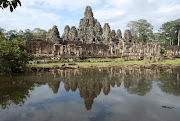
Democrat Party deputy leader Alongkorn Pollabutr appeared to have misled some people and may be sparking unnecessary rifts with Cambodia when he suggested the government should remain opposed to Phnom Penh's move to list the Hindu temple of Preah Vihear as a World Heritage site.
If entertained, such a suggestion could mean a revision of an agreement that Foreign Minister Noppadon Pattama and Cambodian Deputy Prime Minister Sok An sealed in Paris last month.
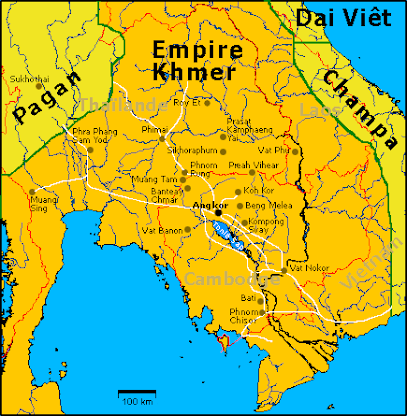
Thailand and Cambodia had locked horns since last year when Bangkok opposed a Cambodian proposal to list the temple as a Unesco (United Nations Educational Scientific and Cultural Organisation) World Heritage site as Phnom Penh had annexed 4.6 square kilometres of overlapping area claimed by both sides.
After rounds of negotiation since the previous government, Cambodia finally agreed to propose listing only the temple that is clearly under its sovereignty.
The Cambodian authority had sent a new map of its annexation to Thailand for consideration and Bangkok was expected to find it satisfactory.
The Cabinet will endorse the map soon to enable Cambodia to submit its proposal to be listed as a protected site when the Unesco heritage committee meets in Canada next month.
The opposition Democrats blamed the government for mishandling the case.
Allowing Cambodia to list the temple means giving up Thai sovereignty over the Preah Vihear, they said.
Sompong Sucharitkul, former Thai ambassador to The Hague who said he was close to the case when the conflict was in the International Court of Justice (ICJ), wrote in an article that Thailand had never conceded that the temple belonged to Cambodia despite the court's ruling in 1962.
It was right that the Thai government at the time announced its disagreement to the ICJ's ruling in favour of Cambodia.
But such an announcement contradicted the action since the Cabinet on July 10, 1962, agreed to hand the temple to Cambodia.
Thai authorities then withdrew troops from the temple and removed Thai nationals out of the area.
Sompong's statement that the current government should not change its position and recognise Cambodian sovereignty over Preah Vihear could be somewhat misleading since it had de facto already changed its position and recognised Cambodia's sovereignty 46 years ago.
De jury, the ICJ's ruling in 1962 was deemed the final decision and there was no appeal procedure.
Thailand has the right to ask for a revision only if it finds some new evidence, but such rights lasted only 10 years after the ruling.
The foreign minister at the time was Thanat Khoman and he was also a former Democrat leader.
He reserved the right to refile the case if there is a new international law relating to the case in favour of Thailand. More than four decades on, no such new law had emerged.
The rush to discredit the government by ignoring and tinkering with historical fact to shore up nationalistic sentiment is not healthy for Thailand since such sentiment may lead to negative terms with that country and escalate into what could be a needless conflict. Any misunderstanding with Cambodia should be avoided around this time since Cambodia is to hold a general election next month.
If some Cambodian parties decide to pick on the issue of Preah Vihear to whip up anti-Thai sentiment for their own gains, it could cause a lot of trouble and perhaps strain cordial relations.
Thailand has already learned a valuable lesson that just a false statement over Khmer temples could lead to its embassy being gutted in January 2003.
The fire went beyond the embassy grounds, igniting an anti-Thai rampage that destroyed Thai properties and interests in that country, some of which cannot be compensated by money alone.
Diplomatically speaking, cooperation with Cambodia is certainly more sensible than pushing for a response.
Read more!

Thursday, June 12, 2008
Call to oppose Cambodia may lead to unnecessary rift

Cambodia Intimidates Media, Opposition Before Vote, Groups Say
By Michael Heath
June 12 (Bloomberg) -- Cambodia's government, led by Prime Minister Hun Sen, is using the justice system to intimidate journalists and the opposition before next month's general elections, Amnesty International and Human Rights Watch said.
Dam Sith, a candidate of the Sam Rainsy Party and editor of the Khmer Conscience newspaper, was arrested for questioning the role of Hor Namhong, the foreign minister, during the rule of the Khmer Rouge movement, the groups said in a statement.
The arrest ``demonstrates how the criminal justice system is used and abused to silence government critics,'' said Brittis Edman, a researcher at London-based Amnesty. It ``sends a message of fear to journalists and other media workers in the lead-up to national elections.''
The ruling Cambodian People's Party will repeat its victory of 2003 when elections are held July 27 in the South Asian country of 14 million people, Hun Sen said earlier this week. Sam Rainsy spent a year in exile in France from February 2005, during which he was jailed for 18 months in absentia for defaming the prime minister.
Cambodia's economy expanded 9.6 percent in 2007, after growing by at least 10 percent during the previous three years, according to data compiled by the World Bank.
Hun Sen wants to develop oil and mineral resources to attract international investment and reduce Cambodia's dependence on clothing exports and tourism for growth. About a third of the population live on less than 50 cents a day and 90 percent live in rural areas.
Intimidation Pattern
Dam Sith's arrest is part of a pattern of intimidation against the opposition and independent media in the run-up to the election, Amnesty International and Human Rights Watch said.
On May 21, Hun Sen threatened the independent Beehive radio station after it broadcast programming from opposition parties, according to the groups. A week later, independent radio station Angkor Ratha had its license, issued less than six months earlier, revoked after it sold air time to opposition parties, the groups said.
Hun Sen said his party may win two-thirds of seats in the 123-member parliament, the Mekong Times reported yesterday.
The party will probably win at least 81 seats, up from 73, and receive 73 percent of the vote versus 64 percent in the 2003 election, the Phnom Penh-based English-language daily cited him as saying. The Sam Rainsy Party won 24 seats in the last ballot.
Hun Sen formed a coalition government in July 2004 with the royalist Funcinpec party, which won 26 seats in 2003.
Opposition Members
Dam Sith, who is running for election in Phnom Penh, was arrested as Hun Sen's CPP presses opposition members to join the party and punishes those who refuse, Amnesty International and Human Rights Watch said.
In March, police detained local Sam Rainsy Party leader Tuot Saron in Kampong Thom. Tuot Saron is still in detention and faces charges of illegal confinement after seeking to assist a former party colleague following her alleged defection to the CPP, according to the groups.
The court issued arrest warrants against three other local Sam Rainsy Party leaders, who are in hiding after avoiding arrest, the groups said.
Cambodia's attention has been focused on five former leaders of the Khmer Rouge who are facing trial this year at a United Nations-backed genocide tribunal for crimes allegedly committed during the regime's 1975-1979 rule.
The Khmer Rouge forced the population out of cities as it tried to establish an agrarian state, killing an estimated 1.7 million people through starvation, disease or execution.
The regime was ousted when Vietnamese forces invaded Cambodia, plunging the country into civil war. Most fighting stopped after the 1991 Paris Peace Accords that called for a cease-fire and democratic elections, which were held in 1993.
Penal Code
Two years after the elections, Cambodia passed a Press Law that provides some protection to journalists, Human Rights Watch and Amnesty said. It's rarely used. Instead, the so-called 1992 UNTAC Law, Cambodia's current penal code, is used in most legal cases against journalists or media representatives.
``There's little room for critical or opposition journalists in Cambodia, and those who express dissent risk harassment, intimidation and, at times, imprisonment,'' Sara Colm, senior researcher at New York-based Human Rights Watch, said in the statement.
Dam Sith has been charged with violating articles 62 and 63 of the UNTAC Law. His newspaper, Khmer Conscience, is one of the few in Cambodia that is not affiliated with the government or the CPP, which controls all television and most radio stations.
To contact the reporter on this story: Michael Heath in Sydney at mheath1@bloomberg.net.
Read more!
Taiwan's Chunghwa Telecom to enter Cambodia
TAIPEI, June 12 (Reuters) - Chunghwa Telecom (2412.TW: Quote, Profile, Research, Stock Buzz) (CHT.N: Quote, Profile, Research, Stock Buzz), Taiwan's largest telecommunications operator, said on Thursday it expected to launch telecom services in Cambodia, as part of a plan to expand overseas.
The company will collaborate with Vietnam's military-run operator Viettel, which it had set up a $30 million joint venture with in May, said a Chunghwa Telecom spokeswoman.
The firm declined to give a specific timeline for when the services would be launched or any investment figures.
Chunghwa Telecom had said it started investments in Vietnam and Thailand and planned to invest in every Southeast Asian country besides Myanmar.
Viettel, fully owned by the Vietnam military, has become a dominant telecoms operator in Vietnam, taking up about a third of the mobile phone market.
In 2006, it became Vietnam's first telecoms firm to invest abroad when it started Voice Over Internet Protocol (VOIP) services in Cambodia, and later expanded into mobile phone, fixed-line and Internet services.
Viettel competes with Vinaphone and MobiFone, both mobile phone providers owned by state-run Vietnam Posts and Telecommunications (VNPT).
On Thursday, shares of Chunghwa Telecom fell 2.48 percent, outperforming the benchmark TAIEX's 3.39 percent drop.
Chunghwa Telecom takes up about a 39 percent share of Taiwan's mobile telecoms market, and it competes with smaller local rivals Far EasTone Telecommunications Co Ltd (4904.TW: Quote, Profile, Research, Stock Buzz) and Taiwan Mobile Co (3045.TW: Quote, Profile, Research, Stock Buzz). ($1=T$30.5) (Reporting by Sheena Lee; Editing by Ben Tan)
Read more!
Wednesday, June 11, 2008
Cambodian PM: CPP boasts strong basis to win election
The major ruling Cambodian People's Party (CPP) boasts strong basis to win the next general election in July, said Prime Minister Hun Sen in an exclusive interview with English-Khmer language newspaper the Mekong Times Wednesday.
"CPP began building its support base in 1993 with the winning of 51 seats at the National Assembly (NA), then 64 seats in 1998 and 73 (out of 123) seats in 2003. This basis is the foundation of (CPP's) support when it faces difficulties," he said.
Meanwhile, in the current third mandate government, (Cambodia) achieved double-digit economic growth, poverty has been reduced, and people's living conditions and the physical infrastructure has improved, he said.
These (achievements) will attract people in the upcoming election, said Hun Sen, also vice president of CPP.
The July 27 parliamentary election is to establish the fourth government of the kingdom. Altogether 11 parties have been approved to vie for the 123 seats in NA.
Source:Xinhua
Read more!
Cambodia: Release Jailed Editor
Journalists and Opposition Members Under Attack as Elections Near
(London, June 11, 2008) – The Cambodian government should release a jailed opposition newspaper editor and candidate, and end its intimidation of journalists and opposition party candidates in the lead-up to National Assembly elections in July, Amnesty International and Human Rights Watch said today.
On June 8, military police arrested newspaper editor Dam Sith, 39, who is also running as a candidate for the opposition Sam Rainsy Party (SRP), after his newspaper published allegations about the current foreign minister.
“Dam Sith’s arrest demonstrates how the criminal justice system is used and abused to silence government critics,” said Brittis Edman, researcher for Amnesty International. “His arrest sends a message of fear to journalists and other media workers in the lead-up to national elections next month.”
Dam Sith’s newspaper, Moneaksekar Khmer (Khmer Conscience), quoted allegations by opposition leader Sam Rainsy over the role of the current minister of foreign affairs, Hor Namhong, during the period of Khmer Rouge rule from 1975-1979. Hor Namhong filed a criminal complaint against Dam Sith for disinformation, defamation and libel under Cambodia’s 1992 penal code. Human Rights Watch and Amnesty International believe that public officials who consider themselves defamed should not seek redress through the criminal law in order to protect their reputation.
Moneaksekar Khmer is one of the few newspapers in Cambodia that is not affiliated with the government or the ruling Cambodian People’s Party (CPP) of Prime Minister Hun Sen, which also controls all television and most radio stations.
Human Rights Watch and Amnesty International said that the arrest of Dam Sith is part of a pattern of intimidation by the government against opposition and independent media in the run-up to the July elections. On May 21, Hun Sen threatened the independent Beehive radio station for running programming from opposition parties, stating: “You have one channel; we have 39 channels. If you curse me, you will receive bad merit. Those who [previously] cursed me already disappeared from the world.”
On May 28, the government shut down independent radio station Angkor Ratha (FM 105.25) in Kratie province. The station, whose headquarters is in Siem Reap province, was granted a license to broadcast in January 2008. The Ministry of Information abruptly cancelled the license for the station’s Kratie broadcasts after it sold air time to opposition parties.
“There’s little room for critical or opposition journalists in Cambodia, and those who express dissent risk harassment, intimidation and, at times, imprisonment,” said Sara Colm, senior researcher at Human Rights Watch.
Amnesty International and Human Rights Watch called on the Cambodian authorities to respect and protect the right to freedom of expression, allowing journalists to report news and express opinions about politics without retribution.
Dam Sith, who is running as an opposition candidate in the capital Phnom Penh, was arrested in the midst of an intense campaign by the ruling CPP to induce opposition members to join the CPP and punish those who refuse. In March 2008, police arrested and detained local opposition SRP leader Tuot Saron in Kampong Thom. Tuot Saron is still detained and faces charges of illegal confinement after seeking to assist a distressed former party colleague following her alleged defection to the CPP under controversial circumstances. The court issued arrest warrants against three other local SRP leaders, who avoided arrest and remain in hiding.
“Arrests and other politically motivated legal actions are being used to intimidate, coerce and silence opposition members and journalists,” said Colm. “With elections pending, it’s crucial that Cambodians are able to receive information from a variety of news sources, and that opposition candidates are able to campaign without fear of reprisals.”
The right to freedom of expression is guaranteed in the Cambodian Constitution and enshrined in international human rights law. As a party to the International Covenant on Civil and Political Rights (ICCPR), Cambodia is obliged to promote and protect these rights and ensure that people can fully enjoy them.
The 1995 Press Law provides for some protection of journalists, but is rarely used. Instead, the so-called 1992 UNTAC Law, Cambodia’s current penal code, is used in most legal cases against journalists or media representatives. These cases often violate the right to freedom of expression.
Dam Sith has been charged with violating articles 62 and 63 of the UNTAC Law. Article 62 criminalizes the publication, distribution or reproduction of false information that “has disturbed or is likely to disturb the public peace.” Amnesty International and Human Rights Watch consider the provision to be too vague and sweeping, enabling the government to intimidate and prosecute those who are exercising their right to freedom of expression.
Article 63 provides that allegations against public figures “which the author, the journalist, editor, or producer knows to be false” may constitute defamation. The article does not carry a custodial sentence. This article also restricts the right to freedom of expression in violation of international law and standards.
“It is time for Cambodia to repeal provisions in its laws that allow individuals, including journalists, to be criminally prosecuted for peaceful speech,” said Edman. .
Read more!
Tackling Cambodia's landmine legacy
 By Philippa Fogarty
Figures in body armour and visors head downhill to shelter from the sun under some trees.
A whistle sounds and then a siren. A few minutes later a loud crack echoes around the countryside. Grey smoke floats into the air.
The first landmine of the morning has been destroyed.
It was a Chinese-made type 72A - a small, green object that blows off the leg that treads on it or the arm that picks it up.
The team head back up the hill. There are many more mines to go.
This is a scene that is repeated day after day across Cambodia, one of the most heavily mined countries in the world.
Between four and six million landmines are thought to have been laid during the country's three decades of civil war.
Khmer Rouge fighters, Vietnamese troops and government forces all planted devices, but did not record where or how many. Huge areas of land were contaminated, particularly in western border regions where the fighting was fiercest.
Across the country, victims of landmine blasts are a strikingly visible presence. More than 40,000 people are thought to have lost limbs.
Work to remove the mines has been going on ever since the conflict ended, and a great deal of progress has been made. But there is a lot still to do.
"Cambodia still has a significant landmine problem," says Rupert Leighton, Cambodia country director of the Mines Advisory Group. "They are not starting to dry up yet."
Casualties have fallen significantly in recent years, from more than 2,000 annually in the early 1990s to less than a quarter of that in 2006.
This is because the movement of displaced people has subsided, people know more about landmines and more clearance has been carried out. There are also fewer people facing acute hunger, meaning fewer people foraging in the forests.
The key issue now, says Mr Leighton, is the fact that so much land still cannot be used - at a time when competition for it has become fierce.
Ten families
Boeung Prolite lies 6 km ( 4 miles) from the Thai border, not far from the former Khmer Rouge stronghold of Pailin.
For more than two decades a guerrilla conflict raged in this area - and both sides laid mines extensively.
People began settling in Boeung Prolite in the 1990s, when the fighting wound down.
About 30% of villagers are former Khmer Rouge fighters, the rest are new arrivals from other provinces. They live in simple wooden houses and grow crops for subsistence and sale.
On high ground above the village lies a mine field about the size of 19 football pitches.
This one was laid mainly by the Khmer Rouge and, as well as 72As, contains type 69s - small grey mines which spring upwards to explode at waist height.
Nine casualties have been recorded on this minefield over the years. The last was in 2002, a farmer who wanted to plant more crops.
Roeu Sokhom heads the team that is clearing the site. He, a deputy supervisor, a medic, a driver and 12 deminers began work there in early March after the initial site survey was complete.
Using metal detectors to examine every inch of ground, working in high heat and humidity, they have already destroyed dozens of mines. They expect to complete the job by the end of June.
When it is done, 10 local families, comprising a total of 59 people, will be able to farm there, Roeu Sokhom says.
Some have already moved in to plant up earth cleared only days before, such is their hunger for land.
'Finish line'
One of the mine clearers is 26 year-old Khoeun Sokhorn. She lives with her family in a village near Pailin and has been a deminer for two years.
In 2002, she went into the forest to gather firewood. The area had been classified as "suspect", but people had been going there for years and everyone thought it was safe. A landmine blew off her right leg.
She wants to clear mines so that no-one else gets hurt the way she did, she says. She is proud that the number of casualties is continuing to fall.
But when she finds a mine, there is no flash of triumph - she just reports it to her supervisor and moves on to the next one.
She says she will clear mines as long as there is work for her. She does not need to look for another job yet.
"We will never clear all the mines out of Cambodia, but in 10 years we have a reasonable chance of saying that the worst areas have been cleared," says Mr Leighton.
"It depends on funding and also on how we define the finish line - are we talking about impact-free or casualty-free?"
"We could go on working in Cambodia forever, but the law of diminishing returns would mean that we become more and more expensive."
In Khoeun Sokhorn's village there are several mine fields that need to be cleared.
She is married and she has a three-year-old daughter.
The little girl does not know what a landmine is yet. But, Khoeun Sokhorn says, she is old enough to know that she must not go into certain parts of the forest.
Tuesday, June 10, 2008
Plane abandoned at Hanoi airport
Vietnamese authorities say they are mystified as to who owns a Boeing 727 which has been abandoned at Hanoi's Noi Bai airport.
The plane was flown in from Siem Reap in neighbouring Cambodia in late 2007 and has been unclaimed ever since.
An airport official told the BBC that they believe the owners could be an airline based in Cambodia.
The official said that if it remains unclaimed, the plane will have to be sent for scrap.
The plane has a Cambodian flag on its fuselage and is emblazoned with the name Air Dream, but the authorities say they have no information about the airline.
Earlier, one security official at Noi Bai airport told the BBC’s Vietnamese Service that the plane belongs to bankrupt budget Cambodian airline Royal Khmer, but this is not certain.
Permission was originally given for the plane to remain at the airport while essential maintenance was carried out but these repairs have not been done.
Online newspaper VietnamNet reported that the owners could be unable or unwilling to pay the required airport parking fees.
Read more!
Cambodian progress leaves poor behind
I was driving south in the United States as my wife read out loud the April 26 New York Times column "Last Breakfast in Cambodia" by Sichan Siv, former United States ambassador to the United Nations Educational, Scientific and Cultural Organization. He described his last bowl of Kuytiev noodle soup on April 17, 1975, the day armed Maoist Pol Pot Khmer Rouge radicals entered Cambodia's capital as victors.
Siv, then manager for humanitarian relief CARE, had missed the April 12 U.S. airlift out of Cambodia as he was busy with a relief meeting elsewhere. Subsequently, he spent a year in Pol Pot's "slave labor camps" where he survived two death sentences, then escaped, was jailed in Thailand, and finally was allowed to resettle in the U.S.
Thirty-three years later, Siv's column's datelined at Angkor, ancient Khmer ruins he visited during the Cambodian celebration of New Year. The Khmer Rouge and Vietnamese troops never permitted those traditional celebrations, Siv says, "But now Cambodia is free again and the festivities are in the open." Yet, Siv also observed, "Cambodia today is not unlike the Cambodia of my youth -- there is deep poverty and enormous wealth side by side. There is unrest beneath the surface ... ."
Siv's writing takes me to the March 27 statement by Ron Abney, director of the International Republican Institute, who was injured in Phnom Penh by the March 1997 hand grenade attack on the opposition Sam Rainsy Party protesters. The attack brought the U.S. Federal Bureau of Investigation to Cambodia. No result was revealed.
Abney's statement reads: "Cambodia hasn't really changed. Everything looks shinier and tourists who fly from their own country to Bangkok or Hong Kong to Siem Reap and its five-star hotels and then back to their homes talk of how wonderful it is to see all the changes. They should travel about an hour from Siem Reap in any direction and see what has happened to the homeless who used to pack the streets of that great city.
"In Cambodia everybody votes but nobody counts," the statement charges.
Country for sale
Ironically, on the day Siv's "now Cambodia is free again" appeared in the Times, in England The Guardian's Adrian Levy and Cathy Scott-Clark's 11-page "Country for sale" (guardian.co.uk) reported, "Almost half of Cambodia has been sold to foreign speculators in the past 18 months -- and hundreds of thousands who fled the Khmer Rouge are homeless again."
The British claimed that Russian investor Alexander Trofimov bought Snake Island, or "Koh Puos," from Cambodia in 2006, and in 2007 Cambodia's islands of Russei, Ta Kiev, Bong, Ouen, Preus, Krabei, Tres "were all snapped up by foreigners" who also negotiated to buy "public beaches" as well. The "super-rich, predominately British, French and Swiss speculators, fuelled by a high-risk machismo, came hunting for profits of 30 percent or more. Their interest was land speculation ...," the article says, and the writers accuse authorities of permitting investors "to form 100 percent foreign-owned companies in Cambodia that can buy land and real estate outright -- or at least on 99-year-plus-99-year leases. No other country in the world countenances such a deal." The article was floated on the Internet by Cambodian groups, but I was amazed by the lack of discussion about it.
Economic development comes in many forms and shades. In "Angkor Wat: A Temple to Tourism?" Susan Postlewaite writes in the April 21 Business Week, "Siem Reap, Cambodia, home of the famous ruins, is booming, and luxury hotels, galleries, golf courses and spas are rising to meet demand." Of the 2.1 million tourists who visited Cambodia in 2006, almost half went to Angkor Wat. "Everyone is happy. The government is happy, the prime minister is happy," Postlewaite quoted a consultant for the Cambodian Association of Travel Agents, about the international arrivals.
Getting a makeover
Postlewaite's "Real Estate Boom in Cambodia's Capital" in the June 2 Business Week reminds, "A decade ago, Phnom Penh lacked even a single traffic light. Today, as land speculators rake in profits and new developments lure tenants, the dilapidated capital ... is getting a makeover. All over the city, shanty towns and old villas are being sold for land value and razed to make way for high-rise apartments, office buildings, shopping malls, and new villas." Postlewaite mentioned a 42-story "residential building," a 52-story skyscraper, both funded by money from South Korea.
The sales manager for the $240 million Korean-funded Gold Tower 42 skyscraper that's expected to be completed in three and a half years was quoted as boasting, "We are 80 percent sold out," with "high-ranking Cambodians and some foreigners from other Asian countries" plunking down deposits. And don't worry that foreigners are not allowed to own real estate in Cambodia. "You can get (Cambodian) citizenship" if your investment is of a certain size; "It's a contribution to the country," Postlewaite quoted a Western law firm in Phnom Penh.
Postlewaite says opposition leader Sam Rainsy called "many of the real estate deals 'shady.'" She writes, "The scramble for prime land has led to widespread evictions of people without clear land titles to the properties," and references a human rights group's report in Phnom Penh as claiming more than 50,000 people were evicted for development in 2006 and 2007, where "a developer wants to build a new township that will have condos, a hotel, and shopping."
"There is no balance between the big development and the rights of the people," a human rights lawyer told Postlewait.
A. Gaffar Peang-Meth, Ph.D., is retired from the University of Guam, where he taught political science for 13 years. Write him at peangmeth@yahoo.com.
Read more!
Cambodia marks 1962 Preah Vihear verdict
Phnom Penh (dpa) - Cambodia's King Norodom Sihamoni on Tuesday endorsed a ceremony to mark the anniversary of the International Court ruling that awarded an ancient border temple to Cambodia over Thailand, according to a letter received Tuesday.
In a letter to the head of the Khmer Civilisation Foundation, Moeung Son, the king congratulated their efforts to organise the June 15 ceremony and wished them success.
"I deeply thank you for this information and would like to admire this ceremony's organisation to remember this event," the king wrote.
The foundation is a newly formed group of archeologists, business people, interested citizens and legal consultants formed to lobby for Cambodian interests of the once-disputed 11th century Preah Vihear temple perched on the Thai border.
King Sihamoni was a former ambassador for Cambodia to the United Nations Educational, Scientific and Cultural Organisation (Unesco).
Cambodia rejected an offer for Thailand to co-manage the Hindu temple that dates to the Khmer Empire, and asked Unesco to list it as a World Heritage site.
Thailand disputes the border around the temple but seems to have resigned itself to the World Heritage listing after recent UN-brokered talks in Paris, although it remains a sensitive cross-border issue.
The temple, known as Prasat Phra Viharn by Thais, is sacred to both sides and was previously occupied by Thailand, but the International Court in The Hague ruled it to be Cambodian in 1962.
Read more!
Monday, June 09, 2008
Private Equity Funds Turn Toward Cambodia
As Vietnam’s overheated economy teeters on the brink of crisis, its neighbor Cambodia is being labeled the next frontier market for private equity.
That should be good news for a country that often is in the headlines only for its bloody past, but it also raises an important question: Can foreign investment flourish in a state notorious for corruption, weak laws and business secrecy?
While finding suitable targets in Cambodia may be difficult enough, private-equity buyers are also certain to face challenges when they try to exit years from now. “This really is a frontier market,” said Chris Leahy, a managing director in Singapore at risk consultant Kroll Inc.
In a sure sign Cambodia has arrived on the global investment map, finance luminaries Marc Faber and Jim Rogers have poured praise on the country’s investment prospects. “Cambodia offers an enormous potential for future capital gains,” Mr. Faber wrote in a recent newsletter for acolyte investors. Faber and Rogers are advising some of the private-equity firms that will pour upward of $500 million into Cambodia from already completed and continuing fund-raising.
Last month, 22 mainly U.S. fund managers met in Siem Reap, Cambodia’s base for temple tourism, to assess the opportunities.
They aren’t the first. Malaysian interests have been active in the country for years and South Koreans are investing in banking and property, including a $2 billion satellite city on the outskirts of the capital, Phnom Penh.
The expatriate business community in Cambodia has long railed against negative perceptions of the country. One refrain: ‘Cambodia is more than a pile of skulls’ - a reference to Phnom Penh’s gut-wrenching “killing fields” museum. Roughly 1.7 million people, a fifth of the population, were killed during the communist Khmer Rouge’s reign of terror from 1975 to 1979. Special attention was paid to exterminating the educated. Three decades later, the consequences continue to ripple through the country; a lack of skilled people hampers efforts to lift millions out of grinding poverty.
Another legacy of that era, corruption, is well documented. Transparency International, of Berlin, ranked Cambodia the 14th most corrupt out of 179 nations in its 2007 study.
It is also difficult to enforce legal rights and business contracts. “There are issues in Indonesia or Philippines enforcing rights but it’s much harder in Cambodia,” said Kroll’s Leahy. “A creditor needs more than 400 days to get a claim enforced, and that’s assuming the court decides to side with a foreign creditor’s claim,” he said, citing a World Bank report.
Given the perception that large-scale business activities require an unsavory accommodation with powerful figures in the government, staying small may be the key to success for private equity investors.
“We want the small- and medium-sized investments below the political radar screen,” said Douglas Clayton, a managing partner of Leopard Asia, which is raising $100 million for its Cambodia fund. Leopard’s fund opened for subscription in April and has so far raised $11 million. It’s targeting investments between $5 million and $15 million, with a preference for minority stakes and a willingness to start businesses from scratch.
Douglas said the group sees opportunities in food processing, the garments industry, agribusiness and property. Its first deal is a minority stake in a 250-unit condominium in Siem Reap. The projected return for the fund’s $2.5 million investment in the condo is 60%, well above its target for returns of 25%.
But finding enough suitable opportunities to absorb several hundred million dollars of private equity capital is another issue facing investors. The challenge is finding companies with accounting and management standards that approach international norms, said Peter Brimble, managing director of the Cambodia Emerald Fund, which is aiming to raise $100 million after splitting from Leopard late last year.
The money can be absorbed if the economy continues to grow strongly and the government continues to improve transparency and legal standards, Mr. Brimble said. “As we dig deeper into this country and connect with the entrepreneurial class we are finding a lot of opportunities,” he said.
“Five hundred million dollars is really just a few golf courses and hotels. A lot more could be absorbed,” said Douglas Broderick, the U.N. Development Program’s resident representative in Cambodia.
–Stephen Wright
Read more!
UN extends breakfast program for Cambodian schools
By KER MUNTHIT
PHNOM PENH, Cambodia (AP) — Last minute funding to buy rice has allowed the U.N. World Food Program to resume free breakfast for hundreds of thousands of Cambodian children, the agency said Monday.
The program ended this month because of rising rice prices. But a $5.4 million infusion from WFP headquarters in Rome meant an extension through the end of the school year on July 5, said Paul Risley, a spokesman for the WFP in Bangkok.
Thomas Keusters, the WFP's program director for Cambodia, said he was "delighted" after receiving the news.
"We're going to deliver food to all 1,344 schools so that the school-feeding program can continue until the 5th of July," he said Monday.
Classes will resume in October and Keusters said the fate of the meal program "will very much depend on the donations we will receive in the coming weeks and months."
Facing a budget shortfall because of the rising cost of food, the U.N.'s food agency said three months ago that breakfast stocks at Cambodian schools would run out before mid-June. Five local suppliers defaulted on contracts to provide rice because they could get higher prices elsewhere, program officials said.
It was just one of many WFP programs facing cuts amid a $755 million shortfall in the U.N. agency's budget. But in recent days, the WFP received a $500 million donation from Saudi Arabia along with a total of $300 million from the United States, Australia and Europe.
Cambodian school officials, some of whom ended their program and others who were about to, expressed joy about the latest news.
"I am very happy if that is true," said Nheng Vorn, principal of Choumpou Proek school, about 40 miles west of the capital, Phnom Penh.
His school's rice supply ran out May 27, and the staff cooked the last 64 pounds of peas on Friday for the students.
About six miles from Nheng Vorn's school, the Sangkum Seksa school was set to end its meal program this week.
"But maybe there will be no need to close it if we will really get more rice," the school's principal Tan Sak said.
Read more!
Sunday, June 08, 2008
U.S. pays to rebuild temple in Cambodia
restoration - A sacred temple in the historic Cambodian city of Angkor has received a $978,700 US grant to undergo the second phase of a restoration project.
The World Monuments Fund received the grant from the U.S. State Department and will use the money to rebuild and stabilize the severely damaged east elevation at Phnom Bakheng, the oldest temple in the city, fund spokeswoman Holly Evarts said in a telephone interview.
The temple, built by Khmer King Yasyovarman I in 907 AD, represents Mount Mehru, the mythical home of Hindu gods. Perched on the highest point of the Angkor alluvial plain, its stunning sunsets attract hundreds of tourists daily.
Read more!
Cambodia sends off third batch of UN peacekeeping deminers to Sudan
PHNOM PENH, June 8 (Xinhua) -- Cambodia sent off its third batch of deminers here Sunday at the Bochentong Air Base to take part in the UN peacekeeping missions in Sudan.
"Today's send-off is evidence of the willingness of the Royal Government of Cambodia and the Cambodian people to provide essential security and support to those in conflict," said Douglas Broderick, UN resident coordinator in the kingdom.
The third batch consists of 139 staff members, 15 of whom had left on June 2 for camping work, said a military press release.
Ke Kim Yan, Commander in Chief of the Royal Cambodian Armed Forces (RCAF), told the send-off ceremony that Cambodia has participated in "the UN peacekeeping operation on humanitarian mine clearance in Sudan for the third consecutive year."
So far, Cambodian deminers have cleared 57,542,488 square meters of areas in Sudan, he added.
RCAF Lt. Gen. Sem Sovanny said that the third batch of deminers will replace the second one, who will return from Sudan to Cambodia Tuesday.
Along with consistent economic growth, Cambodia has also been seeking to enlarge its international military presence. It has joined two multinational military exercises respectively in Mongolia and Bangladesh, since peace was established in the kingdom in 1997.
Read more!
Saturday, June 07, 2008
Noppadon hails preah vihear proposal
Cambodia's new annexe map for a proposal to list the Hindu temple of Preah Vihear as a World Heritage Site does not claim 4.6 square kilometres of overlapping territory, Foreign Minister Noppadon Pattama said yesterday.
Following an agreement between the two countries in Paris last month to list only the temple itself as a heritage site, Phnom Penh on Thursday sent the new map to Bangkok for consideration.
"I have seen the map, which makes clear that Cambodia no longer claims the overlapping downhill area as part of the temple for the World Heritage Site," Noppadon said in a press briefing.
However, the Supreme Command's Royal Thai Survey Department will use satellite imaging to verify the map and location on the ground, he added.
If there is no objection, the National Security Council and the Cabinet will endorse the map and respond to Phnom Penh within a week, enabling Cambodia to send its proposal to the United Nations Educational Scientific and Cultural Organisation by the middle of this month. Unesco's World Heritage Committee will make a final decision on the proposal at a meeting in Canada in July.
Even though Cambodia won its claim to Preah Vihear in the International Court of Justice in 1962, its proposal to list the temple as a Unesco heritage site was opposed by Thailand because the map appended by Phnom Penh showed an area claimed by both countries as part of the temple site.
The agreement reached by Noppadon and Cambodian Deputy Prime Minister Sok An in Paris will end not only conflict with Cambodia, but also allegations made by street protesters that the foreign minister might cause Thailand to lose its territory.
Read more!
Cambodian kids enjoy last free breakfast after suspension of UN food aid
PHNOM PENH, Cambodia: Students at a rural elementary school in Cambodia enjoyed their last free breakfasts in class after the United Nations World Food Program stopped supplying rice and other food because of soaring global prices.
Besides directly providing nutrition for children, the WFP breakfasts have provided an incentive for parents to send their children to school rather than sending them to work in the fields or stay home to look after younger siblings.
WFP said Wednesday that the program will be resumed later, probably around October, as the agency provides US$1.2 billion (€763 million) in new assistance to help tens of millions of people in 62 nations hardest hit by the food crisis.
Meanwhile, though, Cambodia educators must convince parents to keep their children in the classroom.
The principal of Choumpou Proek school, about 43 miles (70 kilometers) west of the capital Phnom Penh, said he has been meeting with village leaders and families to encourage children to keep going to school, even without the benefit of extra nourishment.
The free breakfast program in Cambodia began in 2000 and has recently been benefiting about 450,000 rural students. The World Food Program feeds almost 89 million people worldwide, including 58.8 million children.
Choumpou Proek principal Nheng Vorn — who did not know the program is supposed to be restarted — said his 612 students enjoyed a final free breakfast of steamed yellow split peas with salt — but no rice.
The school's rice supply ran out May 27, so staff cooked the last 64 pounds (29 kilograms) of peas for the students, Nheng Vorn said by telephone from the school in a village in Kampong Speu province. The WFP also provided soybeans and cooking oil.
Even though the school is in a rice-growing area, the farms cannot produce enough of the staple to feed the entire community. WFP selected schools in poorest communities for the breakfast program.
The U.N.'s food agency said three months ago that breakfast stocks at the 1,344 rural schools under its program would run out before mid-June, and stopped sending rice supplies in March.
The cutoff began after five local suppliers defaulted on contracts to provide rice because they could get a higher price elsewhere, program officials said.
The price of rice tripled in the first four months of the year as the world food crisis deepened.
Soaring fuel prices have driven up the costs of fertilizers, farm vehicle use and transporting food to markets. Speculation and increased consumption of meat and dairy goods in China, India and other booming developing nations are also considered major factors in the food price hikes.
About six miles (10 kilometers) from Nheng Vorn's school, Sangkum Seksa school principal Tan Sak said his students have been eating breakfasts of steamed peas with salt since their WFP rice ran out two weeks ago.
The school's kitchen will shut down next week when the peas run out, he said.
Similar situations were occurring around the country and all over the developing world.
In Burundi, Kenya and Zambia, hundreds of thousands of people face cuts in food rations after June. In Iraq, 500,000 recipients will likely lose food aid. In Yemen, it's 320,000 households, including children and the sick.
Most, if not all, will now benefit from WFP's newly announced commitment to renew aid.
Coco Ushiyama, WFP's acting director for Cambodia, said in an interview last month that it was "really a tough decision" to end school food aid in favor of continuing programs benefiting orphans of HIV/AIDS and tuberculosis, who are in "more desperate need" of food aid.
She expressed concern that the end of free breakfasts could reverse gains already made in trying to improve education for rural children.
Read more!
Controversial Russian company starts developing resort on Cambodian island
PHNOM PENH, Cambodia (AP) - A Russian company broke ground Saturday on a US$300 million island resort project along Cambodia's southwest coast, despite one of its partners being jailed in the country for alleged sex crimes.
Prime Minister Hun Sen presided over a ceremony marking the start of work on a 2,970-foot (900-meter) bridge that will link Koh Puos _ Snake Island _ with a coastal beach in the port city of Sihanoukville.
Cambodia's government signed a deal with Koh Puos Investment Group Ltd. in 2006 that allows it to develop and manage resorts on the island for 99 years.
The company is run by a group of Russian businessmen, according to its Web site.
One of the group's partners, Alexander Trofimov, was sentenced in March by a Cambodian court to 13 years in prison on charges of sexually abusing a 14-year-old girl.
Trofimov was arrested last October over allegations that he had abused as many as 19 girls since 2005, but was charged only in the case of the 14-year-old. He has denied the accusation.
Cambodian Transport Minister Sun Chanthol said the bridge will cost about US$31.3 million and be completed at the end of 2010.
He said it will help develop Koh Puos «into a world-class resort.
The new resort is part of impoverished Cambodia's efforts to promote the country's beaches as a new tourist destination and a key source of cash, following the success it has had in drawing visitors to its famed Angkor temples.
Sihanoukville is about 115 miles (185 kilometers) southwest of the capital, Phnom Penh.
Read more!
Environmental concerns raised about Angkor of Cambodia
PHNOM PENH, June 7 (Xinhua) -- The International Coordinating Committee of Angkor held its 17th technical meeting this week in Siem Reap town, focusing on how the tourist destination can avoid becoming a victim of its success, the Cambodia Daily newspaper said Saturday.
Experts at the meeting have pointed out that the number of tourists and resulting traffic is taking its toll on the area, the newspaper said.
One major problem is sewage, said Shinji Tsukawaki of the Kanazawa University in Japan who is part of the environmental study project Environment Research Development Angkor Cambodia.
With 2 million annual visitors staying an average of five days in Siem Reap town, 1 million tons of human wastewater is deposited into the soil each year, Shinji Tsukawaki said.
The effect of sewage on soil and underground water requires urgent monitoring and measures, he said.
In addition, TS Maxwell of Germany's University of Bonn, who is involved in the Angkor Inscriptions Survey Project, told the meeting that the thousands of visitors who tour Angkor's temples each day could damage stone inscriptions by simply touching them.
Read more!
Cambodia: Zongzi becomes a tool of affection relay
By Xia Lin
PHNOM PENH, June 7 (Xinhua) -- Top herbal wine producer of Cambodia Ear Cheam Heng has ordered dozens of Zongzi on eve of the Dragon Boat Festival on June 8 as seasonal gifts for his friends, business partners as well as relatives.
"The Zongzi was well-made, because I ordered it from the Old Place Seafood Restaurant, the most genuine Cantonese cooking place in town," he said.
Each time the festival comes, Ear Cheam Heng would like to treat his personal and commercial friends with this typical Chinese food, to foster closer ties and lubricate his business environment.
In China, people have the tradition to have Zongzi a pyramid-shaped dumpling made of glutinous rice wrapped in bamboo or reed leaves, during the Dragon Boat Festival which was designed to commemorate an ancient major-pillar poet.
In Cambodia, where around 7 percent of its 14 million population are thought as Chinese Cambodians and some 200,000 Chinese people from the mainland, Hong Kong, Macao and Taiwan get employed in various industries, the tradition enjoys rebirth and even wide-ranging popularity.
Chinese restaurants usually bear the top notch in the Zongzi craze, as owners can be the happiest harvesters in the particular season.
Robin Chang from Taiwan has been running catering trade in Phnom Penh for years. He is fortunate to marry Madame Chang, who insists on making all the meat-mushroom zongzi selling at their restaurant by herself.
And, their advertisement on local newspapers looks totally different from those of others.
"It is hand-made, not by staff members, but by my wife herself," his recipe can always be retold, but never replicated elsewhere in town.
Other bosses can't find so trustworthy and professional hands, so they turn to rely on multifarious, sometimes luxurious fillings that gourmand can find as surprise while eating Zongzi
One restaurant run by local Chinese Cambodians is marketing Zongzi stuffed with super yolk, another by immigrants from Beijing adopts red bean and bacon, and a third, or the boldest, directly puts in abalone and sea cucumber.
As a common understanding, Zongzi can be sold not only as alternative or classic food, but as spiritual pacifier.
"If you miss hometown and family, why not have a Zongzi of ours? It cures your homesickness," Zongzi advertisements usually read like this.
They are truly affective while appealing to the mass Chinese people working in garment factories and for hydro-electric projects.
A local Chinese-Cambodian enterprise even invented the idea of selling Zongzi to raise charity money for the earthquake victims in Sichuan province, China.
"No matter you buy one or a lot more, your care can be always felt in there, because it is not ordinary Zongzi but charity Zongzi reads a letter from the enterprise for local people.
Really, Zongzi can do more than stuffing stomach. It comforts and enriches your mind.
Commercial News, the longest running Chinese-language daily newspaper in Cambodia, on June 6 published a whole page of stories about Zongzi elaborating on its origin, style, cookery and health hints.
"When the stories are read, the tradition and the culture are preserved and inherited," said editor in chief Liu Xiaoguang.
Out of coincidence or mutual influence, local ethnic Khmers also enshrine the habit of making and eating Zongzi which is called in Cambodian language as Num Chang if in pyramid shape and Num Sawm if in rectangular shape.
The pronunciations derive from the Chaozhou dialect of China. Most Chinese Cambodians are rooted in Chaozhou, a region in Guangdong province in southern China.
However, either Num Chang or Num Sawm only contains minced glutinous rice inside bamboo leaves, without any filling. The rice is soaked in alkali water and tastes a little bitter. So, refined white sugar is a necessity when you enjoy a Cambodian Zongzi
When a countryside person returns to Phnom Penh for work, he will always bring some home-made Num Chang for his boss and colleagues.
"Rice and bamboo leaves from outside the city always taste fresh, natural and true," said Socheat, a maid serving foreign family in town.
Zongzi is food in its original sense and can become a tool of affection relay when we study its social sense, said Eang Heng, a 68-year-old Chinese Cambodian who was born here and traveled in most provinces of China when he was young.
"Whether in China or Cambodia, it may look different, but just plays the same role," he added.
Read more!
Friday, June 06, 2008
Recycling boom endangers Cambodia’s dirt-poor children

His 10-year-old patient, wearing only ragged shorts and a T-shirt, was just one among thousands of youngsters scraping out an existence scavenging waste on the streets of the Cambodian capital.
Cambodia’s growing demand for recyclables — from bottles and cans to cardboard — has seen a sharp rise in the number of child scavengers trawling through the capital’s waste heaps, many of them press-ganged into what advocates say is one of the world’s most hazardous forms of labor.
In 2006, around 4,000 children were working on Phnom Penh’s streets, according to Chan Haranvadey, an official with the Social Affairs Ministry.
That number is estimated to have spiraled to between 10,000 and 20,000, though the number dips during the planting season in May and this month, when many children return to family farms, non-governmental organizations say.
“These child scavengers are the most vulnerable,” said Tuy Puthea, who works with the NGO Mith Samlanh, which helps homeless children.
“They use neither gloves nor shoes, they inhale toxic fumes, eat out of garbage bins,” he said, listing ailments he sees every day, from headaches and infected wounds to diarrhea and hacking coughs.
Across Cambodia an estimated 1.5 million children under 14 are forced to work, child advocacy groups say. They say that while most labor on family farms, up to 250,000 work in hazardous conditions while begging, scavenging waste, working in factories or mining.
In Phnom Penh, where an economic boom has also fueled the trash trade, some 70 percent of scavengers are children, according to Mith Samlanh of child advocacy group, For the Smile of a Child (PSE).
They can be seen day and night, sometimes alone or with their families, picking through piles of trash or begging for bottles and cans from customers at street-side restaurants.
Scavengers’ lives defined by violence, degradation
By foraging for plastic, glass, metal or cardboard, a child can make a dollar or two a day — no small sum in a country where 35 percent of the population is mired in poverty.
But scavenging also places them in a rigid system of patronage, extortion and intimidation at the hands of local thugs acting as middlemen for large recycling outfits operating in Thailand or Vietnam.
These handlers, sometimes children only a few years older than the scavengers themselves, often pay lower than market value in exchange for protection or small tips.
It’s a necessary arrangement in a world defined by violence and degradation.
“They are exposed to others problems — violence, drug use, sexual harassment or trafficking,” says Tuy Puthea, whose clinic treats about 30 children a day.
That number could drastically increase as plans to close Cambodia’s largest dump get underway. Phnom Penh needs to find somewhere else for its garbage because the current dump is almost full, say city officials.
Only a few kilometers from Phnom Penh’s burgeoning downtown, at the end of a dirt lane crowded with garbage trucks, is the Stung Meanchey tip, a vast horizon of trash.
Here hundreds of scavengers, many of them children, wander through the smoldering squalor, their clothing stiff with grime and faces tightly wrapped with scarves against the stinging, ever-present smoke.
But without the dump, they will be forced onto the streets, swelling the ranks of those already prowling Phnom Penh’s litter piles but also taking them further from the reach of the groups most actively trying to help them.
“Closing the dump is a good thing — this should not be so close to the city,” said Pin Sarapitch, director of the programs at PSE, which for 12 years has operated on the fringes of Stung Meanchey, providing education or vocational training for more than 5,000 children.
“The closure should be followed by more social intervention from the state. The government cannot close the dump and leave these families without a place to live or work,” Pin Sarapitch said.
“Where will they go? And how will we be able to our work with them if they cannot be found?” he added.
This story has been viewed 141 times.
Gov't mulls ending ban on foreign marriages
A ban on marriages between Cambodians and foreigners could soon end, Deputy Prime Minister Sar Kheng has said, as a meeting of top government officials got underway to discuss legislation that would allow these unions to resume.
The ban was enacted in April amid concerns that thousands of often poor and uneducated Cambodian women were being married off by brokers to foreign men, making them more vulnerable to trafficking.
"Trafficking has many faces ... therefore, we closed all of those marriage brokers," Sar Kheng said on June 4.
He was speaking at the release of the US State Department's annual Trafficking in Persons study, which this year upgraded Cambodia to Tier 2, the middle of three tiers which indicates that the country's is making efforts to address its trafficking problem.
Concern was sparked earlier this year by reports that the number of Cambodian brides going to South Korea has risen from just 72 in 2004 to more than 1,700 last year.
Large numbers of Cambodian women were also marrying Taiwanese men through brokers in Cambodia, many of which are unregulated.
"We cannot suspend [marriages] for a long time, or forever because it contradicts the Cambodian constitution and is discriminatory," Sar Kheng said.
"I will lead a meeting to draft a sub-decree [Friday] at the Ministry of Interior to end the suspension," he added. (Nguon Sovan)
Read more!