The land of heroes
Our heroes
Our land
Cambodia Kingdom


Thursday, December 13, 2007

Angkor's legend rises


By Suwicha Chanitnun


Cambodia's Culture and Fine Arts Department continues to breathe new life into ancient Angkor, this time with a magnificent light-sound-and-dance show that tells the story of the Hindu faith that flourished in the area when this was the capital of the entire region.

"The Legend of Angkor Wat: When History Comes to Life" is being staged in the midst of the venerable sanctuary through Jan 20.

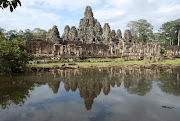
A thousand seats arranged on a gentle gradient face the stage with no less than the five famed towers of Angkor Wat itself as the backdrop.

Built in the 12th century, the vast temple complex was dedicated to the Hindu god Vishnu. The story of the Angkor civilisation's rise and fall had been a legend among traders and explorers for a millennium until French naturalist Alexandre Henri Mouhot located the ruins in the jungle in the mid-19th century.

He was astonished to find enormous bas-relief sculptures of sandstone apsara dancers among the foliage and explored further. Gradually the scale of the lost treasure revealed itself once more.

This is the setting, once night falls, where beams of colourful light wash over the mediaeval fortress in a 50-minute, six-act performance that takes spectators time travelling back to the days of King Suryavarman II.

Seeing Angkor by night is special enough, but watching dancers emerge gracefully from the ornate stone galleries seems as though the apsaras of old have sprung back to life.

There are 150 performers in the show, all Cambodians. Most are professionals from Phnom Penh, and some are models and well-known stars of film and television, such as Tep Rindaro and Sim Solika.

The performance is in English, with Japanese and Khmer subtitles screened at either side of the stage. Images are projected on a curtain of water as well.

Every scene, replete with special effects, is so outstanding that at times you might be distracted from the historical narrative. Following the subtitles does indeed rob your attention from significant action onstage, so it's best to be content with the printed synopsis and focus on the performance. In any event, nothing is too complicated to understand.

The evening makes Angkor so much more impressive, and some of the lighting for the show is set within the temple compound itself.

The director of the show, Peung Chiang of the Department of Culture and Fine Arts, points out that multimedia technology - especially when mingled with traditional performance - makes the ancient empire more interesting for a general audience.

"Angkor Wat is like a diamond," he says. "When it's carried or covered with velvet, it's more precious and worthy. And this performance is like a dish of food. It's a combination of various ingredients ready to serve."
Read more!

Japan promises $100 mln of concession loan for Cambodia to reduce poverty

The Japanese government has pledged to provide 100 million U.S. dollars of concession loan each year for Cambodia to facilitate its poverty reduction efforts, said Prime Minister Hun Sen on Thursday.

The loan will be increased by one third on annual basis and the interest rate will keep as low as 0.01 percent, he told the construction ceremony of counter-flood facilities on the Tonle SapRiver bank in Phnom Penh.

Cambodia will pay it back in 40 years, he said, without giving other technical details of the loan.

"I urge the Cambodian government officials and the Japanese experts here to quickly take the loan to help and develop the poverty reduction projects," he added.

The loan deal was reached by both parties while Hun Sen paid his recent visit to Singapore to attend the ASEAN (the Association of Southeast Asia Nations) meetings.

International institutions have put the poverty rate of the kingdom at 35 percent.

Read more!

Wednesday, December 12, 2007

Cambodia lashes out at UN envoy, accuses him of trying to incite violence

PHNOM PENH, Cambodia: Cambodia denounced a U.N. envoy Tuesday as unfit to represent the world body and accused him of trying to incite unrest by predicting that the country would rise up against the government to protest human rights violations.

Yash Ghai, the U.N. secretary-general's special envoy for human rights in Cambodia, wrapped up a 10-day visit Monday with a scathing attack against the government and judiciary. He said many Cambodians lived in constant fear of having their land stolen by developers and had no recourse because of a corrupt judiciary.

Ghai accused the government of fueling "development that impoverishes people, deprives them of their resources, adds further to marginalization (and) increases enormously the number of people who can barely make a living."

"Sooner or later, people are going to rise," Ghai said, adding, "there's a limit to how far you can use coercion as a method of development."

Government spokesman Khieu Kanharith called Ghai's words an "incitement for people to revolt."

He said Ghai was unfit to be a U.N. envoy and had come to Cambodia to "curse" the government.

"Has he ever offered any ways to solve problems? And does he ever care to learn about the problems the government has solved?" Khieu Kanharith said.

Ghai, a persistent critic of the rights situation in Cambodia, was shunned by the government during his visit.

The Interior Ministry spokesman, police Lt. Gen. Khieu Sopheak, also lashed out at Ghai, saying that like his predecessors he was using his mandate to badmouth the government.

"He has no competence to solve human rights problems in Cambodia," Khieu Sopheak said.

Land rights disputes have increased in recent years in Cambodia, usually pitting poor farmers against wealthy developers.

Ghai said he met several victims of land disputes and housing evictions who have little faith in the courts to address their problems.

"Fear of the state, fear of political and economic saboteurs, fear of greedy individuals and corporations, fear of the police and the courts describes the plight of numerous communities and families in Cambodia," he said.

"The courts are not independent, they're corrupt, and so people don't get justice from the courts," Ghai told a news conference late Monday.

Cambodia was "not a rule-of-law state" and its judiciary was "a perversity," he said.

He urged foreign aid donors, who give Cambodia hundreds of millions of dollars (euros) in assistance each year, to use their economic clout to pressure the government to pay more respect to human rights.

Ghai said he plans to present a detailed report on Cambodia to the U.N. Human Rights Council in March.

Read more!

Cambodia plans hunting safaris for VIP tourists

By Ek Madra

PHNOM PENH (Reuters) - Cambodia is considering laying on hunting safaris for well-heeled foreign tourists in its remote jungle-clad northeast, to the consternation of green groups who say it could be a recipe for disaster.

Officials said on Tuesday a Spanish firm called Nsok Safaris had already drawn up plans for a five-star jungle camp to house hunters after trophies on a list of 30 mammals, birds and reptiles in a 100,000-hectare (250,000-acre) forest reserve.

The area, in Mondulkiri and Rattanakiri provinces, is home to several indigenous hill-tribes whose first main contact with the outside world was during the Vietnam War when their territory was crossed by the myriad paths of the Ho Chi Minh trail.

Dany Chheang, deputy director of the Agriculture Ministry's Wildlife Protection Office, said allowing foreigners to pay to shoot game was far better for conservation than having poachers take it illegally.

"Illegal hunters are burning dollars every day," he told Reuters. "We have not explored all the potential of our natural resources. Now is the time to do so."

"The money we net will be invested in preserving the animals and forest. It is better for sustainable development than letting local hunters deal with cheap black markets."

He did not say what the 30 approved species were. The forest area is thought to be one of southeast Asia's last wildernesses and is home to wild elephants and tigers.

Environvmental group WWF, which has been promoting wildlife conservation in war-scarred Cambodia since 1998, said it was concerned about the plan, which has been in the pipeline for two years but which has remained shrouded in secrecy.

WWF's Cambodia program manager, Bas van Helvoort, said little was known about animal population numbers in the two provinces, and so allowing them to be hunted could be disastrous.

"Putting species up to be hunted is not going to contribute to making them safe," van Helvoort said. "This has been done in Africa but it is very carefully selected and very controlled."

So far, Phnom Penh -- which is routinely accused of allowing rampant illegal logging -- appears oblivious to the concerns.

"These are our natural resources. We do not need permission from wildlife conservation experts to run our business," Dany Chheang said.

The Finance Ministry was still working with agriculture officials on the finer points of the plan, such as trophies and fees, he added.

Madrid-based Nsok Safari's Web site advertises hunting expeditions in Cameroon and Tanzania.

(Editing by Ed Cropley and Roger Crabb)
Read more!

Cambodian gov't dismisses comments of UN Human Rights Envoy

The Cambodian government has blasted UN Rights Envoy Yash Ghai's recent criticism of the country's judicial system and land rights management, calling him tourist rather than envoy, local media said on Wednesday.

Yash Ghai on Monday attended the ceremony in Phnom Penh to mark the International Human Rights Day and released a statement claiming that Cambodian citizens live in fear of land grabbing, repression and a court system which offers scant hope of justice, with international donors seemingly turning a blind-eye.

However, at a specially convened government press conference on Tuesday, Ouch Borith, secretary of state for the Foreign Ministry, said that it was Ghai himself that was sightless, reported Cambodian-language newspaper the Moneaksekar Khmer.

"Anyone who claims Cambodia is a country without laws must be blind. This is not a dictatorship," said Borith at the press conference, adding that Ghai is simply a tourist.

Claiming that Ghai's comments were unacceptable, he said government leaders could not meet with Ghai during his ten-day visit as they were busy with working to develop the country, promote economic growth and eliminate poverty for the people.

Meanwhile, government spokesman Khieu Kanharith told reporters that Ghai's words were an incitement for the people to revolt, adding that Ghai isn't fit to be a UN envoy.

"Has he ever offered any ways to solve problems? And does he ever care to learn about the problems the government has solved?" hieu Kanharith said.

In addition, Ministry of the Interior spokesman Lieutenant General Khieu Sopheak described Ghai as a long-term tourist, who wants to make people oppose the government, reported English-Khmer language newspaper the Cambodia Daily.


Source: Xinhua

Read more!

Monday, December 10, 2007

UN envoy, US ambassador lead rare human rights march in Cambodia

The UN's special envoy for human rights and the US ambassador to Cambodia on Monday led a rare march to demand social justice reforms in the impoverished kingdom.

UN rights representative Yash Ghai and US ambassador Joseph Mussomeli joined 500 local rights activists, who carried banners calling for an end to corruption.

"The lesson therefore is that the struggle for human rights and human dignity is unending," Ghai, who arrived here last week, told a rally in Phnom Penh to mark international Human Rights Day.

"The ultimate custodians of human rights and social justice must be the people themselves, just as they must be the custodians of political and economic sovereignty," he added.

Ghai, a Kenyan lawyer who has clashed repeatedly with the government over his blunt appraisals of Cambodia's rights record, said earlier this year that impunity for human rights violations threatened the rule of law there.

He also wrote a report that accused the government of systematically abusing human rights to keep a grip on power.

Relations between the government and UN rights envoys have historically been poor, with Prime Minister Hun Sen calling Ghai and his predecessor Peter Leuprecht "stupid". He has also described Ghai as "rude" and a "god without virtue".

Mussomeli called Ghai a "sincere human rights advocate", but said he had met no one from the government during his current visit.

Among the top human rights concerns in Cambodia is land grabbing, which Ghai and previous envoys have warned could lead to mass unrest as more Cambodians become destitute.

Land seizures by government and military officials as well as businesses have left thousands of families homeless.

Rampant corruption and a lack of credible land records -- most of which were destroyed by the Khmer Rouge in the late 1970s -- have made land disputes increasingly common in Cambodia.

Read more!

UN says Cambodian courts fail to give justice

The United Nations has criticised Cambodia for failing to protect the rights of the poor, saying land is being routinely seized by large businesses with government connections.

UN rights representative Yash Ghai spoke to reporters at the end of a 10-day visit, during which he said no Cambodian government officials were willing to meet him.

Mr Ghai said the failure of the courts was especially pronounced in cases of land grabbing, and that victims of evictions had little faith the courts would provide them with justice.

He said many Cambodians live in constant fear of being mistreated by authorities.

The AFP newsagency says government officials could not be reached for immediate comment, but Prime Minister Hun Sen has in the past dismissed Mr Ghai and his assessments as "stupid."

Land seizures by government and military officials as well as businesses have left thousands of families homeless in Cambodia.

Rampant corruption and a lack of credible land records -- most of which were destroyed by the Khmer Rouge in the late 1970s -- have made land disputes increasingly common in Cambodia.
Read more!

UN rights envoy lashes out at Cambodian government

The UN special envoy for human rights in Cambodia Monday chastised the Cambodian government for its rights record at a rally here organised to mark the International Human Rights Day.

Yash Ghai, accompanied by members of 15 local human rights groups, told the gathering that fear still governed Cambodia.

'Fear - fear of the state, fear of political and economic saboteurs, fear of greedy individuals and corporations, fear of the police and the courts - describes the plight of numerous communities and families in Cambodia as they do in many other parts of the world,' he said in a speech.

'The lesson, therefore, is that the struggle for human rights and human dignity is unending as it became so sharply and painfully obvious to me as I met the embattled communities in Dey Krahorm and the Group 78 villages,' he added, referring to two communities where residents are involved in bitter land disputes and are faced with evictions.

The government refused to cooperate with Yash Ghai soon after his 2005 appointment, and have claimed he refuses to acknowledge its progress on human rights in recent years.

Government representatives have refused to see him, and Prime Minister Hun Sen has said on state radio that he should return to his native Kenya and fix the problems there before 'coming to lecture us in Cambodia.'

Despite predictions in local media that the crowd at the rally might top 20,000 people, unofficial estimates by participants put figures at about 4,000, and the police said 1,000 people at the most attended.

Yash Ghai was scheduled to give a press conference later Monday to end his current 10-day visit.
Read more!

Saturday, December 08, 2007

Unique Boutique to benefit orphans

By CAROL A. CLARK


Preparations are underway for this year's Unique Boutique set for 1-8 p.m., Wednesday and Thursday at the home of Terry and Marvel Kellogg, 199 San Ildefonso Road.

All of the exotic and unusual gift items available for purchase are made by Cambodians in Southeast Asia and some come from the sewing project at the orphanage, which is operated by the Kelloggs’ organization, Cambodia’s Hope.

Items to be on sale next week include handwoven silk scarves, household décor, clothing, handbags, ornaments, vintage basketry, antiques, fabulous artifacts and treasures, and jewelry ranging from glass bead earrings to a 42-inch necklace with a 34-karat sapphire set in 18-karat white gold.

Prices begin at $4. This year the Kelloggs also will have a “Chic Boutique Flea Market” with donated items such as ceramics, glassware, books and leather jackets.

The Kelloggs ensure 100 percent of the proceeds from their annual fundraiser go to the children of Cambodia's Hope as all administrative, fundraising and travel expenses are donated by the founders and friends. Donations are tax-deductible.

Cambodia’s Hope was founded by the Kelloggs and their friends in 2003, as a 501(c)(3) charitable organization to support needy children in Cambodia.

The community has supported the organization each year since its inception through purchases at the annual Unique Boutique as well as through direct donations.

This support has allowed Cambodia’s Hope to expand each year; enhancing the care and education provided to children of victims of AIDs, land mine atrocities and war traumas.

“Our guiding principle is, ‘The future of the world does not lie in the hands of children – it lies in the hands that hold the hands of children,’” Marvel said. “Our calling is as privileged people, Cambodia’s Hope intends to lead with our heads as well as our hearts to generate opportunities for less-fortunate children in Cambodia. We will create a nurturing environment for children to reach their highest human potential through education, recreation and health.

“We will support children to become self-sustaining future business, academic and agricultural leaders of Cambodia to help fill the intellectual and cultural void caused by the human decimation of recent decades."

Terry explained that Cambodia's Hope supports needy children, young adults and families living in Cambodia.

The primary mission is to provide survival support for orphans in Cambodia as well as opportunities for education and occupational training.

“It’s the basic support system for the Palm Tree Orphanage in Phnom Penh, a facility with a 95-child capacity focusing on education and creating a family base for homeless children,” he said.

He continued, “Our goal is for these children to learn, play and create; forging a developmental path toward leadership roles in their country. Education is a priority. At this time all eligible children attend Cambodian School in addition to classes at the orphanages.

“Recreation, culture and the arts are included in the curriculum as well as vocational training provided to enhance career and job placement. The school also supports an intensive dance and cultural program where the children learn classic Cambodian dance and perform for guests as well as travel to competitions.”

The Kelloggs said they are currently supporting a second orphanage in a small village in Kam Pong Speu Province with 37 children, a seamstress training program for the village women as well as seven preschool programs providing services for more than 200 children throughout the province.

“We hope to raise enough money this year for a dormitory and school for this project,” Terry said. The ambition, he added, “is to help orphanages as well as individuals to become self-supporting in their projects and lives.”

“The charitable organization receives support from donors around the globe,” Marvel said. “In the world of philanthropic endeavors, Cambodia's Hope stands out as having 100 percent of every donation go directly to the needs of the children and projects to support the children.”

The community of Los Alamos, through past Unique Boutique fundraisers has built a medical clinic, helped buy a farm and this year the funds will go to build a school in an out lying village.

“The good news is a little goes a long ways in Cambodia.” Terry said. “The reality is the need is as wide and as long as the Mekong.”
Read more!

Cambodia invites Indian investments in agriculture, IT and infrastructure

New Delhi, Dec 8 Cambodia has invited Indian investments in manufacturing, services, infrastructure and human resources development and said it would export to India some agricultural products in which it is competitive.

Speaking at an interaction with the Indian industry here on Saturday jointly hosted by the apex bodies, FICCI, Assocham and CII, Cambodian prime minister Samdech Akka Moha Sena Pai Techo Hun Sen said, “We are strongly determined to attract as much as possible foreign direct investment (FDIs), including that from India.”

He said under the new policy private investors investing in infrastructure development have the option to build-operate-transfer (BOT) and Build-operate-own (BOO). Foreign investors can do business with or without Cambodian partners. In case of local partnership, the level of equity would be decided by the foreign investor.

On the issue of the ownership of the land, Sen clarified that the right has been reserved for Cambodian citizens, the foreigners can use land through lease contracts for a period up to 99 years.

The Cambodian prime minister called for attracting investments in agro-business, manufacturing, services, tourism, human resources development, hardware and software, roads, bridges, seaports, airports, railways, power, clean water supply, irrigation, development and transfer of knowledge and technology, telecommunications, information technology.

He said, “Cambodia has comparative advantages and potentials in agriculture and agro-industry, labour-intensive industries, processing, tourism, mining and in some sections of manufacturing and services sectors¿ At the same time promising future from commercialisation of oil, gas and other mineral resources has opened up new economic opportunities and hope for Cambodia to become a new development zone in the region.”

At present India-Cambodia bilateral trade is less than $50 million, with balance tilted in favour of India. Cambodian exports to India are negligible. Cambodia is a member of the Asean group, with which India is planning to sign a free trade agreement.

The Cambodian prime minister praised spirit of cooperation expressed by the Indian prime minister Manmohan Singh at the 6th Asean-India Summit in Singapore last month.

“I am hopeful that India will positively consider our request to provide assistance in IT, where it is known for its expertise,” the Cambodian prime minister said.

Minister of state for communications and IT Shakeel Ahmed said that cooperation between the two countries in human resources development and It was necessary due to the presence of skilled manpower in both the countries.

He said that India had launched a plan to ensure 1,00,000 boardband connectivity in rural areas.
Read more!

Cambodian PM arrives to boost bilateral ties with India

New Delhi, Dec 7 : Cambodian Prime Minister Hun Sen arrived here today on a four-day visit to take forward the bilateral relations with India.

India and Cambodia are expected to sign several agreements aimed at enhancing bilateral cooperation in the fields of defence, water resources, agriculture, petroleum and commerce.

Sen is leading a delegation, including the Deputy Prime Minister and Minister of Foreign Affairs, the Deputy Prime Minister and Minister of National Defence, Minister of Commerce, Minister of Water Resources and Meteorology and the Minister of Agriculture, Forestry and Fisheries.

He is scheduled to meet his Indian counterpart Manmohan Singh, who will host a banquet in honour of the visiting dignitary on the evening of December 8.

Sen will also call on President Pratibha Patil and Vice President Hamid Ansari. He will also meet External Affairs Minister Pranab Mukherjee.

He will address a business luncheon meeting jointly organized by the CII, FICCI and ASSOCHAM.

During his stay in India, the visiting Prime Minister will visit Hyderabad, where he will go to the National Institute of Rural Development and the Hitech City. He will call on the Governor of Andhra Pradesh on December 9.
Read more!

Cambodia offers fresh investment opportunities

Tourism in Cambodia is increasing and attracting more of the high end tourists, as oppose to predominantly back packers. Especially in the capital Pnomh Penh, growth as a popular holiday destination strengthening the rental market has seen capital appreciation hit a steady 25%.

Cambodia’s capital city of Phnom Penh and the finesse of its French riverside quarter play host to refurbished yet undeniably remarkable 1-2 bedroom apartments and the 2 year guaranteed 10% rental return they offer. In light of its freshly found allure amidst the international property investment market, Cambodia’s capital growth is expected to see a 15-20% growth.

So, considering the fact that Cambodia and its economy are set to grow from strength to strength, along with any investment made in the region, perhaps this is an opportunity to be investigated further.

Available exclusively through reputable overseas property investment specialists David Stanley Redfern Ltd from $55,000, at least an enquiry into the many attractive features on offer is surely worth making. But first, let’s take a closer look at what that kind of money can buy.

Aside from the auspicious apartment itself, abundant with only the most sleek and modern furnishings and finished to an incomparably high standard, what does the surrounding Cambodian capital have to offer? Once referred to as The Pearl of Asia, this architecturally awe inspiring city is today’s wealthiest and most populous Cambodian city, giving it a charged and vibrant climate that’s simply wonderful.

Its busy inhabitants are peaceful folk of which some are Buddhists, who along with many tourists frequent the many breathtaking attractions, the most popular being the Royal Palace.

Phnom Penh’s main shopping centre is the Phsar Thom Thmei market place which too attracts visitors, each eager to behold its vast array of treasures. From plant life to antique currency and opulent foods to fancy fabrics, it’s sure to be found on the stalls of this enigmatic, once in a lifetime shopping experience.

Serviced by the usual taxis and tuk-tuks, Phnom Penh also boasts road, river and rail transport as well as its very own airport, notably Cambodia’s largest. Phnom Penh is both accessible and accommodating for any international investment making traveller, enabling simple return visits to and from its shores.

So, a top specification apartment in one of the world’s most exciting cities, how do you get a piece of the action? Anyone interested in this unique investment opportunity amidst a recognised emerging and opportune market, enhanced by the regions economic boom should contact David Stanley Redfern Ltd to discuss the range of helpful options that are available to potential investors.

Find out more about our Cambodia investment property at http://www.davidstanleyredfern.com/Cambodia.aspx

Please direct all media queries, requests for press information and editorial details, to media@davidstanleyredfern.com.

About David Stanley Redfern Ltd

David Stanley Redfern Ltd is an overseas property specialist, working directly with developers in more than forty countries. Most properties are exclusive to David Stanley Redfern Ltd, giving an unparalleled selection of resale and new builds. David Stanley Redfern Ltd is AIPP accredited.


Read more!

Friday, December 07, 2007

Maiden flight linking Europe, Cambodia to touch down at Phnom Penh

PHNOM PENH, Dec. 7 (Xinhua) -- The Air Finland's Boeing 757 commenced operations on Friday to launch the first commercial direct flight linking Europe and Cambodia, said a press release from SCA, Cambodia's airport management authority.

The aircraft is expected to land at 18:25 local time (1125 GMT)with 213 passengers on board and the new route from Stockholm to Phnom Penh will be a breakthrough by connecting Phnom Penh International Airport to major European cities, it said.

To begin, the carrier plans to operate thrice monthly charter flights with 219-seat Boeing 757s.
Read more!

Thursday, December 06, 2007

Former Khmer Rough of Cambodia blames rich countries for climate change

Cambodia's Prime Minister Hun Sen, has blamed industrialised countries for causing climate change, saying poor nations are the ones bearing the brunt from the fall-out.

Speaking during the launch of a new strategy to deal with the country's economic challenges, Mr Hun Sen said climate change is not caused by small countries like Cambodia, but larger countries that release smoke into the air.

He says it is unfair that the benefits go to big countries that release smoke, while small countries are being damaged.

The prime minister says while some countries cut the forests to develop their countries, they now ban nations like Cambodia from doing the same, adding that it's time for it to use natural resources to develop the economy.

Mr Hun Sen's comments came as nearly 190 countries gathered on Indonesia's resort island of Bali to come up with a roadmap for creating a fresh pact to combat global warming.
Read more!

Oil and petrol ‘bleed’ through border gates

Political conspiracy and economic suppression are the facts that sqeesing cambodian throats in order to make Vietnameses getting rich, this is the developing plan that Hun Xen operating through the whole country.

VietNamNet Bridge – A lot of petrol and oil is being illegally exported to Cambodia, as the petrol price there is VND3,000/litre higher than that in Vietnam.

A resident in the southern province of An Giang said the petrol price in Cambodia is $1/litre and the oil price is nearly the same, consequently, Cambodians have been crossing the border to purchase cheaper petrol they can sell at home for a tidy profit.

On So Thuong River in Dong Thap province, many boats can be seen carrying petrol and DO oil to Prey Veng province in Cambodia.

Meanwhile, Vietnamese farmers cannot purchase oil for their pumps because filling stations and privately owned petrol shops only want to sell oil and petrol to Cambodians who will pay more.

A lot of Vietnamese farmers now have a new job: they carry petrol and oil for Cambodians. On average, an ex-farmer may earn VND40-50,000 if they carry 60 litres of petrol or oil. Meanwhile, Vietnamese tobacco smugglers have shifted to the oil trade which is much more lucrative.

Tran Minh Tien, Head of the Ha Tien Border Gate’s Customs Agency, acknowledged that his agency cannot stop the illegal export of petrol.

He said that there are many reasons that encourage illegal petrol exports. While the petrol in Vietnam is cheap thanks to the Government’s subsidization scheme, the price in Cambodia is much higher as it follows global price fluctuations.

There are numerous filling stations along the N1 road in Kien Giang province, but the stations are not open during the day. Nguyen Van Na, a farmer in Tan Khanh commune, complained that he could not buy oil for his harvester, saying that petrol distributors only work in the evening and only sell petrol to Cambodians.

The An Giang Market Control Taskforce said that it has discovered several illegal export rings so far this year, seizing nearly 30,000 litres of oil, while Kien Giang and Dong Thap provinces seized 5,000 litres. However, Mr Tien said this figure is insignificant compared to the amount of illegally exported product, adding that their confiscations are just the ‘tip of the iceberg’.

“Our staff is too small to deal with the strong force of illegal exporters,” Mr Tien said.

The Ministry of Finance’s latest move was to issue the decision to increase A92 petrol retail prices on the domestic market by a maximum of VND 1,700 a litre and oil prices by VND1,500-VND1,600 a litre to VND13,000/litre. Vietnam announced it would float the petrol price back in mid 2007 and the Government subsidy programme is essential to curbing the inflation rate.

Read more!

River dolphins in bid to renew northeast Cambodian economy

The last 80 or so river dolphins in the Mekong River are at the heart of an ambitious development programme to tackle poverty and attract tens of thousands of visitors to two of the poorest provinces of Cambodia.

The Mekong River Discovery Trail Project will draw visitors to view the endangered fresh water dolphin which lives in 10 deep water natural pools in a 190-km stretch of the Mekong River, mostly between the quiet provincial capitals of Kratie and Stung Treng.

The main objective of the Discovery Trail is poverty alleviation. About 50% of all households in Stung Treng and 30% of those in Kratie live on less than US$1 a day. "The Mekong River Discovery Trail Project aims to bring about sustainable pro-poor tourism that helps develop Northeast Cambodia," says Dr Harsh Varma, Director of Development Assistance Department of the World Tourism Organization.

While Cambodia's tourism arrival statistics show growth in excess of 20% a year, it is not equitably distributed, says Ms Anne-Maria Makela, Senior Tourism Advisor for SNV Netherlands Development Organisation. "Too much of it goes to Angkor and Siem Reap. We want to bring more communities into the tourism picture, either as employees or as suppliers to the tourism industry."

In addition to 80,000 domestic tourists, the Cambodian government says that about 10,800 international visitors, mostly backpackers, visited Kratie in 2006, 35% up on the previous year. It estimates that 4,000 visited Stung Treng, an increase of 20%. Nearly all stayed in guest houses for less than US$5 a night and took motos, bicycles, motorbikes and longtail boats to see the dolphins, which must break surface every few minutes for air.

By seeking out the dolphins, backpackers have indicated the potential to the Cambodian Ministry of Tourism, which is now mobilising money and expertise from SNV and the World Tourism Organization (UNWTO).

A study conducted jointly by SNV and the International Finance Corporation found that only 12% of the US$3.12 million dollars spent by tourists in Kratie in 2006 returned to people from a poor or near poor background. However, SNV says that when tourism spreads its roots this figure is likely to expand to around 30%. The survey showed that 80% of people working in the accommodation and restaurants in Kratie came from very poor families.

As part of the project to attract tourists to the Mekong, villagers near the pools will be encouraged to diversify economic activity away from fishing. Local authorities believe fishing is depleting the dolphins' food supply. Fishermen will be encouraged to take visitors to see the dolphins and sell food and drinks instead.

"No dolphins means no tourism. No tourism means no development," says Dr Thong Khon, Cambodia's Minister of Tourism. "Our challenge is to secure the long-term viable future of local communities and the river dolphin. Our priority is to build community awareness as well as hotels, guest houses and a boat jetty in Kratie to encourage more visitors."

Phase I of the project, the Tourism Development Master Plan for Kratie town, was completed in September 2007. Phase II, the design and development of the Mekong River Discovery Trail, community based tourism and training, will start in December 2007.

The project will only directly help selected villages along the route. However, the UNWTO believes "backward linkages" such as tourism demand for agricultural produce will indirectly help hundreds more. The UNWTO and its partners admit they will need to carry out a lot of public awareness and training programmes, as well as build jetties and seek investors for hotels.

Access and infrastructure in Kratie and Stung Treng are problematic. There is no international standard hotel. There is no local airport. The nearest is in Phnom Penh, a five-hour road trip or a six-hour congested public boat trip away.

Nevertheless, budget travellers and a few tour groups have already ‘discovered' Kratie, which still has some architecture and ambience from the French colonial period. Visitors to Kratie and Stung Treng praise the simple pleasures of travelling in country lanes near the river. There are enjoyable chance encounters with monks, school children and villagers in riverside huts selling snacks and toddy palm drinks. Apart from seeing the dolphins, gathering by the Mekong to watch the sun go down across the river is part of Kratie's simple appeal.

The few tour groups that do visit Kratie tend to only spend an hour or so viewing the dolphins, a nearby temple and a rubber plantation. The groups then continue on to the mountains and hilltribe attractions of Rattanakiri province before returning to Phnom Penh or Siem Reap, where the Angkor ruins are.

"Kratie has potential," says Mr Luzi Matzig, Group CEO of Bangkok-based tour operator Asian Trails. "But there needs to be a lot more investment in three-star accommodation, restaurants and riverine attractions before it becomes a significant destination.

"What I do like about the place is the charm and friendliness of the people and the feeling that you're part of an authentic Khmer experience."

Read more!

Cambodians Get Medical Aid, English Lessons from U.S. Military

USS Essex, Marine unit work with Sihanoukville-area communities

By Peggy B. Hu
USINFO Staff Writer


Washington -- Providing medical and dental care, teaching English, fixing buildings and strengthening military ties between the United States and Cambodia were among the projects the USS Essex and a Marine expeditionary unit attached to the ship undertook during a recent port visit to Sihanoukville, Cambodia.

"Essex sailors are honored to have the opportunity to visit the Kingdom of Cambodia as part of the broadening and deepening relations between our navies and our two governments," Captain Brian T. Donegan, the Essex's commanding officer, said in a U.S. Navy press release.

During their weeklong visit November 26-December 1, U.S. military personnel worked with Cambodian teams to provide medical services -- including cataract surgery -- and dental care to communities in Cambodia's Kampong Cham and Preah Vihear provinces and to construct two bridges and a culvert to connect the villages of Sre Sa and Oloy in Kampong Chhnang province.

The Essex and the Marine unit also conducted military-to-military training; participated in a three-day cultural exchange program at the National Defense University in Phnom Penh; and performed community relations projects such as making basic repairs to buildings, providing basic English classes and distributing donated materials such as books and clothing through the U.S. Navy's Project Handclasp program.

On the lighter side, sailors and Marines played duck-duck-goose, hopscotch, marbles and soccer (football) games with children at local primary schools; participated in a soccer tournament and barbecue with Cambodian army cadets at Ream Naval Base in Sihanoukville; and attended the second annual Christmas lighting ceremony at the U.S. Embassy in Phnom Penh. The U.S. 7th Fleet band also performed with local musicians at an orphanage.

"Having Essex come here allowed us to give something to the Cambodian people," Lieutenant Commander Ronnie Mangsat of Amphibious Squadron 11 said in a release from the Essex's public affairs office. "Coming here shows them what we are capable of and that we are willing to take the time to help our new friends."

The Essex's visit was the second by a U.S. Navy ship to Cambodia in 2007; the USS Gary visited in February. The Sihanoukville port visit was part of the Essex's annual fall patrol to East and Southeast Asia, during which the crew and its Marine unit will conduct training events focusing on sea- and land-based capabilities and interact with local communities.

(USINFO is produced by the Bureau of International Information Programs, U.S. Department of State. Web site: http://usinfo.state.gov ) Read more!

Tuesday, December 04, 2007

Bail denied in Cambodia war crimes trial

PHNOM PENH, Cambodia—A U.N.-backed genocide tribunal ordered a former Khmer Rouge prison chief kept in detention Monday on charges of crimes against humanity.

After an hour of deliberations, the tribunal said Kaing Guek Eav, also known as Duch, might try to flee or threaten witnesses.

Defense lawyers had demanded his release last month, arguing his rights were violated because he has spent more than eight years in jail without trial.

Duch was arrested in 1999 and detained at a Cambodian military prison on war crimes charges before his transfer to the tribunal's custody in July.

The five-judge panel presided over by Chief Judge Prak Kimsan ordered Duch kept in detention, saying that if he were released, his life could be in danger or he might try to flee and could pose a threat to witnesses.

The decision by the panel made up of three Cambodian judges and two U.N.-appointed foreigners was unanimous, said Helen Jarvis, the tribunal's public affairs chief.

Canadian prosecutor Robert Petit had told the judges at a Nov. 21 hearing that if Duch was released, he could be harmed by both "accomplices wishing to silence him and by the relatives of victims seeking revenge."

Chea Leang, a Cambodian prosecutor, said Duch's trial may begin in mid-2008 but gave no specific date.

Francois Roux, Duch's lawyer from France, said the defense team plans to raise the custody issue again during the trial.

Duch, 65, oversaw the S-21 prison, which has since been converted into the popular Tuol Sleng Genocide Museum.


As many as 16,000 men, women and children were tortured at S-21 before being transported out of Phnom Penh and executed. Only 14 people are thought to have survived.

The Khmer Rouge has been blamed for the deaths of an estimated 1.7 million people during their rule from 1975 to 1979. Some observers fear the group's surviving leaders might die before being brought to justice. The movement's notorious chief, Pol Pot, died in 1998.

Duch is one of five former Khmer Rouge leaders held in connection with the Communist regime's brutal rule of Cambodia. He became the first defendant to appear before the tribunal's judges.
Read more!

Cambodia, UN launch project to save dolphins: UN

PHNOM PENH (AFP) - Cambodia and the UN have launched a joint project aimed at saving endangered Irrawaddy dolphins from extinction, the international body's World Tourism Organization said Tuesday.

The Mekong River Discovery Trail Project encourages local fishermen to work in dolphin-watching tourism instead of fishing, the UN agency said in a statement. Fishing nets often cause the death of Irrawaddy dolphins.

"Local authorities believe fishing is depleting the dolphins' food supply. Fishermen will be encouraged to take visitors to see the dolphins and sell food and drinks instead," it said. It did not give financial details.

Conservationists estimate that fewer than 100 Irrawaddy dolphins exist in the wild, but the Cambodian government has said the number could be around around 130 and could rise to 170 within the next five years.

Thousands of the Irrawaddy dolphins, which have blunt, round heads and are almost white in colour, once swam in the Mekong -- which flows from Tibet to the South China Sea and has tributaries in Cambodia, Laos and Vietnam.

The project, which begins this month, will teach fishermen about tourism activities, the UN agency said, adding it hopes to draw tens of thousands of visitors.

The Cambodian government said it would help build hotels in a bid to draw visitors.

"No dolphins means no tourism. No tourism means no development," Tourism Minister Thong Khon said in the statement.

Tourism is one of the few sources of foreign exchange for impoverished Cambodia, which is still recovering from decades of conflict.

Read more!

Cambodia: off the beaten track


Revisiting a much-changed Cambodia, Philip Sherwell explores the glories waiting to be discovered away from the tourist track.


The temple complex of Angkor and the nearby town of Siem Reap were very different places the last time I visited. That was in 1996 on assignment for The Sunday Telegraph to cover the kidnapping of a Briton by the Khmer Rouge, the murderous Maoist movement that had inflicted the horrors of the Killing Fields on Cambodia. Sadly but predictably, Christopher Howes, who had been working with a British organisation clearing landmines, was murdered by his captors.

Siem Reap in those days was a dusty backwater, its potholed streets best negotiated on the back of spluttering motorbike taxis that rarely got up enough speed to pose any danger of bodily harm.

Angkor was being rediscovered by the first intrepid visitors after nearly two decades in Khmer Rouge hands. By early 1996, the main cluster of temples was safe, but outlying sites remained off-limits unless one wanted to risk being blown up by mines or suffering the sad fate of Mr Howes.

In delightful solitude one early morning, I set off to explore the remarkable main temple of Angkor Wat, followed by the glorious bas-reliefs of Bayon and the barely touched remains of Ta Prohm, then the ultimate in Indiana Jones adventures.

How things change. Siem Reap is now a boisterous hive of activity, while the marvels of Angkor are thoroughly on the tourist track. The temples are still one of the wonders of the world, no less stunning for the crowds, but I hankered after the glorious loneliness of my previous visit.

So I headed 50 miles north, past paddy fields and villages of wooden huts on stilts little changed by the rapid development that has swept Siem Reap. Eleven years ago, this would have been a suicidal journey into Khmer Rouge territory, but my return offered new possibilities: outlying temples, cut off back then by minefields, were now accessible.

My destination was Beng Melea, a 12th-century temple built to the same design as Angkor Wat. For visitors disappointed by the busloads of camera-toting tourists at Ta Prohm, these largely undiscovered jungle ruins are a treat.

With the help of a young guide, I scrambled through the site to the chirupping chorus of cicadas in the same stunned reverie I felt when I first wandered around Angkor Wat.

First he showed me a sign on a mound next to the overgrown moat enumerating the 21,000-plus mines cleared from this site alone.

Inside the compound, thick, gnarled trunks and roots thrust through the masonry with such abandon that the stone and wood seemed indivisible; branches and vines stretched, embraced and bent around the ancient masonry like tentacles.

Back in Siem Reap, I found another compelling reason to embrace rather than bemoan the changes of the past 11 years - the award-winning glories of the chic new Hôtel de la Paix. Its art deco façade - think South Beach Miami transported to South-East Asia - graced the cover of Architectural Digest magazine last year.

The original hotel served as a rice storage depot during the era of genocidal communist purdah under Pol Pot. The elegant new structure is a mix of traditional Khmer, art deco and contemporary influences. The rooms have polished Makha-wood floors, woven rugs, platform beds and terrazzo tubs. Fountains and ponds fill the open spaces.

But although La Paix is an enticing oasis, the last thing the hotel wants is for you to insulate yourself from your surroundings.

It offers guests the chance to support community-based activities and good causes and the revival of Cambodian arts and culture. Options include a sewing training centre, rice sponsorship, educational support, hospitals and children's centres.

As the recipients of the book, bikes and other items from the hotel scheme can vouch, progress is not all bad.

Kuoni Travel (01306 747 008; www.kuoni.co.uk) offers tailor-made trips across Indochina. Three nights at Hôtel de la Paix (www.hoteldelapaixangkor.com), in Siem Reap, Cambodia, two nights at the Shangri-La in Bangkok and four nights in Laos cost from £1,488 per person, including flights.
Read more!