"Before, a husband would beat his wife and children, now he just insults them..." chilling yet sobering words from a woman surveyed by LICADHO's Women's Rights Office (WRO) following the end of its pilot project in Kandal Province, which aimed to educate the community on violence against women issues.
On July 30, 2007 LICADHO's WRO celebrated the conclusion of the first of three education pilot projects with a community forum in Angsnoul district, Kandal province. The pilot project was funded by the University of Quebec in Montreal and the Canadian International Development Agency and the community forum brought to a close, planning and organising which had commenced as far back as December 2005.
The pilot project was designed to promote ownership of women's rights by equipping women in the community with practical knowledge, strategies and resources to prevent and seek redress for domestic violence, rape and trafficking violations. As part of the program 39 women, selected from eight villages, were chosen as 'focal points'. It was intended that these women would disseminate what they learnt from workshops through out the community. Similarly, 23 local authorities, comprising police, village chiefs, commune chiefs and members of the legal sector, also participated in learning about violence against women issues. Training and follow up workshops were held from August 2006 to March 2007, with a final evaluation of the project's impact in the community being conducted during the first half of 2007.
One major focus of the pilot project was learning to understand domestic violence, the impact it can have on a family and the community, the concept that it is not just an internal family issue and how to deal with and prevent it. In Cambodia, domestic violence has long been a product of cultural values and the status of women in society's eyes. Even with the passing of the Law on the Prevention of Domestic Violence and the Protection of Victims in 2005, attitudes towards the acceptance of domestic violence as an issue concerning the community and not something to be kept private have been hard to change. The perceptions of both the public and the authorities still hold true to their long held beliefs of silence and ignorance.
Cases reported to LICADHO demonstrate the brutal extent of domestic violence in Cambodia, where husband and boyfriends subject their wives, girlfriends and children to beatings, rape, threats, burnings, acid attacks and murder. In one recent case a victim of prolonged and repeated domestic violence over 13 years was beaten and stabbed, by her husband. Her husband, in an apparent drunken rage attacked her and cut off one of her fingers. After being treated for her injuries in hospital the victim said she didn't want to divorce her husband nor file a complaint against her husband.
In the first six months of 2007, LICADHO's WRO has received reports of 102 cases of domestic violence and 44 cases of rape. According to LICADHO's monitoring of Khmer newspapers, 98 cases of domestic violence and 150 cases of rape were also reported in the same period. As LICADHO continues to investigate cases of domestic violence and rape, the WRO pilot project in Angsnoul district is one of the first important steps towards prevention of violence against women at the community level. In the coming months the WRO will move the pilot project activities to Kompong Thom and Kampot province, refining the workshops which hope to change and evolve the attitudes of the community and the authorities towards violence against women issues.
Read more!

Wednesday, August 01, 2007
Attitudes towards violence against women in Cambodia slowly changing

Cambodian men charged with terrorism in failed bomb plot
PHNOM PENH, Cambodia: A Cambodian court charged two men with terrorism Wednesday in connection with a recently failed plot to blow up a monument in the heart of the country's capital, officials said.
Sok Roeun, a prosecutor at Phnom Penh Municipal Court, said he charged Kem Toeun, 53, and Son Than, 42, with terrorism, which carries a maximum penalty of life imprisonment.
Police arrested the two men Monday, a day after explosives disposal experts defused bombs planted at the city's Cambodia-Vietnam friendship monument, said police Maj. Gen. Chhay Sinarith, who is chief of the Interior Ministry's information department.
"Their main purpose was to destroy the monument because it is a symbol of good relations between the Cambodian and Vietnamese governments," Chhay Sinarith said, adding police were looking for more plotters.
The three homemade bombs found Sunday — made of a mixture of TNT and fertilizer packed in three buckets — were planted at a monument dedicated to Vietnamese soldiers who invaded Cambodia to topple the Khmer Rouge in 1979.
The monument is located in a park about 500 meters (yards) from the southern wall of the Royal Palace, where King Norodom Sihamoni and his parents live.
The monument was erected by a pro-Vietnamese Cambodian government nearly 20 years ago.
Both arrested men are members of the Khmer Kampuchea Krom Liberation Front, said Chhay Sinarith. He said the group is based outside Cambodia and advocates taking back territory in southern Vietnam that used to belong to Cambodia.
Many Cambodians resent neighboring Vietnam, which is a traditional enemy that they feel has designs on their country's land. But government-to-government relations are good — Cambodian Prime Minister Hun Sen was originally part of a puppet regime installed by Hanoi after the Vietnamese invasion.
Hun Sen's political opponents view the monument as a symbol of a humiliating decade-long occupation by Vietnamese troops following their invasion.
Protesters partially destroyed it during an anti-government demonstration in 1998.
The monument was later restored, and visiting Vietnamese leaders often go there to pay respects to their fallen soldiers.
Read more!
Vietnam and Cambodia set up national border gate
A ceremony to set up My Qui Tay-Som Rong border gate between Vietnam and Cambodia was held in Vietnam’s southern Long An province on July 31.
The border gate is located in Long An province of Vietnam and Svay Rieng province of Cambodia, which share a 137.7 km land border.
Addressing the ceremony, the authorities of the two provinces agreed to speed up measures to develop the border areas economically and held the belief that the establishment of the border gate would contribute to improving the living conditions of people residing in the two countries, particularly the two provinces. (VNA)
Read more!
Cambodia: FCO minister comments on the first arrest in the Khmer Rouge tribunal
FOREIGN AND COMMONWEALTH OFFICE News Release issued by The Government News
Network on 1 August 2007
The Khmer Rouge Tribunal in Cambodia (officially called the Extraordinary
Chambers in the Courts of Cambodia or ECCC) arrested and charged its first
suspect yesterday.
FCO Minister, Meg Munn MP commented:
"I welcome the news that the ECCC today charged Kaing Khek Ieu with genocide
and crimes against humanity. The Cambodian people have waited many years
for the judicial process to begin. This is an important opportunity for
Cambodia to break with the past and bring to justice those responsible for
serious violations of Cambodian and international law.
"The United Kingdom is a strong supporter of international justice and looks
forward to seeing progress made in the upcoming months by this historic
Tribunal, the first of its kind in Asia."
Notes to editors
1. The Khmer Rouge regime took power on 17 April 1975 and was overthrown
on 7 January 1979. During that time the Khmer Rouge killed more than one
million people.
2. The United Nations (UN) and the Royal Government of Cambodia (RGC) have
been involved in negotiations over the creation of a tribunal since 1997
when the RGC asked the UN to help establish a tribunal like those in the
Former Yugoslavia and Rwanda.
3. In 2000, the UN agreed to participate in the first "mixed tribunal"
in which there would be a majority of Cambodian judges and co-prosecutors,
but with international colleagues.
4. On 6 June 2003, the UN and RGC signed an agreement that would bring the
E Extraordinary Chambers in the Courts of Cambodia (ECCC) into force.
5. Prior to yesterday's announcement, only one senior Khmer Rouge official,
Kang Kek Ieu (alias Duch) was in pre-trial custody. Another who was in
pre-trial custody, Ta Mok, died in late 2006. Pol Pot, the Khmer Rouge's
notorious leader, died in 1998 while three other regime members, Ieng Sary,
Nuon Chea and Khieu Samphan have been at liberty in retirement.
6. The UK has contributed funds of £1.5 million to the ECCC.
FCO Press Office: 020 7008 3100
Press Office, Downing Street (West), London SW1A 2AL Telephone: 020 7008
3100 Fax: 020 7008 3734
Read more!
Tuesday, July 31, 2007
Asian Tourists Love to Click and Go
When 29-year-old Sabrina Fu decided to spend a week exploring the ancient temple ruins of Angkor Wat in Cambodia, she turned to Chinese online travel site Ctrip.com (CTRP). She long ago became sold on the convenience and ease of researching and booking her vacations online. "The first thing I do when I decide to go somewhere is to log onto the worldwide Web," says Fu, who works at a multinational company's Shanghai office.
With its emerging middle classes and rising disposable income, Asia has one of the fastest growing tourism sectors in the world. Still, the industry has endured some rough luck this decade, with the region's 2004 earthquake and resulting tsunami, sporadic terrorist incidents, and uncertainty about the direction of Avian flu.
Even so, plenty of destinations such as the Maldives, Bhutan, Thailand, and Cambodia saw their tourism businesses expand more than 10% last year, according to figures compiled by the Pacific Asia Travel Assn. Indeed, the tourism sector accounts for more than 10% of the economic output of Australia, New Zealand, Hong Kong, Singapore, Thailand, and Malaysia (see BusinessWeek.com, 4/23/07, "Guiding Tourists to Asia").
One-Third the Size of the U.S. Market
Not surprisingly, a number of regional online sites and established international ones hope to prosper from the Asia travel boom. To be sure, the size of the region's online travel market is still small compared to mature markets such as the U.S. Online travel sales in Asia Pacific are estimated to reach $25.6 billion this year. That's only about one-third of the U.S. market forecast, according to New York Internet research firm eMarketer.
Yet online travel in the region is likely to experience explosive growth the rest of the decade. From 2006 to 2010, India is expected to grow at 271.6% annually, while Vietnam's online travel sector is forecast to expand 202% and China's and Indonesia's in the 70% to 83% range. (The biggest markets in revenue terms outside of Japan are India at $300 million and China at $200 million.) The U.S. online travel biz, by contrast, will grow 17% on an annual basis during the same time.
Another crucial difference in the U.S online travel market, where sites such as Travelocity.com. Expedia.com, and Travelport.com are big players, is that the growth in new customers is quite slow, given most Americans already have Net access and are familiar with online travel planning.
Planting Seeds for Growth
In Asia, the race is on to capture the interest of the first-time user and build up some brand loyalty to sites. "In the U.S., companies are fighting to take over consumers. But in Asia Pacific, there is opportunity to acquire new users who are using the Internet for the first time," says Jeffrey Grau, senior analyst at eMarketer. "You want to plant the seeds now because that's going to be the future growth engine."
That's why the big international online travel sites are now ramping up their marketing and online service efforts in the region. Paris-based Carlson Wagonlit Travel, a worldwide business travel management company, has big aspirations for Asia. "The big four markets in Asia Pacific, Australia, Japan, China, and India will see their online (managed business) travel adoption rate go up to 40% in three or four years," says Nicolas Pierret, director of global accounts for Asia Pacific.
Site Traffic is a Leading Indicator
IAC/InterActiveCorp (IACI), which owns Expedia and Hotels.com, invested $166.7 million in 2004 for a 52% stake in eLong (LONG), China's second-largest online travel booking site by market share. Though eLong reported a $2.1 million operating loss in 2006, Expedia is seeing Asia Pacific markets represent a bigger share in its worldwide sales. In the first quarter, Expedia's bookings from Australia, China, Japan, Europe, and other countries grew from 25% of worldwide bookings to 29%. In revenue terms, that's about $1.47 billion worth of business.
The Australian site HotelClub.com, acquired in 2004 by Orbitz Worldwide (OWW), witnessed the fastest growth in Asia Pacific. "Traffic grew 70% and revenue grew 45% year to date in Asia Pacific," says Chloe Lim, managing director of HotelClub. "Some people focus on sales revenue, but traffic is actually the first sign of sales growth," says Lim.
China is estimated to overtake Germany and become the third biggest personal and business travel market by 2011, valued at about $300 billion a year, according to eMarketer. (Last year, the Chinese market was worth $134 billion.)
China's biggest online travel company is Nasdaq-listed Ctrip.com, with a 54.2% market share. Last year, it pulled in $80 million in gross profit on $100 million in revenues. Ctrip.com Chief Executive Officer Min Fan thinks online bookings will blow away the growth of the overall Chinese tourism industry. "The growth of online travel will be at least double the speed of travel spending growth," says Fan. "There is the Beijing Olympics in 2008 and the World Expo in Shanghai following [in 2010], which creates a beneficial environment for both international and domestic travel."
In China, right now at least, local players dominate. Ctrip and eLong enjoy a combined market share of 72%, and other, newer sites such as Qunar.com and Soobb.com are trying to get a piece of the action. The reason for the optimism is that the market penetration for online bookings is still quite small. "Only a very small percentage of travel transactions are done online in China," says Fritz Demopoulos, CEO of Beijing-based Qunar.com. "The prospects for future growth are encouraging."
Read more!
Khmer genocide suspect questioned

Kaing Khek Iev, who headed the former Khmer Rouge prison S-21 in Phnom Penh, will face judges investigating crimes committed during the regime's rule in the late 1970s, an official said.
He becomes the first suspect to be questioned by judges of the UN-backed tribunal in Phnom Penh, said a tribunal spokesman.
The prison was a virtual slaughterhouse where suspected enemies of the ultra-communists were brutally tortured before being taken out to killing fields near the city.
Kaing Khek Iev, also known as Duch, was driven in a car escorted by Cambodian government security forces and arrived at the tribunal headquarters this morning. He was taken from a military prison, where he has been detained since 1999.
Kaing Khek Iev (62), is among five ex-Khmer Rouge leaders the tribunal's prosecutors have submitted to the co-investigating judges for further investigation, the spokesman said. "They (the judges) need to do an initial interview with him, but he has not been formally charged yet," he said.
Some 16,000 people were imprisoned at S-21, now the Tuol Sleng Genocide Museum. Only about a dozen of them are thought to have survived when the Khmer Rouge regime was overthrown by a Vietnamese invasion in 1979.
Since his arrest by the government on May 10th, 1999, Kaing Khek Iev was detained on war crime charges. It is unclear what charges he will face before the tribunal, set up jointly by Cambodia and the United Nations to try to seek justice for crimes committed during the Khmer Rouge's 1975-79 rule.
Some 1.7 million people died from hunger, disease, overwork and execution as a result of the radical policies of the communists.
Monday, July 30, 2007
US returns ancient artifact stolen from Cambodia
PHNOM PENH, Cambodia (AP): The U.S. government returned to Cambodia on Monday the head of an Angkor-era sculpture that had been stolen and smuggled out of the Southeast Asian country.
The artifact, weighing about two kilograms (4.4 pounds), is a sandstone head of a celestial dancer, or apsara, from the 12th century, the U.S. Embassy said in a statement Monday.
It said the object was smuggled out of Cambodia into the U.S. in violation of a 2003 agreement between the two countries that aims to protect Cambodia's cultural heritage. The statement did not say when the item was stolen.
U.S. law enforcement agents seized the artifact early this year, Jeff Daigle, an embassy spokesman said.
"The U.S. government is very determined to assist the Cambodian government in protecting and preserving its heritage,'' Ambassador Joseph Mussomeli said after a ceremony in which the artifact was officially returned.
"We're very grateful and happy that our police and our other law enforcement agencies are really focused on this issue.'' he said.
Him Chhem, acting minister of culture, thanked the U.S. government for returning the artifact.
Cambodia's centuries-old stone monuments, especially those in the ancient capital of Angkor, suffered extensive destruction from both nature and looters especially during times of war over the past three decades.
Many priceless pieces have ended up in the hands of private collectors overseas.
Read more!
Cambodia leases tourist islands for $627 million
PHNOM PENH – Cambodia has agreed to lease five islands in the Gulf of Thailand for $627 million to local and foreign investors who plan to build tourist resorts, the state investment agency said on Monday.
'The projects will become a magnet for tourism. These projects will create natural resorts which are popular with foreign tourists,' Commerce Minister Cham Prasidh said in a statement.
Cham Prasidh, who is also deputy chairman of the Council for the Development of Cambodia (CDC), said the six Cambodian companies that signed the long-term leases will have one year to submit detailed plans for the resorts.
It named the six firms, but did not disclose their foreign investors.
Cambodia's fast-growing tourism industry is seen as another sign of the former French colony's recovery from the destruction wrought by the Khmer Rouge during their four years in power from 1975 to 1979.
Cambodia attracted more than 1.7 million tourists last year, most of them drawn to the 800-year-old Angkor Wat temple complex. But it wants to lure beachgoers as well.
In September last year, a group of Russian investors received approval to build a $300 million tourist resort on Koh Pos (Snake Island) in the Gulf of Thailand.
Read more!
Sunday, July 29, 2007
Cambodia-Vietnam friendship monument, horrific image

By Jeyjomnou
Cambodia is a home of 14 millions Khmers who have been living in a chaotic society under pressure from the neighbouring countries. Cambodia is never at peace.
Before Khmer Rouge regime was the vicious war ripping through the whole country and then Khmer Rouge regime after 17 April 1975 had took 3 million lives of Cambodians and the country to the dinosaurs period that had killed dinosaurs million years ago.
After the horrific Khmer Rouge regime, Cambodian had replenished themselves and diversified adapting to the harsh environment of society because there is always somebody chasing them and trying to harm them in anyway to make them collapse, but they refuse to give up and everytime they fell down, they got up very quick and stronger than before.
Now aday Cambodian are struggling to survive for years to come while there are many predator neighbouring countries trying to move into their land and destroying them and culture. So Cambodia had no friendships or good neighbours in southeast Asia.
But so far Vietnam, one of the neighbouring countries, claiming friendship and a good neighbour to Cambodia. For many years Vietnam had tied the knot brotherhood with Cambodia, but in another way Vietnam had been trying to fool Khmers so that they can come in and stealing everything, politic, economic, land and natural resources.
Furthermore, Vietnam had built Cambodia-Vietnam friendship statue monument to persuade Cambodians to believe friendship is existed, while the reality this friendship had no at all. This statue is image causing confusions to Cambodian society and this image is steering a way an ideas that Khmers had known for many years of this friendship.
The Cambodia-Vietnam friendship monument is showing a Cambodian soldier and Vietnamese soldier standing guard a Cambodian woman and her baby according to the Communist Vietnam had claimed. But it is not what is mean. It is mean a Cambodian woman and her baby are the hostages. The image is showing a woman and her baby in a so sad and sorrow while the two soldiers are chasing them out of their land.
The Cambodia-Vietnam friendship monument is a political image with conspiracy that giving mixed signals to million Cambodians causing interest conflicts, especially to many high ranking government officials with duck heads getting Ph.D certificates without going to school.
The Cambodia-Vietnam friendship statue is the political stone file with secrecy teaching Vietnamese officials and Vietnamese people to drive Cambodian people off their land. And this doctrine is now in the practice everyday ( eviction, land grabbed, intimidations, threats and murders) to achieve the notorious doctrine of communist Vietnam.
Some people said this statue is a disgrace and brought the so many pain to Cambodian people, some said this statue is quite horrified to people, but whatever they thought must be quite right. And this statue must be brought down to rehabilitate horrified feeling of Cambodians and tourists around the world. As long as this image is existing, the growing pain of people around the world will be existed. It is a fake friendship causing confusion around the world.
Southeast Asian countries fail to reach full agreement on human rights
MANILA, Philippines: Southeast Asian diplomats have failed to reach full agreement on creation of a human rights commission under a landmark charter they are drafting, a diplomat said Sunday.
Military-ruled Myanmar, which has been condemned for its dismal human rights record, has objected to any mention of a human rights commission in the charter being drafted by the Association of Southeast Asian Nations.
Diplomats in an ASEAN task force writing the charter will submit a draft that includes formation of a rights commission to the bloc's foreign ministers at their annual meeting in Manila on Monday, a diplomat on the task force said. But the document will state that Myanmar did not accept the commission, leaving it to the ministers to resolve the issue, the diplomat told The Associated Press on condition of anonymity because of not being authorized to speak to the media.
Cambodia, Laos and Vietnam also suggested they are not ready for the immediate establishment of such a body, which could deal with human rights violations in the region, the diplomat said.
Myanmar, Cambodia, Laos and Vietnam — ASEAN's most recent members — all have authoritarian or single-party governments.
Separately, a Philippine proposal for a clause in the charter allowing ASEAN to vote on critical issues to hasten decisions instead of its normal reliance on consensus was struck down. It was also decided that there will be no mention of sanctions for member states for serious breaches of the charter, the diplomat said.
The ministers could decide to outline some kind of sanctions in a separate implementing document, the diplomat said.
ASEAN conference spokesman Claro Cristobal said he was not aware of details of recent deliberations on the charter but stressed that any draft produced by the task force could still be changed by the foreign ministers or ASEAN heads of state.
"This is a very important document," he said. "It has the potential of binding half a billion people's lives so every great deliberation is important."
Creation of an ASEAN rights body has been a high priority for the Philippines, the host of this year's meeting, with Foreign Secretary Alberto Romulo saying it would give the group "more credibility in the international community."
ASEAN, formed 40 years ago, decided to draft a charter to become a more rules-based organization with better bargaining power in international negotiations. It hopes the charter can be formally signed at an annual ASEAN leaders' summit in November.
The debate on the proposed charter reflects how ASEAN's diverse membership, including fledgling democracies, communist countries and a military dictatorship, has hobbled decision-making and rapid progress on key issues.
Enshrining human rights protection in the charter has been a touchy issue because some ASEAN countries have spotty rights records, such as Myanmar.
Some ASEAN members fear such a commission could allow scrutiny of rights conditions in one country, possibly violating the group's cardinal policy of noninterference in each other's affairs.
Human rights groups complain that ASEAN's noninterference principle has fostered undemocratic regimes in the region.
Senior ASEAN diplomats were working separately in Manila to prepare a heavy agenda for the foreign ministers, who began arriving Sunday.
They are expected to tackle terrorism, better enforcement of a regional anti-nuclear treaty, disaster management and ways to help poorer members catch up with wealthier ones to foster faster economic integration.
A draft of a statement to be issued by the ministers on Monday calls on all member states to ratify an ASEAN convention on counterterrorism that was signed by heads of state early this year.
It also calls on ASEAN countries to intensify efforts to better enforce a 2002 accord that aims to prevent armed confrontations in disputed territories in the South China Sea.
ASEAN was founded as an anti-communist organization during the Cold War but has evolved into a trade and political bloc. It consists of Brunei, Cambodia, Indonesia, Laos, Malaysia, Myanmar, the Philippines, Singapore, Thailand and Vietnam.
Read more!
Bomb hits Cambodia-Vietnam statue in Phnom Penh
Cambodia-Vietnam friendship monument is the image causing confusion to 14 million Cambodian and the Youngsters. This image is the source of problem that disturbing Cambodia Civilization and society. It is the image of a Cambodian soldier and a Vietnamese soldier in a siege of a Cambodian woman and a baby.
The statue, in reality showing the progress of those soldier hunting and robbing Cambodian women and children. It is a political stone file with the temptation last forever for Vietnamese to learn for decades to come. Land grabbing and eviction and home demolition are exactly like that Cambodia-Vietnam friendship monument. There is no friendship between Cambodia and Vietnam and that image is must be disappeared.
PHNOM PENH (Reuters) - A bomb exploded at a Cambodia-Vietnam friendship monument in Phnom Penh on Sunday, forcing the evacuation of a public park where two other devices were found and defused, police said.
The 10-kg bomb detonated around dawn, causing no injuries and little damage to the stone statue erected after Vietnam's invasion of Cambodia and defeat of the Khmer Rouge in 1979.
"This site represents the friendship of Cambodia and Vietnam. This plot was meant to destroy that relationship," Phnom Penh police chief Touch Naroth told Reuters at the scene.
He said police had no suspects.
The statue, which portrays a Cambodian soldier and a Vietnamese comrade standing protectively over a Cambodian woman and her baby, is in a park near Prime Minister Hun Sen's residence.
Hun Sen and other top members of his Cambodian People's Party (CPP) were with Vietnam's army of invasion and were installed and supported as rulers of Cambodia during Vietnam's decade-long occupation.
In 1998, opposition protesters, who have accused Hun Sen of having too close a relationship with Hanoi, attacked the statue with hammers and set it alight with petrol.
The incident drew a formal protest from Vietnam.
Read more!
Saturday, July 28, 2007
Undercover in SE Asia's brothels

I arrived in Thailand on Friday morning, and by the evening my researcher and I were already scouring the bars of Bangkok, attempting to work out our game plan.
We were in the region to find children who had been trafficked into sex work - those who are hidden away, often by armed pimps and traffickers in suburban bars and houses.
Prostitution is illegal in Thailand, although women and men are allowed to do bar work over the age of 18.
But in both Thailand and Cambodia, sex work is so lucrative for everyone involved that it is more blatant than almost anywhere else in the world.
It is not just tolerated, but unofficially, according to many non-governmental organisations (NGOs), it is actively encouraged by both the police and the government.
Posing as tourists
A recent memorandum of understanding between the countries in the Mekong region - including Thailand and Cambodia - has done much to stem child prostitution.
So too has more 10 years of aid work and advocacy by NGOs such as Save the Children and World Vision.
But despite this, resorts like the Thai beach town of Pattaya seem to be more like industrialised brothels than functioning towns.
The sex industry has also expanded to Cambodia, with many children employed as domestic workers, bricklayers, in fish processing plants, while at the same time dipping in and out of the best paid option, sex work.
Most of these children are not there voluntarily - they are trafficked.
Trafficking is helped along by the economic boom in South East Asia. The frantic rate of construction springing up in the region has brought more staff with a desire for young sex workers.
It is not an easy task to pose as "interested tourists" in these areas. We hung out on the streets at night, and got information of where children were working from local sex workers.
We recorded in blacked-out vehicles, changed hotels regularly, and I could never let the recording equipment be seen, or check my recordings, until I was safely inside the hotel.
Once, in Cambodia, we recorded traffickers making deals of children over coffee in a cafe in broad daylight.
The atmosphere was hostile, and the men were clearly on hard drugs, and drinking.
"Who are these people," I muttered to Ang, the ex-prostitute who was my fixer.
"They're Vietnamese and Cambodian government officials," she replied, and my heart sank.
We left immediately, aware that it costs $50 (£25) to hire a hit man in Cambodia.
We were followed almost continuously that day, and also on several others. Men on mopeds and motorbikes would pull up beside us as we raced through the capital Phnom Penh - me clutching Ang's waist, sitting pillion on her moped.
They would take a good, thorough look at my face, and then fall back behind us.
Tales of trafficking
As for the trafficked children, their stories defy words.
A 15-year-old girl in Cambodia said her parents had sold her to a man for her virginity. The man had drugged and raped her whilst she was unconscious.
After a week in the hotel room with this man, she was sold onto a brothel. There, she was gang-raped by 10 men posing as clients.
She escaped, by hiding in a rubbish bin, but was then tricked into prostitution again, staying for three years. Eventually she escaped, and knocked on the door of some strangers, who cared for her.
She then made a two-day bus journey to Phnom Penh, where she arrived three months ago.
I also met a chatty, bright and wide-eyed nine-year-old, who, under a mango tree in the countryside, described how she had been kidnapped from the streets of the capital, locked in a house for a month, and made to watch pornography and drink water with human faeces in it.
The traffickers know what they are doing. She and the other girls were beaten regularly and never allowed out - all part of a systematic campaign to break down the children so they were too confused to do anything about it.
These children did not even know what sex or trafficking is, and whether they will ever "recover" from their ordeal is an ongoing debate.
Cambodia's temple tranquillity
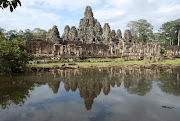
ALWAYS thought that visiting Cambodia's Angkor temples would be like exploring a lost city.
For many years I had heard tales of crumbling ruins hidden from time by steamy triple-canopy jungle that echoed with birdsong and the call of mysterious animals.
I imagined walking along jungle tracks, coming upon a faded ruin only after the last strike of a guide's machete cleared an overgrown patch of scrub. But the reality of Siem Reap's Angkor is this: hordes of tourists and well-worn paths leading to crowded temples.
Pick the wrong time of the day to visit Angkor Wat, the most famous of the region's temple complexes and the symbol on the Cambodian flag, and you'll be sharing the site with thousands.
The tour buses start arriving mid-morning and drop their passengers on the other side of the moat, with tourists flooding across the Naga Causeway to the dusty temple compound.
While Angkor is now firmly on the tourist track there are still ways to guarantee that you get to see the temples without being surrounded by hundreds of other people, and one is to pick the time of the day you visit.
Start early, and head into the temples while they are still quiet.
If your target is Angkor Wat, which was built by Suryavarmsan II between 1113 and 1150, start at the back gate and work forward past the teams of locals tending the grounds.
Your first view of the grand temple will rise from the path as you walk up the slight incline and you will get to see parts of the complex that many visitors don't come close to, like the detailed carvings on the long walls of the outer gallery.
Angkor Wat is a combination of corridors and courtyards, that are revealed like a Russian matryoshka doll, and it all surrounds the central towers which reach like blooming rose buds towards the sky.
When you're walking towards the front gate, with the temple behind you, make sure you leave the pedestal path and walk to one of the side ponds where you can see the structure perfectly reflected in the still water.
After visiting Angkor Wat make the short drive to Angkor Tom which was known as the Great Capital and considered to be a settlement under the protection of the gods when it was home to millions in the 14th century.
At the centre of this ancient city is Banyon which is a dilapidated structure made up of 16 towers that are clustered together and each one has four giant faces carved into the stone.
After the original inhabitants moved out of this complex around 1600 it was given back to the jungle and only rediscovered in the 19th century, by which time it had crumbled and only some of the faces remained.
This place is a maze of tiny rooms, steep staircases leading to open ledges, and dark corridors and every step will reveal a different perspective of a ruin that's built from ageing black and grey stone set against a moody humid sky.
Further along the same road is the monastery temple of Jayavarman VII, called Preah Khan, and while the secret with Angkor Wat is to start early the hint to visiting this peaceful complex is to come during lunch.
It's the hottest part of the day, when the daytrippers are hiding from the searing heat in the hotel pool, so the crowds all but disappear and the silence of the Cambodian bush that hugs this steamy site is disturbed only by the buzz of insects.
While Angkor Wat and Thom are impressive in their dilapidated beauty, it's hard to imagine anyone using those structures in the past. But Preah Khan is just as it was when it was a thriving community and while some walls have tumbled, and are now just a pile of stone blocks, it's still clear to see where one room finished and the other started.
Climbing through the dark corridor, which takes some effort because different levels have appeared as paving blocks and have moved over time, the door frames become smaller which was a design feature to thwart invading armies.
Just as with every building at Angkor there are sprays of intricate carvings on every wall and it's no different at Preah Khan with little Apsaras – Angkor's trademark celestial nymphs – or faceless buddhas on every surface.
Preah Khan was also given back to the jungle when the original community abandoned the town and now this is where you will see trees growing out of stone.
Right at the back of the complex, near the stage where dancers and musicians performed for the aristocracy, a seed dropped into a shelf in the stone wall hundreds of years ago and today the roots of a plump tree are draped over this ancient building.
There's one more temple that's worth a visit and while the first three sites are huddled together the fourth one, Banteay Srie, is a bit of a drive.
This is the Citadel of Women which was completed in 967 and today it's considered to be one of Siem Reap's treasures because of the intricate carvings, delicate structures and good repair.
This complex is also set inside a tall outer wall and protected by a moat, but while the other structures have been presented in a dull palette of black and grey this place is a rich ochre hue that glows in the Asian sun.
When a late shower falls on the area large drops plonk into the moat and make the lotus flowers dance as if they're being controlled by a puppeteer holding a string.
There are no grand structures here, just small chambers protected by false doors and connected by elevated walkways with high porches, and an old woman sits silently on a step with her back against a crumbling column to watch the tourists.
But it's the intricate carvings – more detailed and in better condition than at many other structures in the region – that make it a memorable place to visit.
It's not just the walls of carvings that tell historic tales but panels of stylised stone flowers that surround a false door and Apsaras beauties posing above a window.
Another rule is the further you get from Siem Reap the more quiet the attractions become and, with dozens of ancient sites to visit, it's not hard to find a place to enjoy without the crowds.
It's so easy to get to Siem Reap and Angkor these days and it's not considered to be a dangerous place any more, with the risks of getting into trouble no higher than in any other part of Asia that's on the tourist track.
But if you do plan to explore Angkor's ancient buildings consider engaging a local guide who will take you to the different attractions and pointing out things that make a visit more meaningful.
Our guide, Sarin, was a child of the Killing Fields who fled to a Thai refugee camp after his father was murdered. He waited out the Khmer Rouge regime and then had to live with monks when he returned to Siem Reap because his mother was too poor to care for him.
Sarin knew so much about every place we visited and would give us a commentary about carvings and pavilions with stories of kings and battles.
Read more!
Cambodia, long an Asian mouse, may be ready to roar
By Erika Kinetz
Published: July 27, 2007
PHNOM PENH: Most Cambodians live with two realities: rain and rice. The country that three decades ago abolished money has today embarked on the very long process of adding two new words to the national vocabulary: stocks and bonds.
The Cambodian government recently got its first sovereign debt ratings from the global ratings agencies Standard & Poor's and Moody's, and plans are afoot to open domestic stock and bond exchanges in 2009.
Take a ride into the countryside, where the vast majority of Cambodians live and work in conditions more than one observer has described as more African than Asian, and the very notion of an incipient derivatives market seems absurd.
But in the past few years, investors - not just donors, who still prop up the economy of this tiny, impoverished nation - have started to give Cambodia a good, hard second look. That is no small accomplishment for a nation still recovering from the murderous reign of the Khmer Rouge, a radical communist group that not only abolished money during its 1975 to 1979 rule, but also oversaw the deaths of about two million people - roughly one-quarter of the population at the time. After the Khmer Rouge was ousted by the Vietnamese, Cambodia sank into two more decades of civil war.
These days, the notoriously weak judiciary, lack of openness, deep and pervasive corruption, rampant smuggling, mediocre infrastructure (the postal service is barely functional and electricity costs are exorbitant), and the lack of a well-trained work force make Cambodia what has been politely called a challenging business environment.
But not, apparently, too challenging. Foreign direct investment, led by South Korea and China, rose from $121 million in 2004 to $475 million in 2006, according to data from the National Bank of Cambodia and the International Monetary Fund. Historically high levels of liquidity in global markets, as well as a regional boom and a growing perception that, after 30 years of domestic strife, stability has finally taken root, have all helped draw investment.
In January, the country got its first investment bank, Tong Yang Investment, part of the Tong Yang Group of companies in South Korea. Tong Yang plans to start a real estate investment fund of about $100 million focused on Cambodia and Vietnam and marketed to South Korean investors by the end of this year. Other private equity funds are apparently in the works.
Although Cambodia's meager population of 14 million people means that the country is a hard sell for big consumer companies, others have been drawn by the nation's soaring gross domestic product. In the past decade, GDP growth has ranged from a low of 5 percent in 1998, following the bloody factional fighting of 1997, to a high of 13.5 percent in 2005, according to the Finance Ministry.
Over the past three years, Cambodia has sustained average GDP growth of 11.4 percent a year, and the IMF predicts GDP growth will level off to around 9 percent for 2007. Inflation was at 4.7 percent in 2006, according to the ministry. The government has also been deepening its commercial law framework.
"You've got a story of macroeconomic stability," said John Nelmes, the IMF representative for Cambodia. "That's proving comfortable for businesses to invest."
The Australian mining giant BHP Billiton, and its partner, Mitsubishi, have begun a large bauxite exploration project in Cambodia, and Oxiana, the Australian company that runs the huge Sepon copper and gold mine in Laos, is digging for gold in the jungles of northeastern Cambodia.
The promise of oil off the coast of Cambodia has attracted a host of adventurous companies, including the U.S. oil giant Chevron and China's CNOOC and China Petrotech.
At the end of June, a delegation of French business leaders, including representatives of Total Exploration & Production, Société Générale, France Télécom, Lafarge Cement, and the hotel group Accor, came to Cambodia for a fact-finding tour. Japan sent a similar delegation this month, and Biwako Bio-Laboratory has said that it plans to invest up to $800 million in Cambodia for biodiesel production. On Monday, General Electric opened a branch office in Phnom Penh.
Bretton Sciaroni, a lawyer who has practiced in Cambodia since 1993, cited another factor in the country's appeal: the pro-business stance of the government.
Sciaroni, who also serves as a legal adviser to the government, said that when a client, the U.S. packaging company Crown Holdings, wanted to open a factory in Phnom Penh, getting the government to lower its 7 percent tariff on raw aluminum imports was as simple as asking. "The minister of economy and finance, Keat Chhon, asked my client what they wanted it to be," Sciaroni recalled. "My client said zero percent. He said, fine, and zero percent it is."
"People at the highest levels of government understand the necessity of getting stuff done," he added.
Officials describe the turn to capital markets as part of the nation's natural economic evolution. Last month, donors, including China, pledged to deliver $689 million in aid to Cambodia.
"We still need donor assistance," said Hang Chuon Naron, the secretary general of the Ministry of Economy and Finance. But he added that Cambodia would need more - and more kinds of - financing as its economy expands.
The nation's economic base is still quite narrow, dominated by tourism and the garment industry, which could suffer from Vietnam's recent accession to the World Trade Organization and the expiration of U.S. and European quotas on Chinese textiles, scheduled for the end of next year.
Cambodia also has a high level of public debt - most of it on favorable, concessional terms - and it does a poor job of collecting taxes.
On the upside, Cambodia's manufacturing base has been slowly broadening. Oil, natural gas and the mineral sector are promising, and real estate has been booming, some say too much.
Sciaroni said a number of his clients had been buying up property along Cambodia's southern beaches, hoping that the new airport in Sihanoukville would eventually draw tourists who intended to visit only the Angkor Wat temple, in the north, and then leave. "You don't see it yet, but in three to five years, you're going to see major development on the south coast of Cambodia," he said.
Look around Phnom Penh and the opportunities for growth are evident: no tall office buildings, no real golf course, few malls. But the question Han Kyung Tae, Tong Yang Investment's chief representative in Cambodia, has been asking himself lately is whether all the heady talk about surging investment and the rise of capital markets is premature.
"One day, I see the big potential," he said. "The next I'm skeptical."
Right now, Sciaroni said, few domestic companies outside the financial sector, where annual audits are required, would meet even minimal listing criteria. "Transparency doesn't exist for the majority of companies here today," he said.
That has not stopped the Korea Exchange, which operates the Korean Stock Exchange, from jumping in to help develop Cambodian securities markets.
Talk with Koreans of a certain age in Phnom Penh and they will tell you that Cambodia reminds them of their childhood home. The financial sector is no different: Fifty years ago, South Korea, like Cambodia today, depended heavily on foreign aid and was struggling to develop domestic sources of financing. Korea is now trying to share the miracle of its own growth, said Hong-Sik Choi, the executive director of Global Business Development at the Korea Exchange.
"Korea has experienced a miracle to transform itself from the poorest country to the 11th largest economy in the world during the last half century," he explained. "The securities market was at the center of Korea's economic growth."
Hang, the Finance Ministry official, knows that his country is not for the fainthearted. "Cambodia is high risk, but it's also high return," he said.
And while he concedes that Cambodia's road to economic maturity will be long, he maintains that the advent of publicly traded securities will demand new systems of accounting, openness and accountability, which could improve the quality of the business environment as a whole.
Jie Sun, the deputy director of the Research Center for International Finance at Beijing's Chinese Academy of Social Sciences, said that the major lesson - and perhaps the most instructive for Cambodia - that China learned in the 15 years since Deng Xiaoping opened the gates to Chinese-style capitalism, was that capital markets could help a country with the slow and challenging work of improving its business environment.
"The Chinese have realized that the main function of the stock market is to improve corporate governance," he said at a recent conference sponsored by the Economic Institute of Cambodia, an independent research institute and consultancy in Phnom Penh. "After 15 years, we have now come to the point."
Read more!
Friday, July 27, 2007
Finland Provides 2 M USD For Cambodia to Improve Its Land Registration
By Candy Chabada
Finland has donated about 2 million US dollars for Cambodia to improve its land registration, said officials to Xinhua on 21 July.
Mean Chanvanny, a chief of Cabinet of Ministers said that the fund will be used by Ministry of Urbanization and Construction to adopt modern information technology, to strengthen public awareness and to increase community participation in the sector of land registration.
Chhun Lim, a Minister of Urbanization and Construction said that Finland has been helping Cambodia handle the land registration. From the year 2002 up until the year 2007, it has been providing about 3.5 million US dollars for Cambodia to improve its land registration.
Read more!
Cambodia: World Bank Approves $36.25 Million Grant for Commune/Sangkat Development and Improved Local Governance
Contacts:
In Bangkok: Pichaya Fitts
Email: pfitts@worldbank.org
In Phnom Penh: Bou Saroeun
Email: sbou@worldbank.org
In Washington: Mohamad Al-Arief at
(202) 458-5964
Email: malarief@worldbank.org.
Phnom Penh, July 26 — Today, the World Bank’s Board of Executive Directors reaffirmed its support for Cambodia’s decentralization to the communes/sangkats and related local governance reforms, by approving a $36.25 million grant in additional financing for the Rural Investment and Local Governance Project (RILGP), as a supplement to the original RILGP which provided $22 million during 2003 - 2007.
The additional financing aims to expand the project support from the current 15 to 23 provinces, provide continuing financing for an additional three years from 2007 – 2009 to the intergovernmental fiscal transfer, the Commune/Sangkat Fund, and facilitate an accelerated increase in the amount of the overall intergovernmental fiscal transfer and related commune allocations.
The World Bank’s Country Assistance Strategy for Cambodia 2005 - 2008, endorsed by the Board in May 2005, recognizes governance issues as the primary obstacle to growth, poverty reduction, and aid effectiveness, and supports decentralization as a means to improve local governance and accountability. Through the RILGP – Additional Financing, the Bank will continue to support decentralized and participatory local governance systems and provision of priority public goods and infrastructure at the commune/sangkat level.
Mr. Ian Porter, World Bank Country Director, said, “While RILGP and RILGP-Additional Financing fund specific investments at the commune level, the institutional arrangements, procedures and funds flow are integrated as much as possible into the government’s own structures and systems. This has helped to build capacity directly within government institutions, strengthen government systems, and thus create a strong basis for sustainability and scaling-up of development impacts.”
H.E. Sar Kheng, Deputy Prime Minister and Mister of Interior said, “The Royal Government of Cambodia very much welcomes and appreciates the support of the World Bank to rural development and poverty reduction efforts through the provision of priority infrastructure and public goods at the commune level, and strengthening of the decentralized participatory local governance system, under the Royal Government’s Strategic Framework for Decentralization and Deconcentration Reforms. In particular, the Bank’s support of Commune/Sangkat Fund through RILGP Additional Financing is very important, since it provides ongoing support to the Royal Government’s own intergovernmental fiscal transfer system, and will allow an increase in allocations of development funding to the communes over the coming 3 years.”
Ms. Nisha Agrawal, Country Manager for Cambodia said that the RILGP-Additional Financing is also aiding in harmonization and alignment of development partner support. “The Royal Government will use part of the additional grant to support development of a National Decentralization and Deconcentration Program, which will elaborate the implementation details for the National Strategic Framework for Decentlization and Deconcentration Reforms and will help to provide a better foundation for coordinated donor support in future,” she said.
The Bank Board’s approval of the additional financing for RILG is the first for Cambodia under the Bank’s policy, adopted on May 19, 2005, which enables the Bank to provide additional financing in the context of ongoing, well-performing projects, such as RILGP, to scale up the project’s impact and development effectiveness. This approval follows the recent Board approval of a $15 million grant for the Poverty Reduction Growth Operation (PRGO).
For more information on the World Bank and its work in Cambodia, please visit:
http://www.worldbank.org/kh
Read more!
'They planned to kill me - but I survived'
Cambodia's Ray Charles lookalike endured serious hardships. Jon Lusk on the man who escaped the Khmer Rouge
Friday July 27, 2007
With his legs folded under him as he sits on the floor, Kong Nay seems a frail figure, dwarfed by the large banjo-like instrument he holds. There's a flash of gold fillings in his smile, and when he sings, the voice of a much stronger man jumps out, answering the call of his strings.
This 61-year-old Cambodian is a master of the chapei dong veng, an ancient long-necked guitar with two strings thought to have arrived in Cambodia with the Buddhist faith nearly two millennia ago. Kong's penetrating, nasal wail closely follows or spars with the simple and often melancholic tunes he plunks out on the nylon strings of the instrument. The dark glasses that mask his heavily pock-marked face and sightless eyes have earned him the nickname of "the Ray Charles of Cambodia", but the two artists have rather different stories.
"I'm so excited and honoured that they compare me to him. But at the same time I'm not very happy with myself because the American Ray Charles was so rich and I'm so poor," he chuckles.
meet Kong on his first day in the UK, where he is touring with his 21-year-old protege Ouch Savy to promote their joint debut album, Mekong Delta Blues. Kong admits he doesn't really know what the blues are - not the musical kind, anyway. But the superficial resemblance of his music to the African-American form, and the tough life he's lived do more than justify the title.
Born in the southern Cambodian province of Kampot, Kong was blinded by smallpox at the age of four, and as a boy fell in love with the sound of the chapei. "I felt it was something that I should learn, something that would give me a good life in the future," he recalls.
His family was too poor to afford one, though, and for five years he sang and mimicked the chapei vocally, until his father finally bought him an old one. At 13, he began to take lessons from an uncle, mastering the basic repertoire within only two years. He then began playing professionally, improvising on traditional folk songs by spontaneously spinning stories like a hip-hopper, tailoring them to each audience.
"At 18 I met my wife [Tat Chhan] and we started our life together, depending on chapei. We managed to earn a good living. Not too rich, not too poor, but just good enough to survive, like other people. But when the Khmer Rouge took over, that was a big turning point in my life," he says with characteristic understatement.
In 1975, like millions of other Cambodians, his entire family was deported to a forced labour camp by Pol Pot's genocidal regime. Despite the Khmer Rouge's dislike of artists in particular, they found a use for Kong. "I was forbidden from singing folk tales, or songs that touched on social issues. Instead they told me to sing something that served their propaganda. So during the lunch break, I would sing and play to entertain people."
While most prisoners were given three large spoons of rice per day, Kong and anyone else who was sick or disabled got only one, and starved more rapidly. After two years, they stopped Kong's music altogether and forced him to work. "They planned to kill me. I was on their list. But then the Vietnamese [army] invaded and so I survived." During the bombing that ended the Khmer Rouge's reign of terror, Kong and his wife each lost a brother. Another of Kong's brothers had been executed, but all seven of their children - three born in the camp - miraculously survived.
In 1979, the family returned to their village, where Kong resumed his life as a chapei artist, and they had three more children. In 1991, Kong won a national chapei singing contest in Phnom Penh, and the following year moved there at the invitation of the Cambodian ministry of culture. The salary was poor, but his family - and those of a few other artists who had survived the genocide - were allowed to build homes in the city's Tonle Bassac squatters' community.
Then in 1998, Kong received a young visitor called Arn Chorn-Pond, a former refugee who now lived in the US. He was another survivor of the killing fields, who had been forced take part in atrocities from the age of nine and had returned to Cambodia periodically over the previous decade, trying to make peace with his past. Cambodia had lost around 90% of its artists in the genocide, and Chorn-Pond's family, which had run an opera company, had been particularly hard hit.
"When I came back to Cambodia in 1989, I found nobody here, except one of my sisters," he explains from Phnom Penh, his voice still raw with anguish. "They were all starved to death or killed by the Khmer Rouge - my dad, my mum, my cousin, my nephew, my uncle ... 35 in my family had disappeared."
With Kong Nay and several others, Chorn-Pond founded the Cambodia Master Performers Programme, which soon became Cambodian Living Arts, a charity dedicated to reviving the country's performing arts by helping to lift surviving artists out of poverty and employing them to pass on their skills to the next generation. "It was for me an urgent thing to start this, because I knew that my culture was going down in the next 10, 20, 30 years, if no one did anything about it," he says.
In 2003, Kong began teaching four young students, including Ouch Savy. That same year both he and Chorn-Pond appeared in the harrowing Emmy-nominated film The Flute Player, now being shown before each of his UK performances. When Peter Gabriel saw it, he was so moved that he began donating equipment and expertise to CLA, which led to the recording of Mekong Delta Blues.
Chorn-Pond's vision is of a Cambodian artistic renaissance by 2020, but it won't be easy. The loss of so many artists created a cultural vacuum that has been filled by foreign music, leaving most Cambodian youth hooked on western rap and rock or Chinese pop, and scornful of their own traditions. Government arts funding has been very limited during Cambodia's slow economic recovery, but ironically, Kong and his neighbours are now under pressure to move 20km away as developers eye their inner-city land. He relates this in the song My Life - as close as he's prepared to get to singing about politics these days. Apart from wanting to stay put, what else does he wish for?
"I hope that peace will prevail. There should be no more fighting, no more civil wars, no more conflicts. I am sick and tired of it."
· Kong Nay is playing at Womad, Charlton Park (0845 1461735), until Sunday, then touring.
Read more!
Putting the Khmer Rouge on Trial
By Kevin Doyle/Phnom Penh
At 82, Nuon Chea's eyesight is failing and most days he sports large, dark sunglasses. What remains of his white hair is slicked back in strands and though his breath labors painfully at times, he can still sit upright and at full attention for hours when discussing his role in Cambodia's brutal Khmer Rouge regime. A former chief lieutenant to leader Pol Pot, Nuon Chea is the highest-ranking Khmer Rouge member still alive — and the key figure in a coming courtroom showdown which international and Cambodian prosecutors hope will hold the remnants of the regime accountable for the estimated 2 million deaths which occurred during their bloody reign in the late 1970s.
It's a trial that has long been coming. After Cambodia appealed for international assistance in setting up a genocide tribunal in 1997, it took another nine years of governmental foot-dragging and tortuous negotiations with the United Nations over the shape and structure of the court before prosecutors and judges were sworn in last July. Since then, the proceedings have encountered months of legal wrangling and administrative delays, leading to concerns that the few surviving Khmer Rouge leaders could die of old age before being brought to justice.
This month, however, seems to mark a point of no return. On July 18, prosecutors submitted the names of five possible suspects to the court's investigating judges. That list has not been released to the public, though it's widely assumed to consist of elderly regime leaders like Nuon Chea, who have lived in quiet retirement since abandoning their movement in the late-1990s after reaching a peace deal with the government.
For his part, Nuon Chea is sure his name is at the top of the list. With the death of Pol Pot in 1998, he admits that he is now "responsible for everything that happened."
"I consider this court a battlefield fight between patriots and invaders. I will not allow anyone defeat me," the former communist revolutionary says, speaking from his small wooden house in Pailin on the Thai border in northwest Cambodia. If called before the court, he plans to explain that the killings were "not a policy" of the regime, a line all former Khmer Rouge leaders have stuck to. Nuon Chea rejects the idea that the fanatical legions of young Maoist rebels he led during the 1970s executed thousands and dumped them in mass graves, or that hundreds of thousands more were worked to death, succumbing to starvation and disease in the countryside after being forced to labor day and night to build the Khmer Rouge's vision of an ideologically pure agrarian society. Publicly he will only say that "mistakes" were made under the Khmer Rouge, and still speaks proudly of his former boss, Pol Pot. He has hinted that the skulls and bones in Cambodia's thousands of mass graves could merely be those of Cambodians killed by U.S. bombing during the civil war of the 1970s or the Vietnamese incursion of 1979.
Nuon Chea is the most outspoken of the former Khmer Rouge leaders; other likely targets of the tribunal have taken a lower key approach. Khieu Samphan, 76, the former Khmer Rouge head of state, lives near Nuon Chea in Pailin but has had little to say on the speculation that he is one of the five defendants. Ieng Sary, 78, the regime's former foreign minister, and his wife Ieng Thirith, 75, the former minister of social affairs, have also avoided the media. A young man who answered the door at their large house in a quiet neighborhood in central Phnom Penh said the couple had recently gone to Bangkok, where they frequently travel for medical treatment. Kang Kek Iev, 63, known as Duch when he headed the S-21 torture center in Phnom Penh where thousands were imprisoned and executed, is the sole regime member in prison. Now a born-again Christian, Duch has been held in pre-trial detention since 1999 after being discovered working for a local humanitarian organization.
With the names of the five suspects now in the hands of the investigating judges, the evidence will be analyzed — prosecutors have submitted 14,000 pages of documentation, including interviews with 350 witnesses — and a decision taken on whom to charge. That could happen as early as January 2008, with the first trials soon after, officials at the tribunal said. All that's needed now is just a little more patience, according to Youk Chhang, Cambodia's foremost researcher on the Khmer Rouge and head of the Documentation Center of Cambodia. "This is a lesson we can learn from. Not just for Cambodia, but globally, as genocide seems to happen everywhere now," he says. "It's time for us to solve this and move on."
Read more!
Thursday, July 26, 2007
Cambodia to hold school event for small arms education
The Japan Assistance Team for Small Arms Management in Cambodia (JSAC) and Working Group for Weapons Reduction (WGWR) are co-organizing an educational event on small arms in Phnom Penh on July 27 to 28, a press release said Thursday.
Six high schools will host this event, under the cooperation of the Cambodian Ministry of Education, Youth and Sports, the JSAC press release said, adding that the students will participate and learn about the small arms problem in Cambodia.
WFWR, JSAC, Ministry of Interior officials and campaign volunteers will teach high school students about the risks and laws relating to weapons, it said.
The event is intended to raise students' awareness on the small arms problem, and contribute in building a culture of non-violence and peace among the youth, it added.
JSAC has implemented its weapons collection and other peace building activities in the northwest areas of Cambodia and is currently focused on Battambang province and Kompong Thom province, it said.
According to the press release, the number of small arms collected through JSAC activities since 2003 is now 28,375.
Source: Xinhua.
Read more!
World Bank head to visit Australia, Asia
The new World Bank President Robert Zoellick will next week visit Australia for talks with APEC finance ministers.
Zoellick, a former US chief trade negotiator and deputy secretary of state, indicated he would not shy away from discussing corruption and governance issues during a trip that will also take in Japan, Vietnam and Cambodia.
"I want to try to stress the overall rule of law, good governance, the openness of a society and how it can contribute to development and opportunity," he told reporters.
China and several other states reacted angrily earlier this month at published World Bank governance rankings that gave some authoritarian states low rankings in areas such as democratic accountability.
"It's unfortunate that it's become such a controversial item, in that if you look at most of the work in the development field, having sound institutions and having good governance is a core element," he said, without referring to a particular country.
Zoellick will first meet in Australia with finance ministers of the Asia-Pacific Economic Co-operation grouping who begin a week of talks in Queensland on Sunday.
Talks with the 21-member APEC forum ministers, coinciding with the 10th anniversary of the Asian financial crisis cover "what's been achieved (and) where are the question marks in the system," he said.
In Cambodia and Vietnam, Zoellick will visit World Bank projects and hold meetings with government officials, business leaders and civic groups.
"One of the challenges here is that even though they've got pretty good growth, the capacity in the country is very thin," he said of Cambodia.
Cambodians remain heavily dependent on textile exports and Zoellick said he hopes the bank can help "broaden their overall economic possibilities."
Vietnam, he said, was "now starting to deal with the second stage of reforms" after an economic boom in its cities, and it needs to spread growth to poorer rural areas.
Japan, the World Bank's second-largest shareholder, is a leading player in international development aid with an annual aid budget of some $9 billion that will host next year's Group of Eight industrialised nations summit, Zoellick said.
"I'm interested in trying to get the sense of priorities that Japan sees in the development area," he said, adding that he would thank Tokyo while encouraging the Japanese to continue their support for international development.
Read more!