PHNOM PENH: Cambodia's Princess Norodom Marie Ranariddh had filed a lawsuit against her estranged husband, Prince Norodom Ranariddh for adultery, a court official said Monday. The former leader Funcenpec Royal Party had an affair with Ms. Ouk Phalla, the Royal Ballet dancer.
Ranariddh could face up to one year in prison if found guilty under new monogamy laws.
Sok Kalyan, a deputy prosecutor at the Phnom Penh Municipal Court, said they were probing a complaint filed two weeks ago accusing Ranariddh, often seen in public with his mistress, of adultery.
"
I am investigating the case to find evidence," Sok Kalyan said, adding that he would invite both Princess Marie and Ranariddh to court once he had completed his investigation.
The kingdom in September passed a monogamy law which punishes unfaithful spouses and banned polygamy and incest.
Prince Norodom Ranariddh could face between a month and a year in prison, plus a fine of up to $250. Prime Minister Hun Sen, Ranariddh's arch rival, proposed the law after publicly grumbling about government officials bringing their mistresses instead of their wives to official functions.
Ranariddh and Ouk Phalla have been in a long-term relationship. The pair have a three-year-old son.
Read more!

Monday, December 18, 2006
Norodom Marie Ranariddh, suing Norodom Ranariddh for adultery

International Migrants Day Celebration in Thailand December 18, 2006
Labor activists marked International Migrants Day on Monday in Bangkok, while representatives submitted a letter to the Thai government urging greater migrant labor rights protection.
The group urged the Thai government to change policies toward migrant workers Burma, Laos and Cambodia to allow open-ended worker registration.
It also urged the government to establish special migrant worker registration centers that would help find workers employment and coordinate more contact between migrant workers and employers.
Moe Swe of Young Chi Oo, a Mae Sot-based NGO, said about 50 labor activists gathered in front of government house in the morning until an official met with the group and promised to send the letter to Thai Prime Minister Surayud Chulanont on Monday afternoon.
More than 20 Thai-Burmese labor organizations recently organized a collective union between Thai workers and migrant workers, which consist of non-government organizations, labor associations and special interest groups.
Juthathawat Inthornsuksri, a permanent secretary of the Thai Ministry of Labour, said that if migrant workers in Thailand are here legally, they are protected under the same law as Thai laborers. Illegal migrant workers are arrested and deported to their home countries.
A poll recently conducted by Assumption University in Bangkok revealed that among 4,148 people, 58 percent believed that there is no need for Thailand to accept more migrant workers in the agricultural and industrial sectors, because they could have a negative impact on Thais who want jobs and depress their wages.
Although most respondents agreed that migrant workers are diligent, they said migrant workers are neither honest nor loyal to their employers.
The poll found that 67 percent of the respondents did not want migrant workers to be permitted to work in all fields, while 50 percent said foreign workers should not be able to work under the same conditions and receive the same wages as local workers. Forty percent said that migrant workers should receive the same wages as local workers.
Meanwhile, the latest statistics from Thailand's Ministry of Labour found that local businesses want to hire more migrant workers.
In 2006, Thai employers have sought 1.3 million unskilled workers from Burma, Laos and Cambodia, but the Thai government was able to supply only about 700,000 workers, according to the ministry.
Read more!
Vietnam, Cambodia to discuss investment projects
Vietnamese Prime Minister Nguyen Tan Dung arrived in Phenom Penh on Monday morning for a two-day official visit to discuss Vietnamese investment projects with Cambodian leaders, said Deputy Prime Minister Hor Nam Hong.
"
Both sides will meet to negotiate and decide on a number of requests like Vietnamese investment to explore mines in Cambodia, investment for building a hydro-electricity power plant along the Se San River in northeastern Cambodia, the project for rubber planting, and the study of four other projects for hydro- electricity development," said Hor, who is also Minister of Foreign Affairs and International Cooperation.
All the cooperation is expected to strengthening the relation and friendship between the two countries, he added.
Nguyen Tan Dung is scheduled to meet Acting Head of State and President of National Assembly Heng Samrin and his Cambodian counterpart Hun Sen on Monday afternoon.
Meanwhile, Nguyen Chien Thang, Vietnamese ambassador to Cambodia, told reporters that during the prime minister's first ever official visit to the kingdom since he was elected in June, he also aims to pay courtesy call to Cambodia's high ranking officials.
Nguyen Tan Dung will then visit Laos on Dec. 19-20 and Thailand on Dec. 20-21, he said.
Source: Xinhua
Read more!
$7.8 Mln grant to suppor for Cambodia's New Tier of Loacal Government
$7.8 Million Grant to Support for Cambodia's New Tier of Local Government Press Release - Asian Development Bank Dec. 15 2006 A US$7.8 million grant from ADB’s Asian Development Fund will help improve governance in Cambodia by providing further support for the development of a local tier of government. The project will enable more commune councils – the lowest level of elected sub– national administration created as part of a decentralization process begun in 2001 - to operate more effectively. While this level of sub-national administration is expected to take on an increasing level of responsibility, serious capacity constraints persist for most of the country’s 1,621 commune councils.
The project will also develop the national civil registration system and aims to strengthen voter understanding of democratic rights and accountabilities. “The decentralization process is perhaps the single most important state-building development in the country since the 1993 Constitution, and the project will support this by helping to institutionalize more accountable local government and public service delivery,” says Joao Farinha-Fernandes, an ADB Economist. The project will provide 235 commune councils with local assembly premises that will provide adequate working facilities for elected councilors and their constituents, thus helping to establish the newly introduced institution of elected local government. It will help develop a modern and computerized civil registration system to assist the population’s access to justice administration, based on official birth, death, and marriage documents. More comprehensive and accurate information based on the system will also improve government public service delivery and general policy making. Last, it will provide a fund to support training for elected commune councilors, clerks, and government officials in concepts of local democracy and accountability, council tasks, roles, and services.
A mass media fund will also be established to disseminate key messages on local democracy, participation, and accountability through TV, radio, and village theaters over 24 months. The project follows the successful implementation of the pioneering Commune Councils Development Project, backed by a $10 million loan from ADB in 2002, that provided facilities and support required for 440 commune councils to function effectively. A $200,000 technical assistance grant, from ADB’s Gender and Development Cooperation Fund, accompanies the project to support the advancement of gender equity in local governance in six target provinces. The Government will contribute $1.98 million equivalent in the form of counterpart staff and equipment. The Ministry of Interior is the executing agency for the project, which is due for completion in December 2009.
Read more!
Vietam Prime Mminister took off for the Neighbours

Prime Minister Nguyen Tan Dung had left Hanoi for Cambodia,this morning. Nguyen Tan Dung is on his official visits to Cambodia, Laos and Thailand from December 18-21.
The visits, made at the invitations Dung’s neighboring counterparts Samdec Hunsen, Buasone Bouphavanh and Surayud Chulanont, aim to affirm Vietnam’s external relations policy of continuing to attach great importance to developing cooperation relations with the regional countries. These trips are the new concepts of political features to boost Hanoi stomach.
Dung is scheduled to visit Cambodia on Dec. 18-19, Laos Dec. 19-20 and Thailand Dec. 20-21. The visit will be discussed on a new stage of political tie and friendship with Thailand. Vietnam is in need political shelters and steel cable to pull itself up. This is a new game Thai-Viet playing.
Heng Peo must pays legal cost before leaving on 18 December 2006

Saturday, December 16, 2006
Festival with a heart for change


The little town of Siem Reap in Cambodia was abuzz recently with photographers from around the world who were there for the Angkor Photography Festival. CHIN MUI YOON attended with camera in hand and discovered the power for change that lies behind the lens.
THEIR faces were full of fear and misery. They were like scared little animals. They’ve been treated like s**t because they beg, and they felt like s**t. They had no self respect.”
Strong words from French photographer Christophe Loviny, about the street children of Cambodia. Just another white man who doesn’t know Asia mouthing off?
The smile says it all ... Boram’s happy face was captured on film by a friend. Boram and his pals are Cambodian street kids who took part in a lifechanging workshop at the Angkor Photography Festival that gave them their self-respect back. – Photos courtesy of the Angkor Photography FestivalNot quite. If anyone can make such observations, then it is lensmen like Loviny and his peers whose photos first told the world about the meltdown of Cambodian society under Khmer Rouge rule in the 1970s.
They recorded the struggle of the street children’s parents who grew up in a country that had practically returned to medieval times. And they’ve been recording the lives of those children, too.
But they grew tired of taking pictures of dead-end kids living in sad conditions. Stepping out of the detached, journalistic role they’ve had to play all these years, these photographers decided to do something for the children.
And so, last year, some of them came up with the idea for a photography festival that raises funds for a street children’s centre in Siem Reap, the town nearest Cambodia’s world heritage site, the Angkor Wat complex of temples.
Thanks to the US$15,000 (RM57,000) raised last year and at the Angkor Photography Festival this year – which ran from Nov 25 to Dec 1 – some 40 children will have hot meals, baths, clean clothing and tuition in mathematics and the Khmer and English languages. Food and health assistance will be extended to their families, too.
But the festival wasn’t just about the money. The organisers invited 35 children to join photography and dance workshops, which were conducted by Indian choreographer Sangeeta Isvaran, English art therapist Isabelle Rodker and Filipina art therapist Paula Holmes.
“Photography is therapy,” explained Loviny. “Photography can transform lives if it’s used the right way.
Gary Knight wants to do more than just feature pretty pictures at the photography festival – he wants to change lives for the better.“We hope to develop the children, not just as photographers documenting their world, but also as human beings, through photography. Self-expression through arts has helped the children gain confidence where previously there was none.”
And then there were the dance workshops. Out of them came the Hip Hop for Hope dance troupe that has begun performing in hotels around the town.
“We cannot give the children hope and happiness for a week (during the festival) and then leave them to sink back into their dead-end lives,” said Loviny.
“Now they can present shows at the hotels and earn money. It gives them pride. We don’t want to assist them 100% because that creates a mentality of always asking for help, which is prevalent in Cambodia.
“We wanted to use photography, dance and art to change the children’s self-perception. These children had no self-esteem when we found them.”
They “felt like s**t”, as Loviny said, and it showed in the self-portraits each child was asked to create on the first day of the photography workshop. But just making those self-portraits was a step on the path towards better self-esteem.
“When the children’s pictures are projected during the slide shows, or when they dance on stage, people acknowledge their work and clap.
“They now know a different future is possible through their own efforts. We hope this is one way of changing this generation of Cambodia’s children,” Loviny said.
Not a party for Mat Sallehs
Outdoor slideshows were a strange sight in the touristy town of Siem Reap. There wasn’t even a cinema there.
These are some of the photographs taken by the street kids of Siem Reap – where, it seems, Barbie reigns just as she does among kids around the world!
Despite the humidity and the dust stirred up by traffic, shutterbugs attending the festival had gathered at the Royal Gardens to enjoy projections of photographs captured from around the world.
The images included haunting portraits of children affected by war and visual documentation of China’s growing pains, Cambodia’s landmine victims, rituals of monks, tsunami-ruined landscapes and Myanmar’s Rohinya people.
Workshops, discussions and exhibits were the other events during the fest, which had attracted hundreds of photographers, amateurs as well as professionals representing top news service agencies like Magnum and AFP.
The highlight was the works of 20 young Asian photographers and the 35 street children who had attended free workshops the week before.
Each night, as we gathered, I could sense growing excitement over this project that could be culturally and socially significant for the region.
Singapore is known for international performing arts and Ubud in Bali is gaining a reputation as the literary heart of Indonesia, thanks to the flourishing annual writers’ festival it hosts. Could Siem Reap be developed as a photographers’ hub?
It will be if the guys from the VII photo agency have anything to say about it. Several members of this prestigious Paris-based agency started the ball rolling by holding small workshops and slideshow events in Siem Reap last year. More photographers wanted in, and so the Angkor Photography Festival was formalised.
One of VII’s founding members, British photojournalist Gary Knight, said they wouldn’t want to hold the event anywhere else.
“We’ve all had a very long relationship with Cambodia,” he explained at an interview at Carnets d’Asie, a bookshop cum café and gallery that was used as the festival headquarters.
“We met while working and living in this part of the world when it was so different.
“There was war and chaos. We shared an experience here together as young men through our visceral relationship with Cambodia’s culture, history and people.
“It is nostalgic for us to hold a photography festival here, as photography had brought us to Asia all those years ago.”
And in practical terms, he added, Siem Reap is affordable. If the event were to be held in Jakarta, Bangkok or Kuala Lumpur, “we would disappear!”
“This is the smallest photography festival in the world, and we have very limited financial resources,” he said.
“We want to create a cultural event and also have fun!”
From landscapes to portraiture, from fashion and fine art to hardcore photojournalism, the festival highlighted all types of photography. Tribute was given to Japanese photographer Taizo Ichinose, who was killed by the Khmer Rouge in 1973, and whose pictures of war and landmine victims remain some of the most haunting and defining images of the horrors of conflict.
Knight hastened to add that the festival is not a party for foreigners in Cambodia.
“The festival began with workshops and its primary focus remains training, teaching and nurturing young talent,” he said.
“I don’t want a festival for Asians or one for Caucasians. We mix the best work together. We hope to give exposure to more Asian photographers’ work, to encourage them to come here and meet photographers from other parts of the world, to engage in conversation and exchange ideas, to have a good time and go back home to motivate other young photographers.”
Loviny added that they “no longer have issues with ego, self-esteem or competition for jobs. We want to share the knowledge and experience we’ve been fortunate to have.
“That’s why we included a free workshop for 20 emerging regional photographers based on the professional model of VII’s workshops. We hope they can return to their countries to better document their societies and cultures.”
The Star’s Azhar Mahfof was the sole Malaysian representative picked from among 300 applicants. He shares his experiences and images on page 6.
More Asian involvement needed
The festival’s humanitarian aspect sets it apart, said organising committee president Roland Eng. The festival’s tagline is “Photography for Change”.
“The festival is non-profit. Our committee comprises volunteers, including well-known photojournalists who teach the workshops. We depend solely on sponsorship, goodwill and our own pockets,” said Eng, formerly Cambodia’s ambassador to the United States and Malaysia.
Siem Reap’s most stylish hotels sponsored spaces for the gatherings and outdoor projections; they include FCC Angkor, Sofitel, La Residence d’Angkor, Victoria Angkor, Amansara, Hotel De La Paix and Angkor Village Resort.
“We would like to move the programme into public spaces for more local interaction,” said Knight. “But we’d need the support of the Cambodian and local government to make it a more public event.”
Loviny said they would welcome Asian countries sponsoring their own photographers so that the limited funds the organisers have to work with could be channelled into programmes for children.
“Malaysia and the rest of Asia have progressed today while Cambodia is struggling to fit into a developing world that has left it behind,” he said.
“There is a strong culture of voluntary work in France; after all, that is the country where organisations such as Doctors Without Borders and Reporters Without Borders were formed. But the volunteering culture in Asia is also growing as the region devlops tremendously.
“So we would like to invite more Asian partners. And we hope to share the same spirit of sharing to make photography a catalyst of change.”
Friday, December 15, 2006
ADF offers 14.5 Million USD for Cambodia to improve clean water supply
Agency for Development of France (ADF) has offered 11.1 million euro (around 14.5 million U. S. dollars) in loan for Water Supply Authority of Cambodia to improve its capacity of clean water supply for Phnom Penh and its neighboring town Takhmoa, Kandal province, an official told Xinhua by phone on Friday.
"
The loan will be used for building a new clean water supply factory at Chroy Chang Var commune in Phnom Penh to improve the clean water network of the main water station in Phnom and expand the clean water distribution to the outskirts of Phnom Penh," said Ek Son Chan, Head of Water Supply Authority.
This can help facilitate the government to achieve the Millennium Development Goal for public health, he said.
Meanwhile, the authority currently aims to set up a master plan for enlarging the capacity of the clean water supply for 160,000 families in Phnom Penh and neighboring provinces of Kandal and Kompong Speu from 2009 to 2010, he said.
Source: Xinhua
Read more!
Phnom Pen Power is striking RFA correspondent
Cambodia : Radio Free Asia correspondent in coma after suspicious road accident
Écrit par RSF.ORG
15-12-2006
Reporters Without Borders today called for a thorough and impartial investigation into a traffic accident in which Sok Serei, one of the Cambodia correspondents of Radio Free Asia’s Khmer-language service, was knocked off his motorcycle and seriously injured in Phnom Penh on the evening of 13 December. “As there are witnesses who say a vehicle deliberately struck Sok Serei’s motorcycle, it would seem the authorities should urgently explore all leads and try to identify the vehicle involved as quickly as possible,” the press freedom organisation said. “If nothing is done, the entire journalistic community in Cambodia could feel threatened.”At least four Cambodian journalists have received death threats this year because of their reporting on corruption.
Sok Serei was hit by a 4WD vehicle in the centre of Phnom Penh. Some witnesses said he was struck from behind. Others said the driver opened the door of his vehicle in order to knock Sok Serei off his motorcycle. Sok Serei hit his head hard against the ground in the fall which left him in a coma over night. He continues to receive hospital treatment.Sok Serei is known for his investigative reports into allegations of corruption by government officials, which were broadcast by Radio Free Asia.
Radio Free Asia’s correspondent in northeastern Cambodia, Sok Rattha (who is better known by the pseudonym of Rattha Visal), was meanwhile threatened by the governor of Rattanakiri province at the end of last month. “He told me he wanted to wanted to verify reports before they were broadcast,” he said.
Read more!
Vietnam, Cambodia to complete border marking by late 2008
Vietnam and Cambodia plan to complete their border demarcation and landmark planting by the end of 2008, local newspaper Vietnam News reported Friday.
The Commission for Ideology and Culture under the Communist Party of Vietnam Central Committee held a conference on Thursday to disseminate information about the border demarcation.
The supplement to a treaty on border demarcation, signed by the two countries' prime ministers in October 2005, paves the way for their improved political and economic ties, and the setting of border markers.
Since the signing of the treaty in 1985, Vietnam and Cambodia have demarcated over 200 km out of the 1,137 km shared between the two countries, and planted 72 markers out of the 322 planned ones, said the report.
The Vietnam-Cambodia Joint Committee on Border Demarcation has agreed to use newly-designed landmarks to replace existing ones. Vietnam will help Cambodia manufacture the landmarks after the two sides agree to use symbols and scripts.
Ten of Vietnam's 64 cities and provinces border nine localities of Cambodia.
Source: Xinhua
Read more!
Thursday, December 14, 2006
Parliamentary head supports crackdowon on smuggling in Cambodia
The National Assembly President Heng Samrin has voiced his support for the Cambodian government's clampdowns on smuggling operations and also requested that the measures be carried out across the country for the sake of economic growth, local media reported Thursday.
"We encourage the government to implement this throughout the country, not only for the border regions in Banteay Meanchey province, but also for the places which (were required) to carry out the policies on corruption reduction," the Samleng Yuvechun Khmer quoted him as saying here on Wednesday.
The government had to take firm measures against the smuggling of right-rubber cars and all goods in order to force the traffickers to pay taxes to the state, he said.
Regarding the car smugglings, Prime Minister Hun Sen has issued a sub-degree, punishing 38 Banteay Meanchey officials and one police commissioner for accepting bribes in exchange for allowing the smuggling of around 800 right-rubber vehicles from Thailand into Cambodia, according to news archives.
Finance Minister Keat Chhon also claimed that taxes collected from the smugglers would increase the nation's revenues and the people's living standard. The living standard of the corruption government officials are not high enough(he probably thought that). In his statements, Finance Minister Keat Chhon didn't address about the living standard of million poor Cambodians. The Cambodia Kingdom had collected billions dollars a year, especially 2006. The CPP government officials are richer bigger and bigger and fatter than ever before.
According to NGOs' report, graft costs Cambodia around 300 million to 500 million U.S. dollars a year. But even the Hun Sen regime had collected 500 million USD taxes, we are not sure for a better life than land grabbing and living in the slum areas. The Hun Sen government are complaining the income tax losses 500 million USD because they had lost from their pockets 500 million dollars. But unfortunately, the 39 low ranking government officials had to claim their pockets too and trying to improve their living standard. This is called the crocodile living in the same pond, we share. According to the history of hungry government officials(especially the Top dog Hun Sen and his ring), the top ranking had to scream very loud.
Source: Xinhua
Read more!
Cambodia Kingdom's tourist industry surpass 1.3 billion USD
Cambodia's tourism income to surpass 1.3 bln USD
Cambodia kingdom's revenue income has her tourist industry revenue income surpassed 1.3 billion USD in 2006. The Jianhua Daily on Thursday quoted Deputy Prime Minister Sok An as saying the tourism income alone is worth 1.3 billion USD.
More and more visitors are coming into the kingdom, which will bring the sector's income to a record high of 1.3 billion U.S. dollars, in comparison with last year's total of one billion U.S. dollars, said Sok An, while inaugurating the Angkor Coex building in Siem Reap on Wednesday.
From January to October this year, Cambodia received 1,322,306 visitors, around 300,000 of whom are from South Korea, 148,672 from China, 151,958 from ASEAN (the Association of Southeast Asia Nations) countries and 70,875 from Japan, he said.
Cambodia has become one of the region's most favorite travel destinations, mainly because its consumption level is not so high, he added.
Tourism and garment production are the two major foreign currency earners for Cambodia.
Source: Xinhua
But the question is Cambodia's income from tourism worth 1.3 billion USD and also donations from other organizations like UN, World bank, United state, Japan, China, Korea++++..ete.; Cambodia is still poor and there are not much progress in the whole country. Million Cambodian people are still living without proper food and medical treatment. Million children are lacking school, medication, food and proper shelters.
The Cambodian government had collected businesses's taxes and selling domestic products totally Billions Billions USD in 2006, but the money disappeared in the dust of Phnom Penh and little had reach to the poor.
Read more!
Wednesday, December 13, 2006
Hun Sen responded to Human Rights rally on Sunday
Cambodia prime minister, Hun Sen, responded to the criticism of Cambodia Human Rights rally last Sunday. In the speeches in Svaiy Rieng, angrily Hun Sen blasted at Human Rights and the 14 million Cambodians by saying erecting schools, hospitals, pagodas are Human Rights. People don't need anthing else more than that.
United State ambassador Mr. joseph Musommeli had condemned the Hun Sen government of being corruption, suppression causing the former Khmer Rouge leader Hun Sen pulled out his evil attitude. And Hun Sen had complained that we did many good things, they admired once, but if did one bad thing they talked 10 times.
The Hun Sen government was notoriously arrest the Human Rights president Kim Sokha in 2005 of Human Rights rally. And they were trying to silence and suppress Human Rights activists including Joseph Musommeli but American power stood stronger and penetrating deeper into the communist regime.
In the speeches Hun Sen said Cambodian citizens need schools, Hospitals, pagodas and rice to eat but nothing else. And he said that is Human Rights. He spoke like a child that know nothing about common sense. He probably forgot about his position as a prime minister of the Cambodia Kingdom. And all his governor officials and him are the one who always hungry for Villa, million dollars, land and power. He is a billionaire and he is the hungriest culprit in Cambodia.
Read more!
Tuesday, December 12, 2006
Mixed reactions arise over possible return of direct U.S aid for Cambodia
Government welcomes, the opposition doubts, the ambassador supports, the expert becomes worried and the analyst hints changes, as local media reported on Tuesday the possible resumption of direct aid, including that for the military, by the U.S. for Cambodian government.
"Any assistance is useful for us," the Cambodian Daily quoted Deputy Prime Minister and Co-Minister of Defense Tea Banh as saying, while mentioning the U.S. Senate's proposed budget for the 2007 fiscal year, under which the Foreign Appropriations Subcommittee recommended that the ban on direct funding to the Cambodian government be lifted in exchange for the kingdom's cooperation to carry out the anti-terrorism war.
This might open the way for a proposed 55.8 million U.S. dollars in general aid to be delivered over the year, in addition to the one million U.S. dollars already earmarked for the Cambodian military.
The funds for the Cambodian military were committed in September but had not yet been received, Tea Banh added.
In addition, government spokesman and Information Minister Khieu Kanharith told reporters that "it would be great if we can resume a normal diplomatic relationship (with the U.S.)."
Local paper quoted U.S. officials as saying that the possible resumption aimed at engaging the Cambodian government on counter- terrorism, as the kingdom once provided shelter from September 2002 to March 2003 for Riduan Isamuddin, an Indonesian better known as Hambali, who was believed to be al-Qaida's top operative in Southeast Asia and operational chief of Jemaah Islamiyah.
However, local analyst told Xinhua here on Tuesday in condition of anonymity that if the aid came true, its major impact might be the change of the Cambodian government's stance over its donor or aid countries, mainly including Japan, China, France and the recently highlighted South Korea.
If the U.S. could help, it must be the most generous helping hand, which would share a lot of the Cambodian government's attention towards its traditional donors, who in effect had to adjust their strategy to balance the U.S. influence, he added.
Meanwhile, major opposition party leader Sam Rainsy focused on the kingdom's allegedly notorious record of human rights, insisting that the U.S. lacked reasons to finance such a government and army directly.
"You should not give a dime to the Cambodian military. They are the worst perpetrators of human rights abuses. They take land, burn houses and evict poor farmers from their land," he added.
In response, U.S. Ambassador Joseph Mussomeili said that human rights concerns were a reason to engage the military.
"It would be akin to having an adolescent who is committing crimes and refusing to put him in a training center to learn how to be a better person. The whole point is to make them a more responsible and trust-worthy organization," he added.
Additionally, some critics charged that the cost of making a direct bid for influence was too high in a country like Cambodia.
"It is almost a probability that you would have to accept that in the course of re-engaging (with the government), only a portion of your investment will have the impact you have. The rest will be siphoned off and help the few rather than the many," Tony Knowles, the Canadian Director of the Small and Medium-sized Enterprises of Cambodia, was quoted by local media as saying.
"You are going into partnership with a group that has demonstrated neither sincerity nor competence," he added.
The Cambodian Daily reported that the U.S. Congress was not entirely at ease with delivering unrestricted funds to Cambodia.
"The flood gates won't open. A check is still in here," it quoted a U.S. congressional aide as saying.
Source: Xinhua
Read more!
Terror threat reason for postponing Asian summits
Associated Press
Posted date: December 12, 2006
PHNOM PENH, Cambodia -- The threat of a terrorist attack was one reason for the postponement of two high-profile Asian summits due to take place in the Philippines this week, Cambodian Prime Minister Hun Sen said Tuesday.
There had been considerable speculation -- but no official confirmation -- that fear of terrorism was one of the reasons for postponing the December 11-13 annual summit of leaders of the 10-member Association of Southeast Asian Nations and their meetings with the leaders of China, Japan and South Korea.
Last Friday, the Philippine government abruptly postponed the meetings, blaming Typhoon Utor (Philippine codename: Seniang), which was bearing down on the country near the venue of the summits in Cebu province.
But several reports in the media that cited unnamed Asian officials said the postponement might have been prompted by warnings from several foreign embassies in the Philippines that a terror attack was possible.
Hun Sen, in a speech given in the countryside, noted that he would have been in the Philippines on Tuesday had the meetings there not been postponed.
"But in the Philippines, there was a typhoon on one hand and threat of attack on the other," he said in a speech in Svay Rieng province, about 110 kilometers (68 miles) southeast of the capital Phnom Penh.
"The terrorists threatened to launch an attack" in the Philippines, Hun Sen added without elaborating. His speech was broadcast on the national radio.
In separate advisories last Wednesday, the United States, Britain and Australia warned terrorists might be plotting attacks in the central Philippines, the site of the meetings.
Philippine security officials said they had not discovered any specific terror threats against the summit, but could not discount them.
ASEAN is made up of Brunei, Cambodia, Indonesia, Laos, Malaysia, Myanmar, the Philippines, Singapore, Thailand and Vietnam.
Philippine officials have said the meetings may resume on January 11-13.
Read more!
Monday, December 11, 2006
Classy and tacky clash in Cambodia's Phnom Penh by John Bordsen
McClatchy Newspapers(MCT)
What's it like to live in a far-off place most of us see only on a vacation? Foreign Correspondence is an interview with someone who lives in a spot you may want to visit.
Ashley Macpherson, 44, has lived in Phnom Penh, the capital of Cambodia, for nine months. She is a native of Zambia with a background in clinical psychology. Macpherson works for a Cambodian-based nongovernmental organization, building a native staff that can better deliver services to rural Khmers with psychosocial problems.
Q. Can you describe your neighborhood?
A. I live in what could be described as the "embassy block"; my neighbors are ambassadors and actual embassies. Interspersed with these are homes of wealthy Khmer who live in enormous, three-story homes and invariably rent out two of the floors to foreigners.
I am centrally located and can walk to the Mekong riverside, the palace, the shops and markets. The market is one block away and is a typical Khmer market that sells fruit, vegetables and meat. I get all my supplies there as well as bits and pieces to fix motorbikes and things around the home. There are also two supermarkets one block away, and one street up is a "Barang street"_"foreigner street"_that has cafes, bars, restaurants and boutiques.
Despite living a few houses away from one on the largest roads in the city, my house is extremely quiet, and I have a wonderful, leafy view, thanks to the green thumb of my Khmer landlady.
Q. What does Phnom Penh look like?
A. Phnom Penh is, along with Hanoi, (Vietnam) a very beautiful city if you can look through the dust and chaos. The architecture is fascinating, and there are examples of wonderful early Khmer architecture, French colonial villas, and large 1960s French and French-inspired Khmer designs that make for interesting viewing.
Unfortunately there is also a proliferation of tacky blue glass, shiny marble and what are known as "wedding cake" buildings.
The streets are swept regularly because there are no garbage cans and people are in the habit of throwing everything on the ground. Your view of how clean the city is is often determined by how soon before a sweeper is along that route.
There is surprisingly little pollution, but dust and exhaust fumes are bad.
Q. I've heard Phnom Penh is hot year round. Does it feel tropical?
A. It is unbelievably hot. That's the one thing that makes me want to leave. There is usually no breeze.
In the rainy season, which is now, the temperatures are usually between 82 and 91 Fahrenheit.
Most Khmer shower at least three times a day to cool down.
Q. Phnom Penh is where several rivers join the Mekong. Is it a river-oriented place? Are there parks and such along the river? Are there floods?
A. There is a park opposite the royal palace and every Saturday and Sunday evening it is packed with families, eating from street stalls and relaxing. The river has a mixture of tourist locales, businesses and private land. There is often flooding, but that is largely caused by heavy downpours, poor drainage_as well as garbage blocking drainage - and drainage points being filled by developers.
Q. We also hear about an influx of tourism and business - and corruption. Do you feel safe?
A. As a foreigner, I think Phnom Penh is an extremely safe city. It is so much more organized than I could ever have imagined, and I do feel very safe.
Phnom Penh itself has people living on the streets, but the poverty is more on the outskirts and in rural areas. Towns and villages not too far from Phnom Penh are a world apart - no running water or electricity, schools without teachers, clinics without doctors and with little work.
Corruption is the main issue here and it is endemic. Nowhere is "the rich get richer and the poor get poorer" truer than here. Corruption and nepotism are resulting in vast sums - donated and generated money - being siphoned into back pockets.
I was surprised by the number of huge black cars driven by "neak thom" - "big people"; fat cats - who do not give a damn about anyone.
Q. Cambodia was a monarchy, a republic, a rogue communist state, a republic, then a monarchy again. What do Khmer people seem to make of all this coming full circle?
A. People do seem to respect the king and the monarchy, but they are figureheads and represent the glorious past. The royal family has some interesting stories attached to them.
The Khmer Rouge tribunal is in its initial stages, and there are many mixed feelings about it. It will only bring to trial a handful of the Khmer Rouge leaders, and is costing huge sums. So there is lots of debate about whether it is a good or necessary thing that will allow people to move forward from their traumatic past.
Q. I've read that the Festival of Boat Racing is a big fall event. What's that about?
A. Om Tuk - which translates as "Water Festival" - recently finished. It is to mark when the Mekong reverses its flow at the end of the rainy season; about 1.5 million people from all over Cambodia come to participate in dragon-boat racing. The festival is exciting, fun, peaceful and far less chaotic than I anticipated, despite the huge crowds.
Q. It's said that 60 percent of visitors come to Cambodia because of the famous ruins of the religious monument Angkor Wat, but the beaches on the coast, around Sihanoukville, are also a draw. What's the seaside like?
A. It's true that most people come to Angkor, do not go anywhere else, and leave.
Sihanoukville is not my favorite place. It seems to attract backpackers because it has drinks and drugs and nice beaches. Sadly, it also attracts less savory tourists for sex tourism.
I prefer Kep, which was the beach resort for rich Khmers in the `60s. It has some wonderful falling-down or destroyed houses. Despite the beach being unexceptional, the bush-walking and tranquility are great. There is a more family feel. Kep is not about satisfying tourists, so there is a more laid back feel to it.
Q. What's the one biggest surprise about Phnom Penh?
A. How easy life is for expats. You can get anything you want or need. There is an efficient power supply: I have broadband and cable TV at home. There are restaurants from so many nations it would make the average European city blush.
Q. What's offered in restaurants as Cambodian food?
A. Many Khmer in the United States seem to be in Long Beach, Calif., and there are many restaurants here called Long Beach.
Rice is the staple diet. The food here is a mixture of Thai and Vietnamese but not as spicy or hot, and probably not as interesting. There are still some good tasty dishes. Fish sauce is used in most dishes, and pork is probably the most popular meat - it's the best pork I have eaten in my life. The pork is fresh and raised on "normal" garbage and some unmentionables as well, probably, but it is so delicious.
---
Read more!
Cambodia Marks 450 years of Church's presence
Date: 2006-12-1o
3,000 People Gather for Closing Mass.
KOMPONG CHAM, Cambodia, DEC. 10, 2006 (Zenit.org).- At least 3,000 Cambodian Catholics gathered to celebrate the closing of the jubilee celebrations to mark the 450 years of the Church's presence in their country, reported Fides. The Vatican agency said that a solemn Eucharistic concelebration marking the milestone was presided over Dec. 3 by the apostolic nuncio, Archbishop Salvatore Pennacchio. For the occasion, Benedict XVI relayed his apostolic blessing. And Cardinal Ivan Dias, prefect of the Congregation for the Evangelization of Peoples, recalled in a message that the history of the Church in Cambodia "after the period of harsh trials, can be compared to that of the early Church in Jerusalem and Rome." The place chosen for the anniversary celebration is symbolic: Here the first Cambodian bishop died of hardship under the Khmer Rouge regime in 1976. Amid the rice fields, off the tourist track, thousands of Christians praised the Lord on the First Sunday of Advent. "Although the Good News reached Cambodia late," said Cardinal Dias, "this delay must not be considered discrimination with regard to the people of Cambodia, but rather a motive for gratitude for the infinite goodness of God, who takes on workers for his vineyard at all hours of the day and treats the first and the last with the same benevolence." Cambodia's 25,000 Catholics are a small flock amid the country's 14 million inhabitants. Not long ago a Catholic community of 200 Cambodians was found in the north of the country, in an area only accessible by boat. During more than 30 years of isolation due to war, these Catholics persevered in prayer, without even the possibility of seeing a priest. Predating the French Christianity is regarded by many Cambodians, and also by the public administration, as a foreign religion imported by the French during their Protectorate (1863-1953) or by the United Nations during APRONUC's mandate for the re-establishment of peace (1992-1995). However, the Catholic Church had been present in Cambodia long before the French colonization. Last Sept. 19 a group of 28 Christians, some pastors, a priest, a nun and the faithful of the city of Kompong Cham began to visit key places connected with the birth of the Catholic Church in Cambodia. They visited Longvek, the kingdom's capital from 1515 to 1594, where Father Gaspard De Cruz, a Portuguese Dominican, presented himself to King Preah Ang Chan's court in 1555. In 1590, King Preah Borom Ricrea granted full religious liberty to the Christian religion. Converted Mandarins did not lose their privileges and owners did not have the right to hinder their slaves from practicing their faith. The pilgrims then went to Oudong, the capital from 1610 to 1866, to commemorate the arrival of a group of Japanese Christians who were fleeing from persecution and were granted political asylum around 1610. This asylum was again repeated in 1660 for a group of Indonesian Christians. In the mid-17th century, Vietnamese Catholics sought refuge in great numbers in Cambodia, fleeing from the kings' persecutions. Tests of fidelity One of the pilgrims continued to relate historical background: "In Prambei Chaom, around the tomb of Monsignor Piguel, the first apostolic vicar of Cambodia, we were able to discuss the different ways of evangelizing, the need to give life to religious congregations or catechists' schools, and to a local clergy. "Monsignor Piguel was dedicated to this mission when the war destroyed everything. Further away, in Ponhea Lu, the foundations of the old church reminded us of the negotiations of King Ang Duong, 1846-1860, assisted by Monsignor Migas, to induce the French to re-establish the kingdom. "We ended our pilgrimage in Phnom Penh's Carmel. Here we recalled the horrors of the 20th century, given that in this parish 515 Vietnamese were massacred by Lon Nol's troops in April 1970. Through sorrows and tests of fidelity, we have been able to admire the work of our predecessors and the bold spread of the Good News on Khmer soil."
Read more!
REGIONAL PERSPECTIVE
Thailand's cynical ploy on Burmese migrant workers
Published on December 11, 2006
Thailand should stop exploiting cheap labour from Burma, Laos and Cambodia. The ethical government of Prime Minister Surayud Chulanond must find ways to provide these workers with reasonable wages and adequate social protection.
This is the single most important thing this government can do to make a difference within a year. But to do so, Surayud must be brave in exposing Thai exploiters - whoever they are - and the system that treats migrant workers as slaves.
Last week, the long-awaited plan to legalise these foreign workers hit a snag when the Rangoon junta insisted that all unregistered Burmese workers must first be sent back to Burma for nationality verification before returning to work legally in Thailand.
On the surface, the plan sounds simple enough, as it provides work permits for migrants to take up unskilled jobs. But upon close scrutiny, this turns out to be a cynical scheme concocted by the Thaksin government and the Burmese junta to help each other.
During Thaksin's last visit to Burma in August, he concluded a memorandum of understanding with General Than Shwe on migrant workers. In it, Thailand agreed to send back illegal Burmese workers for verification of their nationality. These workers would be subject to the control of the Burmese junta, which would issue travel documents to certified workers to return to Thailand.
If this myopic approach is implemented by the Surayud government, it would be tantamount to sending Burmese workers to the gallows. The procedure will enable the junta's supporters, especially those related to the pro-government paramilitary group, the USDA, to dispatch their own members and affiliates to work and spy in Thailand. Fortunately, senior Thai government officials are now having second thoughts on the issue.
Over the years, the Thai industrial sector has exploited and benefited from cheap Burmese labour, paying one-third to one-fifth of the standard wage. Currently, a total of 668,576 illegal workers from Laos, Cambodia and Burma are in Thailand. More than 80 per cent are Burmese. They crossed the border in search of a better life. At a recent policy meeting on foreign labour at Government House, the contentious issue remained unresolved on how to deal with them.
Thaksin's agreement to the scheme demonstrated how gullible he was - and how he was willing to risk the lives of Burmese workers residing in Thailand.
When the ex-junta leader, General Saw Maung came to power, it was former army chief, General Chavalit Yongchaiyudh who went to Rangoon to end the international isolation imposed on Burma following the slaughter of pro-democracy demonstrators in 1988. Chavalit returned to Bangkok with fat concessions on fisheries and timber. In exchange, he pushed Burmese migrants in exile in Thailand back across the border. The result was that hundreds of them were either murdered or jailed by the Burmese regime.
Under the disguise of workers' registration, the Burmese generals hope they can further check the number of workers fleeing to Thailand. Almost 70 per cent of the Burmese workers are in fact non-Burmans belonging to various minority groups such as the Karen, Kachin and Shan. If the Thai government pushes these people back, the majority of them will be either detained or executed because of their activities inside Thailand.
Over the past few months, Laos and Cambodia have dispatched officials to Bangkok to register and verify the nationality of their workers. This method proved practical, effective and inexpensive. Now, the registration of Lao and Cambodian workers has been completed. So far, over 10,000 Burmese workers have been registered and granted work permits.
It seems the Surayud government is losing its way in the labyrinth of Thai-Burmese relations. He has followed the Foreign Ministry's guidelines, which aim to win back trust and support from the junta. Knowingly or not, he earlier gave support to the junta by saying the UN Security Council should not be discussing Burma's internal issues.
The Thai government continues to pursue the wrong policy. It's a reminder of the three million Indochinese refugees who took refuge here in the 1970s and 80s. Almost all have been resettled in third countries or have gone home. None expressed gratitude for Thailand's role during that difficult period. Indeed, they do not have reason to do so, because they were treated inhumanely during their transit here.
If Surayud does not change this Burmese policy, it will tarnish both his image and Thailand's reputation. More than the officials like to admit, these Burmese workers will eventually reside and work in Thailand because they work on jobs that Thais refuse to do. The proper way to document these workers is through the UN High Commissioner for Refugees and specialised agencies.
It is about time we supported the hard-working Burmese and those who have aspirations for democratic development.
Read more!
Sunday, December 10, 2006
Andre Kim showcases 2007 collection at Ankor Wat
The Korea Herald
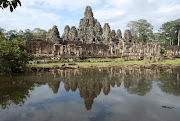
Korea's top designer Andre Kim is to launch his 2007 fashion collection this evening at Ankor Wat, a temple inscribed as a UNESCO World Heritage site. This is the first time a designer to hold a fashion show at Cambodia's national treasure - one of the Seven Wonders of the World.
Kim's "Fahion Fantasia: Ankor Wat" is part of Ankor-Gyeongju World Culture Expo 2006 that kicked off last month and run through Jan. 9 next year. The 50 -day event titled "Ancient Future: The Myths of the Orient" features exhibitions on khmer civilization (1181-1215) and the Silla culture (B.C.57-935) which privides insight into the culture of Korea and Cambodia.
The two Korean Wave stars, actors Kim Rae-Won and Kim Hee- Sun are to take stage with other models showcasing a total of 187 piece during the three hours show.
Set against the majestic backdrop of early 12-century Ankor Wat, a temple that represents the achievements of the Khmer Empire at its zenith, Kim is to present the splendor of 5000 years of history of Korea and also revives the achievements the Khmer Empire of ancient Cambodia.
Starting with a stage that honors the opening of the Ankor-Gyeongju World Culture Expo 2006. Kim will also deliver the message of everlasting love and romanticism through this symbolic fashion.
"I have prepared the fashion show for quite a long time. I do my best to represent the greatness of the Khmer and silla Kingdoms," said Andre Kim before leaving the country yesterday. Kim has already given several show in foriegn countries including China with his unique design featuringthe everlasting theme, love and fantasy.
Read more!
Friday, December 08, 2006
Cambodia asks Finland to reconsider visa for convicted police chief
Cambodian deputy priminister Hor Namhong Thursday urged the Finish government to reconsider its decision to issue visa for former phnom penh police chief Heng Pov, who was sentenced to 18 years in jail in absentia in September for masterminding to kill a judge.
" We are very regrettable indeed that criminals who fabricated claims against the Royal Government of Cambodia to masquerade their actual crimes have gain the protection from Finland," said Hor, who is also Minister foreign affiairs and international cooperation.
"therfore, in the future, it is futile to talk under variou framworks about cooperation to combat and prevent organized crimes, but instead we should talk about nurturing them," he said. This was the second times that the Finnish government allowed Cambodian criminals to stay and it should reconsider what it had done so far for Cambodia, he added.
"Once they arrived in Finland, these criminals will spread defamation against the Royal Government of Cambodia, just like the cases of Sok Yeoun and Heng Pov," he said. "We already sent a letter to foreign affairs of Finland, Malaysia's court and the Singaporean authorities about Heng Pov's crime, he added.
After his legal team negotiated with the Finnish government for two months and under went independent review, the 49 years old, one-legged former capital police chief recieved his visa entry to Finland, which significantly increased his chance avoiding deportation.
Hing Pov, also serving as persoal advisor to prime minister Hun Sen and under-secretary of state at interior ministry, managed to fled oversea in July 23, but fail to seek asylum in Singapore and Malaysia. he has been detained in Malaysia since Oct. 3 for overstaying his entry pass.
The Cambodian court believed that he was responsible for the murder of Phnom penh judge Sk Sathamony, while a press released from ministry of foreign affairs and international cooperation insisted that he was involved in six other cases including illegal confinment, murder, attempted murder, kidnapping, and illegal weapon possession and usage.
In addition, So Yeoun, an active member of the opposition Sam Rainsy Party, was accused of staging rocket attack on the motorcade of Hun Sen when he attended the ceremony of the establishment of the first governemt of Cambodia in 1998, He then fled to Thailand and finally secure his stay in Finland.
Read more!