BEIJING, April 2 (Xinhua) -- Chinese President Hu Jintao's visit to Cambodia has resulted in significant achievements for the ties and cooperation between the two countries and the Association of Southeast Asian Nations (ASEAN), said Chinese experts on Monday.
During the 4-day visit which concluded on Monday, Hu met Cambodian King Norodom Sihamoni, Senate President Chea Sim, National Assembly President Heng Samrin and Prime Minister Hun Sen, and was warmly welcomed by all walks of Cambodian society.
The two countries signed a variety of agreements on cooperation during Hu's visit, which is the first visit by China's head of state since 2000.
The two countries have also issued a joint communique, vowing to strengthen cooperation in politics, economy, defence, and strategy.
"This demonstrates the traditional friendship between the peoples of China and Cambodia," said Tong Xiaoling, Chinese ambassador to ASEAN, "the friendship was established by the leaders of older generations of both countries, and has faithfully continued through to the present day."
Since the establishment of diplomatic ties in 1958, China and Cambodia have supported each other in various issues. In 2010, the two countries built the comprehensive strategic partnership.
This time around, Hu's suggestions for enhancing bilateral ties during this visit have been echoed by Cambodian leaders.
During Hu's visit, the two countries agreed to expand all-round bilateral cooperation and double bilateral trade between the two countries, reaching 5 billion U.S. dollars by the year 2017.
This cooperation will provide tangible benefits to the peoples of both countries, said Hu Qianwen, former Chinese ambassador to Cambodia.
China has almost 360 investment projects in Cambodia at present, with a total amount of foreign direct investment (FDI) of 1.43 billion U.S. dollars as of 2011. Cambodia's FDI to China currently stands at 130 million U.S. dollars.
Tong said China will further expand its investment in Cambodia's infrastructure, and provide more support to Chinese enterprises going to Cambodia.
In the meantime, this bilateral cooperation is also of strategic importance, said Hu Qianwen, adding that Cambodia understands and firmly supports China in issues concerning China's core interests, such as Taiwan and Tibet. Cambodia also takes a fair attitude toward the South China Sea issue.
In the joint communique announced on Sunday, the two countries agreed that China and the ASEAN countries shall continue to abide by the purpose and spirit of the Declaration on the Conduct of Parties in the South China Sea (DOC), give full play to all existing mechanisms including the Guidelines for the implementation of the DOC, facilitate the full implementation of the DOC, and ensure the success of the workshop on the 10th Anniversary of the signing of the DOC.
Experts said President Hu's visit to Cambodia will also help promote understanding between China and other ASEAN countries, especially during a period when international and regional situations are now experiencing profound changes.
President Hu's visit came after the United States announced its return to Asia Pacific at the end of last year. Moving its strategy eastward will have a significant impact in this region, said Zhang Jiuhuan, former Chinese ambassador to Thailand and Singapore.
Cambodia holds the presidency of ASEAN in 2012, and will host the 20th ASEAN Summit starting from Tuesday to Wednesday.
"China, Cambodia and other ASEAN countries all hope to maintain peace and stability of the region. Hu's visit will have positive influence during this period of change," said Zhang.
Read more!

Monday, April 02, 2012
Hu's Cambodia trip deepens bilateral ties: Chinese experts

Sunday, April 01, 2012
Chinese president, Cambodian king discuss all-around cooperation
Chinese President Hu Jintao (C) meets with Cambodian King Norodom Sihamoni (R) in Phnom Penh, Cambodia, March 31, 2012. (Xinhua/Huang Jingwen)
PHNOM PENH, March 31 (Xinhua) -- Visiting Chinese President Hu Jintao met with Cambodian King Norodom Sihamoni here Saturday to discuss all-around bilateral cooperation.
Hu said the Cambodian royal family has made special contributions to the development of China-Cambodia ties. The half-century friendship between King-Father Norodom Sihanouk and generations of Chinese leaders has remained strong and is becoming even firmer, said Hu.
Carrying on this tradition, King Sihamoni has attached great importance to the development of the friendly and cooperative ties between China and Cambodia, and has made new and important contributions to the promotion of their traditional friendship, Hu said.
China cherishes its traditional friendship with Cambodia, and will make all efforts to push forward the China-Cambodian comprehensive strategic partnership to benefit both peoples.
King Sihamoni said Hu's visit is of historical importance and will certainly promote the traditional friendship between the two countries and achieve fruitful outcomes.
The king said Cambodia has always viewed China as its closest great friend, and the royal family will continue to play a positive role in consolidating and promoting friendly cooperation between the two countries.
President Hu said he was glad to see Cambodia's progress in maintaining political stability, reaching ethnic reconciliation, sustaining economic development and achieving a rise in international status.
He expected Cambodia to gain further achievements under the leadership of King Sihamoni with the joint efforts of the Cambodian government and its people.
Also on Saturday, Hu met Prime Minister Hun Sen and would meet Senate President Chea Sim, and National Assembly President Heng Samrin.
The Chinese president arrived in Cambodia on Friday for a state visit.
Chinese President Hu Jintao (C) meets with Cambodian King Norodom Sihamoni (R) in Phnom Penh, Cambodia, March 31, 2012. (Xinhua/Li Xueren)
Read more!


Oakland's Cambodian community holds anti-violence march
By Alan Lopez
Contra Costa Times
OAKLAND -- Almost 40 years after the Khmer Rouge unleashed a genocide in Cambodia, natives to that country in Oakland still feel the aftershocks.
Violence is plaguing the community of about 2,700, with shootings, robberies and thefts occurring weekly, say community organizers.
The problem of violence in the Cambodian community is exacerbated by mental health problems and a fear of speaking out, which affects refugees of the 1970s Cambodian genocide, said Talaya Sin, a research assistant with Cambodian Community Development Inc.
"I'm scared, to be honest," said Sin, whose extended family members have been the victims of violence. "It doesn't feel safe (in Oakland)."
The Oakland Cambodian Community March 4 Peace held Saturday was meant to bring Oakland Cambodians together and quell the violence.
Led by several Buddhist monks, about 150 people marched around the San Antonio neighborhood, chanting anti-violence and pro-community slogans, and carrying signs that read "Stop the Violence." Afterward, the crowd, which included children, teenagers and seniors, gathered at St. Anthony's Church on 16th Avenue to watch cultural performances and eat free food.
Before the march, a Cambodian-American police sergeant at the event offered safety tips, emphasizing the need for people to be aware of their surroundings.
Mayor Jean Quan encouraged the crowd to call police when crimes occur and also encouraged young Cambodians to finish high school and apply for the police department. "Right now, we have only two other Cambodian officers, and we need more," she said.
In an interview after her speech, Quan said that Oakland Cambodians are coming together because of a recent uptick in violence. She said that gang violence plagued the community in the middle of the last decade but had died down.
"The community jumped on it right away," after the violence escalated, she said.
Sin said the current violence is believed to be the result of retaliations from groups of youths attempting to control turf in the neighborhoods. They are not considered gangs because they are less organized, she said.
Five members of her cousin's family, including two children, were injured in a drive-by shooting on East 22nd Street last year, Sin said.
The day before, her nephew was shot and almost killed while walking to a liquor store during the daytime.
The violence died down until Dec. 10, when a father of four was killed during a drive-by shooting while he slept.
"I don't want to live through a genocide here," Sin said. "My parents did. I'm surprised, but I'm not surprised, that people are OK with killing each other."
The event Saturday was the first step to organize the community, with an eye toward becoming more involved with the larger Pacific Islander community in Oakland, said Pysay Phinith, an assistant project director with Asian Community Mental Health Services.
"Today we are taking steps to change our community for the better," she told the crowd.
Deborah Roderiques, who watched as marchers passed her home on Foothill Boulevard, said she appreciated the anti-violence efforts. Her brother was murdered in 2003.
"You don't even feel safe getting on a bus anymore," she said. "It's too bad; they need to straighten this out."
Read more!
Friday, March 30, 2012
China’s Hu Visits Cambodia as Asean Leaders Eye Sea Disputes
By Daniel Ten Kate
President Hu Jintao today becomes the first Chinese head of state to visit Cambodia in 12 years, in a trip days before Southeast Asian leaders gather for talks that may touch on territorial disputes in the South China Sea.
Hu’s visit, which lasts until April 2, will deepen ties between Cambodia and China, its largest investor, the official Xinhua news agency reported March 27, citing the country’s ambassador in Phnom Penh, the capital. China appreciates Cambodia’s support on core interests, the report said, adding that China opposes outside interference on the South China Sea.
“Cambodians will not want to upset the Chinese by pushing the South China Sea on the agenda of the Asean meeting,” said Ian Storey, a senior fellow at the Institute of Southeast Asia Studies in Singapore. In the past two years, previous hosts Vietnam and Indonesia “really pushed the issue, so that momentum will slow under a Cambodian chairmanship,” he said.
Vietnam and the Philippines have pushed the 10-member Association of Southeast Asian Nations to take a common position regarding territorial disputes in the South China Sea, where Exxon Mobil Corp. and Talisman Energy Inc. (TLM) are searching for oil and gas. Cambodia holds the bloc’s rotating chairmanship.
The South China Sea contains oil reserves that may total as much as 213 billion barrels, according to Chinese studies cited in 2008 by the U.S. Energy Information Agency. China used patrol boats last year to disrupt hydrocarbon survey activities in waters it claims, chasing away a ship working for Forum Energy Plc (FEP) off the Philippines and slicing cables of a survey vessel doing work for Vietnam.
The Philippines said in January it’s ready to host a summit to help resolve territorial disputes in the South China Sea. China must meet with the countries claiming part of the sea “under the guidance” of Asean as soon as possible, Foreign Affairs Secretary Albert del Rosario said on Jan. 15.
To contact the reporter on this story: Daniel Ten Kate in Bangkok at dtenkate@bloomberg.net
To contact the editor responsible for this story: Paul Tighe at ptighe@bloomberg.net
Read more!
Vietnam, Cambodia look to boost investment ties
PHNOM PENH – The Vietnamese Government and the State Bank of Vietnam (SBV) always give priority to create favourable conditions for Vietnamese businesses to invest in Cambodia, SBV Governor Nguyen Van Binh said.
Binh made this statement at a presentation held on Mar. 29 in Cambodian capital city of Phnom Penh by the SBV, the Vietnamese Embassy in Cambodia and the Association of Vietnamese Investors in Cambodia (AVIC), with the participation of about 50 businesses operating in Cambodia .
The governor said that many Vietnamese banks had branches in Cambodia , including Military Bank (MB), Saigon Commercial Bank (Sacombank), Saigon Hanoi Commercial Joint Stock Bank (SHB) and Bank for Investment and Development of Vietnam (BIDV).
The SBV will continue licensing Vietnam 's major commercial banks to open new branches in Cambodia , to support payment and capital borrowings for businesses, he said.
Vietnamese Ambassador to Cambodia Ngo Anh Dung called for the investment of Vietnamese enterprises in the neighbouring country. He suggested that Vietnamese businesses should carefully study Cambodia 's market, and strictly follow Vietnamese and Cambodian laws.
At the event, President of the AVIC Tran Bac Ha also said Vietnam 's investments in Cambodia have initially gained remarkable achievements; however, there are still difficulties and challenges, adding that it is necessary to hold an annual dialogue to promote advantages and solve difficulties.
According to AVIC reports, Vietnam 's investment in Cambodia has increased rapidly since late 2009. Vietnam has 98 projects, double the 2009 figure, with a registered capital of 2.4 billion USD.
Vietnam ranks fourth among foreign investors in Cambodia, following China, the Republic of Korea and Australia, focusing on fields of banking, energy, transport and tourism.- VNA
Read more!
VN-Cambodia border marker project on schedule
PHNOM PENH– National Assembly Vice Chairman Huynh Ngoc Son has expressed the belief that placement of markers along the Vietnam-Cambodia border will be completed as scheduled, to turn the two countries' border into the border of friendship and cooperation.
NA Vice Chairman Son made the statement at a reception given by Cambodian NA Chairman Heng Samrin in Phnom Penh on March 30.
Son, who is on an official visit to Cambodia and attend the ASEAN Inter-Parliamentary Assembly (AIPA) General Assembly from March 29-April 3, said he hopes Vietnam will receive further assistance from the Cambodian NA, government, army and people to repatriate the remains of Vietnamese soldiers and experts, who laid down their lives in Cambodia.
Chairman Heng Samrin hailed the Vietnamese NA delegation's visit, saying that the visit will help elevate the traditional friendship and solidarity between the two peoples.
He expressed his thanks to the Vietnamese Party, Government and people for their valuable and effective assistance to help Cambodia escape from the genocidal Khmer Rouge regime and achieve the current development level.
During the six-day visit, NA Vice Chairman Son held talks with his Cambodian counterpart Nguon Nhel and held working sessions with Deputy Prime Minister cum Minister of Relations with the National Assembly, Senate and Inspection Men Som Ol.
He also paid a courtesy visit to First Vice President of the Cambodian Senate Say Chhum and met with Deputy Prime Minister cum Minister of National Defence, Tea Banh.-VNA
Read more!
Thursday, March 29, 2012
Court Urged to Arrest Ex-Governor
 |
Shooting victim Bun Chenda is treated at a hospita l near Bavet city, Mar. 1, 2012. |
The victims of a shooting incident want the lone suspect arrested and tried.
A rights group and an opposition lawmaker on Thursday called on a court in southeastern Cambodia to swiftly prosecute a former city governor who is the lone suspect in a shooting incident, as victims of the attack took the stand in court in connection with the case.
Moeun Tola, head of the labor program at the Community Legal Education Center, said the court should immediately arrest and try Chhouk Bandit, the former chief of Bavet city in Svay Rieng province, for his suspected role in the incident, which left three women injured as they took part in a factory strike last month.
Until the accused is charged and tried, “we can’t say justice has prevailed for the victims yet,” Moeun Tola said after the court heard testimony from two of the three victims. One of the victims was unable to attend the hearing, as part of a court investigation process, due to lingering injuries sustained during the shooting.
Moeun Tola said that giving Chhouk Bandit impunity would negatively affect the reputation of the Kaoway Sports Ltd. factory, where workers were striking for better conditions when the incident occurred, as well as the reputations of the factory’s purchasers, which include German sportswear giant Puma.
All three victims have filed criminal complaints against Bandit for premeditated murder, seeking nearly U.S. $100,000 in compensation for medical bills and other damages.
The victims said they had earlier been approached by a representative of Chhouk Bandit who offered them each a settlement of U.S. $1,000 to $2,500 to drop the case.
NGO officials and opposition legislators escorted the victims to the courthouse to appeal on their behalf.
Outside ‘interference’
Opposition Sam Rainsy Party lawmaker Mu Sochua also urged the court to work independently of “outside interference.”
“The victims are suffering to see the suspect free from prison. The suspect continues to freely travel in and out of Bavet city,” Mu Sochua said.
“It appears as if the judicial process has been interfered with,” she said, adding that the court should prove otherwise to “ease any speculation that it has been under pressure.”
Chief prosecutor Hing Bunchea told RFA that he would summon Chhouk Bandit for a second time for questioning, although he declined to say when.
Hing Bunchea had met with Bandit two weeks ago, but allowed him to go free, telling reporters that he would not face any immediate charges, in a move that outraged NGOs and rights groups.
He said that the medical condition of the victims had not yet improved, which had also delayed the investigation of the case. Lawyers of the victims complained that he had questioned their clients for too long, negatively affecting their health, the prosecutor said.
“I don’t know how to speed up … The lawyers said [the victims’ health deteriorated] because I asked too many questions, so how can I speed up [the trial process]?” he asked.
Read more!
Missile Issue Up At Meet
Aquino To Raise North Korea's Rocket Launch In ASEAN Summit
By CHARISSA M. LUCI and JC BELLO RUIZMarch 30, 2012, 3:31am
Manila, Philippines - The West Philippine Sea issue and the Pyongyang’s long-range missile test will be the two major issues that will be raised by President Benigno S. Aquino III during the 20th Association of Southeast Asian Nations (ASEAN) meet in Cambodia next week, a Department of Foreign Affairs (DFA) official said.
Assistant Secretary for ASEAN Affairs Teresita Barsana said North Korea’s rocket launch scheduled between April 12 and 16 will be part of the President’s agenda when he meets with his fellow Southeast Asian leaders during the ASEAN Leaders’ Retreat on April 4.
But Vice President Jejomar C. Binay, who joined the recent Second Nuclear Security Summit in Seoul, said there is nothing to worry about North Korea’s planned rocket launch next month.
Binay said that a United Nations official told him that the last time North Korea launch a rocket, it said it may pass through Japan, which prepared to block it. However, it never happened.
“The retreat is a meeting of all the leaders in a very informal environment and then they can discuss, they can have a freewheeling discussion on issues of common interests and of the pressing issues of the day. So that is where the President may raise the issue on North Korea,” she said.
Barsana added that President Aquino will continue to promote the country’s interest in the West Philippine Sea amid Cambodia’s purported refusal to discuss the issue following its strong alliance with China.
“He will probably bring it up during the ASEAN Summit retreat and during the exchange of views on regional and international issues. Because part of the advocacies in our ASEAN that we have, that the Philippines will be pushing for is the West Philippine Sea. So he will definitely raise it,” Barsana said.
She noted that the President will raise the issue in terms of the implementation of the Code of Conduct of State Parties in the South China Sea, citing the Manila’s insistence to establish a “zone of peace, friendship, freedom and cooperation (ZoPFFC)” in the disputed islands.
“The Philippines is part of the drafting of the Code of Conduct and that is where we can incorporate the elements that we want in our proposal for the Zone of Peace, Freedom, Friendship, and Cooperation. The elements of that will be discussed during the working group before the summit. So that is where we come in where we can propose, where we can push our advocacy on West Philippine Sea and maritime cooperation,” the DFA official explained.
The 10 ASEAN member-countries, including Philippines are tied up with the drafting of a formal code of conduct (CoC) in the West Philippine Sea.
Barsana rejected claims that Cambodia, being a known ally of China with Laos is not open to discuss the issue of the West Philippine Sea.
“They are not discouraging the discussion of the West Philippine issue. As a matter of fact, they are encouraging the creation, the formulation of the Code of Conduct in relation to the implementation of the declaration of the Conduct of the State Parties in the South China Sea, because they would like to see that the Code of Conduct could be formulated during the chairmanship because it was 10 years ago when the declaration was signed also in Phnom Penh. So they’re really very interested in seeing that something very positive comes out of it,” she said.
Apart from maritime security, the President is also expected to promote climate change and disaster risk reduction management, migrant workers’ protection and welfare, and micro, small and medium enterprises (MSMEs) to strengthen the implementation of the ASEAN Charter and to contribute to regional efforts towards achieving the establishment of an ASEAN Community in 2015.
On April 3, the ASEAN leaders are expected to discuss the following: the Phnom Penh declaration of ASEAN, One Community, One Destiny; the progress of implementation of the ASEAN Charter and roadmap for ASEAN community under the political security, economic and socio-cultural pillars; the progress of implementation of the master plan on ASEAN connectivity involving physical, institutional and people to people connectivity; realizing a drug-free ASEAN by 2015 and the adoption by ASEAN of the initiative of establishing a global movement of moderate.
On the same day, the President will join the other ASEAN leaders in meeting the ASEAN Inter-Parliamentary Representatives, the Civil Society Organizations Representatives, and the Youth Representatives. The Philippine-AIPA delegation will be composed of House Speaker Feliciano Belmonte Jr., La Union Rep. Victor Ortega, the AIPA Secretary General former Rep. Antonio Cuenco.
Barsana disclosed that the Presi dent, along with nine other ASEAN leaders, will also have a Royal Audience with His Majesty Norodom Sihamoni, the King of Cambodia.
After the concluding session of the ASEAN Summit, the President will join three of his colleagues in another meeting, the 8th BruneiIndonesia-Malaysia-Philippines East ASEAN Growth Area (BIMP-EAGA) Summit.
“They will tackle the core strategic thrusts of BIMP-EAGA within the next five years in the fields of enhanced transport, power and communication connectivity, food basket strategy in agri-business and fisheries development, tourism development and environment and natural resource development,” Barsana disclosed.
Before his departure for Manila, Mr. Aquino is expected to meet with members of the Filipino community in Cambodia. There is an estimated 3,000 Filipinos in Cambodia, 2,000 of whom live in Phnom Penh and work in various fields in medicine, business, and NGOs, Barsana said.
Read more!
Wednesday, March 28, 2012
Canadian sex tourists are among those exploiting Cambodia's most vulnerable
By Daphne Bramham, Postmedia News March 28, 2012 More U.S. bombs dropped on Cambodia during the Vietnam War than fell on Europe during the Second World War. Genocide and civil war followed.
The terrible legacy is that Cambodia is one of poorest, most corrupt countries in the world.
There is no social safety net. No free schooling. A third of Cambodians survive on less than $1 a day.
With all of its problems, Cambodia is a choice destination for so-called sex tourists.
Donald Bakker and Kenneth Klassen - two of only five Canadians convicted under the Criminal Code's Section 7 "sex tourism" provisions - came here. So did Chris Neil, who was on Interpol's most-wanted list before being convicted in Bangkok for sexually abusing two underaged boys.
What sets Cambodia apart among so-called sex-tourist destinations is the age of the children, according to charitable organizations that rescue and counsel the survivors. Children as young as three have been, and continue to be, rescued; the youngest are almost always procured for foreigners.
Because raping children is normalized here, some experts say it creates situational or opportunistic pedophiles - men who might not dream of having sex with a child at home, but will try it here.
The Cambodian government has never updated its 2006 estimate of 30,000 children being commercially sexually exploited.
It's also never estimated how many children have been trafficked into or out of Cambodia, bound for brothels or other forced labour.
But last June, a special report on Cambodia by the United Nations Committee on the Rights of the Child expressed "deep concern" that thousands of children are exploited in prostitution. It also noted that "an alarming proportion of children are exposed to sexual violence and pornography."
Among the committee's other concerns: child sexual abusers are rarely prosecuted because of the widespread practice of out-of-court settlements paid to victims' families; limited action is taken against sex offenders and operators of brothels; and rehabilitation services and shelters for victims of sexual exploitation are almost all in the capital.
In the first nine months of 2011, 118 cases involving trafficking and children were heard in Phnom Penh municipal court.
More were heard in other tourist-friendly places such as Siem Reap, near the famous Angkor Wat, and the beach resort villages in and around Sihanoukville.
Part of what's pushing sex offenders into Cambodia is neighbouring Thailand's increased enforcement of child sexual abuse laws, according to western diplomatic sources and non-governmental groups such as World Vision and ECPAT International (End Child Prostitution, Child Pornography and Trafficking of Children for Sexual Purposes).
And with six million Cambodians under the age of 18 - and 1.6 million under the age of five - there's a boundless supply of victims.
Things have changed since 2003, when Donald Bakker arrived from Vancouver and found his victims in the notorious pedophile paradise called Svay Pak, 11 kilometres from downtown Phnom Penh.
Little girls and boys are no longer openly marketed on Svay Pak's main street.
The trade has largely gone underground and online.
It's likely because of the Internet that Burnaby, B.C., art dealer Kenneth Klassen stepped off a plane a decade ago and within 48 hours had procured, assaulted and videotaped eight girls, the youngest of whom was eight.
Klassen, 59, pleaded guilty in 2010, only after failing in his attempt to have Canada's sex tourism law declared unconstitutional. The court upheld the law that says any Canadian committing sexual offences against children outside Canada is deemed to have committed that offence in Canada.
In sentencing Klassen to 11 years in jail - less than a year each for abusing six Colombian girls and eight Cambodian girls - B.C. Supreme Court Justice Austin Cullen described what Klassen had done as "a gross violation of the natural imperative to protect children."
Earlier, Bakker had received seven years in prison; two years for a horrifically violent assault on a Vancouver woman and five for abusing seven Cambodian girls, the youngest of whom was only seven. Bakker gets out of jail in June.
Compare that with the sentence given ex-U.S. Marine Michael Pepe, who abused seven Cambodian girls. A California court sentenced Pepe to 110 years in prison.
And while Canada's sex tourism law is well-crafted, Klassen was the last person charged under it.
Another Canadian, Orville Mader, was arrested at Vancouver airport in 2007 after a worldwide manhunt. Mader had fled home from Thailand carrying only his laptop to avoid arrest on charges of sexually abusing a seven-year-old boy.
A judge set Mader free on bail, but placed restrictions on him, while police investigated and Crown prosecutors determined whether to lay sex tourism charges.
Mader was convicted in absentia in Thailand. But in November 2010, police and B.C. prosecutors allowed Mader's conditions to lapse. The Crown had decided that the evidence didn't meet Canadian standards.
Mader was free. Whether he got his passport back, Canadian officials won't say, citing privacy laws.
Then there's the case of Ernest Fenwick MacIntosh. Last year, the 67-year-old from Cape Breton had his conviction on 17 charges of gross indecency and indecent assault of six Canadian boys overturned because it had taken so long to get to court. Their allegations dated back to the 1970s and by the time the victims came forward in 1995, MacIntosh was in India.
Twice, the Canadian passport office failed to revoke his passport. Finally, in 2006, Canada requested MacIntosh's extradition from India. That was the same year the Toronto Star reported that two Indian men had alleged MacIntosh assaulted them while they were boys living in an orphanage.
"I think there's a need for a more aggressive stand with respect to the acquisition and analysis of intelligence and a better co-ordinated approach to (sex tourism)," Insp. Sergio Pasin of the Canadian Police Centre for Missing and Exploited Children said in a phone interview.
Pasin is in the process of formulating a national strategy that is likely to focus mainly on men who access child pornography online.
"In my view, these are the individuals you really need to look at because they're grooming and luring and then they . . . have the potential for transitioning from the online offender to the hands-on offender. So then the next phase you have to look at is whether they have the potential to travel and have they travelled in the past? Where have they gone? And so on."
Governments such as the U.S., Australia and Britain have made efforts to prosecute sex tourists.
In the United States, Operation Predator links police agencies with the border security agency, and allows them to partner with foreign governments in child pornography and sex tourism investigations.
One recent investigation involved setting up a website for sex tourists that had Canada as its destination. The two-year project, which ended in March 2011, resulted in the conviction of two Germans and two Americans.
Operation Twisted Traveller, conducted in Cambodia over two years with the French-based non-profit group Action Pour Les Enfants, resulted in the 2009 arrests of three Americans who had previous convictions for sexually abusing children.
Earlier this month, Britain closed what was described by the international child protection group ECPAT as "the three-day loophole," which allowed registered sex offenders to leave the country for up to three days without notifying police. Now they must notify authorities of all foreign travel plans.
Earlier this year, the Australian Agency for International Development began Project Childhood, a $7.5-million, three-year program involving the UN Office of Drugs and Crime, Interpol and World Vision. Working with police and courts to increase enforcement and with community leaders to educate children and their families, the project aims to reduce sexual exploitation of children in tourism in the Mekong Delta region including Cambodia, Vietnam, Thailand and Laos.
Pushed by western countries and NGOs - and because of a growing fear that "good" tourists are avoiding it - Thailand has increased enforcement of its child exploitation laws. But that increased enforcement has resulted in sexual predators seeking out countries such as Cambodia where the commitment to prosecuting and jailing child sex offenders is far from certain.
Last year, three foreign pedophiles were granted royal pardons at the government's request.
Among those pardoned was Alexander Trofimov.
Also known as Stanislav Molodyakov, Trofimov is wanted by Interpol for having allegedly raped six girls under the age of 10 before he fled Russia for Sihanoukville, Cambodia's coastal resort town.
There, the 44-year-old executive director of Koh Puos Investment Group negotiated a deal to build a $300-million resort.
But while he was doing that, Trofimov also sexually abused 15 under-aged girls, including a mute 13-year-old.
Trofimov's sentence was initially 15 years, but that was reduced to eight years in 2010. Then, in May 2011, Trofimov was pardoned after having served half of the reduced sentence.
Freed in Cambodia, he remains on Interpol's most-wanted list. The Cambodian government has not responded to a request from 14 international children's rights organizations to deport him to Russia.
Pedophiles most often escape arrest. Some do their time, get pardons and disappear to other countries where they'll likely reoffend.
But the victims are never free. "They'll always have scars," says Sue Taylor, who has counselled dozens of survivors since coming to Cambodia in 2005. Among the survivors are Donald Bakker's victims.
The girls refused a request to be interviewed.
"They want to put it behind them. They don't want to be reminded of the past and they don't want to be labelled as one of Bakker's girls," says Taylor, who works for Hagar International, an Australia-based NGO.
Even though the abuse occurred more than a decade ago, all but one of the girls is still a minor. That's how young they were when Bakker raped them in tiny rooms in a filthy brothel in Svay Pak, a dusty village outside Phnom Penh that's a notorious pedophile paradise.
As part of their recovery, the girls have all completed school. One or more of them may qualify for university scholarships; others have completed training programs in administration, child care and hairdressing.
By the end of 2011, all had moved back to Svay Pak to live with their families or foster families even though, as Taylor says, their families were complicit in selling them into brothels.
"Our choice would not be to have them there. But we have to believe that with what they've learned about empowerment and resilience, they will be able to make the right decisions."
Taylor hopes these young women have learned enough to have fulfilling lives, jobs and relationships. She hopes that if they choose to have families, they will be good mothers and wives.
But, she says, "I worry that they're naive and that they're really not out of danger. If they hit hard times, I don't know if they'd go back (to a brothel). I used to be so idealistic. Now, I realize that you have to let them go, just as you have to let your own children go and you hope that they remember some of the things you taught them."
What makes it all the more troubling, says Taylor, is that images of one of the girls recently showed up on a pornographic website. She's also seen images of other sexually exploited children on kiddie porn videos sold for a couple of bucks along the roadside in Phnom Penh.
"It's just sick that this can go on and on," she says.
"How can the survivors really ever escape?"
Vancouver Sun
Read more!
Cambodia: 15 Years on, No Justice in Grenade Attack
The substantial evidence of government involvement in this attack means a serious state investigation will never take place unless the donors, who provide almost half the national budget, demand one. Donors who are pouring millions into the Khmer Rouge trials to end impunity should not be ignoring a more recent atrocity under the current prime minister.
(New York) – The Cambodian government has made no effort over the last 15 years to bring to justice those responsible for a bloody grenade attack on an opposition party rally, Human Rights Watch said today.
The US Federal Bureau of Investigation (FBI) should complete its long-stalled investigation into the March 30, 1997 attack, which left at least 16 people dead and more than 150 injured, Human Rights Watch said. Recent reports indicate that French authorities opened a new investigation into the attack early this year.
“The substantial evidence of government involvement in this attack means a serious state investigation will never take place unless the donors, who provide almost half the national budget, demand one,” said Brad Adams, Asia director at Human Rights Watch. “Donors who are pouring millions into the Khmer Rouge trials to end impunity should not be ignoring a more recent atrocity under the current prime minister.”
On March 30, 1997, a crowd of approximately 200 supporters of the opposition Khmer Nation Party (KNP), led by former finance minister Sam Rainsy, gathered in a park across from the National Assembly in Phnom Penh to denounce the judiciary’s lack of independence and judicial corruption. In a well-planned attack, unidentified assailants threw four grenades into the crowd in an attempt to kill Rainsy, killing protesters and bystanders, including children, and blowing limbs off street vendors.
Prime Minister Hun Sen’s personal bodyguard unit, in full riot gear, was present the day of the attack, the first time it appeared at a demonstration. Numerous witnesses reported that the people who had thrown the grenades subsequently ran toward Hun Sen’s bodyguards, who were deployed in a line at the west end of the park in front of a closed and guarded residential compound containing the homes of many senior leaders of the ruling Cambodian People’s Party (CPP). Witnesses told investigators from the United Nations and the FBI that the bodyguards opened the line to allow the assailants to pass into the compound. The bodyguards then stopped at gunpoint crowd members who were pursuing the grenade-throwers and threatened to shoot those who did not retreat.
After the first grenade exploded, Rainsy’s bodyguard, Han Muny, threw himself on top of Rainsy. He took the full force of a subsequent grenade and died at the scene. Rainsy escaped with a minor leg injury.
The police, who had previously maintained a high-profile presence at opposition demonstrations in an effort to discourage them, had an unusually low profile on March 30. A large contingent was grouped around the corner, instead of inside the park itself. Other police units were in a nearby police station in full riot gear on high alert, suggesting they knew that there would be violence at the demonstration.
The March 30 demonstration was the first time the opposition KNP had received official permission from both the Interior Ministry and the Phnom Penh municipality to hold a rally after repeated refusals. The change in the government’s position fueled speculation that the demonstration was authorized so it could be attacked, Human Rights Watch said.
“The authorities have never offered a credible explanation for the deployment or actions of Hun Sen’s bodyguards at the demonstration,” Adams said.
The FBI quickly investigated the attack under a US law providing the FBI jurisdiction whenever a US citizen is injured by terrorism. Ron Abney, a US citizen, was seriously injured in the attack and had to be evacuated to Singapore to treat shrapnel wounds in his hip.
The FBI’s lead investigator interviewed soldiers and officers up the chain of command and concluded that only Hun Sen could have ordered the bodyguard unit to be deployed at the park. He has said that if he had more time, he believed he could have gathered enough evidence to present a case to prosecutors to file criminal charges. Yet in May 1997 the US ambassador at that time, Kenneth Quinn, ordered him out of the country.
An article by R. Jeffrey Smith in the Washington Post in June 1997 said: “In a classified report that could pose some awkward problems for US policymakers, the FBI tentatively has pinned responsibility for the blasts, and the subsequent interference, on personal bodyguard forces employed by Hun Sen, one of Cambodia’s two prime ministers, according to four US government sources familiar with its contents.... The bureau says its investigation is continuing, but the agents involved reportedly have complained that additional informants here are too frightened to come forward.”
On January 9, 2000, George Tenet, then the director of central intelligence, said the United States would never forget an act of terrorism against its citizens and would bring those responsible to justice “no matter how long it takes.” However, the FBI investigation into the grenade attack has effectively been abandoned, Human Rights Watch said.
FBI evidence on Hun Sen’s role in the attack remains in files because the FBI has refused to fully cooperate with congressional inquiries or follow through on its initial investigation.
“The FBI was close to solving the case when its lead investigator was suddenly ordered out of the country,” Adams said. “The FBI should not place its ties to Hun Sen above justice and the rule of law in Cambodia, and it should finish what it started.”
Hun Sen, instead of opening a serious investigation, immediately called for the arrest of the demonstration’s organizers and instructed police not to allow them to leave the country. An Agence France-Presse accountwas published at the time.
In a June 1997 interview with the Phnom Penh Post, Hing Bun Heang, the deputy commander of Hun Sen’s bodyguard unit at the time and reportedly the person in operational control of the unit, threatened to kill journalists who alleged that Hun Sen’s bodyguards were involved.
Hun Sen’s bodyguard unit remains notorious in Cambodia for violence, corruption, and the impunity it enjoys as the de facto private army of the prime minister. A 2007 report by the nongovernmental organization Global Witness says: “The elite Royal Cambodian Armed Forces Brigade 70 [the official name of the bodyguard unit] unit makes between US$2 million and US$2.5 million per year through transporting illegally logged timber and smuggled goods. A large slice of the profits generated through these activities goes to Lieutenant General Hing Bun Heang, commander of the prime minister’s Bodyguard Unit.”
Hing Bun Heang has since been repeatedly promoted by the prime minister. He is now a lieutenant general and deputy commander-in-chief of the Royal Cambodian Armed Forces. The commander of Brigade 70 at the time, Huy Piseth, who admitted to the FBI that he ordered the deployment of Brigade 70 forces to the scene that day, went on to become undersecretary of state in the Ministry of Defense.
“Handing out promotions to people implicated in massacring peaceful demonstrators shows cruel disregard for the victims,” Adams said. “The message sent is that human rights abusers, no matter how egregious their acts, will not only go free, but will be rewarded.”
The 1997 attack took place at a time of extreme political tension in the country. The coalition government between the royalist Funcinpec and Hun Sen’s CPP was unravelling after armed clashes in Battambang province the previous month. Rainsy’s KNP was seen as a threat in national elections scheduled for the following year. For more than a year, he and his party members had been the subject of attacks and threats from CPP officials and agents.
A bloody coup by Hun Sen’s forces followed in July 1997, killing more than 100 and sending politicians and activists into exile in fear for their lives. Despite meticulous documentation by the United Nations of a campaign of extrajudicial killings, no one has ever been held accountable for any of the abuses related to the coup.
“The brazen 1997 attack in broad daylight ingrained impunity in Cambodia more than any other single act in the country’s post-Khmer Rouge history,” Adams said. “Within months, Hun Sen staged a coup that cemented his long-time hold on power. This is why March 30 is now called ‘Impunity Day’ by many in Cambodia.”
Read more!
Tuesday, March 27, 2012
Hu's visit to strengthen Sino-Cambodian ties
PHNOM PENH - The Chinese President Hu Jintao's state visit to Cambodia this week will build up stronger Sino-Cambodian ties in politics, trade and investment, Pan Guangxue, Chinese Ambassador to Cambodia, said Tuesday.
Speaking in a press briefing about Hu Jintao's visit schedule to Cambodia from March 30 to April 2, Pan Guangxue said it will be the first visit of the Chinese Head of State to Cambodia in the last 12 years.
"The visit will deepen the bilateral relations in all fields, especially in politics, economics, trade, and culture," he said, adding "the China-Cambodia ties are as of good brothers, good partners, good neighbors, and good friends."
He said Hu's visit is made at the invitation of Cambodian King Norodom Sihmoni and it will be a historical landmark in the bilateral ties.
During the visit, a joint statement and several contracts are expected to be endorsed by the two countries, a move believed to help further beef up the two countries' long lasting ties since 1950s.
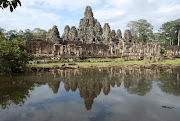
Hu Jintao will also visit Siem Reap's Angkor Wat temple, one of the world heritage sites, and he will visit the deteriorating Ta Keo temple in the complex of Angkor Archaeological Park, which is being renovated by Chinese and Cambodian archaeological experts with China's financial support, Pan said.
Meanwhile, Pan expressed China's gratitude on Cambodia's constant supports on China's core interests-related issues and pledged Beijing will continue assisting Phnom Penh in various economic sectors in the future, including infrastructure, stuff training, and disaster relief.
When asked about the South China Sea issue, Pan said the dispute should be solved under the framework of Declaration of the Conduct of Parties in the South China Sea (DOC) with claimant states. China is willing to cooperate with related parties to solve the dispute under the principle of shelving differences and seeking joint development.
"Moreover, China strongly opposes the internationalization of the South China Sea dispute and do not allow non-claimant forces to interfere this issue," Pan added.
During the press briefing, Pan also highlighted fruitful relations between China and Cambodia in the fields of trade and investment.
He said, according to the statistics from the Council for the Development of Cambodia, till the end of 2011, 317 projects under construction in Cambodia were assisted by China with the total contract value of $8.9 billion, bringing China as the largest investor in this Southeast Asian nation.
On the trade side, the two-way trade had surged to $2.5 billion, 11 times over that in 2000.
The Sino-Cambodian relations had reached the level of the comprehensive strategic partnership of cooperation in December 2010 during Cambodian Prime Minister Hun Sen's visit to Beijing.
Read more!
Sunday, March 25, 2012
Hu Jintao's upcoming visit in Cambodia to boost ties (2)
"We hope that during Hu's visit, many cooperation agreements will be signed," he said.
During the interview, Khieu Kanharith also highlighted good cooperation between China and Cambodia, and China and ASEAN.
The diplomatic ties between Cambodia and China have been bridged for more than 60 years during the age of former Cambodian king Norodom Sihanouk and former Chinese leader Zhou Enlai, and the ties have been gradually fostered.
"Until now, our bilateral relations have reached the level of the comprehensive strategic partnership of cooperation," he said.
On the ASEAN-China relations, he said, as ASEAN chair this year, Cambodia would do all its best to promote more mutual understanding between ASEAN and China and would act as a neutral mediator in the South China Sea dispute in order to solve the issue peacefully based on the DOC (the Declaration on the Conduct of Parties in the South China Sea) signed between ASEAN and China in Phnom Penh in 2002.
In regard to some Western media reported that China's huge aid and investment in Cambodia are to possess the country's economy and politics, the minister said that China is the largest investor and provider of loan and grant to Cambodia, but China has never attached any conditions with its assistance.
"Chinese investment here is 8.8 billion U.S. dollars. It is the largest capital for Cambodia. With this investment, Cambodia can reconstruct infrastructures and it makes Cambodia have political independence, play a suitable role on international arena, and practically now chair the ASEAN," he said.
He said Cambodia has really appreciated China for its policy of other countries' sovereignty respect, non-interference in other countries' internal affairs, and peaceful co-existing.
"This Chinese policy is a factor that makes the situation in Asia stable," he said.
"We hope that during Hu's visit, many cooperation agreements will be signed," he said.
During the interview, Khieu Kanharith also highlighted good cooperation between China and Cambodia, and China and ASEAN.
The diplomatic ties between Cambodia and China have been bridged for more than 60 years during the age of former Cambodian king Norodom Sihanouk and former Chinese leader Zhou Enlai, and the ties have been gradually fostered.
"Until now, our bilateral relations have reached the level of the comprehensive strategic partnership of cooperation," he said.
On the ASEAN-China relations, he said, as ASEAN chair this year, Cambodia would do all its best to promote more mutual understanding between ASEAN and China and would act as a neutral mediator in the South China Sea dispute in order to solve the issue peacefully based on the DOC (the Declaration on the Conduct of Parties in the South China Sea) signed between ASEAN and China in Phnom Penh in 2002.
In regard to some Western media reported that China's huge aid and investment in Cambodia are to possess the country's economy and politics, the minister said that China is the largest investor and provider of loan and grant to Cambodia, but China has never attached any conditions with its assistance.
"Chinese investment here is 8.8 billion U.S. dollars. It is the largest capital for Cambodia. With this investment, Cambodia can reconstruct infrastructures and it makes Cambodia have political independence, play a suitable role on international arena, and practically now chair the ASEAN," he said.
He said Cambodia has really appreciated China for its policy of other countries' sovereignty respect, non-interference in other countries' internal affairs, and peaceful co-existing.
"This Chinese policy is a factor that makes the situation in Asia stable," he said.
.
Read more!
Australia to give $1 million to Angkor temples
The Federal Government says it will contribute $1 million towards a scheme to protect Cambodia's Angkor Wat temples.
The world-famous temple complex in Siem Reap province is visited by thousands of tourists each day.
Foreign Minister Bob Carr is in Cambodia on his first trip overseas since being sworn into his new role and says the funding will help preserve the 700-year-old monuments in the area.
"We're going to take the experience Australians gain managing Uluru and other world heritage sites, and see that in this great site," Mr Carr said.
"[It's] important to the whole world that there is a proper management of the tourist pressures, that the area's not going to be trampled to death, and that there's going to be protection from the damage that could be done by floods."
Senator Carr says the scheme will also ensure money from Angkor tourism reaches the hands of poor locals.
Senator Carr has also visited the Fred Hollows Foundation facility in Cambodia, which gets $6 million from AusAID to train local doctors and nurses to remove cataracts.
He will also visit Vietnam and Singapore on the trip.
Read more!
Drugs: our man in Cambodia
AUSTRALIAN police suspect a nephew of Cambodia's Prime Minister of involvement in a heroin trafficking and money laundering syndicate targeting Australia.
But a plan to arrest and question Hun To in Melbourne was thwarted because his application for a visa was denied by Australian embassy officials in Phnom Penh, with one official citing the need to avoid a diplomatic incident.
The targeting of Hun To by an Australian Crime Commission inquiry between 2002 and 2004 is one of several incidents that suggest strong and continuing links between local crime figures and Cambodia.
The Age can also reveal that Sydney crime figures have been investing millions of dollars of suspected drug proceeds in businesses in Cambodia, including some tied to influential government and business identities.
The revelations come after The Saturday Age reported that police had uncovered a global crime syndicate importing more than $1 billion of drugs into Australia annually, with connections to government and policing officials across Asia.
The inquiry that targeted Hun To, dubbed Operation Illipango, investigated the shipment of heroin into Australia from Cambodia in loads of timber.
Hun To, a nephew of Prime Minister Hun Sen, is a powerful and feared figure in Cambodia. He was once considered a close business associate of Cambodia's richest man, tycoon Kith Meng, who owns the Royal Group investment and development empire.
Operation Illipango investigated suspected drug funds taken to Crown casino in Melbourne, from where — under the suspected oversight of Hun To — they were then moved to Asia.
Kith Meng had numerous dealings with Hun To during Hun To's suspected crime activity, although The Age is not suggesting Kith Meng is involved in organised crime.
Kith Meng's Royal Group has partnered major Australian companies such as ANZ and Toll Holdings in joint venture projects in Cambodia.
Plans to arrest Hun To were derailed after his visa was cancelled. An embassy official briefed on the police operation targeting him is believed to have raised concerns that his arrest could create a diplomatic incident. An Immigration Department spokesman said privacy laws prevented the department from discussing whether he had applied for a visa or reasons why such an application may have been denied.
The only person charged with drug trafficking in connection to the ACC inquiry was Cambodian national Phenny Thai, a lowly associate of Hun To.
Phenny Thai was described in the Victorian Supreme Court in 2005 as having "strong connections with powerful people in Cambodia which facilitated his business enterprises." He had also "gained the rank of major in the Cambodian army, having paid for that appointment."
Among other Australians with suspected organised crime links to Cambodia are a Vietnamese-Chinese family that owns a well-known Sydney Asian restaurant.
Police have determined that over the past decade, the family has helped send more than $10 million to Cambodia, including suspected proceeds of drug trafficking. Some of the money was used to fund a casino. Other funds were invested in a casino cruise ship.
In 2006, an associate of this Australian crime family told an Asian news service that their casino business maintained "a good relationship with the Cambodian government."
Hun To could not be contacted for comment. Kith Meng said he was too busy to talk to The Age.
Read more!
Saturday, March 24, 2012
Cambodia calls for more active participation to fight TB
PHNOM PENH, March 24 (Xinhua) -- Cambodia celebrated the World TB Day on Saturday, calling for more active participation from all concerned parties to help the country to achieve the Millennium Development Goal (MDG) in 2015.
In a message to mark the day, Cambodian Prime Minister Hun Sen said Cambodia has seen success in fighting tuberculosis and the disease treatment services have covered all 1,080 health centers throughout the country.
He said the death rate from TB had also sharply declined from 153 deaths among 100,000 patients in 1990 to 61 deaths in 2010, a drop of 61 percent.
"This figure showed that Cambodia has already achieved the MDG of the 50 percent reduction by 2015," he said.
For the infection rate, the premier said, the tuberculosis infection prevalence rate declined from 1,258 cases among 100,000 people in 1990 to 660 cases in 2010, down 47 percent.
"We almost reach the MDG of the 50 percent reduction by 2015," he said.
Despite the success, Cambodia is still one of the 22 high TB burden countries in the world, he said.
Around 62,000 people are estimated to suffer from TB each year and almost 9,000 Cambodians with TB die annually.
"On this occasion, I'd like to appeal to all ministries, institutions, all levels of authorities, national and international concerned parties, and common people to actively support every activity in fighting against TB in order to help Cambodia achieve the MDG successfully," said the premier.
The Saturday's celebration was presided over by the Minister of Health Mam Bunheng and Pieter van Maaren, the representative of the World Health Organization to Cambodia, and attended by some 400 health officials, TB patients, and students.
At the event, Pieter hailed Cambodia for its strong efforts to reduce the death and infection rates of TB in Cambodia, saying that with the above mentioned results, he believed that the country would be able to achieve the MDG in 2015.
Read more!
Cambodia's ruling party president elected f senate president
PHNOM PENH, March 24 (Xinhua) -- The president of the ruling Cambodian People's Party (CPP) Chea Sim, 80, was elected the president of the Senate in the third legislature on Saturday.
All 60 senators, who were present during the session, had unanimously voted for Chea Sim as the president, bringing him as the president of the Senate in three straight mandates since the Senate's establishment in 1999.
The senators had also voted for Say Chhum, chairman of the Permanent Committee of the Standing Committee of the CPP, as the 1st vice-president, and Tep Ngorn of the CPP as the 2nd vice- president.
Speaking after the votes, Chea Sim expressed profound thanks to all the Senators for electing him as the president and the other two CPP's Senators as the 1st and 2nd vice-presidents.
"We'd like to say thanks to all of you for giving confidence in us and let us lead this top legislative body," he said. "We' re committed to working more active in this mandate in order to help the government of Cambodia in building the nation."
The third mandate of the Senate was officially in function on Saturday after the non-universal elections in January, in which the Cambodian People's Party (CPP) of Prime Minister Hun Sen won 46 seats and Sam Rainsy Party (SRP), the country's main opposition party, gained the remaining 11.
The elections were voted by Members of Parliaments and commune councilors.
The third mandate of the Senate consists of 61 Senators including 46 from the CPP, 11 from the SRP, 2 appointed by the King Norodom Sihamoni, and 2 nominated by the National Assembly.
The Senate, or the upper house, was established in 1999 with a term of six years.
Read more!
Export Assistance Program Cambodia to Offer New Natural Sedge Mats, Eco-Friendly Handbags and iPad Cases at Hong Kong Trade Fairs
Hundreds of quality products featured at Global Sources’ China Sourcing Fairs: Home Products, booth #7L16 Apr. 20-23; Fashion Accessories Apr. 27-30, booth #7S31, Hong Kong AsiaWorld-Expo.
Phnom Penh, Cambodia, March 24, 2012 --(PR.com)-- The social enterprise Export Assistance Program Cambodia (http://www.ExportServiceCentre.com/Cambodia) will showcase new product lines, natural sedge products and eco-friendly reused-net bags at Global Sources China Sourcing Fairs at Hong Kong’s AsiaWorld-Expo (http://www.chinasourcingfair.com): Home Products show booth #7L16, Apr. 20-23 and at Fashion Accessories booth #7S31, Apr. 27-30.
Products on display will be natural sedge mats, including area mats, exercise mats, placemats and fashion bags in assorted colors all handmade by skilled artisans. Eco-friendly products made from recycled rice bags and re-used nets range from handbags, shoulder bags, and wallets to iPhone, iPad cases and laptop cases. These are all handmade by disabled and underprivileged producers who embrace fair trade principles.
“Products of natural sedge is our new line. We believe buyers will love these lovely products due to the environmental-friendly nature and that they are hand-woven,” said Sokneang Chhour, export manager of the Export Assistance Program Cambodia.
“We welcome mixed orders starting at just $500. Buyers can test our products in their markets before committing to larger orders. Plus, buyers may elect to use our personalized services including sourcing and sampling, QC and door-to-door shipping.”
Easy imports – complete service to buyers
The Export Assistance Program offers a one-stop sourcing hub for quality products handmade in Cambodia.
One buyer, David Adema, an online-shop retailer in U.S. said: “I liked the sedge exercise mats on my first sight. They look unique and very competitive by its nature. I am importing some now to test in my markets.”
Another buyer, Dustin Butler, president of Forest Blends, LLC. in U.S said: “The Export Service Centre has gone above and beyond our customer service expectations. They are very prompt, responsive -- and the products are great quality.
“The bags and ornaments are absolutely beautiful. When retailing to the US markets, the gold standard of quality is always expected, and their products are top notch.”
Global Sources – corporate social responsibility
As one of its corporate social responsibility initiatives, China Sourcing Fair organizer Global Sources (NASDAQ: GSOL www.globalsources.com) donated the booth space for the Export Assistance Program Cambodia. The program is a social enterprise of the Kearny Alliance, and its aim is to create jobs for needy, hardworking people in Cambodia.
About The Kearny Alliance
The Kearny Alliance (http://www.kearnyalliance.org), a US nonprofit 501 (c) (3) foundation, partners with other international organizations to further its mission of Aid through Trade, to advance international development and poverty alleviation through trade-related business, education, training and applied research.
Key programmatic areas include:
* Job creation for small & medium producers: Through the Developing Country Export Assistance Program (http://kearnyalliance.org/sourcingreports), the Kearny Alliance connects smaller exporters in developing Asia with buyers worldwide. Surveys of our supplier-beneficiaries in India, Cambodia, Vietnam, the Philippines and Indonesia show they have received $829,792 in export orders, and expect more than $6,011,169 to develop in the next 12 months.
* Education & skills development: The Kearny Alliance offers stipend support for students from Myanmar, Cambodia, Vietnam, Lao and mainland China to study in Hong Kong, Thailand, The Philippines and the US. The dozens of Kearny Alliance Scholars receive internships and on-the-job training in export-related companies and organizations in ten countries.
* Trade policy research: We believe that the health of the global economy and peace between nations depend on countries having productive trade relationships, which requires open, fact-based dialogues. Our approach is to encourage dialogue by promoting fact, infusing clarity, and explaining why trade issues matter to individuals, communities, nations, and the world. One major initiative is www.FutureofUSChinaTrade.Com, an online center for data, analysis, and insightful discussion on U.S. - China trade.
Read more!
Friday, March 23, 2012
Conservation Helps Secure Land Rights in Cambodia
A vulnerable ethic minority village inside Cambodia’s remote Seima Protection Forest recenlty became one of the first in Cambodia to receive a collective land title, which will help villagers fend off threats to their land and culture while also strengthening conservation goals.
The Senior Minister for Land Management, Urban Planning and Construction, H.E. Im Chhun Lim, visited the ethnically Bunong village of Andoung Kraloeng village to mark this historic moment. The legal system has been piloted in three villages – the first two received titles last December, but the third is the only one in a protected forest and so sets crucial precedents for similar villages.
It has taken eight years for these first villages to receive their titles, but with the system now in place the rate of issuance is now expected to rise. Hundreds of other villages are eligible and many have begun the application process, including 12 in and around the Seima area. Eventually it is hoped to offer this opportunity to all interested villages around the reserve.
Seima is important for its extensive evergreen and deciduous forests and the high levels of biodiversity, including large populations of endangered primates, wild cattle, Asian elephants and green peafowl. Over 40 species at the site are globally threatened with extinction.
Northeastern Cambodia is home to many indigenous ethnic minority groups. They experience relatively high levels of poverty and often have a high dependence on natural resources, including forest products. The traditional collective land ownership systems, along with poverty and marginal political status make these communities vulnerable to land grabbing by powerful individuals and companies.
The 2001 Land Law enables them to obtain collective land titles which greatly increases land security. The application process also provides a framework for strengthening community technical capacity and social cohesion to address the many threats facing ethnic minorities by establishing and training Indigenous Community Commissions at the village level.
Over the years the village committee and elders in Andoung Kraloeng have grown stronger and more effective. They have successfully repelled many attempts by outsiders to grab land and damage other resources in the village, often in cooperation with law enforcement staff linked to the project.
Since 2003, the Wildlife Conservation Society (WCS) has worked to support this process in Seima. The dual aims are to strengthen community rights to manage their natural resources and enhance the conservation of endangered biodiversity. The work is part of a larger conservation program covering the Seima Protection Forest, one of the most important sites for biodiversity conservation in the region. The program is led jointly by WCS and the Cambodian Government's Forestry Administration, with the involvement of the Ministry of Land Management and several other government agencies. The first twelve years of this program have transformed the site – a former logging concession – into one of the most successful protected areas in the region.
Other key technical partners include: International Labour Organisation and GIZ. Critical support has been provided by: The John D. and Catherine T. MacArthur Foundation, DFID, Danida, NZ Aid, The McKnight Foundation, and Asian Development Bank, among other key donors. U.S. government support to WCS work in the Seima landscape is provided by the U.S. Fish and Wildlife Service’s Asian Elephant and Great Ape Funds.
Read more!
Cambodian Opposition Leader Blasts Tribunal Interference

Sam Rainsy told VOA's Khmer service Thursday that officials in the government of Prime Minister Hun Sen "fear a serious investigation."
"Any serious and in-depth investigation would show that several members of the current government were involved in the Khmer Rouge crimes," said Sam Rainsy. "It is why several members of the current government have refused to testify to respond to summons."
Khmer Rouge tribunal judge Laurent Kasper-Ansermet quit in protest earlier this week, citing repeated challenges to his authority by his Cambodian counterpart on the tribunal. Kasper-Ansermet's predecessor, Swiss Judge Siegfried Blunt, quit the tribunal earlier this year after complaining of similar interference from You Bunleng.
Sam Rainsy said unless such interference ends, the tribunal's legacy will be one of continued violence.
"If all the people who are, who were responsible for the death of millions of people are not duly prosecuted, then subsequent leaders will feel free to kill other people like the current government is doing," he said.
The tribunal has already sentenced one former Khmer Rouge official to life in prison, and is currently hearing a second case against the group's three top surviving leaders. The trio face charges of war crimes and crimes against humanity in the deaths of some 1.7 million Cambodians who died under Khmer Rouge rule in the 1970s.
Prime Minister Hun Sen, himself a former Khmer Rouge member, has repeatedly said there should be no further prosecutions. He and other Cambodian officials have voiced fear that further cases could spark civil war in the tiny Southeast Asian nation.
Opposition leader Sam Rainsy is in the United States meeting with officials from both the U.S. and United Nations.
He says many U.S. and U.N. officials compare Cambodia and Burma, but that unlike Burma, Cambodia is going in the wrong direction.
"The leader of the opposition is not allowed to go back to Cambodia, is not allowed to take part in any election because of a politically subservient court that has sentenced the opposition leader, preventing him to go back and preventing him from running," said Rainsy.
Sam Rainsy called on the U.S. and the U.N. to push for free and fair elections in Cambodia, saying corruption and incompetence are eroding the standard of living for many Cambodians.
Last year, a Cambodian court sentenced Sam Rainsy in absentia to two years in prison on charges of defaming Foreign Minister Hor Namhong.
Sam Rainsy, who is living in exile in France, already faced 12 years in prison on two previous convictions which his supporters charge are politically motivated.
Sam Rainsy supporters charge the cases were brought to prevent him from leading his party into elections expected in 2013. Read more!
Thursday, March 22, 2012
Carr plans South-East Asia visit
Foreign Minister Bob Carr will travel to Cambodia, Vietnam and Singapore.
While Senator Carr visited New Zealand as foreign minister-designate, this will be his first trip since being formally sworn in last week.
Senator Carr wants the trip to highlight the priority Australia places on its relationship with South-East Asia.
'This region is critical to Australia's long-term national interest - politically, economically and for regional and global security,' he said in a statement.
'The Association of South East Asian Nations (ASEAN) has been central to the development of a prosperous and stable region and to the increasing stature of regional institutions, particularly the East Asia Summit (EAS).'
Senator Carr will leave Australia on Saturday for Cambodia, the current chair of ASEAN and the EAS.
He will meet Cambodian Prime Minister Hun Sen and Foreign Minister Hor Namhong and visit some Australian-funded aid projects.
In Vietnam, he will meet Foreign Minister Pham Binh Minh and open the new Australian Consulate-General premises in Ho Chi Minh City.
In Singapore, he will meet Foreign Minister Kasiviswanathan Shanmugam for talks on reforms in Burma and other topics.
Read more!