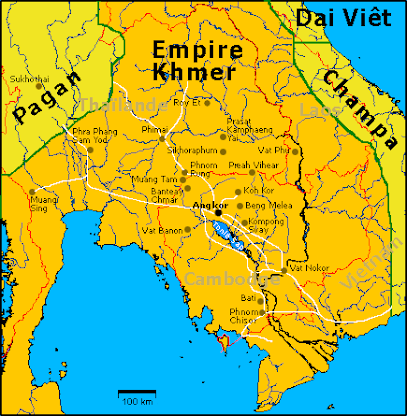
PHNOM PENH, Cambodia will submit the application form to list 12th century Banteay Chmar temple as World Heritage Site with the heritage committee of UNESCO soon, the local media reported on Sunday.
"Listing of the temple is aiming at conservation of the heritage site and its value is humanitarian heritage," according to khmer language newspaper Kampuchea Thmey Daily.
It added that Cambodia delegation led some experts from UNESCO,and delegation from Foundation for World Heritage to visit the temple on Saturday.
The temple located in Banteay Mean Chey province, about 60 km distance in northern area of provincial town.
Cambodia has already registered Angkor Wat temple, Royal Ballet, Khmer shadow theater and Khmer temple Preah Vihear as World Heritage Sites.
Read more!

Sunday, August 09, 2009
Cambodia to register 12th century temple as World Heritage Site

Cambodia: Law On The Statute Of Judges
Press Release: Asian Human Rights Commission
Cambodia: Law On The Statute Of Judges, Not Their Retirement, Is The Right End From Which To Tackle Judicial Reform
Last June the Cambodian government ignored the jurisdiction of the nomination and discipline of judges and prosecutors of the Supreme Council of the Magistracy (SCM) when it bypassed the court and got the King, who is chairman of this supreme judicial council, to retire and replace half of the eight SCM members. The retired members were Ouk Vithun, Prosecutor General of the Supreme Court, 62, an ex-officio member; Henrot Raken, 68, Prosecutor General of the Appeal Court, another ex-officio member; Khieu Sameth, 62, President of Kandal Provincial Court, an appointed member; and Sin Dim, 66, President of Preah Sihanouk Provincial Court, another appointed member.
The government’s infringement upon the SMC’s jurisdiction is unconstitutional as it violated the independence of the judiciary of which the SCM is an integral part. Apparently the government was not happy with the lack of the SMC’s swift disciplinary action against a provincial prosecutor whose alleged faults had been widely reported in the press.
Perhaps more importantly, the government was not happy with the SCM when the latter had not retired the judges and prosecutors it had proposed. The SCM had its own reasons for not heeding the government’s proposal. It wanted to uphold its independence and exercise its authority over the nomination and discipline of judges and prosecutors.
Even more importantly, there was no law on the statute of judges and prosecutors which should set the retirement age for them. The government has not yet enacted this long overdue law and also the law on the organization of the judiciary when the country‘s Constitution has specifically stipulated the need to enact both laws since 1993. Like the law on the statute of civil servants and the law on the statute of members of the armed forces, which have not been specifically stipulated in the Constitution and which had both been enacted in the mid-1990s, this law on the statute of judges and prosecutors would determine, among other things, the age of retirement for judges and prosecutors. Without this law, the SCM would have no legal basis to retire judges and prosecutors.
The SCM did not comply with a government decree (not a law) which has been echoed by subsequent government circular letters and which fixes the retirement age of 60 for judges and prosecutors when this decree was based on no law on the statute of judges and prosecutors. This inaction has led the government to accuse the SCM of defending certain members of the judiciary who have wished to remain in active service.
Now with a new composition more amenable to the government’s wishes, the SCM sets out to retire some 27 elder judges and prosecutors, retirement which some have seen as part of the long overdue judicial reform.
However, the retirement of the four members of the SCM in June and the planned retirement of a big batch of judges and prosecutors are but palliatives to defuse mounting pressure for judicial reform. These measures have tackled this reform at the wrong end and have in no way come to address the real issue of the legal foundation of Cambodia’s entire judiciary. They have further violated the constitutional principle of the separation of powers, judicial independence and consolidated the executive control of the judiciary.
If the government is not happy with the functioning of the SCM, the Prime Minister should raise the issue with the King who is its chairman when he has an audience with him twice a month (Art.20 of the Constitution). The government should not delay any further the enactment of the law on the statute of judges and prosecutors and the law on the organization of the judiciary so that judges and prosecutors, who belong to the same body of magistrates, would have proper legal status, which they don’t have at the moment, and all courts of law would be duly established by law, which they are not at the moment. Everyone would thus be entitled to be tried by an independent, competent and impartial tribunal established by law, a right which is specifically stipulated under Article 14 of the International Covenant on Civil and Political Rights to which Cambodia is a party.
The government cannot apply the law on the nomination of judges and on the functioning of courts of law enacted in the communist days, prior to the promulgation of the current Constitution, and any decree enacted thereof when they are not among the “Laws and standard documents in Cambodia that safeguard State properties, rights, freedom and legal private properties and in conformity with the national interests, (which) shall continue to be effective until altered or abrogated by new texts” under the transitional article 158 of the current Constitution.
The absence of the law on the statute of judges and prosecutors poses a big problem of legitimacy for the composition of the SCM itself whose three judge members should be elected by their peers, an election which has been held up for 16 years, which is too long. The lack of the legitimacy of the composition of the SCM in turn questions the legitimacy of the composition of the country’s Constitutional Council which is a sort of a constitutional court, whose three members are appointed by the SCM.
The Asian Human Rights Commission (AHRC) urges the Cambodian government to prioritise the building of the legal foundation and framework of the country’s entire judiciary, its organization and the status of judges and prosecutors by enacting the law on their statute, including their retirement age, in tandem with the law on the organisation of the judiciary, two of the important laws that are specifically stipulated in the country’s constitution. This is the right end from which it should tackle judicial reform in Cambodia.
About AHRC: The Asian Human Rights Commission is a regional non-governmental organisation monitoring and lobbying human rights issues in Asia. The Hong Kong-based group was founded in 1984.
Read more!
ASEAN turns 42, looks to the future
The Association of Southeast Asian Nations celebrated its 42nd anniversary Friday with a series of activities highlighting more than four decades of strong regional cooperation. In Korea, the ASEAN Committee in Seoul, held a flag-raising ceremony and reception at the Malaysian embassy on Aug. 7.
Participants included Korean government officials, members of the National Assembly, the private sector, academia and the media.
"With its 42nd birthday, ASEAN looks towards deeper integration as it seeks to build an ASEAN Community by 2015, which will further unite its combined population of 560 million and land area of 4.48 million square kilometers," Malaysian Ambassador and chair of the ASC Dato' Ramlan Bin Ibrahim.
"The ASEAN Charter, ratified by all ASEAN members, will act as the firm foundation in ASEAN's move to become a rules-based, people-oriented and integrated entity."
Externally, Ramlan said that ASEAN aims to further intensify regional ties and enhance people-to-people exchanges through forward-looking projects and closer networks with regional partners.
"ASEAN continues to forge ahead in its relationship with its 10 dialogue partners" (Australia, Canada, China, European Union, India, Japan, Korea, New Zealand, Russia and the United States).
Korea recently hosted the ASEAN Commemorative Summit on Jeju Island at the beginning of June to celebrate 20 years of dialogue partnership.
In cementing closer ties between the two entities, the meeting also sought to further expand cooperation in new areas, including green technology.
Founded in 1967 to promote political cooperation among stakeholders, ASEAN has expanded to include more member countries and more areas of cooperation in diverse sectors such as trade, security and development.
It is composed of Brunei, Cambodia, Indonesia, Laos, Malaysia, Myanmar, the Philippines, Singapore, Thailand and Vietnam.
Malaysia is the current chairman of the ASEAN Committee in Seoul.
Read more!
Experts gather in Bali to discuss fight against AIDS
NUSA DUA, INDONESIA — Experts from 65 nations gather in Indonesia Sunday to assess progress in the battle against HIV (human immunovirus)/AIDS (acquired immune deficiency syndrome) amid concern only a quarter of those in need in Asia and the Pacific are getting treatment.
The International Congress on AIDS in the region, which will be opened by President Susilo Bambang Yudhoyono on the resort island of Bali, will look at how to ensure "universal access" to anti-retroviral treatment, congress chairman Zubairi Djoerban said.
He said that only 25% of the 1.7 million of people with HIV/AIDS in the Asia-Pacific who need the treatment are receiving it.
"We’re still far away from our target," he said. "We’re not talking 100%, which is the ideal. If Latin America can treat 62% of sufferers there, we should strive towards that."
An estimated five million Asians are living with HIV, especially in southeastern countries such as Thailand, Cambodia, the Philippines and Indonesia, according to a UN report released last year.
The congress, which runs until Thursday, will also serve to demand commitment from governments to tackle the disease that killed 380,000 people across Asia in 2007, Mr. Djoerban said.
"We ask for commitment from the countries to achieve the targets they have set and if they say they can’t, we’ll discuss new efforts to help them reach their goals," he added. "We can discuss prevention and treatment but with no leadership and commitment from countries and the community, we won’t achieve much."
While there are some bright spots in the region, such as Cambodia, where HIV prevalence has declined through condom use, new infections are growing steadily in populous countries such as Bangladesh and China, the UN report said. — AFP
Read more!
Saturday, August 08, 2009
Shipping service resumes in south China strait
HAIKOU, Shipping services across south China's Qiongzhou strait resumed Saturday afternoon as tropical storm Goni churned southward.
The maritime affairs bureau of island province Hainan ordered the resumption at 1:30 p.m. About 1,000 passengers stranded on the island by the storm are leaving.
Ferry and passenger liner services were suspended in the strait separating Hainan island and the mainland of China at 11 p.m. Thursday.
Goni, the seventh storm to hit China this year, was 19.2 degrees north and 108.3 degrees east at 10 a.m. Saturday, 30 kilometers from Dongfang City in the west of Hainan.
Packing winds of 65 kilometers per hour, it was moving southwestward at a speed of five kilometers an hour and was likely to land on the island within 10 hours, said the island's meteorological station.
Goni has already brought heavy rain to the island, affecting more than a million people and inflicting a direct economic loss of 185.7 million yuan (about 27.3 million U.S. dollars).
One thousand, two hundred people were evacuated in the island's Lingao county while rescuers are trying to help a further 5,000 surrounded by floodwaters in Haiwei township, Changjiang county.
A drowned fisherman's body has been found while nearly 100 crew members of ships from Cambodia, Vietnam and China are missing in heavy seas around the island.
Xie Chunfu, an official with the Hainan Province's bureau of maritime affairs, said 21 people from foreign-registered ships had been rescued.
Read more!
ASEAN commemorates 42nd anniversary with environment issue
JAKARTA (Xinhua) - The Association of Southeast Asia Nations (ASEAN) commemorated its 42nd anniversary with theme of "Green Asia" to reflect its care about environment that has been deteriorated by climate change, the association's chief said here yesterday.
"Today, we commemorate our 42nd anniversary, to commemorate achievements of we made to our people and the world's, just what our founding fathers wanted," said Surin Pitsuwan, the association's secretary general in his opening speech.
He said that climate change has been the top agenda of many countries, governmental bodies, inter-governmental summits et cetera.
"That's why we choose the topic for our commemorations' theme today," he said.
According to Surin, ASEAN is the home for so many species of flora and fauna that do not exist in other part of the world.
"ASEAN is just 3 percent part of the Earth but we have 20 percent of plants, animals, and marine species of the world's total," Surin said, adding that ASEAN contributed so much oxygen even though it emits much carbon dioxide too.
He said that making more comfortable and more livable Earth is the world's responsibility by preserving green environment.
According to Surin, all across ASEAN and the world that have ASEAN committee is commemorating the anniversary on Saturday.
"In London, Tokyo, Beijing, Brazil, for example, they are commemorating this anniversary. In fact, I just received messages from Moscow and Washington that they are commemorating this event, even though it's still early there," he said.
ASEAN consists of countries located in the Southeast Asia region, namely Indonesia, Brunei Darussalam, Malaysia, the Philippines, Cambodia, Lao PDR, Myanmar, Singapore, Thailand and Vietnam.
According to the association's data in 2007, ASEAN has 576 million populations who lived on 4.5 million square meters. The countries have combined gross domestic product (GDP) of 1,282 trillion U.S. dollars with total trade of 1.616 trillion dollars.
Read more!
Friday, August 07, 2009
Downturn pushes exporters to eye Cambodia
Sai Gon Giai Phong Newspaper
As the wheels of Vietnam’s export machine to the U.S. and Europe begin to slow, local shippers are turning their attention to the often overlooked neighboring market of Cambodia.
Nguyen Thi Hong, deputy chairwoman of the Ho Chi Minh City’s People’s Committee, told Sai Gon Giai Phong (Sai Gon Liberated) newspaper, the city’s total export turnover last month fell by 13.9 percent from the same period last year.
But it was a very different story in impoverished Cambodia. During the same stretch, exports from Vietnam soared 44 percent over July last year, she said.
Cambodia, home to 14 million people and one of Southeast Asia’s poorest countries recorded average economic growth of ten percent from 2004 to 2008. Much of that progress can be tracked back to the UN-backed Paris Peace Accord between the government and Khmer Rouge in 1994.
The country has opened up a great deal since then and today the free market is king.
Between Vietnam and Cambodia - which have often had a turbulent relationship - two-way trade has risen on average by 40 percent annually over the past few years, from US$935 million in 2006 to $1.2 billion in 2007 and nearly $1.7 billion in 2008.
Made-in-Vietnam goods have also gained a foothold in Cambodia through fairs and trade events held in the country.
About three years ago, Vietnam was the third largest exporter to Cambodia after China and Thailand. At present, Vietnamese exporters are offering a wide range of products in Cambodia, from construction materials to consumer goods and household appliances.
Tran Huu Duc, public relations director of Vietnamese food producer Dong Tam Nutrition Food Joint-stock Co. (Nutifood), said his company’s dairy products for the elderly are hugely popular in the country.
But in a possible case of the chickens coming home to roost, most Vietnamese exporters are still unable to gain a better foothold in the market as distribution networks in the country are firmly in the hands of Cambodian firms.
Red tape and fierce competition from Chinese and Thai imports are also among the obstacles for Vietnamese businesses to further explore the neighboring market.
Ho Chi Minh City-based multi-service Saigon Trading Group (SATRA) is working on a plan to build a duty free supermarket chain at the Moc Bai and Tinh Bien border gates between the two countries, Hong said.
A number of warehouses designed for Vietnamese goods will also be set up at Vietnam-Cambodia border gates to help Vietnamese exporters save transportation costs.
Satra is also teaming up with Cambodian business conglomerate Sokimex Group to build a supermarket for Vietnamese products in the country and provide Cambodian language courses for Vietnamese businessmen.
Read more!
Two dead as Typhoon Morakot slams into Taiwan
Taipei, Typhoon Morakot hit Taiwan Friday, leaving at least two people dead, four missing and four foreign ships grounded off its coast.
A woman walking in Keelung, northern Taiwan, was swept into the sea and drowned, and a woman cyclist drowned after winds swept her and her bicycle into a flooded ditch.
Four fishermen are listed as missing after their fishing boats overturned in choppy seas and they fell overboard, local television reports said.
Dozens of Taiwanese were injured after being hit by falling objects or when their motorbikes were blown over, according to the Broadcasting Corporation of China.
The typhoon also grounded four foreign ships, two from Cambodia, one from Indonesia and one from the Marshall Islands, the Transport Ministry said.
President Ma Ying-jeou warned the public to remain on guard as the rainfall may continue and increase. He urged islanders to stay home to prevent accidents outdoors.
Morakot, the strongest typhoon to hit Taiwan this year, formed over the Pacific Ocean earlier this week. It brought strong winds and torrential rains to Taiwan Thursday and Friday.
By 10 p.m. (1400 GMT) Friday, the eye of the typhoon was 40 km southeast of Hualien on the east coast.
Moving at 11 km per hour (kmph) in a northeasterly direction, it was packing centre winds of 144 kmph and gusts of 180 kmph.
If it maintains its course and speed, Morakot is expected to cross the Taiwan Strait and slam into China’s southeast coast Saturday night or Sunday morning, the Central Weather Bureau said.
Morakot however is expected to weaken after crossing Taiwan.
The typhoon cut off power to about half a million homes and paralyzed Taiwan’s road and air traffic.
On Friday, 144 domestic flights and 255 international flights were cancelled while several takeoffs were delayed.
Taiwan has declared Friday a “typhoon holiday” to prevent typhoon-related accidents. Several counties and cities said they will continue to have a typhoon holiday Saturday despite Morakot’s expected departure.
Read more!
Cambodia records 24 flu A(H1N1) cases
PHNOM PENH, Cambodian health ministry announced on Friday that it has confirmed 24 cases of A(H1N1) influenza in the kingdom.
"The two latest cases are a 22-year-old Khmer girl and a 38-year-old Australian man," said Sok Touch, director of communicable disease control department of Health Ministry.
"The Australian man is the father of a girl who was tested positive for the flu," he said.
"They are in stable condition and are recovering after treatment."
Nobody has died so far in Cambodia, according to Sok Touch. He said, "Cambodia will not hide the number of infected people or dead people. Everything is transparent."
"Cambodia has been trying to prevent the spread of the flu and strengthening the tracking system at airports and international border gates," he said, calling the local people to protect themselves from the flu.
"The most important thing," Sok Touch stressed, "is that the local residents should have to protect themselves." (PNA/Xinhua) FFC/ebp
Read more!
UTSA collaborates with Cambodian universities on research, teaching, study abroad
By Kris Rodriguez
(Aug. 7, 2009)--In an effort to extend global outreach, UTSA President Ricardo Romo signed agreements with two Cambodian universities, which will allow faculty and students from the three universities to collaborate in research, teaching and participation in study abroad programs.
"I think it's really important for our students to get to know the rest of the world," said Romo. "We would be left behind if we didn't try to be a bit more proactive in setting up programs that would allow the students to see other parts of the world. We need to take advantage of these kinds of connections with other universities and let our students reap the benefits of those kinds of networks."
One memorandum of understanding is with Royal University of Phnom Penh (RUPP), Cambodia's first and largest university. After opening in 1960, it was shut down from 1975 to 1979, along with all other schools and universities, by the Khmer Rouge. The university reopened in 1980. The second agreement is with Pannasastra University, a prestigious private university opened in 2000 by Cambodian Americans who fled the country because of the genocide. They returned to their home country with advanced degrees and started the university.
The collaborative efforts began earlier this year when Wayne Wright, UTSA associate professor of bicultural-bilingual studies, traveled on a Fulbright Scholarship to teach at RUPP in the master of education program. Wright, who is fluent in Cambodian, chose the country in order to contribute to the rebuilding of the education system devastated by genocide and decades of civil war. Additionally, he was able to introduce his children to the Cambodian language, history and culture and reconnect with his wife's family who live near the capital.
"I'll be supervising five master's students on their theses at RUPP and finishing up a research project I started with one of the faculty members there," said Wright. "My hope is to find funding to support a big collaborative research project related to teacher training in Cambodia that can involve all three universities."
Read more!
Thursday, August 06, 2009
Greece: Teacher spends summer break schooling kids — in Cambodia
By Jessica Spies, staff writer
Greece Post
Greece, N.Y. — A local teacher will be able to add “reinforcing English skills of Buddhist monks” to her résumé after a trip to Cambodia this summer.
Greece resident Merrill Mey, a teacher at the Rochester City School District, is spending part of her summer vacation in Siem Reap, Cambodia, with the non-profit organization United Planet.
The organization provides volunteer experiences of up to a year in more than 50 countries.
“I’ve always wanted to do something different with my summers and I always wanted to travel,” said Mey, speaking before she left for Asia.
Earlier this month, Mey boarded a 25-hour flight to Siem Reap, a more developed area of Cambodia that houses one of the largest religious temples of the world. She is teaching English to Cambodian children during her two-week trip.
“A big part of United Planet is to bridge between two cultures,” Mey said. “Hopefully they can show me the great things about their area and I hope I can do the same.”
Once she returns, she plans on sharing the cultural lesson with her students.
Mey teaches first graders at John Walton Spencer School No. 16 on Post Avenue in the city.
She’ll teach the same group of students in second grade this coming school year.
Before the end of the school year in June, Mey taught her students a little bit about her summer trip.
“I showed them where Cambodia is on the map, what the land looks like and what the buildings look like over there,” she said.
Kimberly Lee, who has worked with Mey for eight years, said, “Although some of the students may not realize just how far away Cambodia is, they are all eager to give Miss Mey advice as to what games she should play with her new students.”
Lee said the trip is not only a professional experience for Mey, but a personal one as well.
“Through this opportunity, I believe Merrill will receive much more than she anticipates,” Lee said. “In addition, the students she teaches in Rochester will grow from this experience.”
Mey said is staying in a guest house, which is more like a hotel than the homes where most Cambodians live. She will, however, eat the same food the natives eat.
“I’m very adventurous with food, but very leery,” she said. “They tell you that canned food is your friend.”
As it’s a volunteer trip, Mey has to pay for her flight, supplies and her housing in Cambodia.
To be a part of Mey’s adventure, visit www.firstgiving.com/MerrillMey.
Read more!
U.S. Senate's Webb to visit Myanmar this month
WASHINGTON (Reuters) - U.S. Senator Jim Webb will visit Myanmar this month, the first member of Congress to travel to the southeast Asian country in more than a decade, his office said on Thursday.
Webb, who chairs a Senate subcommittee on East Asia and Pacific affairs, leaves on Sunday for a five-nation, two-week trip "to explore opportunities to advance U.S. interests in Burma (Myanmar) and the region," a statement from his office said.
A Vietnam war veteran and former U.S. Navy Secretary who speaks Vietnamese, Webb will also meet government representatives and industry leaders in Thailand, Laos, Vietnam and Cambodia, his office said.
U.S. lawmakers are pushing for the release of democracy leader Aung San Suu Kyi in Myanmar, but Webb, a Virginia Democrat, is not expected to see her during his visit, an aide to the senator said.
U.S. relations with Myanmar's military junta have been strained for years. In May, President Barack Obama extended for one year a ban on U.S. investment first imposed in 1997 because of the authorities' repression of the opposition. Last week, Obama renewed sanctions targeting imports from Myanmar.
Read more!
New Tamil Tiger head arrested: Sri Lanka military
By C. Bryson Hull
COLOMBO (Reuters) -- The new head of the Tamil Tigers, the separatist group defeated by the Sri Lankan military after a 25-year war, has been arrested in Thailand, Sri Lanka's military said on Thursday.
Selvarajah Pathmanathan was wanted on two Interpol warrants and took the reins of the remnants of the Liberation Tigers of Tamil Eelam (LTTE) after their defeat in May.
"He has been arrested in Bangkok. That is all we know at the moment," military spokesman Brigadier Udaya Nanayakkara said.
There was no immediate comment from Thai officials.
Pathmanathan, better known as KP during his decades running the LTTE's arms and smuggling networks, took over as the public leader of the separatist group after Sri Lanka's military announced victory on May 18 after a 25-year war.
He was the first LTTE official to acknowledge the death of Tiger founder and leader Vellupillai Prabhakaran, who was killed in the closing days of Sri Lanka's offensive on a narrow spit of northeastern coast where they had surrounded the rebels.
Security experts had long suspected Pathmanathan was hiding in southeast Asia.
A Western diplomat assigned to Sri Lanka met him somewhere in the region earlier this year, part of an effort to persuade the LTTE to surrender in the face of an imminent defeat and free civilians they were holding by force in the war zone.
Pathmanathan was believed to have earned millions of dollars procuring weapons for the Tigers and running smuggling operations from bases across the region including Thailand, Cambodia and Myanmar. Security experts say he had multiple passports.
Some estimates said the LTTE earned between $200-300 million from extortion, weapons sales and drug smuggling. Analysts said part of a brief struggle for Prabhakaran's mantle after the war was to take control of its financial assets.
After the war, Pathmanathan said the LTTE would try non-violent means to achieve its goal of a separate state for Sri Lanka's minority Tamils. Among his first initiatives was to try to form a transnational government-in-exile.
Read more!
Wednesday, August 05, 2009
In Cambodia, Proximity to Wildlife Sparks Influenza Fears
Fred De Sam Lazaro reports how Cambodians' proximity to wildlife is sparking new concerns about the spread of avian flu.
FRED DE SAM LAZARO: On the street outside Phnom Penh's most prominent Buddhist temple, the merit bird business is brisk. It's an age-old ritual in many parts of Southeast Asia based on the belief that freeing a caged bird brings merit to one's soul.
But in recent years, these wild birds have come to symbolize something very different to public health workers: potential carriers of H5N1, the avian flu virus.
PRISCILLA JOYNER, Wildlife Conservation Society: Sellers are very interested in whether or not these birds do have avian influenza. And so they're interested in knowing about the health of the wildlife and how this impacts their health, as well.
FRED DE SAM LAZARO: And their livelihood, too.
PRISCILLA JOYNER: And their livelihood, too, yes.
FRED DE SAM LAZARO: Priscilla Joyner is with the Wildlife Conservation Society. Its staff regularly tests samples of wild birds across East Asia for any signs of flu.
PRISCILLA JOYNER: A big concern here in this area is the very close proximity of people living with domestic animals and interacting with wildlife. And this can either be in the home or this can be in the market or in merit bird training. And this close proximity can be enough pressure to allow a pathogen to jump from one species to the next and then lead to a disease that otherwise may not have occurred.
FRED DE SAM LAZARO: Although so far merit birds have been free of avian flu, Joyner says Cambodia is in many ways an ideal Petri dish for its spread. People are always around wild birds and domestic animals and poultry in the markets and in backyards of this mostly rural country still recovering from decades of war.
H5N1 is common but harmless in ducks. It is lethal in chickens. And it's deadly when it does make the cross-species leap to humans. Two-thirds of the 400 people who've contracted bird flu have died.
Cambodia has seen just eight human cases since 2005. Almost all had very close contact with infected chickens. So far, the virus has not spread from human to human.
Still, Dr. Sirendes Vong of the Pasteur Institute says bird flu remains a concern, especially if it infects someone who already has another form of flu, including swine flu that spread widely in recent months.
Deadly Combination
DR. SIRENDES VONG, Pasteur Institute, Cambodia: Once humans are infected, if they're infected with seasonal flu, that's a possibility for H5N1 to mix with the seasonal flu and to come up with a new virus that would have the potential to be a pandemic one.
FRED DE SAM LAZARO: To spread like seasonal flu.
DR. SIRENDES VONG: Exactly. How deadly? I don't know. But there's a potential to get a virus that is as deadly as H5N1 and as transmissible as...
FRED DE SAM LAZARO: The bird flu?
DR. SIRENDES VONG: ... as seasonal flu or the current swine flu virus.
FRED DE SAM LAZARO: He says Cambodia doesn't have the resources to check on every case, but with agencies like Pasteur, it is monitoring selected sites across the country for any signs of flu in chickens and responding to major outbreaks.
DR. SIRENDES VONG: If there is something, there's a team from the Ministry of Agriculture, from the veterinary services, that would go to the field and investigate the phenomenon. And the difficulties, again, is to come at the early stage so that you would be able also to test at the early stage of the outbreak.
FRED DE SAM LAZARO: And they are hoping the message gets out on how to lower the risk of an outbreak, separating chickens from ducks, for example, keeping kids away from ponds where ducks swim, and improved hygiene around the backyard. It's a message that's gotten through to small farmers like Khieu Nyim.
KHIEU NYIM, farmer (through translator): I heard the news from the TV and radio. I heard that swine flu makes the pigs sick first and also infects human beings. First, I heard that it spread in Mexico, and then it also spread in America.
I take precautions for myself. I clean the pigs and make sure I wear a mask when I enter the cage.
Risk of Inter-Species Diseases
FRED DE SAM LAZARO: No one's sure whether most farmers are adopting such practices or whether most farmers can afford protective gear. And even though there's fear of the bird flu and swine flu viruses mixing, no one's sure when or if such a super-bug might emerge.
Dr. Michael O'Leary heads the World Health Organization office in Cambodia.
DR. MICHAEL O'LEARY, World Health Organization: I think it's largely a theoretical concern at this point, because we have, you know, many kinds of viruses around us all the time. And so while we have to say that it's possible that these two or other viruses may mix and result in a new virus, that's essentially always the case. We can have such a scenario any time.
FRED DE SAM LAZARO: He says the risk of diseases that jump from one species to another has risen in recent decades with dozens of examples, from Ebola to Lyme disease.
DR. MICHAEL O'LEARY: The destruction of forests or the urbanization of people, that's created new opportunities, I think, for new kinds of interaction between humans and animals. Another is the ease with which people move around the world now.
There have been so many emerging diseases in the last few decades. We've seen dozens of new diseases, HIV being only one, most of which did result from a spread of an organism from the animal world to the human world.
FRED DE SAM LAZARO: O'Leary says it will be important to strike a balance, watching for early signs of outbreaks while avoiding socially disruptive measures, like shutting down the merit bird trade or shutting down markets.
GWEN IFILL: For more on how viruses are transmitted from animals to humans and for Fred's reporter's notebook on Cambodia, visit our global health Web site at newshour.pbs.org.
Read more!
Thailand and Cambodia resume ministerial talks
BANGKOK — Foreign ministers from Cambodia and Thailand resumed joint policy talks for the first time in three years Wednesday after months of fractious relations over a border temple dispute.
Cambodian foreign minister Hor Namhong and his Thai counterpart Kasit Piromya met at a Bangkok hotel to discuss the spat and deeper economic ties.
Violent clashes near the ancient 11th century Preah Vihear have left seven soldiers dead since July 2008 when the temple was granted UN World Heritage status.
High level delegations have met at various times over the past year in an attempt to heal rifts, but Wednesday's meeting is the first time since 2006 that ministers have convened their joint policy commission.
The body had previously met once a year to oversee relations between the two countries.
Cambodia and Thailand have been at loggerheads over the Khmer ruins for decades. Although the World Court ruled in 1962 that the temple belonged to Cambodia, its most accessible entrance is in northeastern Thailand.
Tensions have also arisen over disputed waters where both countries have granted oil and gas exploration rights to private companies.
After Wednesday's meeting both foreign ministers said the talks signified progress in relations.
"We agree to speed up the border talks so that the existing problems will be solved," Hor Namhong told a press conference.
"We also agreed to cooperate over human trafficking, as Cambodia faces this problem," he said.
The pair said they would resume a Joint Technical Committee on the maritime dispute and vowed the disagreement would not be an obstacle.
"Our problems will not trouble our relations. Whatever our troubles are, we will solve them," Kasit said following the two-hour meeting.
Senior officials met a day earlier in Bangkok, where they kicked off the talks covering cooperation on the economy, trade, education and the border issue.
The ministers also agreed to advance plans for visa exemption scheme when they celebrate the 60th anniversary of diplomatic relations next year.
They also signed an agreement that will allow some prisoners, after serving minimum periods of imprisonment, to be transferred in order to serve their remaining sentences in their own countries.
Read more!
Mosquitoes deliver malaria 'vaccine' through bites
By MARILYNN MARCHIONE
AP Medical Writer
In a daring experiment in Europe, scientists used mosquitoes as flying needles to deliver a "vaccine" of live malaria parasites through their bites. The results were astounding: Everyone in the vaccine group acquired immunity to malaria; everyone in a non-vaccinated comparison group did not, and developed malaria when exposed to the parasites later.
The study was only a small proof-of-principle test, and its approach is not practical on a large scale. However, it shows that scientists may finally be on the right track to developing an effective vaccine against one of mankind's top killers. A vaccine that uses modified live parasites just entered human testing.
"Malaria vaccines are moving from the laboratory into the real world," Dr. Carlos Campbell wrote in an editorial accompanying the study in Thursday's New England Journal of Medicine. He works for PATH, the Program for Appropriate Technology in Health, a Seattle-based global health foundation.
The new study "reminds us that the whole malaria parasite is the most potent immunizing" agent, even though it is harder to develop a vaccine this way and other leading candidates take a different approach, he wrote.
Malaria kills nearly a million people each year, mostly children under 5 and especially in Africa. Infected mosquitoes inject immature malaria parasites into the skin when they bite; these travel to the liver where they mature and multiply. From there, they enter the bloodstream and attack red blood cells - the phase that makes people sick.
People can develop immunity to malaria if exposed to it many times. The drug chloroquine can kill parasites in the final bloodstream phase, when they are most dangerous.
Scientists tried to take advantage of these two factors, by using chloroquine to protect people while gradually exposing them to malaria parasites and letting immunity develop.
They assigned 10 volunteers to a "vaccine" group and five others to a comparison group. All were given chloroquine for three months, and exposed once a month to about a dozen mosquitoes - malaria-infected ones in the vaccine group and non-infected mosquitoes in the comparison group.
That was to allow the "vaccine" effect to develop. Next came a test to see if it was working.
All 15 stopped taking chloroquine. Two months later, all were bitten by malaria-infected mosquitoes. None of the 10 in the vaccine group developed parasites in their bloodstreams; all five in the comparison group did.
The study was done in a lab at Radboud University in Nijmegen, the Netherlands, and was funded by two foundations and a French government grant.
"This is not a vaccine" as in a commercial product, but a way to show how whole parasites can be used like a vaccine to protect against disease, said one of the Dutch researchers, Dr. Robert Sauerwein.
"It's more of an in-depth study of the immune factors that might be able to generate a very protective type of response," said Dr. John Treanor, a vaccine specialist at the University of Rochester Medical Center in Rochester, N.Y., who had no role in the study.
The concept already is in commercial development. A company in Rockville, Md. - Sanaria Inc. - is testing a vaccine using whole parasites that have been irradiated to weaken them, hopefully keeping them in an immature stage in the liver to generate immunity but not cause illness.
Two other reports in the New England Journal show that resistance is growing to artemisinin, the main drug used against malaria in the many areas where chloroquine is no longer effective. Studies in Thailand and Cambodia found the malaria parasite is less susceptible to artemisinin, underscoring the urgent need to develop a vaccine.
Read more!
Tuesday, August 04, 2009
Cambodia police, protesters clash after PM court win
 Cambodian police (R) try to block Mu Sochua (C), lawmaker from the opposition Sam Rainsy party, and her supporters along a street in Phnom Penh. A Phnom Penh court ruled that Mu Sochua was guilty of defaming President Hun Sen for remarks she made during an April press conference(AFP/Tang Chhin Sothy)
  Cambodian supporters from the opposition Sam Rainsy party clash with police along a street in Phnom Penh. A Phnom Penh court ruled that Mu Sochua of the Sam Rainsy Party was guilty of defaming President Hun Sen for remarks she made during an April press conference.(AFP/Tang Chhin Sothy)
A Phnom Penh court ruled that Mu Sochua of the Sam Rainsy Party was guilty of defaming Hun Sen for remarks she made during an April press conference, in which she also announced she would sue the premier for allegedly insulting her.
After Tuesday's ruling, opposition leader Sam Rainsy and Mu Sochua, along with dozens of her supporters, marched from the court through the capital, chanting, "Justice! Justice!"
Police attempting to break up the march clashed with a few protesters, grabbing, punching and kicking several of the loudest demonstrators, an AFP correspondent at the scene witnessed.
Most journalists and rights activists were banned from attending the brief hearing in which Judge Sem Sakola ordered Mu Sochua to pay 2,000 dollars in compensation to Hun Sen, who filed the suit soon after her April remarks.
The judge also ordered the lawmaker to pay a fine of 2,125 dollars to the state, but Mu Sochua told reporters that she did not accept the court's decision.
"The ruling is based on political motivation, not by laws," Mu Sochua said outside court.
"That was not justice. I made it very clear, I will continue to fight until justice is provided to me."
The Cambodian National Assembly stripped Mu Sochua of parliamentary immunity in June to clear the way for the controversial court proceedings against her.
Her lawsuit against Hun Sen was meanwhile dismissed in court.
International rights groups have expressed alarm over a recent spate of defamation and disinformation lawsuits lodged by senior Cambodian officials against government critics.
New York-based Human Rights Watch alleged Hun Sen's government aimed to silence political opposition and critics with a recent "campaign of harassment, threats, and unwarranted legal action."
Sam Rainsy was stripped of his parliamentary immunity in February after accusing Hun Sen's party of corruption during elections last year and then failing to pay a 2,500-dollar fine.
His immunity was later restored when his party eventually paid the fine.
Probable Posttraumatic Stress Disorder and Disability in Cambodia
Associations With Perceived Justice, Desire for Revenge, and Attitudes Toward the Khmer Rouge Trials
Context Millions of Cambodians suffered profound trauma during the Khmer Rouge era (1975 to 1979). A joint United Nations–Cambodian tribunal (the "Khmer Rouge trials") was empanelled in 2006 to prosecute top Khmer Rouge leaders and began substantive hearings in March 2009.
Objectives To establish the prevalence of probable posttraumatic stress disorder (PTSD) among adult Cambodians and to assess correlates of PTSD symptoms and disability with perceived justice, desire for revenge, and knowledge of and attitudes toward the trials.
Design, Setting, and Participants A national probability sample of 1017 Cambodians was assembled using a multistage, stratified cluster design, including 813 adults older than 35 years who had been at least 3 years old during the Khmer Rouge era and 204 adults aged 18 to 35 years who had not been exposed to the Khmer Rouge era. Face-to-face interviews were conducted between December 2006 and August 2007.
Main Outcome Measures Prevalence of probable PTSD using the PTSD Checklist, Civilian version (cutoff score of 44), and mental and physical disability using the Medical Outcomes Study 12-item Short Form Health Survey.
Results The prevalence of current probable PTSD was 11.2% (95% confidence interval [CI], 8.6%-13.9%) overall and 7.9% (95% CI, 3.8%-12.0%) among the younger group and 14.2% (95% CI, 11.0%-17.3%) in the older group. Probable PTSD was significantly associated with mental disability (40.2% vs 7.9%; adjusted odds ratio [AOR], 7.80; 95% CI, 3.90-15.60) and physical disability (39.6% vs 20.1%; AOR, 2.60; 95% CI, 1.26-5.39). Although Cambodians were hopeful that the trials would promote justice, 87.2% (n = 681) of those older than 35 years believed that the trials would create painful memories for them. In multivariate analysis, respondents with high levels of perceived justice for violations during the Khmer Rouge era were less likely to have probable PTSD than those with low levels (7.4% vs 12.7%; AOR, 0.54; 95% CI, 0.34-0.86). Respondents with high levels of desire for revenge were more likely to have probable PTSD than those with low levels (12.0% vs 7.2%), but the difference was not statistically significant in the multivariate analysis (AOR, 1.76; 95% CI, 0.99-3.11).
Conclusions Probable PTSD is common and associated with disability in Cambodia. Although Cambodians had positive attitudes toward the trials, most were concerned that the trials would bring back painful memories. Now that the trials have begun, longitudinal research is needed to determine the impact of the trials on Cambodians' mental health.
Author Affiliations: University of North Carolina at Chapel Hill (Dr Sonis); Washington University in St Louis, Missouri (Dr Gibson); Vrije Universiteit Medical Center, Amsterdam, the Netherlands (Dr de Jong); Pacific Graduate School of Psychology, Palo Alto, California (Dr Field); Center for Advanced Study, Phnom Penh, Cambodia (Dr Hean); HealthNet TPO, Amsterdam (Dr Komproe); Stellenbosch University, Stellenbosch, South Africa (Dr Gibson); and Boston University School of Medicine, Boston, Massachusetts (Dr de Jong).
Read more!
Water Is Medicine: Why Act Now on the Water and Sanitation Crisis
WASHINGTON, the bipartisan Congressional Water Caucus and Water Advocates hosted a Capitol Hill Briefing on the vital linkages between safe drinking water, sanitation and global public health challenges. The briefing, titled "Water is Medicine," revealed that evidence shows inadequate water, sanitation and hygiene (WASH) are the developing world's largest cause of disease. WASH is also critical to sustainable progress across a broad spectrum of development needs-from hunger to environmental degradation.
More than 25 diseases are caused by inadequate water and sanitation, creating nearly 10% of the global public health burden, killing more than 2 million people a year (including more children than AIDS, TB and malaria combined) and leading to 50% of the world's malnutrition. Each year there are more that 4 billion cases of diarrhea (a consequence of many of these 25+ diseases), killing 1.5 million people, 90% of whom are children under five.
Although Americans 100 years ago suffered from these same WASH-related diseases, today the US public is largely unaware of the extent and severity of the WASH crisis as few see the situation first hand. We easily flush away potential pathogens with a twist of a toilet handle and have clean safe drinking water at the turn of a tap. However, this is a global problem that Americans can do something about now-the solutions may begin with just a borehole well or getting more children to wash their hands with soap. We have the technology and knowledge to solve this if there is an increase in political will and financing.
"The deaths and illnesses caused by unsafe drinking water and inadequate sanitation are arguably the world's most grave public health challenge; they are also the most solvable and preventable," Representative John Linder said in response to the briefing. "I am pleased that the Congressional Water Caucus co-hosted the Capitol Hill briefing entitled "Water is Medicine" and I am personally proud to be a co-sponsor of the Water for the World Act of 2009."
Jae So, Manager of the Water and Sanitation Program, addressed the economic costs of inadequate sanitation giving the example of Cambodia where 7% of GDP is lost. Also speaking powerfully to the standing-room-only audience were Christine Moe, Director, Center for Global Safe Water, Emory University and Rich Thorsten, Director of International Programs of the newly formed Water.org, co-founded by Matt Damon.
Rep. Linder, a co-founder of the Water Caucus, also commented, "The list of domestic and international policy issues that we will face in the 111th Congress is long and each issue will be competing for a spot at the top of the agenda. It is critical that we act to ensure that water resources issues are brought to the forefront of the political agenda. The United States has a great opportunity to take a global leadership position on this critical issue. Indeed, water scarcity and pollution affects everything from stability and security of communities and nations, human health, education, economic prosperity, humanitarian relief and stewardship of the physical environment."
Read more!
Monday, August 03, 2009
Indonesia should abide by ASEAN Charter :observer
Jakarta (ANTARA News) - Executive Director of the International Institute for Strategic Studies (IISS), Begi Hersutanto opined that Indonesia should abide by the Asean Charter because it has good effect on the country`s legal and political development.
"As one of the ASEAN member countries and signatory of the Asean Charter, Indonesia has to abide by the Charter," the official said.
Hersutanto said further that since the Asean Charter was signed by the Asean heads of government/state on December 2007, it had improved the ties among the member countries in legal affairs.
"Thus, Indonesia should abide by the Asean Charter both legally and politically," he said in observance of the Asean anniversary which falls on August 8.
According to him, the Asean Charter also brought about a significant improvement in international law as well as regional affairs.
Regarding the Asean Charter, several homeworks of the grouping should be completed, among others the border area problem either in the sea or on land, Hersutanto said.
The border area problem should be immediately settled, the official disclosed.
Asean groups Brunei Darussalam, Cambodia, Indonesia, Laos, Malaysia, Myanmar, Singapore, Thailand, the Philippines and Vietnam was established on August 8, 1967. (*)
Read more!