PHNOM PENH, July 30 (Xinhua) -- Cambodia and Thailand will have a meeting of multi-committee in Bangkok to push the measurement for border demarcation, a senior official said on Thursday.
"I will go to Thailand for the meeting of multi-committee on August 3 and 4," Hor Namhong, deputy prime minister and minister of foreign affairs and international cooperation told reporters after the signing ceremony of receiving over 33 million U.S. dollars grant aid from Japanese government at his ministry.
"I will require Thai side to continue discussion on the border issues and the Border Committee from both countries will meet soon to discuss on the measurement of the border to plant border posts," he added.
"The situation at areas near Preah Vihear temple is calm now, and Thai troops are deployed on there soil," Hor Namhong said. "There are no tension at the border, not like the media reported," he stressed.
At the same time, Hor also thanked Thai government cabinet for its approving on Tuesday to provide 41.2 million U.S. dollars for road improvement projects in Cambodia. The fund will be used to build Road 68 near border with Thailand, which will help facilitate the trade and tourism between the two countries, he noted.
Moreover, Cambodia and Thailand will open more border gates to push and facilitate the trade and tourism, he said.
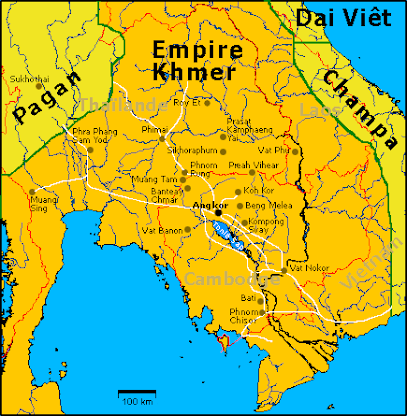
Cambodia and Thailand share over 800 km-long borders. The troops from both sides have some confrontation since July 15, 2008, mainly near 11th century Preah Vihear temple.
Read more!

Thursday, July 30, 2009
Cambodian FM to visit Thailand in early August on border issues

Govt urged to oppose French oil deal
The People's Assembly of Thailand on Thursday submitted a letter to Prime Minister Abhisit Vejjajiva, calling for the government to act against the oil drilling agreement being made between the Cambodian government and the French oil company Total covering a disputed area of the Gulf of Thailand.
The letter was forwarded to the prime minister through the Government House complaints centre by Chaiwat Sinsuwong, the assembly secretary-general, and Admiral Bannawit Kengrian, chairman of the assembly's committee for monitoring the use of state power.
It said Cambodia and France had reached an agreement over an oil and gas drilling concession in the overlapping Thai and Cambodian territorial waters in the Gulf of Thailand, but the government and armed forces had not done anything to protect Thai territorial sovereignty.
Adm Bannawit, a former defence permanent secretary, said the assembly also submit a protest letter to the French embassy in Bangkok. He said the French ambassador admitted the area was under dispute.
Therefore, the government should take action to prevent border problems similar to the one concerning the Preah Vihear temple.
He said the prime minister would be charged with neglect of duty if he failed to act on this matter in seven days.
Phnom Penh is reported to be drawing up an agreement to give France's Total rights to look for oil in its offshore block 3 in the Gulf of Thailand.
A provisional agreement was reached two weeks ago when Prime Minister Hun Sen was in Paris.
"Hun Sen told the French prime minister that Cambodia had decided to award block 3 to the French company, Total, for oil drilling after lengthy consideration," Prak Sokhon, a senior government official who was in the delegation, later told reporters.
Te Duong Tara, director general of the Cambodian National Petroleum Authority (CNPA), said details were still being worked out.
Cambodia does not yet produce oil. Chevron Corp is the operator of Block A in the Gulf of Thailand but is unlikely to produce oil before 2010 at the earliest.
Read more!
Research and Markets: Cambodia Telecoms Market Describes the Regulatory Environment in Cambodia
A report describing Cambodia's telecoms market covering recent developments in the mobile, fixed and Internet sectors (including broadband and Wimax), and a overview of the regulatory scene
This report reviews the situation in Cambodia, looks at the country's economic prospects, and analyses the current telecoms market and its likely future direction. The report also describes the regulatory environment in Cambodia. In summary, our findings are that although Cambodia has been impacted by the global economic slowdown, the country had enjoyed four years of double digit economic growth and in the future may benefit from recently discovered offshore oil and gas.
This economic growth has helped to fuel the take up of mobile communications. There is a real risk, however, that the mobile market is becoming too crowded with the government licensing a number of new operators in 2007 and 2008. Whereas until recently there were only three GSM operators, there are now a total of nine players (eight GSM and WCDMA, and one CDMA 2000) in the market as of June 2009. There may be at least a further four unused licences.
Fixed and broadband network development has not matched this rapid growth of mobile. The fixed network penetration remains amongst the lowest in the world, and there are very few broadband connections. Telecom Cambodia (TC), the Government owned fixed network operator, depends on revenues from international services and expects to derive further revenue by acting as a transit point for all inter-operator traffic in Cambodia. The underdeveloped broadband market presents an opportunity that some foreign and local companies are now beginning to explore by acquiring WiMAX licences. As is the case with mobile services, there are a large number of companies that have received licences, some of which may have overlapping spectrum allocations.
The report concludes by reviewing options for effective market entry. M&A activity is on the increase in Cambodia's telecoms market and this appears to be the most effective method of entering the market at present. Greenfield start ups are not now recommended at this stage of the country's development.
Key Topics Covered:
Executive Summary
Cambodia - country background
Telecommunications market
Mobile market
Fixed network market
Options for effective market entry
Annex A - Cambodia's WTO Telecoms Commitments
Annex B - Existing GSM Operator Coverage Charts
Annex C - Benchmarking Cambodia's Mobile Market
Annex D - Fibre optic trunk network coverage
Annex E - Statistical information on Cambodia market
Companies Mentioned:
Millicom
TeliaSonera
Vimplecom
ThaiCom
Axiata
Mobitel
Viettel
Latelz
Telecom Cambodia
Internet Access Critical Catalyst To Development
Broadband Internet Access Critical Catalyst To Asia-Pacific Development – UN Forum
New York, Jul 29 2009 12:10PM The importance of speedy Internet access to stimulate economic growth across Asia and the Pacific was underlined by participants of a regional United Nations information and communications technology (ICT) gathering that wrapped up in Indonesia today.
Policy-makers, regulators, academics and the private sector representatives attending the UN International Telecommunications Union (ITU) forum stressed the importance of broadband internet access in leveling the economic playing field for the region, as well as the necessity of global collaboration to ensure the widest possible availability of future services to all users.
“This Asia-Pacific Regional Development Forum underlines the role of broadband as a catalyst for bridging the digital divide and for turning the challenges of today’s economic crisis into new opportunities,” said Sami Al-Basheer, Director of ITU’s Telecommunication Development Bureau (BDT).
“Broadband access, through both fixed and wireless infrastructures, will clearly be one of the key focus areas for ICT development in this fast-moving region,” Mr. Al-Basheer told the three-day meeting in Yogyakarta.
ITU Regional Development Forum (RDF) heard that although Japan and the Republic of Korea have broadband penetration rates of 32 per cent and 23 per cent respectively, less developed nations within the region are still struggling to provide basic telephone and Internet access, with less than 1 per cent of the population in Bangladesh, Cambodia and Myanmar using the Internet.
ITU organized the Asia-Pacific RDF, which attracted 105 participants from 17 countries, in close collaboration with the Indonesian Ministry of Communication and Information Technology and the Special Province Area of Yogyakarta.
Read more!
Malaria Strain Resists Drugs, May Threaten Millions, Study Says
By Simeon Bennett
July 30 (Bloomberg) -- Malaria is becoming resistant to the most powerful drugs available in Southeast Asia, as the World Health Organization races to stop the spread of the strain that could be “disastrous” for global malaria control.
Treatments derived from artemisinin, the basis of the most effective anti-malaria drugs, took almost twice as long to clear the parasites that cause the disease in patients in western Cambodia as in patients in northwestern Thailand, according to a study published today in the New England Journal of Medicine.
The delay in parasite clearance times shows the drugs are losing their power against the disease in Cambodia, the study said. The failure of artemisinin-based treatments would be “disastrous” for global efforts aimed at curbing the death and disease wrought by the malady, said Arjen Dondorp, who led the study at the Mahidol Oxford Research Unit in Bangkok.
“There is no question that this is resistance to artemisinin,” Carlos Campbell, a malaria expert with the Seattle-based Program for Appropriate Technology in Health, or PATH, wrote in an editorial accompanying the study. “History warns us that it will intensify and spread unless containment steps are taken.”
Scientists have known for decades that Pailin, near Cambodia’s border with Thailand, is a breeding ground for drug- resistant malaria. Chloroquine and Roche Holding AG’s Fansidar started to fail there in the 1950s and 1960s, before becoming ineffective elsewhere, according to the study. The WHO, with $23 million from the Bill & Melinda Gates Foundation, is coordinating efforts to prevent artemisinin-resistant malaria from spreading to Africa, which has 90 percent of the world’s cases of the disease.
Delayed Clearance
Delayed parasite clearance times have been observed in southern Cambodia since the study’s completion, a sign the resistant strain has already spread within the country, Dondorp said in a phone interview. Dondorp and colleagues treated 40 people in Pailin and another 40 in Wang Pha in Thailand, with artesunate, a form of artemisinin.
In Pailin, the drug took a median of 84 hours to clear the parasite from patients’ blood, compared with 48 hours, the standard, in Wang Pha, according to the study. After three days, artesunate failed to clear the parasite in 55 percent of patients in Pailin, compared with 8 percent in Wang Pha.
Widespread artemisinin resistance “would cause millions of deaths, without exaggeration,” Dondorp said in an interview in January.
Deadly Disease
Malaria strikes about 250 million people each year and kills more than 880,000, mostly children under 5, according to the WHO. It’s the world’s third-deadliest infectious disease, behind AIDS, which results in about 2 million deaths each year, and tuberculosis, which kills 1.6 million people annually, the Geneva-based WHO said.
Malaria is caused by a tiny parasite called Plasmodium, carried in the saliva of female mosquitoes. When an infected insect bites a person, the bugs travel to the liver, multiply and enter the bloodstream. There they invade red cells, leading to fever, chills, nausea and diarrhea. Unchecked, they cause red cells to stick to the walls of capillaries, slowing blood flow. Sufferers can die from organ failure without treatment.
The latest findings confirm those of earlier, inconclusive studies that suggested artesunate was losing potency in the region. Until now, researchers weren’t sure whether slowing cure rates were due to the failure of artesunate or another less powerful drug, mefloquine, that’s usually given with it.
No Alternative
Campbell noted that there isn’t an alternative class of malaria drugs to replace artemisinin derivatives. Artemisinin- based medications work by giving malaria a short, sharp shock, clearing most of the parasites from the blood within hours. The drawback is they don’t remain in the body. The WHO’s guidelines recommend combining the drug with one of several less-powerful, longer-lasting medicines that eradicate stragglers.
Those other drugs, such as mefloquine, may cause adverse effects including nausea, vomiting and nightmares. When the two drugs are sold side by side, rather than combined in a single pill, some patients take only the artemisinin to avoid unpleasant symptoms, paving the way for relapses and drug resistance.
Counterfeit drugs containing suboptimal amounts of artesunate may also have contributed to the development of the resistant strain, Dondorp said.
Read more!
Self-made man channels fortune into charity
Entrepreneur Steve Killelea enjoys all the trappings of wealth - a waterfront house on Sydney's Northern Beaches, a booming business empire, and a European sports car.
Having left school at 16, the 59-year-old is a self-made man.
In his 20s he moved from spending his time surfing into investing in the computer industry - a move that paid massive dividends.
Not one to keep his millions to himself, he is now one of Australia's largest individual foreign aid donors.
"We just felt we wanted to give something back. My goal is to have 50 per cent of my wealth at any one time working towards a charitable means," he said.
Ten years ago Mr Killelea and his wife Debbie set up The Charitable Foundation, donating $5 million a year to more than 60 development projects around the world.
Their charity bankrolls programs in Africa and South East Asia which provide clean water, build medical clinics and schools, rehabilitate child soldiers and perform eye operations.
"About one third of the developing world is blind, 40-50 per cent of that is cataracts," Mr Killelea said.
"For $40 you can give somebody back their eyesight. It doesn't matter if they have been blind for a decade or 20 years, you clean out the cataracts and they can see."
Cambodia is one country which is benefiting from Mr Killelea's generosity. Home to 14 million people, it is one of the poorest nations on Earth.
The World Bank estimates more than a third of Cambodians are living below the poverty line, on about 50 cents a day.
As the capital city Phnom Penh grows, more and more of its residents are being forcibly evicted from their homes.
Mr Killelea is helping to relocate people like these into new houses on the city's outskirts, on land provided by the Cambodian government.
Few donors
His money sponsors the work of Habitat for Humanity, a global charity which provides housing and infrastructure for the world's neediest people.
"We've been working in Cambodia with Habitat for Humanity for six years now - working with minority and poor groups that have been displaced from housing and providing them with loans so that they can build their own houses with cheap interest rates and then pay it back," he said.
Habitat for Humanity international's director in Cambodia, Bernadette Bolo-Duthy, says the entrepreneur's support has allowed the charity to expand its operations in the country.
"In Cambodia there are many NGOs, there are 1,000 NGOs, and there are hundreds of international NGOs doing lots of things, but there are very few donors that are into providing housing infrastructure support to poor people," she said.
Mr Killelea's philanthropy not only takes him to the developing world. He also rubs shoulders at the highest levels with political and business leaders.
Last month he was in London to launch another of his initiatives, the Global Peace Index.
The index is the first to rank nations by their peacefulness, based on a number of criteria including the imprisonment rate, level of violent crime and military expenditure.
It is a cause he is very passionate about.
"Peace is a prerequisite for survival of society as we know it," he said.
"It does have economic benefit for society. It is really quite clear. You can create a bomb and blow a house up or you can build a second house with the same amount of capital."
The index is being embraced by global business as a tool which basically gives peace an economic value.
Mr Killelea is not sure what motivates him to give so much but he does know that practising Buddhism and meditating gives him a focus.
"You stop thinking about yourself and start thinking about others and when you stop thinking about yourself you are actually happier." he said.
Read more!
Wednesday, July 29, 2009
Germany injects over $1 mln to Cambodia, Laos for fighting against hunger
Fearing with the continued impact by global economic crisis, the government of Germany has provided another 1.3 million euros (approximately 1.8 million U.S. dollars) to Cambodia and Laos to fight against hunger.
In a statement released Wednesday, German embassy in Phnom Penh said of the above total amount, one million euro was destined for Cambodia which is expected to help assist about one million Cambodians in 2009.
It said the fund was donated through the United Nations agency, World Food Program for its operation in this country.
The fund will help improve immediate food security and nutritional status of the Cambodian people while enhancing social stability through interventions in three priority areas: education, health and nutrition, and disaster risk reduction.
In April, the U.N. Office in Cambodia issued a statement saying the country's positive trends of its economy will be slowdown after it has enjoyed over decade of increase. And less demand from foreign markets and reducing of foreign direct investment have forced a mass of people losing their jobs, such as in garment and construction sectors.
The U.N. data also indicated some 80 percent of Cambodians are living in rural areas, and where many poor families depend upon migrant remittances as their major source of income.
It is, then, citing fear that Cambodia's rural poor might adopt "unhealthy" coping measures such as reducing their number of meals per day or eating less-nutritious foods, and cutting back on health services.
Safety nets in health, education, food, and work can help break the poverty cycle, it added in the statement.
According to the World Food Program, Cambodia might need 76.3 million U.S. dollars for three years project in curbing with people in crisis.
It said the project that began in January 2008 and which is due to last until the end of 2010 has, so far, received 33 million U.S. dollars or bout 43 percent of its appeal, and that Germany has donated 2.3 million U.S. dollars or 3.1 percent of the total donated fund.
Source: Xinhua
Read more!
Briton arrested in Cambodia for allegedly abusing girl
PHNOM PENH (AFP) – A British man became the latest suspect in Cambodia's drive to net foreign paedophiles after he was arrested for allegedly sexually abusing a 12-year-old girl, police said Wednesday.
Gareth Ashley Corbett, 51, was arrested at his rented house in the popular seaside town of Sihanoukville on Tuesday, said Suon Sophan, deputy chief of the local anti-trafficking and juvenile police unit.
The arrest of Corbett was made after the underage girl, who was also allegedly abused by a US man, told authorities that the Briton had sex with her, he said.
"The arrest of the Briton was the result of testimony of the girl to police," Suon Sophan told AFP by telephone.
The US man, Scott Alan Hecker, 44, was nabbed last week in a raid on a hotel in Phnom Penh and has been accused of committing indecent acts repeatedly against the girl and and another 14-year-old girl.
Cambodia has struggled to shed its reputation as a haven for paedophiles, putting dozens of foreigners in jail for child sex crimes or deporting them to face trial in their home countries since 2003.
Read more!
Cambodia's Crackdown Stirs Concerns About Legal System
By Tim Johnston
BANGKOK -- A heightened crackdown on journalists and opposition activists in recent weeks by Cambodia's leaders has provoked new concern that the government is engaging in widespread abuse of the nation's legal system to muzzle its detractors.
Newspaper editor Hang Chakra is serving a one-year sentence in Phnom Penh's notorious Prey Sar prison for articles that alleged corruption among government officials. Opposition activist Moeung Sonn, who heads the Khmer Civilization Foundation, fled the country last month after being given a two-year sentence because government officials feared unrest when he questioned whether a new lighting system would damage the revered Angkor Wat temple. Last week, a court heard charges against Ho Vann, a member of parliament from the opposition Sam Rainsy Party who is accused of slandering 22 generals by questioning their academic qualifications.
And on Friday, a court is to hand down its verdict in a case against Mu Sochua, another opposition member of parliament, who is accused of defaming Cambodia's authoritarian prime minister, Hun Sen.
"I'm sure I will be found guilty, unless there is some magic in the air, and I don't feel that it is," Mu Sochua said in a telephone interview.
The cases have caused growing concern among human rights activists about Cambodia's legal system, which has long been accused of political bias.
"The Cambodian government is imposing its most serious crackdown on freedom of expression in recent years," Brad Adams, the Asia director for Human Rights Watch, said in a statement last week.
The case against Mu Sochua, a mother of three and former minister for women and veterans affairs, has brought the concern to a head because she is the first person to challenge Hun Sen so openly.
In a lawsuit, she accused Hun Sen of calling her "strong leg" -- a term considered derogatory in Khmer culture -- in a speech in early April. When he declined to apologize, she called a news conference and declared that his comment was an insult to all Cambodian women. That provoked a countersuit from Hun Sen. The courts have thrown out her lawsuit, but Hun Sen's is ongoing.
"If he allowed Mu Sochua to challenge him, other people might go down the same path. It is to make sure a second person won't try the same thing in the future," said Son Chhay, another outspoken opposition member of parliament.
Mu Sochua is fighting her legal battle alone. Her attorney withdrew last month after he came under government pressure, provoking a protest from the Office of the United Nations High Commissioner for Human Rights.
"The government kept on slamming him with more and more penalties, and he was facing the end of his career," Mu Sochua said. "I am not going to put another lawyer through that torture."
If convicted, she is likely to face a fine of about $2,500. But, more important, she could lose the right to sit in parliament, and that could be Hun Sen's intent, analysts said.
His ruling Cambodian People's Party won 90 of 123 seats in parliament in elections last year, but analysts said Hun Sen could be using the courts to get rid of the opposition.
"He wants to put them out of business," said David Chandler, a history professor at Monash University in Australia. "The whole concept of pluralism hasn't got any roots in Cambodia. The opposition is almost, by definition, disloyal."
Son Chhay said the recent crackdown is a symptom of a government that is failing to address some of the pressing issues facing the country, including corruption, land seizures and economic stagnation.
"Although they control the institutions, they can't allow activists or the opposition to spread the issues -- that could bring disaster. Like many dictatorial regimes in the region, because they are unable to solve the problems, they resort to all measures to control the people and shut them up," Son Chhay said.
The government also is looking to pass a law that would limit demonstrations to 200 people and require permission from authorities.
In the early 1990s, the international community invested about $1.5 billion in a U.N. effort to restore civil government to a country that Hun Sen, a former member of the Khmer Rouge, had run since 1985.
The opposition fears that he is destroying fragile institutions that have taken years to build.
"What is really detrimental to Cambodia as a whole is that because he wants to make a point as a man, he is destroying so much we have invested in nation-building," Mu Sochua said. "It is not me on trial, but the judiciary of Cambodia."
Read more!
Tuesday, July 28, 2009
Cambodia: Respect For Suspects' Rights
Cambodia: Respect For Suspects' Rights Will Prevent Death In Police Custody
Five suspects in police custody are known to have died in police custody in different locations in Cambodia over the first five months of this year. There have been allegations that they suffered torture or other forms of ill-treatment. However, the police have refuted these allegations and with medical certification as proof, claimed that the suspects had committed suicide. The reference to medical certification has led to further allegations that doctors whom the authorities called in to do the autopsies were themselves under pressure not to antagonize the police and arrive at a conclusion that did not differ from what the police version. Despite the ongoing suspicion of torture or other forms of ill-treatment the authorities have refused independent investigations into the causes of those deaths.
More recently, another suspect died in police custody in Svay Rieng Province. The suspect, Thong Sary, 54, was arrested in a drunk-driving accident in which he crashed his motorcycle, killing his passenger and injuring himself. His wife, Meas Thavy, visited him and, noting the worsening of his injuries repeatedly requested the custodial officer to send her husband to hospital for treatment. The officer refused her request and instead told her to bring in a doctor to treat him in prison.
Meas Thavy could not get a doctor to treat her husband because he was a suspect and there was no letter of authorization for medical treatment from the police. Dr. Ke Ratha, deputy director of the provincial health department, and a number of his fellow doctors carried out the autopsy on Thong Sary. Dr. Ke Ratha has reportedly said that Thong Sary “died from an inflammation of the stomach or intestine caused by drinking wine without eating, his injury from the traffic accident or if someone hit him.” Dr. Ke Ratha further said that “If he was sent for treatment on time he may not have died.”
Prach Rim, the provincial police chief, has denied allegations of torture on Thong Sary; but has admitted police carelessness over the refusal to send him for medical treatment.
The Asian Human Rights Commission holds that the cause of death of this particular police custody were not due so much to the “police carelessness” as to the shortcoming of the criminal procedure pertaining to police custody. This procedure has not recognized and guaranteed the rights of suspects to medical treatment. Article 99 of the Code of Criminal procedure has left this medical treatment to the discretionary decision to the custody officer and the prosecutor. This article says, “The Royal Prosecutor or the judicial police officer may ask a doctor to examine the detained person at any time.” Furthermore, article 98 of the same code has recognized and guaranteed the rights of suspect to legal counsel only after 24 hours of arrest has expired. It says, “After a period of twenty four hours from the beginning of the police custody has expired, the detainee may request to speak with a lawyer or any other person who is selected by the detainee, provided that the sel.
In order to avoid any future possibility of “police carelessness” and further death in police custody, the Code of Criminal procedure should be amended to recognize and guarantee the rights of suspect to medical treatment, legal counsel and communication with family. Upon the arrest, it should be mandatory for custody officer to notify suspects of all these rights. Article 98 and article 99 should be amended for the custody police officer and be supplemented as follows:
Article 98: At the beginning of that detention, the suspect has to the right to speak with a lawyer or any other person who is selected by him or her, provided that the selected person is not involved in the same offense. He or she has further the right to communicate with his or her family.
Article 99: The suspect has the right to medical treatment anytime during his or her detention.
Article 99 (a): The custody police officer shall notify the suspect of his or her rights as mentioned in article 98 and 99.
About AHRC: The Asian Human Rights Commission is a regional non-governmental organisation monitoring and lobbying human rights issues in Asia. The Hong Kong-based group was founded in 1984.
Read more!
Rights groups protest Cambodia 'AIDS colony'
PHNOM PENH (AFP) - AIDS campaigners and rights groups protested on Tuesday at Cambodia's shunting of sufferers of the virus into an insanitary "AIDS colony" outside the capital.
Over 100 international and domestic pressure groups told Prime Minister Hun Sen and Health Minister Mam Bunheng in a letter they were "deeply disturbed" by the government's treatment of 40 HIV-affected families.
Over the past two months the government has evicted the families from Phnom Penh to live in metal sheds without running water or adequate sanitation at Tuol Sambo, an area 25 kilometres (15 miles) from the capital, it said.
"By bundling people living with HIV together into second-rate housing, far from medical facilities, support services and jobs, the government has created a de facto AIDS colony," said Shiba Phurailatpam, of the Asia-Pacific Network of People Living with HIV/AIDS, in a statement issued by the groups.
Rebecca Schleifer of New York-based Human Rights Watch said: "The housing conditions in Tuol Sambo pose serious health risks for families living there.
"People living with HIV have compromised immune systems and are especially vulnerable. For them, these substandard conditions can mean a death sentence or a ticket to a hospital," she added.
The Cambodian government has faced mounting criticism of forced evictions throughout the country at the hands of the army and police, which a recent human rights report said has affected more than 250,000 people.
Evictions for development purposes have increased in Cambodia as land prices have risen over the past few years. Critics say the practice is fuelling poverty.
Read more!
Monday, July 27, 2009
Halo Group, Inc. Tremendous Growth is Paralleled by Giving Spirit
The Allen-based Halo Group, Inc. (Halo) has been experiencing unprecedented growth over the past several years. The nationwide holding company now has eight subsidiaries within the consumer financial services industry. Ranking number three in the Comerica Bank Collin 60 of the fastest growing companies, Halo continues to be recognized for excellence and achievement in their market space. However, what is not widely known is the commonly held servant attitude and actions that characterize the Halo employee. Those actions include domestic service projects such as post Katrina clean-up efforts to various wellness and service missions to Nicaragua, Guatemala, Cambodia, South Africa, and India to name a few. Halo has been in support of such projects from the beginning. “It falls in line with Halo’s mission to serve and stand above reproach. Halo’s mission as a company has always been to serve the American consumer in financial distress and offer solutions to strengthen the economy. It stands to reason that we as individuals enjoy serving outside the walls of Halo as well,” states Jimmy Mauldin, chief strategy officer at Halo Group, Inc.
One such employee is Neelka Smith, executive assistant at Halo Group, Inc., who has spent over 18 years involved in missions, having lived in 45 countries during that time including Central Asia, India, China, Angola, North Korea, and Guatemala. Today she continues to serve as a project director for Team Mania Global Expedition, a position she has held now for nine years. She is currently heading up a food factory initiative that will bring 250,000 meals a day to underserved countries. Neelka began her mission work while in college using summers to do work abroad in refugee camps in Nepal and Buton through Global Christian Network. Her heart has always been for young people and works locally, as well as, abroad as a child advocate working to put a stop to child prostitution. “Halo offers me the flexibility and the support that allows me to fulfill my commitment to serve others,” adds Neelka.
Another good example is Jeffrey Rasco, vice president of government relations & compliance at Halo Group, Inc., who spent eight days in Nicaragua to work with an orphanage providing facility and land maintenance, and much needed care to the community of children. “In addition to serving the financially-distressed American consumer, the culture at Halo also allows me to take time away from the office to serve those with even greater needs. Working with a group of orphans in Nicaragua for a week makes you realize how truly blessed we are as Americans, and brings a greater sense of purpose to my work, both here at home and abroad,” offers Jeffrey.
Throughout the year, there are many others serving locally and nationally through churches and shelters. Jonathan Whitt, operations assistant at Halo Group, Inc., enjoys serving through his church in the Dallas area, as well as abroad. He has made several trips to Mexico and is currently raising money for a trip to Cambodia this winter. The wellness mission to Cambodia will include teaching English and providing preventative healthcare to improve quality of life. Brianne DeVries, a receptionist at Halo Group, Inc., works with the homeless in Dallas serving locally in shelters and running clothing drives. “The character of the employees we hire is a real consideration in the interview process,” states Derek Stringer, executive vice president at Halo Group, Inc. “Halo believes in the integrity of its employees and the work that they do both corporately and in acts of service.”
About Halo Group, Inc.
Halo Group, Inc. is a nationwide holding company based in Allen, TX with subsidiaries operating primarily in the consumer financial services industries including debt, mortgage, real estate, credit, loan modification, and insurance. For more information about Halo Group, Inc., visit www.myhalogroup.com.
Read more!
AAA Network channels launched in Taiwan
AETN All Asia Networks (AAA Networks), a joint venture of A&E Television Networks and ASTRO All Asia Entertainment Networks Limited, have announced the launch of its channels in Taiwan with four key Multiple System Operators (MSOs): TBC, kbro, CNS and TFN Media.
AAA Networks’ portfolio of four factual channels – HISTORY HD, HISTORY, The Biography Channel (BIO), and Crime & Investigation Network (CI) – have recently launched on both TBC and kbro’s digital platforms; while CNS and TFN Media will soon debut HISTORY HD, a 100 percent HD content channel.
Louis Boswell, General Manager, AAA Networks, said, “Taiwan is such an important pay TV market, it is unthinkable not to have our channels available there. We believe the Taiwan cable TV industry has developed extensively and the digital revolution is underway. We are pleased to offer our channels on the digital platforms of the four key MSOs. Taiwan viewers can now enjoy more in-depth, high quality factual entertainment programmes than ever before.”
All four channels are fully subtitled with traditional Chinese. Boswell continued "Subtitling is only the first step; as in every market we will continue to focus our efforts on the localisation of content through acquisition and production."
AETN All Asia Networks launched in June 2007 with HISTORY and CI. In just two years, the company’s channel portfolio has grown to include BIO and HISTORY HD. Distribution now covers Brunei, Cambodia, Hong Kong, Indonesia, Malaysia, Macau, the Philippines, Papua New Guinea, Singapore, Taiwan and Thailand.
Read more!
Cambodia: ‘AIDS Colony’ Violates Rights
Source: Human Rights Watch
Reuters and AlertNet are not responsible for the content of this article or for any external internet sites. The views expressed are the author's alone.
The Cambodian government should urgently address dangerous conditions in a de facto AIDS colony it has created and immediately stop sending HIV-affected families there, more than 100 international HIV/AIDS and social justice organizations and experts said in a joint letter delivered on July 27, 2009 to Cambodia's prime minister and health minister.
In June 2009, the Cambodian government forcibly relocated 20 HIV-affected families living in Borei Keila, a housing development in Phnom Penh, to substandard housing at Tuol Sambo, a remote site 25 kilometers from the city. Another 20 families were moved there on July 23. The families were resettled into crude, green metal sheds that are baking hot in the daytime and lack running water and adequate sanitation. Just meters away, higher-quality brick housing is being built, with the assistance of a nonprofit group, for other homeless families slated for resettlement at Tuol Sambo. Even before the HIV-affected families were resettled at the site, local people referred to the green sheds as "the AIDS village."
"By bundling people living with HIV together into second-rate housing, far from medical facilities, support services, and jobs, the government has created a de facto AIDS colony," said Shiba Phurailatpam of the Asia-Pacific Network of People Living with HIV/AIDS. "It's hard to understand how a government that has received international recognition for its HIV-prevention efforts could so callously ignore the basic rights of people living with HIV."
Dozens of organizations and individuals based in the Asia-Pacific region signed the letter, joined by groups and individuals from many nations, ranging from Canada and the United States to India and Tanzania.
The letter stresses that conditions at Tuol Sambo do not meet minimum international standards for even temporary emergency housing. The shelters are flanked by open sewers, with only one public well for all of the relocated families. They are crowded into the poorly ventilated metal sheds, where the afternoon heat is so intense they often cannot remain in their rooms, and they fear their antiretroviral (ARV) medication will deteriorate.
"The housing conditions in Tuol Sambo pose serious health risks for families living there," said Rebecca Schleifer, health and human rights advocate at Human Rights Watch. "People living with HIV have compromised immune systems and are especially vulnerable. For them, these substandard conditions can mean a death sentence or a ticket to a hospital."
The organizations also expressed deep concern about discrimination against HIV-affected families in the screening and allocation process for on-site replacement housing being built at Borei Keila. After two years of denying eligibility to HIV-affected families for this housing, the authorities have now said that at least 11 HIV-affected families previously slated to be sent to Tuol Sambo are in fact eligible. Those families remain at Borei Keila, but are still waiting for the housing they have been promised.
Increasing property values in Cambodia's capital city have left thousands of urban poor people vulnerable to forced evictions to make way for commercial development. The development of the Borei Keila site was approved in 2003 with the understanding that the developer would build new housing on site for those displaced by the project. With few exceptions, however, the HIV-affected families thus far displaced have not even been screened for eligibility for this housing.
When living at Borei Keila, these people worked as day laborers, motorcycle taxi drivers, cleaners, and seamstresses. Now, most have no prospects of work at or near Tuol Sambo. Their economic situation is worsened by the fact that a return trip to Phnom Penh to go to work or to visit hospitals costs the equivalent of about US$5 - for families who earn only $1.50 to $3 a day.
"The Cambodian government needs to establish a fair and open process for all to receive the housing and services they need," said Kevin Moody of The Global Network of People living with HIV (GNP+). "People living with HIV - like all others - need adequate living conditions that do not threaten their health and a way to earn a livelihood, so that they can provide for themselves and their families. Grouping families affected by HIV in this way exposes them to further stigma and discrimination; steps must be taken to end this discrimination now."
The groups called on the Cambodian government to:
Cease moving HIV-affected families to the Tuol Sambo site;
- Improve conditions at Tuol Sambo to meet minimum standards for adequate shelter, sanitation, and clean water;
- Ensure full access to quality medical services, including antiretroviral treatment, treatment of opportunistic infections, primary health care and home-based care;
- Work with relevant agencies and consult with the families already at Tuol Sambo to address immediate and long-term concerns regarding housing, health, safety, and employment, and reintegration into society in a manner that protects their rights and livelihoods; and
- Employ a transparent and fair screening process to determine eligibility for on-site housing at Borei Keila, and allow eligible families to move in immediately (including the 11 HIV-affected families already approved). For those found ineligible, authorities should provide other adequate housing.
"Living with HIV with dignity means more than just ARVs," said Aditi Sharma of the International Treatment Preparedness Coalition. "It means these families should have a healthy environment with adequate nutrition, proper sanitation and a continuum of care that addresses the social, psychological, legal, and economic consequences of living with HIV."
Read more!Sunday, July 26, 2009
Rash of lawsuits sees Cambodia crack down on dissenters
By Tim Johnston in Bangkok
Asia is no stranger to governments using the courts to muzzle their detractors, but the Cambodian government's current legal attack on its opponents is causing concern in the region.
Hang Chakra, former editor of the Khmer Machas Srok newspaper, is sharing a cell with 50 other convicts in Phnom Penh's notorious Prey Sar prison, serving a one-year sentence for articles that alleged corruption among government officials.
Moeung Sonn, head of the Khmer Cultural Civilisation Foundation, was last month sentenced to two years in jail in absentia for "disinformation" after suggesting that a new lighting system at the Angkor Wat temple complex might damage the 600-year-old buildings.
And on Friday, a court is to hand down its verdict in a case against Mu Sochua, an opposition parliamentarian accused of defamation against Hun Sen, Cambodia's prime minister.
"I'm sure I will be found guilty unless there is some magic in the air, and I don't feel that there is," she said yesterday.
"The Cambodian government is imposing its most serious crackdown on freedom of expression in recent years," Brad Adams, Asia director for Human Rights Watch, said last week.
The case against Mu Sochua, a former minister for women and veteran's affairs, is based on her allegation that Hun Sen called her "strong leg" - a cutting insult in Khmer culture - in a speech in her constituency in early April. When he declined to apologise, she called a press conference in which she alleged that not just herself, but all Cambodian women had been insulted.
That allegation provoked a counter-suit from Hun Sen. The courts threw out her case but agreed to hear Hun Sen's complaint.
Her lawyer withdrew after he came under pressure, provoking a protest from the office of the office of the United Nations High Commissioner for Human Rights. Mu Sochua declined to find a different attorney. "I am not going to put another lawyer through that torture," she said.
If she is found guilty, she will face a fine of about $2,500 (€1,760, £1,520). More importantly, she could lose the right to sit in parliament. Some analysts say that might be Hun Sen's intention.
"The concept of pluralism hasn't got any roots in Cambodia," said David Chandler, a professor of history at Monash University in Australia. "The opposition is almost by definition disloyal."
Son Chhay, another outspoken opposition parliamentarian, says the recent crackdown is a symptom of a government that is trying to address the issues facing the country, such as corruption, land seizures and economic stagnation.
"Like many dictatorial regimes in the region, because they are unable to solve the problems, they resort to measures to control the people and shut them up," he said.
"If he allowed Mu Sochua to challenge him, other people might go down the same path," said Son Chhay.
In the early 1990s, the international community invested some $1.5bn in a UN operation to restore civil government to a country that Hun Sen, a former Khmer Rouge cadre, had run since 1985.
The opposition fears the prime minister is using his parliamentary majority - the CPP won 90 of the 123 seats in parliament in elections last year - to destroy fragile institutions that have taken years to build.
Read more!
Cambodian cases intensify concern
By Tim Johnston
Cambodia's government is under fire because of its legal attack on opponents. Hang Chakra, former editor of the Khmer Machas Srok newspaper, shares a cell with 50 other convicts in Phnom Penh's notorious Prey Sar prison, serving a one-year sentence for articles that alleged corruption among government officials.
Moeung Sonn, head of the Khmer Cultural Civilisation Foundation, was last month sentenced to two years in jail in absentia for "disinformation" after suggesting a new lighting system at the Angkor Wat temple complex might damage the 600-year-old buildings.
On Friday, a court is to hand down its verdict in a case against Mu Sochua, an opposition parliamentarian accused of defamation against Hun Sen, Cambodia's prime minister. "I'm sure I will be found guilty unless there is some magic in the air - and I don't feel that there is," she said.
"The . . . government is imposing its most serious crackdown on freedom of expression in recent years," said Brad Adams, Asia director for Human Rights Watch.
Read more!
Exchange Programme For Cambodian Legal Officers
SHAH ALAM, The Asean Law Association of Malaysia will organise an exchange programme for eight officers of the Cambodian Justice Ministry with the objective of providing better understanding of Malaysia's law and legal system.
"The pilot project is also to promote cooperation and solidarity among members of the legal profession between Malaysia and Cambodia," said S. Radhakrishnan, chairman of the Standing Committee on Asean Students Exchange Programme, Asean Law Association of Malaysia.
The programme is organised with the support and assistance from Cambodian Ambassador to Malaysia Princess Norodom Arunrasmy and staff of the Cambodian embassy.
Radhakrishnan said Cambodia was the first country in the Asean region to be invited to join the programme which will take place on Aug 2-8.
"The eight officers will be attached to four legal firms throughout the programme," he told Bernama.
He said the Asean Law Association of Malaysia would consider extending the programme to other Asean countries based on the evaluation and feedback upon the completion of the pilot project.
Chief Justice Tan Sri Zaki Azmi, who is also the Asean Law Association of Malaysia president, is scheduled to launch the programme at the Royal Selangor Club, Dataran Merdeka, Kuala Lumpur on Aug 3.
Ambassadors and high commissioners from the Asean countries are expected to attend the function.
The Asean Law Association of Malaysia, established in 1980, is the Malaysian chapter of the regional organisation known as the Asean Law Association (ALA).
The primary objective of ALA is to promote greater cooperation and better understanding among members of the legal profession in the Asean region.
The secretariat of the regional body is in Bangkok, Thailand.
-- BERNAMA
Read more!
Vietnam invests 200 mln USD on Cambodian Air, banking
PHNOM PENH, A signing ceremony was held on Sunday by Cambodia and Vietnam on the establishment of Cambodian Air Carrier which was a joint venture between Vietnam Airline and National Cambodia Air Carrier namely Cambodia Angkor Air.
"Vietnamese side has invested 100 million U.S. dollars capital in Cambodia Angkor air," Sok An, deputy prime minister and minister in charge of the Council of Ministers, said at the signing ceremony which was presided over by Prime Minister Hun Senand visiting Vietnamese Deputy Prime Minister Truong Vinh Trong, who is also representative of the prime minister of Vietnam.
"Cambodia will have 51 percent share and Vietnamese side controls 49 percent," Sok An said, adding that the Cambodian new airline will help to push the tourism sector in the Kingdom while the world has met with global economic and financial crisis. The Vietnamese investment on Cambodia Angkor Air will be processed for30 years, Sok An said.
Meanwhile, Vietnam has also invested another 100 million U.S. dollars to open the Bank for Development and Investment of Vietnamand Insurance sector in Cambodia.
This investment has showed the confidence from Vietnamese side on the economic growth of Cambodia, Sok An said, adding that it is the pride of the country that we have our own national flag in aircarrier. He stressed that the new airline we will launch the official flight tomorrow.
Prime Minister Hun Sen said at the ceremony that "I would like to urge the new Cambodia Angkor Air to strengthen the management on safety and security for all travelers".
Additionally, Thong Khong, Cambodian Tourism Minister told reporters that tourism is one of the key sector in the country and"this year we expected to have two to three percent increase on this sector." For the first six month of this year, the tourism sector decreased about one percent across the country, however, incapital Phnom Penh it has increased 14 to 16 percent so far.
Last year, Cambodia achieved about two million of the foreign tourists.
Read more!
Cambodia A/H1N1 flu case rises to 17
PHNOM PENH, Cambodia's confirmed A/H1N1 flucases have increased to 17 and the latest case is a 22-year-old Irish woman who traveled from Vietnam, health officials said here on Sunday.
"So far, nobody has died in the country," said Ly Sovan, deputydirector of the communicable disease control department. The latest person is in a stable condition and is recovering well.
Mom Bun Heng, Cambodian health minister, told reporters that his ministry has strengthened the tracking system at two main airports, Phnom Penh International Airport and Siem Reap International Airport by using thermal scanners.
"Our officials also have been observing the travelers coming into the country through border gates," he added. Earlier this week, Cambodian Health Ministry issued a call to appeal people notto travel to neighboring Thailand if they were not in urgent need.
Cambodia's first case of influenza A/H1N1 was confirmed on June23, 2009.
Read more!
Saturday, July 25, 2009
China plans ethanol plant in Cambodia.
AN official at Cambodia's Ministry of Agriculture, Forestry and Fisheries says China National Petroleum Corporation is looking to invest US 58 million dollars in an ethanol plant that would use cassava as its raw material to generate fuel.
CNPC is China's largest oil and gas producer and this project would be funded by a Chinese government loan.
The official told the Phnom Penh Post no decision has been taken as the factory would require 40 million to 50 million tonnes of cassava annually, about 15 times current domestic production.
Wishing to remain anonymous, the official says the project would require a huge amount of land, and with concessions a contentious issue, the ministry needs to confer with other ministries.
Cambodian law states that a land concession cannot be larger than 10,000 hectares.
Read more!