SHARM EL-SHEIKH, Egypt, July 15 — Thai Foreign Affairs Minister Kasit Piromya on Wednesday pledged that Thailand will consider supporting Egyptian Culture Minister Farouk Hosni in his campaign to head the United Nations Education, Scientific and Cultural Organization (UNESCO).
Mr. Kasit, now attending the two-day 15th Non-Aligned Movement (NAM) Summit in this Egyptian town, met with Mr. Hosni on the sidelines of the summit opening Wednesday and pledged that he would consider voting for Mr. Hosni for the job.
However, Kasit said he would rather wait for the final short-listed candidates contesting for the post before making the final decision.
Kasit reportedly told Hosni that he wanted a person from a developing country to hold the UNESCO chief’s post as voting for the position will take place later this year.
He said that if Egypt holds the post it would “benefit both UNESCO and the international community.”
Expressing dissatisfaction with recent decisions by UNESCO, Kasit said it is appropriate for a developing country to hold an important role in a UN agency as several posts in the world body are now occupied by persons from developed countries.
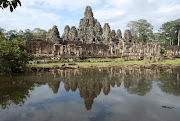
Kasit probably referred to UNESCO granting Cambodia’s application to designate the ancient Preah Vihear temple as a World Heritage Site in July 2008, a move with which he did not agree.
However, UNESCO agreed last month in Seville, Spain, to delay the formal registration until February as the organization still has a number of other matters to implement.
Delaying the formal registration came after Thai complaints that the temple listing had led to several armed clashes near the temple and urged the world agency to review its decision. (PNA/TNA)
Read more!

Wednesday, July 15, 2009
Thailand considers supporting Egyptian as UNESCO head

Millicom to dispose of Asian telecom assets : Hutchinson to sell Israeli stake
by Ek Heng, Asia-Pacific Correspondent
A number of suitors including Malaysia’s Axiata Group and Russia’s Vimpelcom are reportedly interested in the Asian telecom assets being put up for sale by Luxembourg-based Millicom International Cellular SA.
Millicom announced early July it had received a number of ‘expression of interest’ and Goldman Sachs has been appointed as advisor. In Asia, Millicom is considering selling separately or together its interests in Sri Lanka, Cambodia and Laos.
For the quarter ended 31 March 2009, its Asian assets yielded US$68 million in revenue and US$4 million in net profit. Millicom has operations and licences in 16 countries in Asia, Latin America and Africa.
Axiata denies buying Millicom Asian assets
While expressing interest to expand its business, Axiata, Telekom Malaysia’s international unit, has denied it is buying Millicom’s Asian assets in Cambodia and Sri Lanks for US$500 million and US$200 million, respectively, as attributed in an earlier Bloomberg report.
The follow-up article late last week by The Star, Penang, Malaysia, quoted Axiata’s chief financial officer, Datuk Yusof Annual Yaacob as saying that the telco looks "at all sorts of transactions but there is nothing going on." He was further quoted as saying "it does make sense for two parties to combine in a very competitive marketplace."
A pan-Asian player with 100 million subscribers, Axiata is the second largest mobile operator in South East Asia. It has 85 percent stake in Dailog Telekom, the market leader in Sri Lanka, which recorded 5.8 million subscribers, and a 58 percent share of TMI Cambodia, the third largest cellular player in that county with 600,000 subscribers.
With Celltel Lanka in Sri Lanka being fully owned by Millicom which also has 58 percent share of MobiTel, a dominant telco, in Cambodia, perhaps, the business case for Axiata to merge its existing interests with these companies being offered by Millicom can only serve to fuel market talk and media reports. Also springing to mind is an earlier media report attributing the remarks to Axiata’s CEO, Datuk Seri Jamaludin Ibrahim that the telco is consolidating, and as he often says "that at the right price, we will never say no."
VimpelCom eyeing more stakes in Asia
Also in the running for Millicom’s assets in Cambodia and Laos is Russia’s Vimpelcom. According to a Reuters report, VimpelCom confirmed its interest in Asia but didn’t want to comment on the talks.
Vimpelcom’s head of corporate relations, Yelena Prokorava said: “We don’t comment on talks. But potentially Asian assets of Millicom could be interesting for us because they are located in the region which the company views as strategic in its international expansion.” The Reuters report added that a source close to the firm’s shareholders indicated the company would be interested in the telcos assets in Laos and Cambodia in the market.
In July 2008, Vimpelcom acquired Sotelco paying US$20 million for a 90 percent stake in the telco. It subsequently signed a contract with China’s Huawei Technology to build a GSM network in the country over five years and pledged to invest up to US$200 million.
Hutchinson: Sale of Israeli telco on the cards
In another development, Hong Kong-based Hutchinson Telecom is looking to sell its stake of 51 percent in Partner Communication Company, an Israeli telco with wired and wireless services.
Hutchinson said "it has been approached by various interested parties" but "no agreement has been entered into" up to the announcement of its statement to the stock exchange. Operating under the Orange brand, Partner registered an 11 percent reduction in revenue at US$337 million but an increase of 5,000 in subscribers for the quarter ended 31 March 2009.
Read more!
ASEAN-China friendship conference to be held in Malaysia
KUALA LUMPUR, The 4th Conference of the ASEAN-China People-to-People Friendship Organizations will officially open here on Thursday.
The fourth conference since 1993 involved China and the 10 members of the Association of Southeast Asian Nations (ASEAN), including Malaysia, Indonesia, Singapore, Thailand, Vietnam, Laos, Myanmar, the Philippines, Cambodia and Brunei, would be held at Putra World Trade Center here.
According to the Malaysia-China Friendship Association, the participants would discuss cooperation plan of economic, trade, public health, education, culture, tourism, sports and other issues in the conference.
The conference is also an activity to commemorate the 35th anniversary of diplomatic relationship between China and Malaysia.
An ASEAN-China 2009-2010 Cooperation Plan is expected to be signed at the conference.
Read more!
Cambodia Must End Crackdown On Critics - Rights Group
PHNOM PENH, Cambodia (AFP)--An international rights group Wednesday demanded Cambodia's rulers end a spate of legal actions against critics, calling it the government's "harshest crackdown in years" on free speech.
New York-based Human Rights Watch alleged that premier Hun Sen's government aimed to silence political opposition and critics with a recent "campaign of harassment, threats, and unwarranted legal action."
"The Cambodian government is imposing its most serious crackdown on freedom of expression in recent years," the group's Asia director, Brad Adams, said in a statement.
Cambodian authorities have lodged at least nine criminal defamation and disinformation complaints against journalists, members of parliament, lawyers and critics of the government since April.
Criminal defamation cases against two opposition lawmakers are expected to proceed in coming weeks, and opposition newspaper Moneaksekar Khmer closed operations Friday to avoid prosecution for criticizing government officials.
"The space of opposition media and peaceful dissent is rapidly shrinking in Cambodia, especially now with the closure of one of Cambodia's last remaining opposition newspapers," Adams said.
Cambodian government officials weren't immediately available for comment.
The U.N.'s human rights office in Cambodia issued a report last month warning that the spate of lawsuits against critics could nurture "fear, frustration and anger, with the risk of leading to further conflict and violence."
Read more!
Tuesday, July 14, 2009
Smile from nowhere
 Cambodia is the place where, for the first time, I really cursed the world of technology.
It began on a surprisingly smooth minibus ride from the capital, Phnom Penh, towards Battambang - the second-largest city in the country, and I wished my eyes were able to take a photo every time I blinked.
Was that too much to ask?
Instead, my camera groaned under my attempts to capture every second of the dynamic country as we zoomed through traffic at what felt like an average speed of 140 kilometres an hour.
The postwar history of the "Land of a Thousand Smiles" tends to prompt a grimace rather than a grin - but that's changing.
The nation was at least 30 years behind the rest of the world, I'd been warned, thanks to the Khmer Rouge role in a civil war that crippled it. Like the beautiful lotus flower, which grows like a weed across the countryside, the country is reopening itself to the outside world.
The 300km journey between Phnom Penh and Battambang is not the most popular of journeys for tourists: they tend to fly 45 minutes to Siem Reap, home of the famous ruins of Angkor Wat.
We stopped at a silversmith village, filled with the most intricate silver creations; where adorable children ran from their huts clutching trays of jewellery and ornaments. Other family members busily hammered away, barely looking up as they knocked out another elaborate design.
There is a certain level of satisfaction in handing over a couple of US dollars to a small child in a village off the beaten tourist trail. In a country known for corruption which filters down from the government to street level, parting with a few greenbacks to the person you just witnessed creating the item leaves one with a great sense of economic satisfaction.
Pottery manufacturers in Kompong Chhnang, tucked away in lush country like the set of Platoon, are also worth a deviation.
Rural Cambodians have the most novel common sense about them, as if, after being knocked down through their civil war, they've jumped back to their feet, dusted themselves off and kept going. Immensely resourceful and impossibly polite, even the most sheltered Cambodian has a basic grip on English and will bend over backwards to have you witness their lives.
Once in the country's northwest, it becomes obvious Battambang city is less than used to visitors. Centred around a busy food market and a nondescript river, the city boasts one major hotel, a handful of backpacker accommodation - and one rather luscious French boutique hotel called La Villa.
Ad Feedback The smattering of French colonial architecture is a pleasant surprise, and suspends visitors in a sort of time warp.
On a rusty bike, the town really comes alive: riding along the Sangker River to Wat Slaket pagoda, the residence of the provincial Buddhist patriarch, was a highlight of the trip. There we met a 12-year-old monk and his mother, who gave him to the monastery to ensure he had a better life. His haunting gaze was a window into a wise soul.
We also met an older monk who beamed the famous Cambodian smile. "Thank you for your smile. I give you my smile too. It is important to give your smile to people. If you give your smile, it makes the world better and spreads peace," he told our group.
My eyes prickled with tears, which mixed with sweat from the bike ride in the searing heat to make a salty tang on my lips.
Cycling enabled us to inhale the smells of the countryside and wave at the children who would run to the roadside to practise their English. "Hello, hello," they yelled, with the odd "bonjour" thrown in.
We heard the noises of wedding celebrations and soccer wins, funeral dirges and loudspeaker entreaties for donations to the local monastery.
A couple of days later we walked through the village of Kompong Khleang, about an hour from Siem Reap. This community, again off the beaten trail, is home to more than 20,000 people who live in enormously high stilt houses and make a living from fishing.
Children screamed welcome from high up in their homes which, when the monsoon arrives, will have water lapping at their doorstep and fishing lines cast from their windows.
Despite the remoteness of the village, cellphone towers loomed overhead. Landlines are like hen's teeth and the country has adopted mobile technology to the extreme - nine mobile phone companies compete to provide services to a population of 15 million.
Near Siem Reap we visited the Khmer silk village of Phnom Srok or "the little hill" and watched over the shoulders of women who weave intricate silk scarves. We witnessed the silk production line - from silkworms on a mulberry tree leaf to the finished product - by visiting each family responsible for one of the five steps in the process.
Stepping outside the comforts of the minivans was, in short, experiencing the country - rather than just passing through and ticking the boxes of the major tourist spots.
And it made for a moving and unforgettable adventure.
* The writer travelled courtesy of Adventure World, Cathay Pacific, Dragonair and Bangkok Airways.
Read more!
DSR Cambodian Culture Conservation French Colonial in Phnom Penh
Phnom Penh has a grace and beauty not found in other Asian capitals. This vibrant Cambodian city has a rich and varied French Colonial heritage including villas, churches and boulevards.
(live-PR.com) - Phnom Penh has a grace and beauty not found in other Asian capitals. This vibrant Cambodian city has a rich and varied French Colonial heritage including villas, churches and boulevards.
Between the granting of independence and the dark days of the Khmer Rouge, a new golden era of architecture emerged, driven by French-educated Khmer architects. This was characterised by a fusion of Bauhaus, European post-modern architecture, and traditional elements from Angkor.
Fortunately enlightened developers are preserving and refurbishing these timeless buildings to offer a mix of heritage, modernity and sumptuous amenity.
DSR Asset Management Ltd have a new release of 1 - 2 bedroom apartments
for sale in French Colonial Phnom Penh competitively priced from £29,000 - £90,000. The refurbishment has been carried out to very high standard.
David Redfern of DSR said “After a little over a year of developing these units in Phnom Penh, we are very relaxed that at each interval demand has easily outstripped supply - both in terms of the sales and rentals.”
Phnom Penh is serviced by a modern international airport, and the city is experiencing massive growth as it is being discovered by a wider global audience.
The apartments can be fully-managed to produce hassle-free income from letting and there is a queue of customers for flats like these.
”All of the units developed so far are tenanted, and the developer and management company have a waiting list of expats ready to rent those that will be completed and hitting the rental market this quarter.
This is a great position to be in and demonstrates that the market is very hungry for high quality, stylish, well located accommodation like French Colonial,” said David
In the sought after riverside French Quarter demand for property of this type far exceeds supply and capital growth is running at an astonishing 17-20% per annum.
Read more!
Former K.Rouge prison deputy denies torture
 PHNOM PENH (AFP) - The former deputy head of the main Khmer Rouge prison on Tuesday denied he had tortured prisoners as he sought to play down his position in Cambodia's late 1970s hardline regime.
Mam Nai, 76, told the UN-backed war crimes trial of former jail chief Duch that his role had been only to question inmates at the notorious Tuol Sleng prison.
"I was just a plain and simple interrogating cadre," Mam Nai said, addressing the court as a witness, not a defendant.
"I only interrogated prisoners without applying torture. It is my understanding that applying torture brings untrue confessions."
His former boss Duch is accused of overseeing the torture and execution of around 15,000 people who passed through Tuol Sleng.
Although documents from the regime say Mam Nai was Duch's deputy and tortured prisoners into confessing espionage, he said he only interrogated "not important" inmates and used psychological tricks rather than abuse.
"When I asked the person about their biography and activities, it was not difficult at all (to get a confession)," Mam Nai said.
"If a prisoner refused to respond... I instructed guards to take prisoners back to their cell to think for a while, to reflect on their positive and negative activities," he added.
Mam Nai, whose Khmer Rouge nom de guerre was Chan, went on to tell the court that he was "unclear" on the organising structure of the notorious detention centre and knew nothing of mass killings there.
The witness, appearing in court wearing purple fingerless gloves and a traditional chequered Khmer scarf, batted away judges' questions throughout the day.
He said he had not known all prisoners at Tuol Sleng were presumed guilty and destined to be killed, and that he could not recall drafting prison documents shown to the court, which appeared to be signed by him.
When French judge Marc Laverne asked whether he suffered from memory problems, Mam Nai replied that he has trouble recalling the names of his children after a recent accident at his home.
"I fell onto the ground and fell unconscious for a while. Since then, I seem to forget a lot," Mam Nai said.
The 66-year-old Duch, whose real name is Kaing Guek Eav, has accepted responsibility for his role governing the jail and begged forgiveness near the start of his trial for war crimes and crimes against humanity.
But he has consistently rejected claims by prosecutors that he held a central leadership role in the Khmer Rouge, and maintains he never personally killed anyone.
Led by Pol Pot, who died in 1998, the Khmer Rouge emptied Cambodia's cities in a bid to forge a communist utopia. Up to two million people died of starvation, overwork, torture and execution during the 1975-79 regime.
Four other former Khmer Rouge leaders are currently in detention and are expected to face trial next year at the court, which was formed in 2006 after nearly a decade of wrangling between the UN and the Cambodian government.
The tribunal is marred by a dispute between prosecutors over whether to pursue more suspects. It also faces accusations of government interference and claims that local staff were forced to pay kickbacks for their jobs.
Read more!
Treating 4,000 diabetic patients in Cambodia, a high-prevalence but resource- limited setting: a 5-year study
Despite the worldwide increasing burden of diabetes, there has been no corresponding scale-up of treatment in developing countries and limited evidence of program effectiveness. In 2002, in collaboration with the Ministry of Health of Cambodia, Medecins Sans Frontieres initiated an outpatient program of subsidized diabetic care in two hospital-based chronic disease clinics in rural settings.
We aimed to describe the outcomes of newly and previously diagnosed diabetic patients enrolled from 2002 to 2008.
Methods: We calculated the mean and proportion of patients who met the recommended treatment targets, and the drop from baseline values for random blood glucose (RBG), hemoglobin A1c (HbA1c), blood pressure (BP), and body mass index (BMI) at regular intervals. Analysis was restricted to patients notlost to follow-up.
We used the t test to compare baseline and subsequent paired values.
Results: Of 4404 patients enrolled, 2,872 (65%) were still in care at the time of the study, 24 (0.5%) had died, and 1,508 (34%) were lost to follow-up. Median age was 53 years, 2,905 (66%) were female and 4,350 (99%) had type 2 diabetes.
Median (interquartile range (IQR)) follow-up was 20 months (5 to 39.5 months). A total of 24% (51/210) of patients had a HbA1c concentration of <7%>60 years, living outside the province, normal BMI on admission, high RBG on last visit, and coming late for the last consultation.
Conclusions: Significant and clinically important improvements in glycemia and BP were observed, but a relatively low proportion of diabetic patients reached treatment targets. These results and the high loss to follow-up rate highlight the challenges of delivering diabetic care in rural, resource-limited settings.
Author: Marie-Eve RaguenaudPetros IsaakidisTony ReidSay ChyLim KeukyGemma ArellanoWim Van Damme
Credits/Source: BMC Medicine 2009, 7:33
Read more!
Southern Gold 'strikes gold' in Cambodia
Southern Gold Ltd says it has found significant gold mineralisation at one of its projects in Cambodia.
The gold junior found "a number of prominent gold intersections" during its first reverse circulation drilling program, the company said.
Shares in the company leapt on news of the discovery, which identified gold intersections as rich as 8.8 grams per tonne.
Other metals including silver, copper and zinc also were located at the site.
Southern Gold managing director Stephen Biggins said the maiden drilling program validated the company's confidence in the area.
"I am delighted with the results of this first-pass drill program and look forward to aggressively following-up these results," Mr Biggins said in a statement.
At 1107 AEST, shares in Southern Gold were up 1.5 cents, 15 per cent, to 11.5 cents.
Read more!
MRC calls for public submissions on proposed Mekong hydropower schemes
PHNOM PENH, The Mekong River Commission (MRC) has established a web page to allow the public to make submissions regarding the 11 hydropower schemes proposed for construction along the mainstream Mekong.
The submissions, which can be made at http://www.mrcmekong.org/ish/hydro-submit.asp or by post or fax, will provide input to the MRC's Strategic Environmental Assessment that is looking at the wider economic, social and environmental implications of the proposed dams in Cambodia, Laos and Thailand, according to MRC's statement released on Tuesday. MRC member countries will use information presented by the study to guide their decisions on these projects, it said.
Jeremy Bird, Chief Executive Officer of the MRC Secretariat, said that Mekong governments (include Cambodia, Laos, Thailand and Vietnam) have expressed "a strong desire" to understand the full range of opportunities and risks of any proposed mainstream hydropower project, particularly those of a regional nature, before a decision is taken to proceed.
"In order to do this effectively, it is important to have a broad consultation process that allows us to hear the views of communities, NGOs, researchers and businesses. These web page submissions provide one of the tools to help achieve this."" he added.
As set out in the 1995 Mekong Agreement, MRC Member Countries must undergo a formal inter-governmental consultation process prior to building any dams on the river. Projects proposed for development on the mainstream in the lower Mekong Basin will come to the Commission for consultation, with a view to assisting member countries to reach consensus.
Past studies have shown that the development of hydropower can be both positive and negative. For example, the electricity generated and foreign exchange earnings can support a country's development programs, MRC's statement said. "However, a major concern is the effect that proposed dams could have on fish migration and numbers, and ultimately on the people that live in the river system and who rely on fish for their livelihoods and protein intake," says Xaypladeth Choulamany, a Fisheries Program Co-ordinator at the MRC. "What we need to do is to fully understand the basin wide implications of this and other impacts."
Read more!
Vietnam launches campaign against human trafficking
Hanoi- Vietnamese police will launch a two-month campaign next week targeting human trafficking, a police official said Tuesday.
The General Department of Police has asked its forces nationwide to make plans to combat rings involved in trafficking in border regions, especially areas near China and Cambodia where many women have been trafficked.
'Human trafficking is becoming very complex in Vietnam due to the economic crisis,' said Nguyen Tri Phuong, deputy director of the National Social Order Crime Investigation Department. 'Traffickers are taking advantage of increasing unemployment to cheat women.'
Phuong said many women want find it hard to get other work after losing their jobs. Traffickers lure many into their trap by promising good jobs overseas. After taking them out of Vietnam, traffickers sell them to brothels or for other work.
'One hundred and ninety-one trafficking cases involving 417 women and children have been discovered so far this year,' Phuong said.
The state-run Viet Nam News on Tuesday reported traffickers often sell women and children they kidnap in northern provinces to contacts in China.
Traffickers often take advantage of dark nights and a lack of vigilance among families to kidnap their children. In isolated cases, they have murdered parents to kidnap newborn babies.
Vietnamese police will closely co-ordinate with provincial police and bodies in China, Cambodia and Laos to prevent trafficking rings, Viet Nam News reported.
Since 2005, there have been 1,600 cases of human trafficking with 4,300 victims and 3,000 people were investigated for involvement.
Read more!
Monday, July 13, 2009
Malaysian-driven energy for Cambodia coastal town
HANOI, Malaysia’s Leader Universal Holdings Bhd will invest US$160 million (RM560 million) in a new coal-fired power plant in Sihanoukville, Cambodia, to meet the local increasing demand for electricity, Vietnam News Agency (VNA) reported.
Presently, the capacity of all power plants in the Southeast Asian nation is only around 410MW while the demand is estimated at 808MW, according to the local state-owned power company, “Electricite du Cambodge”.
The power plant with a designed capacity of 100MW is scheduled to commence its operations in 2012 after two years of construction, said Leader’s Managing Director Sean H’ng Chun Hsiang.
The company is a leading wire and cable producer located in Penang. The Group’s principal activities are manufacturing and selling telecommunication, power and optical fibre cables, and various electronic wires. Other activities include providing power generation services, property development, letting of properties, insurance agent and investment holding.
Besides Malaysia and Cambodia, the Group also carried out projects in Singapore, Saudi Arabia, Hong Kong, Belgium and Saudi Arabia.
Sean also revealed a plan to develop a 700MW power plant in Sihanoukville and the project will start after the completion of the 100MW plant in 2012. Sihanoukville is a popular coastal town located about 200km south-west of Phnom Penh.
It is one of the fastest-growing regions in Cambodia due to its beaches and island hops as well as a few casinos currently in operation.
Cambodia currently relies on importing electricity, with 220MW from Vietnam and 30 MW from Thailand. – Bernama
Read more!
Khmer asylum seekers's Cambodia complaints
Nearly two dozen asylum seekers deported by Thailand to Cambodia more than 10 days ago are complaining of a lack food and harsh living conditions.
They are part of a group of 56 ethnic Khmers who fled southern Vietnam for Thailand between six months and six years ago.
The Phnom Penh Post says the rest of the Khmer Krom have now left the border area to seek shelter from friends and relatives in Cambodia.
But the remaining 23 deportees say they have no family in the country, and are surviving on charity outside the border town of Poipet.
Several members of the group have told the Post what they fear most is repatriation to Vietnam, where Khmer Krom say they face restrictions of freedom of expression and religion.
Read more!
THIRD EYE: Asian Edification, Unity For All, Wild Strawberries
ASIAN EDIFICATION
LEGO. According to a Singapore media report, in “2012, you might be able to drive across the Second Link to Johor Baru and, in 15 minutes, catch a view of the Petronas Twin Towers, India’s Taj Mahal, Cambodia’s
Angkor Wat and Singapore’s Merlion — all at one go”.
Yes. It’s the Asian Legoland “slated to come up at the Iskandar Malaysia development region in three years’ time”.
Recruitment of builders is under way to piece together 30 million Lego bricks for the RM750 million, 23 ha theme park, “which will boast more than 30 rides, shows and attractions, from roller coasters and boat rides to adventure walks”.
Legoland is expected to create some 5,000 jobs. Syabas
UNITY FOR ALL
QUESTIONS. According to media reports, Information, Communication and Culture Minister questioned Pas’
rejection of the idea of unity with Umno but willingness to cooperate with the DAP.
Also an Umno supreme council member, he said he could not understand why Pas was rejecting the the idea, which was benefi cial to the Malays.
“Why do they not want unity?
Malays are questioning this.”
He said the actions of the party in rejecting idea of a unity government mooted by the Pas president made it look as though it had internal problems.
It could be those in favour of the idea were being disfavoured, he said on the stump in Manik Urai.
Anyone interested in transethnic unity, YB?
WILD STRAWBERRIES
CAMERON Highlands. According to media reports, “30 hectares of land in Cameron Highlands grown with strawberries are capable of producing RM70 million worth of the fruit each year”. Deputy Agriculture and
Agro-Based Industries Minister Datuk Rohani Abdul Kasim said the achievement was due to the proactive
measures taken by the ministry to ensure that the quality of strawberries produced here was on par with that of
imported strawberries.
“If previously the strawberries grown here were smaller and rather sour, now they are bigger, sweet and more delicious. Because of their better quality, the fruit has begun to be exported to Singapore,” he said when
launching the “One District, One Industry” programme. Sounds like Thailand’s One Tambun (village) One Product concept.
Read more!
Sunday, July 12, 2009
Cambodia trip can be carbon heavy for careless travellers
Buying locally is one way for tourists to reduce carbon footprint, an an oportunity exists for businesses looking to cash in on conscience
Cambodia's level of carbon emissions are relatively small at less than 2 tonnes of carbon dioxide (CO2) per capita per year, but as the tourism industry grows, so does the rate of carbon emissions.
According to GERES Climate Change Unit Manager Minh Cuong Le Quan, tourism directly affects climate change on two accounts. "One is direct emissions from the travel of the tourists," he said, with air travel making a particularly high contribution.
According to the Lonely Planet, a couple flying from London to New York adds 2.68 tonnes of CO2 to their carbon footprint, or over a quarter of the average UK household's yearly emissions.
As tourists visit restaurants and hotels, and travel between them, they also add to domestic consumption of fossil fuels, further adding to Cambodia's total greenhouse gas emissions, Le Quan said.
The first thing to do is take an honest look at one’s own practices.
--------------------------------------------------------------------------------
But there are also additional, more subtle ways that tourism increases Cambodia's energy consumption, he added, as tourists maintain their first world, high-consumption lifestyles.
"People tend to take showers the same way and take baths the same way they would in the West or Northeast Asia," Le Quan offered as an example.
Steps to reduce footprints
Le Quan suggested ways that tourists can lessen their carbon footprint. "The first thing to do is take an honest look at one's own practices," he said. "This begins by using the least-polluting modes of transportation."
According to Le Quan, economy class seats are two times less polluting than business class seats on airlines, and three times less polluting than first class.
He also recommended staying in "environment friendly" hotels, though recognised this could be difficult in Camboida due to an absence of any specific "climate friendly" labels.
However, a number of hotels and restaurants have already gone beyond the usual eco-friendly standards, he said, including properties owned by the FABS Group and the Foreign Correspondents Club in Phnom Penh and Siem Reap.
It is also more environmentally friendly to buy Cambodian-made products and crafts instead of imports, and tourists can also give money to carbon offset programs, which GERES is involved with.
"The idea is good," said Le Quan, but added that potential donors look carefully at the organisations they are giving money to, pointing out that many are for-profit businesses.
Getting off easy
Some critics of carbon offsetting have compared such donations to the payment for papal pardons.
"This is a valid criticism," Le Quan said. "If you just keep going your own way and just offset because you've got money to spend on it and want to feel good about it, that's a pardon."
Instead, he suggests reducing consumption before paying for offsets.
To Le Quan, adopting climate friendly practices is an opportunity for businesses. "It's an opportunity to the structure of companies to answer to the new economy which is emerging this century, which is socially and environmentally responsible," he said.
Read more!
Saturday, July 11, 2009
Seeing Cambodia's temples - but without the crowds
 John Burgess
The Washington Post
It's early on a Sunday morning in Cambodia and I'm standing at a 12th-century moat. Traces of mist hover above the lotus leaves that dapple the water. Across a causeway, through a tumbled-down gate, lies Banteay Chhmar, one of the largest temples ever built by the ancient Khmer Empire. My friends and I will have the place all to ourselves.
We walk in. It turns out that we do end up sharing it, with a local man who brings his cows onto the grounds to graze. And with an affable mason who leads us across acres of fallen stone to see a message from the past, an inscription chiseled into the door jamb of a holy tower. This kind of company we welcome.
Cambodia's great temples of Angkor, 100 kilometres away, have long since been rediscovered after a quarter-century of closure by war. They now draw more than a million foreign visitors a year, not a few of whom regret that so many other people had the same idea. At peak hours, human traffic jams can form at temple steps.
But go beyond Angkor and you can find places that serve up the old solitude and sense of discovery.
Banteay Chhmar is among the most spectacular of these places. Getting to it entails hours on very bumpy and dusty dirt roads. Staying the night means making do with primitive accommodations: candlelit rooms in local homes, bath water drawn from that same moat.
I stayed the night, and it turned out to really make the visit. The next morning I rose early, as everyone here does, and took a walk in clean country air. I passed hens foraging with their chicks and boys tending to a mud oven in which charcoal was being made. I was seeing not only a temple but a way of life.
Today several thousand people -- rice farmers, cattle herders, market vendors -- make their homes on all four sides of the temple. They grow vegetables on the banks of a series of moats; they pile straw within the walls of lesser ancient buildings that dot their settlement. The ancient and present day coexist.
Spending time here also means doing a good turn, spreading a bit of wealth in a part of a war-recovering country that has largely missed out on the tourist dollars that Angkor is bringing in. People do have cellphones (charged by generator), and some have small tractors, but there are few other signs of affluence.
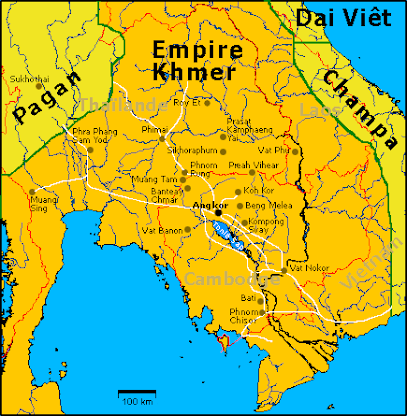
Banteay Chhmar was created in the Khmer Empire's last great burst of construction, under the 12th-century Buddhist king Jayavarman VII. His engineers were thinking big even by Khmer standards: To contain a great settlement, they built earthworks and moats that formed a square measuring roughly one 1.5 kilometres on each side. At its centre, within another square moat system, they built the temple.
More than a century ago, French archeologist Etienne Aymonier found the temple to be in a state of "indescribable ruin.'' It still is, despite the efforts of the friendly mason, who is part of a small reconstruction team. But that's part of what makes the site so enticing.
Exploring it means climbing over piles of large fallen stones. We passed ruined towers, courtyards and ceremonial walkways. Sometimes the stones were so high that we were walking at roof level.
The temple is no longer a formal religious site, but Cambodians believe that it, like all those that their forebears left behind, remains a holy site. In one surviving chamber we found a small contemporary shrine, with a Buddha image wearing a cloth robe, where people made incense offerings.
One of the best parts of this temple is the many bas-reliefs on its outer walls. We had to scramble up more stones to get a good view. Before us was a full sample of life 900 years ago: processions of elephants, prominent ladies tended by maids, children roughhousing, villagers in a sampan, servants tending a stove.
There were also many scenes of war with Champa, a long-vanished rival state to the east: The temple is in large part a memorial to four generals who lost their lives in that long conflict. On land, the men of arms go at one another fiercely with spears (you can identify the Chams by the curious blossom-shaped headdress they wear). On water, rows of men pull at oars from galleys as others strike at the enemy with spears. There are also images of the divine, notably the god Vishnu, with 32 arms arrayed like rays of light.
The carving style is similar to that of the Bayon temple reliefs in Angkor. The difference is there's no need to fight for a view. We did cross paths for a few minutes our first day with a party of about 20 French-speaking tourists. We saw no other visitors that day or the next.
Late in the afternoon, we went to see what the ancient Khmers could do with water. Just east of the temple, they created a big reservoir. Academics disagree over whether it did only symbolic duty as an earthly stand-in for the mythic Sea of Creation, or was part of an irrigation system, or both. Whatever the truth, I was awed by the scale.
The reservoir was now largely dry, but because its floor is low and collects water, it has been divided into rice paddies. We went for a stroll, walking along paddy dikes to keep our feet dry. We said hello to members of a farming family who were tinkering with a small tractor. A woman had caught a bucketful of paddy crabs and insects, which she would sell as food.
I spent the night at the house of a Cambodian family, friends of a friend. They couldn't have been more gracious. They gave me a room, bottled water, mosquito coils and a big luxury: a car battery hooked to a fluorescent light.
Other members of our party slept at a formal homestay, the term given to guest houses. It had two rooms with large beds covered by mosquito nets. Downstairs there was a basic bathroom with a squat toilet and scoop bath.
In the morning we had breakfast at a stall in the town's market; there are no proper restaurants. It was noodle soup with chicken, and very good.
I first visited Angkor in 1969. Back then, you could be alone in the big temples there. I once walked through the largest of them, Angkor Wat, encountering hardly a soul.
It's good to know that such an experience can still be had. You just have to work a bit harder for it.
IF YOU GO:
Getting around: There is no public transportation to the sites described here; wheels are on a bring-your-own basis. Tour companies in Siem Reap will arrange visits. If you feel adventurous, strike deals directly with taxi or motorcycle drivers and go on your own.
Being Mealea and Koh Ker can be visited in one long day. Banteay Chhmar, at four hours each way, is a bigger challenge to reach. If you're entering Cambodia overland from Thailand, you can save time by turning north at Sisophon town to reach the temple.
When to go: Winter is Cambodia's peak tourist season. Avoid March, April and May, the peak time for heat. Don't be scared off by the summer-through-fall rainy season. The rains typically occur only in late afternoon.
Where to stay: A French non-profit organization has been helping Banteay Chhmar operate a homestay program. It provides for overnight accommodations, often in a guesthouse next door to the host family's home; meals; local culture performances; and an ox cart ride. Tour companies can book you. Or you make direct contact by emailing program co-ordinator Tath Sophal at tathsophal (at) yahoo.com.
Koh Ker has guesthouse accommodations.
For more information: The official Cambodian tourism site is www.tourismcambodia.com
Read more!
Woman Hears Call, Responds, Raises More Than $2,600 For The ‘Silent’
By PATRICK BUTLER
Religion Editor
The saga of how area kindergarteners raised $680 to assist children sold into slavery in another country is a story worth telling repeatedly as an encouragement to those wanting to "do something," said an area children's minister.
Missy Zivney, children's minister at Pleasant Hill Baptist Church, helped raise more than $2,600 in July for the locally based nonprofit For The Silent.
The story starts in January, when Missy Zivney, a mother of four, went to see the child sex-slave traffic rockumentary "Call + Response." The depiction of abused children "gripped my heart," she said. She left the Times Square Cinema, which showed the film in cooperation with local churches, feeling bewildered and almost paralyzed.
"The problem of sex trafficking children is so pervasive and so overwhelming, you can get paralysis from the analysis," said the Whitehouse mother of four. "It's a temptation to just want to shut it out, and have it be 'out of sight, out of mind.' For awhile, I was wondering what one person could even do."
But not for long. During a benefit concert in May at Rose Heights Church with Paul Balouche, she heard more about For The Silent, a local nonprofit featured in the Tyler Morning Telegraph during the sold-out "Call + Response" showings. For The Silent founders Kenny and Julie Rigsby, 27 and 25, respectively, said their effort focuses on poverty stricken Cambodian children sold into slavery. The children have few or no advocates and almost no resources to help them escape a dismal life of servitude in seedy brothels.
"At the concert, I heard Kenny speak about this horrible and heinous crime on their bodies that these kids experience, and it gripped my heart all over again," Mrs. Zivney said. "After the concert was over, I saw all these For The Silent donation envelopes on the floor and in the pews. I sent two of my children to gather them all up, and I said, 'Lord, I'm going use these somehow.'"
She wasn't sure just how until a meeting at Pleasant Hill weeks later to form a church day camp for her young charges.
"That's when it hit me like a lightening bolt," Mrs. Zivney said. "We would structure our whole day camp around For The Silent. I didn't want to just have a fun day camp where the focus is just having a good time. I wanted to issue a challenge to get them to go out and do something, something with a meaningful basis, something to do with ministry."
Getting some church teens to help with the approximately 160 kids from dindergarten to sixth grade who came to camp each day June 29 through July 3, Mrs. Zivney set up a crafts fair. The children made and painted birdhouses, rocks, paperweights, picture holders and colorful tiles to be used as trivets in kitchens.
Then they sold them from 50 cents to $ 1.
"I'm telling you," Mrs. Zivney said, "the response was overwhelming. Parents sent in $20 $50 and $100 checks for a $1 item. They got so excited and behind this ministry that the kindergarten-age camp class alone raised $680."
The grand total from the entire camp was $2,600. When Kenny Rigsby heard the total raised, he was momentarily speechless.
"It's completely incredible to see kids helping other kids going through some of the worst things imaginable," he said, "and area kids having a positive impact on children they'll never know or see. It's always cool to see young kids caring about what God cares about."
The money will go toward purchasing a vehicle for a Cambodian After Care ministry that desperately needs a vehicle to transport children rescued from the slave trade, Rigsby said.
"That's hugely important in Cambodia," he said, "because vehicles cost so much there and there is little money to buy them. The center needs safe transportation for the children to go to school, visit the doctor and to see their families. We take transportation for granted here, but there it makes a tremendous difference."
And making a difference is what the children of Pleasant Hill Baptist Church did for some children in Cambodia.
Rigsby said, "What Missy did is what we always ask people; do what they already know how to do to make a difference in the lives of these children. She used her camp and influence to extend her reach into families. She did Day Camp For The Silent and look at the result."
Mrs. Zivney said, "Our kids got T-shirts that read, 'Go Win With Jesus For The Silent.' What better way to minister to those children in need than through our children?"
Donations of about $10,000 are still needed to purchase the vehicle for the After Care ministry. To donate online, visit www.forthesilent.com, or send donations to For The Silent, P.O. Box 998, Tyler, 75710. Call 903-530-4931 for information.
Read more!
Angkor’s temples are uniquely Khmer
 The Indianization of Southeast Asia was one of the early theories developed in the last century to explain the pervasive presence of Hindu religious sites, sculptures and languages in this region, but the mechanisms of Indianization have always been subject to debate. In the early years of this theory, it almost seemed as if Southeast Asia was a passive recipient for Indian ideas and religion, but today the general consensus is that local rulers used the religious teachings from India as a way to further validate their royal power, leading to many similarities in the ways rulers exerted control over their subjects here (think the traditional Mandala structures of kingdoms), but also to regional distinctiveness. This article shows how the buildings of Angkor reflect that Indian influence, but are also fundamentally Khmer in construction.
Ancient Khmer art and culture have characteristics distinct from India, though some ideas appear to have been borrowed from the tradition, a Canadian archeologist told guests in Washington last week.
Speaking to a small conference at the Freer-Sackler Art Gallery, Mitch Henderickson, director of the Industries of Angkor Project and researcher at the University of Sydney, said he found no evidence after seven years of research indicating that temples or architectural structures like Angkor Wat had been built in India.
“In the past it was interpreted as a direct diffusion of Indians and Indian ideals into Cambodia,” he said. “It has only been, say, in the last 10 years that we have truly understood how Brahman and Buddhist ideals have been brought into Cambodia and whether the actual Brahman or monks were giving the ideas.”
Some architecture and arts were now thought “uniquely Khmer,” he said, “because there are no temples in India that are built in the same way. They don’t follow the idea of building a ‘baray’ with a ‘mebon’ in the center, which is the representation of Mount Meru in the Sea of Milk [epic]. There’s nothing like that in India. So, the idea is that now we realize that Cambodia took the ideas that they wanted and modified them to suit the purpose and goals of the rulers and kings.”
Read more!
The Vietnamese Government Unlawfully Imprisons Members of the Democratic Party of Vietnam (DPV)
SAN JOSE, Calif.--(BUSINESS WIRE)--In the last three weeks, three members of the Democratic Party of Vietnam (DPV) have been arrested for promoting the strengthening of democracy and human rights for the people of Vietnam.
On July 7, 2009, Dr. Nguyen Tien Trung, the leader of the DPV’s Youth for Democracy organization, and Lieutenant Colonel Tran Anh Kim, a key member of the DPV, were imprisoned for urging increased freedoms of the press, religion, travel and improved human rights. On June 13, 2009, Le Cong Dinh, a prominent attorney and member of the DPV, was unlawfully detained for similar reasons.
These actions came shortly after the arrest and imprisonment of Tran Huynh Duy Thuc, CEO of OCI, Le Thang Long, Le Thi Thu and Tran Thi Thu on May 24, 2009. The above individuals had been politically involved in a peaceful manner with the aim of promoting & strengthening democracy and human rights, leading to economic prosperity and stamping out poverty.
According to Dr. Nguyen X. Ngai, the Vice Secretary of the Democratic Party of Vietnam, “The actions of the Vietnam government are unlawful and unacceptable in the world community, and is just the opposite of what the Vietnam government agreed to when it joined the WTO and the United Nations.
“The DPV deplores this action and demands that the government of Vietnam obey the law and release all the above individuals, as well as other political members who are still unlawfully imprisoned in Viet Nam, without any restrictions or conditions attached.”
The Democratic Party of Vietnam has been cooperating with the Vietnamese Communist Party since 1944. At that time, the late Hoang Minh Chinh, former Secretary of the DPV, reformed and reshaped the DPV to place emphasis on non-violent but law-abiding activities with no affiliation to any other political parties. This was announced and reemphasized again on January 9, 2008.
Central Executive Committee
Democratic Party of Vietnam
Read more!
Friday, July 10, 2009
CAMBODIA: "Floating toilets" offer hope for river communities
PHNOM PENH, A toilet now in the development stage could improve the health of thousands living in Cambodia's impoverished river communities.
River communities' homes are typically built on floating platforms and moved seasonally, and rarely have proper latrines. Occupants use the river – the same water they use for drinking, cooking and washing.
The health risks are high: according to Resource Development International–Cambodia [see: http://www.rdic.org/home.htm] , a faith-based NGO, 74 percent of all deaths are due to waterborne diseases, including diarrhoea.
Cambodia has one of the highest infant and under-five mortality rates in the region, at 97 and 141 per 1,000 live births, the UN Children's Fund (UNICEF) reports.
Many rural Cambodians see latrines as filthy, preferring open defecation as being more natural.
"It's not a poverty issue. Some wealthy people in the countryside don't have good sanitation, and some poor families do have it," Chea Samnan, director of rural healthcare for the Ministry of Rural Development, said. "It's an issue of access to the right information."
As part of its "River of Life" profect, Lien Aid [see: http://www.lienaid.org/home] , a Singaporean-based NGO, is working on what it describes as a "floating toilet". The toilets - built on floating platforms and attached to homes – will effectively prevent faeces from entering the water.
"We are still in the preliminary stages of testing out the prototypes," Sahari Ani, Lien Aid's head, told IRIN.
Eco-sanitation design
The device has three components - a superstructure, a urine diversion pan, and a space for a removable bucket or container for waste material.
Central to the design is the pan itself, effectively separating urine from faeces. A separate section of the pan allows for anal washing.
Materials such as dry soil, ash and wood chips can be added to excreta, thereby reducing odour and pathogens, while cutting the volume of waste.
The semi-decomposed faeces is then treated at a secondary storage chamber for complete decomposition and pathogen destruction, while the nutrient-heavy urine could be used as fertilizer after removal.
Commenting on the merits of the pan, Judy Hagan, project manager of a different operator, the Tonle Sap Floating Latrine Design Project, said separating the two waste materials reduced the bulk and mass of the faeces that needed to be treated, making it more viable in a floating environment.
Key challenges
But introducing such concepts in a country like Cambodia will not be easy.
As floating river communities exist only in Cambodia and a handful of other Asian nations, latrines designed specifically for their needs are rare and expensive.
Added to this is the country's lack of qualified engineers, poor sanitation infrastructure and low level of hygiene awareness.
"The more difficult challenge is to help the community build up the human resources necessary to make the venture financially sustainable over the long term," Sahari Ani said.
According to the World Bank, only 16 percent of rural Cambodians have a proper toilet, the lowest level in Southeast Asia.
Moreover, despite the country's abundant freshwater rivers and lakes, 60 percent of its population do not have access to safe water and 85 percent are without adequate sanitation, Lien Aid stated.
Cost effectiveness
While an exact price for the device is still being determined, the NGO hopes costs can be kept to a minimum, with families possibly purchasing building material in bulk to keep down costs.
One-third of Cambodians live on less than US$0.50 a day, according to government statistics, making cost a significant factor.
"We will still try to keep costs down by exploring the use of [local] materials and by encouraging local entrepreneurs to manufacture the required parts," Lien Aid's head explained.
Although fairly new, villagers in Cambodia have already been learning how to construct cheaper latrines for as little as $15 each from the community-led total sanitation programme, started in 2005 by UNICEF and Cambodia's Ministry of Rural Development.
And while not of the floating toilet type, the self-built, cost-effective latrines could provide further impetus to the floating toilet prototype once their use becomes more widespread.
Read more!