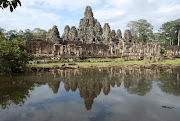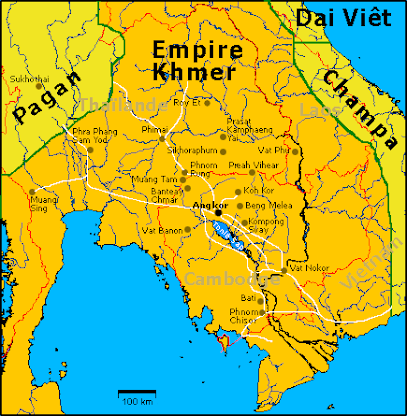
The land of heroes
Our heroes
Our land
Cambodia Kingdom


Friday, March 13, 2009

Late Cambodian monk's poems detail homeland terror

Samkhann Khoeun, of Lowell, Mass., holds a Khmer language manuscript of poetry by the Buddhist monk Ly Van Aggadipo, that features his photo on the cover, at the Glory Temple, in Lowell, Nov. 20, 2008. Ly Van's internal struggles from his experiences under the Khmer Rouge remained a mystery until some of his followers found a collection of his poetry left behind in his quarters at the temple. Buddhist monks Bo Chhuom, 75, behind left, and Voeun Vann, 35, behind right, look on. (AP Photo/Steven Senne)


By RUSSELL CONTRERAS

LOWELL, Mass. (AP) — For years, Ly Van Aggadipo served as the spiritual mentor to many Cambodian refugees in this old mill city, guiding followers at the Glory Buddhist Temple through family issues, work problems and recurring nightmares from the horrors of the Khmer Rouge.

But his own internal struggles from the Khmer Rouge remained a mystery, and those who knew him say he rarely spoke of his own story of fleeing war-torn Cambodia.

Then, soon after his death last year, friends found a collection of the monk's poetry tucked under stacks of old Buddhist texts. On worn pages were handwritten, carefully crafted poems describing his memories of witnessing infant executions, starvation at labor camps and dreams of escaping to America.

Now followers are seeking to publish the poetry, even as the discovery of this vivid historical record of the atrocities has reopened for many a painful time they still have not reconciled in their own lives.

"It put us in tears again," said Samkhann Khoeun, 45, who studied under Ly Van. "We couldn't believe it. When I read (the work), it was so vivid. It refreshed the memory."

Everyone knew the basics of Ly Van's life, Khoeun said. "But we didn't know the details and no one ever asked. He was so busy helping us," Khoeun said.

Kowith Kret, of North Chelsmford, Mass., and formerly of Cambodia, speaks with a reporter at the Glory Buddhist Temple, in Lowell, Thursday, Nov. 20, 2008. The elderly Buddhist Monk Ly Vann, who lived at the temple until his death in January of 2008, wrote about his internal struggles from the Khmer Rouge in poetry that was only recently discovered in his former living quarters at the temple. (AP Photo/Steven Senne)
Born in 1917 in a small Cambodian village, Ly Van and his family lived through the Khmer Rouge regime of the 1970s, which perpetrated one of the worst mass genocides of the 20th century. An estimated 1.7 million people died from starvation, disease and executions due to the radical policies of the communist group. According to the temple's biography of Ly Van, he was forced to work on agricultural and public projects for 14 hours a day. It was during this time that the monk witnessed mass executions and large-scale starvation.

In early 1979 when Vietnamese soldiers invaded Cambodia, Ly Van and thousands of others fled to Thailand through dangerous terrain and later ended up in Lowell, a community second only to Long Beach, Calif., for the largest number of Cambodian residents living in the United States.

While in Lowell, Ly Van helped establish the Cambodian Mutual Assistance Association and was invited to lead the Glory Buddhist Temple in 1988, a position he held until his death in January 2008.

Khoeun and others found the manuscript just days after Ly Van's body was cremated.

In one translated verse, Ly Van writes about how he and other refugees fled to Thailand by traveling through a treacherous mountain range packed with thieves and land mines. It was a well-known trek where Thai soldiers pushed refugees over cliffs at gunpoint while refugees tumbled over each other trying to escape.

"Surrounded by corpses as we walked, slept and ate; an unbearably foul smell/Emanated from the swollen, rotten bodies, most of which were missing limbs and heads."

Ly Van also writes of the conditions of a refugee camp in Thailand where women were constantly raped, men were frequently beaten and families combatted filthy living facilities.

"...we had to sleep on the bare concrete floor, like animals/Dirty water and stench-filled raw sewage floated everywhere/We were swarmed by mosquitoes constantly, resulting in rashes all over our bodies."

Kowith Kret, whose parents were executed during the Khmer Rouge, said it was hard to read the monk's account because it brought back the past. "But it is the fact," said Kret, who also studied under Ly Van. "People have to accept the experience they've been through."

George Chigas, a political science professor at UMass-Lowell who has seen copies of the poems, said the monk wrote in a rare 11-syllable meter style that is more than 1,000 years old in Cambodian literature. "It showed great devotion to cultural tradition and, at the same time, tries to preserve something that had been lost," Chigas said.

That's important, Chigas said, especially since the Khmer Rouge regime burned old texts and killed scores of writers and artists.

He compared Ly Van's writing to Loung Ung's memoir, "First They Killed My Father: A Daughter of Cambodia Remembers," as an act of "trying to put old demons to rest."

Today, an estimated 20,000 Cambodian Americans live in greater Lowell.

So far more than half of Ly Van's poems have been translated from Khmer to English, Khoeun said. Members of the Glory Buddhist Temple are selling a CD of Ly Van's work read in Khmer and expect the rest of the manuscript to be translated by the end of the year. They also are aiming to raise $40,000 to get 5,000 bilingual copies published by April 2010.

So far, two publishers in Cambodia have expressed interest and the group still is searching for a U.S. publisher.

After reading the poems, Khoeun said, he and other refugees have more questions for Ly Van. Questions, such as, when did he have time to write? What was life like in a refugee camp right before coming to America? And how many late relatives of the refugees did Ly Van know?

"He knew my grandfather who died right when I was born. I never asked him about that," Khoeun said. "I guess I always took him for granted."
Read more!

Cambodia issues new border regulations for neighboring foreigners

PHNOM PENH, People of the bordering provinces of Thailand, Vietnam and Laos with border passes issued by their governments can stay in the bordering provinces of Cambodia for one week, the Commercial News reported on Friday.

This measure aims to facilitate cross-border trade and shore up the tourist sector, one of Cambodia's pillar industries, the Chinese-language daily newspaper quoted Tourism Minister Thong Khon as saying.

In addition, Vietnamese and Lao people with passports can travel in Cambodia within a period of one month, without applying for visa, he said.

"They can also drive their cars into our country, with their automobile insurance certificates," he added.

Earlier on Tuesday, the minister told a press conference that foreign tourist arrivals in Cambodia dropped by 2.19 percent in January, compared with the same month in 2008.

Cambodia received around 2 million foreign tourist arrivals in 2008, a 5.5 percent rise over 2007, but slightly lower than the government's expectation, according to official figures.
Read more!

Dog sniffs for tiger droppings in Cambodia

PHNOM PENH (AFP) — A dog trained in Russia to sniff for tiger droppings has begun searching for the big cats in a protected area in Cambodia, conservationists said Friday.

The German wire-haired pointer named Maggie last week began to search for signs of tigers in Seima Biodiversity Conservation Area.

"Normally, a dog can smell very far. So we are using the dog to find the presence of the tigers in the area," said Men Soriyun, a project manager for the north-eastern protected area.

Conservationists are uncertain how many of the big cats remain in Cambodia's jungles.

A second dog will be brought from Russia to the protected area later this year, according to conservationists at the New York-based Wildlife Conservation Society.

Tigers originally ranged over much of Asia, but are now scattered across parts of south and southeast Asia, with a few populations in the Russian far east and China, according to the group.

It said up to 500,000 tigers likely roamed the Asian continent 200 years ago, but poaching and habitat loss has reduced the population to about 5,000.

In 2006 the group and conservation outfit Panthera, also based in New York, launched a 10-million-dollar initiative called "Tigers Forever."

The use of sniffer dogs is part of the programme, which aims to increase tiger populations by 50 percent in key sites across Asia over ten years.

Read more!

Thursday, March 12, 2009

2 bombs found during sewage system restoration work in Cambodia

PHNOM PENH, At least 2 heavy bombs were found underground, when the sewage system was recently restored in a crowded area of Preah Sihanouk county of Preah Sihanouk province, said a police officer here on Thursday.

"The bombs should have been dropped from planes during the civil war period (in the 1970s and 1990s)," said Yen Bunnath, senior police officer of Preah Sihanouk province.

"There could be other bombs nearby," he said, adding that mine clearance experts from the Cambodian Mine Action Center (CMAC) had kept them at their place for detonation.

About 256 people were killed or wounded by mines, bombs and unexploded ordnances (UXO) in 2008, according to the CMAC.

From 1992 to 2008, the CMAC had cleared hundreds of square kilometers of mine or UXO fields, and detonated some 2,415,906 pieces of landmines and UXOs nationwide.


Read more!

Two French men sentenced over child sex in Asia

STRASBOURG (AFP) — Two French men accused of frequenting child prostitutes in southeast Asia and recording their encounters have been sentenced to the maximum sentence of seven years in prison.

The court in the eastern French town of Colmar on Wednesday also issued fines for Robert Chung, 72, and Jean-Marc Malgarini, 51, of 70,000 and 50,000 euros (90,000 and 64,000 dollars) respectively.

Both were accused of traveling to Cambodia regularly and filming their encounters with girls under 15.

They were prosecuted for having "solicited, accepted or obtained" sexual relations with prostitutes under 15, as well as for importing and possessing child pornography.

Malgarini told the court he regretted his visits to Cambodia and Thailand -- around 30, according to visas found in his passport -- but argued that girls there would "jump" on him.

"You don't realise," he said. "When you go there, you suddenly have five or six girls who jump on you."

Questioned about some 20 films seized as well as dozens of photos on his mobile phone showing the suspects with young girls, Chung claimed to have recorded the encounters for "aesthetic" reasons.

Chung, a former doctor now stripped of his licence, said he was a lover of artistic images.

Malgarini was arrested in 2007 in connection with a probe linked to an Italian paedophile website. Chung was arrested shortly after at Paris' Charles de Gaulle airport.

French authorities were able to intervene in the case due to universal jurisdiction for sex tourism allegations, a measure aimed at protecting children.

The two men are also to pay 12,600 euros to children's rights associations.
Read more!

UN provides over $6 mln to help Cambodia develop education

PHNOM PENH, The United Nations has granted 6,252,871 U.S. dollars for Cambodia to develop its education sector in 2009, said official news agency the Agence Kampuchea Presse (AKP) on Thursday.

UN channeled the grant through its Children's Funds to the Cambodian Ministry of Education, Youth and Sports (MoEYS), said AKP.

The grant agreement was signed here on Wednesday by MoEYS Minister Im Sethy and the fund's country representative Richard Bridle.

The grant will focus on capacity building, schooling equity and education quality enhancement, according to AKP. Read more!

Cambodian acid attacks highlighted by new film

A US production company has released a feature film highlighting the issue of acid attacks in Cambodia.

Finding Face features a case involving a heinous acid attack on a young karaoke singer by the wife of a senior Cambodian official in 1999. With many similar attacks going unpunished, the film's producers hope the movie will provide victims some sense of justice.

Presenter: Girish Sawlani
Speaker: Tat Marina, acid attack victim; Patti Duncan, producer, Finding Face; Skye Fitzgerald, producer, Finding Face; Jason Barber, human rights consultant, LICADHO

SAWLANI: Tat Marina was just 16 when she was brutally attacked by the jealous wife of a high level Cambodian government official.

The teenage Karaoke singer had been in a relationship with Cambodia's undersecretary of state Svai Sitha, but didn't realise who he was at that time or the fact that he was married.

When his wife Khoun Sophal learnt of her husband's affair, she was raged with jealousy. And in December 1999, she and an assailant, believed to be her nephew, attacked Marina and poured highly toxic acid on her face outside Phnom Penh's Olympic market.

The attack left her with severe burns to her face and body. Her lips were burnt to raw swollen blisters and had her ears removed by doctors as gangrene set in. While a warrant for Khoun Souphal's arrest was issued soon after, she's never been caught and is still believed to be hiding in Cambodia.

Marina's story's now being revisited in the documentary film Finding Face produced by the US based Spin Film. The film's co-producer Patti Duncan says putting the film together was an enormous challenge, but was driven by the need to raise awareness of acid attacks that have since increased substantially.

DUNCAN: She wanted to raise awareness about the topic of acid attacks, particularly in Cambodia where they have been on the rise. We hope that the film can also provide a vehicle for Marina as she continues to go through her own healing process.

ANONYMOUS VICTIM: They closed my case, they've never contacted me for any investigation or they never investigate anyone, they just close the case immediately, maybe right after the night of the accident, I don't know why they did this.

SAWLANI: Finding Face also explores the plight of other acid attack victims in Cambodia and underscores the fact that many of them will never find justice. Here's Jason Barber, a consultant with Cambodian Human Rights group Licadho.

BARBER: There's no reason to think that every acid attack in Cambodia ends up in the newspapers. So the real number of attacks we have no idea, I think no one has any idea. In '99 to 2004 I think there were 75 attacks reported, with more than 100 victims.

SAWLANI: In this respect the film's other producer Skye Fitzgerald sees Finding Face as a tool for justice for Marina and other victims.

FITZGERALD: The fact that there's never been any justice in any form and likely there'll never be any justice within the judicial system for her, this film is a way for them to seek some small form of justice and at least in the court of public opinion. There's a power and a strength to that that the family has reason to � that in itself is a goal worth achieving.

SAWLANI: In the months, and years following the brutal attack, the perpetrators husband, Svai Sitha had contacted Tat Marina in the United States expressing concern and even offering to take care of her needs. But he warned Marina and her family not to pursue a legal case. And with many of Marina's Cambodian based family members speaking out in the film, their safety is a matter of concern. But Co producer Skye Fitzgerald says any threats against them would incur a backlash.

FITZGERALD: We were very careful to collaborate with and brief a number of organisations including Human Rights Watch, the US embassy in Phnom Penh, the United Nations High Commissioner for Human Rights in Cambodia, local human rights NGOs. We're very careful to brief them over the nature of the family's vulnerability when the film was released, and to create what we like to call a cultural or public accountability so that if someone were so foolish as to make a threat against the family there's be a significant outcry within the international community.

SAWLANI: It's been more than nine years since the attack and Tat Marina has moved on and lives in the United States with her brother and young son. But the main perpetrator, Khoun Sophal remains at large.

While Marina's role in the film gives her with some sense of justice, she remains haunted by the ordeal.

MARINA: I always get nightmares every time, sometimes it's not every time. I've tried to leave my past behind but it's so hard. When strange people come out of nowhere and they saw me the way I look and they look at me what I've done to myself, and that is I come home at night time and always have a nightmare.
Read more!

Cambodian garment exports fall 27 per cent

Bangkok - The value of Cambodia's garment exports in January was 27 per cent lower than in the same period last year as demand in the United States and Europe

slumped, national media reported Thursday.

Garment exports were worth about 246 million US dollars in January 2008 but had dropped to about 177 million in the first month of this year, according to figures released by the Ministry of Commerce.

Exports to the United States dropped by about 35 per cent while exports to Europe were down by about 10 per cent.

Garment manufacturing, Cambodia's only significant export industry, has been the hardest hit sector in the developing country's economy during the global financial downturn, with more than 30 factories closing so far this year.

More than 30,000 garment factory workers lost their jobs in the past 12 months, according to a World Bank report released Sunday.
Read more!

Cambodian PM: Phnom Penh to have conference center

PHNOM PENH, Cambodia will build a conference hall of international standard in Phnom Penh to host diplomatic events with foreign audiences, national media said on Thursday.

"I will use only 15 months to complete it," Chinese-language daily newspaper the Commercial News quoted Prime Minister Hun Sen as telling a graduation ceremony of the Royal University of Phnom Penh here on Wednesday.

"Before, we relied on hotels for international events, and it is always difficult to find a place, and sometimes we are forced to hold meetings in Siem Reap," he said.

The conference hall would be constructed with government funds next to the new Council of Ministers building, he said, adding that local architects would be tapped to design it.

The decision was prompted by plans for Cambodia to host a series of regional conferences in the coming years, including three regional meetings next year and two ASEAN (the Association of Southeast Asian Nations) summits in 2012, according to the premier. Read more!

Wednesday, March 11, 2009

South-East Asian climate map reveals disaster hotspots

Source: SciDev.Net
Imelda V. Abano


Reuters and AlertNet are not responsible for the content of this article or for any external internet sites. The views expressed are the author's alone.
[MANILA] An attempt to map the potential effects of climate change across South-East Asia has found Cambodia to be unexpectedly vulnerable to disasters.

The map, which considers the region's risk of exposure to climate hazards as well as its ability to adapt to such threats, found that Cambodia's poor ability to deal with disasters dwarfs its relatively low exposure to the risks.

The project, 'Climate Change Vulnerability Mapping for Southeast Asia', was carried out by the International Development Research Centre's Economy and Environment Program for South-East Asia (EEPSEA) as part of a larger-scale study.

The researchers combined historical datasets (from 1980-2005) with climate hazard maps for five climate-related risks. They compared these findings with the vulnerability assessment framework of the UN Intergovernmental Panel on Climate Change � based on exposure to multiple hazard risks, human and biological sensitivity, and adaptive capacity to climate change.

The study found that some of the most vulnerable areas in South-East Asia were the Mekong Delta in Vietnam and Bangkok, because of their exposure to sea level. The northern part of the Philippines was also particularly vulnerable, being at high risk from tropical cyclones.

But the most vulnerable areas of all, occupying four of the top ten hotspots out of a total of 530, were in Jakarta, the capital of Indonesia. Not only does the city lie at the intersection of all but one of five climate-related hazards � drought, floods, landslides and sea level rise � it is also densely populated. These risks outweigh its high adaptive capacity.

"This is the first comprehensive [climatic] picture of what the region looks like," says Herminia Francisco, director of EEPSEA. "The map illustrates the extent of climate change in the region and that most of the countries are vulnerable to the worst manifestations of climate change. To avert disasters, governments should take urgent and ambitious actions."

Richard Fuchs, IDRC regional director for South-East and East Asia, says: "The challenge for us is to put more pressure on the policymakers to better manage adaptation options in reducing vulnerability in the region."

Philippines senator Loren Legarda, who attended the Manila launch of the map last week (6 March), said that policymakers should now devise ways to prepare vulnerable people for the impact of climate change.

Read more!

Awe-inspiring Cambodia


Texts and photographs by Monisha Sharma


As we drove through the Cambodian vegetation on our three-hour journey from Phnom Penh to Siem Reap, listening to dulcet Cambodian melody, nothing could have prepared us for the wonders that lay ahead.

Cambodian history is as rich as it is disturbing. Mired in political turmoil, genocide and cruelties by the Khmer Rouge, Cambodia is one of the poorest countries in the world today. Yet, as we entered the realm of the Angkor, we could not help but be amazed by the bygone cultural splendour that surrounded us.

It is hard to imagine, when you look at the scale and grandeur of the temples, that these were once covered with thick tropical jungles. The rediscovery of the Angkor is widely credited to French explorer Henri Mouhot and it was the French institution École Française d'Extrême Orient (EFEO) that started the restoration process in 1901.

The complex is split into four main regions:
◊ Angkor Wat and Angkor Thom
◊ Le Petit Circuit
◊ Le Grand Circuit
◊ Roluos group

Angkor is the largest pre-industrialised city spanning 400 square miles, so it would be pure foolishness to assume that you could see it all in one day! It would be ideal to either pick and choose where you would want to go, or to put aside 10 to 15 days to see the entire complex. We chose to visit Angkor Wat, Bayon Temple, Phnom Bakheng (Angkor Wat and Angkor Thom) and Ta Prohm (Le Petit Circuit).

Angkor Wat is the largest and most dominating structure in the development. Almost Aztec-like in its construction, the towers are a popular symbol of Cambodia that is found on almost all its currency notes. There are wide lobbies, libraries and dance halls contained within. Local artistes in colourful period costumes continue to perform in the halls, and you may catch a glimpse of their performances by paying a small fee.
The climb up the Angkor tower is a must for everyone. Although the stairs are high and there is a constant fear of falling, the thrill of achievement and the view of verdant lush rice paddies are well worth it!

As you wander through the expansive compound, it is easy to get lost in the age-old splendour that surrounds you. Intricately detailed stone, sculptures of Apsara's (celestial dancers), war scenes, and other depictions from the Holy Scriptures are breathtaking. You will marvel at the manpower and skill required to complete such a colossal architecture in the 9th century. That feeling of awe never leaves you in Angkor.

There are numerous temples, primarily Hindu, within the compound that are still used, as well as Buddhist monasteries that surround the region. You will repeatedly spy monks at Angkor, their bright saffron clothing directly contrasting with the cool grey stone.

As it often happens in extremely hot tropical jungles, we were hit by a sudden Cambodian rainstorm. Sprinting through the courtyards, we found ourselves at the entrance of a monk residence. In one of the most surreal experiences I have ever had, they allowed us to stay under a shelter until the storm abated and showed us where they lived. There was no furniture or bedding of any sort and a huge hall was ambiguously split up into the kitchen and sleeping area. Their only possessions were food bowls and their brightly coloured robes. We had truly been transported back in time!

The Bayon Temple, part of the Angkor Thom city, is famously known as the "smiling faces" temple. To view the silhouettes perfectly, visit this temple at noon. The shrine dedicated to Buddha is still an active worshipping point at the temple, where the statues have been covered in saffron robes and surrounded by incense. The large welcoming smiling faces are reflective of the people you will meet during your stay here. Despite their hardships, Cambodians are excellent hosts.

Phnom Bakheng, one of the most popular sunset viewing points, was the first hill top temple constructed in Angkor. It is a half hour hike but there is the alternative Elephant transportation for those not feeling up to the climb. It took us at least thirty minutes to hike up the rain-ravaged, tree root covered stairs. The temple is a representation of the mythical Mount Meru and you really do feel like you are on top of the world. Enjoy the beautiful colours of nature, whether it is the bright orange pinkish hues painted in the sky, or the emerald green foliage that surrounds the base of the hill. There is typically a huge crowd at the top but, from that vantage point, nothing can come between you and the setting sun!

Ta Prohm is absolutely unique in its disarray. It is the only temple that has not been restored. With tree trunks larger than its pillars, one is transformed into an archaeologist on the hunt a la Indian Jones. This is also where Angelina Jolie spent about 6 months shooting 'Lara Croft - Tomb Raider' and then adopted the now famous Maddox Jolie-Pitt. The combined stone and wood ruins make for some great photography, so don't forget to bring your camera!

After about two days, it is easy to be 'templed out'. Thankfully, Siem Reap offers a great variety of restaurants. Wat Bo is one that is extremely popular with backpackers. If your palate is feeling exceptionally adventurous, you may find fried beetles and grasshoppers at Siem Reap's night food market to your liking. Khmer cuisine is in itself heavily influenced by the neighbouring Vietnamese, Indian and Chinese styles of cooking. Bok L'hong and Somlar kari nom banh jok are some popular local dishes. You can also catch an Apsara dance performance that often includes a buffet spread at many hotels in the city.

If you are an avid shopper like me, head over to the Central Market. Locally produced silk ties, scarves and cushions are great take home gifts for friends and family. Local art available in the Angkor compound make for great souvenirs and also provide an avenue to support the local talent.

When we boarded the plane out of Siem Reap's international airport, we left holding two bags bursting with colourful souvenirs and a camera full of vivid pictures. More significantly, we left with unparalleled memories of destitute but ever smiling Cambodians, visions of the monks at Angkor, and an experience to recount to friends!

Monisha Sharma is a poor analyst who considers herself very lucky to have any opportunity to travel. She loves experimenting with new foods, cultures and learning more about "the world around us". Currently working in Canada - surrounded by snow and below zero temperatures, she is incredibly envious of everyone in Singapore enjoying their tropical sun-filled winter.
Read more!

Foundation to fund Cambodian children victimized by Canadians

Janaya Fuller-Evans, Special to Vancouver Courier


Cambodian children victimized by Canadian pedophiles will get help from Canada, says the founder of Vancouver-based Ratanak Foundation.

While the Canadian government ended foreign aid to Cambodia this month, Brian McConaghy is determined that the foundation's centre will take in all children exploited by Canadians in Cambodia and foot the rehabilitation bill.

Though it's an expensive commitment, McConaghy says the situation is too dire to be "financially pragmatic."

"Some of these kids have been raped thousands of times," said McConaghy, a former RCMP forensic scientist. "It's a worst case scenario."

McConaghy says the child sex trade in Cambodia is directly linked to the atrocities of the Khmer Rouge. "It goes right back to the killing fields."

The Khmer Rouge ruled Cambodia from 1975 until 1979, allegedly killing 1.7 million people. Cambodian social structures such as law and education were eradicated. The country is still dealing with the atrocities of the recent past.

"The last thing you want is a poverty-stricken culture with no moral compass paired with incredibly rich pedophiles from the West with no moral compass, either," says McConaghy. "And that's what we have."

Ratanak was established in 1990, after McConaghy visited refugee camps in Thailand during the Cambodian civil war. Originally providing medical aid and funding for orphanages, the foundation started helping exploited children in 2005.

McConaghy has travelled to raise money to maintain the foundation's programs, just as the Canadian government has cut foreign aid to Cambodia, among other countries.

Canada's aid cuts came down as the first of five Khmer Rouge officials went to trial for genocide at a U.N.-assisted tribunal, 30 years after the regime ended.

Kaing Guek Eav--also known as Duch--is charged with crimes against humanity. Duch ran the S-21 prison in Phnom Penh where approximately 16,000 people were tortured and killed.

McConaghy doesn't believe the trials will heal the country, though he does think they are a necessary step. "I think Cambodians will go back to their homes feeling strangely empty. I feel it is going to be a big disappointment."

But forgiving and forgetting isn't the answer either, according to Ian Townsend-Gault, University of B.C law professor and director of Southeast Asian legal studies.

"The crimes of people like Duch, who is on trial, are so horrendous," Townsend-Gault said. "And there should be an accounting for it."

He also says Cambodia cannot change so long as prime minister Hun Sen, a former member of the Khmer Rouge government, is in power. Nor can it change without support from the international community.

While the Canadian government's coffers are being guarded more closely, Ratanak Foundation is surviving due to McConaghy's fundraising efforts. "It's certainly not a banner year for growth but I think we're going to pay all our bills."

Despite the foundation's modest financial success, McConaghy works with other organizations on their projects as well.

Agape International Missions, a Christian non-profit organization in California, partnered with Ratanak to lease a former brothel in Phnom Penh. It was gutted and rebuilt as a community centre and elementary school.

Fairview Presbyterian Church in Vancouver provided the construction materials and sent 10 congregation members to complete the renovations last May.

The centre hosts medical clinics a few times a week. The elementary school should open in September.


Read more!

Cambodia: Pride and compassion

It's no secret that wearing intentionally ripped jeans is really a microcosmic manifestation of a person's latent middle-class guilt for being able to afford jeans in the first place. I think that's been pretty much agreed upon by the contemporary pop culture scholarly community. While I've never subscribed to this hobo-chic sensibility, the sentiment has certainly plagued me lately. I'm writing this column from an Internet café in Cambodia, and I'm sure it goes without saying that this country is pretty down in the dumps. Even as well-read (translation: well Wikipedia-ed) as I consider myself to be, I really wasn't prepared to encounter this level of poverty.

It's the first time I've ever experienced something I could honestly describe as gut-wrenching. Little kids approach you at restaurants and beg for the rest of your sandwich, and when you walk down the main thoroughfare of the capital city, there are babies literally sleeping in the street. The slums along the roads are surrounded by moats filled with more trash than their inhabitants could possibly have generated on their limited means, and there are people everywhere missing limbs. All the while, I'm staring out the window of a bus, wistfully listening to depressing music on my iPod (trying to justify the fact that I can even afford an iPod) and consciously not complaining about the glaring lack of air conditioning.

To make my financially fueled guilt complex even more complex, a huge part of traveling in Cambodia is simply trying not to get ripped off. As soon as I crossed the border, the actual government of Cambodia sold me a visa for a hugely inflated price and told me that if I didn't like it, I was welcome to walk back over to Thailand. Afterward, a man charged me $10 for what he promised would be a 20-minute ride in his "cab" to the bus station, which was really only a block away. And you thought tricks were just for kids.

This whole Khmer-traveler dynamic is quite frustrating, but to put it bluntly, they need the money more than we do. So do you just blindly get ripped off and taken for a ride by some mean old fruit lady who sends her little kids off to beg instead of to school? Or alternatively, with the pride of "stupid Americans" everywhere hinging on your bargaining ability, do you haggle down to the last quarter with someone who would genuinely notice if they lost a quarter?

I'm not writing advice anymore, so I'll be the first to tell you - I have no f---ing clue. Personally, I handled it by stealthily sneaking ice cream to child beggars when their parents were forcibly peddling drugs to innocent passersby. Unfortunately, in my lifetime, there probably won't come a time when children aren't forced to work in Southeast Asia, or their agrarian society can yield sustaining amounts of income. Instead of stewing in guilt or donating all of my hard-earned bankroll from The Diamondback, as cheesy as this sounds, sometimes you really do have to settle for a child's chocolate-covered smile ... and, of course, take a prominent role in your campus' activism community and so on and so forth.

Esti Frischling is a sophomore studio art major writing this semester from Thailand. She can be reached at estidbk@gmail.com.
Read more!

Officials: Tamil group not a threat in Cambodia

PHNOM PENH, Local and U.S. officials in Phnom Penh have downplayed the threat of the non-profit Tamil Foundation, which allegedly had ties with Sri Lanka's separatist Tamil Tigers, the Phnom Penh Post reported on Wednesday.

"We got a note from the Treasury (Department of U.S.), and it's something we are required to distribute to the local government. It's just a heads-up. It's not something serious here," the English-language daily newspaper quoted U.S. Embassy spokesman John Johnson as saying.

The U.S. government had sent a generic message to all its embassies indicating that its Treasury Department had designated the Tamil Foundation, a charity based in U.S., as a terrorist group and frozen its assets, according to the spokesman.

Meanwhile, Koy Kuong, secretary of state at the Cambodian Ministry of Foreign Affairs and International Cooperation, told the paper "this is just an exchange of information. We don't have a Tamil Foundation in Cambodia."

.
"U.S. learned that the Tamil Foundation had established offices in other countries, so they are seeking international cooperation, but we haven't heard of this group operating in Cambodia," he added.

The paper on Tuesday quoted national police spokesman Keat Chantarith as saying that "we are looking into the case" of the Tamil Foundation, under the request of the foreign ministry.

In February, the Cambodian Ministry of Foreign Affairs and International Cooperation sent a letter to Interior Minister Sar Kheng, asking him to investigate the actions of the foundation which allegedly supported the separatist Liberation Tigers of Tamil Eelam.

The foreign ministry sent the letter after receiving a diplomatic notice from the U.S. Embassy warning of the existence of the Tamil Foundation, which had offices in many countries.
Read more!

Tuesday, March 10, 2009

How Cambodian NGOs try to deviate from the beaten track of funding

For NGOs working in Cambodia and functioning with institutional funds, funding applications are a recurring pain and invariably a source of stress. “Of course there are advantages in relying on institutional funding, especially when your activities do not make people cry”, a NGO director explains, anonymously. The drawbacks are all the procedures we have to respect – and they are quite heavy: accountancy, the need to follow actions which give some visibility to institutional partners. And then, we have to adapt to the particular way they speak and follow their line of argument, which varies depending on the trend: defending democracy and the rule of law, gender equality... Sometimes I think that if did all things perfectly, as I should, I wouldn’t have any time to establish the missions for which I tried to raise funds.” Parallel to this chameleon method, initiatives appear and generate modest funds and act as a safety valve for Cambodian NGOs. Here is a non-exhaustive review of some of them.

The doctor who plays the cello
Since 2000, Beat Richner, a paediatrician and cellist, has been giving concerts in Siem Reap twice a week. The goal is to raise money for the Kantha Bopha hospitals, for Cambodian children. In 2008, he directly raised USD200, 000 with his concerts. Indirectly, they generated donations made by tourists after their stay in Cambodia. “In the end, the spin-off is equivalent to 5 to 7 million dollars per year”, Beat Richner says. The artist Beatocello, the stage name chosen by the doctor, constitutes a rather important part of the annual budget for the functioning of the NGO (34 million dollars) on top of which come contributions made by Cambodia and Switzerland, each of them bringing in 2 million dollars. Kantha Bopha hospitals do not benefit from institutional funds but mainly depend on private donations, usually equivalent to less than USD500... This year, Beat Richner thinks ahead of the effects of the economic crisis through a support campaign launched among 90,000 reference donors: he is asking for 20 Swiss Francs (i.e. slightly more than 17 dollars) to ensure the functioning of hospitals. He is also preparing a series of concerts in his home country.

Selling bricks to buy walls
Apart from functioning problems, some NGOs are faced with nasty surprises. The organisation Mith Samlanh received a bad blow when in May 2006 the landlord announced that he intended to sell. The NGO, which looks after nearly 2,200 street children every day and tries to rehabilitate them in the state school system, in their own families or in society with a job, did not have any interest in leaving the premises, located in a tourist area where many street children live and work, and where the organisation’s restaurant welcomes customers (70% are tourists), and gives the NGO a large audience and good visibility. Their decision was made: they had to buy. But there’s the snag: finding 3 million dollars. ANZ bank surely gives out loans, but the interest rate, now as high as 10%, is prohibitive. Kerri Manika, who is in charge of communication for the organisation, had the idea of launching a campaign to sell bricks painted by the children of Mith Samlanh. In exchange for 50 dollars, payable via the Internet, donors see their names on the brick, which is then put on top of others, painted with the names of other supporters of the NGO. The result is a beautiful multicoloured wall. The campaign brought in some 25,000 dollars in 2008, according to land campaign fundraising manager Penny Tynan.

A thousand and one little initiatives launched by networks
At PSE Pour un Sourire d’Enfant , an NGO founded in 1993 by Christian and Marie-France des Pallières to help underprivileged children, the crisis has left its consequences. “Usually, we have 200 sponsorships to renew every year but in May 2008, we lost 500”, Pin Sarapich, director of PSE’s vocational training centre. The des Pallières couple, who drive all over France to find and encourage individual donations, had to double their efforts. Thanks to a method tested for years now, they managed to find strong back up from an organisation where many individual initiatives and unexpected donations come from. For example, Alex, an eleven-year old British boy, signed a contract with his parents, stipulating that he would receive a pound (1.4 dollar) every time he reads a book and sums it up for them. Between his reads and those of other students united in the project, Alex was able to gather up 11,000 pounds for PSE.

And there is also those who climb mountains in favour of the association, those who give the money they received as a wedding present… But initiatives also exist in Cambodia. While a Cambodian millionaire once offered a USD500 donation to PSE provided the moment was filmed on a camera, common people’s donations are more modest but are as efficient. PSE staff therefore decided to save some money every month for a year to help the NGO. Their efforts paid: they saved USD1, 200 every month. For their part, alumni organised evenings in aid of PSE. For the occasion, on April 10th this year, the Stung Meanchey PSE centre will turn into a massive night club and the money collected will fund the resettlement of families affected by the relocation of the municipal dump.

The trend is in auctions
In the wake of charity galas and concerts, auctions started appearing in Cambodia. The services of local and international artists are called upon and the money from their art works donated to an NGO. The Living Room Cafe, trying to stand out with its social role, was not a first-timer in that matter when on March 8th a cocktail party and an auction of artistic lamps were organised. Funds were donated to LICADHO in support of children living with their mothers in prison. The money will allow them to be in a safe place to receive education.


Different style but same good cause, SIPAR, an NGO which supports and encourages the creation of libraries in the country and develops the publishing of children’s books in Khmer, received nearly USD46,000 to open a big library and produce a documentary-book on the environment. The sum is the result of an internet auction. Indeed, IWC, the Swiss luxury watch-making company, has created with the collaboration of the Saint-Exupery Foundation, a series of watches to pay tribute to the works of author and pilot Antoine de Saint-Exupéry. A one-off luxury platinum edition is on auction and the money will then be donated to a project for children, selected by the Foundation for its good reputation. Limited editions of the watch will be sold to collectors and enthusiasts.

At the heart of all those initiatives, word of mouth is an essential part of NGOs’ work.

Read more!

Trial on trial

The latest revelations about alleged misconduct and corruption at the Khmer Rouge tribunal have startled even its most jaded critics. Indeed, the nature of this dirty laundry suggests that the UN-backed tribunal is so deeply flawed that its very existence needs to be reevaluated.

Corruption allegations are unfortunately nothing new at the Extraordinary Chambers of the Courts of Cambodia, or ECCC. Since 2006 there have been repeated calls by watchdog groups for an investigation into media reports that Cambodian staff and judges at the ECCC had to pay up to 30 percent of their salary to get and keep their job.

In 2008, several Cambodian whistle-blowers filed complaints with UN staff members alleging corruption at the tribunal. The UN carried out a review of these complaints, and in August 2008 sent a report directly to the Cambodian government. The UN has refused to make public the results of its review, and no details of the underlying allegations have been made public. The Cambodian government, predictably, dismissed the allegations out-of-hand as "unsubstantiated," and rejected the authority of the UN to investigate Cambodian nationals.

In January, the defense team representing Nuon Chea, "Brother No. 2," filed a complaint with the municipal court in Phnom Penh claiming that unresolved allegations of corruption violated their client's right to a fair trial. The complaint mentioned two senior Cambodian tribunal administrators - Keo Thyvuth, the former chief of personnel, and Sean Visoth, the head of administration. Predictably, the municipal court refused to act on the complaint.

The report of a delegation from the German Parliament that visited the tribunal in October 2008 raises serious new questions about the nature of the corruption, as well as what the UN knew and when.

In that report - available online at the Bundestag's Web site until apparently being removed on Feb. 25 - the delegates described a meeting with Knut Rosandhaug, deputy director of administration at the ECCC, during which he indicated that the UN had investigated Sean Visoth and "had come to the conclusion that he is guilty of corruption."

This is an extraordinary assertion, which, if true, goes to the very heart of the tribunal. Sean Visoth, director of the Office of Administration, is the most senior Cambodian administrator at the tribunal. In August 2008, he promised to resign if ever found guilty of corruption. He is currently on medical leave.

A presumption of innocence is a cornerstone of justice, and it would be inappropriate to rush to judgment on Sean and assume that the comments reportedly made by Rosandhaug - even if they were in fact made - are in fact accurate. The Bundestag report is hearsay and cannot be used as proof of the truth of the statements alleged to have been made by Rosandhaug.

Nevertheless, the allegations are extremely serious and must be addressed. To this point the Cambodian authorities have routinely dismissed as "unverified" all allegations of corruption that have been brought to their attention. But now the chief Cambodian administrator at the tribunal is implicated by name in the parliamentary report of a donor nation, and that requires clear, thorough and independent review by a competent investigative body.

One thing is clear: The recently agreed-upon mechanism to investigate corruption at the ECCC is woefully inadequate and falls far short of being the competent body required to instill confidence and adequately undertake this important task.

On Feb. 23, the UN and the Cambodian government announced that they had agreed upon parallel but autonomous national and international mechanisms to receive complaints regarding wrongdoing at the tribunal, which would apparently give the Cambodians power to veto any joint investigations of Cambodian staff or administrators.

A system where each side handles the complaints of its own staff has already been tried and has failed at the tribunal. The Open Society Justice Initiative, a nongovernmental organization, has criticized the new parallel mechanism as being merely a continuation of the failed current policy while doing "nothing to alter the de facto Cambodian government veto, which has stymied genuine investigations of corruption to date."

Can we trust Cambodian appointees to honestly investigate allegations of corrupt practices by senior Cambodian administrators? Surely not, given the perception of political influence and widespread corruption within the Cambodian judicial system.

What is urgently needed is a demonstrably trustworthy investigative mechanism - one free from possible manipulation by Cambodian appointees. Ideally such a mechanism should be independent, with judicial authority and with broad-ranging investigative powers. One option would be to hire an experienced auditing company to conduct a review, with a public report made to the tribunal's judges, containing recommendations for the filing of criminal charges in the municipal court if warranted.

The Bundestag report also suggests disturbing questions about what the UN knew and when, and raises the specter that the UN has once again been complicit in keeping secret the wrongdoings of senior Cambodian tribunal staff.

This would not be the first time that the UN has been accused of covering up evidence of Cambodian misdeeds at the ECCC. In 2007, the UN Development Program attempted, unsuccessfully, to keep secret the report of independent auditors that had found evidence of such serious flaws in the hiring practices at the tribunal that they recommended the wholesale firing of all Cambodian tribunal staff.

Given the history of allegations about corrupt practices at the tribunal and the level of skepticism and distrust evident amongst donors, civil society and monitors, surely a policy of full disclosure is called for? Leaked reports can seriously undermine credibility, and credibility is a commodity in short supply at the moment in Phnom Penh.

The problem is not so much the whiff of corruption but rather that the UN refuses to deal with it in a direct, transparent and credible way that enhances the credibility of the court.

John A. Hall, a professor at the Chapman University School of Law, in Orange, California, has carried out extensive human rights fieldwork in Cambodia.
Read more!

Monday, March 09, 2009

ADB, Japan Program to Boost Policy Making Skills of Civil Servants in Cambodia

A training program to help senior public servants carry out policy reforms that support the development of market economies has been launched in Cambodia today.

The Public Policy Training Program (PPTP) was established in 2007 by the Asian Development Bank (ADB) to build up the capabilities of civil servants in Vietnam, Laos People’s Democratic Republic, and Cambodia who enact and implement government policy. It is funded by the ADB-administered Japan Fund for Public Policy Training which is financed by the Government of Japan. Today’s launch was held in conjunction with the Government of Cambodia’s Economics and Finance Institute.

The Program, which was initially rolled out in Viet Nam, is designed to equip government officials with the skills and knowledge to develop policies that help their economies’ become more market-oriented and integrated with global markets. The training focuses on economics and public finance, leadership, and managing government programs and human resources. It will also help officials become more effective in carry out existing government policy.

"At a time when economic circumstances are much more challenging, we hope that this targeted capacity development which will help improve effective use of public expenditure needed to stimulate growth and reduce poverty for vulnerable groups. We also hope it will help civil servants respond to the demand by domestic and foreign businesses for efficient public service delivery" said Arjun Goswami, ADB's Country Director for Cambodia.

It is expected that about 200 Cambodian civil servants will benefit from the Program over a two-year period. The first week-long training module will be held in Cambodia this month, followed by a session for 25 officials in Nagoya, Japan, at the end of March.

Attending today’s launch at the Economics and Finance Institute were H.E. Hean Sahib, Deputy Secretary General of the Ministry of Economy and Finance, Norio Maruyama, Minister of the Embassy of Japan, and Arjun Goswami, ADB’s Country Director for Cambodia.

ADB, based in Manila, is dedicated to reducing poverty in the Asia and Pacific region through inclusive economic growth, environmentally sustainable growth, and regional integration. Established in 1966, it is owned by 67 members – 48 from the region.
Read more!

Cambodia hosts regional seminar on peaceful, sustainable societies

PHNOM PENH, Cambodia on Monday hosted a regional seminar on the role of parliaments in promoting peaceful and sustainable societies in Southeast Asia.

The political stability and the sustainable development would not have been possible, if there was a dearth of responsibility, willingness, and strong commitment of the people in the country for the cause of peace and national reconciliation and to join the support from international communities, said Chea Sim, Cambodian President of Senate, in the opening remark of the two-day long meeting.

After the war ended in the country in 1998, the Cambodian government made an effort to strengthen peace, security, social order and political stability in a bid to stabilize macro-economy and to integrate Cambodia into the regional and international framework, he said.

In the context of the post war society like Cambodia, matters of women, gender equity, human rights as well as education, culture, health and social work needed to receive special attention, he said.

"Even Cambodia is in peace, we have still faced with these matters," he said.

"We cooperate with the government to fulfill the obligations of our state in an extensive regional and international cooperation in the age of globalization especially in the battle against drug, cross border crimes, and terrorism," he added.

Lawmakers, researchers and policy makers from Cambodia, the Philippines, Thailand, Indonesia, Malaysia, Timor Leste, Vietnam, Australia and Switzerland attended the seminar. 

Read more!

Cambodian PM to join ASEAN+3 meeting in Thailand

PHNOM PENH, Cambodian Prime Minister Hun Sen confirmed on Monday that he will go to Thailand in April to participate in the ASEAN plus Three (China, Japan and South Korea) Meeting.

"I will leave Cambodia for Thailand from April 10 to 12 for the ASEAN (the Association of Southeast Asian Nations) plus Three Meeting," national television TVK quoted him as telling a pagoda-opening ceremony in Kompong Speu province.

The meeting will be conducted separately from the 14th ASEAN Summit because Thailand has some internal affairs to settle, he said.

"I will come back as early as possible to celebrate the Khmer New Year which falls on April 13 to 16 this year," he added.

The 14th ASEAN Summit was held in Thailand's central resort town Hua Hin during Feb. 27 to March 1.
Read more!

Sunday, March 08, 2009

Cuban Cinema Exhibition to be presented in Cambodia

Cuban cinematography became here this week one of the main cultural attractions, within the program of activities for the 50th anniversary of the Revolution in the Caribbean island.

Since evening there was much public filling the screening room of the Metahouse Culture House, the venue of the event, conceived like an event that includes movies such as El Benny, Memories of underdevelopment, Viva Cuba (image) and the documentary Nadando contra la marea (Swimming against the tide).

In the opening of the movie exhibition, the cultural attaché of the Cuban Embassy in Cambodia, Orlando Torres, highlighted the development of the seventh art and the movie industry in his country, with achievements of great impact also in productions such as news reports.

The Cuban diplomat also highlighted the International Movie School from San Antonio de los Baños in the province of Havana, a center that receives hundreds of students from different nationalities.

She also referred to the success of the International Latin American Movie Festival, which is celebrated every year in the Cuban capital and which is assisted by important personalities from Latin American and from all over the world.

In the opening ceremony there was much public including many Latin Americans living in Phnom Penh and it included the presence of the director of the Metahouse, Niko Mesterharm.
Read more!