Phnom Penh (dpa) - The United States advocated a bilateral solution to the ongoing border dispute between Thailand and Cambodia, US Deputy Secretary of State John Negroponte said Tuesday.
Wrapping up a three-day official visit during which he met Foreign Minister Hor Namhong and Prime Minister Hun Sen, Negroponte said the US hoped to see a peaceful end to the dispute between the two neighbours.
"We think this is a dispute the differences of which should be resolved peacefully ... and preferably bilaterally," he said. "It is important the use of force and coercion be avoided at all costs."
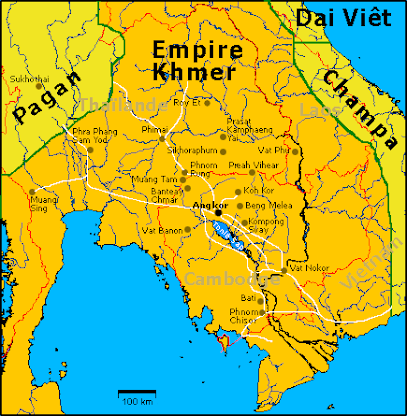
Thai troops moved into territory around the 11th-century Preah Vihear temple on the Thai-Cambodian border in July, just one week after UNESCO awarded the temple World Heritage listing over Thai objections. Thailand says the territory is disputed land while Cambodia claims it as sovereign territory.
The Ta Moan temple complex, 150 kilometres to the west, was also occupied by Thai soldiers, Cambodia said, as was Ta Krabey, a third temple, earlier this month.
Thailand called those claims baseless and noted it has always had troops stationed near the two sites.
But Prime Minister Hun Sen let his anger over the spread of the dispute to Ta Krabey be known in statements to local media through his cabinet.
He ordered authorities to get their documents in order and be ready to go to the UN Security Council or other international bodies for third-party mediation, government spokesman Khieu Kanharith said Monday.
Read more!

Tuesday, September 16, 2008
US urges Thailand, Cambodia to settle border rift

Monday, September 15, 2008
US to help fund Cambodian genocide tribunal
 PHNOM PENH, Cambodia (AP) — The United States announced Monday it has decided to help fund the Cambodian genocide tribunal's work in putting former Khmer Rouge leaders on trial.
Deputy Secretary of State John Negroponte told Cambodian Foreign Minister Hor Namhong about his government's decision to fund the tribunal during their meeting Monday, a Cambodian Foreign Ministry spokesman, Koy Kuong, told reporters.
Washington has so far provided no direct funding. It was not clear how much money the U.S. government will give, but Koy Kuong said Negroponte will announce the figure at a press conference Tuesday, the last day of his three-day visit to Cambodia.
U.S. embassy officials could not be immediately reached for comment.
The U.S. diplomat also held talks with Prime Minister Hun Sen, who described the discussions as "positive."
Washington has spent more than $7 million over the past decade to support the work of the Documentation Center of Cambodia, an independent group that collects evidence of Khmer Rouge crimes.
The group has given many documents to the U.N.-assisted tribunal to assist it in investigating cases against the Khmer Rouge suspects.
The tribunal has detained five former Khmer Rouge leaders on charges of crimes against humanity and war crimes. The trial of the first suspect is planned for later this year.
The communist Khmer Rouge, who held power in 1975-79, are blamed for the death of an estimated 1.7 million people from hunger, disease, overwork and execution.
The tribunal, jointly run by Cambodian and United Nations personnel, has been appealing for more money to carry out its tasks.
Negroponte's visit is the latest sign of improved relations between Cambodia and the United States.
On Monday, he joined Hun Sen and other Cambodian officials in overseeing the signing of an agreement for $24 million in U.S. assistance for economic development projects in Cambodia.
The U.S. lifted a ban on direct aid to the Cambodian government last year. Washington imposed the ban in 1997 after Prime Minister Hun Sen ousted Prince Norodom Ranariddh, then his co-premier, in a coup.
Before the ban was lifted, U.S. aid to impoverished Cambodia was mostly channeled to projects implemented by private groups.
Read more!
Jolie-Pitt Foundation makes large donation
 Money will help establish program to treat drug-resistant tuberculosis
The money will also go toward establishing a program to help treat drug-resistant tuberculosis in children and adults.
“Our goal is to transfer the success we have had in Cambodia to Ethiopia where people are needlessly dying of tuberculosis, a curable disease, and HIV/AIDS, a treatable disease,” Angelina said in a statement released to Access.
Sunday, September 14, 2008
GOLD RUSH FOLLOWS THAKSIN
Thaksin Shinawatra's reported investment in Koh Kong has led to a land-grabbing frenzy, writes Piyaporn Wongruang and Nareerat Wiriyapong
Embattled former prime minister Thaksin Shinawatra has packed up and moved to London, but Koh Kong residents like Kamnan Tit are hoping he returns and brings economic prosperity to the Cambodian province.
For the past few months, rumours of the ex-prime minister's possible involvement in a mega-tourism project in Koh Kong have fuelled a land grab and sent prices soaring, creating a buzz of activity in the once sleepy area.
''We heard the news that Mr Thaksin would come to invest in Koh Kong, so we even rushed to buy land on nearby Koh Kapi,'' said Kamnan Tit, who recently introduced the principle of sufficiency economy to his village of Peam Krasaob.
THE MEETING
Fueling the excitement was Mr Thaksin's meeting with Cambodian Prime Minister Hun Sen at the Siem Reap golf course in early April this year.
The golf outing came shortly before former foreign minister Noppadon Pattama (also formerly Mr Thaksin's lawyer) showed up at the state opening ceremony for the upgraded Road No 48, which links Thailand's border town of Had Lek, in Trat province, with Koh Kong.
The road, about 150 kilometres long, was financed by the Thai government with a low-interest loan of about 500 million baht, plus another 300 million baht in aid for four connecting bridges.
The aim of the project is to improve access to inner Cambodia and connect Thailand, Cambodia and Vietnam under the economic framework of the Greater Mekong Sub-region (GMS) scheme.
The White Paper produced by Thailand's foreign ministry noted that Mr Noppadon was there to discuss the heritage listing of the disputed Preah Vihear temple.
Speculation from many sources links the two incidents, in the belief that the people involved had compromised Thailand's interests in exchange for Mr Thaksin gaining a personal advantage.
According to several Thai agents, as well as officials working in foreign affairs, Mr Thaksin discussed the possibility of investing in a tourism-related project on Koh Kong with the Cambodian government during that period.
One high-ranking foreign affairs official, who was briefed by a source close to Hun Sen, said that a discussion had taken place, in which they agreed that the investment should go to Koh Kong.
An internal information analysis by one Thai foreign affairs unit noted that the targeted area for Mr Thaksin's investment would be the 10,000-hectare Koh Kong island, the biggest of 23 islands off Koh Kong province's coast.
It further noted that the Cambodian government had already approved the lease of the whole island for the development of hotels, casinos and other businesses to stimulate the tourism industry.
A road and a series of bridges are also planned to link the project to the mainland. Road No 48 will be 10 kilometres long and cut through the plots of some senior Cambodian military officials.
THE CONNECTION
''Khun Phat is among the people taking part in this project, and possibly Mr Thaksin too,'' said another high-ranking foreign affairs source.
''Some Cambodian senior military officials here said the land prices will increase if Mr Thaksin really invests there.''
Khun Phat is the owner of Koh Kong International Resort Club, near the border. A senator for the ruling Cambodian People's Party and widely known as the ''King of Koh Kong'', Khun Phat has been accused by international human rights groups of forcing locals off their land by getting police to use force against them.
Cambodian Defence Minister Tea Banh was quoted as saying during the opening of the road that Khun Phat ''was discussing the prospective investment in Koh Kong with Mr Thaksin''.
The defence minister also stated that Mr Thaksin was one person Hun Sen trusted and wished to invite to be an advisor on the development of Koh Kong, which the Cambodian government wants to turn into a special economic zone.
In a telephone interview, Khun Phat confirmed he is among the investors in the planned project. But he said it will be a joint investment between himself and a few European investors.
According to Khun Phat, these investors were introduced to him by Mr Thaksin. Khun Phat insisted Mr Thaksin will not invest in the project. He said he only introduced the investors.
''[Mr Thaksin] has a lot of friends,'' he said, adding that the project has received an unofficial green light from the Cambodian government.
They only need to discuss in detail what the project will look like, as well as how the benefits will be shared between the investors and the government.
''We are serious about this, but we have to wait for the new government first,'' said Khun Phat, who is known to be a close aide of Hun Sen.
After Mr Thaksin became Thailand's prime minister in 2001, he met Hun Sen at least eight times to discuss opportunities between the two countries.
It was Mr Thaksin who proposed the Economic Cooperation Strategy in early 2003, which later turned into a new regional economic framework known as the Ayeyawady-Chao Phraya-Mekong Economic Cooperation Strategy, or ACMECS, at the end of that year.
Under the framework, 46 common projects plus 224 bilateral projects were lined up for implementation over 10 years following the first declaration. These included Road No 48.
The road project came about after Mr Thaksin met Hun Sen during the GMS meeting on Nov 3, 2005.
According to the foreign ministry's letter to the secretariat of the cabinet, the foreign ministry of Thailand reasoned that Road No 48 would help improve the economy of both countries.
It would also help to elevate Thai-Cambodian relations, and was in line with Thailand's regional transport link strategy under the GMS.
As well as the road upgrade, other development projects, including the development of the linkage between tourism sites in Cambodia and Thailand, were also in the pipeline.
THE DOWNSIDE
Cambodia stands to gain a lot if these investments come true, and especially if Mr Thaksin is involved. However, there may be a downside as a consequence of the land grabs and speculation.
With rumours over Mr Thaksin's involvement buzzing around from Koh Kong to Phnom Penh, many local residents have been quick to buy up land with the hope of hitting the jackpot.
Land prices are indeed increasing, according to the president of Koh Kong Chamber of Commerce, Bun Tun.
He said land changes hands easily, sometimes even within a day, due to high prices offered for further land speculation. The price of a beachfront property, for instance, was once about US$5 per square metre. It has now increased to $150 per sq m, about 30 times the previous price.
Koh Kong, which is one of Cambodia's prime seaside cities, has about 1.2 million hectares of land and contains about 24,000 households.
Ever since the end of the Cambodian war in the late 1970s, the government has been trying to resurrect its economy through various means. The Koh Kong project is the latest of these efforts.
Besides relying on foreign aid for economic development, Cambodia, which had a per capita GDP of about $460 in 2006, relies heavily on foreign investment.
In 1994, Cambodia's new investment law was promulgated. The Council for the Development of Cambodia then approved more than $4.27 billion worth of foreign direct investment, according to the United Nations Economic and Social Commission for Asia and the Pacific 2008 business report.
Available data, last updated in 1999, reveals more than 700 foreign projects were approved, with hotels and tourism being the most popular choices for foreign investors, making up nearly 45 per cent of all foreign investment projects.
To encourage investment, the government allowed all sectors of the economy to be opened to foreign investors. In 1999 a sub-decree placed investment restrictions on certain areas, including the media.
The allocation of land is a crucial part of investment. Although only Khmer legal entities and those of Khmer nationality have the right to own land outright, foreign investors are allowed to lease land for up to 70 years.
The primary concern among social advocates and activists in Cambodia is that the present land allocation system may not support sustainable land utilisation or prevent land conflicts arising as a result of new development projects.
The Asian Development Bank's 2004 environmental report noted that although the new Land Law is a landmark in the formal recognition of the land rights of ethnic minorities in Cambodia, enforcement, property rights definitions and titling remain a challenge.
At present, many locals are being evicted from their land, either forcefully or from the lure of attractive land prices.
A government-approved large-scale entertainment project on Koh Yor, which is also part of Koh Kong province, is already suffering a backlash.
''At present, investors are pouring in and land prices are skyrocketing, but it is the poor people or farmers who are lured to sell the land,'' said Bun Tun. ''They might get a lot of money at first, but they spend it without much thought. If this trend goes on, all the land could be sold out over the next five years, and we will end up with a lot more poor people here.''
What's more, a zoning map acquired by an agent source shows that a Cambodian military facility at the top end of the island will be moved down south to make way for planned development.
The island is now divided into zones, including one at the top end which is believed to be Khun Phat's stake.
OPPOSITION CLAIMS
Sam Rainsy, the leader of Cambodia's opposition Sam Rainsy party, claims there is an official document showing Mr Thaksin and Hun Sen's joint development plan for Koh Kong province. His party is preparing to ask the Cambodian parliament to provide a copy of the document.
Sam Rainsy claims the two met occasionally when Thailand's former prime minister made trips from Europe and Hong Kong to discuss and conclude the deal for the investment in Koh Kong.
Sam Rainsy claimed Mr Thaksin has an ulterior motive in building up his base and facilities in Koh Kong _ his real intention is to continue his political activities in Thailand.
''Cambodia is the base for Mr Thaksin to get in touch with his supporters in Thailand,'' he said.
Mr Thaksin's close aides, including Pongthep Thepkanchana, his personal spokesman, as well as Mr Noppadon, could not be reached for comment.
Meanwhile, the Office of the Auditor General of Thailand has launched an investigation into Thailand's financial assistance for Road No 48. According to a high-level source at the office, the cabinet's approval of the project bypassed certain state auditing procedures.
''The project involved state funds worth millions of baht, but it was not audited by a responsible agency. We want to learn what they based their decisions on,'' said the source.
Read more!
US diplomat tours Cambodia's famed Angkor temples
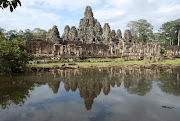
PHNOM PENH, Cambodia: U.S. Deputy Secretary of State John Negroponte toured centuries-old Angkor temples in northwestern Cambodia on Sunday as he began a three-day visit to the Southeast Asian nation, an embassy official said.
Negroponte was scheduled to arrive in the capital, Phnom Penh, on Monday to hold talks with Cambodian officials, including Foreign Minister Hor Namhong, U.S. Embassy spokesman John Johnson said.
The deputy secretary of state was also expected to attend the signing of an agreement under which the United States will provide US$24 million for economic development projects in Cambodia, the embassy said in a statement.
Negroponte's visit is the latest sign of improved relations between the two countries.
Last year, the United States lifted a decade-old ban on direct aid to the Cambodian government. Washington cut off direct funding to Cambodian government projects in 1997 after Prime Minister Hun Sen ousted Prince Norodom Ranariddh, then his co-premier, in a coup.
Before the ban was lifted, U.S. aid to impoverished Cambodia was mostly channeled to projects implemented by private groups.
The U.S. has also recently resumed non-lethal military aid to Cambodia. Last week, the aircraft carrier USS Abraham Lincoln hosted a rare tour for a group of Cambodian military and government officials as it passed through the region on its way home from Iraq.
Read more!
Miss Street-Porter, I have a job for you in Cambodia
By Jeremy Clarkson
Since we’re told charity begins at home, it’s better, I’ve always thought, to give £1m to a hapless British person than 10p to an organisation that provides sandwiches for prisoners in Turkey. Now, however, I have decided that, actually, charity begins in Cambodia.
Some people get all dewy-eyed about Africa. That’s jolly noble, but I don’t see the point because I fear that no matter how much money you pump in, the bejewelled pigs that run the place will pump it straight back out again, into the coffers of Kalashnikov and Mercedes-Benz. The only thing I’d send to the dark continent is a team of SAS hitmen to shoot the likes of Mr Mugabe in the middle of his face.
Others would say that we have enough problems on our own shores without getting all teary over the children of Mr Pot. I disagree, because these days, every time I think of underprivileged people in Britain, the hideous face of Shannon Matthews’s mum pops into my head, all greasy, fat and stupid, and it’s hard to summon up any sympathy at all.
Cambodia, though, is different. It’s a country of 14m people but between them they have only about 5m legs. In fact, there are 25,000 amputees, the highest ratio per capita of any country in the world. This is not because Cambodians are especially clumsy. It is because of landmines.
Nobody knows how many mines were laid during the endless cycle of warfare, but it’s sure to be in the millions. What we do know is that since the Vietnamese invaded in 1979 and drove the madman Pol Pot into the hills, 63,000 people have trodden on one.
One man has had his left leg blown off four times. They gave him a good prosthetic after the first and second explosions, but since then he’s had to make his own out of wood.
And it’s still going on today. In most places in the world, you can get three rice harvests per year from your paddy field. In Cambodia, it’s one. This is partly because the Khmer like a weird sort of rice that’s harder to grow, but mostly it’s because you set off with your plough and within minutes there’s a big bang and your water buffalo has become a crimson mist.
As a result of the ordnance lying in every field, no one is fighting for a right to roam in Cambodia. They have no equivalent of the Ramblers Association. They have no concept of Janet Street-Porter. In fact they have no concept of England.
Because the education is so poor, most people there believe the world is made up of four countries: Thailand, Laos, Cambodia and Vietnam. Everywhere else is France. All white people are therefore French. Angelina Jolie, who adopted a Cambodian baby, does much to help clear the landmines and has been made a Cambodian citizen, is French. I was French. And every night, most of the men settle down to watch Manchester United and Chelsea slug it out for honours in the French Premier League.
I’d never met an adult anywhere in the world (apart from America) who’d never heard of Great Britain. In Cambodia nobody had.
What’s more, you will never see a Cambodian person wearing sunglasses. Mainly this is because the average wage in Cambodia is less than £400 a year and so Ray-Bans are a bit out of range. But also it’s because Cambodians all have flat noses. So sunglasses simply fall onto the floor every time you hop to the shops, and every time your buffalo explodes.
That’s what did it for me. The sunglasses.
Not the education. Not the notion of living in a country where there is no Janet Street-Porter. The landmines made my eyes prickle, but my heart just mushroomed over the idea that they can’t afford to wear shades. And that even if they could, they’d keep falling off.
I have therefore decided that I must do something. Unfortunately, however, we all reach a point like this when we decide we must help, and then it’s so very hard to know what should be done next.
Secretly we all know that for every pound we donate to a large charity, only 2p actually reaches the people we have in mind. The rest is spent on adverts for highly paid co-ordinators in The Guardian and expensive offices in London’s glittering West End.
You always feel you want to go to the root of the problem. But in the bee that’s come to nest in my roost, that’ll be hard. Earlier this summer a team of Australian doctors happened upon a little girl in the town of Siem Reap. Her face had been horribly disfigured, by a bloody landmine I suppose, and they were overwhelmed with a need to help.
They went to meet her parents, and her father was keen that his daughter be sent to Australia for plastic surgery. Her mother, however, went ballistic when she discovered the poor child would once again look normal. “How will she be able to beg then?” she asked. And the Aussie medics were sent packing.
I can’t even ring the Cambodian government for help because I fear it would be extremely enthusiastic and then all the money I sent over would be spent on fixtures and fittings in the finance minister’s next luxury hotel. That’s if I could raise any money in the first place. It’s hard when money’s tight here and everyone else has their own pet project.
I suppose I could write to Ray-Ban asking it to design a cheap pair of shades that can be worn by someone who has no nose. But I think it’d be better if I started work on some designs for the most brilliant mine-clearing vehicle the world has ever seen. I’m thinking of strapping some ramblers together, and then . . .
Read more!
US Deputy Secretary of State Negroponte arrives in Cambodia
Phnom Penh - US Deputy Secretary of State John Negroponte flew into the northern Cambodian tourist hub of Siem Reap in a relaxed start to his three-day official visit, touring the ancient temples of Angkor Wat, local officials said on Sunday.
Negroponte arrived in Cambodia from neighbouring Vietnam for a visit which will include meetings with Prime Minister Hun Sen and an array of ministers including Foreign Minister Hor Namhong.
He is scheduled to sign a 24-million-dollar agreement on Monday to assist economic development in the country and will hold a press conference on Tuesday morning before flying out, according to a schedule from the US embassy.
At Angkor Wat, Negroponte toured the 12th century World Heritage- listed temples, which are also the nation's largest tourism draw, 300 kilometres from the capital, and he is expected to arrive in Phnom Penh early on Monday morning, officials said.
Ties between the US and Cambodia have warmed considerably in recent years, with the US providing support for the nation's armed forces as well as recently agreeing to give aid directly to the government, rather than through other agencies.
Cambodia has also been praised by the US for its help in fighting terrorism and its assistance in helping locate the remains of US soldiers missing in action, mostly from the Vietnam War era.
Read more!
Saturday, September 13, 2008
Cambodia ready to wait as Thai crisis delays talks
PHNOM PENH (dpa) - Cambodia is content to wait for as long as it takes Thailand to settle its political upheavals and resume talks over disputed border territory, its government said Thursday.
Government spokesman Khieu Kanharith said by telephone that it was the least Cambodia could do to give Thailand breathing room to get its internal affairs in order.
"The dispute over the border has been around 100 years," Kanharith said. "A few more weeks can't hurt."
Cambodia closed the border at the 11th-century Preah Vihear temple on its northern border in June. On July 7 Unesco declared the temple a World Heritage Site over Thai objections, and a week later, Thai troops moved into nearby areas that it said are disputed but that Cambodia said is its territory.
Cambodia claimed Thai troops also moved into the Moan temple complex 150 km to the west soon after - claims Thailand denied, saying it has had a troop presence near there for years.
Several rounds of talks have failed to resolve the deadlock with both sides vowing not to back down. Further talks are now on hold.
Thailand's Constitution Court on Tuesday found embattled Prime Minister Samak Sundaravej guilty of violating the national charter for hosting a television cooking show after he assumed office on February 6, forcing him out of his job.
Although the court's ruling immediately deprived Samak of the premiership, the constitution allows him to return to the post if members of parliament vote him back into power.
Read more!
Cambodia: US Warship Gives Rare Tour To Cambodian Officials
 PHNOM PENH, CAMBODIA: Cambodian government and military officials took a rare tour of the USS Abraham Lincoln aircraft carrier when it sailed through the region on its way home from Iraq, embassy officials said Thursday (11 Sept).
It was the first tour by Cambodian officials of a U.S. aircraft carrier and "another step in the growing military to military relationship" between the two countries, said embassy spokesman John Johnson.
The Cambodian delegation was flown by a U.S. military aircraft from the capital, Phnom Penh, for a four-hour visit Wednesday (10 Sept) on the vessel, which was about 250 miles off the Cambodian coast, Johnson said.
Cambodia's army commander, Gen. Meas Sophea, called the tour "a very special occasion," in a prepared statement.
Mao Has Vannal, head of Cambodian's civil aviation authority, said he'd only seen such military capabilities on television.
"On the return flight, we took off under the force of the catapult system shooting the plane up into the air," he said Thursday. "It was so real compared to what we used to see on the Discovery Channel."
The tour was the latest sign of growing relations between the two countries.
In February, the USS Gary, a guided missile frigate with 200 officers and crew, was the first American military vessel to dock at a Cambodian seaport in more than 30 years.
During the Vietnam War, the U.S. military heavily bombed suspected communist guerrilla strongholds in Cambodia.
The U.S. backed Cambodia's 1970s military regime led by General Lon Nol until it was toppled by Khmer Rouge rebels. Eighteen U.S. soldiers were killed fighting Khmer Rouge forces on Koh Tang, a Cambodian island in the Gulf of Thailand, in May 1975. (AP)
Read more!
Friday, September 12, 2008
Thai soldiers claim another Cambodian temple, military says
Written by Thet Sambath
Thai soldiers have moved into Ta Krabey temple, but military commanders say negotiation will be used to solve the problem
MORE than 100 Thai soldiers seized control of the Kingdom's Ta Krabey temple Wednesday evening and are refusing to leave, despite the best efforts of some 50 Cambodian soldiers who remain at the site, military commanders stationed at the border said.
Ho Bunthy, deputy commander of Border Military Unit 402, said that Cambodian soldiers - who have controlled the small temple for years - tried to defend the site by shooting in the air but that the Thai soldiers still marched in.
"They dared to enter because they know Cambodian soldiers got the orders not to use violence and shoot," Ho Bunthy said.
The Wednesday night incursion involved around 100 Thai soldiers who had previously tried to prevent Cambodian troops from accessing the temple by cutting down trees and using them to block the entry road.
"Thai soldiers cut trees down on the road around 13 kilometres away from Ta Krabey temple on Wednesday afternoon to prevent our armed forces from walking to this temple and help them to send their troops to enter the temple in the evening," Ho Bunthy said.
Ho Bunthy said that before the Thai soldiers entered the temple he ordered 50 Cambodian soldiers to stand in a "fence" formation to try to prevent them from entering but to no avail, adding that the Thais had been eyeing the temple for days.
Negotiations again
Chea Morn, commander of Military Region 4, said that military commanders on both sides are trying to solve the problem through negotiation. "We are standing at the temple together now and we will negotiate with Thai military commanders later on," he said.
--------------------------------------------------------------------------------
It is a big problem when two countries are at war. we are trying to avoid it.
--------------------------------------------------------------------------------
"If we tried to prevent the Thai soldiers from entering the temple, there would be a clash between the two sides so we will let the border committee demarcate first," Chea Morn said.
"It is a big problem when two countries are at war. We are trying to avoid it," he added.
San Vanna, deputy governor of Oddar Meanchey province, said that he has been informed about the Thai soldiers occupying the Ta Krabey temple. "It saddens me to hear about this. The Thai soldiers shouldn't have entered the temple."
Yim Sovann, opposition Sam Rainsy Party's parliamentarian, criticised the government for taking a weak stance against Thailand.
"It is embarrassing that our government is too weak to defend our nation," he said.
Read more!
Cambodia Allows Hijab at Schools
CAIRO — Cambodian Muslim students will be allowed to wear Islamic attire, including hijab, as of the new academic year in October, reported the Phnom Penh Post daily on Friday, September 12.
"While students are supposed to wear white shirts and blue trousers to school, Khmer Muslim students will be allowed to wear traditional uniforms to school because we are open minded about students believing in different religions," said Undersecretary of State at the Ministry of Education, Sport and Youth Chey Chap.
Prime Minister Hun Sen pledged two months ago to allow Muslim students to wear their Islamic attire at schools.
The decision will be effective when the new academic year starts in October.
Previously, Muslim students, both boys and girls, had to abide by a standard uniform determined by their schools, usually comprises a shirt and a pair of trousers.
This had forced many Muslim students, particularly girls, to abandon their studies.
Some schools were bending the rules to allow female Muslim students to don headgear.
"At the moment Khmer Muslim students don't wear their traditional clothes at school, but they still wear folded scarves around their faces," said Dy Tep Kosal, the director of Chea Sim Cham Reun Roth Secondary School, where Muslims make up nearly 40 percent of its students.
Hijab is an obligatory code of dress for Muslim women.
Inclusive
The government decision drew cheering from Cambodian Muslims.
"This shows that the government doesn't want to discriminate against Muslim students and will show people that there are a lot of Khmer Muslims within the education system," said Zakaryya Adam, Secretary of State at the Ministry of Cults and Religion.
Abdulhalim Kasim, a Muslim student at Norton University, said the decision comes in the right time for female Muslim students.
"While it doesn't make any difference to me because I am a man and can wear whatever Khmer students wear, girls need to wear scarves over their faces," he said.
Kasim said the decision also has broader implications.
"The fact that the government will allow us to wear our traditional clothes means it accepts all religions [and] it will make it easier for Khmer Muslims to study."
There are estimated 700,000 Muslims in Cambodia, making up 5 percent of the country's 13 million population.
Cambodian Muslims are generally located in towns and rural fishing villages on the banks of the Tonle Sap and Mekong rivers and in Kampot Province in the south.
Read more!
Cambodia patient over Thailand's turmoil and temple talk delays
Phnom Penh - Cambodia is content to wait for as long as it takes Thailand to settle its political upheavals and resume talks over disputed border territory, its government said Thursday. Government spokesman Khieu Kanharith said by telephone that it was the least Cambodia could do to give Thailand breathing room to get its internal affairs in order.
"The dispute over the border has been around 100 years," Kanharith said. "A few more weeks can't hurt."
Cambodia closed the border at the 11th-century Preah Vihear temple on its northern border in June. On July 7 UNESCO declared the temple a World Heritage Site over Thai objections, and a week later, Thai troops moved into nearby areas that it said are disputed but that Cambodia said is its territory.
Cambodia claimed Thai troops also moved into the Moan temple complex 150 kilometres to the west soon after - claims Thailand denied, saying it has had a troop presence near there for years.
Several rounds of talks have failed to resolve the deadlock with both sides vowing not to back down. Further talks are now on hold.
Thailand's Constitution Court on Tuesday found embattled Prime Minister Samak Sundaravej guilty of violating the national charter for hosting a television cooking show after he assumed office on February 6, forcing him out of his job.
Although the court's ruling immediately deprived Samak of the premiership, the constitution allows him to return to the post if members of parliament vote him back into power.
Read more!
Gina is heading to Cambodia to teach children
By Julie Armstrong
A FORMER pupil of William Howard School in Brampton is to give up three months to teach deprived children in south-east Asia.
Gina Williamson, 18, was inspired by a school trip to Tanzania where she admired the communal and eco-friendly lifestyle.
Next week she will set off for Cambodia where she will be teaching under-10s with volunteer company Bunac.
Many children there come from such poor families they have to stay at home to work during the day.
Bunac gives them the opportunity of a free education, providing classes in the evenings to make them more accessible.
Gina, who has just gained three Bs and a C at A-level, said: “I went to Tanzania with William Howard in July. That was my first experience of a Third World country – a real eye-opener.
“I loved everything about it. The people were really friendly and so generous even though they have so little.
“They’re really proud of their country and there’s a real sense of community. All their food is local and organic, grown in their gardens. Everything is in tune with the environment. I’d like to live in a commune over there.
“It made me feel I should be doing something worthwhile, giving something back to people who are less fortunate. I’ve done a 60-hour TEFL course online and I leave on Tuesday. I’ve never been to Asia and wanted to go somewhere different.”
Gina, of Cherry Lane, Parkland Village, Carlisle, will live in Siem Reap, a large town about eight hours north of the capital Phnom Penh, and will visit the famous Ankor Wat – a 12th-century Buddhist temple which appears on Cambodia’s national flag.
She has paid £30 towards a sustainable forest project to offset the carbon emissions from her flight. She will share a house with other volunteers, whom she has not yet met.
“I am most scared about going on my own,” she said. “I think my phone bill will be huge because I could be homesick and lonely. I don’t know any of the other volunteers, but we’ll all have one thing in common – we all wanted to go to Cambodia.”
She will come back for Christmas but in January will be off on her travels again – this time to Canada to train to be a ski instructor.
Read more!
Thursday, September 11, 2008
Peace, prosperity revive dream of connecting Asia by rail
NONG KHAI, Thailand (AFP) - As Asia develops at a whirlwind pace and peace holds in once-warring nations, countries are reviving a decades-old dream of connecting the vast continent with a continuous railway.
Like the ancient Silk Road but made of sleepers and track, the route would ferry goods and tourists from Singapore to St Petersburg, Phnom Penh to Pyongyang, creating development wherever the carriages pull in.
The idea was born in 1960 but was stalled by decades of conflict and poverty across the region.
Then the break up of the Soviet Union and the opening up of China ushered in a new era for Asian railways, said Barry Cable, Bangkok-based transport and tourism director at United Nations regional economic body UNESCAP.
"Countries have started to explore the international benefits of the railways," he told AFP.
"If railways are really going to fulfill their potential the investment required is going to be substantial, but the benefits are going to be huge."
In November 2006, 18 Asian nations including China and Russia signed a formal agreement to integrate the continent into a single railway network.
The UN-backed Trans-Asian Railway route now has nearly 74,700 kilometres (464,164 miles) of functioning track, serving 29 countries stretching west to Turkey and Russia and east to Vietnam and South Korea.
There are still around 6,200 kilometres of missing links, and filling in those blanks will cost roughly 15 billion dollars, the UN estimated two years ago.
Although authoritarian regimes, political tensions and gaps in funding are preventing a completely smooth ride, countries across the region are taking steps toward completion of the railway.
In northeastern Thailand, a new track due to open in March 2009 runs over the Friendship Bridge spanning the Mekong river linking Thailand and Laos.
It's only about five kilometres long from Nong Khai town in Thailand to Tha Na Laeng just over the border, but it is the first track to be laid in Laos, opening up a vital rail route to the sea for the landlocked nation.
At Nong Khai's river port, a constant stream of burly men lug cartons of food and household goods onto boats, which will sail across the Mekong to Laos.
Ead Kitkla, a 46-year-old Thai trader, says his load of coconut milk, spices and seeds has to travel from Bangkok to Laos in three buses and a boat.
"The train will be more convenient to go to Vientiane. There will be no need to take many buses," he said. "It will save time."
But, he added, life will be even easier when the Laotian government extends the line another nine kilometres to the capital, a move still in the planning stages.
Many of the gaps in the railway are in Southeast Asia, with only Singapore, Malaysia and Thailand operating cross-border links.
Thailand and Cambodia are linked by a track that has fallen out of use. Civil war in Cambodia only ended in the 1990s, and trains there crawl along dilapidated tracks.
The Asian Development Bank has stepped in with funds to help overhaul the railways, a project expected to be finished within three years, says Touch Chan Kosal, undersecretary of Cambodia's transport ministry.
He says no agreement has been reached on reconnecting with Thailand, and the two countries are preoccupied with a border dispute which threatened to escalate into a military clash.
The UN thinks the link can be running in two years, sparking an interest in a connection to Vietnam -- which has two rail crossings to China -- thus sewing up most of Southeast Asia all the way to Russia.
Like any chain, it is only as strong as its weakest link, and there seems little hope of connecting Asia with military-ruled Myanmar, one of the world's poorest countries.
Pierre Chartier, economic affairs officer for UNESCAP's transport division, said the Korean International Cooperation Agency financed a feasibility study on reconnecting the Thai-Myanmar link.
"The figures are not very good, economically speaking, in terms of traffic that could be expected to travel on this line, compared to the cost of putting the infrastructure in place," he says.
Cable said both the mountainous terrain and the isolationist regime in Myanmar are standing in the way of connecting Southeast Asia with India and on through Iran to Turkey.
"Under the present regime, no substantial progress will be made," he says.
But barriers once thought immovable have been broken -- North and South Korea, for instance, launched a cross-border freight train last December.
Another problem across Asia's sub-regions is the different railways gauges, the space between the tracks, but Cable says freight can simply be loaded from train to train.
He envisages dry ports, where goods will arrive and go through customs, creating bubbles of development, employment, trade and industry while cutting down the reliance on roads.
"We have to worry about energy and environment and about safety, and while we are all seeking new technologies and ways of reducing energy consumption, we have one technology already available to use, and that's railways," he says.
Tourists too will be keen to travel by train, he said, as they are increasingly aware of air travel's impact on climate change.
But improved transport links also give an easier ride to traffickers in women, children, drugs and wildlife -- all trades which have historically thrived in Southeast Asia and which governments are striving to wipe out.
Patchareeboon Sakulpitakphon, an programme officer from ECPAT, a group which works to end trafficking in children for sex, says pockets of development around rail terminals may also create pockets of vulnerability.
"People who are in poverty, they might see this railway as an opportunity to make an increased living, they might migrate to that area," she said.
"People involved in commercial sexual exploitation of children will know this might be a new area where vulnerable people might go."
To counter this, she said, authorities need to make sure communities around the railways are educated about the dangers of trafficking.
Cable said donor nations and financial institutions must make funding for railways conditional on programmes to address social woes, but said he believes the benefits will outweigh the drawbacks.
The UN sets a timeframe of 10 to 15 years for completion of the Trans-Asian Railway, which experts say is realistic if Asian nations maintain the political will.
"People are starting to rediscover their railways and saying what can we do to make them contribute more to economic development," says Chris Jackson, editor of British-based industry publication the Railway Gazette International.
"Tying up the loose ends and developing these international corridors is certainly part of it.
"If the railways can get their act together, there is potential to carry a lot of business in a fairly profitable way."
Read more!
Jetstar to add Denpasar service in boost to hub
JETSTAR has moved to further bolster its new international hub in Darwin by adding a daily Brisbane-Darwin-Denpasar service from December 3.
The move will provide one-stop Airbus A320 flights from the three big east coast cities and complements existing non-stop A330 services from Sydney and Melbourne.
It sees frequencies between Brisbane and Darwin rise from six to 13 a week and brings to 69 the number of weekly domestic and international A320 services the low-cost carrier now operates out of the Northern Territory capital.
Jetstar spokesman Simon Westaway said the move would make Jetstar the strongest local carrier serving the Bali market from December.
Mr Westaway said the capacity was in addition to the six weekly A330 flights -- two from Melbourne and four from Sydney -- and said there was no intention of cancelling those services.
"This is part of our narrowbody strategy of developing Darwin as a legitimate domestic and international hub," he said. "Darwin gets a third Asian destination -- we link it directly with Singapore and since September we've been operating to Ho Chi Minh City as well."
The move is part of a broader plan to use A320 and A321 aircraft to service Southeast Asian destinations through Darwin and Perth. The strategy, hatched after delays to the airline's 15 Boeing 787s, also saw Jetstar pull A330 services out of Vietnam and Malaysia and redeploy them to protect slots in Japan.
Mr Westaway said the extra capacity was warranted, given the Bali market's significant growth.
He pointed to Australian Bureau of Statistics figures that show a 63 per cent jump in Australian visitors to the island last year and a 60 per cent rise this year.
The recovery comes after Australian tourism to the holiday island slumped in the wake of bombings by Islamic extremists. "It's all about having low fares and an efficient transition through Darwin International Airport and the incremental capacity, we think, is absolutely warranted on where we think the Bali market's now at," he said.
Mr Westaway said Perth was due to get an international boost late next month, with flights to Denpasar, Jakarta and Singapore.
He said this would be a first for the airline and would see Qantas move off the markets.
"We're looking at the opportunities that can emerge out of Perth, particularly as we move into 2009," he said. "But by December we'll have a number of international services running out of Perth with the first being October 27, which is the Perth to Denpasar service." The airline's wide-body growth depends on the delivery of its 787s. They are due in November next year but there has been speculation there could be further delays.
Mr Westaway said the airline had regular updates from Boeing and said its planning was still based around a first delivery in November next year. "As an organisation we're continuing to work towards that," he said. "Of course we're watching what's occurring in Seattle and with the Boeing organisation with a great deal of interest."
He said the carrier's short to medium-term growth would be generated by narrow-body deliveries. Jetstar currently has 29 A320s and two leased A321s.
New planes due in December, February and March will bring the A320 fleet to 32, completing an order of nine planes added to the original fleet of 23.
From mid-year, Jetstar will start taking planes from a bigger order of 68 firm aircraft, at least 17 will be bigger A321s.
Some of those planes will go to the Qantas Group's Vietnamese investment, Jetstar Pacific, which recently announced it would start international services under the brand later year.
The Vietnamese carrier said it would offer daily direct services to Bangkok from October 31 and Siem Reap, in Cambodia, from November 3.
It will initially use Boeing 737s before moving to the A320s.
Read more!
CAMBODIA: Landmine challenge to development
PHNOM PENH, 11 September 2008 (IRIN) - Landmine and explosive remnants of war (ERW) casualties in Cambodia fell to an all-time low of 351 in 2007, further evidence of the downward trend since the 1990s.
The post-conflict peak was 1996, when Cambodia suffered 4,320 landmine or ERW-related deaths and injuries, according to a government report.
But challenges remain.
An unknown number of villages - perhaps more than 40 percent nationwide - are vulnerable to landmines, the government said.
It tried to estimate the extent of contaminated land in 2002 but later judged its measurements poorly defined.
These problems, coupled with scarce land resources – partly due to widespread evictions and spiralling property prices – place additional importance on developing the newly available land after clearance, according to the UN Development Programme (UNDP).
"Cambodia remains one of the most mine/ERW contaminated countries in the world and will require sustained external funding into the medium term to overcome it," Steve Munroe, UNDP mine action programme manager, told IRIN.
"By strengthening the mine-clearance process and making productive land available to the rural poor, UNDP's mine-clearance activities directly contribute to poverty reduction in Cambodia," he said.
According to the Cambodia Millennium Development Goals, eliminating the negative development impact of landmines, including limited arable land, is just as important as cutting the numbers of victims.
"In terms of the prioritisation of landmine clearance … they [mine action groups] must integrate their development and mine action programmes to address poverty," Heng Ratana, deputy director-general of the Cambodian Mine Action Centre (CMAC) http://www.cmac.org.kh/publication_ar2005.asp, told IRIN.
Following up on mine-clearance projects with community-based education projects and checking on the efficient use of land after clearance remain priorities for mine-action NGOs.
Farming risks
Villagers often take extreme risks farming but have no choice given their impoverished circumstances, says UNDP.
However, Leang Sopheap, a farmer in the heavily mined northwest Battambang Province, is willing to take the risk. "I have to feed my family, and that's the most important thing," he told IRIN. "We can guess about landmines when we build farms, but we won't always be certain."
Despite a significant drop in casualties over the past six years, landmines and ERW continue to affect countless communities by limiting access to land that could be put to productive use, according to UNDP.
Focusing solely on the number of mines unearthed loses sight of the bigger development picture, says Herbert Feddon, senior project manager at BACTEC, in Cambodia, a commercial de-mining company.
"Problem is, the donors want to see more and more landmines cleared per hectare, but that's quite difficult with the fatigue the de-miners experience in Cambodia," he said.
Most objects found are random bits of metal debris, which, coupled with scorching heat, makes clearance particularly onerous, he explained. About 16 landmines were discovered per hectare of land in 2007, the government estimates.
"There's also the difficulty in measuring the number of landmines in Cambodia," he added. Estimates range from two to 10 million but he says around five million could be in the ballpark.
Bloody history
Bombings against Cambodia during the second world war and the subsequent French-Indochina war in the 1950s scattered the countryside - particularly at the Vietnam border - with ERWs.
From 1969 to 1973, the US dropped more than 500,000 MT of explosives during its carpet-bombing campaigns against the communists. The unexploded remnants of these bombs kill or injure more Cambodians annually than landmines, at 198 victims in 2007.
In 1967, the North Vietnamese army began laying landmines in Cambodia to protect its supply routes; mining intensified in 1970, when General Lon Nol mined the countryside against the Khmer Rouge communists.
Throughout the 1980s, the Thai military mined its border to defend against a possible spillover from the retreating Khmer Rouge, who had lost their hold on the capital. The Cambodian government and rebel forces also mined the country against each other throughout the 1980s and 1990s.
The arrival of the UN Transitional Authority in Cambodia (UNTAC) [see: http://www.un.org/Depts/dpko/dpko/co_mission/untac.htm] in 1992, a peacekeeping mission, signalled the beginning of mine-action initiatives. Since then, Cambodia has signed the 1997 Ottawa Treaty to ban landmines and has destroyed its stockpiles of ordnance.
Read more!
Wednesday, September 10, 2008
Cambodia faces new HIV threat as 'condom campaign at risk'
PHNOM PENH (AFP) — Threats to a successful Cambodian condom campaign has raised fears the country could experience a second epidemic of the disease, health officials said Wednesday.
Tia Phalla, of Cambodia's National AIDS Authority, said the country's so-called 100 percent condom use programme, which provides sex education and distributes condoms to sex workers, "is facing difficulties" because of a new anti-sex trafficking law and lack of financial support.
Police began a crackdown on brothels after the new law was passed in February, which has reportedly forced prostitutes to leave condoms behind as they move from place to place.
"Enforcement of the anti-trafficking law harms the 100 percent condom use in brothels," Tia Phalla told a three-day national AIDS conference in Phnom Penh.
The percentage of sex workers who consistently used condoms with clients had already begun to drop to 94 percent in 2007 from 96 percent in 2003, according to AIDS authority data.
Additionally, only six of the country's 24 provinces and cities currently have funds to carry out the programme, Tia Phalla said.
"The main risk of a second wave of HIV infections occuring in Cambodia is from female sex workers, their clients and sweethearts," said a statement by the AIDS authority.
Before the 100 percent condom use programme began, Cambodia's overall HIV rate was the worst in the region, peaking at 3.7 percent of the population in 1997. Rates among prostitutes were estimated at 40 percent.
The aggressive condom and sex education campaign is believed to have helped drop Cambodia's overall HIV prevalence to 0.9 percent.
Read more!
Cambodia, U.S. to sign trade, agriculture, industry deal
PHNOM PENH, Sept. 10 (Xinhua) -- Cambodia and the United States will sign a trade, agriculture and industry deal on Sept. 15 when the U.S. Deputy Secretary of State John D. Negroponte visits here on Sept. 14-16, a senior official said Wednesday.
Negroponte's visit will make the two countries move a step forward for bilateral ties, said Sok An, Cambodian Deputy Prime Minister and Minister of the Council of Ministers.
Cambodian Prime Minister Hun Sen and Negroponte will preside over the signing ceremony of a grant aid project for 24 million U.S. dollars in health sector, he said, adding that the fund of the health project will be operated by NGOs but monitored by the Cambodian government.
During his trip, Negroponte will meet with government officials, opposition leaders and representatives of Cambodia's civil society, a press release from the U.S. embassy said earlier this week.
As the centerpiece of the visit, the deputy secretary of state plans to meet with Hun Sen, it said.
Cambodia's apparel exports to the U.S. totaled 1.16 billion U.S. dollars in the first half of the year, up from 1.13 billion U.S. dollars in the same period of 2007, according to official statistics.
Read more!
Inflation driving Cambodia garment workers to quit
PHNOM PENH, Cambodia: Soaring inflation and stagnant wages have forced thousands of Cambodian garment factory workers to quit and look for better-paying jobs or return to the countryside, union leaders said Wednesday.
The development raises concerns about the future of the country's main dollar-earning industry.
"Their factory wages could no longer cope with rising food prices," said Chea Mony, president of the Free Trade Union of Workers of the Kingdom of Cambodia, which had 80,000 members at the start of the year.
Since then, 27,000 have quit, he said. Many are now working in entertainment clubs such as karaoke parlors, where they can earn more than at their previous jobs, he said.
"Sometimes they collect $5 to $10 in tips per night from guests, and they work even fewer hours than when they were in the factories," Chea Mony said.
Others have returned to homes in the countryside, where living costs are lower.
In April, garment manufacturers raised wages by about US$6 to an average of US$50 a month.
But union leaders said the raise has done little to help the workers cope with the high costs of living in and around Phnom Penh, where most factories are located.
Consumer inflation in July rose to 22 percent in July, up from 18.7 percent in January, the last time the figure was released.
High food prices are adversely affecting Cambodia's poor, who spend approximately 70 percent of their total household consumption on food, according to a recent World Bank analysis.
Chhay Than, Cambodian Minister of Planing, said the July inflation rate was the highest recorded in 15 years and has been driven mainly by high price of oil.
The consumer rate remained at 22 percent for August, though that figure will be officially released only next week, said Khin Song, deputy director of the ministry's price index department.
Factories have been having difficulties trying to hire new labor to fill the empty slots in their assembly lines, said Chuon Mom Thol, president of the Cambodian Union Federation, another labor group.
The garment industry is the country's major export earner and employs about 350,000 workers, mostly women.
Kaing Monika, the external affairs manager of Garment Manufacturers Association of Cambodia, said the country's clothing exports in the first six months of this year were worth about US$1.35 billion, a 4 percent increase over the same period in 2007.
But the profit margin, calculated to have been around 2 percent, is becoming thinner or nearly nonexistent for most factories due to high production costs caused by skyrocketing oil prices and inflation, he said.
"The buyers did not pay higher prices, and the workers are demanding more wages because of the inflation that makes them really hard to cope with the current cost of living," he said.
He said the future of the industry "is getting very tough," adding that the competitive situation looks to tighten even more when U.S. measures, which have served as de facto limits on imports from trade rivals China and Vietnam, are lifted at the end of the year.
Read more!
NCR Launches Next Generation Family of NCR SelfServ ATMs in Cambodia to Help Drive Banks' Revenue and Improve Consumer Satisfaction
PHNOM PENH, Cambodia, September 10, 2008 /PRNewswire-FirstCall via COMTEX/ -- - NCR SelfServ ATMs Helps Banks to Increase Revenue and Improve Customer Satisfaction
NCR Corporation (NCR:ncr corp new com
NCR 24.71, +0.35, +1.4%) http://www.ncr.com today announced the launch of its new NCR SelfServ(TM) family of automated teller machines (ATMs) in Cambodia. NCR SelfServ ATMs are designed to help drive more revenue by enabling easier introduction of multi-function services and ensuring higher ATM availability to customers, while reducing environmental impact.
ATM availability is one of the key priorities for banks in Southeast Asia, and the NCR SelfServ family with its "self-healing" capability addresses this need. This new ATM family recovers automatically from software failures without intervention, cutting down recovery time previously ranging from three to four hours, to just ten or fifteen minutes, therefore ensuring higher ATM availability.
Matthew Heap, NCR industry marketing director for Asia Pacific, said, "NCR is committed to the Cambodia market and the launch of NCR SelfServ today reinforces the same. The NCR SelfServ family reflects a key NCR strategy to link the consumer experience across the ATM, the Internet and mobility. Clearly, consumers want self-service banking to be convenient, easy to use, secure and always available when and where they want. As consumers do more through the ATM channel, it becomes imperative for financial institutions to ensure their ATM network is constantly up and running. NCR is committed to deliver the best in technology and services and will continue to innovate in changing the way consumers connect, interact and transact with businesses."
Over half of ATM downtime is due to low-level maintenance tasks - often performed by branch staff - such as replacing receipt rolls and clearing cards or paper jams. With intuitive interactive graphic operator panels, NCR SelfServ allows staff to fix more faults the first time and do so more quickly, leading to better availability. NCR SelfServ units include NCR's patented two-sided thermal (2ST(TM)) receipt printers that reduce the amount of paper consumed. Its larger paper rolls and dual receipt roll dispensers also include auto-change functionality.
The new NCR SelfServ family is designed to deliver the most advanced services, including bill payments and no-envelope intelligent cash and cheque deposits, while reducing environmental impact. NCR SelfServ is also the only ATM family to feature protected USB technology. This means that modules needed to deliver future services on ATMs can be added quickly, without compromising the security of the ATM. As 2D barcode technology emerges, bill payments and other transactions that use this technology can be handled on new modules available on NCR SelfServ. Technologies such as contactless card and mobile payment systems can also be easily integrated with NCR SelfServ ATMs to improve convenience for consumers and create revenue-generation opportunities for financial institutions and other ATM deployers.
China Banking Corporation is the first bank in the Philippines and in Southeast Asia to purchase the new ATMs, with an initial order of SelfServ units to fulfill its objectives of providing more convenient banking to its customers.
About NCR Corporation
NCR 24.71, +0.35, +1.4%) is a global technology company leading how the world connects, interacts and transacts with business. NCR's assisted- and self-service solutions and comprehensive support services address the needs of retail, financial, travel, healthcare, hospitality, gaming and public sector organizations in more than 100 countries. NCR ( http://www.ncr.com) is headquartered in Dayton, Ohio.
NCR is a trademark of NCR Corporation in the United States and other countries.
Read more!