Phnom Penh - Cambodia is content to wait for as long as it takes Thailand to settle its political upheavals and resume talks over disputed border territory, its government said Thursday. Government spokesman Khieu Kanharith said by telephone that it was the least Cambodia could do to give Thailand breathing room to get its internal affairs in order.
"The dispute over the border has been around 100 years," Kanharith said. "A few more weeks can't hurt."
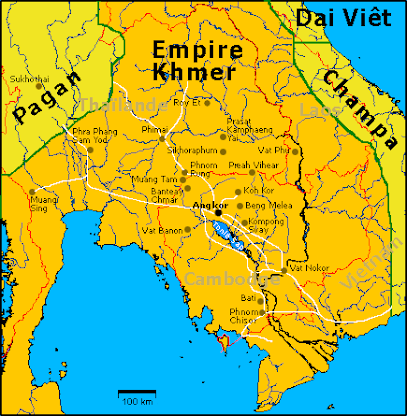
Cambodia closed the border at the 11th-century Preah Vihear temple on its northern border in June. On July 7 UNESCO declared the temple a World Heritage Site over Thai objections, and a week later, Thai troops moved into nearby areas that it said are disputed but that Cambodia said is its territory.
Cambodia claimed Thai troops also moved into the Moan temple complex 150 kilometres to the west soon after - claims Thailand denied, saying it has had a troop presence near there for years.
Several rounds of talks have failed to resolve the deadlock with both sides vowing not to back down. Further talks are now on hold.
Thailand's Constitution Court on Tuesday found embattled Prime Minister Samak Sundaravej guilty of violating the national charter for hosting a television cooking show after he assumed office on February 6, forcing him out of his job.
Although the court's ruling immediately deprived Samak of the premiership, the constitution allows him to return to the post if members of parliament vote him back into power.
Read more!

Friday, September 12, 2008
Cambodia patient over Thailand's turmoil and temple talk delays

Gina is heading to Cambodia to teach children
By Julie Armstrong
A FORMER pupil of William Howard School in Brampton is to give up three months to teach deprived children in south-east Asia.
Gina Williamson, 18, was inspired by a school trip to Tanzania where she admired the communal and eco-friendly lifestyle.
Next week she will set off for Cambodia where she will be teaching under-10s with volunteer company Bunac.
Many children there come from such poor families they have to stay at home to work during the day.
Bunac gives them the opportunity of a free education, providing classes in the evenings to make them more accessible.
Gina, who has just gained three Bs and a C at A-level, said: “I went to Tanzania with William Howard in July. That was my first experience of a Third World country – a real eye-opener.
“I loved everything about it. The people were really friendly and so generous even though they have so little.
“They’re really proud of their country and there’s a real sense of community. All their food is local and organic, grown in their gardens. Everything is in tune with the environment. I’d like to live in a commune over there.
“It made me feel I should be doing something worthwhile, giving something back to people who are less fortunate. I’ve done a 60-hour TEFL course online and I leave on Tuesday. I’ve never been to Asia and wanted to go somewhere different.”
Gina, of Cherry Lane, Parkland Village, Carlisle, will live in Siem Reap, a large town about eight hours north of the capital Phnom Penh, and will visit the famous Ankor Wat – a 12th-century Buddhist temple which appears on Cambodia’s national flag.
She has paid £30 towards a sustainable forest project to offset the carbon emissions from her flight. She will share a house with other volunteers, whom she has not yet met.
“I am most scared about going on my own,” she said. “I think my phone bill will be huge because I could be homesick and lonely. I don’t know any of the other volunteers, but we’ll all have one thing in common – we all wanted to go to Cambodia.”
She will come back for Christmas but in January will be off on her travels again – this time to Canada to train to be a ski instructor.
Read more!
Thursday, September 11, 2008
Peace, prosperity revive dream of connecting Asia by rail
NONG KHAI, Thailand (AFP) - As Asia develops at a whirlwind pace and peace holds in once-warring nations, countries are reviving a decades-old dream of connecting the vast continent with a continuous railway.
Like the ancient Silk Road but made of sleepers and track, the route would ferry goods and tourists from Singapore to St Petersburg, Phnom Penh to Pyongyang, creating development wherever the carriages pull in.
The idea was born in 1960 but was stalled by decades of conflict and poverty across the region.
Then the break up of the Soviet Union and the opening up of China ushered in a new era for Asian railways, said Barry Cable, Bangkok-based transport and tourism director at United Nations regional economic body UNESCAP.
"Countries have started to explore the international benefits of the railways," he told AFP.
"If railways are really going to fulfill their potential the investment required is going to be substantial, but the benefits are going to be huge."
In November 2006, 18 Asian nations including China and Russia signed a formal agreement to integrate the continent into a single railway network.
The UN-backed Trans-Asian Railway route now has nearly 74,700 kilometres (464,164 miles) of functioning track, serving 29 countries stretching west to Turkey and Russia and east to Vietnam and South Korea.
There are still around 6,200 kilometres of missing links, and filling in those blanks will cost roughly 15 billion dollars, the UN estimated two years ago.
Although authoritarian regimes, political tensions and gaps in funding are preventing a completely smooth ride, countries across the region are taking steps toward completion of the railway.
In northeastern Thailand, a new track due to open in March 2009 runs over the Friendship Bridge spanning the Mekong river linking Thailand and Laos.
It's only about five kilometres long from Nong Khai town in Thailand to Tha Na Laeng just over the border, but it is the first track to be laid in Laos, opening up a vital rail route to the sea for the landlocked nation.
At Nong Khai's river port, a constant stream of burly men lug cartons of food and household goods onto boats, which will sail across the Mekong to Laos.
Ead Kitkla, a 46-year-old Thai trader, says his load of coconut milk, spices and seeds has to travel from Bangkok to Laos in three buses and a boat.
"The train will be more convenient to go to Vientiane. There will be no need to take many buses," he said. "It will save time."
But, he added, life will be even easier when the Laotian government extends the line another nine kilometres to the capital, a move still in the planning stages.
Many of the gaps in the railway are in Southeast Asia, with only Singapore, Malaysia and Thailand operating cross-border links.
Thailand and Cambodia are linked by a track that has fallen out of use. Civil war in Cambodia only ended in the 1990s, and trains there crawl along dilapidated tracks.
The Asian Development Bank has stepped in with funds to help overhaul the railways, a project expected to be finished within three years, says Touch Chan Kosal, undersecretary of Cambodia's transport ministry.
He says no agreement has been reached on reconnecting with Thailand, and the two countries are preoccupied with a border dispute which threatened to escalate into a military clash.
The UN thinks the link can be running in two years, sparking an interest in a connection to Vietnam -- which has two rail crossings to China -- thus sewing up most of Southeast Asia all the way to Russia.
Like any chain, it is only as strong as its weakest link, and there seems little hope of connecting Asia with military-ruled Myanmar, one of the world's poorest countries.
Pierre Chartier, economic affairs officer for UNESCAP's transport division, said the Korean International Cooperation Agency financed a feasibility study on reconnecting the Thai-Myanmar link.
"The figures are not very good, economically speaking, in terms of traffic that could be expected to travel on this line, compared to the cost of putting the infrastructure in place," he says.
Cable said both the mountainous terrain and the isolationist regime in Myanmar are standing in the way of connecting Southeast Asia with India and on through Iran to Turkey.
"Under the present regime, no substantial progress will be made," he says.
But barriers once thought immovable have been broken -- North and South Korea, for instance, launched a cross-border freight train last December.
Another problem across Asia's sub-regions is the different railways gauges, the space between the tracks, but Cable says freight can simply be loaded from train to train.
He envisages dry ports, where goods will arrive and go through customs, creating bubbles of development, employment, trade and industry while cutting down the reliance on roads.
"We have to worry about energy and environment and about safety, and while we are all seeking new technologies and ways of reducing energy consumption, we have one technology already available to use, and that's railways," he says.
Tourists too will be keen to travel by train, he said, as they are increasingly aware of air travel's impact on climate change.
But improved transport links also give an easier ride to traffickers in women, children, drugs and wildlife -- all trades which have historically thrived in Southeast Asia and which governments are striving to wipe out.
Patchareeboon Sakulpitakphon, an programme officer from ECPAT, a group which works to end trafficking in children for sex, says pockets of development around rail terminals may also create pockets of vulnerability.
"People who are in poverty, they might see this railway as an opportunity to make an increased living, they might migrate to that area," she said.
"People involved in commercial sexual exploitation of children will know this might be a new area where vulnerable people might go."
To counter this, she said, authorities need to make sure communities around the railways are educated about the dangers of trafficking.
Cable said donor nations and financial institutions must make funding for railways conditional on programmes to address social woes, but said he believes the benefits will outweigh the drawbacks.
The UN sets a timeframe of 10 to 15 years for completion of the Trans-Asian Railway, which experts say is realistic if Asian nations maintain the political will.
"People are starting to rediscover their railways and saying what can we do to make them contribute more to economic development," says Chris Jackson, editor of British-based industry publication the Railway Gazette International.
"Tying up the loose ends and developing these international corridors is certainly part of it.
"If the railways can get their act together, there is potential to carry a lot of business in a fairly profitable way."
Read more!
Jetstar to add Denpasar service in boost to hub
JETSTAR has moved to further bolster its new international hub in Darwin by adding a daily Brisbane-Darwin-Denpasar service from December 3.
The move will provide one-stop Airbus A320 flights from the three big east coast cities and complements existing non-stop A330 services from Sydney and Melbourne.
It sees frequencies between Brisbane and Darwin rise from six to 13 a week and brings to 69 the number of weekly domestic and international A320 services the low-cost carrier now operates out of the Northern Territory capital.
Jetstar spokesman Simon Westaway said the move would make Jetstar the strongest local carrier serving the Bali market from December.
Mr Westaway said the capacity was in addition to the six weekly A330 flights -- two from Melbourne and four from Sydney -- and said there was no intention of cancelling those services.
"This is part of our narrowbody strategy of developing Darwin as a legitimate domestic and international hub," he said. "Darwin gets a third Asian destination -- we link it directly with Singapore and since September we've been operating to Ho Chi Minh City as well."
The move is part of a broader plan to use A320 and A321 aircraft to service Southeast Asian destinations through Darwin and Perth. The strategy, hatched after delays to the airline's 15 Boeing 787s, also saw Jetstar pull A330 services out of Vietnam and Malaysia and redeploy them to protect slots in Japan.
Mr Westaway said the extra capacity was warranted, given the Bali market's significant growth.
He pointed to Australian Bureau of Statistics figures that show a 63 per cent jump in Australian visitors to the island last year and a 60 per cent rise this year.
The recovery comes after Australian tourism to the holiday island slumped in the wake of bombings by Islamic extremists. "It's all about having low fares and an efficient transition through Darwin International Airport and the incremental capacity, we think, is absolutely warranted on where we think the Bali market's now at," he said.
Mr Westaway said Perth was due to get an international boost late next month, with flights to Denpasar, Jakarta and Singapore.
He said this would be a first for the airline and would see Qantas move off the markets.
"We're looking at the opportunities that can emerge out of Perth, particularly as we move into 2009," he said. "But by December we'll have a number of international services running out of Perth with the first being October 27, which is the Perth to Denpasar service." The airline's wide-body growth depends on the delivery of its 787s. They are due in November next year but there has been speculation there could be further delays.
Mr Westaway said the airline had regular updates from Boeing and said its planning was still based around a first delivery in November next year. "As an organisation we're continuing to work towards that," he said. "Of course we're watching what's occurring in Seattle and with the Boeing organisation with a great deal of interest."
He said the carrier's short to medium-term growth would be generated by narrow-body deliveries. Jetstar currently has 29 A320s and two leased A321s.
New planes due in December, February and March will bring the A320 fleet to 32, completing an order of nine planes added to the original fleet of 23.
From mid-year, Jetstar will start taking planes from a bigger order of 68 firm aircraft, at least 17 will be bigger A321s.
Some of those planes will go to the Qantas Group's Vietnamese investment, Jetstar Pacific, which recently announced it would start international services under the brand later year.
The Vietnamese carrier said it would offer daily direct services to Bangkok from October 31 and Siem Reap, in Cambodia, from November 3.
It will initially use Boeing 737s before moving to the A320s.
Read more!
CAMBODIA: Landmine challenge to development
PHNOM PENH, 11 September 2008 (IRIN) - Landmine and explosive remnants of war (ERW) casualties in Cambodia fell to an all-time low of 351 in 2007, further evidence of the downward trend since the 1990s.
The post-conflict peak was 1996, when Cambodia suffered 4,320 landmine or ERW-related deaths and injuries, according to a government report.
But challenges remain.
An unknown number of villages - perhaps more than 40 percent nationwide - are vulnerable to landmines, the government said.
It tried to estimate the extent of contaminated land in 2002 but later judged its measurements poorly defined.
These problems, coupled with scarce land resources – partly due to widespread evictions and spiralling property prices – place additional importance on developing the newly available land after clearance, according to the UN Development Programme (UNDP).
"Cambodia remains one of the most mine/ERW contaminated countries in the world and will require sustained external funding into the medium term to overcome it," Steve Munroe, UNDP mine action programme manager, told IRIN.
"By strengthening the mine-clearance process and making productive land available to the rural poor, UNDP's mine-clearance activities directly contribute to poverty reduction in Cambodia," he said.
According to the Cambodia Millennium Development Goals, eliminating the negative development impact of landmines, including limited arable land, is just as important as cutting the numbers of victims.
"In terms of the prioritisation of landmine clearance … they [mine action groups] must integrate their development and mine action programmes to address poverty," Heng Ratana, deputy director-general of the Cambodian Mine Action Centre (CMAC) http://www.cmac.org.kh/publication_ar2005.asp, told IRIN.
Following up on mine-clearance projects with community-based education projects and checking on the efficient use of land after clearance remain priorities for mine-action NGOs.
Farming risks
Villagers often take extreme risks farming but have no choice given their impoverished circumstances, says UNDP.
However, Leang Sopheap, a farmer in the heavily mined northwest Battambang Province, is willing to take the risk. "I have to feed my family, and that's the most important thing," he told IRIN. "We can guess about landmines when we build farms, but we won't always be certain."
Despite a significant drop in casualties over the past six years, landmines and ERW continue to affect countless communities by limiting access to land that could be put to productive use, according to UNDP.
Focusing solely on the number of mines unearthed loses sight of the bigger development picture, says Herbert Feddon, senior project manager at BACTEC, in Cambodia, a commercial de-mining company.
"Problem is, the donors want to see more and more landmines cleared per hectare, but that's quite difficult with the fatigue the de-miners experience in Cambodia," he said.
Most objects found are random bits of metal debris, which, coupled with scorching heat, makes clearance particularly onerous, he explained. About 16 landmines were discovered per hectare of land in 2007, the government estimates.
"There's also the difficulty in measuring the number of landmines in Cambodia," he added. Estimates range from two to 10 million but he says around five million could be in the ballpark.
Bloody history
Bombings against Cambodia during the second world war and the subsequent French-Indochina war in the 1950s scattered the countryside - particularly at the Vietnam border - with ERWs.
From 1969 to 1973, the US dropped more than 500,000 MT of explosives during its carpet-bombing campaigns against the communists. The unexploded remnants of these bombs kill or injure more Cambodians annually than landmines, at 198 victims in 2007.
In 1967, the North Vietnamese army began laying landmines in Cambodia to protect its supply routes; mining intensified in 1970, when General Lon Nol mined the countryside against the Khmer Rouge communists.
Throughout the 1980s, the Thai military mined its border to defend against a possible spillover from the retreating Khmer Rouge, who had lost their hold on the capital. The Cambodian government and rebel forces also mined the country against each other throughout the 1980s and 1990s.
The arrival of the UN Transitional Authority in Cambodia (UNTAC) [see: http://www.un.org/Depts/dpko/dpko/co_mission/untac.htm] in 1992, a peacekeeping mission, signalled the beginning of mine-action initiatives. Since then, Cambodia has signed the 1997 Ottawa Treaty to ban landmines and has destroyed its stockpiles of ordnance.
Read more!
Wednesday, September 10, 2008
Cambodia faces new HIV threat as 'condom campaign at risk'
PHNOM PENH (AFP) — Threats to a successful Cambodian condom campaign has raised fears the country could experience a second epidemic of the disease, health officials said Wednesday.
Tia Phalla, of Cambodia's National AIDS Authority, said the country's so-called 100 percent condom use programme, which provides sex education and distributes condoms to sex workers, "is facing difficulties" because of a new anti-sex trafficking law and lack of financial support.
Police began a crackdown on brothels after the new law was passed in February, which has reportedly forced prostitutes to leave condoms behind as they move from place to place.
"Enforcement of the anti-trafficking law harms the 100 percent condom use in brothels," Tia Phalla told a three-day national AIDS conference in Phnom Penh.
The percentage of sex workers who consistently used condoms with clients had already begun to drop to 94 percent in 2007 from 96 percent in 2003, according to AIDS authority data.
Additionally, only six of the country's 24 provinces and cities currently have funds to carry out the programme, Tia Phalla said.
"The main risk of a second wave of HIV infections occuring in Cambodia is from female sex workers, their clients and sweethearts," said a statement by the AIDS authority.
Before the 100 percent condom use programme began, Cambodia's overall HIV rate was the worst in the region, peaking at 3.7 percent of the population in 1997. Rates among prostitutes were estimated at 40 percent.
The aggressive condom and sex education campaign is believed to have helped drop Cambodia's overall HIV prevalence to 0.9 percent.
Read more!
Cambodia, U.S. to sign trade, agriculture, industry deal
PHNOM PENH, Sept. 10 (Xinhua) -- Cambodia and the United States will sign a trade, agriculture and industry deal on Sept. 15 when the U.S. Deputy Secretary of State John D. Negroponte visits here on Sept. 14-16, a senior official said Wednesday.
Negroponte's visit will make the two countries move a step forward for bilateral ties, said Sok An, Cambodian Deputy Prime Minister and Minister of the Council of Ministers.
Cambodian Prime Minister Hun Sen and Negroponte will preside over the signing ceremony of a grant aid project for 24 million U.S. dollars in health sector, he said, adding that the fund of the health project will be operated by NGOs but monitored by the Cambodian government.
During his trip, Negroponte will meet with government officials, opposition leaders and representatives of Cambodia's civil society, a press release from the U.S. embassy said earlier this week.
As the centerpiece of the visit, the deputy secretary of state plans to meet with Hun Sen, it said.
Cambodia's apparel exports to the U.S. totaled 1.16 billion U.S. dollars in the first half of the year, up from 1.13 billion U.S. dollars in the same period of 2007, according to official statistics.
Read more!
Inflation driving Cambodia garment workers to quit
PHNOM PENH, Cambodia: Soaring inflation and stagnant wages have forced thousands of Cambodian garment factory workers to quit and look for better-paying jobs or return to the countryside, union leaders said Wednesday.
The development raises concerns about the future of the country's main dollar-earning industry.
"Their factory wages could no longer cope with rising food prices," said Chea Mony, president of the Free Trade Union of Workers of the Kingdom of Cambodia, which had 80,000 members at the start of the year.
Since then, 27,000 have quit, he said. Many are now working in entertainment clubs such as karaoke parlors, where they can earn more than at their previous jobs, he said.
"Sometimes they collect $5 to $10 in tips per night from guests, and they work even fewer hours than when they were in the factories," Chea Mony said.
Others have returned to homes in the countryside, where living costs are lower.
In April, garment manufacturers raised wages by about US$6 to an average of US$50 a month.
But union leaders said the raise has done little to help the workers cope with the high costs of living in and around Phnom Penh, where most factories are located.
Consumer inflation in July rose to 22 percent in July, up from 18.7 percent in January, the last time the figure was released.
High food prices are adversely affecting Cambodia's poor, who spend approximately 70 percent of their total household consumption on food, according to a recent World Bank analysis.
Chhay Than, Cambodian Minister of Planing, said the July inflation rate was the highest recorded in 15 years and has been driven mainly by high price of oil.
The consumer rate remained at 22 percent for August, though that figure will be officially released only next week, said Khin Song, deputy director of the ministry's price index department.
Factories have been having difficulties trying to hire new labor to fill the empty slots in their assembly lines, said Chuon Mom Thol, president of the Cambodian Union Federation, another labor group.
The garment industry is the country's major export earner and employs about 350,000 workers, mostly women.
Kaing Monika, the external affairs manager of Garment Manufacturers Association of Cambodia, said the country's clothing exports in the first six months of this year were worth about US$1.35 billion, a 4 percent increase over the same period in 2007.
But the profit margin, calculated to have been around 2 percent, is becoming thinner or nearly nonexistent for most factories due to high production costs caused by skyrocketing oil prices and inflation, he said.
"The buyers did not pay higher prices, and the workers are demanding more wages because of the inflation that makes them really hard to cope with the current cost of living," he said.
He said the future of the industry "is getting very tough," adding that the competitive situation looks to tighten even more when U.S. measures, which have served as de facto limits on imports from trade rivals China and Vietnam, are lifted at the end of the year.
Read more!
NCR Launches Next Generation Family of NCR SelfServ ATMs in Cambodia to Help Drive Banks' Revenue and Improve Consumer Satisfaction
PHNOM PENH, Cambodia, September 10, 2008 /PRNewswire-FirstCall via COMTEX/ -- - NCR SelfServ ATMs Helps Banks to Increase Revenue and Improve Customer Satisfaction
NCR Corporation (NCR:ncr corp new com
NCR 24.71, +0.35, +1.4%) http://www.ncr.com today announced the launch of its new NCR SelfServ(TM) family of automated teller machines (ATMs) in Cambodia. NCR SelfServ ATMs are designed to help drive more revenue by enabling easier introduction of multi-function services and ensuring higher ATM availability to customers, while reducing environmental impact.
ATM availability is one of the key priorities for banks in Southeast Asia, and the NCR SelfServ family with its "self-healing" capability addresses this need. This new ATM family recovers automatically from software failures without intervention, cutting down recovery time previously ranging from three to four hours, to just ten or fifteen minutes, therefore ensuring higher ATM availability.
Matthew Heap, NCR industry marketing director for Asia Pacific, said, "NCR is committed to the Cambodia market and the launch of NCR SelfServ today reinforces the same. The NCR SelfServ family reflects a key NCR strategy to link the consumer experience across the ATM, the Internet and mobility. Clearly, consumers want self-service banking to be convenient, easy to use, secure and always available when and where they want. As consumers do more through the ATM channel, it becomes imperative for financial institutions to ensure their ATM network is constantly up and running. NCR is committed to deliver the best in technology and services and will continue to innovate in changing the way consumers connect, interact and transact with businesses."
Over half of ATM downtime is due to low-level maintenance tasks - often performed by branch staff - such as replacing receipt rolls and clearing cards or paper jams. With intuitive interactive graphic operator panels, NCR SelfServ allows staff to fix more faults the first time and do so more quickly, leading to better availability. NCR SelfServ units include NCR's patented two-sided thermal (2ST(TM)) receipt printers that reduce the amount of paper consumed. Its larger paper rolls and dual receipt roll dispensers also include auto-change functionality.
The new NCR SelfServ family is designed to deliver the most advanced services, including bill payments and no-envelope intelligent cash and cheque deposits, while reducing environmental impact. NCR SelfServ is also the only ATM family to feature protected USB technology. This means that modules needed to deliver future services on ATMs can be added quickly, without compromising the security of the ATM. As 2D barcode technology emerges, bill payments and other transactions that use this technology can be handled on new modules available on NCR SelfServ. Technologies such as contactless card and mobile payment systems can also be easily integrated with NCR SelfServ ATMs to improve convenience for consumers and create revenue-generation opportunities for financial institutions and other ATM deployers.
China Banking Corporation is the first bank in the Philippines and in Southeast Asia to purchase the new ATMs, with an initial order of SelfServ units to fulfill its objectives of providing more convenient banking to its customers.
About NCR Corporation
NCR 24.71, +0.35, +1.4%) is a global technology company leading how the world connects, interacts and transacts with business. NCR's assisted- and self-service solutions and comprehensive support services address the needs of retail, financial, travel, healthcare, hospitality, gaming and public sector organizations in more than 100 countries. NCR ( http://www.ncr.com) is headquartered in Dayton, Ohio.
NCR is a trademark of NCR Corporation in the United States and other countries.
Read more!
Tuesday, September 09, 2008
Cambodia's inflation hits record 22 percent
 PHNOM PENH (AFP) — Cambodia's inflation hit a record high of 22 percent in July, a government minister said Tuesday.
Planning Minister Chhay Than said high global prices of oil and food were to blame for the soaring rate.
"For July, the inflation rate was 22 percent. We can say that this is a record high," Chhay Than told AFP.
"The inflation is caused by outside factors... the prices of oil, fuel and foods... the slowdown in the US economy," he said.
"But if we compare with some neighbouring countries, it is not so high," Chhay Than added.
The last published consumer price index (CPI) for January showed that inflation had reached 18.7 percent.
The government then stopped releasing monthly CPI reports in a move widely seen as an effort to hide spiralling consumer costs ahead of July elections, in which Prime Minister Hun Sen's ruling party stormed to victory.
Officials denied that claim, saying there had been a disagreement over how to calculate the figure.
The government has now said it will resume publication of inflation figures later this week.
Cambodia in May doubled reserve requirements for private banks from 8.0 percent to 16.0 percent in a bid to curb money supply and stem rising inflation. The requirements took effect from July.
Read more!
UN meets on helping poorest countries to boost industrial capacity
Officials from the UN and donor countries assembled in Kigali, the Rwandan capital, on Monday to discuss how to help the world's least developed countries (LDCs) to build up their capacity in the fields of trade and industrial development.
The two-day workshop that began Monday was organized by the UN Industrial Development Organization (UNIDO), in close collaboration with the World Trade Organization (WTO), a UN press release said.
It focuses on turning Aid-for-Trade (AFT), the WTO initiative which aims to scale up international financial assistance for building up trade capacity in developing countries, into concrete actions, specifically to boost industrial development in the LDCs.
While many LDCs have experienced high rates of growth in recent years, they still face many constraints which hinder their efforts to transform their economies and integrate into the global economy.
Participants will have the opportunity to discuss different areas of support provided by UNIDO, such as agribusiness and private sector development, as well as pilot programs in Benin, Cambodia, Rwanda and Yemen, among others.
Donors, UN agencies and financial institutions will be able to showcase their assistance to the LDCs. The outcome of the meeting will serve as input for the Conference of the Ministers of Industry from the LDCs, scheduled to be held in Siem Reap, Cambodia, in November.
Source:Xinhua
Read more!
Monday, September 08, 2008
Thailand's prime minister faces court showdown over cooking show
By Vijay Joshi, The Associated Press
BANGKOK, Thailand - Thailand's prime minister, who has survived two weeks of militant street protests demanding his resignation, faces the possibility of being kicked out of office because of what he loves doing the most - cooking.
Prime Minister Samak Sundaravej, a well-known foodie and a famous TV chef, defended himself in the Constitutional Court on Monday against accusations that he broke a prohibition on private employment while in office by hosting a television cooking show.
The court is expected to deliver its verdict Tuesday. If found guilty, he would have to resign, an outcome that would allow him to exit without succumbing to pressure from a radical group of protesters who have occupied the grounds of his office complex since Aug. 26, demanding he step down.
They accuse him of doing the bidding of former prime minister Thaksin Shinawatra, ousted in 2006 by a military coup after demonstrations denouncing him for alleged corruption and abuse of power. The same protest coalition, the People's Alliance for Democracy, has led both the current protests and the ones in 2006.
"By making a quick decision, the court will help a lot in resolving the political crisis," said Suwat Apaipakdi, a lawyer for a group of senators who filed the petition against Samak in the case. "If the court rules that Prime Minister Samak is disqualified from holding office, then the political crisis will automatically cease."
But even if Samak is acquitted his troubles are not over - the Election Commission has recommended that his party be dissolved for vote fraud, and he faces a defamation suit and three possible corruption cases.
Samak's immediate problem, however, is his appearance on the popular cooking show "Tasting and Complaining," a mix of traditional Thai cooking and diatribes on the subjects of Samak's choice, which he hosted regularly before taking office in February.
He made about a half-dozen appearances on the show after becoming prime minister - the last time in May - prompting the senators to petition the Constitutional Court.
Article 267 of the Thai Constitution stipulates that the prime minister is prohibited from holding any position in any business venture.
In his hour-long testimony, Samak told the court that he only received an honorarium from the television company that made the show.
"I was hired to appear on the program and got paid from time to time. I was not an employee of the company so I did not violate the law," he said.
Samak, a cartoonist's delight because of his bulbous nose, told the court that the television company paid for his transportation.
"I presented the cooking show and got paid for my acting," said Samak, whose recipes include "Pigs' legs in Coca-Cola."
Samak's love for food and cooking is well known. When visiting Beijing for the Olympics he whipped up a dinner for the Thai Olympic athletes that included stir-fried chicken with mushrooms and baby bamboo shoots.
Sakchai Khaewwaneesakul, the managing director of the company that produced the show, testified in support of Samak, saying he paid the prime minister 20,000 baht, or about $600 Cdn, per show for incidental expenses.
"The presenters of our shows are not our employees, but we pay them honorariums," he told the court.
Samak has not been able to enter his office, the Government House, since protesters stormed the compound Aug. 26. Despite facing emergency rule in Bangkok, the protesters have refused to leave. Samak has refused to step down.
The deadlock has made it difficult for the government to function and raised fears of an economic downturn.
Read more!
ADB to submit plan for $38 mln project in Cambodia
PHNOM PENH, Sept. 8 (Xinhua) -- The Asian Development Bank (ADB) will submit next month to its board of directors a proposal for an emergency food aid project following the Cambodian government's request for 38 million U.S. dollars to ensure food security between 2008 and 2011, local newspaper reported Monday.
The project would benefit more than 500,000 people in five provinces and the Tonle Sap river and some poor areas in Phnom Penh, Arjun Goswami, the bank's country representative, was quoted as saying by the Phnom Penh Post.
He said worldwide price hikes for food and fuel have pushed traders to sell their rice to neighboring countries, thus driving down domestic supply.
"Our highest concern, as well as that of the government's, therefore, is to do whatever we can to ensure that the vulnerable segment of the population continues to have affordable access to basic food commodities," Goswami said.
He said that in response to rising food costs the government has established an interministerial National Food Security Taskforce, headed by the Ministry of Economy and Finance, which would provide overall policy guidance and coordination of the project.
Read more!
Cambodia to crack down on pirated movies, music
Phnom Penh (dpa) - Cambodia would begin raids on shops suspected of selling pirated movie DVDs and music CDs, a senior official warned Monday.
The South-East Asian nation has become well-known among travellers for its thousands of shops offering dirt-cheap pirated copies of the latest international movies and music, which often hit the stalls before they are in general release overseas.
"The ministry will implement measures imminently to stop the sale of pirated CDs and DVDs to protect the intellectual property of their writers and producers," said Tauch Sarou, undersecretary of state for the Culture Ministry.
"But the ministry alone cannot stop this, so we will cooperate with police and the vendors themselves to stamp the problem out," Sarou said. "It isn't going to stop overnight, but we need the sellers to understand the issue and why we must do this. We will not stop until they do."
The ministry called a meeting of bootleg vendors Friday to warn them of the new crackdown, and police said Monday that they were prepared for the raids.
Cambodia's bootleggers enjoyed impunity for years, but the country was accepted as a member by the World Trade Organization in 2003 and the body has given it until 2013 to comply with regulations.
A vendor from Prey Nokor CD near the capital's Central Market said Monday that she understood intellectual property rights well but that sellers found themselves in a catch-22 situation.
On the one hand, nobody imports original work to Cambodia, and on the other, the 2-dollar-per-disk cost for pirated copies prices the genuine articles out of the market, said the vendor who declined to be named.
"However, I will stop if the law is enforced because I know artists have rights even though it will kill my business," she said.
Read more!
Sunday, September 07, 2008
E-visa eases travel chore
For an upcoming tour to Cambodia, I got a visa for $25 via e-mail, and it took just two days.
That's about nine days faster and $100 cheaper than the traditional method of filling out a paper application, then mailing it with your passport to a visa expeditor.
Tourists go online to http://evisa.mfaic.gov.kh/, fill out the form, upload their photo, use PayPal to pay the fee and press Submit.
It benefits Cambodia, which is trying to attract tourists. It benefits travelers, because it's so easy. Two days later, I came back to the Web site, entered a reference number and my e-mail address and downloaded the visa..
While American tourists can travel to many popular countries such as England and France without a visa, e-visas make traveling to visa-requiring nations not only easier, but more welcoming.
One hopes more of them will join the trend. Bahrain has it. Armenia has it.
Even Australia has replaced its requirement that American tourists have visas with an easier online Electronic Travel Authority (ETA) requirement. The ETA is good for up to three months and can be applied for at www.eta.immi.gov.au.
Meanwhile, the United States still has one of the toughest visa policies in the world. Would-be visitors from most countries need a personal interview even to get a tourist visa. Now, the U.S. is using e-visa technology as a new security measure.
Starting Jan. 12, even visitors from countries that don't need visas, such as England and Germany, will have to register before their trip to the U.S. at the "Electronic System for Travel Authorization" Web site at https://esta.cbp.dhs.gov. It requires visitors to provide all the information they would provide for a visa, so it's basically a de-facto visa requirement, even though it features electronic approval.
While some countries are using e-visas to reduce barriers to tourism, the U.S. is doing the opposite.
What does 'bumped' mean?
There was confusion among readers when I wrote recently about a new law that doubles the amount of compensation airlines must pay for bumping passengers off flights.
The main question: Does it count as being bumped if your flight is canceled? No.
"Bumped" means only one thing -- that you are a confirmed passenger on a flight but are denied boarding at the gate because the plane is full, AND it leaves without you even though you did not volunteer to be bumped, AND you refuse whatever compensation the airline offers you.
In that case, the airline must follow federal law. If it cannot get you to your destination within an hour of when your original flight was to have arrived it must pay you up to $800, depending on the level of delay.
The number of truly bumped passengers is only about 1 per 10,000, but nobody wants to be that one unlucky dude.
Wi-Fi coming to Delta
Delta Airlines is installing Wi-Fi technology on its planes to make it possible to surf the Internet in flight.
Available by late fall on some aircraft, it should be on the whole fleet by next summer, for $9.95 per flight. American Airlines has announced a similar move.
In theory, Internet in the air sounds fine. My only worry? If some loudmouth with a headset hooks up an Internet telephone-type connection like Skype at 30,000 feet and blabs for hours, circumventing the no cell phone rule.
On the other hand, maybe someone could use Skype to order mid-air pizza for the starving passengers.
Read more!
Anti-tank mine kills 5, wounds 3 in Cambodia
PHNOM PENH (Reuters) - A truck hit an anti-tank mine in a former stronghold of Cambodia's ultra-communist Khmer Rouge guerrillas, killing at least five people and wounding three, police said on Sunday.
The victims of Friday's accident in the northwestern district of Anlong Veng included women and children who were traveling in a truck carrying rice to a mill, police said.
The area near the Thai border, was once a base for Khmer Rouge guerrillas and is where the group's chief, Pol Pot, died in 1998.
Recent heavy rain could have loosened the soil and shifted the mine onto the road, provincial police chief Menn Ly said.
Decades of civil war, especially in the former battlefields of Khmer Rouge, left Cambodia as the world's most mined country -- an estimated 4-6 million landmines are believed to be still planted in the countryside.
Mine-clearing teams have cleared over 400 square km (155 sq miles) of land but another 4,000 square km are still to be de-mined, said Leng Sochea, a spokesman for Cambodia's Mine Action Centre.
About 450 people are killed each year in Cambodia by mines, down from about 800 in earlier years. Many more are maimed.
(Reporting by Ek Madra; Writing by Raju Gopalakrishnan; Editing by Bill Tarrant)
Read more!
Cambodia’s ethnic Vietnamese cross the border to go to school
 by Le Hoang Vu
AN GIANG — Schools in Khanh An Commune, An Phu District, An Giang Province are welcoming hundreds of new Vietnamese-Cambodian students from Kan Dal Province, Cambodia this academic year.
The majority of the students hail from Pec Chay Commune, Koh Thum District, Cambodia, where many ethnic Vietnamese are living.
Khanh An Commune’s Primary School B has more than 600 Vietnamese-Cambodian students, according to principal Nguyen Tan Tai. All of the school’s new first graders are Vietnamese-Cambodian.
Vietnamese-Cambodians made up 60 per cent of Khanh An Commune’s Primary School A’s 930 students, said principal Nguyen Thi Sanh.
According to Le Van Be, Khanh An Secondary School principal, 30 per cent of the 800 new students this year live in Cambodia.
More and more of Khanh An Commune’s student body is Vietnamese-Cambodian because many cannot afford to send their children to schools in Cambodia.
The Vietnamese-Cambodian students’ parents, many of whom are illiterate, also hope their children learn to both read and write their mother tongue.
Thus, many of these overseas Vietnamese cross the border into Viet Nam to take their children to school every day.
Bui Minh Hung of Koh Thum District, Cambodia sells fish at An Giang Province’s Khanh Binh border gate, and brings his child to a Khanh An school every day. After all his stock is sold, he takes his child home at 12 a.m.
Despite a difficult commute, Nguyen Thi Xuan of Koh Thum District, Cambodia still makes her children to go to school in Viet Nam so they would speak Vietnamese.
Educational authorities in An Giang Province are assisting Vietnamese-Cambodian students to go to school by waiving school infrastructure fees and giving gifts.
For preparation of this school year, Khanh An Commune Primary School A gave away 878 packages of school bags and other classroom necessities worth VND100,000 (US$6) each.
Residents at the border also help out the students by ferrying them across the river for free.
Thanks to local authorities and residents’ help, many overseas Vietnamese students have beat the odds to succeed. For example, Le Duy Phuong, Nguyen Van Lanh and Diep Hoai An, all former Vietnamese-Cambodian high school students, have gone on to university.
Danh Thi My Non, a Vietnamese-Cambodian An Phu High School alum, just entered her junior year at An Giang University, said her vice principal Ngo Thai Can.
Nguyen Quang Tuu of Koh Thum District’s Vietnamese Association said many ethnic Vietnamese in Cambodia were happy their children could learn their mother tongue and keep some Vietnamese cultural traits. — VNS
Read more!
Saturday, September 06, 2008
US senator urges new approach to Asia trade policy
United States - WASHINGTON, Sept 5 (Reuters) - The United States must rethink its trade policy toward China and the rest of the Asia-Pacific region and adopt new models for negotiating trade deals, a senior Democratic senator said on Friday.
"We must develop a trade policy for the Asia-Pacific region as a whole," Senate Finance Committee Chairman Max Baucus said in the text of a speech in Seattle to the National Center for Asia-Pacific Economic Cooperation.
The group works with the U.S. government on trade policy in the APEC region.
"Too often, China has been treated as a proxy for Asia," said Baucus, whose committee has responsibility for crafting and enacting trade legislation.
President George W. Bush, who will attend his last APEC summit meeting in Peru in November, has been criticized for focusing too much on security concerns within APEC at the expense of the forum's original emphasis on boosting regional trade, investment and development.
The 21-member group accounts for 60 percent of world economic output and brings together leaders of the United States, China, Japan, Russia, South Korea and other countries in North America, South America and Asia for annual talks.
Baucus called for a "reinvigorated APEC, one with a clear mission to expand trade between member economies."
The next U.S. administration should pursue a variety of trade pacts within the region, starting with one to liberalize just trade in services with Japan, Baucus said.
That would be break from the broader free trade agreement model followed by the Bush administration. However a pact that includes agriculture would be politically difficult for Tokyo and one that includes autos could be hard for Washington.
Baucus also urged stitching together existing free trade pacts with Chile, Singapore, Australia and South Korea into a regional accord and then expanding it to others like Malaysia, New Zealand, Taiwan and Vietnam.
He did not mention that Congress has yet to approve the South Korean agreement because many Democrats say its auto provisions favor South Korea too much.
Washington also should cut duties on goods from the poorest countries in the region, such as Cambodia, Baucus said.
The United States collects as much duties on $2 billion worth of imports from Cambodia as it does on $57 billion worth of imports from Britain, he said.
Much of Cambodia's exports are in sectors, such as clothing, where the United States has its highest tariffs. (Editing by Xavier Briand)
Read more!
Cambodia, "environmentally sustainable" tourism to save Mekong dolphin
Overfishing, war, and pollution have decimated the dolphins, and only a few dozen of them are left. Environmentalists have begun a project aimed at contributing to the development of the villages and to saving the dolphins, but their numbers continue to diminish.
Phnom Penh (AsiaNews/Agencies) - Saving the few dozen freshwater dolphins still remaining in the Mekong River, and helping the local population by guaranteeing them a source of livelihood: this is the aim of the "ecotourism" project begun in the border area between Laos and Cambodia by the Cambodia Rural Development Team (CRDT), which has the twofold objective of protecting wildlife and providing an alternative source of income for the inhabitants of the villages.
For centuries, the waters of the Mekong River - which crosses China, Laos, and Cambodia, before reaching the ocean in Vietnam - were the uncontested habitat of thousands of freshwater dolphins. The Sino-Indian War and the increase of industrialization, together with high pollution levels, have decimated the species, only a few dozen of which survive; 71, according to the latest count provided by the World Wildlife Fund.
The village of Sambor, in the north of Cambodia, is one of the places selected by the CRDT as a model of environmentally sustainable development: tourists are given the opportunity to live in contact with the local population, to help the inhabitants protect the natural habitat of the dolphins, and to teach a little English to the children. The most frequently requested activities include well digging, sewer construction, and work in the fields.
The experiment promoted by the activists is intended to save the dolphins from extinction by radically changing the habits of the inhabitants of the village, who for decades have used aggressive fishing methods like explosives and high-capacity nets. Now the freshwater dolphins are seen as a resource to be "exploited" in order to attract foreign capital and tourism; the visitors pay 60 US dollars for three days in contact with nature, and the money is used to support the local population. In a country in which half the population lives on a dollar a day, the inhabitants of the village earn five dollars a day by providing food (two dollars) and lodging (three dollars) for the visitors.
But recent studies have demonstrated that if the benefit for individuals is beyond question, the same cannot be said for the dolphins: in spite of a small increase in their numbers in the initial phase of the project, it is not yet clear whether this is truly effective for preserving the species. Scientists affirm that a new and not yet identified disease is spreading rapidly, killing the offspring. Researchers fear that the new virus - caused by pollution in the water, infested with chemical agents and the runoff from gold mining projects - could soon lead to the total extinction of the dolphins.
Read more!
So Far, It Just Isn't Looking Like Asia's Century
By Joshua Kurlantzick
So much for the Asian century. The Thais are bickering with themselves, and when they're done doing that, they'll bicker with the Cambodians -- again. China may be Japan's biggest trading partner, but they hate each other anyway. Malaysia and Indonesia? Two countries divided by the same language.
I've spent a lot of time in Asia over the past decade, as an expat and a traveler. From where I stand, the place is a geopolitical mess. Hogtied by nationalism and narrow self-interest, the countries of the East won't be banding together to replace the West as the seat of global power -- at least not anytime soon.
Asia's troubles have been on prominent display in recent weeks as anti-government demonstrations, fueled in part by anti-Cambodian nationalism, rocked Bangkok. Earlier this summer, Thailand and Cambodia moved onto war footing because of a dispute over a mountaintop temple -- not exactly a living example of the Beijing Olympics' motto: "One World, One Dream."
Of course, an Asian version of the European Union isn't out of reach, as many Asian leaders know. But today, the continent battles a kind of split personality. On the one hand, many cultural, economic and political trends suggest that Asian nations are becoming more integrated than ever before. But on the other, a virulent nationalism is spreading in the region, one that feeds on reinterpreted -- or even imaginary -- history to gin up hatred and push small-minded agendas.
Elites in Asia clearly understand the benefits of integration, and businesses and officials together are promoting the trend. In 2004, China replaced the United States as Japan's biggest trading partner. Chinese yearly trade with the ten Southeast Asian nations will likely surpass $200 billion by 2010.With the expansion of satellite television, Asian airlines and regional hiring by Asian conglomerates, businesspeople watch the same news, cool their heels together in a slew of space-age international airports and mingle at cocktail parties and pan-Asian business summits. Fads that start in Tokyo or Seoul, such as drinking red wine or dying hair blond, sweep through the region. At summits of the Association of Southeast Asian Nations (ASEAN), I've seen packs of diplomats gathered at bars swapping stories in fluent English about their hijinks during graduate school at Johns Hopkins University.
Despite all that love, most of the region's multilateral institutions do little more than meet for the sake of meeting. In Cambodia and Laos, local officials and fishermen despair that dams built by China on the upper portion of the Mekong River are blocking water flow -- and ravaging fishing in the southern stretch of that river that snakes through their countries. "But when we . . . try to bring this up at ASEAN meetings," Sokhem Pech, a leading Cambodian Mekong expert, told me, "no one even wants to talk about it." The committee officially monitoring the Mekong, which doesn't include China, is so feeble that it rarely speaks out on the issue.
The problem: Calls to nationalism and an obsession with sovereignty are drowning out calls for cooperation. The passage of time since World War II, when nationalism led to catastrophe, has allowed politicians to wield it more freely for short-term gain. "The Chinese are ignorant, so they are overjoyed," Tokyo Governor Shintaro Ishihara quipped after China launched a manned spaceship in 2003. "That [spacecraft] was an outdated one. If Japan wanted to do it, we could do it in one year."
This sort of nationalism isn't the stuff of a few firebrands. Across the continent, populist politicians have scrubbed school textbooks, whether to minimize Japan's atrocities in South Korea and China during World War II or to erase the memory of the Khmer Rouge in Cambodia -- perhaps because Prime Minister Hun Sen was an officer in the genocidal regime before he turned against it. Traveling to Cambodia, I meet teenagers who know practically nothing about what happened in their country in the 1970s. China, too, has whitewashed the memory of the Tiananmen Square crackdown of June 4, 1989. When a "Frontline" documentary crew went to Beijing University a few years ago and showed students the iconic 1989 photograph of the man who stopped a tank in its tracks, no one recognized it.
Politicians aren't the only ones embracing nationalism. In 2002, when Thailand was still recovering from its financial meltdown, government-backed filmmakers produced "The Legend of Suriyothai" to restore their country's wounded pride. One of the most expensive pictures in Thai history, it told the story of an ancient Thai queen who died fighting Burmese invaders -- and compounded Thais' hostility toward Burma, their neighbor to the west.
The Internet has further empowered Asian nationalists, allowing them to air their vitriol unchecked. On Chinese online bulletin boards such as the "Strong Nation Forum," which is run by the People's Daily, respondents compete for the most aggressive stance and ridicule Chinese leaders for compromising on issues such as relations with neighboring countries or Tibet or Taiwan. In Japan, the blogosphere helped spark sales of the manga comic book "Hating the Korean Wave." And in Indonesia, online writers helped fuel anger at neighboring Malaysia for the use of a supposedly Indonesian jingle in a tourism campaign and for the mistreatment of an Indonesian karate referee. These are petty grievances, but the Internet amplifies even the smallest outbursts, and reactions can be fierce. Just last week, Vietnam's foreign ministry called in China's ambassador to protest the appearance on Chinese Web sites of "invasion plans" that purported to detail the occupation of Vietnam by the People's Liberation Army.
Whenever I visit Asia, I meet young people who detest neighbors they barely know. "The Thais, all they care about is money. Nothing else," one Burmese acquaintance told me in Rangoon, despite the fact that he'd never actually been to Thailand. In one study taken last year by a leading Japanese nongovernmental organization, two-thirds of the Chinese polled said they had either a "very bad" or "relatively bad" impression of Japan.
As any politician can tell you, public opinion counts. In an open society such as the Philippines, rising anti-Chinese sentiment helped force the government in September 2007 to suspend China-funded projects valued at $4 billion. Even countries that have little history of animosity toward each other can be swept into a rage by the new nationalists. In 2006, after Singaporean state investment fund Temasek Holdings purchased Thai telecommunications giant Shin Corporation, Thai bloggers and online columnists condemned the deal, arguing that a Singaporean company would have control over sensitive Thai communications infrastructure. Thousands of Thais marched to Singapore's embassy in Bangkok -- a move that left urbane Singaporean diplomats, more accustomed to managing business deals than bullhorns, a bit flat-footed.
All these problems don't seem to have resonated in the United States, where an entire industry has developed around predictions that the Asian century will replace the American one. And maybe it will -- a few centuries from now.
Read more!