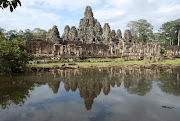
Thailand and Cambodia agreed to temporary suspend all armed forces movements along the Thai-Cambodian border at Si Sa Ket province which is adjacent to Cambodia's Preah Vihear province of Cambodia, and Thailand's Second Army Area Command is on round-the-clock alert, according to a senior Thai military official.
The Second Army Area Command is responsible for overseeing the northeastern provinces which includes Si Sa Ket.
Meanwhile, Pol.Lt-Gen. Vichienchot Sukchokrat, a Thai government spokesman, said he was informed by Don Pramudwinai, Thailand's Permanent Representative to the United Nations that Cambodia has asked for UN help in dealing with the border dispute.
The content of the Cambodian petition is not known to the Thai govenment, and Thailand is awaiting the details, he said.
Gen. Vichienchot said the pressure by the People's Alliance for Democracy (PAD) earlier this week forced Cambodia to ask for help from the United Nations.
He added that Thailand's image was tarnished from the dispute, so he appealed to the PAD and other groups to stop their movement.
Thai News Agency reporters on the scene at Si Sa ket said that both sides of the border in the vicinity of the 11th century temple are quite tense after the two countries built up their armed forces along the border.
Second Army Area Deputy Commander Maj-Gen.Weewalit Jornsamrit said he was assigned by Second Army Area Commander Lt-Gen. Sujit Sitthiprapa to inspect the area and discuss the situation with Cambodia's Preah Vihear province deputy governor.
He said after meeting with Cambodian authorities that both sides agreed to suspend military movements that may cause further tension, but the military officials would remain stationed at strategic points pending the result of the Thai-Cambodian General Border Committee (GBC) meetng to be held in Sa Kaeo province on Monday.
Thailand's Supreme Commander Gen. Boonsang Niempradit would lead Thai delegates to meet Cambodian Defence Minister Gen. Tea Banh.
Gen.Weewalit said the situation at other Thai provinces bordering Cambodia was normal.
Meanwhile, Gen. Sujit said he has ordered military officers under his command to be on alert for 24 hours as Cambodian troops had built up their troop numbers at Preah Vihear temple border side.
He believed that the GBC border meeting could find a joint solution to ease the tension.
The military standoff between Cambodia and Thailand entered its fifth day Saturday after the tension build up after UNESCO approved Cambodia's application to list Preah Vihear temple as a World Heritage Site.
Thai activists fear the new status will undermine Thailand's claim to nearby land since the border has never been properly demarcated. (TNA)
Read more!

Saturday, July 19, 2008
Thailand, Cambodia halt military moves pending Monday talks

Cambodia and Thailand continue troop buildup despite pledge to hold talks
 PREAH VIHEAR, Cambodia (AP) - The military standoff between Cambodia and Thailand entered its fifth day Saturday as both sides continued to reinforce their troops ahead of scheduled talks over a disputed border area near an 11th century temple.
Some 300 more Cambodian soldiers and 100 Thais were seen by Associated Press reporters arriving near the Preah Vihear temple late Friday, although commanders declined to confirm those numbers.
Earlier, Cambodian Brig. Gen. Chea Keo said Cambodia had about 800 troops as against 400 Thai soldiers in the area.
The countries are to meet Monday in an attempt to defuse the conflict over territory surrounding the ancient temple, which escalated when UNESCO recently approved Cambodia's application to have the complex named a World Heritage Site. Thai activists fear the new status will undermine Thailand's claim to nearby land since the border has never been demarcated.
Chea Keo said troops from the opposing forces were on the brink of a shoot-out Thursday night when Cambodian monks gathered to celebrate Buddhist lent at a pagoda about 220 yards (200 meters) from the ancient temple.
The incident occurred when Thai troops tried to evict about 50 Cambodian soldiers from the compound of the Buddhist pagoda, where they sought to camp for the night to provide security for the monks. The two sides raised their rifles at each other, but the standoff ended with the Cambodians eventually pulling back, Chea Keo said Friday.
A Thai army spokeswoman said she was not aware of any brinksmanship taking place.
Thai soldiers entered the Preah Vihear area Tuesday, staking out positions at a Buddhist temple compound. However, some resident Cambodian monks remained and Cambodian soldiers have continued to visit them.
«The premier is very concerned about the tension,» Thai Lt. Gen. Surapon Puenaiyakarn said after a meeting between Prime Minister Samak Sundaravej and Thai armed forces commanders Friday. «But he is optimistic that the meeting Monday will provide a positive and peaceful solution.
Cambodian Prime Minister Hun Sen wrote a letter to Samak on Thursday saying relations had been «worsening» since Thai troops «encroached on our territory,» and asked Samak to pull them back.
In an effort to contain the tension, the Cambodian interior ministry issued a statement instructing authorities in provinces along the border with Thailand to maintain «good working relations» and avoid «confrontation or violence» with their Thai counterparts.
The dispute has taken a toll on tourism in the area, with the Thai side closed to visitors and the U.S. Embassy recommending Friday that American citizens «defer travel to this area until the situation has been resolved.
It also is starting to hurt economic relations between the two neighbors. On Friday, about 200 Thai construction workers returned home from Cambodia, said Capt. Supab Srisuk, an immigration policewoman.
«They wanted to return, fearing for their safety,» she said. «They said they would go back to work when the situation returns to normal.
Associated Press writers Sutin Wannabovorn and Ambika Ahuja in Bangkok, Thailand, and Ker Munthit in Phnom Penh, Cambodia, contributed to this report.
Cambodia sends more troops ahead of temple dispute talks
By Ek Madra, Reuters
PHNOM PENH -- Cambodia sent extra troops to its disputed border with Thailand on Friday, as both sides insisted the flare-up over an ancient temple was unlikely to get violent.
Thai Supreme Commander Gen Boonsrang Niempradit said a joint border meeting on Monday should find an "amicable solution" to the four-day stand-off at the Preah Vihear temple, which has worried investors it might lead to a serious confrontation. "The situation is unlikely to escalate into violence," Boonsrang, the country's top military commander, told reporters in Bangkok. Cambodian officials echoed similar views, although Prime Minister Hun Sen warned on Thursday that the situation was "worsening" because Thai forces had not withdrawn from the temple site that has been a source of border tensions for decades.
But the former Khmer Rouge commander, who faces a general election later this month, said he still hoped to "resolve the problem through negotiations."
Nevertheless, a Cambodian convoy of four heavy military trucks with mounted machine guns and two smaller trucks were seen driving from the capital, Phnom Penh, to the border. The soldiers were armed with rocket-propelled grenades and automatic rifles.
"I am leading these men to reinforce our troops at Preah Vihear," General Yim Sanh told Reuters.
With hundreds of Thai and Cambodian troops facing off on the border, there are fears it could escalate into a major row five years after a dispute over another Cambodian temple, Angkor Wat, saw a nationalist mob torch the Thai embassy in Phnom Penh.
General Nipat Thonglek, head of Thailand's Border Military Affairs Department, denied reports that Thai and Cambodian soldiers had pointed their rifles at each other last night, saying both sides "have agreed not to use violence."
Chea Mon, Cambodia's military commander at Preah Vihear, said: "We are facing each other, but we leave it to our leaders to solve the problem." The 900-year-old Hindu temple has been a source of tension since the International Court of Justice ruled in 1962 that it belonged to Cambodia, a decision that still rankles Thais.
The listing of the temple as a World Heritage site this month triggered a political uproar in Thailand stoked by groups seeking to oust Prime Minister Samak Sundaravej's shaky ruling coalition.
Thailand's main stock index has fallen more than 23 percent since anti-government street protests in Bangkok started in late May, and could drop further if border tensions get worse, dealers said.
"Preah Vihear is one case that can have a negative impact on our market," Asia Plus Securities analyst Puwadol Lapudomsuk told Reuters.
"The sentiment is already poor enough. Things could turn bad if the conflict keeps going," he said.
Read more!
Friday, July 18, 2008
PAD blames officials for allowing clash near temple
A leader of the Bangkok-based People's Alliance for Democracy (PAD) on Friday blamed government officials for failing to prevent a clash between members of his group with local residents a Thai province bordering Cambodia due to differing opinions regarding the disputed ancient temple.
Pipop Thongchai, a core leader of the PAD, claimed that the clash which took place Thursday between members of his group and local people in Si Sa Ket province near the Preah Vihear temple occurred because politicians in the province wanted it to happen.
"It is the duty of the Si Sa Ket provincial governor and police to prevent the clash in which a number of persons from both sides were injured," Mr. Pipop said, adding that the authorities must find the instigators and take legal action.
The PAD protesters on Thursday traveled in a cavalcade of over 100 vehicles heading for Preah Vihear temple to protest against Cambodia's listing of the 11th century temple as a World Heritage Site, awarded by UNESCO World Heritage Committee earlier this month.
But the intending protesters were confronted with local people before reaching the temple and the clash ensued.
Referring to three Thais who were briefly detained by Cambodian soldiers after they had crossed into Cambodia, Mr Pipop said Prime Minister Samak Sundaravej should not see the issue as an insane matter and former governments and senior military officers were to blame for not solving the border demarcation problem.
Mr Samak, also defence minister, on Thursday publicly admonished those three Thais -- two Buddhist laymen and a monk -- who purposely crossed the disputed Thai-Cambodian border at Preah Vihear of thoughtlessly inciting a military standoff, while adding that the PAD is behaving in a similar manner in attempting to provoke a military coup.
"Up till now the prime minister hasn't shown any policy towards solving the disputed 4.6 square kilometres surrounding the temple to the UNESCO or to the Cambodian government, even after the court issued an injunction against the cabinet resolution endorsing the Thai-Cambodian joint communiqué," Mr Pipop said.
It is now about time for the Thai military to confer with the government that the barbed wire installed by soldiers must be moved closer to the border and away from the disputed zone otherwise the government in Phnom Penh will consider that the area belongs to Cambodia, Mr Pipop said. (TNA)
Read more!
Montagnards stage Phnom Penh protest
Dozens of Vietnamese asylum seekers have staged a protest in the Cambodian capital, Phnom Penh, against the forced return of some of their friends and relatives.
The demonstration by the mainly Christian tribespeople from Vietnam's Central Highlands was triggered by the recent repatriation of 28 refugees.
The four-hour protest ended when 40 armed riot police arrived on the scene and threatened to break up the rally.
The Montagnards fled to Cambodia in 2001 after staging anti-Vietnamese government demonstrations over land rights and religious freedom.
Vietnam's government has given assurances that returnees will not face discrimination.
Around 450 Montagnards are in United Nations holding centres in Phnom Penh while their refugee claims are being processed.
Read more!
Reception marks golden jubilee of China-Cambodia ties
BEIJING, An official reception was held to celebrate the 50th anniversary of the establishment of diplomatic relations between China and Cambodia here on Friday.
Chinese Foreign Minister Yang Jiechi addressed the reception, saying the two nations enjoyed a long-lasting friendship; to further grow the comprehensive partnership of cooperation is both the firm policy of the Chinese government and the common desire of the two peoples.
He said the Chinese government and people attached great importance to China-Cambodia relations. China was willing to work with Cambodia to push forward the traditional friendship, deepen mutually-beneficial cooperation, promote common development and make new progress to regional peace and prosperity.
Khek M. Caimealy, the Cambodian Ambassador to China, said since the establishment of diplomatic relations, the strong bonds of friendship, mutual solidarity, cooperation and assistance had never ceased to develop and strengthen.
She reaffirmed Cambodia adhered to the one-China policy and wished the Beijing Olympic Games a complete success.
Some 200 people from China and Cambodia and some ambassadors of other countries to China attended the reception.
Read more!
Thai-Cambodian border talks to begin soon
The Cambodian and Thai governments have agreed to hold a top-level meeting in Thailand's border province of Sa Keaw next Monday to ease border tensions. Both countries have increased their troops build-up in areas near the Preah Vihear temple since the ancient Cambodian temple was designated as a World Heritage site a week ago.
The listing of the 900 year-old Khmer-style Hindu temple is a source of great pride for Cambodians, but much annoyance to Thais. The Thai government's endorsement supporting Cambodia's bid has only earned itself criticism that it is jeopardizing the country's claim to land near the temple. Massive protests since then have forced Thailand's Foreign Minister to resign and prompted the government to take action in line with the surge of nationalism.
Thai troops near the Preah Vihear Temple had increased to 400 on Thursday. And the number of Cambodian troops patrolling there is twice as many.
Such a stand-off is creating a nervous situation in the border area. On Thursday, clashes broke out between a group of anti-government demonstrators and local villagers on Thai side of the border about 8 kilometers from the temple. Authorities say at least 10 people were injured.
Sam Sothavry, the Cambodian Commander at Preah Vihear Temple says, "I suggested that we should stop moving troops into the areas in order to keep the situation normal while waiting for solutions from the top leaders and not allowing civilians to enter."
Cambodian Prime Minister Hun Sen is pinning hopes on the two country's high-level meeting slated for Monday. In a letter to his Thai counterpart Samak Sundaravej, he says the stand-off is very bad for the bilateral relations and has urged Thai troops to withdraw immediately.
For Monday's meeting, the Cambodian delegation will be led by Deputy Prime Minister and Minister of National Defense Tea Banh. And the Thai side will probably be headed by Prime Minister Samak Sundaravej. Both countries want to get things back to normal in the area soon.
The temple has been a source of tension for over forty five years since the International Court of Justice ruled that it belongs to Cambodia.
Read more!
Cambodia-Thailand dispute worsens
 By SOPHENG CHEANG
PREAH VIHEAR, Cambodia (AP) — A Cambodian general said a border standoff between his soldiers and Thai troops came close to a shoot-out overnight as the confrontation over disputed territory surrounding an ancient temple entered its fourth day Friday.
The dispute is centered around Cambodia's 11th century Hindu temple Preah Vihear and came to a head last week when UNESCO approved Cambodia's application for World Heritage Site status for the site. Thai activists fear the new status will undermine Thailand's claim to nearby land.
Thai soldiers entered the surrounding area on Tuesday, staking out positions at a Buddhist temple compound nearby. However, some resident Cambodian monks remained and Cambodian soldiers have continued to visit them even after the Thais arrived.
A large group of Cambodian troops came to the compound Thursday planning to spend the night, and the two sides raised their rifles at each other when the Thais moved to evict them in an incident lasting about 10 minutes before the Cambodians departed, Cambodian Brig. Gen. Chea Keo said.
"We exercised patience to prevent weapons from being fired," he said.
The standoff is the latest in a long-standing conflict over frontier territory that has never been fully demarcated. Both countries have  agreed to hold defense minister talks next Monday in Thailand to avoid military action.
Cambodian Prime Minister Hun Sen wrote a letter to Thailand's Prime Minister Samak Sundaravej on Thursday saying that relations have been "worsening" since Thai troops "encroached on our territory" on Tuesday, and asked Samak to pull them back.
Both countries have massed troops in the area.
"The deteriorating situation is very bad for the relations between our two countries," Hun Sen wrote.
The Thai government sent troops to the area after anti-government demonstrators made an issue of the disputed territory near the temple, decrying the government's endorsement of Cambodia's UNESCO application.
To some extent, the demonstrators appear to be playing to nationalist sentiment to gain support for their larger goal of unseating Samak, whom they accuse of being a proxy for toppled Prime Minister Thaksin Shinawatra.
The border standoff began after three of the protesters crossed into Cambodia on Tuesday to visit the temple and were briefly detained.
Soon afterward, Thai troops deployed to the border. The Thai army has been tightlipped about reasons behind the troop movements.
The Thai Foreign Ministry has said the troops are ensuring that any protests there are done in an "orderly manner," and that the troops are protecting Thai sovereignty, though it was unclear how it has been threatened.
About 400 Thai troops are in the area, facing about twice as many Cambodians, Cambodian Brig. Gen. Chea Keo said Thursday.
Thursday night's incident, the first time the two sides pointed weapons at each other, occurred after 61 monks along with 13 nuns and lay people came to the Buddhist pagoda some 220 yards west of the Preah Vihear complex to celebrate the start of Buddhist Lent.
Chea Keo said about 50 Cambodian troops entered the pagoda hoping to stay the night to provide security for the monks and nuns, but the Thai soldiers moved to evict them, prompting the gun-pointing.
The only clashes so far have been between Thai protesters and Thai villagers who resent their lands becoming ground-zero for a political battle.
Samak has condemned the Thai protesters for "trying to ignite a conflict." But he has not said anything about why the troops moved to the border.
Associated Press writers Sutin Wannabovorn and Ambika Ahuja in Bangkok, and Ker Munthit in Phnom Penh contributed to this report.
Read more!
Thursday, July 17, 2008
Hun Sen's diplomatic juggling act
By Geoffrey Cain
PHNOM PENH - More than any other Southeast Asian country, Cambodia finds itself caught in the middle of competing United States and Chinese diplomatic overtures. With Washington offering bilateral strategic initiatives and Beijing rich financial assistance, Prime Minister Hun Sen has deftly balanced the country's diplomacy between the two superpowers to his government's political advantage.
In 2006, the US opened a massive new embassy in Phnom Penh, underscoring Washington's new diplomatic commitment to the country. The facility includes office space for fighting global terrorism, including a large US Federal Bureau of Investigation (FBI) presence and a new joint National Counterterrorism Committee, established in 2007.
FBI director Robert Mueller pointed to the fact that Jemaah Islamiyah operative Riduan Isamuddin, alias Hambali, had taken refuge in a Cambodian Muslim school before his capture in Thailand in 2003 as one reason for setting up the new counterterrorism agency. US Ambassador Joseph Mussomeli chimed in that unnamed radical Muslim groups were bidding to impose with funding a stricter interpretation of Islam on the local Muslim Cham community.
China, on the other hand, has deployed commercial resources to win influence. Since 2005, Beijing has offered up around US$600 million in annual economic aid, with funds earmarked for roads, bridges and dams. Unlike the previous aid received from Western donors - which in recent years accounted for over half of the country's national budget - Chinese money comes with no pre-conditions that Hun Sen’s government fight graft or move towards more democracy.
In February this year, the Chinese government promised to help electrify Cambodia's power-starved countryside, including a $1 billion commitment for two major dam projects. Those projects will alleviate chronic power shortages, which the World Bank says have led to the world's highest energy costs.
The projects will also help power operations of the more than 3,000 Chinese companies now situated in Cambodia and which in 2007 produced US$1.56 billion in revenues, accounting for 7% of gross domestic product (GDP), according to Economic Institute of Cambodia statistics. China now employs a sizable proportion of the national workforce, supplanting the mostly Western non-governmental organizations and garment factories which dominated the local economy in the 1990s, when the country first emerged from decades of war.
Cambodia's economy is expanding at double digit growth rates and China's economic interest in the country has intensified since 2005, when US oil company Chevron discovered what some have projected are large stores of oil and gas off the country's southern coast. Those growing commercial ties were witnessed in the establishment in February of a special economic zone at the coastal town of Sihanoukville, from which goods will be produced for export duty free to China.
At least six Chinese companies have so far signed contracts with the zone's two Chinese and Cambodian developers. Once a second phase of construction is completed in 2011, the Sihanoukville zone will have the capacity to accommodate 150 companies and 40,000 workers. The Chinese developers hope the zone will export $2 billion worth of products per year by 2015, according a joint press release.
Hun Sen attended the SEZ's launch and noted after signing an official agreement with the project's developers that the new facility would stoke growth in the Cambodian economy and strengthen bilateral ties with China. Beijing has donated nine patrol boats to the Royal Khmer Navy to help secure the new facility against piracy and trafficking.
While China's economic influence grows, that of the US is on the wane. In recent years the US has given around $150 million in annual economic aid, a small fraction of China's commercial patronage. At the same time US-Cambodian trade ties have fallen off, seen in the 30% year-on-year decline in garment exports to the US in 2007. The US has long been the primary importer of Cambodian textiles, which is still the country's largest export item.
By offering more aid through strategic initiatives, the US policy towards Cambodia has apparently shifted after emphasizing throughout the 1990s the promotion of democracy and the rule of law. That frequently put the two sides at diplomatic loggerheads, notably over an FBI investigation into a March 1997 bomb attack against a rally held by opposition politician Sam Rainsy in the capital Phnom Penh which killed at least 16 and injured 150 people, including a US citizen.
According to a Washington Post story from June 1997, which quoted four US government sources with access to classified material, the FBI had tentatively pinned responsibility for the blasts and subsequent interference in their investigations on Hun Sen's personal Brigade 70 bodyguard unit. The US has never publicly released the investigation's findings, although US-based Human Rights Watch earlier this year called upon Washington to re-open its long-stalled investigations. "Instead of trying to protect US relations with Cambodia, it should now finish what it started," the rights group said in a statement.
Terror ties
Instead, the US State Department claimed in a recent report on trafficking in people that the human rights situation in Cambodia is improving under Hun Sen's watch. It praised in particular his government's efforts to combat human trafficking. More controversially, the FBI in April last year invited national police chief Hok Lundy to Las Vegas for discussions on counterterrorism, even though Lundy has been implicated in a number of serious human rights abuses.
According to Human Rights Watch, which said it has presented its own evidence to the US government, Lundy was part of the conspiracy that carried out the 1997 grenade attack, an act the FBI had previously classified as a "terrorist act". He also commanded battalions loyal to Hun Sen that carried out the July 1997 coup that ousted co-prime minister Norodom Ranariddh, where some opposition party members and supporters were killed in extrajudicial fashion and many more fled into exile.
Last week's murder of a Sam Rainsy Party-aligned journalist, Khem Sambo, also raises questions about possible government actions in the run-up to general elections scheduled for July 27. Former co-prime minister and now the leader of a political party under his own name, Norodom Rannaridh, recently sought refuge in Malaysia after the government leveled defamation charges against him.
The US's upbeat assessment of Cambodia's human rights record may be seen as a diplomatic response to China's more unconditional and commercial approach to bilateral relations. There is also the historical guilt factor, shared by both the US and China, and a major complication in winning over Hun Sen's trust. Beijing famously backed the murderous Khmer Rouge regime, both while the radical Maoists were in power from 1975-79 and after they were overthrown by Vietnamese forces in 1979 and took up guerilla arms around the Thai border.
The genocidal regime is now held responsible for the deaths of as many as 2 million Cambodians, including ethnic Chinese businessmen. Meanwhile, the US is estimated to have killed over 500,000 Cambodians during its secret bombing campaign from 1969 to 1970, which intensified the country's civil war. The US also backed the 1970 Lon Nol-led coup which deposed Prince Norodom Sihanouk as head of state.
Some estimate China now has the upper hand over the US in terms of relations with Cambodia. While Hun Sen welcomes US counterterrorism initiatives, which will likely go a long way in improving the government's surveillance capabilities, the premier's statements about the actual risk of terrorism to Cambodia have been conflicting.
After a foiled bomb attack of the Cambodia-Vietnam Friendship Monument in July 2007 by a group of local radicals, Hun Sen asserted his government's will to combat terrorism. But by February 2008, he apparently flip-flopped his position by saying that there were no terrorists in Cambodia.
More clearly, Hun Sen's cooperation on US counterterrorism initiatives is subordinated to his government's drive to promote more Chinese trade and investment. Foreign investment approvals from China amounted to $763 million in 2006, nearly double the 2005 figure, according to the Council for the Development of Cambodia. Those figures were expected to be even higher last year with the various deals signed by the two sides.
While the US tries to deflect China's commercial diplomacy, Beijing has simultaneously landed on ways to unite economically and culturally with Cambodia, including through outreach to politically influential ethnic-Chinese entrepreneurs. It's also apparent, some say, in the fading popularity of the English language over Mandarin Chinese, also known as Putonghua, in local schools. Cambodia is now home to the largest Chinese school in Southeast Asia, Duan Hua, which currently enrolls over 8,000 students. The most popular Chinese courses are specifically geared towards business, with students reasoning that English language capability may help to land jobs with international aid organizations, while Mandarin, which is taught across mainland China as the official language, will catapult them into more lucrative positions in business.
Another indication that China is winning the struggle for hearts and minds came in January, when Cambodian police halted and threatened to deport US activist actress Mia Farrow for attempting to stage a protest against China's commercial relationship with Sudan's murderous regime. Farrow said she picked Cambodia as a symbolic place for her protest, given both Sudan's and Cambodia's genocidal experiences while receiving Chinese assistance. Government spokesman and Minister of Information Khieu Kanharith said at the time that authorities banned the protest because it had "a political agenda against China", a stance Hun Sen's government clearly doesn't share.
Read more!
Cambodian PM says border dispute with Thailand worsening
 KANTARALAK, Thailand - Cambodian Prime Minister Hun Sen said on Thursday a border row with Thailand was "worsening" and urged the immediate withdrawal of Thai troops from a disputed ancient temple.
In a letter to Thai Prime Minister Samak Sundaravej, Hun Sen said the stand-off at the Preah Vihear temple was "very bad" for relations, but he still hoped to "resolve the problem through negotiations" at a border meeting on Monday.
"The situation is worsening due to a continuing increase in the numbers of Thai military" and the presence of Thai protesters, said Hun Sen, a former Khmer Rouge commander who faces a general election next week.
With hundreds of Thai and Cambodian troops facing off on the border, there are fears it could escalate five years after a dispute over another Cambodian temple, Angkor Wat, saw a nationalist mob torch the Thai embassy in Phnom Penh.
Cambodia's listing of the temple as a World Heritage site triggered a political uproar in Thailand stoked by groups seeking to oust Prime Minister Samak Sundaravej's shaky ruling coalition.
About 2,000 Thai nationalists were stopped from rallying at the temple on Thursday, some clashing with Thai villagers angry at the loss of cross-border trade. Some protesters suffered minor injuries before riot police intervened.
"Go home, go home, you troublemakers!," one woman shouted at members of the People's Alliance for Democracy (PAD), which is leading a nearly two-month old street campaign against Samak, whom they accuse of being a proxy for former prime minister Thaksin Shinawatra, who was ousted in a 2006 coup.
In Bangkok, Samak said the protesters were "insane" and he accused them of trying to provoke a border confrontation.
The 900-year-old temple has been a source of tension for decades since the International Court of Justice ruled in 1962 that it belonged to Cambodia, a ruling that still rankles Thais.
The latest flare-up was sparked by Bangkok's support for the UNESCO listing, which the PAD said was tantamount to selling out Thailand's heritage.
Foreign Minister Noppadon Pattama quit last week after a Thai court ruled the joint communique he signed backing Preah Vihear's listing was illegal because it was an international treaty that required parliament's approval.
The PAD seized on the court ruling, vowing to go after the rest of Samak's cabinet and step up a street campaign that has worried investors. The main stock index has dropped 23 per cent since the protests began on May 25.
"Political temperatures will rise inexorably, and Thailand will become increasingly ungovernable, in the interim," Chulalongkorn University professor Thitinan Pongsudhirak wrote.
Thailand and Cambodia have deployed hundreds of troops since Tuesday when three Thai activists were briefly detained on the Cambodian side for trying to plant a Thai flag there.
Despite the aggressive rhetoric from both sides, the situation at the temple has remained calm while diplomatic efforts get underway.
Defence ministers from the two countries will attend a border meeting on Monday "so that both sides can discuss issues together in a spirit of neighbourliness", the Thai Foreign Ministry said.
Read more!
Cambodia, Thailand deploy more troops
 Cambodian soldiers( former Khmer Rouge legendary fighters) are patrolling the front line showing their heroic attitude willing to fight when the time comes.
 The Thai soldiers are invading Cambodia standing and showing their interloper ugly face waiting to die in the Cambodian soil.
PREAH VIHEAR, Cambodia (AP) — Cambodia and Thailand escalated their troop buildup Thursday in disputed territory near a historic border temple despite their agreement to hold talks next week to defuse tensions, a Cambodian general said.
Cambodian Brig. Gen. Chea Keo said Thailand has more than 400 troops near the Preah Vihear temple, up from about 200 the day before, and Cambodia has about 800, up from 380.
Cambodia claims the Thai troops crossed the border into Cambodian territory on Tuesday in renewed tensions over land near the Cambodian temple. Thailand maintains it is protecting its sovereignty and ensuring that any protests by Thais near the temple remain orderly, although a senior Thai military official acknowledged Wednesday that the troops were on "disputed" ground.
The border around Preah Vihear has never been fully demarcated.
In a letter to his Thai counterpart seen by The Associated Press, Cambodian Prime Minister Hun Sen urged Thailand to withdraw its troops from the border area.
Thailand's Air Chief Marshal Chalit Phukbhasuk said the military was prepared to fly Thai nationals out of Cambodia if the dispute spiraled out of control.
"We are well prepared for the operation," Chalit said.
Yet despite the official rhetoric, the atmosphere around the temple appeared relaxed.
Cambodian soldiers snapped photographs of their opponents just yards away and some tourists, including an American women, visited the spectacular site.
The long-standing conflict over the territory was recently revived by Thai anti-government protesters and came to a head after Cambodia's application for World Heritage Site status for the temple was granted last week with the endorsement of Thailand's government.
Both countries claim 1.8 square miles around the temple, and the Thai protesters have revived nationalist sentiments over the issue, fearing the temple's new status will jeopardize claims to the land nearby.
However, Thais living just across the border sought to calm the situation.
Hundreds of villagers in Sisaket province blocked a group of Thai anti-government protesters from marching to Preah Vihear on Thursday. Some shouted at the protesters to "go home" and stop fomenting trouble, as police stood by a barricade blocking the road to the temple.
"We are Thais. We should be able to talk about this" to settle any differences, villager Ubondej Panthep said.
One protest leader, Pramoj Hoimook, said Cambodians have settled on Thai soil "and we want to correct that."
"We want to get to Preah Vihear to read a statement, asking for our land back," he said.
Thai Prime Minister Samak Sundaravej condemned the Thai protesters for "trying to ignite a conflict."
"Now the troops on both sides are confronting each other. What madness is this? There are people who want to provoke this," Samak told reporters, referring to anti-government protesters who have seized on the issue in attempts to bring down his government.
The two countries' defense ministers are to meet next Monday to ease tensions.
Samak called for a meeting of all armed forces commanders in Bangkok on Friday in preparation for the meeting.
Hun Sen meanwhile urged in his letter to Samak "to ease the tension and order Thai troops to withdraw."
Earlier Khieu Kanharith said Cambodia would not "use force unless attacked" and that the "situation was stable."
Thai army commander Gen. Anupong Paojindasaid likewise said he ordered his troops not to use force.
Most of the 900 Cambodian villagers living nearby fled their homes when the confrontation began Tuesday. However, some Cambodian and foreign tourists risked possible harm Thursday by visiting the temple. One of them was Liz Shura from New York City.
"It's a little frightening for me, but I don't think I am actually in danger," Shura told an Associated Press reporter, discounting the possibility of violence. "The temple is extraordinary. It's really amazing."
In 1962, the International Court of Justice awarded Preah Vihear and the land it occupies to Cambodia, a decision that still rankles many Thais even though the temple is culturally Cambodian, sharing the Hindu-influenced style of the more famous Angkor complex.
Associated Press writers Sutin Wannabovorn and Ambika Ahuja in Bangkok, and Ker Munthit in Phnom Penh contributed to this report.
Cambodian-Thai temple military standoff enters third day
PREAH VIHEAR, Cambodia (AFP) — Cambodian and Thai soldiers held their positions on the border near an ancient temple Thursday as a standoff over a territorial dispute entered its third day.
More than 400 Thai troops and more than 800 Cambodian soldiers stood stationed around a small Buddhist pagoda on the slope of a mountain leading to the ruins of the 11th-century Preah Vihear temple.
Brigadier Chea Keo, commander-in-chief of the army at Preah Vihear, warned reporters that the situation could worsen if the Thais continued to swell their ranks.
"If the Thais keep adding more troops the situation will escalate, but we try to be patient," Chea Keo said.
"They want us to do something first but we try to remain calm," he added.
Groups of Cambodian soldiers based at the foot of the mountain were redeployed to the temple at the top, armed with AK-47 assault rifles and rocket launchers.
Thai soldiers were all stationed inside the pagoda compound, around the wooden structure that has a corrugated metal roof.
The brigadier acknowledged that the Thai army had superior weapons but said that the Cambodians were in a better position at the top of the mountain.
Cambodian officials claim soldiers began crossing the border on Tuesday after three Thai protesters were arrested for jumping an immigration checkpoint to reach the temple.
Thailand denies the trespass and insists the soldiers were patrolling its side of the border but Cambodian troops on the scene say the Thai soldiers have crossed more than 100 metres (yards) outside their territory.
An area of 4.6 square kilometres (1.8 square miles) on the border remains in dispute between the two countries after the World Court in 1962 determined the Preah Vihear ruins belong to Cambodia, but its most accessible entrance lies in Thailand.
A Thai soldier was injured by a landmine in the area on Tuesday but the Thai military says the landmine was planted on Thai soil, possibly a remnant from the decades of war that once plagued the border.
Some 70 percent of Cambodians who live in the area have left their homes during the confrontation, said Brigadier Chea Keo.
The incident comes amid heightened political tensions in both countries after the UN cultural agency UNESCO awarded the temple World Heritage status earlier this month.
Cambodia is preparing for general elections on July 27, when Prime Minister Hun Sen is expected to extend his decades-long grip on power.
He has portrayed the UN recognition of the ruins as a national triumph, organising huge public celebrations.
In Thailand, critics of Prime Minister Samak Sundaravej -- already the target of street protests -- have stoked the temple controversy to fire up nationalist sentiment.
Samak's government had originally signed a deal supporting Cambodia's bid to make the ruins a World Heritage site, but a court overturned the pact, forcing the resignation of foreign minister Noppadon Pattama.
The parliamentary opposition is now mulling impeachment motions against the entire cabinet.
Read more!
Wednesday, July 16, 2008
China donates gymnastics equipment to Cambodia
PHNOM PENH, China Wednesday donated a batch of gymnastics equipment worth around 14,000 U.S. dollars to Cambodia for its gymnastics federation to carry out daily training of national athletes.
The equipment included balance beam, low balance beam, spring board, crash mats and landing mats, according to the relevant certificates signed by Cambodian Tourism Minister and president of the National Olympic Committee of Cambodia (NOCC) Thong Khon and Chinese Ambassador to Cambodia Zhang Jinfeng.
While delivering his speech for the donation ceremony, Thong Khon wished that the upcoming Beijing Olympics and the current series of celebrations for the 50th anniversary of the establishment of diplomatic ties between the two countries would score success.
Zhang Jinfeng said that China would mobilize all its resources to guarantee high-quality Olympic Games for the world.
In addition, she expressed appreciation for the participation of the games by Cambodia and the scheduled attendance of its opening ceremony by King Norodom Sihamoni, former king Norodom Sihanouk and his wife Norodom Monireth.
Both of them also expected more professional exchanges to bring about new achievements in the sport field of the two countries.
At the donation ceremony, members of the national gymnastics team of Cambodia performed their programs.
According to NOCC, the national gymnastics team of Cambodia was established in 1983. It is now coached by a Canadian and its youngest member only ages nine.
There are currently 10 gymnastics clubs in Cambodia and they are based in eight provinces or municipalities, said NOCC files.
Read more!
Boonsrang urges border calm
Supreme Commander Gen Boonsrang Niempradit has urged people protesting in Si Sa Ket over the Preah Vihear temple controversy not to escalate the tensions with Cambodia after three Thais crossed into the disputed border area.
The crossing of senior monk Phra Khampheng, Vicharn Tabsorn and Chanikarn Kengnok, members of the ultra-nationalist Dharmayatra group, into the overlapping zone around 7am yesterday, prompted Gen Boonsrang to call Cambodian Defence Minister Teah Banh to secure their release.
Suranaree Task Force commander Maj-Gen Kanok Nettarakawaysana and Si Sa Ket governor Seni Jittakasem also went to Preah Vihear to hold talks with Cambodian authorities on the issue.
The three Thais were freed after four hours of negotiations, they said.
The Dharmayatra group has camped out on the Thai border in Kantharalak district of the northeastern province since June 22 to protest against Thai support for Phnom Penh's listing of the temple as a World Heritage site.
They are also demanding the return of the Preah Vihear temple to Thailand although the kingdom lost a legal battle with Cambodia over it in the International Court of Justice in 1962.
The World Heritage Committee has now listed the Preah Vihear temple.
Yesterday's events turned tragic for ranger Vilai Arom, who stepped on a landmine during a border patrol of the area. His leg was blown off in the blast.
Cambodian government spokesman Khiew Kanharith and director-general of the national authority of Preah Vihear temple Hang Soth, said that Thai troops had crossed over into Cambodian territory to help the three protesters.
But Foreign Ministry spokesman Tharit Charungvat and the Si Sa Ket governor denied that Thai troops had intruded on Cambodian soil.
Lt-Gen Nipat Thonglek, head of the Border Affairs Department under the Supreme Command, said the protesters posed no harm to Cambodia as they protested peacefully by meditating.
Khieu Kanharith was quoted as saying in Phnom Penh that 170 Thai troops and civilians had crossed into Cambodian territory. He said a group of Thai soldiers were being detained inside Cambodia and would be there overnight. Still, he was confident the situation was under control and would not flare up.
But a reliable Thai source dismissed his account, saying there were no Thai troops under detention in Cambodia.
Worried about the tensions, Gen Boonsrang called on nationalists to pay heed to warnings by the military not to let the situation get out of control and stressed that the overlapping area of 4.6 sq km would be handled by the authorities and legal experts.
Those who did not know the problem and were ultra-nationalist but had taken their own steps without paying heed to any warnings would cause confusion, Gen Boonsrang warned.
The supreme commander called on ultra-nationalists staging protests over the Preah Vihear issue to stay calm. Patriotism was good, but it must be based on reason and fairness, he said.
Meanwhile, the People's Alliance for Democracy (PAD) yesterday called on the Senate to impeach Prime Minster Samak Sundaravej over the temple row.
PAD leaders Pibhop Dhongchai, Suriyasai Katasila and Sirichai Mai-ngarm submitted 46,530 signatures to Senate Speaker Prasopsuk Boondej demanding the impeachment of Mr Samak for violating Article 270 of the charter.
His cabinet had endorsed the joint communique without parliamentary approval, the PAD said.
Treaties and Legal Affairs Department director-general Krit Kraichitti yesterday told the House panel on border affairs that the listing of the temple ruins did not include the 4.6-sq-km overlapping area with Cambodia.
Mr Krit insisted that Cambodia had proposed the listing of the temple only. He and Lt-Gen Dan Meechu-at, head of the Survey Department under the Supreme Command, were yesterday invited by the panel chaired by Samphan Lertnuwat, a list-MP of the People Power party, to testify over the listing of the Preah Vihear temple.
Read more!
Cambodian secretary of state recovering well after acid attack
PHNOM PENH, Ngor Srun, secretary of state at the Cambodian Council of Ministers and top aid for Deputy Prime Minister Sok An, was recovering well in Thailand after the acid attack Sunday in Phnom Penh, national media said Wednesday.
Although the acid hit Srun's face, his wounds were superficial and he should be able to return soon to Cambodia following medical treatment in Thailand, English-Khmer language newspaper the Cambodia Daily quoted his sister-in-law Chea Sam Ath as saying.
"I saw him Sunday before he left for Thailand. He is just a little burned and it didn't affect his eyes. He can be normal after treatment," said the elder sister of Srun's wife Chea Sam Eng, who is the second daughter to Cambodian Senate President CheaSim.
The attack occurred in downtown Phnom Penh, as Srun ended his participation in a major general election campaign for the Cambodian People's Party (CPP) and prepared to bring his vehicle to a nearby workshop for mechanical check.
Srun was hospitalized at the Calmette Hospital around 11:00 a.m. local time Sunday and transferred to Thailand later in the afternoon.
Hospital sources said that Srun was burnt on the left side of his face, ear and chest. His wounds were cleaned, treated and bandaged in the emergency room over the course of two hours.
This has been the second high-profile crime so far during Cambodia's general election month, which started in June and will end on July 27.
Friday, veteran reporter Khim Sambo and his son were shot dead on street. Sambo used to work as part-time contributor for the Khmer Conscience News, a Cambodian-language newspaper closely affiliated with the major opposition party.
Read more!
Cambodia: Thai troops still in country
 By KER MUNTHIT
PHNOM PENH, Cambodia (AP) — Cambodian officials said more Thai troops crossed into their country's territory Wednesday in the second day of alleged incursions amid tensions over disputed border land near a historic temple.
Thai officials have denied any incursion, saying the troops are deploying on Thai territory to protect their country's sovereignty.
"Their troops have increased in number. They have not pulled back yet," said Hang Soth, director-general of the national authority for the Preah Vihear temple. Both sides were due to resume negotiations Wednesday morning, he said, but did not elaborate.
Cambodian Information Minister Khieu Kanharith said Tuesday night that 170 troops and Thai civilians had crossed into Cambodian territory. He could not say how many civilians were among the group. 
The number of Thai troops swelled to about 200 on Wednesday, Cambodian border guard unit commander Seng Vuthy said by telephone from Preah Vihear.
"Both the Cambodian and Thai forces have their hands on their guns at all times," Seng Vuthy said.
The latest confrontation came after UNESCO declared Preah Vihear — which is at the center of a long-standing border quarrel between the neighbors — a World Heritage site last week.
Both countries claim land around the temple, and Thai anti-government activists have revived nationalist sentiment over the issue. The activists and some government officials fear the temple's new status will jeopardize their country's claims to land adjacent to the site.
The incident has claimed at least one casualty. A land mine explosion sheared the right leg off a Thai soldier patrolling in the area, said Thai army Col. Sirichan Ngathong.
Stretches of the Thai-Cambodian border are still strewn with land mines sown by various sides during the 1970-75 Cambodian civil war and the guerrilla conflict that followed the fall of the brutal Khmer Rouge regime in 1979.
Maj. Gen. Kanok Netakawesana, a Thai army field commander in the region, said in a telephone interview Tuesday that his troops were on Thai soil close to the disputed area. He declined to give the number of soldiers deployed.
"We are not violating the territory of Cambodia. We have every right to deploy troops here to protect our sovereignty," Kanok said.
Thai Foreign Ministry spokesman Tharit Charungvat denied any incursion, saying the relationship between the two countries remained normal.
The ministry said in a statement late Tuesday that the troops were ensuring that any protests by Thai activists were being done "in an orderly manner."
The Thai troop movements followed the arrest by Cambodia of three Thai citizens for crossing the border earlier Tuesday. The three were returned to Thailand later Tuesday.
In 1962, the International Court of Justice awarded Preah Vihear and the land it occupies to Cambodia, a decision that still rankles many Thais even though the temple is culturally Cambodian, sharing the Hindu-influenced style of the more famous Angkor complex in northwestern Cambodia.
Read more!
Tuesday, July 15, 2008
FBI could probe journalist's murder
 T he US Federal Bureau of Investigation is ready to help Cambodian authorities probing the assassination of opposition-aligned journalist Khim Sambo, the US embassy said late Monday, warning that the brazen killing could scare people away from general elections in two weeks.
Khim Sambo and his 21 year-old son, Khath Sarin Pheata, were gunned down Friday evening outside Phnom Penh's Olympic Stadium in a drive-by shooting that has shaken the capital and raised fears for press freedoms ahead of the polls.
“Our family never had any enemies or disputes with neighbors. What happened to my father was unexpected,” Khat Sarinda, the victim’s 24 year-old daughter, told the Post on Monday.
Police have few leads, but the FBI "stands ready to provide assistance, if requested by the Cambodian government, in investigating the case," the embassy said in a statement in which it also urged Cambodian authorities "to take the necessary measures in order to bring the perpetrators to justice."
The 47 year-old, who submitted articles critical of the government written under pseudonyms to Moneaksekar Khmer, a newspaper affiliated with the opposition Sam Rainsy Party, died at the scene.
His son died in the early Saturday at Ketomelea military hospital, and the two were cremated Sunday at Wat Tuol Tumpong in a ceremony attended by several hundred people.
Government spokesman and Information Minister Khieu Kanharith, who has condemned the killings and called for swift justice, welcomed the FBI’s offer on Tuesday.
“It would be good if we could cooperate with the FBI in investigating this case. We could trade experiences. Either way, we would not be blamed if we could not find the killers, or if we found them [critics] would not say [the suspects] are the fake killers.”
Various journalist organizations, including the Khmer Journalist Friendship Association, the Cambodian Association for the Protection of Journalists, Reporters Without Borders and the International Federation of Journalists, have expressed outrage over the killings.
Kek Galabru, president of Cambodian human rights group Licadho, also condemned the shootings as a bid to sow fear, saying “message is to scare the journalists from writing the truth” ahead of the July 27 elections.
She pointed out that Khim Sambo was the 12th journalist to be murdered since Cambodia’s first democratic election in 1993. None of the perpetrators has been convicted.
The US embassy, meanwhile, warned that the shootings, along with Sunday’s acid attack against Ngon Srun, a senior Cambodian People’s Party member, could keep people from the polls.
Ngon Srun was severely burned on the face and chest after being doused with acid by unknown assailants. Police say no criminal complaints have been filed.
“Violent, criminal acts such as this can have a chilling effect on the media, and ... risk undermining citizens’ confidence in their ability to fully participate in the electoral process in safety and security,” the embassy said.
According to Prampi Makara district police chief Yim Simony, Khim Sambo and his son were fired on five times by a man riding pillion on a motorbike as they drove away from the stadium on Monireath Boulevard.
Their motorbike kept upright for another 30 meters before crashing into a woman on a bicycle, according to several witnesses. Khim Sambo was struck twice, while Khath Sarin Pheata was hit by one bullet in the chest.
The attackers, who wore civilian clothing and made no effort to hide their faces behind sunglasses or helmets, circled back around to make sure they had hit their mark, said one witness who did not want to be named.
“After shooting, they turned around on their motorbike and looked down at his body to be sure he was dead,” the witness told the Post on Monday.
Others said they feared for their own security and refused to discuss the killings.
Khim Sambo’s murder was the first killing of a journalist since October 2003, when Chuor Chetharith, deputy editor for Funcinpec-aligned Ta Prum radio, was slain. That death was one in a slew of high-profile killings to occur in 2003 and 2004, all carried by two men on a motorbike in crowded areas.
At the time of his death Khim Sambo was also working with tycoon developer and government advisor Sok Kong, president of Sokimex, one of the largest Cambodian-owned companies.
He had extensive contacts among CPP-friendly officials in the judiciary and security forces, despite his regular contributions to the anti-ruling party Moneaksekar Khmer.
Friday’s shootings follow last month’s week-long detention of Dam Sith, Moneaksekar Khmer’s editor-in-chief and a Sam Rainsy Party candidate for the parliamentary elections.
Foreign Minister Hor Namhong pressed defamation and disinformation charges against Dam Sith for publishing comments by Sam Rainsy, who alleged Hor Namhong’s involvement in Khmer Rouge atrocities.
Prime Minister Hun Sen requested that Phnom Penh Municipal Court release Dam Sith on bail amid mounting international pressure, and Hor Namhong later dropped his suit.
But his arrest was condemned by the Sam Rainsy Party as another example of harassment of the opposition by the ruling party.
Read more!
Cambodia claims 170 Thais crossed border in dispute
It would be a big mistake if the Thai soldiers are trying to bully former Legendary Khmer Rouge fighters. Crossing the border into Cambodia is a dangerous move, making sure your legs are not missing and do not challenge Khmer Rouge soldiers.
By KER MUNTHIT
From Associated Press
PHNOM PENH, Cambodia - Cambodia on Tuesday claimed that 170 Thai troops and civilians crossed into the country's territory amid rising tensions in a dispute over land near an ancient border temple.
Thai military officials denied any incursion, insisting its troops had simply deployed near a disputed border area "to protect our sovereignty."
Information Minister Khieu Kanharith, who is also the chief government spokesman, said 170 troops and Thai civilians had crossed into Cambodian territory. He could not say how many civilians were among the group.
The dispute has been stoked by Thai anti-government activists and escalated when UNESCO declared the temple a World Heritage Site earlier this month.
Khieu Kanharith's estimate was far higher than one provided earlier by Hang Soth, director-general of the national authority for Preah Vihear temple, who claimed that 40 Thai troops crossed the disputed border near Preah Vihear temple, center of a long-standing quarrel between the neighbors.
Hang Soth later confirmed the 170 figure, adding that the troops were all armed and refused to pull back because "they said they are waiting for order from their superior."
"Confrontation is occurring between Thai troops and our Cambodian troops, but there is no shooting yet," Hang Soth said, adding the two sides were in the midst of negotiations. "Our troops have been ordered to be on alert but not to fire first."
At least one Thai soldier was injured, losing his leg in a land mine explosion while patrolling the area, said Thai Army Deputy Spokesman Col. Sirichan Ngathong.
Stretches of the Thai-Cambodian border still seethe with land mines sown by various sides during the 1970-75 Cambodian civil war and the guerrilla conflict that followed the fall of the brutal Khmer Rouge regime in 1979.
Maj. Gen. Kanok Netakawesana, a Thai army field commander in the region, said earlier in a telephone interview that his troops were on Thai soil close to the disputed area. He declined to give the number of soldiers deployed. He could not be reached for further comment Tuesday evening.
"We are not violating the territory of Cambodia. We have every right to deploy troops here to protect our sovereignty," Kanok said.
Thai Foreign Ministry spokesman Tharit Charungvat denied any incursion, saying the relationship between the two countries remained normal.
The Thai troop movements followed the arrest by Cambodia of three Thai citizens for allegedly crossing the border earlier in the day. Hang Soth said the three were released to Thai authorities in the afternoon.
Last week, UNESCO declared Preah Vihear temple a World Heritage site despite objection from Thai groups. The two countries both claim the land that surrounds the temple, and Thai activists have recently revived nationalist sentiment over the issue.
In 1962, the International Court of Justice awarded Preah Vihear and the land it occupies to Cambodia, a decision that still rankles many Thais even though the temple is culturally Cambodian, sharing the Hindu-influenced style of the more famous Angkor complex in northwestern Cambodia.
Cambodia's move to secure landmark status for the temple has angered political leaders in Thailand and sparked small protests by some Thais who feared it would jeopardize their country's claims to land adjacent to the site.
Domestic opponents of Thai Prime Minister Samak Sundaravej also have seized on the issue in attempts to bring down his government.
Read more!
US boosts military ties with Vietnam, Laos, Cambodia
WASHINGTON (AFP) — The United States is stepping up military ties with Vietnam, Laos and Cambodia as part of a deepening relationship with Southeast Asia amid competition for influence from China, officials said.
The United States and Laos, they said, plan to exchange military attaches by the end of the year as part of the strategy aimed at beefing up defense links with the trio in the heart of a once central Cold War battleground.
Three years after resuming full military ties with Indonesia soured by human rights concerns, "we are beginning to develop those same kind of ties with Vietnam, Laos and Cambodia," deputy US assistant secretary of state Scot Marciel said.
"We are starting off small -- doing some training, some exchanges which we think are very useful," he said.
"And by the end of this year, we and the Lao government will open defense attache offices in each other's capitals, which is a big step, an important step," Marciel, the US ambassador to the Association of Southeast Asian Nations (ASEAN), said at a Washington forum last week.
Vietnam, Laos and Cambodia were latecomers to ASEAN together with Myanmar.
The other ASEAN states are Brunei, Indonesia, Malaysia, the Philippines, Singapore and Thailand.
US officials rejected any notion that the move to build military ties with Vietnam, Cambodia and Laos was to check China's rising influence in Southeast Asia, saying it was part of broadening the overall relationship.
"It doesn't really signify more than that," said a senior State Department official, speaking on condition of anonymity.
China is rapidly building up its military and could challenge traditional US naval dominance in the region, experts say, citing among other examples, Beijing's setting up of a new underground nuclear submarine base on the southern tip of Hainan Island, close to vital sea lanes in Southeast Asia.
Unlike many other Southeast Asian states which have substantial military ties with the United States, "we havent had that so much with Vietnam, Laos and Cambodia because of the history," the State Department official said, referring to the Vietnam War.
As the conflict escalated between the United States and Vietnam, neighbors Laos and Cambodia became increasingly involved in the war.
The Ho Chi Minh Trail -- a supply route from North to South Vietnam that the United States wanted to cut -- passed through both countries.
US officials said they were looking at expanding an international military education and training program in Vietnam, now confined largely to ship visits and a modest English language teching project for Vietnamese military officers.
The former battlefield enemies exchanged defense military attaches in the mid 1990's after Hanoi cooperated in accounting for missing Americans from the Vietnam War.
US defense ties in Laos also centered on the recovery of soldiers missing.
China is fast emerging as a top economic player in Cambodia and Laos.
In Cambodia, where the 1975-1979 communist Khmer Rouge regime was backed by Beijing, China is the largest foreign donor.
"It is a fact that China is growing economically and playing a more active role in much of the world, certainly including in Southeast Asia, but we don't see this as a zero sum game," Marciel said.
Read more!
Thai foreign ministry dismisses reports that Thai military personnel entered Cambodia
BANGKOK, July 16 (Xinhua) -- Thailand's Foreign Ministry late Tuesday issued a statement, denying reports that some Thai military personnel went into Cambodian territory in the vicinity of the Temple of Preah Vihear which stands in a disputed area nearThai-Cambodia border.
Tharit Charungvat, the ministry's spokesman, said in the statement that Thailand would like to dismiss rumors that Thai military personnel entered into Cambodian territory.
"It is true that we introduce a few para-military personnel into the border area within Thai territory today (Tuesday). But this is only to ensure that the current protest by a group of Thai people in the area, about their beliefs on territorial claims, be done in an orderly manner," Tharit responded in the statement.
"The Royal Thai Army in the region has already coordinated closely with their Cambodian counterpart to prevent any misunderstanding," he said.
Earlier Tuesday, three Thai protesters were arrested by the Cambodian authorities as they were claimed illegally crossed the border into the Preah Vihear Temple. After the arrest, tensions rose as some reports said dozens of Thai armed personnel have entered into the Preah Vihear Temple.
Cambodian authorities earlier said the trio would be prosecuted for illegal entry. However, they were released by the Cambodian authorities hours after the arrest.
The border has been tense since Cambodia's successful registration of Preah Vihear Temple, which straddles the Thai-Cambodian border atop the Dangrek Mountain, as a World Heritage site this month.
Thailand's Foreign Minister Noppadon Pattama resigned Thursday after the Constitutional Court ruled that he had overstepped his authority in supporting Cambodia's application to have the temple classified as a World Heritage Site.
Cambodia started seeking the status of World Heritage Site for the temple in 2001, hoping for influx of tourists and international funding that normally accompanies the designation.
In 1962, the International Court of Justice awarded the 11-century classic Khmer-style temple and the land it occupies to Cambodia, a decision therefore rankling Thais.
Read more!