PHNOM PENH, Cambodia: Cambodia appealed Thursday for more money to fund a U.N.-assisted genocide tribunal, saying the trials of former Khmer Rouge leaders would likely drag on longer than originally expected.
The appeal follows international pressure for greater transparency at the tribunal, a hybrid court jointly run by Cambodian and United Nations staff, amid accusations of mismanagement and kickbacks.
The trials, which have been plagued by delays, are expected to start next year.
The tribunal was originally projected to complete its work by 2009.
"There is a budget shortage for the operation of the tribunal, which could extend into 2010," Cambodia's Foreign Minister Hor Namhong told reporters Thursday.
The tribunal's head of public affairs, Helen Jarvis, said the US$56.3 million (€39.5 million) originally budgeted for the tribunal would not be enough, mainly because of delays in adopting rules at the tribunal.
"The original budget was just for three years until mid-2009 and we need to envisage going a bit longer than that," Jarvis said. "The extra funding and time we will need ... will be fully justified in our budget appeal."
She said fundraising meetings would take place in Cambodia and New York by the end of the year.
Of the US$56.3 million budgeted for the tribunal, there was still a US$7.5 million shortfall, she said. She declined to say how much more money would be needed, over and above the amount already budgeted.
She said the Cambodian tribunal funds will last until the first quarter of 2008 while the U.N.'s portion will last until later that year.
The radical policies of the Khmer Rouge, when in power from 1975 to 1979, led to the deaths of 1.7 million people from hunger, disease, overwork and execution.
The tribunal has so far detained only two senior former Khmer Rouge officials on charges of crimes against humanity and war crimes.
U.S. Ambassador Joseph Mussomeli said Washington was mulling over whether to donate funds for the tribunal but that no decision would be made until the tribunal has properly addressed the "serious" allegations of mismanagement and corruption in its administration.
"No one is going to want to spend American taxpayer money on an administrative process which is not transparent," he said, adding the tribunal's "administrative problem is so huge and so obvious."
A U.N.-commissioned audit last month slammed the Cambodian side of the tribunal for mismanagement, including hiring unqualified staffers.
Earlier this year, the New York-based Open Society Justice Initiative alleged that Cambodian judges and other court personnel had paid off government officials for their positions at the tribunal — claims the Cambodians dismissed as groundless.
"The bottom line is that the Khmer Rouge tribunal needs more money," Mussomeli said. But "even those donors who have been most generous in the past will have a difficult time giving more funding to the Khmer Rouge tribunal unless the administrative issues are fixed."
Read more!

Thursday, October 25, 2007
Cambodia requests more funds for genocide tribunal

Wednesday, October 24, 2007
Cambodia grounds aging Russian-made planes following recent crash
PHNOM PENH, Cambodia: Cambodia has ordered two local airlines to suspend flights of four aging Russian-made cargo planes following a recent crash, government officials said Wednesday.
The order was issued Tuesday to the two companies, Imtrec Aviation Co. Ltd. and PMT Air, said Mao Has Vannal, director of Cambodia's Civil Aviation Secretariat.
He said the government took the measure following a crash last week of a Russian-made AN-12 cargo plane operated by Imtrec Aviation.
"The main intent of the order is for the safety of aviation and to avoid more risks," Mao Has Vannal said.
Two of the five Uzbek crew members were injured in the crash about 20 kilometers (12 miles) from the main airport in the Cambodian capital, Phnom Penh.
The plane, carrying 11 tons of clothing, was on its way to Singapore but was forced to turn around because of engine problems. It crash-landed in a flooded rice field.
It was not clear when the order would be lifted. Mao Has Vannal said Cambodia would also seek recommendations from the International Civil Aviation Organization about the safety of the planes.
The order will affect four Russian-made planes, said Chea Aun, director-general of the Civil Aviation Secretariat's technical department. He said the planes are more than 30 years old.
He said two are AN-12 and AN-26 cargo planes belonging to Imtrec Aviation. The other two are AN-12 cargo planes operated by PMT Air, a small Cambodian airline whose Russian-made AN-24 passenger plane crashed in mountainous jungle in southern Cambodia in June. Thirteen South Korean tourists were among 22 people who died in the crash.
Read more!
New eBay site helps finance poor
Ebay, the world's largest online auctioneer, has launched a website that allows people to invest in loans that lift people out of poverty.
The website, called MicroPlace, acts as a broker between ordinary investors and microfinance organisations.
For as little as $100, US investors will be able to help entrepreneurs in poor countries, be they coffee sellers in Cambodia or hairdressers in Ghana.
The investments last between two and four years and offer a small return.
"We really wanted to make it accessible for small everyday investors," said Tracey Pettengill Turner, the founder and general manager of MicroPlace.
"You can earn a return on your investment and help the world's working poor," she said.
Business not charity
Microfinance is the supply of small, usually unsecured loans to poor households and small businesses in developing countries.
The rates of interest are usually quite high but allow access to credit in places where people cannot readily obtain bank loans.
Its role in helping people out of poverty was highlighted when microfinance pioneer Muhammad Yunus won the Nobel peace prize in 2006.
Ms Turner said MicroPlace vets the loan providers that appear on the site and said issuers have good track records and few defaults.
She said that microfinance honoured the hard-working nature of many poor people and borrowers preferred loans to donations.
"It puts them on an equal footing with business people not charity cases," she said.
The investments available offer investors a return of 1.5% to 3.0% a year
Ebay said it would reinvest any profits back in its own social initiatives.
For the time being, Ms Turner said only US residents will be able to make investments on the site via eBay's paypal service or through a regular bank account.
Read more!
INTERNET LAW - TRADEMARKS IN CAMBODIA
The Cambodian act known as the Law Concerning Marks, Trade Names and Acts of Unfair Competition (Trademark Law) was put into effect in 2002, and was the first of its kind in the country. In general, intellectual property laws and its respective rights in Southeast Asia are newly developed areas, and all countries in ASEAN, the Association of South East Asian Nations, realize much is at stake in this undertaking. But every country that buys into the global intellectual property model will ultimately profit. No economy can be built to sustain long-term success while ignoring the importance of intellectual property or tolerating piracy. This article answers the following questions: What is a “Mark” & “Trade Name” in Cambodian Law? What is the Definition of Trade Names in Cambodian Law? What are the Rules of Registration & Rights of Trademarks? What are Acts of Unfair Competition for Trademarks? What are the Infringements and Remedies of Cambodian Trademarks?
Cambodia had no legislation on Trademarks before the Law Concerning Marks, Trade Names and Acts of Unfair Competition (Trademark Law) was promulgated in 2002, the issue being novel to the national legislation of this country. Since there was no civil Cambodian law on intellectual property (IP), trademark issues were guided essentially by practices, ministerial decrees and by reference to related topics in other laws. The country was motivated to build a tradition of Intellectual property, and so worked with the World Intellectual Property Organization (WIPO) to help craft the present provisions.
Intellectual Property laws are essential, but useless without enforcement. This has been a sore spot in Southeast Asia’s developing countries, as they have seen little legal protection of intellectual property rights (IPR). This fact has spawned many related problems. First, there has not been the enthusiasm to develop inventions, since there was not as much protection or reward as in the West. Second, a culture of piracy has developed, as the idea of Intellectual Property had not caught on, whether as a defense, or prohibition. Third, the net result has been impoverished economies that lack entrepreneurship in these vital areas.
As in any other country, IP laws in Cambodia were needed not only to stop unfair competition, but also to encourage creativity. World IP organizations are helping turn the tide in countries like Cambodia. For instance, WIPO has helped to develop comprehensive IP laws, including enforcement mechanisms, and other organizations are teaching, helping get related laws passed, and ushering countries on compliance issues.
What is a “Mark” & “Trade Name” in Cambodian Law?
The law lists, in Chapter 1, Article 2, three Trade Name elements to be protected: Marks, Collective Marks, and Trade Names. A mark is “any “visible sign” usable for “distinguishing the goods (trademark) or services (service mark) of an enterprise.”
A “collective mark” means any “visible sign” that is designated as able to be registered as a unique mark, and used for designation on goods and services. A Trade Name means the “name or/ and designation identifying and distinguishing an enterprise.” Marks and Names shall be registered, and cannot be against public morality or confusing of another, whether local or international. (Articles 1, 2).
An example of Marks would include, drawings, brand names, a word, styled numbers, a design, a logo, graphic devices, Trade Dress labels, colored marks, combos of colors, signatures, 3-D marks, slogans, a shape or figure of objects, persons, or any combination of the previous.
What is the Definition of Trade Names in Cambodian Law?
A Trade Name “means the name or/ and designation identifying and distinguishing an enterprise.” Marks and Names shall be registered (Article 3, 4).
Chapter 6 deals with the issue of Trade Names. First, a word or designate may not be used as a Trade Name if its use goes against public morality or is deceptive. (Article 20) Also, pre-established Trade Names in Cambodia will be protected from 3rd parties, outside of any law or regulation regarding registration. Moreover, use of such an unregistered but existent Trade Name by any 3rd party is illegal. (Article 21 (a), (b)).
What are the Rules of Registration & Rights of Trademarks?
Chapter 2 establishes Registration and Rights for Trademarks, Articles 5-12.
Application: An application for all kinds of registration of marks is filed with the Ministry of Commerce.
Contents of Application: The application for registration of Mark shall contain a “reproduction of the mark and a list of the goods or services for which registration of the mark is requested, listed under the applicable class or classes of the International Classification as mentioned in the annex.” An “affidavit of use or non-use” for the mark, along with payment shall be included, as detailed by the joint declaration of the Ministry of Economy and Finance and the Ministry of Commerce. (Article 5(a), (b)).
Right of Priority is established by including in the application a certified claim of priority of a previous regime’s application filed by applicant or predecessor in title of any state member of the Paris Convention. (Article 6 (a), (b)).
When the Registrar of Trade Names receives a proper application, he registers the mark, issues a certificate of registration to the applicant, and then publishes a reference in the Official Gazette of the Ministry of Commerce. (Article 10(a)). If the application is defective, the submitter has 45 days after receiving written notice from the Registrar to amend the application. (Article 10(b)). Within 90 days of publication, the registration can be challenged for cause. (Article 10(c)).
Rights: Any use of the Trade Mark must be done with the owner’s permission. If breached, the owner has the right to proceed to court to ask for action against the infringement. He has the right of asking for cessation of the infringement or damages. (Article 11 (a), b)).
Period: The period of ownership of a Trade Mark shall be ten years, and upon filing, more periods of ten years may be granted, by fee. A six months lapse may be allowed for renewal. (Article 12(a),(b),(d)).
What are Acts of Unfair Competition for Trademarks??
Chapter 7 covers this issue, terming “Unfair Competition” as competitive behavior “contrary to honest practices in industrial, commercial, or service matters.” (Article 22).
The chapter lists specific acts of Unfair Competition, being competitive acts that “create confusion” regarding products of consumer, or industrial goods or services. Attempts to discredit business competitors via “false allegations” regarding their practices or produce, also qualify. Moreover, the use of misleading statements about one’s own products or services as regards the process of manufacture, use, effectiveness, or other essentially dishonest claims, are also sanctioned. (Article 23 (a), (b), (c)).
What are the Infringements and Remedies of Cambodian Trademarks?
Infringement: Chapter 8, Articles 24-28 deal with this issue. An infringement is the use of the same or a confusingly similar mark, owned by another, without permission, for the same type or a similar good. For goods not the same, but related, and where the sign is well-enough known as to make the application seem plausible, there may be Infringement. (Articles 24 & 25 a),(b)). Infringement on an “unregistered well-known mark” is similar. (Article 26)
Remedies: After a Mark owner has proven his Infringement, he may ask the court for specific relief, and be granted a judgment for cessation of the use of the competitor’s mark, have imminent infringement stopped by court order, or be granted damages. (Article 27).
Read more!
Tuesday, October 23, 2007
Germany commits over 48 mln USD in grants for Cambodia
What kind of future will come for million children of Cambodia? The corruption government of Cambodia has earned billion dollars every year from all sources of economy, but the where did the mony goes? Million of future gerneration children of Cambodia will be the slave of a small group of people who robbed the nation (cambodian children owed another 48.6 million U.S dollars to Germany).
Germany has committed 34 million euros (about 48.6 million U.S. dollars) in grants for Cambodia in areas of health, rural development and strengthening governance, a press release said on Tuesday.
The Cambodian and German governments held their biannual government negotiations in Bonn on Oct. 16-17, the press release from German embassy here said, adding that an agreement was reached on programs for technical and financial cooperation with a total volume of 34 million euros.
With this new commitment for the period 2007-2008, Germany increased its support to Cambodia by 25 percent in comparison to the last two years cycle, it added.
The major part of this new pledge will be spend to continue ongoing cooperation in the focal areas of German Development Cooperation with Cambodia, including health sector reform, rural development as well as crosscutting activities to strengthen good governance, it said, adding that as a new field of activities both sides agreed to earmark funds for the exploration and promotion of renewable energies, such as biogas and micro-hydropower, in rural Cambodia.
The total volume of bilateral technical and financial cooperation since cooperation began amounts to more than 224 million euros (about 320 million U.S. dollars), according to the press release.
Source: Xinhua
Read more!
Akron Man Dies While Traveling In Cambodia
AKRON, Ohio -- A northeast Ohio mother and father are mourning after their son died in Cambodia on Friday.
The circumstances since Todd Wunderle's death have taught the family some tough lessons about overseas travel, reported NewsChannel5.
"Parent's worst nightmare. Four in the morning. 'Hello, is this Mrs. Wunderle? This is the U.S. Embassy in Cambodia and we regret to inform you that your son Todd is dead,'" said Carl Wunderle.
Bringing their son's body home for a proper burial would cost the Wunderles $15,000, money the couple doesn't have.
"We're going to need help with the money because we had to beg and borrow the money. We just don't have that laying around but you do what you have to do. Sometimes you make a deal with the devil if that's what you have to do because it's our son," said Carle Wunderle.
Todd graduated from Kent State and was teaching English in Korea. He was in Cambodia when he needed to refill a prescription for his thyroid medication.
The thought is that he had an allergic reaction to the different medicine, and he died of a heart attack at the age of 26.
Now his family says that anyone traveling overseas should get travel insurance. Without it, paying for something like bringing a body home is very difficult.
The Wunderles expect Todd's body to be home this weekend.
Donations to the Todd Wunderle fund can be made at any Huntington Bank location.
Read more!
Monday, October 22, 2007
The price of peace
Today marks the anniversary of the 1991 Paris Peace Accords - the agreement which signalled the beginning of the end of decades of violent conflict in Cambodia and the start of the biggest and most costly peacekeeping operation in history. Yet 16 years later, the country once regarded as the international poster-boy for post-conflict nation building is fast becoming South-East Asia's newest kleptocracy; its reputation marred by allegations of massive corruption, impunity, human rights abuses, and repressive, undemocratic governance. The international community - whose money has bankrolled this shattered state's rehabilitation - has singularly failed to stop the rot. Lessons must be learned if other fragile, newly post-conflict states are to avoid a similarly disastrous outcome.
On paper, Cambodia's natural resources and state assets - the land, forests, minerals and heritage sites - were the basis for kickstarting the post-conflict economy. The revenue generated from this exercise should have gone towards poverty alleviation and rebuilding infrastructure. Instead, systematic and institutionalized corruption has deprived the entire population of the revenue that could have come from these public goods.
A cursory glance at today's Cambodian business sector reveals the country's forests, land, mining, ports, national buildings and casinos to be predominantly controlled by a handful of government-affiliated tycoons or family members of senior political figures. Information about these deals is not made available to the Cambodian people to whom the state's resources belong. Similarly, consultation with local populations dependent upon the country's forests or land for their livelihoods is often non-existent. For many Cambodians, the first they know of such deals is the sound of a chainsaw revving or a bulldozer arriving to flatten their crops.
Cambodia's forests are a case in point. In the 1990s they were described by the World Bank as the country's "most developmentally important resource". Today they are largely degraded, having been sold off over the years by the political elite to private companies or individuals intent on logging as much as possible to turn a quick buck. Most of the vast wealth generated from this logging has not reached the national coffers: instead it appears to have been siphoned off into the private bank accounts of the loggers and their political patrons.
While a booming textile and tourism industry has resulted in double-digit economic growth in recent years, the reality is that Cambodians are still among the world's poorest people and wealth inequality is increasing. With an estimated 35% of the population living below the poverty line, and the vast majority without electricity or mains water, survival remains a challenge for millions. Meanwhile, government-sanctioned forced evictions and land grabs are rife, human rights violations are common, corruption is endemic and impunity is the norm. Over the past five years, this has been accompanied by a backward-slide in space for civil society and political opposition to operate, resulting in a governance system recently described by the UN Rapporteur on Human Rights as "a shaky façade of democracy".
Cambodia's donors have provided the equivalent of over 50% of the government's annual budget for over a decade now. Having spent billions of dollars in setting up a democratic system in Cambodia, one would assume that its donors and their domestic tax payers have an interest in preserving it. Yet the international donor community has consistently failed to bring the government to book for blatant violations of its commitments to protect human rights, fight corruption, and ensure the protection of land and natural resources. In the 1990's, turning a blind eye to these actions was justified by the need to ensure 'stability'. From stability would flow economic development, and from economic development would flow political pluralism. The past 16 years have revealed the impotence of such logic. With each successive failure of the donor community to ask tough questions and deal realistically with the regime's failure to honour commitments to good governance, those responsible have increased their wealth and impunity. The end result is that Cambodians find it harder and harder to call their government to account.
It is not too late for the international community to redefine its terms of engagement with Cambodia, but it will require a fundamental shift in mindset. At its core must be a recognition that stripping a country of its assets for personal gain represents a mass violation of the social and economic rights of the country's people. Next, Cambodia's donors must impose sanctions on those individuals and their family members who they have good reason to believe are corruptly profiteering from the exploitation of the state's resources. These measures should include a freeze on all assets, restrictions on international travel and a ban on doing business with nationals of the donor country.
This will be a bitter pill to swallow for those donors who would prefer to enjoy an amicable relationship with the Cambodian government. Yet, if the international community cannot get it right in a small and relatively non-strategic country such as Cambodia, what hope for the likes of Sudan, Liberia, Sierra Leone and the Democratic Republic of Congo? To continue to give overseas aid without the courage to tackle blatant mass corruption and poor governance is the equivalent of pouring good money after bad. Worse, it confers a badge of approval and reinforces the legitimacy of a government which is not acting in the interests of its own population. Cambodia and its people deserve better.
Read more!
ADM tackles distressed situation in Cambodia
By Simon Osborne
Hedgies Appleby, Botsford and Firth aim to clean up drugs and child prostitution in Sihanoukville.
1,000 street kids are being fed, educated and helped by Hong Kong special situations fund managers ADM Capital, whose philanthropic fund ADM Foundation is ploughing money into worthy causes in Asia.
Cambodia, a borderline failed state, does not protect the most vulnerable in its society. Children in erstwhile seaside resort Sihanoukville, particularly those subject to dodgy parenting and chronic poverty, frequently descend to a life of drug abuse and child prostitution.
A new facility for local kids is being opened this week by the three ADM principals. It has been built for Sihanoukville foundation M’Lop Tabang and it includes classrooms, sports facilities, a canteen and a health clinic. advertisement
As well as this project, ADM takes an interest in the animal kingdom, by virtue of Rob Appleby’s period in academia as a marine biologist, and it contributes to programmes that seek to keep sharks from the cooking pot. (ADM’s corporate insignia is a shark.)
On dry land in Hong Kong, the ADM Foundation has commissioned a study into Hong Kong’s feculent air, and found that contrary to popular spin-doctoring, all the foul pollution does not blow in from across the PRC border.
“A great deal of it comes from the vehicles in Hong Kong, especially the ships in Hong Kong waters burning bunker fuel, which is incredibly dirty and a major pollutant,” Rob Appleby tells AsianInvestor.
In Asia, as well as the ADM Foundation, there is the Rice charity, which is run by a number of figures from the alternative investment industry. Charity among hedge fund managers is perhaps best known in Europe, with donations from Christopher Hohn’s Children’s Fund making him one of the world’s most generous benefactors. He donated $230 million during the last year and over $1 billion in total.
ADM Capital, founded by Chris Botsford, Denys Firth with Robert Appleby, is one of Asia’s best known distressed and special situations funds managing assets of over $1 billion. It won Asian Investor’s award for Best Distressed Fund in 2007 for its triptych of Maculus Funds.
Read more!
U.S. striving to improve ties with Cambodia
PHNOM PENH — The U.S. has improved its relations with Cambodia and increased assistance as the country and its growing economy become more strategically important in Southeast Asia.
Chevron's recent discovery of offshore oil and gas deposits, and concern about China's rising influence in the region, are among many factors that contribute to U.S. policy here.
Cambodia's location between fast-growing Thailand and Vietnam, and its natural resources and potential for growth, could make it an important ally.
"We believe the extractive industries — gas, oil and mining — have a huge potential in Cambodia," said U.S. Embassy Charge dAffaires Piper Campbell. "But there is concern about how those resources will be managed."
The U.S. is encouraged by recent dialogue about cracking down on corruption, but is awaiting solid results, she said.
"We are engaged in a fruitful discussion with the government regarding corruption and anti-corruption legislation," she said. "We are very encouraged by what the government has said."
The U.S. expects to provide more than $65 million this year for a wide range of programs aimed at improving education and public health, preventing corruption, and managing natural resources.
In February, the guided missile frigate USS Gary became the first United States warship to visit Cambodia in more than 30 years.
In August, Hawai'i-based Adm. Timothy Keating, commander of the U.S. Pacific Command, met with Cambodian defense minister Tea Banh here and offered to provide military training and other assistance meant to prevent the country from becoming a haven for international terrorists.
The U.S. had ended military assistance after a 1997 coup, in which current Prime Minister Hun Sen ousted his co-premier, Prince Norodom Ranariddh.
Cambodia's navy is now expanding to better secure the coastline and protect offshore drilling sites. Cambodia and Thailand have contesting claims to some potentially lucrative oil and gas fields in the Gulf of Thailand.
The U.S. recently established its first-ever contingent of Peace Corps Volunteers here.
"Cambodia is a country that is rich with hope and talent," U.S. Ambassador Joseph Mussomeli said during a swearing-in ceremony for the volunteers in April. "Cambodia is a country with a nightmare past and a future of bright dreams. Cambodia is a country that was once isolated and is now eagerly embracing the world community."
More than $30 million from the U.S. Agency for International Development will pay for health and education programs and infrastructure this year.
The money will help promote a variety of activities meant to reduce the transmission and impact of HIV/AIDS, and control major infectious diseases such as tuberculosis.
U.S. Pacific Command has pledged nearly $2.4 million to build and repair schools and medical clinics, and distribute mosquito nets in impoverished rural provinces.
Read more!
Short on time? Try Creative Holidays’ Taste of Cambodia
A holiday is a holiday no matter how long or short, so make the most of it. If you have a little less time take advantage of Creative Holidays’ three-night Taste of Cambodia. This short journey will take you to the amazing Temples of Angkor and the beautiful Toule Sap River. *Siem Reap – see the fabled temples of Angkorm the ancient capital of the Khmer empire. A tour of the temples includes the South Gate of Angkor Thorn, the famous Bayon, Baphoun, the Terrace of Elephants and Terrace of the Leper King.
Taste of Cambodia priced from $430 per person, twin share (land only). Package includes three nights accommodation (at your choice of the three star - Royal Crown Hotel, four star - Angkor Palace Resort and Spa or five star - La Residence D'Angkor Hotel), breakfast daily, transportation and sightseeing as per itinerary, all entrance fees and local English speaking guides.
The highlights of the itinerary include:
*The magnificent 12th century Angjor Wat
*See the sunrise over Siem Reap and Angjor Temples
*Visit Srah Srang, Banteay Kdei, Chau Say Tevoda, Thommanon and the fabulous Ta Prohm Temple
*Tonle Sap River - visit a local village and embark on a local boat for a cruise on the great lake, Tonle Sap
*Visit the Rolous Group of Temples including Preah Ko, Bakong and Lorei temples.
Package is priced on three-star accommodation option (price varies for four and five star option). Package is valid for sale and travel until 30 September, 2008. Conditions and seasonal surcharges may apply.
Creative Holidays is Australia’s leading independent holiday company with a range of holidays to suit everyone, especially those who enjoy the independence and flexibility of planning their own holiday.
Saturday, October 20, 2007
Let's promote the great Indic civilisation
‘‘You Indians have allowed yourself to forget that there is such a thing as Indic civilisation. And we are its last outpost.’’
The words were spoken to me 25 years ago by the Khmer nationalist politician and one-time prime minister Son Sann, lamenting India’s support for Vietnam in its conquest of Cambodia in 1979. To Son Sann, a venerable figure already in his late 70s, Cambodia was an Indic civilisation being overrun by the forces of a Sinic state, and he was bewildered that India, the fount of his country’s heritage, should sympathise with a people as distinctly un-Indian as the Vietnamese. Given that Vietnam’s invasion had put an end to the blood-soaked terror of the rule of the Khmer Rouge, i was more inclined to see the choice politically than in terms of civilisational heritage. But Son Sann’s words stayed with me.
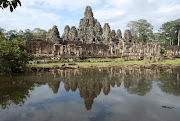
They came back to mind during a recent visit to Angkor Wat, perhaps the greatest Hindu temple ever built anywhere in the world — and in Cambodia, not India. To walk past those exquisite sculptures recounting tales from the Ramayana and the Mahabharata, to have the Cambodian guide explain the significance of the symbols protecting the shrine — the naga, the simha and the garuda, corresponding, he said earnestly, to today’s navy, army and air force! — and to marvel at the epic scale of a Hindu temple as impressive as the finest cathedral or mosque anywhere in the world, was also to marvel at the extraordinary reach of our culture beyond its own shores. Hinduism was brought to Cambodia by merchants and travellers more than a millennium ago, and it has long since disappeared, supplanted by a Buddhism that was also an Indian export. But at its peak it profoundly influenced the culture, music, dance and mythology of the Cambodian people.
Even today my Cambodian guide at Bayon, a few minutes’ drive from Angkor Wat, speaks with admiration of a sensibility which, in the 16th century, saw Hindus and Buddhists worship side-by-side in adjoining shrines within the same temple complex. (If only we could do that at Ayodhya, i found myself thinking.)
Perhaps Son Sann was right, and Cambodia is indeed the last outpost of Indic civilisation in a world increasingly Sinified. But what exactly does that mean? At a time when the north of India was reeling under waves of conquest and cultural stagnation, our forefathers in the south were exporting Indianness to South-east Asia. It was an anonymous task, carried out not by warrior heroes blazing across the land bearing swords of conquest, but by individuals who had come in peace, to trade, to teach and to persuade. Their impact was profound. To this day, the kings of Thailand are only crowned in the presence of Brahmin priests; the Muslims of Java still sport Sanskritic names, despite their conversion to Islam, a faith whose adherents normally bear names originating in Arabia; Garuda is Indonesia’s national airline and Ramayana its best-selling brand of clove cigars; even the Philippines has produced a pop-dance ballet about Rama’s quest for his kidnapped queen. But contemporary international politics has rendered all this much less significant than the modern indices of strategic thinking, economic interests and geopolitical affinities. India is far less important to the countries that still bear the stamp of ‘Indic’ influence than, say, China, whose significance is contemporary, rather than civilisational.
Should we care, and is there anything we can do about it? Of course we should care: no great civilisation can afford to be indifferent to the way in which it is perceived by others. But what, today, is Indic civilisation? Can we afford to anchor ourselves in a purely atavistic view of ourselves, hailing the religious and cultural heritage of our forebears without recognising the extent to which we ourselves have changed? Isn’t Indian civilisation today an evolved hybrid, that draws as much from the influence of Islam, Christianity and Sikhism, not to mention two centuries of British colonial rule? Can we speak of Indian culture today without qawwali, the poetry of Ghalib, or for that matter the game of cricket, our de facto national sport? When an Indian dons ‘national dress’ for a formal event, he wears a variant of the sherwani, which did not exist before the Muslim invasions of India. When Indian Hindus voted recently in the cynical and contrived competition to select the ‘new seven wonders’ of the modern world, they voted for the Taj Mahal constructed by a Mughal king, not for Angkor Wat, the most magnificent architectural product of their religion. So, doesn’t Indianness come ahead of the classically Indic?
I would argue in the affirmative, which brings me to the second part of the question: what can we do about it? It seems to me that we ought to be pouring far more resources into our cultural diplomacy, to project the richness of our composite culture into lands which already have a predisposition for it. I’m not a fan of propaganda, which most people tend to see for what it is: i believe the message that will really get through is of who we are, not what we want to show. But just as, in economic terms, the government must provide the basic infrastructure and let the private sector get on with actual ventures, so, too, in the field of cultural promotion, the government has to create the showcases which individual Indians can then proceed to fill.
The Nehru Centre in London is a great asset for India, but why on earth is there only one such centre? We should have them in Cambodia, in Indonesia, in Thailand, in Malaysia, and for that matter in South Africa, in Nigeria, in Brazil, in Canada. Once they exist, they can serve as a catalyst for locals and visiting Indians to perform, speak, sing, argue and screen their work, thus enabling others to see the products of our civilisation, the multi-religious identities of our people, our linguistic diversity, the myriad manifestations of our creative energies. Then we can speak of a civilisation that is ‘Indic’ in its heritage, Indian in its contemporary relevance.
Read more!
Companies to invest more in oil, gas exploration in Block B, Cambodia
The Singapore Petroleum Company (Cambodia) Limited (SPC) and its two partners said here on Friday that they will invest another 2.5 million U.S. dollars progressively in oil and gas exploration in Block B in off-sea Cambodia.
"We are interested in exploring oil and gas in Block B," said Lim Beng See, who is in charge of investor relation and communication for SPC.
So far, SPC and its two partners, the PTTEP International Limited and the Resourceful Petroleum Limited, have invested about one million U.S. dollars in Block B, he said.
"We don't know how many barrels of oil and gas there are, yet we are at the exploration stage in Block B," he added.
Block B is located in the Gulf of Thailand, some 250 kilometers off the coast of Cambodia. Is located to the southeast of the Khmer Basin, where a number of oil and gas discoveries have been made, said a SPC statement.
Each company has one-third of the shares in Block B in accordance with the approval of the Cambodian National Petroleum Authority (CNPA), it added.
Investors from early 10 countries have been trying to find oil and gas in Block A to F near the seashore of Cambodia in the past decade, but none of them starts production yet.
Cambodia is preparing a draft law for oil and gas management and expects to get benefits from oil and gas in 2010.
Millions of barrels of oil and gas are estimated to lie beneath the sea southwest to Cambodia.
Source:Xinhua
Read more!
CSULB to screen films on Cambodia
Documentaries detail lives of children, efforts to bring Khmer Rouge leaders to trial.
By Greg Mellen, Staff writer
LONG BEACH - It may be 32 years since the horrors of the so-called Killing Fields in Cambodia were unleashed, but the lessons and the fallout continue.
Today, two documentary films will be screened at Cal State Long Beach as part of an event produced by the Dr. Haing S. Ngor Foundation, "Cambodia: 32 Years After the Killing Fields."
Moderating the day's events will be Jack Ong, executive director and co-founder of the foundation. Dr. Ngor was a Cambodian genocide survivor, author and Academy Award-winning actor for his portrayal of journalist Dith Pran in "The Killing Fields." Ngor was killed outside his home in 1996 by Asian gang members. His foundation continues to provide humanitarian aid in Cambodia, including operating an orphanage.
It is estimated 1.7 million Cambodians died between 1975 and 1979 from executions, starvation and deprivation during the Khmer Rouge reign.
The films, "What I See When I Close My Eyes" and "The Road to Closure" will be aired at 1:30 p.m. and 3:30 p.m., respectively.
The first movie, by actress Leslie Hope, looks at the lives of street children in Phnom Penh, who are being sheltered, fed and educated by the Friends-International organization. Hope, a popular television actress who played Kiefer Sutherland's wife in the first year of "24," and her actor husband Adam Kane will discuss the film after its airing.
"The Road to Closure" by Tiara Delgado explores reactions from Cambodians at home and in the U.S. about the erratic and oft-delayed attempts to form a tribunal to bring leaders of the Khmer Rouge to trial for crimes against humanity.
The film is one of four Delgado has made about Cambodia. Her first, which she financed with her own money, was called "Fragile Hopes from the Killing Fields" and is a tale of survivor families narrated by Susan Sarandon in 2003.
Delgado's film will be followed by a timely discussion about the unfolding story of the Khmer Rouge tribunal. To date, just two surviving leaders of the Khmer Rouge have been charged by the tribunal. Their trials have yet to begin.
The Long Beach event, which will be staged from noon until 5 p.m. at the Student Union Ballroom on the Cal State Long Beach campus, will also feature traditional Khmer pinpeat music, Angkor dancing and a book signing by Long Beach resident and author Navy Phim of her memoir "Reflections of a Khmer Soul."
Read more!
Friday, October 19, 2007
FACTBOX-The when, where, why and how of Asia's deadly dengue
Oct 17 (Reuters) - Dengue, a mosquito-transmitted disease which causes fever, headaches and agonising pain in muscles and joints, has killed 389 people and infected more than 38,000 in Cambodia, which is battling one of the worst outbreaks in years.
Here are some facts about dengue, which poses a threat to 2.5 billion people, or two-fifths of the world's population, according to the World Health Organisation (WHO).
WHAT:
-- A severe, flu-like illness, caused by four distinct, but closely related, viruses. Known colloquially as bone-break fever for the severe muscle and joint pains it induces, the disease causes death only when it develops into a more severe form, dengue haemorrhagic fever (DHF).
HOW:
-- Virus-carrying female Aedes mosquitoes infect humans with the disease when they bite. It takes 4-7 days before a person shows symptoms of the disease.
-- After incubating the virus for 8-10 days, the black and white striped mosquitoes can transmit it to susceptible individuals for the rest of their two-week life span.
WHEN:
-- Dawn and dusk are peak biting times for the silent, aggressive Aedes, whose name comes from the Greek for "unpleasant". Dengue can peak during rainy seasons when mosquito eggs hatch in stagnant water.
WHERE:
-- Tropical and sub-tropical regions. Southeast Asia and the Western Pacific are most seriously affected.
-- More common in urban areas where Aedes like to live, the disease is endemic in more than 100 countries in Africa, the Americas, the Eastern Mediterranean, Southeast Asia and the Western Pacific.
HOSPITALISATION:
-- The WHO says there may be 50 million cases of dengue worldwide each year of which 500,000 are treated in hospital for DHF, many of them children. At least 2.5 percent of hospital cases die annually.
TREATMENT:
-- With no specific treatment for the four viruses, health officials focus on eradicating mosquitoes to prevent infections.
Sources: Reuters, The World Health Organisation (www.who.int/mediacentre/factsheets/fs117/en/)
Read more!
CAMBODIA: Local newspaper's license suspended
The Ministry of Information suspends Khmer Amatak over dispute between the deputy prime minister and an editor
By Debory Li
AsiaMedia Staff Writer
Thursday, October 18, 2007
The Cambodian Ministry of Information issued a suspension against Khmer Amatak, a local newspaper, for one month after editor Bun Tha refused to print a correction for an article about the deputy prime minister.
According to the Southeast Asian Press Alliance (SEAPA), the article, published on Sept. 24, 2007, alleged that two senior officials of the ruling Funcinpec Party, Deputy Prime Minister Nhiek Bun Chhay and Minister of State Serey Kosal, removed the name of Prince Norodom Ranariddh, Cambodia's first prime minister and former chairman of the Funcinpec Party, from a school in the Battambang province that he had donated to. The school was renamed, but reports between the Southeast Asian Press Alliance and the International Federation of Journalists (IFJ) conflict as to whose name it was: Chhay's or Kosal's.
Chhay and the Ministry of Information asked the newspaper to print a correction, but Tha refused, saying he had evidence to support the article's claim and was willing to face the deputy prime minister in court to settle the dispute. Instead, the ministry suspended the newspaper on Oct. 8, 2007.
"If a journalist can prove wrongdoing with hard evidence then it is their duty to report it to the public," said IFJ Asia-Pacific Director Jacqueline Park.
The Cambodian Association for the Protection of Journalists (CAPJ) also expressed its dismay at the ministry's decision.
"By issuing an order to have this newspaper suspended for a month without the court's consent, the [ministry] has clearly sided with [the deputy prime minister], thus violating…freedom of the press in Cambodia," said CAPJ.
Both press rights groups urge the ministry to reverse its decision on the newspaper's suspension and reinstate its license soon.
Read more!
Notorious government keep frightening RFA journalists

Lem traced the number to a roadside vendor in Phnom Penh who rented mobile phones by the minute to unregistered customers. The vendor could identify the caller only as a young Khmer man who sped off on a motorcycle after placing the call.
Lem was already on edge. After his undercover reports from the Prey Long reserve in central Kompong Thom province had caused a national stir, a source tipped him that government security officials were taking great interest in his work. His anxiety mounting, Lem fled in June to Thailand, where he remained for more than a month.
Despite calls from local and international press organizations, including CPJ, the Cambodian government has yet to launch an independent investigation into the death threat. Lem has since resumed reporting in Cambodia, but to limit the risk, senior editors have reduced his regular broadcasts from five to three stories per week and taken him off the Prey Long beat.
Despite the potential danger, Lem felt compelled to return to his home in Battambang province. “If I had stayed away from Cambodia any longer, I wouldn’t be able to help report the truth about my country’s problems,” he said in an interview with CPJ.
Lem’s story is a familiar one among the Cambodia-based reporters for RFA, the U.S. government-funded broadcaster. Since 2005, three of the station’s 14 regular and on-call reporters have fled the country due to concerns over potential government reprisals.
Journalists have often been caught in the crossfire of Cambodia’s violent political history. Reporters were rounded up and slaughtered during the Khmer Rouge’s notorious reign of terror from 1975 to 1979 and were frequently attacked in the more than decade-long civil war that followed the December 1978 invasion by Vietnam, which ousted the radical Maoist regime and installed Hun Sen as prime minister.
By 1993, U.N.-sponsored democratic elections had ushered in a new parliamentary system of government and a constitution that guaranteed free expression. The 1993 Press Law, which provides a legal framework for press freedom, forbids censorship and protects confidentiality of sources. In practice, however, enforcement of these legal guarantees is highly inconsistent. Cambodian journalists still work in a hostile environment, particularly in far-flung provincial areas where corrupt officials are involved in illegal activities and where the rule of law is weak.
Between October 2005 and January 2006, Hun Sen ordered the imprisonment of three journalists, two in connection with their reports on a controversial border treaty with Vietnam. The unsolved killings of six newspaper editors and reporters—from the country’s democratic transition in 1993 through the violent 1997 coup launched by Hun Sen against Prince Norodom Ranariddh, then the country’s co-prime minister—still hangs over Cambodia’s media like a sword. Ministry of Information officials frequently harass editors over stories that cast the government in an unfavorable light.
That is particularly true for RFA, whose journalists often report under pseudonyms for fear they could be the target of government retaliation.
During a question-and-answer session with local journalists in front of the country’s National Assembly in May, Hun Sen referred to RFA staffer Um Sarin as “insolent” and “rude” after the reporter questioned him about the details of a government shakeup. In the exchange, which was later broadcast on government-affiliated television stations, the premier pointed his finger at the reporter and called RFA’s reporting “insolent.”
As the premier’s bodyguards surrounded the reporter, Hun Sen warned Um Sarin that he should be afraid to ask similar questions in the future. For RFA journalists, the national attention given the incident raised fears of possible reprisals from pro-government groups. Um Sarin soon fled Cambodia for Thailand.
“We sometimes hit on the weak points of the government—corruption, poor governance, poverty, joblessness—which reflects on the government’s overall poor performance,” Um Sarin said. “We often contradict the government-controlled media, and that is the main reason Hun Sen is so angry with RFA.”
Hun Sen has consolidated his political power at the ballot box. His Cambodian People’s Party (CPP) and businesspeople loyal to the party who hold government-administered print and broadcast licenses now dominate the Khmer-language media landscape. There are 20 or so regularly published local-language newspapers, all but two of which are heavily slanted in favor of Hun Sen and the CPP.
The same is true for the country’s 11 television stations, which broadcast news that unfailingly casts Hun Sen’s government in a favorable light—portraying senior CPP officials opening new public works projects, meeting with admiring local citizens, and greeting foreign dignitaries. One leading news station is run by the prime minister’s daughter, while others are owned by senior CPP members or their close business associates.
But the CPP-led government does not have a monopoly on radio news. High illiteracy and poverty rates mean that radio reaches more Cambodians than any other news source. According to a 2006 survey conducted by Washington-based media consultants InterMedia, 29 percent of Cambodia’s 14 million people listen to international radio stations on a weekly basis.
RFA and the U.S. government-funded Voice of America are neck and neck in claiming the country’s largest listening audience, according to the survey. RFA’s reports are aired twice daily, once in the morning and again in the evening, over privately run Beehive FM 105 and on shortwave beamed from Washington.
InterMedia’s survey found that more than 31 percent of the population listened to RFA on a regular basis, while 56 percent of the population living within a 50-mile (80-kilometer) radius of Phnom Penh regularly tuned in. RFA’s Khmer service director, Sos Kem, said in an e-mail from Washington that he expects that RFA’s listening audience will grow substantially because Beehive Radio has recently increased its broadcasting power from 5 to 10 megawatts, extending the station’s coverage to more remote provinces.
Established in Cambodia soon after Hun Sen launched his 1997 coup, RFA immediately introduced a new, grassroots style of radio reporting, including on-the-ground sound bites from people affected by the news. RFA’s recent fare has included such reports from villagers affected by state-backed land grabs, illegal logging, and alleged official corruption. This unfettered approach to the news has, over the years, lured listeners away from state-controlled stations, which still focus on senior government officials’ statements and activities.
Cambodian Minister of Information Khieu Kanarith did not respond to CPJ’s requests for an interview, but the government is clearly not enamored of RFA’s work. In February 1999, RFA negotiated a contract with the Ministry of Information that would have allowed the broadcaster to establish its own FM station in Phnom Penh—only to see the ministry back out days later because of political concerns.
RFA soon moved to lease FM airtime from Phnom Penh-based Beehive Radio. As if in a chess match, the Ministry of Information then banned Beehive Radio from carrying the reports. Only after Beehive’s owner, Mam Sonando, lodged a formal complaint with parliament—citing provisions of the 1993 Press Law—was the station allowed to resume its broadcasts of RFA news reports.
Still, RFA’s broadcasts over Beehive Radio are aired on a 30-minute time lag from when they are originally transmitted from Washington—giving the Ministry of Information time to monitor RFA news reports before they go out over the national airwaves.
Pen Samitthy, editor-in-chief of Rasmei Kampuchea, Cambodia’s leading pro-government daily newspaper, and a Hun Sen associate, said that several government officials believe RFA’s coverage is slanted against the CPP and in favor of the political opposition. He cited in particular the station’s coverage leading up to last year’s commune elections, including reports that pro-CPP groups threatened opposition canvassers and intimidated their grassroots supporters into staying away from the polls. “They aired several stories that did not make the prime minister very happy,” Pen Samitthy said.
According to RFA editors in Washington and Phnom Penh, their reporters are frequently singled out for harassment by government officials. In December 2006, Hun Sen’s bodyguards prevented Lem from reporting on the opening of a new government-funded building in Battambang province. This past April, the premier’s bodyguards blocked RFA reporter Sok Ratha from covering the opening ceremony of a road project in remote Ratanakiri province.
Phnom Penh-based RFA field editor Ath Bonny said that news reports about illegal logging, malnutrition in impoverished areas, and human rights abuses have resulted in angry, and sometimes threatening, calls from senior Ministry of Information officials.
“They ask me: ‘Why do you report like this? You are Khmer. Don’t you know this makes a bad international image for your country?’” said Ath Bonny, recalling a recent exchange with an official. “I said to him, ‘That’s what the people are saying and it’s the reality of the situation—that we are just doing our jobs as journalists, and that this is our country, too.”
Ath Bonny said RFA listeners often seek out the station’s reporters with their individual stories about local-level corruption. “Nowadays, the people don’t complain to the government or police, they complain to RFA,” he said. “Many people see us as a direct channel to communicate with their national leaders, and I think that makes the government nervous.”
RFA works out of an unmarked office in a multistory townhouse in the heart of Phnom Penh. Office managers affix RFA’s logo to the office’s steel-caged front door when guest speakers are scheduled for studio interviews, but quickly take it down after they have safely arrived, according to Ath Bonny.
“This is Cambodia—it is very difficult to judge who might make trouble for us,” he said. “We are often afraid, but we still do our work professionally.”
Like other RFA reporters, Ath Bonny speaks from personal experience. In October 2005, Hun Sen ordered the arrest and detention of Beehive Radio’s Mam Sonando and several civil-society activists for comments they made about a controversial border treaty with neighboring Vietnam. RFA had aired similar reports; Ath Bonny fled to Thailand for a time after a palace source told him that he, too, was in the government’s sights.
The arrests, though, sparked a bit of a backlash. Some local journalists said that Hun Sen’s government has since attempted a more sophisticated—or, at least, less overtly repressive—approach to its relations with the media. Under pressure from Western donor countries, which still contribute roughly half of the Cambodian government’s annual budget, the prime minister agreed in January 2006 to release Mam Sonando and the others. In August, he vowed to decriminalize defamation—although reporters could still be jailed on “disinformation” or broadly construed incitement charges.
“There’s been a change, at least in the language used,” said Charles McDermid, managing editor of the Phnom Penh Post, an English-language newspaper. “Now they’re at least talking about democracy.”
And Lem is still trying to break daring stories. In August, he aired a news report about alleged government involvement in illegal logging in southern Porsat province. “Where the government tries to hide, we try to show,” he said. “That’s the power of Cambodian radio.”
Shawn W. Crispin is CPJ’s Asia program consultant. He conducted this research mission in August.
Thursday, October 18, 2007
Dutch war crime lawyer joins team to defend detained Khmer Rouge leader Nuon Chea
PHNOM PENH, Cambodia: A Dutch war crimes lawyer has joined the defense team of one of the top leaders of the brutal Khmer Rouge regime ahead of his trial by Cambodia's U.N.-backed genocide tribunal, the lawyer said in a statement.
Michiel Pestman said he would be defending Khmer Rouge ideologist Nuon Chea alongside his Cambodian lawyer, Son Arun.
"I will do everything that I can to ensure that our client receives a fair trial. It is essential that he has a proper defense," Pestman said in the statement, issued by the tribunal.
Nuon Chea, 81, also was known as "Brother No. 2," reflecting his position as right-hand man to Pol Pot, the late leader of the Khmer Rouge.
The group's radical policies when it held power from 1975 to 1979 caused the deaths of an estimated 1.7 million people from starvation, overwork, disease and execution.
Nuon Chea is the highest-ranking Khmer Rouge leader detained by the U.N.-supported Cambodian tribunal aimed at seeking justice for the Khmer Rouge crimes.
Nuon Chea has denied any guilt, but the tribunal has charged him with crimes against humanity and war crimes.
Pestman is a partner at the law firm of Boehler Franken Koppe Wijngaarden in Amsterdam, the tribunal said, adding that his domestic experience included defending those accused of terrorism and other serious criminal offenses in Europe and elsewhere.
From 1993-2001, he was a member of a team representing defendants from Bosnia and Herzegovina at the genocide trials at the International Court of Justice. Since 2003, he has represented a war crimes defendant before the Special Court for Sierra Leone in the trial against government militia leaders, according to the statement.
Nuon Chea is one of two defendants indicted so far before the tribunal
Kaing Guek Eav, also known as Duch, who headed the former Khmer Rouge S-21 torture center, was charged on July 31 with crimes against humanity. Prosecutors have recommended three other suspects be indicted, but have not named them publicly.
Both Duch and Nuon Chea have appealed their pre-trial detention orders.
Read more!
Japanese firm plans to invest in natural resources, telecommunications, infrastructure in Cambodia
The president of Japanese corporation Marubeni has announced that it plans to invest in natural resources, telecommunications and infrastructure in Cambodia, local media said on Thursday.
The firm's president Nobuo Katsumata announced the plan here on Wednesday during a meeting with Cambodian Prime Minister Hun Sen at his house in Kandal province's Ta Khmao district, the premier's advisor Eang Sophallet told Cambodian-language newspaper the Koh Santepheap.
Katsumata said his firm will enlarge its existing operations from imports and exports to natural resources, physical infrastructure, transportation, and telecommunication sectors.
The Japanese firm launched business operations in Cambodia in 1955, withdrew from the country in 1975 due to political instability, and restarted its involvement in 1992.
Hun Sen expressed welcome towards the Japanese firm's business plan, saying Cambodia is pushing its economic growth with the use of the natural resources available.
"Cambodia is advancing to a stage in which its natural resources will be used to develop its economy," Hun Sen said.
He also underlined that the firm will be able to assess the business opportunities as it has started its operation in Cambodia for 15 years.
Japan has been Cambodia's largest donor country for years and started to enhance its investment in the kingdom this year after both sides signed their investment agreement to guarantee protection and security for Japanese investors in Cambodia.
Read more!
World Bank Confronts Cambodia Corruption
Far from "Smiling Past Corruption" (Review & Outlook, Oct. 11) in Cambodia, the World Bank is confronting corruption head on in that country. In fact, it was bank staff in Cambodia who first raised concerns about corruption in projects there. Following World Bank investigations, in June 2006 the bank suspended the government's right to draw funds for three projects where we had identified problems.
In response, the Cambodian government agreed to new anti-corruption measures for each project, including intensified audits and the hiring of an international procurement agent. In February 2007, after the government completed all the anti-corruption measures and made substantial progress in hiring the agent (who has now been selected), former President Wolfowitz agreed to lift the suspension on the affected projects. The bank cancelled over $2.5 million in project funding, and the government subsequently repaid the World Bank $2.89 million and agreed to incorporate anti-corruption action plans into all existing and future bank legal agreements. The bank's Institutional Integrity office has initiated the process of debarring firms involved in the affected projects, working through the Sanctions Committee.
Cambodia, which suffered a genocide, needs help both to strengthen its capacity for good governance as well as to build the foundations for inclusive growth. Today, our projects are helping build roads, bring water to poor communities and enable poor people to secure ownership of their land and homes for the first time.
While in Cambodia in August, the new World Bank president, Robert Zoellick, coordinated with the donor community to make the case to the prime minister and other senior officials on the need to stay the course on governance, anti-corruption and strengthening the legal system. The Institutional Integrity office will visit Cambodia this month to follow up.
Read more!
Russian arrested for child sex in Cambodia
Phnom Penh - A Russian businessman has been arrested and charged in Cambodia for allegedly having sex with at least six under-age girls, some as young as 12, police and court officials said Thursday.
Alexander Trofimov was seized at his home in the popular seaside town of Sihanoukville on Wednesday, said Major General Bit Kimhong, director of the Interior Ministry's anti-trafficking department.
Trofimov, 41, was arrested after his six alleged victims and their parents filed complaints, Bit Kimhong told AFP.
"He was arrested on charges of committing debauchery," the major general said, referring to a criminal charge covering a wide range of sexual offences that carries a maximum of 20 years in jail.
Police say Trofimov had sex with five of the girls in 2005, the oldest of whom was 16 at the time, and the sixth earlier this year.
Trofimov was transported to Phnom Penh municipal court where he was charged on Thursday with debauchery after he was questioned by the court officials for more than one hour, said investigating judge Iv Kim Sry.
"The court then decided to place him in jail pending more investigation," the judge told AFP.
Trofimov is the chairperson of the Koh Pos Investment Company, which last year was granted permission to build a $300-million (about R2-billion) resort on Koh Pos or Snake Island, an area Cambodia is trying to develop as a luxury tourist destination.
His arrest comes as neighbouring Thailand hunts suspected Canadian paedophile Christopher Paul Neil, who allegedly raped as many as a dozen young boys and posted photographs of his acts - some thought to be committed in Cambodia - on the Internet.
Cambodia has struggled to shed its reputation as a haven for paedophiles, putting dozens of foreigners in jail for child sex crimes or deporting them to face trial in their home countries since 2003.
More than 10 foreigners were arrested last year in a crackdown on child sex crimes, doubling the total number detained in 2005.
But officials, including foreign diplomats, have begun urging authorities to also target Cambodian paedophiles, who are thought to make up a large percentage of sex offenders.
Read more!