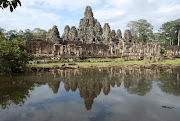
Cambodian children is owing 8.695 million US more to Japan, is Cambodia government too poor or too much corruption? Cambodia economic have been rising every year and billion dollars revenue should be more than enough to feed 14 million citizens.
Japan Tuesday agreed to provide 8.695 million U.S. dollars of loan for poverty reduction and economic growth operation in Cambodia.
The loan from Japan will mainly support the implementation of the good governance reform program in the royal government's National Strategic Development Plan 2006-2010, said Hor Namhong, Cambodian deputy prime minister and minister of Foreign Affairs and International Cooperation, after signing the note of exchange with Japanese officials.
The loan will be paid in 40 years with an annual interest rate of 0.01 percent, said a press release from the Japanese Embassy.
With the current loan project, the total amount of Japan's loan for Cambodia has so far reached 146 million U.S. dollars, it added.
Source: Xinhua
Read more!

Wednesday, October 10, 2007
Japan to provide 8-mln-USD loan for poverty reduction in Cambodia

Artwork smoocher tried in France
A woman who smudged a $2.8m (£1.37m) artwork with a lipstick-laden kiss has appeared before a court in France.
Rindy Sam, also an artist, faces a fine of 4,500 euros (£3,120) and a class in good citizenship for the charge of voluntarily damaging a work of art.
She told the Avignon court: "I didn't think. When I kissed it I thought the artist would have understood."
Restorers have been unable to remove the lipstick from the white Cy Twombly canvas since it was kissed in July.
'Act of love'
They have unsuccessfully used 30 products to get rid of the stain.
Ms Sam was arrested after the incident at the Museum of Contemporary Art in Avignon, which she called "an act of love".
The painting, which was part of a travelling exhibition, is owned by collector Yvon Lambert, who has sued for damages worth two million euros (£1.38m) which includes the value of the painting and restoration costs.
Cambodian-born Frenchwoman Ms Sam, 30, will return to court on 16 November to hear the verdict.
US artist Twombly, who was born in 1928, is known for his abstract paintings combining painting and drawing techniques, repetitive lines and the use of graffiti, letters and words.
He won the Venice Golden Lion award for his work in 2001.
Read more!
Cambodia's 'Lion Fighters' rise again as martial art is revived
 PHNOM PENH (AFP) — The rolling thunder of an oncoming monsoon storm provided the appropriate soundtrack to Ratanak Akthun's entrance into the ring.
The self-assured young fighter eyed his opponent, Puth Khemarak, who seemed less solid and a little dazed by the applause that greeted his own entrance into the gymnasium in Phnom Penh's Olympic Stadium.
Their clash was to be the first full-contact fight of last month's National Bokator Championships, and the crowd, made up of students from opposing fighting schools, clapped and shouted itself into a frenzy.
But practitioners are struggling for legitimacy and purists say a younger generation's fascination with foreign martial arts is threatening this symbol of the country's past military might.
More an art form than a sport, bokator -- which literally means "lion fighter" in Cambodian -- has been somewhat derisively described as a dance with a little bit of fighting thrown in for effect.

This is not entirely untrue. Those who have mastered the thousands of punches, sweeping high kicks, take-downs and feints have a fluid animal grace that lulls the spectator into forgetting that this is a seriously dangerous fighting form.
But then erupts a violence that is found in few fighting rings. Like Saturday night brawlers, nearly bare-knuckled bokator fighters pummel, stomp and throttle each other into submission.
Ratanak Akthun's earlier cockiness could not save him from a crushing kick that broke ribs and sent him to a humiliating, semi-conscious departure from the ring.
The next two full-contact matches ended just as abruptly in knock-outs.
The September championships were only the second ever to be held and were the result of one man's singular crusade not just to return bokator to Cambodia, but also to introduce it to the rest of the world.
Sean Kim San, a bokator grandmaster and founder of the Cambodian Yuthkun Federation, returned from the United States in the 1990s and in 2004 opened a school to teach the craft to a new generation of Cambodians otherwise fed a diet of Thai kickboxing and Western professional wrestling.
"We had been sleeping for 1,000 years but 2004 was the new birth for bokator," said the 62-year-old master.
Speaking recently in the converted space above a parking garage that he shares with several other martial arts schools, Sean Kim San took out a few vinyl folders that he said are the sport's bible.
Inside he is creating, in painstaking detail, an index of the hundreds, if not thousands of moves that must be mastered at each level of bokator.
"Before there was nothing," he said, explaining that before he took up his quest to revive bokator, knowledge of the fighting form lay scattered across the country among its few surviving yet reluctant masters.

Scenes of bokator are carved into the walls of the Angkor temples, inextricably linked to a rich cultural heritage that goes back many hundreds of years.
But the Khmer Rouge who seized control of the country in 1975 and unleashed one of the 20th century's most devastating upheavals, inexplicably sought to destroy Bokator along with every other vestige of modern Cambodia.
Most of its practitioners were among the two million left dead by the time the regime was overthrown in 1979, and those still alive hid their talents out of fear, Sean Kim San said.
"The Khmer Rouge -- everything interesting they destroyed," he said, adding that after his return to Cambodia he unearthed about a dozen elderly bokator masters.
"But they were still scared about the killings, about Pol Pot and the Khmer Rouge -- they were afraid to speak the truth," he said.
Still, he pieced together this puzzle, logging each swing or kick into his catalogue of bokator moves and slowly rebuilding interest in the ancient form.
Three years ago, he said he had only seven students in one school. Now more than 1,000 practice Bokator in schools across 10 provinces.
"We have about 400 or 500 students here, including some foreigners," he said of his own gym at the end of a ramshackle Phnom Penh side street. "This is how far we've raised up the sport."
Mathew Olsen, an Australian instructor of the Korean martial art hapkido and a bokator convert, said he had not known Cambodia had its own martial art.
"I was surprised there was something with such a wide spectrum -- the weapons, the punches, kicks, the ground fighting and pressure points makes it very lethal," he said during a recent training session.
"Bokator is a very complete martial art, very interesting to foreigners," he said. "Basically I think there is more art in this martial art than a lot of other martial arts."
While one of Sean Kim San's hopes is to introduce bokator to the wider world -- and eventual inclusion in international martial arts competitions -- a larger and more immediate goal is to keep this very Cambodian tradition alive at home.
"It is very important to pass this from generation to generation because this is our blood. This was passed down from grand masters and our kings," he said.
He has a dream, he said, that bokator training will become a regular feature in Cambodian primary schools.
"That means millions and millions of people know very well bokator," he said.
Tuesday, October 09, 2007
Laos, Cambodia and Vietnam cement their relationships with one another with new declaration
In a continuing effort to join tourism forces Laos, Cambodia and Vietnam issued an official joint declaration on trilateral cooperation at their meeting in Ho Chi Minh City last Friday. The declaration will see all three countries working with their national tourism agencies in order to increase the flow of information between themselves and knowledge of tourism development and promotion. They have all agreed to hold and attend tourism events and tours and to conduct personnel training.
Each country will also participate in promoting visitation to and raising awareness of their sister destinations and will also encourage public-private partnerships with regard to tourism development.
The meeting was the first of its kind for all three countries and was regarded by the Vietnamese Minister of Culture, Sports and Tourism, Hoang Anh Tuan, as a milestone in boosting trilateral cooperation. He also stated that their meeting will help to build the three countries into a single tourist destination.
Cambodia Tourism Minister, Thong Khon, and Lao Minister and Chairman of the Lao National Tourism Administration, Somphong Mongkhonvilay, also shared Tuan’s sentiments and said that the declaration will help to fortify sustainable tourism development in the Greater Mekong Sub-region and the ASEAN.
Read more!
Khmer Krom: Nonviolent Demonstrations OK?
Cambodia's constitutional commitment to allow freedom of expression, assembly and peaceful demonstrations is finally being put into implementation by law, signifying a positive prospect for human rights activists and especially the Khmer Krom community.
Below is an article published by UNPO:
Cambodia’s Council of Ministers issued a communiqué indicating that the plenary session of the Council of Ministers, held on 05 October 2007 had agreed and approved the nonviolent demonstration right draft law which was prepared by the Ministry of Interior.
The draft law includes 6 Sections divided into 30 Articles. The communiqué stated that the draft law on the nonviolent demonstration right was prepared on the basis of Articles 37 and 41 of the 1993 Cambodian Constitution which provide the right of citizens to strike or to stage nonviolent demonstrations, and guarantee the freedom of expression and assembly. Pursuant to these articles, the aforementioned rights are to be implemented in the framework of a law. Such a law has so far never been passed. The fact that it has been drafted and could soon be passed is an encouraging sign after so many peaceful demonstrations were disrupted by the police in the past years.
A Member of UNPO, the Khmer Krom (from Kampuchea Krom, South Vietnam) constitute a large community in Cambodia. Their natural refuge when fleeing suppression in Vietnam, Cambodia has not always been a safe haven for them. Despite their nonviolent approach, the Khmer Krom have repeatedly been prevented from staging peaceful demonstrations in Cambodia by the police (some of their demonstrations have even been violently repressed). The passing of the nonviolent demonstration right law will be a major step towards the democratisation of Cambodia and might, by ricochet, have impact on the politics of the region, allowing oppressed minorities from Vietnam and Laos to voice their concerns in Phnom Penh.
Note: Articles 37 and 41 from the Cambodian Constitution:
Article 37 - The right to strike and to non-violent demonstration shall be implemented in the framework of a law.
Article 41 - Khmer citizens shall have freedom of expression, press, publication and assembly. No one shall exercise this right to infringe upon the rights of others, to affect the good traditions of the society, to violate public law and order and national security. The regime of the media shall be determined by law.
Read more!
Cambodian cow in police custody for killing motorists
PHNOM PENH, Cambodia: A Cambodian cow was taken into police custody for causing traffic accidents that resulted in the deaths of at least six people this year, a police official said Tuesday.
The cow's owner could also face a six-month prison term under a new traffic law that holds people responsible for accidents caused by their animals, said Pin Doman, a police chief on the outskirts of Cambodia's capital, Phnom Penh.
The white, 1.5-meter (5-foot) tall cow was standing in the middle of a main road Monday night when a 66-year-old motorcyclist crashed into the animal and died. Most Cambodian roads are dark at night.
Earlier this year, the same cow was responsible for another traffic accident that resulted in the death of five people and several injuries, when a truck veered off the road and crashed as its driver tried to avoid the animal.
Pin Doman said he was holding the cow at his police station.
He said the cow's owner had been warned four times in the past to keep his cattle leashed and could face prison time if relatives of those who died initiate legal proceedings.
Read more!
SOCCER: In Chelsea or Cambodia, putting some kick back into the game
To some people, competitive soccer is all about kicking backsides. What wouldn't Cambodia's players give to beat Turkmenistan on World Cup qualifying duty in Phnom Penh on Thursday? And what greater pleasure might Chelsea's paymaster, Roman Abramovich, derive than hiring Henk Ten Cate, the coach who reputedly once booted José Mourinho in the bum long before Abramovich got rid of him?
The ball is round, the rules are the same. But the world is a very different place to a soldier or a traffic policeman or a laborer who pays for his own boots to play for Cambodia - compared with the pampered Chelsea players who earn more in boot money than a Cambodian expects in a lifetime.
A sensitive, humane article by Ek Madra, the Reuters man in Phnom Penn, this week set the scene for the Cambodia versus Turkmenistan home and away contests. He describes Thol Sothearith, a Cambodian defender, traveling to the optimistically named Olympic Stadium on an aged Honda motorbike - crossing potholed roads and wearing old boots that cost him a third of his $25 a month army pay.
"They're cheap, but they work well," Sothearith, 22, tells the reporter. "We lack support, morally and materially. We don't have enough nutrition, our pay is low. But win or lose, its great to be in the World Cup."
Turkmenistan will not lightly surrender rank to the Cambodians. The visiting team rates 174th among FIFA's 208 nations, lording it, by four places, over Cambodia.
In this first-round knockout phase, 43 Asian countries will start the elimination process down to just four teams for the 2010 final tournament.
"Teams like us reaching the World Cup, its not going to happen," says Scott O'Donell, the one time Australian A-league player who augments his Cambodia coaching work with television soccer punditry. "My players know this is the biggest game of their lives. All we can ask for is their best."
From Palestine to Afghanistan to Macao, we wish them good sport in this win-or-bust week that will also kick off qualifiers for gods like Ronaldinho and Lionel Messi down in South America. Those are names to conjure with, and their style is in part the reason why Abramovich is having a staff makeover at Chelsea.
Mourinho was a match winner for the Russian, but Abramovich tired of the coach's making himself the star while the team gave pragmatic performances.
Pragmatic, that is, compared with Barcelona. Recently, Abramovich tried to tempt Ronaldinho from Barça to his club in London. He failed, for now, but with the signing of Ten Cate comes a little bit of what made Barcelona hum.
Ten Cate was the No. 2 to Frank Rijkaard at Barcelona. With Rijkaard in charge and Ten Cate a kind of sergeant major on the training field, Barça was supreme in Spain, in the Champions League, and in most people's ideal of how soccer should be played.
Ten Cate, like Rijkaard of Dutch-Suriname origin, eventually went his own way as the head coach of Ajax Amsterdam. Why would he now accept a role as assistant to the new coach of Chelsea, the Israeli Avram Grant?
A £2 million, or $4 million, salary, double what Ajax paid Ten Cate, helps. A mutual understanding between Grant and Ten Cate, forged when the Israeli studied the way things worked in Barcelona, suggests the Dutchman will get a fair amount of command on the training pitch, while Grant decides selection and tactics.
There might be - and we might never hear - verbal agreements of an eventual hand-over of responsibilities. Some even speculate that, after this current season is over, Rijkaard will depart Camp Nou and renew his double act with Ten Cate, while Grant reverts to the overview post of director of football.
Such multiple managerial and coaching roles are familiar staffing arrangements at Europe's big clubs.O'Donell might, at best, have an interpreter at his elbow, but Mourinho, who came into soccer as a translator, surrounded himself with enough Portuguese aides to attend to every player's needs bar visits to the toilet.
When Mourinho's £5 million-a-year contract was paid off, the assistants also went. Grant, well aware of the Abramovich requirement to entertain - and sharing the ethos - had first to win over the players' support. Slowly, that is happening. The Israeli's sincerity is winning over some of the dissident players who had joined Chelsea for Mourinho.
They are in for more surprises, as Grant shapes his backroom staff. After Ten Cate will come, if Grant gets his way, Colonel Avi Moyal. He was the fitness trainer to the Israeli national squad when Grant was in charge and is currently the head of Israel's combat fitness training development.
So maybe there is a link between the Cambodians, some of whom are soldiers by day and soccer players by night or weekend, and the Chelsea Set?
The curious thing about soccer millionaires is that they might pout about team tactics, especially those that leave some of them like Andriy Shevchenko on the bench, but rarely do they complain about the toughest of commando-like fitness routines.
It was Rui Faria who tuned up the players' bodies under Mourinho's tenure, and often Faria who acted as their confidant while reporting back to the coach on what was being said in the camp.
The Israeli colonel will know all about the body and mind games. Even Israelis say his regimen is tough, but he allowed wives and families to run on the beach with his men at weekends.
The new order is marching in on Chelsea, and no doubt Ten Cate will think twice before chasing men like Avi Moyal down the tunnel and applying his boot to the backside.
Chelsea always denied that Ten Cate actually did boot Mourinho during a fracas in the tunnel on that infamous night in 2005 when Mourinho accused Rijkaard of visiting the referee's room at halftime during a Champions League match between Barcelona and Chelsea.
It was agreed that Ten Cate had a go at somebody, but the contact hit either the fitness man Faria, or the tactician Baltemar Brito.
Whatever, there is no mistaking where Abramovich made his mark.
Read more!
Monday, October 08, 2007
Cambodia Hip Hop Artist Tells Story through Rap
 Prach Ly came to the United States as a child with his family to escape Cambodia's killing fields. He grew up in Long Beach, California where he started rapping in English and Khmer about Cambodia's genocide, his community and life as an immigrant. Then he became a star in Cambodia nearly overnight after he released a homemade CD. The press dubbed him the first Khmer rap star and credited him with bringing hip-hop to Cambodia.
Prach Ly recently took a break from working on his latest album to perform at Freer Gallery of Art in Washington, D.C., where he spoke to VOA's Robin Chen Delos. Here he tells his own story.
"I am a musician. I'm from Cambodia. My name is Prach. And I was born in a concentration camp during the killing field.
Toward the end of the killing field our family escaped the war and went to the border of Thailand. And we stayed there at the border and we got sponsored to America,” Ly explains.
“And when I got to California in Long Beach everything wasn't all great or anything like that. It was poverty-stricken. There was gang activities. The back of our head was, you know, if you grow up past 18 years old you probably did pretty good because of all the activities there. We were ducking drive-by shootings and stuff like that.
But then that's when the whole poetry, that's when the whole hip-hop, that's when the whole rap music came. I was surrounded by that. 
I used the karaoke equipment to record my music, my lyrics. I would go buy instrumental songs, and put my word over it. And I got a CD made.
The CD was like an autobiography, coming from the whole killing field process, all the way to America and the struggle in America. And for New Year I just passed it out. And a DJ from Cambodia, DJ Sop, he was there at the New Year. He took the CD back to Cambodia, he played it over the radio and everyone was calling in to ask who's the artist.
And then the government, they censored and they banned my music. And then some of the people who heard the music they argued, they said, 'Wait a minute, why are you banning his music? It's nothing in reference to the government -- it's just talking about history.' So now the people are going to the markets and starting asking [to ask] for it and buying the CDs.
And then Newsweek and Time magazine and Asia Week, they located me and they contacted me and they like, 'We just want to ask you a question: how do you feel about having the number one album in Cambodia?' I go, "What?!' You know, I never sent it there.
The important thing was the kids was asking the parents, it was more like an educational tool. They were asking the parents and asking the elders what had really happened during the killing fields,” he says proudly.
Read more!
Cambodia welcomes Chinese investment surge
For Cambodia, struggling to regain its economic footing after 30 years of civil war and keen to shrug off its dependence on aid, Chinese investment has been welcomed with open arms and few questions asked, at least publicly.
The Chinese government is pouring money into bridges and roads (it donated 6 million dollars of steel bridges to Cambodia in 2001) and pledging military assistance in the form of new vessels for the country's dilapidated navy.
But China's emphasis is increasingly looking beyond aid towards desperately needed investment. Chinese, and now Cambodian investors, are planting hectares of bio-fuel crops like jatropha, which the Chinese industry devours insatiably.
Just last month yet another Chinese company inked a deal to grow mulberries over a tract of land in the country's south to supply raw silk to its factories and offering to build a factory to process the silk worm cocoons in Cambodia.
In May, China's fifth largest steel mill, Wuhan Steel, announced it had joined Shanghai-based Baosteel Group, Anshan Iron and Steel Group and Beijing's Shougang Iron and Steel Group to explore for iron ore in Cambodia's remote northern Preah Vihear province on the Thai border.
The relationship has not been built overnight. China's Ministry of Foreign Affairs website boasts diplomatic ties with Cambodia since 1958 and notes China's agreement to wipe outstanding loans to Cambodia five years ago - something the US, amongst others, still steadfastly refuses to do.
Cambodia's revered former king Norodom Sihanouk spends months at a time in Beijing and Chinese Premier Wen Jiabao showed the value he placed on the relationship in April 2006 when he included Cambodia in a tour of New Zealand and Australia.
"Chinese companies come to Cambodia because we have a long relationship and Cambodia is openly courting Chinese investment," Chhin Cheadara, deputy director of the Phnom Penh Chamber of Commerce explained.
"Most of these investments are in the garments and construction industries, as well as mining and electricity production," said Chhin Cheadara. "This creates infrastructure and employment opportunities here, but more importantly, it is long term investment. In the future, we envisage more and more Chinese companies coming to Cambodia."
But this Chinese investment boom has worried some environmental and human rights groups. For instance, Australian mining giants such as BHP Billiton Ltd, currently exploring in the north-east for bauxite, have vast corporate responsibility programmes and are accountable to the scrutiny of media and shareholders at home.
Activists claim that Chinese companies may not feel these restraints and the Cambodian government has refused to rule out mining in environmentally sensitive areas if it deems the benefits outweigh the risks.
Chinese investors are not confined to mining either. In January one group was given the go-ahead for a hydroelectric plant in the coastal province of Koh Kong worth up to 215 million dollars.
Critics point out other potential drawbacks. The International Monetary Fund warned last month that soaring property prices constituted a risk to the country's nascent banking sector, going as far as to call the situation "a bubble" and cautioning that 90 per cent of loans were currently secured against property.
Analysts say the sudden rise in land values is due at least in part to the long Chinese tradition of property investment and speculation. Huot Pongan, undersecretary of state for the Ministry of Industry, Mines and Energy said the benefits outweigh the risks.
"We don't have enough electricity. China is developing that for us. We don't have the resources to build mines and harvest our resources. China does. And China has been here for a long time and will stay here for a long time," said the energy minister.
By 2004, the World Bank listed China as one of Cambodia's key sources of FDI as countries like the US and Japan continue to drag their feet, preferring instead to fund aid and soft loans.
Council for the Development of Cambodia figures show domestic and foreign investment approvals more than doubled to 2.6 billion dollars in 2006 from 2005, fed by key areas which China has shown vast interest in, including mining, energy and construction.
And of foreign investment approvals, China was dominant, with 763 million dollars in approvals in 2006 - nearly double its 2005 total. In comparison, Russia was a distant second, with approvals totaling 278 million dollars for 2006.
"There are a number of reasons why Cambodia is receptive to China. One is the way it does business. China understands Cambodia. It doesn't throw us scraps of aid and then scold us in front of the world like a naughty child. That is not the Asian way - that is the colonial way," one Cambodian analyst said on condition of anonymity.
Read more!
Former Khmer Rouge foreign minister denies responsibility for crimes during his rule
BANGKOK, Thailand: The Khmer Rouge's former foreign minister, Ieng Sary, said Sunday he believes he is next to face charges by a U.N.-backed genocide tribunal, but denied responsibility for the deaths of some 1.7 million people during the group's rule of Cambodia in the late 1970s.
After arriving at Bangkok's international airport, he said he heard about the speculation on the radio earlier Sunday as he headed to the airport in Phnom Penh, Cambodia's capital.
"I have done nothing wrong," Ieng Sary, believed to be 77, said of his years with the Khmer Rouge regime.
"I am a gentle person. I believe in good deeds. I even made good deeds to save several people's lives (during the regime). But let them (the tribunal) find what the truth is," he said without elaborating.
He was in Thailand to receive a checkup for a heart condition, he said.
Surviving Khmer Rouge leaders have typically claimed innocence in the crimes committed when their communist group held power in Cambodia from 1975 to 1979.
The group's radical policies caused the death of an estimated 1.7 million people from starvation, illness, overwork and execution.
Khmer Rouge leader Pol Pot died in 1998, and his former military chief, Ta Mok, died in 2006 in government custody.
The tribunal's prosecutors have recommended five former Khmer Rouge leaders for trial. So far, only two of them — Nuon Chea, the former Khmer Rouge ideologist, and Kaing Guek Eav, also known as Duch who headed the former Khmer Rouge S-21 torture center — have been detained on charges of war crimes and crimes against humanity.
The other three suspects have not been publicly named. But Ieng Sary, who lives freely in Cambodia but in declining health, is widely believed to be on the prosecutors' list.
Ieng Sary, dressed in khaki pants, shirt and hat, flew on a Bangkok Airways flight with a Cambodian aide.
When he arrived in the Thai capital, he had to be pushed in a wheel chair, while his aide carried a walker.
Ieng Sary said he was visiting a Bangkok hospital for a regular heart checkup and would return to Cambodia in a few days.
"My heart is not functioning well following previous surgeries. My health is my big concern now," Ieng Sary said.
Read more!
Sunday, October 07, 2007
Cambodia issues decree to facilitate loans for investors
The Cambodian government has issued a sub-decree allowing investors to use long-term leases and rights to economic land concessions on state properties as collateral when applying for bank loans, local media reported Saturday.
According to a copy of the sub-decree signed by Prime Minister Hun Sen, investors and companies are also able to transfer these concessions or long-term leases to other interested parties, the Cambodia Daily newspaper said.
"Investors have the right to pawn or transfer long-term leases or economic land concessions including buildings and other properties that they have invested in on the land," the sub-decree stated.
The sub-decree acts as a safety net for land concession holders by allowing them to sell the rights to concessions that they can no longer afford to operate, Chan Tong Yves, secretary of state for the Ministry of Agriculture, was quoted by the newspaper as saying.
In Channy, president of Acleda Bank, said that although the new sub-decree could help investors in applying for loans, other documents proving the investors' capital are required.
Source: Xinhua
Read more!
Cambodia’s Spirits Stir, Toe to Spine

Ms. Chao Socheata — a 21-year-old dancer in “Pamina Devi,” the choreographer Sophiline Cheam Shapiro’s retelling of Mozart’s “Magic Flute,” which opens a six-day run on Tuesday at the Joyce Theater in Manhattan — spent much of February weeping, part of it yelling and part of it in a kind of transfixed ecstasy in which she would teach things that she did not know.
When the spirit teachers came upon her, munificent and full of good, old ideas, the honor and the revelations were almost too great for her to bear. On Feb. 18, she passed out. That’s when the monks were called in. But the lesson had been well taught: in Cambodian dance, as in Cambodian life, the spirits are always watching.
So, to some extent, is the government.
In Cambodia, dance has long been a function of the state — an emanation of power, first the king’s, now that of the strongman government of Prime Minister Hun Sen. The state-run Royal University of Fine Arts here in the capital has a virtual monopoly on arts training, and many graduates go on to work in the ministry of culture or teach at the university.
In recent years, however, an avant garde of Cambodian artists, Ms. Shapiro among them, has been creating an alternative to the state’s model. To make new art, they are finding, they have to change the way art is made.
“Pamina Devi,” which the director Peter Sellars commissioned for the New Crowned Hope festival in Vienna last year, is a case in point.
Last year, Ms. Shapiro, who had moved to the United States in 1991, returned to Cambodia with her American husband, John. They set up shop on a five-acre estate just outside Phnom Penh, and early this year they founded the 31-member Khmer Arts Ensemble, Cambodia’s first full-time independent dance company since the Khmer Rouge took over in 1975.
Dancers at the ensemble make $100 a month for full-time work. The ministry of culture is Cambodia’s largest employer of dancers, paying them $30 to $50 a month, plus performance fees. (In comparison, jobs in local garment factories pay a minimum of $50 a month.)
“Our goal over the next few years is to get up to a more livable wage, $300 to $500” a month, said Mr. Shapiro, executive director of the Khmer Arts Academy, an umbrella group that includes the performance ensemble as well as a dance school in Long Beach, Calif.
The academy’s total budget has grown to more than $500,000 this year, from $80,000 when they founded it in 2002. The Shapiros have grand plans. Mr. Shapiro says they’d like to start a dance research and publishing arm, an international exchange program and a costume shop. One can have such dreams in Cambodia, largely because costs in the country are so low.
“We thought about doing this in the United States,” Mr. Shapiro said. “The economics didn’t work out. An ensemble of 31 members — that’s a ballet company. It’s really expensive.” In Cambodia, $100 a month is a decent wage.
Ms. Shapiro has deep roots within the government system. She was in the first class to graduate from the Royal University of Fine Arts after it reopened following the fall of the Khmer Rouge in 1979, and taught there for several years. Her uncle was the country’s minister of culture in the 1980s.
Mr. Shapiro says the couple tried at first to work within the system, but it wasn’t a good fit. “The university, like other systems in Cambodia, is a hierarchical system of patronage,” he said. “Sophiline doesn’t have a high position in government. She’s an individual artist. She says: ‘I’m going to make a dance. I’m going to pay for it.’ She’s cutting off a lot of levels above her.”
“We want to take classical dance and give it more emotion and drama, to make dances that are critical of society,” he continued. Old-guard government officials “scratch their heads and say, ‘Critical? That’s not what dance is for,’ ” he said. “We have an entirely different concept of what art can be used for.”
The Khmer Rouge, radical Communists who oversaw the deaths of about a quarter of the population in the late 1970s, devastated classical Cambodian arts. In the uneasy years since their overthrow by the Vietnamese, most artistic energies — and money — went into cultural preservation. Only now has attention begun to shift toward creation.
That shift has not gone down altogether smoothly. “Pamina Devi” is, in part, a story about the clash between men and women. But Mr. Shapiro said the ministry of culture would not let the ensemble use male dancers — too radical a departure from the female-dominated canon. Instead, the women playing male characters wear pants.
Khim Sarith and Him Chhem, secretaries of state at the culture ministry, said they were unaware of the decision by a previous minister to bar the company from using men. Through a translator, Mr. Him Chhem explained that classical court dance was traditionally dominated by women. He said he had yet to see “Pamina Devi” but hoped Ms. Shapiro would ground her work in a clear understanding of the form.
The government can exert subtle control in many ways short of outright censorship. Some of Ms. Shapiro’s dancers still work for the ministry and thus are especially vulnerable.
“We are glad to have more dance companies if they can apply all the ministry’s requirements to preserve our Cambodian dance,” Mr. Khim Sarith said.
Innovation is fine, he said, as long as it does not damage the integrity of the form. “We need preservation and innovation,” he said, “but the innovation must apply the basic foundation and style of the dance.”
Cambodian dance began as a form of religious devotion, and those spiritual roots are very much on Ms. Shapiro’s mind. The week before leaving for the five-city United States tour, Ms. Shapiro and her company held a lavish “teacher spirit” ceremony (“Sampeah Kru”) at their studios. On silver trays, they laid out offerings of pigs’ heads, chickens, ducks and tropical fruits. There were thick banana stalks garlanded with fresh jasmine and topped with hard-boiled eggs.
“It’s a way of showing respect for our teachers and asking the teachers to guide us,” Ms. Shapiro said. “We believe our teachers’ spirits are watching us, to make sure we respect the dance and aren’t fooling around.”
Classical Cambodian court dance, of which “Pamina Devi” is an example, consists of a slow unfolding of fixed gestures. Hands open into flowers; fingers fold into thorns or trace the path of a tear. Everything curves. Toes curl up, fingers bend backward, the spine takes on a dangerous sway. It’s best, really, to give up all modern notions of time and accept that this dance can be no more rushed than the sea.
“Dances were a form of prayer: they connect earth to heaven,” Ms. Shapiro said. “The slowness is to maintain a sense of spirituality. It is a way of praying.”
She has turned Mozart’s “Magic Flute” into a kind of modern Cambodian morality tale. Depending on one’s perspective, it’s about responsibility shirked, the dangers of ideology, the children of conflict and one young woman who grows up to find strength in herself.
“There’s a new energy coming up,” Ms. Shapiro said. “There’s a desire to catch up with the rest of the world. We’ve been falling behind for so many years; we want to catch up. The nation is in a process of transforming.”
Her distinctive blend of old and new is an inspiration, said Hang Borin, 27, a teacher at the Royal University of Fine Arts, who started an experimental dance ensemble called Trei Visay (Compass) with his friends last year. “She brings foreign stories and makes classical dances,” he said. “She has good ideas.”
Pumtheara Chenda, 21, who dances the role of Pamina Devi and used to perform with the Ministry of Culture’s classical dance troupe, said she liked working with Ms. Shapiro because she learned about the depths of a dance, not merely its steps.
“When I performed with the ministry, I just know how to perform, but I don’t know what it means,” she said. “They don’t explain about the story. They just say, ‘Do this, do that.’ I knew nothing. With Sophiline, I know the story.”
Ms. Chao Socheata, who has recovered from the spirits that ailed her earlier this year, plays Preah Arun Tipadey, the Sarastro role. She likes the story of Pamina Devi, who is caught in a battle between her mother and a father figure, “because it’s about parents who don’t understand their children and don’t pay attention to their children,” she said through a translator. “It relates to my personal life.”
She said that the spirits still visit sometimes when she dances. “My body knows the spirits come,” she said. “But it’s just to watch, not to possess.”
Saturday, October 06, 2007
3,016 Chinese companies registered in Cambodia
A total of 3,016 Chinese companies have registered in Cambodia, far more than those from other investing countries like South Korea, Singapore, Malaysia and Thailand, local media said on Saturday.
South Korea has 1,162 companies registered in the kingdom, while Singapore has 1,036, Malaysia 918 and Thailand around 800, Chinese-language newspaper the Commercial News quoted the statistics from the National Assembly as saying.
Since 1998, there have been 15,254 domestic and foreign companies registered in Cambodia, said the statistics unveiled here on Friday when the assembly debated the draft bankruptcy law.
Meanwhile, official figures showed that China has been Cambodia 's largest investing country from 2003 to 2005, but went down to the second largest after South Korea in 2006.
According to the Chinese Embassy in Cambodia, the bilateral trade volume between China and Cambodia stood at US$730 million in 2006, a 30 percent increase over 2005, and is expected to reach US$1 billion in 2010.
Read more!
Cambodia, Laos, Vietnam agree on tourism cooperation
VietNamNet Bridge - Tourism ministers of Cambodia, Laos and Vietnam issued a joint declaration on trilateral cooperation at their meeting in Ho Chi Minh City on October 5.
The three countries agreed to encourage their national tourism agencies to boost exchange of information and experiences in tourism development and promotion. They agreed to jointly hold and attend tourism events and tours and cooperate in personnel training.
The three countries will take measures to facilitate tourists’ travel, boost tourism and cultural activities among their sister cities and heritage sites, as well as encourage public-private partnerships with regard to tourism development.
Vietnamese Minister of Culture, Sports and Tourism said that the meeting of tourism ministers of the three countries, the first of its kind, was an important milestone in boosting trilateral cooperation to a new height matching their potential.
He expressed his belief that the scheme “three countries – one destination” would help build the three countries into a single tourist destination with diverse, unique and sustainable tourism products and high competitiveness in the region.
Sharing the host’s view, Cambodia Tourism Minister Thong Khon and Lao Minister and Chairman of the Lao National Tourism Administration Somphong Mongkhonvilay said their meeting laid a foundation for stronger tourism cooperation among the three countries, which will contribute to fortifying sustainable tourism development in the Greater Mekong Sub-region and the ASEAN.
Read more!
Qur’an copies a rarity in Cambodia
Cambodian Muslims can hardly find a copy of the holy Muslim book in the Buddhist country.
"Copies of the Qur'an are hard to get in Cambodia," Mufti Karmaruddin Yusof said in statements carried September 29 by Malaysia's Bernama news agency.
He said copies of the holy book are usually stolen from mosques in the Southeastern Asian country.
This makes it difficult to explain and spread the Islamic teachings in the Buddhist country, he said.
Ahmad Zahid, the chairman of the Dewan Amal Islam Hadhari (Damai), said at least 200,000 copies are needed by the Muslim minority. He urged Malaysia, the chairman of the 57-member Organisation of the Islamic Conference, to meet this serious shortage.
Zahid added that his organisation has collected so far RM200, 000 for its Wakaf Al-Quran programme.
There are estimated 700,000 Muslims in Cambodia, making up 5 per cent of the country's 13 million population.
Read more!
Cambodia's National Animal Is "Real," Study Says
 Anne Casselman
for National Geographic News
October 5, 2007
A recent genetic analysis of a Cambodian ox called a kouprey matches fossil evidence that proves Cambodia's national animal is indeed its own species.
The latest study joins a growing body of evidence showing that the kouprey (pronounced "ko-prah") is not a hybrid between two related species of ox, the banteng and zebu, as was previously suggested.
French evolutionary biologists Alexandre Hassanin and Anne Ropiquet at the National Museum of Natural History in Paris, France, sequenced kouprey DNA and compared it to that of related wild and domestic oxen species.
There are two types of DNA in a cell: nuclear DNA and mitochondrial DNA (mtDNA). Nuclear DNA is a combination of maternally and paternally inherited genes, and mtDNA is inherited exclusively from the mother. Hassanin analyzed both types of DNA in the new study.
"These molecular data allow us to study the evolutionary history of both paternal and mitochondrial lineages," he wrote by email from Vietnam.
If the kouprey is a hybrid of its close oxen relatives, its nuclear genes would have been a combination of the two hypothetical parent species. Instead Hassanin found that the kouprey's nuclear sequences differed from those of banteng and zebu.
"Our interpretations are therefore that the kouprey is a real wild species, different from all other wild oxen," wrote Hassanin.
The study will appear in the November issue of the journal Proceedings of the Royal Society B.
Disappearing National Icon
The kouprey, which resembles a dark-coated ox with massive, curling horns, was first recognized as a species in 1937. In 1960 Cambodia made it the national symbol.
But habitat destruction and hunting took its toll, and many experts believe the last scientific observation of the animal in the wild was in 1957.
"I cannot imagine that if there were any kouprey left today we wouldn't be aware of them," said Gary J. Galbreath, an evolutionary biologist at Northwestern University in Evanston, Illinois, who was not involved in the study.
In 1961 German zoologist Herwart Bohlken suggested that the kouprey might be a hybrid population of the banteng and zebu because of similarities between the animals' skulls.
Galbreath and his colleagues tested that hypothesis in a 2006 Journal of Zoology study by comparing kouprey and banteng mtDNA. If the hybridization hypothesis was correct, the mtDNA of both animals would be similar.
"We ran the DNA, and lo and behold, our prediction was correct," Galbreath said. "We now know that this [new study] is Murphy's law in action, but at the time it seemed very convincing."
But that December a fossil kouprey skull, described by Thai scientists Chavalit Vithayanon and Naris Bhumpakphan in 2004, came to Galbreath's attention. The skull possibly dated back to the late Pleistocene or early Holocene epoch, about 125,000 to 5,000 years ago.
"You can't have a fossil kouprey skull if the kouprey is a recent hybrid," he said.
Galbreath and his colleagues formally rescinded their previous view that the kouprey was a hybrid in the March 2007 Journal of Zoology.
Given that the kouprey was its own species after all, the question remained, how did it come to share mtDNA with the banteng?
The genetic data published by Hassanin and Ropiqet suggest that at some point in the Pleistocene, a female kouprey and a male ancestor of today's banteng mated, and that this coupling occurred at least once.
Somehow their offspring spread its maternally inherited kouprey mitochondrial DNA throughout the banteng population.
The artifact of this ancient hybridization event is that banteng carry kouprey mtDNA.
Read more!
Friday, October 05, 2007
Pretty in pink

BATTAMBANG, Cambodia (CNN) -- From my table at work, I have a partial view of the courtyard through the window and the double doors to the right. This allows me to gaze out and watch the kids playing during the day when I tire from work.
Despite finding the weather to be incredibly hot, I still observe office dress code and wear longer pants and skirts everyday.
In my first week of work I learned all of the kids at Homeland have their own clothes and are responsible for washing them. The kids run around in any assortment of pants, shorts, jeans and T-shirts. One boy in particular always catches my eye when he wears his pink bubble gum colored shirt and soccer shorts. I often find myself envious of his soccer shorts and irritated by his pink shirt.
The type of clothing worn by Khmer sometimes surprises me. Pajamas are commonly worn as daytime apparel, be it silky flowered pink pajamas for boys at play or patterned cotton matching sets for women. Men at work often sport traditional komars (short wraparound skirts) and bare chests.
The more I learn about social customs, I see how gender dictates both the actions and dress of men and women. Generally, women show the least amount of skin while men can show quite a bit without fear of scorn.
Children are free to roam the streets naked until late toddlerhood and beyond in some places.
I've recently learned colors do not have the same meaning as they do in the United States. Nonetheless, pink shirts on men remain the most striking and interesting to me as an American woman living in Cambodia.
As I've come to understand the color pink in the American context, it hasn't been until fairly recently that the color pink was liberated from its gender assigned designation to women.
I understand that a man wearing pink in Cambodia does not carry the same social meaning as it does in the United States. However, every time I see a man in pink, it brings into focus the tension I feel my gender creates as I negotiate the prescribed role of women in Cambodia.
Despite foreign women having a larger degree of acceptable social behaviors, I try to stay attuned to the roles Cambodian women fill. As such, I am acutely aware that I am a woman in Cambodia. This awareness comes from my consciousness of needing to go home when it starts to get dark if I am alone, to finding very few outlets for women to have fun, especially when considering their male counterparts.
I see men playing football or doing other team sports everywhere. However, I have never seen a woman playing. When I ask about it, I'm told, "girls don't play sports because it's too hard to teach them". Nevertheless, when I ask to join in games, men are very responsive and welcoming.
As a woman, I never feel discouraged from playing sports or going out for drinks on the weekend. This is in large part because I am a foreigner. At the same time, I note that local women never partake in these activities.
It seems that Khmer women understand very well that they are to stick to what women always do and not try new things.
Not wanting to believe that women do not feel restricted by these narrow roles, I continue to ask women if they are interested in learning to play sports or try something new over the weekend. It seems the women I meet know that they are to go to school, take care of siblings and stay inside when it gets dark. While some may express some interest in trying something out of the ordinary, they would never act upon it.
To their credit, all of the women I know are very busy all the time. It's as if free time does not exist for many women in Cambodia. However, even when women do have free time, they seem content not exploring new and different social activities.
I do not expect women in Cambodia to behave the same as men, however I'm shocked by their compliance with traditionally determined acceptable social behavior.
Still, I can't help but think if these women had role models or examples of women who dared not to conform they might try new things.
Not wanting to completely cast social order aside, I feel I have the opportunity to communicate a different story about women through my actions. For example, I still want to respect Cambodian culture, but also challenge myself and others to better understand this culture.
Perhaps I will never wear shorts to work, but I might join in a game of football and show how a woman can still be a woman and be athletic. In time, I would like to earn social approval as a woman but also suggest to those around me that women can still be respectable and do something different.
UN Reports Call for Changes in Structure of Khmer Rouge Tribunal
By Rory Byrne
A United Nations agency says the U.N. should pull out of the special tribunal set up to try leaders of Cambodia's genocidal Khmer Rouge government unless reforms are made. Separately, two United Nations experts have reported serious problems with the administration and hybrid structure of the tribunal. Rory Byrne reports for VOA from Phnom Penh.
The United Nations Development Program was commissioned last year to report on hiring practices at the Khmer Rouge Tribunal. The assignment followed allegations that Cambodian employees had paid court officials to obtain their positions with the tribunal.
A UNDP report published this week says no evidence of salary kickbacks was discovered. But the report says investigators did find that the Tribunal is employing unqualified Cambodian staff, at inflated salaries, and without proper hiring procedures.
The report says that if the Cambodian side of the tribunal does not agree to reforms in procedures and structure, "serious consideration should be given to withdrawing from participation in the project altogether."
A second U.N. report this week pointed out numerous administrative shortcomings, and recommended shifting control of crucial court functions to the United Nations.
The tribunal is a joint U.N.-Cambodian court, with Cambodian judges holding three of the five slots. The other two are held by international jurists selected by the U.N. The second report says that because Cambodia's judiciary is weak, the tribunal may be subject to political interference.
Peter Foster, the official spokesman for the U.N. side of the hybrid court, says the reports are being studied for possible action.
However, experts say that fully implementing the recommendations would require re-negotiating the agreements that established the tribunal - a move Foster says would endanger the whole process.
"Renegotiation would take some time," he said. "We have to remember that it took 13 years to get to the agreement that we have in place now, and we certainly don't want to reopen that and spend another 13 years."
Foster says it is possible the U.N. can take more of a "leadership role" without making major changes to the existing agreements.
"A 'leadership role' is a term that can be defined in many ways, it doesn't necessarily means that we have to renegotiate part of the contract or part of the agreement or change the basic fundamentals of how we're structured," he said. "We can certainly make adjustments within the current system to provide greater assistance and greater advice to our Cambodian colleagues…"
Foster says some remedial measures have already been taken, and that experts are being recruited to improve the functions of the tribunal and ensure fairness.
The court is currently investigating five people for crimes committed during the Khmer Rouge's 1975-1979 rule over Cambodia, during which up to two million people died. So far, two suspects have been detained: former prison chief Kaing Kek Eav, alias Duch, and Khmer Rouge ideologue Noun Chea. Cases against the other three are being prepared.
Read more!
Cambodia trip the 'ultimate' work experience for journalism student
By HoldtheFrontPage staff
A journalism student from the University of Sheffield has spent a week in Cambodia on the ultimate work experience trip.
Kirstie Kinrade won the trip after entering a writing contest run by the charity World Vision and Bliss magazine.
During the week there she spent time investigating the country's child sex trafficking problem.
She interviewed girls who had been rescued after being sold to brothels, and went out at night to meet street children who are part of a scheme run by World Vision to teach them life skills.
She also travelled to a school where the older children volunteered to teach the younger pupils how to avoid being tricked into the sex trade.
She was accompanied on the trip by officials from World Vision and a journalist from Bliss, and Kirstie's diary from the trip has now been published in the current edition of the magazine.
A futher real-life feature is also due to be published in next month's issue.
Kirstie, (21), told holdthefrontpage: "The trip was shocking and upsetting at times, but it was a really good experience - the best work experience I could ask for.
"Seeing my work in Bliss is a bit strange.
"I've had stuff published in local papers but it is strange to see it in a national magazine. But it is good for my CV."
She added: "I learned how to interview vulnerable people, and how to conduct interviews through a translator.
"I was glad because the team I was with allowed me to do my own thing and to interview people by myself, which has really boosted both my confidence and my shorthand speed!
"As well as doing a diary and a feature article for Bliss magazine I also kept an audio diary for BBC radio and a video diary for Sky TV."
Kirstie, who is a final-year student on the BA Journalism course, won the trip after entering a contest to write 150 words about a 'world issue that concerns you'. She wrote about the media, and how it fails to report on things that don't affect the western world.
Read more!
Sucked into a Black Hole
By JOSHUA KURLANTZICK
At night, the streets of Phnom Penh reveal the country's vast wealth gap. In front of shopping centers selling luxury cosmetics, whole families sleep on patches of sidewalk; beggars missing limbs, a legacy of civil war, crowd outside upscale restaurants where a tiny élite downs French entrées and chic cocktails. But many average Cambodians hope this poverty will vanish, thanks to an apparent miracle: the country has discovered oil. Off Cambodia's southern coast, explorers have found as much as 500 million barrels, potentially providing over $1 billion annually to the country.
Cambodia is hardly unique. As oil prices hit record levels, multinationals are hunting for black gold in ever more unlikely places, and many Southeast Asian nations now are eagerly exploring new fields. Yet few seem to realize that rather than miracles, oil often brings misery, including the massive graft witnessed in some petroleum-rich African and Middle Eastern states.
Ten years ago, with a barrel of oil dipping to about $10, there was little interest in Southeast Asian petroleum, other than established deposits in Indonesia and Brunei. But now, global instability and rising demand from India and China have spiked oil prices to over $80 per barrel, and governments are nationalizing major fields from Russia to Venezuela. At the same time, as offshore technology improves, oil firms can hunt in deeper, tougher waters, like the Timor Gap between Australia and East Timor. So the region has exploded with oil fever. Vietnam plans to explore in seven offshore blocks, Malaysia this summer launched the deepwater Kikeh field, and Indonesia expects production from its vast Cepu oil field to start next year. East Timor could earn at least $10 billion from the Gap, and Burma has discovered offshore fields that could contain 2.5 trillion cubic feet (70.8 billion cubic meters) of gas.
But oil can lead to the "resource curse" — a government-connected élite profits, most people still suffer, and the economy winds up dependent on petroleum and facing inflation from rising oil revenues. Nigeria, for example, ranks in the top 10 of world oil exporters, yet 60% of Nigerians live below the poverty line, and the country's Economic and Financial Crimes Commission has said that the government has stolen or wasted some $400 billion, a fair share of which presumably came from oil.
Many Asian countries could go Nigeria's way so far as oil is concerned. Cambodia, which is still recovering from the Khmer Rouge era, ranks near the bottom of Transparency International's Corruption Perceptions Index, and does not possess the institutions to monitor how the government uses its new oil riches. East Timor's economy will have almost no other foundations — studies estimate over 90% of government revenues eventually will come from oil. Before its latest brutal crackdown on peaceful protestors, Burma's military regime already demonstrated such little concern for its people that it reportedly spent among the lowest on health care per person of any government on the planet. Hiding out in its new jungle capital Naypyidaw, the junta has not even suggested that oil money will benefit its people. While many oil companies support the Extractive Industries Transparency Initiative, which pushes countries to explain how they spend petroleum money, Chinese oil giants, dominant in Burma, refuse to sign up. Even Brunei, a country that at least used decades of petroleum wealth to provide free health care, is not immune. Suckled on oil, Bruneians demonstrate minimal entrepreneurship, leaving the country with almost no industry when oil runs out, possibly within 20 years.
Some Southeast Asian governments seem to want to learn from the mistakes committed by other countries. East Timor has created a national petroleum fund to save revenues for future generations. Dili has also enlisted advisers from Norway, one of the best examples of putting black gold to good use, to manage its oil money. But noble intentions are not enough. East Timor NGOs worry that their country's oil laws are so vague that they open the door to mismanagement and skimming. A damning World Bank–Indonesia joint study earlier this year showed Indonesia was struggling to spend state funds on decent development projects.
Cambodia could be the biggest worry. Prime Minister Hun Sen has pledged to steer oil revenues toward poverty reduction, but his government has offered no clear plans of how it will ensure riches are spent wisely. The promise of wealth has already sparked a property boom in Phnom Penh, a possible early sign of inflation. In the future, no doubt, Cambodia's capital will boast even more classy French bistros. But it just might have more beggars, too.
With reporting by Joshua Kurlantzick is a visiting scholar at the Carnegie Endowment for International Peace and the author of Charm Offensive: How China's Soft Power is Transforming the World
Read more!