The land of heroes
Our heroes
Our land
Cambodia Kingdom


Friday, February 09, 2007

Frigate makes port call in Cambodia


First time Navy has docked there in 30 years
By Sopheng Cheang - The Associated PressPosted : Friday Feb 9, 2007 9:41:06 EST


SIHANOUKVILLE, Cambodia — A Navy warship docked at Cambodia’s main seaport Friday, the first port call by an American naval vessel to the Southeast Asian nation in more than three decades.

The guided-missile frigate Gary, with 200 officers and crew, was greeted by a team of Cambodian naval officers and U.S. Embassy staff at Sihanoukville, 115 miles southwest of the capital, Phnom Penh.

U.S. Ambassador Joseph Mussomeli said the ship’s visit was a sign of the “deepening of the relationship” that “has not always been that good” between the two countries.

“It’s been pretty rocky over the last 55 years, but for the last several years, we have demonstrated that Cambodia and the United States ... should be friends and work together closely,” he said.

During the Vietnam War, the U.S. military heavily bombed suspected communist guerrilla strongholds in Cambodia up until 1974.

Eighteen U.S. soldiers were killed fighting Khmer Rouge forces on Koh Tang, a Cambodian island in the Gulf of Thailand, in May 1975. Marines fought for three hours trying to rescue the captured crew of the U.S. Merchant Marine vessel Mayaguez without knowing they had already been released by the Cambodian communists.

The U.S. halted military assistance to Cambodia following a 1997 coup, but relations have improved recently, with Washington endorsing greater military cooperation.

During his trip to Cambodia in July 2006, Adm. William J. Fallon, commander of the U.S. Pacific Command, said the U.S. could assist in training Cambodian military personnel and provide them with nonlethal aid such as trucks.

Sailors from the Gary will spend the weekend taking part in community activities in a village near Sihanoukville, including hosting public health education classes for the villagers, repairing a local clinic and donating toys and clothes to an orphanage, an embassy statement said.

The Gary departs Sihanoukville on Tuesday.
Read more!

JICA helps Cambodia improve statistics ability

The Japan International Cooperation Agency (JICA) said here on Thursday that it has been helping the Cambodian government improve its statistics capability during a five-year project.
JICA has been working with the National Institute of Statistics (NIS) under the Ministry of Planning since Oct. 2005 and intends to continue to do so until September 2010, aiming to help improve its statistics ability, JICA expert Shinichi Inue told reporters.

In the past years, most of JICA's efforts have been put on the training of statistics personnel, he said, adding that the emphasis will shift this year towards the undertaking of 2008 Population Census and the preparatory works.

The Ministry of Planning requests the Japanese government for funding about 38 percent of the census expenditure, said Hang Lina, Deputy Director General of NIS, adding that JICA will provide technical assistance for the census.

The Cambodian government will undertake 12 percent of the budget, while the U.N. Fund for Population Activities (UNFPA) and the German government 50 percent, she said.

According to the timetable, all essential preparatory activities for the 2008 census will be completed in December 2007, and the final census results will be ready on July 2009.

JICA started operations in Cambodia in 1992. It is an independent administrative institution.

Source: Xinhua Read more!

Optimist surely Khmer Rouge trials will start this year

Officials in Cambodia say they are optimistic the Khmer Rouge genocide trials will begin this year. It has been seven months since international judges were sworn-in, but more than 100 procedural rules are yet to be agreed upon.

The delay has lead to threats from some of the lawyers that they may quit in protest. In an interview with Radio Australia's Linda LoPresti on the Asia Pacific program, Dr Helen Jarvis, the chief of public affairs at the Extraordinary Chambers in the Court of Cambodia, said agreeing to the procedural rules is complicated. But, she said, other work on the cases are continuing.

"We are still hoping that this won't delay things very much longer, because certainly while some things are being held up awaiting the finalisation of the internal rules, a number of other things are going well ahead, as scheduled," Dr Jarvis said. "In particular, the work of the co-prosecutors.

"They have been working doing the preliminary investigations and preparing the cases, and they say they will be ready to hand those cases as soon as the rules are finalised." Read more!

Cambodia expects to receive 2 million tourists in 2007

Cambodia expects to receive 2 million tourists in 2007, local media reported on Thursday.
"We hope, based on predictions, that the number of tourists to Cambodia will grow to two million in 2007," Tourism Minister Lay Prohas was quoted by the Koh Santepheap as saying during a ministerial conference.

Deputy Prime Minister Nhiek Bun Chhay was quoted as saying that "We should advertise more broadly to attract tourists to our country, and motivate them to stay longer, travel further and spend more money, and we can do so depending on good security and a clean environment.

These factors are dependent on officials of local authorities across the country's 24 municipalities and provinces," In 2006, Cambodia received about 1.7 million tourists, generating approximately 250,000 jobs and 1.05 billion U.S. dollars in revenues, reported the Reach Seima News.

Cambodia's tourist arrivals increased nearly 20 percent last year compared to 2005, which witnessed almost 1.5 million visitors. Tourism and garment production are the major foreign exchange earners for Cambodia. Read more!

WFP welcomed Spain's contribution for hungers in Cambodia, but needs more

WFP has warmly welcomed a critical and timely contribution of 500,000 euros (US$648,000) from the Government of Spain that will allow it to resume vital food assistance to more than one million poor and vulnerable Cambodians.

The Spanish donation provides a much needed boost to WFP’s operations in Cambodia, following the recent suspension of programmes in education and health as a result of funding shortages.
“Three weeks ago, WFP appealed that it needed at least US$10 million to assist 1.1 million hungry and poor Cambodians until July 2007," said Thomas Keusters, WFP Country Director in Cambodia.

Supporting HIV/AIDS victims
The current stoppage has already affected 650,000 school children, 70,000 people affected by HIV/AIDS and 18,000 tuberculosis patients. We are very grateful to the Government of Spain for its generous donation and support at this critical time,” he said.

“We are now in a position to resume some of our programmes, especially in support of HIV/AIDS victims, sooner than originally announced. But we do note that WFP in Cambodia still needs further urgent contributions from the international community if we are to continue to provide much needed food assistance,” Keusters added.

“I am aware of the daily difficulties faced by the population and I am satisfied that my Government can improve the livelihoods of the Cambodian poor,” said Leire Pajin, Spain’s Secretary of State for International Cooperation.

Crucial contribution
The suspension of food assistance to the HIV/AIDS-affected beneficiaries came at a time when there is an increased need for care, support and impact mitigation as more people infected with HIV become sick and require medical care.

“This contribution is crucial as thousands of Cambodians continue to suffer from the effects of malnutrition and of not having enough to eat,” said Keusters.

"We welcome this substantial first-time contribution for the people of Cambodia and look forward to continued and future cooperation with the Government of Spain in fighting hunger in Cambodia.”

Donation
This donation marks the first direct contribution by the Government of Spain to WFP Cambodia. It follows a progressive and substantial increase in support to WFP globally over the last five years, from US$2.6 million to US$16.9 million per year.

Other donors to WFP’s relief and recovery operation in Cambodia include Australia (US$ 10.9 million), Japan (US$ 7.7 million), Canada (US$ 800,000) and Saudi Arabia (US$ 450,000). A further US$ 3 million has been received in multilateral contributions, as well as US$ 1.2 million from the private sector. Read more!

Cambodia, U.S. joining hands in migration, trafficking issues

Cambodian Foreign Affairs Minister Hor Namhong on Thursday met with U.S. Assistant Secretary of State for Population, Refugees and Migration Ellen Sauerbrey to discuss migration, human trafficking and other cooperation issues, local press reported Friday.

During the meeting, the two sides agreed that Cambodia and the United States have enjoyed good cooperation over the past several years, the Rasmei Kampuchea quoted Foreign Affairs Secretary of State Long Visalo as saying.

In the meeting, Ellen Sauerbrey praised Cambodia for its handling of the central Vietnamese tribal Montagnard issues under the cooperation of UN High Commissioner for Refugees (UNHCR).

According to Long Visalo, following Cambodia, Vietnam and the UNHCR signing a memorandum of understanding in January 2005, Cambodia arranged for the resettlement of 648 Montagnards, said the newspaper.

The Montagnards were mainly re-located in the United States.
There still remain 239 Vietnamese tribesmen in refugee camps in Cambodia, said the newspaper.

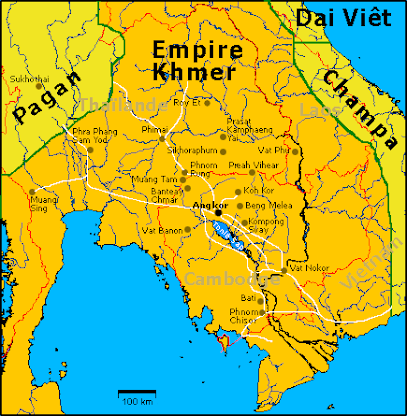
The discussion also covered issues about the rights of indigenous Khmers in Kampuchea Krom, an area of southwestern Vietnam that once formed the lower reaches of the Khmer empire.
Many Cambodians also migrated there during the Democratic Kampuchea era and want repatriation to their homeland.

"Then Khmer Kampuchea Krom come to live in Cambodia. We provide them with citizen rights as other Cambodians, which means they are not refugees on Cambodian land because they are Cambodians, and we recognize they are Cambodian citizens," Hor Namhong told the newspaper.
During the meeting, the United States asked for a continuous cooperation between the two nations to tackle these issues.
Meanwhile, the U.S. official said in a press conference at the U.S. Embassy on Thursday that Washington ranks Cambodia second among Asian countries in its efforts to combat human trafficking, reported the Koh Santepheap.
Ellen R. Sauerbrey urged Cambodia to draft a law on human trafficking, the Rasmei Kampuchea reported.
"We pay attention to human trafficking in all forms," Hor Namhong was quoted by the newspaper as saying.
Cambodia is writing the law and human trafficking, which occurs both internally and internationally, is a very complicated issue, said the Koh Santepheap.

Source: Xinhua Read more!

Thursday, February 08, 2007

A tough go for Vietnamese on floating houses in Cambodia


There are 6000 Vietnamese citizenship on the Tonle Sap Lake of Cambodia. They all claimed the lives are hard on their floating boat houses. Are they really unfortunate or they just really lucky to be there? With thousand and thousand of Vietnamese are living in Cambodia freely. And some Cambodians are no place to stay and facing hardship with the authorities.

Could Cambodian live in Vietnam freely like Vietnamese being in Cambodia? No, absolutely no. A single Cambodian show up in Vietnam will be jailed and accused all kind of connection with politic. The Hun Sen government is a corruption Chan making Cambodia border shrinking.

The largest freshwater lake in Southeast Asia, the Tonle Sap in Cambodia swarms with fishermen of Vietnamese origins eking out their daily existence on floating homes in extreme hardship.

Around 30km south of Pursat province, in Krako district, Thanh Nien newspaper met Nguyen Thi An, who said her family has always clung to fishing on this lake, also known as the Great Lake.

When Cambodia was at war years ago, she returned to Vietnam for shelter, and after the guns were silenced, she returned.

Apart from a black and white TV set, she owns practically nothing of value. Her eight children are all into fishing.

According to a commune official, over 6,000 people of Vietnamese origins live in the region, all on boats, sometimes dubbed floating houses.

Though there are no addresses here and their houses can literally move anytime and dock anywhere, an unwritten rule on location is deeply engrained.

Accordingly, boats that are tattered will be allowed by their sturdier counterparts to dock next to the shore, those in good condition dock further out and so on. This is understandable, as weak, makeshift boats cannot bear big waves far offshore.

Visiting this shoreward “houses” is a sore sight. Rows of dilapidated boats inched their way deep against the bank.

Tran Thi Hanh, 36 years old, owns what can at best be called the trunk of a boat. She had to hold the boat together with nylon bags to prevent it from breaking apart and water from seeping through.

She recalled one day when she was robbed, literally, of hook, line, and sinker and had to loan from her poor neighbors before her goods were sequestered.

Her husband had to hire himself out to ruthless employers.

Drawing on her painful experiences, she tipped Thanh Nien how to win a job interview.

“When an interviewer asked ‘are your eyes potato eyes or human eyes’, if the answer is human eyes, you will be disqualified. It must be potato eyes as they are always open. Then you have to work nearly 24 hours a day”

Poor opportunity for children
This lake also has schools offering elementary education. Nguyen Viet Dat proudly owns a school but his like many others is simply an 18 sq.m plank on a fishing vessel where students from 1st to 5th grade cramp inside.

Dat said textbooks are few and far between. Three and four students thus have to share one book. However, even this is better than a few years ago when he had to write everything on the blackboard as there was no book.

His school did not have any textbooks until recently when the Association of Vietnamese Expatriates in Cambodia supplied a few.

He said his “school” is still better than three others which received no support from the association and have to do without books.

Schools here only taught elementary education. Those wanting to further their education have to return to Vietnam or enroll in a more decent, pukka school in Cambodia. Very few were able to do that, he added.

Of the 600 children here, only one-third attend “school”.

His heart seemed to skip a beat when asked about the incoming Tet or the Lunar New Year, a
traditional, major holiday for the Vietnamese coming in nine days time.

This year, business is not good, fishermen suffer losses and so there’s little of Tet here. “Whenever Tet is mentioned, all of us feel sad and miss our homeland”.

Asked why they did not return to Vietnam since life is so hard here, Huynh Luy, president of the expatriates association explained that the repatriates would not have legal papers once in Vietnam, besides it will be very difficult for their children to be admitted to schools there.

Read more!

Cambodian forest home to many endangered birds

Scientists flock to remote region to study rare species
BANGKOK, THAILAND — Researchers in the remote forests of Cambodia said Wednesday they have discovered the only known colony in Southeast Asia of slender-billed vultures and scores of other endangered birds.

The colony was discovered last month in the jungles east of the Mekong River in Cambodia's Stung Treng Province.

"We discovered the nests on top of a hill where two other vulture species were also found," said Song Chansocheat, manager of the Cambodia Vulture Conservation Project.

"Amazingly, there were also a host of other globally threatened species of birds and primates," Song Chansocheat said in a statement. "It's a very special place."

The area was also found to be home to several other species listed as critically endangered by the World Conservation Union, including the white-rumped vulture, according to the New York-based WCS.

The team also spotted a red-headed vulture, giant ibis and an endangered primate called a silvered langur, or leaf monkey.

Researchers said slender-billed vultures have been found in other parts of Southeast Asia but that the only other known colony until now was in northern India. They are believed extinct in many parts of Southeast Asia, including Thailand. Read more!

Wednesday, February 07, 2007

World bank calls on Cambodia to curb child labour

The Cambodian government must do more to help more than 1.4 million of the country's children estimated to be working, many for 50 cents a day or less, the World Bank said in a report released Wednesday.

The bank said that although rates had probably improved on 2001 estimates of 52 per cent of seven to 14 year olds already at work, the number was still too high and urgent action was needed. It said children active in the labour sector had a drastic effect on school enrolment and school performance, and that could have negative impacts on the economy for years to come if the trend was not reversed.

"Cambodia has made a number of important legal commitments in the area of child labour, but important ambiguities and gaps in legislation relating to child labour remain," the report, entitled Children's Work in Cambodia: A Challenge for Growth and Poverty Reduction, said.

The report, dated December 2006, said of particular concern was that most of the child labour appeared to be concentrated in informal and family settings where the Cambodia Labour Law has not been extended. "This means family-based agriculture and domestic service are not covered by legislation," it noted.

"The Law also does not specifically define what constitutes child labour in terms of type of work, conditions of work, or work hazards. The enforcement of child labour laws is another major challenge facing the government."

It said that the government by its own admission currently does not have the capacity to properly enforce and monitor laws relating to child labour but that it should be made a priority for the heavily aid dependent nation if its development goals are to be reached. Read more!

Russia to negotiate WTO accession with Cambodia

07/ 02/ 2007

MOSCOW, February 7 (RIA Novosti) - Russia will start negotiations on its long-awaited accession to the global trade body with Cambodia in two weeks, Moscow's top negotiator said Wednesday.

To join the World Trade Organization, Russia must complete bilateral talks and sign bilateral protocols with all its trading partners in the organization. Moscow hopes negotiations with the Southeast Asian nation will mark the end of its 13-year marathon toward WTO membership.
"Cambodia has shown an interest in the Russian market," said Maksim Medvedkov, who heads the trade negotiations department in Russia's economics ministry.

Economic Development and Trade Minister German Gref said Cambodia, which became a WTO member in October 2004, had requested bilateral negotiations on Russia's WTO bid.

Trade between Russia and Cambodia currently totals only $5 million, with Russia importing Cambodian textile products and exotic fruit and vegetables, Medvedkov said.

Russia has completed bilateral talks with all 56 interested members of the 150-nation WTO, and plans to sign a protocol with Guatemala in the next two weeks, the official said. It is unlikely that any of the remaining 94 members will request talks with Moscow, he added.

"Most countries with which we have not conducted negotiations either have no interest in our market or agree to the current terms of entering our market," he said.

In late January, Russia completed talks in Geneva with another WTO trade partner and former Soviet ally, Georgia, which had withdrawn its signature from a bilateral protocol after Moscow banned key Georgian exports last March.

An official in Russia's economics ministry said after the Geneva talks that Georgia had removed all its objections but one - the closure of what it calls illegal customs checkpoints on the Russian border with Georgia's two self-proclaimed republics. Tbilisi says Russia must stop trading with the breakaway regions, and that all goods must pass through checkpoints run by the central government.

Medvedkov said the issue of Russia's trade with Abkhazia and South Ossetia was related more to customs administration than market access.

Russia signed a WTO deal with Moldova, another Western-leaning ex-Soviet nation that is already a member of the trade body, late last year after lifting a similar ban on Moldovan wine and meat exports.

In November, Russia secured a long-desired bilateral agreement with the United States, removing the last major obstacle to its WTO membership.

Russia also signed bilateral protocols with El Salvador and Costa Rica January 24, but has yet to sign a protocol with Guatemala.

The Economic Development and Trade Ministry expects to complete multilateral talks on the country's admission to the WTO by mid-2007. Read more!

World Bank will resume funding for Cambodia

PHNOM PENH, Cambodia: The World Bank said Wednesday it will resume disbursing money for three development projects in Cambodia after suspending aid last year due to alleged corrupt practices.

In a news release Wednesday, the World Bank said it decided to lift the suspensions after it had reached agreement with the government on frameworks for improving implementation of the projects, which dealt with land management and administration, provincial and rural infrastructure, and provincial and suburban water supply and sanitation.

In June last year, the bank froze US$7.6 million (€5.8 million) in funding for the projects, saying it had discovered evidence of fraud and corruption in the procurement process.

The government of Prime Minister Hun Sen angrily denied the allegations, saying there was no proof of wrongdoing.

"Implementation of these frameworks should reduce the fiduciary risks associated with World Bank financed projects and ensure that the funds are being used for their intended purposes," Ian Porter, the bank's country director for Cambodia, was quoted saying in the bank's statement.

It added that the government is also establishing anti-corruption action plans for all World Bank financed projects.

They include measures to strengthen procurement procedures, financial management processes, staff conduct, complaint mechanisms and disclosure and internal controls. One of the key measures is the delegation of procurement for World Bank-financed projects to an independent international firm, the statement said.

Khieu Kanharith, the chief government spokesman, could not be immediately reached for comment. Read more!

Tuesday, February 06, 2007

Cambodia: Khmer Rough prison survivor wins Rights award

(New York, February 6, 2007) � Cambodian writer and artist Vann Nath is among a diverse group of writers from 22 countries to receive the prestigious Hellman/Hammett award, which recognizes courage in the face of political persecution, Human Rights Watch said today.

He is the eighth Cambodian to win the award since 1995. Vann Nath, 62, is one of seven survivors of the Khmer Rouge secret prison known as Tuol Sleng or S-21, where 14,000 men, women and children were interrogated, tortured and executed during the 1975-79 Pol Pot regime. He is a torture survivor and experienced appalling conditions, including near starvation, during his time at the prison.

"Vann Nath is an important painter and writer whose memoirs and paintings of his experiences in the Tuol Sleng prison are a powerful and poignant testimony to the crimes of the Khmer Rouge," said Marcia Allina, who coordinates the Hellman/Hammett program.

Today, Vann Nath is an outspoken advocate for justice for victims of the crimes of the Khmer Rouge. His 1998 memoir about his experiences at S-21 is the only written account by a survivor of the prison. He will likely serve as an important witness in the tribunal being organized by the United Nations and Cambodia to bring former Khmer Rouge leaders to justice.

Vann Nath is one of Cambodia's most prominent artists. It was this skill that kept him alive at S-21. His life was spared by his jailers so that he could be put to work painting and sculpting portraits of Pol Pot. He has played an important role in helping to revive the arts in Cambodia after decades of war and genocide.

Vann Nath's first effort to document in writing his experiences under the Khmer Rouge resulted in "A Cambodian Prison Portrait: One Year in the Khmer Rouge's S-21 Prison." The book was published in English in 1998 and is currently being translated into French and Swedish.

During 2001-2002, Vann Nath worked intensively with Cambodian filmmaker Rithy Panh in the preparation of a documentary film entitled "S-21: The Khmer Rouge Killing Machine." Vann Nath is extensively featured in the film, in which Panh brought together former prisoners and guards and filmed them, on site at the former prison or at the killing field known as Choeung Ek. With great dignity, survivor Vann Nath confronts and questions his former torturers.

Despite battling long-standing health problems, including chronic kidney disease, Vann Nath continues to paint and write about his experiences under the Pol Pot regime.

"Recognizing courageous writers and torture survivors such as Vann Nath, who continue to speak out about injustice, torture and impunity, highlights the need for justice for past atrocities," said Allina. "Like the other Hellman/Hammett grant-winners, Vann Nath is also living proof of the need for greater human rights protection today."

Human Rights Watch administers the Hellman/Hammett awards, given each year to writers around the world who have been victims of human rights violations or targets of political persecution.

More than half of this year's 45 awardees hail from three countries � nine are from China, eight are Vietnamese, and seven come from Iran. All three countries have harassed and persecuted journalists, poets, playwrights, essayists, bloggers and novelists who dare to express ideas that criticize official public policy or people in power.

Among this year's recipients is Chinese poet Huang Xiang, 65, who spent more than 12 years in Chinese work camps and prisons as a result of ideas expressed in his poetry. Also recognized this year is Vietnamese democracy activist Nguyen Vu Binh, 38, who is currently serving a seven-year prison sentence for articles he wrote criticizing the government and calling for democracy. Read more!

China : Hongdou Garment to set up production base in Cambodia

February 5, 2007

Managing Director Wang Zhu Qian, Hongdou Group, revealed on January 30 that the board of directors had approved the plan of investing about 300 million yuan to build a factory in Cambodia after Chinese Spring Festival. All of its products will be exported to different market.

It is reported that this strategy is an attempt to avoid the textile restrictions imposed by the US and EU, because Cambodia dose not face such restrictions. In addition, China’s land, water, manual labor costs have continued to rise, while Cambodia and other countries have certain advantages in these areas.

Earlier, the company established its own factory in Wuxi Industrial Park. They also spent more than one year to make investigations in Cambodia and Vietnam. Cambodian local government warmly welcomed the Group to establish factory in their place. Group achieved annual sales of 14.3 billion yuan in 2006, of which 10 million came from exports.

Europe and the US markets accounted for 70 percent of the group’s total exports. It is revealed that the group exported over US $60 million of textile products in 2005. And the export amount surpassed $100 million in 2006. Read more!

Singapore embassy in Cambodia to host show on bilateral art

The Singapore Embassy is to present an art exhibition and talk to highlight bilateral art on Wednesday, said an embassy press release received on Tuesday.

The exhibition will feature new works by Cambodian artist Chhim Sothy entitled "Gold Leaf on Wood," while Joyce Fan, curator at the Singapore Art Museum, will present a talk on Singapore art entitled "Pioneering Art in Singapore," it said.

The exhibition and talk are the first in a series of events, which the Embassy plans to hold over the year aimed at showcasing the arts of Singapore and Cambodia as well as promote cultural linkages between the two countries, it said.

Chhim Sothy's exhibition will feature exciting new art works involving traditional Khmer mythological tales and figures in gold leaf painted on old wood, including door panels, tree bark and window frames.

Meanwhile, Joyce Fan will speak on the different art forms and expressions that emerged in Singapore from the British colonial days, the post-war struggle for independence to the period of economic development.

She will also introduce local artists whose works were in response to the changes in Singapore and the impact it had in shaping artistic expressions.

Source: Xinhua Read more!

USAID cuts anti-human trafficking funding in Cambodia

The USAID is reducing funding for anti-human trafficking NGOs in Cambodia over the next 20 months from 4.5 million U.S. dollars to 2 million U.S. dollars, the Cambodia Daily said on Tuesday.

The USAID will now focus less directly on combating human trafficking and more on government issues, anti-corruption, and strengthening the rule of law, the paper quoted U.S. Embassy spokesman Jeff Daigle as saying.

The decision was made in Washington, and was related to "budget constraints", Daigle said, adding that the funding cut does not indicate the USAID is unhappy with the way its funds have been used.

"The root causes of (human trafficking) are poverty and poverty is linked directly to poor governance," he wrote in a recent e- mail.

"The USAID programs focusing on anti-corruption and more engagement with the judiciary will address these governance problems, and thus, to some extent, trafficking issues," he said.

The USAID has no plans to directly fund the Cambodian government to combat trafficking, he added.

The NGOs who had been set to receive the USAID funding between Jan. 2007 and Oct. 2008 include World Vision Cambodia, Catholic Relief Services, International Justice Mission, Hagar and World Hope.

Source: Xinhua Read more!

Holiday meals, being fears of brid flu


Cambodia has stepped up its precautions against bird flu, amid fears the huge demand for chicken over Chinese New Year could heighten the risk of new outbreaks, according to a health official.
Health officials have been ordered to strictly enforce a ban on poultry from the country's neighbours following recent outbreaks of bird flu in Vietnam and Thailand, said Kao Phal, director of animal health at the agriculture ministry.
"We are afraid that poultry will be smuggled from neighbouring countries that have been hit by bird flu," Kao Phal told AFP.
He said an order to strengthen monitoring and to prevent transportation of poultry was issued on Monday to health officials along the borders and across the country.
Ethnic Chinese and Vietnamese in Cambodia will celebrate the Lunar New Year starting this weekend, often using chickens as religious offerings.
"There could be shady business people importing poultry from neighbouring countries, which could cause the spread of bird flu into Cambodia and affect the health of people and birds," the order said.
Only local poultry with documents guaranteeing their safety will be allowed to be transported around the country.
Cambodia last reported an outbreak of the deadly avian flu last September, but officials have warned that smuggled poultry poses a threat to the country, where six Cambodians have died of the H5N1 strain of the virus since 2003.
Tens of thousands of birds -- mostly chickens and ducks -- have been slaughtered to prevent the spread of the virus.
Cambodia has been praised by the United Nations for its rapid action against bird flu, which has helped spare it from the human and poultry deaths suffered by its neighbours.
But health officials also warn that the virus could go undetected in the countless small family farms where most of Cambodia's poultry are raised.
A massive public information campaign featuring posters and television and radio spots was launched last year in a bid to educate the largely rural public about bird flu.
Bird flu has killed more than 150 people worldwide since late 2003 and fears remain that it may become a far more highly contagious disease that could trigger a deadly, global pandemic.
Read more!

Swiss President arrives in Cambodia on state visit

Swiss President and head of the Federal Department of Foreign Affairs Micheline Calmy-Rey arrived here on Monday to pay a state visit to Cambodia.

Calmy-Rey is scheduled to visit Cambodia from Feb. 5 to 7, at the invitation of King Norodom Sihamoni, said a press release from the Cambodian Ministry of Foreign Affairs and International Cooperation.

During the visit, Calmy-Rey will be received by King Sihamoni and meet with Prime Minister Hun Sen, the press release said.

She will also hold talks with Hor Namhong, Deputy Prime Minister and Minister of Foreign Affairs and International Cooperation of Cambodia, it said.

Besides, Calmy-Rey will visit Pediatric Hospital of Dr. Richner and the renovation project of Banteay Srei Temples in Siem Reap, it added.

Source: Xinhua Read more!

Monday, February 05, 2007

Calmy:Rey visit to Asia aims at new horizons

Swiss president Micheline Calmy:Rey is starting an official week:long visit to Cambodia and Indonesia on Monday.

While former French protectorate Cambodia is still trying to shake off its difficult past, Indonesia is undergoing a boom and is becoming an economic and political power in south:east Asia.

This initial part of Calmy: Rey's first trip abroad as Swiss president ? she is also the foreign minister ? will be devoted to marking a special anniversary. It is exactly 50 years since Switzerland recognised Cambodia on a diplomatic level.

In Phnom Penh, Calmy:Rey will meet King Norodom Sihamoni and other high:ranking officials to discuss economic, development, human rights and governance issues.

Apart from the events surrounding the anniversary, also on the agenda are visits to several Swiss development cooperation projects.

These have set priorities : Cambodia is still in a poor state of development and depends on international aid, which makes up almost two thirds of the kingdom's budget.

Calmy:Rey will therefore go the hospital at Kantha Bopha, one of four large health centres for children set up by Swiss doctor Beat Richner, with help from Swiss donations and funding from the government ? set to rise to SFr3 million ($2.4 million) in 2007.

"Beat Richner's projects contribute in a substantial way to the functioning of the Cambodian health system," Swiss foreign ministry spokesman Lars Knuchel told swissinfo.

Indonesia

On Wednesday Calmy:Rey is due to move on to Indonesia, a country that is undergoing a development boom ? the growth in gross domestic product for 2007 is estimated at six per cent ? and is one of the most densely populated countries in the world.

"Indonesia is becoming an important political and economic partner. Switzerland is therefore very interested in broadening its relations with this country," said Knuchel.

According to Massimo Baggi, in charge of the Asia and Oceania department at the State Secretariat for Economic Affairs (Seco), practically all the large Swiss companies are active in Indonesia.

"It's a huge market, with many raw materials and which is developing well from a macroeconomic point of view. Our commercial relations are good and potential for growth is not lacking," he told swissinfo.

In the capital Jakarta, after meeting the authorities, Calmy: Rey will hold talks with leaders from different religions in the country, which is majority Muslim.
Coexistence

The problem of the coexistence of different cultures and religions is very topical in Indonesia, particularly given the backdrop of international tensions. In the past the country has been hit several times by attacks from Islamic groups.

"I have the impression that things are starting to normalise, even if some uncertainties remain," said Baggi. "It is however clear that security and stability are vital for economic relations."

The Swiss delegation will conclude its south:east Asia visit on Saturday, February 10 with a trip to the Indonesian province of Aceh, at the northern tip of the island of Sumatra, which was hit hard by the 2004 tsunami. The wave left almost 170,000 people dead and a huge amount of destruction.

In Aceh, Calmy: Rey will be inaugurating an important drinking water plant which has been rebuilt using Swiss funds at a cost of SFr4 million.

"In the framework of humanitarian aid and reconstruction after the tsunami, Switzerland has up until now invested altogether around SFr12.5 million in Indonesia," said Knuchel.

The Swiss government has for some time been supporting the peace process in Aceh, which from 1976:2005, was in the throws of a secessionist conflict.

swissinfo, Marzio Pescia Read more!

Cambodia's Highway 78 link with Vietnam's border upgraded


12:57' 05/02/2007

VietNamNet Bridge – The upgrade of Cambodia's Highway 78 which links with Vietnam's border started in Ban Lung town in the border province of Rattanakiri on February 4.

The 70km-long and 9m-wide Highway 78, which runs from Ban Lung through Bokeo and Oyada towns in Cambodia to Vietnam's border-gate Le Thanh, will be completed in 30 months at a cost of US$25.8mil, paid for by the Vietnamese Government's preferential credits.

Speaking at the upgrading ceremony, Deputy Prime Minister Truong Vinh Trong said that the two countries' cooperation in the upgrade project does not only affirm the efforts and determination to strengthen bilateral ties by both the Vietnamese and Cambodian Governments and people but also reflects time-honoured friendly cooperation between the two countries.

As soon as it is completed, the highway will benefit the Cambodian people and the Laos-Vietnam-Cambodia development triangle as it will create an additional East-West corridor connecting Cambodia's Rattanakiri Province with the Central Highlands and central sea ports in Vietnam, said Deputy PM Trong.

Cambodian Prime Minister Hun Sen expressed his thanks to the Vietnamese Government and people for their whole-hearted support for Cambodia in upgrading its Highway 78.

The upgrade of Highway 78 is necessary for Cambodia's northeastern provinces, facilitating the exchange of farm products and other commodities in the region, elaborated PM Hun Sen.

This is an initial step for Rattanakiri province as well as Cambodia to integrate into the development triangle area, he affirmed.

The Cambodian PM also thanked the Vietnamese Government for its help in building a boarding school in Ban Lung town and a market in the centre of Oyada Town in Rattanakiri Province.

In the context of many difficulties, the sharing and assistance of the Vietnamese Government and people to the Cambodian Government and people re-affirmed the solidarity, friendship and cooperation between the two nations and people, which have been fostered through many historical periods, noted the Cambodian Governmental leader.

(Source: VNA)
Read more!

Sunday, February 04, 2007

Man banished to the land his family once fled


By Kristi Heim

Seattle Times staff reporter

CHAMCAR SVAY, Cambodia — In this lush countryside, rice farmers toiling in the harsh sun shade themselves with straw hats or traditional head scarves.

Ho Beua stands out in his purple Washington Huskies baseball cap. Beua is surely the only farmer in this tiny village who once enjoyed a prosperous life in Seattle, days when his only care in the world was whether his favorite team would beat the Cougars.

At 41, Beua now works the fields from sunrise to sundown. He worries about whether he will grow enough rice to eat this year or catch enough minnows to eat that day. Or how his three children will grow up without him in the United States, a place he may never see again.

Beua left Cambodia as a child when his family fled the murderous Khmer Rouge regime, an experience that still haunts him. The family came to the United States as refugees when he was 14 and settled in Bellingham.

But in 2004, Beua was expelled, part of a wave of 1,500 Cambodians ordered sent back to the Southeast Asian nation for committing crimes the U.S. government has deemed "deportable offenses."

In America, Beua was no angel. But he never imagined one of his missteps — a drunken fight with his girlfriend — would send him back to Cambodia 25 years later.

"I regret I threw that punch," he said. The situation has thrust returnees like Beua into a strange limbo. They didn't become U.S. citizens, which would have protected them against deportation. But they did become thoroughly Americanized, making it difficult to fit back into their native country.

For Beua, deportation has sent his life on a strange journey backward. The former welder, who once earned $2,000 a month at a Kirkland factory and spent weekends salmon fishing with his brothers, now ekes out a living as a subsistence farmer.

But the hardest thing, he said, is facing a life without his children and his parents.
I miss them all the time," he said. "If I don't think about it, it's OK. If I think about it, it's not OK. It's too hard."

Beua arrived in Phnom Penh 2-½ years ago with a single lifeline — a fellow Cambodian had given him the name of his relatives in the remote village of Chamcar Svay. As soon as Beua was released from immigration jail, he headed there.

What he found was a place stuck in another time. Cows pull wooden carts, there's no electricity or running water, and some thatched houses are barely patched to keep the rain out. After a storm, villagers have to wade through ankle-deep muddy water.

Beua quickly landed in the hospital after eating something that caused him to vomit blood for a week. The sickness lasted a month.

Ry, a relative of the Cambodian man who helped Beua find a place to stay, sat with him in the hospital, then took care of him at home every day until he recovered. A month later, they got married.

Ry is pregnant. At 28, she has a shy demeanor and a face that shows the strain of a hard rural life. Ry said she is grateful Beua can help her family, including her young daughter.

Though he loves his new family, Beua says, "If I had a choice I wouldn't be here. But now I'm stuck here."

At home in Marysville, Beua's 65-year-old mother, Ngoy Ngep, agonizes over her eldest son's banishment to a place the family escaped in 1976.

With Pol Pot's henchmen on their heels, the family fled to the Thai border by foot, sleeping at night in wet rice paddies. During the two-day journey, her father, sisters and nephews were killed by the Khmer Rouge.

Somehow, Ngep survived and kept her own family of seven children intact. Until now.
"I miss him, I love him. But too far," she said, looking down at her hands. Her soft voice trails off as she begins to cry.

Beua's father, 68-year-old Beua Pruel, doesn't understand what happened to his son, but he is less sympathetic. "If he was a good guy, they wouldn't send him back," he said.

Ho Beua was one of many refugees caught up in a 1996 immigration-law change that greatly expanded the list of crimes committed in the U.S. that would lead to deportation.

The changes also made it much more difficult to get waivers, which in the past had been granted to offenders who had been rehabilitated or could show deportation would hurt family members.
Lacking extradition agreements with Cambodia, Vietnam, Laos and other countries, the U.S. could not send refugees from those countries back immediately.

Following the Sept. 11 attacks, the U.S. pressured Cambodia to sign an extradition treaty. It was signed in 2002, setting Beua's departure in motion.

Nothing came easy for Beua in America. He didn't know a word of English when he first arrived, struggled in school and dropped out of ninth grade when he was 19.

And he had difficulty coming to terms with his past. When the family gathered at home to watch "The Killing Fields," a movie depicting the Khmer Rouge atrocities, Beua got upset and refused to join them.

"He didn't talk about it much," a brother recalled. "The times he did, he cried." Beua had a lengthy record of run-ins with the law, including convictions for drunken driving and assault. In 1996, Beua spent four months in jail on an assault charge for hitting his girlfriend. She bailed him out, and eventually they had a child together.

That crime led to his expulsion eight years later. His family, left behind, has paid a high price.
Beua had been raising his teenage daughter, Shantel, now 16, by himself in a Mountlake Terrace apartment. The two had grown close.

These days, Shantel and Beua's son, Anthony, 19, avoid talking about their father's absence. They now live with Beua's sister-in-law, Marissa Beua, in Marysville.

"They can't face that their dad is in Cambodia," she said. "It hurts them too much." Anthony, tall and handsome, looks like an Asian rapper in a plaid shirt, loose jeans, gold earrings and a baseball cap. Asked how he's coping without his dad, he replies "I'm cool." But after a few minutes, he chokes up and leaves the room.

Beua's youngest son, Tapi, turned 10 last year and lives with his mother in Ferndale. Ho Beua hasn't been able to reach Tapi by phone for months.

In all, more than 160 Cambodian refugees have been deported since 2002, about a dozen from Seattle. The last wave was in December, and hundreds of others in the pipeline may be sent back at any time.

Some were hardened criminals taken right after prison. Others, like Beua, left steady jobs, families and lives they had worked to rebuild.

Unprepared for life in Cambodia, some fall into local gangs, drive loud dirt bikes through the streets in a show of bravado, and use readily available drugs. A few have become monks; about a dozen have gone to prison.

The readjustment problems were so severe that the U.S. government began funding a nonprofit organization in Phnom Penh to assist the deportees. Now called the Returnee Integration Support Program, it teaches basic survival skills, including Cambodian culture and language.

Many Cambodians are wary of the returnees. Some are amazed anyone could fail in a place like America: One saying in Cambodia goes, "They couldn't make it in heaven, so they were sent back to hell."

Beua spent his first week in Cambodia in a local immigration jail. He had no friends or relatives in the country, uncertain of what to do next or where to go. "It was like, man, I'm lost. I don't know any of these people," Beua said. Cambodia seemed the recurrence of a bad dream.

He remembered days of hard labor and nights of fear as a boy under the Khmer Rouge, which killed as many as 2 million Cambodians. "I was starving," he said. "I had to go steal at night just to feed my little brothers and sisters. If I got caught, it was death."

In Beua's new home, reminders of that time crop up unexpectedly. Land mines still litter the terrain around Chamcar Svay. Beua and his wife were picking bamboo shoots in the nearby mountains recently when he almost sat on an unexploded grenade.

To his neighbors, Beua is still the American. He can speak Cambodian but he can't read or write it. No one around speaks English, so he sometimes resorts to talking to himself.

"Too bad about the Seahawks," he greets his visitor from Seattle. He carries a mobile phone, a treasured connection to the world outside the village, and keeps up with Seattle sports teams in weekly phone calls from his mother in Marysville.

Dressed in the clothes he packed from Seattle two years ago — long gray denim shorts and a microfiber T-shirt, he is 30 pounds lighter with skin baked deep brown by the sun. "A couple months in the rice field," he explains.

Watching the frail and stooped man who is now his father-in-law, Beua learned to plow the fields, transplant rice seedlings and cast a fishing net.

It's a far cry from grabbing his fishing poles and driving to Edmonds, where his last photo in the U.S. was taken. The framed picture shows Beua proudly displaying a giant salmon caught off the pier.

His wife says the family depends on him to eat. But without money sent by his relatives in Marysville, he couldn't survive, let alone buy any extras such as mosquito repellent, clothes for the kids or a TV.

Even by Cambodia's modest standards, Beua struggles. He dismisses suggestions he look for work as a welder or a tour guide. In Cambodia, he has no connections or education. And workers make about $30 a month, what he used to spend on dinner in the States.

Beua's home consists of two raised wooden platforms covered in plastic mats and protected by a long thatched roof. In the back of one platform is a makeshift stove. The other platform holds a television and stereo and functions as sleeping quarters for eight people.

"We eat here, we sleep here," he said. "It's what I call a shack. A shelter is better than this. A house got walls, lights, a bathroom."

A large clay urn holds rainwater for drinking and cooking. Another holds river water for bathing. His meal today consists of tiny silver minnows he caught in the river and grilled over an open fire. "What you see today, it's gone tomorrow," he said.

Even in this remote village, one thing brings Beua instantly back home to Seattle. "I want to get depressed, I just pull these out," he said, retrieving four scratched and grimy CD cases: Dr. Dre, Mariah Carey, a hip-hop mix and Journey.

He doesn't play them too often because it's like opening a wound. But today he's already thinking about the past. He takes out a Thunder Lite car battery, clamps cables to each side of the battery like jump-starting a car, and then powers the stereo up. He puts on a Journey song: "Don't stop believin', hold on to the feelin'... "

The music makes him cry.

"Whenever we got together for Christmas or birthdays we listened to it," he said. It's hard to imagine Beua, this weary, middle-aged farmer, young and free and cruising past the lights of downtown on the way to a party. "I thought I had everything set," he said.

In the oppressive afternoon heat, he sits on the wooden platform, batting away mosquitoes.
Read more!