The land of heroes
Our heroes
Our land
Cambodia Kingdom


Thursday, January 12, 2012

Vagabond Tales: Lunch on Guilty Beach, Cambodia

by Kyle Ellison (RSS feed)
Lunch on Guilty Beach was a tough meal to swallow

If you look on a map of Sihanoukville, Cambodia, you'll find beaches such as Victory Beach and Independence Beach, but you'll find no such place as Guilty Beach. Regardless of what a map might say, unofficially, every beach in Cambodia is Guilty Beach.

Guilty Beach is not just a Cambodian phenomenon, but rather a global destination that can be found along coastlines the world over. It's in Los Cabos, Mexico, in the shadow of the famous Cabo arch. It's in Jaco, Costa Rica, backed up by sagging palm trees and world class surf. It's in Asilah, Morocco; it's in Mabul, Malaysia. Guilty Beach is every beach in the world where those unfortunate individuals living well below the poverty line--many of them children--work the beach in the hope of squeaking out much less than a living; most likely, they're just trying to make that night's dinner.

While beach merchants and scam artists can often be viewed as hawkers selling goods you would never want, Guilty Beach, Cambodia is thusly labeled because here it is different. Children don't prod you to buy some fake sunglasses--they simply ask for a bite of your food. Men don't sell knockoff jewelry for extra beer money. Rather, children sell bracelets while carrying their infant brother in their arms because their parents are too sick, or worse, dead.

Guilty Beach is thusly named because I no longer want that $2 plate of fried noodles, or that $1 can of beer. How can I accept that $2 plate of food when I just told an 11 year-old girl I didn't want her $2 bracelet? Then to eat it in front of her, as her eyes fail to flinch from the fried fare before me.

So why not buy the $2 bracelet? Why not donate my meal? Because the sad reality is knowing you cannot help them all; that there are no amount of bracelets that will heal this heart wrenching dilemma. Furthermore, the precedent set by rewarding begging can be far more disastrous than the apparent problems you're trying to prevent.

Finally, it's a somber truth knowing that these innocent faces, with bulging stomachs and bulging eyes, are merely working for someone above them, whether it's family or otherwise. The average tourist won't buy sliced mango from a fully grown man, but they'll open up their wallet for a child. And sadly, everyone knows it. These are merely conscripted child soldiers in a brutal reality of poverty and survival.

"They tell us to say that," the little girl confesses. She has just asked us to "open our hearts by opening our wallets." It's a heavy line that's been proven to work.

How do you deny an 11 year-old girl of $2 while she holds an infant and tries not to cry? How do you not look at all of them, 20 or 30 deep, wishing you could buy all of their bracelets so they can go play in the water like all 9 and 11 year-olds should?

Even if you buy them from two, three, or eight different children, eventually you have to tell one no, and is their pain dampened any by the fact you just helped the eight previous? The guilt is nonetheless the same. A line intrinsically must be drawn somewhere, but that line never gets any less painful, or justifiable. We gave the girl $1 for a smaller bracelet, and she left despondently, a sense of failure in her face. Nobody wins in this game.

Even more, who am I that you should even feel the need to beg to me? I don't deserve this phony pedestal you place me upon. I don't deserve this plate of food you lust after. I don't deserve to sit on this beach, in this comfortable chair, and lead an easier life than you.

Lunch on Guilty Beach was a tough meal to swallow.
Read more!

Minister: ASEAN wants more Indian visitors


Tourism and Creative Economy Minister Mari Elka Pangestu
  Image via indonesia-oslo.no
 Indonesia's Tourism and Creative Economy Minister Mari Elka Pangestu said on Wednesday that ASEAN targeted to boost the number of Indian tourists visiting the region.

“The number of Indian tourists coming to the region has been increasing from year to year. The growth has been improving,” Mari said on the sidelines of the ASEAN Tourism Forum in Manado, North Sulawesi.

“Indian tourist arrivals to the ASEAN region stood at 14 million last year. The trend has shown an improvement [in the number of tourist arrivals],” she added without further elaboration.

To lure more tourists from India, the minister continued, ASEAN would open a representative office in Mumbai to promote the region’s tourism to Indian residents.

ASEAN tourism ministers will sign a Memorandum of Understanding (MoU) on the tourism cooperation with the Indian tourism minister on Thursday.

Indian Tourism Minister Subodh Kant Sahai said that he hoped the cooperation would boost the number of tourists bound for India from the region.

“We have heritage, historical and religious tourism - everything is there. ASEAN countries share cultural roots with India somehow. [The cooperation] is a great thing,” Sahai said.

Mari said that she hoped the cooperation would boost the number of tourists from India to Indonesia.

“The number of Indian tourists coming to the region is still low compared to that of our other counterpart countries like China or South Korea,” she said, citing a lack of flight routes connecting the two countries as one of the reasons for the low number of Indian tourists coming to Indonesia.

"I hope [national flag carrier] Garuda Indonesia will open routes to India," Mari said.

According to the Central Statistics Agency, the number of Indian tourists coming to Indonesia reached 149,432 in 2011, increasing from 137,027 in 2010.
Read more!

Cambodia: Release peaceful protesters detained over forced eviction

 
The women and children are some of Cambodia’s poorest, most vulnerable people – and when they’ve stood up for their legitimate rights they’ve been rounded up and locked away.

            Some 300 families in Borei Keila had their homes destroyed on 3 January 2012


The Cambodian authorities must immediately release 24 women and six children detained yesterday while peacefully protesting their forced eviction.

The group of 30 were arrested while protesting last week’s violent forced eviction of some 300 families from the poor Borei Keila neighbourhood of Phnom Penh.

“These people never should have been arrested in the first place,” said Donna Guest, Amnesty International’s Deputy Director for the Asia-Pacific.

“The women and children are some of Cambodia’s poorest, most vulnerable people – and when they’ve stood up for their legitimate rights they’ve been rounded up and locked away. This kind of heavy-handed intimidation must stop.”

On 3 January, the families’ homes were destroyed by construction company workers accompanied by a heavy security presence. Human rights monitors and media reported that security forces used tear gas and rubber bullets against residents in an apparent use of excessive force.

Rocks, logs and bottles were thrown during clashes, and at least eight residents were arrested and remain in detention. More than 64 people were reportedly injured in the eviction.

“The authorities need to initiate a full and independent investigation into allegations of excessive force, and into why the forced eviction happened in the first place,” said Donna Guest.

The 30 women and children detained on 11 January are being held in Prey Speu Social Affairs Center in Phnom Penh, a facility regularly used by authorities to arbitrarily detain homeless people, drug users and sex workers rounded up from the streets. Human rights NGOs have reported that some detainees there have been raped or even murdered in the past.

“We have serious concerns that the 30 women and children arrested yesterday are at risk of ill-treatment,” said Donna Guest.

Amnesty International is also calling for the eight people detained during the 3 January eviction to be released, pending further investigation.

Forced evictions are a breach of Cambodia’s obligations under international human rights law, which prohibits evictions without assurances of adequate alternative accommodation, adequate notice, proper consultation, or legal safeguards.

Most of those evicted have been moved to two separate sites. Conditions at one site, Srah Po, are reportedly poor with no adequate sanitation or housing. Some families are living under tarpaulins, and others have not been given any land to settle on at all.

Borei Keila has been the home to a large poor urban community for many years. The government designated the area as a ‘social land concession’ in 2003, sharing land with a private developer which promised to build housing for the poor.

However in April 2010, the developer claimed that it could not afford to build all of the housing it had promised. The 300 families have been protesting against the company and local authority since then.
Read more!

Wednesday, January 11, 2012

Cambodia to call for lifting of economic sanction against Myanmar

SIEM REAP, Cambodia (Kyodo) -- Cambodia will call for the lifting of economic sanctions against Myanmar, acting in its capacity as new chair of the Association of Southeast Asian Nations, Cambodia's top diplomat said Tuesday.

Cambodian Foreign Minister Hor Namhong told Kyodo News in an interview that a statement calling on the removal of sanctions will be made when Cambodia hosts the 20th ASEAN summit in April.

"Myanmar has made good progress in democratization and, therefore, we (ASEAN) and as well as the international community should have a new position on Myanmar," Hor Namhong said.

Hor Namhong made the pledge after he met Myanmar's Foreign Minister Wunna Maung Lwin in Siem Reap.

Hor Namhong and Wunna Maung Lwin were in Siem Reap for an informal ASEAN ministerial meeting.
Read more!

Justice officials in GMS countries meet in Cambodia to strengthen human trafficking co-op

PHNOM PENH, Jan. 11 (Xinhua) -- Criminal justice practitioners from the Greater Mekong Sub-region (GMS) countries gathered here on Wednesday to strengthen international cooperation on human trafficking investigations and prosecutions.

Speaking at the opening ceremony, Ang Vong Vathana, Cambodia's minister of justice, said that the meeting was very important to accelerate inter-governmental efforts in collaboration with local and international organizations to fight against human trafficking in persons.

"It is essential to develop realistic and effective cooperation in the criminal justice system to remove impunity for traffickers and to provide justice for victims," he said.

"It was also crucial to urge member states to strengthen cross- border cooperation in law enforcement among the six GMS countries to combat trafficking through criminal justice process," he added.

The minister said that the meeting was held under the framework of the COMMIT (Coordinated Mekong Ministerial Initiative Against Trafficking) Memorandum of Understanding that was signed in 2004 by the ministers representing the six member states of the Greater Mekong Sub-region (GMS) including China, Myanmar, Thailand, Laos, Cambodia and Vietnam.

The 3-day meeting was attended by senior justice officials from the GMS countries including Han Xiaofeng, division chief of the investigation department of China's Supreme People's Prosecutoriate, police captain Soe Tint at the department of transnational crime of Myanmar Police Force, Police Lt. Col. Paisith Sungkgahapong, senior special case inquiry official at the Supervising Anti-Human Trafficking Center of Thai ministry of justice.

Also attending the meeting were Thoummaly Vongphachan, director of Lao's Counseling and Protection Center for Women and Children, Ith Rady, undersecretary of state at Cambodia's ministry of justice, and Truong Thi Huong Mai, deputy head of section at Vietnam's department of prosecution service for felony cases.
Read more!

Debt fears for farmers Calls for lower microfinance rates

By Don Weinland and May Kunmakara


Government officials yesterday said high interest rates at Cambodia’s microfinance institutions were unsustainable and posed risks for social instability among the country’s farming population.

MFIs, however, said loanees were well informed of default risks, and that the institutions provided a service unavailable elsewhere in the Kingdom.

Small loans at Cambodia’s MFIs carry monthly interest rates as high as 4 per cent, Kalyan Mey, a senior advisor to Cambodia’s Supreme National Economic Council, told the Post yesterday.

At the highest, yearly rates on the loans can hit nearly 50 per cent without compound interest, which is unsustainable for Cambodia’s rural economy, he said.

“It’s too high to justify any productive gain from the farmer who raises pigs or grows rice,” Kalyan Mey said of the more than US$500 million MFI industry.

“Most farmers can’t assess the associated risks, and they don’t foresee the [possibility] of losing the property they have mortgaged,” he said.

“At the end of the day, many farmers will lose their houses and land. It can become a big social problem for the rural community.”

While some rural borrowers take loans for farming inputs such as fertiliser and rice seeds, others go into debt on hospital bills and wedding expenses, said Kalyan Mey.

Default in the countryside translates into social instability as some farmers become landless. MFI operating costs are high. Each individual farmer must be consulted for loans, which average at about $500. In addition, a majority of Cambodia’s microfinance has foreign backers who demand higher profit margins.

These free-market forces are a “very big problem” for farmers who take loans from MFIs, Son Koun Thor, president of Cambodia Rural Development Bank, said yesterday.

Given the Cambodian government’s commitment to an open market, increased competition among MFIs, and continued decreases in rates, is a solution to debt pressure on farmers, he said.

Cambodia Rural Development Bank was originally established to fund MFIs, and it is negotiating with the 10 institutions it supports to continue lowering rates, Son Koun Thor said.

A stronger government hand in the industry may be required to keep interest rates down, he said.

Sim Senacheert, general manager at Prasac Microfinance Institution, denied that rural borrowers were unaware of lending-practice risks.

During a consultation process, as well as at the time of lending, the MFI reviews the details of the loan, he said.

“I don’t believe they are uninformed. Our clients have been taking loans from us for 10 years,” Sim Senacheert said, adding that 30 per cent of Prasac’s loan portfolio was in agriculture. The default rate across Prasac’s entire loan portfolio was 0.14 per cent, he said.

“They know how to calculate the interest rate.”

Although interest rates have fallen since 2004, Sim Senacheert said operating costs still kept MFI rates high. Prasac has 24-per cent annual interest rates with an average loan size of $900, he said. If interest was too high, he said customers would go to other lenders.

Some farmers do go to unofficial lenders who are more accessible in their communities.

Ly Thet, a corn and cassava farmer in the Stung Kach commune of Pailin province’s Sala Krao district, said he recently borrowed $350 with an interest rate of about 48 per cent from a local businessman.

Farmers in the community are generally unaware of borrowing practices and often take to the simplicity of high-interest loans from unofficial lenders, according to Ly Thet.

“People here normally receive loans from businessmen because it is easy,” he said.

Many farmers who borrow from MFIs have seen profits disappear this year, a source familiar with the industry told the Post on condition of anonymity.

“In a good year, [farmers] might be making 40 per cent return, which is then eaten up with interest repayments. If you have a really bad year you could conceivably get a negative return,” the source said.

Floods in September and October threatened to push higher the rate of nonperforming MFI loans in the fourth quarter of 2011, the Post reported last year, although some industry insiders said diversified portfolios at big institutions would mitigate the effect.

Efforts to reform MFI lending have been “slow and inadequate”, Kalyan Mey said.

Farmers need more education regarding the benefits and risks of MFI lending. MFIs must make sure loans will lead to productive increases in the agriculture sector. Commercial banks should also be encouraged to pay more attention to rural finance, he said.

Farmer associations could reduce MFI and commercial bank operating costs. As the number of loans processed by banks falls, so will transaction costs, and the market would become more attractive to commercial banks, Kalyan Mey said.
Read more!

Tuesday, January 10, 2012

Int'l visitors to Cambodia's Angkor heritage site up 23 pct in 2011

PHNOM PENH, Jan. 10 (Xinhua) -- Cambodia's Angkor Wat temples, one of the world heritage sites, attracted 1.6 million foreign visitors in 2011, an increase of 23 percent from 1.3 million a year earlier, according to the statistics of Siem Reap provincial tourism department on Tuesday.

Among the top ten countries visiting the temples, South Korea was ranked first with 265,000 visitors, up 31 percent; Vietnam at second with 251,400, up 45 percent; Japan at third with 120,200, up 5 percent; and China at fourth with 119,900, up 81 percent.

The statistics also showed that Thai tourists to the temples had slightly declined by 0.2 percent to 42,250 due to border dispute that led to armed clashes in February and April last year.

"Base on the figures, we see that Chinese visitors to the temples last year grew sharply and we expect that the trend will continue in the coming years," Chhoeuy Chhorn, administration chief of Siem Reap provincial tourism department, told Xinhua by telephone on Tuesday.

"More foreigners come to the temples thanks to the increases of connecting flights and chartered flights between Asian countries and Siem Reap," he said. "Also, there are broader promotions of Cambodia's tourism potentials to the world."

Siem Reap's Angkor archeological park is the country's largest cultural tourism destination; It is located some 315 kilometers northwest of Phnom Penh, the capital of Cambodia.

The entrance fees to visit the Angkor archeological site is 20 U.S. dollars a day for a foreign visitor, 40 U.S. dollars for a three-day visit and 60 U.S. dollars for a weeklong visit, said Chhoeuy Chhorn.

The tourism industry is one of the main four pillars supporting the Cambodian economy. The others are garment industry, agriculture and real estates.
Read more!

ASEAN senior officials' meeting kicks off in Cambodia

SIEM REAP, Cambodia, Jan. 10 (Xinhua) -- Senior officials of the Association of Southeast Asian Nations (ASEAN) met here on Tuesday in a preparatory meeting ahead of the ASEAN Foreign Ministers' retreat, which will be held on Jan. 11.

Speaking at the opening of the meeting, Soeung Rathchavy, secretary of state at Cambodia's Ministry of Foreign Affairs and International Cooperation, said Cambodia, 2012's ASEAN chair, would try all its best to lead ASEAN summits and related meetings this year successfully in order to realize an ASEAN community by 2015.

According to the agenda, the ASEAN senior officials would discuss ASEAN connectivity including Thailand's non-paper on ASEAN plus 3 partnerships on connectivity, information paper on the 15 priority projects of the Master Plan on ASEAN Connectivity, and ASEAN Institute for Peace and Reconciliation.

Moreover, they would talk on the implementation of the declaration on the Conduct of Parties in the South China Sea (DoC) including the results of the ASEAN senior officials meeting working group on regional Code of Conduct (CoC) in the South China Sea, Singapore's proposal for a Track II Workshop on Maritime Ecosystems and Biodiversity, and 4th ASEAN-China senior officials meeting on the DoC and the 7th ASEAN-China Joint Working Group on the CoC.

The officials would also debate on the implementation of the ASEAN Charter including the ASEAN Declaration on Human Rights.

Finally, they would discuss about Timor-Leste's membership in the ASEAN.

The Association of Southeast Asian Nations (ASEAN) groups Brunei, Cambodia, Indonesia, Laos, Malaysia, Myanmar, the Philippines, Singapore, Thailand and Vietnam.
Read more!

Cambodia Angkor Air plans flights to Seoul

By May Kunmakara


National carrier Cambodia Angkor Air (CAA) will introduce direct flights to South Korea sometime in the first quarter, a civil aviation official has claimed.

“We began planning our flights between Siem Reap and Incheon International Airport [near Seoul] in the first quarter after we conducted market surveys showing that Korean tourists had high potential compared to others,” said Soy Sokhan, the undersecretary of state at the State Secretariat of Civil Aviation.

He said CAA will operate regular direct flights on its Airbus 321, which can accommodate about 186 passengers.

The airline plans to expand its direct-flight options to include some major cities in China this year as well, he said.

CAA recently began flying direct between Siem Reap and Sihanoukville three times a week.

Officials at CAA could not be reached for comment.
Read more!

Monday, January 09, 2012

Fabio Cannavaro visits Cambodia

PHNOM PENH, Jan. 9 (Xinhua) -- Fabio Cannavaro, the Italy's World Cup winning captain in 2006, is on a four-day visit in Cambodia to help boost the country's football sector.

In a press briefing on Monday, Cannarvaro, who arrived here on Sunday, said that it was his first visit to Cambodia. During his stay, he would help promote and support football sector in this Southeast Asian nation.

He added that he would also hold coaching clinic sessions with the Phnom Penh Crown Football Club Elite Academy here and the Cambodia National U-21 team.

The visit was made at the invitation of Phnom Penh Crown Football Club (PPCFC). Rithy Samnang, PPCFC's President, said Fabio Cannavaro is one of the world's greatest football players over the past 20 years and the captain of Italy when they won the 2006 FIFA World Cup.

"Fabio is very keen to raise the profile of the football in Cambodia during his visit, as well as to support disadvantaged children at NGO-Friends International," he said.

Fabio Cannavaro, 39, won the FIFA World Player of the Year award in 2006, making him the first, and so far, only defender to win the award, according to a PPCFC's press release on Monday.

Cannavaro retired from professional football in 2011 due to an injury.
Read more!

Cambodia's ailing former king changes mind about burial and requests cremation

PHNOM PENH, Cambodia - Cambodia's ailing former king Norodom Sihanouk has changed his mind and asked that he be cremated after he dies.

The 89-year-old Sihanouk revised an earlier request for a burial, saying he would now prefer to be cremated. The message was posted on his website Saturday.

He asked that his ashes be put in an urn, preferably made of gold, and placed in a stupa at the Royal Palace.

Former aide Sisowath Thomico said Sihanouk wanted to follow the Cambodian and Buddhist tradition of cremation.

Sihanouk has suffered from colon cancer, diabetes and hypertension.

He was a dominant figure in Cambodian politics for six decades but abdicated in 2004, citing poor health, and was succeeded by a son, Norodom Sihamoni.
Read more!

Sunday, January 08, 2012

Cambodian People’s Party marks victory over Khmer Rouge

The ruling Cambodian People’s Party (CPP) held a meeting in the Cambodian capital of Phnom Penh on Jan. 7 to celebrate the 33 rd anniversary of the victory over the Khmer Rouge genocidal regime, January 7, 1979.

Addressing the meeting, CPP President Chea Sim stressed that the Cambodian people always remember the service of united armed forces for national salvation, and never forget great and apparent support of Vietnamese volunteers, who timely responded to the urgent appeal for help from the Cambodian people to save them from the genocidal regime and prevent its return.

The Phnom Penh Post reported that Cambodian Prime Minister Hun Sen delivered a speech to 10,000 CPP supporters in Kampong Cham Province, highlighting efforts by the people and Government of Cambodia over the past 33 years.

Meanwhile, the Union of Friendship Organizations of Vietnam, Vietnam-Cambodia Friendship Society and Vietnam Veterans Association held a meeting in Hanoi Jan. 7 to mark the 33rd anniversary of Cambodia’s victory over Khmer Rouge genocidal regime.

Cambodian Permanent Deputy Prime Minister Men Sam On, vice chairwoman of the Vietnam-Cambodia Friendship Society said at the meeting that the Cambodian people remember forever that January 7 is their second birth day.

She reiterated that the viewpoint of the Cambodian Royal Government and CPP is to reinforce and intensify the fine relationship between her country and Vietnam, as well as multi-faceted and long-term cooperation between the two neighbors.

On the same day, the Union of Friendship Organizations Ho Chi Minh City and Vietnam-Cambodia Friendship Society HCMC held a ceremony in the city to mark the 33rd anniversary of victory of the Cambodian people.
Read more!

Q&A: Bay Area Cambodians and the Khmer Rouge Trials

Q&A: Bay Area Cambodians and the Khmer Rouge Trials

Editor’s Note: Nearly 2 million Cambodians lost their lives in the infamous killing fields in their homeland between 1974 and 1979. Two months ago, a U.N.-backed tribunal began a trial for three of the accused architects of the genocide. Stanford University psychiatrist Dr. Daryn Reicherter, who has been working with Cambodian refugees in the South Bay for the last seven years, and has visited Cambodia four times, shares his observations with NAM health editor Viji Sundaram on how those whom he counsels are responding to the trial.

What percentage of Cambodians in the Bay Area is here as a direct result of the violence perpetrated by the Khmer Rouge?

All of the (first generation) Cambodian immigrants are here because of the Khmer Rouge. Prior to that, there was very little immigration from Cambodia to the United States. Most of them came as refugees from Thailand in the early 1980s. These people not only suffered at the hands of Pol Pot but they also lived in miserable conditions in the Thai camps, some of them for years.

What are some of the long-term effects of the killing fields experience on the community here in the Bay Area, both in the first and second generation Cambodians?

It’s hard to say definitively. But for the first generation immigrants, such mental health issues as post-traumatic stress disorder (PTSD) and depression are very prevalent. The second generation has had difficulties as a result of poverty, poor acculturation of their parents and probably their parenting styles.

As the Khmer Rouge trial goes on in Cambodia, what is the response of Cambodians here in the Bay Area?

I see a great ignorance about the trial. Many seem to choose to not be informed. Many second generation Cambodians do not know that chapter of Cambodia’s history at all, and do not know anything about the trial. But I’ve got to add that my sample may be very biased.

Trials such as this sometimes provide some sort of closure to the victims. Do you see the Cambodian refugees looking at this trial as a healing of wounds?

Most of the refugees I am aware of are not choosing to be aware of the trial. Of those who are, most are very skeptical of the process and do not seem to be very hopeful that any justice will come of it.

Is this reticence to follow the trial or to delve into the past something cultural, or is it a sign of some deeper mental health issue?

I think survivors tend to not want to talk about trauma. Individually this may be considered a "symptom" of PTSD. But collectively, it seems to be a widely appreciated consequence on populations. Jewish holocaust survivors don't talk about the concentration camps. Bosnians don't talk about the genocide. I think the khmer experience is no different.

What is the range of mental health issues the refugees suffer from? Are they open to seeking treatment?

The Cambodians tend to have PTSD and depression. Some are open to getting treatment. Our clinic at Gardner (in San Jose, Calif.,) has hybridized treatment approach with the local Khmer Buddhist temple in which the monks lead cognitive and behavioral (meditation) groups for clients with anxiety. The temple refers clients to us. We also operate parenting groups out of the temple. This partnership has helped greatly with their willingness to receive Western treatment.

You said you were told you might be summoned to Cambodia as an expert witness – if this happens what would you say about your observations?

I co-edited a book on the topic of Cambodian mental health in the contest of the court, after researching the topic in Cambodia. The attorneys representing the civil parties from out of Cambodia -- the refugees – asked me to testify about the mental health and social status of refugees as compared to the mental health of the Cambodians in Cambodia.

Dr. Daryn Reicherter provides a combination of administrative and clinical services in the area of "cross-cultural" trauma mental health. Among the many hats he wears in the field of cross-cultural psychiatry, he is a consulting psychiatrist at the Center for the Treatment of Survivors of Torture. He serves as a consultant to the Documentation Center of Cambodia. He is on the advisory council for the Khmers Kampuchea-Krom Federation.
Read more!

Wednesday, January 04, 2012

Being Thai is no guarantee of citizenship

As an ethnic Thai living in Cambodia, Bantom Sommai successfully fled to Thailand when the horrors of the Khmer Rouge began. But her battle for security is far from over.

"I am Thai. My family and my ancestors are Thai. But when we return to our homeland, we are not counted as Thai people. This is so painful," said Bantom.

Fleeing for life, Bantom and her family walked 10 days through the Thai-Cambodian jungle to escape to Trat and join their Thai relatives. She still remembers vividly the fear, the hunger, and the joy when they finally reached Trat to start a new life in her motherland.

"I was 16 then. Now I am 55. I don't know how long it will take me to be a Thai citizen," said Bantom with a sigh.

Without citizenship, all assets she earns from her hard work must be in someone else's name. She cannot join the formal work sector with labour protection and welfare. Up until last year when she was finally included in the Thai diaspora survey, she could not even get a driving licence, nor access to universal health care.

"Every time a policeman looked or stopped me on the road, I froze with fear," she recalls. Her life of constant fear, frustration and lack of legal rights is also shared by several thousands of returning Thais in this coastal province.

Koh Kong, the island adjacent to Trat, had been part of Siam until 1906 when territorial disputes with France ended with King Chulalongkorn's painful agreement to cede Koh Kong, Siem Reap, Battambang and Srisophon to French-ruled Cambodia, in exchange for Chanthaburi and Trat. Many Thai people stayed on in Koh Kong, travelling back and forth to Trat to make a living as usual. Many returned permanently during the Cold War and after the Khmer Rouge took over Cambodia. But they remain shunned legally, despite their Thai bloodline and cultural heritage.

They are not alone in their plight caused by territorial change. Thais returning to Ranong after having lived elsewhere outside the country, also face the same problem of being treated as illegal immigrants. The official survey says there are about 20,000 of them, while rights activists say the real figures are higher.

A draft law is in the pipeline to help them, but Senator Supojana Liad-prathom, chairman of the Senate's ad hoc committee on citizenship problems, fears that it might end up being useless.

As things stand now, the beneficiaries of the draft law are defined as the Thai diaspora affected by territorial changes in the last century. "But most of them have already passed away. So we need to widen the definition to include their descendants," he said. But resistance is high in the Senate and the bureaucracy, due to deep fears that the new law will attract new immigrants and affect national security. "Is it fair not to give people who are born Thai their legal rights?" Sen Supojana asked. "Also, if people do not have legal rights, they are forced to live underground. Is that good for national security?"

Prejudice and corruption aside, the matter is complicated by the extremely complex laws and regulations regarding nationality. Officials from the central government often misinterpret the law and label returning Thai migrants as illegal immigrants.

Like Nipon Krongkaew, for instance. His mother and grandmother were Thai, with documents to back the claim. But his application for citizenship has been turned down by local officials. When told by the Senate team that he is actually qualified, his eyes glistened with happy tears, as he gathered up the old crumbling documents like some treasure.

The main problem is the officials' negative attitude, says Venus Srisuk, the Interior Ministry's expert on nationality and civil registration. "This is why the definition of the 'returning diasporas' in the new nationality law must be clear, to avoid negative interpretation."

Currently in her 70s, Granny Nye Palakit does not know anything about the law. She only knows that she is Thai and wants to hold a Thai ID card of her own before she dies.

"Is it possible?" she asked.

Bantom asks the same question every day. "And no one can answer us yet why we are still denied our rights as Thais."
Read more!

Cambodia's second Angkor coming to life

Archeologists have started their work at one of Cambodia's grandest monuments, reviving the Southeast Asian site after 800 years of isolation.

Built by Jayavarman VII of the Angkorian Empire, Banteay Chhmar started welcoming visitors in 2007 after years of neglect and isolation during the civil war.

In 2008, the California-based Global Heritage Fund began work at the Buddhist temple under the supervision of Cambodia's Ministry of Culture.

Called the "second Angkor Wat," Banteay Chhmar approaches the world famous monuments in size, but only attracts an average of two visitors a day compared with an average of 7,000 daily tourists visiting Angkor.

A veteran British conservation architect has assembled a team of 60 experts and workers to revive the collapsed shrines and galleries scattered within the 12-square-kilometer archaeological site.

"We've been struggling away with this gallery for nearly two years now," says Sanday at a bas-relief, depicting a figure believed to be Jayavarman VII leading his troops into battle.

"My philosophy is to preserve and present the monuments as I found them for future generations without falsifying their history. So often people tend to guess what was there," he added.

Cambodian computer experts of Sanday's team are contributing to the project by using three-dimensional imaging in reconstructing one of the temple's 34 towers recently damaged in a severe storm.

"We hope that with one push of the button all the stones will jump into place to solve what we are calling 'John's puzzle,'" says Sanday.

Sanday prefers Banteay Chhmar is not registered as a UNESCO World Heritage Site and hopes its remote location will protect it from a mass tourist influx.

"I often come here in the late afternoons, when the birds come alive and a breeze stirs," he said. "It's peaceful and quiet here, like it used to be at Angkor. This is a real site."
Read more!

Monday, January 02, 2012

Opposition Lawmaker Charged After Immunity Suspension

Chan Cheng and a party lawyer are accused of helping a party activist, Meas Peng, wanted for questioning in a land dispute between villagers and a ruling-party official flee the detention center, in what both say is a politically motivated case.


The Kandal provincial court on Tuesday issued charges against a Sam Rainsy Party lawmaker who allegedly helped a party activist escape provisional detention.

The move comes after the suspension of lawmaker Chan Cheng’s parliamentary immunity last week.

Chan Cheng and a party lawyer are accused of helping a party activist, Meas Peng, wanted for questioning in a land dispute between villagers and a ruling-party official flee the detention center, in what both say is a politically motivated case.

Chan Cheng, who is currently in hiding abroad, has said he did not abuse his parliamentary protections by driving Meas Peng away from the detention center, because no formal charges had been issued.

Meas Peng, a deputy commune councilor in Kandal province, was accused of involvement in protests against a company in an ongoing land dispute there and brought in for questioning last month.

Local rights groups said Monday the National Assembly, which is heavily dominated by the ruling Cambodian People’s Party, abused its power in revoking Chan Cheng’s immunity ahead of local and national elections in 2012 and 2013, a charge the government rejects.

Ouk Kimseth, Kandal court’s prosecutor, said Chan Cheng and lawyer Chour Chou Ngy were charged with providing transportation to Meas Peng, who has also been charged with “escaping.”

Chan Cheng and Chour Chou Ngy could face up to three years in prison if convicted, he said.

Chour Chou Ngy said Tuesday the accusation was “abusive” and “wrong” and that the Kandal court did not have a detention order to hold Meas Peng at the time they left.
Read more!

Court Issues Summons for Opposition Attorney

Opposition lawmaker Chan Cheng, who was also blamed in the alleged escape, went into hiding in December after ruling party members of the National Assembly voted to revoke his parliamentary immunity..Kandal provincial court on Monday issued a summons for an opposition party lawyer who is wanted for questioning alongside an opposition lawmaker for allegedly abetting the escape of a court suspect.

The investigating judge for the Kandal court said Chhoung Chun Ngy, a lawyer for the opposition Sam Rainsy Party, has been summoned to appear Jan. 18 to answer charges of helping a deputy commune chief named Meas Peng escape questioning at the provincial detention center late last year.
Rights groups have condemned legal action in the case, saying the government is abusing the power of the court to hurt the opposition ahead of elections later this year.

Opposition lawmaker Chan Cheng, who was also blamed in the alleged escape, went into hiding in December after ruling party members of the National Assembly voted to revoke his parliamentary immunity.

Sin Visal, investigating judge for Kandal court, said he had issued his summons for Chhoung Chu Ngy “following the rule of law.”

Chhoung Chu Ngy briefly disappeared on Thursday last week, but he appeared shaken before a press conference on Friday to say he had avoided arrest.

He said then he would shave his head and wear white for 12 days in thanks for his escape. He could not be reached Monday.

.
Read more!

Friday, December 30, 2011

Myanmar, Cambodia emerge as high-growth investment destinations

SINGAPORE: By some measure, Myanmar had a spectacular 2011. Endorsed as chair of Asean for 2014, and a high profile visit from the US secretary of state - reward for recent political reforms that have elevated confidence in an economy barely emerging from years in the dark.

Andrew Rickards, CEO of Yoma Strategic, said: "The country that is perhaps being held back in development, that is perhaps being held back for the last 40 or 50 years, suddenly tries to reintegrate with the world economy.

"There's an awful lot of catching up to do, challenges from basic infrastructure mobile telephones internet access to hotel rooms and getting flights... You could imagine that the whole place is creaking a little bit at the seams as it is suddenly being put on people's radar for the first time."

Singapore-listed Yoma Strategic is deeply entrenched in Myanmar, with 95 per cent of its revenue derived from property and other investments in the country in the latest half-year. It is well positioned to benefit from further reforms, even though the country still carries the weight of trade sanctions by the US and Europe.

With Singapore being Myanmar's 4th biggest trading partner in 2010, historic business ties count for a lot.

Ho Meng Kit, CEO of the Singapore Business Federation, said: "In the case of Myanmar, it will be more difficult, a little bit more unknown... The key really is the extent of the reform that is happening, whether this will be followed through, and whether it will then lead to an improvement in the business environment there.

"Then again, its a lot more opportunities so for some companies who do have links, have the intelligence there (and) have the partnership there, those risks can be managed."

Neighbouring Cambodia is also reforming its ways, although it is more established as an investment centre than Myanmar. It will chair Asean in 2012.

Danish manufacturer Jebsen & Jessen said the ease of doing business is propelling a potential US$650,000 investment in the country.

Fritz Graf Von Der Schulenburg, Eexcutive Vice Chairman of Jebsen & Jessen, said: "Small for its population, but very much open in its policy to attract new investors and it is easy to settle down there, it is very easy to build up business relationships."

Mr Ho said: "Cambodia has been reformed, has been in the market for a long time, has been a member of WTO since 2004. So of course from the risk point of view, I think Cambodia represents far lesser risk and because our companies have been operating there more recently."

Dr Mark Mobius, Executive Chairman at Templeton Emerging Markets Group, said these frontier markets are now in their "take-off stage", where self-sustaining development is taking place, thanks to high consumer spending at home.

-CNA/ac .
Read more!

Orphanage tourism and Cambodia's fight to end it


In Cambodia, it's not uncommon for tourists to be offered tours of local orphanages in the same way they're offered tours of Angkor Wat.

It might be tempting to accept the opportunity to experience "the real Cambodia," especially when you're confronted by extreme poverty at every turn. But before you do, a new campaign backed by international NGO Friends-International and UNICEF asks you to think again.

"Travelers care for Cambodia and are often disturbed by the perceived situation of children," said Sebastien Marot, Executive Director of Friends-International, whose headquarters are in Cambodia. "It is essential for them to understand the real situation and what positive actions they can take to effectively protect and support these children."

A recent study of Cambodia's residential institutions showed that the rapidly growing practice of "orphanage tourism" actually does more harm than good, violating the rights of children and contributing to the separation of families. The study revealed that 72 percent of children living in institutions labeled "orphanages" have at least one living parent, and that the number of these types of institutions has grown in recent years, despite the fact that the number of orphaned and vulnerable children has shrunk. The study also showed that a number of these orphanage tourism schemes are run by unscrupulous business operators, and many aren't regulated.
 
Orphanages in themselves aren't bad, but visitors must be aware of the effects of their actions. The Friends/UNICEF campaign encourages tourists to ask themselves a number of questions before they decide to visit an orphanage, including:
  • Are visitors allowed to just drop in and have direct access to children without supervision? Orphanages that allow strangers off the street to interact with children unsupervised, without conducting sufficient background checks, are not protecting the interests of the children.
  • Are children required to work or participate in securing funds for the orphanage? The songs and dances may be cute, but they can also be viewed as child labor and groom children for begging and street work that leaves them open to exploitation.
  • Does the orphanage have an active family reunification program? The extended family plays an important role in Cambodian culture, and efforts should be made to reunite orphaned children with family members that can care for them.
One of the most important questions, though, is one visitors should ask themselves.

"You aren't allowed to go anywhere and hug a child in your own country," said Marot. "Why should you be able to do it here?"

To learn more about positive ways to protect children in your travels, check out these seven tips from Friends-International. Read more!

Thursday, December 29, 2011

Cambodia, Thailand Reignite Talks for Joint Offshore Exploration

Cambodia and Thailand sought Thursday to revive long-stalled plans for joint offshore energy exploration along their disputed sea border, with Phnom Penh saying it wanted a deal "very soon".

Politics and the occasional border clash between the neighbors have for years got in the way of solving a lingering dispute about overlapping claims to undersea oil and natural gas fields in the Gulf of Thailand.

But ties between the two have eased significantly in recent months, sparking fresh hopes that a deal can be reached to finally allow both countries to tap into the potentially rich reserves.

Cambodia says that it is sitting on an estimated hundreds of millions of barrels of crude and three times as much natural gas, although observers say it remains unclear how much could be recovered and what the revenues would be.

"As both countries need income from oil and gas, we should reach an agreement very soon," Cambodian Foreign Minister Hor Namhong said after meeting his Thai counterpart in Phnom Penh to discuss re-starting the talks.

Thai Energy Minister Pichai Naripthaphan said after meeting Cambodian Deputy Prime Minister Sok An, who heads the National Petroleum Authority: "We hope that in the future we're able to work on the overlapping claims area."

Once "some processes" were finalized, he told reporters, "the oil and gas will come out in eight to 10 years, not now".

Cambodia and Thailand first opened negotiations to jointly develop the disputed area in 1995, but they hit problems when ex-Thai premier Thaksin Shinawatra was ousted in a military coup in 2006.

Angered by Phnom Penh's decision to briefly appoint Thaksin as an economic adviser, and amid a festering border dispute near an ancient temple, Bangkok in 2009 decided to cancel a 2001 memorandum of understanding.

Tensions have eased markedly since Thaksin's sister, Yingluck Shinawatra, came to power in August.

Impoverished Cambodia said it hopes to begin pumping oil in December 2012 from offshore fields outside the contested zone, with exploration agreements with U.S. energy giant Chevron and French oil company Total already in place.
Read more!

CAB approves direct flights to Cambodia, but actual flights may still take time to happen

Direct flights from the Philippines to Cambodia may soon be a reality after the Civil Aeronautics Board (CAB) gave local carriers the greenlight to add frequencies for the neighboring country.

The Philippine carriers that received the flight frequencies are AirAsia, Airphil Express, Cebu Pacific, and Zest Air, according to industry regulator CAB.

However, it will take some time before actual flights to Pnomh Penh or Siem Reap can take off from the Philippines, CAB Air Operating Rights Division OIC Noni Godoy told GMA News Online in a telephone interview.

“Nasa planning stages pa ang mga airlines. Aayusin muna nila ang flight schedule, tapos mag-aapply sa amin for approval,” she said.

She added that CAB issued the go ahead to add frequencies in response to a bilateral agreement between Manila and Pnomh Penh, referring to the Dec. 8 meeting of the Philippines-Cambodia Joint Commission for Bilateral Cooperation in Pnomh Penh.

Foreign Affairs Undersecretary Erlinda F. Basilio and Cambodian Ministry of Foreign Affairs Secretary of State Ung Sean headed the meeting, the Department of Foreign Affairs (DFA) said in a statement on Dec. 16.

Discussed during the meeting were efforts at developing bilateral cooperation, including air services and tourism.

“The Philippines and Cambodia agreed to conclude the agreements on culture and air services as soon as possible,” the DFA said.

But for now, travelers from Manila will still have to take connecting flights to get to Pnomh Penh or Siem Reap, usually from Thailand or Vietnam.

According to the Zest Air ticket, sales and cargo center , the airline still does not have direct flights to Cambodia.

The CAB is mandated by law to regulate, promote and develop the economic aspect of Philippine air transportation. — VS, GMA News
Read more!

Wednesday, December 28, 2011

Hun Sen Calls for More Talks on NGO Law

Cambodian Prime Minister Hun Sen, center, and his wife Bun Rany alights from a plane as they arrive at the Ngurah Rai airport in Bali, Indonesia, file photo.


The Cambodian government on Wednesday took a step back on a controversial law to regulate NGOs, with Prime Minister Hun Sen saying in a public speech he wanted the Ministry of Interior and local NGOs to continue discussions that would make the law “acceptable” to all.

The draft law has come under continued criticism from international and local NGOs, who say it will stymie their work and expose them to arbitrary legal measures if enacted.

But Hun Sen also made it clear that the draft law would not be dropped altogether.

“If there is no agreement in 2012, it must wait until 2013,” he said at a graduation ceremony in Phnom Penh. “And if it is not until 2013, it will not die,” he said.

While some groups have said the law is altogether unnecessary, others have said it needs further revision to ensure that small associations can form, that registration not hamper the work of NGOs and that it not leave groups who dissent with government positions open to closure or other legal repercussions.

A US Embassy spokesman told VOA Khmer Wednesday the US has not changed its position on the draft law and that the government should “refrain from passing any new law that restricts rather than enhances the important role of civil society in Cambodia.”
Read more!

K-Pop romances resonate with Cambodian readers

By Oum Vannak and Sun Narin


A wave of Korean cultural influence from fashion and beauty to the music industry is taking an ever-increasing hold of Cambodia’s young pop consumers.

Korean novels, translated from the original Korean language to Khmer language, have soared immensely in popularity amid this trendy culture wave.

Usually about 150 to 200 pages in length, these novels have catchy titles – almost always dabbling in the topic of love and romance. Some recent titles have included “Your handsomeness grabs my spirits” and “Fall in love with me, girl”.

These pop novels tend to depict young, budding love and play on the exciting and fast-paced romantic imagination of young adults.

Hom Rattana, a student at the University of Law and Economics, said that she’s been reading these romantic novels since her first year of high school.

“The novel has impacts on young people’s mindsets, because it encourages them to have a longing for a certain sweetness and affection from their partner. It makes me want the romantic partner I’m reading about,” she said.

“Khmer novels usually have a lesson at the centre of them, but we aren’t learning much from these Korean novels besides one depiction of love,” Hom Rattana added.

She said that because of this central theme of love and romance, and especially because of the fun and interesting writing style this creates, she prefers these K-pop romance novels to Khmer novels. She finds herself wanting to follow-up on the characters’ stories because they are the same age as Hom Rattana, and like herself, university students.

Heng Solida, another K-pop novel enthusiast, said that most readers are girls, as the novels put a strong focus on playing up to female sentiments.

“The novels use great language and funny phrases to keep me emotionally entertained,” she said.

It’s pretty clear that as young Cambodians, we probably don’t always have the disciplined habits of taking time out of our day to read. This brings us straight to the television. But, the rise of K-pop novels has been challenging the stereotype of youngsters in front of the TV screen as of late, as youth are choosing novels over their favourite programming.

Sok Chanphal, a writer and lyric composer, said that these novels keep readers interested with their fun language, and are missing any messages of importance.

“Some writers just write for the sake of writing. As the writer, we should include a message for the readers because it can help society,” he said.

Ly Chanda chooses not to read K-pop novels because he believes, too, that they lack a message.

“As young Cambodians, we should know what messages are good and what messages are bad. We have to understand that these novels are only for entertainment, and have little to do with real life.”

Vrek Danita, a university student, used to read K-pop novels but now finds them a waste of time.

“It brings teenagers into an imagined world. High school girls who like to read these kinds of books will want to try to have the same kind of lover, and then they’re set up for failure. On top of that, females are portrayed as inferior to their male counterparts.”
Read more!

Two Thai spies jailed in Cambodia withdraw Appeal complaint

PHNOM PENH, Dec. 28 (Xinhua) -- The two Thai "Yellow-Shirt" activists jailed in Cambodia for espionage appeared in the Court of Appeal on Wednesday to withdraw their complaint against the verdict of the Phnom Penh Municipal Court of First Instance.

The pair are Veera Somkwamkid, one of the leaders of the People 's Network against Corruption and a high-profile activist in the Thailand Patriot Network, and his secretary Ratree Pipatanapaiboon.

The Phnom Penh Municipal Court of First Instance, on Feb.1, convicted Veera and Ratree of illegal entry, unlawful entry into military base and espionage and sentenced them to eight years and six years in jail respectively.

In later February, the two Thais lodged an appeal against the verdict.

Speaking before the Court of Appeal on Wednesday, the pair said they decided to withdraw the complaint without reason explannation.

Meanwhile, the Appeal Court Judge Samrith Sophal agreed the withdrawal and said that the duo could seek Cambodia's King for royal pardon after they have served two thirds of the jail term.

The duo's appearance in the Court of Appeal was just a day before the visit of Thai Foreign Minister Surapong Tovichakchaikul to Cambodia.

Speaking to reporters at a short break at the Court, Veera said in the prison, he has been given good care from the guards and inmates, adding that he missed his homeland very much.

Veera and Ratree were arrested on Dec. 29, 2011, along with five others including Democrat Party Member of Parliament Panich Vikitsreth, after they illegally entered Cambodian territory to observe border demarcation process.

The five were released in late January after Cambodian court suspended their sentences of nine months in jail.
Read more!

Friday, December 23, 2011

Guidance for North Korea’s Kim Jong Un from Cambodia

By Mary Kay Magistad

Mourning continues in North Korea, with copious public weeping, and a steady stream of visitors past the glass sarcophagus where deceased leader Kim Jong Il lies in state. His son, Kim Jung Un, now faces the prospect of taking up the mantle. The young Kim is in his late 20s, and it’s expected he’ll get a fair amount of guidance from relatives and other advisers in the tight knot of collective leadership.

But for encouragement in blazing his own path, he might want to look at the record of someone who came to power at an even younger age.

When Norodom Sihanouk became king of Cambodia in the early 1940s, the French colonial government breathed easy. Here was an 18-year-old playboy prince, they could easily manipulate. Or so they thought.

A dozen years later, Sihanouk sent them packing, and declared Cambodia an independent, non-aligned state. That such a young leader could so defy expectations might be an encouraging thought for young Kim Jung Un, as he ponders his future.

This week, Kim Jong Un paid his respects to his father, lying in state, strolling in with his stylish semi-shaved haircut, his black suit filled out by many a good meal. Behind him stood the party elders who may support and guide him – or, may try to manipulate him, as the French tried with Sihanouk.

Behind him stood the party elders who may support and guide him – or, may try to manipulate him, as the French tried with Sihanouk.

Sihanouk happens to be a long-time friend of North Korea. North Korea’s first leader, Kim Il Sung, gave Sihanouk a villa in Pyongyang, which he used often. Kim also gave Sihanouk use of a North Korean film crew, and in the 1960s, Sihanouk would make movies starring himself, his wife and children, and his ministers.

The storylines of these films tended to be similar – a handsome young prince learns about a plot to bring him down, and through his ingenuity and righteousness, puts down the threat and preserves peace and happiness in his kingdom.

By the time these films were made, in the ’60s, Sihanouk had been in power for a quarter century, and it was kind of going to his head. He’d been so good at outmaneuvering the French, he tried to do the same thing by playing opposing sides off each other during the Vietnam War. That included letting Vietnam ship weapons across Cambodia, which led to the US bombing Cambodia.

In Australian filmmaker Jim Gerrand’s “The Prince and the Prophecy,” Sihanouk explained what he was trying to do. “I did not want to do harm to the United States. I like Western culture…My wife is half-French, half-Cambodian. No Vietnamese blood. And I did not consort with any Vietnamese girl when I was a playboy,” Sihanouk said. But he added, “By patriotism, I had to help the North Vietnamese, and I got their promise to respect always Cambodia as an independent state.”

That’s not quite how it worked out.
Sihanouk’s general, Lon Nol, didn’t like how Sihanouk was cozying up to the Vietnamese. So Lon Nol staged a coup, and Sihanouk was out. The Chinese then persuaded Sihanouk to become a figurehead leader of the communist Khmer Rouge. Many Cambodians joined him – because they revered Sihanouk and wanted him back in power. But this time, it was the Khmer Rouge who outmaneuvered him. They used him to come to power, and once there, they put him under palace arrest and killed several members of his family. Almost two million other Cambodians also died under Khmer Rouge rule.

Still, years later, Sihanouk told filmmaker Jim Gerrand he stood by his record.

“I do not think that I make serious mistakes. May I quote?,” he said, reaching for notes he had on his lap, from something a diplomat had said about him. ‘Sihanouk made mistakes like any other man, but he was a fantastic diplomat and a great nationalist. He kept his people happy, well-fed and at peace by walking a very thin tightrope between the big powers.’”

Kim Jung Un has a little tightrope walking of his own to do now. So the lessons for him?

Use low expectations to your advantage, and do it early. Don’t make deals with China without thinking carefully about the consequences. And don’t get too drunk on your early successes.

In the end, Sihanouk failed in his own tightrope walking, and Cambodians suffered for it. North Koreans are already suffering. They can only hope their new young leader offers them something better.
Read more!

Pitsuwan: ASEAN Members Look Forward to Cambodia’s Chairmanship

Surin Pitsuwan, secretary general of the Association of Southeast Asian Nations, says Cambodia can rely on the support and cooperation of its neighbors as it prepares to take over the chairmanship of the regional bloc at the end of the month.

Analysts say Phnom Penh will have to juggle a variety of challenges, including ASEAN's efforts at forming an economic union by 2015 and disputes between several ASEAN members and China over the South China Sea. Cambodia must also manage its own border dispute with Thailand.

But Pitsuwan told VOA's Khmer service after a meeting this week with Cambodian Foreign Minister Hor Namhong that Cambodia can set an example for the rest of the world.

“A lot of hope is being pinned upon the chairmanship of Cambodia because we're only three years into the community 2015 and most of the global community is looking at us with Cambodia as the chair of how ASEAN is going to conduct our business, our affairs as we move into the community in the year 2015.”

Pitsuwan added that other members of the 10-nation bloc have expressed their confidence that the bloc will prosper under Cambodia's chairmanship.

“All members of ASEAN and all the dialogue partners have full confidence that Cambodia is going to chair ASEAN with great success and all of them pledge support through me, through the Secretariat that they will do everything necessary that Cambodia wants cooperation and support and coordination from them. They're ready to help to support and to cooperate with Cambodia as chair of ASEAN because they know that ASEAN is the most successful regional organization in the world today.”

Cambodia will take over the chairmanship from Indonesia, which used the office to help relieve tensions over the South China Sea and the Thai-Cambodian border during the past year.

The group recently agreed to permit Burma to serve as chairman in 2014.
Read more!

McRaes teach English to Cambodian teens

Teaching English and working with 30 Cambodian teens is how two retired Wilkes County educators, Jim and Ramona McRae, spent their Thanksgiving this year.

The trip reunited Mrs. McRae with Young Hi Seo and her brother, Jae, former students at Millers Creek Elementary School. Mrs. Seo, 37, lives in Singapore and works for NBC Universal. In her spare time, she and her husband volunteer and support a program run by a Korean nun in Prey Veng, a remote Cambodian village.

Mrs. Seo encouraged the McRaes to join her and her husband in their annual work with a group of students from the Prey Poun High School close to Prey Veng.

The experience was life changing for the McRaes, who have been traveling internationally since 1978. Their latest trip was the most extreme travel they have experienced, agree the McRaes.

“It is a different world,” said Mrs. McRae. “”This was a very humbling experience and made us appreciative of our standard of living.”

Transportation in villages such as Prey Veng, where the McRaes stayed is mostly by bicycles or scooters. Electricity in those villages is scarce and only generated by batteries powered by gas generators. The diet for most people consists of rice and vegetables. Most villagers’ houses are on stilts with floors made of bamboo slats. Below the floors are frequently chickens, dogs and pigs roaming the ground.

The students they worked with have virtually no knowledge of western culture, but are hungry for knowledge and the opportunity to improve their English.

“These teens want to be successful and want to be helped,” said Mrs. McRae.

The couple knew they were in a vastly different place as soon as they got off the plane.

“We saw a father, mother and baby riding together on a scooter. The father was steering the bike with one hand and holding an IV connected to the baby in the other,” said McRae.

Sister Regina, the 50-year-old Korean nun who runs the school program the McRaes worked in, told them the couple was probably leaving the hospital.

They quickly learned that seeing three people on a scooter was not uncommon. The McRaes also realized that Sister Regina lives a life remarkably similar to Mother Theresa.

Cambodia, a 69,898 sq. mile southeast Asian country is still recovering from three decades of war. Equally as devastating was the reign of Pol Pot who led a ruthless campaign against western culture and capitalism, forcing the people to work in collective farms. He tortured and killed 1 million to 3 million people, many of whom he saw as intellectuals.

“Anyone who wore eye glasses and therefore read, were considered enemies of the state,” said McRae.

Since 1993 and the end of Pol Pot, Cambodia has seen much progress, but has a long way to go.

Sister Regina was motivated to begin her scholars program eight years ago. She was selected as a guide for a Cambodian Buddhist Monk in Korea. He shared with her his country’s history and its struggle now to become more developed, leading to an improved way of life for the Cambodian people.

Six months later Sister Regina moved to Cambodia and began her program of helping the 30 top teens or scholars attending Prey Poun, a government run high school of 800 students. She also raises funds for buildings which benefit all students in the school.

Assistance includes giving each of the students a bicycle, which is the only way for them to get to school if they live more than three miles away because there is no public transportation.

Sister Regina helps the scholars earn money by tutoring younger students with English. This is necessary because most families rely on everyone in the family, including their children, to earn money for their survival. Usually this means working in a rice paddy, so other provisions have to be made for the students in Sister Regina’s program.

Those strong family values have caused the scholars to dream of a different kind of career from their parents which will enable them to help their village. The students are also given scholarships to continue on to college. Many of Sister Regina’s students are already in college or have graduated.

“Every kid we worked with wants to be an accountant, banker, teacher or doctor. But they want to return and help their village, not move away to Singapore,” said Mrs. McRae.

The first time the McRaes visited the high school was Thanksgiving. They administered an English test to the students.

“This was a very emotional day for us. We wanted all the students to go with us and that was impossible. During lunch with the students, I realized many of the parents had made an extra effort to send the best they had because we would be eating with them,” said Mrs. McRae,

The top five would be traveling with the McRaes, Sister Regina and Mrs. Seo on a three day trip to Siep Reap and Ankgor Wat, the ancient temple complex close to Siep Reap.

This was the first time most of the students had left their village and they were amazed at the experience, said Mrs. McRae.

“These students have no electricity, no access to computers and only see TV if someone in the village happens to have a generator and TV,” said Mrs. McRae.

The six-hour trip to Seim Reap was through little villages, towns, rice patties and jungle. The students were also able to continue working on their English through conversations with the McRaes and Mrs. Seo.

On their return from Seim Reap, the McRaes went into rice patties to teach English to young children. They traveled on the back of a motorbike, driven by young Cambodians.

“When we reached our separate destinations, we were met by 30 eager little kids waiting for the Americans to come. They were ages 7-14, but looked younger because of their poor diet,” said Mrs. McRae.

After the lesson, they distributed bread, prizes and clothes collected by Mrs. Seo and her friends in Singapore.

Contributions are vital for Sister Regina’s program. Several methods are available, including sponsoring a child for $10 a month, which the McRaes are now doing. The little girl they are sponsoring cried when she learned this because her family is so poor, said Mrs. McRae.

While their eight-day trip to Cambodia was only a portion of their six week travels this fall, it was most definitely the highlight.

They are anticipating a return to Cambodia in a few years and hope to continue supporting Sister Regina’s program, who for them embodies the following quote from Mother Theresa.

“Not all of us can do great things. But we can do small things with great love.”
Read more!

CAMBODIA: Unions threaten strikes over short-term contracts

Union leaders have been meeting in the Cambodian capital Phnom Penh this week to look at ways to curb the garment industry's widespread use of temporary or short-term contracts for hiring workers - and have warned they could resort to strike action if changes aren't made.

The unions are uniting to put pressure on the government, factory owners and buyers to take steps to put an end to the practice, which they say is illegal.

The short-term, temporary contracts - referred to in Cambodia as 'fixed-duration contracts' - are repeatedly renewed. However, their use can lead to increased worker insecurity, denies workers benefits to which they are entitled, including maternity leave, and can coerce workers into forced overtime.

However while the Garment Manufacturers Association in Cambodia (GMAC), which represents employers, confirmed that temporary contract are used, it warned foreign investors' interest would be harmed if the government backs the unions' requests.

Of major concern for the unions is the face that fixed-duration contracts are being used to avoid paying maternity leave to female staff, who make up the overwhelming majority of a workforce that produces about 85% of the Kingdom's exports.

"Women on fixed-duration contracts often have to choose between keeping their jobs and having children," said Chheng Kim Lang, a representative of the Cambodia Labour Confederation. She said that because the labour law requires employers to provide maternity leave to employees who have worked for them for one year, factory managers were using six-month contracts to avoid this.

Short-term contracts also hurt "labour productivity and corporate competitiveness by discouraging human resource development and jeopardising industrial relations", a statement from the union leaders said.

At some garment and footwear factories, up to 90% of staff are on short-term contracts, they said, adding that the use of such contracts is far less prevalent in countries whose garment industries compete with Cambodia's.

Although the Garment Manufacturers Association in Cambodia says the labour ministry has interpreted the law to allow for the indefinite use of fixed-duration contracts, not all of its members use them.

Kevin Plenty, a member of GMAC's executive committee, said his company, Quantum Clothing (Cambodia) Ltd, uses long-term contracts "because they allow us to increase productivity and efficiency."

A study the sector's recruitment practices earlier this year warned the use of short-term employment contracts in Cambodia not only threatens to erode the industry's competitiveness but also violates labour laws and could lead to widespread unrest.
Read more!

Thursday, December 22, 2011

Laos, Cambodia to strengthen relations

Dec 22, 2011 (Vientiane Times - McClatchy-Tribune Information Services via COMTEX) -- VIENTIANE (VIENTIANE TIMES/ANN) -- The ruling parties of Laos and Cambodia signed an agreement in Vientiane on Wednesday to reaffirm their commitment to develop their relations for the benefit of the people of the two nations.

The agreement was reached during an official working visit to Laos by a high-level delegation from the Cambodian People's Party (CPP) from December 20-23.

Party Politburo Member and President of the Inspection Committee of the Lao People's Revolutionary Party (LPRP) Central Committee, Dr Bounthong Chitmany, representing the Party Central Committee signed the agreement with the CPP Standing Committee's Sim Ka.

Sim Ka is leading the high-level delegation from the CPP during the visit to Laos and in talks with LPRP leaders.

During the meeting, the two sides reported on the general situation in their respective countries and on Party activities in recent years.

They also discussed regional and international issues of mutual interest before expressing their shared appreciation of the relations between the two Parties.

The two sides reaffirmed they would strengthen their relations for the benefit of the two parties, nations and people of Laos and Cambodia and to contribute to international peace, friendship and cooperation.

On the same day, the Cambodian delegation called on LPRP Politburo member and National Assembly President Pany Yathortou.

Pany said she appreciated Sim Ka's visit, which would contribute to consolidating the cooperative relations between Laos and Cambodia.

Sim Ka expressed his pleasure at the visit to Laos, to witness the progressive development of Laos under the leadership of the LPRP.

He appreciated the relations between the LPRP and the CPP and was confident that the two parties would continue to share their experiences in various fields for the mutual benefit of their two countries.

The Cambodian delegation will also visit sites of historical and cultural interest in Vientiane and Vientiane province.
Read more!

'Cambodia to build bigger roles for ASEAN Secretariat, Secretary General'

PHNOM PENH (Xinhua) - Cambodia's Prime Minister Hun Sen said on Thursday afternoon that as the 2012's ASEAN chair, the country would empower bigger and stronger roles for the Secretariat of the Association of Southeast Asian Nations (ASEAN) and its secretary general.

The premier's remarks were made during a meeting with the visiting ASEAN's Secretary General Surin Pitsuwan at the Peace Palace.

He said the ASEAN Secretariat is the ASEAN's core and is permanently in charge of ASEAN's affairs, whilst each member country is just rotating chair, so Cambodia wants ASEAN Secretariat and its Secretary General to have bigger and stronger roles for the interests of the whole ASEAN.

The premier advised Surin to prepare documents relevant to the roles of ASEAN Secretariat and its Secretary General for Cambodia when it is the chair next year in order to discuss and decide to empower them bigger and stronger roles.

Surin said the ASEAN Secretariat would try all its best to help Cambodia chair ASEAN successfully next year and added that all ASEAN members and dialogue partners have expressed their supports for Cambodia as the rotating ASEAN chair in 2012 and are ready to help the country by all means.

Surin arrived here on Dec. 21 for a 3-day visit to discuss Cambodia's chairmanship of ASEAN in 2012.
Earlier in the day, he held talks with Cambodia's Deputy Prime Minister Hor Namhong, Minister of Foreign Affairs.

ASEAN groups Brunei, Cambodia, Indonesia, Laos, Malaysia, Myanmar, the Philippines, Singapore, Thailand and Vietnam.
Read more!

Cambodia: Revise or Abandon Draft NGO Law - Donors Should Insist on Protections for Civil Society

For immediate release


Cambodia: Revise or Abandon Draft NGO Law
Donors Should Insist on Protections for Civil Society

(Bangkok, December 22, 2011) – Donors, who provide approximately half of Cambodia’s national budget, should make clear to the Cambodian government that the fourth draft of the Law on Associations and NGOs (LANGO) must be revised to protect civil society or be withdrawn, a group of concerned international human rights organizations said today. Any revisions should involve meaningful consultation with civil society organizations and aim to support their activities instead of creating a legal framework allowing for arbitrary closure of organizations or the denial of registration.

The groups involved are Human Rights Watch, Global Witness, Freedom House, Asian Forum for Human Rights and Development (FORUM-ASIA), Article 19, Southeast Asian Press Alliance (SEAPA), Civil Rights Defenders, Lawyers’ Rights Watch Canada, Centre for Law and Democracy, Protection International, and the Observatory for the Protection of Human Rights Defenders (a joint program of the International Federation for Human Rights - FIDH, and the World Organisation Against Torture - OMCT).

“The Cambodian government is pressing forward with a draft law that grants it broad authority to make arbitrary decisions about which groups can operate and which cannot,” said Brad Adams, Asia director at Human Rights Watch. “Civil society delivers essential services and acts as a constructive watchdog over government and private sector activities. This law is hardly the sort of ‘reform’ that will benefit Cambodian citizens. Donors should say no to this farce.”

The 4th draft of the LANGO contains vague and unspecified terms that will enable the government to target critics by ordering their closure or denying them registration, the groups said. These terms should be clarified, and new and unnecessary barriers to the registration and operations of international NGOs should be eliminated. Furthermore, protections should be established to ensure that if an organization decides not to register, it is not denied legal status and therefore rendered incapacitated. Provisions placing burdensome notification requirements on community-based organizations should be removed.

Governments have a legitimate regulatory interest in providing benefits to organizations that become legal entities and preventing criminal activity. But such regulations cannot be used as a cover to undermine rights to freedom of association, expression and assembly, which are protected under the Cambodian constitution and international treaties to which Cambodia is a party.

The Cambodian context is critical for understanding the risk to Cambodia’s civil society should the current draft of LANGO pass, the groups said. Cambodian governance is still missing the checks and balances found in functioning democracies that limit arbitrary action by the executive branch of government. Government officials who react most harshly to NGO criticisms frequently are found to have a financial stake in the case at hand. Therefore, to argue that Cambodia should have a specific law on NGOs simply because other countries have one ignores the Cambodian government’s increasing actions to constrict public space for pluralistic debate and peaceful expression of views.

The fourth draft of LANGO fails to establish clear provisions to justify denial of registration to associations or NGOs. It violates Cambodia’s obligations under international law, such as under article 22 of the International Covenant on Civil and Political Rights, to which Cambodia is party. LANGO also fails to include clear and objective standards in articles 28 and 29 concerning suspension or termination of registration. Article 28 provides that domestic organizations can be “dissolved by court decisions” but no further details are given, leaving matters to the discretion of a judiciary where political interference is common.

There are no provisions for appealing a suspension or termination and the law lacks procedural safeguards such as advance notice of regulatory action, opportunities to resolve problems prior to termination or suspension, or limiting termination to a sanction of last resort. Such provisions are extremely worrisome given the political and governance context of Cambodia, which is characterized by endemic corruption, arbitrary application of punitive legislation and an absence of judicial independence, the groups said. The Ministry of Interior’s suspension in August of the NGO Sahmakum Teang Tnaut (STT) is a harbinger of the sudden, unilateral, and non-transparent actions this law will legitimize. The government has still failed to adequately indicate the legal basis for STT’s suspension.

“Many officials in the Cambodian government have never accepted that civil society should operate independently or criticize their decisions,” said Sue Gunawardena-Vaughn, the director of Southeast Asia Program at Freedom House. “A major success of the UNTAC peacekeeping mission 20 years ago was to create this space for civil society. Now it is up to donors to protect it and ensure NGOs can continue to independently provide their essential services to Cambodians.”

Despite promises by the Cambodian government to eliminate mandatory registration, the fourth draft makes legal status dependent on registration, and thus essentially maintains the requirement. The fourth draft represents a bait-and-switch by removing the mandatory clause but then requiring an organization to register if it wants to obtain legal status. Without legal status, it is unclear under the draft law whether an association or NGO will be able to operate in Cambodia since that status is required to enter into legal contracts, open bank accounts, hire staff, import materials, and collaborate with partners “for implementing aid projects according to the existing laws.”

This arrangement effectively undermines respect for the right to freedom of association and cynically presents local associations and NGOs with the choice of either registering or facing constant bureaucratic roadblocks in their work. Although community-based organizations will no longer have to register, under article 5 of the draft law they will be required to provide prior written notice to local authorities who could be easily used to restrict their work.

The groups also expressed serious concerns that this fourth draft specifically targets international NGOs (INGOs) and would severely hamper both their projects and their advocacy efforts to promote good governance and development approaches that respect human rights. Article 17 of the draft law sets out an overly broad and vague standard that will allow the Ministry of Foreign Affairs and International Cooperation (MoFAIC) to use wide discretion in dealing with INGOs, including terminating a group’s registration if the ministry decides that the INGO has conducted activities that “jeopardize peace, stability and public order…or harm the national security, national unity, culture, customs and traditions of the Cambodian national society.” Moreover, the Memoranda of Understanding that INGOs would have to negotiate with ministry is valid for only three years, resulting in a de facto re-registration process. INGOs also will have no right to appeal any termination of their registration.

“This latest version of the law can be arbitrarily misused to root out international NGOs who employ rights-based development approaches and offer constructive but critical opinions and critiques of the government’s policies and practices,” said Yap Swee Seng, Executive Director of the Asian Forum for Human Rights and Development (FORUM-ASIA).

Finally, passage of this law is not necessary in light of existing Cambodian legislation addressing legitimate regulatory concerns: NGOs can obtain legal status through the newly effective Civil Code. Civil Code sections 46-118 provide details on registration and dissolution of non-profit legal entities, the right to appeal government decisions, and far less burdensome registration requirements. The Penal Code and Anti-Corruption Law address fraud; meanwhile INGOs already obtain legal standing through Memoranda of Understanding with the government.

“Cambodia’s donors should press the Ministry of Interior to extend the consultation period on the fourth draft of LANGO so that all viewpoints and voices are heard,” said FIDH President Souhayr Belhassen and OMCT Secretary General Gerald Staberock.

Simon Taylor, Director of Global Witness, concluded “At stake now is the last 17 years of development assistance in Cambodia and the extent to which the donors will be remembered for failing to prevent the removal of one of the few instruments of accountability in Cambodia, nurtured to a great extent thanks to their investments.”

For more information, please contact:


In Bangkok, Yap Swee Seng, Executive Director, Asian Forum for Human Rights and Development (FORUM-ASIA):  +66-81-868-9178 (mobile), yap@forum-asia.org

In Bangkok, Phil Robertson, Deputy Director, Asia Division, Human Rights Watch: +66-85-060-8406 (mobile), robertp@hrw.org

In Bangkok, Gayathry Venkiteswaran, Executive Director, Southeast Asian Press Alliance:  +66-88-017-4810 (mobile), gayathry@seapa.org

In Geneva, Delphine Reculeau, Coordinator, the Observatory for the Protection of Human Rights Defenders, OMCT:  +41-22-809-4939, dr@omct.org

In Halifax, Canada, Toby Mendel, Executive Director, Centre for Law and Democracy: +1-902-431-3688, toby@law-democracy.org

In London, Mona Samari, ARTICLE 19 Senior Press Officer: + 44 (207) 324 2510, mona@article19.org

In London, Brad Adams, Director, Asia Division, Human Rights Watch: +44-7908-728-333, adamsb@hrw.org

In Paris, Arthur Manet, Press Officer, FIDH: +33-14-355-2518, amanet@fidh.org

In Stockholm, Brittis Edman, Program Director, Southeast Asia, Civil Rights Defenders: +46-70-722-6086, Brittis.Edman@civilrightsdefenders.org

In the United Kingdom, Jenny Bromley, Senior Campaigner, Global Witness: +44 7540 891 837,  cambodia@globalwitness.org

In Vancouver, Gail Davidson, Executive Director, Lawyers’ Rights Watch Canada (LRWC): +1-604-738-0338, lrwc@portal.ca

In Washington, DC,  Sue Gunawardena-Vaughn, Southeast Asia Program/International Religious Freedom Consortium, Freedom House: +1-202-489-2578, vaughn@freedomhouse.org
.
Read more!

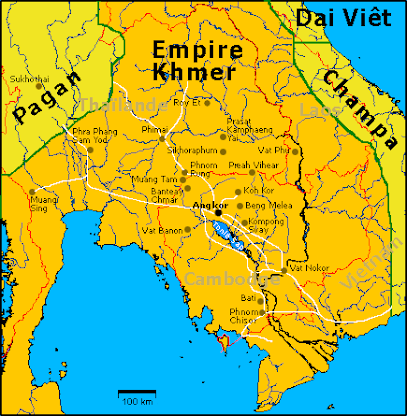
Hong Kong and Cambodia renew agreement on police co-operation

Hong Kong (HKSAR) - The Police of Hong Kong and Cambodia signed a Memorandum of Understanding (MOU) on December 20 to renew the co-operation on combating transnational crime, including drug trafficking, economic crime, cyber crime and money laundering.

The MOU was signed by the Commissioner of Hong Kong Police(HKP), Mr Tsang Wai-hung, and the Commissioner General of the Cambodian National Police (CNP), Mr Savoeun Neth.

The agreement, signed during the Commissioner's visit to Phnom Penh, Cambodia, complements existing co-operation between HKP and CNP. It sets out the framework in tackling transnational crime and also bolsters the partnership in capacity building and professional development.

Following the signing ceremony, Mr Tsang held a meeting with senior CNP officers on various policing issues of mutual concern.

"Renewal of the MOU marks the commencement of enhanced co-operation between the two forces. Both sides are committed to assisting one another in practical term of policing," the Commissioner said.

He also made a courtesy call on the Deputy Prime Minister and Minister of Interior, Mr H.E.

SAR Kheng, who further reiterated the importance of police co-operation.

The Commissioner headed a five-member delegation, including the Director of Personnel and Training, Mr Ma Wai-luk, for the visit. They returned to Hong Kong today.

Police Report No. 182
Read more!

Cambodia Earns US$180mil Annually from Migrant Workers

PHNOM PENH, 22 DECEMBER, 2011: Cambodia has earned about US$180 million annually from migrant workers, working in four countries in Asia, according to a government's statistic released on Thursday, reported China's Xinhua news agency.

Some 126,000 Cambodian workers were working in Thailand, Malaysia, South Korea and Japan, said the data, adding that the amount sent was direct income for their families, whom majority of them are poor and living in rural areas.

A separate report filed by Ministry of Labour and Vocational Training showed that by the end of July this year, Thailand was the biggest recipient country offering 8,464 jobs, while Malaysia was the second, offering 3,200 and South Korea ranked third with 3,144, respectively.

South Korea is seen as a big growing labour market for Cambodians this year.

Heng Sour, director general of Ministry Labour and Vocational Training, said a rough number of 5,957 Cambodians had been sent to work in South Korea in 2011, already double in number compared to a year earlier that recorded at 2,116 Cambodian workers under the employment permit system.

South Korea began to accept Cambodian workers in 1993 under industrial training system and such system lasted through 2006 with a total of 3,399.

Asia Foundation and the USAID have estimated that there are an average of 300,000 new labour forces in Cambodia, but only 20,000 to 30,000 are expected to get jobs.

Therefore, they said those new labour forces are looking for job opportunities in other countries, and are targeting Malaysia, Thailand, and South Korea, the richer nations.
Read more!

Wednesday, December 21, 2011

Cambodia, Thailand agree to withdraw troops from disputed land around temple

By Associated Press

PHNOM PENH, Cambodia — Cambodia and Thailand have agreed in principle to withdraw troops from a border area where a territorial dispute triggered deadly clashes.

The agreement was announced Wednesday after Thai Defense Minister Yuthasak Sasiprapha met with his Cambodian counterpart, Tea Banh. It is meant to end combat over a small patch of land both countries claim around the ancient temple of Preah Vihear. Eighteen people were killed in the last round of fighting in April.

The new agreement calls for both sides to withdraw troops completely and simultaneously from a demilitarized zone demarcated by the Netherlands-based International Court of Justice, but sets no date. The court in July ordered troops from both countries to withdraw after Cambodia sought its help.
Read more!

Russian convicted of child sex charges gets royal pardon from Cambodian king

By Associated Press

PHNOM PENH, Cambodia — A prison official says a Russian businessman convicted of sexually abusing more than a dozen girls in Cambodia has walked free after being granted a royal pardon.

Preah Sihanouk Prison director Pich Veasna says 45-year-old Alexander Trofimov was one of 360 prisoners granted amnesty by Cambodian King Norodom Sihamoni. Trofimov had been convicted of buying sex from 17 girls between the ages of six and 13.

Before his arrest in October 2007 Trofimov was chairman of a Russian-led investment group developing a Cambodian tourist island.

Trofimov was originally sentenced to 17 years in jail but his term was slashed to seven years in August 2010.

Trofimov was one the higher profile cases in recent years in Cambodia’s efforts to crackdown on pedophiles.

Copyright 2011 The Associated Press. All rights reserved. This material may not be published, broadcast, rewritten or redistributed.
Read more!