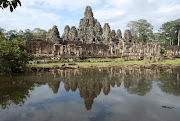
Nguyen Tan Yuon's visit to Cambodia is not a surprised for Cambodia. it is a tripped for gold digging and stealing from Khmers. Yuon and Khmer friendship is totally disadvantages for Cambodia.
(VOV) - Prime Minister Nguyen Tan Dung’s visit to Cambodia and his co-chairing the second Vietnam-Cambodia investment promotion conference on April 23 and 24 is expected to accelerate bilateral trade and investment ties.
The relationship between Vietnam and Cambodia has developed in various fields since the establishment of diplomatic ties on June 24, 1967.
Bilateral cooperation mechanisms including the Vietnam-Cambodia Joint Commission for Economic, Cultural, Scientific and Technological Cooperation, the Conference on the development and cooperation of border provinces and the Joint Border Committee meet annually and have brought practical results. The regular exchange of the two countries’ delegations, especially the recent visits by the two countries’ leaders, have helped fasten the fine neighbouring relationship, traditional friendship and long-term sustainable comprehensive cooperation between the two countries.
Two-way trade has increased from US$1.33 billion in 2009 to US$1.8 billion in 2010. Vietnam has almost 90 investment projects with a combined capital of more than US$2 billion in Cambodia. These projects involve in rubber plantation, mining, oil and gas exploration, power supply development, telecom, finance and banking. The two countries have shown their keen interest in promoting bilateral ties in education and training, energy-power, healthcare and transport.
Both countries’ leaders have affirmed their determination to complete land demarcation and landmark erection in 2012 in order to build a common border of peace, stability, cooperation and development in line with the two peoples’ traditions and customs.
Vietnam and Cambodia have also accelerated bilateral cooperation between border provinces in education, healthcare, culture, science and technology. The two nations have successfully held the Conference on the development and cooperation of the Cambodia-Vietnam border provinces at the deputy prime minister level and the Vietnam-Cambodia border trade development conference at the level of industry and trade/trade minister.
Furthermore, the two nations have promoted cooperation within the framework of regional and international cooperation such as the Mekong River Commission (MRC), the Greater Mekong Sub-region (GMS), the Ayeyawady-Chao Praya-Mekong Economic Cooperation Strategy (ACMECS), Cambodia-Laos-Myanmar-Vietnam (CLMV), and the Cambodia-Laos-Vietnam Development Triangle (CLV).
PM Dung’s upcoming visit to Cambodia aims to affirm Vietnam’s consistent policy of attaching importance to enhancing its relations with Cambodia and the determination of the Vietnamese Government and people to join the Cambodian Government and people in bringing their bilateral ties to a new height for mutual interest.
Both sides are expected to review the investment cooperation results since the first Vietnam-Cambodia investment promotion conference, discuss solutions and policies to boost investment, trade and tourism cooperation and sign a number of cooperation documents.
Around 100 Vietnamese businesses are expected to be present at the second Vietnam-Cambodia investment promotion conference. PM Dung is scheduled to attend the opening ceremony of the Cambodia-Vietnam Securities Joint Stock Company (CVS) and the handover of overseas investment licenses to Vietnamese businesses.
Read more!

Friday, April 22, 2011
PM Dung’s visit will boost ties with Cambodia

Thursday, April 21, 2011
US warns Cambodia over controversial law
The United States has threatened to freeze aid spending to Cambodia if the government pushes ahead with a highly controversial draft law designed to regulate civil society.
The comments were made by Flynn Fuller, the country head of the US government's development agency USAID, during a closed meeting between the Cambodian government and donors in Phnom Penh on Wednesday.
The meeting assessed Phnom Penh's progress in attaining a series of 20 benchmarks in areas such as judicial reform and land rights.
"In these times of fiscal constraint, justifying increased assistance to Cambodia will become very difficult in the face of shrinking space for civil society to function," Fuller said, adding that the "excessively restrictive" law would harm development.
"We strongly urge the government to reconsider the necessity of the draft NGO [non-governmental organisation] law, and if so, to adopt a law consistent with a commitment to expand, rather than restrict, the freedom for civil society organisations to operate," he said.
Last year, donors pledged 1.1 billion dollars in development assistance, around half of Cambodia's budget.
Civil society has condemned the draft NGO law, which requires all NGOs and associations to register with the government, as woolly, lacking definition and full of ambiguities.
A coalition of around 300 civil society groups said the law would impose onerous administration requirements on the country's crop of 3, 000 NGOs and hundreds of associations, something many lack the capacity to comply with.
NGOs had called on donors to weigh in on the issue.
Prominent human rights group LICADHO said recently the law constituted "the most serious threat to civil society in Cambodia for years."
The government has said it drafted the law to protect NGOs. Last week, spokesman Phay Siphan said the government was prepared to listen to changes suggested by civil society, something critics said it failed to do after two rounds of consultation in recent months.
Phay Siphan's pledge contrasted with public comments by other spokesmen who said the draft would not be amended.
The draft law is expected to head to the Council of Ministers for assessment in the coming weeks before being presented to parliament for approval later this year.
USAID works with more than 100 local organizations in Cambodia in areas such as governance, health and education. The US, the third-largest donor to Cambodia, approved 72 million dollars in aid last year, and is seeking approval from legislators for around 88 million dollars for 2012.
Read more!
Laos Faces Pressure to Alter Hydropower Ambitions
Cambodian fishermen move their fishing net from the Mekong River as they catch fish at the out skirt of Phnom Penh, Cambodia, April 19, 2011

Laos plans to build a hydropower dam on the lower Mekong River, but neighboring countries say more study is needed. Analysts say the high-level opposition puts pressure on Laos to alter its hydropower ambitions.
A controversial proposal by Laos to build the first of 11 hydropower dams planned for the lower Mekong River has angered people who live near the river's banks.
Perceived threat
Prailor Manmoon is an ethnic Lao woman living in Kong Nang, a Thai village on the Mekong River located downstream of the proposed Xayaburi hydropower dam.
On Sunday, as children played in the nearby Mekong River, Manmoon and her neighbors gathered to eat sticky rice and discuss the proposed Xayaburi dam.
Officials in neighboring Laos, an impoverished and land-locked communist state, say the dam would cut poverty and generate revenue.
But Manmoon and her neighbors say Xayaburi and other proposed hydropower dams threaten their village, where fishing is a main source of income.
"If a dam is built, maybe there will be a flood and it could kill us, or maybe the river levels will be really low, and we won't have enough water to use or drink," Manmoon said.
Pushing forward
Across the river in Vientiane, the Lao capital, the Mekong River Commission's Joint Committee was preparing for a highly anticipated meeting on the Lao dam proposal.
At the meeting Tuesday, Laos said the project should move forward, claiming the dam will comply with international standards.
But Laos' lower Mekong neighbors - Thailand, Cambodia and Vietnam - issued statements saying more information is needed about the dam's potential trans-boundary environmental impacts.
Vietnam issued the strongest statement, calling for a 10-year moratorium on new Mekong dams.
No agreement
The four lower Mekong countries failed to make a joint decision on the dam, but agreed to hold ministerial-level talks later this year.
Analysts say government statements and the decision to elevate MRC talks to the ministerial level raises the political stakes of the Xayaburi controversy.
Philip Hirsch is a professor of human ecology at the University of Sydney. He says that while the Mekong River Commission cannot stop Laos from building dams on the Mekong's main stream, the Mekong River Commission's protocols have allowed neighboring countries to put diplomatic pressure on Laos.
"If Laos was to go it alone [by building the Xayaburi dam] and not listen to the other countries, it would be doing so now against the express wishes of the other countries, and particularly against the express wishes of Vietnam, with which Laos has a very close relationship," noted Hirsch.
Face-off expected
Hirsch predicts there will be a face-off between ministers from Laos and neighboring Vietnam, which are both one-party communist states.
If the Xayaburi is built, Hirsch adds, it will be easier for other lower Mekong countries, particularly Cambodia, to build dams on the Mekong's main stream.
Laos "cannot ignore" critical statements from its lower Mekong neighbors, according to a Vietnamese environmentalist who requested anonymity.
If Laos builds the dam over high-level opposition, the country may jeopardize its reputation in the international community, the environmentalist said.
Under MRC protocol, the four lower Mekong countries are required to notify their neighbors if they plan to build dams on the river's main stream, but they do not need each other's permission to proceed with dam projects.
China, which borders Laos, already operates four dams on the Mekong's upstream reaches.
Environmental impact
Civil society groups and non-governmental organizations across the region have warned that building dams on the lower Mekong will hurt the environment and threaten food security and rural livelihoods.
Stuart Chapman is conservation director for the World Wildlife Fund's Greater Mekong Program. He says the Xayaburi dam would have adverse effects on sediment flows and fish migration.
"The Mekong River is unique, both in terms of diversity of the fish and the volume of fish that travel up and down it," Chapman explained. "So essentially any dam that is built across the Mekong is going to be a blockage to many fish species as they try and migrate. If they can't migrate, they don't breed, and this will lead to a collapse of the fishery."
Chapman says some North American dams have installed "fish ladders" and other devices that help fish pass through dams. But the technologies would not help many species of Mekong fish survive, he says.
A recent World Wildflie Fund (WWF) study claimed the environmental impact assessment conducted for the proposed Xayaburi dam does not meet international standards.
95 percent of the dam's 1,260 megawatts of electricity would be sold to Thailand, and a Thai company would operate the $3.5 billion dollar project.
Preliminary work on the dam has already begun, according to Thai media reports.
Renewable energy
Carl Middleton, Southeast Asia program director for the environmental group International Rivers, said that instead of sourcing power from Mekong dams, Thailand should focus on improving energy efficiency and developing sources of renewable energy.
"I think what needs to be taken into account is a more holistic decision-making process that actually recognizes the implications for livelihoods and food security if mainstream dams are built [on the Mekong River]," Middleton said.
An independent study commissioned by the MRC warned in October that Mekong hydropower dams would exacerbate food insecurity and cause "serious and irreversible" environmental effects.
Earlier this month, U.S. Senator Jim Webb warned in a statement that building dams on the Mekong's mainstream would jeopardize fishing and rice farming in the Mekong River Delta.
Approximately 60 million people depend on the Mekong River for their livelihoods.
Read more!
Police Beatings, Arrests as Lake Resident Protest
Residents of Phnom Penh’s Boeung Kak lake development were violently dispersed by riot police outside City Hall Thursday, marking an escalation in their prolonged protest against eviction.
 At least 11 demonstrators were arrested and four were injured in police beatings, as around 100 residents gathered to demand a meeting with city officials over their impending eviction from a development site.
The violence comes just one day after donors warned Cambodia that it must do more to protect citizens caught in land disputes or facing evictions.
Chan Saveth, head of monitoring for the rights group Adhoc, called the police action brutal and unusual.
“We regard it as a serious human rights violation,” he said. “In particular the police do not think of humanity and of [the protesters] needs for a fair resolution.”
Ou Virak, president of the Cambodian Center for Human Rights, called the beatings a “shocking and entirely unjustifiable response to a peaceful protest.”
“The arrests of children and beatings of elderly women represent a new low in what has already been a hard-fought land conflict,” he said.
Residents want the city to stop Shukaku, Inc., a development group owned by a ruling party senator, from pumping fill into the lake and flooding homes they say they have not agreed to leave. They want more compensation from the company or a plot of land for resettlement.
Rights groups met with city officials late Thursday in an effort to secure the release of those detained in the morning.
Chan Saveth said Phnom Penh Governor Kep Chuktema agreed to release them if they “recognize their mistake.” Read more!
Wednesday, April 20, 2011
Environmentalists Call for Transparency in Chinese Dam Projects

Environmentalists say China needs to be more transparent as it rapidly expands its domestic and international hydropower program. The call for openness, made Tuesday by two influential NGOs, comes amid criticism of China's controversial dam-building projects on rivers flowing from the Himalayan region.
Southeast Asian countries are not the only nations that fear an ever thirsty China could trigger natural disasters, hurt the environment, ignore human rights and divert water supplies.
China's accelerating program of damming every major river flowing from the Tibetan plateau has sparked fears in towns and Asian capitals from Pakistan to Vietnam.
But Chinese banks and hydropower construction companies are also causing concern in other parts of the world, such as Africa, where they are involved in projects for profit.
Peter Bosshard, policy director of the environment NGO, International Rivers, says while big Chinese investment banks such as ICBC claim to be environmentally and socially responsible, smaller Chinese enterprises are more reckless.
"We have seen movement from the biggest actors, but smaller companies, which can be very big state-owned enterprises in their own right or private companies, tend to hide between the market leaders."
Though China is not alone in disrupting Himalayan water flows, suspicions are heightened by Beijing's lack of transparency and refusal to share most hydrological and other data.
Moreover, China has in the last decade come to dominate the global hydro power sector. Another dam causing widespread alarm is the Gibe III Dam on the Omo River in Ethiopia, which is being funded by China's ICBC bank.
Environmentalists say if completed, the dam will devastate ecosystems and livelihoods of indigenous people in the lower Omo Valley in Ethiopia and Lake Turkana in neighboring Kenya.
Bosshard said other international banks refused to fund the dam.
"These projects still go ahead and the Chinese companies do not respond to civil society concerns. There is still a culture with very little transparency and consultation," explained Bosshard. "We saw a new guideline on anti-corruption from the State Council last December when they say sunshine is the best antiseptic, and transparency offers the best supervision of power. But in our experience in such projects, there is still often a complete lack of transparency and consultation, particularly with civil society groups in the hosts countries, which need this access most."
Bosshard says of the 260-plus Chinese projects worldwide, only one, in North Korea, appears to have benefited the local people.
Johan Frijns works for the NGO Bank Track, which scrutinizes international investments by the world's big banks.
He also called on Chinese investment banks to open up their hydropower interests to the public.
"We call on Chinese banks to enter into a dialogue with our counterparts here in China, with international networks, with NGOs working on the environment, working on human rights and working on a great many issues, as all the other banks in the world have done so far," Frijns said.
It is in Southeast Asia where China's thirst for water and environmental footprint is most keenly felt.
Local communities and environmentalists are worried the dams will trigger natural disasters, degrade fragile ecologies such as fish supplies, and divert vital water supplies in the world's most heavily populated and thirstiest region.
On the eight great Tibetan rivers alone, almost 20 dams have been built or are under construction while some 40 more are planned or proposed.
China strenuously denies it is irresponsible in its dam building.
Chinese Foreign Ministry spokesman Hong Lei says Beijing always considers downstream countries when choosing dam projects and would never harm their interests.
He says China pays great attention to the impact these projects might have on resources, the environment and ecosystems, and takes the concerns of downstream countries into consideration.
He says China is a responsible upstream country and will never harm the interests of downstream countries.
A few analysts and environmental advocates speak of water as a future trigger for war or diplomatic strong-arming. Bosshard said such a threat is hypothetical and a last-resort "nuclear" option for Beijing. But he said once complete, China can use its dams in any way it chooses.
Read more!
Local to make difference in Cambodia
Sarah Junkin
Cochrane Times
A young Cochrane woman is preparing to travel to rural Cambodia, not only to help out, but to teach villagers how to achieve sustainability after she's gone home.
Corrie Butler, 21, along with her boyfriend Jamie Lesueur, 24, will be volunteering with an organization called Sustainable Cambodia from May until the end of August.
The grassroots, Rotary-supported group is a not-for-profit organization that works with residents of Cambodian villages to help them achieve sustainability and self-sufficiency through a variety of means.
"We'll be working directly with locals on empowerment projects," said Butler of the program that includes help with wells, irrigation systems, schools, and other employment training. "For example, (Sustainable Cambodia) might fund a pair of animals which the villagers will use for breeding and then pass on to another family."
Butler was referring to a successful rural development model originally developed by Heifer International.
When a family receives a pair of breeding animals they agree to attend classes in animal care, and then they have to find two more families who wish to receive a pass-on animal. Those families in turn contract to also take the animal care classes, and thus the gift of the first set of animals grows geometrically over time.
Butler, currently finishing her third year at Mount Royal University, admitted it requires a fair bit of advance financial planning to spend the summer volunteering as opposed to working.
"We've been planning this since last October," she explained. "We've both been working and fundraising and trying to get scholarships. But this is something I really think is important, so it's worth it."
The pair intends to rent an apartment in a rural village and live as the residents live.
But despite her tender age, this is not Butler's first foray into international aid.
In 2008, when she was only 18, she travelled extensively throughout Asia where she volunteered with several humanitarian organizations including an orphanage and some groups dedicated to helping victims of the 2004 deadly tsunami that hit south-east Asia.
This time, she said she and Lesueur spent a fair amount of time deciding where they could best help out.
"We were looking around and when we found this organization, we just knew it would be a good fit," she said.
Butler is also an avid photographer, and currently volunteers for the Red Cross in their public affairs department.
"I'm planning on interviewing the people I meet, and recording their special interest stories," she said. "I'll also be blogging about my experiences."
sarah@cochranetimes.com
Read more!
Cluster Bombs Cloud Prospects for Peace
PHNOM PENH, Allegations that Thailand used controversial cluster munitions during recent border clashes with Cambodia have become the latest wedge driving tensions between the two neighbours.
The disarmament advocacy group Cluster Munition Coalition earlier this month announced that it had confirmed the Thais used the weapons as part of February skirmishes between Thai and Cambodian troops around a disputed area near the Preah Vihear temple.
The group said this marked the first time such weapons have been deployed since a landmark treaty banning their use came into effect last year – though Thailand continues to dispute whether or not the weapons should be classified as cluster bombs.
The CMC said Thailand’s ambassador to the United Nations in Geneva, Sihasak Phuangketkeow, acknowledged in an April meeting that Thai troops used 155mm Dual Purpose Improved Conventional Munitions, or DPICM, during the February clashes.
Laura Cheeseman, director of the CMC, said it was "appalling" that Thailand had resorted to using cluster munitions. "Thailand has been a leader in the global ban on antipersonnel mines and it is unconscionable that it used banned weapons that indiscriminately kill and injure civilians in a similar manner," Cheeseman said in a statement.
However, Thailand is refusing to classify the weapons as cluster bombs. Thai officials said soldiers used the weapons in response to Cambodian forces firing rockets into Thai territory. "(Thai) soldiers defended themselves when attacked by multiple rockets," government spokesman Panitan Wattanayagorn told IPS. "When the civilian targets in Thailand were attacked, they defended themselves by using a particular kind of weaponry, including (DPICM)."
Cluster munitions are designed to explode in mid-air over their targets, unleashing smaller bomblets over the blast radius. But critics have sought to outlaw the weapons, arguing high fail rates mean the bomblets often fail to explode on impact, leaving a deadly legacy for civilians long after fighting has stopped. The CMC said its members have examined two contaminated areas around the UNESCO-listed Preah Vihear temple and found multiple kinds of cluster bomblets, including M85-type DPICM submunitions.
A 2007 report by the group Norwegian People’s Aid found that failure rates for the Israeli-produced M85 submunitions were unacceptably high. Though equipped with self-destruct mechanisms meant to ensure no more than 1 percent of the bomblets fail to explode, the report estimated previous use of the weapons in Iraq and Lebanon resulted in ‘dud rates’ as high as 12 percent in some cases.
A typical 155mm projectile can carry 49 M85 bomblets, meaning that a single fired rocket could leave at least five unexploded submunitions over a three-hectare blast radius. Denise Coghlan, director of the group Jesuit Refugee Service in Cambodia, was part of a group that visited the Preah Vihear area shortly after the February fighting. She said two men were killed and another two people lost appendages after the cluster bombs exploded.
"I was really outraged that people were killed and that people were injured by cluster munitions," Coghlan told IPS. "This is such a flagrant breach of the new international law." Though Thailand continues to insist the DPICM are not cluster bombs, other observers have issued sharply worded criticisms nonetheless.
"Norway condemns all use of cluster munitions," Norwegian Minister of Foreign Affairs Jonas Gahr Støre said in a statement this month. "These weapons kill and maim civilians and have unacceptable humanitarian consequences long after they are used. (END)
Read more!
Cambodia eyes 6pc growth in 2011
Cambodia's economy is expected to grow by more than six percent this year, the government told international donors on Wednesday.
"Cambodia is very well positioned" for robust growth, Economy and Finance Minister Keat Chhon told delegates at a meeting in Phnom Penh to discuss aid programmes.
He said the economy was recovering well from the global financial crisis and would expand by "more than six percent in 2011", without giving further details.
The government's projection is in line with recent predictions from the World Bank and the International Monetary Fund, which each expect Cambodia's gross domestic product (GDP) to grow by 6.5 percent this year driven by garment exports, agriculture and tourism.
Written off as a failed state after the devastating 1975-79 Khmer Rouge regime and several decades of civil war, Cambodia used garment exports and tourism to help improve its economy.
The country enjoyed several years of double-digit economic growth before being hit hard by the global financial crisis which began in 2007.
But like much of Asia, Cambodia has bounced back and achieved 5.9 percent growth in 2010, Prime Minister Hun Sen said in a speech last month.
Cambodia still remains one of the world's poorest countries, with around 30 percent of its 14 million people living on less than a dollar a day.
Last year parliament approved a five-year national development plan aimed at achieving annual growth of six percent, helped by more than six billion dollars in international aid over the period.
Foreign donors pledged more than 1.1 billion dollars to the country in 2010.
Read more!
Tuesday, April 19, 2011
Suwit urged to continue with temple talks in Paris
Prime Minister Abhisit Vejjajiva will try to convince Natural Resources and Environment Minister Suwit Khunkitti to stay on as head of the Thai delegation to a World Heritage Committee meeting in Paris in June.

Mr Suwit has said he would quit the delegation, citing conflicts with the Foreign Ministry over the country's stand at the meeting which will consider Cambodia's proposal to manage the disputed land around the Preah Vihear temple.
Mr Suwit said he was unhappy with the Foreign Ministry's position, saying it could put Thailand's sovereignty over the land at risk.
Mr Abhisit said yesterday Mr Suwit had not informed him of his decision. Mr Suwit only said there were "some differing views".
Confirming his decision to quit, Mr Suwit did not spell out what the Foreign Ministry's position was but implied the ministry wanted the delegation to proceed with Cambodia's proposal for the management plan for the 4.6 square kilometres of land.
He said Thailand and Cambodia must complete demarcation at the temple first.
The WHC has scheduled a meeting for June 19-29 in Paris to consider Cambodia's proposal to manage the land around the temple which was registered as a world heritage site in 2008.
"Since the Foreign Ministry has a different point of view to me, the national committee on world heritage should assign it to head the world heritage delegation. I don't want to create the impression that we lack unity. That will cause us to be disadvantaged in the talks," Mr Suwit said.
A source at the national world heritage committee said Mr Suwit wanted to resign to devote his time to campaigning for the election.
Mr Suwit was concerned his involvement in the discussion of Cambodia's management plan could hurt his popularity, the source said.
Foreign Ministry spokesman Thani Thongphakdi insisted the government had a clear policy to urge the World Heritage Committee to halt consideration of Cambodia's management plan.
"All parties have complied with the government's policy on the listing of the Preah Vihear temple that the WHC should not consider the management plan until the border problem has been resolved," Mr Thani said.
Deputy Prime Minister Suthep Thaugsuban insisted Mr Suwit could not resign at this point.
"As long as Mr Suwit is still a cabinet minister, he must continue with his duties," Mr Suthep said.
Foreign Minister Kasit Piromya yesterday dismissed Mr Suwit's claim of a conflict between the foreign and the environment ministries.
Read more!
Educated are Cambodia's 'critical mass'
 My email box has been flooded with messages. Some made me smile. Two hard-hitting messages from Cambodia made me look for some spiritual balance. A friend from a different continent who used to discuss with me the value of education wrote, after reading my columns, about the necessary "critical mass" needed to catalyze change. I combined all three messages to writing this column.
On April 6, I quoted a Cambodian reader's email about the "visible hardware" -- the new buildings, bridges and roads which led 76 percent of respondents in a survey to cheer about progress and development under Premier Hun Sen, as opposed to the lack of much-needed "software" -- informed citizens and critical thinkers. The reader charged that Cambodia's "strong culture of suspicion and mistrust will cripple society even deeper into a passive coma." He lamented, "Even many of the young are now in this unfortunate trend."
Of course, I expected supporters of Premier Hun Sen to vociferously denounce the authors of the emails above. Yet, even Hun Sen agreed that 35 percent of Cambodia's populace live below the poverty line, and rights groups continue to accuse government officials of stealing the nation's resources for personal gain.
Critical mass
In physics, a "critical mass" refers to necessary amount of fissionable material to maintain a chain reaction at a constant rate.
Buddha's truth of the inevitability of change means that at a certain point or time or situation, change occurs, and that "something" must reach a certain level, amount or size, and then it will unleash an activity or event that will change the status quo. Thus, the water that is hot at 211 degrees boils at 212. It produces steam; steam yields energy.
My friend reminded me: You need a "critical mass" to bring about change, sustain it and render it long-lasting. Amen.
As I examined statistics compiled by the United Nations Children's Fund, I saw vicious circles that should drive conscientious citizens to coalesce to create that critical mass. UNICEF reported Cambodia's net secondary school enrollment for 2005-2009 for males at 36 percent and females at 32 percent -- a net secondary school enrollment ratio of 34 percent.
This refers to students who are actually enrolled in school. How many of them actually attend (Cambodia's schools are open only a few hours per day) or how many actually graduate from secondary school are different problems.
Though unlikely, let's assume that 90 percent of young Cambodians who are enrolled in secondary school do graduate. That's only 90 percent of the total 34 percent enrolled.
To develop quality thinking to contribute to Cambodia's development and progress, we should want to know how many graduates go on to university. Let's assume that half of the graduates (which is, again, very unlikely) go to university. Statistically, half of the 90 percent of the total enrollees of 34 percent yields about 15 percent who may go to university. Of course, not everyone of those who go to university graduates, but let's say 70 percent do. This would yield about 10 percent of a certain age group who might be considered educated.
This is hardly a "critical mass" to bring change to Cambodia.
No room for despair
Even if the Hun Sen regime returned all the dollars from theft of national resources to the education pot, it would take a long, long time before young Cambodians' secondary school net enrollment would move from the current dismal 34 percent of eligible students to even 80 percent, which might be the percentage that would create the catalyst to foment meaningful change.
Until then, Cambodians will have to rely on the handful of educated individuals and independent non-governmental organizations -- a small "critical" group to swim against the current to inspire the young ones in the face of corruption, violations of rights and freedom, to want to go to school, to stay in school, to graduate.
They are the "critical mass" needed to effect the change!
A. Gaffar Peang-Meth, Ph.D., is retired from the University of Guam. Write him at peangmeth@yahoo.com .
Monday, April 18, 2011
Cambodia's king heads to China for medical exam

PHNOM PENH - CAMBODIA'S royal palace says King Norodom Sihamoni has gone to China for a medical checkup, but no details about his health have been given.
The palace says in a brief statement that the constitutional monarch flew to Beijing on Monday. The statement does not say how long he'll stay or whether there's a particular reason for his checkup.
Keo Puth Puth Reasmey, a brother-in-law of the king, told reporters at the airport that the king was advised by his Chinese doctors to have a medical checkup every six months.
The 57-year-old King Sihamoni assumed the throne in October 2004 after his father, King Norodom Sihanouk, abruptly abdicated due to ill health. -- AP Read more!
Master Leads Emerging Students in US Dance Tour

Ieng Sithul is traveling with one other musician and 10 students, including 21-year-old Neang Visal.
“Last night I was so moved and so proud to be able to perform on the international stage, to show the world Cambodian arts and its rich culture,” said Neang Visal, following a performance in New York.
Eighteen-year-old Duong Dara Penh, another dance student, said she was moved by the applause from the audience.
“I was so moved,” she said. “Tears almost came to my eyes. It was such an amazing crowd.”
Ieng Sithul said Thursday he formed the group in 2003 with the support of the government and Cambodian Living Arts, an NGO.
The idea was to support artists with great potential but few means to study. There are now 15 students studying under Ieng Sithul, who is a master of numerous Cambodian classical insruments.
“The Children of Bassac” will also perform at the Khmer temple in Brooklyn, New York, before moving on to Vermont, Connecticut, Boston and Lowell.
Read more!
Sunday, April 17, 2011
'Cambodia's Curse,' by Joel Brinkley
Cambodia's Curse
The Modern History of a Troubled Land
By Joel Brinkley (PublicAffairs; 386 pages; $27.99)
This year Arab leaders have been caught off balance by their citizens, who have shown unexpected courage and come out in force to demand democracy and an end to corruption and cruel inequities. Those protests are proof that the truism that Arabs needed "strongmen" to rule them was wrong. In just weeks, the nonviolent demonstrators overthrew the ruling tyrants in Tunisia and Egypt, inspiring other uprisings in Yemen, Bahrain, Libya and Syria. Now, no matter how these revolts play out, Arabs have broken out of racial and cultural stereotypes that said they were unfit for democracy.
In his new book "Cambodia's Curse," the former New York Times journalist Joel Brinkley comes very close to offering a similar dead-end theory to explain why he thinks the people of Cambodia are "cursed" by history to live under abusive tyrants. In his telling, Cambodians are passive Buddhists who have accepted their stern overlords since the days of the Angkor Empire. "Far more than almost any other state, modern Cambodia is a product of customs and practices set in stone a millennium ago," he writes, blaming that history for the ability of Cambodian Prime Minister Hun Sen to squash meaningful dissent against his corrupt regime.
As a young reporter, Brinkley won a Pulitzer Prize in 1980 for his coverage of the Cambodian refugee crisis. Returning to the region 30 years later, Brinkley - now a professor of journalism at Stanford - chose his subject well. Hun Sen deserves a thorough examination. Along with his cronies, he has amassed extraordinary wealth selling off the country's assets to the highest bidder. Everything is up for grabs - land wrested from peasants to be sold to corporations and turned into plantations or tourist resorts, young girls and boys sold into prostitution, and dense forests cut down and the lumber sold abroad. Corruption is everywhere. Underpaid schoolteachers demand bribes from their students, judges issue rulings based on the amount of money paid on the side or the dictates of the government, businesses flourish by paying handsome bribes for licenses and to avoid unwelcome regulations.
Brinkley admirably highlights nearly all of these crimes and demonstrates that Hun Sen's administration has been a disaster for many Cambodians. His portrait of the businessman Mong Reththy is a gem, showing how businessmen enrich themselves through corrupt government concessions and then underwrite charities or schools in the areas impoverished by their corruption.
Yet there are only two types of Cambodians in these pages - either victims (passive, poverty-stricken Cambodians for whom Brinkley shows great sympathy) or villains (cruel, selfish politicians and businessmen). Missing are normal Cambodians who work day jobs and study at night to get ahead; Cambodians who return from abroad with dreams of a better life; Cambodians who promote human rights or flourish in the arts and sciences.
The few people painted in full, heroic strokes are American diplomats who served as ambassadors to Cambodia. Brinkley focuses on them and the foreign community of aid groups and governments who spend billions of dollars to improve the lives of Cambodia's poor. He correctly asks whether much of that money has gone to waste or into bank accounts of corrupt officials, and chastises foreign governments for not demanding real reforms for the aid.
Undermining his reporting is his thesis that thousand-year-old traditions are to blame for this state of affairs rather than 21st century realities. Brinkley fails to track the extraordinary sums of foreign investment fueling official corruption. Crooked signing bonuses and commissions, money laundering, selling off government land to foreign investors, human trafficking - these modern plagues are hardly confined to Cambodia. International businesses are pouring billions into Cambodia. China and South Korea are at the top of that list, giving them an outsize influence in Cambodia, yet they barely appear in Brinkley's book.
To retain control over all that money, Hun Sen has amassed a monopoly on power through the army and police, buying off or killing off dissidents. His path to power has been anything but democratic: Trained as a young Khmer Rouge officer, Hun Sen defected and was installed as prime minister by the Vietnamese occupiers; later he bullied the United Nations into appointing him a co-prime minister even though he lost the country's first election, then rigged subsequent elections.
Brinkley makes the blanket claim that Cambodians accept this because they are a people who "could not, would not, stand up and advocate for themselves," forgetting Cambodia's history of revolts or movements against French colonial rule, King Sihanouk's autocracy, the corrupt Lon Nol regime, the Khmer Rouge, Vietnam's occupation and Hun Sen himself. In more recent times, Chea Vichea led a free-trade union movement and became a serious challenger to Hun Sen's power until he was gunned down by thugs. Brink- ley mentions Vichea's murder in a short paragraph without fully describing his impact or the courage and skill he showed organizing Cambodia's textile workers.
And countless Cambodians have fought back when soldiers and police have thrown them off their lands. Cambodian activists like Dr. Pung Chhiv Kek have been so successful defending against human rights abuses that the government issued a draft law in December to effectively put them under government control. Brinkley might have also given greater weight to Cambodia's short experience with fully free elections and the legacy of the Khmer Rouge revolution, which could put a damper on anyone's desire to revolt again.
Further clouding his book are frequent errors. He describes the United Nations' 1993 peacekeeping operation as an "occupation," and then compares it unfavorably to the Allied occupation of Germany. He claims it is "rare to see Cambodians laugh." He confuses the Hindu faith with the Hindi language. He has China invading Vietnam in 1989, rather than in 1979. And why does he make the exaggerated claim that Cambodians are "the most abused people in the world"?
By arguing that Cambodians are passive and that the "Buddhist notion of individual helplessness" is a central factor holding them down, he dismisses the possibility that Cambodians could reform their own country. Instead he concludes that the country's best hope is in the hands of foreigners. He challenges the foreign governments to withhold aid money until Hun Sen lives up to his promises to enact reforms and respect human rights. "Maybe, just maybe, after 1,000 years, Cambodia's rulers might finally be forced to give the people their due," he writes.
Or maybe Hun Sen doesn't need that money so desperately and those donor governments are not such disinterested parties.
Brinkley may blame the legacy of Angkor kings for Hun Sen's ability to keep down Cambodians. But the Cambodian leader's recent actions suggest otherwise. When Egypt's Hosni Mu- barak started tottering under the demands of protesters, Hun Sen shut down the opposition websites in Cambodia.
Elizabeth Becker, a former correspondent for the New York Times and Washington Post, is the author of "When the War Was Over" (1986), a history of Cambodia and the Khmer Rouge. E-mail comments to books@sfchronicle.com.
Read more!
Aid to Cambodia rarely reaches the people it’s meant to help
By Joel Brinkley
Representatives of more than 3,000 governments and donor organizations are meeting in Phnom Penh, Cambodia, on Wednesday. If past experience is indicative, they will pledge to provide hundreds of millions in aid.
Most of these donors should simply stay home.
Year after year, smiling Cambodian government leaders attend these pledge conferences, holding out their hands. But first they have to listen as ambassadors and aid officers stand at the podium, look them in the eye, and lambast them for corruption and jaw-dropping human rights abuses.
Each year Prime Minister Hun Sen promises to reform. The donors nod and make their pledges — $1.1 billion last year. Then everyone goes home and nothing changes. In the following months, officials dip into the foreign aid accounts and build themselves mansions the size of small hotels, while 40 percent of Cambodia’s children grow up stunted for lack of nutrition during infancy.
This year should be different. Over the past two decades, the Cambodian government has grown ever more repressive. Now it is actually planning to bite the hand that feeds it: The legislature is enacting a law that would require nongovernmental organizations to register with the government, giving venal bureaucrats the ability to shut them down unless they become toadies of the state.
Eight major international human rights organizations are calling on Cambodia to back down, saying the bill is “the most significant threat to the country’s civil society in many years.” Donors, they say, should hold back their pledges. But they say that every year, and each year the donors ignore them. Meanwhile, the status of the Cambodian people the aid is supposed to help improves little if at all. Nearly 80 percent of Cambodians live in the countryside with no electricity, clean water, toilets, telephone service or other evidence of the modern world.
All of this might surprise most Americans. It has been decades since many people here have given Cambodia even a thought. Forty years ago, Cambodia was on the front pages almost every day as the United States bombed and briefly invaded the state during the Vietnam War. Then came the genocidal Khmer Rouge era, when 2 million people died.
How many know what has happened there since? Last month, the Nexis news-research service carried 6,335 stories with Thailand in the headline. Vietnam had 5,196. For Cambodia, 578.
Most people don’t know that Cambodians are ruled by a government that sells off the nation’s rice harvest each year and pockets the money, leaving its people without enough to eat. That it evicts thousands of people from their homes, burns down the houses, then dumps the victims into empty fields and sells their property to developers.
That it amasses vast personal fortunes while the nation’s average annual per capita income stands at $650. Or that it allows school teachers to demand daily bribes from 6-year-olds and doctors to extort money from dirt-poor patients, letting them die if they do not pay.
This is a government that stands by and watches as 75 percent of its citizens contract dysentery each year, and 10,000 die — largely because only 16 percent of Cambodians have access to a toilet. As Beat Richner, who runs children’s hospitals there, puts it, “the passive genocide continues.”
You wouldn’t know any of that from the donors’ behavior. You see, for foreigners Phnom Penh is a relatively pleasant place to live. Rents are cheap and household help is even cheaper. Espresso bars and stylish restaurants dot the river front — primarily for diplomats and aid workers.
Donors have largely been able to pursue whatever project they wanted without interference. They knew that the government would steal some of their money. But so what?
“Some money goes this way or that way,” said In Samrithy, an officer with a donor umbrella group. “But it’s useful if some of it reaches the poor. Not all of it does but some does. That’s better than nothing.”
Even with that, many donors feel the way Teruo Jinnai does. He’s the longtime head of the UNESCO office in Phnom Penh. “Here I have found my own passion,” he told me. “Here, I can set my own target. So that gives you more power, more energy, more passion.”
Well, Mr. Jinnai, the noose is tightening. If, as expected, the NGO bill becomes law, government repression will reach out for you, too. Isn’t it time, then, for all those donors to make a statement? On Wednesday stand up and tell the government: I am withholding my aid.
Joel Brinkley, a professor of journalism at Stanford University, is the author of “Cambodia’s Curse: The Modern History of a Troubled Land.”
Read more!
Thursday, April 14, 2011
International community condemns Thailand's use of landmines on Cambodia border
These cluster munitions have already robbed two men of their lives, two more have lost their arms and a further five were injured", said Sr Denise Coghlan, director of the Jesuit Refugee Service in Cambodia.
Based on two separate on-site investigations, the Cluster Munition Coalition (CMC) has concluded that Thailand used cluster munitions on Cambodian territory during the February 2011 border conflict. Thai officials confirmed the use of cluster munitions in a meeting with the CMC on April 5.
This is the first use of cluster munitions anywhere in the world since the 2008 Convention on Cluster Munitions entered into force and became binding international law. The CMC, of which the Jesuit Refugee Service is an active member, condemns any use of cluster munitions, and urges Thailand and Cambodia to immediately accede to the global treaty banning the weapons.
In February and April of this year, CMC members conducted two separate missions in cluster-munition contaminated areas in Cambodia including in Svay Chrum village, Sen Chey village and around the Preah Vihear temple hill. Members found unexploded submunitions, as well as fragmentation damage caused by cluster munitions. Norwegian People's Aid confirmed that unexploded M42/M46 and M85 type DPICM submunitions have been found.
"These cluster munitions have already robbed two men of their lives, two more have lost their arms and a further five were injured. The area must be cleared immediately to prevent more suffering. Cambodia must make every effort to ensure the safety of civilians", said Sr Denise Coghlan, director of the Jesuit Refugee Service in Cambodia, who took part in the first mission.
"It's appalling that any country would resort to using cluster munitions after the international community banned them. Thailand has been a leader in the global ban on antipersonnel mines, and it is unconscionable that it used banned weapons that indiscriminately kill and injure civilians in a similar manner", said Laura Cheeseman, director of the CMC.
In a meeting on 5 April, the Thai Ambassador to the UN in Geneva confirmed the nation's use of 155mm Dual Purpose Improved Conventional Munition (DPICM) cluster munitions. The Ambassador said Thailand used cluster munitions "in self-defence" as a response to the alleged heavy use of rocket fire on civilians in Satisuk, the Khun Khan district of Thailand by Cambodian forces.
The ambassador alleged Thailand's use of cluster munitions were used according to the principles of "necessity and proportionality and were in compliance with the military code of conduct".
"There are around 5,000 people living in Sen Chey village that are at risk from these unexploded weapons. Thailand must supply information to help clear affected areas and make them safe for civilians to return home", said Atle Karlsen of Norwegian People's Aid.
The CMC has urged Thailand to provide detailed information on the results of its inquiry, specifically including the location of all cluster munition strikes. With such information, civilians can be adequately warned of the dangers and steps can be taken to remove submunition remnants, which are as dangerous as landmines.
Cambodia and Thailand are not among the 108 countries that have signed the Convention on Cluster Munitions. However, both joined the 1997 Mine Ban Treaty and participated in the "Oslo Process" to negotiate the Convention on Cluster Munitions and attended its First Meeting of States Parties in neighbouring Lao PDR in November 2010.
"This conflict should spur both countries to take urgent action to denounce the weapons and join the ban treaty," said Cheeseman.
The Convention on Cluster Munitions entered into force as binding international law on 1 August 2010, banning the use, production, stockpiling and transfer of cluster munitions, while requiring states to destroy stockpiles, clear contaminated land and assist victims and affected communities. Of the 108 countries that have signed the Convention since it opened for signature in December 2008, 55 states have already ratified.
Background
Both Thailand and Cambodia possess stockpiles of cluster munitions, but little is known about their status or composition. The Cambodian government has in the past cited an ongoing review of its defence and security situation as the reason for a delay in joining the treaty. Thailand has cited concerns over its ability to destroy its stockpile as a roadblock to joining the Convention, as well as security concerns. Thailand announced in 2008 that it had no intention of using the weapons in the future.
Cambodia and Thailand are States Parties to the 1997 Mine Ban Treaty and Cambodia will host that treaty's 11th Meeting of States Parties in November 2011.
Southeast Asia is more heavily contaminated by cluster munitions than any other region after the United States dropped large numbers of cluster bombs on Cambodia, Lao PDR and Vietnam in the 1960s and 1970s.
Source: JRS.net
Read more!
Cambodia celebrates traditional New Year's night with fireworks, concerts
PHNOM PENH, April 14 (Xinhua) -- Colored explosion of fireworks has lighted up the sky over Wat Phnom, the capital's historical and cultural tourism site at Thursday's night to celebrate the first day of the traditional Khmer New Year.
The fireworks had been shot for about 15 minutes, catching the eyes of hundreds of thousands of the New Year revelers.
Meanwhile, concerts have been performed at three different places - one at Wat Phnom, another at Wat Botum Vatey Park near Independence Monument and the other at the Prime Minister Hun Sen' s Park at the riverside in order to entertain the New Year revelers at night.
Cambodia observes Khmer New Year for three days on April 14-16. It is one of the country's most important cultural festivities and is a holiday that's a nice reunion between relatives, close and distant alike.
During the occasion, families bring food, cash, and praying things to offer to Buddhist monks in pagodas in order to dedicate to their ancestors and wish for longevity, good luck, happiness and prosperity in the New Year.
Also, the New Year celebration is the time for young girls and boys gather and enjoy playing a variety of traditional games, dancing and singing in vicinities of pagodas and tourism sites throughout the country.
Read more!
Sumner Redstone Donates $500,000 to Cambodian Children’s Fund
The fund “can provide hope and a path to a new life for thousands of young lives,” he said of his latest donation.
NEW YORK - Viacom and CBS Corp. chairman and controlling shareholder Sumner Redstone on Thursday announced his second donation of $500,000 to the Cambodian Children's Fund via his Sumner M. Redstone Charitable Foundation as he continues to donate some of his money.
The non-profit program, to which Redstone donated the same amount in 2007, provides health and educational services to impoverished and abused children in Cambodia's capital Phnom Penh.
The fund was founded by executive director Scott Neeson, a former Sony executive who knows Redstone, a spokesman said.
Redstone’s initial 2007 commitment established CCF's child rescue center. The latest grant will help fund continued operations.
"The Cambodian Children's Fund is bringing life saving services to innocent children who live in a world of poverty, sickness and ignorance," said Redstone. "With this additional funding, the CCF can grow their programs to serve a wider range of children and to help sustain its operations for the long term. Through the consistency and expansion of its health care and education services, the CCF can provide hope and a path to a new life for thousands of young lives."
Redstone added that "I hope this gift will encourage others to join me in supporting the amazing work of the Cambodian Children's Fund."
Said Neeson “On any given day, our center provides food and health care to over 300 of the country's most vulnerable population. As the demand on our services has increased, so have the costs.”
Last year, Redstone donated $1.5 million to schools he attended and also made a $1 million contribution to advocacy group Autism Speaks. The latter was his largest donation to the group that he has supported in the past.
Read more!
OZ may pull out of Cambodia gold search
By Berry Fitzgerald
OZ Minerals is reviewing its Cambodian gold exploration program, which has failed to find the 2 million-ounce resource base that could have become a starter project there.
The latest drilling at the Mesam prospect has failed to excite.
Mesam is adjacent to the Okvau deposit, which OZ last year ranked as a 605,000-ounce gold find.
Advertisement: Story continues below It was hoped Mesam would get OZ closer to the 2 million-ounce threshold. But managing director Terry Burgess said yesterday that results to date had ''not been particularly spectacular.
''We have three or four holes to go but I guess like all these exploration endeavours, you're always waiting for the successful hole,'' he said. He confirmed that the gold assets could be sold after the review was completed.
Apart from the lack of a major discovery in Cambodia, gold assets in the country have fallen dramatically in overall importance to OZ.
After the group's drastic restructuring in 2008, its mining portfolio was reduced to ownership of the Prominent Hill copper/gold mine in South Australia and the Cambodian gold play.
Analysts have previously valued the Cambodian assets at between $40 million and $120 million, with the higher amount dependent on the so-far-elusive additional exploration success. Prominent Hill is now well established as a 100,000 to 110,000-tonne-a-year copper producer.
Cambodia also became less important for OZ after the miner's recent acquisition of the undeveloped Carrapateena copper/gold/uranium deposit in South Australia.
Carrapateena has the potential to be a similar sized copper producer to Prominent Hill. But its development is some way off. A pre-feasibility study could start in 2012 and would take at least a year.
This would lead to full feasibility studies, which take another 18-24 months. After allowing for mine construction time, first production would be in 2017 at the earliest.
Mr Burgess dismissed the suggestion the Carrapateena acquisition meant the group's acquisition hunt to replenish its mining portfolio would be reined in. OZ is holding $750 million cash.
Read more!
Wednesday, April 13, 2011
Communities Want More Information on Mekong Dam

As a decision nears for Mekong River countries over approval of a hydroelectric dam in Laos, Cambodian civic groups say they have been given few chances to have their voice in the matter heard.
Laos is proposing to build a dam along the Mekong in Xayaburi province, but it needs the approval of other Mekong countries, including Cambodia, in a meeting scheduled in Laos next week. Critics of the dam say it will hurt ecosystems in the river that provide a major source of fish for Cambodians.
Sun Mao, executive director of Kratie province’s Cambodian Rural Development Team, told “Hello VOA” last week that many people still do not understand the dam project or the process for its approval.
“No member of the affected communities were present at the [Kratie] consultation,” he said of a meeting held in the province in February. “But local authorities were invited instead the represent these communities.
The Kratie consultation meeting was the first of two held on the dam. The second was held in Preah Sihanouk province later in February.
The Xayaburi dam is a proposed 810 meters long, 32 meters high and expected to produce 1,260 megawatts of power. The Mekong River Commission, which is made up of committees from all Mekong River countries, will decide on the project April 22.
Sun Mao said there is still little understanding of the dam’s likely impact on a variety of factors, including fish migration and safety concerns in a quake-prone region. The impacts have been “understudied,” he said, “and the dissemination of information on the environmental, social, and cultural impacts, etc. has not been adequate to either civil society groups or affected communities.”
At the February consultations, participants were briefed on the designs of the dam and the decision-making process for its construction, but Sun Mao said the environmental impact report was not distributed.
A Mekong River Commission official recently told VOA Khmer that Cambodia could lose as much as 63 percent of the total regional fisheries loss, if six proposed dams went ahead in Laos. The Xayaburi dam would be the first of those.
International Rivers, and environmental group that opposes the dam, said recently that consultations took place in Thailand and Vietnam over the proposed dam, but it is unclear whether any took place in Laos.
In March, 263 non-governmental groups from 51 countries submitted a letter to leaders from Laos and Thailand, which will derive power from the dam, asking that they scrap the Xayaburi project.
Sun Mao said more studies are necessary, especially now that Cambodia’s own civic groups have a better understanding of the issue.
“If there is construction of a mainstream dam, we are certain that we will be affected,” he said. “The scale of this we do not know.”
Read more!
Groups Unite To Push Changes to NGO Law

The groups said in a statement the law threatens civic freedoms and could curtail the activities of NGOs that are critical to the development of the country.
“NGOs and Associations stand ready to use our democratic rights to express our discontent through democratic and peaceful means,” the groups said. “The draft law we now see before us is unacceptable, and we cannot support it in its current form.”
Human Rights Watch, Amnesty International and other major international groups have called on the government to spike the law entirely, and US officials say they fear it is “unnecessary” and could curb basic freedoms.
Government supporters of the law, which is being drafted by the Ministry of Interior, say it is necessary to regulate a huge sector, where thousands of NGOs operate.
Opponents say the draft opens organizations to legal attack without redress for government dissent and could hurt smaller groups that want to form associations.
“We would like to point out three main areas of concern in the current second draft Law,” the groups said in their joint statement. “Registration is mandatory and complex, rather than voluntary and simple. There is no appeal process for the denial of registration and key terms in the law are left undefined, and many sections are vague.”
“I think that it can affect the freedom in the establishment of associations that is guaranteed by the constitution and the freedom in expression that is guaranteed by the constitution,” said Sok Samoeun, executive director of the Cambodian Defenders Project.
NGOs say their recommendations made during a consultative process were not given credence and that new drafts did not address their concerns.
In their statement, the 300 groups did not call for a scrapping of the law altogether, but urged the government to “reconsider” their key requests and redraft the law.
Nouth Sa An, secretary of state for the Ministry of Interior, said he was accepting recommendations before sending the draft for approval from Interior Minister Sar Kheng. After that, the law will be sent to the Council of Ministers for approval before debate. Read more!
JSM completes sale of Cambodia portfolio
StockMarketWire.com - JSM Indochina has completed the disposal of its Cambodia assets with agreed sale of its Siem Reap leasehold interest to Hongkong Land (Singapore).
Siem Reap is currently held by JSM's subsidiary, JSM Holdings (Cambodia).
The deal follows the conditional sale of Colonial Mansion I&II land and buildings, the Embassy land, and the Ounalom land announced on 7 April.
These, together with Siem Reap, represent all of JSM's assets in Cambodia.
The gross consideration payable to JSM for the disposal of Siem Reap is $2,000,000 in cash.
This includes an amount in respect of certain indirect taxes which may be payable.
If applicable, the indirect taxes are expected not to exceed $200,000.
Read more!
Tuesday, April 12, 2011
Costello linked to environmental controversy
Australian Broadcasting Corporation
Reporter: Zoe Daniel
A company associated with Peter Costello has been accused of threatening endangered wildlife in Cambodia.
Transcript
ALI MOORE: A $600 million agribusiness proposal by a company associated with former treasurer Peter Costello is facing opposition from environmental activists in Cambodia who claim it will disrupt a significant wildlife corridor and put endangered animals at risk.
The company behind the banana plantation and reforestation project in Cambodia's Cardamom Mountains says it will be sustainable while providing jobs and generating much needed export income.
But there's concern about the location of the project, on one of the last unbroken forest corridors in the region.
South East Asia correspondent Zoe Daniel reports.
ZOE DANIEL: It's about an hour by chopper from the Cambodian capital Phnom Penh to the Cardamom Mountains.
Factories and then rice paddies stretch from the city to the foothills. But the mountains are barely accessible by road and apart from illegal timber cutting, these forests have been regenerating since they were last logged more than a decade ago.
Why is this area so important?
SUWANNA GAUNTLETT, CEO, WILDLIFE ALLIANCE: It's very important. It's the last left between these two bodies of the forest.
ZOE DANIEL: With its own rangers and government backing, NGO Wildlife Alliance has been protecting the area from poachers, illegal settling and logging. Now the NGO’s founder, Suwanna Guantlett, is opposing the Australian proposal for a 5,000-hectare banana plantation and 20,000-hectare reforestation project.
The issue is the location.
SUWANNA GAUNTLETT: This is the continuous forest cover.
ZOE DANIEL: The company planning the developments says there's no forest of value on the site. But the unbroken tree link between the two mountain ridges is clearly visible from the air.
The southern Cardamom Mountains have been selectively logged in the past, but this area is said to be one of only seven unbroken elephant corridors in Asia and the planned plantation is right on it.
According to environmental groups, the increasing number of land concessions granted for farming nearby mean Asian elephants, unique turtles and crocodiles are all struggling for habitat. Despite obvious signs of prior clearing, activists see this as a sensitive area that's slowly recovering.
SUWANNA GAUNTLETT: As you can see, it is a forest with grass land and bushland. It was indeed a former logging concession.
ZOE DANIEL: Plans for a high-tech drip-irrigated plantation to export bananas as well as a replanting project to give migrating elephants a new pathway have so far failed to win support from critics.
SUWANNA GAUNTLETT: That reforestation they're talking about doing alongside the banana plantation is also where the company says the elephant corridor will be moved to. My first answer is no because that is a populated area and elephants will not migrate and move through a populated area. They won't.
ZOE DANIEL: Would it be fair to say that it is the location that you have a problem with, so no matter what safeguards the company put in place, you still won't be happy with the location that they've picked?
SUWANNA GAUNTLETT: I think you've summarised it exactly.
ZOE DANIEL: Elephants are already increasingly in conflict with humans in Cambodia. A few like this female, Lucky, are in the care of rescuer Nick Marx. She was being attacked by village people for roaming through their small scale banana plots.
NICK MARX, WILDLIFE ALLIANCE: She had serious battery acid burns on her head because they were trying to get rid of her, throwing car battery acid on her.
ZOE DANIEL: He says plans to divert elephants away from the planned plantation by reforesting land near local villages which villages will not work.
NICK MARX: More and more elephants are going to come into conflict with humans. This is inevitable.
ZOE DANIEL: Australian company BKK partners is a corporate and financial advisory service with expertise in areas such as foreign investment and governance. Former treasurer Peter Costello is listed as managing director and partner. The company has an office in Phnom Penh which is advising Indo-China Gateway Capital on developing the $600 million agribusiness fund planning the plantation.
Our requests for an interview were declined. The company also denied that Mr Costello is involved in the project, although he was in Cambodia promoting it last year.
PETER COSTELLO, FORMER TREASURER: One of the things that BKK does is it is managing an investment by Indo-China gateway which is raising funds for a very major agricultural investment here in Cambodia.
ZOE DANIEL: He gave this interview to the Phnom Penh Post which is still on the newspaper's website.
PETER COSTELLO: BKK has established a presence here in Phnom Penh. We have a full time resident director.
ZOE DANIEL: Cambodia desperately needs economic development to increase the standard of living. The company says the banana project will generate up to 7,500 jobs. But when we visited these local villages they were still unsure whether the impact will be positive. They hunt and forage in the forest to survive.
CHAN SAO, VILLAGE CHIEF (translated): Also, we can't raise animals in the forest like cows and Buffalo. If we lose our land this is our big concern.
ZOE DANIEL: This man told us other developers have promised jobs at their sugar cane plantations on the forest edge, but initial wages were soon cut.
VILLAGER (translated): The company provides people with jobs, but they don't last long. At the beginning wages are good, but sooner or later the amount paid goes down.
ZOE DANIEL: Potential Chinese and Korean investors have visited this village, but the people say no one from an Australian company has been to see them.
Departing the area, we fly over clear-felled land being prepared for sugar cane plantations just outside the boundary of the forest reserve.
Indo-China Gateway submitted a formal application to develop the banana plantation in December and is now awaiting a permit.
Zoe Daniel, Lateline.
Read more!
The Eccentricity of Evil: A Khmer Rouge Leader Goes on Trial

Kaing Guek Eav, best known by the revolutionary alias Duch, is also a war criminal and mass killer. He has freely admitted he was responsible for the murder of over 12,000 people as head of the Khmer Rouge secret police and commandant of the S-21 security center, where perceived enemies of the regime were sent to be tortured into submission and "smashed." Over two years and ten months at the helm of the notorious prison, Comrade Duch ordered his captives to be waterboarded, their genitals electrocuted, and their toenails pulled out before sending nearly all of them, blindfolded, to be stabbed in the neck or clubbed to death in a field outside of Phnom Penh.
The case initially looked like a slam dunk -- a simple trial that could be wrapped up fast, initiating a cathartic national discussion in a country that was mired in civil war with the Khmer Rouge until 1998. The evidence against Duch, after all, was overwhelming: when the Khmer Rouge fled Phnom Penh in January 1979, Duch--a compulsive record-keeper -- left behind thousands of forced confessions that he had annotated in red ink: "beat her 40 times with the rattan stick," "medical experiment," "smash them to pieces." In the confessions, known as "autobiographies," Duch's prisoners inevitably admit to being agents of the KGB, CIA or the Vietnamese government and to having undermined the regime's radical plans for agricultural productivity and social harmony. The documents are mesmerizing today for their utter implausibility (one 19-year-old nurse, after being tortured, claimed the CIA had sent her on a mission to defecate in the operating theater of a Phnom Penh military hospital).
It was partly because of this extensive evidence that the UN-backed Khmer Rouge tribunal--established in 2006 to try senior leaders of the Khmer Rouge regime and "those most responsible" for crimes committed under it--decided to prosecute Duch first. The regime's four top living leaders--including "Brother Number 2" Nuon Chea and Foreign Minister Ieng Sary--remain in jail awaiting the beginning of their own trial this summer. They are all older and frailer than Duch, further removed from the killings, and far less contrite, having largely denied the accusations against them.
Duch's trial, which unfolded over the course of nine months in 2009, at first proceeded smoothly. Following a strategy devised by Francois Roux, his French defense lawyer and an experienced practitioner of judicial stagecraft, Duch apologized to his victims dozens of times, sometimes in dramatically self-lacerating fashion.
Under Roux's tutelage, Duch cried in court, made a tearful pilgrimage to the Killing Fields, and even--after an extended and theatrical courtroom dialogue with his lawyer--invited victims to visit him in his jail cell. It was an elaborate defense modeled on the precedent of Albert Speer--the Nazi architect who escaped a death sentence at Nuremberg because of his acceptance of moral responsibility.
Throughout the trial, Duch systematically upstaged everyone with his extraordinarily active participation in his own defense, and his odd zeal for setting the record straight, even at his own expense. Never deviating from a math-teacherish uniform of slacks and button-down shirts, he offered the court extensive commentary and analysis on his own life and character, and at times made helpful corrections -- serving variously as historian, analyst, mathematician, expert witness, character witness and trial monitor.
Nearly every day he would rise, clutching a binder full of the court documents and mimeographed S-21 confessions he had been poring over, to highlight inaccuracies in witness testimony, correct the courtroom translators, or admonish lawyers for repetitive questioning. He frequently recited eight-digit documentation ID numbers from memory, while some lawyers struggled to produce the numbers at all.
Inexact figures seemed to irk him in particular. When a prosecutor referred to a length of time as "26 or 27 years," Duch retorted, "Could you please make a proper mathematical calculation?" Earlier, he told judges that had selected his revolutionary name from a children's book about a very obedient child called Duch. "I liked the name Duch because I wanted to be a well-disciplined boy who respected the teachers, who wanted to do good deeds," he said. He was in his mid-20s at the time.
Duch explained to the court that he was chosen to be a prison chief because of his ability "to pay attention to whatever I was assigned to do meticulously." "In my entire life, if I do something I'll do it properly," he said.
The Open Society Justice Initiative wrote in a report on the trial, "Duch's behavior at trial again displayed a desire to be seen as exceedingly cooperative with the court, as if he were attempting to exchange his old role with that of the perfect defendant." A particularly telling moment, the report continued, "occurred when Duch thanked expert David Chandler for praising his professionalism in running S-21, seemingly still believing that professionalism in the running of a torture and execution camp was a high compliment."
Out of hundreds of hours of testimony from prison survivors, experts, and Duch himself, a clear and unnerving portrait of him emerged: this killer of thousands was, above all else, a good student. It seems to have been this quality, rather than greed or blood lust or even pure revolutionary fervor, that drove him to manage operations at S-21 so carefully, so meticulously, that only a handful of prisoners survived.
That's why everyone was stunned when, on the 77th and last day of his trial, Duch took on the most unlikely role of all: the bad student.
When called upon to give a final statement, he abruptly abandoned Roux's strategy of remorse and, and instead demanded that the court release and acquit him. Duch's behavior and public statements up to this point had been as good as a guilty plea, and his trial had seemed to be headed toward a predictable ending: a commuted sentence in exchange for cooperation, contrition and conversation.
But instead of apologizing once again to his victims, he launched into a dry, technical discourse on the history of the Communist Party in Cambodia and its leaders--which did not include him. He said that as he was not a senior leader he could not have been "most responsible" for crimes committed at S-21. He asked to be acquitted in the name of national reconciliation--the favored buzzword here for the process of integrating former Khmer Rouge cadres into Cambodian society.
Stunned judges asked him to clarify his statement. He obeyed: "I would like the chamber to release me."
Duch subsequently fired Roux and tried to replace him with a Chinese lawyer who understood Communism (Defendants at the tribunal, which is jointly administered by the Cambodian government and the UN, have the right to one local and one international lawyer). When a Chinese defender could not be procured, he engaged a second Cambodian. Together, the new defense team has pursued a one-note legal strategy: insisting over and over again that Duch was a mid-level cadre and therefore should not be prosecuted.
In July 2010, the tribunal found Duch guilty of war crimes and crimes against humanity, sentencing him to 35 years in prison. (Due to mitigating circumstances and time served, he will spend less than 19 years in jail; prosecutors have called this figure "manifestly inadequate.")
Late last month, appeal hearings were held, bringing Duch before the court once again. Reading from copious handwritten notes and once again deftly reciting long strings of document ID numbers, he argued on his behalf better than his own bumbling lawyers, urging judges to release him "for the sake of national reconciliation among my people."
"You must...seek justice and truth for the Cambodian people as well as for the former Khmer Rouge soldiers and cadres, especially the middle class who do not fall within the jurisdiction of this tribunal," he concluded.
It was a poor legal argument, but one that was cleverly phrased to echo the government's stance on the tribunal: that, in the name of national reconciliation, no further prosecutions will be allowed to take place, period. Hun Sen, Cambodia's strongman prime minister, who was himself a Khmer Rouge cadre before internal purges prompted him to flee to Vietnam in 1977, announced in 2009 that more trials could revive the civil war and kill "200,000 to 300,000 people."
Although United Nations prosecutors have identified five additional suspects they would like to see tried for genocide and war crimes, those cases have been stalled in the tribunal's investigation chamber, hindered by the fact that Cambodian staff refuse to participate in them. Court observers say the cases are likely to be dismissed soon.
Out of paranoia or pride, the government has also refused to allow several top officials who are former mid-ranking members of the Khmer Rouge to give evidence before the tribunal, although none of them has been implicated in crimes. Hun Sen flatly told visiting UN Secretary-General Ban Ki-moon in October that no new trials would be permitted. Neither Mr Ban nor the international community, which funds the court's multi-million dollar budget, seemed to particularly care.
Because of all this behind-the-scenes political wrangling, Duch's dramatic change of stance has raised persistent whispers that he may now be taking orders from someone else--especially since his lead Cambodian counsel, Kar Savuth, also happens to be Hun Sen's family lawyer. But a large part of his turnabout can likely be attributed to his idiosyncratic personality. With his penchant for calculation, astonishing head for detail, and incapacity to process human emotion, he often comes across as mildly autistic. Decades after he committed his crimes, Duch is still unable to understand how the behaviors he values most--dedication to a higher cause, unfailing obedience to superiors, and pride in a job well done--can be entirely wrong.
Given his defiant new stance, his victims are unlikely to get the contrition they seek. But thanks to Duch¹s loquacity throughout the trial, and his obsession with getting the facts right, Cambodia and the world have gleaned not just a fuller understanding of the machinery of death he headed, but also a portrait of one brutal regime's slavishly obedient, ferociously meticulous executioner.
Read more!
Monday, April 11, 2011
Good News for Cambodian Gibbons!

Pleased that the prime minister has taken the environmental impact into account, Suwanna Gauntlett, of the conservation NGO Wildlife Alliance, says: "We applaud the courageous decision of the prime minister to see the greater value of the forest as it currently stands."
The move has been welcomed by locals and environmentalists who were concerned for both the biodiversity of this forested area and also the continued well-being of nearby communities who depend on it. The proposed project had planned to locate the mine in the way of a migration trail used traditionally by Cambodia's largest population of Asian elephants.
The local communities have spent years avoiding deforestation and poaching to develop alternatives such as viable eco-tourism packages. These forests are famously rich in wildlife and, according to the IUCN Red List , there are several endangered species found in the Cardamom Mountains. These include: the Asian elephant (Elephas maximums), Indochinese tiger (Panthera tigris corbetti), Malayan sun bear (Helarctos malayanus) and Pileated gibbon (Hylobates pileatus). Also in this forest, the Siamese crocodile (Crocodylus siamensis), classified as "critically endangered", has one of its last refuges.
Wildlife Alliance and a Cambodian newspaper had questioned a claim by the mining company that its project would generate US$1.3 billion dollars a year.
Read more!