The land of heroes
Our heroes
Our land
Cambodia Kingdom


Wednesday, December 22, 2010

Elusive Wild Elephants Captured on Film in Cambodia

A still from the unique video, which shows the shy beast placidly munching on greenery. Credit: Allan Michaud.


Wild Asian elephants have been captured on film in Cambodia, a country where the shy giants are rarely seen, an international conservation organization announced yesterday (Dec. 21).

The Wildlife Conservation Society (WCS) has just released what may be the first high-quality professional footage of wild Asian elephants ever taken in the south Asian country. Decades of civil war and instability in the latter part of the 20th century made Asia’s largest land mammal shy and difficult to observe directly.

Wildlife photographer Allan Michaud shot footage of the shy beasts on July 24 in the newly established Seima Protection Forest, a 1,100-square-mile (2,850-square kilometer) protected area along Cambodia’s eastern border with Vietnam.

"It does seem surprising that such a large animal is actually quite elusive, but they usually avoid humans,” said Edward Pollard of WCS’s Cambodia Program. "This new footage is a great visual confirmation that Seima is vitally important for biodiversity, as well as the protection of forest carbon."

The footage captures images of a male Asian elephant casually feeding on grass on the margin of a road that runs through Seima Protection Forest, which contains a significant percentage of Cambodia’s elephant population.

In 2006, surveys that collected DNA from elephant dung revealed a population of approximately 116 animals within the protected area — but not a single elephant was seen during the study.

Most of the images of wild elephants from the region come from camera traps. The film represents only the third elephant sighting along the Seima road in the past five years.

Researchers have noted that along with the recent elephant sighting, other species observed along the road include gaur (an Asian species of wild cattle), a monkey species known as a black-shanked douc, four other species of primate, and green peafowl, indicating that wildlife are adapting to the road.

Read more!

Shamika2Gold To Buy Gold And Ruby Licenses In Cambodia

(RTTNews) - Aultra Gold, Inc. (AGDI.OB: News ), operating internationally as Shamika2Gold, said it executed a definitive securities exchange agreement to buy a concession of gold and ruby exploration license in Cambodia. The area covered in the license comprise approximately 158 square miles in the Samlaut district adjacent to the Pailin ruby gem area.

Upon closing of the exchange, Shamika would buy approximately 85% of the capital stock from the Mauritius holding company which, upon formation and contribution, would hold the mining rights in exchange for 57 million shares of Shamika common stock and shares of Series B Performing Preferred Stock.

Montreal, Canada-based Aultra Gold, Inc. engages in exploring natural resources properties in the Democratic Republic of Congo.

Click here to receive FREE breaking news email alerts for Aultra Gold, Inc. and others in your portfolio

by RTT Staff Writer

For comments and feedback: contact editorial@rttnews.com

. Read more!

Man gets prison for overseas sex with teen

LOS ANGELES, Dec. 21 (UPI) -- An American has been sentenced to 104 months in a U.S. prison for having a long-term relationship with a teenage girl while he was teaching in Cambodia.

A federal judge in Los Angeles Monday also ordered Michael James Dodd, 61, to pay the girl $9,500 restitution, the Los Angeles Times reported. He pleaded guilty in September to traveling overseas to have sex with an underage person.

Thom Mrozek, a spokesman for the U.S. attorney's office, said Dodd had a sexual relationship with the girl, then 14, for about five months in 2008 while he was teaching in Phnom Penh. Dodd gave her family $200 a month and food, although Mrozek said Monday it was unclear the family knew he was having sex with the teenager.

"There shouldn't be any suggestion that he was renting the girl or the family was prostituting her out," Mrozek said. "Although there is no question that this girl and her family lived in impoverished conditions that are really hard to imagine."

Dodd served 16 months of a 10-year sentence in Cambodia before he was extradited for prosecution under U.S. law.
Read more!

Tuesday, December 21, 2010

Three Surin villagers freed by Cambodia return home

SI SA KET, Dec 21 -- Three Thai nationals, who were released from imprisonment in Cambodia to mark the 60th anniversary of bilateral relations between Thailand and Cambodia, returned home Tuesday afternoon via Si Sa Ket's Chong Sangam border checkpoint.

They were joyfully reunited with their famlilies who had been waiting for them eagerly at the checkpoint. The trio thanked the Thai and Cambodian officials for their help during their imprisonment in Cambodia and facilitating their release.

The trio--Sanong Wongcharoen, Lim Phuangphet and Lan Sapsri--all natives of Surin province, were arrested in August by Cambodian border patrol police on charges of spying while collecting forest products along the border.

They were sentenced to 18 months prison in Siem Reap on charges of illegal entry by the Cambodian court after spending four months in Cambodia.

The Thai officials led by Si Sa Ket deputy governor Channa Ieamsaeng met the trio at the immigration office before leading them across the border checkpoint to Thailand.

They told reporters that on the day they were arrested, they were hunting and collecting forest products and unintentionally strayed into Cambodian territory before being arrested by Cambodian border patrol police.

They said that during their more than four-month stay in Cambodia, the Cambodian authorities took good care of them and allowed their families to visit.

The Si Sa Ket deputy governor said the release of the three Thai nationals was a good sign to strengthen bilateral relation of Thailand and Cambodia particularly in terms of trade and tourism along the border.

It could also be a good start for the future talks to open the gateway for tourists to visit Preah Vihear Temple from Thailand, he said. (MCOT online news) .
Read more!

New report finds Cambodia's HIV/AIDS fight at critical crossroads in funding, prevention

Despite Cambodia's remarkable history in driving down HIV infections, a report released today on the future of AIDS in the country argues that future success is not guaranteed and the government needs to focus increasingly on wise prevention tactics and assume more of the financing of its AIDS program.

The report, called The Long-Run Costs and Financing of / in , written by Cambodian experts working closely with staff of the Results for Development Institute (R4D), based in Washington, D.C., finds that Cambodia, in a best-case scenario, could reduce the infections to 1,000 people a year in 2031 – a half-century after AIDS was first identified. That is down from an estimated 2,100 infections last year and from the peak of 15,000 a decade ago.

But the report's authors also say that if Cambodia's AIDS efforts stall and current coverage of key services declines, especially in carefully targeted prevention, the number of infections could climb to 3,800 a year in 2031 – nearly a four-fold increase over the best-case scenario. The report concludes that the government's successful track record will only be maintained if it scales up prevention services for the most at-risk populations, such as sex workers, men having sex with men, and injecting drug users.

"We welcome this in-depth and forward-looking report for our country," said Cambodia's Minister of Health H.E. Dr. Mam Bunheng. "Cambodia has a long history of fighting HIV/AIDS head-on, with effective prevention strategies, and we believe that this report will help us sharpen our strategies. Our goal is to further prevent the number of HIV infections in our country and we will continue on that path."

In Cambodia, HIV/AIDS was first identified in 1991. Only a few years later, experts warned that the epidemic had taken off rapidly and that Cambodia risked becoming the Asian country with the worst AIDS problem. In response, the country attacked the epidemic vigorously, earning international recognition for its success. Between 1998 and last year, Cambodia dramatically reduced new infections and made anti-retroviral treatment widely available. By 2009, an estimated 93 percent of those eligible for AIDS drugs were receiving them.

Still, Cambodia's AIDS epidemic, fueled largely by unprotected heterosexual sex between men and female sex workers, remains volatile and could spread rapidly without targeted prevention efforts, the new report says.

The cost of the national AIDS program also has grown from US$21 million in 2003 to US$51.8 million in 2008, raising some concerns among government and donor officials about their ability to sustain a growing level of spending to fight the epidemic over the years to come. Donors now fund 90 percent of Cambodia's AIDS program.

The report is the third in a series of studies done by the financing group of aids2031, an international initiative that has brought together some of the world's experts on AIDS. The group also issued a report on the global trends in financing the AIDS fight, which was summarized in a paper published earlier this year in The Lancet, and a report on South Africa's epidemic, which was released in mid-November.

Robert Hecht, managing director of R4D and overall coordinator of the series of reports, said that the Cambodian study has particular significance for countries in Asia, Latin America, and Eastern Europe that are fighting AIDS epidemics largely confined to specific at-risk groups.

"Cambodia is an important example of a country that was facing a possible catastrophe a decade ago and has averted that thanks to bold actions," Hecht said. "But there's no room for complacency. This is the moment for Cambodia to strike a bargain with its outside funders such as the Global Fund, Australia, and the U.S. If these funders maintain a modest level of financial support to help preserve Cambodia's gains to date, the government can gradually step in to assume fuller and more sustainable funding of its AIDS program."

H.E. Dr. Mean Chhi Vun, Director of the National Centre for HIV/AIDS, Dermatology and STD, said that the report comes at an important time for the Cambodian government as it begins to assume more of the cost of AIDS programs from donors. "This report will play a key role in our discussions on how to move forward," Dr. Vun said. "We are committed to finding the most cost-efficient solutions as well as the most effective programs. We will draw upon our own experiences over the last decade and more, but we will also use these important findings to help guide us."

The report examines the costs in fighting Cambodia's epidemic under various strategies, ranging from US$ 1.4 billion during 2009 to 2031 under the current plan, to US$2.3 billion over the 22-year period in a dramatically stepped-up prevention plan – a differential of $900 million, or nearly 40 percent. The report's authors recommend a third course that stops nearly as many new infections as the most expensive approach, but costs much less because it emphasizes spending selectively on the highest impact prevention services, such as promoting consistent condom use in high risk settings.

"Cambodia has many choices in front of it," said Dr. Vonthanak Saphonn, the lead Cambodian author of the report and Deputy Director of the National Institute of Public Health. "Our recommendation is that Cambodia needs to focus investments on HIV/AIDS in those areas that are most cost-effective. This may mean that the country has to evaluate each intervention and focus on those that are contributing the most to the national program in a cost-effective manner."

Richard Skolnik, a professor of public health at George Washington University and the lead technical adviser to R4D on the project, said he believes the country's past history of success in fighting AIDS bodes well for the future. But he said difficult financial decisions will have to be made now.

"We have every reason to believe Cambodia can continue its effective fight against the epidemic," Skolnik said. "But Cambodia is very dependent on its external partners on financing, and if they don't put enough government money into the program and focus on the wisest investments, even this outstanding program could be threatened."

Tony Lisle, UNAIDS Country Coordinator for Cambodia, welcomed the report and said he hoped it would make a strong contribution to the country's ongoing fight against AIDS. "I hope this provides an opportunity for Cambodian officials to intensify their already strong efforts against AIDS with the kind of vigor it has shown in the past," Lisle said. "Cambodia has been a shining example around the world when it comes to lowering HIV infections, and I believe it can now make further adjustments that will allow it to remain a leader."
Read more!

On a mission to help Cambodia

LONG BEACH: Doctor who escaped death in Killing Fields gathers team for medical trip.

By Greg Mellen, Staff Writer

Dr. Song Tan, center left, and Dr. Tony Chi, DMD, help others in packaging medical supplies at St. Mary Medical Center's Health Enhancement Center in Long Beach for a group of local doctors headed up by Dr. Song Tan that will travel to Phnom Penh where they will set up a free clinic in a poor area of town. (Steven Georges / Press-Telegram)


LONG BEACH - As he sat in his Karing Pediatrics office Monday morning with Christmas carols playing in the background, Dr. Song Tan's mind was a million miles away.

Well, maybe more like 8,300 miles. In his homeland of Cambodia, to be precise.

That's where Project Angkor, a medical mission organized by Tan, will be staged in a poor neighborhood on the northern outskirts of Phnom Penh.

The longtime local pediatrician embarks tonight on a journey that's been five years in the planning. But it has roots that go back to the Killing Fields, where only sloppy bookkeeping kept Tan from joining the upward of 2 million who died during the reign of the Khmer Rouge.

Of about 500 doctors in Cambodia at the time the Khmer Rouge took over, only about 40 survived. Most were executed by the government, which targeted those with education for eradication.

Tan remembers he was among a group of doctors the Khmer Rouge said it needed to assist with patient care. A young doctor at the time, Tan was eager to do his part to care for the afflicted.

However, through a clerical error, Tan's name wasn't on the list of doctors the Khmer Rouge sought. He remembers being angry when he wasn't selected to go. Only later did he learn the group had been executed.

It wouldn't be until more than 25 years after the Khmer Rouge downfall in 1979 that Tan would return to his home country.

But when he saw the suffering and the deprivation that still exist, especially among the burgeoning youth population, the pediatrician knew he had to do something.

That's when the seeds for Project Angkor were first planted.

Tan and other Cambodian doctors and health providers revived the Cambodian Health Professional Association of America and began the process of organizing a medical mission to Cambodia.

While there have been other medical missions to Cambodia throughout the years, Tan says his effort is the first organized and primarily staffed by Cambodian-Americans.

Volunteers of Project Angkor, which Tan hopes will become an annual mission, will set up shop at the Khmuonh Health Center in the rundown Khan Sen Sok area of Phnom Penh.

Tan says his group expects to treat 500 or more patients per day between Jan. 3 and 7.

Over the past two weekends, about 50 to 60 volunteers, ranging from 12 years old to senior citizens, went through the process of packaging medical supplies for the trip. Tan says his group has packed more than 2,500 pounds of supplies for the trip, including more than 80,000 Tylenol tablets.

"We have more boxes than people to carry them," Tan said. "We are going to donate a lot (to the health center)."

A total of 52 volunteers will take part in the mission, which leaves on Dec. 29 and returns Jan. 11. In addition to operating the clinic, the group will make the mandatory side trip to Siem Riep to see the magnificent Angkor Wat ruins and visit the Angkor Hospital for Children.

At the clinic, the volunteers, who include doctors, nurses, five dentists and student helpers, will provide primary care and diagnoses.

"We want to have the most impact we can," Tan said.

The doctor said that while his team will help train the health care providers on-site in Cambodia, it will learn from the experience as well.

Tan said physicians may see diseases such as malaria and measles that are rare here and malnutrition rather than obesity.

"This won't be a one-way street," Tan said of the educational exchange. "It's a very (good) learning experience for us."

Tan also says his team will take what it learns to fine-tune its offerings for future visits. The goal is to bring over surgeons and other specialists in successive years.

Thirty-five years ago, the young doctor was denied a chance to help others. Now, he hopes to make the most of this chance.

greg.mellen@presstelegram.com, 562-499-1291.
Read more!

Sunday, December 19, 2010

Lao deported Uighur asylum seekers: report

Laotian authorities reportedly deported an ethnic Uighur asylum seeker and his family to China in March, three months after 20 of his compatriots were forcibly deported by Cambodian authorities.

The new information – contained in a recent media report – comes a year after Cambodia’s controversial deportation of the Uighurs, which triggered a firestorm of criticism from rights activists and foreign governments.

Last week, Radio Free Asia reported that Memet Eli Rozi, 34, his 28-year-old wife Gulbahar Sadiq and their five children were expelled from Laos in March.

Rozi was reportedly one of the 22 Uighurs who entered Cambodia in search of asylum in late 2009, after fleeing ethnic rioting in China’s Xinjiang province in July.

The report claims he was one of just two of the group who managed to escape before their deportation from Cambodia on December 19.

After his escape from Cambodia, Rozi secretly entered Laos and later asked his family to join him from Guangzhou in southern China, according to an interview with Gulbahar Sadiq.

The family were apprehended by Laotian authorities upon arrival, she told RFA, and were deported to China where they were interrogated by Xinjiang officials for 32 days.

The article claims Memet Eli Rozi’s current location is unknown, while his wife and children have been released to their hometown in the west of the province.

The news falls close to the first anniversary of Cambodia’s deportation of the 20 Uighurs, a move which many rights groups have linked to Beijing’s approval of US$1.2 billion in loans and investment to Cambodia the same week.

In a statement on Friday, Human Rights Watch called Chinese officials to account for the whereabouts of the Uighurs, saying the government had “consistently refused” to provide information about their status and well-being.

“Uighurs deported to China are at clear risk of torture,” Sophie Richardson, HRW’s Asia advocacy director, said in the statement. “China’s failure to account for any of those asylum seekers a year after their forced return is extremely worrying.”

She said the case was “a stark reminder that no country should deport Uighur asylum seekers back to China”....read the full story in tomorrow’s Phnom Penh Post or see the updated story online from 3PM UTC/GMT +7 hours.
Read more!

Postcards show Cambodia, sunny side up


WELLESLEY —"Postcards are, of course, artifacts ... They are clouds of fantasy and pellets of imagination." Susan Sontag, "On Photography"

Joel Montague isn't your typical tourist who stays in 5-star hotels, visits a few landmarks in the capital and buys some gift shop postcards before flying home in business class.

A frequent expatriate, the Wellesley resident has spent much of the last 30 years in Africa, the Middle East and Asia, directing health and development programs for relief organizations and local governments.

"Over the years, I've got to know my way around," said Montague, relaxing in his home decorated with Buddhist statues, African carvings and paintings from the Middle East.

In Cambodia where he runs a malaria control program for Partners for Development, he traveled in September to a remote mountainous area, still peppered with land mines, to visit the cremation site of dictator Pol Pot whose Khmer Rouge regime killed millions of its own people.

Montague has brought to light a sunnier side of Cambodia's tormented history in his recently-published second book, "Picture Postcards of Cambodia, 1900-1950."

He has chronicled the people, culture, arts and architecture of one of Asia's most exotic jewels as portrayed by French colonizers via inexpensive postcards created for domestic consumption.

In the early 1900s, Montague observed, 18,000 postcards were produced depicting Cambodia, Vietnam and Laos, which France ruled under the popular name Indochina.

Montague, whose resume lists 20 countries where he's worked, observed French colonizers used postcards as a sort of "marketing tool" to justify their self-proclaimed "civilizing mission" in Cambodia.

Published by White Lotus Press in Thailand, his 327-page book provides a rare visual archive of Cambodian history as revealed through about 650 black-and-white and color postcards in 16 categories such as "The Mekong River," "The Monarchy" and "Khemer Dance and Music." Montague believes his collection of about 1,700 colonial-era postcards, purchased in flea markets and over the Internet, is the largest of its kind in the world.

During a century in which Cambodia's true history has been erased by colonization and revolution, Montague wrote in his book's introduction that picture postcards provide "an ephemeral record of early twenty-century Cambodia."

Since first visiting Cambodia in 1991 after the Khmer Rouge's overthrow and withdrawal of the invading Vietnamese, Montague began acquiring postcards that depicted the nation's visual history as seen through Western eyes during the first half of the 20th century.

The postcards depict life there as the kind of Indochinese paradise that has excited Westerners' imagination since Marco Polo -- and still does.

Viewers will see very little genuine interaction between French and Cambodians in the postcards which seem, instead, to show two distinct worlds.

"In the eyes of the French, Cambodians were like infants who needed their protection," said Montague. "Some postcards made a pretense at pseudo-science that saw Cambodians as 'types' for anthropological study."

In the postcards the French built stately mansions while locals lived in picturesque villages. French administrators built schools, hospitals and roads while monks in robes lounged in temples.

French children wear costumes to catch butterflies or perform in plays while bare-breasted Cambodian women bathe or pose with a casualness not found in France.

Born in New York, Montague graduated from Oberlin University in 1956, earned his masters degree from John Hopkins University and served in the U.S. army. Since 1990, he has been trustee and chairman of the board of Partners for Development which operates several health programs in Cambodia.

He is married to Dr. Shahnaz Montague, a Framingham-based specialist in internal medicine whom he met while working in Iran. They have two adult children.

Several years ago, Montague wrote with Michael Vann "The Colonial Good Life: A Commentary on Andre Joyeux's Vision of French Indochina," about a French artist whose cartoons about turn-of-the-century life in Saigon were remarkably insightful.

In addition to postcards, Montague also collects pharmaceutical labels and shop signs which he has exhibited in the Wellesley Library.

For historians, the most striking postcards in Montague's book feature photographs from 1905 of the majestic temple complex at Angkor Wat, which was then being recovered from the jungle, and photos of considerable artistry by French photographer Pierre Dieulefils who captured many scenes of everyday life.

Montague is working on a book project about Scotsman John Thompson who was the first man to photograph Angkor Wat in 1866.

Since first visiting Cambodia 20 years ago, Montague has been intrigued by the question of how people in such a devout Buddhist country degenerated into such violent chaos.

"I looked at postcards all those years until I had a sort of gradual awakening that helped me understand why they show Cambodia they way they do and not the way it really is," he said. "Cambodia went through a horrible stretch of history, including the bombing along the border by the U.S. during the Vietnam war. I hope this book could be helpful in its small way by filling in some of its history."

"Picture Postcards of Cambodia 1900-1950"

By Joel G. Montague

White Lotus Co., Bangkok

327 pages, $67.50
Read more!

Friday, December 17, 2010

Cambodia Receives $600 Million Package from China

Chinese Premier Wen Jiabao, right, shakes hands with Cambodia's Prime Minister Hun Sen before their meeting in the Great Hall of the People in Beijing, 2008.


China agreed to nearly $600 million in deals to Cambodia on Thursday, during a visit of Prime Minister Hun Sen to Beijing.

The money, in grants, loans and investment capital, was below the “billions” Hun Sen had said he expected before leaving.

In all, the two sides signed deals on 13 projects, from energy and infrastructure to finance and agriculture, Foreign Minister Hor Namhong said Friday as the delegation returned from a five-day visit.

The package included $300 million in projects for national road and irrigation projects in the provinces of Preah Vihear, Mondolkiri and Svay Rieng, he said. Other projects include bridges to Chroy Changvar, across the Tonle Sap from Phnom Penh, and in Takmao, and a dam in Pursat province.

China and Cambodia will also seek to boost trade, Hor Namhong said.

China’s president, Hu Jintao, promised to push Chinese companies to invest more in Cambodia, he said.

Trade between the two for the first 10 months of this year reached $1.1 billion, he said, a number they hoped would reach $2.5 billion by 2015.
Read more!

Rural Daughters Risk Abuse to Earn Money in Malaysia

Every day after school, Puoet Sokhea comes home to a ramshackle hut in Rovieng district, Preah Vihear province, and begins her daily chores. She stokes the fire, washes pots and pans, sets the rice to boil. She has nine brothers and sisters, her parents and an aging grandmother—and few opportunities to help support them.

So earlier this year Puoet Sokhea thought she might help take care of her family by finding work as a maid in Malaysia. She is only 17 years old, but she faked her age to get around Malaysia's laws, which require her to be 21.

“I wanted to go to earn money for fixing my house and buying bicycles for my brothers so they can go to school,” she said on a recent evening as she peeled vegetables for dinner.

Puoet Sokhea is like many Cambodian women in her village. She is poor, desperate and without a means of livelihood beyond the farm.

Young women and girls like here are now seeking work as domestic labor in Malaysia, a practice encouraged by Cambodia as a way to offset unemployment woes in a growing population.

But even the very young have found it easy to get around age limits meant to prevent them from going. Meanwhile, some girls who have gone say they met with serious abuses and were left on their own once they got there.

Puoet Sokhea's mother, Buo Lin, says she agreed to let her daughter go, even though she was underage.

“After she insisted so much, I just let her go because she said she wanted to bring back some money to buy a mechanical cow and build our house,” she said.

Puoet Sokhea went through the local recruiter here. Sia Tri Kuoy and his wife, Ton Rann, say they are not responsible for false paper work or for the girls who go to Malaysia once they get there.

The two operate out of a small wooden house in Rovieng town, which neighbors point to as the local brothel. On a recent afternoon, the two sat down for an interview as a clutch of girls sat idly nearby, their faces painted white, playing cards or lying in hammocks.

“I am no one,” Sia Tri Kuoy said. “I just send the workers to the company, so whatever happens to the workers, good or bad, I don't know because I am just a staffer.”

The chief of Reaksmey commune, Sok Luy, told VOA Khmer by phone that he has no choice but to help girls like Puoet Sokhea, even if it means falsifying documents to fake their age.

In the end, Puoet Sokhea was warned off of Malaysia by a girl who called her and warned her that serious abuse can happen to maids there.

She came back from maid training in Phnom Penh and has returned to class. At least for now.

But there are many women across Cambodia who do go. About 20,000 Cambodians have gone to Malaysia so far this year, mostly for work, a number four times larger than the year before.

And recruitment agencies have sprouted up to draw young women in. There are at least 31 different firms registered with the Ministry of Labor, and an unknown number of unregistered.

Recruiters promise high-paying jobs in Malaysia, which needs workers to serve a growing class of professionals. But Malaysia has a terrible record with abuse, and Indonesia has banned its own workers from going there as a result.

The rights group Licadho says it was called in on 83 different cases of Malaysian abuse in the first nine months of this year.

Pung Kek, the president of the group, says the Ministry of Labor needs to do more to make sure companies are not abusing the rights of workers.

“If the government would send its officials to accompany company staff and the migrant workers to Malaysia, there would be no problems,” she said.

The Labor Ministry says it is drafting a subdecree that will help protect workers from unscrupulous agencies and help support the women once they go abroad.

But that has yet to happen, and more stories of abuse keep coming in.

Down the road, Puoet Sokhea’s neighbor, Tay Champei, spends most of her days at home, regretting ever going to Malaysia. She was gone for seven months, and in that time she went through four bad bosses, she said in a recent interview, smiling nervously and balling her hand in and out of a fist.

When Tay Champei returned about three months ago, she said, she was so traumatized she did not recognize her own mother. She is getting better, slowly, but now she sits in the house most of the day, waiting for evening, so that she can feed the family pig. The sun hurts her head, she said, and now she can’t work at all.

“I saw a lot of things at the agency before I was sent to my boss's house,” she said of her arrival in Malaysia. “A very bad Khmer-language trainer beat sick or crazy girls. He said they were pretending. And I had a very miserable time, eating only porridge every morning, every day. In the porridge, there was only chilies and cabbage, no cooked rice.”

She said after she arrived at her employer's, he forced her to work at his house and his shop. She was poorly fed, and things went from bad to worse.

“After working for about a month, I was beaten by my boss,” she said. “He hit me and poured boiling water over my hands.”

“I still remember one night he threatened to call police to beat me, and then the next morning the police did come and pointed a gun at my head and hit me unconscious,” she said.

She said her last employer sent her back to the company, accusing her of secretly having run away from home. At the company, she was confined to a freezing room and beaten more, she said. She was beaten unconscious again and awoke in a psychiatric hospital, where she was treated for two weeks before she was sent back to Cambodia.

Her mother, Sao Orn, said she had hoped her daughter would come back with some money to help the family. She and her husband work for weeks at a time in a small hut in the forest, tending rice that grows out of the hard ground and growing pumpkins and chili peppers.

Sao Orn was shocked to see her daughter’s condition when she was finally sent back.

“She was normal before leaving home, but why does she become like crazy after returning from abroad?” she said.

Seng Sethychey, director-general of the TSE in Phnom Penh, denied that any violence or wrongdoing was done to Tay Champei.

“No agency abused her; nor did our company commit anything against her,” he said in a phone interview. “It's herself making trouble in Malaysia. If anyone had abused her, we would have informed our [Cambodian] embassy there.”

The company had given Tay Champei’s family $500 for treatment, he said.

That’s little consolation for Sao Orn, who has lodged a complaint against the company.

“Five hundred dollars,” she said, “is not equal to my daughter’s life.”
Read more!

Thursday, December 16, 2010

Flying to Cambodia: A $1 Billion Aerotropolis

BY Jenara NerenbergToday
The New Siem Reap International Airport is breaking ground next year, backed by South Koreans.

How do you say "aerotropolis" in Khmer? Looks like we're about to find out.

Cambodia will begin construction on its very own airport city next year--the New Siem Reap International Airport, with an adjacent special economic zone, dry port, and 15.4 square mile city--to capitalize on increasing tourist numbers from neighboring countries and increasing foreign investment interest.

The airport will be completed in five and a half years at a cost of $1 billion and the contracted South Korean-Cambodian joint venture, NSRIA Co. Ltd., will operate it for 65 years. The airport, 25 miles east of Angkor Wat, will accommodate 747s, allowing direct flights to arrive from Europe and North America.

An airport city such as Cambodia's fits the label of an aerotropolis--a planned city with an airport as its central node and related infrastructure, businesses, and working families surrounding it. An Aerotropolis thus becomes an engine of local economic development, something Cambodia is desperately in need of.

"It doesn't matter how much they spend on the project, or how much expertise the South Korean investors bring to bear. What matters is how many flights a day the airport has, and to where," says Fast Company contributor and author of the forthcoming book, Aerotropolis: The Way We'll Live Next, Greg Lindsay.

"There's a saying that 'airlines don't serve airports; they serve markets,' meaning they want to go where passengers already are," says Lindsay. "In this case, the tourist draw of Angkor Wat could be a big help and considering the United Nations' World Tourism Organization expects China to have 100 million outbound tourists a year by 2020, Cambodia is probably trying to snag a few million."

Cambodia hopes that its very own aerotropolis will help spur local economic development, via foreign investment and the appeal of cheap labor. But the question remains whether there will be enough numbers flying in and out of the country. This year the country saw 2.3 million visitors, but the annual capacity of the new airport will be 15 million, leaving a huge gap to be filled. Where will all the tourists and foreign investors come from?

"With enough flights and enough connectivity, anything is possible," Lindsay tells Fast Company. "The likely model for Cambodia's aerotropolis is Subic Bay in the Philippines, which transformed the former U.S. Navy base into a fairly large high-tech manufacturing zone in the 1990s after FedEx opened its pan-Asian hub there."

As Cambodia is increasingly in competition with its neighbors--namely Vietnam, as well as China, where the first Kashgar-Pakistan cargo flight was just launched this week--it's likely that the country wants to secure its current standing among tourists and its future standing in the realm of trade.

"Vietnam is building its own massive new international airport outside Ho Chi Minh City and Bangkok tried to build its own aerotropolis in 2006, only to be derailed by political turmoil," Lindsay points out. "Can Cambodia succeed in winning a piece for themselves? Who knows, but they're certainly willing to try."

Follow me, Jenara Nerenberg, on Twitter.

[Image courtesy of Greg Lindsay, from his forthcoming book, Aerotropolis: The Way We'll Live Next

Read more!

The ugly Indian visits serene and gentle Cambodia

Each time I return to India after a longer-than-brief spell abroad I want to kiss the soil. This land of ours has given birth to some of the world’s greatest thinkers and religions.

Not to forget the soul-satisfying daal-chaval and roti. But the same precious soil has also given birth to the un-biodegradable caste system. Not even conversion to another religion completely uproots it.

Nor does migration to other continents: I have come across several Goan Catholics or Syrian Christians who boast about their Brahmin ancestry. Nor does death: some cemeteries in India are reserved for Brahmin converts to Christianity.

Normally, I don’t think about such matters. But I have just returned from a blissful week in Cambodia. Siem Reap, located in the north-western part of the country, is the gateway to the millennium-old famed Angkor temples of the ancient Khmer Empire.

The awe-inspiring Angkor Wat, spread over 240 hectares and surrounded by a beautiful moat, is the largest religious monument in the world. Originally known as Vrah Vishnulok — the sacred abode of Lord Vishnu — it was a Hindu temple dedicated to Vishnu by Khmer king Suryavarman II in the first half of the 12th century.

The eight-armed statue of Vishnu that that once stood in the central shrine was probably moved to the outer gallery when Buddhism became the predominant religion towards the end of the 12th century. King Jayavarman VII, a convert to the Mahayana Buddhist sect, erected Buddhist shrines in Angkor and many Hindu shrines were transformed into Buddhist ones.

But I digress; the point I want to make is that casteism appears to be absent here — to an uninformed eye like mine. And this, despite the brief resurgence of Hinduism in the 13th century. Perhaps, it was offloaded during the transition from Hinduism to Theravada Buddhism later in the century: over 90% of the Cambodians are Theravada Buddhists.

Brought to this region from what is now Sri Lanka, this tradition went against the royal elitism of the Angkor kings, Hindus and Buddhists alike.

There are only two kinds of Cambodians today according to our young and wise — and inordinately courteous — driver: the rich and poor.

Who are the rich? “Government servants,” pat came the answer, “there is so much corruption”. Well, they might have exorcised the caste system to a great extent but corruption is something the Cambodians still share with India.

What we don’t share, alas, is the prevalent gentleness of the people in this lush, green temple-dotted land. God knows this poor country has had more than its share of suffering: the genocide and devastation caused by Pol Pot and his Khmer Rouge lie just beneath the surface.

Actually, on it as well: museums recount unimaginably horrific evidence of the killing fields.

Yet, you see little but the serene smiles and hear the ubiquitous “sorry” (almost as omnipresent as hello or thank you). Even the pesky, insistent tuk tuk valas (motorcycle-driven autorickshaws) are not aggressive. Nor are the salesmen and women with whom you have to bargain incessantly.

Actually, I caught myself more than once bargaining too aggressively — or worse ticking off a waiter in a restaurant who had brought the wrong order. I was becoming the Ugly Indian.

Fortunately, towards the end of our stay I toned down the aggression and found myself saying “sorry” as frequently as the people of Siem Reap.
Read more!

Wednesday, December 15, 2010

Cambodia Hopes to Expand Alternative ‘Justice Centers’

Cambodia hopes to establish conflict resolution centers in every district across the country by 2012 to keep people out of unnecessary court cases and unburden parts of the overloaded judiciary, officials said Wednesday.

Justice Minister Ang Vong Vathana told a workshop in Phnom Penh that at least 30 “justice service offices” have already been set up with more expected next year. The service centers are especially geared to cases that would benefit the poor, women and minorities, who “lack access to justice,” he said.

The centers act as arbiters for conflict resolution, especially in land disputes, family conflicts, domestic violence, marriage annulment or divorce and other small disputes.

Aparna Basnyat, a UNDP representative from the regional office in Bangkok, said the centers resulted in faster settlement of cases, lower costs for participants and were more likely to be used because they are less intimidating than the courts.

A justice center in Stung district, Kampong Thom province, has solved two of four cases, said district governor Hang Sithim, who said he had also put out complaint boxes in villages to help people resolve disputes and concerns.

Y Sahak, governor of Kroch Chmar district in Kampong Cham province, said he was looking forward to getting a center established there.

“I want the justice service office in the district to help solve the people’s disputes without their spending time and money,” Y Sahak said. “People don’t want to pay more or spend more time at the courts. The people want to solve their disputes in the district faster than in the court.”
Read more!

Rice Husks Provide Alternative to Chinese Coal in Cambodia

The Cambodian rice miller and exporter, Angkor Kasekam Roongroeung (AKR), is set to launch its rice husk-powered electricity generator at the start of next year, enabling the company to double its rice exports to 70,000 tons per year.

Electricity from the newly-built rice husk generator will be used to--you guessed it--process rice.

The plant comes with community perks, too. AKR will sell its excess electricity to nearby villagers at $0.22 cents per kilowatt, lower than the $0.27 per kilowatt price they would normally pay for power from the national grid.

“We will take this opportunity to process more rice for export in an attempt to help our rice producers earn more income,” said AKR director, Chieu Hieng, as reported by the Pnom Penh Post.

The innovative power source is a welcome addition. Cambodia spent $59 million last year importing electricity from Thailand and Vietnam and is currently co-constructing a coal-fired plant with China at a cost of $362 million. Concerns are being raised about Cambodia's increasing demand for power and the trend toward using eco-un-friendly coal-fired power.

And like other developing countries in Asia--such as Nepal, with its vast Himalayan-sourced rivers and significant dependence on Chinese and Indian investment--the natural resources for natively-generated power exist domestically, but the country lacks the necessary funds for infrastructure development.

Rice husk generators could become a replicable trend in Cambodia. Already, Golden Rice Cambodia is investing $2 million into a rice-husk power plant to power nearby mills. AKR's total cost for its plant was $6 million, including the land.

Follow me, Jenara Nerenberg, on Twitter.

[The Rice husk generator image above is from Acumen Fund investee, Husk Power Systems.]

Read more!

Thai-Cambodian ties back on track (minus Thaksin)

Relations between Thailand and Cambodia are seemingly back on track - after two years of strain as a result of the controversy over Preah Vihear temple and the appointment of deposed prime minister Thaksin Shinawatra as Phnom Penh's adviser.

The improved ties were reiterated in Cambodian Prime Minister Hun Sen's remarks in an interview with the media on Dec 6, that the two countries' relationship had "returned to normal". His statement signals a good gesture for the two sides to foster good ties once again.

And it has come at the right time, as the two countries will be celebrating six decades of diplomatic relations this Sunday in Phnom Penh. Foreign Minister Kasit Piromya will represent Thailand at the celebrations in the Cambodian capital. Improved ties are what people of both countries would definitely like to see. But Thailand and Cambodia still have sensitive issues to work out. These include the border demarcation and the stalled development plan for Preah Vihear temple. These two problems remain unresolved.

The Hindu temple was listed as a World Heritage site in 2008 but the development plan was blocked by Thailand at the World Heritage Committee meeting in Brazil this year, as Bangkok wanted first to resolve the issue of overlapping boundaries around the temple.

The next WHC meeting is scheduled for June next year in Bahrain. From now until the Bahrain meeting, the two leaders have to continue a dialogue to find a compromise solution on the issue.

In order not to let the issue damage improving ties, both Thai and Cambodian leaders should separate their diplomatic relationship from the border problems.

A good example of this is how Thailand and Laos handles their relationship. Bangkok and Vientiane enjoy good diplomatic relations and various cooperation while leaving the border demarcation to the Thai-Lao Joint Boundary Commission to handle. Border problems are normally very sensitive and take time to resolve.

What made ties between Thailand and Cambodia more complicated was the issue of the ousted former prime minister, who has close personal ties with the Cambodian premier.

The relationship between the two countries worsened after Thaksin was appointed as economic adviser to the Cambodian government in November last year. Bangkok recalled Thai ambassador to Phnom Penh Prasas Prasasvinitchai and Cambodia reacted in the same manner.

However, relations improved after Thaksin resigned from the position on Aug 23 this year, and the Thai government resumed the normalisation of diplomatic relations the very next day. Prime Minister Abhisit Vejjajiva and Mr Hun Sen have met four times at international meetings, and this has helped improve relations between the two.

Thailand uses the same strategy it pursues with Laos, for Cambodia.

Direction-general of the East Asian Affairs Department, Pasakorn Siriyaphan, said the Foreign Ministry maintains good relations with Cambodia and lets the Thai-Cambodian Joint Boundary Commission tackle the border problem.

Cambodia now understands the legal procedure in Thailand, which cannot move forward the border demarcation as the three memoranda of understanding on the Thai-Cambodian Joint Boundary Commission have not been approved by parliament, he added.

"It is a good sign that Cambodian Prime Minister Hun Sen has understood Prime Minister Abhisit's explanation that Thailand has its own internal process," Mr Pasakorn said.

Under Section 190 of the constitution, the three documents need parliament's approval first to give Thai officials the mandate to negotiate with their Cambodian counterparts on the demarcation issue. The matter has been put on parliament's agenda four times but still has not got anywhere.

For Cambodia, Cambodian Information Minister Khieu Kanharith told the Bangkok Post that Phnom Penh will not raise the temple issue for the time being and has rather placed its attention on how to strengthen bilateral relations. "We can drop the Preah Vihear temple issue and focus on how to improve mutual understanding between our two nations," Mr Khieu Kanharith said.

But the temple issue still remains a time bomb awaiting challenges from the two countries.

A government source said if Cambodia still proposes its management plan to the WHC, Thailand will keep opposing it because the plan involves some area over which the two countries claim ownership and the issue of sovereignty has not been settled. "We don't know if Cambodia will bring up the Preah Vihear issue again because its next local elections are scheduled for 2012. If the two countries can settle this problem diplomatically and do not let it become a political issue, that will be good," the same source said.

Mr Pasakorn said one thing the two countries will have to eliminate is the feeling of hatred which many Cambodians harbour towards Thais. "We are doing it all [to create better understanding between Thais and Cambodians] and I think things are moving along the right track," Mr Pasakorn said.
Read more!

Tuesday, December 14, 2010

Economists See Boon for Agriculture in 2011

While other sectors took major hits in the 2008 economic crisis, agriculture gained the attention of many economists as it helped prop up the country’s flagging economy. That could lead to a shift in focus toward more agriculture, economists here say.

“I think it did create a certain awareness among a lot of policy makers,” Peter Brimble, chief economist for the Asian Development Bank, told VOA Khmer. “Indeed, your focus and attention at least need to be partly shifted on the agriculture sector.”

Agriculture contributes more than 30 percent to the GDP and is valued at around $10 billion per year. The sector has shown growth of 5 percent annually, even while other economic drivers like garments and tourism were stunted by the crisis.

Brimble says he expects the sector to grow in 2011, especially thanks to more focus form the government and its long-term rice policy.

Prime Minister Hun Sen has called white rice “gold” and aims to boost its international export potential.

Neou Seiha, a senior researcher at the Economic Institute of Cambodia, predicts that Cambodia will see an economic growth rate of up to 6.5 percent next year, thanks in part to agriculture. But more, larger investment is needed in milling, he said.

“The trend over the past few years is that we saw big investors coming,” he said. “So I expect more will come, as we still have a large surplus of paddy.”

Meanwhile, he said, “unofficial payments” are also hurting the export potential of agricultural products.

Kang Chandararot, director of the Cambodia Institute of Development Study, said the sector will serve as a strong base for more food processing in the coming year.

Nearly 80 percent of Cambodians rely on farming to earn their livings, but the sector is limited by a lack of substantial farms and modern equipment or techniques.

Brimble says the improvement of rural infrastructure and the right kind of irrigation can help.

“The other part is going to be to put in place the environment of support, of programs to assist new entrepreneurs, new business people coming up, and create the environment where those kinds of activities can grow,” he said.
Read more!

Coming to terms with sadism

An orphan of the Killing Fields of the Khmer Rouge struggles to overcome his anguish.


By Joe Mozingo, Los Angeles Times


He spent much of his life consumed by what the three men on the screen before him had done.

He stared at the glossy, bloodshot eyes of the man in the middle, the one who had so casually demonstrated how he slit his victims' throats, who explained how his hand grew so sore he often switched to stabbing them at the base of the neck.

They were gaunt figures now, impoverished men trudging the rice ponds of northwestern Cambodia. They had agreed to confess their roles in the Killing Fields, first for a documentary film, "Enemies of the People," and then here, in a video conference with survivors in Long Beach.

Bo Uce, 39, listened to them explain that they had to obey orders or they too would be executed. He knew they would say this, and they were right. But it didn't matter.

Uce wasn't there to understand their rationale. Since landing in New Jersey as a 12-year-old refugee in 1983 and going on to graduate from Dartmouth College, he'd scoured history and psychology books and world literature to try to comprehend the sadism and indifference he'd witnessed as a child in Cambodia. He read "Crime and Punishment" three times to understand Dostoevsky's character Raskolnikov, who cooked up wispy moral justifications to murder a pawnbroker, only to careen through a whorl of anguish after the act.

Uce came out on this damp Sunday night to make sure these men didn't think time had diminished their deeds, even as they roamed free after taking part in an atrocity that killed more than 1.5 million people. He wouldn't let them escape their own anguish.

But he would try to escape his own.

-----

Bo Uce was 4 in 1975 when the Khmer Rouge, with its deranged vision of communism, took power. It purged the country of teachers, doctors, lawyers and writers and forced the population into hard labor on farming collectives.

Most of Bo's recollections are far-flung moments he struggled to string into coherence later.

He couldn't recall his father, Kharn, but preserved a few warm memories of his mother, Lah Sok. When the family was forced into the reeducation camps, she worked the rice fields in a women's brigade within walking distance of Bo's children's regiment. When they could, he and his older brother, Roth, would sneak away to see her. She looked emaciated and tired.

His mother sat with him on the berm next to a rice paddy one day and pointed to a crab hole. She said there was a water-lily snake in it. Bo pulled it out and she whacked it dead with a rock. He laughed at her sudden ferocity; she was a gentle, devout Buddhist he'd never seen hurt a bug. They cooked it over some sticks for dinner.

Then one day she was no longer there. There was no grown-up to explain her absence.

When Bo was about 7, a Khmer Rouge guard ordered him to climb a toddy palm one night to get some sap. He scaled the tree but dropped the piece of bamboo he needed to tap it. When he climbed down, the brigade leader, a young man named Chorn, struck him on the head with a heavy piece of bamboo. Bo woke up tied to a pole, bleeding and freezing, crying for his brother to bring him a blanket.

The Khmer Rouge sent him back to work. His brother daubed clay and leaves on Bo's wound. The throbbing lasted for two years, as if the nerves behind his eyes were pulled tight.

On days when his brigade moved to new fields, Bo hunted or stole whatever food he could find on the way. When the Khmer Rouge caught him pulling up some yams and scallions, they beat him and branded him an enemy — "Khmaong!" — then took him to a prison.

Bo spent most days there confined to a raised bamboo hut with other boys, trying to get at a pile of rice below, hoisting up single grains with wetted threads through the floorboards. Finally, one boy couldn't take the hunger, and when the warden shoved him, he punched the man in the face. Guards beat him to the ground and the warden ordered the children to stone him. Bo remembers the thuds, sounding ever more pulpy, as the boy died.

These are his snapshots of the Khmer Rouge, the images he still struggles to understand.

When Vietnam liberated the country in 1979, he and his brother moved to an orphanage in Phnom Penh, then to a refugee camp on the Thai border. In 1983, they were adopted by Gordon and Mary Godly, who had grown children and lived in New Jersey.

He excelled in school and learned martial arts, letting bullies know not to mess with him. He never became a bully himself. But as he began to ponder the cruel hoax of his childhood, he knew he couldn't let it go.

Why did those people do what they did? Were they born evil?

Slowly he pieced together what happened to his family. A cousin confirmed what he could only assume by their absence: His mother and baby sister were killed.

He knew it was his responsibility to avenge them, as well as his lost boyhood.

Bo was accepted at Dartmouth College a mere seven years out of the refugee camp. He majored in Russian and devoured Chekhov, Dostoevsky and Solzhenitsyn. He worked as an assistant at the library at Tuck School of Business and sent as much money as he could to his surviving siblings and cousins in Cambodia.

When Bo graduated, he planned to go to law school. But he was devastated when Mary Godly unexpectedly died of complications from diabetes. He decided to go with his brother Roth back to Cambodia. There needed to be a reckoning.

----

Bo was a man now, strong and lean, with a pugilist's hard brow. Within hours of arriving in his mother's village in November 1995, he set off alone from his family farm. He passed water buffalo and oxen as he headed into the paddies. The rice was ripening and he inhaled the jasmine smell, both plaintive and nostalgic. He found a spot on a berm to sit and listen to the birds and frogs and gurgling water.

This was where he secretly met his mother and caught the water lily snake. He felt as if that boy of long ago sat beside him.

"I love you, Mama," Bo whispered. "I miss you. I will do nothing to shame you."

His mind careened through disconnected memories and questions. He wondered how his parents were killed. Did they scream? Were their throats sliced with knifes, or the sharp serrated edges of the palm fronds?

He put his head down and wept.

Roth came behind him and put a hand on his shoulder. "Let's go, brother," he said.

Bo stood and could feel the weight of the Glock 17 in his jacket pocket. He had seen Chorn when they first arrived. Bo could still feel the dents in his cranium where the brigade leader had hit him with a bamboo pole. He was a peasant farmer now, as poor as anyone in the village. He had stayed at bay when other villagers flocked around the returning brothers.

Bo and Roth walked back to the farm, where the family now had three sturdy homes on stilts. Roth quizzed his relatives, trying to find out who knew about the killers of their parents and baby sister.

"Forget it," their cousins said. "Let their karma take hold. Let it go."

Bo ignored them. If he couldn't find the killers, he still had Chorn. He needed to see the man's house and plot the best way to go about the execution. He wanted to kill him slowly while interrogating him to find where he had tied an unconscious child to a post. Bo hoped to finally see that it was just a place like any other, not the monstrous landscape of his memory.

When he saw Chorn's hut, he felt a flicker of pity. The thatch roof was ragged, clearly leaking, and the house sat without stilts on the muddy ground.

A group of his female cousins came running to him and fell on their knees. "Don't do it, cousin!" they said. "Look at what he has now. His dharma has caught up to him!"

Bo got down on his knees with them and cried. He didn't know how they knew of his plans. He was twisted with anguish. He had to do his job as a son and brother and protector.

"He has children now," his cousins said. "His children don't have anything to do with it. You don't want to make them orphans like you."

He felt ashamed. He couldn't do it.

-----

When he returned to America, Bo moved to Southern California to go to Whittier Law School but dropped out when he ran out of money. He bused tables at a Cambodian restaurant in Long Beach, then was hired by the nonprofit Cambodian Assn. of America to help the large refugee community in the city. He managed a martial arts school for a while, did investment management and became a court interpreter, often working two jobs to keep his family in Cambodia afloat.

He wanted to return to law school, but his mind was still on Cambodia. He was riven with guilt over the answers he could not find and the acts of revenge he could not commit.

He got married in 2000, had two daughters and bought a little bungalow in North Long Beach.

He was approached in October by Rob Lemkin, a British producer of an award-winning documentary called "Enemies of the People," to help with translation for several movie-related events. The movie chronicled the work of Thet Sambath, a journalist and orphan of the Khmer Rouge, who tracked down one of the regime's highest leaders and two foot soldiers to learn why the killing occurred.

Lemkin wanted to show the film to survivors in Long Beach and set up a videoconference the next week with the two soldiers.

Bo and his family saw the film at the community center in Long Beach's MacArthur Park. He watched coldly as Nuon Chea, the highest ranking Khmer Rouge still alive, said that he didn't know about all the killings in the countryside and that any people he'd ordered to be "solved" were traitors to the nation.

Bo became outraged as he watched the two foot soldiers, identified only as Khoun and Suon, stand by a rice paddy and point to where they dumped bodies. "Thirty to forty in each ditch," said Khoun. "We didn't want too many bodies in each ditch."

Suon, the one with the bloodshot eyes, was asked to demonstrate, on camera with a plastic knife, how he killed. He smiled sheepishly and first said he could not do it, but then agreed. A man lay face down on a bamboo table with his hands behind his back. Suon knelt over him and pulled his head up by the chin.

"You hold his head up like this so they can't scream," he said. "Sometimes I did it another way. Because after I slit so many throats like this, my hand ached, so I switched to stabbing them in the neck."

Bo saw his mother on that table. Her killers were walking around as free as these men.

Suon described how he ate his victims' gallbladders because he was told they were medicinal.

"I don't know what I'll be reborn as in the afterlife," he said. "How many holes of hell must I go through before I can be reborn again as a human. I feel desperate, but I don't know what to do. I will never again see sunlight as a human being in this world."

Bo saw no true remorse, just a killer seeking sympathy.

When the film was over, Bo translated for Lemkin as the producer gauged reaction. Some in the audience said they wished they hadn't come. The movie was too raw. Others were grateful.

"Can I ask a question myself?" Bo asked, suddenly overcome with emotion.

"Why did these people not kill themselves?" he asked. "If they feel so bad about what they did, why didn't they kill themselves right after they did it? How are they able to live after they killed my family, all these families?"

He started tearing up, and could barely speak through his grief and anger. "I've got to go. I'm sorry."

Bo had to steel himself to face the killers the next Sunday.

That damp night, he went to a high-rise in downtown Long Beach to help translate at the videoconference. Several dozen Cambodian emigres took part.

Suon and Khoun were up on the Panasonic flat screen, sitting in a law office in Bangkok, looking relaxed. Another confessed murderer had joined them.

The questions started after formal greetings and blessings. "If [they] ordered you to kill your parents, your son and father, your siblings, would you be able to do it? Can you do it?

"If I received an order to do it," Khoun said, "and I didn't do it, I would be killed."

One woman asked why they didn't rebel.

"We had only our hands," Suon said. "The people to be killed were brought from other places. If I had tried to rebel against the Khmer regime, all my people would be killed, my own family."

Again and again, the killers said they had no choice. They didn't know where the orders came from. They were speaking now so that people would know what happened, so that it wouldn't happen again.

The three men seemed to be almost charming some in the crowd.

As Bo translated for several observers who did not speak Khmer, he worried that this exchange might ease their consciences. At one point, one man said he would love to host them in Long Beach. Their confessions were taking on strains of heroism.

Bo picked up the microphone. He was cool now. He wanted to ask something that would unravel their defense a bit, reveal its absurdity.

"Greetings from a distance, proud uncles," he said. "I'm an orphan. I want you to know that I already forgive you."

The men thanked him and smiled.

"Uncles, you used to eat human liver or gall bladder," he said. "Did you do that on your own or were you ordered?"

The men glanced at each other, looking uncomfortable. There was a long pause. Suon kept his hands clasped in front of his mouth.

Finally Khoun took the microphone.

"I only saw … I saw it a bit and I tried it to test it, I tried it out. The gallbladder was for medicine so I wanted to try it. Just a little bit. That's my honest answer. Just one bit."

Bo handed his microphone off, frustrated at the flatness of the exchange.

On the drive home, he wondered if he had been searching for an answer that was not there.

He opened the front door, kissed his girls goodnight and stepped into his backyard alone. He looked at the cloudy sky, glowing above the city lights.

Answers would not bring closure, revenge would not bring closure. Nothing would.

Perhaps there was a certain peace in this.

He would try to let go of the anguish. He would forgive himself now. .

Bo grasped English quickly and grew to feel loved by his new parents. Mary stayed up late with him as he struggled with homework and she tacked bits of poetry on the walls of his room.
Read more!

Monday, December 13, 2010

China, Cambodia agree to build comprehensive strategic partnership

EIJING, Dec. 13 (Xinhua) -- China and Cambodia on Monday agreed to establish a comprehensive strategic partnership of cooperation and further strengthen bilateral cooperation.

The consensus was reached during talks between Chinese Premier Wen Jiabao and visiting Cambodian Prime Minister Hun Sen in the Great Hall of the People, downtown Beijing.

"Facing the complicated regional and international situation, China and Cambodia should share the opportunities, and join hands in coping with the challenges and promoting peace and development," said Wen.

He said China and Cambodia have forged closer bilateral relations in recent years with frequent high-level contacts, close cooperation on issues involving each other's major concerns and common interests, increasing political and strategic mutual trust, and expanding pragmatic cooperation.

Hun Sen expressed his appreciation to China for its long-term support and assistance to Cambodia. He said Cambodia hoped to continue to have close contact with China at all levels, enhance mutual trust and deepen comprehensive cooperation.

He also vowed that Cambodia would continue to abide by the one-China policy and respect China's sovereignty and territorial integrity.

Wen welcomed Cambodia to make full use of the free trade agreement between China and the Association of Southeast Asian Nations (ASEAN) and expand investment in China.

Wen said the government would encourage Chinese companies to increase investment in Cambodia and help in its construction of special economic zones. China will look to expand cooperation with Cambodia in areas including agriculture, infrastructure construction, finance and human resources, and continue to provide assistance, he added

The premier called on the two sides to increase per annum bilateral trade to 2.5 billion U.S. dollars by 2015. For the first half of this year, bilateral trade was worth 627 million U.S. dollars, up more than 37 percent.

Hun Sen said Cambodia welcomed China's investment and wanted to export agricultural products to China.

Wen also called on the two countries to strengthen coordination within various regional mechanisms and on coping with non-traditional security threat, so as to maintain their common interest.

Hun Sen said Cambodia will work with China to promote ASEAN-China ties and maintain regional peace and stability.

After the talks, officials from the two countries signed 13 deals on cooperation in areas such as energy, infrastructure, finance and consular affairs.

Lasting from Dec. 13 to 17, this was Hun Sen's third official China visit since taking office.

Besides Beijing, Hun Sen will also visit north China's Tianjin Municipality and east China's Jiangsu Province.
Read more!

Human Rights Party Wary of Royalist Coalition, For Now

The Human Rights Party said Monday it would not join the Norodom Ranarridh Party, which has seen the return of its leader and the prospects of a royalist coalition.

Prince Norodom Ranariddh, who returned to his party this week, said at a party congress on Saturday he was seeking a partnership with Funcinpec, the only other party to hold administrative seats in the government alongside the ruling Cambodian People's Party. He also said he would seek cooperation with the Human Rights Party.

In a statement to the media on Monday, Kem Sokha, president of the Human Rights Party, said he had not met with the prince, nor would he consider joining a coalition for the time being.

Kem Sokha said Norodom Ranarridh had not yet clearly defined the stance of his party and whether it was a “democratic” or “communist” party. Whether his party would join in a partnership depends on that platform, he said.

“The Human Rights Party always welcomes democratic parties, and the parties that are considering the country's interests and the people's interests,” he said.

Pen Sangha, a spokesman for the Norodom Ranariddh Party, which offiially changed its name back from the Nationalist Party on Saturday, said Kem Sokha and the prince had met with each other in the past to discuss a potential partnership. At the time, Kem Sokha had agreed in principle to join if the prince returned to politics, he said.

Norodom Ranariddh, the main political rival of Prime Minister Hun Sen throughout the 1990s, has remained out of politics since 2008, when he was granted a royal pardon for embezzlement charges against him and returned from exile abroad.

Government spokesman Phay Siphan said on Saturday the return of Norodom Ranariddh to politics should necessitate his resignation as a royal adviser to his brother, King Norodom Sihamoni, a post he has held since his return.
Read more!

Sunday, December 12, 2010

Golf: Thongchai makes history in Cambodia

SIEM REAP, Cambodia : Thailand's Thongchai Jaidee was in a class of his own as he cruised to an unprecedented 13th Asian Tour title at the Johnnie Walker Cambodian Open on Sunday.

The untouchable three-time Asian Tour Order of Merit winner posted a final-round seven-under-par 65 to win the 300,000-dollar event in Siem Reap by four shots with a four-day total of 267.

Japan's Kenichi Kuboya, who had held the lead for three rounds, had to settle for a disappointing second place after signing off with a 70 for a 271 total at the Phokeethra Country Club.

"I played really solid all week and I've no complaints. This is my second win at the Johnnie Walker Cambodia Open and I'm really proud of myself," said Thongchai.

There was little to choose between him and Kuboya until the Japanese made a costly mess at the par-three 14th with a double bogey, giving Thongchai a three-shot lead.

Thongchai stormed home convincingly with three birdies in his last three holes to secure his first win this season and a record 13th career title on the Asian Tour.

"If I continue my good form, there is a good chance of winning again next week," said Thongchai of his title aspirations at next week's Black Mountain Masters in Hua Hin in his homeland, the Asian Tour's season finale.

South Korea's Kim Hyung-Sung returned with a 72 to take third place on 273 while India's Anirban Lahiri and Guido Van der Valk of the Netherlands took a share of fourth place on matching 274s.

Australia's Marcus Both, together with Malaysia's Iain Steel and Thailand's Prayad Marksaeng, took equal sixth on 275.

While Lahiri's hopes of winning his maiden Asian Tour title did not materialise this week, he was able to take comfort with his solid play that led him to this third top-10 finish this season.

"I only made one mistake today, a triple bogey on the seventh hole but I'm really proud that I made four birdies in a row after that to come back into it," said Lahiri.

Steel could only rue his calamitous hole at the 14th during his opening round, where he recorded an eight which cost him his chance of winning his maiden Asian Tour title.

"It was just one bad hole which cost me the tournament this week. Apart from that, it was a birdie-fest," said the Malaysian.

- AFP/ms
Read more!

Buddhist pilgrims of five ASEAN nations to get visa on arrival

The government has decided to extend visa on arrival facility to Buddhist pilgrims coming from five more ASEAN countries-Cambodia, Philippines, Vietnam, Laos and Myanmar.

The scheme would be operational from January 1,2011," the Ministry of Tourism has said.

The single-entry visa, to be issued at Delhi, Mumbai, Chennai and Kolkata airports, will ne valid for a month.

"The decision was taken after due discussion with the ministries of External Affairs and Home. A formal announcement in this regard will be made soon," an official said.

It is expected that this facility will attract more Buddhist pilgrims.

Earlier, Singapore, New Zealand, Japan, Finland and Luxembourg were extended the visa on arrival facility.

The International Finance Corporation and the Ministry of Tourism have inked an agreement under which the IFC has been given the responsibility of developing the Buddhist circuit in India. (ANI)
Read more!

Saturday, December 11, 2010

Cambodia International Conference of Asian Political Parties: Quest for a Better Tomorrow

By Former Philippine President Fidel V. Ramos


MANILA, Philippines – Upon Cambodia Prime Minister Samdech Hun Sen's invitation, FVR attended the 6th General Assembly of the International Conference of Asian Political Parties (ICAPP) and Meeting of the Executive Committee of the Centrist Democrats International (CDI)-Asia Pacific in Phnom Penh last 01–04 December.

The Philippines has maintained close diplomatic ties with Cambodia for more than 50 years, with bilateral relations between them being strengthened over the years with high-level visits among their leaders. Following an official visit to RP by then Cambodia Foreign Affairs and International Cooperation Minister Ung Huot on 6-8 August 1996, FVR offered to help promote the English language in Cambodia, and develop its agriculture and social health services to facilitate Cambodia's entry into ASEAN.

The Philippines-Cambodia Business Council under the leadership of (ret.) Gen. Jose Magno Chairman of CITRA Metro Manila Tollways Corporation, has been recently reactivated and provides important channels for bilateral networking through trade missions, business matching, trade shows, friendship roundtables, and similar activities.

Tenth Anniversary of ICAPP

In his letter-invitation, PM Hun Sen emphasized ICAPP's theme: "Asia's Quest for a Better Tomorrow," with special emphasis on economy, energy, and environment issues.

This international event marked the 10th anniversary of the founding of ICAPP and presented the opportunity for Cambodia to showcase its substantial progress after decades of Khmer Rouge genocide, internal turmoil, political reconciliation, democratic restoration, and membership in ASEAN.

PM Hun Sen delivered the inspirational remarks for the four-day event.

Initiated by Lakas-CMD in September 2000, ICAPP was established "to promote exchanges and cooperation between political parties from different countries and strengthen Asia's regional cooperation through the channel of political parties."

The founding meeting of ICAPP was held on 17-19 September 2000 at the Manila Hotel hosted by the Lakas-CMD (with FVR as Chairman Emeritus and former Speaker Jose de Venecia as Secretary General), and counted delegates from 46 political parties from 20 Asian countries in attendance, including the Communist Party of China. Since then, four more ICAPP General Assemblies have been held in Bangkok, Beijing, Seoul, and Astana, the capital of Kazakhstan.

Today, there are now more than 320 Asian political parties — emanating from 52 Asian countries and one territory — with varying political and ideological backgrounds who participate in ICAPP assemblies and related Asia-Pacific activities. ICAPP's Standing Committee is co-chaired by former Speaker De Venecia and National Assemblyman Chung Eul-yong of the Republic of Korea.

The Centrist Democrats International Arising out of Germany's Christian Democratic Union, the Centrist Democrats International (formerly known as Christian Democrats International) was formed in Chile in 1961. It is dedicated to the promotion of Christian democracy and anchored on the legacy of Christian democrats who sought to create a Christian-inspired alternative in governance and people empowerment.

Former Chile President Patricio Alywyn and FVR are the two lifetime Honorary Presidents elected by the CDI General Assembly in Madrid in 1999.

The CDI has now more than 100 member-parties, including ruling administrations in Germany and other European countries. The European People's Party is Europe's largest political aggrupation, with the Christian Democrats Organization of America as its Latin American equivalent.

The US Democratic Party maintains links with CDI through its National Democratic Institution for International Affairs. Current co-presidents of the CDI are Italy's Pier Fernando Casini and Mexico's Vicente Fox.

The Kingdom of Cambodia

Cambodia is a constitutional monarchy of 14 million people with King Norodom Sihamoni as Head of State since 2004. It was a protectorate of France from 1863 to 1953, though occupied by the Japanese from 1941 to 1945. Under King Norodom Sihanouk, Cambodia gained independence from France on 9 November 1953.

While visiting Beijing in 1970, Sihanouk was ousted by Prime Minister (General) Lon Nol with US support. This development led to a four-year civil war between Cambodian government and US-backed forces versus the combination of the Communist Vietnamese and Khmer Rouge guerrillas — which resulted in massive loss of lives and destruction of property.

The Khmer Rouge under Pol Pot eventually gained power in 1975 and changed the country's name to "Democratic Kampuchea." This Communist regime attempted to rebuild the country by evacuating the cities and making the population work on rural agricultural projects. Anything considered Western-oriented was discarded and eventually destroyed. In the process, more than one million Cambodians out of a population of 8,000,000 died from executions, overwork, and disease.

The country thus became deeply impoverished, but in October 1991, thru a comprehensive peace settlement administered by the United Nations Transitional Authority in Cambodia (UNTAC), reconciliation and reconstruction came about. Norodom Sihanouk was restored as King of Cambodia in 1993.

CDI in the Asia-Pacific

To carry out CDI's expansion in the Asia-Pacific, CDI-AP was founded in Manila in January, 2006, with Lakas-CMD as its core group and six other Asian political parties as co-founders: Indonesian Golkar Party, Thai Rak Thai Party, Funcinpec Party, and Cambodian People's Party, Kazakhstan's Oton Party, and Pakistan Muslim League. Then Speaker De Venecia was elected President of CDI-AP.

It will be recalled that when the controversial merger of the Lakas-CMD and Kampi parties took place in June, 2009, FVR declined to assume its Chairman Emeritus position offered to him by then Philippine President/Chairperson Gloria Arroyo of the "merged Lakas Kampi CMD." Ramos flatly refused said position, asserting: "The merger was done with undue haste, and by dictation and not consultation."

Moreover, in his letter to President Arroyo dated 17 August 2009, Ramos made it clear that he continues to be the elected Chairman Emeritus of Lakas-CMD (of which he was the co-founder and elected Chairman earlier in December 1991).

At that time, FVR emphasized: "For the record, I wish to make clear that I have not relinquished the position of Chairman Emeritus of Lakas-CMD, which political party still exists in the COMELEC roster, and continues to maintain strong connections with the Centrist Democrats International and other political aggrupations worldwide."

From CDI Asia-Pacific to CAPDI

One important development in the Cambodia International Conference last week was the restructuring of the CDI Asia-Pacific in order to deepen its role and broaden its scope in Asia's fast-changing political, security and economic environment.

To highlight its new aspirations and greater regional reach, the original CDI-AP was renamed "Centrist Asia-Pacific Democrats International (CAPDI)." It is the first organization in the Asia-Pacific that brings together political parties and key democratic institutions of civil society — people's organizations, think tanks, academe, business leaders, media, women/youth sectors, and other eminent groups.

While its predecessor was a limited platform for Asia's centrist political parties, CAPDI now strives for a more comprehensive role and greater outreach. Thus, it becomes an institutional bridge between governments and common people represented by leaders of non-government sectors.

As the result of extensive consultations among member political parties and newly emerged leadership groups, CAPDI intends to mobilize mainstream moderates — whether political or non-political — to work for good governance, mass poverty alleviation, elimination/reduction of corruption, empowerment of women/youth/disadvantaged groups, and environmental protection.

On the global front, CAPDI totally supports the UN Millennium Development Goals, Inter-Faith/Inter-Civilizational Dialogues, and Debt Relief for the 100 most heavily indebted nations. CAPDI strongly stands against international terrorism/political extremism, and provides viable mechanisms for peace, particularly in the Korean Peninsula, Taiwan Straits, Chechnya-Caucasus, Pakistan-Kashmir-India, Palestine-Israel, Afghanistan, Iraq, and Mindanao.

CAPDI's affairs are governed by an Executive Council led by a Chairman, President/CEO, Secretary General, and Vice Presidents/Directors representing specific regions and functional sectors. It will be initially headquartered in Manila for East Asia and Islamabad for South and Central Asia. It is scheduled to convene a General Assembly every other year, with functional conferences in between.

PM Hun Sen and FVR were elected as CAPDI Chairman Emeritus and Honorary Chairman, respectively, last 03 December in Phnom Penh.

People empowerment and a higher quality of life

Does the CAPDI look like a United Nations for Asia-Pacific? Of course, it does.

And why not? Because the world of the 21st century cannot and will no longer tolerate hegemonic powers, much less one single economic-political-military superpower in our family of nations.

In due time, empowered peoples around the world not only will clamor with greater force than ever — but will also mobilize with truly universal people power — for equal opportunity, justice, good governance, quality population, prosperity, and a better future for all.

Kaya Natin Ito!!!

Please send any comments to fvr@rpdev.org. Copies of articles are available at www.rpdev.org.
Read more!

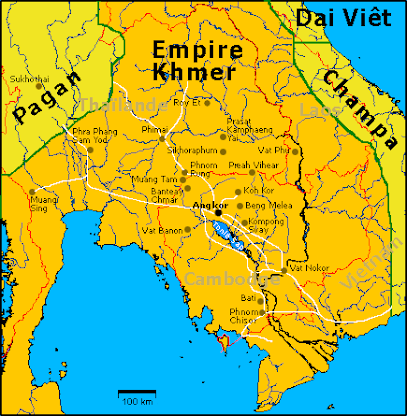
Cambodian prince re-enters politics

PHNOM PENH — Cambodian Prince Norodom Ranariddh returned to politics Saturday with a vow to reinvigorate the flagging royalist movement, taking the helm of his former party which has re-adopted his name.

Two years after quitting politics, Prince Ranariddh, who was Cambodia's first elected prime minister in 1993 after years of civil war, was re-instated as president of the party he created during a meeting in the capital.

Party members also agreed to re-name the Nationalist Party the Norodom Ranariddh Party (NRP).

The 66-year-old son of former king Norodom Sihanouk said in a speech that he was returning to politics to re-unite royalists ahead of 2012 local elections and a 2013 general election.

"I have seen that the royalists are hopeless, separated, I want them to be one family," he said.

Ranariddh called for an alliance with fellow royalist party Funcinpec, with him as leader.

"The prince wants to create a new party called Funcinpec 81 before 2012," party spokesman Pen Sangha told AFP. "The ball is now in the court of Funcinpec."

Ranariddh has been off the political scene since late 2008, when he said he was quitting the opposition after receiving a royal pardon on fraud charges and returning from self-imposed exile in Malaysia.

The prince's political career had begun with great promise when he won Cambodia's UN-sponsored election in 1993 as head of the royalist Funcinpec party.

However, he was forced to accept Hun Sen as co-prime minister, who then staged a coup in 1997.

In following elections, Ranariddh's voter appeal diminished as he entered into coalition agreements with Hun Sen's ruling Cambodian People's Party.

In 2006, he was ejected from Funcinpec over fraud allegations involving the illegal sale of the party's headquarters. He formed the NRP shortly afterwards.

The prince was sentenced in absentia to 18 months in jail over the fraud charges the following year but was later pardoned.

The NRP won just two parliamentary seats in Cambodia's 2008 general election, as did Funcinpec. The NRP then changed its name to the Nationalist Party.

Both parties have in the past expressed an interest in merging to improve the royalist movement's flagging fortunes.

Hun Sen warned the prince earlier this week that if he was coming back to politics, he would not be able to stay on as an adviser to Cambodia's King Norodom Sihamoni, Ranariddh's half-brother.
Read more!

15 years for Kent man who traveled to Cambodia to have sex with girls

Stephanie A. Clark; staff writer


A 59-year-old Kent man who sexually exploited children overseas was sentenced in Seattle’s U.S. District Court Friday to 15 years, fined $11,000 and ordered to pay $8,000 in restitution to his victims.

Craig Carr traveled to Cambodia to have sex with underage girls, according to a release from the U.S. Attorney’s Office in Seattle.

At sentencing U.S. District Judge Richard A. Jones told Carr "you prey on the most vulnerable of victims... very young girls. What you were doing satisfying your fantasy one night, leads to a lifetime of nightmares for them." The judge imposed the fine saying it was the same amount of money the defendant spent on his trip to Cambodia.

Carr told the judge, “I’ve ruined my life for a very troubled part of who I am. I have no one to blame but myself.”

According to the facts admitted in his plea agreement, Carr made contact over the Internet with a person in Cambodia who agreed to find young girls for Carr to have sex with during a visit in January of this year.

He said he paid this person approximately $8,000 for sex during the week-long trip. He specified that the girls be about twelve years of age. He even sent sexually explicit photographic examples of the approximate age he was seeking. He requested to take nude photographs of the girls and planned to send them from a FedEx store in Phnom Penh to his home in Kent. After his arrest on Jan. 22, he told investigators that he had sex with three young girls over his eight-day stay. His camera contained pictures of them. He agree to pay $8,000 in restitution to them.

This case was investigated by U.S. Immigration and Customs Enforcement with assistance by law enforcement agencies in Cambodia.
Read more!

Friday, December 10, 2010

Hun Sen Scheduled for Five-Day Chinese Visit

Prime Minister Hun Sen will spend five days in China next week at the invitation of his Chinese counterpart, Wen Jiabao.

Hun Sen will meet with Chinese President Hu Jintao and other senior leaders and will pay a visit to former king Norodom Sihanouk, who is in Beijing for medical treatment, the Ministry of Foreign Affairs said.

The Chinese Foreign Ministry said on its website Hun Sen would pay an official visit Dec. 13 through Dec. 17.

China has become a large supporter of Cambodia, providing millions of dollars in aid packages and investment in infrastructure, power and mining.

Cambodian officials say they expect Hun Sen to sign even more deals with China on this visit, though they declined to give details.

Foreign Minister Hor Namhong and Commerce Minister Cham Prasidh are both expected to accompany the prime minister.
Read more!

Cambodian company to build coal power plant

PHNOM PENH, Cambodia (AP) — Cambodia's government has given its approval for a local company to build a 700-megawatt coal-fired power plant to help cope with the country's electricity shortage.

A government press release said Friday that Cambodia International Investment Development Group Co, Ltd had been awarded a 33-year contract to build and operate a $362 million power plant in the coastal province of Preah Sihanouk, the first Cambodian company to undertake such a project.

The statement said the plant would produce 270 megawatts in its first phase, due to be completed by 2015.

In September, a Chinese company, Erdos Electrical Power & Metallurgical Co., announced plans to build a 700-megawatt coal power plant in the same province. It was not immediately clear if the projects were related. Read more!