CTN and Bayon have continuously taken donations, at time broadcasting pleas for aid and running donation totals during regular programming.
Following Monday’s Diamond Bridge tragedy, nearly $1.5 million has come in from concerned Cambodians via fund drives by two TV stations, for both the families of the dead and for those injured.
By Friday evening, Bayon TV had raised more than $1.08 million and CTN had brought in more than $500,000.
A total 347 people died on the bridge and another 395 were injured, when a mass of Water Festival revelers stampeded on the crowded bridge Monday night.
The country’s worst tragedy in decades was felt across Cambodia and in expatriate Cambodian communities abroad, culminating in a national day of mourning Thursday.
CTN and Bayon have continuously taken donations, at time broadcasting pleas for aid and running donation totals during regular programming.
Officials from both stations said they would end their fund drives Friday and aim to distribute the money to families of the dead next week.
Hout Kheang Heng, deputy director general of TV and Radio Bayon, which is operated by the prime minister’s daughter, said 100 percent of the fundraising would go directly to victims as cash. Teams will travel to the villages where the families or survivors live or to hospitals to deliver the money, he said.
Chhun Kosal, deputy director of CTN’s fundraising committee, said so far with about 85 percent of the donations counted, the station has raised $420,000 and 373 million riel, or $93,000. They will also deliver 100 percent of the cash to survivors and relatives next week, he said.
Both said the relatives of the dead would receive more than survivors.
However, members of the opposition Sam Rainsy Party and a workers union representative said they are skeptical the money will reach the hands of those it was meant for.
That’s because during similar fundraising for soldiers stationed near a border dispute with Thailand since 2008, there was little transparency and it remains unclear where the money went, said Rong Chhun, president of the Cambodian Teacher’s Association.
A similar problem could plague the donation efforts for the bridge victims, he said.
“I really admire both stations for opening fundraising,” he said. “It shows that Khmer love Khmer. But what I’m worried about is that the expenditure of funds will not be transparent for the victims.”
Read more!

Saturday, November 27, 2010
TV Raises More Than $1 Million for Victims of Tragedy

US-Cambodians Join Mourning for Bridge Tragedy
 Yap Kimtung, president of Cambodian American for Human Rights and Democracy, signed in, while at the embassy.
Cambodian-Americans gathered at their embassy in Washington on Wednesday to pay their respects to those who died in Monday’s bridge tragedy.
Though none had relatives among the 347 dead from the Diamond Bridge stampede that has shocked the country, many wept openly at the incident.
“I feel deeply sad,” said Keo Tom, the main organizer of the gathering. “I am really sorry that there was such a horrible tragedy, and it has never happened before. We are so touched that we have to be here today to pay our respect to their souls.”
“I am so sorry, and it is not me alone, but many other Cambodian-Americans are also sad for such a tragedy,” said Yap Kimtung, president of the Cambodian Americans for Human Rights and Democracy.
Organizers will also hold a religious ceremony at a local temple to pray for the dead, who were trammeled Monday night on a crowded bridge following Water Festival celebrations.
The Cambodian Education Excellence Foundation will create scholarships for children whose parents died at the bridge, the foundation’s president, Kchao Sarang, said.
The Cambodian Embassy made an appeal for aid.
“There is still time for people to donate funds to support the victims,” Cambodian Ambassador Hem Heng told VOA Khmer. “If they don’t have the means to send it to Cambodia, the embassy will help facilitate that.”
Read more!
Friday, November 26, 2010
Cambodian water festival will continue despite tragedy
Lauren Crothers Special to The Star People place offerings and incense sticks for the victims of the stampede near the Diamond Gate bridge, site of a stampede late on November 22 which left nearly 350 people dead, in Phnom Penh on November 25, 2010 as Cambodia holds a national day of mourning.
PHNOM PENH—The bodies lay on mats, some cocooned in clear plastic body bags. Others were shrouded with thin, white sheets, some blotted with specks of blood. The bodies seemed innumerable, filling the porch area of a makeshift morgue on a sandy plot in Khmer Soviet Hospital.
An anxious crowd overwhelmed hospital officials, sitting at a little table nearby laden with papers and photographs of corpses bearing ID numbers. Relatives wanted to know where their loved ones were.
This was an end no one saw coming when the annual water festival, which ushers in the end to the monsoon season and marks the reversal of the flow of the Tonle Sap river, on the banks of which this mostly sleepy Cambodian capital lies.
The festival, in many ways, is the event of the year, marked by boat races, concerts, fairground rides and an influx of up to 3 million people this year — mostly from the provinces — to the city.
The long stretch of open park area from Independence Monument to the riverbank is crammed with stalls selling everything from face whitening cream to laundry powder to prawn crackers in bulk — and the constant, high-pitched drone of promotional specials make sure the crowds here can’t ignore it.
What usually takes a 10-minute walk from the monument, built to mirror one of Angkor Wat’s iconic pagodas, can take almost an hour during the festival. While many of roads are closed to traffic, that doesn’t mean the driver of a moto, the preferred method of transport here, will obey.
So the crowds negotiate each other, the blaring speakers and rogue motos. The throng is headed in the direction of Koh Pich, or Diamond Island, a short walk over one of two bridges connecting it to the mainland. The people are here for food, the fair, perhaps a concert or some Japanese wrestling. The entire experience is a sensory overload, punctuated by the fact that no one can really get anywhere quickly. It’s an awkward, shuffling, dodging, waiting game when there are millions of people headed in the same direction.
And on Monday, the final night of festivities, the sheer number of people coupled with a comparatively small bridge resulted in a stampede that left at least 347 people dead, and nearly 400 more injured.
A government investigation found that thousands of revellers cramming the bridge panicked as it began to sway under their weight. Some shouted that the structure was going to collapse; the crowd pushed and heaved, setting off the stampede.
It was the kind of tragedy people here are saying they have not seen here since the fall of the Khmer Rouge in 1979.
Behind the cordoned-off scene on Friday night, in the shadow of the Nagaworld Hotel and Casino, crowds gathered to light incense, say prayers and just stare at what some are now calling the “Bridge of Ghosts.”
Sem Sophea, 36, a businessman in Phnom Penh, came to see the site for himself, having spent the first day of the festival in the beach resort town of Sihanoukville, about three hours away, and the second at home with his family.
“The way it generally works is that the city people keep their distance, while the people from the provinces flock here,” Sophea said. “They want to experience city life, see the development, go to the carnivals. City people have seen it all before — they just want some peace and quiet.”
The water festival, which will continue next year, is steeped in tradition, typified by boat races and a carnival atmosphere. Now it will be irrevocably connected with the tragedy.
Read more!
National Assembly Passes $2.4 Billion Budget
 The 2011 budget, totaling $2.4 billion, allocates military and security spending of $304 million, including $190 million for the Ministry of Defense.
With a day of mourning for the Diamond Bridge tragedy behind it, the National Assembly took up debate and passed next year’s budget, approving an increase of nearly half a billion dollars.
The 2011 budget, totaling $2.4 billion, allocates military and security spending of $304 million, including $190 million for the Ministry of Defense. The Interior Ministry received $114 million, health $169 million, and education $223 million.
Ouk Rabun, secretary of state for the Ministry of Finance, told lawmakers his ministry would accept recommendations from the National Assembly on “better public finance management.”
The main opposition, the Sam Rainsy Party, said it did not support the budget, claiming it had misplaced funding priorities.
“The sectors of the government considered a priority, like the Ministry of Agriculture, received 1.8 percent of the total expenditure,” Yim Sovann, a spokesman for the party, said. The ministries of rural development, land management and water resources each only receive 1 percent of the total, he said.
Read more!
Thursday, November 25, 2010
Holy Jolie: Cambodian temple takes Angelina's name
It is regretable and sad to hear the name of Ta Prom Temple had changed to Angelina Jolie Temple. Ta Prom Temple were built by our Cambodian warior kings and heroes. The Ta Prom Temple is the thousand years history of Khmer Empire, the Temple is representing million Khmer people and culture. Agelina Jolie is just actress, she had no credit for this Temple or our ancestors. The Ta Prom Temple and Khmer cultures are not for Jokes and laughting at in any form.
 Name drop ... the temple at Ta Prohm – now commonly referred to as the 'Angelina Jolie Temple', according to a local religious leader. Photograph: Alamy
Rajan Zed, the president of the Universal Society of Hinduism, told the WENN news agency that the star is so beloved in Cambodia a world-famous Hindu religious site in Angkor has been renamed the "Angelina Jolie Temple".
"It's a 12th-century site called Ta Prohm; it is otherwise known as Old Brahma and was initially named Rajavihara or the royal monastery," he said. "Now it's popularly called the Angelina Jolie Temple."
The building was the setting for various scenes in Tomb Raider – in which Jolie, as Lara Croft, battled a secret society called the Illuminati for possession of an ancient talisman. Today, local restaurants sell a Tomb Raider cocktail (Cointreau, lime and soda – said to be Jolie's tipple of choice). Meanwhile, the actor's son Maddox was born in the Siem Reap province in which the temple complex is located.
Jolie's unofficial honour appeared to come with responsibilities, as Zed called on the actor to use her public profile and her status as "the patron saint of Cambodia" to help conserve the site. He added: "I'd urge Angelina Jolie to raise awareness about better preservation of this world heritage, as more needs to be done to safeguard the temple complex and its surroundings [and] save it from vandalism and looting."
Valley business aids one of CNN's ‘Heroes'
And tonight when CNN televises its “Top 10 Heroes,” Debby Alexander, proprietor of Peabody's Café & Bar, will quietly celebrate the good works of Aki Ra and the role the Palm Springs restaurant played to help his cause.
Ra, a former child soldier for the Khmer Rouge, has dedicated his life to detonating and dismantling the landmines he once placed in Cambodia.
For Alexander's part, Peabody's held three separate fundraising events — at which Cambodian art and donated items from Palm Springs businesses and small hotels were sold — with longtime customer Bill Morse to raise $22,000 for the landmine relief fund.
When CNN taped its all-star annual tribute in the Shrine Auditorium in Los Angeles, Alexander was one of 13 people to get an invitation from Ra and Morse to attend the red carpet event featuring Jessica Alba, Renee Zellweger, Marisa Tormei, Aaron Eckhart, Demi Moore and Halle Berry as presenters.
“It was a real thrill,'' she said.
“When Renee Zellweger came out and introduced Aki, he spoke before this big crowd with limited English,'' Alexander said.
“He spoke about his wife dying last year, and how much she had helped him. It got emotional.”
Alexander was able to see Morse for a few minutes as well.
He and his wife, Jill, moved to Siem Reap, Cambodia, last year to help Ra get international certification and a license from the Cambodian government to legally remove landmines that once were deactivated with a stick.
Morse also helped Ra get a $100,000 grant to buy a truck and assemble a rapid response team that can respond to villagers who find mines.
Ra, who sometimes placed up to 1,000 landmines a day in the 1980s, has not only cleared more than 50,000 of the estimated 6 million explosives the war left behind. Ra has also cared for dozens of children who have been maimed by mines.
“I got to see Bill for a minute before he and Aki Ra flew back to Cambodia,'' Alexander said.
“I got to meet other people who have helped the landmine relief fund. While at the taping, I also got to meet Richard Fatoussi, who is making a film about Ra.”
Alexander said that film, “The Perfect Soldier,'' has just been presented to judges of the Palm Springs International Film Festival.
The CNN show will be televised at 5 p.m. today.
Peabody's Cafe, 134 S. Palm Canyon Drive, will be closed tonight for the holiday and this simple reason: Alexander has a date with the TV.
Read more!
Questions Remain in Cambodia Crush
By Set Mydans
PHNOM PENH, Cambodia — More than two days after hundreds of people died in a huge, tightly jammed crowd on the last night of a water festival, both the cause and the death toll remained unclear on Thursday.
Most of the victims were caught in a crush on a small bridge. Rather than being trampled, the victims suffocated or were crushed to death by a dense, immobile crowd in which some people were trapped for hours.
Various officials gave different counts of the death toll, whichmay not include victims who drowned or were taken from the scene.
On Wednesday, the government said at least 350 people had died and 400 were injured. But among other tallies on Thursday, the Phnom Penh Post newspaper, citing government sources, said the death toll had climbed to 456.
As grief and shock turned to demands for explanations, questions grew on Thursday over the cause of the crush, over the response by the police and over the city’s readiness to handle an influx of as many as 3 million people for the festival.
A preliminary government investigation reported that the mostly rural holiday-goers panicked when the suspension bridge began to sway slightly under the weight of the crowd.
This conformed with a report by a military police investigator, Sawannara Chendamirie, who said on the morning after the disaster that survivors told him there had been shouts that the bridge was collapsing.
There have been reports, beginning immediately after the disaster, that some people were electrocuted, possibly by strings of lights on the fretwork of the bridge. Some reports said the police fired water hoses at the crowd that might have contributed to this.But doctors at Calmette Hospital, the city’s main hospital, said they had seen no sign of electrocution among either the injured or the dead. They said this absence of evidence did not rule out the possibility, but they said most of the injured had suffered from the squeezing of the packed crowd. Some patients at the hospital said they had been unable to breathe and had passed out.
The police came under criticism for a failure of crowd management and for an inadequate and incompetent response to the disaster. One officer said only half the officially reported number of police were actually deployed. Badly injured survivors reported being dumped into vehicles together with the dead.
The government did quickly mobilize help for relatives of victims, many of whom traveled from distant provinces to claim the dead. Tables were set up near a makeshift morgue to confirm identities. Military trucks offered transportation home for coffins and family members. The morgue was all but cleared within a day, although some people wandered the hospital grounds holding snapshots of missing relatives.
The Hong Kong-based Asian Human Rights Commission issued a report that documented the questions and criticisms.
“While the exact cause of the stampede last night remains unclear, with contradictory reports indicating it may have been instigated by either crowd antics or poor construction of the bridge to Koh Pich island, the failure of the state to control the crowd and limit the damage from the stampede is clear,” the report said.
“It is clear, too, that Phnom Penh was unprepared for any large-scale disaster,” the report said. “Responses by police and military were lacking and may even have contributed to the stampede while hospitals were overwhelmed. Emergency and medical personnel resorted to piling bodies together, covering them with mats or sheets.”
Read more!
Wednesday, November 24, 2010
Filipino-owned logistics company
BY GENIVI FACTAO
Logistic company Airspeed International yesterday said it is extending its reach to Vietnam and Cambodia to take advantage of the growth of intra-Asia trade.
Rosemarie Rafael, president of Airspeed International, said its expansion to Vietnam and Cambodia was prompted by the transfer of many garments manufacturers to these two countries.
Airspeed is a privately-owned Filipino company engaged in air and sea freight forwarding (inbound and outbound Manila) as well as international door-to-door parcel and cargo service, and customs brokerage.
It handles shipment of garments, perishables and tropical fish, handicraft, electronics and pharmaceuticals. Garments account for 30 to 40 percent of shipments handled while pharmaceuticals account for roughly the same volume.
Most of the garments are shipped to United States and Middle East countries while the destination for pharmaceuticals is Singapore. Exports of tuna, mangoes and okra go to Japan.
In 2009, the company handled $3.61 million worth of air cargo business, against $4.21 million in 2008, because of the economic crisis.
"Coming from a very low level (of revenues) in 2009, we expect a 100 percent increase this year, but in 2011 the growth will be about 20-30 percent," said Mariz Regis, vice president and general manager.
No data was available as to how much was shipped using ocean freight, which is the fast growing revenue generator with 60 percent, compared to airfreight with 40 percent.
She said the growth in the company’s revenues will be driven by the expansion in Vietnam and Cambodia. Sea freight will also lead the growth with the inflow of oversized cargo deliveries.
On the domestic front, Airspeed already covers the entire country, providing logistic service even to remote areas.
"We deliver a variety of products. We even had cargoes drawn by carabao to reach clients in mountainous areas. We always think of service innovations to address our customer’s need," Regis said.
She added that the also deliver lechon from Cebu. And on time to preserve the freshness of the product.
Airspeed use different airlines, including Philippine Airlines, Cebu Pacific, Delta Airline, China airline, Asiana, Korean Air, Emirates, Etihad, Gulf Air and United Airlines.
It uses the Lorenzo Shipping and some ro-ro ships for domestic deliveries. The company has a fleet of more than 20 trucks.
Airspeed has been consistently ranked among the top 10 in the forwarding category by the International Air Transport Association.
"We are proud that a Filipino-owned company is in the elite company of such industry giants in the logistics industry. We will continue to strive and do better by continuously providing price-competitive rates and delivering world-class service to clients. In this way, businesses will find us to be good partners as we understand their needs and offer them the best possible rates," Rafael said.
Airspeed marks it 25th year in service on December 2.
Read more!
Cambodia holds day of mourning for stampede victims
Cambodia is holding a day of mourning for more than 450 people killed in a festival stampede.
Prime Minister Hun Sen is due to join officials and grieving relatives for a religious ceremony at the footbridge where the tragedy happened.
A preliminary investigation has found that the swaying of the bridge near the capital, Phnom Penh, triggered a panic.
Witnesses said some people were crushed on the bridge, while others fell into the river and drowned.
Crowds of revellers had been crossing the bridge to reach an island where an annual water festival was being held on Monday.
A committee set up to investigate the disaster found that many of the people on the suspension bridge were from the countryside and were unaware that such structures often swayed, local media reported.
Between 7,000 and 8,000 are thought to have been on the bridge at the time.
Cremations
"Some started screaming that the bridge was collapsing, that people were getting electric shocks and that the iron cables were snapping, so the people pushed each other and fell down and the stampede happened," said Prum Sokha, heading the panel of inquiry.
The first funerals and cremations took place across the country on Wednesday.
Mr Hun Sen said a memorial would be built "to commemorate the souls of the people who lost their lives in the incident... and to remember the serious tragedy for the nation and the Cambodian people".
But many relatives say they want answers.
"I feel very sad and angry about what happened," said Phea Channara at a funeral service for his 24-year-old sister near Phnom Penh.
"I wonder if the police really did their job. Why did they allow it to happen?"
Mr Hun Sen has described the stampede as the country's biggest tragedy since the Khmer Rouge era in the 1970s, which left an estimated 1.7 million people dead.
Read more!
Tuesday, November 23, 2010
Thailand sends its condolences
Prime Minister Abhisit Vejjajiva and Foreign Minister Kasit Piromya have sent letters of condolence to the Cambodian government over the stampede tragedy in Phnom Penh.
No Thais were among the victims, according to the Thai embassy in Cambodia.
"On behalf of the government and people of Thailand, I wish to extend my sincere condolences and sympathy to you and, through you, to the bereaved families of the victims in this tragic incident," the prime minister said in the letter.
The government has donated US$30,000 (900,000 baht) to help the Cambodian people. The Thai-Cambodian Friendship Association has opened Krung Thai Bank account number 0021482001 to receive donations.
Read more!
Cambodia stampede: 'I was in the middle. Everyone was falling'
Ben Doherty speaks to survivors of the crush that Cambodia's PM called 'the greatest tragedy in more than 31 years'
Police begin their investigations amid the belongings left behind by victims of the festival crush on Rainbow Bridge. Photograph: Tang Chhin Sothy/AFP/Getty Images
Ben Doherty in Phnom Penh
On Monday night this week the streets of Phnom Penh were full, there were market stalls and music, fairground rides and partygoers crowding every available inch of space in the city.
Sopheap Meng and his older brother Sovaan were on the Rainbow Bridge, a structure spanning barely 50 metres, connecting Cambodia's capital with Koh Pich, also known as Diamond Island, at the heart of the annual Water Festival.
The three-day festival, Bon Om Touk, is the biggest party of the year here. It causes the normally sleepy city to swell by more than 2 million people, international and domestic visitors coming for the parties and the boat races, and to give thanks for the end of the rainy season.
But shortly before 10pm, the night of celebration turned disastrous. A big crowd of people packed on to the narrow Rainbow footbridge panicked, surged and created a crush.
In a few terrifying minutes the crush led to deaths of 378 or more people, and left more than 700 injured. Cambodia's prime minister, Hun Sen, described the occurrence as the greatest tragedy to befall the country since the blood-soaked rule of the Khmer Rouge.
Most of those who died were from the rural areas, unwilling to jump from the bridge because they could not swim; they did not know the water was only waist deep. Most were young, and most women, unable to resist the weight of humanity pushing them to the ground. They suffocated on the bridge, or drowned having fallen unconscious into the water.
Sopheap Meng had gripped his brother's hand as tightly as he could. He fought the crush pushing him to the ground.
"But there was no air, I could not breathe. I got pushed to the side of the bridge, people were falling all around, on to my arm, and I had to let go." Rescued by police from the crush which had pinned his legs, it was hours before 18-year-old Sopheap found his brother again. Sovaan's corpse was pulled from the heap of bodies on Rainbow Bridge.
What sparked the panic is the subject of countless theories. Some at the scene yesterday said it started when word swept among the tightly packed crowd that the bridge was about to collapse. One witness said he saw the bridge bouncing under the weight of the people.
Others said the panic started when the multicoloured lights strung from the suspension ropes began sparking.
There were still more rumours – of mass food poisoning starting the crush, or a gang of youths robbing the crowd. It could be that there were just too many people on the narrow concrete footbridge.
The Rainbow Bridge was built this year, and only open for the festival. It was supposed to be a one-way system, leading people from the island to the city. People trying to get on to the island were meant to take a second bridge, which was 200 metres to the south. But the Rainbow Bridge was closer to the action and, amid the excitement and the celebrations, the regulations were relaxed.
Lin was right in the middle of the bridge with his girlfriend Ni when the crush became unbearable.
"I realised I could not move," Lin told the Guardian. "I could not go back, I could not go forward. People were pushing from everywhere and there was nothing I could do. I was right in the middle, everyone around me was falling, one on top of another, they were being crushed. There were dead people all around me." His girlfriend survived too, shaken but uninjured. "We are the lucky ones today. One in 1,000 lucky. Two more minutes and I would have fallen too."
Yesterday the bridge remained littered with the evidence of the tragedy: there were thousands of shoes, shirts and hats, left behind in the terror that consumed those caught in the crush. Police and army officers pored over the items for clues.
On the banks of the Bassac river, relatives of the victims made Buddhist offerings and prayed for the lost.
At the nearby Calmette hospital a makeshift open-air morgue was laid out in the grounds. Bodies were arranged in lines on straw mats inside a large white tent.
Family members peered through open windows, searching for their loved ones. Those identified were covered with a white sheet, those unknown were left exposed so that they could be claimed. Flies buzzed constantly in the stifling heat.
Boupha Lak sat at her dead daughter's feet, gentling stroking them, waiting for the paperwork to be completed so she could take her home.
Boupha said: "She went to the festival to see her friends, but she was alone on the bridge when it happened – her friends I have seen today, they were on the other side. She was found on the bridge, crushed underneath all the other bodies. They told me she was on the bottom."
In the heat of midday, coffins lined with wallpaper began arriving in army lorries. They were given out to the family members of victims, along with transport to take their loved ones home.
One woman wailed at the pile of wooden coffins, her daughter's name scrawled in text on the lid of one. "It's not fair," she cried. "My daughter doesn't deserve this. She deserved a long life."
Cambodia is a country much too used to tragedy, its people weary of loss and of suffering. The prime minister acknowledged as much when he spoke in the middle of the night on Monday. "This is the greatest tragedy in more than 31 years after the Pol Pot regime," Hun Sen said in reference to the Khmer Rouge, whose regime killed a quarter of the Cambodian population, an estimated 1.7 million people, between 1975-79. "I ask you all to understand me and forgive me for this very bad situation."
The prime minister declared Thursday a day of mourning, and he promised compensation of 5m riel (about £780) to the families of those killed and 1m riel to those who were injured.
In the late afternoon, more than one hundred monks held a Buddhist vigil at the bridge, burning incense and offering prayers for the souls of the deceased.
By sunset, all the bodies had been cleared from the makeshift morgue at Calmette hospital. Army lorries bound for the provinces, loaded with plain brown coffins and grieving relatives, rolled out of the city all evening.
Read more!
Monday, November 22, 2010
Cambodia's Prince Considers Re-entering into Politics
Cambodia's Prince Norodom Ranariddh said Monday he is considering re-entering politics in order to reunite all forces, in particular, the royalists who have been split apart.
Prince Ranariddh is now a president of the supreme advisory council to the Royal Palace.
The prince announced in October 2008 his complete resignation from politics after his Norodom Ranariddh Party won only two seats in Lower House in general election in July 2008.
The Lower House is seated by 123 members of parliament from the ruling Cambodian People's Party of Prime Minister Hun Sen, opposition Sam Rainsy Party, Human Rights Party, FUNCINPEC Party, and Norodom Ranariddh Party.
The Norodom Ranariddh Party (NRP) was established in 2007 after the prince was toppled from the president of the royalist FUNCINEC Party in 2006.
However, NRP was later changed to Nationalist Party led by Chhim Seakleng, his former colleague.
But on Monday, Chhim Seak Leng said the party's members wanted to see Prince Ranariddh return to politics and lead the party.
The prince said he would love to see the Nationalist Party changed to its former name as Norodom Ranariddh Party by December this year.
Prince Ranariddh is the son of former King Norodom Sihahouk and is the elder brother of the present King Norodom Sihamoni. He had been the first prime minister in 1993 and the president of the National Assembly in 1998.
Read more!
Cambodia Water Festival turns tragic with deadly stampede
 By Julie Masis, Correspondent
At least 339 people died in the stampede, according to Prime Minister Hun Sen, who called it a terrible tragedy. The Water Festival has seen troubles in past years.
Phnom Penh, Cambodia
A stampede in Cambodia late Monday night killed at least 339 people and injured as many more, with hospital officials projecting the death toll would continue to rise.
The stampede happened during Cambodia's annual Water Festival, which drew a record 4 million people from around the country and region to watch three days of traditional boat races on the Bassac River in the capital.
Prime Minister Hun Sen called it the "biggest tragedy since the Pol Pot regime." While the comparison is extreme – the Khmer Rouge caused the deaths up to 2 million people in the late 1970s – this is the most deadly incident at a festival plagued by repeated problems.
A Singaporean boat capsized in 2008 and killed five rowers, and one Cambodian rower drowned in 2009. The latest incident raises questions whether the government has the capabilities to handle the ever larger festival crowds, which have increased by several million people in recent years and overwhelmed Phnom Penh's facilities.
The stampede broke out on a recently built bridge that crosses from the mainland over the Bassac River to Diamond Island, where a concert was held Monday night to conclude the Water Festival.
Yan San, who was visiting from outside the city, says the bridge became clogged at 9 p.m., a stampede began at 11 p.m., and he himself was stuck on the bridge until 1 a.m. with is legs injured.
“People were stuck on the bridge, they could not move, so they pushed others into the water," says Mr. Yan, sitting in a wheelchair outside Calmette Hospital, where he and hundreds of others were being treated. "I was stuck on the bridge for five hours and I could not move."
Prime Minister Hun Sen addressed the nation at 2:30 a.m. local time and updated the toll to 339 people dead and 329 injured, according to the Phnom Penh Post. “With this miserable event, I would like to share my condolences with my compatriots and the family members of the victims,” he said.
As the night wore on at Calmette, more than 50 bodies were laid in the hospital's courtyard for family members to identify. Ambulances continued to arrive early into Tuesday morning. The hospital was inundated with patients sitting in hallways and lying on floors awaiting treatment.
The exact cause of the stampede was unclear. Reuters reported that a scare was set off when several people were electrocuted from an unknown source. CNN reported that Cambodian police sparked the stampede by firing a water canon at pedestrians to get them to move off the bridge.
“A lot of people jumped into the water because they knew how to swim and they were scared they would die otherwise," says Kim Houng, who was being treated at Calmette early Tuesday morning after passing out on the bridge.
“If I was on the side of the bridge, I would have jumped in the water, too.”
(With additional reporting from Phok Dorn in Cambodia.)
Read more!
Sunday, November 21, 2010
Drug trafficking ruled beyond UN protection
By Unique Group Travel in Sydney. Ideal for family, friends & staff.
DOES trafficking drugs make you a member of a social group?
The question was considered by the Refugee Review Tribunal when a Cambodian man, jailed for smuggling drugs into Australia, applied for a protection visa after he was transferred to a detention centre on parole.
The man was carrying drugs when he was arrested on his arrival in Australia in 2006.
Advertisement: Story continues below He feared that if he returned to Cambodia, he would be harmed by his co-accused because he informed on them, and that his conviction for drug smuggling put him at risk of harm from the local authorities.
The 1951 United Nations Convention defines refugees as people who are unable or unwilling to return to their home country due to "a well-founded fear of being persecuted for reasons of race, religion, nationality, membership of a particular social group, or political opinion".
The man argued that as a former police officer and deputy governor involved in drug-related offences he was a member of a social group.
The tribunal members accepted that in Cambodia "corrupt officials may tolerate the drug trade, that some of the leaders of the drug-smuggling enterprise have political power in Cambodia, and that some are even government officials themselves".
But they found the man's fears did not fall within the scope of the convention.
"The essential and significant reason for the harm the applicant fears is not his membership of any group, but what he has done - namely involved himself in drug trafficking," they said.
The members concluded Australia did not owe him protection obligations and rejected his visa application.
The man had sought a review of the decision in the Federal Magistrates Court, arguing that the tribunal "erred in law because it failed to see my situation as a human situation". A magistrate, Kenneth Raphael, found the tribunal had made no error and dismissed the man's application.
Previous cases have held that fear of revenge, unless linked with race, religion, nationality, political opinion or membership of a social group, would not normally amount to persecution under the convention.
Read more!
PM Abhisit asks Cambodian counterpart to confer on Preah Vihear temple
 BANGKOK, Nov 21 -- As Thai activists plan to rally at Parliament later this week to protest two government-sponsored constitutional amendments, Prime Minister Abhisit Vejjajiva on Sunday defended his administration's policy on the ancient Preah Vihear temple which has soured relations with neighbouring Cambodia for some past years.
During his weekly TV and radio address, Mr Abhisit said he met and discussed with his Cambodian counterpart Hun Sen on the sidelines of the 4th Ayeyawady-Chao Phraya-Mekong Economic Cooperation Strategy (ACMECS) Summit, held in the Cambodian capital Phnom Penh last Wednesday, on the temple and its surrounding area.
The Thai premier said last week's meeting was the fourth time he had met and discussed with his Cambodian counterpart and that relations between the two neighbouring countries have obviously been improved.
Mr Abhisit said he had told Mr Hun Sen that the temple problem arose because Cambodia had asked UNESCO to name Preah Vihear temple as a World Heritage site, despite the two countries still not agreeing on the area surrounding it.
The 2000 agreement between the two countries on the Survey and Demarcation of the Land Boundary plus the Thai-Cambodian Joint Commission on Demarcation for Land Boundary (JBC) set by the memorandum of understanding are important as they prevent Phnom Penh from managing the contested area surrounding the temple, he said.
“JBC memos haven’t yet been approved by the Thai Parliament and are now stalled, preventing Cambodia from proposing a management plan for the area temple environs,“ Mr Abhisit said.
Three previous JBC memos must be endorsed by the Thai parliament as required by the Constitution, which states that any pact with other countries needs House approval.
Mr Abhisit said Mr Hun Sen understood the Thai process at last week's meeting and agreed to avoid military confrontation along the border and would proceed handling the issue under the JBC framework.
His comments were made as the 'Yellow Shirt' People’s Alliance for Democracy (PAD) activists plan to protest at Parliament Tuesday, Wednesnay and Thursday Nov 23-25 during a joint sitting of both houses to consider charter amendments to change Thailand’s electoral system and systems of approving international agreements which require parliamentary approval.
The PAD opposes parliamentary endorsement of three previous memos by the JBC, claiming they may end up in the loss of Thai territory adjacent to the temple. They also demand revocation of the MoU signed in 2000.
The International Court of Justice in 1962 ruled that the 11th century temple belongs to Phnom Penh, and UNESCO named it a World Heritage site in 2008 after Cambodia applied for the status.
Both countries claim a 1.8-square-mile (4.6-square-kilometre) strip of land adjacent to the cliff-top temple.
Giving reassurances that his government has no hidden agenda behind the controversy, Mr Abhisit said the most important thing now is to “protect Thailand’s sovereignty and benefits”. (MCOT online news)
Read more!
Cambodia: Following the music in Phnom Penh
By Thomas Huang
PHNOM PENH -- The quiet boy, Kosair, takes me for a walk through his village on the outskirts of Phnom Penh. We walk down a dirt path, past a small storefront where a woman comforts her baby.
Cars and motorbikes have gathered in front of another house; there's a wedding party tonight.
We walk by a group of dark-haired schoolgirls who stare at me, and their giggles turn to laughter. I know I must be a peculiar sight, a tall Chinese-American man in clothes rumpled by days of travel.
Every so often, people on motorbikes zoom by, and I clutch my camera more tightly, protecting it from their rooster tails of golden dust. I assure myself that the boy and I are safe.
This is a peaceful village, and while Phnom Penh was a violent city just a few years ago, things have stabilized.Still, I am disoriented; I don't belong here; I don't know where we are going. I could lose my way, and who would know?
The boy, Kosair, with large, watchful eyes, walks in the glow of the sun, bare-chested, wearing knee-length shorts and sandals. I am staying with his family in a house owned by a friend, an American journalist.
We pantomime our way through a conversation. We move our first two fingers, pointed downward, to show that we are going for a walk. We hear a song in the distance. To my ears, it sounds like a blend of xylophone, wind chimes and steel drums.
Together, Kosair and I say, "Music." We point at other things and say the words: Car, road, tree, house, river.
We cross a bridge over the Mekong River, and, looking back, Kosair gestures toward our starting point, a small house on the riverbank. "Dey Sena," he says, or something that sounds like that. His mother's name is Sena. Perhaps he is saying, "That's my mother's house."
Kosair seems to be guiding me toward the music. We are curious about where it's coming from. I wonder whether it's coming from a temple. We turn down another dirt road and pass several traditional stilt houses. A few people sleep in hammocks in the space underneath their houses.
We never do find the source of the music.
Kosair notices that a man in a white shirt is following us. The boy seems a little spooked. He motions for us to return home. We walk a little more quickly. Our stride grows a little longer. Once home, we are greeted by Kosair's grandfather and his mischievous little sister, Sreyleak.
The family embraces me with their warmth and cooks me a dinner of Khmer chicken soup, stir-fried shrimp and vegetables, and steamed rice. I eat my meal on the patio and watch the fishermen in their skiffs float by. Families emerge from their houses to bathe their children in the river.
My friend's place is a compound of small houses overlooking the Mekong River. I sleep under mosquito netting, in a guest room near a grove of mango trees, guarded by two excitable dogs. I toss and turn.
Late into the night, the neighborhood wedding party celebrates with loud Cambodian pop music, and I can hear drunken voices trying, unsuccessfully at times, to sing along.
Then there is quiet for a while, but music starts up again at 5 in the morning. (Later, I learn that it is wedding season in Cambodia, and the predawn music signals the beginning of another wedding.)
The wake-up call turns out to be a blessing.
Jumping out of bed, I pull on my clothes and wander out into the humid air, stepping gently onto the patio with my camera.
I hear the song of cicadas, the wind rustling the trees, the lapping of water on the banks. In the soft, new light, I watch a man and woman paddle their boat down the river, stopping every so often to catch fish in their nets. Downstream, in the distance, several men help their cows wade (and then swim?) to the opposite shore.
I try to capture this scene, the sunrise over the river, with my camera, but I am no photographer, and I can't quite make the images show what my eyes see.
I think about the woman I loved for many years, a steadfast traveling partner. I want to share this moment with her, but she is not there.
Still, it is a profound experience. Even though I am not a particularly religious person, I am moved to whisper, "Thank you, God."
And then it is a new morning. I hear the laughter of Kosair and Sreyleak. I walk back to the house to pack my things and say goodbye.
Read more!
China's billions reap rewards in Cambodia
By John PomfretWashington Post Staff Writer
IN KOH KONG, CAMBODIA Down a blood-red dirt track deep in the jungles of southwestern Cambodia, the roar begins. Turn a corner and there is the source - scores of dump trucks, bulldozers and backhoes hacking away at the earth. Above a massive hole, a flag flaps in the hot, dusty breeze. The flag of the People's Republic of China.
Here in the depths of the Cardamom Mountains, where the Chinese-backed Khmer Rouge communists made their last stand in the late 1970s, China is asserting its rights as a resurgent imperial power in Asia. Instead of exporting revolution and bloodshed to its neighbors, China is now sending its cash and its people.
At this clangorous hydropower dam site hard along Cambodia's border with Thailand, and in Burma, Laos and even Vietnam, China is engaged in a massive push to extend its economic and political influence into Southeast Asia. Spreading investment and aid along with political pressure, China is transforming a huge swath of territory along its southern border. Call it the Monroe Doctrine, Chinese style.
Ignored by successive U.S. administrations, China's rise in this region is now causing alarm in Washington, which is aggressively courting the countries of Southeast Asia. The Obama administration has cultivated closer ties with its old foe Vietnam. It has tried to open doors to Burma, also known as Myanmar, which U.S. officials believe is in danger of becoming a Chinese vassal state. Relations have been renewed with Laos, whose northern half is dominated by Chinese businesses. In a speech about U.S. policy in Asia on Oct. 28, before she embarked on her sixth trip to Asia in two years, Secretary of State Hillary Rodham Clinton used military terminology to refer to U.S. efforts: "forward-deployed diplomacy."
During a recent trip to Phnom Penh - the first of a U.S. secretary of state since 2002 - Clinton, while speaking to Cambodian students, was asked about Cambodia's ties to Beijing. "You don't want to get too dependent on any one country," she told them.
Still, China powers ahead.
China has concluded a free-trade deal with all 10 countries of the Association of Southeast Asian Nations, while a similar U.S. pact is only in its infancy. It is cementing ties with Thailand - a U.S. ally - despite recent political unrest there.
In Cambodia, Chinese firms have turned mining and agricultural concessions in Mondulkiri province in the eastern part of the country into no-go zones for Cambodian police. Guards at the gates to two of them - a gold mine and a hemp plantation - shoo travelers away unless they are able to pay a toll. "It's like a country within a country," quipped Cambodia's minister of interior, Sar Kheng, at a law enforcement conference earlier this year, according to participants at the meeting.
China's real estate development firms have barged into Cambodia with all the ambition, bumptiousness and verve that American fruit and tire firms employed in Latin America or Africa in decades past. One company, Union Development Group, of Tianjin in northern China, won a 99-year concession for 120 square miles - twice the size of Washington - of beachfront property on the Gulf of Thailand. There Chinese work teams are cutting a road and mapping out plans for hotels, villas and golf courses. The estimated investment? $3.8 billion. The target market? The nouveau riche from Beijing, Shanghai and Guangzhou.
Last month, China pledged to support the construction of a $600 million stretch of railway between Phnom Penh and Vietnam that will bring China a major step closer to incorporating all of Southeast Asia, as far south as Singapore, into its rail network.
Across Cambodia, dozens of state-run Chinese companies are building eight hydropower dams, including the 246-megawatt behemoth on the Tatay River in Koh Kong. The total price tag for those dams will exceed $1 billion. Altogether, Cambodia owes China $4 billion, said Cheam Yeap, a member of the central committee of the ruling Cambodia People's Party.
"This takeover is inevitable," said Lak Chee Meng, the senior reporter on the Cambodia Sin Chew Daily, one of the country's four Chinese-language dailies, serving a population of 300,000 Chinese-speaking Khmer-Chinese and an additional quarter-million immigrants and businessmen from mainland China. "Cambodia is approaching China with open arms. It's how the United States took over its neighborhood. It's geopolitics."
Purchasing sway
The perennial question about China's rise is when will Beijing be able to translate its cash into power. In Cambodia, it already has.
Cambodia has avoided criticizing Beijing over the dams China is building along China's stretch of the Mekong River - installations that experts predict will upend the lives of millions of Cambodians who live off the fishing economy around the great inland waterway, Tonle Sap.
Cambodia so strictly follows Beijing's "one China" policy that it has refused Taiwan's request to open up an economic office here despite the many millions of dollars' worth of Taiwanese investment in Cambodia.
China's heft was also clearly on display in December when Chinese and American diplomats went toe-to-toe over the fate of 20 Uighur Chinese who had fled to Cambodia and were seeking asylum. China said that some of the men, members of a Chinese Turkic minority, were wanted for having participated in anti-Han Chinese riots in Xinjiang in July 2009. The United States said don't send them back.
China threatened to cancel a trip by its vice president, Xi Junping, who was coming to Cambodia with deals and loans worth $1.2 billion in his briefcase. So Cambodia returned the Uighurs to China. Two days later Xi, who is on track to be China's next leader, arrived in Phnom Penh.
In April of this year, the U.S. State Department announced that to punish Cambodia, it was canceling a shipment of 200 U.S. surplus military trucks and trailers. Less than three weeks later, China donated 257 military trucks.
Cambodia has also followed China's lead when it comes to the South China Sea, a 1 million-square-mile waterway that China asserts belongs to Beijing. In July, Clinton, speaking in Hanoi, challenged China's claims to the open seas and advocated a multilateral approach to divvying up the fishing rights and offshore oil and gas that the sea is believed to contain. China opposes multilateral negotiations, preferring to divide and conquer with bilateral talks. Last month, Cambodia's prime minister, Hun Sen, backed China's approach.
China's one-upmanship with the United States continued earlier this month. A day after Clinton left Cambodia, Wu Bangguo, one of China's top Communist Party officials, arrived in Phnom Penh. During her visit, Clinton had raised the possibility that the United States might forgive a portion of Cambodia's debt to the United States; it owes $445 million. Wu was more forthright. He struck $4.5 million off Cambodia's tab; Chinese officials are considering forgiving an additional $200 million.
Only a few obstacles
China's road to domination here hasn't been without potholes. Vietnam, which ousted the Khmer Rouge regime in 1979 and installed Hun Sen, has woken up to the threat of increased Chinese influence and has directed Vietnamese state-owned companies to pour money into Cambodia. From $28 million in 2008, Vietnamese investment jumped to $268 million in 2009 and to $1.2 billion this year, according to Cambodian government statistics.
The Vietnamese military runs Cambodia's No. 2 - and soon to be No. 1 - telecommunications company. Most government officials use its services because it gives them SIM cards loaded with free minutes.
But China is quick to counter Vietnam. Chinese and Cambodian officials this month signed a $591 million loan package - Cambodia's biggest ever - from the Bank of China for Cambodia's other main telecommunications company. The only catch is that $500 million was earmarked to buy Chinese equipment from the Chinese telecom giant Huawei.
Even Cambodia's ruler, Hun Sen, has sometimes chafed at the bearhug from Beijing. In December 2009, Chinese workers finished a massive $30 million government building where the prime minister was supposed to house his offices. But Hun Sen didn't like the place, complained about its squat toilets and the fact that "it didn't even have a proper chandelier," according to a Western diplomat. There were also concerns that China had bugged the premises. So Hun Sen built new offices next door and opened both buildings last month.
Historical influence
China has exercised imperial sway over Cambodia for centuries. Eight hundred years ago, Chinese troops bailed out Khmer kings; friendly Chinese warriors are carved on the side of the famed 12th-century Bayon temple near Angkor Wat. In the 1950s and 1960s, Communist China embraced the regime of King Norodom Sihanouk and provided the Khmer Rouge with inspiration, security and economic assistance throughout their bloody rule from 1975 to 1979. Sihanouk, now 88 and the king father, resides in Beijing.
Huo Zhaoguo, a Chinese manager of Union Development's massive project along the Cambodian coast, is typical of the new Chinese coming to this country. In the 1980s in Lanzhou in northwestern China, Huo struck it rich selling beans but then lost his fortune. He washed up in Cambodia in the 1990s, chasing a Vietnamese dealer who owed him money. Huo returned to Lanzhou penniless but couldn't stay. "I'd been rich there once and so everybody laughed at me," he said. "A man needs self-respect."
Huo moved back to Cambodia and opened a noodle stand. He moved up to a noodle restaurant and then met the boss of Union Development, who came to his shop searching for northern Chinese food. The boss gave Huo a chance at Union, and now Huo is overseeing road construction. Union got the land because it had the cash and the connections, Huo said.
"This country is too poor and the corruption is the same as China," he observed. "If you have power here, you have a great future."
"Cambodians feel no pressure to succeed. They even take weekends off. Not us," he said, with the air of colonial supremacy you hear from many Chinese in Cambodia. "We work."
Read more!
Former Khmer Rouge fighter haunted by his past
 By Suy Se (AFP)
PHNOM PENH — Stumbling across the photo of his twin brother who died more than three decades ago was the last thing former Khmer Rouge fighter Uch Sokhon expected on a visit to Cambodia's genocide museum.
"I feel shocked," the 53-year-old said, gently wiping the dusty glass frame holding a black-and-white image of his brother, immortalised at the age of 20. "But it was a long time ago."
The picture is one of hundreds of mugshots of condemned prisoners on display at Tuol Sleng prison in Phnom Penh. Now a genocide museum, it was at the centre of the Khmer Rouge security apparatus between 1975 and 1979.
Some 15,000 inmates, including women and children, lost their lives and torture was routinely used to extract confessions from terrified prisoners at the facility, also known as S-21.
Sokhon and some 300 other people, mainly former Khmer Rouge supporters and fighters, recently travelled all night on buses from the northwestern Khmer Rouge stronghold of Pailin to tour the prison for the first time.
Pailin was one of the final refuges of the brutal regime, which was driven from power in 1979. Soldiers and officials fled to the remote region to re-group and try to battle the new government
The trip was organised by the UN-backed war crimes court -- which was set up in 2006 to bring ex-regime leaders to justice -- and aims to increase awareness among Cambodians about the ongoing trials.
Confronting victims as well as former soldiers and cadres with the jail and the court's work is a key part of bringing closure to the past, a court spokesman said.
"We believe it is easier for people to understand the mission of the tribunal when they see Tuol Sleng and the court with their own eyes," Lars Olsen said.
Former Tuol Sleng prison chief Kaing Guek Eav, better known as Duch, was the first to face justice at the UN-backed court.
In a landmark ruling in July, the tribunal sentenced him 30 years in jail, though the case is now under appeal.
Walking past the tiny cells that held some of the prisoners, including perhaps his own brother, and after inspecting the torture implements on display, Sokhon says he regrets his own past actions.
"I feel remorse and pain because I also used to be a fighter for Democratic Kampuchea (the Khmer Rouge)," said the teary-eyed civil servant.
Sokhon said he and his identical twin, Sokhan, both joined the hardline communist movement in 1971 aged just 15 because it was the only way to survive.
Dedicated fighters, they quickly rose through the ranks to become mid-level military commanders.
But the regime turned against Sokhan when he tried to help a relative who had caused a minor accident in February 1976.
Sokhon had left the keys in the ignition of a bulldozer he had been using to dig irrigation channels, when his cousin Thein decided to take it for a ride.
He accidentally turned the vehicle over -- an arrestable offence in the eyes of the Khmer Rouge.
Sokhon told his senior cadres his cousin was to blame for the incident, but when his twin heard the news he insisted on protecting their relative.
"I warned my brother not to help our cousin otherwise he would lose his position and be arrested," Sokhon said. "But he said he must help him.
"A few days later I was told that my brother was arrested... And I knew he had been sent to Tuol Sleng."
Despite his brother's detainment, Sokhon continued to fight for the Khmer Rouge -- even after Vietnamese forces ousted them from the capital in 1979.
He lost his right eye in 1989 when a grenade landed near him during a fight against government troops, and there are still more than 20 pieces of shrapnel lodged in his body.
After years of combat, Sokhon defected to the government in 1996 alongside the regime's foreign minister Ieng Sary. Two years later, the civil war ended.
"Now, I hate the regime very much. I am glad that the regime leaders are standing trial," he said.
Up to two million people died from starvation, overwork and execution during the four-year rule of the Khmer Rouge, led by "Brother Number One" Pol Pot, who died in 1998.
The four most senior surviving regime leaders -- including Ieng Sary -- are due to face trial next year for war crimes, crimes against humanity and genocide for their part in Cambodia's "Killing Fields" era.
Cambodian and international prosecutors have disagreed on whether to pursue more suspects and Prime Minister Hun Sen told UN chief Ban Ki-moon last month that a third case was "not allowed" because it could spark renewed civil war.
Sokhon said his own personal journey to face the past was over.
"I don't want to remember. I want it to end here. But that does not mean I still support the Khmer Rouge," he said.
Saturday, November 20, 2010
UAE Envoy presents his credentials to King of Cambodia
WAM Cambodia-Phnom Penh, Nov. 20, 2010 (WAM)--King of Cambodia Norodom Sihamoni received at his Palace UAE Ambassador to Thailand Mohammed Ali Omran Al Shamsi, who presented his credentials as Ambassador Extraordinary and Plenipotentiary of the UAE to the Kingdom of Cambodia.
He conveyed the regards of President H.H. Sheikh Khalifa bin Zayed Al Nahyan and the Vice President and Prime Minister and Ruler of Dubai H. H. Sheikh Mohammed bin Rashid Al Maktoum to the King of Cambodia and the royal family, wishing them good health.
The UAE envoy stressed keenness of the UAE to develop the bilateral relations with the kingdom, especially joint cooperation in the areas of trade, economy, tourism, health and other areas in the best interest of two peoples.
For his part, the King of Cambodia welcomed the UAE Embassy in his country and appreciated the efforts of officials to boost the bilateral relations, citing the international cooperation and humanitarian aid. In his turn, he conveyed his regards to the UAE President and the Vice President, wishing them good health and prosperity to UAE people.
WAM/MN
Read more!
Boat races kick off in Cambodia
 PHNOM PENH - CROWDS thronged a Phnom Penh lake on Saturday as Cambodia began its annual Water Festival celebrations with colourful dragon boat races.
More than two million visitors from across the country are expected to flock to the capital for three days of festivities, with boat races on the Tonle Sap lake, fireworks and parades.
This year 420 brightly coloured boats, with nearly 28,000 rowers, are lined up to take part, according to an official from the Committee for National and International Festivals.
'When I see many people like this, I am so happy,' said Bun Chhiv Meang, 59, who said visiting the festival made a welcome change from his job as a farmer.
But the Water Festival could be a muted affair for monks, who have been warned by Phnom Penh's chief monk not to mingle with the crowds and told they face a reprimand if caught looking at girls in short skirts.
Buddhist monks are highly revered in Cambodia and are not supposed to touch, or even look at, women.
The annual festival, one of Cambodia's largest and most exuberant, marks the reversal of the flow between the Tonle Sap and the Mekong river. It is also seen as a way of giving thanks to the river for providing the country with fertile land and abundant fish. -- AFP
Read more!
Film boss leaves Hollywood to help Cambodia's poor
By Bob Tourtellotte Bob Tourtellotte
LOS ANGELES (Reuters Life!) – Seven years ago a chance encounter with a poor, young girl during a backpacking trip through Cambodia changed the life of Hollywood film executive Scott Neeson.
He was on a holiday from his pampered life in California and eating at an outdoor restaurant when a 9-year-old girl came begging for money. The next night she came back, and he knew she would be there the next day and the day after that.
The studio boss asked where she came from and he was directed to the Steung Meanchey trash dump, outside the country's capital, Phnom Penh, where young kids scavenge for food or items to sell to help them survive.
In no way would the kids ever thrive, he thought, and so Neeson did something to help. He met with the girl's parents, as well another girl and her parents. He got the kids enrolled in school and provided better housing for their families.
"The whole thing for both families was about $80 per month," Neeson, 51, told Reuters in a recent interview.
Why help? He said it was mostly because he could, but also because he wanted to change.
"It was the directness of being able to help, being an A-type personality and having control to make those decisions. It was direct, and I never expected it to be so easy," Neeson said of his first experience with helping children in Cambodia.
Now, the former president of 20th Century Fox's international film division lives in Cambodia, where he moved six years ago. He runs the Cambodian Children's Fund, which aims to give children an education and/or job opportunities that will help break out of poverty.
From two girls seven years ago, Neeson's program now helps some 700 children. It has also extended services for their families and the communities in which they live. The fund provides education, healthcare and job training.
CHANGING LIVES
For the first year Neeson continued to hold down his job in Hollywood, traveling roughly once a month to Cambodia to get his organization going.
Many of the children were on their own with no parents to care for them, Neeson said, and within four months, his group was caring for nearly 90 children.
In December 2004, he abandoned his home in Los Angeles, left his boat behind and headed to Phnom Penh to work for the kids. The numbers grew quickly from nearly 90 to 150 as his programs proved successful and he raised money to build facilities.
He cited one example in which it took just six days and the equivalent of $650 to build one housing unit with a concrete floor and swinging hammocks in which to sleep.
"The whole philosophy is to build a community that heads toward self-sufficiency," he said.
Neeson is quick to talk about success stories. There are two former gang members who are now pastry chefs, a boy now in college studying hotel management and numerous people in jobs ranging from information technology to hair styling.
He is just as fast to note that for kids who spend their youngest years without parents, there are different levels of success. For some, achievements are marked simply by living a structured life and learning skills to make good decisions.
He still walks the trash dumps outside Phnom Penh at night, looking to help those who need it.
But is he happy he traded in a Hollywood life for long days of community service in Cambodia?
"It's not that simple. There are definitely things I miss. I miss my boat. I miss my dog. But in terms of regrets, there are none at all. If I hadn't found what I found, I wouldn't be as content," he said.
"I think I was looking for it without realizing it ... honestly, I knew I'd do something to help others, I never realized it was such an extreme thing."
More information on the program can be found at cambodianchildrensfund.org.
Read more!
Friday, November 19, 2010
Courtroom romance threatens child sex case
Attorneys for ex-Marine convicted of abusing underage girls in Cambodia say Vietnamese interpreter distorted testimony because of affair with federal agent.
By Scott Glover, Los Angeles Times
A costly and emotionally charged child sex case in which prosecutors traveled to Cambodia and paid to fly frightened young victims to the United States is under fire by defense attorneys amid allegations that court interpreters were biased in favor of the prosecution.
One of the interpreters assigned to the case of Michael Joseph Pepe admitted being involved in a sexual relationship with the lead investigator around the time the case went to trial in May 2008, according to documents filed in federal court in Los Angeles.
Pepe, a retired U.S. Marine captain who was working as a teacher in Cambodia, was convicted of having sex with seven girls ages 9 to 12. The girls, speaking through Vietnamese and Khmer interpreters, testified that Pepe drugged, bound, beat and raped them in his compound in Phnom Penh, the Cambodian capital.
After Pepe's conviction, prosecutors discovered and disclosed the relationship between interpreter Ann Luong Spiratos and Gary J. Phillips, a special agent with Immigration and Customs Enforcement.
Following the disclosure, Pepe's defense attorneys asked U.S. District Judge Dale S. Fischer for a new trial, arguing that the "secret … sexual relationship" between Spiratos and Phillips resulted in skewed interpretations by Spiratos and a colleague, which aided the prosecution and undermined the defense.
"Only after Mr. Pepe was convicted did the defense learn that the Vietnamese language interpreter was not the disinterested interpreter that she appeared," wrote deputy federal public defender Charles C. Brown. "We now know that what the jury heard during the trial was not what the witnesses said but what the interpreters said they said." Brown argued that Spiratos' alleged bias spread to another interpreter she brought in to work on the case.
As a result of the controversy, Pepe's sentencing has been postponed. The motion for a new trial has been pending before Fischer for nearly four months.
Thom Mrozek, a spokesman for the U.S. attorney's office in Los Angeles, said prosecutors hired experts who reviewed the translations after the trial and found no substantive differences between witnesses' testimony and what the interpreters said aloud in court. He said some of the interpretations questioned by the defense experts were done by an interpreter other than Spiratos who had no reason to put her career at risk by manipulating witnesses' testimony.
In a recent interview with The Times, Spiratos said her interpretations were unbiased.
In a hearing earlier this year, Fischer expressed concerns about the objectivity of a defense expert who was critical of interpretations by Spiratos and a fellow interpreter she brought on to help with the case. Fischer ordered prosecutors and defense attorneys to meet and attempt to reach an agreement about what discrepancies — if any — exist between the testimony and translations in order to help her decide how to proceed with the case.
The defense's new trial motion also hinted at improper conduct by one of the federal prosecutors on the case. According to the court papers, Phillips, the ICE agent, said that Assistant U.S. Atty. John Lulejian encouraged him to become involved with Spiratos. [The prosecutor and agent are not named in the court filing, but sources close to the case have confirmed their identities.]
"Wait till you see who I hired … she is Vietnamese and is very hot," Phillips said the prosecutor told him, according to a declaration he submitted to the court.
Phillips said Lulejian twice told him he should "take care" of Spiratos, an apparent reference to having sex with her, according to court papers. Phillips added that Lulejian himself was "enamored" with Spiratos and that the prosecutor showed him photographs of her that he had on his phone.
Phillips, who is the subject of an ongoing internal investigation by ICE, declined to comment through an agency spokeswoman.
Lulejian also declined to comment for this article. According to the court papers, he said he had a "professional and platonic" relationship with Spiratos and did nothing to facilitate a romantic relationship between her and Phillips.
The issue has tainted what was once a celebrated case within the Department of Justice. The prosecution team, including Phillips and Lulejian, was given distinguished service awards last year by Atty. Gen. Eric Holder for its work on the case. The situation also seems to have angered Fischer, who refused to allow defense attorneys to file their motion under seal.
"This case received media attention — at least some of which was initiated by the government. This prosecution consumed a significant amount of public funds," the judge wrote in July. "Concealing the basis for the motion — or the ruling — would promote distrust of the judicial process."
Lulejian said that when he came to suspect last year that Phillips and Spiratos had been involved in a sexual relationship, he contacted the U.S. attorney's ethics office, according court papers. Prosecutors conducted an investigation and disclosed the results to the defense.
The timeline of the relationship between Spiratos and Phillips is somewhat vague. Both filed sworn declarations with the court, but those documents are under seal, meaning they are not available for public review. According to Brown's new trial motion, Phillips stated in his declaration that the relationship began "sometime after the start of the trial or near the end of the trial." The agent recalled several instances of being romantic with Spiratos, including one time after he accompanied the victims to Disneyland and another that "possibly" occurred before one of the girls took the stand. Spiratos wrote that she began a friendship with Phillips during the trial but that it did not become intimate until early June, shortly after the verdict.
Brown wrote that Spiratos' relationship with the lead investigator went "beyond creating the unsavory appearance of impropriety." Spiratos and her colleague, he wrote, "secretly allied themselves with the [prosecution] witnesses and unfairly bolstered their testimony and at the same time sabotaged the defense."
An expert hired by the defense to analyze the interpretations done at trial found numerous discrepancies between what interpreters said aloud and the witnesses' actual testimony, court papers state.
In one instance, a girl's statement: "I didn't sleep because I was afraid of him," was translated to: "I meant that I wouldn't let him insert his penis in my vagina," defense experts said.
Some of the allegedly bogus interpretations were "at times so divergent from the actual responses that they cannot simply be attributed to good faith misunderstandings," Brown contended.
Mrozek, the U.S. attorney's spokesman, said prosecutors will be filing a detailed response to the defense allegations regarding the interpretations in coming weeks.
Spiratos said in an interview this week that she was unaware at the time of the trial that her relationship with Phillips outside of work represented a conflict of interest. She said she could not remember whether they had been intimate prior to the verdict.
"I would be a liar if I said, 'no,' " she said.
She insisted that her relationship with Phillips had no bearing on her work or on that of the other interpreter she hired for the case. Since her relationship with Phillips was disclosed, she said, she has been denied work in the federal courts — decimating her once successful business — and that Phillips and Lulejian have turned their backs on her.
"I lost everything," she said. "I feel like I'm a scapegoat. It takes two, right? Not just me."
Worse, Spiratos said, is the delay in Pepe's sentencing and uncertainty surrounding the case.
"Those little kids don't deserve this," she said.
.
Read more!
Cambodian Women Look to Malaysia for Work
Cambodian women are increasingly finding work as domestic labor in Malaysia. But in their rush to employment, some are finding little protection from abuse at work. Like many developing countries, Cambodia is trying to find ways to protect its migrant workers.
A team of oxen pulls a cart into the rice fields in northern Cambodia, where a rural way of life means few opportunities for work.
Now, young women in Preah Vihear province say they are finding opportunity as maids in Malaysia. But some of them are finding more trouble than they bargained for.
Sao Orn and her husband, Ros Chheoun, spend weeks at a time out here in the fields, harvesting what little rice grows in the hard ground. When their daughter, Champei, came to them with the idea of working in Malaysia, they had misgivings. Sao Orn says she asked her daughter not to go, even though the family is poor. But Champei insisted.
Sao Orn's worst fears were realized, when Champei came back seven months later, traumatized from severe sexual and physical abuse. Her daughter was not the same as when she had left.
These days Champei stays at home, taking care of the family pig, unable to work. And unable to trust people. "Now, people no good. People very bad, can beat me. No good also," she said.
Like many developing countries, Cambodia needs jobs for its growing population. And Malaysia wants maids to serve a growing class of professionals.
The number of Cambodians sent to Malaysia nearly quadrupled in the past year, to around 20,000. The surge comes after Indonesia banned its workers from going because of abuses.
Lured by promises of good pay, women sign up with local recruiters. But there are few safeguards for them in place and little communication back home.
E Saro, the governor of Champei's home district, Rovieng, says the government does not yet have a protective system in place.
The national government is drafting a new law that will aim to protect young women from dishonest recruiters and establish a fund to help them if they get in trouble in Malaysia.
But that is little consolation for Champei's parents, who now must worry for their daughter on top of everything else.
Champei's father says he is still angry with the recruiters who promised his daughter wealth but abandoned her when she was in need.
If I see them again, he says, I'll cut their throats.
Read more!
Thursday, November 18, 2010
Cambodia: Ten tips on visiting Angkor's temples
Michelle Jana Chan reports on how to see the Cambodian temples at Angkor at their best, in spite of the crowds.
By Michelle Jana Chan
Angkor Archaeological Park is home to hundreds of temples as well as villages, schools and farmland. Just as a millennium ago, Angkor is a vast area where people live and work. Glimpses of rural Cambodian life – immaculately uniformed children walking to school and their parents working the fields – offer humble interludes between temple visits.
Its centrepiece is Angkor Wat, Cambodia's best-preserved and beloved temple. Originally dedicated to the Hindu god Vishnu, it has remained a place of worship since its foundation. Thought to be a miniature replica of the universe, its towers, moats and concentric walls reveal an architectural sophistication, and the bas-relief with their plump figures and triumphal battle scenes reflect a healthy, wealthy period of history.
Elsewhere, in the park, some of the most elegant carvings can be found at Banteay Srei temple, decorated with sensuous celestial dancers. Ta Phrom is one of the most photographed temples, deliberately left mostly unrestored, and tangled and strangled by undergrowth, branches and roots.
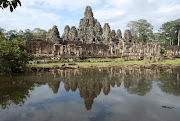
The perennial favourite is the Bayon temple at Angkor Thom whose towers – like at Banteay Chhmar – are etched with enlightened bodhisattva faces. The Bayon is also decorated with enchanting bas-relief depicting ordinary Khmer life rather than the Hindu mythology seen at most other temples.
Aside from these landmark temples, there are smaller but equally moving sites like Ta Nei (resembling a diminutive Ta Phrom), Ta Som (with a four-faced tower like at the Bayon) and Banteay Samre (like a petite Angkor Wat). Built on a more human scale, they can offer some respite from their grander cousins.
Here are 10 tips on how to visit Angkor well:
1 High season runs from November to March, when the weather is usually fair. Late October and November, the country is still lush after the rains and there are fewer tourists.
2 Wear comfortable shoes with good soles; the paving at the temples is uneven and slippery when wet. Take an umbrella against the rain/sun. A torch is useful for windowless rooms.
3 Have a basic understanding of Hinduism and Theravada Buddhism. Most guidebooks have a section on this subject. A good map is available at local bookshops in Siem Reap (they do not have one at the ticket office).
4 Most tourists follow a well-trodden route: sunrise at the west gate of Angkor Wat before returning to the hotel for breakfast; late morning, Angkor Thom, Ta Phrom and Banteay Srei; after lunch, exploring more fully Angkor Wat; sunset atop Phnom Bakheng hill. Avoid this itinerary to beat the crowds.
5 This is the way I would do it. Early to bed, early to rise. Angkor opens at 5.30am and this is the best time to start exploring. After sunrise, most tourists head swiftly back to their hotels for breakfast. Instead, stay out until 9am when the temples are remarkably peaceful. Plan on a late lunch, or ask the hotel to pack a picnic. Between noon and 2.30pm, many temples are empty. The afternoons are best spent at the smaller temples. I love sunset at the fiery-red Pre Rup or East Mebon temples.
6 Ask your tour operator to assign you their best private guide. Touring temples can be wearying unless you have someone bringing the history to life.
7 At some temples children sell souvenirs and employ emotive language about how they need money for school. Buying from them will encourage them to work in this way. Most tour operators and hotels have links to NGOs, and visits can often be arranged to schools and orphanages; donating to these organisations might be a wiser way to support the local community.
8 Try to visit the National Palace Museum in Phnom Penh. This stopover works best after visiting the temples. The newly opened Angkor National Museum in Siem Reap is poorly curated but is worth an hour with a good guide.
9 A visit to the British Museum is worthwhile; it is currently hosting Images and Sacred Texts: Buddhism Across Asia, which includes artefacts from Cambodia (until April). The world's most comprehensive collection of Khmer artefacts is in Paris's Musée Guimet.
10 It is not uncommon to hear tourists say they are "templed out". Pace yourself, take breaks and visit smaller, less busy temples.
Read more!
In US Ship's Visit, a Commander's Homecoming
 U.S. Navy Commander Michael Vannak Khem Misiewicz serves as a commanding officer of the guided-missile destroyer USS Mustin.
When the US naval ship USS Mustin docks in Cambodia next month, it will be a homecoming for the the destroyer's commander.
Michael Vannak Khem Misiewicz was adopted by an American woman in 1973, as Cambodia fell to the war and the oncoming Khmer Rouge. He was raised in the US and has not returned home in 37 years.
“The purpose of the trip to Cambodia is to develop and further the relationship between the United States and Cambodia...and it’s a special trip because the Mustin is commanded by a Cambodian-American,” Misiewicz told VOA Khmer by phone from aboard his ship. “We'll help train some of the Royal Cambodian Navy and military, and we're also going there to do community relations projects.”
The USS Mustin, based in Yokusuka, Japan, is a guided missile destroyer, carrying 300 sailors onboard. The December visit to Cambodia comes on the heels of a visit by US Secretary of State Hillary Clinton, this month.
“I know it's going to be very emotional,” said Misiewicz, who was born in Kandal province but was adopted by an American woman whom his aunt worked for.
Misiewicz, whose given name is Vannak Khem, went to school in the US, not knowing what became of his family after the Khmer Rouge came to power. He graduated high school, joined the US Navy, and later went on to the Naval Academy, earning his officer's commission in 1992.
When he returns to Cambodia, he will be reunited with his aunt. His father was executed by the Khmer Rouge in 1977, but his birth mother now lives in Texas with her family.
Read more!
Cambodian lawmaker focuses on rights for women
By Bonnie Adler
Nobel Prize nominee Mu Sochua, an advocate for rule of law and rights for women in Cambodia, is a remarkable study in contrasts.
At 55, she is an exotic beauty, slender, soft-spoken, graceful and charming. She is also alarmingly brave and intensely committed. As the most outspoken female leader of the opposition party in an impoverished post-Khmer Rouge Cambodia, she risks her life in calling publicly for the cessation of sex trafficking, equality for women and an end to the corruption that is endemic to all levels of Cambodian society.
Mu Sochua made numerous appearances in Westport last week, raising awareness about her work as a Cambodian lawmaker to promote greater equality and freedom for women in her country and to publicize the deeply disturbing film documentary “Redlight,” an expose about the global issue of sex trafficking of children.
Mu Sochua is featured in the film, which focuses on the personal stories of the victims of child sexploitation and the efforts made thus far to try to stop the crime, which is so prevalent in Cambodia. “Redlight” was directed by an award-winning Israeli filmmaker, Guy Jacobsen, and was shown in Westport and Ridgefield last week with personal appearances by both Mu Sochua and Guy Jacobson.
Mu Sochua also made a day-long appearance at Staples High School, speaking with students in the about the situation in her country. She also made a special presentation to the Staples High School chapter of Teen Vital Voices, where Westport teens are learning about women empowering other women.
Mu Sochua is sponsored by Vital Voices Global Partnership, an international non-profit organization that trains and empowers emerging women leaders and entrepreneurs around the world, with the goal of creating a better world for those in impoverished and underserved countries.
The Connecticut Chapter of Vital Voices brought Mu Sochua to Westport and Ridgefield, where she participated in a number of events aimed at highlighting the devastating effects of poverty and lawlessness in her country. Her demands, made in her firm but soft-spoken voice, are for laws which Americans take for granted, such as the enforcement of the laws which make illegal the practice of sex slavery by children.
In an interview with the Minuteman, Mu Sochua said, “There is a Cambodian proverb which says, ‘Men are gold, women are just a white piece of cloth.’ Gold can be worn forever. It is always solid, but a white piece of cloth can be stained forever. In Cambodia, if you are raped, you are ruined forever. If you are divorced you are ruined forever. Society will not accept you. If you are independent of your husband you are a ‘bad woman.’
“As a Cambodian Cabinet Minister, I committed myself to changing this proverb to ‘men are gold, but women are precious gems.’ Now my supporters are known throughout Cambodia as ‘precious gems.’
“We have a large problem with domestic violence. When I was minister, we did not blame the men, but gave a picture of a family where the gold and precious gems to work together in order for the family to be intact with a sense of harmony. We did not ask women to demand equal rights, but tried to make the men understand that a sense of harmony is for the family, and that men and women should share the same responsibility to raise the family.”
At 18, Mu Sochua’s family sent her abroad to escape the Khmer Rouge and to get an education. She received a Masters degree from the University of California at Berkeley, where she was deeply influenced by the women’s movement. Those were also the years the Khmer Rouge swept through Cambodia, killing millions in just three and a half years, including Mu Sochua’s parents.
“The scar of the Khmer Rouge is so deep, it is carved into our minds, our souls. I suffer the pain of an outsider, the loss of my parents, and of course, having to grow up outside the country and reconstruct my life from then on.”
Remarkably, she says she holds no grudges and it is with that kind of attitude that she has positioned herself as leader and lawmaker and a role model to young women in Cambodia.
When Mu Sochua returned to Cambodia 18 years after she left, she was appointed to lead the Ministry for Women’s Affairs. She took the job, which she describes as “being in charge of 52 percent of the population,” far more seriously than those who appointed her ever imagined.
“I wanted to bring in western values of feminism and equality. Slowly, I slipped the ideas through, mainstreaming them into family life and culture, but at the same time saying that education is a right, quality of life and free health care are rights and women can be in charge of their own bodies.”
According to Mu Sochua, Cambodia is 85 percent rural, with an extremely high poverty rate. Four million of the 14 million population live on less than a dollar a day, a fundamental cause of the everyday violence and the rampant sex trade.
“The government is corrupt. We have the legacy of the Khmer Rouge, with violence agains women and a culture of impunity. Our present is still haunted by the genocide of the past, which occurred thirty years ago,” said Mu Sochua.
Undaunted by the enormity of the task, she fights each day to improve the situation. “As an opposition lawmaker we know things could be better. We demand a strong rule of law, accountability and the end of violence against women and the end of social stigmatization of victims.”
Not surprisingly, this kind of public opposition was met head on by the Prime Minister of Cambodia. The two clashed in a battle of words and the Prime Minister started a public campaign against her.
“His speeches against me were broadcast on the radio across the country,” she said. “He even said he would finish my political life.” The battle went on for months, and although Mu Sochua lost the lawsuit, she gained much more public recognition and took advantage of the opportunity to defend her right to justice and a fair trial, and what she calls “the right of a woman to be seen and to be considered as a human rights defender.”
She was nearly imprisoned, but the government ultimately backed off when it appeared that the publicity generated by the imprisonment would be too visible and help Mu Sochua’s cause. Instead she was fined $4,000, a king’s ransom in a country where teachers make $50 a month.
“Now I am seen totally differently, even by the Prime Minister. I am a very straightforward lawmaker, although sometimes outrageous, but I do make sense to the people. I am now widely recognized and I still continue to take these causes very seriously.”
Even as she has gained a measure of renown in her own country, Mu Sochua is broadening her battle. She is seeking funding from the United States government to help the growth of democracy in Cambodia. She is hopes to obtain funds for more entrepreneurial opportunity for women in the form of microbusinesses run by women in local villages in order to decrease the level of poverty. She hopes for greater educational opportunity and access, and funding for more radio and television access. Dreams of technology are still far off, as less than one percent of the population is computer literate. Recently, Secretary of State Hillary Clinton visited Cambodia, with a message of support for the protection of human rights. “I want delivery on that promise,” she said.
Read more!