PHNOM PENH, (IRIN) - Donors pledged the largest aid package in Cambodian history this week while at the same time scolding the country for failing to implement various reforms.
Donors pledged US$1.1 billion in aid for this year - up from last year’s $950 million - during a two-day conference ending on 3 June. Cambodian Prime Minister Hun Sen insisted his government would use the funds effectively, calling reform a “life-or-death issue for Cambodia”.
But rights groups say donors should take a tougher stance to weed out corruption; the country was last year ranked the world’s 22nd most corrupt by Transparency International.
Activists say much of last year’s money has been diverted from the projects they were intended for, such as schools, roads and hospitals.
“The onus for protecting donor aid falls squarely at the door of the donors themselves,” said Ou Virak, head of the Phnom Penh-based Cambodian Centre for Human Rights.
Donors needed to do more to make sure their aid was put to good use, he added.
The World Bank is also unconvinced there has been adequate progress. "It is important for the government to take the lead in aligning resources to development priorities," Annette Dixon, country director for the World Bank, said at the conference.
The Bank said the Cambodian government had to be more transparent with its public finances and handling of natural resources after allegations that foreign oil companies paid bribes for oil exploration deals in the Gulf of Thailand, off Cambodia’s southwest coast.
Last summer, Carol Rodley, US ambassador to Cambodia, said Cambodia lost about $500 million to corruption each year, a remark the government condemned as "politically motivated”.
"It's normal that these donor countries raise this issue of corruption,” Phay Siphan, a government spokesman, told IRIN. "The new anti-corruption law will reduce those improper activities."
Some lawmakers have praised the anti-corruption law, passed in March, which requires government and military officers to disclose their wealth to an anti-corruption body.
But critics say the law was passed hastily and that it contains disturbing amendments, including prison time for whistleblowers.
Various drafts of the law lingered in the National Assembly, the lower house, for 15 years before the bill suddenly went to the floor in March.
Friction
Despite the prime minister’s assurances, Cambodian officials have in recent months issued increasingly bold warnings to donor governments and the UN, complaining of interference in internal matters when they urge officials to clean up corruption, halt arbitrary land evictions and curtail defamation lawsuits against opposition lawmakers.
In March, Cambodian foreign minister Hor Namhong threatened to have UN country head Douglas Broderick expelled after Broderick had requested the government spend more time drafting the anti-corruption law. The foreign minister called this an “unacceptable interference in the internal affairs of Cambodia” in a letter to Broderick. The UN has stayed silent on the issue.
Cambodian officials claim the country has been transformed from a war-torn pariah state to a politically stable destination for tourists and investors.
But activists say that is not enough. “The aid situation has done pretty well in infrastructure,” Donald Jameson, a former US embassy official in Phnom Penh, told IRIN by telephone from Washington DC. “But there is very little being done about the quality of education, healthcare or corruption in the judiciary.”
About one-third of Cambodians still live on $1 a day or less, according to government statistics.
Playing the China card
Some analysts contend that China, Cambodia’s largest donor, is shaking things up by increasing the size of its aid packages each year, with few conditions. Cambodia now makes more decisions in the interests of China, observers say.
In December, Cambodia deported 20 Uighur refugees from Xingjian, a province in northwest China. The UN and US condemned the decision, claiming it was against international refugee law.
After the expulsion, China awarded $1.2 billion in aid and soft loans to Cambodia.
Read more!

Thursday, June 03, 2010
CAMBODIA: Donors pledge $1 billion but criticise corruption

6th SEA Junior Table Tennis Championship opens in Cambodia
The 16th South East Asian Junior Table Tennis Championship opened Thursday at Olympic Stadium with 86 table tennis players taking part in the competition.
This will be the first time Cambodia has hosted the annual event which was held last year in neighboring Thailand, the Phnom Penh Post reported.
Eight countries took part in the five-day competition starting from June 3 to 7. The countries include Laos, Vietnam, Malaysia, Singapore, Indonesia, Thailand, the Philippines and hosts Cambodia.
Bun Sok, secretary of state of Cambodia's Education, Youth and Sports Ministry attended the opening ceremony. He spoke highly of the development of table tennis in Southeast Asia, and expressed his excitement for Cambodia having the chance to host the regional table tennis championship. He believed that it will further strengthen the cooperation between countries in the region through the organization of competitions, and also help Cambodia to accumulate more experience for hosting more international events in future.
Im Sethy, minister of Cambodian Education, Youth and Sports Minister said in his message that table tennis is one of the major international sports events. Many people enjoy the sport because it helps to cultivate people's endurance and rapid reaction capacity, and people of all ages young and old can participate.
Chan Foong Keong, Secretary-General of Southeast Asian Table Tennis Association, said after the first Southeast Asian Junior Championship was successfully held in Kuala Lumpur, the competition has been developed continually. The competition aims to train the national table tennis player for future international competitions.
The tournament will feature men's and women's singles, doubles, and mixed teams for U18s, and U15s. The Cambodian team will field 13 males and 2 females.
Source: Xinhua
Read more!
Wednesday, June 02, 2010
Watchdog Renews Call for Oil Transparency
The US oil giant Chevron and the Cambodian government need to improve transparency in the management of oil revenue, a Cambodian watchdog said Monday.
“What we want to know is how this revenue from natural resources is being managed, because it is a new sector,” Mam Sambath, chairman of Cambodians for Resource Revenue Transparency, told “Hello VOA.” “We want to see this revenue being managed transparently and accountably so that Cambodian people and their future generations benefit equally.”
Mam Sambath, who attended Chevron’s annual meeting last week in Houston, Texas, to advocate for a payment disclosure policy, said greater transparency will work in the company’s interest.
“The disclosure will instead promote a good image of Chevron in a country it operates,” he said. “And it will also attract other highly responsible companies to follow suit and invest in that particular country.”
Cambodia insists it has been transparent in managing state revenue.
“We don’t have a problem [if a company makes their payment public],” Hang Chuon Naron, secretary-general of the Ministry of Economy and Finance, told VOA Khmer. “The prime minister has authorized us to do that, and we have been doing that all along.”
However, a caller from Banteay Meanchey province expressed skepticism in the government’s transparency efforts. Villagers are seldom fully informed of gold mining operations in the province, the caller, who gave his name as Ny, said.
Transparency advocates say Cambodia would do well to become a member of the Extractive Industries Transparency Initiative, or EITI.
“On natural resources, the international community must push the government to be a member of EITI to ensure effectiveness in management of revenues and expenditure from mineral resources,” said Yim Sovann, spokesman for the opposition Sam Rainsy Party. “Sooner or later we will extract oil and gold, and revenue from this sector is gigantic. If we manage it properly we will be rich.”
Yim Sovann called for openness for input from the public, lawmakers and the international community for the drafting of a management law for natural resources currently underway.
Mam Sambath agrees.
“I strongly urge the government to consider becoming a member of EITI, so that we can better manage revenue from natural resources and help better manage our economy,” Mam Sambath said.
Read more!
In Donor Meeting, Hun Sen Vows Deeper Reforms
 Prime Minister Hun Sen on Wednesday moved to assure international representatives and aid agencies he was committed to deepening government reforms and fighting corruption, as an annual donor meeting got underway.
Speaking at the opening of the Cambodian Development Cooperation Forum, where donors are expected to pledge more than $1 billion in aid to Cambodia, Hun Sen said the government had made the “utmost efforts to firmly and deeply implement various reform programs and consider them as life or death issues.”
The government will present a $6.2 billion development plan to donors this week, part of an updated five-year strategy for continued reform and poverty alleviation. More than 100 participants from donor countries and international aid groups such as the World Bank and International Monetary Fund joined senior government ministers for two days of talks.
“The Royal Government considers the fight against corruption as a top priority during its fourth mandate,” Hun Sen said in a speech that lasted more than an hour. “We have a strong will for implementing these reforms.”
Speaking on behalf of the donors, Annette Dixon, the World Bank’s country director, said meetings would center around “key reforms, which the government is undertaking, particularly in decentralization, public financial management and reforms of the civil service.”
“Further strengthening transparency and accountability in the management of Cambodia’s public finances and natural resources will be fundamental for ensuring more sustainable and inclusive growth,” Dixon said, adding that the government had made important achievements in passing an anti-corruption law and updated penal code.
Critics of the anti-corruption law have said it lacks the teeth to root out the country’s endemic corruption.
Read more!
Researchers offer solutions to poisonous well-water crisis in southern Asia
Over 100 million people in rural southern Asia are exposed every day to unsafe levels of arsenic from the well-water they drink. It is more than doubles their risks for cancer, causes cardiovascular disease, and inhibits the mental development of children, among other serious effects.
The World Health Organisation (WHO) has referred to the situation in Bangladesh, where an estimated 60 million people are affected, as 'the largest mass poisoning of a population in history.'
In the May 28 issue of the journal Science, researchers from Stanford University, the University of Delaware, and Columbia University review what scientists understand about this groundwater contamination crisis and offer solutions for the region, which spans Bangladesh, Cambodia, China, India, Myanmar, Nepal, Pakistan, and Vietnam.
Holly Michael, assistant professor of geological sciences in the College of Earth, Ocean, and Environment at the University of Delaware, is a co-author of the article, with Scott Fendorf from Stanford and Alexander van Geen from Columbia University. Fendorf received his doctorate from UD in 1992 and is now chair of environmental and Earth system science at Stanford.
Michael earned her doctorate from the Massachusetts Institute of Technology and joined the UD faculty in 2008. She travelled to Bangladesh to study the groundwater contamination problem firsthand during her postdoctoral training with the U.S. Geological Survey.
Arsenic occurs naturally in the Earth's crust. Tasteless, odourless, and colourless in solution, the element is a known carcinogen and can be detected in water only through testing.
The source of South Asia's arsenic contamination is the Himalaya Mountains. Minerals from rocks, eroding coal seams, and sediments contain arsenic and are carried into the major rivers that flow out of the mountains, including the Indus, Ganges, Brahmaputra, Irawaddy, Meghna, Mekong, and Red rivers. The flat, low-lying floodplains of these major rivers are the areas affected by groundwater contamination.
A logical solution is to dig deeper wells to reach uncontaminated aquifers for supplying safe drinking water. However, farmers also want access to this water to irrigate their rice paddies. And that's a problem, according to Michael's research.
In 2008, Michael showed through numerical modelling of groundwater flow in the Bengal Basin that an uncontaminated domestic well more than 500 feet (150 metres) could remain arsenic-free for at least a thousand years. However, she projected an entirely different scenario for deep irrigation wells, which use mechanised pumps instead of hand pumps to bring groundwater to the surface. The high volumes of water drawn by these irrigation systems induced a much faster downward migration of arsenic-contaminated surface water into the deep aquifer.
'To protect drinking water from arsenic contamination, we recommend that deeper wells only be used by individual households for drinking water and not for crop irrigation,' Michael says.
In addition to preserving deep wells specifically for drinking water, she and her co-authors also recommend these measures:
- Reinvigorating well-testing campaigns by governments and international organisations.
- Better use of existing geological data and the compilation of test results to target zones that are low in arsenic for the installation of community wells.
- The re-testing of tens of thousands of deep wells, particularly those that have been used for both domestic and farming purposes.
- The choice of mitigation option can be situation-dependent: filters or other alternatives may be the best choice in some areas.
'Obviously, arsenic-contaminated drinking water is a huge problem from a human health perspective,' Michael says. 'We've shown that there are some viable options in South Asia, but there is much more that we need to understand.'
Currently, Michael is working to model arsenic transport, how it may move in the future in the aquifer system in Bangladesh. She also is working with the World Bank on a study of groundwater sustainability in Bangladesh related to water supply and vulnerability of coastal groundwater to sea-level rise.
Read more!
Cambodia upholds opposition MP defamation case
 Mu Sochour's Parliamentary immunity was lifted so she could face charges
Cambodia's highest court has upheld a ruling that a leading opposition figure defamed the prime minister.
Prime Minister Hun Sen had sued Mu Sochua for defamation after she accused him of making derogatory remarks about her.
The former women's minister has refused to pay the $4,000 (£2,725) fine and says she is willing to go to jail.
Mu Sochua, the current MP for Kampot, called the ruling "a travesty of justice".
She had no defence counsel in court as her lawyer quit the case and joined the governing party after Cambodia's bar council accused him of malpractice.
The courts dismissed her complaint and the national assembly voted to lift her parliamentary immunity from prosecution so the prime minister's case could go ahead.
The ruling came as Cambodia's international donors met government officials to discuss their aid pledges for the coming year.
Local human rights groups have described freedom of expression in Cambodia as in a "perilous state".
A coalition of pressure groups has asked donors to link their payments to Cambodia's progress on human rights issues.
Foreign donors concerned about accountability in Cambodia
Phnom Penh - Cambodia's donor conference opened Wednesday with warnings that access to land, improved transparency, and accountability for use of natural resources will be essential for the country's development goals.
World Bank country head Annette Dixon noted that 4 million Cambodians - about 30 per cent of the population - live in poverty while many more 'live precariously near poverty.'
'Life continues to be extremely challenging for the majority of Cambodian rural families, who remain vulnerable to shocks,' she said.
Dixon applauded reforms in managing public finances, and said the government had strengthened social protections for the poor.
She said donors remained 'strongly committed' to development efforts help the poor, despite global financial woes, 'which in turn heightens the need to improve aid effectiveness and accountability for results.'
Cambodian officials, non-governmental groups and foreign donors are meeting for two days to discuss the country's most pressing issues. On Thursday, donors will announce how much money they will give to help the government for it development goals.
In 2009, donors provided 951 million dollars, around half the government's budget. The finance ministry said it expected pledges of more than 1 billion dollars this year.
Prime Minister Hun Sen told the conference that good governance was 'the most important prerequisite for a sustainable and equitable economic development and social justice.'
'In the context of this vision, the Royal Government considers the fight against corruption as a top priority,' he said, citing a new anti-corruption law, and an ongoing crackdown on illegal logging and fisheries, as evidence of the government's commitment.
Hun Sen said agriculture was the top development priority for the predominantly rural population, saying it could bolster economic growth and ensure food security.
He also pledged to pay more attention to granting land concessions to the poor. Land concessions are a highly contentious subject, with large investors in possession of more than a million hectares.
Non-governmental organizations said improvements in some health indicators showed similar gains could be made in governance, land use and natural resources. They called for reform of the judiciary, which is seen as corrupt and inefficient.
On Tuesday, the Britain-based organization Global Witness, called on donors to pressure the government to deliver meaningful reforms in the face of 'gross mismanagement' of its natural resources.
Global Witness is not participating in the conference.
Read more!
SKorea to fund Angkor road
PHNOM PENH (Cambodia) - South Korea has provided US$9.2 million (S$12.9 million) to Cambodia to build a new road that will circle the famed Angkor temple complex and reduce traffic in the area, officials said Monday.
The 21-kilometer road will be closed to trucks to reduce pollution, noise and vibrations that could damage the ancient ruins, said Soeung Kong, vice secretary-general of the Apsara Authority, the government agency that oversees the temples.
Construction will start this year and take three years to complete, he said. It will be the second road in the Angkor area funded by South Korea, connecting with existing roads to the north and northwest of the temples, said South Korean Embassy official Son Sungil. The first road extended south from the temple complex.
Tourism is a major foreign currency earner for cash-strapped Cambodia, which hosts nearly 1.5 million foreign tourists each year, mostly from South Korea, Japan and the United States. More than half of the tourists visit Angkor, a UNESCO World Heritage site in northwestern Siem Reap province.
The temples were built when Angkorian kings ruled over much of Southeast Asia between the 9th and 14th centuries.
Conservationists have long expressed concerns about tourism's impact. They say uncontrolled pumping of underground water to meet the rising demand of hotels and residents in the nearby town of Siem Reap may be destabilizing the earth beneath the temples. -- AP
Cambodia tours=> http://www.tourismindochina.com/cambodia/tours/
Vietnam tours=> http://www.tourismindochina.com/vietnam/tours/
Laos tours=> http://www.tourismindochina.com/laos/tours/
# # #
Online leading and responsible tour operator in the Indochina licensed as Int'l tour operators,Providing most uptodate Travel Information in Vietnam, Cambodia, Laos, Myanmar and Thai.
Read more!
Cometh the hour, cometh the man with the wrecking ball (Feature)
By Robert Carmichael
Phnom Penh - A blue sheet-metal fence around an old building in Phnom Penh is a bad omen for those keen on Cambodia's dwindling stock of colonial architecture.
'The presence of these fences is a worrying sign,' says one architectural historian, 'because when these fences go up it normally means the buildings are going to come down.'
The historian, who has lived in Cambodia for 16 years but does not want his name used, says the pace of destruction has accelerated in recent years.
'It is speeding up, and it has almost gone past the point of no return,' he says. 'I would think that more than half of the buildings I can remember as being important have now gone in 16 years.'
The latest building to be screened off is the venerable Renakse Hotel adjacent to the Royal Palace near the riverfront. Earlier this year the Renakse was the focus of a squabble between the leaseholder and the country's ruling party, which owns the building. The case went to court; the party won.
Should the hotel be demolished, which seems likely, it will be the fourth colonial-era building of merit to be knocked down this year alone, says French architect Michel Verrot, who has lived in Cambodia for 11 years.
By his count, 40 per cent of the capital's several hundred colonial buildings has been swept away in two decades.
Verrot runs the French-funded Mission du Patrimonie that assesses what is left of Phnom Penh's architectural heritage.
It also helps with restoration efforts on some colonial buildings, the oldest of which were constructed between 1885 and 1892.
'They are the first places in Phnom Penh where the new architecture was built which became the colonial architecture in Phnom Penh,' says Verrot.
When it comes to architectural heritage, Cambodia is defined by Angkor Wat, the magnificent ancient temples around the town of Siem Reap in the north-west.
Verrot says the domination of Angkor Wat blinds the government to the value of other heritage buildings, whether of colonial architecture or the 1950s and 1960s designs of Vann Molyvann, the country's foremost living architect.
Regarding the capital, Verrot says the biggest problem is not preserving architectural heritage, substantial though it is.
He bemoans the lack of attention paid to its urban heritage: the concept of a town with well laid-out gardens, wide avenues and unobstructed views between iconic buildings.
'Now all the views are becoming very disturbed without any global idea of town development,' Verrot says of the mushrooming of tower blocks and glass skyscrapers. 'There is no vision.'
The Ministry of Culture and Fine Arts oversees the country's heritage, but secretary of state Samraing Kamsan says it has limited authority to preserve the buildings. A key challenge is that Cambodians prefer modern buildings.
'They do not understand or love the traditional and the old-style building,' he says. 'You need to teach them to understand the value.'
There are other difficulties too. Some old buildings have numerous poor families living in them. One chapel, for example, contains more than 20 families, but they are in no position to pay for repairs.
Samraing Kamsan says colonial buildings in provincial capitals are also in trouble - years of strife and poverty meant preservation was not a priority. And there is the rocketing value of land.
'I do believe this is a problem,' he says, before adding a lack of cash to the queue. 'If we have no money to preserve, we cannot stop the development of the modern building.'
Verrot says the government's desire to see Phnom Penh emulate Bangkok and Singapore is undoing what is left of the city's colonial architecture.
'(The government's view is that) the heritage is in Siem Reap, and tourism must be at the seaside and in Siem Reap, but not in Phnom Penh,' he says. 'It's wrong, it's clearly wrong, but it is (the view).'
The architectural historian cited earlier believes the government, which wants tourists to remain in-country longer than the usual three days spent seeing the temples, is missing a trick. After all, Phnom Penh is not going to compete with shopping cities such as Singapore.
'When you look at Phnom Penh, all the things tourists come to see are almost all architectural. There's not really anything else,' he says. 'How are they going to attract people to stay in Cambodia
- Phnom Penh in particular - if there isn't architecture to look at?'
Read more!
Tuesday, June 01, 2010
'Di was murdered because she planned to expose UK's role in arms trade'
London, June 1 (ANI): Princess Diana was murdered because she planned to expose Britain's role in the deadly arms trade, according to a leading defence lawyer.
Buzz up!Michael Mansfield QC claimed that she was planning to publish a diary replete with details of those closely involved with British land-mine manufacturing.
"Everyone remembers she raised the profile of the land mines.
"Everybody is aware that the British involvement in the arms trade, particularly land mines, is and was a huge vested interest.
"It seems to me she had planned various visits. She had already been to Angola and she was going to Cambodia.
"A large number of land mines had been manufactured by the British. She claimed she had an explosive diary in which she was going to expose the people most closely involved in the British arms trade," The Daily Express quoted him as saying in the Hay Festival in Powys, Wales.
Mansfield said her anti-land mine campaign and plan to reveal the secrets behind the trade were "not unrelated" to the car crash in Paris on August 31, 1997 that killed Diana and her boyfriend Dodi Fayed.
He also spoke of a witness who claimed that the diary existed along with a missing box of papers that could contain crucial information.
He told a Spanish newspaper, "Diana had given interviews attacking the Royal Family but what most annoyed the authorities was that she became very actively involved in the campaign against land mines."
A spokeswoman for Princes William and Harry said they had "no comment" on the latest allegations surrounding their mother's death. (ANI)
Read more!
New £16m Hindu temple opens in Wembley
 By Catrin Nye
BBC Asian Network
Wembley's newest looming landmark has opened it doors after 14 years of construction.
It is the £16m Shree Sanatan Hindu Mandir, which loosely translates as the all-inclusive temple.
There is none of the metal core most buildings have and, instead, it has been built using ancient techniques based on Hindu scriptures.
The method dates back thousands of years and was used to construct the world famous Angkor Wat in Cambodia.
Many of the temple's component pieces have been hand carved in limestone in the tiny town of Sola - located in the Indian state of Gujarat - before being flown over and pieced together in the UK.
There were also 41 marble deities made in India especially for the mandir.
The temple covers 2.4 acres (9,700 sq m) on the Ealing Road and, at its highest point, is 66ft (20m) tall.
Its bright sand-coloured walls stand out in stark contrast to the unassuming surroundings.
A ceremony called Pran Prathistha was held to "infuse the spirit of God into the statues" as part of the temple opening.
A VIP opening was then held with donors, sponsors and local dignitaries in attendance.
Ajay Jobanputra is governor of Shri Vallabh Nidhi UK (SVNUK), the charity which raised the funds to build the Shree Sanatan Hindu Mandir.
He hopes the temple will provide a place of worship for all Hindus and welcome those of other faiths.
"Famous spiritual leaders and forms of Gods from other religions are featured in the carvings such as Mother Teresa, Sri Guru Nanak Dev Ji (a Sikh Guru), Meerabai, Lord Swaminarayan and many more.
"It's about showcasing the importance of respect, love and compassion for all religions, making the temple dynamic and universal.
"The message being promoted is of Vasudev Kutumbakaum, a Hindu term to describe the world as one big family."
The chief priest at the Shree Sanatan Hindu Mandir is Dr Raj Pandit Sharma, who said the new temple may stand out as a structure but it fits in with the eclectic local community.
"I think it will add to the charm of the area," he explained.
"Ealing Road already has mosques and churches and I think this temple will stand out as something unique that can be seen from some distance.
"I would hope that anybody who comes to the temple would find it a place where they will feel relaxed. It's like a sanctuary of peace amongst the bustling heart of London."
Special events
Each morning there will be prayers at the new temple in line with Hindu tradition.
It will house special events for such occasions as Diwali and Navratri as well as annual religious functions to celebrate the birth of Hindu saints and Gods like Jalaram Jayanti (Saint Jalarambapa) and Janmasthami (Lord Krishna).
Mr Jobanputra says the temple is expected to draw crowds from across London and visitors from much further afield.
"We're estimating around 400 to 500 local people will visit us during the weekdays and double that on weekends.
"We also expect visitors from other parts of the UK and Europe.
"We have already had visit requests from Spain, Portugal and Switzerland."
Read more!
Unresolved Land Disputes Rising: Rights Coalition
 Rights groups say they are concerned with a spike in reported land disputes that have gone unresolved under the current law.
The increasing number is because the government is providing economic land concessions while powerful government officials are also seizing land from the people, Chhith Sam Ath, executive director of the NGO Forum, told reporters Tuesday.
Land disputes reported to NGOs under the umbrella organization climbed 27 percent in 2009, from 173 cases in 2008, and another 32 percent in in first five months of 2010, according to the NGO Forum.
Nun Pheany, spokesman for the Ministry of Land Management, denied the reports that land disputes were increasing. The ministry received 5,000 complaints since the beginning of 2009 from 24 provinces and municipalities and has resolved 70 percent of them, he said.
In a joint statement issued Tuesday, the Coalitions of Civil Society Organizations said most land dispute cases were still unresolved.
“Most land dispute cases involve companies including both local and foreign investment companies as well as wealthy and powerful people,” the group said. “They affect large number of families and are mostly disputed with companies who obtained an economic land concession. It’s worth to note that in the past, land dispute cases usually involve dealing with violence and end up unresolved. Only few cases have been settled legally.”
The statement of concern comes ahead of a large donor meeting scheduled for Wednesday and Thursday.
The coalition recommended more participation of poor communities in land decisions, fair resolution and compensation in existing land disputes, a stronger resolution mechanism, a cease to arrests made in land disputes and the empowerment of authorities to solve land dispute cases.
“Please stop using the military or police forces to protect the company,” the group said.
Read more!
NGOs Call on Donors To Strengthen Conditions
 Cambodian Non Governmental Organizations workers shout slogans during a demonstration in Phnom Penh, Cambodia.
A donor meeting Wednesday and Thursday will focus on the government’s national development plan, which is expected $6.2 billion over the next five years.
The meeting, officially known as the Cambodian Development Cooperation Forum, gathers Prime Minister Hun Sen and his Cabinet with representatives from the US, the European Union, China, Japan, the World Bank, the International Monetary Fund, UN and others.
Local and international non-governmental organizations will also be represented by NGO Forum and the Committee for Free and Fair Elections.
“We request international donors to present the list of recommendations on what to demand from the Cambodian government before agreeing to provide future development aid,” Chhith Sam Ath, executive director of NGO Forum, a consortium of development organizations, said. “We have concerns over the management of land and natural resources, which the government and the donors should think about deeply.”
Much of Cambodia’s annual budget is supported by aid from other countries and larger development banks and agencies. In recent years, that has included large aid packages from China, who Cambodian officials say grant money without the conditions typically imposed by the West.
“The stance of the NGOs is of reflection and discussion,” Chhith Sam Ath said. “We don’t want to prevent development aid. We welcome the aid, but we want the aid provided to Cambodia to be used directly and effectively.”
Aid conditions have nettled Cambodia’s leaders in the past, although some critics say the donors do not use enough leverage to push the government to do more to fight corruption, poverty and human rights abuses.
Ahead of this week’s meetings the outspoken critic of Cambodian policies, Global Witness, called on donors to do more.
“The Cambodian government has been promising to reform for years, but nothing had changed,” Global Witness Campaigns Director Gavin Hayman said in a statement Tuesday. “Our latest report shows that the political elite has no intention of loosening its stranglehold over the country’s natural resource wealth. Donors simply cannot continue to turn a blind eye.”
Hang Chhaya, executive director of the Khmer Institute for Democracy, said the donors should “put condition pressure on the government for providing aid to end human rights violations and evictions, as well as recommend to the government legal and judicial reform and anti-corruption [where] reform is slow.”
“The donors should have influence or power over the Cambodian government to respect human rights and democracy,” Hang Chhaya said.
Ros Sopheap, executive director of Gender and Development organization, said the government’s policy to promote gender equity has not been effectively implemented.
“So we would like the government and the donors to take care of solving the challenges to women, like poverty, low education, domestic violence and trafficking,” she said.
Monday, May 31, 2010
Cambodia coastal development strategy moves ahead
Cambodia has begun implementing its master strategy for attracting development in the country's four coastal provinces over the next 20 years, local media reported on Monday, citing officials at the Ministry of Land Management, Urban Planning and Construction.
"This is a good plan and a way to develop Cambodia into the future," the Phnom Penh Post quoted Land Management Minister Im Chhun Lim as saying at a conference detailing the plan on Thursday.
Calling Sihanoukville the "dragon's head", Im Chhun Lim said that the plan priorities improving development in Sihanoukville, Kampot, Kep and Koh Kong provinces in order to increase economic activity and provide jobs.
"We're insuring a balance between protecting the environment in coastal areas with attracting both local and foreign investors," he said at the conference.
The strategy will focus on attracting local and foreign investment to the region, with an eye to strengthening export industries, said Pen Sophal, director at the ministry's Urban Planning Department.
"Government wants sustainable, transparent development on coastal areas to attract investors," he said on the sidelines of a conference on drafting a final strategy for the "National Integrated Coastal Area".
He added that the pan is slated to run until 2030.
The plan, called The Study of Strategy National Integrated Coastal Area and Master Plan Sihanoukville Sustainable Development, focuses on strengthening infrastructure and special economic zones servicing Sihanoukville Port.
"We focus on Sihanoukville because the province has potential for growing faster due to its proximity to the international port for industry, agriculture and services," he was quoted as saying.
Source: Xinhua
Read more!
China gives trucks to Cambodia
PHNOM PENH - CHINA has promised more than 250 new military trucks to Cambodia, Prime Minister Hun Sen said on Monday, signalling deeper military cooperation between the two nations.
PM Hun Sen said a donation of 257 military trucks and 50,000 military uniforms was agreed during a meeting with Chinese President Hu Jintao in Shanghai earlier in May.
'They are all brand-new trucks... from the factory,' PM Hun Sen said during a ceremony to open a Chinese-funded bridge.
The trucks will arrive in Cambodia June 18 and then be featured in a parade, said PM Hun Sen, who went on to praise Chinese leaders for 'talking less, but doing a lot' to help Cambodia.
The announcement of Chinese military aid comes after the US in April stopped a shipment of military trucks to Cambodia as punishment for sending ethnic Uighur asylum-seekers back to China in defiance of international appeals.
Cambodia in December deported the 20 Uighurs, members of a largely Muslim minority group in western China, even though they were seeking UN refugee status and said they would face torture if returned. The decision to deport the Uighurs came a day ahead of a visit by Chinese Vice President Xi Jinping, during which he agreed US$1.2 billion (S$1.69 billion) in aid and loans to Cambodia with Hun Sen. -- AFP
Read more!
MOffY Cartoon Land Now Available at Tigo of Millicom in Laos
MOffY Cartoon Land is available at Tigo of Millicom in Laos. Miillcom is one of the top carriers and provide wonderful mobile entertainment content to mobile users.
MOffY Cartoon Land featured with different cute and hot characters from Japan and Korea has arrived Laos. It bring the latest Korean hits such as Ddung, Mashimaro, Heart Bear to mobile users who can have their favorite wallpaper, screensaver, theme, video in mobile anywhere, anytime with their latest mobile gadgets.
MOffY Cartoon Land is available at various mobile carriers in the Greater China Region and South East Asia.
For cooperation with MOffY, please kindly contact Ms Winnie Chen, E: winnie[.]moffy.com.
About MOffY Limited
MOffY incorporated in Hong Kong has been in mobile contents development, distribution, publishing and consultation since 1999. Currently, MOffY with its content management system holds over 3000 games and application titles. Along with different types of mobile games, mobile games and applications are featured with famous characters, movie titles, and celebrities. MOffY (moffy.com) is actively involved in mobile contents business, licensing and consulting. MOffY branded services channels are available in China, Hong Kong, Macao, Taiwan, Singapore, Malaysia, Vietnam, Laos, Cambodia, and Thailand. MOffY also run a number of online web portal in Hong Kong, Malaysia, Singapore, Taiwan and Australia.
MoffY is in the Asian market since 1999. MoffY is developing, publishing, and operate mobile game and licensed contents with mobile carriers in Hong Kong, China, Taiwan, Macau, Singapore, Malaysia, Thailand, Indonesia, Laos, Cambodia, Philippines, Vietnam, Brunei, etc. Since 2009, MoffY is actively involved in social network game and application. MoffY is headquatered in Hong Kong with operation team in Guangzhou, China, and staffs are located in Taipei, Beijing, Kuala Lumpur, Jakarta.
Read more!
Sunday, May 30, 2010
Cambodian FM to Visit Iran in August
TEHRAN (FNA)- Cambodian Minister of Foreign Affairs and International Cooperation Hor Namhong is scheduled to visit Iran in August, Iranian Ambassador to Phnom Penh Seyed Javad Qavam Shahidi said on Sunday.
"During the trip, the Cambodian foreign minister will meet and talk with his Iranian counterpart Manouchehr Mottaki as well as other high-ranking Iranian officials," Qavam Shahidi told FNA.
He reiterated that Namhong's visit to Tehran is aimed at further activation of bilateral relations between the two countries.
Meantime, an Iranian parliamentary delegation left Tehran for Phnom Penh on Saturday to discuss bilateral ties and other issues of mutual interest with Cambodian officials.
"During the three-day trip, the two sides will hold discussions on inter-parliamentary relations and discuss paving the ground for developing ties and other related issues based on the Islamic Republic of Iran's view on the East Asian countries," Head of the delegation Mohsen Kouhkan told FNA.
The delegation, comprising five Iranian legislators, is also due to meet with the Cambodian prime minister, foreign ministry officials, their Cambodian counterparts and members of some of the country's parliament commissions.
Qavam Shahidi said expansion of parliamentary cooperation between the two countries, closer cooperation in the Asian Parliamentary Assembly (APA) and the two sides' cooperation in the Inter-Parliamentary Union (IPU) are the main goals of the Iranian delegation's trip to Phnom Penh.
Read more!
Unrest May Signal New Phase in China Economy
 The strike at the Honda transmission factory in Foshan has shut down four auto plants as well.
Rapidly rising industrial wages are beginning to allow China’s workers to share in their country’s rising prosperity. The question is whether these gains can be maintained and even increased without disrupting supply lines to companies around the world, and without discouraging much future investment by Chinese and global companies alike.
The biggest eye-opener for multinationals in China recently has been a nine-day-old strike at a sprawling Honda transmission factory here in Foshan, about 100 miles northwest of Hong Kong.
The strike, which has forced Honda to suspend production at all four of its joint venture assembly plants in China, has shown that Chinese authorities are willing to tolerate work stoppages at least temporarily, even at high-tech operations on which many other factories depend.
Chinese policy makers are trying to let wages rise to create the foundations of an economy driven by domestic demand, without derailing the export machine that has produced the world’s strongest economic growth over the last three decades.
Even before the strike, manufacturers and buyers of low-cost products were already actively seeking alternatives to China, like Vietnam and Cambodia, said Richard Vuylsteke, the president of the American Chamber of Commerce in Hong Kong.
“They’re looking very seriously, and we’re seeing that in apparel and footwear,” he said. “A lot of our members are seeing appreciating wages.”
Honda has been making increasingly generous offers — or perhaps desperate offers — to settle the strike. The company has already offered increases in total compensation of close to 50 percent, according to crumpled-up copies of the offer provided by striking workers.
Roughly half of the 1,900 workers are recent hires from high schools and vocational schools who are paid training rates of just 900 renminbi, or $132, a month, pay slips showed. More experienced workers at the three-year-old factory earn up to 1,500 renminbi, or $220, a month.
Honda’s offer would raise total compensation for trainees to $202 a month, including benefits like a new food allowance; older workers would get slightly smaller raises. The strikers rejected the offer because nearly half of the raises consisted of increases in benefits that might be revoked later. The strikers are demanding an extra 800 renminbi a month, or $117, all in cash.
Takayuki Fujii, a Beijing-based spokesman for Honda, said Saturday evening that negotiations were continuing, but he declined to provide details.
There were signs on Saturday that the Honda strike was beginning to test the government’s patience. After two days of allowing surprisingly extensive coverage by state-controlled media, the authorities imposed a blanket ban on domestic coverage, reverting to their usual policy of hushing up labor disputes.
Local newspapers had no mention of the strike this morning, and many references to the strike had disappeared from Chinese Internet sites. But there was no sign of police at the factory or one of its dormitories.
Labor advocacy groups say that they hear of frequent strikes in China, with work stoppages occurring somewhere every day. But strikes are typically hushed up and are often resolved in a day or two by the authorities, either with the police or through pressure on employers and workers to resolve their differences.
Honda is not alone in facing intense pressure to raise wages. Foxconn, a giant electronics manufacturer near here in Shenzhen, said on Friday that it would raise wages by about 20 percent after being deeply embarrassed by a series of suicides by workers this year and criticism of working conditions.
The overall effect of wage increases on China’s competitiveness is not entirely clear, because of incomplete national data on average wages and productivity. Nicholas Lardy, a specialist in the Chinese economy at the Peter G. Peterson Institute for International Economics, said that Chinese productivity was rising so quickly that actual labor costs per unit of production appeared to be flat.
One surprise of the strike here is that it involves laborers whose wages appear to have already roughly doubled in the last five years: blue-collar workers in export factories in the Pearl River delta region around Hong Kong.
By contrast, the wages of young college graduates have actually declined in recent years as China has rapidly expanded its universities and built new ones, creating a surplus of more highly educated workers.
The president of a big Chinese corporation, who insisted on anonymity because of the sensitivity of labor issues, said that his company paid 4,000 renminbi a month a decade ago for recent graduates with computer science degrees, which is $585 at current exchange rates, and only 3,500 renminbi now.
If anything, conditions are growing worse for new college graduates, not better. A survey in Beijing released earlier this month by the Communist Youth League Beijing Committee and the Beijing Youth Stress Management Service showed that a fifth of new college graduates with bachelor’s degrees and a tenth of graduates with master’s or doctoral degrees were willing to work for free in their first jobs because they despaired of finding paid work.
The government has tried to respond to the glut of college graduates by ordering state-owned enterprises to hire large numbers of them and try to find tasks for them to do. But these enterprises are increasingly expected to be profitable and have not absorbed all of the graduates, with the result that big cities in China have growing numbers of unemployed or low-paid college graduates.
These graduates are typically the only child in a family because of China’s one-child policy, and their families have frequently invested much or all of their savings in their educations.
Partly because so many young Chinese now go to university and partly because of a declining birth rate, the number of young Chinese available for factory work is falling far short of the demand from employers. That is producing higher wages for blue-collar workers and giving them leverage to demand even more, as the Honda strike shows.
Saturday, May 29, 2010
Government Bolsters Efforts Against Squatters
The Council of Ministers on Friday approved a legal circular that instructs provincial and municipal authorities to seek resolutions to illegal settlements on state property.
The order tells authorities to first meet with community representatives on state land to inform them of development projects and to then discuss compensation for residents.
The circular creates a regulation for measures already practiced by authorities, critics said Friday, and it does not address situations where residents refuse to leave.
Cambodian officials have steadily found themselves at odds with squatter communities, where land values have boomed and development projects are springing up.
The order is to “inform all provinces and municipal authorities to solve illegal construction on state land through discussion with residents,” according to the draft pass by the Council on Friday.
The order is meant “to solve the anarchic construction [done] without order on the state land, where the occupier has come to settle illegally and to construct a house without order [creating] a lack of road passage and lack of hygiene.”
The order now gives officials more authority to act against squatter communities who may not be getting enough compensation, opponents said Friday.
“This [order] is good, but we worry about the concrete implementation of it, because the government has not provided fair compensation to people in exchange for their removal,” said Yim Sovann, a spokesman for the opposition Sam Rainsy Party. “If there are effects to the people because of the [order] we would like the government to respect the constitution and to fairly compensate people through the market price.”
The measure is not clear about compensation, leaving room for authorities to offer low prices to residents, which can lead to conflict, said Thun Saray, president of the rights group Adhoc.
Thai Navy, a 39-year-old resident of the Boeung Kak lake community, which has been locked in a dispute with Phnom Penh over a giant development project since 2008, said representatives were not happy with the measure.
“The resolution to remove houses is the same as before,” he said.
The city’s policy is to pay Boeung Kak residents $8,500 per family or to offer lots of land on the outskirts of the city. Residents have said that is not enough, but there has been no forced eviction in the area to date.
The order comes as Cambodia faces increased criticism of forced evictions of the urban poor.
In an annual report issued Thursday, Amnesty International said “a wave of legal actions against housing rights defenders, journalists and other critical voices” had “stifled freedom of expression in Cambodia.”
Read more!
Vietnamese firms set on mining gold reserves in Cambodia
 The recent discovery of around 8.1 million tons of gold in Cambodia has caught the interest of many Vietnamese companies who now want to enter the gold mining sector in the neighboring country.
Nguyen Thanh Truc, director of Agribank’s subsidiary in charge of trading gold, said the Cambodian mine has the largest gold reserves in Southeast Asia and its discovery has encouraged Vietnamese companies to hatch plans to mine there.
When the time is right, his company will make such a move, Truc said in a report published by local news website VnExpress Friday. However, he noted that as the ore contains only 2.3 grams per ton, lower than the usual grade of 3 gram per ton, the project may not be highly lucrative.
Cambodia said Monday that Australian firm OZ Minerals had discovered around 8.1 million tons of gold on its territory. The gold mine is located in an area in the northeastern province of Mondulkiri, which is close to the Vietnam-Cambodia border, and only 100 kilometers from the Central Highlands province of Dak Lak.
Some 60 local and foreign firms including companies from Australia, China, South Korea and Vietnam have been conducting mineral research and exploration across Cambodia, AFP reported, citing an official.
“It will be a great opportunity if Vietnamese companies can invest in the mine, although local technologies are not to a high standard,” said Nguyen The Hung, general director of Vietnam Gold Investment and Trading Company.
Cambodia still depends on foreign mining companies and many Vietnamese firms have recently expanded their business to the neighboring country, Hung said.
Vietnam’s companies have invested a combined US$1 billion into Cambodia, with many projects in the mining sector. However, the Ministry of Planning and Investment has not yet licensed any gold mining projects.
Nguyen Tuan Quynh, deputy director of Phu Nhuan Jewelry Company, one of Vietnam’s largest gold traders, said mining is a profitable business and it’s quite easy to apply for licenses to invest in Cambodia.
However, mining costs, conditions and transport are some issues that Vietnamese companies have to consider before making their move, Quynh said.
Read more!
Friday, May 28, 2010
Cambodia 'jungle woman' runs away from home
PHNOM PENH, Cambodia - A woman dubbed the "jungle woman" after emerging naked and unable to speak from the wilds of northeastern Cambodia three years ago has apparently fled back to the forest, her presumed father and police said Friday.
Sal Lou, who claims to be the father of Rochom P'ngieng, said she went missing Tuesday while bathing by a well behind their home in Rattanakiri province, nearly 960 miles northeast of Phnom Penh. She is thought to be 29 years old.
"There is no sign indicating that her disappearance could be foul play. I am sure she went back to the forest," Sal Lou told The Associated Press by phone from the jungle area where he has been searching for her.
Rochom P'ngieng emerged from the jungle in early 2007, attracting attention when she was caught trying to steal food from a villager. Sal Lou's family then said she was their daughter, who was 8 when she disappeared in 1988 while herding buffalo in a remote area.
However, the relationship was never proven, and it was not established how she could have survived in the wild for 19 years. Some villagers suspected she was not Rochom P'ngieng, but someone else suffering from mental problems who had been lost in the jungle for a much briefer time.
Sal Lou said Friday he and his family members have searched for her for three days in several villages and in the jungle, but had no news from her.
"She tried several times before to leave home and live back in the forest but she could not. This time her wish came true."
Mao Vicheth, the local police chief, said his officers have sent word of her disappearance throughout the community and were investigating to see whether she might have been kidnapped or murdered. He said the case was a mystery but he did not believe she had been killed.
In October, Rochom P'ngieng was admitted to Rattanakiri provincial hospital for four days after falling sick, apparently suffering from mental illness.
Read more!
Art dealer under police watch after admitting to sex tourism
A 59-year-old international art dealer who pleaded guilty to 15 sex tourism offences in Colombia and Cambodia is under police surveillance while awaiting sentencing, a judge was told Thursday.
Crown prosecutor Brendan McCabe is seeking to vary the bail of sex offender Kenneth Robert Klassen of Burnaby, to put him on the electronic monitoring program. Until then, McCabe told B.C. Supreme Court Justice Austin Cullen, Klassen is under police surveillance.
"He is aware of being followed," McCabe told the court.
Surveillance is being conducted by the Integrated Sexual Predator Observation team because the Crown considered Klassen a flight risk, said Vancouver RCMP Cpl. Annie Linteau.
Defence lawyer Ian Donaldson said a suitability report has to be done on Klassen to determine whether he's a good candidate for the electronic monitoring program, which requires a person to wear an ankle bracelet that is monitored electronically by a computer and connected to a phone line.
The bail variance matter was adjourned until 9 a.m. Tuesday.
Thursday's court appearance was originally scheduled for jury selection, but Klassen unexpectedly pleaded guilty last Friday to 15 counts, including 14 counts of sexual interference of young girls -- eight in Cambodia and six in Colombia.
The girls were all under the age of 14.
In Colombia, Klassen allegedly paid a "facilitator" to bring him girls on the back of a motorcycle. He also pleaded guilty to importing child pornography by mailing porn to himself from the Philippines. The offences occurred between December 1998 and September 2004.
A date for sentencing is expected to be set by next Tuesday.
Klassen was arrested at his Burnaby home in March 2007 and charged with 35 sex tourism offences involving 17 young girls, including three in the Philippines.
At the time, the offender was married with three children. He now is facing divorce.
It is only the third sex tourism case to be prosecuted in Canada.
The investigation of Klassen began at Vancouver International Airport on Aug. 27, 2004, when officers with Canada Border Service Agency identified a suspicious parcel that was labelled "quilts" but was found to contain undeclared DVDs with images of child pornography and bestiality.
The parcel, destined for a home in Burnaby, was monitored by police and was picked up by Klassen, who was then charged with possessing and importing child pornography.
Search warrants were subsequently executed on Klassen's home and a rented Vancouver storage locker, where police seized a video camera and 21 DVDs allegedly containing video clips of Klassen having sex with 92 girls in three countries. The girls were as young as nine.
Police recommended Crown approve charges involving 26 female victims and 39 international crime scenes. The Crown approved 35 charges involving 17 victims.
Up to 20 officers in Canada worked on the investigation, with the behavioural sciences group as the primary investigative unit. The group focuses on deviant sexual behaviour.
Fazeela Jiwa of Vancouver Rape Relief, who attended Thursday's proceeding along with a number of other women, said she is concerned Klassen is still on the streets.
"I think for sure surveillance is a good idea," she said outside court.
Also attending Thursday's proceedings was Holly Dignard of Vancouver, who operates the non-government organization Caleb's Hope, which does aid work in East Africa, helping former child soldiers, sex slaves and young mothers, many of whom are HIV positive.
She said sex tourism is a huge problem that few people are aware of in Canada.
Read more!
Thursday, May 27, 2010
Hydrodam Plans Stir Ratanakkiri Unease
Patt Paing has five hectares of land by the Sre Pok river. She has a small wooden house, and she raises pigs. The 55-year-old leads a quiet life here in Village Two, in Ratanakkiri’s Koun Mom district. But over the past three years, life has been more difficult.
That’s because of the floods.
“I don’t have enough rice to eat because of the floods for the past three years,” she told VOA Khmer in an interview last week. “In previous years, I could harvest more than 1,000 buckets or over 10 tons of rice per season.”
The floods were caused by water releases from dams upriver, she said.
“The consecutive floods caused by the dams have left me almost nothing to eat,” she said.
At least five more dams have been planned on the Sre Pok and its sister river, the Sesan, both of which run into the Mekong River. Those dams will follow the 2002 construction of a 720-megawatt dam at Yali Falls on the Sesan in Vietnam.
Villagers, who gathered for an annual celebration of the 3S Rivers Protection Network here last week, say they don’t want more dams, the flooding from which damage livestock and farmland.
“The existing dam in Vietnam has already severely affected our livelihoods, so what will it be like if more dams are to be built on these rivers on the Cambodian side?” asked Meas Samith, a representative of indigenous villagers on the Sre Pok.
“For generations, I have never heard that when a dam is built, an escalator is also set up for fish to travel on,” he said. “When a dam is built, there is no more fish migration.”
Villagers here say the dams and the power they generate are not worth the cost.
“Can the electricity be eaten?” asked Piev Chhin, a 65-year-old fisherman from the Brov ethnic minority. “We live along the river, so if our house gets flooded, what is the use of having electricity?”
“The electricity is of no importance for us,” added Dy Bopi, a 55-year-old farmer in Koun Mom district. “We would rather us batteries or paraffin lamps instead.”
However, officials say that if Cambodia is to grow its economy, it will need more than batteries and lamps. Only about 20 percent of the country’s homes have access to power, and most of those are in the capital. And electricity prices here remain high, while Cambodia purchases electricity from Vietnam and Thailand.
Ratanakirri Governor Pao Hamphan told reporters here last week the proposed dams were not confirmed and that villagers should not worry about them too much at the moment.
“It’s just the information, as no company has come to talk to us about them yet,” he said.
A vice governor of Koun Mom district, however, said the government would proceed with the dams if assessments showed more benefits than costs.
“We don’t build dams to kill people,” he said, addressing a crowd of villagers. “We build them for their benefit.”
If Cambodia does not build dams, other countries will, he said. “How can we alleviate people’s poverty if we just wait and buy electricity from other countries?”
Villagers said last week the government should consider methods other than dams if it needs electricity.
“If they build dams, it’s not certain we would have electricity for use here,” said Nen Sokei, an ethnic Tompuon villager. “And if we do have electricity, we are not sure if we can afford to pay for the power supply.”
Read more!
Nestlé Advisory Board awards first Creating Shared Value Prize
Vevey, Nestlé’s Creating Shared Value Advisory Board today awarded the first Nestlé Prize in Creating Shared Value to the Cambodian branch of an international not-for-profit organisation which uses market-based approaches to increase the income of the rural poor by improving market access, increasing agricultural production and creating sustainable local businesses: International Development Enterprises (IDE) Cambodia (www.ideorg.org).
Starting in 2005, IDE Cambodia developed a network of 60 independent small rural entrepreneurs in Cambodia called Farm Business Advisors. These advisors give technical advice to more than 4,500 small-scale farmers to help them boost their productivity, while selling them products such as high-quality seeds, fertilizer, plastic fencing and irrigation equipment and services. On average, farmers assisted by these advisors increase their net income by 27% from USD 382 to USD 480 per year. At the same time, the advisors earn an income from selling their products and services.
IDE Cambodia will use the Prize’s CHF 500,000 to recruit and train an additional 36 advisors, aiming to generate approximately USD 1.9 million in new income and benefiting around 20,000 people in more than 4,000 rural households across Cambodia.
IDE Cambodia Country Director Michael Roberts said: “It is an honour to receive this recognition from Nestlé. The prize will help us further IDE’s mission to create income opportunities for poor rural households. We hope to leverage the Prize to reach more than 75,000 rural Cambodian households in the next few years. On a global scale, this is still very small but we think there are big implications in what we are learning.”
Nestlé Chairman Peter Brabeck-Letmathe replied: “We congratulate IDE Cambodia on being the first to be awarded the Prize. The work they do is truly inspirational. IDE continue to grow their network of Farm Business Advisors in Cambodia while at the same time creating value for rural communities there. This is exactly what we mean by Creating Shared Value.”
Nestlé CEO Paul Bulcke added: “We had a vast range of inspirational entries from across the globe. IDE Cambodia is a leading project and the Nestlé prize money will help them to ensure that this project continues to thrive and expand.”
The Prize was created by Nestlé in 2009 to provide financial support of up to CHF 500,000 to individuals, NGOs, or small enterprises offering innovative solutions to improve access to, and management of, water, improve the lives of farmers and rural communities, or provide better nutrition to communities suffering from nutritional deficiencies.
The first edition, which received more than 500 applications from 79 countries, was awarded during Nestlé’s second Creating Shared Value Forum, a gathering of international leading experts in water, nutrition, rural development and the role of business in society, which took place in London on 27 May 2010.
The winner was selected by the Nestlé Creating Shared Value Advisory Board, an independent panel of internationally-recognised experts in corporate strategy, nutrition, water and rural development, including John Elkington, co-founder of SustainAbility; Michael E. Porter, Bishop William Lawrence University Professor at the Harvard Business School; Jeffrey Sachs, Director of The Earth Institute at Columbia University; and Nancy Birdsall, founding president of the Center for Global Development.
Notes to Editors
• Testimonials of farmers and Farm Business Advisors benefiting from the IDE project are available on www.nestle.com/csv/csvprize. An interview with Michael Roberts, Country Director, IDE Cambodia, is available via the same link.
• Photo and video material is available on this site.
• Creating Shared Value is a fundamental part of the way Nestlé does business. In order to create long-term value for our shareholders, we must at the same time create value for society at large.
• Nestlé committed an investment of CHF 500,000 to IDE Cambodia. This will be disbursed over a three-year period and will assist in the scaling-up of the project. The Prize monies will be used by IDE Cambodia to recruit and train a further 36 Farm Business Advisors, provide them with access to agricultural inputs, market information and microfinance, as well as the development and strengthening of the franchise system.
Read more!
Modern Masterpieces
 By TOM VATER
In the years after Cambodia won independence from France in 1953, Mr. Molyvann—then scarcely in his 30s—set out under the tutelage of King Norodom Sihanouk to transform Phnom Penh from a colonial backwater into a modern city. But in the late 1960s the country was drawn into decades of war and terror, including years under the murderous Khmer Rouge regime, and Mr. Molyvann's vision was virtually forgotten. The architect himself had to flee the country.
And while he returned in triumph after more than 20 years abroad, it was to find that grand titles didn't translate into influence in today's Cambodia. His legacy—structures in a style dubbed New Khmer Architecture—lives on, contributing significantly to the flair of the city, but even that is in danger as Phnom Penh, like other Asian capitals, clears historic buildings to make room for skyscrapers.
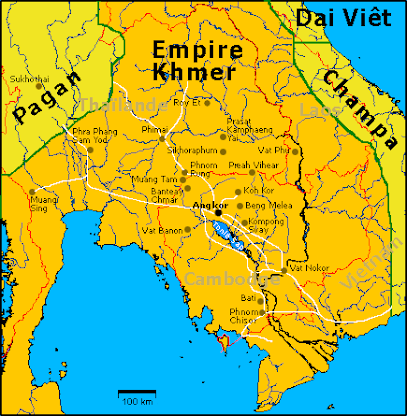
Cambodia is best known for its magnificent temple ruins at Angkor, remnants of a great Southeast Asian empire that covered the country's current territory as well as parts of Vietnam, Thailand and Laos. After Angkor fell to the Siamese in the 15th century, a new Cambodian capital was founded on the banks of the Tonlé Sap River. That city, Phnom Penh, remained an unstable settlement, caught up in the geopolitical ambitions of Cambodia's more powerful neighbors, until the French arrived in the 1860s. The colonial administrators drained the neighboring swamps and created a grid street plan, dotted with sumptuous villas, Art Deco markets and impressive government structures.
Even then, Phnom Penh was modest, small-town colonial France—and when Mr. Molyvann received a scholarship from the colonial government and set off for the Sorbonne in Paris, it wasn't with the dream of returning to remake it. He was a law student. But as he pursued his degree, and struggled with the compulsory Greek and Latin, he had an encounter that changed his life.
"I met Henri Marchal, the curator of Angkor for the École Française d'Extrême-Orient [the French School of Asian Studies]," Mr. Molvyann remembers, "and suddenly I knew I wanted to be an architect, so I changed to the École Nationale Supérieure des Beaux Arts, where I studied until 1950 under Le Corbusier." He regards that modernist architect and designer as his greatest teacher.
After that, Mr. Molyvann stayed on in Paris for several more years, studying Khmer art. While he looks back fondly on the period, he is also keenly aware that some of Cambodia's later traumas had their origins in the Paris of that time.
"The Khmer Rouge was born in the Latin quarter of Paris," he says. As they debated their country's postcolonial future, Mr. Molyvann says, the city's 400 or so Cambodian students split between nationalists and Marxists. Khieu Samphan, whom he knew as a fellow Sorbonne student, would go on to become head of state in the Khmer Rouge government.

By 1956, Mr. Molyvann was back in Phnom Penh. Independence had broadened Cambodia's horizons, in part thanks to the efforts of King Sihanouk, who at various times officially dropped his title to serve as prime minister, head of state or president, though Cambodians continued to refer to him as king. With tremendous energy and not a little royal eccentricity, the young monarch—also politician, artist, filmmaker, womanizer and host to a series of foreign heads of state and celebrities—worked to create a modern nation with an eye on the past. The leading members of an emerging urban elite, many of whom, like Mr. Molyvann, had returned from Paris, sought to create architecture, music, films, literature and art that married Cambodian tradition with modernist thinking.
Nowhere was this more apparent than in new administrative, public and private building projects that sprang up all over the capital—transforming Phnom Penh, within little more than a decade, into one of Asia's most dynamic cities.
"It was difficult at the beginning, as Cambodians had never heard of architects," Mr. Molyvann remembers. "All they knew were engineers and builders. There was a real dearth of qualified Khmer experts, as the French had used Vietnamese to administer my country. But within 10 years of independence the management of the country and its capital was Khmer. It was incredible."
Mr. Molyvann was made chief architect for state buildings and director for urban planning and habitat in 1956 and given a number of ministerial posts in the following years. "I was designing the Independence Monument and was asked to present the king with a selection of marble," he recalls. "I was too afraid to speak to him personally, but he made some suggestions and we got on perfectly after that." Shaped like a lotus flower, the monument tower, completed in 1960, remains one of Phnom Penh's landmarks.
Mr. Molyvann had part of the floodplain south of the Royal Palace drained and filled, and on this "Front de Bassac" constructed the country's first high-rises, initially for visiting athletes for the 1966 Ganefo Games, a short-lived Asian alternative to the Olympics.
"We built the stadium for 60,000 people and surrounded it with a moat, so that the waters could run off in the rainy season," he says.
Stefanie Irmer, whose KA Tours focuses on New Khmer Architecture, sees the relation between water and city as crucial to the architect's vision for Phnom Penh. "Besides creating the 'Front de Bassac' area from wetlands," she says, "almost every building Vann Molyvann designed was surrounded by water—to keep the termites out, but also to integrate the buildings into the flood plain."
Many of Mr. Molyvann's buildings are traditional in one sense—they are shaped like familiar objects. Chaktomuk Conference Hall, one of his earliest designs, is like an open palm leaf. The library of the Institute of Foreign Languages (now part of the Royal University of Phnom Penh) was inspired by a traditional Khmer straw hat. The lecture halls of the institute rest on sharply angled concrete pillars that give them the appearance of animals, about to jump. They are still in use today, as is the library.
By the early 1960s, for the first time in almost 800 years, Cambodia was blooming. The Angkor ruins were the region's biggest tourist draw, and Phnom Penh had doubled in size and become a city others in the region admired.
But the politics were turning ugly. Norodom Sihanouk, serving as prime minister, began to suppress dissent. By the mid-1960s, the U.S. had combat troops in Vietnam; as American planes began bombing North Vietnamese positions in Cambodia, the country's policy of neutrality became a farce. The former king's repressive policies alienated the political left and some rural Cambodians, who began to join a shadowy communist movement, the Khmer Rouge. Meanwhile, the right and military had become fed up with his capriciousness and nepotism. When he left to visit China in 1970, a coup replaced him with army general Lon Nol. The Swinging '60s, the meteoric rise of a young nation, the building boom in the "Pearl of Asia"—it was all over.
Mr. Molyvann remembers days with hard choices. "Shortly after Lon Nol came to power, the Israeli ambassador advised me to take my family out of the country," he says; the ambassador, a friend of his, warned him about the crumbling security and the increasing persecution of those connected with the previous government. So when Mr. Molyvann left for a conference in Israel, with his wife, Trudy, and their six children, they didn't return. Instead they moved on to Switzerland, his wife's home country.
Five years later, the Khmer Rouge marched victoriously into Phnom Penh. The new rulers immediately emptied the cities, and for almost four years Phnom Penh was a ghost town. At least 1.5 million Cambodians, nearly a quarter of the population—Mr. Molyvann's father among them—lost their lives in the killing fields. The fledgling intellectual elite was snuffed out.
"I had no contact during those years," says Mr. Molyvann. "I had to give my children a new life, so we stayed in Lausanne." He continued to work as an architect in Switzerland, Africa and Laos, for the United Nations and the World Bank. The Vietnamese pushed out the Khmer Rouge in 1979, but Mr. Molyvann "could not think of going back." The new rulers "were still communists."
"It was not until 1993 that I returned—with the U.N.," he says. Initially, his homecoming was triumphant. He was appointed minister of state for culture and fine arts, territorial management and urban planning and contributed to the application for Angkor's successful recognition as a Unesco World Heritage site.
But he soon realized that the Cambodia he had left behind in 1970 no longer existed. Cambodian People's Party leader Hun Sen, who had been installed by the Vietnamese and who continued as prime minister after the U.N.-organized elections, gave Mr. Molyvann back his villa, but the architect's plans for Siem Reap—the province in which Angkor is located—were unappreciated. He had called for a "tourist village" set apart from both the temples and the old town of Siem Reap, integrated into the environment and with water conservation as a key goal.
"The government wanted to use the resources of Angkor to develop Siem Reap without the participation of the local people," Mr. Molyvann says. "In 1998, I became president executive director of Apsara (Authority for the Protection and Safeguard of Angkor), the government body created to look after the temples. Three years later, I was fired." Unchecked development in Siem Reap has led to a dramatic drop in groundwater levels, causing subsidence that has put the Bayon, one of the main temples in the Angkor area, in danger of collapse, according to experts from the Japanese Conservation Team for Safeguarding Angkor. Development has also driven up property prices and the cost of living, a hardship for the locals in a province that remains one of the poorest in the country.
But it was not just the government and developers standing against Mr. Molyvann and his vision. Bill Greaves, director of the Vann Molyvann Project, a nongovernmental organization engaged in recreating the lost plans of the remaining New Khmer Architecture sites, thinks postwar Cambodia is simply not aware of its past.
"Right now, Singapore and Shanghai are models for forward-looking cities, both for the government and the people," he says. "Hence Phnom Penh's different stages of history are likely to be discarded."
In the past decade, as investment has begun to pour into the Cambodian capital once more, colonial and 1960s buildings have been replaced by chrome-and-glass edifices, floodwater lakes have been drained, local media have reported almost daily evictions and ministers have gushed over the need to build skyscrapers in order to keep up with the neighbors.
The government frequently declares that preservation has to go hand in hand with development. In practice, it seems to walk well behind. Beng Khemro, deputy director general at the ministry for land management, urban planning and construction, says his department's hands are tied. "Many historical properties are in terrible condition," he says. "The people who own them don't understand the value of the past and would rather demolish them and build high-rises to make a profit. The past is not appreciated. Without a change in attitude amongst the population, we are fighting a losing battle."
Cambodia has preservation laws, and Dr. Khemro says he is trying to pass a regulation to get them applied in particular instances. He'd like to try a pilot preservation project away from Phnom Penh, he says, noting that Cambodia's second-largest city, Battambang, has many buildings from the French period.
"Also," he adds, "there's less pressure."
Molyvann advocate Mr. Greaves is skeptical about the survival of the architect's legacy. "The old buildings disappear at an alarming rate—even public edifices like the National Theatre, which was knocked down a couple of years ago, are not safe. We try and get there before the demolition crews arrive."
A drive around town with Mr. Molyvann illustrates his curious position in this free-for-all scramble for change. At the Independence Monument, guards at first refuse him entry. Only after his driver reveals the distinguished visitor's identity is the master architect, old and frail, allowed to climb the steps he designed half a century ago.
Passing the stadium, Mr. Molyvann looks at the haphazard development around his favorite creation. Appropriated by developers with government connections, the moat has been partly filled in to make space for shops and an underground car park; the result is annual flooding that threatens the entire sports complex.
With equal shades of sadness and anger in his voice, Mr. Molyvann says, "Today, it's not the state who owns the old properties, but the ruling party, the CPP."
—Tom Vater is a writer based in Bangkok..
Cambodian Factories Seek Eco-Friendly Power Alternatives
By SIMON MARKS
PHNOM PENH — Almost every day for the past 15 years Cheang Vet, a roadside mechanic near Phnom Penh’s Cambodian-Japanese Friendship Bridge, has witnessed the constant flow of traffic making its way in and out of the capital by its main northeasterly access point.
But in the last decade, as the number of people employed in Cambodia’s garment sector has increased from about 25,000 in 2000 to around 300,000 today, he has noticed a steady increase in one particular type of vehicle entering Phnom Penh: heavy-load trucks carrying huge stacks of firewood.
“There are at least 10 trucks a day carrying about two and a half tons of firewood,” Mr. Vet estimated. “They tell me they are on their way to the garment factories on the other side of the city.”
The majority of the country’s garment factories — making clothes for brand names in the U.S. and European markets — use firewood to heat old-fashioned boilers that produce hot water for dying fabrics and steam for ironing.
Some factories depend on firewood to supply all of their energy needs, according to industry experts.
Indeed, the use of firewood for energy is widely considered better for the environment than fossil fuels, as trees can be replanted to offset carbon emissions released during combustion. But replanting plans are limited here, while demand for firewood is growing.
In the 1990s, large areas of Cambodia’s rubber plantations — planted by the French in the early 20th century — had aged to the point where their yields of latex, the sap from which natural rubber is made, had dropped considerably, requiring extensive replanting.
Felling old trees made large quantities of rubber wood available to the emerging garment and brick factories in the Phnom Penh region.
But, according to a report released last year by the French environmental organization Geres, this source of timber is running out.
The Geres report found that 69 of the 310 garment factories then registered with the manufacturers’ association said they were using rubber wood to produce steam for ironing and dyeing clothes. In total, Geres estimated that garment factories burned around 65,000 cubic meters, or about 2.3 million cubic feet, of wood every month.
But a “critical period” started in 2009, the report said, “where rubber wood will not be available in sufficient quantity to supply the industrial sector its energy requirements.”
Energy experts and environmentalists say that timber is now being obtained instead from the country’s remaining natural-growth forests.
Graeme Brown, a private consultant working on natural resource management issues, said that a heightened demand for new rubber plantation acreage was leading to forest clearance, creating a “ready supply of natural forest timber.”
With the costs of wood-fired heating far lower than the cost of electricity from the national grid — power prices in Cambodia are among the highest in the region because of poor infrastructure and the use of inefficient diesel generators — there are fears that demand for firewood will continue to grow.
Still, there are signs that Cambodia’s garment factories, after a decade of efforts to improve labor standards, are now starting to concern themselves with environmental issues, too.
Albert Tan, vice president of Suntex, a Singaporean-owned garment factory in Phnom Penh, said the company had brought in a team of engineers from Malaysia to assess ways the factory could use less energy.
Mr. Tan said that wasting less energy would allow the factory to burn less wood and would also reduce dependence on diesel-powered backup generators in the event of a power cut — a frequent occurrence in Cambodia.
“There are not many results yet, but some studies are going on to see how best we can be eco-friendly and take care of the environment,” he said.
The owners of the factory, which produces about 2.5 million pieces of clothing per month for export to client brands in the United States and Europe, are also considering installing a gasification unit that would convert biomass or organic waste into cleaner-burning, more efficient synthetic gas, he added.
Rin Seyha, managing director of SME Renewable Energy, in Phnom Penh, said his company had been approached by several garment factories looking to use gasification.
But the technology available in Cambodia is still insufficient for large energy users like clothing factories, he said, and potential clients are often put off by the cost of importing larger units.
A gasification plant with a one megawatt generating capacity, imported from India, costs $300,000. Mr. Seyha’s company sold just one plant to a garment factory last year and so far in 2010 has aroused interest in three more. After 70 factories shut down during the global financial crisis, there are now about 250 factories operating in Cambodia.
Cutting down on emissions from burning wood and protecting the forests would help the industry’s image with environmentally conscious consumer abroad. But profit-focused private investors often balk at the first hurdle when it comes to introducing more environmentally friendly technology, because they consider the costs involved to be too high, said Yohanes Iwan Baskoro, country director for Geres.
Investors need to be educated to understand that improved technology can achieve a profitable return for companies in the long run, he said, adding that as well as fiscal incentives from the government, the banking sector also needs more encouragement to provide loans for environmental improvement.
“If we can’t show that there is profits in it for them I don’t think they will participate,” Mr. Baskoro said.
Julia Brickell, resident representative in Phnom Penh for the World Bank’s private-sector lender, the International Finance Corp., also said lenders needed to be persuaded.
“Financial institutions may focus too much on the short-term costs of investing in energy-efficiency improvements and not immediately see the longer-term benefits for their potential clients in terms of cost savings,” Ms. Brickell said. “This may impact their willingness to provide financing for technological upgrades.”
Garment workshops often operate from leased premises and lack fixed assets to provide collateral for loans, she added. “This may also result in reluctance on the part of the financial institutions to extend financing for energy efficiency improvements.”
Still, some progress is being made. A factory in Kandal Province, near Phnom Penh, which supplies garments to Hennes & Mauritz of Sweden and Marks & Spencer of Britain, is a case in point.
Wood is still being used to heat the factory’s boilers, but the company is using its staff house to test energy saving technologies on a small scale.
“Every factory wants to save costs, and our biggest cost is electricity,” said a manager at the factory, who spoke on condition of anonymity because, she said, bosses in Hong Kong had asked her to keep a low profile.
The company, one of Cambodia’s largest with nearly 3,000 workers, has installed solar panels on the roof of its staff house, where 50 air-conditioned rooms accommodate the management. To discourage energy waste, anyone using more than 200 kilowatt-hours of electricity per month is charged 50 cents per extra kilowatt-hour used.
Marks & Spencer is advising the factory through its so-called Plan A corporate strategy, to focus on improving environmental standards. More efficient lighting, better insulation and improved temperature control are three measures that have been identified.
At another factory, in Phnom Penh, where roughly 1,000 workers make luxury menswear for export, a program to fit energy-saving light bulbs is under way. With 3,500 neon lights in operation throughout the day, a sizable reduction in electricity consumption is expected, the factory’s general manager said, also speaking on condition of anonymity.
But balancing the need for increased productivity — Cambodia’s work force is among the least productive in the region, reflecting poor training levels — against the investments needed for better environmental standards is an almost impossible challenge, this manager said.
“The bottom line is this industry — in particular the garment sector — is the toughest sector in terms of competition,” he said. “Some people just can’t afford to make some of the changes that are being recommended.”
And according to several economic analysts and consultants here, who declined to be named because of the delicacy of the issue, it is not in the interests of manufacturers to show they can afford to install environmentally friendly technologies, because their brand-name clients may respond by putting pressure on them to lower their costs.
Still, Kanwarpreet Singh, chief representative for the H&M clothing brand in Cambodia, said that the industry as a whole was looking into newer and cleaner technologies to improve its image.
“If you use a lot of firewood, then it is not good for the environment,” he said. “As a company we try to encourage other sources of energy.”
Although Hennes & Mauritz factories use firewood as an energy source, Mr. Singh said, the company was evaluating alternatives.
For now, though, those are still unclear, and as Cambodia struggles to recover from a slump last year in exports to key U.S. and European markets, improving energy standards in factories is not a priority, he said.
Garment exports, accounting for 90 percent of Cambodia’s total exports, dropped almost 20 percent by value in 2009, to $2.38 billion.
“Nowadays one has to compete globally,” said Permod Kumar Gupta, chief technical adviser for the United Nations Industrial Development Organization in Cambodia. “We have to think, in the coming years, if we are not able to compete economically, environmentally and socially then difficulties will remain in how to compete with countries like China.”
Regardless of environmental concerns, Cambodia’s garment sector desperately needs to improve energy efficiency, with some factories spending up to $1,700 to produce a ton of clothing — more than three times the amount in neighboring Vietnam.
“In terms of energy efficiency, the sectors that are using biomass are particularly wasteful,” said Mr. Gupta.
Read more!
DONORS URGED TO CONTRIBUTE TO UN-BACKED GENOCIDE COURT IN CAMBODIA
25 May - Secretary-General Ban Ki-moon today appealed to donors to provide urgent funding to the United Nations-backed court tasked with bringing justice to the people of Cambodia for the heinous crimes committed by the Khmer Rouge regime in the late 1970s.
The Extraordinary Chambers in the Courts of Cambodia (ECCC), composed of both national and international judges and staff, were set up in 2003 under an agreement between the UN and the Royal Government.
The court is facing a shortfall of more than $21 million for 2010, including $14.6 million for the international component and at least $6.5 million for the national component. Neither of these figures includes future commitments for staff salaries and entitlements.
For 2011, the total budget of $46.8 million is unfunded, except for $1.1 million pledged by the Cambodian Government for the national component.
“Both components urgently need further funds,” Mr. Ban said in his remarks to the pledging conference held at UN Headquarters for the court, which is entirely dependent on voluntary contributions.
He emphasized that the court was established to bring justice to the people of Cambodia, and to prevent impunity for the most heinous of crimes. “They are vital part of efforts to secure Cambodia's long-term well-being, and a crucial element in the world's quest to strengthen international criminal justice,” he stated.
At least 1.7 million people are believed to have died during the period of Democratic Kampuchea, which lasted from April 1975 to January 1979. The ECCC is tasked with trying senior Khmer Rouge figures and others responsible for the worst atrocities committed during that period.
Mr. Ban noted that since it began its work in 2006, the court has made “impressive progress.”
Hearings in “case one,” against Kaing Guek Eav, alias “Duch,” the secretary of the notorious S-21 security centre, concluded last November and the trial chamber will issue its verdict in July.
“The hearings in this case demonstrated that the Extraordinary Chambers can conduct complex international criminal trials to international standards,” said the Secretary-General.
“Most importantly, they also demonstrated the deep interest of the people of Cambodia in the proceedings,” he stated, noting that more than 31,000 people visited the chambers to witness the hearings, most of them Cambodians who journeyed in from outside the capital.
In “case two,” the co-investigating judges may issue a closing order, or indictment, against four leaders of the Khmer Rouge regime – Nuon Chea, Ieng Sary, Ieng Thirith and Khieu Samphan – later this year.
As in the ongoing trial of former Liberian President Charles Taylor in the Special Court for Sierra Leone (SCSL), one person charged in case two, Khieu Samphan, is a former head of State, showing that no one is above the law.
“This is a fundamental principle in the world's fight against impunity, and it is encouraging indeed to see it in action today in Cambodia,” remarked Mr. Ban.
The Secretary-General expressed his gratitude to Member States for their generous contributions to date, and appealed to them to maintain and increase their support, even in the midst of the current economic environment.
“Without such support, the chambers cannot function,” he stressed. “It is as simple and stark as that.”
UN Legal Counsel Patricia O'Brien and Cambodia's Deputy Prime Minister, Sok An, made a similar appeal to the international community for urgent funding for the court in a joint statement issued after their meeting in the capital, Phnom Penh, last month.
Read more!