PHNOM PENH, April 21 — The World Health Organization (WHO) and Cambodia said on Wednesday that another Cambodian man was killed by bird flu H5N1 virus which is considered still a threat to this Southeast Asian kingdom.
A 27-year-old Cambodian, of the eastern province of Prey Veng, died on April 17 as a result of respiratory complications after contracting bird flu virus H5N1, said a joint statement of WHO and Cambodian Health Ministry.
"Avian influenza H5N1 is still a threat to the health of Cambodians. I urge communities to be on the look-out for sick poultry and to report poultry die-offs to the ministry of health and agriculture hotlines so that they can be investigated before people start to get sick," said Cambodian health minister Mam Bun Heng in a joint statement.
The latest death brought the country's death toll from the deadly virus to eight out of 10 confirmed cases of H5N1, said the release.
The Ministry of Health's officials are now in the affected area conducting filed investigation to identify the man's close contacts and to initiate preventative treatment as required, it said.
"Health officials are also coordinating with the Ministry of Agriculture, Forestry and Fisheries teams who are investigating possible poultry deaths in the area," said the press release.
Globally since 2003, there have been 494 laboratory confirmed cases of avian influenza with 293 related deaths, it said.
The virus does not spread easily between humans, although the virus H5N1 spreads between sick poultry and sometimes from poultry to humans, said the release. (PNA/Xinhua) vcs/utb
Read more!

Wednesday, April 21, 2010
Bird flu kills another, virus still threat to Cambodia — WHO

BHP faces investigation into $2.7m Cambodia graft claim
BHP Billiton yesterday joined Rio Tinto in battling graft allegations, saying it had uncovered evidence of possible corruption by employees on an overseas project.
The Australian understands the conduct, now under investigation by the powerful Securities and Exchange Commission in the US, relates to a bauxite exploration project in Cambodia.
BHP has admitted making a $US2.5 million ($2.7m) payment to the community near the bauxite project, in the northeastern Cambodian province of Mondulkiri, near the Vietnamese border.
A Cambodian government minister described the payment as "tea money", a local term for unofficial payments to government officials.
BHP has rejected this, saying the money was put into a development fund investing in local social welfare programs. The company said it had paid $US1m in September 2006 to the Cambodia government for bauxite exploration rights.
BHP yesterday declined to reveal where the alleged corruption occurred, stressing only that it was not China. It would not comment on what the behaviour involved and whether employees had stood down or been fired but it said the activities involved mineral exploration, not marketing its products.
Last month, Rio sacked four workers, including Australian Stern Hu, after they were convicted of bribery and stealing commercial secrets related to deals to sell iron ore to Chinese steel mills. Rio has introduced sweeping changes to its Chinese operation and is conducting a review to avoid a repeat of the scandal.
Yesterday, BHP said the alleged corruption was uncovered after the SEC queried it during an investigation into mineral exploration projects.
"The company has disclosed to relevant authorities evidence it has uncovered regarding possible violations of applicable anti-corruption laws involving interactions with government officials," BHP said yesterday in a statement.
According to a report in The Cambodia Daily in July 2007, the nation's National Assembly was told BHP had paid $US2.5m to the government to secure exploration rights to a bauxite deposit in Mondulkiri with Japanese industrial giant Mitsubishi.
The claim was made by the then water minister, who described the payment as "tea money".
The minister's comments informed a report into Cambodian corruption by the non-government organisation Global Witness. The report, Country for Sale, details the claims and BHP's rejection of them.
Global Witness wrote to BHP in October 2008 requesting details of any and all payments made to the Cambodian government.
BHP responded saying it had put $US2.5m into a development fund and it had paid $US1m in September 2006 to the government for bauxite exploration.
"BHP Billiton has never made a payment to a Cambodian government official or representative, and we reject any assertion that the payment under the minerals exploration agreement is, or amounts contributed to the Social Development Projects Fund are, `tea money'," the miner said.
While Global Witness did not draw any negative conclusions about the management of the development fund, it did identify an issue with the $US1m payment to government, although one outside the control of BHP.
Read more!
Cambodia's genocide trial described as expensive farce
The United Nations' chief legal counsel called for donors to help fund Cambodia's United Nations backed genocide trial. The tribunal is not funded by UN member states but instead relies on voluntary contributions. Since 2006 it has cost around 50 million US dollars a year to run. Now a former high-profile supporter of the UN-backed tribunal says further funding would be a waste of money.
Presenter: Sen Lam
Speaker: Brad Adams, Human Rights Watch Asia division director
SEN: Brad you were a vocal supporter of the UN backed tribunal before but not now so what changed your mind?
ADAMS: We had very high hopes for this tribunal. For more than 20 years politics had stopped the international community from helping Cambodians bring the Khmer Rouge to justice. There were Cold War politics between the United States, China, the former Soviet Union and Vietnam that stopped it. We thought that the tribunal would be able to bring new facts to the Cambodian people, let them know what really happened. We thought that it would be a chance to create a model court in Cambodia where there would be an independent judiciary and where some of the judges and prosecutors involved would be able to take the skills that they obtained from this process and bring them into the Cambodian courts and try to improve Cambodia's terrible judicial system, which is essentially under the thumb of Prime Minister Hun Sen and the Cambodian government and does its bidding.
Unfortunately none of that has come to pass, it's been a very expensive process, as you said more than 50 million dollars per year, they've conducted one trial which took more than a year. That trial was of a person who had admitted his guilt and still it was dragging on and on to the point that many Cambodians were getting disinterested and losing hope. And now we have a situation where the UN staff of the court want to pursue additional cases, and the Cambodians are blocking it. So the process has become politicised in exactly the way we were hoping it wouldn't.
LAM: Do you think part of the problem might be that the process and indeed the tribunal has been watered down so much that it's no longer meaningful?
ADAMS: It really depends on whether the Cambodian government wants the trial to happen and wants the facts to come out. If they do, then it can be very meaningful. But Hun Sen has made it clear over and over again that he doesn't want the trials, he's said repeatedly he doesn't want them. He has said that it was a mistake to have them, he has said that he hopes they fail. He can't really just pull the plug because of public opinion in Cambodia, so he's doing everything he can to make them less meaningful than they could be. And the consequences that people who were responsible for the deaths of thousands or in some cases tens of thousands remaining free, including possibly some members in his party, which is the main reason most people think that Hun Sen has been trying to block the process.
LAM: But I guess they have to start somewhere and so they're for instance next year hearing from four other quite formally high level Khmer Rouge officials. So that's a good start is it not?
ADAMS: It would be a good end. The problem is it's too late for anything to be credited as a good start because we're years into this and tens and tens of millions of dollars have been spent.
LAM: What would you like to see Brad?
ADAMS: I'd like to see speedy trials of people like Nuon Chea, the former number two to Pol Pot, Ieng Sary, the former foreign minister, Khieu Samphan, the President of the Khmer Rouge; these people have a case to answer and they should answer it while they're healthy, alert and alive. And there's a risk that these men are going to die in custody because the process is just dragging on and on. I'd also like to see many more people investigated and indicted, I'd like to see the Cambodian government to cooperate with those investigations instead of trying to block them.
LAM: So why do you think the UN is persisting with this whole exercise if it's such a farce?
ADAMS: Well the UN has a reputational risk here, they actually didn't want to get into this. Kofi Anan tried to stop it, but Australia, Japan and France in particular insisted that the UN participate. Now they've committed themselves to this process and as a former UN staff member I can tell you there's a lot of institutional inertia in the UN and also a lot of covering one's rear end. So that they don't want this to be seen as a failure, and so they keep throwing as far as I'm concerned good money after bad without insisting on high standards. I mean the statement that the UN released with the Cambodian government yesterday said that this could become a model court, which is really shocking because the UN has long been aware that the Cambodian model is the worst model for international justice or hybrid court that has been created thus far.
Read more!
Cambodia genocide trial begins
PHNOM PENH, Cambodia — A notorious torture center boss went before Cambodia's genocide tribunal Tuesday for its first trial over the deaths of an estimated 1.7 million people at the hands of the Khmer Rouge regime more than three decades ago.
Kaing Guek Eav — better known as Duch, who headed the S-21 prison in Phnom Penh — is charged with crimes against humanity, and is this first of five defendants scheduled for long-delayed trials by the U.N.-assisted tribunal. The hearing Tuesday was for procedural matters, and testimony was expected to begin only in late March.
Duch intently followed the proceedings in a courtroom packed with some 500 people after he was was driven there in a bulletproof car from a nearby detention center.
"This first hearing represents the realization of significant efforts to establish a fair and independent tribunal to try those in leadership positions and those most responsible for violations of Cambodian and international law," presiding judge Nil Nonn told the chamber.
Duch, 66, is accused of committing or abetting a range of crimes including murder, torture and rape at S-21 prison — formerly a school — where up to 16,000 men, women and children were held and tortured, before being put to death.
He has made no formal confession. However, unlike the other four defendants, Duch "admitted or acknowledged" that many of the crimes occurred at his prison, according to the indictment from court judges. Duch, who converted to Christianity, has also asked for forgiveness from his victims.
Duch has been variously described by those who knew him as "very gentle and kind" and a "monster."
"Duch necessarily decided how long a prisoner would live, since he ordered their execution based on a personal determination of whether a prisoner had fully confessed" to being an enemy of the regime, the tribunal said in an indictment in August.
In one mass execution, he gave his men a "kill them all" order to dispose of a group of prisoners. On another list of 29 prisoners, he told his henchmen to "interrogate four persons, kill the rest."
After the fall of the Khmer Rouge, Duch disappeared for two decades, living under two other names and as a converted Christian before he was located in northwestern Cambodia by a British journalist in 1999.
Taken to the scene of his alleged crimes last year, he wept and told some of his former victims, "I ask for your forgiveness. I know that you cannot forgive me, but I ask you to leave me the hope that you might."
His defense lawyer Francois Roux said Tuesday that his client has been in detention for nine years, nine months and seven days, adding, "This situation is unacceptable."
When the communist Khmer Rouge came to power in 1975 after five years of bitter civil war, many of their countrymen thought peace was at hand. But in their effort to remake society, they instituted a reign of terror that lasted nearly 4 years, until ended by an invasion by neighboring Vietnam.
Many victims feared that all the Khmer Rouge leaders would die before facing justice, and getting even one of them on trial is seen as a breakthrough. But there are concerns that the process is being politically manipulated and that thousands of killers will escape unpunished.
"It's going to be a very big day for the Cambodian people because the justice that they have been waiting for 30 years is starting to get closer and closer," tribunal spokesman Reach Sambath said on the eve of the trial opening.
Duch's hearing before the tribunal was expected to last two or three days, Reach Sambath said.
The trial comes 30 years after the fall of the Khmer Rouge, 13 years after the tribunal was first proposed and nearly three years after the court was inaugurated.
The tribunal has been plagued by political interference from the Cambodian government, allegations of bias and corruption, lack of funding and bickering between Cambodian and international lawyers.
Some observers believe Prime Minister Hun Sen — a former Khmer Rouge officer himself — is controlling the tribunal's scope by directing the decisions of the Cambodian prosecutors and judges.
The Cambodian side in the tribunal has recently turned down recommendations from the international co-prosecutor to try other Khmer Rouge leaders, as many as six according to some reports. This has sparked criticism from human rights groups.
"The tribunal cannot bring justice to the millions of the Khmer Rouge's victims if it tries only a handful of the most notorious individuals, while scores of former Khmer Rouge officials and commanders remain free," the New York-based Human Rights Watch said in a release Monday.
Others facing trial are Khieu Samphan, the group's former head of state; Ieng Sary, its foreign minister; his wife Ieng Thirith, who was minister for social affairs; and Nuon Chea, the movement's chief ideologue.
Read more!
University professor discusses state of world public health
The University FIMRC chapter hosted Dr. Holtan’s talk on Tuesday.
By Katherine Lymn
Horror health stories of Madagascar and Cambodia sprinkled Dr. Neal Holtan’s talk about world public health to a small group of University of Minnesota students Tuesday.
Holtan used his voyage from growing up in small-town Iowa to working in the appalling standards of Third World health work as a framework to illustrate the importance of public health.
The University chapter of the Foundation for International Medical Relief of Children hosted Holtan, who currently serves as medical director for the Minnesota Institute of Public Health.
FIMRC vice president and political science sophomore Tyler Dirks said the student group works to raise money for FIMRC clinics in Costa Rica and other countries.
While Holtan said his move from Iowa hospitals to Minneapolis emergency rooms seemed drastic, his work in the Third World hospitals was incomparable.
Children in hospitals in Cambodia played with used bandages, and a government-sponsored midwife in Madagascar used rusty razors to cut umbilical cords off newborns, Holtan recalled.
“It would just hit you in the face,” he said of the public health conditions he’d seen.
Students were shocked at these descriptions and showed interest in the type of work Holtan does.
Perhaps the most interested student was the one with the least experience in health education.
Andy Knapp, a chemical engineering student, said he found the discussion fascinating.
“It was awesome,” he said, adding that he wasn’t even aware this health field existed.
Read more!
Tuesday, April 20, 2010
Cambodian economy to grow 4.5 pct in 2010 -ADB
By Prak Chan Thul
PHNOM PENH, April 20 (Reuters) - Cambodia's economy, one of the fastest growing in Southeast Asia for a decade, may grow 4.5 percent this year after contracting 2 percent in 2009 due to the global economic crisis, the Asian Development Bank (ADB) said.
A pick-up in garment exports and tourism backed that forecast, Eric Sidgwick, the ADB's senior country economist, told a news conference on Tuesday, adding that the economy could grow around 6 percent in 2011.
However, he said Cambodia needed to diversify its economy to achieve sustainable growth in future.
"If you look at garments, the corner has now been turned," he said, noting that retail sales in the United States, a big market for clothes made in Cambodia, had risen 5.5 percent in the first quarter compared with a year before.
Tourism was also recovering and the sector had grown about 10 percent in the first quarter of 2010 compared with last year.
"And the good news there is that the Koreans and Chinese are coming back. They are both up around 30 percent in the first quarter," Sidgwick said.
A drop in visitors from those countries last year was offset to some extent by more arrivals from Laos and Vietnam. "But by and large, visitors from Laos and Vietnam spent less and stayed fewer days than counterparts from Korea and China," he added.
Construction was also recovering, although he did not forecast by how much.
Garment exports, tourism and the construction sector, which together account for over a third of GDP, all shrank last year.
In contrast, agriculture, Cambodia's fourth big growth driver accounting for some 30 percent of GDP, grew by about 4 percent because of favourable rain, and that served as a social safety net for many workers laid off in other sectors.
Diversification should involve both new products and new markets, Sidgwick said.
"If the Asian region is going to pick up, Cambodia needs to be able to take part in that to benefit from that," he said.
"You need to diversify the economic base to new areas so this means new products for export and new markets for exports -- not just the U.S. and EU, but hopefully more in the Asian region, where activities seem to be picking up much more."
Read more!
Youths Seek Jobs, Development in New Year
 Cambodian students from the Royal Cambodian Administration school in Phnom Penh, Cambodia
Cambodia has fully entered the Year of the Tiger, and the country’s youths are now looking for the upcoming year to bring more opportunities in education and employment and allow them more chances to participate in social development.
“Today our young people sometimes do not have good jobs, or are jobless, and this causes problems in society on their graduation from university,” said Samreth Phoumy, a 20-year-old psychology student at the Royal University of Phnom Penh, as she prepared for her holiday last week. “So, I want to see more job opportunities and the increased attention on them in the New Year.”
Cambodia has a burgeoning population of youth, and while many remain mired in poverty, a growing number have found routes to education, social development or politics.
Take Khe Longmeng, 23, a volunteer for the Youth Resource Development Program, who sat with friends last week discussing the New Year.
“I would like the government to strengthen the education quality and technical skills, especially computer-related, because if we look at our country, people in rural areas are hardly educated,” he said. “Even in 2010 already, some do not yet know how to use a computer. It’s the 21st century now and there has not already been a lot of development in the field.”
Khe Longmeng said he wanted to see fair and just application of the law, regardless of the societal rank or status of an individual, and more youth participation in local commune development.
“It is an important factor because only active participations of all relevant stakeholders can boost a country’s development,” he said.
Cheang Sokha, executive director of the Youth Resource Development Program, which works with nearly 300 university students on community projects, said last week that young people need a specific structure to ensure their increased participation in national development.
“It is a challenge that there has not been much youth involvement in social development today,” Cheang Sokha said. “Has our education system encouraged youths or instilled in them the social will to build peace or reduce corruption?”
Sun Chansen, president of the Khmer Youth Association, said she expected the New Year to bring the drafting of a national youth policy, a government plan that “is crucial for both the youths and the government.”
The plan will be a “compass,” she said, “directing both to ensure the country’s prosperity.”
The first draft of the National Policy on Youths was first made in 2004 by the Ministry of Education’s youth and sport department, and it is now under discussion there. An official on the draft committee said the plan will be put forward for discussion later this month, a 10-point plan that includes the promotion of quality education and youth participation in social development.
Government spokesman Khieu Kanharith said officials are paying attention to the needs of youth and creating jobs for them by brining in foreign investment, or sending workers overseas.
“This is also a part of job creation, because some skills that students have learned here do not fit with jobs in Cambodia, but outside the country,” he said.
Clients at New Albany nail salon recruited for phony marriages
Five from New Albany, one from Sellesburg arrested
By MATT THACKER
Matt.Thacker@newsandtribune.com
>>SOUTHERN INDIANA — A New Albany business is one of a handful of nail salons in the area where American citizens were allegedly enticed to take part in a scheme seeking to bypass immigration laws with phony marriages.
A female client of Pretty Nails Salon, on the 4200 block of Charlestown Road, was reportedly recruited by a worker there named Monirath Em, or Angel, in exchange for free nail services, cash and a trip to Cambodia, according to a federal indictment unsealed last week.
The client, whose name is not listed in court records, reportedly visited the nail salon about every two weeks from 2003 through 2006. Angel asked the client to sponsor her brother and sister, Borin Chum and Yota Em, to come to the United States.
The same person was later asked to marry Angel’s cousin for $5,000, but the offer was declined. Angel then asked the woman to go to Cambodia and pose as the cousin’s girlfriend.
She expressed concern about the legality of what she was being asked to do, but Angel reassured her, “I have an attorney. Trust me.”
Angel, 32, and her boyfriend, 39-year-old Michael Chanthou Chin, allegedly gave the client money for a U.S. passport and drove her to Louisville International Airport in February 2006. She flew to Cambodia and was photographed at an engagement ceremony before returning to the United States on March 4. The woman withdrew from the scheme, but a marriage between her and the unidentified man was registered in Cambodia in August 2006.
In April 2007, Angel flew to Cambodia and engaged the same person that her customer had previously “married,” while Chin also became engaged to another person. Chin and Angel returned to the United States without going through with the marriages.
Chin was reportedly a foreign-born Cambodian national who became a naturalized U.S. citizen in 2005. Angel also was foreign-born and became naturalized in 2006. They both lived in New Albany.
Borin Chum and Yota Em later married other American citizens in Kentucky and moved to New Albany.
Chin, Angel and 22-year-old Phearoun Peter Em, also known as Sophea Lim, of Sellersburg, were identified as three of the scheme’s six organizers.
According to court records, 23 people from three states have been indicted and arrested.
According to the allegations, U.S. citizens were paid between $1,000 and $5,000 to become engaged to foreign-born Cambodian nationals and file paperwork for them to obtain a visa. They were promised another $1,000 to $5,000 after the marriage and the arrival of the Cambodian-born national in the United States.
The American citizens were offered all-expense-paid vacations to Cambodia. They would stage photographs with their Cambodian fiancees at hotel rooms, beaches and tourist attractions. They were instructed to change their attire to make it appear as though the photographs were taken on different days.
The Americans were treated to restaurants, beaches, nightclubs and brothels. Sophea Lim even accompanied some of the Americans to Cambodia and offered to let young girls perform sexual favors for $7.
In one case in Louisville, an American woman charged in the indictment claimed she was threatened with murder after she attempted to back out of a fraudulent marriage. She went forward by completing immigration paperwork to obtain a fiancee visa and then participating in a marriage ceremony in Louisville.
Sangha Srey, 49, of New Albany, also entered the United States after participating in a fraudulent marriage, according to the indictment.
Some of the allegations date back to January 2000 and go until earlier this month. The conspiracy included more than 12 marriages and attempted marriages.
“[Immigration and Customers Enforcement] will not tolerate those who facilitate, arrange or profit from sham marriages to criminally exploit our nation’s generous immigration system,” said John Morton, Department of Homeland Security Assistant Secretary for ICE in a statement last week. “Marriage fraud results in an illegal shortcut to U.S. citizenship and poses a concern to our national security. All of those involved in these false marriages will be held accountable.”
The maximum penalties the suspects face are 75 years in prison, a $2.75 million fine and supervised release for 33 years.
The case is being prosecuted by Assistant U.S. Attorney Ann Claire Phillips.
Most of the defendants appeared in federal court on Friday or Monday. Some have already been released on bond.
The Tribune contacted Pretty Nails Salon multiple days, but no manager was present and employees said they could not comment. Different Louisville attorneys have entered appearances for the defendants. Several attorneys contacted declined to comment.
Read more!
Monday, April 19, 2010
Recipients of the 2010 Goldman Environmental Prize includes Michigan resident Lynn Henning
By The Associated Press
Here is a list of recipients of the 2010 Goldman Environmental Prize announced Monday by the Goldman Environmental Foundation in San Francisco. Each winner gets $150,000.
AFRICA: Thuli Brilliance Makama, of Swaziland. An environmental attorney, she won a three-year legal battle that reinforced the public’s right to participate in environmental decision making in Swaziland.
ASIA: Tuy Sereivathana, of Cambodia. He worked to protect Asian elephants, which were being killed when they searched for food at farms, and taught farmers to ward the elephants off with fences, fireworks and horns.
EUROPE: Malgorzata Gorska, of Poland. She led a legal fight to protect Poland’s Rospuda Valley from a highway project that would have destroyed sensitive ecosystems in one of one of Europe’s last wildernesses.
ISLANDS AND ISLAND NATIONS: Humberto Rios Labrada, of Cuba. A scientist and biodiversity researcher, he promoted sustainable agriculture by working with farmers to increase crop diversity and reduce reliance on pesticides and fertilizer.
NORTH AMERICA: Lynn Henning, of Michigan: A farmer and environmentalist, she led efforts to monitor large industrial farms where animals are kept in close quarters, producing enormous amounts of manure and threatening air and water quality.
SOUTH AND CENTRAL AMERICA: Randall Arauz, of Costa Rica. He led a campaign to halt the practice of killing sharks for their fins, drawing international attention to the issue and making the country a model for shark protection.
Source: Goldman Environmental Foundation.
Read more!
Mary Hutton frees Asia's endangered bears from lives of torment
 By creating bear sanctuaries in Cambodia and India, Mary Hutton has kept endangered bears from being exploited in many cruel ways.
By Tibor Krausz, Correspondent
Phnom Tamao, Cambodia
James and his sister Rose were discovered hog-tied and half-starved in a wildlife trafficker's truck. Both Asiatic black bear cubs would lose a paw to injuries inflicted by poachers' snares.
Archie and Emily were brought from Battambang in northwest Cambodia, where they were confiscated by a wildlife rescue team from a man who was "milking" the bears for their bile in his garage.
Kong was kept as a pet in a bar, his sight permanently damaged from the meager diet of leftovers and beer. Holly was rescued from a restaurant just as the nine-month-old cub was about to be used as ingredients for a local delicacy – bear paw soup.
At Mary Hutton's bear sanctuary in Phnom Tamao, 25 miles south of Cambodia's capital, Phnom Penh, all the furry residents were once destined for a life of misery or an early death.
Yet thanks to the Australian woman's Free the Bears Fund, Ms. Hutton's ursine protégés – 106 so far and counting – now live happily on 17 acres of landscaped woodland with scenic rocky outcrops.
Endearing creatures with shambling gaits and mischievous temperaments, the bears traipse aerial walkways, splash about in pools, doze in their dens, or rummage for honey-sprinkled delicacies stuffed into lengths of bamboo in stimulating games of hide-and-seek devised by keepers. Even bears missing a paw or forelimb have learned to climb again.
"None of these bears had a hope," Hutton says, standing beside a nursery where rescued cubs run amok. "Now they have a second chance of life."
So do hundreds of other Asiatic black bears, sun bears, and sloth bears – three highly endangered species – in India, Thailand, Laos, Vietnam, and Indonesia. In each country, Save the Bears runs sanctuaries for animals rescued from the flourishing illegal wildlife and pet trades.
"Each bear has a huge character bursting to get out," says Matt Hunt, the charity's program manager. "It's amazing to watch terrified, emaciated animals shivering in a corner come alive and throw themselves headfirst into play."
Hutton, who lives in Perth, Australia, is on a visit to catch up with developments and "thank keepers for their hard work." One of her Cambodian helpers, who hand-raises cubs, once made a living preparing bear paws for soup.
Yet Hutton, a gracious, unassuming woman, plays down her achievements. "Without people's help I couldn't have done a thing," she stresses.
"She's fantastic, and they've done a great job," notes Nick Marx, a veteran of wildlife rescue operations who works in Cambodia for the US-based Wildlife Alliance. "Often you confiscate a bear and think, 'He's not gonna make it.' Many animals would be dead without Free the Bears [where] each one of them gets a chance."
In 1993, then a housewife and grandmother, she saw an Australian TV report showing an Asiatic black bear in a tiny cage with a crude iron catheter inserted into its gallbladder to drain its bile for traditional Chinese medicine.
"It got to me," Hutton recalls, "that distraught little bear banging its head against the bars of its cage." Appalled, she drew up a petition and, standing outside a shopping mall in Perth, asked passersby to sign it.
She then enlisted veterinarians across Australia for her campaign and within weeks collected hundreds of thousands of signatures. Her initiative even reached the country's parliament.
Encouraged, she set up Free the Bears, which she still oversees from her home's garage, now converted into an office. She began soliciting donations. "Raffles, [bake sales], movie nights, collection [boxes]; you name it, we did it," Hutton says. "Still do."
Although she's raised millions of dollars, Hutton doesn't take a salary. She and her husband live modestly on his military pension.
As her drive became publicized, Hutton says, "People started calling me up: Can you help this bear, that bear, the other bear?"
One caller was an Aussie expat in Cambodia, a country that to her "might have been on the moon." He'd just bought three sun bear cubs at a Phnom Penh market in a bid to save them, but didn't know what to do with them.
So Hutton began petitioning Cambodia's government for permission to bring them to Australia. In 1997, Mr. Hobbs, Victoria, and Lucille arrived in Sydney's Taronga Zoo, as the country's first-ever sun bears.
Others would soon follow.
Yet numerous other abused bears there still needed help. So she "took a change of underwear, socks, and sunscreen," and off she went to Cambodia. Over the years she would face coups, culture shocks, and reluctant traders. In 2005 her son, Simon, the fund's project director, was run over and killed in Phnom Penh.
She plowed on.
In India, the plucky, diminutive Hutton played a pivotal role in ending the centuries-old tradition of "bear dancing," a cruel practice in which sloth bears are forced to hop on their hind legs while itinerant beggars tug at a rope driven through their muzzles.
Last December, Hutton stood on a dusty road outside a bear sanctuary she'd helped create near Bangalore, India, to welcome in Raju – the latest of more than 600 dancing bears that Save the Bears has rescued over the years in partnership with local wildlife officials. She removed the brass ring from Raju's scarred nose and set him loose in the sanctuary's woods.
Through Free the Bears' microloan program, the animals' handlers, who belong to an impoverished, low-caste ethnic group, move into new jobs as auto-rickshaw drivers, food vendors, handymen, bicycle repairmen, and carpet weavers.
There's still plenty of work ahead for Hutton. "I want to save every single bear I can," she says.
Read more!
Sunday, April 18, 2010
The image Microsoft doesn't want you to see: Too tired to stay awake, the Chinese workers earning just 34p an hour
Employed for gruelling 15-hour shifts, in appalling conditions and 86f heat, many fall asleep on their stations during their meagre ten-minute breaks.
For as little as 34p an hour, the men and women work six or seven days making computor mice and web cams for the American multinational computer company.
 Worn out: Some of the workers making computer accessories for Microsoft at a Chinese factory
This photo and others like it were smuggled out of the KYE Systems factory at Dongguan, China, as part of a three-year investigation by the National Labour Committee, a human rights organisation which campaigns for workers across the globe.
The mostly female workers, aged 18 to 25, work from 7.45am to 10.55pm, sometimes with 1,000 workers crammed into one 105ft by 105ft room.
They are not allowed to talk or listen to music, are forced to eat substandard meals from the factory cafeterias, have no bathroom breaks during their shifts and must clean the toilets as discipline, according to the NLC.
The workers also sleep on site, in factory dormitories, with 14 workers to a room. They must buy their own mattresses and bedding, or else sleep on 28in-wide plywood boards. They 'shower' with a sponge and a bucket.
And many of the workers, because they are young women, are regularly sexually harassed, the NLC claimed.
The organisation said that one worker was even fined for losing his finger while operating a hole punch press.
Microsoft is not the only company to outsource manufacturing to KYE, but it accounts for about 30 per cent of the factory's work, the NLC said. Companies such as Hewlett-Packard, Samsung, Foxconn, Acer, Logitech and Asus also use KYE Systems.
Microsoft, which exports much of the hardware made at the factory to America, Europe and Japan, said that it is taking the claims seriously and has begun an investigation.
One employee told the NLC: 'We are like prisoners. It seems like we live only to work - we do not work to live. We do not live a life, only work.'
It was the militaristic management and sleep deprivation that affected the worker most. 'I know I can choose not to work overtime, but if I don't work overtime then I am stuck with only 770 Chinese yuan (£72.77p) per month in basic wages,' the worker said.
'This is not nearly enough to support a family. My parents are farmers without jobs. They also do not have pensions.
'I also need to worry about getting married, which requires a lot of money. Therefore, I still push myself to continue working in spite of my exhaustion.
Charles Kernaghan, executive director of the NLC, said: 'It sounded like torture - the frantic pace on the assembly line, same motion over and over for the 12 hours or more of work they did.'
Microsoft said it was committed to the 'fair treatment and safety of workers'. A spokesman added: 'We are aware of the NLC report and we have commenced an investigation.
'We take these claims seriously and we will take appropriate remedial measures in regard to any findings of misconduct.'
Cambodia, Thai soldiers exchange gunfire at border
PHNOM PENH, Cambodia – Cambodian and Thai soldiers engaged in a brief gunbattle in a disputed border area Saturday, with Cambodia accusing its neighbor of instigating their latest clash. No injuries were immediately reported.
Troops fired rifles, machine guns and rockets in the 15-minute gunbattle near the Ou Smach checkpoint in northern Cambodia, said Pech Sokhin, governor of Oddar Meanchey province where the border is located.
The countries accuse each of encroaching on the other's territory.
Pech Sokhin said the Thai soldiers fired shots after Cambodian troops ignored a demand to shift their location deeper into Cambodia.
"Once the Thais got back to their side, Thai forces opened fighting and Cambodia had to respond," Pech Sokhin said, adding that no Cambodian soldiers were wounded.
Thai authorities could not immediately be reached for comment.
Gen. Chea Tara, Cambodia's deputy military commander, said commanders from both sides met and called a truce.
Relations between Cambodia and Thailand have been strained over the status of land at a historic temple at another spot along their border. The International Court of Justice in 1962 recognized the Preah Vihear temple as belonging to Cambodia, a decision only grudgingly accepted by Thailand and still challenged by Thai ultra-nationalists.
Deadly clashes have occurred near the temple.
Thailand also was angered last year when Cambodia named fugitive former Thai Prime Minister Thaksin Shinawatra as an adviser on economic affairs. Tensions worsened after a subsequent visit by Thaksin, and Cambodia's rejection of a formal request from Thailand to extradite him.
Read more!
Saturday, April 17, 2010
Bankers at odds over Cambodia's financial crisis

Cambodia's government-engineered slowdown after five years of unsustainable economic growth could not have been implemented at a worse time, coming as it did just before the global financial crisis. Consequently the crisis has hit Cambodia's banks hard, though just how hard is a matter of some debate between the IMF and the country's senior bankers. Writer Brian Caplen
After five years of unfettered capitalist growth during which property prices rose 10 fold and Phnom Penh's colonial streets clogged up with Range Rover and Lexus cars, Cambodia was finally hit by a double whammy.
A government-engineered slowdown followed by the impact of the international crisis turned into a rout - property prices halved, construction ground to a halt and the banks got hit by a wave of non-performing loans (NPLs). Or did they?
On almost every financial and economic issue in Cambodia - from growth rates to the exchange rate to regulation and the risks in the banking system - the International Monetary Fund (IMF) and other multilaterals, such as the World Bank, are ranged against the central bank and the commercial bankers who say that things are not as bad as the agencies claim.
While the IMF accuses the banks of not coming clean as to the true extent of their NPLs, the banks say they have the risks under control and can manage through the downturn.
"The IMF is anti-bank and anti-central bank," says a senior banker with one of Cambodia's smaller banks who did not wish to be named.
Rather more diplomatically, Peter Kooi, a director of Acleda Bank, one of Cambodia's big four banks, in which the International Finance Corporation (IFC) has a stake, says: "Bank chief executives feel that the IMF's position [on NPLs] is not so clear and we are not sure how it arrived at its figures."
Chea Sok, Acleda's chairman and a former deputy governor of the central bank, says: "The agencies say there is a problem [with the banking system] but the central bank does not think there is a problem."
A differing of opinion
This divergence in view between the IMF and the central bank - the National Bank of Cambodia - came to a head with the release of an IMF staff report released last November. In a section of the executive summary entitled 'Staff's views', the report says: "In light of the deterioration in banks' balance sheets and rising credit risks, the authorities should strictly enforce corrective actions and urge banks to bring forward compliance with new minimum capital requirements ahead of the end-2010 deadline." But in the following section giving 'Authorities' views', the report says: "...while the authorities agreed on the need to deal firmly with problem banks, they preferred a more gradual approach."
Later in the report, the IMF describes the impact of the property crash and the weakened state of bank balance sheets. "Contributing factors centre on weak risk management, earlier supervisory lapses, and excessive credit growth... NPLs are rising, but the figures officially reported by banks likely fail to capture the true extent of the problem. Sensitivity analysis informed by other countries experiencing similar property cycles to Cambodia points to potentially larger loan losses and capital deficiencies, raising the risk of bank insolvencies."
In a closer focus on the banking sector in the same report, the IMF points out that reported NPLs rose to 5.25% by June last year, up from 3.75% in December 2008, but the agency posits that the true level is much higher. "A number of banks continue to report few or no NPLs, suggesting incomplete adherence with the new loan classification and provisioning regulation. Moreover, the evergreening of loans and capitalisation of interest still takes place to avoid loan loss recognition and provisioning and possible capital writedowns. These practices appear particularly acute for overdraft loans used to finance land purchases during the recent property boom."
Small concerns
Much of the IMF's concern is directed at the smaller banks in Cambodia. There are more than 30 banks in the country but most of them are fighting over small slices of the market not staked out by the big four - Acleda, ANZ Royal Bank, Cambodian Public Bank and Canadia - which have a 75% share and are considered to be sound and stable.
Many of Cambodia's banks have set up offices in Phnom Penh's own version of Wall Street - Kramuon Sar Avenue - now overlooked by the city's first major office high-rise tower, the 30-storey Canadia Tower, which, complete with helipad, is a real symbol of Cambodia's frenetic growth period.
But elsewhere in the city, work has stopped on some of the satellite towns and new housing complexes that were being built for a middle class that some analysts believe does not really exist. (Work is still in progress, however, on Camko City, the project pictured in our photo overleaf of an advertising hoarding.)
Even one of the capital's most venerable tourist attractions - the colonial-style Foreign Correspondents' Club with a veranda overlooking the Tonle Sap and Mekong rivers - was reported in the English-language Cambodia Daily to be struggling under the effects of the owning company's real estate debts.
Two extremes
In the space of 35 years, Cambodia has experienced both the most extreme form of communism - in which money was abolished and intellectuals were sent to work in the countryside - and a Wild West-style of capitalism in which credit growth and property price increases ran way out of line with economic fundamentals.
Along with the bubble, however, the boom did promote positive economic changes.
ANZ Royal Bank, a joint venture between ANZ and a Cambodian investor, opened its doors in 2004 and has spearheaded the modernisation of the country's banking sector. It launched the country's first ATM and with 19 branches has now become ANZ's largest operation outside Australia and New Zealand.
ANZ Royal's head of corporate and institutional banking, James Lowrey, says: "Over the three-year period from 2005 to 2008, property values increased 10-fold, credit growth was between 50% and 80% a year and eventually, by late 2007, outpaced deposit growth. The property boom created wealth that was converted into cash and funded the Lexus and other big cars which are now on the streets. Some investors doubled up and bought new properties mostly with debt.
"By early 2008 inflation went to 40% and the central bank had to put the brakes on."
In taking this action, the National Bank of Cambodia would have almost certainly considered advice from the IMF, whose Phnom Penh offices are contained within the bank's precincts. The IMF has been in Cambodia since 1995 and has enacted two lending programmes but the launching of a third programme, as discussed in 2004/05, was stymied by unpaid debt principal of $162m to the US (relating to food assistance dating back to the pre-Khmer Rouge period in the 1970s) and $457m to Russia relating to the period of Vietnamese occupation in the 1980s.
IMF recommendations
The IMF's resident representative in Cambodia, John Nelmes, says that when credit and prices starting growing too fast, the fund recommended that the central bank tighten monetary policy. But as Cambodia is a largely dollarised economy and there is no short-term government or central bank paper market for conducting market operations, this was bound to be challenging. With 94% of bank deposits in dollars and the gross international reserves of the central bank only sufficient to cover 70% of dollar deposits, there was no way the bank could act as the lender of last resort.
So what the central bank did in May 2008 was to raise commercial bank reserve requirements from 8% to 16% of deposits. It also tripled minimum capital requirements from $12m to $36m to be completed before the end of 2010 and imposed a limit of 15% of the lending portfolios as the maximum directed at real estate.
The impact was fairly dramatic. "Overnight, credit to the market stopped," says ANZ's Mr Lowrey. Acleda's Mr Kooi adds: "For the banking sector it was the first time in the past 10 years that it had to adjust after enjoying double-digit growth rates."
So far so good. Banks starting raising deposits and deleveraging in earnest. But what neither the central bank nor the IMF foresaw was the subsequent impact of the international crisis on Cambodia.
Germent dependence
Cambodia has a very narrow economic base with just four growth drivers - garments, tourism, construction and agribusiness. Garments account for about $4bn of Cambodia's $5.2bn-worth of exports and this sector, along with tourism, was badly hit by the international crisis. The double whammy of the property bust and the impact of the international crisis meant that Cambodia was the worst hit among the Asian countries, with an economy that shrank 2.7% in 2009 after growing at 13.3% in 2005 and more than 10% in 2006 and 2007, according to IMF statistics.
But even this figure is disputed. Central bank governor Chea Chanto has put the growth rate at 2.1% and among the bankers there are various estimates. What is certain is that shortly after cooling down the economy, the severity of the international crisis meant that the central bank had to lower reserve requirements from 16% back down to 12%. There is no interbank lending market in Cambodia so the central bank introduced an emergency liquidity overdraft facility. But has any bank accessed it? The IMF's Mr Nelmes says that some banks have but obviously he cannot say which ones. The bankers say they are not aware of any bank using it.
Undermining stability
The IMF report says that even as liquidity pressures ease, "some banks are self-insuring and reducing loan-to-deposit ratios by raising new deposits, but at considerable cost, which may eventually undermine stability". The banks are paying 5% on six-month term deposits in dollars and then placing them at the central bank where they receive close to 0%, says the report. "The profit squeeze has adversely affected banks' ability to absorb loan losses and resume lending growth. Proper provisioning against NPLs would further reduce profits."
ANZ, which is regarded as one of Cambodia's most stable banks, puts its NPLs at about 4% to 5%. "A year ago we established a special team to deal with problem loans and of course followed the group's standards on provisioning," says Mr Lowrey. "We have been careful to play into the cultural situation and to sit down and talk with debtors. A number of outstanding loans have recently been repaid."
Acleda's Mr Kooi says that less than 10% of the bank's lending portfolio is property related and that NPLs are 0.8%. Acleda, however, may be unusual as it was established in 1993 as a microfinance institution and, even though it now has the country's largest deposit base, its average loan size is $2226. Microfinance institutions with small loan sizes tend to have better payment records than banks. With 235 branches, Acleda has the largest network of any Cambodian bank.
The IMF is not the only multilateral to warn about risks in Cambodia's banking system. The World Bank has also raised concerns, prompting a wave of speculation in the local press as to which banks might be at risk. Julia Brickell, resident representative of the IFC - part of the World Bank group - in Cambodia, says: "Things were bad here but not as bad as they might have been or as we originally expected. The central bank worked hard to try and contain the crisis."
Among the moves by the central bank was the issue of a prakas (directive) on the reporting of exposures and risk concentrations, which was followed by an audit of the major banks. In fact one banker from a smaller institution complains that the supervisors are enforcing the rules too strictly. "We had a borrower with four loans held through related companies, only one of which was in default. The central bank wanted us to declare all four loans as NPLs, which is much stricter than the rules require," he says.
Cambodia's banks as of June 2009
A rare agreement
What everyone agrees on is Cambodia's need for more market mechanisms - interbank and short-term paper markets - to make monetary and financial operations easier. One proposal is to securitise the deposits that banks keep at the central bank and use the securities for interbank trading.
With the other big economic issue in Cambodia - dedollarisation - the IMF, the central bank and the commercial banks part company again. Cambodia's dollarisation became entrenched during the 1992-93 period under the United Nations transitional Authority in Cambodia, when dollars poured in. Now the challenge is to dedollarise.
The IMF's Mr Nelmes accepts that large-scale administrative moves to dedollarise would backfire but says that if companies were told to price in both dollars and the local currency it would help to shift expectations.
In the IMF report, under 'Staff's views', it says: "The monetary stance is broadly appropriate but allowing greater exchange rate flexibility would help facilitate adjustment and protect international reserves." Under the 'Authorities' views' section, it says: "[The] call for limiting foreign exchange intervention underplays seasonal demand as well as supply factors, as well as the important role of exchange rate stability in anchoring inflation expectations." Meanwhile, the banks worry that loans priced in dollars would be at greater risk of default if exchange rate volatility increased even though many revenue streams are also in dollars.
Cambodia may only be a small country but it seems to find itself at the centre of some interesting economic and development debates.
Cambodian, Thai troops clash
PHNOM PENH - CAMBODIAN and Thai troops exchanged fire briefly on their border on Saturday - the latest in a series of clashes between the neighbours, officials from both countries said.
The shoot-out on Cambodia's north-western border lasted for about 15 minutes, but there were no reports of casualties, Cambodian defence ministry spokesman Chhum Socheat told AFP.
'While our troops were patrolling the border, the Thai soldiers opened fire at them. So our troops fired back,' he said.
He said troops from both sides fired rockets and grenades as well as rifles, but calm returned after a meeting between Cambodian and Thai military commanders in the area.
The Thai military confirmed the shoot-out. 'It was a misunderstanding and nobody was injured in the clash,' said a Thai army officer who asked not to be named.
Cambodia and Thailand have been locked in nationalist tensions and a troop standoff at their disputed border since July 2008, when Cambodia's 11th century Preah Vihear temple was granted Unesco World Heritage status.
The latest skirmish was in a different area to the temple, which has been the focus of deadly clashes between the two armies in the past. Relations deteriorated further in November after Cambodian Prime Minister Hun Sen appointed fugitive former Thai premier Thaksin Shinawatra as his economic adviser and refused to extradite him to Thailand. -- AFP
Read more!
Supporting Khmer Rouge Tribunal
 Khmer Rouge Tribunal spokesman Lars Olsen speaking to former members of the ultra-Maoist group in Anlong Veng, Cambodia at the home of Ta Mok, a former senior leader believed to have been responsible for many of the regime's worst atrocities. The poster on the tree shows a Khmer Rouge leader at his arraignment, 09 Apr 2010
The United States will provide additional funding to support the work of the Khmer Rouge Tribunal. Ambassador Stephen Rapp, United States Ambassador at Large for War Crimes, made the announcement March 31st in Phenom Penh. He said that the court made significant progress last year, and in light of that progress, the U.S. Government plans to contribute $5 million to support the court's operations in 2010.
Ambassador Rapp said, "This decision to provide further funding for the court reflects our commitment to see this process through to its conclusion and help Cambodia build a society based on the rule of law." The planned contribution will bring total U.S. financial support for the United Nations sponsored tribunal to $6.8 million.
.
When the Khmer Rouge took power in 1975, Cambodia had a population of over seven-million people. By the time that regime was overthrown in 1978, an estimated one-million-five-hundred-thousand Cambodians had perished.
The Khmer Rouge regime targeted military and civilian leaders of the former government, ethnic minorities, intellectuals, physicians, teachers, and other professionals. Those who resisted or questioned the regime were often tortured and killed. The Khmer Rouge systematically emptied urban areas, forcing residents into the countryside, where they lacked food, tools, medical care and other necessities. Many died from disease and malnutrition.
The United States has long been a supporter of efforts to bring to justice senior leaders and those most responsible for the atrocities committed under the Khmer Rouge regime. Thirty thousand Cambodians witnessed the proceedings of the Khmer Rouge Tribunal in person and millions more watched on television. "The whole world," said Ambassador Rapp, "is aware that Cambodia is truly moving forward from a dark period in its history." Read more!
Friday, April 16, 2010
US hospital ship to visit Vietnam
 The USNS Mercy, a US Navy hospital ship, will dock in Vietnam May 31 to provide medical, dental, veterinary and engineering aid to partner nations in Southeast Asia and Oceania.
Under the Pacific Partnership program, which is scheduled to take place between June and September, the ship will travel Southeast Asia including Cambodia, Vietnam, Timor Leste, and Indonesia. Meanwhile, other US Navy ships will anchor in Palau and Papua New Guinea.
The program aims to improve the ability of the US and regional countries to prepare for and better respond to disasters, such as pandemic illness, typhoons, earthquakes and tsunamis.
Over the past four years, Pacific Partnership has provided a variety of medical, dental, educational and preventive medicine services to more than 150,000 patients in 10 countries. More than 70 engineering projects in more than a dozen countries have included school refurbishment and construction of entirely new clinics for remote villages.
Read more!
Thursday, April 15, 2010
Thai Minister’s US Remarks Rankle Officials

Thai Foreign Minister Kasit Phirumya upset Cambodian officials with remarks he made at a US university last week.
Addressing students and others at Johns Hopkins University in a lecture on Thai politics, Kasit said Thailand had three issues pending with Cambodia: questions on the inclusion of Preah Vihear temple to a Unesco World Heritage list; a 2001 sea border agreement; and an exchange of prisoners.
Kasit said Cambodia’s management plan of Preah Vihear temple would have to include a map that Thailand considers unlawful.
The temple is at the heart of a border dispute between the two neighbors.
“We see this as putting the horse before the cart, no the cart before the horse, and that created some displeasure on the part of Cambodia,” he said.
Meanwhile, a border drawn in the sea was done more through “political expediency” than international law and is now deemed unlawful by the current government, he said.
Kasit said Thailand was still holding four Cambodian prisoners as it awaits step-by-step amnesty approval from the government.
Cambodia’s border committee head, Var Kimhong, said Thailand should leave the sea border alone, as it has been agreed on. He also said Kasit should push Thai parliament to adopt the minutes of a border committee meeting between both sides that clarifies the border.
Read more!
Lake Group Continues Push for World Bank Inspection
 A group defending residents facing eviction from a lakeside development in Phnom Penh say they will continue demands for an investigation into a World Bank project.
A group defending residents facing eviction from a lakeside development in Phnom Penh say they will continue demands for an investigation into a World Bank project.
The Minnesota-based Center on Housing Rights and Evictions says residents at Boeung Kak lake, which is slated for a multi-million dollar development, lost land they had lived on for years, despite a World Bank land management project.
The World Bank’s inspection arm submitted an internal report to the bank’s board earlier this month, concerning the Land Management and Administration project, but its conclusions are pending.
“We’ll continue to call for full inspection, in order to correct the current situation regarding the LMAP, as well as to remedy past violations of human rights that have occurred in the context of this project,” Bret Thiele, a legal expert for the group, said in an e-mail to VOA Khmer last week.
Some 4,000 lake residents are facing eviction to make way for commercial and residential properties under a government deal with a private developer. But many residents say they have a right to the land, having lived there for 20 years.
More than 900 families have been removed to an area far on the outskirts of the capital. Some families took lump-sum compensation. Still others want their homes to be developed along with the area.
A World Bank representative said its board of directors has until April 14 to look into recommendations on whether to investigate the land management project, which the CHRE says failed to protect the residents.
Read more!
Wednesday, April 14, 2010
For New Year, Political Holiday Messages
 As Cambodians began the first of three days of New Year celebrations, the country’s political leaders took the occasion to spread well-wishes, and messages, of their own.
“May the goddess named Mundia Devy of the New Year protect all Cambodian people, making them goodhearted and living with honor and mutual understanding,” Chea Sim, the president of the Cambodian People’s Party and the Senate, wrote in a holiday missive.
In a public message, Prime Minister Hun Sen promised his government would “make further efforts to strengthen peace and stability and push forward social and economical development.”
The government had done well in preserving peace and territorial integrity over the past year, Hun Sen said, alluding to the ongoing military standoff at the border near Preah Vihear temple and the weathering of the global economic crisis.
Opposition leader Sam Rainsy, meanwhile, said in his own New Year message that “the agricultural system in Cambodia is weak,” a reference to predictions by astrologers that Cambodia could face hot weather and damage from insects in the Year of the Tiger.
Kem Sokha, president of the opposition-aligned Human Rights Party, said in the past year Cambodia had faced political problems, attacks on parliamentarians, drug use and human trafficking.
In the upcoming year, he said, his party will work “to ensure democracy, application of the rule of law and respect for human rights.”
Read more!
Embassy Of The United States Of America In Cambodia Selects Dengue Fever To Perform Free Concert
Band Also Confirms Two Additional Live Dates in Ho Chi Minh City Vietnam, a Benefit Performance with Cambodian Living Arts Plus Phnom Penh Screening of Documentary Sleepwalking Through The Mekong and Panel Discussion with Emerging Khmer Bands
PHNOM PENH, CAMBODIA & LOS ANGELES, CA (Wednesday, April 14, 2010) - The Embassy of the United States of America in Cambodia (http://cambodia.usembassy.gov/) announced today that they will sponsor a free live show by Cambodian rock band Dengue Fever (http://www.myspace.com/denguefevermusic) in Phnom Penh, the evening of Thursday May 13, 2010 at the Cambodian Vietnamese Friendship Park. The event is part of upcoming celebrations by the U.S. Embassy to commemorate the 60th Anniversary of diplomatic relations between the United States and Cambodia.
Dengue Fever also confirmed today additional tour dates in South East Asia including two new dates in Ho Chi Mihn City, Vietnam in addition to previously announced dates in Scandinavia, Germany, Turkey, Vietnam and China. The band also will perform at a benefit performance in conjunction with Cambodian Living Arts (CLA), a screening of the bands documentary Sleepwalking Through the Mekong (http://sleepwalkingthroughthemekong.com/) and a panel discussion with emerging Khmer rock bands at the Overseas Press Club of Cambodia (http://www.opccambodia.org/index.html) while in Cambodia. Sleepwalking depicts Dengue Fever’s first trip to Cambodia in 2006 as the first western band to perform Khmer Rock, Cambodia’s lost music, since the fall of the Khmer Rouge. Confirmed tour dates are:
5/01 @ Bergenfest, Bergen NORWAY
5/03 @ Berns, Stockholm, SWEDEN
5/04 @ Atomic Cafe, Munich, GERMANY
5/05 @ IKSV Salon, Istanbul, TURKEY
5/08 @ Club for Art & Music Appreciation (Club Cama), Hanoi, VIETNAM
5/09 @ Boathouse, Ho Chi Mihn City, VIETNAM (Just Added)
5/10 @ Meta House, Phnom Penh CAMBODIA (Just Added, Screening & Q&A of “Sleepwalking Through The Mekong” documentary)
5/11 @ TBD, Phnom Penh, CAMBODIA (Just Added Benefit show for Cambodian Living Arts / CLA)
5/13 @ Cambodian Vietnamese Friendship Park, Phnom Penh, CAMBODIA (Just Added, free concert)
5/14 @ Star Wars, Ho Chi Mihn City, VIETNAM (Just Added)
5/15 @ Grappas Cellar, Hong Kong, CHINA
5/21 @ Empty Bottle, Chicago, IL
5/22 @ Baker Center, Ohio University, Athens, OH
5/29 @ Detroit Bar, Costa Mesa, CA
9/9-12 @ Bestival, Isle of Wight, ENGLAND
9/10-12 @ End of the Road Festival, Dorset, ENGLAND
“The US Embassy is thrilled to be able to host Dengue Fever for a free concert in Phnom Penh on May 13, 2010, as part of our celebration of the 60th anniversary of diplomatic relations between Cambodia and the United States,” said Carol A. Rodley, U.S. Ambassador to Cambodia. “I cannot think of a better way to kick of this celebration than to have an acclaimed American band performing music influenced by some of the great Cambodian artists of the 1960s. Sinn Sisamouth, Ros Serey Sothea, Pan Ron and many other artists perished more than 30 years ago under the Khmer Rouge, but their musical legacy lives on to inspire and delight new generations of listeners, not just in Cambodia but around the world.”
Dengue Fever is currently in the process of writing, demoing and fleshing out music for the band’s fourth full-length album of new material to be released in 2011. The band is set to launch a new online store at the end of April.
ABOUT DENGUE FEVER
Dengue Fever is Cambodian songstress Chhom Nimol, Zac Holtzman (guitar/vocals), Ethan Holtzman (keyboards), Senon Williams (bass), Paul Smith (drums) and David Ralicke (horns). The band’s music has been featured in a number of film and television shows including City of Ghosts, Must Love Dogs, Broken Flowers, True Blood and twice on Showtime’s hit series, Weeds. They have released three albums, Dengue Fever, Escape From Dragon House Venus On Earth and the DVD/CD soundtrack to the band’s documentary Sleepwalking Through The Mekong, in addition to a collection of lost Cambodian classics, Dengue Fever Presents: Electric Cambodia. They are based in Los Angeles.
To embed this press release, copy and paste the following HTML code into your webpage-
Email Contact : Click to email (Partial email = @itsalivemedia.com)
Issued By : It's Alive! Media
Phone : 323-464-6315
Address : 6381 Hollywood Blvd. Suite 540
: Los Angeles
Zip : 90028
State/Province : California
Country : United States
Categories : Music, International
Last Updated : Apr 14, 2010
Shortcut : http://prlog.org/10627121
Read more!
Tuesday, April 13, 2010
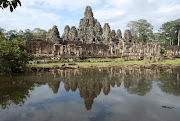
Climate change doomed Khmer empire
Who is trying to change the Khmer Empire History? Khmer People knew that Angkor Empire was not collapsed by Climate Changed ( drought).
Kalyan Ray, march 30, New Delhi:
A long-held mystery on what contributed to the demise of one of Asia's longest and the most well-known Hindu empires was revealed thanks to advanced research into the region's climatic conditions.
Scientists have now found that long spells of droughts interspersed with intense monsoon have brought curtains over Cambodia’s Khmer empire, which flourished from the ninth to the thirteenth Century.
At the Proceedings of the National Academy of Sciences on Monday, researchers said two of the worst droughts—in the middle of the 13th Century and early14th Century—combined with intermittent spells of heavy rain was one of the factors that resulted in the downfall of the empire more known for the majestic Angkor Vat temple.
Though the 13th Century drought stretched on for several decades, the dry spell that hit the region on the early 14th century was found to be the sharpest.
The drought in 1403 was reflective of moisture stress in the soil. “It was an extra-ordinarily dry event,” principal investigator Brendan Buckley from Lamont Doherty Earth Observatory at Columbia University in New York told Deccan Herald.
“Droughts of the magnitude we describe here would have had deleterious effects on the Angkor citizenry,” he said.
Scientists unravelled the weather conditions by reconstructing the monsoon period (March to May) for 759 years (AD1250-2008 ) through extraction of climate information stored inside ancient trees in a Vietnam national park.
Vulnerable infrastructure
The Khmer empire relied on a sprawling water supply system that covered an area of nearly 1000 sq km and connected the main city with its extensive suburbs. By the end of the 12th century, it became a vast and convoluted web of canals, embankments and reservoirs.
The infrastructure was huge by any stretch of imagination. The largest reservoir, West Baray, has an area of 16 sq km.
Such a massive infrastructure is “resistant to change” and “vulnerable to the risk of massive damage,” says the team comprising researchers from the US, Australia, Japan, Vietnam and Thailand.
While successive droughts weakened the water supply, the rain that fell heavily in the intervening years had only extended the damage.
The collapsing infrastructure was hard to bear for an empire that struggled to withstand war and other social factors.
“The climate factor was seldom mentioned among the causes of Angkor collapse. The society was already under stress and had very limited strategy to manage a vast and complicated water system that was impossible to rework. They also found themselves under the climate variability that far exceeded their ability to cope,” explained Buckley.
Scientists believe El Nino, the unusually high sea temperature in the Pacific that disturbs climatic conditions across the world, could have been responsible for Cambodia’s seesawing climate. However, they feel more research is required to ascertain this.
DH News Service .
Read more!
Market Hopes Property Law Will Boost Growth
The passage of a new law for the ownership of property by foreigners could give a boost the stagnant real estate market as well as bring in more investment, industry experts say.
The passage of a new law for the ownership of property by foreigners could give a boost the stagnant real estate market as well as bring in more investment, industry experts say.
The much-anticipated Foreign Ownership Property law was passed by the National Assembly last week and must now move through the Senate before being signed by the king.
“This foreign property law will benefit both foreign investors and Cambodians and will increase confidence in the legal framework for foreign property ownership in Cambodia,” Daniel Parkes, Cambodia country manager for CBRE Richard Ellis, told VOA Khmer.
Parkes called the law “a revolution in property investment” and one more step for Cambodia toward becoming a destination for international investors and property developers. “It goes a long way toward improving confidence and improving investment in Cambodia,” he said.
The law, which was drafted in December in a bid to improve ownership rights, allows foreigners to own residential property such as apartments, so long as they are above the ground floor.
Parkes said investors should consider coming in now, to take advantage of an expected upswing in the economy in 2011.
“The next six months is a good time to buy,” he said. “Comparatively, it’s more appealing than Thailand and Vietnam for foreign investors.”
Cambodian law does not allow foreigners to own land. Previously, if a foreign wanted to own any property, he would have to seek out a Cambodian partner, which deterred investment.
“My wife is Cambodian; she owns her own home here,” said Paul Luchtenburg, chief executive officer for Angkor Mikroheranhvatho Kampuchea, a microfinance institution. “But I know a lot of friends who want to find an easier, legal way to buy an apartment in Cambodia.”
With more foreigners able to buy apartments, the demand will increase, which could bring higher prices to property investors, he said.
“It should bring more money into the country,” he said. “So I think that is a very good thing.”
Jeremy Ha, director of Phnom Penh Commercial Bank, said South Korean developers and construction companies were optimistic about the new law.
“So I guess the number of companies [who want to] build apartments or condominiums will steadily increase in the future,” he said. “I am also optimistic as a foreigner, because I can buy an apartment or a villa in my own name.”
Sung Bonna, president of the National Valuers Association, told VOA Khmer in an interview the law will boost the economy.
Overall economic growth in Cambodia ground to a halt in Cambodia during the global economic downturn. The real estate market, which had been experiencing a boom, suffered heavily.
“It’s an opportunity for foreign investors to buy their own houses in Cambodia, for investment and for residence,” he said.
The sub-decrees that implement the law should be easily because the law is clear, he added.
Im Chhun Lim, Minister of Land Management, said the implementation of the law “will be fair and proper for all sides.”
Read more!
Monday, April 12, 2010
Breaking into Southeast Asia’s largest “tiger den”
VietNamNet reporters investigate wildlife trafficking from Laos into Vietnam. The Muang Thong tiger farm is located on Highway 13 about 30 kilometers from Thakhek town. From the outside, nobody would think that behind that small gate is an immense world of wild animals.
It took VietNamNet reporters several months of tracking down information and making contacts before, after a memorable journey to Laos’ Thakhek province, they successfully infiltrated the largest tiger farm in Southeast Asia.
Purporting to be people who had come to Laos to buy tigers to make tiger bone glue, VietNamNet reporters crossed into Laos at the Cau Treo border gate (Ha Tinh) and then proceeded to Thakhek, once a major node on the so-called Ho Chi Minh Trail.
The Muang Thong tiger farm is located on Highway 13 about 30 kilometers from Thakhek town. From the outside, nobody would think that behind that small gate is an immense world of wild animals.
The 200 hectare farm is surrounded by a five meter high fence with sentry boxes set 100 meters apart. It is said that guards are allowed to shoot anybody who enters the farm uninvited.
 Luckily, two of the five owners of this farm are Vietnamese people from Ha Tinh province. A tiger trader introduced the reporters to them so we got into the farm by the main gate.
The gate opened and the scowls the guards had given us disappeared. We saw a number of cages with tall iron fences a world of tigers appeared in front of us. There are all kinds of tigers and tigers of all sizes in this farm.
Phan Anh D, one of the two Vietnamese owners, led us to a cage near the farm gate that held two big tigers. He said that this pair of tigers are put into the same cage for breeding. “We don’t sell only this tigers. You can choose any of the 720 animals in this farm, including bears, panthers and African lions. We are willing to sell them”, D said.
 One of the two breeding tigers at Muang Thong tiger farm.
According to this man, around 100 tigers were born right on this farm. The remaining animals are transported from Malaysia, Thailand and Myanmar. Tigers, both alive and dead, are transported to this farm on daily basis.
D is a Thai citizen of Vietnamese origin. He opened this farm six years ago. He said he initially contributed three million dollars to this farm to learn how to breed tigers in captivity.
“At the beginning, many tigers died and we suffered huge losses in the first year,” D related. “We began earning a profit from the second year, once we knew how to make tigers give birth in this farm. I have heard that it is a big deal in Vietnam whenever a tiger gives birth in cage. At our farm, several dozen tigers are born annually.”
He said the total value of the tigers in this farm is around $7.5 million.
The tigers at the farm need food worth around $1800 a day. Each adult tiger eats about five kilos of chickens daily. “We spend around $2000 a day but our profit is very high,” D said.
The major markets for tigers, according to this man, are Vietnam and China. “Vietnamese people come to our farm to buy tigers to make glue from tiger bones,” he said.
The value of a tiger of 100 kilos is about $14,000. Smaller tigers are cheaper. About a dozen tigers have been slaughtered to make bone glue right at the farm.
“Perhaps the smell of tigers is too strong, for within a one kilometer radius, no animal dares to come, not even the trained hunting dogs that we breed here,” said a farm worker who is specialized in slaughtering tigers.
The VietNamNet reporters asked D how to get tigers to Vietnam and he said the farm will deliver the carcasses to a customer’s address in Vietnam. The price for tigers without viscera is 3.3 million dong per kilo, COD to the central provinces of Nghe An, Ha Tinh and Quang Binh, and 4.4 million dong per kilo if the tiger is delivered in Hanoi.
He said tiger viscera weigh from eleven to thirteen kilos and a 100 kilo tiger can yield fifteen or sixteen kilos of bone.
The reporters still wondered about the means of transportation of tigers to Vietnam. “Don’t worry about it,” D assured them. “We have transported thousands of tigers to Vietnam. I will take your deposit worth 20 percent of the tiger in Vietnam. Three days later we will deliver you the goods (tiger)”.
When VietNamNet reporters expressed their wish to return to Vietnam with the tiger carcass, D said: “I don’t want to hide anything here, but this is my job. Set your mind at rest! I’ve taken thousands of tigers to Vietnam!”
ASEAN AFTA Free Trade Meeting
 Despite this week’s ASEAN summit being dominated by issues surrounding Burma and the domestic tensions in Thailand, the group’s finance ministers did get another opportunity to discuss the goal of an integrated free trade area within five years.
Critics say the likelihood of realising a South East Asian bloc with free movement of goods, labour and capital within the hoped for time frame doesn’t seem promising.
Presenter: Scott Alle
Speaker: Charles Adams, Lee Kuan Yew School of Public Policy and former regional director of the International Monetary Fund.
ALLE: On paper, an ASEAN trading bloc could be a major force in world trade. If it was a single economic entity, the grouping of South-east Asian nations would rank as the world’s 10th largest economy, and with a population of around 600 million, the third biggest global market. But ASEAN’s diverse membership from Laos, one of Asia’s poorest nations to Singapore with its180 billion dollar economy, has meant progress toward the stated goal of economic integration by 2015 has been, well, slow.
ADAMS: What’s been lacking up until now has been the translation into concrete action plans, steps and measures.
ALLE: Professor Charles Adams from the Lee Kuan Yew School of Public Policy is a former regional director of the International Monetary Fund, and has represented the organisation at ASEAN forums. He says while the focus remains on moving the process toward, the concept of an ASEAN free trade area remains loosely defined.
ADAMS: What they have done if you like is define the objective in terms of freer trade, freer movement of labour and capital etc. Now they’re going well they began with some of the at the border issues in manufacturing and yes we’re now looking at this range of behind the border issues and issues to do with services liberalisation and those are in the best of circumstances tough areas
ALLE: Behind the border refers to a country’s domestic policies, in particular the regulatory framework affecting importers and exporters, the degree of government red tape. The meeting of ASEAN finance ministers did agree to act on some trade matters. A internal free trade deal signed last year intended to boost trade by streamlining and simplifying procedures will come into effect next month, while investment agreement aimed freeing -up investment flows and reducing investment costs will come into force in August. The meeting which was also attended by representatives of the World Bank, the IMF, and the Asian Development Bank also put out an updated forecast for South-east Asia raising growth estimates to five-and-a-half per cent for this year. Professor Charles Adams from the National University of Singapore.
ADAMS: I think the overall message that came out that was number one the regional seems to be bouncing back quite strongly from the global slowdown but there’s are still some concerns. My understanding is that they discussed what we call exit strategies which basically has to do with the pace at which some of the stimulus measures introduced during the global crisis are unwound.
ALLE: Just how quickly those stimulus funds, 950 billion dollars across Asia, will be wound back continues to be a challenge for policy makers, but as economists have noted there’s increasing signs of overheating in China and India.
Read more!
Cambodia's new battle: Reconciling with the Khmer Rouge - Feature
By : Robert Carmichael
Anlong Veng, Cambodia - Twelve years ago the town of Anlong Veng in north-west Cambodia surrendered to the government in a move that marked the end of the infamous Khmer Rouge movement.
Today most residents in the district are former Khmer Rouge cadre and their families. On Friday, 150 of them came together in a unique effort to discuss reconciliation, justice and reintegration.
Trying to reintegrate the supporters of one of the 20th century's most brutal regimes is vital to rebuilding Cambodian society, says Daravuth Seng, a Cambodian-American who heads a local non-governmental organization called the Center for Justice and Reconciliation (CJR), which organized the meeting.
"Our focus is to try to get victims and perpetrators to start talking in an effort to really understand one another, and in an effort to really work on reconciliation in Cambodia," he says.
He says he feels that most of the country's reconciliation efforts to date have been one-sided, excluding the Khmer Rouge.
The irony of setting the meeting in Anlong Veng was enhanced by holding it at the compound of the late general Ta Mok, the movement's final leader and one of its most brutal and intransigent members. Ta Mok is still well-regarded here.
Seng, who fled the killing fields of Cambodia as a boy with his family, acknowledges that what the organization is trying to achieve is "a huge, huge task," but says reconciliation must be inclusive.
"And with the Cambodian context, that must include a lot of the former perpetrators as well," he says, since understanding their perspective is central to reconciliation.
It is no small task. The Khmer Rouge were responsible for the deaths of around 2 million people during their rule of Cambodia from 1975-79. Many of those who died were executed, while others succumbed to starvation, overwork and illness.
After the movement was driven from power in 1979, it regrouped on the western borders with Thailand and fought the government in Phnom Penh until finally capitulating in the late 1990s
In Phnom Penh, 300 kilometres south-east of Anlong Veng, the formal process is underway to provide some measure of accountability for crimes committed by the Khmer Rouge regime. That process is the Khmer Rouge Tribunal, a joint Cambodian-United Nations court.
Four former leaders of the movement, including its head of state and foreign minister, are in pre-trial detention. A fifth person, the regime's former security chief, was tried last year and judgment in his case is due in the coming months.
Early on at Friday's meeting, which was sponsored by Germany's development arm DED, it becomes clear that some former Khmer Rouge are concerned the court is looking to prosecute five more suspects.
The participants tell the meeting they are satisfied that justice and reconciliation require the prosecution of the five already in custody, but say the tribunal must stop there.
Im Chaem, a deputy council chief in Anlong Veng, says she and other elderly residents are concerned the court will investigate more and more suspects.
She says when they crossed over to the government in 1998, Prime Minister Hun Sen promised there would be no losers.
"Now we don't know when our turn will be because we lived and served during that time," says Im Chaem, who has previously denied allegations of extreme cruelty levelled at her when she was a Khmer Rouge district chief. "There might be another five, and then five more and then 10."
The tribunal's public affairs officer Lars Olsen says the exchange highlights the contrast between victims and perpetrators of violence. He says that most Cambodians he encounters around the country are victims and want more prosecutions, not fewer.
Olsen tells the participants that the court is not looking to add further names to its list of suspects, and says a maximum of 10 in total are to face trial.
His answer reveals the limitations of the tribunal's work. The inevitable political and practical compromises mean thousands of people will get away with murder - including possibly some of those present at the meeting.
The former cadre broadly agreed on a number of points about reconciliation. One was that more than a decade after the movement's collapse they want other Cambodians to stop referring to them as "former Khmer Rouge."
"The term 'Khmer Rouge' is associated with killing and persecution," says one. "We are finished if we are referred to as that. Our children's lives will be ruined, and no one will let their children marry ours. We should just say we are all Cambodian now."
They also called for more economic development in the area, and said all people should be equal before the law.
There is recognition too that their lives have improved since reintegration. Anlong Veng today has schooling, medical care, tarred roads, and the opportunity for educated young people to go on to university.
It is a far cry from what went before, when thousands of Khmer Rouge lived in the mountains and were constantly on the move.
"Now it has changed from bitterness to sweetness - this is very important," says another attendee. "During the war we were always changing our position, unable to stay together and even eat together. Now that the war has ended we are able to gather at the same table and have a meal."
CJR's Seng is encouraged by the day's exchanges, and says one old lady cried as she told him she regretted what she had done as a Khmer Rouge cadre.
Seng says it is vital to understand the psychology behind what happened in order to prevent future atrocities.
"There is no quick fix for reconciliation, but I honestly believe this is moving in the right direction," he says. "We can't leave out a huge group from the reconciliation process."
Read more!
Cambodia rice output rises
PHNOM PENH (Commodity Online) : Southeast Asian nation Cambodia said its rice production registered a marginal increase during 2009-10 farm year.
According to an Agriculture ministry report, the country produced 7.58 million tonnes of paddy during the period, an increase of 5.7 percent over last year.
The country grew 2.33 million hectares of rice, yielding 6 million tonnes of paddy in the wet season, and 380,000 hectares for 1.58 million tonnes of paddy in the dry season.
The Ministry of Agriculture said Cambodia could have 3.5 million tonnes of paddy left over for export, a 10.75 percent rise on the 3.16 million tonnes left over last year.
Prime Minister Hun Sen said this year’s success in paddy output helped ensure food security and lessen the impact of the global economic crisis.
Cambodia plans to raise yields to as much as 3 tonnes per hectare by 2012 to increase exports of processed rice to international markets.
The Ministry of Agriculture said Tuesday that Cambodia could have as much as 2.24 million tonnes of rice for export, after farmers brought in 2.83 tonnes of paddy per hectare this year.
In the farming year 2008-09, Cambodia grew 2.61 hectares of rice, an average paddy yield of only 2.74 tonnes per hectare.
The Supreme National Economic Council said last month that Cambodia could produce as much as 15 million tonnes of rice paddy, leaving 8 million tonnes for export.
However, rice millers and other industry insiders say the quality of processed rice remains low, keeping Cambodia out of a market that has proved lucrative for neighbouring Vietnam and Thailand
Read more!