The land of heroes
Our heroes
Our land
Cambodia Kingdom


Sunday, February 21, 2010

'Arts of Ancient Viet Nam' or Stealing, really?

Garuda with Naga Champa period late 12th-13th Century. Thap Mam site, Binh Dinh province stone. (National Museum of Vietnamese History)

The expansive exhibition of artifacts from the land's historical cultures is on view at the Asia Society in New York.

By Louise Roug


Reporting from New York - "Arts of Ancient Viet Nam," the most ambitious exhibition of Vietnamese art yet to appear in the United States, is a show about meetings.

In room after room, magnificent objects on display tell a story about people -- how we encounter one another and change in the process.

That such meetings are sometimes bloody was an inescapable issue for the organizers of the show, on view at the Asia Society in New York.

For decades, Vietnam existed in the American mind not so much as a geographical place with its own history but rather, singularly, as a synonym for conflict.

And it was this association -- as Asia Society Director Vishakha Desai put it: "that Vietnam means war" -- that organizers wanted to challenge. "We wanted to create a new story," Desai said. Given the interwoven history of America and Vietnam, it is a point delicately made.

For one thing, Nancy Tingley, the show's heroically stubborn curator who worked more than 20 years to realize "Arts of Ancient Viet Nam," has mounted an exhibition that looks at a time well before the Battle of Hue, the massacre at My Lai and the fall of Saigon. This is a historical show that examines another kind of meeting between people: one built on trade and commerce.

One reason it took so long for the exhibition to be realized was that before 2003 Vietnam didn't have a law that would allow for the lending of museum objects. But the Vietnamese government eventually threw its support behind the exhibition and 10 museums in Vietnam have contributed objects, including the Museum of Vietnamese History in Ho Chi Minh City.

Another obstacle was the lack of diplomatic relations between Vietnam and the United States until 1995. "Politics got in the way for some years, but we've gotten beyond that," said Tingley, based in Northern California.

Although she acknowledges the initial difficulty of realizing the project, Tingley is less interested in making overt political statements and more engaged with the question of what these beautifully crafted objects can tell us about the various peoples who lived between the first millennium BC and the 18th century in what is now Vietnam.

"Trade is a lens through which to look at the cultures," Tingley said, adding that as art and objects spread through trade so do ideas.

Or as the general director of the Department of Cultural Heritage in Vietnam, Dang Van Bai, puts it in a foreword to the catalog: "Arts and culture have always provided a bridge to mutual understanding among the peoples of the world."

With economic assistance from other countries, notably France, which has its own history in the region, Vietnam continues to improve the state of its museums, Tingley said.

The show, which runs through May 2, is remarkable for its scale, scope and beauty. The more than 100 objects, which have never appeared together before in an exhibit (not even in Vietnam), span almost 2,000 years. Because the exhibit spans such a wide period and includes different cultures, it is hard to point to a defining Vietnamese aesthetic. Rather, each of the four cultures on display have borrowed iconography and expressions from different parts of the world.

Organized chronologically, the show begins with two contemporary early cultures, the Dong Son and the Sa Huynh, who lived, respectively, in the north and the central-south part of the country until the 2nd century AD.

Like many cultures that appear to us centuries after their demise, the Sa Huynh are best viewed through their burial objects -- in this case, large, upright clay jars that held the dead along with offerings such as weapons and pottery -- and objects such as Chinese mirrors found at Sa Huynh sites suggest that the culture was a center for trade and exchange.

The most impressive remnants from the Dong Son culture are the large bronze drums on display, intricately patterned with abstract bands and images of people, which, along with chicken-headed ceramics, reveal a strong Chinese influence.

The next room reveals a different people -- the Fu Nan, a civilization of city-states that existed in the Mekong Delta from the 1st to the 5th century AD.; to provide historical context, Fu Nan gold jewelry is presented alongside contemporaneous imported objects from Rome, China and India.

The Fu Nan and their trading partners had rich opportunities to exchange ideas and expressions because the monsoon winds kept the traders in foreign ports for four to six months at a time. But little is known about the Fu Nan people except that they were impressive seafarers who built 200-foot-long ships that had an ability to carry up to 700 people and could be used to export not just goods but also live rhinos and elephants.

Moving on, a visitor encounters an almost life-size wooden Buddha -- an incredible artifact, not just for its slender, Giacometti-like beauty but for the simple fact that this wooden statue dates from the 6th century, having survived almost intact -- and half-smiling -- in the bog of the Mekong Delta.

The Buddha's right hand is raised in abhaya mudra, symbolizing peace, and the belly shows a slight bulge, indicating the intake of breath, prana -- gestures that suggest the creator of the Buddha had been exposed to Indian Gupta sculpture.

A wide-eyed demon in a stone frieze on display in another room shows how the people who lived between the 5th and the 15th century in the coastal kingdoms of Champa, near Hoi An, were also influenced by Indian aesthetics. Early Cham inscriptions were done in Sanskrit, and awe-inspiring stone sculptures of the Hindu god Shiva also reveal the Indian influence. (During another encounter between cultures much later, U.S. bombers destroyed a significant Cham site at My Son.)

The final part of the show looks at trade and exchange in the period between the 16th and the 18th century in the port city of Hoi An, about 20 miles from Danang. Chinese porcelain, Japanese silver, cinnamon and gold were among the wares that were traded at Hoi An, and luxury goods that have later been found attest to the continued connection to China and India as well as the Middle East.

Most of the pieces in this part of the show come from the Cu Lao Cham shipwreck, discovered during the 1990s. Tingley speculates that at least part of the ship's cargo was destined for a Vietnamese man living in an Islamic country somewhere in Southeast Asia, so that he might have not only the kinds of ceramic that reminded him of his home but also something that fit his new culture.

Carbon dating suggests that the ship went down in the 15th century, and the remains of fruit found aboard suggest that it had set sail in late fall. The lateness of the expedition meant that the sailors likely encountered rough weather, possibly causing the ship to go down.
Read more!

Pan Pacific group raising cash

By Caryn KunzAdvertiser Staff Writer


After 82 years of helping women and children in the Pacific, the Pan Pacific and Southeast Asia Women's Association will hold its first fundraiser next month.

The March 26 event, called Golf for a Child, will help raise money to build a school in rural Cambodia and provide continued support for local organizations such as the Susannah Wesley Community Center.

Founded in Honolulu, the association held its first conference in 1928 with delegates from 11 Pacific and Asian nations. Today, the organization includes 22 chapters dedicated to improving the lives of women and children from Sāmoa to Singapore.

"The basis of the club is still women helping women and children. I know today there are so many organizations that do this, but in 1928 there weren't," said the association's Hawai'i president, Mary Tori Keegan. "This was the first women's organization in the islands."

Keegan said that throughout the history of the group in Hawai'i, money for any cause the group supported came directly from member donations.

"The original members were all very wealthy women who were also very educated. Whenever they wanted to help a cause, they just wrote a check," Keegan said. "They never had to bother with fundraisers. Nowadays, we live in different times. This is the first big fundraiser that we're trying."

Golf for a Child Chairwoman Asipau Pamela Plouffe says the tournament has the potential to expand the association's outreach efforts as it becomes established.

"There is a need for education, not only in Cambodia but throughout the South Pacific and Southeast Asia, and we can be a vehicle for that good cause," she said. "It's something that we can look forward to annually. We also want to expand to other local causes as we establish ourselves and more funds come in."

The association's Hawai'i chapter supports Susannah Wesley Community Center's C-BASE high school diploma program, an alternative education program for youth ages 16 to 23.

"They've practically adopted those kids," said Ronald Higashi, the center's executive director. "They've always been at the graduations that we have here at the center. They even purchase the gowns."

Higashi said that in addition to C-BASE, the Hawai'i chapter also helps fund smaller projects throughout the year and often provides youths with extra necessities.

"I can't say enough about them," he said. "They're always there when we need them."

In May, the association will hold its international conference in Bali, Indonesia. After the conference, Keegan, Plouffe and association delegates from Hawai'i will travel to Cambodia to dedicate their school.

"We've gotten so many new members in the last several years, and they are terrific members that are willing to move in a little bit different direction," Keegan said. "It's a direction that we need now, today. I'm excited about it."

Read more!

North Korean agency reports leader's birthday celebrated

Feb 21, 2010 (BBC Monitoring via COMTEX) -- Pyongyang, February 21 (KCNA) - Meetings, film shows and book and photo exhibitions were held in Laos, Cambodia, Romania and Kyrgyzstan between Feb. 9 and 11 on the occasion of leader Kim Jong Il [Kim Cho'ng-il]'s birthday.

On display at the venues were his works and photos on his undying feats and books and photos of the Korean people's struggle for the building of a great prosperous and powerful nation and national reunification.

Speeches were made at the meetings.

The director of the School of Politics and Theory of the Ministry of the Public Security of Laos said that the Korean people have achieved great successes in defending the country, building socialism and improving the people's standard of living under the wise leadership of Kim Jong Il [Kim Cho'ng-il], adding that this serves as precious experience for the Lao people.

The chairman of the External Relations Commission of the People's Party of Cambodia noted that the friendly and cooperative relations between his party and the Korean Workers' Party are favourably developing day by day. The Cambodian people wish the Korean people greater successes in their efforts to build a thriving nation and achieve national reunification, he said.

The chairman of the Romania?Korea Friendship Association said that Kim Jong Il pursued songun [military-first] politics with the insight into the importance of army in carrying out the cause of independence, thereby developing the Korean People's Army into an invincible army, building a self-reliant defence industry and bringing about a great turning point in the building of a thriving nation with the efforts of all the people.

The chairman of the Central Council of the People Unity?"Kyrgys El" Republican Political Party said that the Korean people will surely build a great prosperous and powerful nation thanks to the songun [military-first] leadership of Kim Jong Il.

The participants of the film shows watched the Korean films "Fireworks for a Thriving Nation" and "Korean People's Army, Steel-Strong Ranks."

A message of greetings to Kim Jong Il [Kim Cho'ng-il] was adopted at the event in Romania.

Source: KCNA website, Pyongyang, in English 0336 gmt 21 Feb 10

Read more!

Saturday, February 20, 2010

US Center Reflects Greater Asean Attention

By Im Sothearith, VOA Khmer


The US has begun increased engagement with Asean, helping bring new levels of optimism to the region, US Ambassador to Asean Scot Marciel told VOA Khmer in an interview.

Marciel recently completed a diplomatic trip through the region, which has seen increasing economic growth in recent years.

“What we want is better partnerships, closer partnerships with Asean and with all the countries of Asean, where we can work together on a wide range of issues: trade, economic development, health, security concerns, nontraditional security threats, climate change,” Marciel said, at the launch of the Asean Studies Center at American University in Washington. “There’s a whole host of issues where there’s value in the United States working with countries of Southeast Asia. That’s what we’re looking for. We want to be a good partner.”

Asean welcomes American participation, Surin Pitsuwan, Asean secretary-general, told VOA Khmer.

“It’s a major superpower with a lot of resources in the fields of security, economic development, and technological progress, education, human resource,” Pitsuwan said. “If the US really engages with Asean, I think it is going to be a tremendous boost to Southeast Asia, to Asean, certainly to the entire region, because we are connecting major economies, like China, like Japan, and India, Australia together. So, it is important for the US to come back and reengage.”

Even the opening of a specific Asean study program signaled more engagement, he said.

“This is a new focus of intellectual undertaking on regional cooperation,” he said. “Asean is just one element of that regional cooperation.”

“It’s a great opportunity for Americans to have a center that focuses on Asean specifically, not just Southeast Asia as a whole,” Marciel said. “So it’s an opportunity to increase the level of scholarship in the United States about Asean and increase the awareness in the United States about Asean and its growing role.”

Louis Goodman, dean of American University’s School of International Service, told VOA Khmer that center reflected the increasing international importance of Asean.

Asean “is quite successful already and it will be more successful in the 21st Century,” Goodman said.

Read more!

Exclusive: Scots miner's son was first Westerner to interview Pol Pot - and was killed hours later

IT was Christmas Eve when Richard Caldwell heard his father had been shot dead in Cambodia.

Only hours after he became the first Briton to meet the notorious dictator Pol Pot, Malcolm Caldwell lay dead in a hotel room in the capital Phnom Penh.

Richard was 21 and at a party at his girlfriends house in 1978 when the call came through that his Scottish lecturer dad had been murdered.

He said: I dont even remember who called. It must have been my mum. I just remember being told he was dead. It was devastating. It was chilling news. Horrible.

We hadnt been expecting him to meet with any trouble at all.

To this day, we dont know why he was killed and I am not sure we ever will.

Pol Pots notorious Maoist ruling party the Khmer Rouge ran Cambodia from 1975 to 1979. During their evil rule, up to 2.5million people perished.

Under Pol Pot, the Khmer Rouge tried to take Cambodia back to the Middle Ages, forcing millions of people from the cities to work on farms in the countryside.

But it failed miserably and whole families were enslaved, starved and murdered.

Richard has opened his heart after a former leader of the Khmer Rouge went on trial in Phnom Penh more than 30 years after the brutal regime fell.

Duch, real name Kaing Guek Eav, was head of Tuol Sleng prison camp and is accused of presiding over the murder and torture of at least 15,000 inmates.

Malcolm was 47 when he went to Cambodia as a communist who agreed with the regimes policy of forcing the rich and powerful back to the land.

At that time, the Khmer Rouge had successfully hidden the slaughter from the world and many considered them freedom fighters who stopped Cambodia falling into the clutches of bullyboy America.

Before the Khmer Rouge, during the Vietnam War, America had pounded Cambodia with bombs and set it up with a corrupt puppet government.

Richard said: My father believed in going back to the land and people being self-sufficient. We all know now, looking back, that he was supporting a terrible regime. But he didnt know it at the time.

He knew the ruling elite, the rich and intellectuals, were being forced out of the towns and on to the land.

But he obviously didnt know that they were being killed.

I am sure he would have been horrified if he had known. That may have been what happened. He found out and they killed him because of it.

Malcolms colleagues describe him as a gentle, tolerant, courteous and fundamentally decent man who was a dedicated teacher and writer.

He was scruffy, exceptionally bright and focused on politics. Richard remembers a dad he adored, who was loving but distant.

The son of a miner who had retrained as architect, Malcolm was brought up in Kirkcudbright, Dumfriesshire. He and his brother and sister were all duxes at Kirkcudbright Academy and Malcolm was said to have read every book in the library before he went to Edinburgh University.

As a child, he bred rabbits and chickens and always had a passion for the land.

He met and married his first wife, Ann, while completing a PhD at Nottingham University, where she was also studying.

They had four children but his political progression didnt extend to being a hands-on dad or doing household chores.

In 1959, he joined the School of Oriental and African Studies at the University of London as a research fellow and became chairman of CND.

At home, he would retreat to his study when he wasnt lecturing and every day he went to the pub for a Guinness at lunchtime and a pint in the evening.

In 1973, he left Ann and the children after years of marriage. He remarried in 1976. Malcolm travelled every chance he got, to China, to North Korea and Vietnam, the countries he felt were putting his political beliefs into practice.

He adored his mother, Violet, and sent her mementoes from wherever he went. Malcolm went to Cambodia with American journalists Elizabeth Becker and Richard Dudman. They were among the first Westerners to get in after the Khmer Rouge closed the borders.

Richard said: Cambodia has a sinister ring to us now but at that time, the Khmer Rouge were known as freedom fighters. Not a lot of information was coming out and access was very restricted.

It wasnt considered scary to go there. It wasnt considered threatening to Westerners, I suppose because no Westerners went there. I certainly wasnt worried about his safety.

I suppose looking back, he was politically naive. But he felt he knew the country through his many contacts there.

It is one of reasons I have been reluctant to hold any strident political views, because he was so adamant and yet he turned out to be so wrong.

It was three days before Christmas 1978 and on the last day of his trip, Malcolm was granted an audience with Pol Pot.

The dictator had rarely been seen beyond his most trusted circle but, as an invasion by neighbour Vietnam seemed imminent, he wanted to show he had allies in the West.

So Malcolm became the first Briton to meet him. The only other person present was a translator, who would later say the encounter had been animated and friendly.

That night back at the hotel, Becker, who had grown disillusioned with the Khmer Rouge, debated with Malcolm.

Becker said: Caldwell tried once more to get me to change my mind. He compared Cambodia to Scotland. He was a Scottish nationalist and said Cambodia feared Vietnam the way Scotland feared the English. I saw no relevance to such a remark, and he retired to his room with the prophecy that Scotland would be independent by the middle of the Eighties.

But regardless of their political differences, she liked him. He was a real sweetie, she said. He was also homesick for his family and said he would never spend another Christmas away from them.

Becker went to bed at 11pm and was woken by the sound of gunfire. She opened her bedroom door to be confronted by a young man brandishing a gun.

She panicked and fled to the bathroom. Dudman had also woken up and knocked on Malcolms door. As they discussed the commotion, another armed man appeared and fired shots into the floor.

Dudman ran into his room and hid. Two hours later, an aide told Decker and Dudman that Caldwell was dead in his room and he wanted them to witness that his body was there.

Decker said: There was Malcolm, lying on the floor in his pyjamas, blood on his chest, hislong auburn hair wild around his face. His eyes were closed. At the threshold of his room was another body, a young man clothed in black who looked like the boy who had pointed his pistol at me.

What was he doing there, dead, sprawled across the floor?

She was never given an answer.

A few years ago, documents obtained with a freedom of information request, by Malcolms brother David, suggested he had been murdered by Pol Pots regime, perhaps because the Scottish academic had, at the last minute, seen it for what it was.

Or perhaps an enemy of Pol Pot did it to embarrass the regime.

The next month, the Vietnamese invaded and the regime was no more. Whatever the reason, Malcolms death was pointless. Becker believes there may have been no real motive and it was as senseless as the rest of the slaughter in Cambodia.

She said: Malcolms murder was no less rational than the tens of thousands of murders. His death was caused by the madness of the regime he openly admired.

Two guards assigned to Malcolm and the journalists were arrested and tortured at the Tuol Sleng, so its not possible to give credence to their confession that the execution was designed to undermine the Khmer Rouge.

They claimed the journalists had been allowed to live so they would write about it.

Richard believes the mystery will never be solved. He said: I can relate to the idea that it was Pol Pot because that would suggest Dad knew what was going on and they had to get rid of him. But who knows?

I did think of going to Cambodia to see the place for myself but I dont think I will now. I dont think it would serve a purpose.

I dont think we will ever know who killed my father.
Read more!

Cambodia to launch $100 million casino complex

PHNOM PENH - A Cambodian tycoon will launch a $100 million casino near the country’s border with Vietnam this month to attract foreign tourists and develop the country’s fast-growing entertainment industry.

The Titan King Casino will open its doors on Feb. 26 in Bavet, a town in Svay Rieng province, about 120 km (75 miles) from Phnom Penh, covering 2.5 hectares of land and employing some 6,000 people, its owner, Kith Thieng, told Reuters on Tuesday.

Kith Thieng, whose business interests include hotels, fast food restaurants, a mobile phone operator and stakes in a bank and television station, said he wanted to help Cambodia’s entertainment sector rebound after the global economic crisis.

"Most gamblers will be Vietnamese but my goal is also to attract people from other countries," he said. "I want to promote the fact that Cambodia has enough places for entertainment."

Tourism is the impoverished country’s second-biggest earner after its agriculture sector.

Cambodia generated revenues of $19 million from its 29 casinos in 2008, according to Finance Ministry data.

That fell to $17 million last year, with the decline attributed to a fall in tourist arrivals and rising border tensions with neighbouring Thailand.

Thais are a vital part of Cambodia’s casino industry. Most forms of gambling are forbidden in Thailand, but thousands of Thais regularly visit massive casino complexes located along their shared border.

In a posting on the new casino’s website (http://titankingcasino.com), Kith Thieng said Bavet was fast becoming a regional centre for entertainment "much like Las Vegas and Macau".

Hear Sopheaktra, an assistant to Kith Thieng, said the casino would list on the Cambodian stock market, which was due to open later this year.

NagaCorp, is currently the only casino operator in Cambodia, with a licence to run any number of casinos within 200 km (124 miles) of Phnom Penh until 2065.

The company said last week it expected revenue in 2010 to grow by 30 percent as the global economy recovers, and forecast future growth would be driven by a surge in Chinese visitors.
Read more!

Friday, February 19, 2010

Cambodia's Fortunes Ebb And Flow Along The Mekong

Cambodia is one of the poorest countries in Asia. But it hasn't always been that way, and the Mekong River has been key to its periods of prosperity. Recovering from 20th century atrocities, the country now faces a new danger: Development is putting the river and its fish at risk.

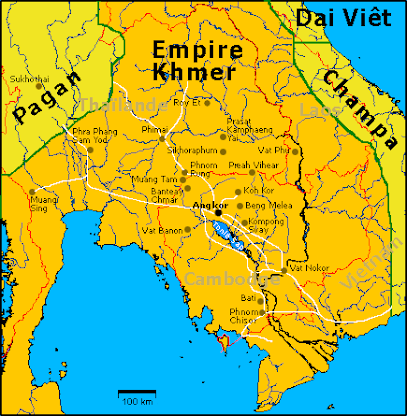
Cambodia is one of the poorest countries in Asia. But it hasn't always been that way. The Khmer once ruled a vast kingdom that covered not just Cambodia but parts of Vietnam, Thailand and Laos, too.

The empire had its capital at Angkor, near the present-day city of Siem Reap in northwest Cambodia. At its peak, nearly 1 million people lived in the city of Angkor — at a time when London was still a town of 20,000 or so.

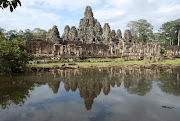
The empire's crowning architectural achievement was the magnificent temple of Angkor Wat, one of several dozen temples built by the Angkorian kings, the ruins of which now draw tourists from all over the globe.

Water was key to the Khmer kingdom's prosperity: for irrigation, for drinking and for food from the fish that swam up the Mekong into the Tonle Sap River and the lake of the same name.

"No river, no life. No water, no life in Cambodia," says Pyyoak, my guide.

Invading armies also came up the Mekong in an effort to conquer the Khmer kingdom in the 12th century, a story told in the bas reliefs at Angkor's Bayon temple.

Pyyoak says the Champa, or Cham, came up the Mekong from the south, from what is now Vietnam, and occupied Angkor for four years, from 1177 until 1181.

The stone carvings depict the battle in vivid detail, right down to the uniforms worn by the competing armies.

Pyyoak points to another set of carvings on the wall that depict better times in the kingdom: floating villages, bountiful harvests and an abundance of fish in the river and the lake.

"From here, you can see the daily life of the people; they live on the Mekong River. You can see the floating village and some business people, they are selling on the Mekong River," he explains.
"And life was very good for the people of Angkor then — better than for Cambodians today?" I ask Pyyoak.

"Yes, I think that is right," he replies.

Floating Worlds Under Threat

The floating villages still exist today — the closest on the Tonle Sap Lake, just 20 minutes south of the Angkor ruins by car, then a half-hour more by boat. The Tonle Sap is the largest lake in Southeast Asia and, scientists say, the key to the biodiversity of the entire Mekong basin, thanks to the seasonal flooding of the Mekong and the lake.

Many of the floating villages are populated by ethnic Vietnamese, who just might be distant relatives of the Cham warriors who came up the Mekong to fight more than 800 years ago.

These villages are almost completely self-contained — with floating sawmills, metal shops and grocery boats — a water world where children are born, raised and sometimes die without ever having set foot on land. Batteries power their houseboats, complete with TVs, DVD players and karaoke machines. There are even floating bars to help slake the thirst of day-tripping tourists from nearby Angkor Wat.

But it's a hard life, says fisherman Do Van Thanh, 47, one made even more difficult by a dwindling catch — half what it used to be just a few years ago, he says.

His friend, Tran Van Loi, also 47, is no biologist, but he understands very well the relationship between the river, the lake and the fish, and he smells trouble.

There are more people fishing, he says, and that means fewer fish.

In the past, adult fish would lay their eggs in the Mekong. After hatching, the small fish would find their way to the Tonle Sap, grow up here, and then return to the Mekong, he says. But with so many people fishing, more fish are being caught younger, before they can lay their eggs, he says, and he knows that's not good.

Tran says if he could quit fishing now, he would — but there's no other way to make money.

Making enough money to survive is still a challenge for the majority in Cambodia, one of the poorest countries in Asia. It's a country that would probably be far better off had its recent history not included the four-year-long terror of the Maoist Khmer Rouge. From 1975 to 1979, the regime led by Pol Pot controlled the country, a time when an estimated 1.7 million Cambodians — a quarter of the country's population — died.

Dark Chapter

More than 30 years later, the country experienced a reckoning of sorts last November at the joint U.N. Cambodian Tribunal in the capital, Phnom Penh, where the Mekong and the Tonle Sap rivers converge. The man on trial was Kaing Guek Eav, known by the alias Comrade Duch, an aging Khmer Rouge commander who ran the infamous S-21 prison, also known as Tuol Sleng.

The first senior Khmer Rouge leader to be tried, Duch was charged with crimes against humanity — which included savage beatings, extraction of fingernails and toenails with pliers, and electrocution. The torture ended for almost all of the prisoners at the killing field of Choeung Ek. An estimated 16,000 people were imprisoned at Tuol Sleng; fewer than a dozen are known to have survived.

In court, Duch admitted his guilt and begged for forgiveness.

"I still and forever wish to most respectfully and humbly apologize to the dead souls," he said through an interpreter. "To the survivors, I stand by my acknowledgment of all crimes inflicted on you at S-21. I acknowledge them in both the moral and legal context."

It was an extraordinary moment for many who have waited more than 30 years for some sort of justice and closure. Duch has yet to be sentenced. He claimed, just a few days after this dramatic testimony, that he was a "cog in the machine" who was "just following orders."

Living In And For The Present

But many Cambodians haven't paid much attention to the tribunal, the majority of the population having been born after that dark period in the country's history.

And Phnom Penh — the city the Khmer Rouge leaders once emptied of people in their bid to create an agrarian, utopian state — now has more people than ever.

The capital is attracting more foreign investment and more rural Cambodians looking for work, most of it in construction. The streets of the city are now choked with motorcycles and the Lexuses and Cadillac Escalades of the nouveau riche. The vehicles jockey for position as they pass the construction site of the Gold Tower 42, soon to be the city's newest and tallest skyscraper.

On the riverfront, giant vacuums suck sand from the bottom of the Mekong, which will be used to fill the city's famous Boeung Kak Lake, the site of a new high-end business and residential complex.

It is a controversial project, and a sensitive one, too, which explains why hard men with guns object to my visit to the site. Land grabs such as this one are the scourge of Southeast Asia, not just Cambodia: ordinary citizens displaced by rapacious developers and corrupt government officials.

Too Many People, Too Few Fish

Heading downriver from Phnom Penh, the scenery changes quickly. The new skyscrapers and casinos of the capital quickly give way to banana trees, rice and corn. The vast majority of Cambodia's 15 million people live in the countryside, where there is not much choice when it comes to earning a living: farming or fishing.

On this stretch of the Mekong, about 20 miles south of the capital, those who fish have the same complaints as the fishermen on the Tonle Sap.

Nguyen Quynh Thi and her husband haul in their second set of nets for the day, and it's the same as the first: nothing. It's nearly noon, but they will stay out a bit longer, they say, though Nguyen isn't quite sure why.

"Last year was better. The big fish would come down from the Tonle Sap and we could catch enough, and sell enough, to pay for fuel with a little left over for food. But every year it seems to get a little worse," she says.

Too many people chasing too few fish. Farther downstream, just short of where the Mekong flows into neighboring Vietnam, I stop to talk to one last fisherman.

Kong Hout, 48, says he and his family eat fish for breakfast, lunch and dinner. He catches it himself and says there is still enough to go around — for now, if you know where to look.

But what would happen, I ask, if there are no more fish. He doesn't hesitate.

"It would be an age of darkness," he says, with no trace of irony. Then, he thinks about it some more and comes up with something that, for him, is an even more horrible thought:

"Maybe, we'll have to start eating fish from cans."

Next, the journey down the Mekong ends in Vietnam.

Read more!

Minerva Fellows spotlight: Ned in Cambodia

Hello Union,
I am in the very interesting and mildly absurd kingdom of Cambodia, which isn't really a kingdom as far as I can tell, although there is a King and Crown Prince, so you never know. Politics might be a mess in the U.S. but they reach another level here. Recently the Prime Minister (I think that's his title) Hun Sen told a bunch of his military buddies that they should stop illegally foresting wood and using soldiers to maintain and improve their homes. His explanation as to why they should stop was they already had big houses and nice cars, so what was the point? This was sort of odd, because he seemed to be suggesting that doing morally ambiguous/wrong things wasn't bad, as long as you stopped once you have a material standard of living far above the average Cambodian, but lower than his.

Also, the police force seems to function as a suggestion of law rather than its physical manifestation. Let me tell you how I know - I've evaded them several times on my dirt bike. I got pulled over once for no reason and paid them a cash "fine". I wasn't really angry at the police, as they have horrifically bad salaries, but I have declined to donate to their cause since then. Hence, traffic laws are quite difficult to enforce, and people just do what they want. It sounds nuts, and can be kind of terrifying, but if I could bring one thing back to the US from Cambodia, It would probably be the flexible traffic laws.

Anyway, I've gotten away from myself here. Let me attempt to explain what I have been doing for the past seven-ish months, and what it's been like. I may try and delve into what I've learned, but that's a whole other barrel of apples, and isn't totally clear yet either.

So let's see. I'll try and break it up by notable occurrences. Arriving was pretty terrifying. As I was approaching the airport and getting closer and closer to Cambodia, like close enough to see rice paddies with cows and stuff, I was giddy with a mix of anxiety and excitement. The first three days or so it was an achievement to go buy food and water and walk in a two or three block radius of my hotel. As I got over that and moved into a friend of a friend's apartment for two weeks, things were briefly exciting. I was meeting cool people and learning a lot about what I was going to do.

After the hotel and friend's apartment I moved into my own place, and started going to a motorbike repair school that only taught in Khmer. I got to tear apart engines and put them back together which was cool, but they are super simple one cylinder deals, so it got old fairly quickly. I was at school for two months, during which time I also bought a dirt bike (something I have wanted since approximately age 5), and got to know the city and Khmer culture a bit better. The dirt bike was a massive pain though, and I got tired of school, since it was all in Khmer. I also knew people but didn't have their phone numbers and/or felt really awkward about hanging out with them which made being in the city pretty lonely. Being alone in a very strange place is odd, when you are so used to the social dynamic of college and boarding school. So…..

Then I moved to Sala Lekh Prahm, a town in Kampong Chnang province, affectionately known as "the boonies". I have a cool translator, an 18 year old dude named Sai Ha, who is quite helpful and has a similar sense of humor to me, which helps make living up there easier. Although he recently has started asking me how he can get to the U.S. and what jobs he could have if he came. I don't know how to tell him that I'm uncomfortable with the idea of being responsible for his welfare if he came to the States, as I would probably end up being.

Back to life in SLP though: It can be difficult because it's fairly isolating, and the whole starting a shop thing is easily the most difficult thing I have ever attempted/done in my life. Being responsible for people and the success of a business is very hard. Sometimes you just want a shower, a non squat toilet, and a sink to wash your damn hands in. But instead you take a dipper bath and carry on your merry way.

So I've been in SLP for roughly 4-5 months, and have had the world's biggest party trying to start a business to employ a bunch of dudes from Tramoung Chrum, which is a very small village about an hour outside of SLP. It's all Cham people, who are a religious/ethnic minority. After moving out to SLP, I sent two guys from Tramoung Chrum to the moto-repair school I had attended in PP, began preparing the space and buying equipment with my translator, and briefly tried to teach a group of young men from Tramoung Chrum how to repair motos before the guys who went to school were finished. When the guys going to vocational school finished, we transferred to having a running shop, which is essentially where I am at now, trying to figure out how to keep the business running after I leave. If I was being polite and reserved, I would say it was tricky.

I'm not really in the mood to be strictly polite though, and feel quite comfortable revealing what an astonishingly difficult time this has been for me. I have been really confused about life while being here. I'm trying to figure out what motivates me, what I'm interested in, how I define my 'self', blah existential angst, blah blah. Trying to start this shop while dealing with all this emotional/psychological brou-ha-ha has been a challenge, to say the least. Hopefully in the long run it will be for the best though.

I guess I won't labor the issue, although I would encourage everyone to give more thought to their lives, what they are looking for, what makes them happy, etc. Really, that's mostly what I wanted to write about for this piece. I would implore you to really consider yourself and your life. Why do you drink, what is it about the release of getting wasted that college students deem so necessary to enjoy themselves? Why do you want a job? If you are in a job you hate, are you going to have the strength to get out? Is security more important to you than following some ideal path? Is the concept that people have ideal paths a bunch of nonsense?

I don't know. I don't have any answers, and I'm struggling pretty hard to figure out this stuff out for myself. But I encourage you to get extremely far out of your comfort zone, see what happens, and go from there. In the long run….. well maybe it won't help, but if you don't try then what's the point?
Read more!

East Asia’s economy could suffer if seas are not protected, says UN report

19 February 2010 – East Asia’s economically viable coastal habitats and ecosystems are under threat from pollution, alien invasive species and other factors which could impact the region’s poverty levels unless urgent action is taken, the United Nations Environment Programme (UNEP) said in a new report.

“With nearly three quarters of the region’s population depending directly or indirectly on coastal areas, and with 80 per cent of the region’s GDP linked to the coastal natural resources, the time must be right for factoring the marine environment into the centre of economic planning,” said UNEP Executive Director Achim Steiner.

The East Asian Seas State of the Marine Environment report said economically important coastal habitats and ecosystems are under pressure as 40 per cent of coral reefs and half of all mangroves have already been lost. Coral reefs generate an estimated $112.5 billion and mangroves $5.1 billion annually.

The East Asian Seas – which includes the region between China, the Republic of Korea and Australia – have some of the world’s highest concentrations of shipping and fishing vessel activity. They account for 50 per cent of global fisheries production and 80 per cent of global aquaculture production.

“These ocean ecosystems are a critical lifeline for the region’s economies and people. You can say that the health of these oceans and their ecosystems is very much tied to the economic health of these countries and well-being of their citizens,” said Chou Loke Ming, author of the report produced by UNEP’s Coordinating Body of the Seas of East Asia (COBSEA).

Mr. Ming noted that the East Asian Seas account for 30 per cent of the world’s seas under national jurisdiction and called on the governments in the region – which also include Cambodia, Indonesia, Malaysia, Philippines, Singapore, Thailand and Viet Nam – to have a major role in maintaining effective stewardship of the marine environment.

The report recommended a more systematic and integrated approach to managing coastal and oceanic issues, including improved data collection and management, and economic incentives to encourage private sector involvement in environmental protection efforts.

“Such actions can support better decision-making, national assessments of coastal and ocean resources and conditions, [and] enhanced public private partnerships” the report stated.
Read more!

Khmer Krom: Police finish documentation for Khmer Krom deportees

22 Khmer Krom who were deported from Thailand have finished application for Cambodian citizenship.

DOCUMENTATION necessary for members of a group of Khmer Krom seeking Cambodian citizenship has been completed, a police official said Wednesday, amid fears that the 22 men, women and children who were deported from Thailand last year will lose the financial support of the NGO sheltering them at the end of the month.

Information for the individuals that was originally collected in January was sent to district authorities Wednesday, said commune Police Chief Tep Bora.

“The documents are complete now,” he said. “Before, it was difficult because the documents lacked information.”

The group was deported from Thailand as illegal immigrants after fleeing Vietnam, where they said they endured constant religious repression.

The asylum seekers have been waiting for formal identification from authorities since arriving in the Kingdom.

The identification cards are crucial for the group to visit hospitals, gain employment, enrol in schools and rent houses.

Five of the original group of 24 have returned to Thailand since December, fed up with government inaction regarding the issuing of the cards.

But a further three have since been deported by Thai authorities and have joined the group at Meanchey district’s Boeung Tumpun commune, where they have been assisted by the rights group Licadho.

Khmer Krom representative Thach Soong, 49, said Tuesday the group is still concerned about the lack of information it has received regarding the processing of the ID cards.

“We have completed the documents to send to the commune office and district office, but we have not heard any information,” he said. “We are still waiting to get legal [recognition] in Cambodia because we want to find jobs to support ourselves.”

He said that time is running out for the deportees, as Licadho can support them only until the end of February, and that their rent will run out at the end of March. “We are concerned about living. We have no jobs,” he said.

Vietnamese crackdown


In the meantime, Vietnamese authorities have banned Khmer Krom in Vietnam from watching television or listening to radio broadcasts from Cambodia, activists said, just a day after Cambodia’s Ministry of Information granted permission to the Khmer Kampuchea Krom Association (KKA) to produce programme ideas for state radio stations.

Thach Setha, director of KKA, said he had received word from Khmer Krom living in Vietnam that they had been warned against listening to or watching Cambodian broadcasts.

“Vietnamese authorities have released a written prohibition ... banning all Khmer Krom from watching TV and listening to radio from Cambodia,” he said, adding that Vietnamese authorities were patrolling around Khmer Krom houses and some pagodas. Violators “can face a savage fine of up to 10 million dong (US$535)”.

Sam Rainsy Party lawmaker Ho Vann criticised the prohibition as “racial discrimination”.

“I request that Vietnamese reconsider the stopping of the freedom to access media,” he said. “The Cambodian government ... allows the Vietnamese government and its people the right to set up broadcasting through Cambodia.”

A spokesman from the Vietnamese embassy in Cambodia could not be reached for comment Wednesday.

Read more!

Thursday, February 18, 2010

Balking at the cluster bomb ban

ADVOCATES for disarmament are declaring a “major milestone” after a global treaty banning the use of cluster bombs was ratified this week, meaning the long-awaited agreement covering the deadly weapons will take effect within six months.

But the news also casts a spotlight on Cambodia, which has so far held back from signing the Convention on Cluster Munitions despite having taken a leadership role in the international debate.

The convention was pushed forward Tuesday after a 30th country officially ratified the international agreement. It means that the treaty will enter into effect August 1, explicitly prohibiting all use of deadly cluster munitions and banning countries from producing, transferring or stockpiling the weapons.

Steve Goose, the arms division director at Human Rights Watch, said he was pleased by the “extraordinarily rapid pace” in which countries have supported the convention. “It shows the international community is unified in its conviction that this is a weapon that should not be used,” he said.

But Goose said he was “disappointed” that Cambodia and neighbouring Thailand still have not come on board.

“At the beginning of the diplomatic process, Cambodia was one of the more outspoken countries, saying that cluster munitions are like land mines,” Goose said. “They were one of the key spokespeople in trying to move the thing forward.”

However, Cambodia surprised observers when the convention was opened for countries to sign during a December 2008 meeting in Norway.

Though it declared “full support” for the convention, Cambodia was not among the more than 100 countries that signed on.

“Due to the recent security development, Cambodia now needs more time to study the impacts of the convention on its security capability and national defence,” Hor Nambora, Cambodia’s ambassador to the UK, said in a statement on December 4, 2008.

A Cambodian official said Wednesday that the government still intends to sign on to the convention “as soon as possible”.

“It’s the will of the government to sign,” said Prak Sokhon, secretary of state at the Council of Ministers and vice president of the Cambodian Mine Action and Victim Assistance Authority. “We would like to send a clear message that Cambodia doesn’t want to have such kinds of bombs.”

Prak Sokhon downplayed suggestions that authorities were reluctant to dismantle its cluster munitions if neighbouring Thailand, which disarmament observers believe possesses the weapons, doesn’t follow suit.

“Vietnam and Thailand are not signatories of the cluster munitions convention. But even if those two countries do not sign, Cambodia is still willing,” said Prak Sokhon, who said authorities must also examine what it has to do to abide by the strict language of the convention before agreeing to its terms.

“Signing the cluster munitions convention right now will firstly affect our defence capacity, but at the same time it would put us in a very difficult situation,” he said.

In Southeast Asia, the only countries to sign on to the convention have been Indonesia, the Philippines and Laos, which is believed to be the most heavily contaminated country for cluster munitions.

Cluster munitions are seen as particularly controversial weapons because of the residual damage they leave behind. Like land mines, unexploded cluster munitions can lie dormant for years before being unearthed, causing severe injury and death years after they are deployed.

“Cluster munitions are huge bombs which contain about 1,000 small bomblets inside,” said Sister Denise Coghlan of Jesuit Refugee Service, who has worked extensively on anti-land mine campaigns. “What happens is that once you drop one, the bomblets are exploded over the area the size of a football field.

“The theory is that they all go off. They explode on impact, and there’s no further damage. But this is completely not true.”

Unexploded cluster munitions in Cambodia are primarily the result of the US military’s secretive Vietnam-era bombing campaign in the Kingdom between 1969 and 1973, according to a 2007 analysis by the group Handicap International.

Between 1.3 and 7.8 million bomblets remained unexploded, the report said.

Many of the bomblets still pose a risk, particularly to children who stumble upon the deadly weapons.

“Cluster munitions are deadly,” said Jamie Franklin, country programme manager for the Mines Advisory Group (MAG), which has two explosive-ordnance disposal teams working in the eastern part of the country where the munitions are concentrated.

The tennis ball-sized devices most commonly found in areas MAG covers are deadly, containing explosives surrounded by a shrapnel casings designed to explode, fragment and injure.

Their wide blast radius means a single piece of ordnance often results in multiple casualties.

“People still do get injured,” Franklin said. “Over the last few years, casualties from [unexploded ordnance] are about to take over land-mine casualties on an annual basis.”

Over a six-month period last year, a MAG team in Stung Treng reported that 90 percent of the ordnance it cleared were cluster munitions, Franklin said.

UXO remains a threat
Meanwhile, Prime Minister Hun Sen warned Wednesday that millions of Cambodian families remain threatened by land mines and unexploded ordnance, with 670 square kilometres still believed to be contaminated.

“Thousands of families are directly and indirectly exposed to the constant threats posed by the hazardous remnants of war,” Hun Sen said during a ceremony to receive demining equipment from the Japanese government.
Read more!

Independent UN expert warns of threat of mass deportations from Thailand

A large number of migrant workers from Myanmar, Cambodia and Laos face the threat of deportation from Thailand if the Government goes ahead with its nationality verification process, an independent United Nations human rights expert warned today.

A large number of migrant workers from Myanmar, Cambodia and Laos face the threat of deportation from Thailand if the Government goes ahead with its nationality verification process, an independent United Nations human rights expert warned today.

In January, the Thai Cabinet passed a resolution allowing for a two-year extension of work permits for approximately 1.3 million migrants provided that they were willing to submit biographical information to their home governments prior to 28 February 2010.

However, migrants who fail to do so by this deadline risk deportation after the 28 February deadline.

Jorge A. Bustamante, the UN expert on the human rights of migrants, noted in a news release that carrying out the verification process in its current form places many documented and undocumented migrant workers at risk after 28 February.

"I am disappointed that that the Government of Thailand has not responded to my letters expressing calls for restraint," said the expert, who reports to the Geneva-based Human Rights Council.

"I reiterate my earlier messages to the Government to reconsider its actions and decisions, and to abide by international instruments," he added. "If pursued, the threats of mass expulsion will result in unprecedented human suffering and will definitely breach fundamental human rights obligations."

Mr. Bustamante called on Thailand to respect the principle of "non-refoulement," noting that among the groups who may potentially be deported are some who may be in need international protection and should not be returned to the country of origin.

Like all UN human rights experts, Mr. Bustamante works in an independent and unpaid capacity.


Source: UN News
Read more!

Local Cambodian family loses son and house in fire

By James Tabafunda
Northwest Asian Weekly


Sean Phuong mourns his son, Patrick Soeun, who died in a garage fire on Feb. 5. (Photo by James Tabafunda/NWAW)


It was dark that Monday evening. The usual silence on Feb. 1 was about to be interrupted at the intersection of Fifth Avenue South and South Trenton Street in Seattle.

By 10:30 p.m., Sean Phuong, a refugee from the Battambang province of Cambodia, found his TV set destroyed, and he says that is not what’s important.

He and his wife, Sody Soeun, lost their house that night to a major fire, one that spread quickly from their two-door garage to their attic. They still don’t know what caused the fire, and an investigation is underway.

Their son, Prackserth “Patrick” Soeun, didn’t make it out of the house in time and died inside their garage. He was just a few weeks away from celebrating his 18th birthday in March. All that’s left are a few pictures of him, some taken inside the family’s Buddhist temple.

Phuong says his family never got to see or touch Patrick’s face. Patrick’s remains were completely wrapped before they were removed from the garage.

After the King County Medical Examiner’s office conducted an autopsy and a search of dental records, it confirmed on Feb. 5 that the remains were those of Phuong’s 17-year-old son.

Phuong says if he could change places with his son, he would instantly do so. That way, his son could further his education in college. He was 6 feet tall, shy, and smart, and he received good grades in math. He also had a talent for drawing cartoons and was excellent at using the computer.

“For three days and three nights, I couldn’t sleep. I couldn’t eat,” Phuong admitted. “In my brain, a million thoughts would come up. My heart beat slowly.”

Phuong believes that his son has reincarnated into a new life and all the gifts Patrick gave at his temple have now transferred back to him. He wants everyone to know that Patrick was a very good son, one who respected his family and never talked back to his parents.

“There was a loud bang as if someone had dropped a piece of furniture,” he said about the moment before he and five other family members escaped their burning house.

Jackie Schwendeman, who lives across the street, was the first to see the flames and ran over to pound on their front door. “She said, ‘Get out! Get out!’” said Channy Soeun, 9, one of Phuong’s two daughters. His other daughter, Sophary Soeun, is 21 and has two children.

Sody Soeun says she thought everyone in her family was able to get out of the house. She remembers those who made it out safely wore just the clothes they had on and without shoes.

The surviving family members, including Patrick’s 88-year-old grandfather Phann Phuong, now temporarily live with Sody’s brother. Sody is not working at this time.

Because of the current recession, Phuong says he will take any job that he finds. “I need to work. That’s what I need right now.”

He and his family emigrated to the United States in 1984 and moved into their South Park-district house in 1996 when Patrick was just four years old.

Donations of clothes have started to come in, but each family member is still in need of more clothing and shoes. They are also in critical need of personal hygiene products, underwear, and kitchen items. The Wat Sahak Khemararam Buddhist Association’s temple at 824 South 100th Street is accepting these donations.

Other drop-off locations include Pean Meas Video, off Martin Luther King Way, and the White Center Donut shop.

Members of the local Cambodian community have created a Bank of America account under Sean Phuong’s name, and all of its branches are now accepting cash donations to help with Patrick’s funeral expenses.

“I am very touched by all the compassion, generosity, and the kindness from the community,” said Phuong. “All of these were from people I know and didn’t know. I received compassion from the Khmer community as well as from non-Khmer communities.”

Many Uch, a Khmer community member who has known Phuong and his family since 1983 when they lived in refugee camps, said, “Sean’s been good to our family. He’s been good to the community.”

Uch cited Phuong’s willingness to play music with his band at a fundraising event for Cambodia at a pool hall.

“To me, that’s what a community should be, close-knit,” said Uch. “When a tragedy like this happens, we just need to step up and help out. Contribution-wise, even if it’s little, it’s so important.” ♦

James Tabafunda can be reached at info@nwasianweekly.com.

Read more!

Wednesday, February 17, 2010

UN flag to fly at Preah Vihear temple.

UN flag to fly at Preah Vihear temple. The UNESCO in Cambodia has decided to fly flags with the UN World Heritage logo and national Cambodian flags at Preah Vihear temple to protect the ancient structure from damage caused by...

Feb 17, 2010 – UN flag to fly at Preah Vihear temple. The UNESCO in Cambodia has decided to fly flags with the UN World Heritage logo and national Cambodian flags at Preah Vihear temple to protect the ancient structure from damage caused by possible gunfire from Thailand during an ongoing border row with Cambodia, officials announced yesterday, newspapers report.

Hang Sot, general director of the Preah Vihear National Authority, said that UNESCO and Cambodian officials agreed during a Wednesday meeting that both the UN and national Cambodian flags will be flown at the entrance to Preah Vihear temple and on its five masonry spires in the near future, Rasmei Kampuchea reports. The agreement came after Cambodia and Thai soldiers exchanged gunfire Oct 15 in an escalating standoff that began when Preah Vihear temple was listed as a Cambodian World Heritage Site in mid July.

Bullets and shrapnel from Thai aggressors have already damaged stone steps, lion statues and other parts of the temple, Rasmei Kampuchea reports. "Last week, we compiled reports with pictures [of the damaged objects] in a video and sent them to the UNESCO in Cambodia," Hang Sot said, adding that UN flags at Preah Vihear would urge Thailand not to fire at Preah Vihear temple. While observers express concern that any armed conflict over disputed border areas near Preah Vihear temple, a potential source of lucrative tourist revenues, would almost certainly cause damage to the ancient sanctuary, talks between Cambodia and Thailand to end the dispute are unlikely to reach an agreement soon, not least because of Thailand's massive political instability. However, military officials from both sides are expected to sign agreements in the Cambodian province of Siem Reap today that will ease tensions, Koh Santepheap reports. Promises to refrain from provocations that likely caused the Oct 15 fire fight that killed three Cambodians and an uncertain number of Thai soldiers are though to be on the cards.

Similar promises could also come from veteran Cambodian Prime Minister Hun Sen and his recently-appointed Thai counterpart if they meet during the Asia-Europe summit today and tomorrow, despite the fact that the two countries have reportedly been building up military forces along the border ready for war. Cambodia tours


# # #

Online leading and responsible tour operator in the Indochina licensed as Int'l tour operators,Providing most uptodate Travel Information in Vietnam, Cambodia, Laos, Myanmar and Thai.


To embed this press release, copy and paste the following HTML code into your webpage-.
Read more!

Obama is the Best We Will Get

I do not mean that in a negative way. The best presidents have actually been pretty good for the country, despite their flaws. LBJ gave us the Civil Rights Act, the Voting Rights Act and Medicare. However, he was only invited to the show, because he gave his big corporate donor, Kellog Brown & Root, the quagmire in Vietnam. The U.S. ended up spending several billion (1960s) dollars to build infrastructure in that country during the Johnson administration, and KBR was the big recipient of that corporate welfare

http://www.counterpunch.org/carter12112003.html

Bill Clinton turned the economy around and brought (short term) prosperity for some of the nation’s most oppressed citizens. However, he never held Janet Reno accountable for the massacre of civilians in Waco----an error that would end up costing him dearly when she allowed the Starr Conspiracy to move ahead.

FDR, that most laudable of presidents, who was beholden to no special interests because he was as rich as sin---people do not like to remember what he did to Japanese-Americans during World War II or how he deliberately ignored the plight of Jewish people in Europe, because fighting for non Christians was not politically expedient.

JFK entered office with the hopes of America, sick and tired of red baiting and the Cold War, riding on his head. His administration was dubbed Camelot. And yet, maybe it should have been called Denmark, as in the state in which something was rotten. How else do you explain the Bay of Pigs or the way he and his brother wiretapped Dr. King?
.
There never has been and there never will be a “perfect” United States president. The whole notion of perfection in an elected leader is anti-democratic, smacking of divine right---you know, that concept which Founder Tom Paine shot down so eloquently in Common Sense .


  • But where says some is the King of America? I'll tell you Friend, he reigns above, and doth not make havoc of mankind like the Royal Brute of Britain. Yet that we may not appear to be defective even in earthly honors, let a day be solemnly set apart for proclaiming the charter; let it be brought forth placed on the divine law, the word of God; let a crown be placed thereon, by which the world may know, that so far as we approve as monarchy, that in America THE LAW IS KING. For as in absolute governments the King is law, so in free countries the law ought to be King; and there ought to be no other. But lest any ill use should afterwards arise, let the crown at the conclusion of the ceremony be demolished, and scattered among the people whose right it is.

http://www.ushistory.org/paine/commonsense/sense4.htm

Got that? America is only as good as her laws . The president is elected to enforce those laws. We should judge his worth by how well he does that job.

The mark of a truly bad president is not failure to right injustice with a stroke of a pen. A wretched president is one who believes that he is above the law, like Richard Nixon with his illegal invasions of Cambodia and Laos and George W. Bush with his practice of legislation by administrative decree. A bad president tells his DOJ to ignore the Voting Rights Act and his EPA to ignore the Clean Air Act. W.’s ultimate crime, the one that history will hold him accountable for, is the way he broke the law, time after time, whenever it stood in the way of his ambitions.

What are Obama’s sin? He has failed to light a fire under Congress to force them to enact meaningful health care reform. He has failed to prosecute 1) banksters 2) Bush administration officials 3) insert your favorite villain here. He has not vetoed DOMA retroactively----now there is a notion. If voters really want one man to have the power to write and unwrite the law, maybe they should pass a Constitutional amendment giving him that power. It would make things so much simpler. We would not need elections anymore. We could give all the power to Il Duce ---pardon me, the president . Then our chief executive would have no excuse for not doing all the things he said he would do. Show of hands among the self styled “progressives” how many want to see this added to the Constitution?

We all have a constitutionally guaranteed right to bitch and moan about what our elected political leaders are doing. Democrats are much more likely than Republicans to exercise that right against one of their own. It is the very nature of the Party, which tries to include many different types of people with many different points of view. Our motto is “Strength through Diversity.” We expect our leaders to do their best to find common ground that will benefit all, on the theory that when all members of a democracy prosper, the whole democracy is stronger.

Maybe I am just paranoid by nature, but when I see the corporate media paying so much attention to the supposed rift between Obama and the base, I do not see a rift between Obama and the base. I see a corporate media which wants us to believe that there is a rift. Why? Why did the mainstream media conspire to label Al Gore a liar, when W. told so many lies? Why did CBS fire Dan Rather after the Bush AWOL story? Why did reporters give serious coverage to folks that said that Kerry, not Nixon, was responsible for the incursion into Cambodia?

For the two or three readers who do not know what was at stake in the 2000 and 2004 elections, I will remind you. Karl Rove promised the corporate media unlimited mergers and acquisitions. “Give this election to W.” he said “And you can form one big news monopoly with the GOP’s blessing.” Never mind that such a behemoth news company would violate United States law. W. was the hero of the corporate fascists because he was willing the break the law.

The mark of a good Democratic president should be his eagerness to uphold the law.

Now, I understand that even Democrats get corrupted by the more or less universally held notion that “Gee! Wouldn’t it be great if we had a man in Washington who could fix it all?” Read how Noam Chomsky predicted that the executive powers which Nixon grabbed for himself would not be trimmed even in the wake of the Watergate trials.

  • The Watergate affair and the sordid story that has unfolded since are not without significance. They indicate, once again, how frail are the barriers to some form of fascism in a state capitalist system in crisis. There is little prospect for a meaningful reaction to the Watergate disclosures, given the narrow conservatism of American political ideology and the absence of any mass political parties or organized social forces that offer an alternative to the centralization of economic and political power in the major corporations, the law firms that cater to their interests, and the technical intelligentsia who do their bidding, both in the private sector and in state institutions. With no real alternative in view, opposition is immobilized and there is a natural fear, even among the liberal opposition, that the power of the Presidency will be eroded and the ship of state will drift aimlessly. The likely result will therefore be a continuation of the process of centralization of power in the executive, which will continue to be staffed by representatives of those who rule the economy and which will be responsive to their conception of domestic and global order.

http://www.chomsky.info/articles/19730920.htm

I am not afraid of Obama. I am afraid of the American desire for a messianic leader. When did we stop listening to the Founder’s injunction

"Eternal vigilance is the price of liberty."

Read more!

Japan donates $5.5 mil for mine clearance equipments to Cambodia

PHNOM PENH —
The Japanese government on Wednesday donated mine clearance equipment to Cambodia with a total worth of $5.5 million. In a speech at a ceremony to hand over the equipment, Japanese Ambassador Masafumi Kuroki said Japan’s latest donation brings the total value of the assistance it has rendered to Cambodia for demining activities to $110 million.

He said Japan places a particular emphasis on assisting Cambodia in this area because landmines and unexploded ordnance ‘‘endanger the lives of the people and hinder the development of the country.’‘

The equipment handed over includes more than 600 mine detectors as well as mine destruction vehicles and a mobile maintenance warehouse.

Cambodian Prime Minister Hun Sen thanked Japan for its latest donation and said clearance of mines and unexploded ordnance remains one of his government’s priorities.

He said that since the mine clearance activities commenced in 1993, Cambodia with international support has been able to clear 520 square kilometers of land, though another 670 square km has yet to be completely cleared.

Read more!

Tuesday, February 16, 2010

Cambodia to launch casino

PHNOM PENH - A CAMBODIAN tycoon will launch a US$100 million (S$141.1 million) casino near the country's border with Vietnam this month to attract foreign tourists and develop the country's fast-growing entertainment industry.

The Titan King Casino will open its doors on Feb 26 in Bavet, a town in Svay Rieng province, about 120km (75 miles) from Phnom Penh, covering 2.5 hectares of land and employing some 6,000 people, its owner, Mr Kith Thieng, told Reuters on Tuesday.

Mr Kith Thieng, whose business interests include hotels, fast food restaurants, a mobile phone operator and stakes in a bank and television station, said he wanted to help Cambodia's entertainment sector rebound after the global economic crisis.

'Most gamblers will be Vietnamese but my goal is also to attract people from other countries,' he said. 'I want to promote the fact that Cambodia has enough places for entertainment.' Tourism is the impoverished country's second-biggest earner after its agriculture sector.

Cambodia generated revenues of US$19 million from its 29 casinos in 2008, according to Finance Ministry data.

That fell to US$17 million last year, with the decline attributed to a fall in tourist arrivals and rising border tensions with neighbouring Thailand. -- REUTERS


Read more!

City student travels to Cambodia

Katharine Marshall has been sponsoring a Cambodian child since she was 11 years old.

On Feb. 4, the 16-year-old City High senior got to meet that child, Mom Chinda, now 16 years old herself, when she and her father, Jeffery Ford, traveled to Cambodia.

Marshall said that five years ago, she and her family got involved with Friendship with Cambodia after a representative of the group spoke at a Rotary Club meeting in Champaign, Ill., where Marshall and her family were living at the time. Friendship with Cambodia is a non-profit group that, according to its Web site, promotes cultural understanding of Cambodia and supports humanitarian projects in the southeast Asian nation that is still reeling from the mass killing of about 2 million people, roughly a quarter of its population, in the late 1970s.

It was after that Rotary Club meeting that Marshall began to sponsor a child through the organization, sending $360 a year to them to help cover a girl’s education, uniforms, textbooks and school supplies.

“Lots of times, their education is pushed back because of income,” Marshall said.

A recent newsletter from Friendship with Cambodia prompted Marshall and her father to decide to travel to Cambodia and meet Chinda in person.

“My family likes to travel a lot, so my dad and I decided to go,” she said.

Leaving Jan. 25, the pair flew into Siem Reap in northern Cambodia. They visited the ancient temple at Angkor Wat as well as the capital city of Phnom Penh and Kampot in the southern part of the country. Marshall said she was happy that they were among those who were taking a “socially responsible” trip that did not involve the thriving sex trade in Cambodia, but was amazed at the poverty she saw.

“It was amazing how poor it was and how hopeful everyone seemed,” she said. "They were really welcoming and it was great to see.”

After a three-hour taxi ride from Kampot, they arrived in Chinda’s village, where she met Mom and her extended family. Despite the language barrier, they got along well during the four-hour visit.

“She was really shy and quiet, but you could see she was really intelligent,” Marshall said of Mom. “She was very pulled together. It was like meeting a sister almost. (Her family was) proud that she was getting an education.”

Marshall and her father returned home to Iowa City on Feb. 6, and Marshall said she plans to continue to sponsor Mom as far as she goes in her education, even through college if the opportunity arises. She said she was impressed that the country was coming together after years of war and severe poverty, with hope for the future.

“There’s no way out for some people,” Marshall said. “Their programs are becoming self-sufficient, so that’s great to see.”
Read more!

NY court overturns adoption by J&J heiress

By MICHAEL GORMLEY, Associated Press Writer Michael Gormley


ALBANY, N.Y. – A four-year adoption fight between jet-setting Manhattanites over an ailing and abandoned orphan from Cambodia is ending, at least for now, with the boy able to see the only father he's known.

New York's top court on Tuesday overturned the adoption by Johnson & Johnson heiress Elizabeth "Libet" Johnson, closing a case that wended through international law and involved what the adoptive father's lawyer called a "stealth adoption" by Johnson.

One of Manhattan's richest women, Johnson has been fighting over the adoption of the 7-year-old with her former lover, Dr. Lionel Bissoon, the one-time weight-loss guru to the rich of Manhattan, West Palm Beach and Beverly Hills.

"It means they will be able to have the father-and-son relationship they had since he was just a few months old and not have it cut off," said Bissoon's attorney, Bonnie E. Rabin. "The irony is that this child was orphaned and they tried to take away the only father he ever had ... this child loves his father."

The child continues to live with Johnson in her multimillion dollar Manhattan apartment, although the decision gives Bissoon legal standing he sought to see the child he helped rescue.

Richard A. Greenberg, Johnson's lawyer, said after Tuesday's ruling that he has several options, including taking the international case to the U.S. Supreme Court. There, he said he could argue the federal question of whether New York had to respect the Cambodian government's decisions regarding one of its orphans.

The court referred to the privileged upbringing Johnson, a mother of four, is able to provide. She's a jet-setter who once reportedly dated bold-faced bachelors including actor Michael Nouri and singer Michael Bolton, while living in her $62 million triplex in the Trump Tower overlooking Central Park, according to a 2008 story in "New York" magazine. It quoted Johnson as seeing herself as another poor little rich girl like Paris Hilton.

But Johnson found her life's work in establishing the Golden Child orphanage in Cambodia to care for the huge number of abandoned children in the impoverished country.

The saga began in January 2003, when the child, then 2 months old with a heart ailment, was found abandoned in a village market. Johnson already had become a leader in providing Cambodian orphans new lives in the United States, and she and Bissoon brought the infant to Manhattan on a temporary visa for medical care.

The couple had hoped to adopt and raise the child together. But the United States had a moratorium on Cambodian adoptions to combat illegal trafficking. Bissoon, however, then claimed dual citizenship in Trinidad and Tobago, which had no moratorium.

Trinidad approved the request, but Bissoon found out too late that the country doesn't allow unmarried men to adopt.

At about this time, in August 2004, the romance was strained as they again sought to adopt the child through Cambodia's government. In December 2005, more fighting over differing approaches to raising the child ended the relationship.

A month later, Johnson sought a New York adoption for the boy, but didn't tell Bissoon. Johnson later acknowledged errors in her petition, first by erroneously calling it a "re-adoption" and then failing to disclose a recent stay in an alcohol treatment facility, according to court records.

Unopposed, the New York adoption was granted.

Then, eight months later, Bissoon found out about it.

A surrogate court, and later an appellate division panel, agreed to vacate the New York adoption, based in part on expert testimony regarding Cambodian laws. On Tuesday, New York's highest court agreed.

"We are satisfied that, under Cambodian law, (Bissoon) validly adopted (the boy) in June 2004," the state Court of Appeals stated in its 7-0 decision. Because of international law in which countries respect the acts of other countries, Bissoon also was recognized as the father under New York law.

Johnson argued that granting her the adoption is in the best interest of the child, who has lived with her almost all his life and who the court noted "no doubt thinks is his mother."

"The best interests of a child, important though they are, do not automatically validate an otherwise illegal adoption," wrote Judge Robert Smith. "The parental rights of a child's father cannot simply be ignored because a court thinks it would be in the child's best interest to be adopted by someone else."

Bissoon, who sought to force Johnson to accept that he's the child's adoptive father, doesn't plan to take him away from Johnson. The court, however, didn't have to decide how extensive Bissoon's rights may be if he were to try.

"That question," Smith wrote, "is academic, and we hope it will remain so."

Read more!

Monday, February 15, 2010

PM Hun Sen orders preparation of legal documents for Preah Vihear case

According to web media sources in Phnom Penh, Cambodia is preparing legal documents to lodge with the International Court of Justice (ICJ) in The Hague complaints relating to long-standing border disputes with Thailand.

Mr. Koy Kuong, spokesman for the Cambodian Foreign Ministry, said the ministry has received orders from Prime Minister Hun Sen to prepare the documents for the Preah Vihear case. He also said that Cambodia will take the border case with Thailand to both the International Court of Justice in The Hague (ICJ) and to the UN Security Council.

The spokesman said Cambodia has not lodged the legal complaints with the IJC yet, but it had already informed the court of its intention to lodge the complaints.

In the meantime, Thailand's Prime Minister Abhisit Vejjajiva on Sunday said his government is taking diplomatic measures to ensure tension with neighboring Cambodia does not worsen. Thailand does not want to confront Cambodia and is doing what it can to prevent harm coming to people living on both sides of the border, adding that both countries need to take the utmost caution.

Tension has centered on the 11th-century Preah Vihear Temple, which the International Court of Justice (ICJ) awarded to Cambodia in 1962. But it did not rule on the surrounding land, which both countries claim. The relationship between the two nations has been tense for more than a year with sporadic clashes between troops near the disputed area surrounding the temple. Much of the border between the two countries has yet to be demarcated.

Read more!

Khmer Rouge 'First Lady' threatened co-leaders: prosecutor

PHNOM PENH: The Khmer Rouge “First Lady” has threatened her fellow former regime leaders and prison guards at least 70 times while detained at Cambodia’s UN-backed genocide court, a prosecutor said Monday.

The allegation was made as the former minister of social affairs, Ieng Thirith, 78, appealed for her release before she is tried for crimes against humanity and genocide for her role in the 1975-79 Khmer Rouge government.

She is one of five top regime figures detained at the court, which was set up to try leaders of the movement which killed up to two million people through starvation, overwork, torture and execution.

“She regularly and violently, on at least 70 occasions, threatened co-detainees at the detention facility and also threatened guards at the detention facility,” prosecutor Vincent de Wilde told judges.

The prosecutor argued that if Ieng Thirith was released before her trial, expected to begin next year, she could “instil fear in victims and potential witnesses”.

In her previous appeal last year, Ieng Thirith said in a tirade that those who called her a murderer “will be cursed to the seventh level of hell”, blaming atrocities on Khmer Rouge ideologue Nuon Chea and prison chief Duch.

Nuon Chea and Duch are being held with Ieng Thirith in the jail at the court along with her husband, former Khmer Rouge foreign minister Ieng Sary, and the regime’s head of state, Khieu Samphan.

The bespectacled Ieng Thirith sat with her arms folded during most of Monday’s hearing, delegating her lawyers to plead on her behalf.

Her defence team said her outburst last year showed she was “very vulnerable” and asked prosecutors “not to make any inflammatory statements”.

Khmer Rouge leader Pol Pot died in 1998. Final arguments in the court’s first trial, that of Duch, real name Kaing Guek Eav, ended in November and a verdict is expected after April this year. -- AFP

Read more!

Thai embassy to help Thai convicted of laying landmine in Cambodia

Thai embassy in Cambodia will offer aid to a Thai convicted of planting landmines along Thai-Cambodia border and was sentenced to 20 years in jail, Thai Foreign Minister Kasit Piromya said recently.

The diplomats are looking into what assistance the government is able to provide, Kasit said.

In a hearing last week, Suphap Vong Pakna confessed to planting at least five explosive devices along the Cambodia-Thailand border, claiming Thai soldiers paid him to do so.

Pakna's lawyer says his client received a fair trial. "I think he is getting a fair judgment according to the evidence and his confession, because the court reduced the jail term from 30 to life imprisonment to 20 years in prison based on our terror law, article 75."

The 39-year-old was arrested in February of last year after he allegedly entered Cambodian territory and laid landmines.

A Thai investigation reportedly found Russian-made landmines in the area which they say were recently planted and of a type that Thai soldiers have never used.

Thai authorities said the findings suggested that Cambodia may have been guilty of breaking the 1997 Ottawa Treaty, which bans signatories from using anti-personnel mines.

Cambodia, however, dismissed the accusation, saying any landmines in the area were remnants of the three-decade war.

The group Landmine Monitor says mined border areas between Cambodia and Thailand have the highest concentration of landmines in Cambodia.
Read more!

Abuses of Cambodian Addicts in Detention Is Widespread, Report Says

By SETH MYDANS


PHNOM PENH — Nguyen Minh Tam said he got used to the routine during three months in a government drug detention center, although he sometimes lost consciousness: three punches to the chest when he woke up in the morning and three more before he went to bed.

Another heroin addict said he was whipped until he passed out with a twisted metal wire as thick as his thumb. “They used a blanket to cover me and they beat me,” said the detainee, who insisted that only his first name, Chandara, be used. “There were 10 of them beating me.”

Ban Sophea, on the other hand, an emaciated man who supports his heroin habit by collecting used cans and bottles, said things were quite different for him during a carefully monitored 10-day detention.

“They gave us medicine three times a day from a bottle that looked like a whisky bottle,” he said. “The rest of the time we just wasted time and ate. They let us dance and eat cake. We were eating all the time.”

These treatments — both the physical abuse and the involuntary administration of an experimental drug — have stirred concern in Cambodia since they were documented recently by the New York-based monitoring group Human Rights Watch.

In a report last month, Human Rights Watch described in detail abuses in 11 government-run centers that included electric shocks, beatings, rape, forced labor and forced donations of blood.

“Sadistic violence, experienced as spontaneous and capricious, is integral to the way in which these centers operate,” the report said. “Human Rights Watch found the practice of torture and inhuman treatment to be widely practiced throughout Cambodia’s drug detention centers.”

This description echoes a separate Human Rights Watch report, also issued in January, about compulsory drug detention centers in China that it said deny their inmates treatment for drug dependency and “put them at risk of physical abuse and unpaid forced labor.”

In Cambodia, the government dismissed the report as being “without any valid grounds” but did not address most of its allegations.

“The centers are not detention or torture centers,” said Meas Virith, deputy secretary of the National Authority for Combating Drugs, at a news conference early this month. “They are open to the public and are not secret centers.”

In December, the government tried another approach that also drew criticism from rights groups and health professionals: administration of an experimental herbal drug imported from Vietnam but not registered for use in Cambodia.

Twenty-one drug users were taken to one of the drug treatment centers and administered a potion called “bong sen” for 10 days before being released to their homes or to the streets. No systematic follow-up was done, and the national drug authority conceded that at least some of those treated returned to drug use.

“No information is known to exist as to the efficacy of this claimed medicine for the detoxification of opiate dependent people, nor to its side effects or interactions with other drugs,” said Graham Shaw, an expert on drug dependence and harm reduction with the World Health Organization in Phnom Penh, in a briefing note in early December.

Like its neighbors, Cambodia has experienced a surge in recent years in the use of methamphetamines, known here and in Thailand as “crazy medicine.” A smaller number of people are heroin users.

Vietnam has a network of drug treatment centers and is reported to be widely using the herbal drug in detoxification treatments. In 2003, Thailand embarked on a “war on drugs” in which an estimated 2,800 people said to be dealing drugs were summarily shot and killed.

Apart from the 11 government-run centers, drug users in Cambodia have few places to turn for help with their addictions. In some cases, desperate families commit their relatives to the centers, but most former detainees interviewed by Human Rights Watch said they had been locked up there against their will.

The centers appear to be used not only for drug users but as a means to clear the streets of vagrants, beggars, prostitutes and the mentally ill, according to Human Rights Watch and the reports of other former detainees.

Government figures for drug use in Cambodia are unreliable and range from about 6,000 to 20,000. The United Nations has estimated that as many as half a million people in Cambodia may be drug users.

In 2008 the National Authority for Combating Drugs reported that 2,382 people were detained in government drug detention centers, almost all of them involuntarily. Some families, with no other recourse, pay the centers to take in relatives for what they hope will be a cold-turkey cure.

“If Cambodian authorities think they are reducing drug dependency through the policy of compulsory detention at these centers, they are wrong,” said the report by Human Rights Watch. “There is no evidence that forced physical exercise, forced labor and forced military drills have any therapeutic benefit whatsoever.”

Like other former detainees, Mr. Tam, 25, an ethnic Vietnamese, said he was committed involuntarily along with other drug users and street people. He confirmed allegations in the report that a number of the detainees were children.

He described what he called the “eight punishments” — painful and humiliating exercises that included rolling shirtless on the ground, running into walls and a series of physical contortions with names like leopard crawl, hopping like a frog, vampire jumping and shooting Rambo.

“I think this is not treatment; this is torture,” he said.

As soon as he was released, he said, he resumed his heroin habit.

“Inside you are thinking of drugs all the time,” he said. “When you come out you are free to use again.”


Read more!

Cambodia: Besieged Ratanakiri minorities to reap benefits of growing ecotourism

TOURISM to the remote northeast is booming, say Ratanakkiri provincial tourism authorities, who argue the province's ethnic minority communities are uniquely placed to benefit from the upswing in visitors to the region.

Feb 14, 2010 – TOURISM to the remote northeast is booming, say Ratanakkiri provincial tourism authorities, who argue the province's ethnic minority communities are uniquely placed to benefit from the upswing in visitors to the region.

Despite a global economic downturn that has seen international arrivals to the Kingdom decrease, Ratanakkiri welcomed 90,744 visitors in the first nine months of the year, up 12 percent on the same period last year.

Pal Vuth, director of the tourist office in the provincial capital Banlung, said international visitor numbers - numbering 15,236 this year to September - had been boosted by the improved road and air links to the province, including the opening of the international border into Vietnam's Gia Lai province earlier in the year.

"There is now more transportation and more services, [and] an international border crossing so tourists can cross from Vietnam directly into [Ratanakkiri]," he said, adding that visitors were drawn to the national parks and the ethnic minority villages that dot the province.

At the end of October, China announced it was providing Cambodia an US$80 million loan to pave the 118km stretch of road linking Banlung to National Road 7 at Stung Treng's O'Pong Moan, which tourism officials say will further increase tourist traffic.

Ecotourism potential Deputy Provincial Governor Sim You Song said local authorities were focusing on the province's ecotourism potential, promoting its natural beauty as an alternative to more expensive Asian destinations.

"We have promoted the tourism industry by informing people in the cities to visit the northeast region of Cambodia, particularly Ratanakkiri, rather than visit other countries," he said.

Another of the province's exotic attractions - its patchwork of distinct ethnic minority groups - is likely to witness the effects of the increase in tourist numbers, with local communities saying a growth in ecotourism could help preserve the local environment.

In Ratanakkiri, the government grants natural attractions to minority communities as "community commissions", which allow groups to maintain the sites independently.

Pal Vuth said that under the commissions, such as the one controlling Yeak Loam, a volcanic lake 5km from Banlung, the majority of money earned from the tourist sites goes to preserving the natural beauty of the sites.

"Since they live nearby, it is easy for them to manage tourist sites. The benefits belong to the communities," he said.

Trach Noung, a representative of the Tumpuon community-run Yeak Loam Lake Tourism Management Committee, said the community earned around 800,000 riels per month from admissions to the lake, which were poured directly into improving infrastructure at the site.

"To attract more tourists to Yeak Loam Lake, we try to keep everything around the lake in a natural state," he said. Six other sites, including lakes and waterfalls, are controlled in this way by local communities.

Cultural preservation Some community representatives also hope ecotourism will encourage the preservation of traditional customs.

Van Sokim, 25, a Krung indigenous representative from Tangkropu village in Ratanakkiri's O'Chum district, said his community welcomed tourists for the financial benefits, but said it could also help preserve indigenous traditions.

"Krung indigenous people do not care about their culture, they do not wear their traditional dress," he said. "If there were tourists visiting the community, people would preserve their culture in order to attract tourists."

Ek Yothin, provincial program director of the Indigenous Community Support Organisation, agreed that tourism offered many benefits to minority communities.

"The positive effect is that communities can benefit from selling the visitors arts and crafts," he said.

However, a fresh influx of outsiders could accelerate other developments that are eroding traditional cultural practices, he said.

"Some people come as tourists to assess the land of the villagers, to see what the possibility is for a rubber plantation. They do not come to help the community," he added.

Dam Chanthy, the Jarai director of the Banlung Highland Association, said tourism would be hurt by the threat of land-grabbing by rich businessmen, cases of which have multiplied across the province since 2004.

The Jarai village of Kong Yu, in O'Yadao district, is currently fighting a high-profile case against Keat Kolney, sister of Finance Minister Keat Chhon, over 450 hectares of communal land she claims to have purchased in 2004.

"If there is land-grabbing among ethnic minorities, it will strongly affect the number of tourists," Dam Chanthy said. "Most tourists want to see places where ethnic minority people live and farm, but if those lands are grabbed, where will they live and farm?"

Pal Vuth said that tourism, properly managed, could help preserve indigenous culture.

"The tourism authorities never talk about tribal peoples' tradition," he said. "The government takes care of Angkor Wat but ... [it] does not motivate tribal people to maintain their traditions."
Read more!