By PATRICK BUTLER
Religion Editor
The saga of how area kindergarteners raised $680 to assist children sold into slavery in another country is a story worth telling repeatedly as an encouragement to those wanting to "do something," said an area children's minister.
Missy Zivney, children's minister at Pleasant Hill Baptist Church, helped raise more than $2,600 in July for the locally based nonprofit For The Silent.
The story starts in January, when Missy Zivney, a mother of four, went to see the child sex-slave traffic rockumentary "Call + Response." The depiction of abused children "gripped my heart," she said. She left the Times Square Cinema, which showed the film in cooperation with local churches, feeling bewildered and almost paralyzed.
"The problem of sex trafficking children is so pervasive and so overwhelming, you can get paralysis from the analysis," said the Whitehouse mother of four. "It's a temptation to just want to shut it out, and have it be 'out of sight, out of mind.' For awhile, I was wondering what one person could even do."
But not for long. During a benefit concert in May at Rose Heights Church with Paul Balouche, she heard more about For The Silent, a local nonprofit featured in the Tyler Morning Telegraph during the sold-out "Call + Response" showings. For The Silent founders Kenny and Julie Rigsby, 27 and 25, respectively, said their effort focuses on poverty stricken Cambodian children sold into slavery. The children have few or no advocates and almost no resources to help them escape a dismal life of servitude in seedy brothels.
"At the concert, I heard Kenny speak about this horrible and heinous crime on their bodies that these kids experience, and it gripped my heart all over again," Mrs. Zivney said. "After the concert was over, I saw all these For The Silent donation envelopes on the floor and in the pews. I sent two of my children to gather them all up, and I said, 'Lord, I'm going use these somehow.'"
She wasn't sure just how until a meeting at Pleasant Hill weeks later to form a church day camp for her young charges.
"That's when it hit me like a lightening bolt," Mrs. Zivney said. "We would structure our whole day camp around For The Silent. I didn't want to just have a fun day camp where the focus is just having a good time. I wanted to issue a challenge to get them to go out and do something, something with a meaningful basis, something to do with ministry."
Getting some church teens to help with the approximately 160 kids from dindergarten to sixth grade who came to camp each day June 29 through July 3, Mrs. Zivney set up a crafts fair. The children made and painted birdhouses, rocks, paperweights, picture holders and colorful tiles to be used as trivets in kitchens.
Then they sold them from 50 cents to $ 1.
"I'm telling you," Mrs. Zivney said, "the response was overwhelming. Parents sent in $20 $50 and $100 checks for a $1 item. They got so excited and behind this ministry that the kindergarten-age camp class alone raised $680."
The grand total from the entire camp was $2,600. When Kenny Rigsby heard the total raised, he was momentarily speechless.
"It's completely incredible to see kids helping other kids going through some of the worst things imaginable," he said, "and area kids having a positive impact on children they'll never know or see. It's always cool to see young kids caring about what God cares about."
The money will go toward purchasing a vehicle for a Cambodian After Care ministry that desperately needs a vehicle to transport children rescued from the slave trade, Rigsby said.
"That's hugely important in Cambodia," he said, "because vehicles cost so much there and there is little money to buy them. The center needs safe transportation for the children to go to school, visit the doctor and to see their families. We take transportation for granted here, but there it makes a tremendous difference."
And making a difference is what the children of Pleasant Hill Baptist Church did for some children in Cambodia.
Rigsby said, "What Missy did is what we always ask people; do what they already know how to do to make a difference in the lives of these children. She used her camp and influence to extend her reach into families. She did Day Camp For The Silent and look at the result."
Mrs. Zivney said, "Our kids got T-shirts that read, 'Go Win With Jesus For The Silent.' What better way to minister to those children in need than through our children?"
Donations of about $10,000 are still needed to purchase the vehicle for the After Care ministry. To donate online, visit www.forthesilent.com, or send donations to For The Silent, P.O. Box 998, Tyler, 75710. Call 903-530-4931 for information.
Read more!

Saturday, July 11, 2009
Woman Hears Call, Responds, Raises More Than $2,600 For The ‘Silent’

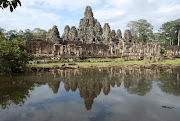
Angkor’s temples are uniquely Khmer
 The Indianization of Southeast Asia was one of the early theories developed in the last century to explain the pervasive presence of Hindu religious sites, sculptures and languages in this region, but the mechanisms of Indianization have always been subject to debate. In the early years of this theory, it almost seemed as if Southeast Asia was a passive recipient for Indian ideas and religion, but today the general consensus is that local rulers used the religious teachings from India as a way to further validate their royal power, leading to many similarities in the ways rulers exerted control over their subjects here (think the traditional Mandala structures of kingdoms), but also to regional distinctiveness. This article shows how the buildings of Angkor reflect that Indian influence, but are also fundamentally Khmer in construction.
Ancient Khmer art and culture have characteristics distinct from India, though some ideas appear to have been borrowed from the tradition, a Canadian archeologist told guests in Washington last week.
Speaking to a small conference at the Freer-Sackler Art Gallery, Mitch Henderickson, director of the Industries of Angkor Project and researcher at the University of Sydney, said he found no evidence after seven years of research indicating that temples or architectural structures like Angkor Wat had been built in India.
“In the past it was interpreted as a direct diffusion of Indians and Indian ideals into Cambodia,” he said. “It has only been, say, in the last 10 years that we have truly understood how Brahman and Buddhist ideals have been brought into Cambodia and whether the actual Brahman or monks were giving the ideas.”
Some architecture and arts were now thought “uniquely Khmer,” he said, “because there are no temples in India that are built in the same way. They don’t follow the idea of building a ‘baray’ with a ‘mebon’ in the center, which is the representation of Mount Meru in the Sea of Milk [epic]. There’s nothing like that in India. So, the idea is that now we realize that Cambodia took the ideas that they wanted and modified them to suit the purpose and goals of the rulers and kings.”
Read more!
The Vietnamese Government Unlawfully Imprisons Members of the Democratic Party of Vietnam (DPV)
SAN JOSE, Calif.--(BUSINESS WIRE)--In the last three weeks, three members of the Democratic Party of Vietnam (DPV) have been arrested for promoting the strengthening of democracy and human rights for the people of Vietnam.
On July 7, 2009, Dr. Nguyen Tien Trung, the leader of the DPV’s Youth for Democracy organization, and Lieutenant Colonel Tran Anh Kim, a key member of the DPV, were imprisoned for urging increased freedoms of the press, religion, travel and improved human rights. On June 13, 2009, Le Cong Dinh, a prominent attorney and member of the DPV, was unlawfully detained for similar reasons.
These actions came shortly after the arrest and imprisonment of Tran Huynh Duy Thuc, CEO of OCI, Le Thang Long, Le Thi Thu and Tran Thi Thu on May 24, 2009. The above individuals had been politically involved in a peaceful manner with the aim of promoting & strengthening democracy and human rights, leading to economic prosperity and stamping out poverty.
According to Dr. Nguyen X. Ngai, the Vice Secretary of the Democratic Party of Vietnam, “The actions of the Vietnam government are unlawful and unacceptable in the world community, and is just the opposite of what the Vietnam government agreed to when it joined the WTO and the United Nations.
“The DPV deplores this action and demands that the government of Vietnam obey the law and release all the above individuals, as well as other political members who are still unlawfully imprisoned in Viet Nam, without any restrictions or conditions attached.”
The Democratic Party of Vietnam has been cooperating with the Vietnamese Communist Party since 1944. At that time, the late Hoang Minh Chinh, former Secretary of the DPV, reformed and reshaped the DPV to place emphasis on non-violent but law-abiding activities with no affiliation to any other political parties. This was announced and reemphasized again on January 9, 2008.
Central Executive Committee
Democratic Party of Vietnam
Read more!
Friday, July 10, 2009
CAMBODIA: "Floating toilets" offer hope for river communities
PHNOM PENH, A toilet now in the development stage could improve the health of thousands living in Cambodia's impoverished river communities.
River communities' homes are typically built on floating platforms and moved seasonally, and rarely have proper latrines. Occupants use the river – the same water they use for drinking, cooking and washing.
The health risks are high: according to Resource Development International–Cambodia [see: http://www.rdic.org/home.htm] , a faith-based NGO, 74 percent of all deaths are due to waterborne diseases, including diarrhoea.
Cambodia has one of the highest infant and under-five mortality rates in the region, at 97 and 141 per 1,000 live births, the UN Children's Fund (UNICEF) reports.
Many rural Cambodians see latrines as filthy, preferring open defecation as being more natural.
"It's not a poverty issue. Some wealthy people in the countryside don't have good sanitation, and some poor families do have it," Chea Samnan, director of rural healthcare for the Ministry of Rural Development, said. "It's an issue of access to the right information."
As part of its "River of Life" profect, Lien Aid [see: http://www.lienaid.org/home] , a Singaporean-based NGO, is working on what it describes as a "floating toilet". The toilets - built on floating platforms and attached to homes – will effectively prevent faeces from entering the water.
"We are still in the preliminary stages of testing out the prototypes," Sahari Ani, Lien Aid's head, told IRIN.
Eco-sanitation design
The device has three components - a superstructure, a urine diversion pan, and a space for a removable bucket or container for waste material.
Central to the design is the pan itself, effectively separating urine from faeces. A separate section of the pan allows for anal washing.
Materials such as dry soil, ash and wood chips can be added to excreta, thereby reducing odour and pathogens, while cutting the volume of waste.
The semi-decomposed faeces is then treated at a secondary storage chamber for complete decomposition and pathogen destruction, while the nutrient-heavy urine could be used as fertilizer after removal.
Commenting on the merits of the pan, Judy Hagan, project manager of a different operator, the Tonle Sap Floating Latrine Design Project, said separating the two waste materials reduced the bulk and mass of the faeces that needed to be treated, making it more viable in a floating environment.
Key challenges
But introducing such concepts in a country like Cambodia will not be easy.
As floating river communities exist only in Cambodia and a handful of other Asian nations, latrines designed specifically for their needs are rare and expensive.
Added to this is the country's lack of qualified engineers, poor sanitation infrastructure and low level of hygiene awareness.
"The more difficult challenge is to help the community build up the human resources necessary to make the venture financially sustainable over the long term," Sahari Ani said.
According to the World Bank, only 16 percent of rural Cambodians have a proper toilet, the lowest level in Southeast Asia.
Moreover, despite the country's abundant freshwater rivers and lakes, 60 percent of its population do not have access to safe water and 85 percent are without adequate sanitation, Lien Aid stated.
Cost effectiveness
While an exact price for the device is still being determined, the NGO hopes costs can be kept to a minimum, with families possibly purchasing building material in bulk to keep down costs.
One-third of Cambodians live on less than US$0.50 a day, according to government statistics, making cost a significant factor.
"We will still try to keep costs down by exploring the use of [local] materials and by encouraging local entrepreneurs to manufacture the required parts," Lien Aid's head explained.
Although fairly new, villagers in Cambodia have already been learning how to construct cheaper latrines for as little as $15 each from the community-led total sanitation programme, started in 2005 by UNICEF and Cambodia's Ministry of Rural Development.
And while not of the floating toilet type, the self-built, cost-effective latrines could provide further impetus to the floating toilet prototype once their use becomes more widespread.
Read more!
Thai prime minister wraps up visit to Vietnam (Roundup)
Hanoi- Thai Prime Minister Abhisit Vejjajiva wrapped up his one-day visit to Vietnam on Friday.
Abhisit met with Vietnamese Prime Minister Nguyen Tan Dung and General Secretary of the Vietnamese Communist Party Nong Duc Manh.
He hailed the Vietnamese government for its economic growth of 3.9 percent in the first half of the year.
'I am very impressed by Vietnam's achievement,' Abhisit told Nong Duc Manh at the meeting.
Abhisit discussed a series of issues with his Vietnamese counterpart including economics, politics, bilateral trade, military matters, rice export collaboration, transport, tourism and the protection of the Mekong River.
The prime ministers agreed that trade between the two countries did not do well in the first five months of the year. Bilateral trade revenue was worth 1.9 billion dollars, down 30 per cent compared with the same period last year.
The two countries also discussed cooperation among members of the Association of South-East Asian Nations (ASEAN) as Vietnam will take its turn to chair the regional bloc in 2010.
This year, Thailand is chairing ASEAN, which also includes Brunei, Cambodia, Indonesia, Laos, Malaysia, Myanmar, the Philippines and Singapore.
Read more!
Cambodian SEA Games team downsized
PHNOM PENH, Cambodia will send a team to the South East Asian Games half the size compared with that to the last version, local media reported Friday.
Thong Khon, president of the National Olympic Committee of Cambodia (NOCC) told the Phnom Penh Post that they will send over 100 athletes and officials to compete in seven events in the upcoming 25th SEA Games in Vientiane, Laos in December. Over 200 were sent to the previous Games in Thailand 2007.
Cambodia's most successful one discipline during those games was petanque, with the team finishing second overall to Thailand, capturing two golds, three silvers and two bronzes then.
Thong Khon said the NOCC trains around 340 athletes in their sports training center, located in the grounds of Olympic Stadium, but called on all public to provide support for their drive for greater Cambodian sporting achievements.
The FOCC claimed they currently organize national championships in tennis, taekwondo, wrestling, boxing, athletics, beach volleyball, petanque (which they call simply petan) and 25 other sports, as well as frequent international friendly matches. (PNA/Xinhua)
Read more!
Vietnam to discuss Mekong River with Thailand
Hanoi - Vietnamese Prime Minister Nguyen Tan Dung is to meet Friday with Thai Prime Minister Abhisit Vejajiva and plans to discuss the exploitation and use as well as the protection of the Mekong River, state media reported. The talks in Hanoi are also to focus on coping with the global economic crisis.
Vietnam is facing threats to its ecology, food security and the livelihoods of its people as upstream countries like China, Laos, Thailand and Cambodia build major dams on the Mekong.
Laos, Thailand and Cambodia are planning 11 large hydropower dams, which Vietnam said would limit the deposit of silt, acidify agricultural land and decimatefish stocks, affecting hundreds of thousands of fishermen and their households.
The Mekong flows through China, Myanmar, Thailand, Laos and Cambodia before ending its journey to the sea in Vietnam.
Read more!
Thursday, July 09, 2009
Cambodia to receive $3.45m to diversify
The Asian Development Bank (ADB) announced Wednesday that Cambodia will receive a US$3.45 million technical assistance grant aimed at boosting the skills and incomes of people living in and around the Tonle Sap basin.
The money is to be used to help low-income groups in the area to diversify their vocational skills with the help of training programmes, demonstrations on modern farming techniques and Internet-based communication facilities, ADB said.
"The technical assistance will helpdiversify and improve the incomes of small land holders, marginal farmers and poor households in the Tonle Sap basin by increasing their access to good agricultural practices, technologies and information," Giap Minh Bui, rural development economist in ADB's Southeast Asia Department, said in a statement released Wednesday.
The Finnish government is providing the lion's share of the money - $2.7 million - with the Republic of Korea e-Asia and Knowledge Partnership Fund offering $500,000. The ADB, which will manage the funds, will give a $250,000 grant and the government will make up the remaining $200,000, ADB said.
The money will be used in four provinces around the lake - Banteay Meanchey, Kampong Cham, Kampong Thom and Siem Reap.
ADB said that the project will include a pilot communication project using Internet linked e-kiosks to provide up-to-date information on agricultural practices to be passed on to locals.
Read more!
Cambodia's finest secure chance to study at European universities in new program
 Cambodian students from a variety of backgrounds are to leave to study at universities in eight European countries in August this year.
The 34 students are the first to be offered the chance to study abroad through the European Union's Erasmus Mundus Mobility with Asia programme (EMMA).
According to Phal Des, EMMA coordinator in Asia and IT dean at the Royal University of Phnom Penh (RUPP), the programme aims to strengthen and bridge the knowledge gap between Europe and Asia.
"Europe is full of old wise people; Cambodia full of young but inexperienced people, so they need to go and learn from them," Phal Des said.
"This is part of globalisation - we want to learn from the developed countries a lot.
"These students will come back and become human resources for our country."
Phal Des added that in Europe, students who qualified for the EMMA program were admired and sought after by many employers.
Looking to the future
Chanthy Somela, 22, is a junior of agriculture at the Royal University of Agriculture and in his third year of Information Technology at RUPP. He finished his bachelor's degree in forestry in 2008.
He said he found out about the program through friends, Internet and brochures, and felt proud to be one of the Cambodians selected for the program.
"I'm very happy and feel very proud of myself,"Chanthy Somela said.
"I will try more to get my master's degree in forestry in Europe in a year.
"I am sure I will encounter new experience, thinking, new concepts, and a new environment.
"When I come back, I will help develop my country in the sector of forestry."
Chan Boramey, 20, will go abroad to study journalism and communication in Romania for one year.
She said she was leaving with a big hope in her heart.
"This is a great chance for Cambodian students to get exposed to a civilised culture, and it will open again for any student who is interested," she said.
"I am going to make the best out of every moment I have being there."
Addressing disadvantage
The other international EU scholarship programme was highly prestigious, said Phal Des, and was aimed specifically at Asian students from a disadvantaged but academic background.
The first phase of the program was finished early this year when 112 students from Cambodia, Bangladesh, India, Pakistan and the Philippines were accepted.
The number of students from Cambodia made up almost one-third of the students from the five countries in the programme.
The students will study in Romania, Italy, Spain, Germany, France, Turkey and the Netherlands.
"I am very proud that a lot of Cambodian students have been selected, and this precious opportunity will keep their lives well-equipped," said Phal Des.
EMMA offers scholarships on undergraduate studies, graduate studies of master's and doctorate degrees, post-doctorate and research, Phal Des added.
The second phase will happen again in October this year in five different countries such as Cambodia, Vietnam, Laos, Mongolia and Myanmar.
EMMA's contact in Cambodia is Phal Des at RUPP.
Read more!
Retired king returns to Cambodia for two-month visit
 Phnom Penh - Cambodia's retired king Norodom Sihanouk returned to his homeland for a two-month visit Thursday after spending almost a year in Beijing receiving treatment for cancer. The 86-year-old king-father and Queen-Mother Monique landed at Siem Reap International Airport about 3 pm and immediately traveled to a royal residence in the northern town.
Sihanouk last month announced he would return to Cambodia for two months after being successfully treated in Beijing for B-cell lymphoma, which attacks blood cells crucial to the body's immune system.
It was his third bout of cancer since 1993.
But Sihanouk said at the time he would have to return to Beijing after two months to continue his medical treatment.
Sihanouk abdicated and was replaced by his son Norodom Sihamoni in 2004, but he remains an influential figure in Cambodian politics.
He was appointed king by Cambodia's French rulers in 1941, but in 1955 Sihanouk abandoned the throne to become prime minister.
After being overthrown in a military coup in 1970, Sihanouk sided with the Maoist Khmer Rouge, who came to power in 1975 and oversaw the deaths of up to 2 million people until Vietnam invaded in 1979.
He was forced out of office again and remained virtually imprisoned in the Royal Palace in Phnom Penh during most of the Khmer Rouge's rule.
Sihanouk returned to the throne in 1993, but frequently traveled to Beijing for treatment for a range of illnesses.
Read more!
KRouge victim says brother forced to kill father
by Patrick Falby Patrick Falby
PHNOM PENH (AFP) – A woman who said she survived the Khmer Rouge's main torture centre told Cambodia's UN-backed war crimes court Thursday that one of her brothers was forced to kill their father at the prison.
Nam Mon, 48, was testifying at the trial of prison chief Duch, who is accused of overseeing the torture and execution of around 15,000 people who passed through Tuol Sleng prison during the regime's terrifying 1975-1979 rule.
Nam Mon told the court her two elder brothers were guards at the notorious jail, while she initially lived and worked there as a medic before being interrogated herself.
"My first brother, Nuon, killed my father and later on he was executed," Nam Mon said. "They accused him of hesitating to kill my father."
Recognised as a civil claimant in the case against Duch, Nam Mon was revealing her story in public for the first time, said her lawyer Silke Studzinsky.
However, judges have cast doubt on the authenticity of several civil claimants who have this week testified that they were at Tuol Sleng, castigating their lawyers for not being sufficiently prepared.
Nam Mon described to the court how her father was brought into the prison blindfolded, before being stripped, tortured and killed, and said the rest of her family was later rounded up and executed.
"My mother also died at Tuol Sleng with my younger brother but they died at different times," she said, adding she was then interrogated there for three months in 1978.
"During my interrogations I was not beaten with a stick, but they tightened the shackles on my ankles," Nam Mon told the court.
She then described being transferred to the nearby S-24 "re-education centre" where she was forced to dig graves for the corpses of children, adding she was freed by invading Vietnamese troops after being sent to another jail.
She told the court that she had not been able to find her prison mugshot, but had discovered all the photos of her family members who were executed at Tuol Sleng.
The 66-year-old Duch, real name Kaing Guek Eav, begged for forgiveness from victims near the start of his trial for war crimes and crimes against humanity after accepting responsibility for his role overseeing the jail.
But he has consistently rejected claims by prosecutors that he held a central leadership role in the Khmer Rouge, and says he never personally executed anyone.
Led by Pol Pot, who died in 1998, the Khmer Rouge emptied Cambodia's cities in a bid to forge a communist utopia. Up to two million people were executed or died of starvation, overwork or torture.
Four other former Khmer Rouge leaders are currently in detention and are expected to face trial next year.
Read more!
Wednesday, July 08, 2009
Paris accords failed to save Cambodia
By Gaffar Peang-Meth
Guest Commentary
Washington, DC, United States, — In 1991 there were high hopes for Cambodia’s future. The brutal regime of Pol Pot had been knocked from power; guerilla warfare between the four Cambodian factions was being transformed from a shooting war to a contest at the ballot box; and the Final Act of the Paris Peace Accords promised Cambodia a liberal democracy whose citizens would at long last enjoy fundamental rights and freedoms.
Some interpreters of historical events dub what followed in Cambodia after the Peace Accords as a United Nations “success story.” It could have been a success story. The words and the vision in the settlement framework pointed to that direction.
The Final Act of the Paris Accords sought to “restore peace” to Cambodia, ravaged by “tragic conflict and continuing bloodshed,” through “an internationally guaranteed comprehensive settlement.” It was adopted on Oct. 23, 1991 by 18 participating governments – Australia, Brunei, Cambodia, Canada, China, France, India, Indonesia, Japan, Laos, Malaysia, the Philippines, Singapore, Thailand, Soviet Union, United Kingdom, United States, and Vietnam – where officials of Zimbabwe and Yugoslavia represented the non-aligned movement and the U.N. Secretary-General and his special representative were participants.
Signatory states declared to “commit themselves to promote and encourage respect for and observance of human rights and fundamental freedoms in Cambodia, as embodied in the relevant international instruments to which they are party.”
Among other things, they agreed to maintain, preserve and defend Cambodia’s “sovereignty, independence, territorial integrity and inviolability, neutrality and national unity”; restore and maintain Cambodia’s peace; promote national reconciliation; “ensure the exercise of the right to self-determination of the Cambodian people” through free and fair elections; and the “non-return to the policies and practices of the past.”
The Accords stipulated Cambodia’s Constitution as “the supreme law of the land”; promised adherence to fundamental rights of “life, personal liberty, security, freedom of movement, freedom of religion, assembly and association . . . due process and equality before the law, protection from arbitrary deprivation of property or deprivation of private property without just compensation . . . consistent with the provisions of the Universal Declaration of Human Rights and other relevant international instruments.”
Annex 5 states, “Cambodia will follow a system of liberal democracy,” with an “independent judiciary . . . empowered to enforce the rights provided under the Constitution.”
Yet, from the outset of the Accords, the necessary “neutral political environment conducive to free and fair general elections” was never ensured. “The strict neutrality” of “administrative agencies, bodies and offices” responsible for “foreign affairs, national defense, finance, public security and information,” which the Accords placed under the direct control of the United Nations Transitional Authority in Cambodia, to “exercise (its authority) as necessary to ensure strict neutrality,” was never consummated. Authority was not assumed by UNTAC, but remained in the hands of the Hun Sen government.
Some people do things simply because they can, with no fear of consequences. When Prince Ranariddh of the royalist FUNCINPEC – the French acronym for the National United Front for an Independent, Neutral, Peaceful, and Cooperative Cambodia – won the elections in 1993 as the people expressed their right of self-determination, Cambodian People’s Party leader Hun Sen, who had ruled Cambodia under Vietnam’s protection since January 1979, was allowed to elbow himself into a co-premiership with Ranariddh. The peoples’ ballots were rendered irrelevant, with the blessing of the U.N. Transitional Authority.
Hun Sen and the CPP immediately began preparations for the 1998 elections. In 1997, Co-Premier Hun Sen’s forces fought Co-Premier Ranariddh’s royalist troops in the streets of Phnom Penh in a coup d’etat that killed many and sent Ranariddh fleeing to neighboring Thailand.
The world community realized that unless Ranariddh returned to participate in the upcoming elections, the Paris Peace Accords would be meaningless. It took coordinated high-level international pressures and threats for Ranariddh to agree to return to Cambodia. But Hun Sen and the CPP were already in firm control of the country. Recently, from eventual exile in Malaysia, Ranariddh was compelled to foreswear political activity before Hun Sen would allow him to return to his homeland.
In spite of the Paris Accords’ stipulation that “All persons in Cambodia . . . shall enjoy the rights and freedoms embodied in the Universal Declaration of Human Rights and other relevant international human rights instruments,” in contemporary Cambodia, Hun Sen runs the country with an iron fist. He exercises control over the three branches of government.
With opposition much in disarray, an alternative to his rule is lacking. With the international community desirous of political stability, human rights are neglected and donor countries continue to make up half of the national budget that sustains Hun Sen’s regime.
By controlling the purse strings, donor countries assert they have some leverage to demand good governance, even from a dictator. But Hun Sen has made a mockery of both the domestic political and judicial systems – lifting legislators’ parliamentary immunity, filing frivolous lawsuits against his opponents – and the international court that has been seated to try cases against alleged perpetrators of atrocities under the Khmer Rouge regime – of which Hun Sen was a part.
So blatant is his disregard for international norms that he has warned foreigners that he has other “laws” to deal with “foreigners” who play with Cambodian politics. Good governance is entirely absent.
Today’s Cambodia under Hun Sen and the CPP has more roads, bridges, modern buildings, and fancy villas. It is more appealing than the Cambodia of Pol Pot and his Khmer Rouge whose regime of murder and mayhem devastated the country from 1975-79. But under Hun Sen, the rich get richer, nearly half of the population lives below poverty level, many live off the city’s refuse, and high officials are accused of siphoning several hundred million dollars each year for personal enrichment.
Generous monetary aid to Hun Sen and the CPP helps strengthen authoritarian rule, which is legitimized by elections in an environment of intimidation and fear. The level of deadly attacks may have declined, but how many fewer threats, how much less intimidation, and how many fewer deaths make elections “more free and fair”? Are Cambodians “more free” because they are given ballots to put in election boxes under the watchful eyes of party cadres and agents?
Does a government that sells natural resources for private gain, evicts the weak and the underprivileged from their land in order to permit development by the wealthy and the powerful, sues its citizens and lifts the immunity of lawmakers whose words and opinions aren’t in agreement with those of the party in power, represent progress toward a more democratic future?
Read more!
Library ship books fifth visit
By: ACHARA ASHAYAGACHAT
Newspaper section: NewsThe education ship Doulos returns to Thailand this month, marking its fifth visit since 1987. The 95-year-old ship will dock at Bangkok Port, Berth 1, at Klong Toey from July 30 to Aug 23.
HRH Princess Maha Chakri Sirindhorn has confirmed her visit to the ''floating bookshop'' next month. The princess also went aboard during the ship's first visit to Thailand 22 years ago.
The Doulos also visited Thailand in 1990, 2001 and 2006. The last visit saw as many as 60,000 people tour the ship and buy books collected from around the world.
The ship, with its slogan ''Bringing Knowledge, Help and Hope'', is run by GBA Ships (previously known as Good Books for All), a private, non-profit, charitable organisation registered in Germany in 1977.
It has stopped off in Hong Kong and is now in Sihanoukville, Cambodia. After the Bangkok visit, it will head on to Malaysia to complete its Asian tour.
Read more!
AFC Futsal draw to be conducted in Malaysia
THE draw for the West Asia qualifying tournament for next year's Asian Football Confederation (AFC) Futsal Championship will be held on July 22 at the AFC House in Kuala Lumpur, it was announced yesterday.
Bahrain are one of seven teams set to compete in the tournament, which will be held in Doha in October. It will mark the kingdom's international debut in futsal.
The competition feature four ranked nations in the sport and three unranked teams - one of them being the Bahrainis. Lebanon are the favourites. They are currently classified as the top team in the West Asian region and eighth overall in the AFC.
Iraq (14th), Kuwait (16th) and hosts Qatar (19th) are the other ranked teams. Jordan and Saudi Arabia join Bahrain as those without ranking.
Qualification
Apart from the West Asian event, qualifying tournaments will also be taking place in the Asean and East Asian regions.
The Asean teams, which will be divided into two groups, are Australia (ranked fifth), Malaysia (10th), Indonesia (11th), Vietnam (18th), Brunei (21st), Cambodia (NA), Myanmar (NA) and Philippines (NA).
The East Asian squads are Japan (third), China (fourth), Korea Republic (13th), Chinese Taipei (15th), Macau (17th), Hong Kong (NA) and Guam (NA).
The top three teams from each of the four qualification groups will advance to the AFC Futsal Championship, along with four nations who have already pre-qualified.
The squads that are already in are Iran, Thailand, Japan, and the host Uzbekistan. Iran, Thailand and Japan are in based on their top three rankings in the 2008 tournament, while Uzbekistan qualify automatically as hosts.
Bahrain's national futsal team, coached by Brazilian Gustavo Zloccowick, are scheduled to begin their daily training programme soon. Zloccowick has named a preliminary training pool of 35 players.
Read more!
Tuesday, July 07, 2009
GLP Worldwide Expedition Offers New AMA Waterways Vietnam, Cambodia & Riches of the Mekong Tour Program
 Toronto, July, 2009 - Cruise along the Mekong River, one of the world’s longest rivers as you pass through wetlands to famous cities like Ho Chi Minh City (formerly Saigon) - temples, palaces, fishing villages and significant historic sites fill the days of your journey into this mystical land. AMA Waterways, represented in Canada by GLP Worldwide Expedition Travel and Tours, has launched a spectacular new land and cruise tour program called “Vietnam, Cambodia and the Riches of the Mekong.” Explore the fascinating region of South East Asia in this new 16-day itinerary.
“The South East Asia region has been gaining in popularity the past couple of years and we are thrilled to offer this exotic journey to Canadian travellers looking to explore this region but seeking the comfort and exceptionally high standards of AMA Waterways cruise ships and tour personnel,” said Patrick Tsung, president of GLP Worldwide Expedition Travel & Tours.
This exclusive 15-day itinerary is priced from as low as $5,560 per person CAD for the April 2010 departure - other departures available starting in September 2009 - prices vary).
The price includes air from Toronto and components listed in the Tour Highlights below but exclude taxes, visas and fuel surcharges. There is also an optional 8-day Central Vietnam pre-extension and an optional 4-day Hong Kong post-extension.
Tour Highlights:
• 2 nights in Vietnam’s bustling capital of Hanoi, famous for its graceful colonial architecture, verdant
parks, tranquil lakes and ancient temples;
• An overnight cruise onboard a luxurious traditional Junk in Vietnam’s Ha Long Bay, a UNESCO
World Heritage Site renowned for its spectacular limestone cliffs;
• 3 nights in Siem Reap,Cambodia, gateway to the Angkor Archeological Park, a UNESCO World
Heritage Site and home to the legendary Angkor Wat;
• An unforgettable 7-night cruise on the Mekong River aboard the luxurious, new 92-passenger MS La
Marguerite, the most deluxe vessel on the Mekong;
• An overnight in historic Ho Chi Minh City (Saigon), Vietnam.
AMA Waterways has redefined European river cruising since its founding in 2002. In 2009, two brand-new 148-passenger vessels, MS Amalyra and MS Amadolce, joined the luxurious
AMA Waterways fleet in Europe, which consists of the MS Amacello and MS Amadante (2008), MS Amalegro (2007) and MS Amadagio (2006). In 2010 AMA Waterways will welcome MS Amabella and continue to offer popular itineraries on the historic Danube, Main, Rhine and Mosel rivers, as well as the Douro River in Portugal, the
Rhône in France and the Volga-Baltic waterways in Russia.
Agents can find the sailing schedule, pricing, detailed itineraries and full terms and conditions in the 2009 Waterways of Europe brochure. To obtain a copy of the Vietnam, Cambodia and the Riches of the Mekong brochure, please contact GLP Worldwide Expedition Travel and Tours. You can also visit the website www.europeanwaterways.ca for complete details on the various cruises and pricing or email: info@europeanwaterways.ca.
GLP Worldwide Expedition Travel and Tours is based in Toronto, Ontario and acts as the Canadian representative for various niche cruise operators such as AMA Waterways, Go Barging, Hurtigruten, Fred. Olsen Cruises and Lüftner Cruises. Information on GLP Worldwide Expedition Travel and Tours can be accessed at www.glpworldwide.com or by calling (866) 760-1987.
Read more!
Cambodia marks anniversary of temple's world heritage listing
 PHNOM PENH (AFP) - Cambodians on Tuesday noisily celebrated the first anniversary of the UN's world heritage listing of an ancient temple which has stoked nationalist tensions with neighbouring Thailand.
Posters of the 11th century Preah Vihear temple were plastered in pagodas, schools and prominent locations around the capital Phnom Penh while celebrators screamed, "Long Live Preah Vihear temple as a World Heritage Site!"
"As Cambodian people, we are very proud of Preah Vihear temple. We must celebrate this day, it is historic for us," Phnom Penh governor Kep Chuktema said after a traditional dance ceremony at a pagoda in front of 1,000 people.
PHNOM PENH (AFP) - Cambodians on Tuesday noisily celebrated the first anniversary of the UN's world heritage listing of an ancient temple which has stoked nationalist tensions with neighbouring Thailand.
Posters of the 11th century Preah Vihear temple were plastered in pagodas, schools and prominent locations around the capital Phnom Penh while celebrators screamed, "Long Live Preah Vihear temple as a World Heritage Site!"
"As Cambodian people, we are very proud of Preah Vihear temple. We must celebrate this day, it is historic for us," Phnom Penh governor Kep Chuktema said after a traditional dance ceremony at a pagoda in front of 1,000 people.
Waving colourful Cambodian flags, Buddhist monks, nuns, students and teachers gathered at pagodas and schools nationwide and promptly beat drums and rang bells at 11:00 am (0400 GMT) to herald the listing, officials said.
"I am very happy and proud of Preah Vihear temple. The temple belongs to Cambodia. Thailand has no right to claim it," said student Hang Dalune as at another event as hundreds of people sang and danced to nationalist songs, waving Cambodian flags.
Soldiers, villagers, monks and officials at Preah Vihear also celebrated the listing despite a standoff nearby between Cambodian and Thai troops, Cambodian commanders said.
The neighbouring countries have been at loggerheads over the land around the Preah Vihear temple for decades, but tensions spilled over into violence last July when the temple was granted UN World Heritage status.
Although the World Court ruled in 1962 that it belonged to Cambodia, the most accessible entrance to the ancient Khmer temple with its crumbling stone staircases and elegant carvings is from northeastern Thailand.
Thousands of people were also expected to gather in Phnom Penh's Olympic Stadium Tuesday evening for an anniversary ceremony complete with a fireworks display, official speeches and patriotic songs.
Relations between Thailand and Cambodia worsened last month when Bangkok announced it would ask UNESCO to reconsider its decision to list Preah Vihear as a world heritage site, as the surrounding land is still in dispute.
Read more!
Robert McNamara, architect of Vietnam War whose regrets made him opponent of Iraq War, dies at 93
 Photo: President John F. Kennedy sits in his favorite rocking chair in the Oval Office during a meeting with Secretary of Defense Robert McNamara, center, and Vice President Lyndon B. Johnson on March 16, 1961. Credit: Associated Press
As The Times noted in its obituary, McNamara, who stayed on as Pentagon chief into the Johnson administration, oversaw the massive buildup of U.S. forces in Vietnam between 1964 and 1968, earning him the sobriquet as the war's architect.
But perhaps the greatest legacy of McNamara's tenure -- one that could echo in the post-mortems over President George W. Bush's war in Iraq -- is that in later years he disavowed his decisions, particularly his conviction that if Vietnam fell to communism other Southeast Asia nations would also be vulnerable. "We were wrong, terribly wrong," he said. "We owe it to future generations to explain why."
It isn't often you hear a major public official acknowledge mistakes of his own making, but two decades after the last helicopter lifted off the roof of the U.S. Embassy in Saigon with loyalists rushing to get aboard and communism, McNamara began to speak out.
He gave a series of interviews at UC Berkeley in which he confessed he no longer believed in the domino theory. "It was certainly the conventional wisdom among the foreign policy establishment," he said. "I think we were wrong, and certainly misjudged it."
He wrote a memoir, "In Retrospect: The Tragedy and Lessons of Vietnam," again questioning the "domino theory," an underpinning of U.S. policy that held that if South Vietnam fell to Communist control, other countries in Southeast Asia would too. "My aim is neither to justify errors nor to assign blame," he wrote in the book, "but to identify the mistakes we made."
Later, interviewed by filmmaker Errol Morris for a documentary called "Fog of War," McNamara said: We all make mistakes. I don't know any military commander, who is honest, who would say he has not made a mistake. There's a wonderful phrase: "The fog of war." What "the fog of war" means is: War is so complex it's beyond the ability of the human mind to comprehend all the variables. Our judgment, our understanding, are not adequate.
The experience of being wrong on a epic scale -- more than 58,000 Americans died in Vietnam, along with hundreds of thousands in Vietnam and Cambodia -- made McNamara an opponent of the Iraq War. Concerned that the Bush administration officials had failed to heed the lessons of Vietnam when they went into Iraq. he told a reporter for Canada's Globe and Mail in 2004, "We're misusing our influence. It's just wrong what we're doing. It's morally wrong, it's politically wrong, it's economically wrong."
Rest in peace.
-- Johanna Neuman
Evaluating McNamara
 He was always Bomber Bob, Bob McNamara - Robert Strange McNamara - the man who, perhaps more than any other, was responsible for the killing of millions in Vietnam and Cambodia more than four decades ago.
Of course, much later in life, well after those insane years of the Indochina conflict in which the United States participated without any sense of history or sensibility of local cultures, McNamara would publicly express some regret over his role as Defence Secretary in the administrations of Presidents John Fitzgerald Kennedy and Lyndon Baines Johnson from 1961 to 1968. Regret, but never remorse.
McNamara died on July 6 at the age of 93. By conventional criteria, it was a long life of accomplishment. A Californian by birth, he went on to obtain an MBA from the Harvard School of Business.
Hired by the Ford Motor Company, he was one of the 10 so-called “whiz kids,” smart young executives who accelerated the automobile manufacturer’s fortunes. McNamara was widely considered to have invented a form of system analysis in business, something that he eventually applied to government - something that, to this day, is known as policy analysis in the corridors of power, a method through which the obtaining and allocation of resources for decision-making is quantified and streamlined.
He took that system with him when President Johnson named him President of the World Bank in 1968; there had been rumours that McNamara had had differences with Pentagon military leaders and that, in fact, he was leaning toward ending the bombing of Indochina, while U.S. Secretary of State Dean Rusk, already a hawk, was becoming increasingly hawkish.
Moving from the Pentagon to the World Bank was as if the villainous Darth Vader of George Lucas’ Star Wars suddenly had a metamorphosis - McNamara became the benign Luke Skywalker.
He travelled around the globe, proclaiming his concern for the dispossessed and the disease-ridden. He committed vast sums of development money to the very nations whose societal fabrics he had been earlier responsible for shredding.
He worked vigorously to draw attention to the endemic problem of river blindness, especially in Sub-Saharan countries in Africa. He took the late Mahbub ul Haq, the Pakistani economist, as his developmental guru, and initiated the publication of the much-acclaimed annual World Development Reports. He transformed the World Bank from a bloated behemoth into a bureaucracy with a heart. He was always running, always peripatetic.
Perhaps McNamara did this, I think, because he seemed to be always trying to expunge his war days from his conscience. During an interview that I did with him, well after he had retired from the World Bank, McNamara bristled when I asked him about Vietnam. “That was an unfortunate war, and it’s best relegated to history,” he said to me. I don’t think there was a trace of remorse in his voice; he spoke as he always did - firmly, crisply, and to the point.
When Susan Tolchin, a Professor of political science at George Mason University near Washington, reviewed Deborah Shapley’s extraordinary book, Promise and Power: The Life and Times of Robert McNamara, for a newspaper that I published and edited for a dozen years, The Earth Times, I was summoned by one of McNamara’s best friends, the Canadian tycoon Maurice F. Strong.
Strong had been my friend, too, and he was a noted environmentalist who had been a moral and intellectual supporter of my newspaper.
He tore into me for running Tolchin’s critical review in which she had recalled McNamara’s heavy-handed conduct during the Indochina years and his subsequent “conversion on the Road from Damascus - like St. Paul” during his tenure at the World Bank. “Bob is a good man,” Maurice Strong told me, his voice quivering. “Your paper shouldn’t be carrying such criticism of him.” Implicit in what Strong said, of course, was that some sort of apology was due to McNamara.
Neither Susan Tolchin nor I ever issued such an apology. What for? Yes, Bob McNamara had served admirably well as the World Bank’s President, and later as a board member of the Washington Post Company and the Washington-based liberal think tank, the Brookings Institution. Yes, he made contributions to philanthropies. And yes, he came out against George W. Bush’s military adventure in Iraq.
But one’s past is not cleansed so readily. I know that a 93-year-old man has passed away peacefully in his sleep, and I know that it is traditional to view such a man’s life through the prism of kindness.
I’m sorry, but I can’t do that. Too many of my friends died in Indochina. Too many of them came home without limbs. Their lives never got to be celebrated in the manner in which Robert McNamara was feted in his later years. That’s why, for me at least, he will always be Bomber Bob. (Courtesy: The Hindu)
The writer is a veteran international journalist and author who has worked for The New York Times, Newsweek International, and Forbes.
Read more!
Thailand’s foreign minister reports to police to hear charges over 2008 Bangkok airport siege

BANGKOK — Thailand’s foreign minister reported to police Monday to hear charges related to his involvement in mass demonstrations that climaxed with the seizure of Bangkok’s airports last year.
Foreign Minister Kasit Piromya and 35 other leaders of the “yellow shirt” protest movement face criminal charges including terrorism, illegal assembly, attempts to stir unrest, and breaches of aviation law for the eight-day siege of Bangkok’s two airports in November and December.
They were summoned to report to police on July 16 to hear the charges, said Police Lt. Gen. Worapong Chiewpreecha. But Kasit reported on Monday because he will be on official duty abroad on the scheduled date, Worapong said.
Kasit declined to comment on the allegations.
The charges brought a controversy surrounding Kasit’s appointment as foreign minister to the forefront as opposition members in Thailand’s Parliament called for his resignation.
“The charges are very serious. How could he represent our country as a foreign minister? He has no credibility left,” said Prompong Nopparit, spokesman of the opposition Phuea Thai Party.
Kasit spoke at several rallies by the protesters, who sought to topple the previous government allied with former Prime Minister Thaksin Shinawatra. They accused Thaksin, who was toppled in a military coup in 2006, of massive corruption and abuse of power.
The protesters occupied the prime minister’s office compound for three months and shut down Bangkok’s airports. Kasit later hailed the blockade — which stranded more than 250,000 travelers — as an “innovation in public protests.”
On Sunday, Prime Minister Abhisit Vejjajiva said Kasit will remain in office while he fights the charges.
“There is no reason for him to resign at this point. He was only summoned to hear charges and at this stage, he is only a suspect,” Thepthai Senpong, Abhisit’s spokesman, said Monday.
Jatuporn Phrompan, a member of Parliament from Phuea Thai Party, said the lack of immediate response from the government “sends a signal that they do not take these charges against the yellow shirts seriously.”
Thailand was destabilized by months of protests by both supporters and opponents of Thaksin.
Abhisit’s government took control in December after a court ruled the previous pro-Thaksin ruling party was guilty of election fraud. The court decision prompted protesters to abandon the airports siege.
Abhisit’s six-month-old government has since faced street protests by Thaksin’s supporters, known as the “red shirts,” this year. Rioting in April left two dead and more than 120 injured.
Monday, July 06, 2009
Cambodian party leaders meet with Chinese official
Leaders of Cambodian People's Party (CPP) and Funcinpec Party on Monday met separately with the visiting Communist Party of China (CPC) delegation headed by Liu Qi, member of the Political Bureau of the CPC Central Committee and secretary of the Beijing Municipal Committee of the CPC.
They exchanged views on Sino-Cambodian relations, the relations between two countries' ruling parties, and on other issues of common concern.
Liu spoke highly of the great achievements made by the Royal Government of Cambodia in various fields, and thanked Cambodia for its commitment to strengthen the friendly cooperation of the two countries and stick to one-China policy. He also praised Cambodia for their deepening coordination and communication with China on the international affairs.
Liu emphasized that the Chinese government attaches great important to its traditional relations with Cambodia, and will work with Cambodia to further promote the long-term and sound growth of bilateral comprehensive and cooperative partnership.
During the meeting, CPP's Honorary President Heng Samrim, Vice President Hun Sen, also the Prime Miniser of the Royal Government of Cambodia, and Funcinpec Party Chairman Ke Puth Rasmey expressed their heartfelt thanks to CPC, Chinese government and Chinese people for China's long-term great assistance and support for Cambodia's cause of independence, peace, reconstruction and development.
All the Cambodian party leaders reiterated their stance to stick to one-China policy, to further strengthen the traditional friendship with China as well as to deepen the development and cooperation on various areas.
Liu, who arrived Cambodia on Saturday afternoon for his four-day visit, makes the goodwill visit at the invitation of Cambodian People's Party (CPP) and the Funcinpec Party of Cambodia.
During his stay in Cambodia, Liu also paid a courtesy call on Cambodian King Norodom Sihamoni. Cambodia is the first leg of Liu's four-nation visit which will take him to the Philippines, Malaysia and Indonesia.
Source: Xinhua
Read more!
Indonesia attends money laundering meeting in Brisbane
Brisbane, (ANTARA) - An Indonesian delegation headed by Chairman of the Financial Transactions Reporting and Analysis (PPATK) Yunus Husein along with delegations from 38 countries and other territories on Monday (Jul 6) started the 12th annual meeting of the Asia Pacific Group for Monday Laundering (APG-ML) in Brisbane, Australia.
The meeting held at Plaza Foyer, the Brisbane Convention and Exhibition Center (BCEC) until July 10 included technical seminars and evaluation preparatory meetings.
PPATK chairman Yunus Husein said the Indonesian delegation consisted of 14 members from relevant elements and interests, like PPATK, Ministry of Law and Human Rights, Bank Indonesia, Attorney General`s Office, Foreign Ministry, and the police.
Besides Yunus, the other delegates were Ferti Srikandi S., Syahrial Ramadhan, Djoko Kurnijanto, Ambar Widiyaningsih (PPATK), Suhari, M.Rofiq of the Corruption Eradication Commission (KPK), Betty J Parinusa of Bank Indonesia (BI), Feri Wibisono (KPK), and Garda Paripurna (doctorate law student of Wollongong University).
Yunus Husein said that he will submit a verbal report on the development of APG 2008 explaining various steps the Indonesian government had taken in combating money laundering.
The meeting in Brisbane also officially accepted membership of Papua New Guinea (PNG) and studied the methods and trends of money laundering and the funding of terrorist acts.
APG-ML is an autonomous international organization set up in Bangkok, Thailand in 1997. With 39 member countries, the efforts of APG-ML had the support of some other international organizations, like the International Monetary Fund, the Financial Action Task Force (FATF), the World Bank, and the Asian Development Bank.
APG members and observers have a commitment to the application of international standards to combating money laundering and the funding of terrorism.
Besides Indonesia and Australia, the other APG-ML member countries and territories are Afghanistan, Bangladesh, Brunei Darussalam, Cambodia, Canada, Taiwan, Cooks Islands, the Fijis, Hong-Kong (China), India, Japan, Korea, Laos, Macau (China), Malaysia, and the Maldives, Marshall Islands, Mongolia, in addition to Myanmar, Nauru, Nepal, New Zealand, Niue, Pakistan, Palau, PNG, the Philippines, Samoa, Singapore, Solomons, Sri Lanka, Thailand, Timor Leste, Tonga, United States, Vanuatu, and Viet Nam.
Read more!
U.S. to provide assistance to reform Cambodia public financial system
PHNOM PENH, The United States government announced Monday its intention to provide technical assistance to the Royal Government of Cambodia to support the country's public management reform program and efforts to improve fiscal controls and promote greater transparency in financial transactions.
The announcement was made after a meeting between Deputy Prime Minister and Minister for Economy and Finance Keat Chhon and U.S. Ambassador Carol A. Rodley, and Michael Ruffner from the Treasury Department's Office of Technical Assistance (OTA).
"The assistance is designed to help Cambodia strengthen the enforcement of laws and controls as they relate to budgeting and financial accountability, banking and financial services, the insurance and financial industries, and tax administration and collection," it said in the statement.
It added that the financial management and accountability assistance programs were expected to begin within the next few months.
Read more!
German troops honored for bravery, 1st since WWII

German Chancellor Angela Merkel, center, and Defense Minister Franz Josef Jung, right, present Bundeswehr Master Sgt. Alexander Dietzen, left, with the Cross of Honor for Bravery in Berlin, Germany, Monday, July 6, 2009. Chancellor Angela Merkel was presenting four German soldiers with the new decoration for bravery on Monday, the nation's first such honor since World War II.
By PATRICK McGROARTY, Associated Press Writer Patrick Mcgroarty
BERLIN – Chancellor Angela Merkel presented medals for bravery on Monday, marking the first time since World War II that the nation has bestowed such an honor, long tainted by the Nazi military effort.
Merkel honored four soldiers who rushed to aid injured soldiers and civilians after a suicide bombing in Afghanistan, saying that the Cross of Honor for Bravery is an "important innovation" in Germany's military tradition and that they were deserving of the award.
It is another sign of Germany's emergence from its post-WWII diplomatic and military shell since the country's reunification in 1990, as it has taken on more responsibility in conflicts around the world.
"An army in deployment needs such an honor," Merkel said in the ceremony at the chancellory. "Our soldiers need to receive more recognition for their service."
The soldiers — Staff Sgt. Markus Geist, 28, and Master Sgts. Jan Berges, 29, Alexander Dietzen, 33, and Henry Lukacz 28 — were half a kilometer (mile) from a German ambulance struck by a suicide bomber on Oct. 20, 2008 in Afghanistan's northern Kunduz province. The blast killed two German soldiers and five Afghan children. Two other soldiers and a child were injured.
Merkel said the soldiers raced to the scene of the explosion, risking their lives to save the injured as the vehicle burned and the munitions it was carrying exploded.
After her brief remarks, Merkel pinned the medal on each soldiers chest. It features a golden Maltese cross with a German eagle in the center, on a ribbon in the colors of the German flag — black, red and gold — and decorated with double oak leaves.
The military has had no medal for bravery since it stopped awarding the Iron Cross, which was first issued in 1813 but bestowed so frequently under the Nazis that it become inexorably associated with Hitler's regime.
Since reunification, Germany has taken cautious steps toward becoming more engaged militarily.
In 1992, Former Chancellor Helmut Kohl broke a taboo against sending troops abroad by deploying military medics to support the U.N. mission in Cambodia.
Today, the country has some 7,200 troops outside of Germany, including 3,830 in Afghanistan as part of the NATO-led International Security Assistance Force and more than 2,000 in Kosovo. Smaller contingents are deployed in Bosnia, in naval patrols off Lebanon and the Horn of Africa, and elsewhere.
Defense Minister Franz Josef Jung introduced the cross last year, saying the German military's role in the world was expanding and soldiers in the line of fire in global hot spots deserved recognition for their sacrifice.
"Through their service, they are an example of justice and freedom for their comrades," Jung said of the soldiers honored Monday at the ceremony.
Ulrich Kirsch, leader of a union representing German soldiers, told television broadcaster ARD that the medal is a fitting recognition of the military's increasing role.
"The soldiers are so close to death and injury — that's not the situation in other jobs," Kirsch said. "We consider this honor absolutely appropriate," he added.
The new order is an extension of the Bundeswehr's current range of four decorations, which are given for "loyal services and in appreciation of exemplary soldierly acquittal of duty."
Read more!
McNamara's Retreat
By Max Frankel
IN RETROSPECT The Tragedy and Lessons of Vietnam. By Robert S. McNamara with Brian VanDeMark. Illustrated. 414 pp. New York: Times Books/Random House. $27.50.
IN his 79th year, Robert S. McNamara at long last offers the public a glimpse of his aching conscience. The most willful Vietnam warrior in the Kennedy and Johnson Administrations, he was also the first at the top to admit defeat, in private. He then stood silent on the war for a quarter-century and drowned his sorrow in good works at the World Bank. Mr. McNamara personified the slow maturing of America's foreign policy from cocky interventionism to cost-conscious realism, yet for a generation he refused to explain his conversion, explore his mistakes, judge his colleagues or instruct posterity. The pain, or the guilt, was simply too great. As he states in the preface to "In Retrospect": "This is the book I planned never to write."
Until now, he contends, the story of how "the best and the brightest" got it wrong in Vietnam has not been told. But David Halberstam, who applied that ironic phrase to his rendering of the tale 23 years ago, told it better in many ways than Mr. McNamara does now. So, too, did the Pentagon Papers, that huge trove of documents assembled at Mr. McNamara's behest when he first recognized a debt to history. The contemporary analyses in the papers, which were leaked to The Times in 1971, stand up so well that they now serve their patron as a major source.
What Mr. McNamara adds to the public record are some White House documents and tape transcripts revealing, most notably, his own agonized attempts in 1967 to persuade President Lyndon B. Johnson to stop sending more men to the slaughter: the Secretary of Defense who had come to tame the Pentagon with managerial wizardry ended up desperately begging for a fig leaf for withdrawal, in the form of a coalition that would inevitably give the Vietcong dominance in Saigon. Mr. McNamara says he does not know to this day whether he thus quit or was fired. "Maybe it was both."
But he left with a whimper, not a bang. So why speak out now? The main reason, he says, is that he has "grown sick at heart witnessing the cynicism and even contempt" with which so many Americans view their institutions and leaders. He knows how much Vietnam contributed to that disaffection; he would never deny the war's terrible damage. But he hopes to prove that the mistakes were "mostly honest," even if traceable to a ghastly ignorance of the Vietnamese people, culture and terrain, and the historical forces of that time.
Why should the rest of us relive his agony? Mr. McNamara, characteristically statistical, points to "11 major causes for our disaster in Vietnam" in a chapter called "The Lessons of Vietnam." But implicitly his book screams another lesson: Though cynicism and contempt for power are destructive of government, a respectful skepticism is essential, and rarely wrong.
BY delaying his war memoir so long, Mr. McNamara has greatly compounded the difficulty of his mission. Now that the Soviet Union lies in ruins and American corporations beg for business in China and Vietnam, no one under the age of 50 can be expected to fathom the fears and phobias of the 1960's to which he rightly ascribes the Indochina disaster. President Dwight D. Eisenhower, the most venerated American of the time, had taught -- and the Kennedy and Johnson teams never dared to doubt in time -- that if South Vietnam was "lost" to Communism, Laos, Cambodia, Thailand and Malaysia would fall like dominoes, imperiling India, Burma, Indonesia and the Philippines, if not also Japan, and emboldening the Russians and Chinese to extend Communist conquests by military force or subversion in ways that would sooner or later provoke a nuclear World War III, the very destruction of civilization.
Yes, that is how America's leaders spoke to each other and, all too persuasively, to the public. Mr. McNamara's book reminds us that they even repeated the litany in memos to their Presidents, to inoculate them against any temptation to retreat from Vietnam. And if all those dominoes were not cause enough, there were promises to be kept in order to preserve the value of America's other diplomatic threats and commitments.
Mr. McNamara and his generation came to power convinced that the "appeasement" of Nazi Germany -- the failure to block its early grasp for Europe's dominoes -- had led inevitably to a catastrophic World War II. Averting another such disaster, they were sure, required punishing anything resembling Communist aggression in its earliest stages, when the cost would be tolerable. That was their creed as they rebuilt Western Europe and stood toe to toe with the Soviet armies across Germany, fought to a bloody stalemate against China in Korea, threatened war over Berlin and risked war to force Soviet missiles out of Cuba. Thus "contained," the Soviets and Chinese took to endorsing "wars of liberation," thereby qualifying even distant uprisings as threats to American security. Mr. McNamara's first assignment from President John F. Kennedy was to augment America's nuclear power, whose use was unimaginable, with the forces and weapons they were sure would be needed to fight "conventional" wars.
From this bed of doctrine grew what Mr. McNamara considers his team's most fateful error: mistaking Ho Chi Minh's nationalist drive to unite Vietnam as the challenge of a monolithic Communist world. That misjudgment foreclosed any discussion of how an American withdrawal from Indochina could be made strategically tolerable. It even prevented analysis, before the plunge, of how high a price the commitment was worth. Mr. McNamara's dry rendering of those fateful tenets of containment fails to convey the passion with which they were embraced. And he mostly ignores their powerful resonance in domestic politics.
Kennedy, no less than Johnson, subscribed to these simplistic doctrines and the misjudgments they inspired, even though Mr. McNamara, without persuasive evidence, deems it "highly probable" that Kennedy would have pulled back from massive intervention in a second term. This presumes that had Kennedy lived, the same cast of senior officials would have avoided what Mr. McNamara describes as a second tier of error: the failure to live by the mantra that the battle in Vietnam was political, a fight for the "hearts and minds" of an abused peasantry, and that Americans could assist but never supplant the South Vietnamese.
In this pew, Mr. McNamara himself was a prominent sinner. His can-do spirit found no mission impossible, even as Saigon's governments and armies crumbled. His domineering intellect and predilection for systems analysis made him a pathetic victim of erroneous and deceptive military audits of bodies counted, weapons captured, sorties flown, supply lines ruptured. Soon enough, as the press decided, it became "McNamara's war," and certainly America's.
Mr. McNamara deplores the absence of political advice from old Asia hands who had been driven from Government service in the McCarthy purges. But as he proves again in this memoir, he did not easily integrate political wisdom and intuition into his analyses. Even in retrospect, he does not associate the drift into war in Vietnam with the Republican taunts that Democrats had "lost" China to Communism. (Kennedy was afraid to recognize not only China but even Outer Mongolia!) Mr. McNamara cannot bring himself to believe that the election calendar affected Johnson's willingness to escalate the war in 1965 but not in 1964 or, as Johnson eventually confessed to Doris Kearns, that he stayed the course in Asia because he feared losing effectiveness at home -- like Truman after the "loss" of China -- as much as he feared the repercussions of defeat abroad.
Finally, Mr. McNamara recounts a third tier of error -- an escalating pattern of military misjudgment. He is hard on the Joint Chiefs of Staff for their misplaced optimism in the early years, their always excessive faith in high-tech weapons and their later expectations that massive bombing and frontal battles could wear down the Vietnamese enemy. He is remiss in not fully rebutting the postwar claims that timid civilians had tied the military's hands with unreasonable limits on troop commitments and bombing targets. Mr. McNamara emphasizes how little was accomplished by bombings heavier even than those in World War II. And he explains Johnson's caution in target selection by recalling the fear that a more rapid escalation could provoke Chinese intervention. But Americans who cannot accept David's triumph over Goliath draw more belligerent "lessons" from this history, which Mr. McNamara should have engaged more directly.
Even more disappointing is Mr. McNamara's unwillingness to explore the human tragedies and political legacies of this longest American war. What was it like to send tens of thousands to their deaths in an increasingly dubious cause? How did the strain affect the men in charge? We get a glimpse of Jacqueline Kennedy beating him on the chest in protest against the war, and of angry insults hurled on the ski slopes, but no real introspection. Mr. McNamara says the war tore deeply at his own family, but quickly adds: "I am not comfortable speaking in such terms."
What then of the political legacy? How, without growing cynical, can citizens protect themselves against the stubborn ignorance and misplaced zeal of their leaders? In the darkest days, Mr. McNamara remembers, he watched the demonstrators from his Pentagon window and insisted that his subordinates show respect for the freedoms of speech and assembly. But he took refuge -- and takes it even now -- in opinion polls that recorded support from the majority of Americans who, as he well knew, had been misinformed and denied vital information at every major turn.
"Looking back," he writes, "I clearly erred by not forcing . . . a knock-down, drag-out debate over the loose assumptions, unasked questions and thin analyses underlying our military strategy in Vietnam. I had spent 20 years as a manager identifying problems and forcing organizations -- often against their will -- to think deeply and realistically about alternative courses of action and their consequences. I doubt I will ever fully understand why I did not do so here."
YET even now Mr. McNamara means he should have stirred debate only inside the small circle of Presidential counselors led by himself, Secretary of State Dean Rusk and McGeorge Bundy, the national security adviser (later succeeded by Walt Rostow). Mr. McNamara blames Johnson for going to war furtively, with no regard for the rights of Congress and the public, but he rejects any obligation to resign in protest or, once out of office, to share his policy disagreements with the country. Cabinet officers, he contends, should have a constituency of one: the President -- from whom they derive all authority and through whom alone they can be held accountable.
That is surely the right ethic for normal times. Unelected officials should not steal their President's mandate to pursue an independent course. But a thousand dead Americans a month create their own constituency. Even military discipline admits a higher duty than hierarchical loyalty when power is badly used and puts lives at risk.
Mr. McNamara relieved his private turmoil by reading poetry, and shared his misgivings with Robert F. Kennedy and a few other intimates. But he refused to abandon or attack the President whom he had helped to guide into quicksand. He and Johnson "loved and respected" each other, in a bond that even now, in retrospect, keeps the public at a distance looking on, with skepticism, I hope.
Read more!
Sunday, July 05, 2009
Local Rotary gets $300K grant for Cambodia project
By Christopher Curry
Staff writer
Since 2005, the Rotary Club of Gainesville and locally run nonprofit organization Sustainable Cambodia have worked together to improve the quality of life in impoverished villages of rural central Cambodia's Pursat province.
They have established a school for children, funded the construction of wells for clean drinking water supplies and crop irrigation and helped bolster the area's sustainable food supply with gardens and the donation of livestock to village families.
But their past ventures together have never had the one-time infusion of funds the groups just received - a $300,000 grant from Rotary International.
Richard Allen, the president and co-founder of Sustainable Cambodia and a member of the Rotary Club of Gainesville, said the majority of the money will go toward additional water wells in the dry region, where drought lasts some five months a year.
Drinking supplies, crops and the survival of livestock all depend on those wells, Allen said.
"Water, over there, is the linchpin of everything that takes place," Allen said.
To date, Sustainable Cambodia has funded more than 100 water wells in the Pursat province.
The grant money will fund 80 additional wells and 8,000 water filters to supply clean water to the region.
It will also fund construction of 800 new latrines, 20 community ponds for farming fish, raised gardens able to withstand floods, and road repairs in the Pursat's Kravanh district, according to a press release from the Rotary Club of Gainesville.
In addition to the infrastructure projects in Cambodia, the Gainesville groups have helped establish a partner organization in Cambodia - the Rotary Club of Pursat.
Elena Casson, chair of the Rotary Club of Gainesville's Cambodia committee, said that, working with the club in Cambodia, planning has already started on the projects the grant will fund so construction work will be able to begin by the end of the year.
The Rotary Club of Gainesville was one of 15 worldwide recipients of the rotary International grant. The local group had to pledge $30,000 in matching funds.
Read more!
Author Attacks Price Cutting Retailers
Here is anothner news about criminal activities in Thailand about Human Right abuse and killing their foreign workers, especially those who came from Cambodia and Vietnam, most cases washed to shores from fishing boats.
By P.J. Gladnick
Your humble correspondent always checks out NeverPayRetailAgain very carefully every morning. That site often provides information about sales bargains that sometimes defy belief. In fact, yesterday at Publix I was able to purchase 2 packages of Ball Park Franks plus a large seedless watermelon for a total cost of just $4.98. $3.99 BOGO (Buy One Get One free) on the hot dogs minus a $1.00 Ball Park coupon so my cost was just $2.99. The watermelon was $4.99 but there was a $3.00 discount coupon if you bought two packages of Ball Park Franks so the watermelon only cost me $1.99. Total cost of everything was $4.98 rather than the regular full price of $12.97. A savings of over 60%.
However, according to Ellen Ruppel Shell, I was guilty of not only bargain shopping but also aiding and abetting in despoiling the environment and taking advantage of cheap labor. Here is Ruppel Shell's assertion in her book, Cheap: The High Cost of Discount Culture, as covered in the New York Times:
Ms. Ruppel Shell argues that our national obsession with bargains has lowered our standard of living and hurt the environment and the quality of American products.
Are you looking for bargains? Shame on you! You have incurred the wrath of one Ms. Rupple Shell. Of course, discount retailer Wal-Mart comes in for its share of slams from the outraged author:
“Cheap” has plenty of targets, and many are usual ones. Ms. Ruppel Shell lambastes Wal-Mart, saying it underpays its workers and enables other retailers to do the same. She criticizes China as tolerating sweatshops with dangerous working conditions. And if you have a weak stomach, you may not get past the chapter entitled “Cheap Eats.” The author goes into wrenching detail about the foul and environmentally noxious conditions at some of the world’s largest factory farms, suppliers to the fast-food industry.
You like eating shrimp at low prices? Ms. Ruppel Shell is not happy with you either and even blames you for the devestation caused by the 2004 South Asia tsunami:
She castigates Red Lobster, saying it patronizes Thailand’s shrimp farms. The Thai shrimp industry has been accused of environmental, child labor and human rights abuses; it attracts migrant workers from Vietnam and Cambodia who labor for next to nothing, Ms. Ruppel Smith writes.
She also writes that Thai shrimp farmers have clear-cut the country’s coastal mangrove forests — a protective wall between land and sea — to make way for more breeding grounds. She cites a United Nations report that says their disappearance exacerbated the effects of the Southern Asian tsunami in 2004 that killed more than 5,300 people in Thailand alone. In other words, many have paid a terrible price so Americans can feast on cheap crustaceans.
Yes, Ms. Ruppel Shell really dislikes those retailers who provide us with steep discounts but, ultimately, she blames YOU for taking advantage of those bargains:
But most of all, Ms. Ruppel Shell indicts all of us for supporting these discounters — particularly those of us who consider ourselves politically and socially aware.
“We rail against exploitation of low-paid workers in Asia” but still drive long distances to save a little money on tube socks, she writes. “We fume over the mistreatment of animals by agribusiness but freak out at an uptick in food prices. We lecture our kids on social responsibility and then buy them toys assembled by destitute child workers on some far-flung foreign shore.”
One of the inadvertently funniest observations made by Ms. Ruppel Shell is her assertion that the shopping cart has "fooled" consumers into buying too much. I kid you not:
...She infers that Sylvan Goldman, owner of the Humpty Dumpty supermarket company, introduced the shopping cart in 1937 to fool his consumers into buying more goods. But how many of us can stand in the checkout line with a week’s worth of groceries in our arms? Mr. Goldman deserves gratitude, not scorn, for his consumer-friendly innovation.
Yeah, something we would really look forward to in the bizzaro Ruppel Shell world; lugging around heavy bags of groceries in the supermarket. Oh, and in her alternate universe, she actually thinks consumers could revolt in favor of being charged higher prices:
In the end, she calls for a consumer revolution. She says that we must spend in a way that is consistent with our principles.
And now I see that NeverPayRetailAgain has listed a "Daily Steal" bargain for FREE insect repellent picnic tablecloths. Should I risk the wrath of Ms. Ruppel Shell for taking advantage of this?
UPDATE: Amazon now has her $25.95 book on (gasp!) sale at $17.13. A savings of $8.82. So how many more trees will be killed due to the extra books sold due to this price cut? Where is the OUTRAGE at your own price cutting book sale, Ms. Ruppel Shell? Read more!
Japanese language proficiency test to be held in Myanmar
YANGON, July 5 (Xinhua) -- A Japanese language proficiency test for Myanmar citizens will be held in the former capital of Yangon in late this year to boost language communication between peoples of Myanmar and Japan, according to Myanmar Association of Japan Alumni (MAJA) Sunday.
Sponsored by the Japanese Embassy and the MAJA, the 11th Japanese language proficiency test will take place on December 6 at the Japanese Embassy here, the sources said, adding that the test will cover four levels.
Meanwhile, the 10th Japanese speech contest was held in Myanmar under the title of "Together Toward the Future, Mekong and Japan" in last May and four winners were produced out of 15 contestants.
Myanmar and Japan have been cooperating closely in the culture sector. Some Japanese film festivals were held over the last few months in Myanmar, while a special piano and flute concert by famous Japanese artists Hiroshi Matsushima and Yoshimi Matsushima is to take place in Myanmar's Yangon and Mandalay in August this year under the Japan-Mekong exchange year program.
The program has introduced music concert, film festival, get-together party, and Japanese speech contest every month since January this year.
Other programs to be added include Karatedo contest, Ekabana flower decoration show, Japanese fashion show, Japanese singing contest, Judo contest and film festivals respectively.
In March this year, a music concert by a 20-member Myanmar Gitamate Music Band, involving Myanmar and Japanese artists, had taken place in Yangon under the program to showcase the cooperation and friendship between Japan and Myanmar.
The Greater Mekong Subregion (GMS)-Economic Cooperation has worked out a plan for development of tourism as part of its economic cooperation in the subregion, designating the year 2009-2010 as GMS tourism year.
The Mekong River is shared by six countries -- China, Cambodia, Laos, Myanmar, Thailand and Vietnam.
Read more!
Saturday, July 04, 2009
Migrant fishermen fall through cracks in Thai trafficking laws
By Joel Brinkley
Don't ever accept an invitation to go fishing in Thailand. You might not come back.
Almost daily, bodies are washing ashore along the coasts of Thailand, Malaysia, Burma, Cambodia. These are unfortunate migrants, most of them from here in Cambodia. These people were sold to Thai fishermen who took them out to sea, worked them until they starved to death and then threw them overboard. It happens all the time.
The problem got so bad that the United States Senate's Foreign Relations Committee and the United Nations both but put out reports in recent weeks excoriating Thai and Malaysian authorities for selling Cambodian and Burmese migrants to Thai boat captains, sending them to a near-certain death. "If they are unable to pay for their release," the Senate report said, "the refugees are sold into forced labor, most commonly on fishing boats."
Once on the boat, "they don't come back," said Maj. Gen Visut Vanichbut of the Thai police. "All they get to eat is the fish that get left over in the net. They aren't paid. If they get sick, they're thrown overboard."
When they die, from overwork or starvation, their bodies are thrown to the sharks. In most cases, no one knew the victim was on the boat, and so no one claims the body if it washes ashore.
The general told me about this last year. But the United Nations report shows that the hideous problem continues at full force even now. It quotes several Cambodians who watched fishermen decapitate captives or throw them overboard. Several governments, not just Thailand's, are at fault. And by all accounts, the economic crisis is exacerbating the problem.
Until just now, the Cambodian law governing trafficking did not even recognize men as potential victims. The laws were written to protect women and children drawn into sexual slavery. But in June, the government in Phnom Penh announced that it was revising the statute.
"Today we change our strategy also to focus on men," Kong Chhan, a deputy director in the Ministry of Social Affairs, told the Phnom Penh Post.
Now we can only wait for Thailand to change its strategy.
Most of the news you hear from Thailand these days involves the riots and demonstrations to overturn whatever government happens to be in power. No one talks about the fishing-boat problem. The fishermen pay off the police. The police then cover up the crimes, and so hundreds of victims continue to die month after month.
If a victim manages to survive, then Thailand is well-equipped to care for him and then use international agencies to help send him home. The Thai government has shelters and administrators whose jobs are to help human-trafficking victims. I have seen them. The shelters are quite nice. And that serves as a stark illustration of a noxious paradox that afflicts human-trafficking enforcement in Thailand, Cambodia and much of the world.
When human trafficking first came into focus for law-enforcement a decade ago, legal and political officials everywhere put primary emphasis on protecting the victims - the people who were lured into slavery and abused. Stories a decade ago of police and immigration agents jailing and then deporting the trafficking victims along with their captors horrified human-rights advocates, and their complaints were quite influential when the first human-trafficking laws were drafted.
No pressure
That victim-oriented approach has held firm all these years, and "it has proved to work perfectly for the Thai," said Lance Bonneau head of the International Organization of Migration office in Bangkok, his tone oozing disgust. His organization works with the Thai government to send trafficking victims back home to Cambodia, Burma - just as other IOM officers do all over the world.
"If you 'have' the victim," Bonneau told me, "there's no pressure to go after the traffickers" who are paying off the police. "It doesn't upset any of the arrangements the police have" with the fishing boat captains, the brothel and dance-club owners or others who enslave hapless victims. The traffickers can pursue their unconscionable work; the police can continue taking their kickbacks.
When the State Department researches its annual Trafficking in Persons report each year and asks Thailand what it is doing to fight trafficking, the Thai can point to their anti-trafficking laws and to those lovely shelters for victims. Usually, that's enough to save Thailand from a poor rating.
Thailand officials responded to the Senate and United Nations allegations with angry denials. Maybe in Washington's next report, it will look a little deeper at Thailand.
Read more!
Vietnam Plans To Build Border Economic Zone With Cambodia
HANOI, July 4 (Bernama) -- Vietnamese Prime Minister Nguyen Tan Dung has approved a master plan to build the region along the border with Cambodia into a major economic zone, according to the Vietnam news agency's report.
Under the ambitious scheme, the southwestern border areas, comprised of four provinces in the Central Highlands and six provinces in the southern region, will be developed into an economic zone of national and international importance by 2020.
The border economic zone including Gia Lai, Kon Tum, Dac Lak, Dak Nong, Binh Phuoc, Tay Ninh, Long An, Dong Thap, An Giang and Kien Giang provinces, will act as an entry point for trade, services and cargo transportation between the Greater Mekong's Sub region and the East Sea.
The area, which totals 73,369sq.km, is home to 12,650,000 people and expected to become a national economicdriving force in terms of agriculture, forestry, hydropower and transportation, according to the plan announced by the Government website.
By 2030, the areas along the Cambodia border will become a major economic zone of national and international importance, which can have a special influence to the Central Highlands and the central and southern regions of Vietnam, as well as to other economies in the Gulf of Thailand.
The area is expected to become the nation's biggest natural reserve of biological diversity and ethnic cultures, and one of the major tourist attractions in the ASEAN region, the news agency said.
The cities of Buon Ma Thuot and Pleiku in the Central Highlands, Long Xuyen in the Mekong Delta and Trang Bang Town in Tay Ninh will be developed into the development cores of the region.
Priorities will be given to developing urban centres and economic zones along the border with Cambodia. Phu Quoc Island will become a special administrative and economic zone under the plan, which has a vision through 2030.
Read more!
Border dispute not lead to war with Cambodia: Thai defense minister
BANGKOK, July 4 (Xinhua) -- Thai Defense Minister Prawit Wongsuwan said on Saturday that he was confident that the border dispute with Cambodia will not lead to war between the two countries as some fear.
Thailand's Army Region 2 commander will hold talks with Cambodia's army region 4 commander to ease tension along the border and to reduce military forces of the two countries deployed near Preah Vihear temple, Prawit was quoted by the website of the Bangkok Post as saying.
The area around Preah Vihear Temple, which was inscribed as a World Heritage Site on July 7 last year, has been the scene of a tense standoff between the Cambodian and Thai armed forces. The Cambodian government insisted that Thai troops have deployed on Cambodian soil, while Thailand said its troops are only in the disputed zone.
Early Saturday, Thai Deputy Prime Minister for security affairs Suthep Thaugsuban flew to Cambodia to attend the opening ceremony of No 67 highway, due to be presided by Cambodian Prime Minister Hun Sen.
This is the second visit to Cambodia by Suthep in two weeks.
Suthep said that Thailand has no policy to cut number of troop deployed along Thai-Cambodia border for the time being.
However, he expressed confidence that the situation along the border will not escalate to violent confrontation between the two countries.
In mid-June, Thai Prime Minister Abhisit said the government would ask UNESCO to review last year's decision to register Preah Vihear as a World Heritage Site when he meets the organization this week in Spain.
On Cambodian side, Foreign Minister Hor Namhong said his country was ready for any situation which might follow the reinforcement of troops on the Thai side of the border.
Tensions have escalated at the Thai-Cambodian border, with Thailand's Second Army Area commander Lt General Wiboonsak Neeparn recently rotated troops at Preah Vihear so that they are fresh and ready for a possible attack from Cambodia.
Cambodia has already boosted its presence in the border area.
Read more!