(Reuters) - Thousands of Cambodian survivors of the Khmer Rouge "Killing Fields" marked 30 years on Wednesday since the fall of Pol Pot's ultra-Maoist regime, blamed for the deaths of 1.7 million people. A handful of aging and infirm leaders from the movement are being tried at a joint Cambodian-United Nations tribunal three decades after their disastrous attempt to create an agrarian utopia ended.
Here is an overview of the rise and fall of the Khmer Rouge.
1953 - King Norodom Sihanouk proclaims independence from France, but soon abdicates to go into politics.
March 1969 - Secret U.S. bombing of Vietnamese communist bases in Cambodia begins.
March 18, 1970 - U.S.-backed premier Lon Nol ousts Sihanouk as prime minister while the latter is on an overseas trip.
April 17, 1975 - Khmer Rouge seize Phnom Penh and immediately start emptying cities and towns in a bid to create a totally agrarian society. An estimated 1.7 million people die during their nearly four years in power.
Dec 25, 1978 - Vietnam starts invasion of Cambodia after a series of increasingly daring cross-border Khmer Rouge raids.
Jan 7, 1979 - Vietnamese troops occupy Phnom Penh, driving Pol Pot to the Thai border. The occupation is to last 10 years.
May 1993 - U.N.-run election produces shaky coalition between Sihanouk's son, Prince Norodom Ranariddh, and Hun Sen, a former Khmer Rouge guerrilla installed as PM by Hanoi in the mid-1980s.
July 1997 - Pol Pot ousted as Khmer Rouge leader.
April 15, 1998 - Pol Pot dies in the jungle-clad mountain redoubt of Anlong Ven on Thai border.
Feb 9, 1999 - Last Khmer Rouge guerrillas surrender.
March 2003 - After years of negotiations, Cambodia and the U.N. sign deal to set up a joint "Killing Fields" court. Almost six years later, the court has detained five top cadres but no full trial has started.
Source: Reuters
Read more!

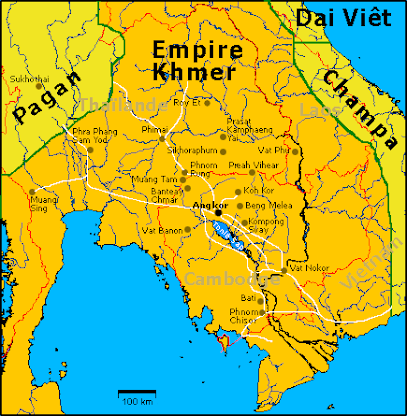
Wednesday, January 07, 2009
TIMELINE: Cambodia marks thirty years since Khmer Rouge

Tuesday, January 06, 2009
No more KR suspects: Cambodian prosecutor
 The Extraordinary Chambers’ Chea Leang breaks her silence on why the court must not seek to bring more ex-KR leaders on the docket
PUTTING more former KR leaders on the docket would contradict the original mandate of the Khmer Rouge tribunal, overstretch its duration and budget, and undermine national stability and reconciliation, according to Cambodian co-prosecutor Chea Leang, whose reasoning against expanding the trials was made public for the first time on Monday.
Since late last year, Chea Leang and her international counterpart, Robert Petit, have been at loggerheads over whether to submit more suspects for investigation - beyond the five former Khmer Rouge leaders currently detained.
"She feels that this court should instead prioritise the trials of the five suspects already detained," especially since, according to her, the tribunal's mandate "envisioned only a small number of trials", said a statement from the UN-backed tribunal released Monday.
"She maintains that this Court's mandate can be adequately filled by the prosecution of the suspects already detained," it added.
Chea Leang, who could not be reached for comment Monday, had filed her arguments December 29 to the tribunal's Pre-Trial Chamber in response to a "statement of disagreement" lodged earlier in the month by Petit after the pair failed to agree on his proposal to add additional suspects. While Petit has refused to confirm any figures, sources close to the court say that six additional former regime members have been targeted.
"There is a difference in our interpretation of what this court is about," Petit told the Post Monday, although he insisted the disagreement has not delayed ongoing investigations at the tribunal.
Expanding the docket would help the court fulfill its mandate, he said, adding: "The stability of any society can only be enhanced by improved accountability".
Petit acknowledged that expanding the docket presented "legitimate" financial concerns but was confident the move "would be supported by donors".
Long Panhavuth, program coordinator for the legal watchdog Cambodian Justice Initiative, said, "Expanding the number of suspects will improve the integrity and independence of the court, and that will attract more donor funds".
The group has urged the Cambodian side of the court to demonstrate its independence by allowing further investigation in the face of government fears that a wider roundup could expose current leaders to scrutiny.
Read more!
Where to go in Cambodia's capital
I am going to Thailand and Angkor Wat later in the year with my boyfriend. He really wants to go to Phnom Penh too, but I m a bit nervous about that. Is it a safe city, and are there things to do and see, other than just the Killing Fields, which you know who is very keen to visit? Mary Holden, Newcastle
Sunday Times travel expert Richard Green responds: Actually, the Cambodian capital is a fabulous little place and well worth a visit I’d say, even if you don’t have your boyfriend’s ghoulish streak.
It’s changing fast, with lots of property development going on, but it still has a definite charm; a bit chaotic and noisy for sure, but it is set on the banks of the Tonle Sap and Mekong Rivers, has some interesting colonial era districts, and the fabulous Royal Palace too.
Perhaps start at the National Museum, for some peace and quiet in its lovely courtyard, and for a break from all the traffic. After that, and just across the road is the sprawling Royal Palace complex, with incredibly ornate rooms like the dance pavilion, the Throne Hall, and the famous Silver Pagoda - with over 5 tons of silver tiles on its floor. You can only peek at a few of them from an entranceway though, as most remain covered for their protection.
You should definitely stroll over to Wat Phnom too, for a good view over some of the city rooftops. It’s the only hill the city has at just 88 feet. There are some street hawkers here, but it is usually good-natured stuff, and they are really targeting the many Cambodians who climb here to pray for good luck. Oh, and do drop in on the huge domed Central Market, just towards the river from here, for some crafty souvenir shopping.
Nearby is the grand Hotel Le Royal (www.raffles.com), which has a smashing bar and restaurant, and peaceful gardens too. In the evening, there are tons of great bars and restaurants, but you should try out the Foreign Correspondents Club (www.fcccambodia.com). It’s a sundowners institution, with big armchairs, ceiling fans, and a mainly expats and backpackers crowd. There are great views from the top floor terrace, and the western food is pretty good too – pizzas from £6.
The two main Khmer Rouge era sites are the Killing Fields and the Tuol Sleng Genocide Museum. They are both horrific and leave a strong and lasting impression. You’ll see plenty of locals visiting here too, and if you can face it, be sure to do it at the beginning of your stay in town rather than at the end, so that the wonderful spirit and joy of Cambodia today is the impression that you leave with.
Read more!
Cambodia: 30 Years After Fall of the Khmer Rouge, Justice Still Elusive
After 30 years, no one has been tried, convicted or sentenced for the crimes of one of the bloodiest regimes of the 20th century. This is no accident. For more than a decade, China and the United States blocked efforts at accountability, and for the past decade Hun Sen has done his best to thwart justice.
Brad Adams, Asia director at Human Rights
Anniversary Highlights Stalled Trials for Some of 20th Century’s Worst Killers
(New York, January 5, 2009) - Thirty years after the fall of the Khmer Rouge, Cambodia's culture of impunity remains as strong as ever, Human Rights Watch said today. Under Prime Minister Hun Sen, the Cambodian government continues to obstruct the United Nations-supported court created to try senior Khmer Rouge leaders and others most responsible for the deaths of up to 2 million people during the Khmer Rouge-era.
Despite more than three years of operations and the expenditure of approximately US$50 million, the UN-backed Extraordinary Chambers of the Courts of Cambodia established to hold the Khmer Rouge accountable have held no trials.
"After 30 years, no one has been tried, convicted or sentenced for the crimes of one of the bloodiest regimes of the 20th century," said Brad Adams, Asia director at Human Rights Watch. "This is no accident. For more than a decade, China and the United States blocked efforts at accountability, and for the past decade Hun Sen has done his best to thwart justice."
The Extraordinary Chambers have been deeply flawed in both design and practice. UN reports have concluded that the Cambodian judiciary lacks independence, competence and professionalism. Yet at the insistence of Hun Sen, a former Khmer Rouge commander, the Extraordinary Chambers were established with a majority of Cambodian judges and a Cambodian "co-prosecutor" and "co-investigating judge." The United Nations opposed that structure.
Prosecutors and investigating judges have conducted only limited field investigations. The Extraordinary Chambers have also been mired in allegations of corruption among its Cambodian personnel, with charges of job-selling and bribery.
Five Khmer Rouge leaders whom Hun Sen has allowed to be arrested are in detention, but no other cases have been filed against the many persons implicated in horrific crimes during Khmer Rouge rule. Human Rights Watch has called for broadening the scope of investigations beyond the five already charged.
Today, the Extraordinary Chambers published a statement in which the Cambodian co-prosecutor opposed filing additional cases. The international co-prosecutor rightly asserted in his filing with the Extraordinary Chambers that the charges fall within the court's jurisdiction and "would lead to a more comprehensive accounting of the crimes that were committed." Yet for political and policy reasons, the Cambodian co-prosecutor has opposed bringing more cases, citing "Cambodia's past instability and the continued need for national reconciliation."
"No serious observer believes there is any threat to Cambodia's stability if additional cases are filed against alleged Khmer Rouge killers," said Adams. "On the 30th anniversary of the Khmer Rouge's fall from power, the Cambodian government is playing games. This is a transparently political attempt to stop the court from doing its work."
The Khmer Rouge came to power at the end of the United States' war in Indochina. Led by Pol Pot and Nuon Chea, the Khmer Rouge was in power from April 17, 1975 to January 7, 1979. Estimates suggest that as many as 2 million of Cambodia's 8 million people were killed or died from disease, starvation, or forced labor during this period.
After the Khmer Rouge carried out numerous cross-border attacks on Vietnam in which hundreds of villagers were massacred, the Vietnamese army invaded Cambodia. It pushed the Khmer Rouge out of Phnom Penh on January 7, 1979. The Khmer Rouge retreated to the Thai border, where it received support from Thailand, China, the United States, the United Kingdom, Singapore and others for the next decade.
To force the Vietnamese army out of Cambodia, the US then led a broad international embargo on Cambodia, depriving a population that had survived inconceivable violence, deprivation, and hardship of the assistance necessary to rebuild their health and their country.
Throughout the 1980s the Khmer Rouge conducted a violent insurgency in which tens of thousands died. For geopolitical reasons, discussions of holding the Khmer Rouge leadership accountable for their crimes while in power were blocked, principally by the US and China.
At China's insistence, the Khmer Rouge was included as a party to the 1991 Paris Peace Agreements, which led to creation of the United Nations Transitional Authority in Cambodia (UNTAC), the UN's largest peacekeeping effort up to that time, and national elections to form a new government. The Khmer Rouge withdrew from the peacekeeping force, but the elections went ahead without it. China pledged to withdraw support from the Khmer Rouge thereafter, which it apparently did. But elements in the Thai army continued to support the Khmer Rouge and deaths and injuries, many from landmines, mounted.
The Khmer Rouge movement fractured publicly in 1996 with the amnesty granted to Ieng Sary, the former Khmer Rouge foreign minister, by the Cambodian government. The movement effectively collapsed after the death of Pol Pot in 1998 and the defection to the Cambodian government of other top leaders, including Nuon Chea and Khieu Samphan, and thousands of Khmer Rouge soldiers.
In 1997, Hun Sen and his co-prime minister, Prince Norodom Ranariddh, sent a letter to the UN secretary-general at the time, Kofi Annan, asking for an international tribunal to hold the Khmer Rouge accountable. This effort was blocked by China, which made it clear that it would veto any UN Security Council resolution to create such a court, and by Hun Sen, who with the collapse of the Khmer Rouge, lost interest in holding its leaders accountable. Instead, Hun Sen invited Khmer Rouge leaders who defected to his government to his home, toasted them with champagne, and called for Cambodians to "bury the past."
"Hun Sen has spent most of the past 10 years trying to undermine UN efforts to establish a credible tribunal, miring it in delay and fights over jurisdiction," said Adams. "Now he is trying to stop a few more cases from being filed."
Human Rights Watch said that the impunity enjoyed by the Khmer Rouge has been matched in the post-Khmer Rouge era. The Vietnamese-backed People's Republic of Kampuchea, in power from 1979 until 1993, routinely violated the fundamental rights of Cambodians. During the UNTAC period in the early 1990s, the United Nations recorded hundreds of killings and attacks by forces under the control of Hun Sen's Cambodian People's Party.
On March 30, 1997, a grenade attack on an opposition political rally killed at least 16 people and wounded approximately 150. Hun Sen's bodyguard unit has been implicated in the attack. In July 1997, Hun Sen staged a coup against his royalist coalition partners in which more than 100 opposition figures were extrajudically killed. In the 1998 elections, dozens more were killed. In the past decade, many opposition politicians, journalists, labor leaders and human rights activists have been killed or attacked. No perpetrator has been held accountable, in spite of the availability of evidence in many of these cases.
"Whether it is for Khmer Rouge crimes or those of more recent times, brutal, well-known perpetrators remain free men," said Adams. "Sadly, impunity remains almost complete in Cambodia."
Read more!
Cambodia creates new body to regulate foreign marriage
PHNOM PENH, Jan. 6 (Xinhua) -- A new organization to regulate foreign marriage has been created following the lifting of a six-month suspension of such unions in 2008, English-language daily newspaper the Phnom Penh Post said on Tuesday.
The Association for People Protection (APP) was licensed by the Ministry of Interior on Dec. 12 to provide "free consultations on marriages to foreigners," the paper quoted an APP statement as saying.
The APP aims at protecting Cambodian overseas migrants, especially women marrying foreigners, said Ky Sina, president of the organization.
"The duty of the association is to help people applying for passports and visas to do this legally. Any foreigner who wants to marry a Cambodian woman will have to become a member of the APP," according to the statement.
The APP will also act as a mediator "to facilitate (dialogue) and find lawyers for both husband and wife" if they have problems later in their marriage, it added.
The foreign marriage suspension was enacted in April amid concerns over an explosion in the number of broker unions involving poor or uneducated women.
It also followed the release of an International Organization for Migration (IOM) report highlighting the plight of a rising number of Cambodian brides migrating to South Korea in marriages hastily arranged by brokers who made large profits.
Some 1,759 marriage visas were issued for Cambodians by South Korea in 2007, up from 72 in 2004, said the report.
Read more!
Monday, January 05, 2009
Elixir Gaming Enters into Agreement with NagaWorld Limited to Place and Operate Gaming Machines on Participation Basis at Leading Cambodian Casino Res
LAS VEGAS--(Business Wire)--
Elixir Gaming Technologies, Inc. (AMEX:EGT) ("Elixir Gaming" or "the Company"),
a provider of gaming technology solutions to the Pan-Asian gaming industry,
announced today that it has entered into a contract with NagaWorld Limited, a
wholly owned subsidiary of the Hong Kong listed NagaCorp Ltd. (HKSE:3918), to
place electronic gaming machines on a participation basis at its NagaWorld, a
five-star hotel casino resort in Cambodia. The only licensed full service casino
in Phnom Penh, NagaWorld is a luxury destination resort.
Under the terms of the agreement, Elixir Gaming will place electronic gaming
machines in a prescribed area of NagaWorld`s 14-story hotel wing and will share
in the gross revenue generated by each machine. It is expected that
approximately 140 electronic gaming machines will be placed in the prescribed
area and Elixir Gaming and NagaWorld will have joint control over the operation
of the electronic gaming machines, including floor staffs and respective audit
rights. Elixir Gaming anticipates the electronic gaming machines to be in
operation in time for the upcoming Chinese New Year in late January 2009.
Subject to certain milestones and agreement between the parties, the Company
expects that the electronic gaming machines placed by it at NagaWorld may be
increased to over 200 by the second quarter of 2009.
NagaWorld is Cambodia`s only integrated hotel casino entertainment complex,
located in the heart of the nation`s capital city of Phnom Penh. One of
Cambodia`s most popular tourist destinations, NagaWorld currently has, among
others, 508 rooms, 176 table games, a premium meeting, incentive travel,
convention, and exhibition (MICE) facility, a retail shopping area, a collection
of restaurants and bars, a karaoke lounge, and a spa.
Clarence Chung, Chairman and Chief Executive Officer of the Company, commented,
"We are excited to work with such a well-established gaming operator with a
proven track record of operating excellence, deep industry experience, and
extensive local knowledge and networking. NagaWorld is one of the premier hotel
casino resort destinations in Southeast Asia and its five-star amenities rival
those of many of the high-end casinos in major gaming markets worldwide.
Through Elixir Gaming`s expertise in developing full scale slot operations, as
well as collaborative marketing efforts, we believe we can drive even greater
player traffic and gaming revenue to NagaWorld`s already successful operation."
Stuart Sandon, Senior Vice President of NagaWorld Ltd., added, "Elixir Gaming`s
market knowledge and ability to develop and implement turnkey slot floor
solutions will help to solidify what is an important component to NagaWorld`s
gaming operation. We look forward to the benefit that Elixir Gaming`s expertise
and industry relationships, as well as its established and growing base of
operations will bring to the long-term success of our facility."
About Elixir Gaming Technologies, Inc.
Elixir Gaming Technologies, Inc. (AMEX:EGT) is a provider of gaming technology
solutions. The Company secures long-term contracts to provide comprehensive
turn-key solutions to 3, 4, and 5 star hotels and other well-located venues
throughout Asia that seek to offer casino gaming products. The Company retains
ownership of the gaming machines and systems and receives recurring daily fees
that average in excess of 20% of the net gaming win per machine and provides
on-site maintenance. The Company has established a strategic presence in the
Asia Pacific region with a focus on the Philippines and Cambodia markets. For
more information please visit www.elixirgaming.com.
About NagaCorp Ltd.
NagaCorp Ltd. (3918.HK) operates NagaWorld, the only licensed 5-Star Hotel
Casino Resort in Phnom Penh, the capital of Cambodia. NagaCorp holds a casino
license issued by the Royal Govemment of Cambodia, which gives the company the
rights to operate the casino for 70 years commencing January 1995 with 41 years
exclusivity within a 200 kilometer radius of Phnom Phen (except the
Cambodia-Vietnam boarder area, Bokor, Kirirom Mountains, and Sihanoukville.)
NagaWorld, currently has, among others, 508 rooms and 176 table games. NagaCorp
Ltd.is incorporated in Cayman Islands with limited liability and its securities
are listed on the Main Board of The Stock Exchange of Hong Kong Limited.
Forward Looking Statements
This press release contains forward-looking statements concerning Elixir Gaming,
Elixir Group and Elixir International within the meaning of Section 27A of the
Securities Act of 1933, as amended, and Section 21E of the Securities Exchange
Act of 1934, as amended. Those forward-looking statements include statements
regarding expectations for the business of Elixir Gaming, its working capital
requirements and future revenue and profitability. Such statements are subject
to certain risks and uncertainties, and actual circumstances, events or results
may differ materially from those projected in such forward-looking statements.
Factors that could cause or contribute to differences include, but are not
limited to, risks related to Elixir Gaming`s inability to place gaming machines
at significant levels, whether the gaming machines placed generate the expected
amount of net-win, the ability of Elixir Gaming to acquire additional capital as
and when needed, the ability of Elixir Gaming to collect revenue and protect its
assets and those other risks set forth in Elixir Gaming`s annual report on Form
10-K for the year ended December 31, 2007 filed with the SEC on March 31, 2008
and our Form 10-Q for the three months ended September 30, 2008 filed on
November 14, 2008. Elixir Gaming cautions readers not to place undue reliance on
any forward-looking statements. Elixir Gaming does not undertake, and
specifically disclaims any obligation to update or revise such statements to
reflect new circumstances or unanticipated events as they occur.
Read more!
HSBC To Expand In Vietnam; Eyes Moving Into Laos, Cambodia
LONDON -(Dow Jones)- U.K. banking group HSBC Holdings PLC (HBC) said Monday it plans to expand in Vietnam and have 10 branches there by year-end, up from two currently, and is looking at setting up operations in neighboring Laos and Cambodia within the next five years.
"We will be opening in Ho Chi Minh, Hanoi and Binh Duong. We plan to have a total of 10 outlets this year," said HSBC Vietnam President and Chief Executive Thomas Tobin.
The Vietnam expansion comes after HSBC was given approval by the government to become the first foreign bank to set up a locally incorporated entity. It also forms part of HSBC's aggressive expansion in developing markets.
The change in legal status also means that it's easier now for HSBC's local operations to set up branches across the country.
HSBC's current two branches are located in Ho Chi Minh city and Hanoi.
New laws which help open Vietnam's banking sector to foreign companies have been introduced as part of the communist country's inclusion into the World Trade Organization.
Last year, HSBC hired more than 400 additional staff in Vietnam in anticipation of its expansion. This has brought staff numbers there to more than 1,000. Tobin said the new staff are being trained to man the future branches.
In Vietnam, HSBC also owns 10% of Bao Viet Holdings, an insurance company, and 20% of Vietnam Technological and Commercial Joint Stock Bank, or Techcombank.
Tobin said HSBC is eyeing expansion into neighboring Laos and Cambodia.
"It's something that we keep an eye on. We visit there regularly, and we're in close contact with the customers and the regulators. We see tremendous potential in both those countries. So for sure, within the next five years, we'll keep an eye on it," he said.
In October, HSBC agreed to buy a majority stake in Indonesia's Bank Ekonomi Raharja for $607.5 million.
That acquisition also follows the bank's expansion into China's Dazu county and its efforts to expand in other emerging markets like Georgia, Russia, Peru and Panama.
Read more!
Sunday, January 04, 2009
Monday, January 12
Today is Monday, Jan. 12, the 12th day of 2009. There are 353 days left in the year.
Highlights in history on this date:
1543 - England's King Henry VIII marries his sixth and last wife, Catherine Parr, who outlives him.
By The Associated PressAssociated Press
1598 - Pope Clement VIII seizes Duchy of Ferrara in Italy.
1690 - Protestant forces led by William of Orange defeat the Roman Catholic army of James II at the Battle of the Boyne in Ireland.
1773 - The first U.S. museum dedicated to the preservation of knowledge is established in Charleston, South Carolina.
1848 - Revolt starts in Palermo, Italy, against corruption of Bourbons.
1862 - U.S. Congress authorizes the Medal of Honor.
1879 - British-Zulu War begins in Africa.
1932 - Mrs. Hattie Caraway becomes the first elected female U.S. senator.
1945 - German forces retreat in disorder in Battle of the Bulge in Belgium during World War II.
1953 - Yugoslav National Assembly adopts new Constitution.
1958 - Soviet Union proposes zone free of nuclear weapons from Arctic Circle to Mediterranean.
1964 - Rebellion in Zanzibar, which is declared a republic, and Sultan is banished.
1967 - China's army pledges support to Mao Tse-Tung during disorder triggered by Chinese cultural revolution.
1968 - United States and Cambodia agree on policy to keep Cambodia from becoming embroiled in Vietnam War.
1970 - Breakaway Biafra surrenders, ending 32-month-old Nigerian civil war. Biafra leader General Odumegwu Ojukwu flees with family.
1976 - Coalition cabinet in Thailand collapses with resignation of Prime Minister Kukrit Pramoj.
1977 - U.S. President Jimmy Carter defends Supreme Court decisions limiting government payments for poor women's abortions, saying, "There are many things in life that are not fair."
1986 - Tamil separatist guerrillas kill seven army soldiers and wound nine others in ambush in northern province of Sri Lanka.
1988 - Soldiers and Palestinian crowds disrupt United Nations official's attempts to inspect Gaza Strip's crowded refugee camps.
1990 - Romania's interim president, Ion Iliescu, announces that the Communist Party is outlawed; Russian republic president Boris Yeltsin shocks the 28th congress of the Soviet Communist Party by announcing he is resigning his party membership.
1991 - U.S. Congress grants President George H.W. Bush authority to use force to drive Iraq from Kuwait.
1992 - Algerian government cancels second round of voting in parliamentary elections that an Islamic party looks set to win. The Islamists take to arms, and tens thousands of Algerians die in the next few years.
1993 - The leader of Bosnia's Serbs accepts peace proposals for the war-shattered country, hailed as a breakthrough toward a settlement after nine months of brutal fighting; a 7.8 magnitude earthquake strikes northern Japan, killing 196 people.
1994 - President Carlos Salinas de Gortari announces a unilateral cease-fire in southern Mexico after army troops gain control of most of the region occupied by Indian rebels.
1996 - The first Russian military contingent arrives to work alongside Americans in the NATO peacekeeping mission in Bosnia.
1998 - Nineteen European nations sign an agreement to prohibit cloning of humans beings; in Ballymoney, Northern Ireland, three young brothers who had been asleep in their beds are burned to death in a sectarian attack.
1999 - Turkey's newly elected prime minister Bulent Ecevit says he will not allow Turkish bases to be used for prolonged bombing of Iraq.
2002 - President Pervez Musharraf announces new measures to curb extremism in Pakistan and groups that exported terrorism, including bans on five militant groups, and to check militancy in the disputed Kashmir region.
2005 - A woman who spent seven years on Iran's death row is reprieved after the family of the man she killed drops its demand for her to pay with her life. The death sentence imposed on the woman, who said the man tried to rape her, had provoked an outcry among Iranian women.
2006 - Thousands of Muslims surging to complete a stoning ritual before sunset, outside the holy city of Mecca, Saudi Arabia, stampede after some pilgrims trip over dropped luggage, causing a pileup that kills at least 360 people.
2007 - Ethiopian-backed government forces capture the last remaining stronghold of the Islamic movement in southern Somalia hours after warlords met with President Abdullahi Yusuf and promised to enlist their militiamen in the army.
2008 - Taiwan's opposition Nationalist Party wins a landslide victory in legislative elections, boosting its policy of closer engagement with China.
Today's Birthdays:
Andrea Alicati, Italian author (1492-1550); Edmund Burke, Irish-born statesman (1729-1797); Hermann Goering, German Nazi leader (1893-1946); Paul Hermann Muller, Swiss chemist and Nobel laureate, discovered potency of DDT as insecticide (1899-1965); Rush Limbaugh, U.S. radio commentator (1951--); Howard Stern, U.S. radio/TV personality (1954--); Kirstie Alley, U.S. actress (1951--).
Thought for Today:
Being young is a fault which improves daily _ Swedish proverb.
Read more!
Global trends driving 'land grab' in poor nations: activists
 KUALA LUMPUR (AFP) — Resource-hungry nations are snapping up huge tracts of agricultural land in poor Asian nations, in what activists say is a "land grab" that will worsen poverty and malnutrition.
Global trends including high prices for oil and commodities, the biofuels boom, and now the sweeping downturn, are spurring import-reliant countries to take action to protect their sources of food.
China and South Korea, which are both short on arable land, and Middle Eastern nations flush with petrodollars, are driving the trend to sign up rights to swathes of territory in Asia and Africa.
"Today's food and financial crises have, in tandem, triggered a new global land grab," the Spain-based agricultural rights group Grain said in a recent report.
It said that some deals were targeted at boosting food security by producing crops that would be sent back home for consumption, while others were to establish money-making plantations like palm oil and rubber.
"As a result of both trends, fertile agricultural land is being swiftly privatised and consolidated by foreign companies in some ofthe world's poorest and hungriest countries," it said.
In one of the biggest deals, South Korea's Daewoo Logistics said in November it would invest about 6.0 billion dollars to develop 3.2 million acres (1.3 million hectares) in Madagascar -- almost half the size of Belgium.
Daewoo plans to produce four million tonnes of corn and 500,000 tonnes of palm oil a year, most of which will be shipped out of impoverished Madagascar -- where the World Food Programme still provides food relief.
"We will build everything from ports and railways to markets on a barren and untouched area," said Shin Dong-Hyun, general manager of the WFP's financing and strategic planning department.
Although commodity prices have fallen from their highs earlier this year, resource-poor and heavily populated countries are still concerned about securing long-term supplies.
Walden Bello, from Bangkok-based advocacy group Focus on the Global South, said the looming global recession is not likely to halt the trend which he fears will worsen the lot of landless peasants.
"In a situation where global agricultural production has become so volatile and unpredictable, I would not be surprised if the Middle Eastern countries that are engaged in this would continue to push on," he told AFP.
Bello said that many of the deals were struck in dysfunctional and corruption-ridden nations, and rejected claims the land being signed away is of poor quality, and that the projects will bring jobs and improve infrastructure.
"What we're talking about is private parties using state contracts to enrich themselves," he said. "It's an intersection of corrupt governments and land-hungry nations."
In Cambodia, where the WFP also supplies aid, oil-rich Kuwait in August granted a 546-million-dollar loan in return for crop production.
Undersecretary of State Suos Yara said Cambodia was also in talks with Qatar, South Korea, the Philippines and Indonesia over agricultural investments including land concessions.
"If we do this work successfully, we can get at least 3.0 billion dollars from these agricultural investments," he said.
"With the (global financial) crisis, this is a chance for Cambodia to look to the future by pushing agriculture in order to attract foreign investments."
But opposition lawmaker Son Chhay said he was suspicious about why a wealthy nation like Kuwait needed to lease land to grow rice rather then just import the grain.
"Cambodian farmers need the land," he said, urging the government to limit the area under lease and ensure Cambodia was not plundered by foreign nations.
In the Philippines, another land lease hotspot, a series of high-profile deals has clashed with long-running demands for agrarian reform including land redistribution.
"It will aggravate the problem of landlessness, the insufficiency of land for Filipino peasants," said Congressman Rafael Mariano, who also heads the Peasants' Movement of the Philippines (KMP).
However the Philippine government is undeterred and during President Gloria Arroyo's visit to Qatar in December, officials opened talks over the lease of at least 100,000 hectares of agricultural land to the emirate.
Bello said he expected these sorts of deals to increase, forcing peasants from rural areas and into cities where together with the global downturn they will add to the ranks of the unemployed.
"It's particularly explosive in those countries where you have a high degree of landlessness, like the Philippines where seven out of 10 rural people do not have access to land," he said.
In the impoverished and corrupt dictatorship of Laos, some experts estimate that between two million and three million hectares have been parcelled off in a rampant and uncontrolled process that has now been suspended by the government.
The UN's Food and Agriculture Organisation has sounded alarm over the loss of land in a country where in rural areas, every second child is malnourished and access to land for foraging of natural resources is critical.
"If the environment is changed, with the trees cut and replaced with industrial crops," said FAO representative in Laos, Serge Verniau, "they can face serious danger".
Read more!
Saturday, January 03, 2009
New bird flu cases revive fears of human pandemic
 By Mary Engel
Just when you thought you could scratch bird flu off your list of things to worry about in 2009, the deadly H5N1 virus has resurfaced in poultry in Hong Kong for the first time in six years, reinforcing warnings that the threat of a human pandemic isn't over.
India, Bangladesh, Vietnam and mainland China also experienced new outbreaks in December. During the same period, four new human cases -- in Egypt, Cambodia and Indonesia -- were reported to the World Health Organization. A 16-year-old girl in Egypt and a 2-year-old girl in Indonesia have died.
The new cases come afer two-year a decline in the number of confirmed human deaths from H5N1 bird flu and as fewer countries are reporting outbreaks among poultry. A United Nations report released in October credits improved surveillance and the rapid culling of potentially infected poultry for helping to contain and even prevent outbreaks in many countries.
Yet H5N1 has continued to "at the very least smolder, and many times flare up" since the chain of outbreaks began in 2003, said Michael T. Osterholm, director of the Center for Infectious Disease Research and Policy at the University of Minnesota in Minneapolis.
The year-end uptick is a reminder of how quickly the situation can turn as long as the H5N1 virus is still out there, Osterholm and other scientists said. "What alarms me is that we have developed a sense of pandemic-preparedness fatigue," he said.
H5N1 already has been a disaster for poultry farmers in Asia. Public health officials estimate that as many as half a billion fowl have been killed by the virus or culled to contain its spread, causing enormous economic strain and food shortages. But the bigger fear has always been that H5N1 would give rise to a human pandemic like the so-called Spanish flu of 1918, which killed an estimated 50 million people worldwide.
It was in Hong Kong in 1997 that the H5N1 virus was first observed to jump from chickens to humans, infecting 18 people and killing six of them, raising fears of a worldwide catastrophe. Hong Kong ordered its entire poultry population, estimated at 1.6 million birds, destroyed within three days.
A more recent chain of poultry outbreaks began in South Korea in 2003 and spread over the years to 61 countries in Asia, Africa and Europe.
To fuel a pandemic, a virus must be able to both infect humans and spread readily from person to person. The currently circulating H5N1 strain does neither well.
The total number of verified human cases since the 2003 outbreak began is 391, of whom 247 died. After peaking in 2006 at 115 human cases with 79 deaths, human infections dropped to 40 in 2008, with 30 deaths, according to a World Health Organization update in mid-December.
Most of the human cases were traced to direct contact with poultry, especially in Southeast Asia where many people have backyard flocks and few wear gloves or masks while handling them. The few suspected human-to-human transmissions occurred in those who were closely involved in caring for an infected relative.
But as long as the virus continues to circulate, the threat that it could mutate to pass more easily among humans remains, according to the U.N. report.
The Hong Kong poultry outbreak last month is significant because the government thought it had stamped out H5N1 in the Chinese territory after an outbreak in 2003. Since then, Hong Kong has vaccinated poultry against the virus and strictly regulated farm sanitation.
The government ordered the slaughter of 80,000 fowl at two large farms after the latest outbreak killed 60 chickens at one of the farms. Investigators are looking for the source of the infection and testing the effectiveness of the vaccine used since 2003 to inoculate chickens, geese and ducks against H5N1.
Hong Kong uses a vaccine that protects poultry against several flu subtypes. But some scientists believe that the H5N1 virus may have mutated to break through the vaccine. Flu viruses change constantly, which is why human vaccines for seasonal flu are modified every year, said Scott P. Layne, a professor of epidemiology and environmental health sciences at UCLA.
Mainland China is using a newer poultry vaccine developed specifically for H5N1. But vaccination programs there and in Vietnam have not eliminated outbreaks.
The vaccine itself could be the problem, said Robert Webster, a virologist and avian flu expert at St. Jude Children's Research Hospital in Memphis, Tenn.
Vaccines should be used only in areas where the virus is out of control, and then only temporarily, he said. That is because routinely administering the vaccine encourages the evolution to resistant strains.
Some countries have managed to stop the virus by culling infected poultry flocks. Japan, South Korea and Malaysia are considered to be free of H5N1, according to the World Health Organization.
But the virus appears to be entrenched in Indonesia, parts of China, Vietnam, Egypt and other countries where backyard flocks are more difficult to regulate than commercial chicken farms, according to the United Nations' Food and Agriculture Organization.
Though bird flu viruses are common, highly pathological ones such as the 1918 virus and H5N1 -- which has been lethal to 100% of chickens infected and 63% of humans known to be infected -- are rare.
Scientists have little experience with which to gauge how H5N1 will evolve.
But, Webster said, "We still have to treat this as a potentially very, very dangerous virus."
Read more!
Cycle of hope
By Pat Gee
A retired Hawaii Kai couple is still recycling bottles to raise thousands of dollars to help impoverished villages in Cambodia, but now they hardly need to scavenge for throwaways because others are doing it for them.
When Florence Doi and Takeshi Terada first visited a "black and smelly village" outside Phnom Penh in 2004 with members of the University Avenue Baptist Church, they were appalled at the sight of "garbage children" picking through rubbish they would sell to survive. They were called "scavenger villages," Doi said.
"You would cry," she added.
When they returned home, Doi turned to Terada and said, "Let's be scavengers for them. Let's go out into the beaches and parks, and go into the rubbish cans."
And now the helpers have helpers. Church groups and individuals learned of their mission and are collecting bottles on their behalf.
"I couldn't have done this without all this help," she said last month. "This has been my happiest year. I want to thank everybody; all the contributions have multiplied. ... The churches offer their help. I don't call them; they call me."
Takahashi Koji of Makiki Christian Church has been collecting bottles for three years. "That's how much he feels for us," Doi said. A few days ago, a gift arrived in the mail from his church, which consists of a small Japanese congregation, she said.
"I was stunned; my feet and my heart danced when I received a check for $2,635," Doi said.
Other regular donors include Holy Nativity Church (Episcopal) in Aina Haina, First Presbyterian Church of Honolulu in Kaneohe and Kaimuki Christian Church.
This recent Christmas was the first in four years that Doi and Terada did not make the trip to Cambodia with an outreach program of the multicultural University Avenue Baptist Church, which sponsors several overseas outreach missions.
It's not that the couple is any less devoted. Doi said they decided to forgo their trip due to the uncertainty of safety conditions, and wanted to spend the holidays with their Hawaii family for a change.
She reluctantly admits that they are getting older -- Terada is 84 and Doi is 78 -- and "we're tired." It's no wonder, with all the sorting and rinsing their recyclables, taking them to the recycling center and holding a weekly garage sale.
They both used to collect bottles at Sandy Beach almost every day, but now Terada goes by himself twice a week. Since May they've noticed fewer bottles and such, perhaps because more people are recycling, too.
The couple is trying to downsize their Saturday garage sales because it's such heavy work to pick up donations, like furniture, and unload them at home. But because they have a truck and many don't, they feel obligated to pick up items that are guaranteed moneymakers, she said.
"How are we going to stop?" asked Terada, who recently set up a tent in his yard to house the furniture. "You can't say, 'Oh, don't bring anything.'"
The couple started wiring money to banks in southern Cambodia last year and have already sent about $20,000 to what they consider "the poorest of the poor," she said.
Their pet project is to help build a new church for Tes Kim, pastor of Tuol Sala Church Sreang in Kandal province. They have already sent more than $7,500 to purchase property that Doi picked. They plan to send about $10,000 more for building materials.
Then there is a new orphanage of Heritage of Jesus Christ Church under pastor Chum Sarith in Toulklong village in Kampong Speu that needs help. And the renovation of the New Family In Christ Church in Kampong Cham province, under pastor Un Vannak, who has two blind children, Doi said.
"I'm so excited," she said. "The dreams get more beautiful. ... I pray to God a lot every day. I believe in the power of the Lord. We've come this far and we can do more."
For garage sale location and arrangements for donations, call 396-0850.
Read more!
Friday, January 02, 2009
Cambodian Court Must Act on Murder of Trade Union leader murder case of union Leader Chea Vichea
Amnesty International calls on the Supreme Court to dismiss the case against Born Samnang and Sok Sam Oeun, and ensure that they are released without delay and their names cleared. In view of the human rights violations perpetrated during their detention and trial, including torture or other ill-treatment, unfounded and inadmissible 'evidence' and deeply flawed court proceedings, this is the only fair and just outcome for this case, the organization said.
Amnesty International believes that the true perpetrators of the murder remain at large, while Born Samnang and Sok Sam Oeun have spent almost five years in prison after a seriously flawed criminal investigation and a grossly unfair trial.
Born Samnang and Sok Sam Oeun had alibis for the time of the shooting on 22 January 2004. Instead of conducting a thorough, impartial investigation, police officers threatened and detained people who would provide these alibis, and intimidated other witnesses. Born Samnang repeatedly stated that police beat, coerced and bribed him into making a confession; despite this the Municipal Court accepted the confession as a central piece of evidence on the basis of which both men were convicted. On 1 August 2005, the Municipal Court sentenced them both to 20 years imprisonment for murder; on 6 April 2007, the Appeal Court upheld the decision, despite the prosecutor's acknowledgement there was insufficient evidence.
Amnesty International repeats its calls to the Cambodian authorities to conduct an impartial and effective investigation into the murder of Chea Vichea so that those responsible for it are brought to justice.
The organisation also urges the authorities to initiate a thorough, independent and impartial investigation into the conduct of the case - including allegations of torture or other ill-treatment by police during the initial interrogation of the two men, intimidation of witnesses and political interference with the judicial process.
Background
Chea Vichea, President of Cambodia's Free Trade Union (FTU), was murdered on 22 January 2004 after receiving a series of death threats. He was shot dead in an assassination style killing at a news-stand in central Phnom Penh. Born Samnang and Sok Sam Oeun were arrested shortly afterwards on suspicion of his murder.
Chea Vichea was a well-known trade union leader who championed workers rights in Cambodia’s burgeoning garment industry and a founding member of the main opposition Khmer Nation Party (KNP) in 1995, renamed the Sam Rainsy Party (SRP) in 1998. He was elected President of the FTU, one of Cambodia’s largest trade unions, in 1999, when he left all official positions within the SRP.
Since Chea Vichea’s death another two FTU activists have been killed in Phnom Penh. In May 2004, Ros Sovannareth, FTU President at the Trinunggal Komara factory, was murdered. Thach Saveth was sentenced to 15 years in prison for his murder in a one hour trial described by observers as grossly unfair. On 24 February 2007, Hy Vuthy, FTU President at the Suntex factory, was shot dead. No one has been brought to justice for this killing, and by September 2008, a Phnom Penh court official told media that the investigation had been closed for lack of evidence. Moreover, numerous other trade union members have been victims of harassment, intimidation and violence.
Read more!
Child trafficking in Cambodia
Caring investigates child trafficking in Cambodia. Despite stricter legislation, the problem is still rampant. On one side are parents who want to foster a child, and on the other, Cambodian parents' poverty which pushes them to sell their own.
Child trafficking, a loose term with negative connotations, is essentially when young offspring are given away to wealthy foreigners in exchange for money.
For lucky adopters, the actual sum is inconsequential. Exhausted after costly and upsetting attempts in their own countries, many gratefully look to smaller, developing nations in their bid to find a child, countries like Cambodia, where widespread poverty forces many locals to consider desperate ways to make ends meet.
Dazzled by the promise of a better life for their loved ones, parents and families readily relinquish control and sign away their offspring. But an increasing number of abuses of the system by rogue adoption agencies has prompted many Western governments to immediately suspend all adoptions of Cambodian children.
In France, the government has only just recently lifted the ban that had been in place for some five years, but French authorities are enforcing stringent tests and vetting on would-be parents.
In Cambodia, there are as yet few laws against the widespread corruption and not enough incentive to make parents stop this tragic practice of selling their children.
Read more!
Cambodian gov't urged to invest more in agricultural sector
PHNOM PENH, Jan. 2 (Xinhua) -- A well-known expert has called on the Cambodian government to devote more resources to the rural sector in efforts to mitigate the effects of the global economic crisis, the Phnom Penh Post reported on Friday.
While the tourism and garment sectors continue to struggle for access to international markets during the slowdown, Cambodia's agricultural sector holds the best hope of weathering the crisis, Kang Chandararot, president of the Cambodian Institute for Development Study, was quoted by the English-language daily newspaper as saying.
"We face a difficult situation, but the government should use most of the (nearly) 1 billion U.S. dollars of donor aid to develop our rural areas as a top priority," he said.
Greater improvements in rural development would cut poverty and reduce dependence on loans from banks or microfinance institutions, he said.
"While direct loans from banks and microfinance institutions provide necessary support, aid through the rural development and agriculture ministries should be used to modernize our agricultural methods," he said.
Such aid should be used to renovate Cambodia's aging water systems, find new seedlings and fertilizers, and improve rural markets, he said.
Cambodia used to be the major rice and some other rural products exporter in the region but years of war has made it lag behind Thailand and Vietnam in the past decades.
Currently, garment, tourism and infrastructure are the pillar industries of the kingdom.
Read more!
Cambodian monks force nation's first rock opera off air
 PHNOM PENH (AFP) — Cambodian monks have persuaded authorities to ban the country's first rock opera, which features actors dressed as clergy who break into song and dance, saying it insults Buddhism.
In a letter sent to the ministry of cults and religion, as well as to the media, the Supreme Sangha Council of Buddhist Monks also demanded an apology from the show's director, writer and actors.
"Where Elephants Weep", a modern take on a traditional Cambodian love story that merges pop and rock music with more traditional and historical Cambodian tunes, played in Phnom Penh from late November through early December.
It tells the story a Cambodian-American man who returns after the demise of the 1970s Khmer Rouge regime to reconnect with his roots. While he is a monk, he falls into a doomed love affair with a pop singer.
The last straw came when the show was aired by a local television station last week, prompting the monks' council to write to complain.
Cambodia is predominantly Buddhist and monks are expected to be austere and eschew worldly pleasures such as entertainment.
"Some scenes in the story insult Buddhism," the letter said in asking the ministry to "ban the performance and airing of the opera."
The council objected to many scenes, including one in which the actor "left the monkhood and slept with a woman, but a moment later (he) put the robe back on to be a monk again..." said the letter, dated December 30.
The show "oppresses Cambodian Buddhist monks, causes more than 50,000 monks to loss their honour, value and to express frustration," it added.
Religions minister Min Khin duly stepped in and the television station was ordered not to go ahead with a second broadcast planned for New Year's Day.
The show had a successful US preview last year and, after its run ends in Cambodia, it is expected to tour South Korea, Singapore, Hong Kong and Japan before returning to the United States.
Organisers behind the opera were not immediately available for comment.
Read more!
Thursday, January 01, 2009
Gang Rape Pervasive Across Cambodia
By Rachel Snyder
The tiny Southeast Asian country of Cambodia has seen explosive economic growth in the past five years.
Skyscrapers will soon dominate the country's skyline and predictions of oil wealth offer hope that the country is finally beginning to outgrow its grisly past.
But a chilling form of recreation — gang rape — reminds everyone that for Cambodia, the past may yet still loom.
One Woman's Story
Mao, 18, is from Pursat, a small village with a few hundred families. Through a translator at the Cambodian Women's Crisis Center in the capital of Phnom Phen, she says she is too ashamed to say her last name.
"There was a wedding in Pursat, and I went to participate," she says. "At the wedding this man asked me to dance and I went to dance with him."
The man then said he had a friend with a question for her, and he led her from the wedding to a field nearby.
"When he dragged me out, there was his two friends with him and three more were waiting in the fields," Mao says.
Two of the men raped her before others were alerted by her screams. Eight days later, she told her story from a safe house.
What happened to Mao has a name in Cambodia: bauk. Its literal translation means "plus," but it also means gang rape, a chilling social phenomenon among young men in the city.
A few years ago, a local nongovernmental organization put together a video of victims and perpetrators. In the video, one voice is distorted to hide the victim's identity. This girl says she was raped and sodomized by four men in a guest house. The next morning, she says, she called the police, but they told her she had no evidence.
'Socially Acceptable'
David Wilkinson, a consultant living in Cambodia, and his colleagues were studying condom usage among college boys in 2002 when they found that bauk was a socially accepted form of recreation for young middle-class Khmer men.
"They described it as a situation where one or two young men would procure the services of, generally, a street-based sex worker, then they would take her to a guest house to have sex, and when they got there they would have arranged for between four and 10 of their friends to be waiting," Wilkinson says. "And they would coerce or try and induce the woman to have sex with all of them. Very often she was verbally or physically abused and would then be subsequently gang raped."
Generally, bauk happens to sex workers, but it can also happen to what the men in Wilkinson's studies call "normal" girls — girls like Mao.
"There is growing indication that the groups of victims extend now beyond those involved in sex work, and we've got stories of school girls, garment factory workers, middle-class young women being gang raped," Wilkinson says.
Napsarin Sreynoth, the secretary general of the Cambodian Women's Crisis Center, says prostitutes don't seek help in their shelters because they think bauk is part of their job. But other bauk victims, like Mao, do come.
"Some victim, they are under 15 years old," says Tong Sophrach, who worked with Wilkinson on the initial research. "Every month that we receive the gang rape or rape bauk and the victim — they are from Pursat, Kompang, Chnnam. It everywhere happen in Cambodia."
Tong says they interviewed taxi drivers in rural areas and found evidence of bauk in at least 21 of Cambodia's 24 provinces. Tong adds that the young men who commit the rapes think it's funny.
Possible Explanations For 'Bauk' Proliferation
Wilkinson says there are many possible reasons why bauk has proliferated. Many believe it's a male-bonding experience: It costs about $15 to hire a prostitute for the night and paying for just one prostitute saves money. There are also few recreational opportunities for young people.
Wilkinson says the bauk phenomenon may be linked to the genocide in 1975-1979, when up to 1.5 million people died from starvation, disease or execution.
"It's difficult to say whether this phenomenon is a result of the deprivations imposed by the Khmer Rouge regime, but what you've got is a generation of young people now whose parents didn't really experience adolescence and so have no real models or norms on which to base how to be good parents," he says. "And it's possible this has had an effect on how they relate to their sons."
In addition, Wilkinson says, bauk may be triggered by the kind of pornography available in Phnom Penh, which he says is the worst that researchers have seen.
'An Aberration Of Khmer Society'
The government, however, blames outside influences.
"Rape itself is very often happening in Cambodia due to the influence of the Western culture with the illegal entry or import of pornography film," says You Ay, from the Ministry of Women's Affairs.
But many fault the government for not denouncing bauk more publicly. Tong says that while there have been arrests, he knows of no prosecutions specifically for bauk. Wilkinson, who has lived in Cambodia for a decade, says he believes a high-level government condemnation of bauk could begin to solve the problem.
"It's really just an aberration of Khmer society, and so as such, it wouldn't be difficult for the political leaders to put a stop to it," he says. "With the backing of senior levels of government this would happen."
In Wilkinson's follow-up research, he asked young people what most concerned them. The girls' responses were all about avoiding rape.
"The interview with the boys was more intriguing," he says. "They wanted to know how they could either coerce or bribe the girl afterward not to take action against them."
A famous adage in Cambodia says that men are gold and women are cloth. The former is easily cleaned; the latter easily stained. Mao says she feels this stain. She is angry and ashamed.
"Everybody, you know, none of us are perfect and I also feel it's my fault because I wanted to go to the wedding," Mao says.
For now at least, Mao says she can't go home. "I do not dare to think about the future," she says.
Read more!
The Evil Behind the Smiles
 By NICHOLAS D. KRISTOF
PHNOM PENH, Cambodia
Western men who visit red-light districts in poor countries often find themselves surrounded by coquettish teenage girls laughingly tugging them toward the brothels. The men assume that the girls are there voluntarily, and in some cases they are right.
But anyone inclined to take the girls’ smiles at face value should talk to Sina Vann, who was once one of those smiling girls.
Sina is Vietnamese but was kidnapped at the age of 13 and taken to Cambodia, where she was drugged. She said she woke up naked and bloody on a bed with a white man — she doesn’t know his nationality — who had purchased her virginity.
After that, she was locked on the upper floors of a nice hotel and offered to Western men and wealthy Cambodians. She said she was beaten ferociously to force her to smile and act seductive.
“My first phrase in Khmer,” the Cambodian language, “was, ‘I want to sleep with you,’ ” she said. “My first phrase in English was” — well, it’s unprintable.
Sina mostly followed instructions and smiled alluringly at men because she would have been beaten if men didn’t choose her. But sometimes she was in such pain that she resisted, and then she said she would be dragged down to a torture chamber in the basement.
“Many of the brothels have these torture chambers,” she said. “They are underground because then the girls’ screams are muffled.”
As in many brothels, the torture of choice was electric shocks. Sina would be tied down, doused in water and then prodded with wires running from the 220-volt wall outlet. The jolt causes intense pain, sometimes evacuation of the bladder and bowel — and even unconsciousness.
Shocks fit well into the brothel business model because they cause agonizing pain and terrify the girls without damaging their looks or undermining their market value.
After the beatings and shocks, Sina said she would be locked naked in a wooden coffin full of biting ants. The coffin was dark, suffocating and so tight that she could not move her hands up to her face to brush off the ants. Her tears washed the ants out of her eyes.
She was locked in the coffin for a day or two at a time, and she said this happened many, many times.
Finally, Sina was freed in a police raid, and found herself blinded by the first daylight she had seen in years. The raid was organized by Somaly Mam, a Cambodian woman who herself had been sold into the brothels but managed to escape, educate herself and now heads a foundation fighting forced prostitution.
After being freed, Sina began studying and eventually became one of Somaly’s trusted lieutenants. They now work together, in defiance of death threats from brothel owners, to free other girls. To get at Somaly, the brothel owners kidnapped and brutalized her 14-year-old daughter. And six months ago, the daughter of another anti-trafficking activist (my interpreter when I interviewed Sina) went missing.
I had heard about torture chambers under the brothels but had never seen one, so a few days ago Sina took me to the red-light district here where she once was imprisoned. A brothel had been torn down, revealing a warren of dungeons underneath.
“I was in a room just like those,” she said, pointing. “There must be many girls who died in those rooms.” She grew distressed and added: “I’m cold and afraid. Tonight I won’t sleep.”
“Photograph quickly,” she added, and pointed to brothels lining the street. “It’s not safe to stay here long.”
Sina and Somaly sustain themselves with a wicked sense of humor. They tease each other mercilessly, with Sina, who is single, mock-scolding Somaly: “At least I had plenty of men until you had to come along and rescue me!”
Sex trafficking is truly the 21st century’s version of slavery. One of the differences from 19th-century slavery is that many of these modern slaves will die of AIDS by their late 20s.
Whenever I report on sex trafficking, I come away less depressed by the atrocities than inspired by the courage of modern abolitionists like Somaly and Sina. They are risking their lives to help others still locked up in the brothels, and they have the credibility and experience to lead this fight. In my next column, I’ll introduce a girl that Sina is now helping to recover from mind-boggling torture in a brothel — and Sina’s own story gives hope to the girl in a way that an army of psychologists couldn’t.
I hope that Barack Obama and Hillary Clinton will recognize slavery as unfinished business on the foreign policy agenda. The abolitionist cause simply hasn’t been completed as long as 14-year-old girls are being jolted with electric shocks — right now, as you read this — to make them smile before oblivious tourists.
I invite you to comment on this column on my blog, On the Ground. Please also join me on Facebook, watch my YouTube videos and follow me on Twitter.
Read more!
Wednesday, December 31, 2008
County to host Cambodian delegation in New Year
 BY KIRK STARRATT
On the heels of a successful assessment mission to the Battambang District in October, the County of Kings will host a delegation from Cambodia in March as part of Federation of Canadian Municipalities (FCM) municipal partnership program.
Kings County corporate services director Bill McKennan, who made a presentation to councillors at the December committee of the whole (COTW) session, said the program is sponsored by the FCM and funded through the Canadian International Development Agency, although “projects belong to the communities involved.” Their partnership is with the Battambang District in the Kingdom of Cambodia.
“Each partnership is a joint initiative between a Canadian municipality and an overseas partner,” he said. The partnership involves a two- or three-year commitment requiring staff and council time, energy and travel.
The goal is to reduce poverty and improve the quality of life and sustainability of local communities by developing and empowering local government. This specific partnership project is to improve the quality of life in Battambang District and selected pilot communes through better environmental stewardship.
During the assessment mission to Cambodia in October, McKennan, Councillor Wayne Atwater and Valley Waste Resource Management policy coordinator Brian Van Rooyen introduced Kings County to the Battambang District, gained an understanding of local government in Cambodia and assessed Battambang’s capacity building needs in inter-communal cooperation, environmental management and awareness and waste management.
Intensive meetings
Activities included two weeks of intensive meetings with national and provincial local government associations; briefings with senior government officials and meetings with government staff; tours of selected communes and discussions with elected officials; meetings with potential resource organizations currently in Cambodia, including charity groups and foundations; providing input into the development of local government framework; and a meeting with the Master Plan District Advisor.
The county will host the Cambodian delegation as part of the Project Definition Mission from March 21 to April 4. Technical exchange missions will begin in May and there will be an evaluation mission at the conclusion of the project, in about two-and-a-half years.
The Cambodian delegation to visit in the spring is expected to include the provincial governor, the Battambang district governor, their local project coordinator (the deputy district governor), a representative of their department of environment, a representative of one of the pilot communes (also the chief of commune and deputy chief of the Provincial Association of Communes) and an interpreter.
The next steps include completing the agenda for the March visit, having a finalized proposal approved by both councils, and planning for technical exchanges.
McKennan said a Kings County engineering firm has already set up an office in Cambodia because of the number of contracts they’ve obtained.
The county got involved in the partnership program after Councillor Janet Newton brought forth a motion when the FCM issued a call for expressions of interest. Following a series of interviews, the County of Kings was selected as the best fit for the program.
Read more!
Immigration law makes deportations easy - but life hard
Divided families and limited judicial leeway are consequences of mid-1990 s reform act - Last in a three-part series
By Greg Mellen, Staff Writer
LONG BEACH - When Veasana Ath got busted for residential burglary in 2004, he had no idea that his future as a U.S. resident was imperiled.
Ath came to this country with his family as a toddler. Although he never became a citizen, he never thought he was anything but American.
After doing three months in jail, Ath was picked up by the Immigration and Naturalization Service, predecessor to the current Immigration and Customs Enforcement.
By the end of the year, he was in Cambodia penniless, with no job, no family or friends and virtually no chance of ever returning home.
The story of Ath and 188 other Cambodian-Americans sent back to their homes has its roots in the 1996 presidential race, the aftermath of the first terrorist attack on the World Trade Center in 1993 and the roiling world of immigration politics.
When the Illegal Immigration Reform and Immigrant Responsibility Act was passed by Congress in 1996, among its main goals was expelling and stiffening penalties against aliens who overstay visa allowances and improving security against illegal immigration on the borders and internally.
The law came in the wake of the 1993 terrorist attack on the World Trade Center, when immigration was a hot topic in the run-up to the 1996 presidential election.
While the law achieved some its objectives, it also spawned a population of immigrants, green-card holding "lawful permanent residents," who could be more easily deported.
reason for this was a provision in the law that greatly expanded the list of crimes that qualified as "aggravated felonies" that would make aliens deportable.
When the category of "aggravated felonies" was first added to immigration law in 1988, it encompassed only murder and trafficking in drugs or firearms.
Those crimes along with a number of other violent and sex crimes remain as deportable offenses. But the 1996 law also added dozens of lesser offenses. These can include forgery, burglary, tax evasion, domestic abuse and any attempt to commit an aggravated felony.
A number of crimes make aliens deportable if the sentence is a year or more, regardless of time served or whether the sentence was suspended. It even includes crimes that are misdemeanors in some states.
The legislation also reduced leeway for judges to consider providing relief. Issues such as immigration status, time lived in the U.S., existence of family who are citizens, ties to the community, or service to the U.S., including military, are not considered.
Whether this was an intended consequence depends on to whom you talk. But the fallout has been substantial.
Separating families
According to a Human Rights Watch report in July 2007, deportation of legal immigrants convicted of crimes "has separated an estimated 1.6 million children and adults, including U.S. citizens and lawful permanent residents from their non-citizen family members."
It has hit hard in the Cambodian-American community in Long Beach since 2002, when Cambodia began accepting deportees.
Nationally, 189 Cambodians have been sent back since repatriation began. Another 1,700 are under deportation orders that can be carried out at any time. And it is believed a similar number may be eligible for deportation but have not been apprehended or charged.
Only Cambodia's slow and deliberate process of accepting returnees keeps many of the local Cambodians from being removed more quickly. Many have been under deportation orders for years awaiting Cambodia's decisions.
Cambodians constitute a tiny portion of the overall number of deported aliens. In fiscal year 2008, 349,041 aliens were returned to their native countries, up from 288,663 in 2007.
Of more than 111,711 criminal removals in 2008, according to ICE records, 30 percent were for "dangerous drugs" and 17 percent for violent crimes.
Immigration officials have a different take on their role in splitting families.
"We don't separate families," said Virginia Kice, a spokeswoman for ICE. "We enforce the law."
Rep. Dana Rohrabacher, R-Huntington Beach, who represents coastal portions of Long Beach, puts the onus on the families.
"The only families being separated are those who don't want to stay with the loved one," Rohrabacher said. "They can go back to that country, there are no restrictions on that.
"Early on I bought into the idea (of the hardship of splitting families.) But after looking at the reality, I found it to be a false premise."
Rep. Laura Richardson, D-Long Beach, did not respond to several interview requests from the Press-Telegram.
Breaking the law
Kice says the immigrants who break laws that make them deportable are the ones responsible for splitting families.
"The vast majority of legal immigrants who come here adhere to the laws,"' Kice says.
She wonders why "it becomes ICE's fault that these people came and made bad decisions."
Rohrabacher says the U.S. does its part by offering residency in the first place, but can't be responsible if the aliens commit felonies.
"When someone comes (to the United States) legally, they sign a contract that they will obey laws," Rohrabacher says.
That explanation doesn't fly with some in the legal profession, who say deportation for minor crimes often outweighs the offense.
John Hall, a professor at Chapman University who teaches international law and has visited Cambodia, says "The issue is legal proportion."
"I see no benefit in splitting a family with U.S. citizen children and those citizen children having to grow up without loving parents, and the human consequences of that," said Yunie Hong, an attorney with Legal Aid who specializes in immigration law.
"I feel people don't understand the human face behind the immigrant question. If people really knew what happened to people as a result, families, the children, the horrors people suffered in their home countries and the horrors faced coming here may think twice."
Rohrabacher says criminals have themselves to blame.
"If someone participates in a crime that has the risk of causing harm to someone else, they should be deported. How much risk should someone be allowed to take with someone else's life? Zero."
Solange Kea, a Cambodian-American attorney who works in immigration law, says it is the broad-brush application of the law that is troubling.
"I believe immigration law is not per se bad,"' Kea says. "It's just sometimes applied in certain situations that makes it look bad."
She says this is particularly true when an entire family is hurt by a deportation.
Sophea Ath, Veasana's older sister, is no fan of the law, but is angry at her brother for his actions.
"I love him, but at the same time I'm pissed off at him for making the family go through this and for being selfish," she says. "Some might say, 'It's my life,' but everything you do affects everyone around you, especially the family."
Before the 1996 legislation, judges had more latitude to decide if an alien should be deported. The downside to supporters of stiffer immigration penalties is the old law gave lawyers the ability to delay removals for years while stringing out cases through the judicial system.
Even when there may be grounds for a deportee to stay, Hong says the law is often capriciously applied by politically appointed judges.
"Whether (potential deportees) get relief depends on the judge, not the actual baseline qualifications for relief," Hong said. "There are many decisions that depend (on) the courtroom you end up in."
And the consequences can be immense.
"It is literally a case of life and death and unfortunately it is being made by people who were appointed for political reasons," Hong said.
Special cases
Then there is the issue of whether there should be special status for Cambodian refugees.
Immigration law makes few destinctions between those who choose to come into this country and engage in crime and those who are brought here and have lived most of their lives in the U.S., built relationships, worked, paid taxes and started families.
Or those who fled brutal, repressive regimes.
"For me the unique thing (about Cambodians) is the trying aspects under which they came here," Hall says.
Cambodians fled genocide. Most were illiterate and suffered the traumas of sickness, starvation and witnessing the slaughter of friends and family.
Furthermore, many were relocated to violent neighborhoods in the U.S. As some say, "trading one war zone for another."
Mary Blatz, a Catholic lay pastor at the Mount Carmel Cambodian Center in central Long Beach, who helps Cambodians with immigration, citizenship and deportation, says, "It's been documented that 68 percent of the community is depressed. They have all the symptoms of (post-traumatic stress disorder.)"
Hall says U.S. policy gives no consideration to special problems Cambodians face.
"It's an ongoing tragedy, a tragedy of almost 30 years," Hall says.
Hong agrees.
"There have been numerous foreign policy decisions (by the U.S.) that create instability in foreign countries," she said. "When those decisions result in migration and force people to flee and seek refuge, the U.S. government has a responsibility to deal with the fallout."
When immigrants are arrested, they first go through the U.S. legal system. Here is where their alien status puts them at risk.
"Most attorneys who practice criminal defense work don't have that knowledge and will take a plea instead of going to trial," Kea says. "That will put a person in the system (and often lead to deportation proceedings)."
Advocates say it is vital for immigrant defendants to consider their status.
Ath, for example, said his public defender never raised the question of citizenship.
Immigrants first serve their U.S. sentence before immigration proceedings and often opt for the shortest time served without understanding the implications of their sentence.
Ath took the plea to reduce jail time without knowing another trial awaited.
Unlike in U.S. criminal court, aliens in deportation court are not guaranteed representation. Finding lawyers is a major hurdle.
"A lot of people have meritorious claims (to stay) but will never have a chance to argue the case because they can't afford a lawyer and the government won't provide one," Hong says.
Ath made the mistake of listening to the advice of fellow inmates rather than hiring a lawyer, in part because he was embarrassed.
"People should use their whole family as a resource and not try to hide," Kea says.
With a lawyer, Ath could have challenged the removal order. He didn't. He wouldn't have been duped into signing his own travel documents, written in Khmer. He did.
The Executive Office of Immigration Review, which oversees immigration courts, estimates 58 percent of those who appear don't have lawyers.
All of which underscores the importance of citizenship, which, once obtained, prevents deportation.
"It's an inoculation against being deported," Blatz says.
But it is not easily obtained. In addition to the test and language difficulties, the price tag of $675 is a major barrier for many families.
"The government should have helped (Cambodian immigrants) become citizens," Blatz said. "Instead they did the opposite. They put up barriers and did everything they could to stop them."
Ironically, there are many Cambodians who land in immigration court precisely because they try to become citizens.
Kea says unscrupulous or uneducated paralegals apply for citizenship for residents who have committed deportable crimes.
"Attorneys ... know there are certain people who shouldn't apply to be citizens," Kea says.
Once paperwork is in, immigrants who were beneath the radar of ICE can find themselves in removal proceedings.
The good news is that as time passes and the Cambodian population ages and settles, the likelihood of older adults encountering legal problems declines.
But with about 3,500 immigrant Cambodians who theoretically could be deported, the threat hangs heavily.
Serey, who asked that his real name not be used, is an immigrant under a deportation order for a serious crime he committed when he was a juvenile.
Serey used his jail time to get an education, has turned around his life, works full time in a good job and has become married and had a daughter. But he says he lives every day in fear.
"Being under deportation is being helpless," Serey says. "It's like being on your deathbed."
Read more!
Cambodian court releases alleged killers of union boss
 PHNOM PENH (AFP) — Cambodia's highest court Wednesday provisionally released two alleged killers of a prominent labour leader and ordered the case to be re-tried, citing unclear evidence.
Chea Vichea, who headed the country's largest labour union and was a vocal critic of Prime Minister Hun Sen's government, was gunned down at a Phnom Penh newsstand in January 2004.
The daylight murder shocked the country and was condemned by Cambodian and international rights groups as a brutal attempt to silence the opposition-linked workers' group.
Just days after the killing, Born Samnang and Sok Sam Oeun were arrested, convicted of murder and quickly sentenced to 20 years each in prison.
International and local rights watchdogs had called the conviction and trial deeply flawed.
After the two men made their final appeal during a hearing Wednesday at the Supreme Court, judge Dith Monty, the court's president, dismissed the conviction, which was upheld by the Appeal Court in 2007.
"The case is a criminal one which requires more investigation," Dith Monty said, adding that to make sure the men's rights were not violated, the court had "decided to release the two suspects provisionally, but under  watch of the court."
The judge also ordered the Appeal Court to retry the case, adding that the two men had to appear before the court when summoned.
The pair have denied any involvement in the killing. Former Phnom Penh police chief Heng Pov, who led the investigation, has also said that the two did not kill Chea Vichea.
The men told the court, which was packed with diplomats, rights activists, journalists and their relatives, that they had been framed by a group of police.
"I am not the killer," said Born Samnang, asking the judges to free him.
UN rights officials, the United States and relatives of the accused welcomed the court's decision.
"It was greeted with a warm round of applause by the public, including the families of the defendants, as it truly deserves," the UN rights office said in a statement.
The UN office "hopes that this decision will set the standards for the future handling of all criminal cases by Cambodian courts," it said.
In a statement, the United States urged the Appeal Court to "take up the case expeditiously and finally resolve this matter in a way consistent with Cambodian law and international standards of due process."
"The decision to release the two on bail and return the case to the appeals court for review was a particularly auspicious way to start the new year," said the US embassy's charge d'affaires Piper Campbell.
"I am very happy and I am excited that my son can stay out of detention," said Born Samnang's mother, Nuon Kimsry.
Rights group Amnesty International last week called for the release of the pair, saying the true perpetrators remained at large.
Read more!
Tuesday, December 30, 2008
Vietnam jails five for trafficking women to Malaysia
HANOI (AFP) — A court in communist Vietnam has jailed five people for up to 17 years for trafficking women to Malaysia and forcing them to work as prostitutes, a court official and media reports said Tuesday.
The gang had sent 18 women from Vietnam's poor southern Mekong delta region to Malaysia over the past three years before the ring leaders were arrested in January, said a Can Tho court official who declined to be named.
Hua Thi Thuy Trang, 35 -- identified in media reports as a former prostitute who had worked in Cambodia, Malaysia and Singapore -- was jailed for 17 years, while her four accomplices received terms of five to 12 years, the official said.
The Thanh Nien daily reported that the gang lured the women to Malaysia with promises of waitressing jobs, paying their families 800 dollar each while forcing the women to sign promises to pay the group 4,400 dollars each.
Once in Malaysia, the women were closely guarded during the day and forced to have sex with about seven men per night each without payment, the report said, adding that while those who resisted were beaten and starved.
Thousands of Vietnamese women are believed to be trafficked every year, especially to neighbouring China and Cambodia, lured with promises of jobs but then forced to work as prostitutes or to marry.
Between 2005-07, Vietnamese police say they detected 900 trafficking cases involving 2,200 victims, state media have said.
The true extent of the trafficking is unknown and police suspect many of the more than 20,000 Vietnamese women and children who have gone missing since 1975 were victims of trafficking.
Read more!
Cambodian tour creates new awareness
By DUANE SCHRAG
Salina Journal
Growing up in Salina, when Ben Romans heard the word "genocide" he thought about Hitler and the Third Reich's concentration camps.
Romans had no idea that as he was completing his junior year at Salina Central High School -- he graduated in 1999 -- the architect of one of the 20th century's most brutal regimes, Pol Pot, died at the age of 73. The atrocities Pol Pot and the Khmer Rouge visited upon Cambodians in just three years of power still horrify the world.
If they're even discussed.
"What's bizarre to me is how much I didn't learn about the genocide in Cambodia," Romans said. "That ended while I was alive."
Romans is best known locally as a member of The Click Five, a pop group based in Boston that is preparing to release its third album. The group just completed a series of concerts in southeast Asia as part of an effort to make the world more aware of human trafficking.
The tour, which included concerts in Cambodia and Thailand, allowed members to visit areas where some of the atrocities committed during Pol Pot's regime were committed.
"It was probably the most powerful trip I've been involved with," Romans said. "What an eye-opener."
The tour was a collaboration of MTV Exit (for End Exploiting and Trafficking) and the U.S. Agency for International Development. The Click Five, along with groups from Britain, Australia and Asia, performed at the Angkor Wat temple, in Phnom Pehn, and in Bangkok.
Romans said that playing in concert in the iconic 12th century temple -- the first rock concert ever delivered there -- was humbling.
"That kind of stuff makes your dreams come true," he said.
Romans said that learning about human trafficking has been a wrenching experience. Authorities say it's a global and ancient problem. The poor are promised jobs and educational opportunities, usually overseas. When they get there they discover they've been lied to, and they are turned into de facto slaves. If they are women or girls -- and most are -- they typically are forced into prostitution.
"There was a point in my life when I had no idea about human trafficking, no idea about the Pol Pot regime," Romans said. "I've been to a lot of places, but all of a sudden ..."
His voice trails off. "It was so heavy."
The experience has affected him in a number of ways. As a musician and songwriter, it has made him hear different messages in familiar lyrics. As a human, it has tempted him to leave the music scene and become a social worker.
But he's not ready to do that yet. While he is wary of being overtly political with his music, he does believe it can help focus attention on important issues.
"This is my gift," he says. "This is what I have to do."
n Reporter Duane Schrag can be reached at 822-1422 or by e-mail at dschrag@salina.com .
Read more!
Fewer Human Deaths From Virus Even as It Spreads Among Poultry
By DONALD G. McNEIL Jr.
With the arrival of winter, H5N1 avian flu is on the rise again in Asia and Egypt.
The outbreaks are part of an annual trend: cases peak between December and March each year in birds as well as humans.
Children have died from it recently in Indonesia and Egypt, and a Cambodian teenager tested positive but survived.
Only 30 human deaths have been confirmed by the World Health Organization this year. That is well below the 59 recorded last year and the peak of 79 recorded in 2006. All 30 deaths this year occurred in only four countries: Vietnam, China, Indonesia and Egypt. No large family clusters, like those found from 2005 to 2007, have been confirmed.
Indonesia may have had more flu deaths than it has admitted. Its health minister said in June that she “wanted to focus on positive steps by the government” and would not announce all confirmed deaths. There were several family clusters of fatal respiratory diseases this year, according to news reports, but all were officially attributed to other causes.
New poultry outbreaks have been found recently in Kandal province in Cambodia, Jiangsu province in eastern China, rural parts of Hong Kong, Bangladesh and West Bengal and Assam provinces in India.
Although there have been no human deaths in India, poultry outbreaks appear to be increasing rapidly. In other countries in this situation, human cases have usually followed.
India does not vaccinate poultry. China does, and mismatched vaccines may be to blame for new outbreaks, experts said.
Some vaccines were made from H5N2 virus strains, and their ability to protect against H5N1 may have faded.
Read more!
Cambodian FM: Thai FM plans to visit Cambodia for border issues
PHNOM PENH, Newly appointed Thai Foreign Minister Kasit Piromya plans to visit Cambodia to continue discussion on the border issues between the two countries, said the Cambodian foreign minister here on Tuesday.
"Yesterday, the Thai foreign minister called me to extend the best wishes for a happy New Year and said that he plans to visit Cambodia," Hor Namhong, Deputy Prime Minister and Minister of Foreign Affairs and International Cooperation, told reporters at his office.
"He is willing to continue the discussion to seek resolution inpeaceful and friendly ways for the border issues," he said.
We all put aside the possibility of military conflict and will keep restraints over the border issues, he said.
"As you all have seen, the internal matters of Thailand have made the border resolution so slow," he added.
Cambodia will resume talks with Thailand over their disputed border in late January, as a tense military standoff at contested areas of the frontier enters its sixth month, English-language daily newspaper the Phnom Penh Post said on Monday.
Cambodia and Thailand have never finally demarcated their 805-km shared border, but a meeting between both foreign ministers in November yielded an agreement to scale down troop numbers along the border and begin demarcation and demining operations from mid-December.
It was the most concrete progress made yet to resolve tensions on the border, which escalated after Cambodia first accused Thai troops of entering its territory in July, shortly after Cambodia'sPreah Vihear Temple was listed as a UNESCO World Heritage Site.
Read more!