PUTRAJAYA: The Federal Court dismissed a contempt of court application by a former Cambodian police chief against a senior Immigration officer and a deputy public prosecutor.
Judge Tan Sri Richard Malanjum said the applicant, Heng Peo, failed to discharge the standard of proof required in bringing the action against Immigration enforcement chief Datuk Ishak Mohamed and deputy public prosecutor Hanafiah Zakaria.
"The standard of proof in a contempt proceeding is beyond reasonable doubt and the applicant failed to discharge that burden."
He said it was also an undisputed fact that the two did not breach any order of the Federal Court or Court of Appeal.
He said the complaint against Hanafiah was that he received a "thank you" telephone call from an Immigration officer as Heng Peo was taken to the Subang Airport.
"We have considered the grievances and are not satisfied that it amounted to contempt of court," Malanjum said.
He said Ishak had not only acted speedily but in accordance with the Immigration Act because the Court of Appeal did not make a prohibition order against his department.
"His (Ishak’s) act did not amount to contempt of court," Malanjum said in the unanimous decision. Sitting with Malanjum were Datuk Hashim Yusoff and Datuk Azmel Maamor.
At the outset of yesterday’s proceeding, Heng Peo’s counsel A. Sivananthan withdrew the action against Immigration director-general Datuk Wahid Mohd Don because he was overseas when the deportation took place. Wahid was earlier named in the application.
On Dec 21 last year, the Court of Appeal set aside the order of the High Court that Heng Peo be sent to Singapore, his last point of disembarkation.
Following the order, Heng Peo was immediately taken to the Subang Airport and sent back to Cambodia, despite his lawyers’ attempt to stay the deportation pending their appeal to the Federal Court.
Hanafiah appeared for the department at the Court of Appeal.
While Sivananthan and Abdul Shukor Ahmad filed their appeal documents with a certificate of urgency at the Federal Court registry, they were informed that Heng Peo had left Malaysia by a private plane at 12.35pm, an hour after the Court of Appeal delivered its decision.
On Feb 2 this year, Heng Peo, 52, obtained leave from the Federal Court to initiate committal proceedings against Ishak and Hanafiah.
In his submission yesterday, Sivananthan said the two had committed contempt because they had deprived Heng Peo of the opportunity to ventilate his appeal to the Federal Court.
He said a call at 11.45am by Immigration officer, Kasturi, to Hanafiah was questionable.
"Why say ‘thank you’ to him? It must be that she was informing Hanafiah that Heng Peo was being taken to the airport," he said, adding that an inference should be drawn that the DPP had knowledge of the deportation.
He said Ishak did not check with Hanafiah on the consequence of the Court of Appeal decision and instead acted on his own to hand over his client to Cambodian authorities.
Attorney-General Tan Sri Abdul Gani Patail, who represented the two officers, said there was a misunderstanding as to what transpired that day.
"It was a comedy of errors and the two had no intention of interfering in the administration of justice," he said.
Gani said the "thank you" call was normal and that he, too, had received such calls from accused persons in the past.
He said Sivananthan did not indicate to the prosecution that he was appealing to the Federal Copurt.
"He delayed in filing his appeal soon after the Court of Appeal decision as he was busy entertaining reporters."
Gani added that the department was right to deport Heng Peo because the Cambodian authorities had revoked his passport and Singapore had refused to accept him.
"Ishak was right to rely on a provision in the Immigration Act to deport him to Cambodia since he no longer had a passport," he said.
Read more!

Wednesday, August 15, 2007
Ex-Cambodia cop fails to get officers cited for contempt

Tuesday, August 14, 2007
World Bank Grants $70M in Cambodia Aid
PHNOM PENH, Cambodia - The World Bank said Tuesday it will give US$70 million (euro51.3 million) to Cambodia to help reduce its widespread poverty in a package that includes a plan to import cheap electricity from the country's neighbors.
Some US$18.5 million (euro13.5 million) will be used to build cross-border transmission lines to Laos and Vietnam to import electricity to Cambodia, the bank said in a statement Tuesday. The project is expected to be completed by August 2011, it said.
The new power lines will connect Kampong Cham province in the east with Vietnam, and Stung Treng province in the northeast with Laos, the bank said in June. The two provinces now have some of highest electricity rates in the world.
Customers in the provinces pay up to US$.30 (euro.22) per kilowatt-hour of electricity. The tariffs are expected to drop to between US$.10 (euro.07) to US$.15 (euro.11) per kilowatt-hour once the transmission lines are operational, the bank said.
The remaining money in the aid package will be used for projects supporting development of the private sector, public financial management, good governance, natural resource management and decentralization of local government, the statement said.
The funds will help "build stronger institutions of governance that will lead to higher growth and faster poverty reduction," Ian Porter, the bank's country director for Cambodia, said in the statement.
Cambodia has achieved double-digit economic growth during the last three years but still remains one of the world's poorest nations.
Donors in June pledged US$689 million (euro501 million) in aid for Cambodia after rapping the government of Prime Minister Hun Sen for failure to combat corruption. The World Bank statement did not say whether the new aid is part of the earlier pledge.
Fraud and corruption in the procurement process led the World Bank in June 2006 to freeze US$7.6 million (euro5.6 million) in funding for several projects in Cambodia. Hun Sen angrily said there was no proof of wrongdoing.
Early this year, the bank lifted the suspensions after it agreed with the government on new frameworks for improving implementation of the projects.
Read more!
CAMBODIA: Khmer Krom seek return of defrocked monk
The Khmer Krom Federation is applying international pressure to demand the return to Cambodia of defrocked monk, Tim Sakhorn. The Khmer Krom are a minority group in the Mekong Delta region of Vietnam and Cambodia. The former abbott of the Phnom Den pagoda in Cambodia went missing for a month after being defrocked in June for allegedly stirring unrest in Vietnam. He's now facing a charge in Vietnam for entering the country illegally.
Presenter - Sonja Heydeman Speaker - Giap Tran, Treasurer of the Khmer Krom Federation in the US); Director of the Hawaian Institute for Human Rights, Joshua Cooper.
HEYDEMAN: The Director of the Hawaian Institute for Human Rights is concerned for the welfare of Tim Sakhorn.
Joshua Cooper says the Khmer Krom Federation, as well as its alliances of NGO's and activists have been working full-time since the first whisper of the former abbott's disappearance.
COOPER: From the issue of the disrobing which we find was not accurate in any way, to the issue of the deportation, which was also alarming, and then of course to the disappearance. We know that there's actually new international instrument on disappearances, we've actually utilised every international mechanism available from the special rapporteurs focussing on religious freedom to the special rapporteurs on indigenous people. So we've been active so that hopefully it wouldn't come to that level of a story about a sad situation, but more importantly about people standing up for their rights from the beginning.
HEYDEMAN: Joshua Cooper says he believes Tim Sakhorn will be successfully freed.
COOPER: And we believe that through our efforts of organising with our NGO networks as well as academics, and more importantly through the international institutions guaranteed to protect and promote human rights, they will be successful to secure his release.
HEYDEMAN: The Human Rights Institute Director says sources in Vietnam are trying to keep track of the location and condition of Tim Sakhorn.
Mr Cooper says this is not the only case they're watching.
COOPER: The case of the five who had been disrobed and then also faced charges and so I think this is important is that if we hadn't done the groundwork in the last five years these kind of things that are taking place to Khmer people I mean almost for centuries, and definitely in the last decades from the 70s onwards, but no one knew about the Khmer people and their struggle for self-determination. And what we have then is we've taken this case to the International Court of Justice, to the international human rights bodies such as SEDA focussing on women's rights. And so I think that work has made it then more of a story and more people are aware, whereas unfortunately these human rights violations have taken place consistently for a long period of time. The only difference now is the world is watching.
HEYDEMAN: The Director of the Hawaian Institute for Human Rights, Joshua Cooper.
The Treasurer of the Khmer Krom Federation in the US, Giap Tran, says Khmer Krom communities around the world are actively seeking the release of Tim Sakhorn.
Mr Tran says the Vietnamese government has systematically tried to erase the Khmer Krom entirely.
He says part of the dilemma is the lack of global awareness of their plight.
TRAN: Around the world it seems since the French colonised there they ceded the land to Vietnam, since then all the history has been erased and millions of Khmer Krom that be a part of that land that has been buried under Vietnamese regime.
HEYDEMAN: Mr Tran says he feels such a great sense of sadness for his people.
TRAN: Right now what I can feel for them is like a stateless people. When we lived in Vietnam, Vietnamese government never gave any respect as a people, as Vietnamese citizens. They tried to do all kinds of oppression to make Khmer people leave the country. When we left the country to Cambodia, Cambodian government announced that they recognised Khmer Krom as a citizen when we get to Cambodia. But in reality there's no protection, there's no legal mechanism to help us when we're in Cambodia. So when you look into both countries, not willing to recognise us as people, so it's got to be very, very emotional.
HEYDEMAN: Meanwhile, the Hawaian of Institute for Human Rights Director, Joshua Cooper says there needs to be mechanisms in place in the region to promote and protect human rights.
COOPER: The European Court of Human Rights exists, Africa's creating a court and inter-America has a court and a commission. We believe we don't want there to be more Tim Sakhorns and we believe the only way to do that is to build institutions on a regional level that will then take the cultures as well as the global customs and norms into account. So we believe a human rights instrument at the regional level in Asia would be one of those aspects. So we're not just focussing on Tim now, but also for the future for all people who stand up for their human rights.
Read more!
Monday, August 13, 2007
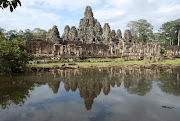
Sprawling Angkor engineered its own end
A NEW archaeological map confirms that Angkor in Cambodia was the biggest pre-industrial city ever founded and provides tantalising clues about its mysterious demise 500 years ago.
Sprawling about 1000sqkm out from its central religious heart with its legendary temples and reservoirs, known as Angkor Wat and Angkor Thom, the vast city was roughly the size of Singapore, or greater Sydney from the coast to Parramatta.
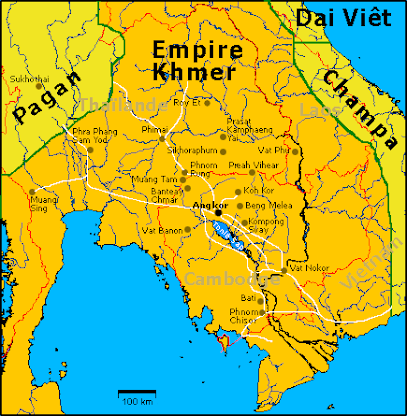
Angkor itself was the capital of a sparsely settled agricultural empire that stretched from Thailand in the north, across the flood plains, and southwards towards the Cambodia-Vietnam border.
"Like the modern world there was a vast expansion of the urban environment out into the rural world," said Sydney University archeologist Roland Fletcher, founder and co-director of the Australian, French and Cambodian Greater Angkor Project.
A goal of the project was to nail down the geographical extent of the city. According to GAP deputy director Damian Evans, a Sydney University doctoral student, the new map does just that.
"This is the culmination of about 15 years of mapping work," said Mr Evans, who led the effort to integrate the data into the map, revealed overnight in the US journal Proceedings of the National Academy of Sciences.
Sources included hand-drawn maps, ground surveys and airborne photography provided by GAP members and ground-sensing radar images provided by the US space agency NASA.
Not only does the map reveal the extent of Angkor -- a Khmer kingdom from the 9th to the 15th centuries -- it pinpoints over 1000 new water storage ponds and more than 74 long-lost temples. In its heyday, as many as 500,000 people may have lived in the sprawling low-density city. The map will allow scientists to tighten population estimates.
According to Mr Evans, the map also provides hard evidence backing the controversial hydraulic hypothesis.
This states that Angkor was linked by a vast network of irrigation channels, storage ponds and reservoirs. As the city grew, land was cleared, causing soil to clog the channels. Eventually, it became too expensive and complicated to keep the system free-flowing and it collapsed, taking Angkor with it.
The city, in essence, engineered its own demise by disrupting the environment.
"We can certainly see there were problems in the hydraulic networks," said Mr Evans.
"There's evidence of water courses punching through dykes and inadequate attention (to maintenance)."
Said Professor Fletcher: "It's a cautionary tale for the modern world."
Read more!
30 years later - still rebuilding Cambodia
Nun on a mission to restore education
GALESBURG -Sister Luise Ahrens is on a mission.
Or more accurately, many missions. Sr. Luise is on a two-month tour of the United States to visit with friends and family and raise money for Maryknoll, a Catholic mission group focused on ministry and missionary work overseas.
She was in Galesburg Sunday to visit her best friends from college, Pat Conklin, Galesburg, and Judy Scheider, St. Paul, Minn. Her sabbatical is part fun but also part work on her main mission.
Ahrens was invited to Cambodia in 1991 to help re-establish the Royal University of Phnom Penh and has been working toward that goal for 16 years.
"It has been like starting all over - the year zero started in 1979 for Cambodians" said Ahrens. "The country is filled with damaged people, people who don't trust each other and have no belief in what the future can bring."
During the Pol Pot regime, millions of Cambodians were killed by the Khmer Rouge. People with educations and religious beliefs as well as civil servants were many of those murdered. Only 15 percent of educated Cambodians survived the genocide.
The Royal University was hit particularly hard during the reign of terror. Only two educators and 36 students were still alive and able to return to re-establish the University in Phnom Penh.
"If someone spoke French, had soft hands, or wore glasses, they were killed," said Sr. Luise. The majority of Cambodians died in work camps.
"Those that survived were extremely traumatized," Ahrens said. "One student was buried alive while trying to escape capture. Many survivors lost entire families."
The task of re-opening the University was difficult on many levels. "There was no electricity, no water, no books," she said. "The Khmer Rouge kept pigs in the auditorium to degrade and discourage the people." The auditorium was also a holding place before people were sent to the camps.
"One of the first things we did was teach English to the faculty," Ahrens explained. "The program grew from there."
Ahrens said many of those people educated in the 1970s came back but were poorly educated. "There was no leadership in the country," she said. "People could buy an education if they had money and many educators were very bad."
"The biggest challenge we faced was ignorance," Ahrens said. "People could not imagine what their lives could be."
It will take time and several generations to move past that way of life and mentality said Ahrens.
"Things are growing, but growing corruptly," she said. "Children learn corruption at a young age and that stays with them. It is all they have known."
Ahrens said the country has 53 universities but only eight of them are public. She said anyone with money can open a university in just a few days but most are worthless.
Positive changes are slowly happening however. Ahrens has worked closely with leaders from World Bank who recently gave Royal University $1 million to double the size of the library.
About 50 students a year from around Cambodia are given scholarships for master's programs in universities all over the world. "Nearly everyone of those kids that entered the master's programs has done well," she said. Those students sent to get a good education are the people needed to change the country.
"It has to be the Cambodians wanting change and Cambodians promoting change," she said.
Ahrens, who has a Ph.D. in English literature, no longer teaches at the University, but as an assistant vice-rector serves as a liaison between government, faculty and students.
She entered the Maryknoll Sisters Congregation in 1960. She went on to earn her master of arts in English then earned her Ph.D. in English literature in 1969.
In 1984 Ahrens was elected president of the Congregation of the Maryknoll Sisters and served for six years.
The 69-year-old Ahrens said she gets around the Phnom Penh on a motorcycle and the only thing that scares her about living in the city is the traffic.
"Life is cheap there," she said. "But I'm not worried about my safety. I have salty spit."
Ahrens said her work is rewarding.
"I would do it if I didn't like it," she said. "It is the sense that I can make a difference, even small one. The words of the Gospel are so important - planting seeds and watching them grow."
Read more!
Cambodian Appeals Court president removed in bribery scandal
Phnom Penh - The president of the Cambodian Appeals Court has been removed from her position after an Interior Ministry investigation found her guilty of accepting bribes, local media reported Monday.
Khmer-language newspaper Rasmei Kampuchea and English-language Cambodia Daily quoted Justice Minister Ang Vong Wattana as saying Ly Vuoch Leng had been removed from her position at the head of the court after a request by Prime Minister Hun Sen and himself was granted by King Norodom Sihamoni.
The newspapers quoted Wattana as saying her removal was in relation to the release of two men convicted by a lower court of human trafficking offenses after a raid on a Phnom Penh hotel, the Chai Hour 2, in late 2004.
The men were sentenced to five and four years in jail respectively in February 2006, but the sentences were overturned by the Appeals Court. They were re-arrested in February 2007 for the same offense, prompting an investigation into their prior release.
Leng was subsequently found to have asked for 30,000 dollars in bribes in exchange for their release after an Interior Ministry investigation, according to newspaper reports.
Ang Vong Wattana was unavailable for comment Monday.
Donors have consistently called for judicial reform and controls on endemic corruption in Cambodia, which Paris-based watchdog Transparency International rated as one of the world's more corrupt nations in a recent survey.
The removal of Leng, listed by Who's Who as a member of the royalist Funcinpec party, may reignite controversy over a number of other cases which have passed through the Appeals Court in recent years, according to lawyers.
The family of New Zealand national Graham Cleghorn, whose appeal against a 20-year sentence for rape was upheld by the Appeals Court at its ninth attempt to be heard last month despite his witnesses again failing to be called, said Monday they were reassessing their legal options in light of Leng's removal.
In 2006, an appeal against a 10-year sentence for child sex was upheld against Australian Clinton Rex Betterridge in absentia by the court, despite all complainants recanting at the hearing and claiming they had been offered incentives to make their allegations.
The Australian government released Betterridge from a Queensland jail the same day, saying it had reasonable doubt he could receive justice if extradited to Cambodia.
Read more!
Sunday, August 12, 2007
Better practices for foreign aid
 professor Stuart Carr and Ishabel Mcwha
Professor Carr is now six months into an international project that is expected to lead to better practices in the complex world of foreign aid and the thousands who work in this field – from the poorest of local people to highly paid ex-pats. The project is called ADD-UP (Are Development Discrepancies Undermining Performance).
He has played a leading role in bringing together a team of psychologists and sociologists from 10 countries to examine the human dynamics of aid salary discrepancies and the significance of these big differences in income levels, to the outcome of projects in poor countries.
Professor Carr’s commitment to applying organisational psychology to the world of aid workers was triggered 15 years ago when he was working in Malawi and watching aid projects unravel, as the side effect of unfortunate human dynamics. Many years on, he says in a world “awash” with aid workers, there is growing acknowledgement that there have to be better practices. For this reason, he says, the research initiative has been widely applauded. A cornerstone of a best practice is that pay should be aligned and harmonised across worker groups.
Professor Carr has been establishing working relationships with groups in Malawi, Uganda, India, China, the Solomon Islands and Papua New Guinea.
Ishbel McWha, fresh off the plane from Cambodia, joined him at his Auckland-based office in July as project manager and research officer.
A postgraduate student at the University’s Palmerston North campus, she had developed a strong interest in the social marketing of poverty. In 2003 she headed for Rajasthan, in India, where she worked as the programme officer at a local NGO helping to raise the profile and expand the activity of the organisation.
Later she moved on to a local NGO in Cambodia to help build capacity. She learnt the language, travelled to remote places and embraced a rewarding but challenging time working towards local empowerment.
She blames a rogue mosquito under her desk for the subsequent onset of a very serious case of dengue fever that forced her to evacuate first to Bangkok and then home, to recover.
Determined to continue, she returned to her project in Cambodia. The chance to return to Massey and join the aid project enabled her to apply her education in a way she says she had never imagined.
Now she and Professor Carr have their international networks in place and they are developing the methodology and framework for this groundbreaking project.
Cambodia needs over 50 tons of microbial insecticide to fight dengue
Cambodia now needs more than 50 tons of microbial insecticide to fight the dengue fever around the country, local media reported Sunday.
The Cambodian Ministry of Health needs to distribute 50 to 60 tons of microbial insecticide to local residents to control the spread of dengue fever, Chinese-language newspaper the Cambodia Sin Chew Daily quoted ministry officials as saying.
Some 50 tons of microbial insecticide had already been distributed to people in the 19 provinces having dengue outbreak, it added.
The World Health Organization (WHO) is sending 25 tons microbial insecticide to the country, the newspaper said.
As of Aug. 2, there were about 29,000 cases of dengue in Cambodia and 316 deaths, according to statistics from the health ministry.
The microbial insecticide is used to kill wigglers in the water to prevent the spread of dengue fever, which is passed throughout a community in a cycle from mosquito to human and back again.
In 2006, 158 people died from the mosquito-borne virus, according to official statistics.
Source: Xinhua
Read more!
Volunteer Vietnamese doctors treat the poor in Cambodia
Communist Vietnam is trying to buy heart and soul of Cambodians by sending doctors to treat poor Cambodians in all provinces. Thanks Vietcong brother, but make sure you really do humanitarian jobs and don't give poisonous drugs to Cambodians. We knew it is not a free gift from Vietcong, exchange for more land or Phnom Penh?
PHNOM PENH — Poor in Cambodia’s Kampong Chhnang, Pursat and Battambang provinces, received free medical check-ups and treatment from volunteer Vietnamese doctors during a two-day visit that ended last Wednesday.
The charity medical drive was made by the HCM City Association for Support of Poor Patients in co-ordination with the Viet Nam Red Cross and the Command of Military Zone No. 7.
A voluntary team of 28 doctors, nurses and technicians from Military Hospital 7A and Nguyen Trai and Tu Du hospitals in HCM City performed free eye surgeries on 692 patients and gave obstetric and gynaecological examinations to 611 women in the three provinces.
All the patients also received medicine and health care gifts worth a total of VND1.35 billion from the Viet Nam Red Cross.
The work was part of the first phase of a charitable medical examination and treatment programme in Cambodian provinces reached by Vietnamese President Nguyen Minh Triet and Cambodian King Norodom Sihamoni during President Triet’s official visit to Cambodia in February.
Cambodian Deputy Prime Minister, Kong Som Ol, said he appreciated the health drive and thanked President Nguyen Minh Triet and the Vietnamese people for their work.
Kong Som Ol, who is also Minister of the Royal Palace of Cambodia, said the aid reflected Viet Nam’s whole-hearted sentiment to Cambodia, affirming the two countries’ traditional solidarity and friendship.
The Deputy Prime Minister said he hoped that impoverished people in all Cambodian provinces would continue receiving medical assistance from Vietnamese physicians under plans to expand the charity programme.
Le Thanh Hai, Permanent Vice Chairman of the HCM City Association for Support of Poor Patients, affirmed that the programme on free eye operations for the poor will be carried out in all Cambodian provinces.
From 2008, he said, the HCM City Association for Support of Poor Patients would conduct free annual reconstructive surgery for Cambodian children with harelips and cleft palates and present 100 wheelchairs to disabled Cambodians.
He said that since 2003, his association had given free eye operations to 7,500 poor patients in 13 Cambodian provinces. — VNS
Read more!
Saturday, August 11, 2007
THIRD ANNUAL CYCLING TRIP THROUGH CAMBODIA RAISES MONEY FOR EDUCATION
PEPY, an adventure cycle tour and humanitarian aid organization, announces its third annual bike ride through Cambodia this winter. For three weeks beginning December 23rd 2007, a team of volunteers will cycle through the rural Cambodian countryside, volunteering at schools, teaching English and environmental lessons, and meeting with NGOs to better understand local development projects.
Prior to coming to Cambodia, participants will each fundraise $2,000 which will go towards PEPY’s educational programs in the area. PEPY has several innovative programs which aim to increase education in developing areas. To date, PEPY has funded the construction of two rural schools. They also run an English and Computer program, and a bike-lending program that offers bikes to graduating 6th graders so that they can reach rural secondary schools, often 5-10 kilometers away from their homes. In the past year, PEPY has started a library program aimed at increasing literacy among students, teachers, and community members. These programs are allowing a greater number of children to not only bike to school, but have access to a greater wealth of knowledge.
The PEPY Ride was formed in December 2005, beginning a tradition of bringing cyclists from around the world to Cambodia to visit schools and orphanages and spread the PEPY message, "Protect the Earth. Protect Yourself." Since this first ride, PEPY has led 15 volunteer and cycling tours. While biking across Cambodia, volunteers stop along the way to deliver school supplies, visit orphanages and teach classes on environmental awareness. To date, the PEPY Ride has raised nearly $200,000 for organizations supporting educational projects.
PEPY offers unique trips every year ranging from high intensity multi-week bike trips to week-long volunteer projects that focus on a specific development area. Each volunteer tour is designed to give participants an introduction to development work in Cambodia, with hands on experience, volunteering with the organizations their fundraising efforts support.
The PEPY Ride’s co-founder, Daniela Papi says, “Many people donate in support of development projects they will never visit, but with PEPY, you can go where your money goes. By joining one of our trips, you see firsthand the difference you are making.”
The PEPY Ride III will attempt to spread awareness on the state of Cambodia’s education and environmental condition, while each participant experiences an authentic cultural submersion through hands-on volunteering.
For more information, to make a donation, or to sign up for any of the upcoming volunteer trips, please visit www.pepyride.org .
The PEPY Ride is a New York State registered Non-for-Profit Corporation founded in 2005 to support educational projects in developing countries and disaster relief areas with a focus on the relationship between the environment and our health. PEPY Tours organizes volunteer and adventure travel in developing countries and redevelopment areas suffering from natural disasters. The PEPY Ride emphasizes education through action, where participants both learn from and give back to the communities they visit.
Read more!
Cambodia: Court Sentences 6 Cambodian Men Over Terrorist Plot
PHNOM PENH, CAMBODIA: 6 Cambodian men were jailed for up to 12 years for plotting to bomb a crowded festival in the capital last year as part of a broader plan to overthrow the government, a judge said Friday (Aug 10th).
Judge Kim Ravy of the Phnom Penh Municipal Court said the plan to plant bombs among the crowd at the traditional water festival in Phnom Penh last October was foiled when authorities arrested the 6 men.
He said the bombings were part of a plot to remove the government. It was unclear how close the plan came to being realized.
The judge said he sentenced 4 men, who appeared in court Thursday (Aug 9th), to 6 years' jail. 2 other men were convicted in absentia and sentenced to 10 years and 12 years in prison, he said.
Tieng Vuthea, a Cambodian lawyer representing the four men at Thursday's hearing, said the charges against his clients were groundless and that he will appeal the ruling.
Earlier this month, in an apparently unrelated case, a Cambodian court charged two men with terrorism over a failed plot to blow up a controversial monument in the heart of the capital.
Police arrested the two on July 30th, a day after explosive disposal experts defused bombs planted at Phnom Penh's Cambodia-Vietnam friendship monument. Critics of Prime Minister Hun Sen's government say the monument shows too much closeness to neighboring Vietnam, Cambodia's traditional enemy.
The most violent terrorist incident to shake the Cambodian capital in recent years occurred on Nov 24th, 2000, when attackers with grenades and machine guns mounted pre-dawn assaults on government buildings in Phnom Penh. The rebels were easily overwhelmed by government forces, and 6 attackers and a civilian bystander were killed.
The attack was allegedly organized by a California-based group called the Cambodian Freedom Fighters, who are opposed to Hun Sen's regime. Dozens of its followers were tried and convicted over the incident, receiving sentences ranging from 3 years to life in prison. (AP. )
Read more!
Police group presents $11,000 check to family of slain San Jose woman
By Jessie Mangaliman and Sean Webby
One note on an index card said, "I wish I can afford to give more." Another card in the giant stack said, "My deepest sorrow for your loss." Sokhim Sann, standing outside her East San Jose home, clutched them all to her chest and fought back the tears.
In the weeks since Sann's niece Sany San, 46, was slain in what police say is one of San Jose's most horrific attacks in recent years, kind wishes and checks had been flooding the San Jose Police Officers Association. Friday morning, association officials presented Sann with the cards and, in a flooring gesture, a check for $11,000.
"I'm moved and happy that people care," Sann said, accepting the donation on behalf of her sister, Muykeh Him, 64, San's mother, who lives in western Cambodia.
Bobby Lopez, president of the police association, said his organization received hundreds of donations, from $5 to $100, many of them accompanied by handwritten notes. The San Jose woman's shocking death touched a nerve throughout the community. In addition to the outpouring of generosity, hundreds of people also turned out for San's memorial service late last month.
"Cops don't just leave the scene of a crime," Lopez said. "We have compassion. We have to be able as human beings to provide and give something back to the city."
Sann's 26-year-old son, Dararith Kim, said the money will be wired to San's ailing mother, and two siblings in Cambodia - a sister, Sochiata Him, 30, and a brother, Chancoma Him, 28
who live in a decrepit farmhouse in Battambang, in western Cambodia. The siblings are seasonal farm workers. The money will pay for health care for San's mother, and improvements to the farmhouse, Kim said.
San, a seamstress, emigrated from Cambodia four years ago to earn a better living for her impoverished family. Her dream, Kim said, was to save enough to help her family pay for home improvements.
San had survived the genocidal rampage of the Khmer Rouge - a regime that killed 3 million people in the 1970s. But her family, like many in Cambodia, endured great hardships, including starvation and death in forced-labor camps. San's father and four of her siblings died during the Khmer Rouge rule, which ended in 1979.
Early July 22, a Sunday, San was walking from her aunt's house in East San Jose, on her way to catch a bus to her job at a doughnut shop near Palo Alto. Police say two homeless men approached her, looking to rob her. The men then beat and dragged her behind bushes, raped her, then stabbed her repeatedly, leaving her to die, police said.
Two men are in custody, awaiting a hearing on charges of kidnapping, murder and rape.
"This is one of the most violent and senseless crimes we've seen in years," Lopez said. "People care very much about what happened."
For that reason, Lopez said, the association, which represents San Jose's police officers and has raised more than $100,000 on behalf of victims since 2006, chose to collect money for San's family. The Santa Clara County Victim Witness Assistance Center also pitched in $7,500, to help with funeral expenses.
"We don't know where we would be if people had not helped us," Kim said. "It's just overwhelming for me and my mother, and we can't say enough thank yous to everyone who helped."
Read more!
Friday, August 10, 2007
Cambodia to expand navy in gulf to guard oil fields
PHNOM PENH, Aug. 10 (Xinhua) -- The Cambodian Ministry of National Defense is planning to significantly expand the Royal Cambodian Navy's presence in the Gulf of Thailand to provide security for companies searching for and extracting oil, local media said on Friday.
The navy will triple its size and increase patrols to defend Cambodia's offshore oil fields and maritime integrity, Minister of Defense Tea Banh was quoted by English-language newspaper the Cambodian Daily as saying.
He declined to comment further on the plan, which has not been officially approved.
The details of the naval expansion will be decided next month at a Ministry of Defense seminar, the paper quoted another source as saying.
The seminar will be co-sponsored by the Germany-based Friedrich Naumann Foundation, said lawmaker Yim Sovann, chairman of the National Assembly commission on national defense.
"We need to post patrols along the coast in order to provide security to oil exploration companies. We want to protect the property of investors from terrorism," he added.
Along the southwestern coast of the kingdom, several companies from the United States, South Korea and Cambodia itself have been searching for oil in the past years. The concerned sides have confirmed rich reservation of oil and natural gas and production is expected to start in 2008.
Read more!
India face Cambodia in opener
NEW DELHI, Aug. 9: India will face Cambodia in the opening match of the five-nation ONGC Nehru Cup International football tournament to begin from 17 August at the Ambedkar Stadium. The tournament was initially perceived to be a six-nation event but the refusal of the Iranian football authority to send the national team forces the All India Football Federation (AIFF) to stick to five teams.
“Iran first accepted the offer to take part but then they said they wont be able to send their national team. We then asked of they could send their under-23 team, but they said they could send a club team, which is unacceptable to us,” AIFF general secretary Mr Alberto Colaco said on the sidelines of the unveiling of the Nehru Cup trophy here today. With the absence of Iran, Syria (113 in Fifa list) will be highest rank team in the tournament.
Kyrgyzstan (152) is the next in the list followed by host and former Asian games gold-medalist India (162), Cambodia (170) and former Indian star and coach Syed Nayeemuddin’s Bangladesh (172).
The revival of the tournament is a big boost for the football in the country as AIFF, along with Fifa and Asian Football Confederation (AFC), were trying to revive the game in the country. In that regard AFC has already started two Vision India projects ~ in New Delhi and Manipur ~ and earlier this year had announced two more projects in the Tamil Nadu and Kerala.
In a jocular vein AIFF president Mr Priya Ranjan Dasmunshi accepted the popular demand from various quarters to give more international experience to the Indian national team.
“We accept the demand for more international exposure to the team. From now on we will try to organise more such matches for our team,” Mr Dasmunshi said. He also announced that President of India Mrs Pratibha Patil will inaugurate the event on 17 August.
AIFF worried
It looks like the global security concern has bug the Indian football team as All India Football Federation (AIFF) today expressed its concern about the security of its players who will visit the country in October for the away match for the first round of World Cup Qualifiers.
But the as of now the federation is ready to play in the country. “As of now, we are ready to play in Lebanon. .
Read more!
Thursday, August 09, 2007
Cambodia all set for Viet Nam Friendship Associations
Establishing Cambodia-Vietnam Friendship Associations in every city of Cambodia. Are they going to be Vietnamese headquarters to spy on every cambodian? or Cammand posts to grab Cambodians' land?
PHNOM PENH — Cambodia is well on its way to establishing Cambodia-Viet Nam Friendship Associations in all its cities and provinces, Vice President of the UFCDK (Cambodian United Front for National Construction and Defence) Min Khin has said.
Min Khin revealed the plan to Vietnam News Agency reporters in Phnom Penh yesterday.
At a meeting with visiting Vice President of the Viet Nam Fatherland Front and President of the HCM City Fatherland Front, Tran Thanh Long, Min Khin said after one year, the UFCDK had completed the framework for branches in all of Cambodia’s 24 cities and provinces.
Recently, UFCDK chapters in provinces close to Viet Nam had burgeoned ties with the Fatherland Front chapters in Vietnamese provinces, and received aid from Viet Nam, he said.
Long and Min Khin agreed to boost co-operation between the Fatherland Front of Viet Nam and the UFCDK in the future.
During Long’s visit, HCM City’s Fatherland Front granted the Vietnamese Association in Cambodia money to build five charity houses for poor Vietnamese living in Cambodia. — VNS
Read more!
Wednesday, August 08, 2007
UN Calls on Cambodia to Protect Land of Indigenous People
By Ker Munthit, Associated Press Writer
PHNOM PENH, Cambodia (AP) -- The United Nations criticized Cambodia's government Wednesday for doing little to protect the land of indigenous people, whose livelihood has increasingly come under threat from land-grabbing by the rich and powerful.
The government needs to take swift action to halt land-grabbing in tribal areas, the U.N. Office for the High Commissioner for Human Rights in Cambodia said in a statement Wednesday. The statement was released to mark the International Day of the World's Indigenous Peoples on Thursday.
"There are continuing concerns about the protection of indigenous land. Of particular concern is the growing number of economic land concessions and mining licenses granted over indigenous land, without community consultation," it said.
Members of the Tampoun ethnic minority in the remote northeastern province of Rattanakiri said Wednesday they were forced to bury their tribal chief at a new site after their ancestral graveyard was sold to a private owner, an action they feared could bring them bad luck.
The U.N. office noted that Cambodia's land law passed in 2001 recognizes the right of indigenous communities to collective ownership of their lands, which includes land reserved for shifting cultivation.
But in the six years since then, "not a single collective land title" had been issued to any indigenous community by the government, it said.
In recent years, land disputes have become frequent occurrences in Cambodia, usually pitting poor farmers against developers. Several people have been killed.
Yash Ghai, the U.N. secretary-general's special representative for human rights in Cambodia, expressed deep concern about ethnic minority groups losing out on land to business allies of the government.
"A wealthy and powerful social class has emerged on the back of the state through the exploitation of the people and the country's resources, relying on access to, and accumulation through, the apparatus of the state," he said in his report to the U.N. High Commissioner for Human Rights in June.
Instead of helping the indigenous people, "the government tilts in favor of business companies whenever their interests clash with the interests of rural or urban people," he said.
The government called his allegations unacceptable.
In the Rattanakiri case, the relatives of Bou Nuth, a 76-year-old tribal chief who died Sunday, were barred from burying his body in their ancestral graveyard, said Tev Mak, the deceased man's nephew.
Instead, they had to bury him about 1 kilometer away from their village, contrary to tradition that says the deceased must be buried near their home, he said.
Seng Thung, a village chief, said the old graveyard, covering about 10 acres, was sold to a senior provincial official in recent years by an unknown individual who had claimed ownership over the property.
Sak Son, a provincial district deputy governor, dismissed the villagers' claim the land was their ancestral graveyard, saying only that it belongs to a provincial official whom he declined to name.
Read more!
Cambodia and Vietnam to build cross-border golf course
PHNOM PENH (Reuters) - Cambodia and Vietnam are going to build a $100 million (49.2 million pounds) golf course straddling their border in a region heavily bombed by U.S. forces in their anti-communist war in the 1960s and 70s, officials said on Wednesday.
The "Cambodia-Vietnam Friendship Golf Resort" to be developed jointly by Cambodia's Bada Investment Co. and a Malaysian firm called VXL will take five years to build and will have nine holes in each country, as well as a 450-room five-star hotel.
A helicopter service will be able to carry visitors from Cambodia's famed Angkor Wat temples to the resort, tourism minister Thong Khon said.
"After visiting Angkor, they can play golf before heading to swim at the beaches," he told Reuters.
Cambodia leased five islands in the Gulf of Thailand for $627 million to six local companies and foreign investors to build tourist resorts. It now has two golf courses near Phnom Penh and two near Angkor.
The southeast Asian nation is fast putting the legacy of Pol Pot's Killing Fields behind it, with economic growth in last two years at around 10 percent and foreign visitors climbing rapidly to the 2 million-a-year mark.
Read more!
Japan announces military co-op with Cambodia
PHNOM PENH, Aug. 7 (Xinhua) -- Japan's Defense Ministry will deepen bilateral ties with Cambodia's Defense Ministry in attempt to strengthen security in the region and the world, local newspapers reported Tuesday.
Japanese Deputy Defense Minister Takahide Kimura announced a plan during a meeting with Cambodian Prime Minister Hun Sen on Monday in Phnom Penh, the Koh Santepheap newspaper said.
The military collaboration is a result of a deal struck between the two countries during Hun Sen's visit to Japan in June, Takahide Kimura was quoted as saying.
Eang Sophalleth, advisor to the premier, said Hun Sen welcomed the cooperation and asked the Japanese side to train the Royal Cambodian Armed Forces in engineering so that they can construct roads in rural areas and assist people during national emergencies, the Rasmei Kampuchea newspaper said.
Read more!
Australia grants 2 million dollars to Cambodian land mine victims
Phnom Penh - Australia will provide 2.14 million dollars in aid over two years to help improve rehabilitation services for landmine victims in remote areas of Cambodia, the Australian government said Tuesday. In a statement posted on the AusAid website, the Ministry for Foreign Affairs said it would fund the supply of prosthetic limbs and skills'-training programmes, and support rehabilitation centres.
"Landmines and unexploded ordnance are significant obstacles to reconstruction and development," it said. "Australia's new aid package will help reduce suffering and lessen the threat and socio-economic impact of landmines and other explosive remnants of war in Cambodia."
Up to 6 million land mines and unexploded ordinance still litter parts of Cambodia after 30 years of civil war and US bombing during the Vietnam War era.
The Australian government said the two-year package would go towards assisting the Cambodian Red Cross provide survivor assistance and mine-risk education and support the Cambodian government develop a victim-assistance plan.
Australia has provided about 47 million dollars on mine action in Cambodia since 1996, the statement said, adding that international aid from Australia "has significantly reduced landmine and unexploded ordnance casualty rates in Cambodia by over 80 per cent in the past decade".
Read more!
Vietnamese firms eye rubber cultivation in Cambodia
Three Vietnamese businesses have teamed up to kick-start a joint stock company that will cultivate rubber in Cambodia.
The Phu Rieng-Karatie Joint Stock Company has a total chartered capital of 200 billion VND. The Viet Nam Rubber Industry Group holds a 40 percent stake in the company, with the Phu Rieng Rubber Company and the Da River Corporation coming in for 30 percent each.
A 70 year lease on nearly 1,000 ha of land in Cambodia’s Karatie province was secured by the firm. Some 300 ha of land has been reclaimed and 100 ha is already having rubber trees.
Read more!
Monday, August 06, 2007
Cambodia : Garment sector competes & thrives
Wearing a dark-blue uniform, with red trim, and standing next to a huge ironing machine in a garment factory in Phnom Penh, 20-years-old, Son Sean, smiles and responds: “My family has better living conditions now,” she pauses and continues while pushing a collar into the machine, “From my earnings, my mother has been able to build a 5 by 7 meter brick house with a tiled roof, and my 15 year-old sister has been able to continue her schooling.”
Son Sean is one of many garment workers who come from the poor Cambodian province of Svay Rieng, located about 120 km east of Phnom Penh. She earns on average about US$70 per month, depending on how much overtime she gets, and each month, Sean sends US$50 to US$90 cash home to support her 50-year old widowed mother and her younger sister, who studies in the fifth grade.
Sean’s co-worker, Vong Pak, 39, smiles proudly when asked whether she supports members of her family with her earnings. “From my salary I support my 68-year-old mother, my four children and I pay for my children’s schooling,” she says while sewing a shirt. Pak is the breadwinner of the family. Three of her four children, who are 14, 12, 7, and 3 years old, are in school now.
Both Sean and Pak work at the New Island Clothing garment factory (NIC), along with more than 800 other workers. NIC is one of 290 garment factories in Cambodia which exports goods to the United States and Europe. NIC operates in six countries: Cambodia, Indonesia, Sri Lanka, Vietnam, Lithuania and Mauritius.
The company produces men's and ladies’ formal and casual shirts, supplying these to Marks & Spencers, as well as to premium overseas customers. New Island is a winner of Cambodia’s First Corporate Citizenship Awards which were sponsored by the World Bank Group’s private sector financing arm, the International Finance Corporation (IFC) in 2005.
Cambodia’s garment industry is the country’s main industry and its leading export revenue earner. In 2006, exports totaled US$2.5 billion and the sector employed 330,000 mostly poorer rural women, who in turn support extended families. In total, an estimated 1.7 million people depend on the garment industry directly or indirectly.
According to the report Export Diversification and Value Addition for Human Development which was published by the Economic Institute of Cambodia in June 2007, garment industry workers earn an average of US$73 per month, 29 percent of which comes from overtime work.
Representing almost 80 percent of Cambodia’s total exports, the sector is crucial to Cambodia’s economy. However, increasing global competition makes the industry vulnerable, and so a variety of approaches are needed to help the industry sustain itself.
Read more!
Community Project: Fair Trade Fashion From Cambodia
When Japanese art critique Marie Furuta moved from Mexico to Cambodia in 2004 she soon decided to set up "something small" in her new home that would support the community and involve fair trade. Finding a strong fashion industry in Cambodia in general and looking at local, traditional materials, she decided to set up a new fair trade accessory label and simply called Sait - meaning beauty in Khmer!
Now she manages 5 different communities in Cambodia around Siem Reap to produce the accessories from scratch: anything from planting the trees for wild silk worms to grow, to gathering the cocoons for the precious Cambodian silk used for her bags and scarfs, creating the fabrics, designing and finally manufacturing the accessories. There are currently about 150 Cambodians making a fair living by working for Sait (http://www.republiqueair.com/ - sorry only really Japanese at this stage).
To share this spark of positive entrepreneurship today - read on!
Worldchanging: Marie, how did you start your fair trade company "Sait"? What were the first steps?
Marie: It all started little by little. By summer 2005, one year after living in Cambodia, I focussed my formerly vague idea of "helping the communities" on working with silk products, pitched my business plan to local NGOs, raised some money and looked for workshops who were interested in my project. I basically went around Cambodia and talked to the crafters to find out what problems they were facing and how to help them best. I now have 5 communities that I chose to work with and who agreed on this idea of creating bags and products with artisans to be sold in Japan and Spain.
It took me about one year to really fix the ideas of the workshop, create optimal working conditions and find buyers. In 2006 we started selling and things have been going well since then - step by step.
Worldchanging: What would you say is different about the way you run your fair trade company compared to others around?
Marie: There are lots of workshops in Cambodia already and lots of fair trade companies, so people don't view me or Sait as extraordinary as such, but they know that we are one of the few "fair" ones amongst all of those who "claim" to be fair.
I set up 3 important agreements with the people from my workshops:
1. The project must be community based, so it needs to stay relatively small. There are lots of big companies here doing fair trade, but instead of just creating a place for the crafters to go and "give them more work to do", I really wanted them to be able to work from their communities based on their schedules.
2. They have to be involved in the design of the actual product. This protects them from dull labour work and forces them to be creative, think about what they are producing, it educates and makes them more independent - and happier - in the end.
3. Maximum transparency. I have to tell them for how much I am selling their accessories in Japan and Spain, how much the shipping costs, how much the store keeps, how much money I spend for internet purposes etc. so things are kept as transparent as possible. They really need to understand how much things costs and recognize their own and the products' value in the chain of retail. Also we decided to sell the product very cheap (about 1500Yen for a middle size handmade 100% pure silk handbag) so that we sell more and make more profit in the end.
Worldchanging: Why is it so important or the crafters to stay in their community to work?
Marie: It is a real problem to provide work in Cambodia, since there are so many handicapped people due to land-mines. 3 managers out of 5 from my workshops are disabled. Many can actually still work but in order to get to or from work, or onto the chair etc. requires someone to help them. That is why working in a community makes it easy from the start.
On a normal day there could be 5 crafters from one community actively working, but one of them would do all the domestic tasks (helping the disabled, cooking, looking after the children etc.) and the others work on the accessories. The next day they would switch roles to keep everyone involved.
Since they are all good in making the products, it also allows them to go in and out. A while ago someone's brother had a problem and joined the community for some time,
stayed to earn money and once he had enough he left again to look for a new job. That gives people a lot of support in a country where there isn't such a system as social security established yet.
Worldchanging: How do you see the whole aspect of design in your project?
Marie: Design is one of the most important factors, definitely. I want our customers to buy our products because they really love the design - and as a result they are also helping. You cannot build on the idea of wanting to help through fair trade, since - hopefully - one day the country grows and there would then be no need for buying their "products to help" anymore.
The crafters have to learn how to create products of great value that are unique, have a local feel to them but also suit the needs of the customers (e.g. smaller "party size" bags for Spain, stylish silk bags to match Kimono in Japan or bags with an extra compartment for laptops). That is why I am really pushing for locally crafted and designed products that come from Cambodia. If our products convince as a product and you are surprised to realize all the story behind it - then buying these bags is twice as good as purchasing an ordinary product and we achieved our goal.
Also I really believe in handmade things. You feel it somehow! Also - knowing that the product has a greater value than another mass produced item might keep you using it for another year or two - adding to a healthier environment in that respect.
Worldchanging: A lot of culture and an overall identity has been destroyed in Cambodia and it is now on its way to re-define itself. Where do you see your role in this as a young entrepreneur?
Marie: Using traditional materials like silk for our accessories but trying to come up with something new on their own is one way to help our crafters to create a rooted but new identity to touch.
Also 10% of all our sales go to the Modern Art Project in Cambodia supporting contemporary local artists - which makes our crafters understand, that they are also contributing to help their own country flourish by supporting the arts.
This Modern Art Project raises money for Cambodian artists to exhibit their works in Cambodia or abroad - through small donators like us, bigger ones like Art Pacific (http://www.aapmag.com/) or from charity auctions of the artworks.
2005 was the first time that all Cambodian artists got pulled together which raised the awareness that there is such a thing as an emerging art scene in Cambodia in the first place. You should keep an eye on artists like Vann Nath and Svay Ken!
Worldchanging: Any last words from you? Future plans?
Marie: The one thing I am trying to improve right now is that we switch to using organic dyes. Somehow our crafters see the organic, traditional colors and all they can think of are traditional style Khmer bags! They simply freeze. So for now we work with toxic free dyes (http://www.twn.tuv.com/english/Services/product/approvals/tox.htm) from Oekotex (http://www.oeko-tex.com/OekoTex100_PUBLIC/index.asp), Germany. It is a slow process to convince them but we really only just started this, so there is a big learning curve ahead!
Also I am constantly looking for designers who would like to collaborate with us - designing new patterns or coming over to do a workshop.
Thank you Marie and good luck for that!!!
Sait's web-page (http://www.republiqueair.com/) is - unfortunately - only in Japanese at this point. For more info about their products or where to buy them in your country please contact Marie directly marie.furuta@republiqueair.com
Read more!
Russian telecommunication operators’ landing in Cambodia
The Russian Telecommunication companies have broken through in their international expansion, having entered the Southeast Asia market. The Altimo Holding has bought Sotelco, the Cambodian mobile and wireless operator. The given operator has no network of its own, so Altimo is likely to resell it in the near future.
The Altimo Telecommunications Holding announced buying a 90% stake in Sotelco, providing WiMax wireless services in Cambodia and having a license for GSM 900/1800. That is the first transaction on purchasing the Southeast Asia assets by a Russian telecommunications company. Besides Cambodia, Altimo is going to make some purchases in Vietnam and Indonesia. Dmitri Vosianov, handling Altimo stake in MegaFon, is to supervise the given line.
Altimo indicates neither the transaction charge, nor the seller’s name, nor the bought operator performance index. When preparing the given publication, it was impossible to get any of the company’s representative for comments. The operator is likely to have been granted the cellular license not long ago, so it has not even started providing the services. At present there are three GSM-operators in the Cambodian market. They are CamGSM (operating in the 900 MHz range under the Mobitel brand, owned by the Millicom International Cellular international corporation), Cambodia Shinawatra (Camshin, 1800 MHz) and Telekom Malaysia International Cambodia (900 MHz, Hello GSM trading mark). Cambodia Advance Communications (Cadcomms) and Applifone also own the unrealized license for the 1800 MHz range.
Thus, Sotelco is the only mobile operator possessing frequencies in both GSM ranges. But Sotelco has no license for the 3G communication. At the same time, CamGSM and Cadcomms have license for 3G compatible with GSM UMTS, while CDMA-200 is owned by Azcom (800 MHz range) and Camshin (450 MHz).
Cambodia population is 14 mln., the absolute market leader being CamGSM with 1.3 mln. subscribers. “The mobile communication penetration in Cambodia is a little bit more than 10%, - Mr. Vosianov notes. – However, the country is rich in natural resources, including offshore oil, its economy growth exceeding 7% a year. We believe Cambodia cellular market growth potential is high”.
However, holding controlling interest is not characteristic of financial investors, such as Altimo. Of all it assets the Holding holds control only over Metrosvyaz CDMA-operator, a small Russian operator. According to a person, familiar with the situation, Altimo is to resell Sotelco, VimpelCom is likely to be the buyer. Altimo owns 44% of voting shares in the mentioned operator and has been reselling its mobile assets in Russia and CIS to VimpelCom so far.
Although the mentioned transaction was the first telecommunication assets acquisition in the Southeast Asia for the Russian investors, the CIS companies has already got assets in the mentioned market. According to CNews, a group of Kazakh investors launched Spice Nepal Private cellular network in Nepal in 2005, which is the second mobile operator in the republic after the public Nepal Telecommunications Corporation. The Kazakh partners in the given projects are the local governmental authorities businessmen. It is interesting the same investment group together with Altimo owns BiTel and SkyMobile, the Kirghiz mobile operators.
Read more!
Lao president arrives in Cambodia for official visit
Phnom Penh - Lao People's Democratic Republic President Choummaly Sayasone arrived in Cambodia Monday on a three-day state visit at the invitation of King Norodom Sihamoni.
The Foreign Ministry said that apart from an audience with the king, Sayasone and his delegation would also meet with Prime Minister Hun Sen and other senior politicians during his visit.
Lao borders Cambodia to the north and the two nations - both members of the Association of Southeast Asian Nations - have made increasing bilateral trading ties a priority.
Sayasone, who was appointed president in June 2006, is also head of state of Lao.
Read more!
Genocide tourism: Tragedy becomes a destination
By Steve Silva
August 5, 2007
Julie Dermansky is a genocide tourist.
Since visiting the former Nazi death camp at Dachau in 1997, Dermansky, a 40-year-old from Santa Monica, Calif., has seen the killing fields in Cambodia, walked through mass grave sites in Bosnia and stood among human remains in Rwanda. She is, in her own words, obsessed.
"Why go to Club Med," Dermansky, a photographer, asks, "when you can witness this kind of history?"
She is not alone. An increasing number of tourists are traveling to places of horrific human catastrophe. In Rwanda, Bosnia and Armenia, travelers pay their respects to victims of genocide at popular memorials and cemeteries. Even Kurdistan in Iraq, scene of an ethic cleansing campaign during the 1980s, is promoting its horrible past with a genocide museum. Tragedy has become a destination.
Nearly a million tourists visited the Auschwitz-Birkenau Museum in 2005, up from half that the year before. Other former death camps have seen a similar increase in recent years.
Lately at Auschwitz, the growth in tourism has made for some odd juxtapositions. Visitors dine in a newly renovated cafeteria built within the large room where thousands of Nazi victims were processed upon arrival at the camp. This blending of modern tourist convenience and the apparatus of organized death disturbed Dermansky.
"It's a tourist jungle," she says.
While they are perhaps the best known, the concentration camps scattered across Germany and Eastern Europe are not the only genocide sites seeing an increase in visitors.
To accommodate the swelling tourist trade, the Cambodian government last year hired a Japanese firm to build a visitors center and hotel adjacent to the Choeung Ek killing field near Phnom Penh. When the visitors center opens next year, the new company will charge a $3 admission fee rather than the current 50 cents. The town of Anlong Veng in northwest Cambodia is building a genocide museum in the renovated houses of former Khmer Rouge officials to attract tourists.
Tourism Cambodia, a private travel company based in Phnom Penh, offers an assortment of tours specifically geared to genocide tourists. In addition to Choeung Ek, the company highlights excursions to the Tuol Sleng Museum, a school-turned-prison where some 17,000 people were killed between 1977 and 1979; the Kamping Puoy Reservoir, a Khmer Rouge work project made famous by the late Haing S. Ngor in his book "Survival in Cambodia's Killing Fields"; and the civil war museum in Siem Reap. The Tourism Cambodia Web site warns that these sites are "not for the squeamish."
Bosnia on the list
Sarajevo, Bosnia, is another center for genocide tourism. According to the Bosnia-Herzegovina Tourism Board, visits to the country were up 25 percent in 2005 from the previous year and are running nearly 20 percent ahead this year.
"We've come to terms that there are places in our country that attract tourists because of war history," Arna Ugljen, the tourism board's director of public relations, said.
Teri-Lynn Spiteri is one such visitor. She was deeply moved by the plight of Bosnians during the war in the 1990s, especially the massacre of 8,000 civilians at Srebernica in 1995. Watching the news at the time, Spiteri, who has been to the former Nazi death camp at Dachau twice, was reminded of the Holocaust.
"I recalled hearing over and over during history class in high school how 'nothing like this will ever happen again' and 'those who forget the past are bound to repeat it,'" she says.
Spurred by the 10th anniversary of the massacre at Srebernica and compelled to see for herself the impact of the events she'd witnessed on television, Spiteri, 42, traveled to Sarajevo in 2005. Her friends and family didn't understand why she needed to go. And although Spiteri regularly traveled alone, they were also concerned for her safety. Seeing the anniversary coverage on the news, Spiteri's mother was convinced that the war was ongoing and tried daily to talk her into staying home.
"Once I left," she says, "I had to call every day, and if I missed a day I paid dearly for it on my next call home."
While she did not get to Srebernica on that trip -- NATO peacekeepers she met in Sarajevo warned her that something was "brewing" in the area -- Spiteri did encounter a Serbian general being interviewed by Italian television. Speaking through an interpreter, the general expressed his surprise that she was a tourist.
A need for reflecting
For Spiteri, the trip to Bosnia was the culmination of a decade of fascination with the struggle and recovery of the local people. She says she worries that other travelers bent on visiting genocide sites might not be so reflective.
"If you are going just for thrill seeking, hoping to find 'remains,' or perhaps get a kick out of others' misery, I'm disgusted by that," she says.
Not everyone is sanguine about the development of genocide tourism. Tessa Somerville of the Kurdistan Development Corporation, a private commercial investment firm working with the Kurdish government, is repelled by the idea of dark tourism.
"How can people vacation when mothers are giving birth to babies who are affected by the chemicals which rained down during Saddam's Anfal Campaign and there are many people still searching for loved ones who have disappeared?" she asks.
Some in the travel industry are ambivalent about the spread of genocide tourism.
"To each their own," says travel agent Steve Murphy of Kumuka Worldwide in New York. "I guess people wouldn't offer it if there wasn't a market for it, whatever your own decision on it."
Murphy is afraid that genocide tourism exploits the local population while enriching a few tour operators.
'He cried like a baby'
Rajan Tiwari, director of Kiboko Tours & Travel in Kilgali, Rwanda, shares some of Murphy's feelings about genocide tourism and prefers to point out more conventionally uplifting attractions -- like a temperate climate and endangered gorillas.
"The genocide was and still is painful," he says, "Personally I feel it is quite important that visitors visit to understand the Rwandans better, and they do."
Tiwari remembers an American accountant who while at the genocide site in Ntaramta broke down and collapsed in Tiwari's arms. "He cried like a baby," he recalls.
For Tiwari the genocide exists in two worlds -- a heartbreaking past that lingers each day and a future that holds the promise of understanding and recovery.
Standing in a church in Rwanda where Hutus murdered 5,000 ethnic Tutsis in 1994, Dermansky faced a similar quandary. As she surveyed a scene of horror -- disintegrating clothing and shoes scattered among bones and other scraps of human remains -- she thought about the visitors who would come after her.
If the local authorities cleaned up -- or "sanitized," in her words -- this place, would future visitors feel the same sense of horror that she felt? Was she being selfish in her desire to witness such devastation?
Dermansky is already planning her next trip. It's simply a matter of where to go next.
"Nowhere has a monopoly on injustice," she says.
Read more!
Official land grab in Cambodia mirrors situation across region
TRAPEANG KRASAING, Cambodia: Monsoon rains have brought new misery to the residents of this resettlement site outside the Cambodian capital.
Already uprooted from their homes, the hundreds of families living here now have to contend with near daily downpours that flood their shacks with putrid water.
“Living here is a misery,” said Chan Bory, one of the thousands who authorities in Phnom Penh pushed from their homes in a city slum that had been earmarked for multi-million dollar development.
The pre-dawn eviction a year ago to this remote site 22km away was one of the largest single forced moves from Phnom Penh since the Khmer Rouge evacuated the capital’s population to the countryside after seizing power in 1975.
“A lot of children are getting diseases,” said Sithan Phann, coordinator with the Housing Rights Taskforce, a coalition of non-governmental organisations.
“There’s no place for the water to drain. The people’s shelter is not adequate. It’s very terrible for the people living there,” he said.
Forced evictions are nothing new in Cambodia, where tens of thousands have been displaced in recent years amid a scramble for land to feed the country’s booming real estate market.
The facts of the Trapeang Krasaing case have become depressingly familiar, both in Cambodia and throughout Asia: the poor, with little or nothing to prove ownership, lose their land to the rich, either through trickery, shady government investment schemes or outright violence.
“Land-grabbing by the powerful — the abuse of power to evict people — follows the same pattern” across Asia, said Lao Mong Hay, an analyst with the Hong Kong-based Asian Human Rights Commission.
In China, the ruling Communist Party has admitted that land rights disputes are one of the biggest drivers of rising social unrest.
Corrupt local government officials working hand-in-hand with property developers and industrialists to kick farmers off their land and evict city residents from their homes have proved to be one of the most bitter features of the nation’s economic development.
In communist Vietnam, where street rallies are rare, one form of public protest has become an increasingly familiar sight in recent years: angry farmers camping outside state offices to complain of illegal land grabs.
Almost invariably the villagers say local officials short-changed them in compensation payments when they appropriated their ancestral land and rice fields to build a new road, bridge, office block or industrial park.
As Vietnam launches itself head-first into a new economic era, booking more than 8% growth a year two decades after it abandoned central planning, the number of land disputes is only set to rise, say experts. Expanding economies elsewhere have also sparked an explosion in land grabs.
In Cambodia, the government has granted some 59 “economic land concessions” totalling almost 1mn hectares to private companies, often without fulfilling legal requirements such as impact studies.
These concessions are part of a wider government policy to make fallow land ready for export-quality agricultural goods.
But the result is that huge swathes of land used for decades by subsistence farmers are suddenly taken away, most likely without adequate compensation.
“In a functioning market system, increased demand would mean landowners would reap adequate financial rewards to secure housing,” said one land rights advocate.
“In Cambodia, however, the system is so corrupt that the deals are conducted between investor and a politician who takes a personal profit to ensure that the police force rightful residents off of their land.”
In India, similar “special economic zones” (SEZ) have seen farmers persuaded to sell their land to projects encouraged by the government to spur industrialisation, infrastructure development and economic growth.
So far, India has approved 303 SEZs and set aside 1,400sq km of land on which to build them.
While the land owners are paid, the money is never enough to sustain them in a world away from their life of farming, advocates warned, adding that SEZs have also led to violence.
Fourteen farmers were killed in March when police entered their village to evict them from land designated an SEZ area — causing a furore and polarising public opinion.
“These are enclaves of privilege, insulated from the laws of the land — whether it is labour laws or environment laws,” said social activist Vandana Shiva.
As with many land disputes in Cambodia, the Trapeang Krasaing case highlights the near total lack of documentation — common in countries where landownership has largely been historic and traditional — to determine who owns what property.
Land records in Cambodia were largely destroyed during the 1975-79 rule of the communist Khmer Rouge, which abolished private ownership.
A land titling programme has made little headway in restoring ownership records, which even when they do exist are often simply ignored by those handing out eviction notices.
Tangled bureaucracies elsewhere have also exacerbated the problem, making land grabs easier to pull off and harder to resolve.
In Indonesia, the grabbing of long-neglected plots of land has led to a mushrooming of disputes that are only made worse by rampant corruption and a poor registration system.
One particular type of grabbing on the rise involves the encroachment of agricultural fields and settlements into protected forest areas and parks, a serious cause of environmental degradation.
Chalid Mohamed, executive director of Walhi, the country’s leading environmental watchdog, said the grabs have become “a major problem found in almost all forested areas in Indonesia”.
In the densely-populated province of Lampung at the south end of Indonesia’s Sumatra island, illegal encroachment has reached critical levels, said Sutono, the deputy chief of the Lampung forestry office.
“In Lampung, this encroachment has been going on for a long time, even back 30 to 40 years,” he said, adding there were now even registered official villages inside what should have been protected natural forest areas.
He estimates about 65% of a million hectares of protected forest area in Lampung has been grabbed and converted to settlements and farmland.
“The root cause of this illegal occupation is the absence of work opportunities, and most of the people involved in this usually are willing to leave the forest if they can get jobs or livelihoods elsewhere,” Sutono said.
Ownership disputes have also led to an explosion of court cases in Thailand after the 2004 tsunami displaced thousands of villagers from the Andaman coast.
Many either had no documents to prove they owned the land, or lost their property deeds in the waves.
Some 387 court cases have been filed by companies against villagers since the tsunami, with more than 200 still before the courts.
Another 800 eviction notices are in mediation, according to Suttipong Lyetip of the National Human Rights Commission. Most of the cases that have been settled were resolved through compromise, often with the companies paying out some compensation.
But that is an unlikely outcome elsewhere. Worsening violence has come to characterise the growing number of disputes that erupt in China, where at least half of all land deals are thought to be illegal and the victims get nothing from the transaction.
“The crux of the issue is that governments at all levels plunder the land resources, the commoners see little if any of the money,” said Hou Guoyan, a retired professor from the China University of Political Science and Law.
“Violators get off scot-free and the (central) government is at a loss to solve the problem.”
Beijing has issued a series of regulations aimed at increasing scrutiny over land deals, experts say, but has little power to enforce the law in the provinces.
“The main problem is that standard compensation levels for villagers are too low,” said Liu Xiaoying, a rural issues researcher at the China Academy of Social Sciences. “This is very difficult to solve.”-AFP
.
Read more!
Sunday, August 05, 2007
World Bank chief says Cambodia needs broader-based economy
PHNOM PENH (Thomson Financial) - Cambodia's economy is too narrowly focussed on its garment sector, World Bank chief Robert Zoellick said Sunday, suggesting it needs to build on its successes to draw investors to other industries.
"Cambodia has a particular opportunity and need to develop a global brand," Zoellick said at the end of a two-day visit to the country, which has carved out a lucrative niche by selling itself to buyers as a labor-friendly textile producer.
"It's been able to stay in the game and grow, in part because for some buyers there is special value to the social responsibility that it's included in that industry," he said.
Cambodia's garment sector continues to expand, employing some 330,000 people in more than 200 factories and accounting for 80 percent of the country's export earnings.
But Zoellick said that this is "too narrow a base on which to develop" and that to attract other businesses, it was essential for Cambodia to create the right investment climate.
"Cambodia is a small country. It needs to be distinctive to get on the map and I believe it can be distinctive by emphasising its heritage, better labor practices, better transparency, fighting corruption," he said.
"This is all important if Cambodia is going to draw foreign investment and create jobs."
Economic growth has been projected at 9.0 percent this year by the International Monetary Fund.
While it continues to expand at a healthy rate, the economy has shrunk from a growth high of 13.5 percent two years ago and relies almost solely on garments and tourism to drive it.
During his visit Zoellick met Prime Minister Hun Sen and held lengthy discussions with other top officials.
His talks here were focussed largely on the bank's continued role in Cambodia, a relationship that has not always been easy.
The government is still paying back millions of dollars that were found to have been stolen from three bank-supported projects last year, forcing their temporary suspension.
"As we tried to make clear from the recent past, we can't be in a position where the money that we are ... devoting to Cambodia gets stolen," he said.
Cambodia, which also fell foul of the World Bank in 2003, when graft was uncovered in a project to demobilize soldiers, remains one of the world's poorest countries, and last year was ranked 151 out of 163 in Transparency International's corruption perceptions Index.
Zoellick said the government acknowledged its problems with corruption.
"Governance and corruption issues are at the front and center of people's agendas," Zoellick said.
"Cambodia draws about 690 million dollars a year from international donors, which is no small sum in the world of competitive aid," he said.
"To be able to continue and strengthen that support it will need to build a positive record and counter the challenge of corruption," he said.
"This is not just a question of pleasing the external world. It's a question of being fair to the Cambodian people ... and that means making sure that, whether it be foreign aid or government revenue, [money] is spent appropriately."
Read more!
World Bank's Zoellick arrives in Cambodia

Zoellick, who took office in July, is to meet with Cambodian Prime Minister Hun Sen on Sunday on his first visit to the kingdom, forming part of his first official tour of Asia.
He was scheduled to hold talks with Cambodian Economy and Finance Minister Keat Chhon late Saturday, officials said.
Zoellick's visit comes as Cambodia continues to pay back millions of dollars siphoned off in a massive corruption scandal that forced the World Bank to suspend three key aid projects last year.
The programmes have since been reinstated, but the bank has demanded Cambodia repay 2.9 million dollars after contractual irregularities involving agricultural and flood prevention funds were discovered.
The issue sparked a row with the Hun Sen government which initially refused to repay, saying the World Bank must provide more evidence of irregularities.
Cambodia, which is plagued by corruption at almost every level of government, also fell foul of the World Bank in 2003, when graft was uncovered in a project to demobilise 30,000 soldiers.
A major environmental group, which published a damning report in June accusing Cambodia's political elite of illegally plundering the country's forests, Friday urged Zoellick to address corruption.
"This visit is an opportunity for Robert Zoellick to set the tone for his presidency and lay the foundations for the Bank's approach to kleptocratic governments everywhere," Global Witness said in a statement.
Zoellick also visited the Khmer Rouge's notorious Tuol Sleng prison Saturday, a former high school that was converted into a torture centre during the 1975-79 communist terror regime.
Reeling from three decades of civil war, Cambodia's economy is expected to rise 9.0 percent this year, the International Monetary Fund said this week.
But the country is among the world's poorest nations as some 35 percent of Cambodia's 14 million people live on less than 50 US cents a day.
Zoellick, who travelled to Cambodia from Australia, is to visit Vietnam and Japan before returning to the United States on August 9.
Saturday, August 04, 2007
Dung DNA helping to unlock the secrets of the elephant
An Australian DNA laboratory is helping international conservations to study the habits of Cambodian elephants.
Fauna & Flora International, the world's oldest conservation organisation, is using DNA fingerprinting to monitor elephant populations in Cambodia's Cardamom Mountains with the help of Australian scientists.
Elephant dung is being collected by field biologists and trackers, and transported to DNA Solutions, a laboratory in suburban Melbourne, where the DNA will be extracted and analysed. Cambodia's Cardamom Mountains are blanketed by virtually undisturbed forest stretching over 10,000 square kilometres. Field biologists can spend weeks searching for elephants to record the vital data needed to properly monitor elephant populations. DNA analysis can yield this vital information much more quickly and efficiently.
Estimating the size of elephant populations in Cambodia is extremely difficult, due to their habits and the size of their habitat. They are also extremely secretive animals. Joe Heffernan, an elephant biologist with Fauna & Flora International, has been playing hide and seek with the largest of all land mammals for years.
"It's incredible how these immense creatures are like silent ghosts in dense forest," Heffernan said. "They can pass within metres and simply not be heard.
"This is the first time a closed population has been surveyed, so the results stand to be the most sophisticated ever recorded.
"In addition to the difficulties of observing elephants in the wild, their tracks and feeding signs can only reveal so much. DNA from their dung, however, can reveal the age, sex and health of the individual that produced it. Because each fingerprint is unique, the size of the population can be accurately estimated."
Vern Muir, director of DNA Solutions, said: "DNA Solutions is essentially a big team of biologists, so I can speak for everyone when I say we are all feeling proud to be able to help the cause of elephant conservation.
"It is extremely rewarding to be able to use genetic techniques that for so many years have been used to solve other people's paternity issues, for something that instead gives all of us greater personal satisfaction."
The information will be used to refine long-term elephant management strategies and identify future protected areas. The Convention on the International Trade of Endangered Species (CITES) also plans to use the data to monitor illegal elephant killing and forecast trends.
Cambodia is critical to Asian elephant conservation, but work is hampered by the scarcity of field data. Fauna & Flora International is leading surveys of remote forest areas and working with the Cambodian Wildlife Protection Office and Ministry of the Environment to ensure that these elephant strongholds are protected.
Fauna & Flora International is also working with communities within the Cardamoms to understand their needs so that they do not harm elephants that stray close to their villages.
The first batch of samples will arrive in Melbourne next month, with initial data projected to be processed by November.
Read more!
In Cambodia, Journalists Learn How to Report on Justice for Genocide

“The Cambodian press plays a crucual role in informing the public on the Khmer Rouge trials,” said French journalist Thierry Cruvellier, who has covered war crimes tribunals in Rwanda, Sierra Leone, Bosnia and Colombia. “Cambodian citizens need access to accurate, informed reporting to be assured that victims of the Khmer Rouge are receiving some measure of justice.”
Led by Cruvellier, Internews Cambodia has begun a series of workshops on the Khmer Rouge Tribunal (KRT) that has reached more than 160 newspaper and radio reporters, editors and news directors in Phnom Penh and the provinces. This is the first in-country, hands-on training for Cambodian journalists on covering this topic.
Training has provided Cambodian journalists with background on international criminal justice, a better understanding of the specific judicial process at the KRT, and basic training on how to report on genocide, crimes against humanity and war crimes trials at the pre-trial stage.
“I know the KRT law and its legal process better,” said a Pailin-based newspaper reporter, who recently published a KRT-related front page story. “I can improve my story ideas on KRT cases. I dare write any story about this court which in the past I dared not. Now I know its law, I am not intimidated by it. I just keep writing on it.”
The training has been received enthusiastically. One editor, whose reporters had never been trained in court procedures, reported that he had noticed an immediate improvement in trial stories.
Current workshops are focusing on procedures to be followed in pre-trial investigations culminating in trials expected to begin in mid 2008. They also discuss specific challenges for reporters covering war crimes trials, such as witness protection and presumption of innocence. The training will expand to help Cambodian journalists improve general coverage of police and court matters.
Cruvellier, editor of the online newspaper International Justice Tribunal, which covers war crimes justice news, joined Internews Cambodia as a consultant in April. Cambodian Senior Resident Journalism Adviser Mike Fowler, a lawyer with stateside experience as a prosecutor and defense attorney, will join Cruvellier and Phann Ana in preparing and presenting these workshops. The program is funded by a grant from the U.S. Embassy in Cambodia.
Internews Cambodia is also planning to take weekly feeds of court action provided by the Extraordinary Chambers in the Courts of Cambodia (ECCC) public affairs office and produce high-quality video reports to bring news of the tribunal to remote parts of the country.
This effort will build on Internews’ experience in Rwanda, producing newsreel reports on justice processes for the Rwandan genocide, and airing these in prisons, community halls and churches around the country. No other organization has similar experience of such undertakings. Internews has also provided coverage of the United Nations war crimes tribunal for the former Yugoslavia.
Friday, August 03, 2007
Cambodia to open embassy in South Africa next year
Cambodia plans to open an embassy in South Africa in 2008 to strengthen relations and cooperation between the two nations, local media reported on Friday.
The plan was born after an Aug. 1 meeting between Ouch Borith, secretary of state of the Ministry of Foreign Affairs and International Cooperation, and a visiting South African delegation led by Gloria Nonzwkazi Swartbooi, member of South Africa's Portfolio Committee, said Cambodian-language newspaper the Rasmei Kampuhcea.
Nonzwkazi Swartbooi said that he welcomes the establishment of a Cambodian embassy in South Africa to improve relations and cooperation between the two countries, the paper quoted the secretary of state as saying.
During the meeting, Ouch Borith requested that South Africa support Cambodia's non-permanent membership of the United Nations Security Council for a 2013 to 2014 mandate following an election to be held in 2012, reiterating his claim that the kingdom wants to enhance relations with South Africa and other African countries.
Source: Xinhua.
Read more!
FBI Has a New Outpost in Southeast Asia

When Laro Tan was a child, his family was forced to flee Cambodia during the brutal regime of the Khmer Rouge. Today, he’s back in his native land as an FBI agent working to stand up our new overseas office in its capital city of Phnom Penh.
The office—called a Legal Attaché or “Legat”—is one of some 60 Bureau outposts around the world. Each is headed by a special agent (also called a Legat) who serves as a formal member of the diplomatic staff in the U.S. Embassy and works to build close, mutually beneficial relationships with his or her international colleagues.
We call on these partnerships quite often. “So many of our investigations these days have an overseas connection,” says Tan, who was appointed acting Legat when the office officially opened in May. “We don’t have the authority to make arrests or track leads ourselves in other countries, so we go to our partners and ask for help. In return, we offer assistance in their cases with U.S. connections and encourage their agencies and officers to take advantage of the many training programs we offer.”
Why an office in Phnom Penh? Before, Cambodia was covered by the Bangkok Legat—which is more than 330 miles away from Phnom Penh—making relationship building more difficult. Now, Legat Tan handles both Cambodia and Vietnam, providing more on the ground coverage in the growing region of Southeast Asia.
The day-to-day work of the Legat. “It’s extremely busy, I can tell you that,” says Tan, who is permanently assigned to our Weapons of Mass Destruction Directorate in Washington. “The FBI office in New York, say, might need help in tracking a suspect who has fled to Cambodia or who has bank accounts in this country. Or there might be an Asian gang in San Francisco that has ties to Cambodia or Vietnam that needs to be explored. And I’m constantly evaluating and providing assessments of threats that might migrate to U.S. shores.”
His specific partners include the Cambodian National Police, and in Vietnam, the Interpol office of the General Department of the Police, a division of the Ministry of Public Security.
Thanks to these relationships, in place long before the Legat was opened, we’ve shared several key successes in recent years:
Information and support provided by Cambodian officials helped lead to the capture of wanted terrorist Riduan Bin Isamuddin—aka Hambali—who orchestrated the bombing in Bali that killed more than 200 people in October 2002. Hambali was arrested in Thailand in 2003.
In November 2000, Cambodian Freedom Fighters tried to overthrow the government by attacking sites throughout Phnom Penh. A joint investigation led to the arrest of several of the subversives.
“In this day and age, the relationships we’ve built and continue to build in Cambodia and Vietnam are invaluable,” says Tan. “That’s why I’m here—to get to know my colleagues personally, to be a bridge between our countries. For me, especially as a native of Cambodia, I consider it an honor.”
Source:FBI
Read more!