By Steve Silva
August 5, 2007
Julie Dermansky is a genocide tourist.
Since visiting the former Nazi death camp at Dachau in 1997, Dermansky, a 40-year-old from Santa Monica, Calif., has seen the killing fields in Cambodia, walked through mass grave sites in Bosnia and stood among human remains in Rwanda. She is, in her own words, obsessed.
"Why go to Club Med," Dermansky, a photographer, asks, "when you can witness this kind of history?"
She is not alone. An increasing number of tourists are traveling to places of horrific human catastrophe. In Rwanda, Bosnia and Armenia, travelers pay their respects to victims of genocide at popular memorials and cemeteries. Even Kurdistan in Iraq, scene of an ethic cleansing campaign during the 1980s, is promoting its horrible past with a genocide museum. Tragedy has become a destination.
Nearly a million tourists visited the Auschwitz-Birkenau Museum in 2005, up from half that the year before. Other former death camps have seen a similar increase in recent years.
Lately at Auschwitz, the growth in tourism has made for some odd juxtapositions. Visitors dine in a newly renovated cafeteria built within the large room where thousands of Nazi victims were processed upon arrival at the camp. This blending of modern tourist convenience and the apparatus of organized death disturbed Dermansky.
"It's a tourist jungle," she says.
While they are perhaps the best known, the concentration camps scattered across Germany and Eastern Europe are not the only genocide sites seeing an increase in visitors.
To accommodate the swelling tourist trade, the Cambodian government last year hired a Japanese firm to build a visitors center and hotel adjacent to the Choeung Ek killing field near Phnom Penh. When the visitors center opens next year, the new company will charge a $3 admission fee rather than the current 50 cents. The town of Anlong Veng in northwest Cambodia is building a genocide museum in the renovated houses of former Khmer Rouge officials to attract tourists.
Tourism Cambodia, a private travel company based in Phnom Penh, offers an assortment of tours specifically geared to genocide tourists. In addition to Choeung Ek, the company highlights excursions to the Tuol Sleng Museum, a school-turned-prison where some 17,000 people were killed between 1977 and 1979; the Kamping Puoy Reservoir, a Khmer Rouge work project made famous by the late Haing S. Ngor in his book "Survival in Cambodia's Killing Fields"; and the civil war museum in Siem Reap. The Tourism Cambodia Web site warns that these sites are "not for the squeamish."
Bosnia on the list
Sarajevo, Bosnia, is another center for genocide tourism. According to the Bosnia-Herzegovina Tourism Board, visits to the country were up 25 percent in 2005 from the previous year and are running nearly 20 percent ahead this year.
"We've come to terms that there are places in our country that attract tourists because of war history," Arna Ugljen, the tourism board's director of public relations, said.
Teri-Lynn Spiteri is one such visitor. She was deeply moved by the plight of Bosnians during the war in the 1990s, especially the massacre of 8,000 civilians at Srebernica in 1995. Watching the news at the time, Spiteri, who has been to the former Nazi death camp at Dachau twice, was reminded of the Holocaust.
"I recalled hearing over and over during history class in high school how 'nothing like this will ever happen again' and 'those who forget the past are bound to repeat it,'" she says.
Spurred by the 10th anniversary of the massacre at Srebernica and compelled to see for herself the impact of the events she'd witnessed on television, Spiteri, 42, traveled to Sarajevo in 2005. Her friends and family didn't understand why she needed to go. And although Spiteri regularly traveled alone, they were also concerned for her safety. Seeing the anniversary coverage on the news, Spiteri's mother was convinced that the war was ongoing and tried daily to talk her into staying home.
"Once I left," she says, "I had to call every day, and if I missed a day I paid dearly for it on my next call home."
While she did not get to Srebernica on that trip -- NATO peacekeepers she met in Sarajevo warned her that something was "brewing" in the area -- Spiteri did encounter a Serbian general being interviewed by Italian television. Speaking through an interpreter, the general expressed his surprise that she was a tourist.
A need for reflecting
For Spiteri, the trip to Bosnia was the culmination of a decade of fascination with the struggle and recovery of the local people. She says she worries that other travelers bent on visiting genocide sites might not be so reflective.
"If you are going just for thrill seeking, hoping to find 'remains,' or perhaps get a kick out of others' misery, I'm disgusted by that," she says.
Not everyone is sanguine about the development of genocide tourism. Tessa Somerville of the Kurdistan Development Corporation, a private commercial investment firm working with the Kurdish government, is repelled by the idea of dark tourism.
"How can people vacation when mothers are giving birth to babies who are affected by the chemicals which rained down during Saddam's Anfal Campaign and there are many people still searching for loved ones who have disappeared?" she asks.
Some in the travel industry are ambivalent about the spread of genocide tourism.
"To each their own," says travel agent Steve Murphy of Kumuka Worldwide in New York. "I guess people wouldn't offer it if there wasn't a market for it, whatever your own decision on it."
Murphy is afraid that genocide tourism exploits the local population while enriching a few tour operators.
'He cried like a baby'
Rajan Tiwari, director of Kiboko Tours & Travel in Kilgali, Rwanda, shares some of Murphy's feelings about genocide tourism and prefers to point out more conventionally uplifting attractions -- like a temperate climate and endangered gorillas.
"The genocide was and still is painful," he says, "Personally I feel it is quite important that visitors visit to understand the Rwandans better, and they do."
Tiwari remembers an American accountant who while at the genocide site in Ntaramta broke down and collapsed in Tiwari's arms. "He cried like a baby," he recalls.
For Tiwari the genocide exists in two worlds -- a heartbreaking past that lingers each day and a future that holds the promise of understanding and recovery.
Standing in a church in Rwanda where Hutus murdered 5,000 ethnic Tutsis in 1994, Dermansky faced a similar quandary. As she surveyed a scene of horror -- disintegrating clothing and shoes scattered among bones and other scraps of human remains -- she thought about the visitors who would come after her.
If the local authorities cleaned up -- or "sanitized," in her words -- this place, would future visitors feel the same sense of horror that she felt? Was she being selfish in her desire to witness such devastation?
Dermansky is already planning her next trip. It's simply a matter of where to go next.
"Nowhere has a monopoly on injustice," she says.
Read more!

Monday, August 06, 2007
Genocide tourism: Tragedy becomes a destination

Official land grab in Cambodia mirrors situation across region
TRAPEANG KRASAING, Cambodia: Monsoon rains have brought new misery to the residents of this resettlement site outside the Cambodian capital.
Already uprooted from their homes, the hundreds of families living here now have to contend with near daily downpours that flood their shacks with putrid water.
“Living here is a misery,” said Chan Bory, one of the thousands who authorities in Phnom Penh pushed from their homes in a city slum that had been earmarked for multi-million dollar development.
The pre-dawn eviction a year ago to this remote site 22km away was one of the largest single forced moves from Phnom Penh since the Khmer Rouge evacuated the capital’s population to the countryside after seizing power in 1975.
“A lot of children are getting diseases,” said Sithan Phann, coordinator with the Housing Rights Taskforce, a coalition of non-governmental organisations.
“There’s no place for the water to drain. The people’s shelter is not adequate. It’s very terrible for the people living there,” he said.
Forced evictions are nothing new in Cambodia, where tens of thousands have been displaced in recent years amid a scramble for land to feed the country’s booming real estate market.
The facts of the Trapeang Krasaing case have become depressingly familiar, both in Cambodia and throughout Asia: the poor, with little or nothing to prove ownership, lose their land to the rich, either through trickery, shady government investment schemes or outright violence.
“Land-grabbing by the powerful — the abuse of power to evict people — follows the same pattern” across Asia, said Lao Mong Hay, an analyst with the Hong Kong-based Asian Human Rights Commission.
In China, the ruling Communist Party has admitted that land rights disputes are one of the biggest drivers of rising social unrest.
Corrupt local government officials working hand-in-hand with property developers and industrialists to kick farmers off their land and evict city residents from their homes have proved to be one of the most bitter features of the nation’s economic development.
In communist Vietnam, where street rallies are rare, one form of public protest has become an increasingly familiar sight in recent years: angry farmers camping outside state offices to complain of illegal land grabs.
Almost invariably the villagers say local officials short-changed them in compensation payments when they appropriated their ancestral land and rice fields to build a new road, bridge, office block or industrial park.
As Vietnam launches itself head-first into a new economic era, booking more than 8% growth a year two decades after it abandoned central planning, the number of land disputes is only set to rise, say experts. Expanding economies elsewhere have also sparked an explosion in land grabs.
In Cambodia, the government has granted some 59 “economic land concessions” totalling almost 1mn hectares to private companies, often without fulfilling legal requirements such as impact studies.
These concessions are part of a wider government policy to make fallow land ready for export-quality agricultural goods.
But the result is that huge swathes of land used for decades by subsistence farmers are suddenly taken away, most likely without adequate compensation.
“In a functioning market system, increased demand would mean landowners would reap adequate financial rewards to secure housing,” said one land rights advocate.
“In Cambodia, however, the system is so corrupt that the deals are conducted between investor and a politician who takes a personal profit to ensure that the police force rightful residents off of their land.”
In India, similar “special economic zones” (SEZ) have seen farmers persuaded to sell their land to projects encouraged by the government to spur industrialisation, infrastructure development and economic growth.
So far, India has approved 303 SEZs and set aside 1,400sq km of land on which to build them.
While the land owners are paid, the money is never enough to sustain them in a world away from their life of farming, advocates warned, adding that SEZs have also led to violence.
Fourteen farmers were killed in March when police entered their village to evict them from land designated an SEZ area — causing a furore and polarising public opinion.
“These are enclaves of privilege, insulated from the laws of the land — whether it is labour laws or environment laws,” said social activist Vandana Shiva.
As with many land disputes in Cambodia, the Trapeang Krasaing case highlights the near total lack of documentation — common in countries where landownership has largely been historic and traditional — to determine who owns what property.
Land records in Cambodia were largely destroyed during the 1975-79 rule of the communist Khmer Rouge, which abolished private ownership.
A land titling programme has made little headway in restoring ownership records, which even when they do exist are often simply ignored by those handing out eviction notices.
Tangled bureaucracies elsewhere have also exacerbated the problem, making land grabs easier to pull off and harder to resolve.
In Indonesia, the grabbing of long-neglected plots of land has led to a mushrooming of disputes that are only made worse by rampant corruption and a poor registration system.
One particular type of grabbing on the rise involves the encroachment of agricultural fields and settlements into protected forest areas and parks, a serious cause of environmental degradation.
Chalid Mohamed, executive director of Walhi, the country’s leading environmental watchdog, said the grabs have become “a major problem found in almost all forested areas in Indonesia”.
In the densely-populated province of Lampung at the south end of Indonesia’s Sumatra island, illegal encroachment has reached critical levels, said Sutono, the deputy chief of the Lampung forestry office.
“In Lampung, this encroachment has been going on for a long time, even back 30 to 40 years,” he said, adding there were now even registered official villages inside what should have been protected natural forest areas.
He estimates about 65% of a million hectares of protected forest area in Lampung has been grabbed and converted to settlements and farmland.
“The root cause of this illegal occupation is the absence of work opportunities, and most of the people involved in this usually are willing to leave the forest if they can get jobs or livelihoods elsewhere,” Sutono said.
Ownership disputes have also led to an explosion of court cases in Thailand after the 2004 tsunami displaced thousands of villagers from the Andaman coast.
Many either had no documents to prove they owned the land, or lost their property deeds in the waves.
Some 387 court cases have been filed by companies against villagers since the tsunami, with more than 200 still before the courts.
Another 800 eviction notices are in mediation, according to Suttipong Lyetip of the National Human Rights Commission. Most of the cases that have been settled were resolved through compromise, often with the companies paying out some compensation.
But that is an unlikely outcome elsewhere. Worsening violence has come to characterise the growing number of disputes that erupt in China, where at least half of all land deals are thought to be illegal and the victims get nothing from the transaction.
“The crux of the issue is that governments at all levels plunder the land resources, the commoners see little if any of the money,” said Hou Guoyan, a retired professor from the China University of Political Science and Law.
“Violators get off scot-free and the (central) government is at a loss to solve the problem.”
Beijing has issued a series of regulations aimed at increasing scrutiny over land deals, experts say, but has little power to enforce the law in the provinces.
“The main problem is that standard compensation levels for villagers are too low,” said Liu Xiaoying, a rural issues researcher at the China Academy of Social Sciences. “This is very difficult to solve.”-AFP
.
Read more!
Sunday, August 05, 2007
World Bank chief says Cambodia needs broader-based economy
PHNOM PENH (Thomson Financial) - Cambodia's economy is too narrowly focussed on its garment sector, World Bank chief Robert Zoellick said Sunday, suggesting it needs to build on its successes to draw investors to other industries.
"Cambodia has a particular opportunity and need to develop a global brand," Zoellick said at the end of a two-day visit to the country, which has carved out a lucrative niche by selling itself to buyers as a labor-friendly textile producer.
"It's been able to stay in the game and grow, in part because for some buyers there is special value to the social responsibility that it's included in that industry," he said.
Cambodia's garment sector continues to expand, employing some 330,000 people in more than 200 factories and accounting for 80 percent of the country's export earnings.
But Zoellick said that this is "too narrow a base on which to develop" and that to attract other businesses, it was essential for Cambodia to create the right investment climate.
"Cambodia is a small country. It needs to be distinctive to get on the map and I believe it can be distinctive by emphasising its heritage, better labor practices, better transparency, fighting corruption," he said.
"This is all important if Cambodia is going to draw foreign investment and create jobs."
Economic growth has been projected at 9.0 percent this year by the International Monetary Fund.
While it continues to expand at a healthy rate, the economy has shrunk from a growth high of 13.5 percent two years ago and relies almost solely on garments and tourism to drive it.
During his visit Zoellick met Prime Minister Hun Sen and held lengthy discussions with other top officials.
His talks here were focussed largely on the bank's continued role in Cambodia, a relationship that has not always been easy.
The government is still paying back millions of dollars that were found to have been stolen from three bank-supported projects last year, forcing their temporary suspension.
"As we tried to make clear from the recent past, we can't be in a position where the money that we are ... devoting to Cambodia gets stolen," he said.
Cambodia, which also fell foul of the World Bank in 2003, when graft was uncovered in a project to demobilize soldiers, remains one of the world's poorest countries, and last year was ranked 151 out of 163 in Transparency International's corruption perceptions Index.
Zoellick said the government acknowledged its problems with corruption.
"Governance and corruption issues are at the front and center of people's agendas," Zoellick said.
"Cambodia draws about 690 million dollars a year from international donors, which is no small sum in the world of competitive aid," he said.
"To be able to continue and strengthen that support it will need to build a positive record and counter the challenge of corruption," he said.
"This is not just a question of pleasing the external world. It's a question of being fair to the Cambodian people ... and that means making sure that, whether it be foreign aid or government revenue, [money] is spent appropriately."
Read more!
World Bank's Zoellick arrives in Cambodia

Zoellick, who took office in July, is to meet with Cambodian Prime Minister Hun Sen on Sunday on his first visit to the kingdom, forming part of his first official tour of Asia.
He was scheduled to hold talks with Cambodian Economy and Finance Minister Keat Chhon late Saturday, officials said.
Zoellick's visit comes as Cambodia continues to pay back millions of dollars siphoned off in a massive corruption scandal that forced the World Bank to suspend three key aid projects last year.
The programmes have since been reinstated, but the bank has demanded Cambodia repay 2.9 million dollars after contractual irregularities involving agricultural and flood prevention funds were discovered.
The issue sparked a row with the Hun Sen government which initially refused to repay, saying the World Bank must provide more evidence of irregularities.
Cambodia, which is plagued by corruption at almost every level of government, also fell foul of the World Bank in 2003, when graft was uncovered in a project to demobilise 30,000 soldiers.
A major environmental group, which published a damning report in June accusing Cambodia's political elite of illegally plundering the country's forests, Friday urged Zoellick to address corruption.
"This visit is an opportunity for Robert Zoellick to set the tone for his presidency and lay the foundations for the Bank's approach to kleptocratic governments everywhere," Global Witness said in a statement.
Zoellick also visited the Khmer Rouge's notorious Tuol Sleng prison Saturday, a former high school that was converted into a torture centre during the 1975-79 communist terror regime.
Reeling from three decades of civil war, Cambodia's economy is expected to rise 9.0 percent this year, the International Monetary Fund said this week.
But the country is among the world's poorest nations as some 35 percent of Cambodia's 14 million people live on less than 50 US cents a day.
Zoellick, who travelled to Cambodia from Australia, is to visit Vietnam and Japan before returning to the United States on August 9.
Saturday, August 04, 2007
Dung DNA helping to unlock the secrets of the elephant
An Australian DNA laboratory is helping international conservations to study the habits of Cambodian elephants.
Fauna & Flora International, the world's oldest conservation organisation, is using DNA fingerprinting to monitor elephant populations in Cambodia's Cardamom Mountains with the help of Australian scientists.
Elephant dung is being collected by field biologists and trackers, and transported to DNA Solutions, a laboratory in suburban Melbourne, where the DNA will be extracted and analysed. Cambodia's Cardamom Mountains are blanketed by virtually undisturbed forest stretching over 10,000 square kilometres. Field biologists can spend weeks searching for elephants to record the vital data needed to properly monitor elephant populations. DNA analysis can yield this vital information much more quickly and efficiently.
Estimating the size of elephant populations in Cambodia is extremely difficult, due to their habits and the size of their habitat. They are also extremely secretive animals. Joe Heffernan, an elephant biologist with Fauna & Flora International, has been playing hide and seek with the largest of all land mammals for years.
"It's incredible how these immense creatures are like silent ghosts in dense forest," Heffernan said. "They can pass within metres and simply not be heard.
"This is the first time a closed population has been surveyed, so the results stand to be the most sophisticated ever recorded.
"In addition to the difficulties of observing elephants in the wild, their tracks and feeding signs can only reveal so much. DNA from their dung, however, can reveal the age, sex and health of the individual that produced it. Because each fingerprint is unique, the size of the population can be accurately estimated."
Vern Muir, director of DNA Solutions, said: "DNA Solutions is essentially a big team of biologists, so I can speak for everyone when I say we are all feeling proud to be able to help the cause of elephant conservation.
"It is extremely rewarding to be able to use genetic techniques that for so many years have been used to solve other people's paternity issues, for something that instead gives all of us greater personal satisfaction."
The information will be used to refine long-term elephant management strategies and identify future protected areas. The Convention on the International Trade of Endangered Species (CITES) also plans to use the data to monitor illegal elephant killing and forecast trends.
Cambodia is critical to Asian elephant conservation, but work is hampered by the scarcity of field data. Fauna & Flora International is leading surveys of remote forest areas and working with the Cambodian Wildlife Protection Office and Ministry of the Environment to ensure that these elephant strongholds are protected.
Fauna & Flora International is also working with communities within the Cardamoms to understand their needs so that they do not harm elephants that stray close to their villages.
The first batch of samples will arrive in Melbourne next month, with initial data projected to be processed by November.
Read more!
In Cambodia, Journalists Learn How to Report on Justice for Genocide

“The Cambodian press plays a crucual role in informing the public on the Khmer Rouge trials,” said French journalist Thierry Cruvellier, who has covered war crimes tribunals in Rwanda, Sierra Leone, Bosnia and Colombia. “Cambodian citizens need access to accurate, informed reporting to be assured that victims of the Khmer Rouge are receiving some measure of justice.”
Led by Cruvellier, Internews Cambodia has begun a series of workshops on the Khmer Rouge Tribunal (KRT) that has reached more than 160 newspaper and radio reporters, editors and news directors in Phnom Penh and the provinces. This is the first in-country, hands-on training for Cambodian journalists on covering this topic.
Training has provided Cambodian journalists with background on international criminal justice, a better understanding of the specific judicial process at the KRT, and basic training on how to report on genocide, crimes against humanity and war crimes trials at the pre-trial stage.
“I know the KRT law and its legal process better,” said a Pailin-based newspaper reporter, who recently published a KRT-related front page story. “I can improve my story ideas on KRT cases. I dare write any story about this court which in the past I dared not. Now I know its law, I am not intimidated by it. I just keep writing on it.”
The training has been received enthusiastically. One editor, whose reporters had never been trained in court procedures, reported that he had noticed an immediate improvement in trial stories.
Current workshops are focusing on procedures to be followed in pre-trial investigations culminating in trials expected to begin in mid 2008. They also discuss specific challenges for reporters covering war crimes trials, such as witness protection and presumption of innocence. The training will expand to help Cambodian journalists improve general coverage of police and court matters.
Cruvellier, editor of the online newspaper International Justice Tribunal, which covers war crimes justice news, joined Internews Cambodia as a consultant in April. Cambodian Senior Resident Journalism Adviser Mike Fowler, a lawyer with stateside experience as a prosecutor and defense attorney, will join Cruvellier and Phann Ana in preparing and presenting these workshops. The program is funded by a grant from the U.S. Embassy in Cambodia.
Internews Cambodia is also planning to take weekly feeds of court action provided by the Extraordinary Chambers in the Courts of Cambodia (ECCC) public affairs office and produce high-quality video reports to bring news of the tribunal to remote parts of the country.
This effort will build on Internews’ experience in Rwanda, producing newsreel reports on justice processes for the Rwandan genocide, and airing these in prisons, community halls and churches around the country. No other organization has similar experience of such undertakings. Internews has also provided coverage of the United Nations war crimes tribunal for the former Yugoslavia.
Friday, August 03, 2007
Cambodia to open embassy in South Africa next year
Cambodia plans to open an embassy in South Africa in 2008 to strengthen relations and cooperation between the two nations, local media reported on Friday.
The plan was born after an Aug. 1 meeting between Ouch Borith, secretary of state of the Ministry of Foreign Affairs and International Cooperation, and a visiting South African delegation led by Gloria Nonzwkazi Swartbooi, member of South Africa's Portfolio Committee, said Cambodian-language newspaper the Rasmei Kampuhcea.
Nonzwkazi Swartbooi said that he welcomes the establishment of a Cambodian embassy in South Africa to improve relations and cooperation between the two countries, the paper quoted the secretary of state as saying.
During the meeting, Ouch Borith requested that South Africa support Cambodia's non-permanent membership of the United Nations Security Council for a 2013 to 2014 mandate following an election to be held in 2012, reiterating his claim that the kingdom wants to enhance relations with South Africa and other African countries.
Source: Xinhua.
Read more!
FBI Has a New Outpost in Southeast Asia

When Laro Tan was a child, his family was forced to flee Cambodia during the brutal regime of the Khmer Rouge. Today, he’s back in his native land as an FBI agent working to stand up our new overseas office in its capital city of Phnom Penh.
The office—called a Legal Attaché or “Legat”—is one of some 60 Bureau outposts around the world. Each is headed by a special agent (also called a Legat) who serves as a formal member of the diplomatic staff in the U.S. Embassy and works to build close, mutually beneficial relationships with his or her international colleagues.
We call on these partnerships quite often. “So many of our investigations these days have an overseas connection,” says Tan, who was appointed acting Legat when the office officially opened in May. “We don’t have the authority to make arrests or track leads ourselves in other countries, so we go to our partners and ask for help. In return, we offer assistance in their cases with U.S. connections and encourage their agencies and officers to take advantage of the many training programs we offer.”
Why an office in Phnom Penh? Before, Cambodia was covered by the Bangkok Legat—which is more than 330 miles away from Phnom Penh—making relationship building more difficult. Now, Legat Tan handles both Cambodia and Vietnam, providing more on the ground coverage in the growing region of Southeast Asia.
The day-to-day work of the Legat. “It’s extremely busy, I can tell you that,” says Tan, who is permanently assigned to our Weapons of Mass Destruction Directorate in Washington. “The FBI office in New York, say, might need help in tracking a suspect who has fled to Cambodia or who has bank accounts in this country. Or there might be an Asian gang in San Francisco that has ties to Cambodia or Vietnam that needs to be explored. And I’m constantly evaluating and providing assessments of threats that might migrate to U.S. shores.”
His specific partners include the Cambodian National Police, and in Vietnam, the Interpol office of the General Department of the Police, a division of the Ministry of Public Security.
Thanks to these relationships, in place long before the Legat was opened, we’ve shared several key successes in recent years:
Information and support provided by Cambodian officials helped lead to the capture of wanted terrorist Riduan Bin Isamuddin—aka Hambali—who orchestrated the bombing in Bali that killed more than 200 people in October 2002. Hambali was arrested in Thailand in 2003.
In November 2000, Cambodian Freedom Fighters tried to overthrow the government by attacking sites throughout Phnom Penh. A joint investigation led to the arrest of several of the subversives.
“In this day and age, the relationships we’ve built and continue to build in Cambodia and Vietnam are invaluable,” says Tan. “That’s why I’m here—to get to know my colleagues personally, to be a bridge between our countries. For me, especially as a native of Cambodia, I consider it an honor.”
Source:FBI
Read more!
Thursday, August 02, 2007
IMF chief lauds economic progress in Cambodia
International Monetary Fund (IMF) President Rodrigo de Rato has lauded the stellar growth of Cambodia's economy and its effective implementation of macroeconomic strategies, but hinted that more work is needed in poverty reduction, local press reported Thursday.
Rato arrived in Cambodia on Wednesday afternoon for a two-day official visit, during which he met with Prime Minister Hun Sen, National Assembly President Heng Samrin, Economy and Finance Minister Keat Chhon, National Bank of Cambodia Governor Chea Chanto and Commerce Minister Cham Prasidh, the Koh Santepheap newspaper reported.
"I have been impressed by the rapid growth of Cambodia's economy, and by the overall prudent approach to implementing macroeconomic policies. Sound fiscal and monetary policies have helped boost confidence and increase private sector activity, and these trends should continue in 2007," said Rato at a press conference in Phnom Penh, according to an IMF statement.
He added that the IMF expects the nation's economy to grow by 9 percent this year and inflation to remain low.
During a meeting with Hun Sen in Kandal province's Ta Khmao district, the IMF president expressed approval of the government's recent passing of a comprehensive customs law and its improved tax collection measures. He assured the premier that the IMF will continue to offer Cambodia aid in the financial sector, said Eang Sophallet, advisor to the prime minister, the Kampuchea Thmey reported.
Rato told the government to broaden the tax base in the 2008 budget and to use the proceeds to increase spending on high- quality infrastructure projects, strategic civil service reform, and priority areas such as health and education, the Koh Santepheap newspaper reported.
He stressed that there needs to be some improvements in governance "not only for enhancing the investment environment in Cambodia but also for strengthening the linkages between growth and poverty reduction".
Source: Xinhua.
Read more!
Cambodia, Thailand to fight malaria on border
BANGKOK, Aug 2 (TNA) - The Royal Thai Army medical department in cooperation with Cambodia's Ministry of Defense have launched a joint two-year development project to both prevent and contain malaria along their mutual border, deputy Thai Army spokeswoman Col. Sirichan Ngathong said Thursday.
The cooperation to combat the mosquito-borne disease officially begins October 1, 2007 extending through September 30, 2009.
Under the cooperative framework, the two countries will promote skill development of their medical staff and instruct the public to protect themselves from the disease.
Cambodia and Thailand will also develop joint diagnosis, treatment, and research on drug resistance.
They have designated at-risk zones in the two countries to focus on surveillance and disease control in special areas in Thailand's Surin, Trat, and Nonthaburi provinces and in Pailin, Koh Kong, and Udonmeechai on the Cambodian side.
Besides the establishment of a working committee, the two countries will sign a Memorandum of Understanding (MOU) as a framework for the project. The cooperation to fight malaria will pave the way for the two parties' cooperation in eradicating other diseases along the border in the future. (TNA)-E004
Read more!
Dengue fever crisis in Cambodia
A steep rise in dengue cases has found the country unprepared and struggling to cope
Cambodia has run out of its main weapon for fighting dengue fever, a chemical that kills mosquito larvae, as the aid-dependent country battles an unprecedented outbreak of the sometimes fatal disease that mainly affects children.
The medical staff at the national dengue control center are optimistic that the worst is over, however, and are hoping that the drop in new cases that began in the third week of July will continue.
Still, another 13,000 or so dengue cases are predicted during the next five months, bringing the total for the year to “not less than 40,000”, according to a forecast made over the weekend. Last year there were about 12,300 dengue cases in Cambodia.
“We’ve run out of Abate,” Dr. To Setha said on Monday, referring to the granular form of the chemical that is used to kill the larvae of the dengue mosquito in its main breeding site in Cambodia – water-storage containers.
His center, which has a staff of nine and an annual budget of $150,000, depends on various donor agencies, including the World Bank and the Asian Development Bank, for money to buy Abate, insecticide, spraying machines, and to conduct emergency public education.
The result is that Cambodia has to limit its dengue prevention efforts to “preemptive strikes” on areas of high population density. Its “Abate distribution area” is limited to 15 of its 23 provinces and even within these provinces it is further limited to districts with more than 200 people per square kilometer.
This year outbreaks began in districts adjacent to the abate distribution area, To Setha said.
Even though the rainy season arrived two months earlier than usual, a round of Abate distribution – which costs about US$1 million – had been completed in the targeted area, he said.
Staff at his center had known in mid January, and informed global health bodies, that a surge in dengue cases was likely in the coming rainy season due to a higher than usual number of cases in the preceding months, as well as a change in the prevailing serotype of the virus, which has four.
Dengue is a fast-moving disease that causes a sudden onset of fever and severe bone and muscle aches, followed by a bright red blood rash that often appears on the legs before spreading to the chest.
“We can’t do what we want to do [for prevention],” To Setha said. Cambodia lacks the resources to expand its prevention efforts and additional funding from donors does not arrive until after outbreaks begin, regional and local officials say.
Donor agencies are swift to send out press releases trumpeting their assistance, but those dependent on them say the funds are often slow in arriving and officials are sometimes left scrambling to borrow from other projects or paying out of pocket while they wait for the money to arrive.
To Setha identified the long time it took to import Abate is another hindrance. An order placed with a private company last year did not arrive until the end of June. All of that has been used, along with more than 30 tons Thailand rushed over, and it could be two months before Cambodia receives more Abate, he said.
The Abate is crucial because it can be safely added to containers storing drinking water. Most Cambodians lack piped water and collect rainwater in concrete storage containers. Researchers say the containers comprise 80 percent of the dengue mosquitoes’ breeding sites in Cambodia but their efforts to develop inexpensive and durable mosquito-proof lids have failed.
They have been testing alternatives to Abate for several years and believe they have found one that is cheap, effective, community-based and environmentally safe. A pilot project that began in a 14-village commune west of Phnom Penh in 2004 has used guppy fish to eliminate larvae from water-storage containers.
Some of the villages have been dengue-free this year and there have been only a few cases in the entire commune, say residents of Roilang Gruel village, where the project began, as well as researchers. The commune, Trapeng Kong, is in Kampon Speu province, which so far this year has had the fourth highest number of dengue cases per capita in Cambodia.
Researchers are excited by the project but say they lack the staff and funding to train the local volunteers needed to expand the project throughout rural Cambodia. They estimate the annual cost of maintaining the project at 20 US cents per household.
Meanwhile, hospitals continue to be overwhelmed with dengue patients, with shocked parents and grandparents filling in for nurses.
For example, at Kompang Cham Hospital, about 200 kilometers north of the capital, the death toll from dengue reached 47 last Wednesday, compared to 9 last year and 4 in 2005, said the chief of the Pediatric Department Dr Chroeng Norith. In the small provincial hospital, patients crowd in and there is no room left. The admissions ward has been shifted outdoors.
With timely and proper treatment dengue patients can be saved, but they are arriving at the hospital too late, says Dr. Chroeng, or after they have received the wrong treatment at privately-run clinics. The hospital has treated 1,109 dengue patients so far this year, most since May, he adds. The pediatric ward has just 25 beds. Nursing students have been recruited to pitch in and Medicins Sans Frontiers sent an emergency medical team.
Most of the children who died from dengue at this hospital did so in its bird flu ward – where the severe cases of dengue are treated. It was empty when the crisis began and, because it was built with overseas funding, well-equipped.
Read more!
Wednesday, August 01, 2007
Attitudes towards violence against women in Cambodia slowly changing
"Before, a husband would beat his wife and children, now he just insults them..." chilling yet sobering words from a woman surveyed by LICADHO's Women's Rights Office (WRO) following the end of its pilot project in Kandal Province, which aimed to educate the community on violence against women issues.
On July 30, 2007 LICADHO's WRO celebrated the conclusion of the first of three education pilot projects with a community forum in Angsnoul district, Kandal province. The pilot project was funded by the University of Quebec in Montreal and the Canadian International Development Agency and the community forum brought to a close, planning and organising which had commenced as far back as December 2005.
The pilot project was designed to promote ownership of women's rights by equipping women in the community with practical knowledge, strategies and resources to prevent and seek redress for domestic violence, rape and trafficking violations. As part of the program 39 women, selected from eight villages, were chosen as 'focal points'. It was intended that these women would disseminate what they learnt from workshops through out the community. Similarly, 23 local authorities, comprising police, village chiefs, commune chiefs and members of the legal sector, also participated in learning about violence against women issues. Training and follow up workshops were held from August 2006 to March 2007, with a final evaluation of the project's impact in the community being conducted during the first half of 2007.
One major focus of the pilot project was learning to understand domestic violence, the impact it can have on a family and the community, the concept that it is not just an internal family issue and how to deal with and prevent it. In Cambodia, domestic violence has long been a product of cultural values and the status of women in society's eyes. Even with the passing of the Law on the Prevention of Domestic Violence and the Protection of Victims in 2005, attitudes towards the acceptance of domestic violence as an issue concerning the community and not something to be kept private have been hard to change. The perceptions of both the public and the authorities still hold true to their long held beliefs of silence and ignorance.
Cases reported to LICADHO demonstrate the brutal extent of domestic violence in Cambodia, where husband and boyfriends subject their wives, girlfriends and children to beatings, rape, threats, burnings, acid attacks and murder. In one recent case a victim of prolonged and repeated domestic violence over 13 years was beaten and stabbed, by her husband. Her husband, in an apparent drunken rage attacked her and cut off one of her fingers. After being treated for her injuries in hospital the victim said she didn't want to divorce her husband nor file a complaint against her husband.
In the first six months of 2007, LICADHO's WRO has received reports of 102 cases of domestic violence and 44 cases of rape. According to LICADHO's monitoring of Khmer newspapers, 98 cases of domestic violence and 150 cases of rape were also reported in the same period. As LICADHO continues to investigate cases of domestic violence and rape, the WRO pilot project in Angsnoul district is one of the first important steps towards prevention of violence against women at the community level. In the coming months the WRO will move the pilot project activities to Kompong Thom and Kampot province, refining the workshops which hope to change and evolve the attitudes of the community and the authorities towards violence against women issues.
Read more!
Cambodian men charged with terrorism in failed bomb plot
PHNOM PENH, Cambodia: A Cambodian court charged two men with terrorism Wednesday in connection with a recently failed plot to blow up a monument in the heart of the country's capital, officials said.
Sok Roeun, a prosecutor at Phnom Penh Municipal Court, said he charged Kem Toeun, 53, and Son Than, 42, with terrorism, which carries a maximum penalty of life imprisonment.
Police arrested the two men Monday, a day after explosives disposal experts defused bombs planted at the city's Cambodia-Vietnam friendship monument, said police Maj. Gen. Chhay Sinarith, who is chief of the Interior Ministry's information department.
"Their main purpose was to destroy the monument because it is a symbol of good relations between the Cambodian and Vietnamese governments," Chhay Sinarith said, adding police were looking for more plotters.
The three homemade bombs found Sunday — made of a mixture of TNT and fertilizer packed in three buckets — were planted at a monument dedicated to Vietnamese soldiers who invaded Cambodia to topple the Khmer Rouge in 1979.
The monument is located in a park about 500 meters (yards) from the southern wall of the Royal Palace, where King Norodom Sihamoni and his parents live.
The monument was erected by a pro-Vietnamese Cambodian government nearly 20 years ago.
Both arrested men are members of the Khmer Kampuchea Krom Liberation Front, said Chhay Sinarith. He said the group is based outside Cambodia and advocates taking back territory in southern Vietnam that used to belong to Cambodia.
Many Cambodians resent neighboring Vietnam, which is a traditional enemy that they feel has designs on their country's land. But government-to-government relations are good — Cambodian Prime Minister Hun Sen was originally part of a puppet regime installed by Hanoi after the Vietnamese invasion.
Hun Sen's political opponents view the monument as a symbol of a humiliating decade-long occupation by Vietnamese troops following their invasion.
Protesters partially destroyed it during an anti-government demonstration in 1998.
The monument was later restored, and visiting Vietnamese leaders often go there to pay respects to their fallen soldiers.
Read more!
Vietnam and Cambodia set up national border gate
A ceremony to set up My Qui Tay-Som Rong border gate between Vietnam and Cambodia was held in Vietnam’s southern Long An province on July 31.
The border gate is located in Long An province of Vietnam and Svay Rieng province of Cambodia, which share a 137.7 km land border.
Addressing the ceremony, the authorities of the two provinces agreed to speed up measures to develop the border areas economically and held the belief that the establishment of the border gate would contribute to improving the living conditions of people residing in the two countries, particularly the two provinces. (VNA)
Read more!
Cambodia: FCO minister comments on the first arrest in the Khmer Rouge tribunal
FOREIGN AND COMMONWEALTH OFFICE News Release issued by The Government News
Network on 1 August 2007
The Khmer Rouge Tribunal in Cambodia (officially called the Extraordinary
Chambers in the Courts of Cambodia or ECCC) arrested and charged its first
suspect yesterday.
FCO Minister, Meg Munn MP commented:
"I welcome the news that the ECCC today charged Kaing Khek Ieu with genocide
and crimes against humanity. The Cambodian people have waited many years
for the judicial process to begin. This is an important opportunity for
Cambodia to break with the past and bring to justice those responsible for
serious violations of Cambodian and international law.
"The United Kingdom is a strong supporter of international justice and looks
forward to seeing progress made in the upcoming months by this historic
Tribunal, the first of its kind in Asia."
Notes to editors
1. The Khmer Rouge regime took power on 17 April 1975 and was overthrown
on 7 January 1979. During that time the Khmer Rouge killed more than one
million people.
2. The United Nations (UN) and the Royal Government of Cambodia (RGC) have
been involved in negotiations over the creation of a tribunal since 1997
when the RGC asked the UN to help establish a tribunal like those in the
Former Yugoslavia and Rwanda.
3. In 2000, the UN agreed to participate in the first "mixed tribunal"
in which there would be a majority of Cambodian judges and co-prosecutors,
but with international colleagues.
4. On 6 June 2003, the UN and RGC signed an agreement that would bring the
E Extraordinary Chambers in the Courts of Cambodia (ECCC) into force.
5. Prior to yesterday's announcement, only one senior Khmer Rouge official,
Kang Kek Ieu (alias Duch) was in pre-trial custody. Another who was in
pre-trial custody, Ta Mok, died in late 2006. Pol Pot, the Khmer Rouge's
notorious leader, died in 1998 while three other regime members, Ieng Sary,
Nuon Chea and Khieu Samphan have been at liberty in retirement.
6. The UK has contributed funds of £1.5 million to the ECCC.
FCO Press Office: 020 7008 3100
Press Office, Downing Street (West), London SW1A 2AL Telephone: 020 7008
3100 Fax: 020 7008 3734
Read more!
Tuesday, July 31, 2007
Asian Tourists Love to Click and Go
When 29-year-old Sabrina Fu decided to spend a week exploring the ancient temple ruins of Angkor Wat in Cambodia, she turned to Chinese online travel site Ctrip.com (CTRP). She long ago became sold on the convenience and ease of researching and booking her vacations online. "The first thing I do when I decide to go somewhere is to log onto the worldwide Web," says Fu, who works at a multinational company's Shanghai office.
With its emerging middle classes and rising disposable income, Asia has one of the fastest growing tourism sectors in the world. Still, the industry has endured some rough luck this decade, with the region's 2004 earthquake and resulting tsunami, sporadic terrorist incidents, and uncertainty about the direction of Avian flu.
Even so, plenty of destinations such as the Maldives, Bhutan, Thailand, and Cambodia saw their tourism businesses expand more than 10% last year, according to figures compiled by the Pacific Asia Travel Assn. Indeed, the tourism sector accounts for more than 10% of the economic output of Australia, New Zealand, Hong Kong, Singapore, Thailand, and Malaysia (see BusinessWeek.com, 4/23/07, "Guiding Tourists to Asia").
One-Third the Size of the U.S. Market
Not surprisingly, a number of regional online sites and established international ones hope to prosper from the Asia travel boom. To be sure, the size of the region's online travel market is still small compared to mature markets such as the U.S. Online travel sales in Asia Pacific are estimated to reach $25.6 billion this year. That's only about one-third of the U.S. market forecast, according to New York Internet research firm eMarketer.
Yet online travel in the region is likely to experience explosive growth the rest of the decade. From 2006 to 2010, India is expected to grow at 271.6% annually, while Vietnam's online travel sector is forecast to expand 202% and China's and Indonesia's in the 70% to 83% range. (The biggest markets in revenue terms outside of Japan are India at $300 million and China at $200 million.) The U.S. online travel biz, by contrast, will grow 17% on an annual basis during the same time.
Another crucial difference in the U.S online travel market, where sites such as Travelocity.com. Expedia.com, and Travelport.com are big players, is that the growth in new customers is quite slow, given most Americans already have Net access and are familiar with online travel planning.
Planting Seeds for Growth
In Asia, the race is on to capture the interest of the first-time user and build up some brand loyalty to sites. "In the U.S., companies are fighting to take over consumers. But in Asia Pacific, there is opportunity to acquire new users who are using the Internet for the first time," says Jeffrey Grau, senior analyst at eMarketer. "You want to plant the seeds now because that's going to be the future growth engine."
That's why the big international online travel sites are now ramping up their marketing and online service efforts in the region. Paris-based Carlson Wagonlit Travel, a worldwide business travel management company, has big aspirations for Asia. "The big four markets in Asia Pacific, Australia, Japan, China, and India will see their online (managed business) travel adoption rate go up to 40% in three or four years," says Nicolas Pierret, director of global accounts for Asia Pacific.
Site Traffic is a Leading Indicator
IAC/InterActiveCorp (IACI), which owns Expedia and Hotels.com, invested $166.7 million in 2004 for a 52% stake in eLong (LONG), China's second-largest online travel booking site by market share. Though eLong reported a $2.1 million operating loss in 2006, Expedia is seeing Asia Pacific markets represent a bigger share in its worldwide sales. In the first quarter, Expedia's bookings from Australia, China, Japan, Europe, and other countries grew from 25% of worldwide bookings to 29%. In revenue terms, that's about $1.47 billion worth of business.
The Australian site HotelClub.com, acquired in 2004 by Orbitz Worldwide (OWW), witnessed the fastest growth in Asia Pacific. "Traffic grew 70% and revenue grew 45% year to date in Asia Pacific," says Chloe Lim, managing director of HotelClub. "Some people focus on sales revenue, but traffic is actually the first sign of sales growth," says Lim.
China is estimated to overtake Germany and become the third biggest personal and business travel market by 2011, valued at about $300 billion a year, according to eMarketer. (Last year, the Chinese market was worth $134 billion.)
China's biggest online travel company is Nasdaq-listed Ctrip.com, with a 54.2% market share. Last year, it pulled in $80 million in gross profit on $100 million in revenues. Ctrip.com Chief Executive Officer Min Fan thinks online bookings will blow away the growth of the overall Chinese tourism industry. "The growth of online travel will be at least double the speed of travel spending growth," says Fan. "There is the Beijing Olympics in 2008 and the World Expo in Shanghai following [in 2010], which creates a beneficial environment for both international and domestic travel."
In China, right now at least, local players dominate. Ctrip and eLong enjoy a combined market share of 72%, and other, newer sites such as Qunar.com and Soobb.com are trying to get a piece of the action. The reason for the optimism is that the market penetration for online bookings is still quite small. "Only a very small percentage of travel transactions are done online in China," says Fritz Demopoulos, CEO of Beijing-based Qunar.com. "The prospects for future growth are encouraging."
Read more!
Khmer genocide suspect questioned

Kaing Khek Iev, who headed the former Khmer Rouge prison S-21 in Phnom Penh, will face judges investigating crimes committed during the regime's rule in the late 1970s, an official said.
He becomes the first suspect to be questioned by judges of the UN-backed tribunal in Phnom Penh, said a tribunal spokesman.
The prison was a virtual slaughterhouse where suspected enemies of the ultra-communists were brutally tortured before being taken out to killing fields near the city.
Kaing Khek Iev, also known as Duch, was driven in a car escorted by Cambodian government security forces and arrived at the tribunal headquarters this morning. He was taken from a military prison, where he has been detained since 1999.
Kaing Khek Iev (62), is among five ex-Khmer Rouge leaders the tribunal's prosecutors have submitted to the co-investigating judges for further investigation, the spokesman said. "They (the judges) need to do an initial interview with him, but he has not been formally charged yet," he said.
Some 16,000 people were imprisoned at S-21, now the Tuol Sleng Genocide Museum. Only about a dozen of them are thought to have survived when the Khmer Rouge regime was overthrown by a Vietnamese invasion in 1979.
Since his arrest by the government on May 10th, 1999, Kaing Khek Iev was detained on war crime charges. It is unclear what charges he will face before the tribunal, set up jointly by Cambodia and the United Nations to try to seek justice for crimes committed during the Khmer Rouge's 1975-79 rule.
Some 1.7 million people died from hunger, disease, overwork and execution as a result of the radical policies of the communists.
Monday, July 30, 2007
US returns ancient artifact stolen from Cambodia
PHNOM PENH, Cambodia (AP): The U.S. government returned to Cambodia on Monday the head of an Angkor-era sculpture that had been stolen and smuggled out of the Southeast Asian country.
The artifact, weighing about two kilograms (4.4 pounds), is a sandstone head of a celestial dancer, or apsara, from the 12th century, the U.S. Embassy said in a statement Monday.
It said the object was smuggled out of Cambodia into the U.S. in violation of a 2003 agreement between the two countries that aims to protect Cambodia's cultural heritage. The statement did not say when the item was stolen.
U.S. law enforcement agents seized the artifact early this year, Jeff Daigle, an embassy spokesman said.
"The U.S. government is very determined to assist the Cambodian government in protecting and preserving its heritage,'' Ambassador Joseph Mussomeli said after a ceremony in which the artifact was officially returned.
"We're very grateful and happy that our police and our other law enforcement agencies are really focused on this issue.'' he said.
Him Chhem, acting minister of culture, thanked the U.S. government for returning the artifact.
Cambodia's centuries-old stone monuments, especially those in the ancient capital of Angkor, suffered extensive destruction from both nature and looters especially during times of war over the past three decades.
Many priceless pieces have ended up in the hands of private collectors overseas.
Read more!
Cambodia leases tourist islands for $627 million
PHNOM PENH – Cambodia has agreed to lease five islands in the Gulf of Thailand for $627 million to local and foreign investors who plan to build tourist resorts, the state investment agency said on Monday.
'The projects will become a magnet for tourism. These projects will create natural resorts which are popular with foreign tourists,' Commerce Minister Cham Prasidh said in a statement.
Cham Prasidh, who is also deputy chairman of the Council for the Development of Cambodia (CDC), said the six Cambodian companies that signed the long-term leases will have one year to submit detailed plans for the resorts.
It named the six firms, but did not disclose their foreign investors.
Cambodia's fast-growing tourism industry is seen as another sign of the former French colony's recovery from the destruction wrought by the Khmer Rouge during their four years in power from 1975 to 1979.
Cambodia attracted more than 1.7 million tourists last year, most of them drawn to the 800-year-old Angkor Wat temple complex. But it wants to lure beachgoers as well.
In September last year, a group of Russian investors received approval to build a $300 million tourist resort on Koh Pos (Snake Island) in the Gulf of Thailand.
Read more!
Sunday, July 29, 2007
Cambodia-Vietnam friendship monument, horrific image

By Jeyjomnou
Cambodia is a home of 14 millions Khmers who have been living in a chaotic society under pressure from the neighbouring countries. Cambodia is never at peace.
Before Khmer Rouge regime was the vicious war ripping through the whole country and then Khmer Rouge regime after 17 April 1975 had took 3 million lives of Cambodians and the country to the dinosaurs period that had killed dinosaurs million years ago.
After the horrific Khmer Rouge regime, Cambodian had replenished themselves and diversified adapting to the harsh environment of society because there is always somebody chasing them and trying to harm them in anyway to make them collapse, but they refuse to give up and everytime they fell down, they got up very quick and stronger than before.
Now aday Cambodian are struggling to survive for years to come while there are many predator neighbouring countries trying to move into their land and destroying them and culture. So Cambodia had no friendships or good neighbours in southeast Asia.
But so far Vietnam, one of the neighbouring countries, claiming friendship and a good neighbour to Cambodia. For many years Vietnam had tied the knot brotherhood with Cambodia, but in another way Vietnam had been trying to fool Khmers so that they can come in and stealing everything, politic, economic, land and natural resources.
Furthermore, Vietnam had built Cambodia-Vietnam friendship statue monument to persuade Cambodians to believe friendship is existed, while the reality this friendship had no at all. This statue is image causing confusions to Cambodian society and this image is steering a way an ideas that Khmers had known for many years of this friendship.
The Cambodia-Vietnam friendship monument is showing a Cambodian soldier and Vietnamese soldier standing guard a Cambodian woman and her baby according to the Communist Vietnam had claimed. But it is not what is mean. It is mean a Cambodian woman and her baby are the hostages. The image is showing a woman and her baby in a so sad and sorrow while the two soldiers are chasing them out of their land.
The Cambodia-Vietnam friendship monument is a political image with conspiracy that giving mixed signals to million Cambodians causing interest conflicts, especially to many high ranking government officials with duck heads getting Ph.D certificates without going to school.
The Cambodia-Vietnam friendship statue is the political stone file with secrecy teaching Vietnamese officials and Vietnamese people to drive Cambodian people off their land. And this doctrine is now in the practice everyday ( eviction, land grabbed, intimidations, threats and murders) to achieve the notorious doctrine of communist Vietnam.
Some people said this statue is a disgrace and brought the so many pain to Cambodian people, some said this statue is quite horrified to people, but whatever they thought must be quite right. And this statue must be brought down to rehabilitate horrified feeling of Cambodians and tourists around the world. As long as this image is existing, the growing pain of people around the world will be existed. It is a fake friendship causing confusion around the world.
Southeast Asian countries fail to reach full agreement on human rights
MANILA, Philippines: Southeast Asian diplomats have failed to reach full agreement on creation of a human rights commission under a landmark charter they are drafting, a diplomat said Sunday.
Military-ruled Myanmar, which has been condemned for its dismal human rights record, has objected to any mention of a human rights commission in the charter being drafted by the Association of Southeast Asian Nations.
Diplomats in an ASEAN task force writing the charter will submit a draft that includes formation of a rights commission to the bloc's foreign ministers at their annual meeting in Manila on Monday, a diplomat on the task force said. But the document will state that Myanmar did not accept the commission, leaving it to the ministers to resolve the issue, the diplomat told The Associated Press on condition of anonymity because of not being authorized to speak to the media.
Cambodia, Laos and Vietnam also suggested they are not ready for the immediate establishment of such a body, which could deal with human rights violations in the region, the diplomat said.
Myanmar, Cambodia, Laos and Vietnam — ASEAN's most recent members — all have authoritarian or single-party governments.
Separately, a Philippine proposal for a clause in the charter allowing ASEAN to vote on critical issues to hasten decisions instead of its normal reliance on consensus was struck down. It was also decided that there will be no mention of sanctions for member states for serious breaches of the charter, the diplomat said.
The ministers could decide to outline some kind of sanctions in a separate implementing document, the diplomat said.
ASEAN conference spokesman Claro Cristobal said he was not aware of details of recent deliberations on the charter but stressed that any draft produced by the task force could still be changed by the foreign ministers or ASEAN heads of state.
"This is a very important document," he said. "It has the potential of binding half a billion people's lives so every great deliberation is important."
Creation of an ASEAN rights body has been a high priority for the Philippines, the host of this year's meeting, with Foreign Secretary Alberto Romulo saying it would give the group "more credibility in the international community."
ASEAN, formed 40 years ago, decided to draft a charter to become a more rules-based organization with better bargaining power in international negotiations. It hopes the charter can be formally signed at an annual ASEAN leaders' summit in November.
The debate on the proposed charter reflects how ASEAN's diverse membership, including fledgling democracies, communist countries and a military dictatorship, has hobbled decision-making and rapid progress on key issues.
Enshrining human rights protection in the charter has been a touchy issue because some ASEAN countries have spotty rights records, such as Myanmar.
Some ASEAN members fear such a commission could allow scrutiny of rights conditions in one country, possibly violating the group's cardinal policy of noninterference in each other's affairs.
Human rights groups complain that ASEAN's noninterference principle has fostered undemocratic regimes in the region.
Senior ASEAN diplomats were working separately in Manila to prepare a heavy agenda for the foreign ministers, who began arriving Sunday.
They are expected to tackle terrorism, better enforcement of a regional anti-nuclear treaty, disaster management and ways to help poorer members catch up with wealthier ones to foster faster economic integration.
A draft of a statement to be issued by the ministers on Monday calls on all member states to ratify an ASEAN convention on counterterrorism that was signed by heads of state early this year.
It also calls on ASEAN countries to intensify efforts to better enforce a 2002 accord that aims to prevent armed confrontations in disputed territories in the South China Sea.
ASEAN was founded as an anti-communist organization during the Cold War but has evolved into a trade and political bloc. It consists of Brunei, Cambodia, Indonesia, Laos, Malaysia, Myanmar, the Philippines, Singapore, Thailand and Vietnam.
Read more!
Bomb hits Cambodia-Vietnam statue in Phnom Penh
Cambodia-Vietnam friendship monument is the image causing confusion to 14 million Cambodian and the Youngsters. This image is the source of problem that disturbing Cambodia Civilization and society. It is the image of a Cambodian soldier and a Vietnamese soldier in a siege of a Cambodian woman and a baby.
The statue, in reality showing the progress of those soldier hunting and robbing Cambodian women and children. It is a political stone file with the temptation last forever for Vietnamese to learn for decades to come. Land grabbing and eviction and home demolition are exactly like that Cambodia-Vietnam friendship monument. There is no friendship between Cambodia and Vietnam and that image is must be disappeared.
PHNOM PENH (Reuters) - A bomb exploded at a Cambodia-Vietnam friendship monument in Phnom Penh on Sunday, forcing the evacuation of a public park where two other devices were found and defused, police said.
The 10-kg bomb detonated around dawn, causing no injuries and little damage to the stone statue erected after Vietnam's invasion of Cambodia and defeat of the Khmer Rouge in 1979.
"This site represents the friendship of Cambodia and Vietnam. This plot was meant to destroy that relationship," Phnom Penh police chief Touch Naroth told Reuters at the scene.
He said police had no suspects.
The statue, which portrays a Cambodian soldier and a Vietnamese comrade standing protectively over a Cambodian woman and her baby, is in a park near Prime Minister Hun Sen's residence.
Hun Sen and other top members of his Cambodian People's Party (CPP) were with Vietnam's army of invasion and were installed and supported as rulers of Cambodia during Vietnam's decade-long occupation.
In 1998, opposition protesters, who have accused Hun Sen of having too close a relationship with Hanoi, attacked the statue with hammers and set it alight with petrol.
The incident drew a formal protest from Vietnam.
Read more!
Saturday, July 28, 2007
Undercover in SE Asia's brothels

I arrived in Thailand on Friday morning, and by the evening my researcher and I were already scouring the bars of Bangkok, attempting to work out our game plan.
We were in the region to find children who had been trafficked into sex work - those who are hidden away, often by armed pimps and traffickers in suburban bars and houses.
Prostitution is illegal in Thailand, although women and men are allowed to do bar work over the age of 18.
But in both Thailand and Cambodia, sex work is so lucrative for everyone involved that it is more blatant than almost anywhere else in the world.
It is not just tolerated, but unofficially, according to many non-governmental organisations (NGOs), it is actively encouraged by both the police and the government.
Posing as tourists
A recent memorandum of understanding between the countries in the Mekong region - including Thailand and Cambodia - has done much to stem child prostitution.
So too has more 10 years of aid work and advocacy by NGOs such as Save the Children and World Vision.
But despite this, resorts like the Thai beach town of Pattaya seem to be more like industrialised brothels than functioning towns.
The sex industry has also expanded to Cambodia, with many children employed as domestic workers, bricklayers, in fish processing plants, while at the same time dipping in and out of the best paid option, sex work.
Most of these children are not there voluntarily - they are trafficked.
Trafficking is helped along by the economic boom in South East Asia. The frantic rate of construction springing up in the region has brought more staff with a desire for young sex workers.
It is not an easy task to pose as "interested tourists" in these areas. We hung out on the streets at night, and got information of where children were working from local sex workers.
We recorded in blacked-out vehicles, changed hotels regularly, and I could never let the recording equipment be seen, or check my recordings, until I was safely inside the hotel.
Once, in Cambodia, we recorded traffickers making deals of children over coffee in a cafe in broad daylight.
The atmosphere was hostile, and the men were clearly on hard drugs, and drinking.
"Who are these people," I muttered to Ang, the ex-prostitute who was my fixer.
"They're Vietnamese and Cambodian government officials," she replied, and my heart sank.
We left immediately, aware that it costs $50 (£25) to hire a hit man in Cambodia.
We were followed almost continuously that day, and also on several others. Men on mopeds and motorbikes would pull up beside us as we raced through the capital Phnom Penh - me clutching Ang's waist, sitting pillion on her moped.
They would take a good, thorough look at my face, and then fall back behind us.
Tales of trafficking
As for the trafficked children, their stories defy words.
A 15-year-old girl in Cambodia said her parents had sold her to a man for her virginity. The man had drugged and raped her whilst she was unconscious.
After a week in the hotel room with this man, she was sold onto a brothel. There, she was gang-raped by 10 men posing as clients.
She escaped, by hiding in a rubbish bin, but was then tricked into prostitution again, staying for three years. Eventually she escaped, and knocked on the door of some strangers, who cared for her.
She then made a two-day bus journey to Phnom Penh, where she arrived three months ago.
I also met a chatty, bright and wide-eyed nine-year-old, who, under a mango tree in the countryside, described how she had been kidnapped from the streets of the capital, locked in a house for a month, and made to watch pornography and drink water with human faeces in it.
The traffickers know what they are doing. She and the other girls were beaten regularly and never allowed out - all part of a systematic campaign to break down the children so they were too confused to do anything about it.
These children did not even know what sex or trafficking is, and whether they will ever "recover" from their ordeal is an ongoing debate.
Cambodia's temple tranquillity
ALWAYS thought that visiting Cambodia's Angkor temples would be like exploring a lost city.
For many years I had heard tales of crumbling ruins hidden from time by steamy triple-canopy jungle that echoed with birdsong and the call of mysterious animals.
I imagined walking along jungle tracks, coming upon a faded ruin only after the last strike of a guide's machete cleared an overgrown patch of scrub. But the reality of Siem Reap's Angkor is this: hordes of tourists and well-worn paths leading to crowded temples.
Pick the wrong time of the day to visit Angkor Wat, the most famous of the region's temple complexes and the symbol on the Cambodian flag, and you'll be sharing the site with thousands.
The tour buses start arriving mid-morning and drop their passengers on the other side of the moat, with tourists flooding across the Naga Causeway to the dusty temple compound.
While Angkor is now firmly on the tourist track there are still ways to guarantee that you get to see the temples without being surrounded by hundreds of other people, and one is to pick the time of the day you visit.
Start early, and head into the temples while they are still quiet.
If your target is Angkor Wat, which was built by Suryavarmsan II between 1113 and 1150, start at the back gate and work forward past the teams of locals tending the grounds.
Your first view of the grand temple will rise from the path as you walk up the slight incline and you will get to see parts of the complex that many visitors don't come close to, like the detailed carvings on the long walls of the outer gallery.
Angkor Wat is a combination of corridors and courtyards, that are revealed like a Russian matryoshka doll, and it all surrounds the central towers which reach like blooming rose buds towards the sky.
When you're walking towards the front gate, with the temple behind you, make sure you leave the pedestal path and walk to one of the side ponds where you can see the structure perfectly reflected in the still water.
After visiting Angkor Wat make the short drive to Angkor Tom which was known as the Great Capital and considered to be a settlement under the protection of the gods when it was home to millions in the 14th century.
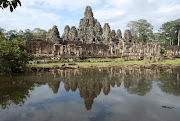
At the centre of this ancient city is Banyon which is a dilapidated structure made up of 16 towers that are clustered together and each one has four giant faces carved into the stone.
After the original inhabitants moved out of this complex around 1600 it was given back to the jungle and only rediscovered in the 19th century, by which time it had crumbled and only some of the faces remained.
This place is a maze of tiny rooms, steep staircases leading to open ledges, and dark corridors and every step will reveal a different perspective of a ruin that's built from ageing black and grey stone set against a moody humid sky.
Further along the same road is the monastery temple of Jayavarman VII, called Preah Khan, and while the secret with Angkor Wat is to start early the hint to visiting this peaceful complex is to come during lunch.
It's the hottest part of the day, when the daytrippers are hiding from the searing heat in the hotel pool, so the crowds all but disappear and the silence of the Cambodian bush that hugs this steamy site is disturbed only by the buzz of insects.
While Angkor Wat and Thom are impressive in their dilapidated beauty, it's hard to imagine anyone using those structures in the past. But Preah Khan is just as it was when it was a thriving community and while some walls have tumbled, and are now just a pile of stone blocks, it's still clear to see where one room finished and the other started.
Climbing through the dark corridor, which takes some effort because different levels have appeared as paving blocks and have moved over time, the door frames become smaller which was a design feature to thwart invading armies.
Just as with every building at Angkor there are sprays of intricate carvings on every wall and it's no different at Preah Khan with little Apsaras – Angkor's trademark celestial nymphs – or faceless buddhas on every surface.
Preah Khan was also given back to the jungle when the original community abandoned the town and now this is where you will see trees growing out of stone.
Right at the back of the complex, near the stage where dancers and musicians performed for the aristocracy, a seed dropped into a shelf in the stone wall hundreds of years ago and today the roots of a plump tree are draped over this ancient building.
There's one more temple that's worth a visit and while the first three sites are huddled together the fourth one, Banteay Srie, is a bit of a drive.
This is the Citadel of Women which was completed in 967 and today it's considered to be one of Siem Reap's treasures because of the intricate carvings, delicate structures and good repair.
This complex is also set inside a tall outer wall and protected by a moat, but while the other structures have been presented in a dull palette of black and grey this place is a rich ochre hue that glows in the Asian sun.
When a late shower falls on the area large drops plonk into the moat and make the lotus flowers dance as if they're being controlled by a puppeteer holding a string.
There are no grand structures here, just small chambers protected by false doors and connected by elevated walkways with high porches, and an old woman sits silently on a step with her back against a crumbling column to watch the tourists.
But it's the intricate carvings – more detailed and in better condition than at many other structures in the region – that make it a memorable place to visit.
It's not just the walls of carvings that tell historic tales but panels of stylised stone flowers that surround a false door and Apsaras beauties posing above a window.
Another rule is the further you get from Siem Reap the more quiet the attractions become and, with dozens of ancient sites to visit, it's not hard to find a place to enjoy without the crowds.
It's so easy to get to Siem Reap and Angkor these days and it's not considered to be a dangerous place any more, with the risks of getting into trouble no higher than in any other part of Asia that's on the tourist track.
But if you do plan to explore Angkor's ancient buildings consider engaging a local guide who will take you to the different attractions and pointing out things that make a visit more meaningful.
Our guide, Sarin, was a child of the Killing Fields who fled to a Thai refugee camp after his father was murdered. He waited out the Khmer Rouge regime and then had to live with monks when he returned to Siem Reap because his mother was too poor to care for him.
Sarin knew so much about every place we visited and would give us a commentary about carvings and pavilions with stories of kings and battles.
Read more!
Cambodia, long an Asian mouse, may be ready to roar
By Erika Kinetz
Published: July 27, 2007
PHNOM PENH: Most Cambodians live with two realities: rain and rice. The country that three decades ago abolished money has today embarked on the very long process of adding two new words to the national vocabulary: stocks and bonds.
The Cambodian government recently got its first sovereign debt ratings from the global ratings agencies Standard & Poor's and Moody's, and plans are afoot to open domestic stock and bond exchanges in 2009.
Take a ride into the countryside, where the vast majority of Cambodians live and work in conditions more than one observer has described as more African than Asian, and the very notion of an incipient derivatives market seems absurd.
But in the past few years, investors - not just donors, who still prop up the economy of this tiny, impoverished nation - have started to give Cambodia a good, hard second look. That is no small accomplishment for a nation still recovering from the murderous reign of the Khmer Rouge, a radical communist group that not only abolished money during its 1975 to 1979 rule, but also oversaw the deaths of about two million people - roughly one-quarter of the population at the time. After the Khmer Rouge was ousted by the Vietnamese, Cambodia sank into two more decades of civil war.
These days, the notoriously weak judiciary, lack of openness, deep and pervasive corruption, rampant smuggling, mediocre infrastructure (the postal service is barely functional and electricity costs are exorbitant), and the lack of a well-trained work force make Cambodia what has been politely called a challenging business environment.
But not, apparently, too challenging. Foreign direct investment, led by South Korea and China, rose from $121 million in 2004 to $475 million in 2006, according to data from the National Bank of Cambodia and the International Monetary Fund. Historically high levels of liquidity in global markets, as well as a regional boom and a growing perception that, after 30 years of domestic strife, stability has finally taken root, have all helped draw investment.
In January, the country got its first investment bank, Tong Yang Investment, part of the Tong Yang Group of companies in South Korea. Tong Yang plans to start a real estate investment fund of about $100 million focused on Cambodia and Vietnam and marketed to South Korean investors by the end of this year. Other private equity funds are apparently in the works.
Although Cambodia's meager population of 14 million people means that the country is a hard sell for big consumer companies, others have been drawn by the nation's soaring gross domestic product. In the past decade, GDP growth has ranged from a low of 5 percent in 1998, following the bloody factional fighting of 1997, to a high of 13.5 percent in 2005, according to the Finance Ministry.
Over the past three years, Cambodia has sustained average GDP growth of 11.4 percent a year, and the IMF predicts GDP growth will level off to around 9 percent for 2007. Inflation was at 4.7 percent in 2006, according to the ministry. The government has also been deepening its commercial law framework.
"You've got a story of macroeconomic stability," said John Nelmes, the IMF representative for Cambodia. "That's proving comfortable for businesses to invest."
The Australian mining giant BHP Billiton, and its partner, Mitsubishi, have begun a large bauxite exploration project in Cambodia, and Oxiana, the Australian company that runs the huge Sepon copper and gold mine in Laos, is digging for gold in the jungles of northeastern Cambodia.
The promise of oil off the coast of Cambodia has attracted a host of adventurous companies, including the U.S. oil giant Chevron and China's CNOOC and China Petrotech.
At the end of June, a delegation of French business leaders, including representatives of Total Exploration & Production, Société Générale, France Télécom, Lafarge Cement, and the hotel group Accor, came to Cambodia for a fact-finding tour. Japan sent a similar delegation this month, and Biwako Bio-Laboratory has said that it plans to invest up to $800 million in Cambodia for biodiesel production. On Monday, General Electric opened a branch office in Phnom Penh.
Bretton Sciaroni, a lawyer who has practiced in Cambodia since 1993, cited another factor in the country's appeal: the pro-business stance of the government.
Sciaroni, who also serves as a legal adviser to the government, said that when a client, the U.S. packaging company Crown Holdings, wanted to open a factory in Phnom Penh, getting the government to lower its 7 percent tariff on raw aluminum imports was as simple as asking. "The minister of economy and finance, Keat Chhon, asked my client what they wanted it to be," Sciaroni recalled. "My client said zero percent. He said, fine, and zero percent it is."
"People at the highest levels of government understand the necessity of getting stuff done," he added.
Officials describe the turn to capital markets as part of the nation's natural economic evolution. Last month, donors, including China, pledged to deliver $689 million in aid to Cambodia.
"We still need donor assistance," said Hang Chuon Naron, the secretary general of the Ministry of Economy and Finance. But he added that Cambodia would need more - and more kinds of - financing as its economy expands.
The nation's economic base is still quite narrow, dominated by tourism and the garment industry, which could suffer from Vietnam's recent accession to the World Trade Organization and the expiration of U.S. and European quotas on Chinese textiles, scheduled for the end of next year.
Cambodia also has a high level of public debt - most of it on favorable, concessional terms - and it does a poor job of collecting taxes.
On the upside, Cambodia's manufacturing base has been slowly broadening. Oil, natural gas and the mineral sector are promising, and real estate has been booming, some say too much.
Sciaroni said a number of his clients had been buying up property along Cambodia's southern beaches, hoping that the new airport in Sihanoukville would eventually draw tourists who intended to visit only the Angkor Wat temple, in the north, and then leave. "You don't see it yet, but in three to five years, you're going to see major development on the south coast of Cambodia," he said.
Look around Phnom Penh and the opportunities for growth are evident: no tall office buildings, no real golf course, few malls. But the question Han Kyung Tae, Tong Yang Investment's chief representative in Cambodia, has been asking himself lately is whether all the heady talk about surging investment and the rise of capital markets is premature.
"One day, I see the big potential," he said. "The next I'm skeptical."
Right now, Sciaroni said, few domestic companies outside the financial sector, where annual audits are required, would meet even minimal listing criteria. "Transparency doesn't exist for the majority of companies here today," he said.
That has not stopped the Korea Exchange, which operates the Korean Stock Exchange, from jumping in to help develop Cambodian securities markets.
Talk with Koreans of a certain age in Phnom Penh and they will tell you that Cambodia reminds them of their childhood home. The financial sector is no different: Fifty years ago, South Korea, like Cambodia today, depended heavily on foreign aid and was struggling to develop domestic sources of financing. Korea is now trying to share the miracle of its own growth, said Hong-Sik Choi, the executive director of Global Business Development at the Korea Exchange.
"Korea has experienced a miracle to transform itself from the poorest country to the 11th largest economy in the world during the last half century," he explained. "The securities market was at the center of Korea's economic growth."
Hang, the Finance Ministry official, knows that his country is not for the fainthearted. "Cambodia is high risk, but it's also high return," he said.
And while he concedes that Cambodia's road to economic maturity will be long, he maintains that the advent of publicly traded securities will demand new systems of accounting, openness and accountability, which could improve the quality of the business environment as a whole.
Jie Sun, the deputy director of the Research Center for International Finance at Beijing's Chinese Academy of Social Sciences, said that the major lesson - and perhaps the most instructive for Cambodia - that China learned in the 15 years since Deng Xiaoping opened the gates to Chinese-style capitalism, was that capital markets could help a country with the slow and challenging work of improving its business environment.
"The Chinese have realized that the main function of the stock market is to improve corporate governance," he said at a recent conference sponsored by the Economic Institute of Cambodia, an independent research institute and consultancy in Phnom Penh. "After 15 years, we have now come to the point."
Read more!
Friday, July 27, 2007
Finland Provides 2 M USD For Cambodia to Improve Its Land Registration
By Candy Chabada
Finland has donated about 2 million US dollars for Cambodia to improve its land registration, said officials to Xinhua on 21 July.
Mean Chanvanny, a chief of Cabinet of Ministers said that the fund will be used by Ministry of Urbanization and Construction to adopt modern information technology, to strengthen public awareness and to increase community participation in the sector of land registration.
Chhun Lim, a Minister of Urbanization and Construction said that Finland has been helping Cambodia handle the land registration. From the year 2002 up until the year 2007, it has been providing about 3.5 million US dollars for Cambodia to improve its land registration.
Read more!
Cambodia: World Bank Approves $36.25 Million Grant for Commune/Sangkat Development and Improved Local Governance
Contacts:
In Bangkok: Pichaya Fitts
Email: pfitts@worldbank.org
In Phnom Penh: Bou Saroeun
Email: sbou@worldbank.org
In Washington: Mohamad Al-Arief at
(202) 458-5964
Email: malarief@worldbank.org.
Phnom Penh, July 26 — Today, the World Bank’s Board of Executive Directors reaffirmed its support for Cambodia’s decentralization to the communes/sangkats and related local governance reforms, by approving a $36.25 million grant in additional financing for the Rural Investment and Local Governance Project (RILGP), as a supplement to the original RILGP which provided $22 million during 2003 - 2007.
The additional financing aims to expand the project support from the current 15 to 23 provinces, provide continuing financing for an additional three years from 2007 – 2009 to the intergovernmental fiscal transfer, the Commune/Sangkat Fund, and facilitate an accelerated increase in the amount of the overall intergovernmental fiscal transfer and related commune allocations.
The World Bank’s Country Assistance Strategy for Cambodia 2005 - 2008, endorsed by the Board in May 2005, recognizes governance issues as the primary obstacle to growth, poverty reduction, and aid effectiveness, and supports decentralization as a means to improve local governance and accountability. Through the RILGP – Additional Financing, the Bank will continue to support decentralized and participatory local governance systems and provision of priority public goods and infrastructure at the commune/sangkat level.
Mr. Ian Porter, World Bank Country Director, said, “While RILGP and RILGP-Additional Financing fund specific investments at the commune level, the institutional arrangements, procedures and funds flow are integrated as much as possible into the government’s own structures and systems. This has helped to build capacity directly within government institutions, strengthen government systems, and thus create a strong basis for sustainability and scaling-up of development impacts.”
H.E. Sar Kheng, Deputy Prime Minister and Mister of Interior said, “The Royal Government of Cambodia very much welcomes and appreciates the support of the World Bank to rural development and poverty reduction efforts through the provision of priority infrastructure and public goods at the commune level, and strengthening of the decentralized participatory local governance system, under the Royal Government’s Strategic Framework for Decentralization and Deconcentration Reforms. In particular, the Bank’s support of Commune/Sangkat Fund through RILGP Additional Financing is very important, since it provides ongoing support to the Royal Government’s own intergovernmental fiscal transfer system, and will allow an increase in allocations of development funding to the communes over the coming 3 years.”
Ms. Nisha Agrawal, Country Manager for Cambodia said that the RILGP-Additional Financing is also aiding in harmonization and alignment of development partner support. “The Royal Government will use part of the additional grant to support development of a National Decentralization and Deconcentration Program, which will elaborate the implementation details for the National Strategic Framework for Decentlization and Deconcentration Reforms and will help to provide a better foundation for coordinated donor support in future,” she said.
The Bank Board’s approval of the additional financing for RILG is the first for Cambodia under the Bank’s policy, adopted on May 19, 2005, which enables the Bank to provide additional financing in the context of ongoing, well-performing projects, such as RILGP, to scale up the project’s impact and development effectiveness. This approval follows the recent Board approval of a $15 million grant for the Poverty Reduction Growth Operation (PRGO).
For more information on the World Bank and its work in Cambodia, please visit:
http://www.worldbank.org/kh
Read more!